
Judge, 1893-07-22 · page 10 of 16
Judge — July 22, 1893 — page 10: what you’re looking at
What you’re looking at
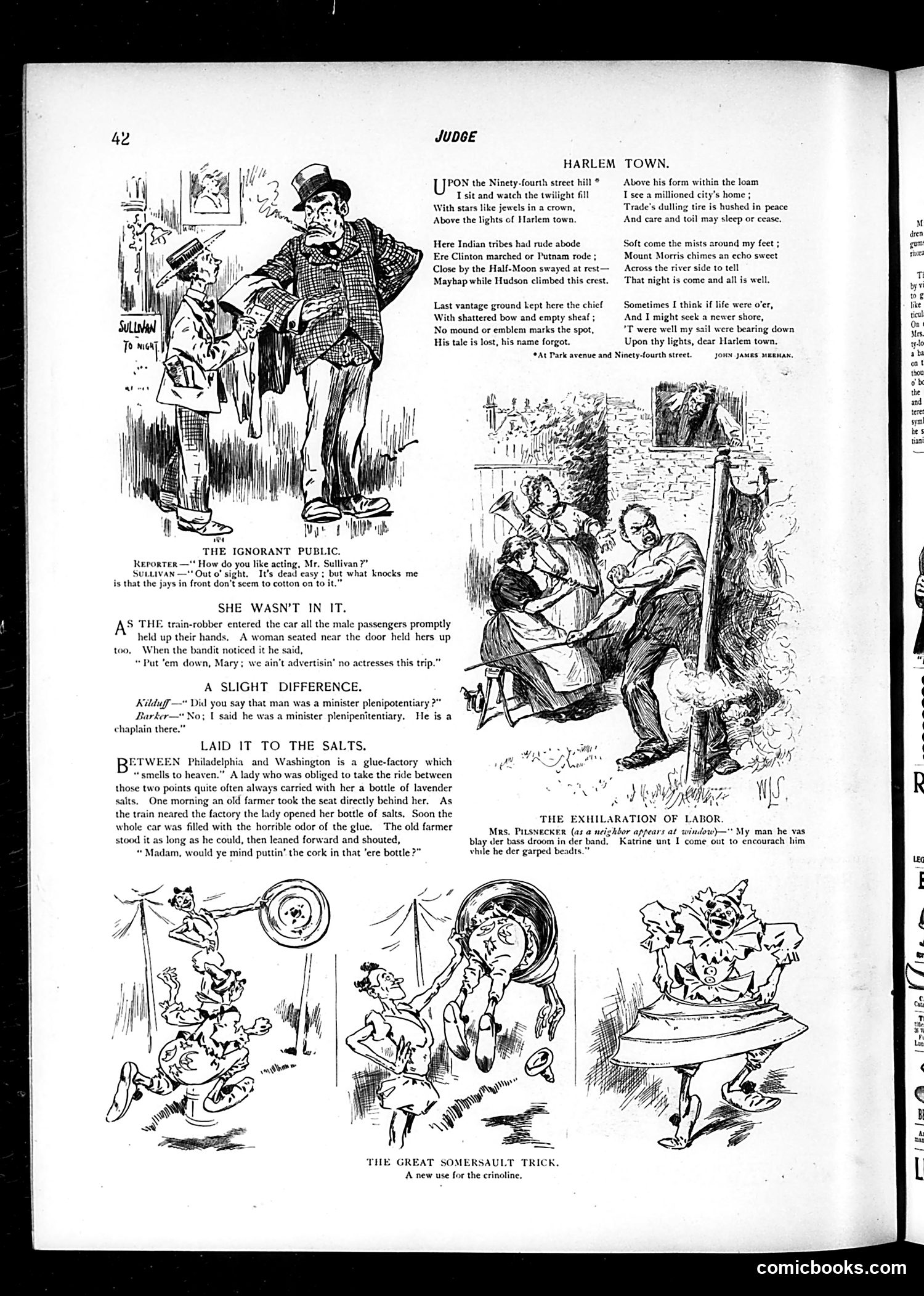
This page contains several unrelated satirical pieces typical of Judge magazine's format: **"Harlem Town"** is a sentimental poem about the history of upper Manhattan, reflecting on Native American heritage and the area's transformation into the developed city of Harlem. **"The Ignorant Public"** mocks theater audiences, with an actor complaining that paying customers don't understand his performance—satire on both performers' vanity and public taste. **"She Wasn't in It"** jokes about a train robbery where a woman raises her hands, but the robber dismisses her as "not an actress" this trip—implying she's a prostitute or performer, not a "proper" woman worth robbing. **"A Slight Difference"** is a pun on ministerial titles (plenipotentiary vs. plenipenitentiary). **"Laid It to the Salts"** describes a woman's smelling salts inadvertently releasing awful glue-factory odors during a train ride—blaming the wrong source for bad smells. The remaining items are brief comic sketches with exaggerated immigrant dialect humor typical of the era's casual ethnic stereotyping.
📄 Transcribed text from this page (OCR, searchable)
Machine-transcribed from the original scan — historical spelling and the odd misread are preserved.
JUDGE HARLEM TOWN. PON the Ninety-fourth street hill ® I sit and watch the twilight fill With stars like jewels in a crown, Above the lights of Harlem town. Here Indian tribes had rude abode Ere Clinton marched or Putnam rode ; Close by the Half-Moon swayed at rest— Maybap while Hudson climbed this crest. Last vantage ground kept here the chief With shattered bow and empty sheaf ; No mound or emblem marks the spot, His tale is lost, his name forgot. At Park avenue and Ninety-fourth street. THE IGNORANT PUBLIC. Kerorter—'t How do you like acting, Mr. Sullivan 7” SULLIVAN —"' Out 0’ sight. It’s dead easy ; but what knocks me is that the jays in front don’t seem to cotton on to it." SHE WASN’T IN IT. S THE train-robber entered the car all the male passengers promptly held up their hands. A woman seated near the door held hers up When the bandit noticed it he said, “Put ‘em down, Mary; we ain't advert too, no actresses this trip.”” A SLIGHT DIFFERENCE, Kilduff —" Did you say that man was a minister plenipotentiary ?” Barker—' No; U said he was a minister plenipenitentiary. He is a chaplain there.” LAID IT TO THE SALTS. BETWEEN Philadelphia and Washington is a glue-factory which “smells to heaven.” A lady who was obliged to take the ride between those two points quite often always carried with her a bottle of lavender One morning an old farmer took the seat directly behind her. As in neared the factory the lady opened her bottle of salts. Soon the whole car was filled with the horrible odor of the glue. ‘The old farmer stood it as long as he could, then leaned forward and shouted, * Madam, would ye mind puttin’ the cork in that ‘ere bottle?” Mrs. PILSNECKER (as a m blay der bass droom in der band, while he der garped beadts.” THE GREAT SOMERSAULT TRICK. A new use for the crinoline, Above his form within the loam I see a millioned city’s home ; Trade’s dulling tire is hushed in peace And care and toil may sleep or cease, Soft come the mists around my feet ; Mount Morris chimes an echo sweet Across the river side to tell ‘That night is come and all is well. Sometimes I think if life were o'er, And I might seek a newer shore, 'T were well my sail were bearing down Upon thy lights, dear Harlem town, JOMN JAMES DIREHAN, THE EXHILARATION OF LABOR. ‘hbor appears at window)—" My man he vas Katrine unt I come out to encourach him comicbooks.com ip Lie. ae “e, l¥> r=/ie-loo fA