
Judge, 1893-03-18 · page 4 of 16
Judge — March 18, 1893 — page 4: what you’re looking at
What you’re looking at
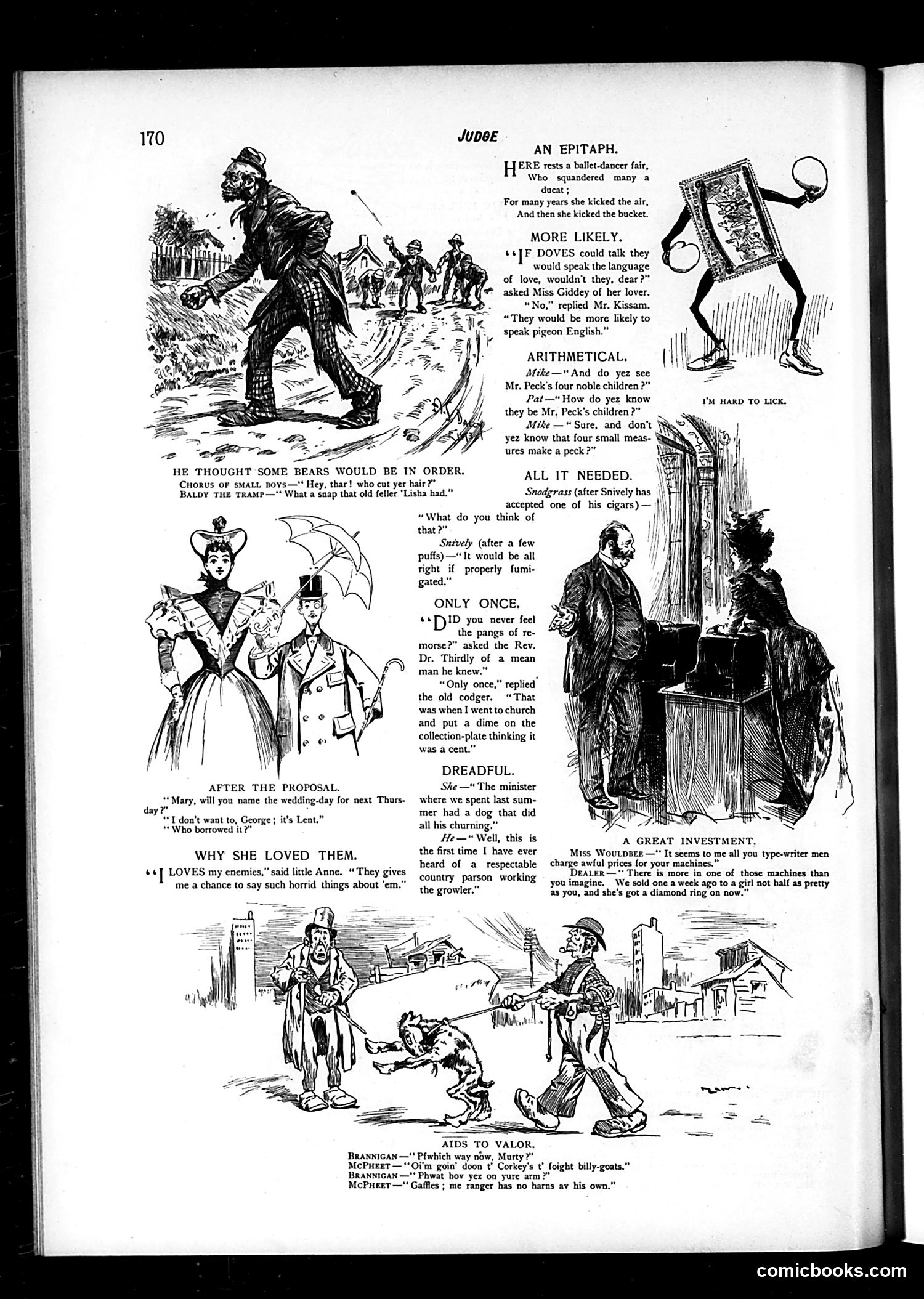
This page collects brief humorous items typical of *Judge* magazine's satirical format. The content includes: **Verse & Wordplay**: "An Epitaph" jokes about a ballet dancer's death using double meaning ("kicked the bucket"). "More Likely" and "Arithmetical" sections play on puns (pigeons/pigeon English; "peck" as measurement). **Social Satire**: "Why She Loved Them" mocks a child's twisted morality. "A Great Investment" suggests women can acquire luxury goods (diamond rings) through typewriter sales—commentary on both female consumers and commercial materialism. **Character Comedy**: "Only Once" depicts working-class hypocrisy (a miser's only remorse involves donating a dime instead of a penny). "AIDS TO VALOR" features Irish immigrant characters in broad dialect, using Anglicized names ("Brannigan," "McPheet"), fighting billy-goats—ethnic stereotyping common to period humor. The overall tone targets marriage, greed, class pretension, and ethnic caricature—standard *Judge* material for American middle-class readers.
📄 Transcribed text from this page (OCR, searchable)
Machine-transcribed from the original scan — historical spelling and the odd misread are preserved.
JUDGE AN EPITAPH. ERE rests a ballet-dancer fair, Who squandered many a ducat ; For many years she kicked the air, And then she kicked the bucket. MORE LIKELY. ‘4 ]F DOVES could talk they would speak the language of love, wouldn't they, dear?” asked Miss Giddey of her lover. “No,” replied Mr. Kissam. “They would be more likely to speak pigeon English.” ARITHMETICAL. Mike—" And do yez see Mr. Peck’s four noble children 2” Pat—" How do yez know they be Mr. Peck’s children?” Mike —" Sure, and don't yez know that four small meas- & ures make a peck ?” HE THOUGHT SOME BEARS WOULD BE IN ORDER. ALL IT NEEDED. Crorus oF sMALL Boys—"* Hey, thar! who cut yer hair?” j ; BALDY THe TRAMP—"* What a snap that old feller ‘Lisha had.” Snodgrass (after Snively has accepted one of his cigars)— || “What do you think of that?” Snively (after a few puffs)—" It would be all right if properly fumi- gated.” ONLY ONCE. ‘*DP)ID you never feel the pangs of re- morse?” asked the Rev. Dr. Thirdly of a mean man he knew.” . “Only once,” replied the old codger. “That was when I went to church and put a dime on the collection-plate thinking it was a cent.” DREADFUL. AFTER THE PROPOSAL. She —" The minister ary, will you name the wedding-day for next Thurs- where we spent last sum- ‘ - . mer had a dog that did don't want to, George; it's Lent. : * * Who borrowed it?” allhis churning.” He—“Well, this is A GREAT INVESTMENT. WHY SHE LOVED THEM. the first time I have ever Miss Woutpser —* It seems to me all you type-writer men heard of a respectable charge awful prices for your machines.” work DeALER—"* There is more in one of those machines than country parson working — yoq imagine. We sold one a week ago to a girl not half as pretty the growler. as you, and she’s got a diamond ring on now.” +4] LOVES my enemies,” said little Anne, “ They gives me a chance to say such horrid things about ‘em.” AIDS TO VALOR. BRANNIGAN. ‘which way now, Marty?” McPueet— goin’ doon t* Corkey's t’ foight billy-goats.” BRANNIGAN —"" Phwat hov yez on yure arm?" McPueet—"Gafiles ; me ranger has no harns av his own.” comicbooks.com