
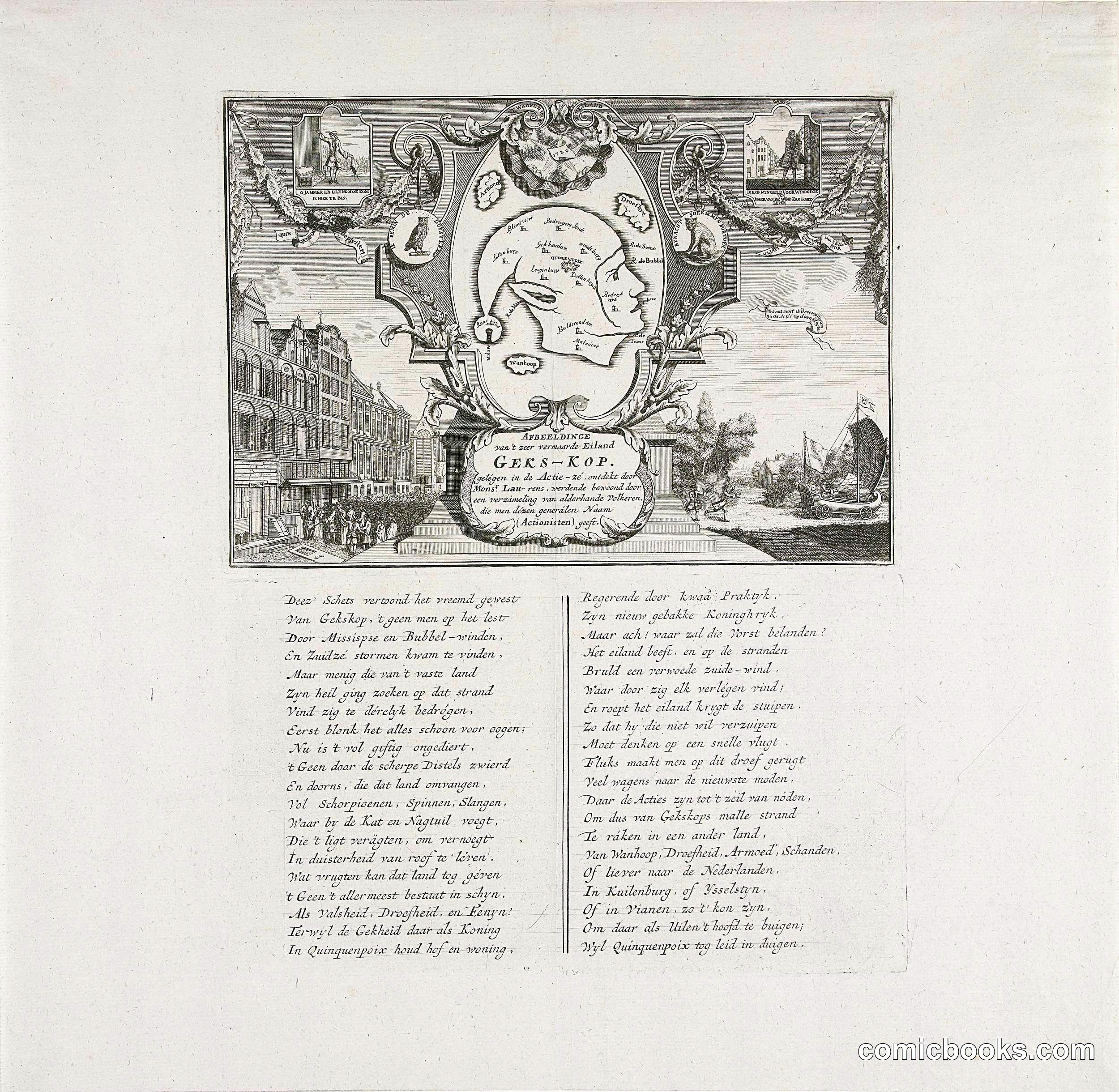
This Dutch engraving presents a geographical map of folly rendered as a human head, a conceit popular in 16th- and 17th-century satirical prints. The central profile contains regional labels identifying vices and follies; surrounding vignettes show urban and rural scenes of human weakness—drunkenness, lust, greed, and stupidity. The poem below catalogs the island's moral failings.
Such prints inherit the tradition of Netherlandish moral allegory while prefiguring the caricature broadsides of Hogarth, Gillray, and later German Bilderbogen. Rather than attack specific political figures, the artist anatomizes human nature itself, using exaggeration and grotesque form to invite both laughter and moral reflection—a technique that would shape satirical comics for centuries.
About this artifact
- Date
- 1720
- Rights
- Public domain — free to view, share, and reuse.
- Restoration
- Digitally restored and hosted by ComicBooks.com · high-resolution version available.
Part of our mission to preserve and restore the public-domain heritage of the medium.