comicbooks.com Join Free
HomeFuture World Comics#2Read

★ comicbooks.com Reading Room

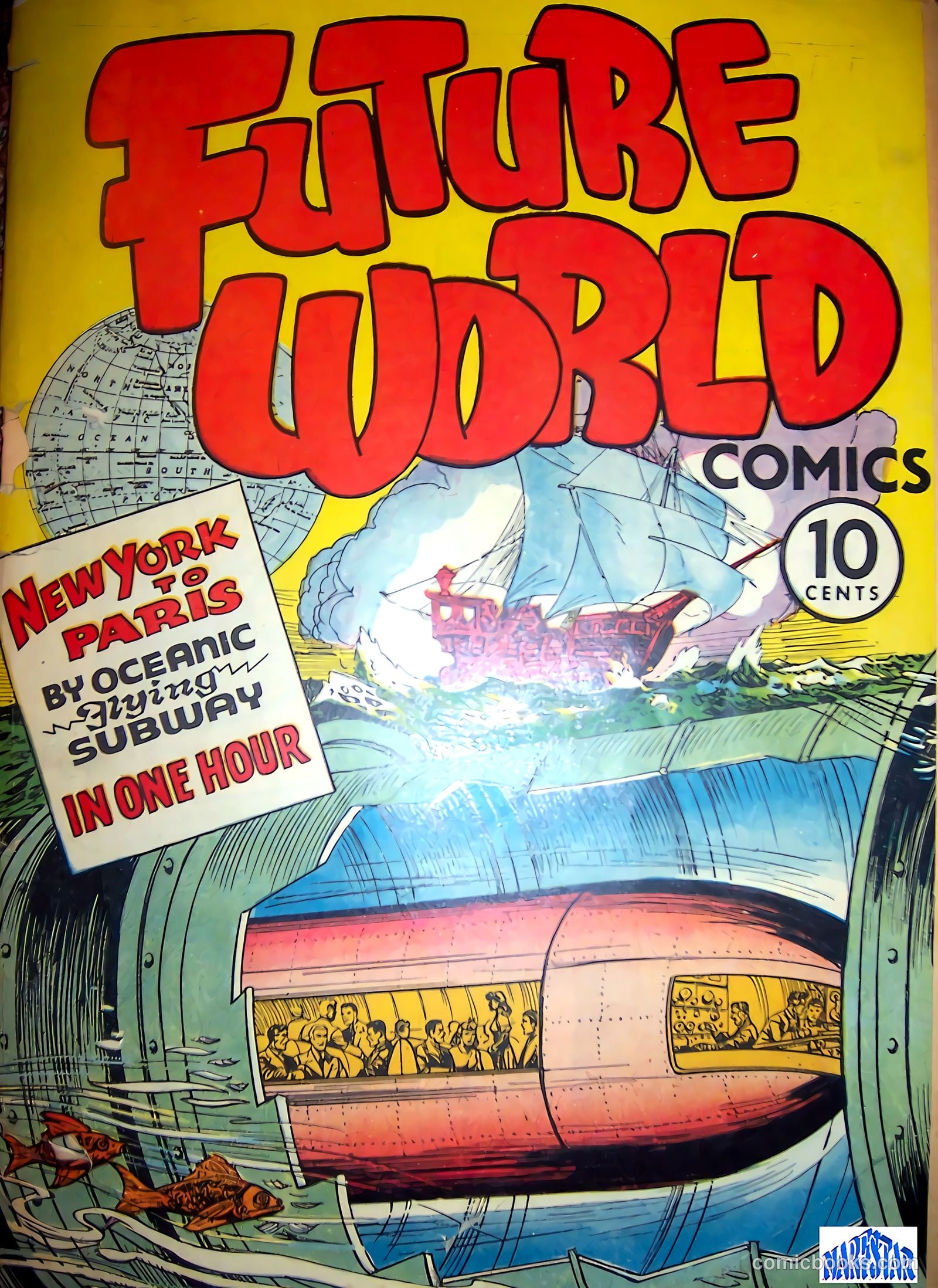
Future World Comics #2 (1946)

George W. Dougherty Publishing Company · 1946 · 52 pages

Free to read · restored edition by comicbooks.com · Issue details →
Future World Comics #2 (1946) — page 1 of 52
1 / 52
Future World Comics #2 (1946) — page 2 of 52
2 / 52
Future World Comics #2 (1946) — page 3 of 52
3 / 52
Future World Comics #2 (1946) — page 4 of 52
4 / 52
Future World Comics #2 (1946) — page 5 of 52
5 / 52
Future World Comics #2 (1946) — page 6 of 52
6 / 52
Future World Comics #2 (1946) — page 7 of 52
7 / 52
Future World Comics #2 (1946) — page 8 of 52
8 / 52
Future World Comics #2 (1946) — page 9 of 52
9 / 52
Future World Comics #2 (1946) — page 10 of 52
10 / 52
Future World Comics #2 (1946) — page 11 of 52
11 / 52
Future World Comics #2 (1946) — page 12 of 52
12 / 52
Future World Comics #2 (1946) — page 13 of 52
13 / 52
Future World Comics #2 (1946) — page 14 of 52
14 / 52
Future World Comics #2 (1946) — page 15 of 52
15 / 52
Future World Comics #2 (1946) — page 16 of 52
16 / 52
Future World Comics #2 (1946) — page 17 of 52
17 / 52
Future World Comics #2 (1946) — page 18 of 52
18 / 52
Future World Comics #2 (1946) — page 19 of 52
19 / 52
Future World Comics #2 (1946) — page 20 of 52
20 / 52
Future World Comics #2 (1946) — page 21 of 52
21 / 52
Future World Comics #2 (1946) — page 22 of 52
22 / 52
Future World Comics #2 (1946) — page 23 of 52
23 / 52
Future World Comics #2 (1946) — page 24 of 52
24 / 52
Future World Comics #2 (1946) — page 25 of 52
25 / 52
Future World Comics #2 (1946) — page 26 of 52
26 / 52
Future World Comics #2 (1946) — page 27 of 52
27 / 52
Future World Comics #2 (1946) — page 28 of 52
28 / 52
Future World Comics #2 (1946) — page 29 of 52
29 / 52
Future World Comics #2 (1946) — page 30 of 52
30 / 52
Future World Comics #2 (1946) — page 31 of 52
31 / 52
Future World Comics #2 (1946) — page 32 of 52
32 / 52
Future World Comics #2 (1946) — page 33 of 52
33 / 52
Future World Comics #2 (1946) — page 34 of 52
34 / 52
Future World Comics #2 (1946) — page 35 of 52
35 / 52
Future World Comics #2 (1946) — page 36 of 52
36 / 52
Future World Comics #2 (1946) — page 37 of 52
37 / 52
Future World Comics #2 (1946) — page 38 of 52
38 / 52
Future World Comics #2 (1946) — page 39 of 52
39 / 52
Future World Comics #2 (1946) — page 40 of 52
40 / 52
Future World Comics #2 (1946) — page 41 of 52
41 / 52
Future World Comics #2 (1946) — page 42 of 52
42 / 52
Future World Comics #2 (1946) — page 43 of 52
43 / 52
Future World Comics #2 (1946) — page 44 of 52
44 / 52
Future World Comics #2 (1946) — page 45 of 52
45 / 52
Future World Comics #2 (1946) — page 46 of 52
46 / 52
Future World Comics #2 (1946) — page 47 of 52
47 / 52
Future World Comics #2 (1946) — page 48 of 52
48 / 52
Future World Comics #2 (1946) — page 49 of 52
49 / 52
Future World Comics #2 (1946) — page 50 of 52
50 / 52
Future World Comics #2 (1946) — page 51 of 52
51 / 52
Future World Comics #2 (1946) — page 52 of 52
52 / 52
Contains 13 stories
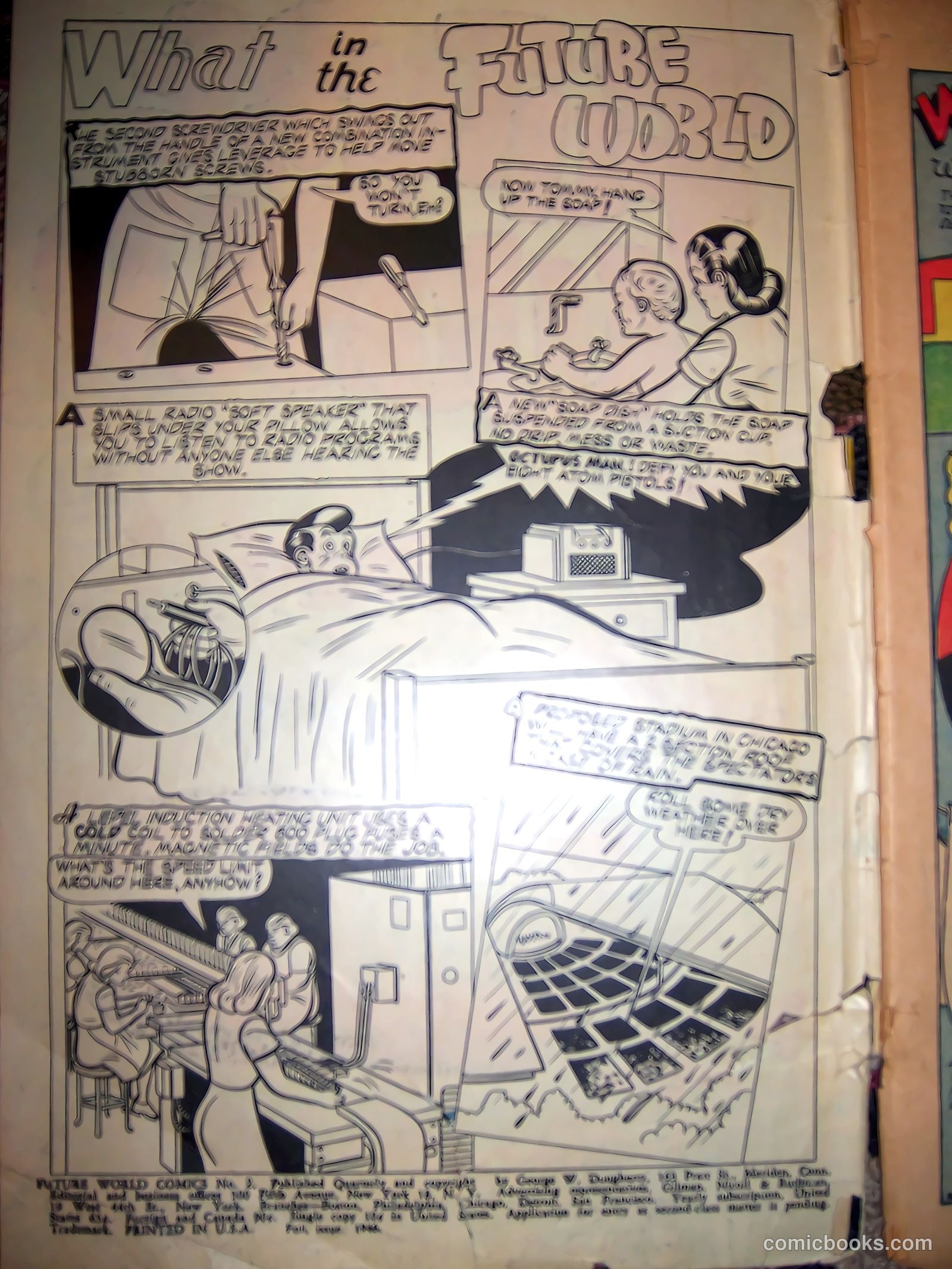
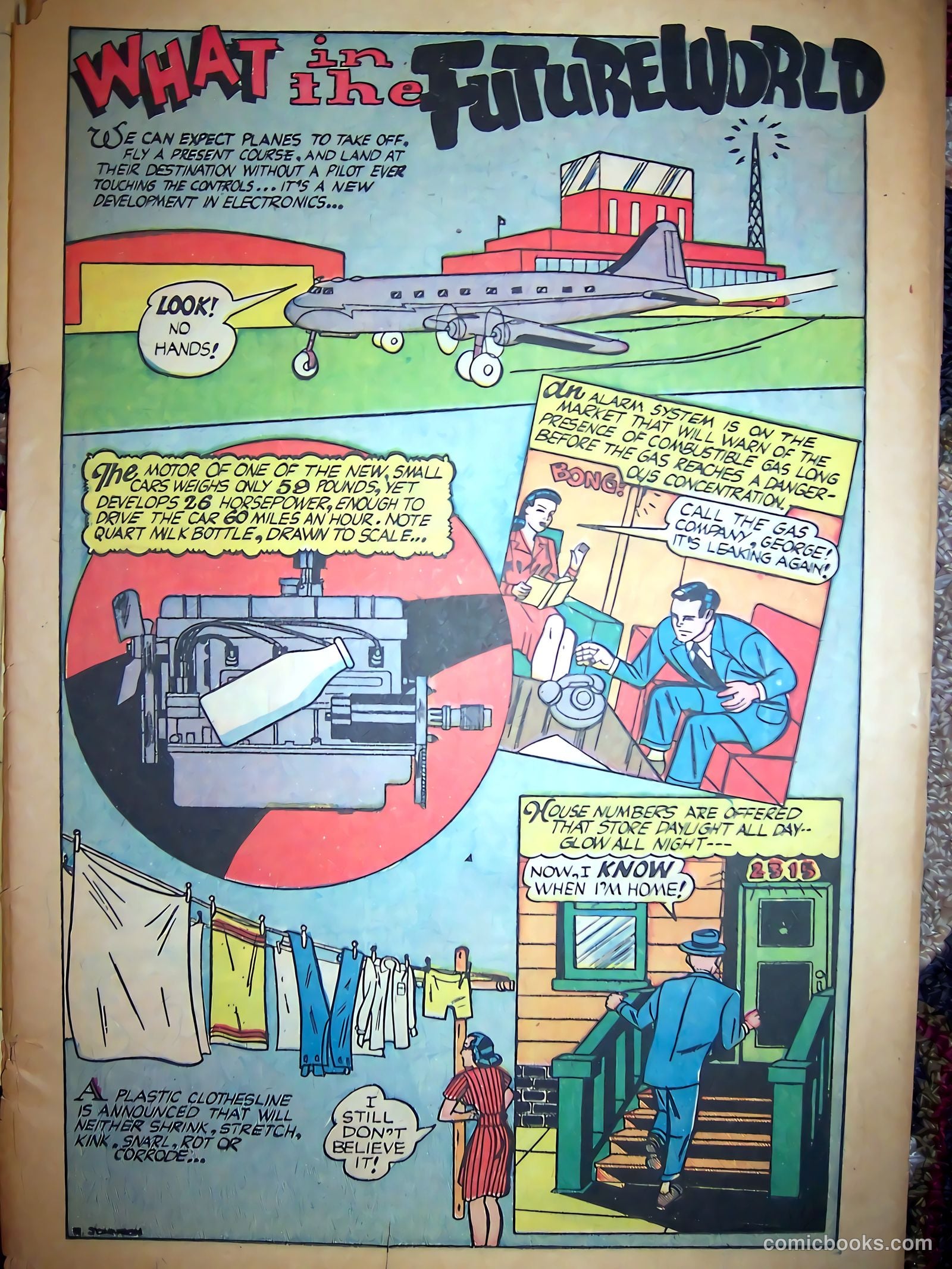
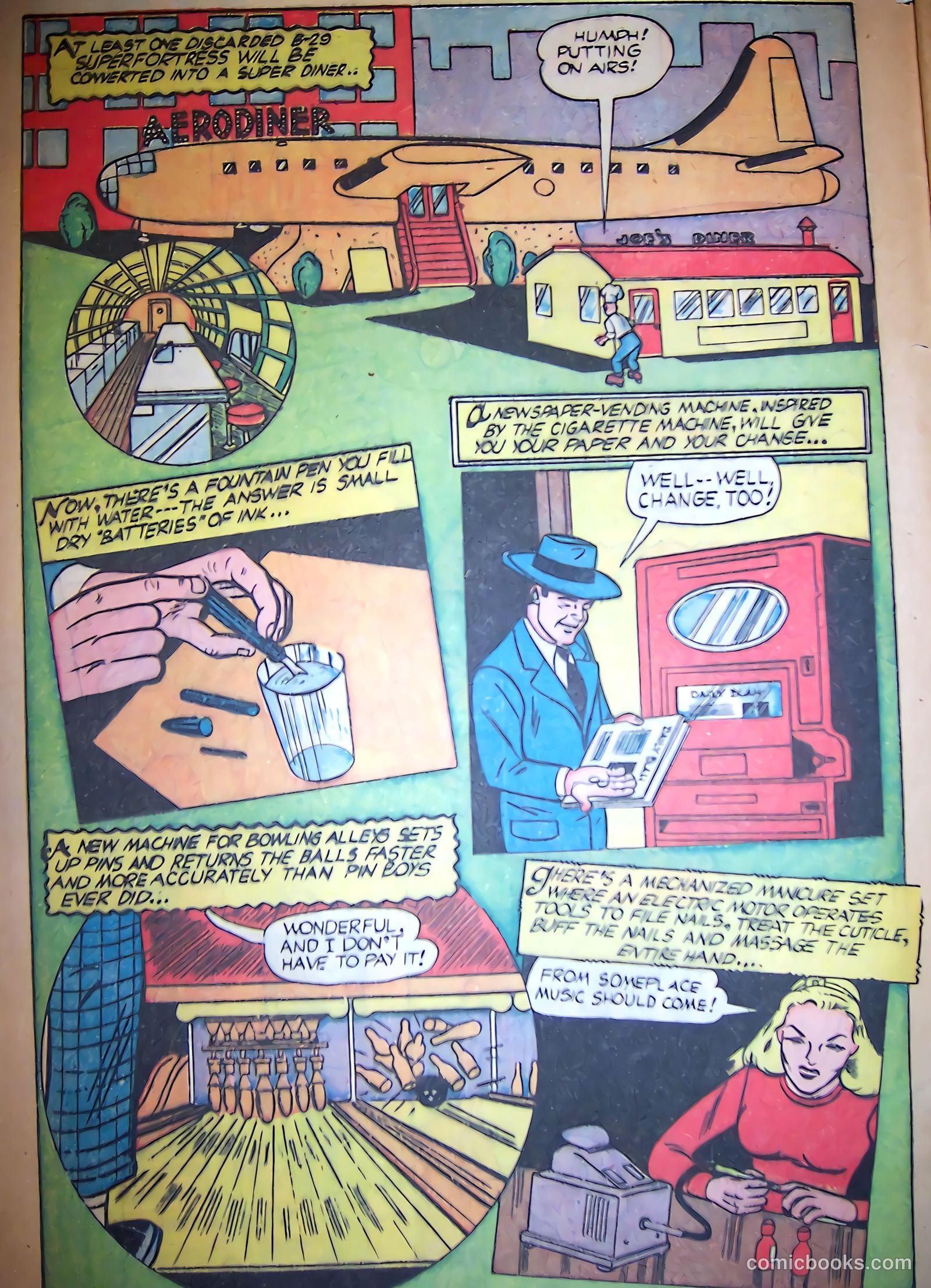
Untitled story
1 pp · science fiction
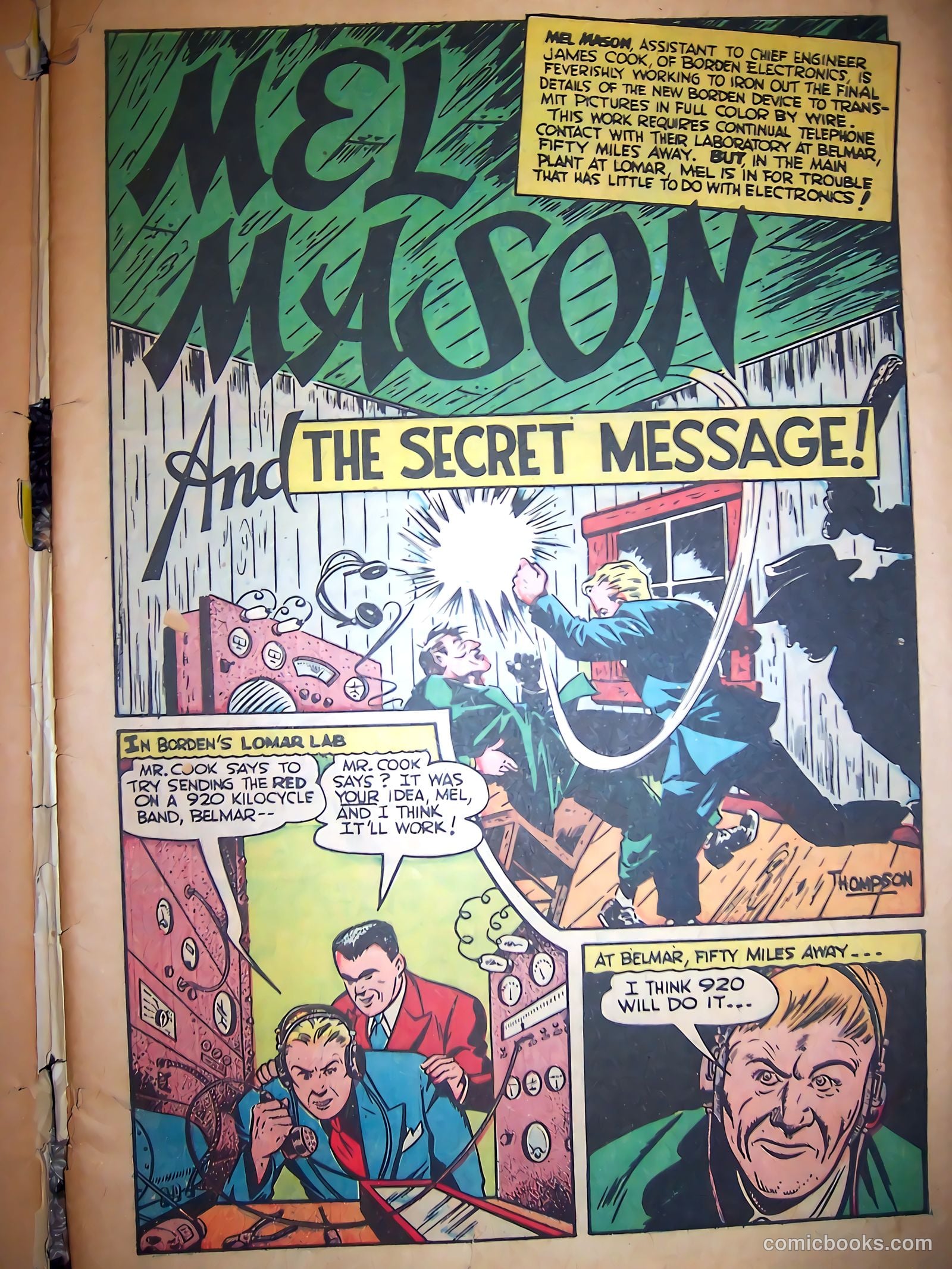
The Secret Message!
10 pp · adventure

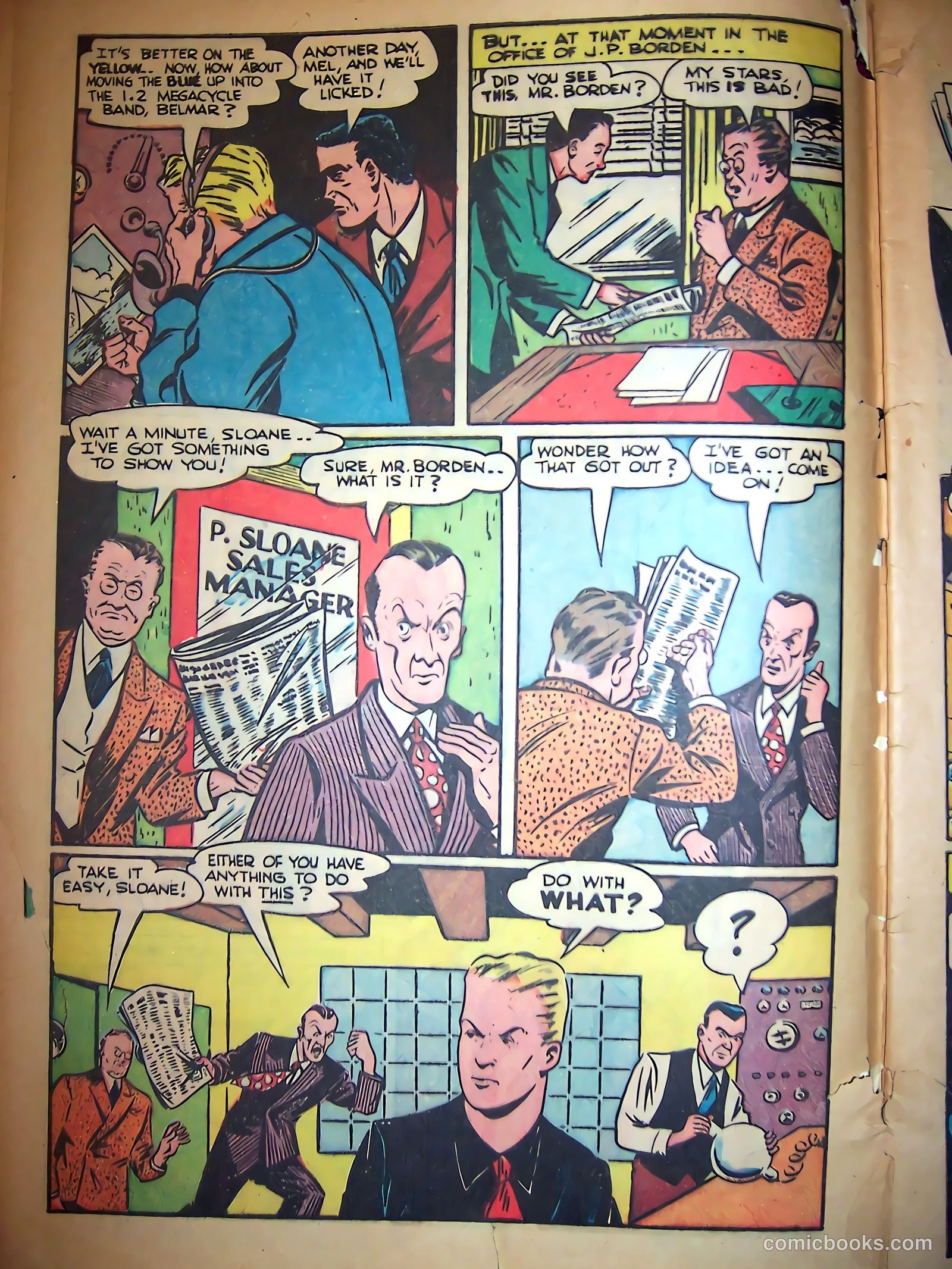
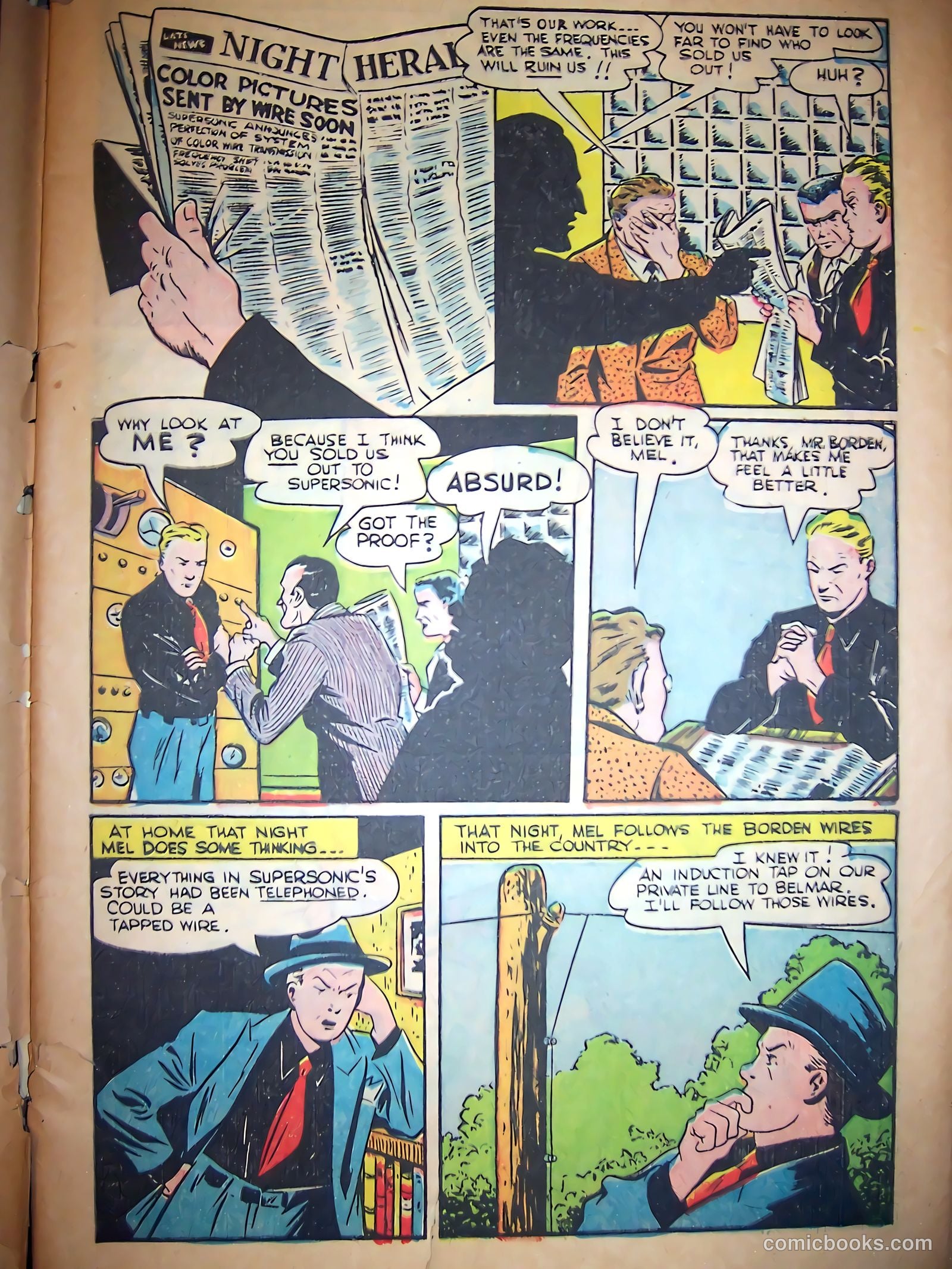
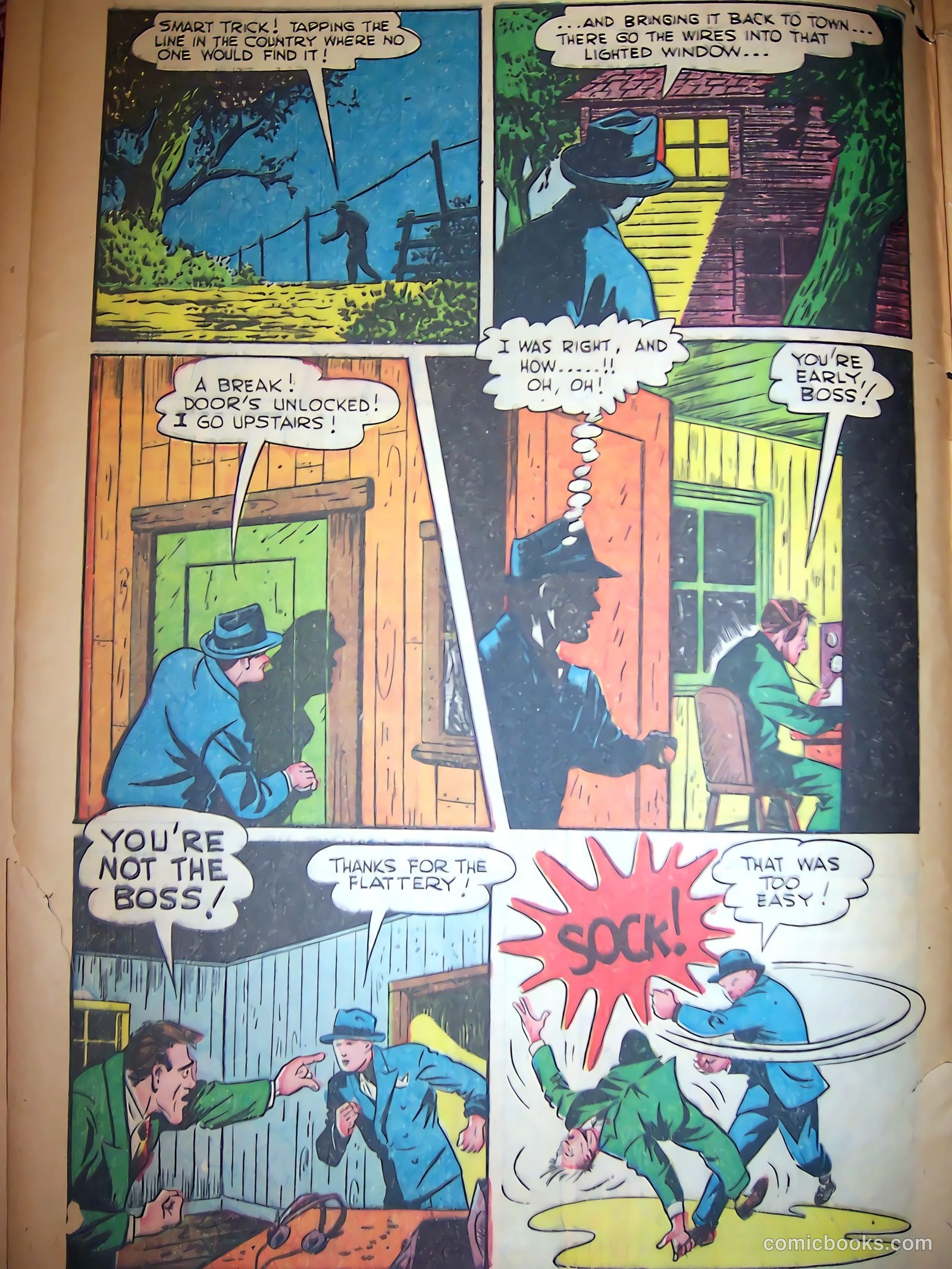
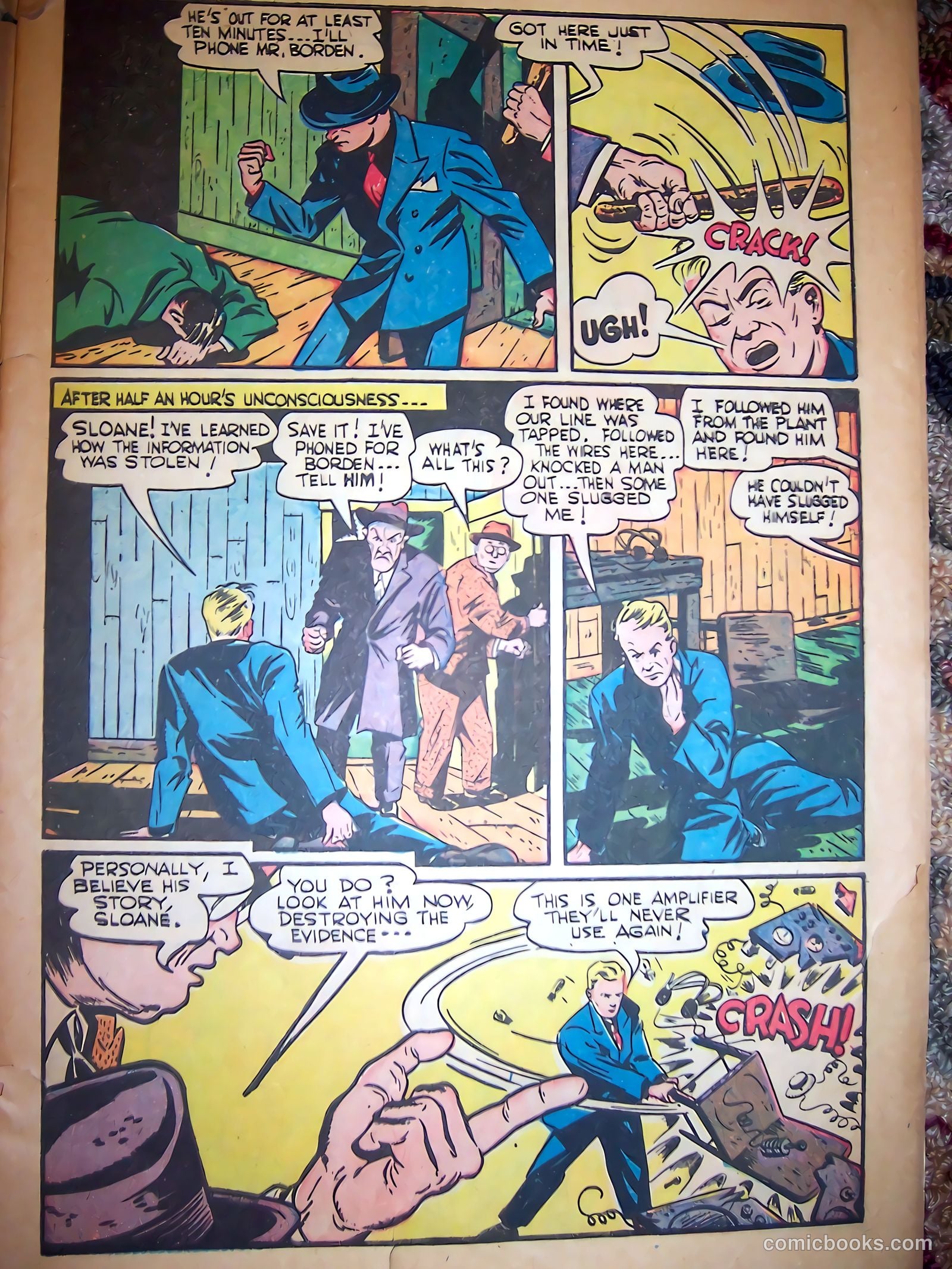
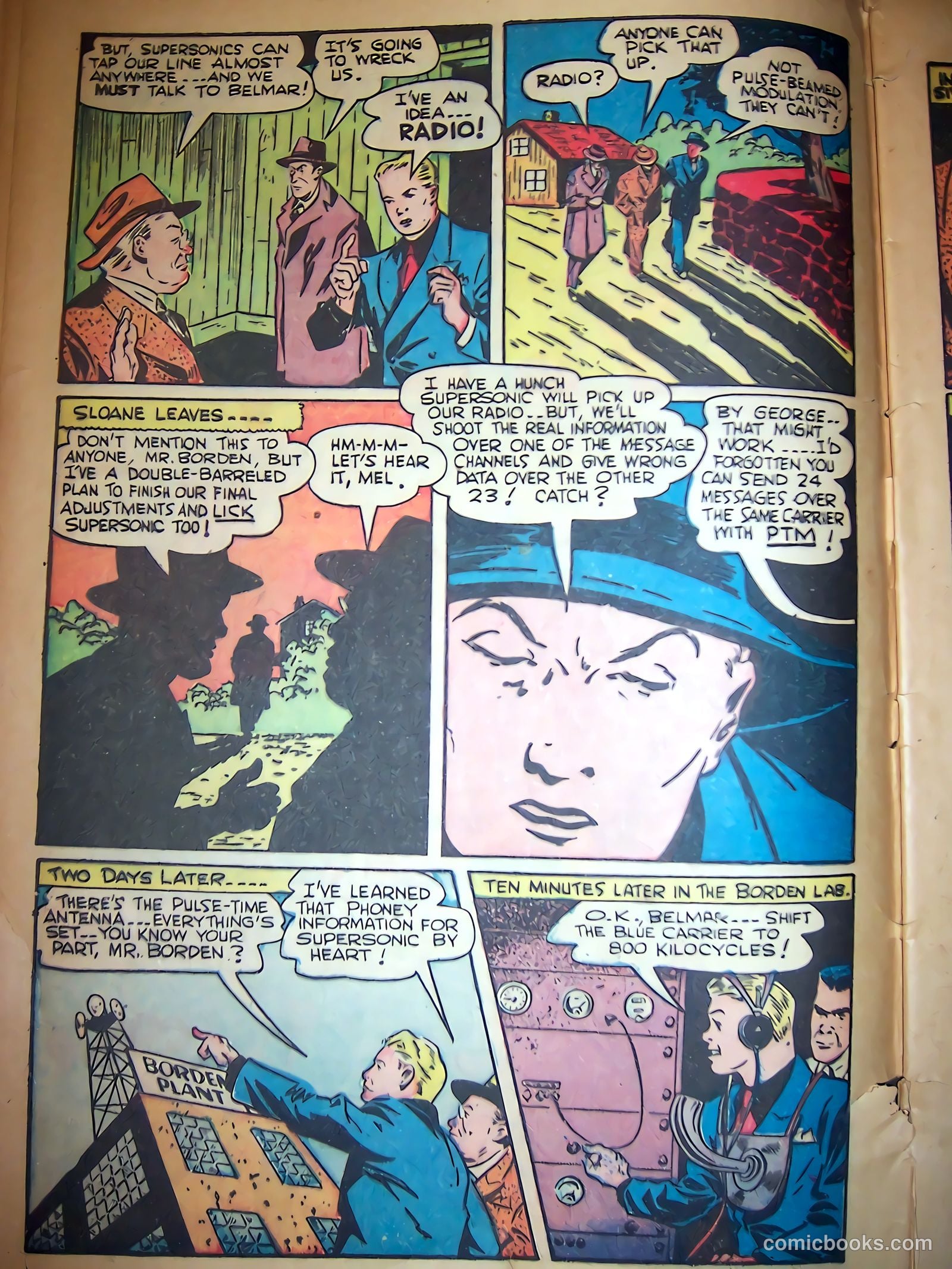
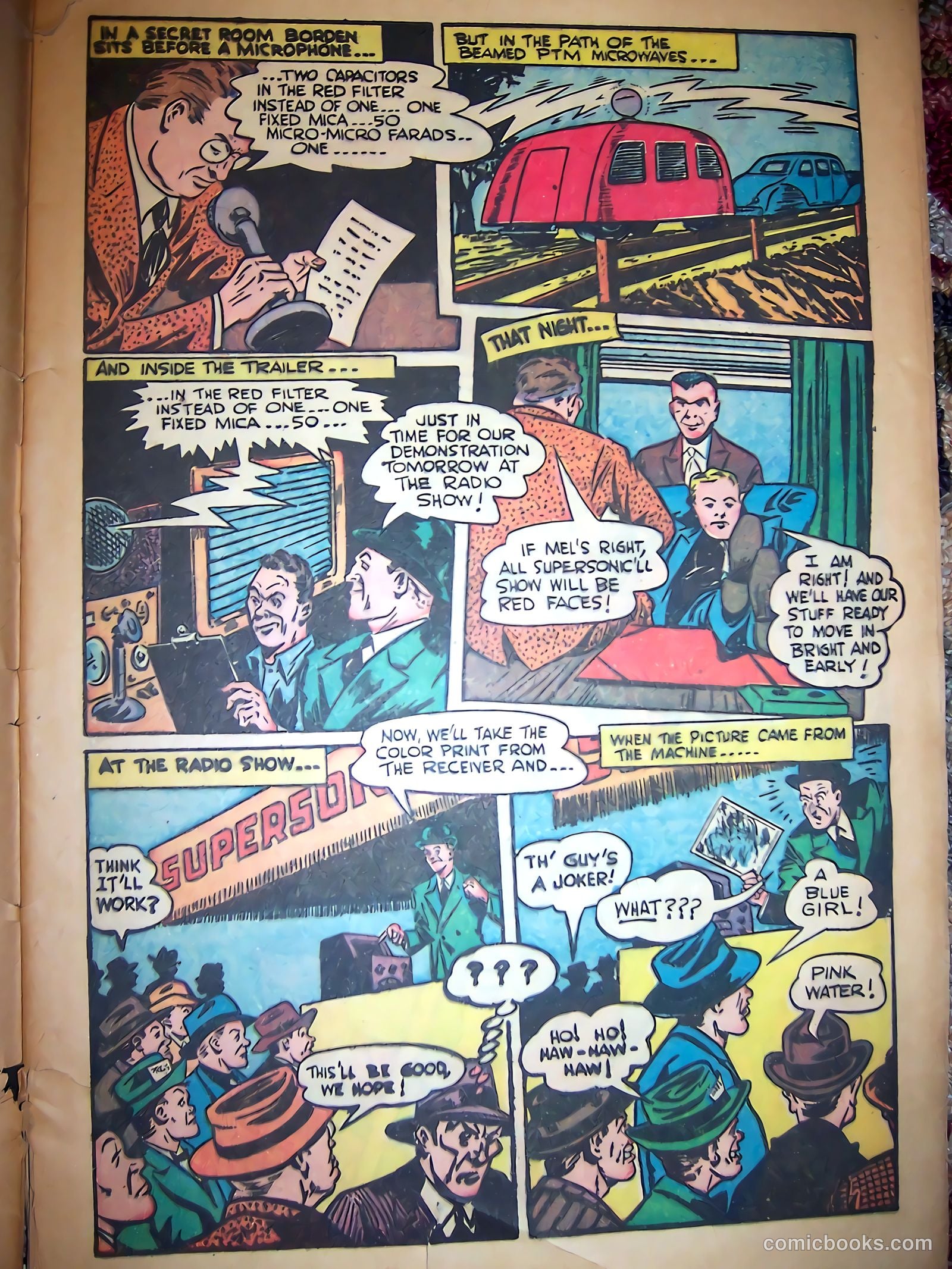
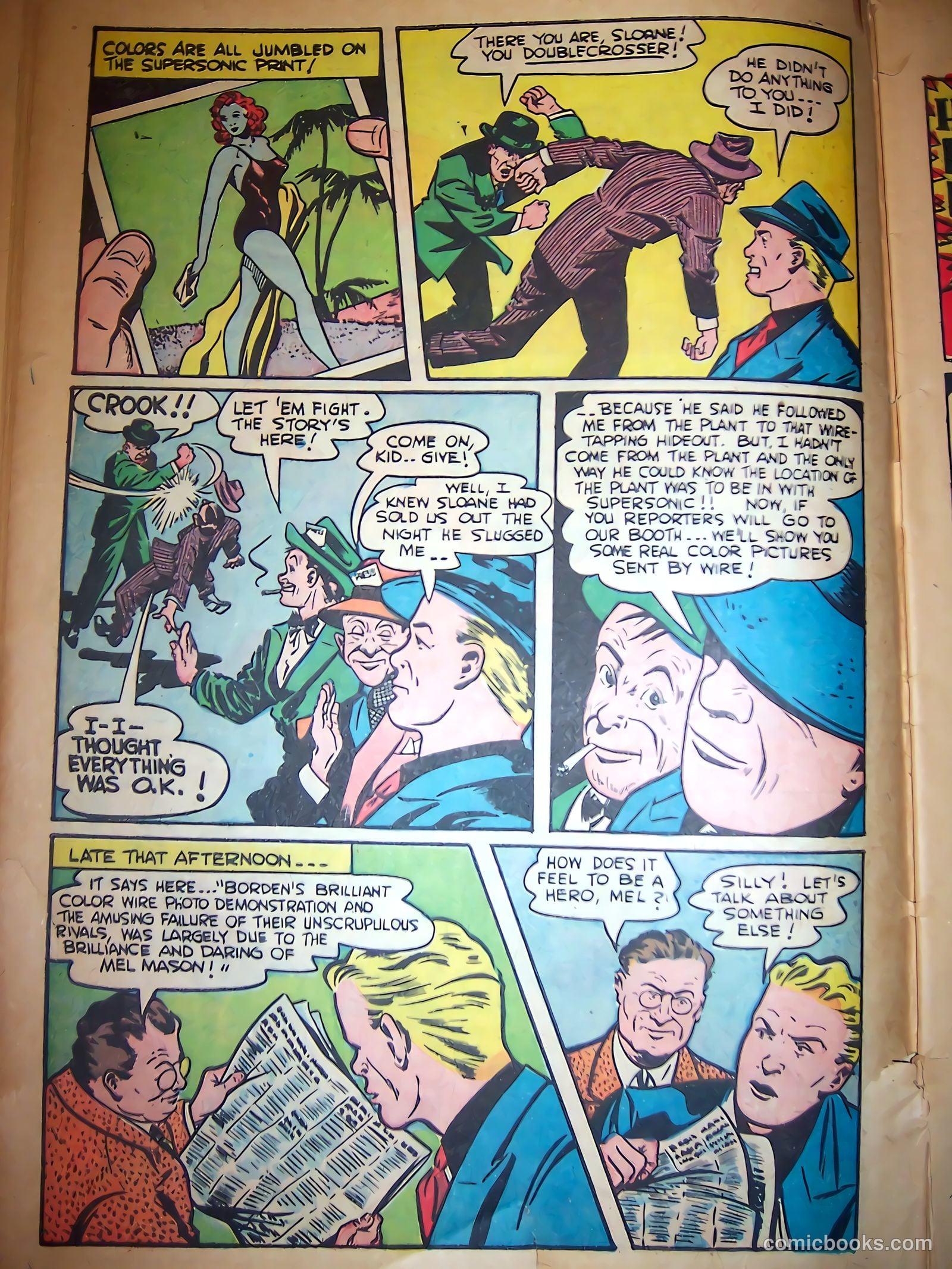
In "The Secret Message!" from Future World Comics #2 (1946), Mel Mason, assistant to chief engineer James Cook at Borden Electronics, races to perfect the revolutionary Borden Device—designed to send full-color images by wire—while juggling urgent calls from the Belmar lab. But amid the hum of machinery and the pressure of progress, Mel finds himself entangled in a mystery at the Lamar plant that’s far more personal than any circuit diagram.

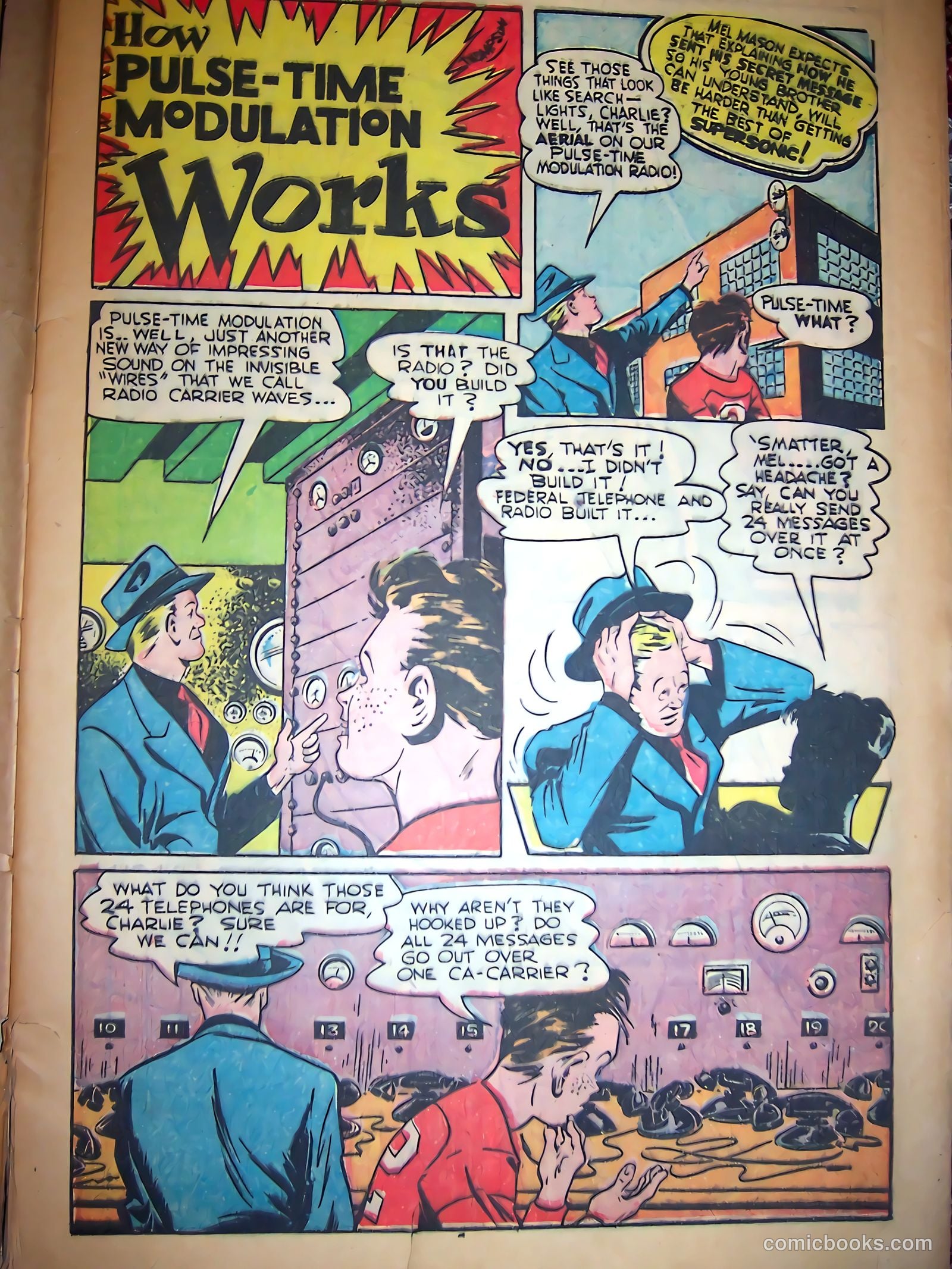
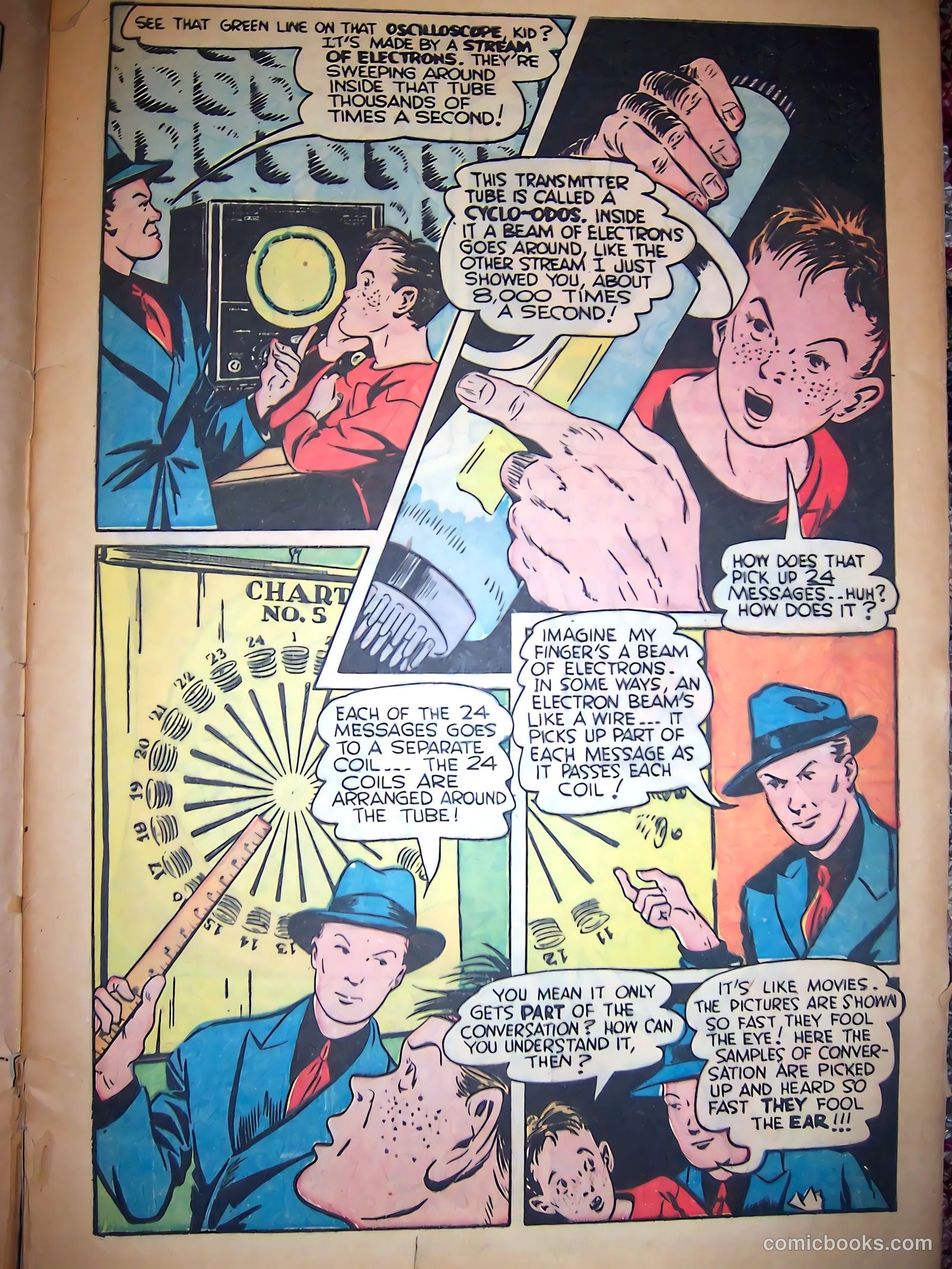
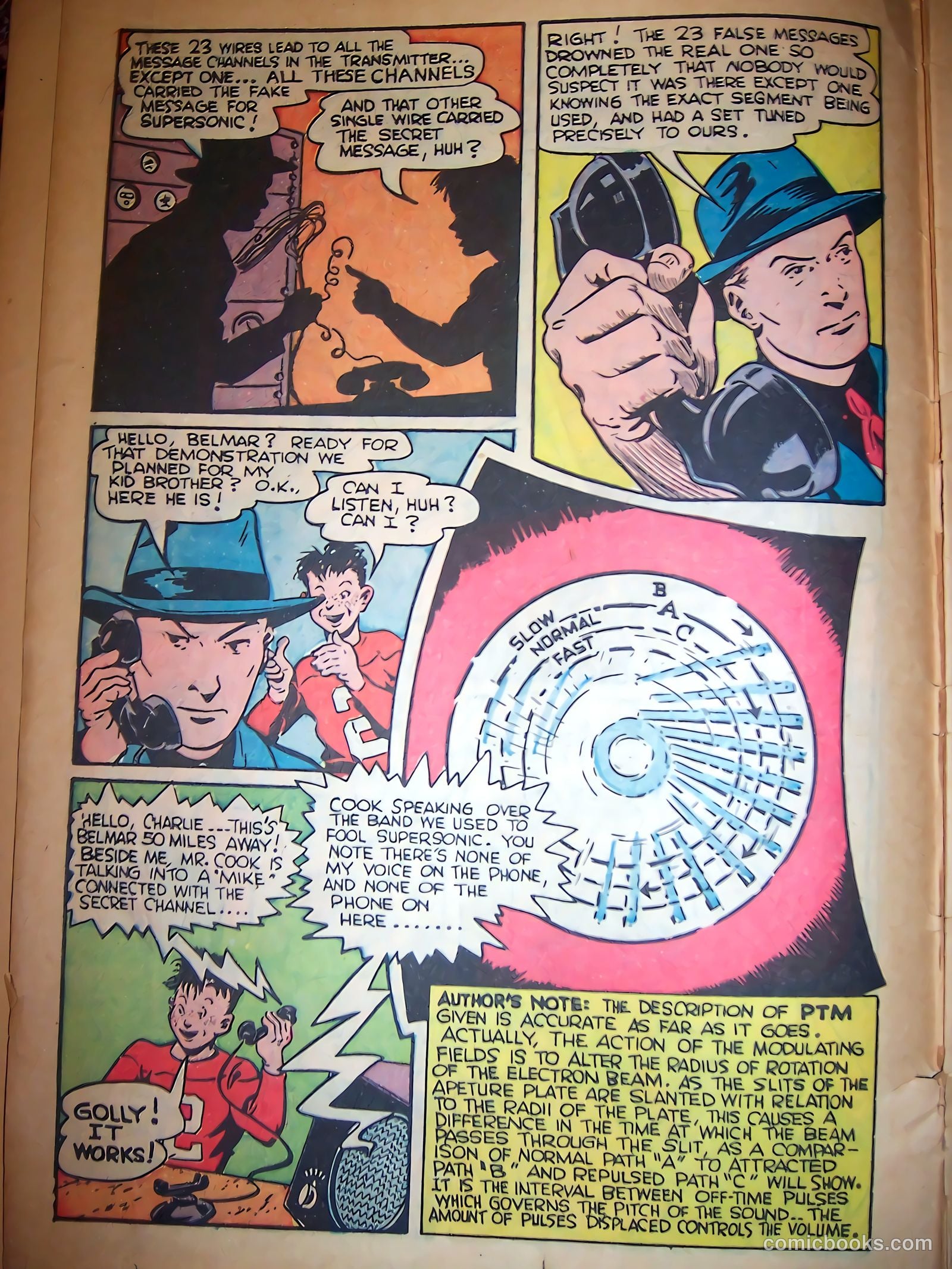
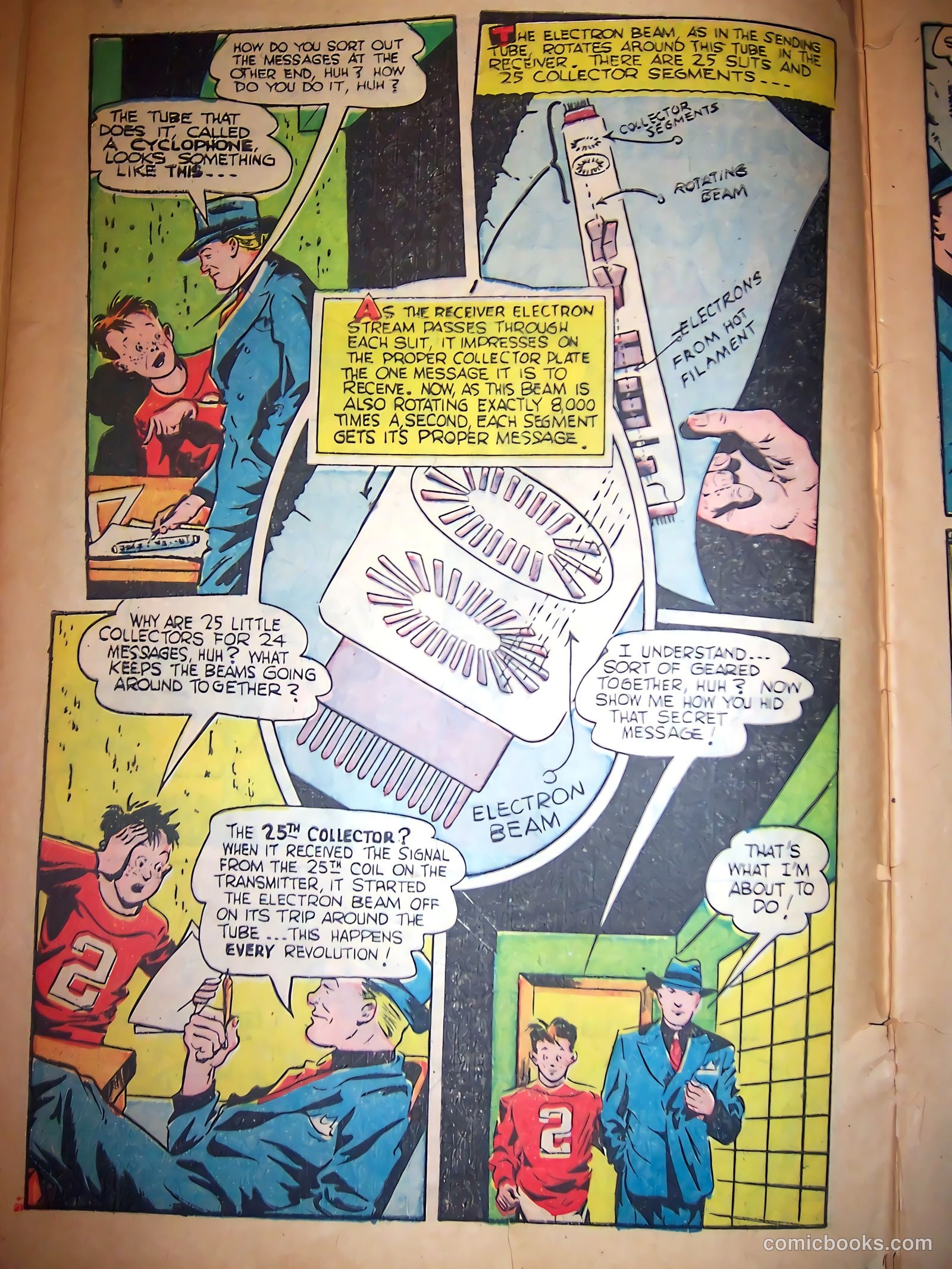
How Pulse-Time Modulation Works
4 pp · non-fiction

Mr. Mason walks his younger brother Charlie through the technical marvel of pulse-time modulation radio, demonstrating how a single carrier wave can transmit twenty-four separate messages simultaneously using a rotating electron beam and clever timing. As Charlie marvels at the cyclophone receiver and the transmitter tube that make it all possible, Mr. Mason reveals how he used this same technology to hide a secret message in plain sight—embedding it among twenty-three fake messages designed to confound anyone listening in, including the villain Supersonic. The story culminates with a live demonstration that proves the system works, leaving Charlie astounded by the ingenuity of modern radio engineering.

Untitled story
3 pp · science fiction
Untitled story
3 pp · non-fiction
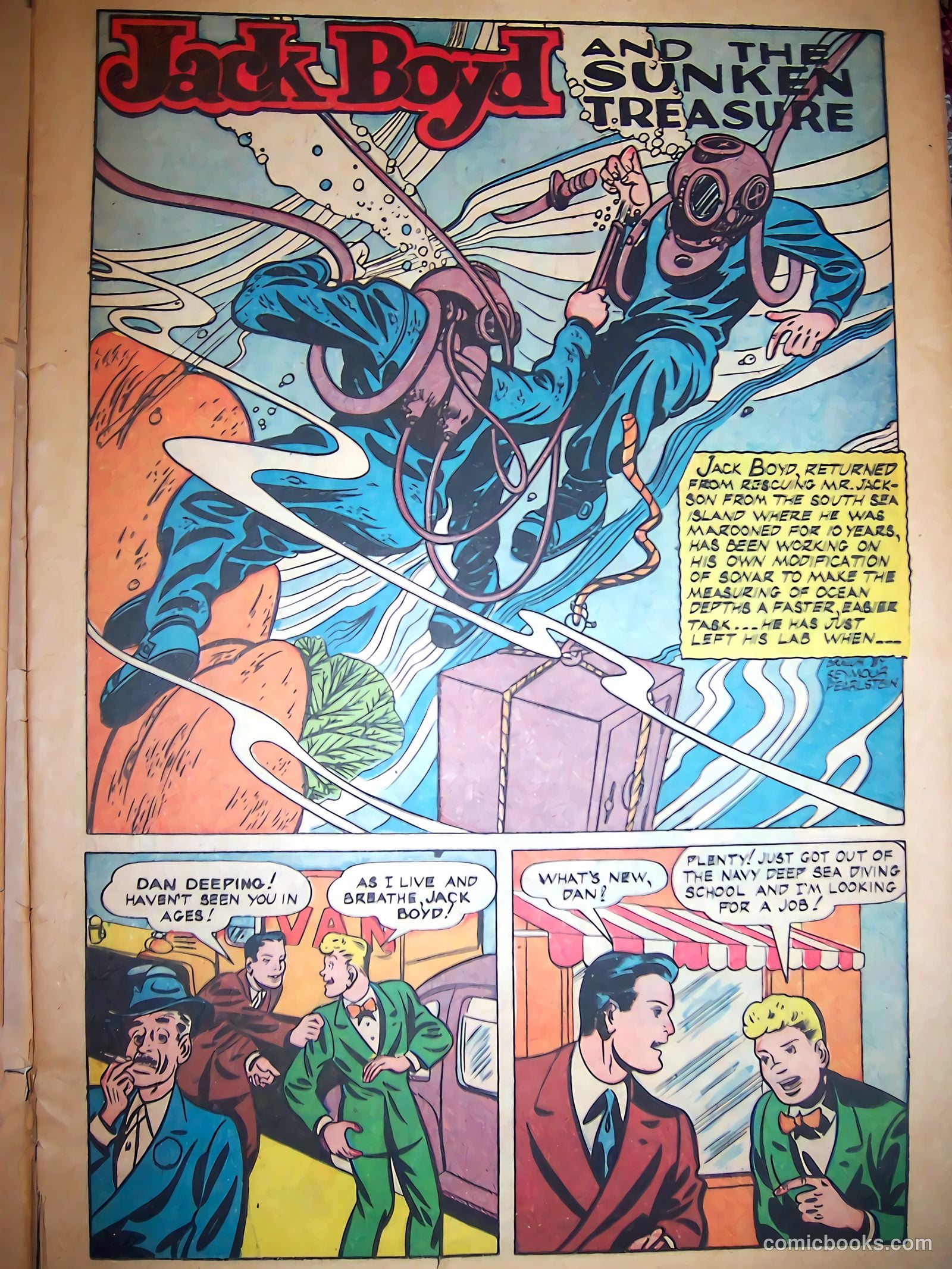
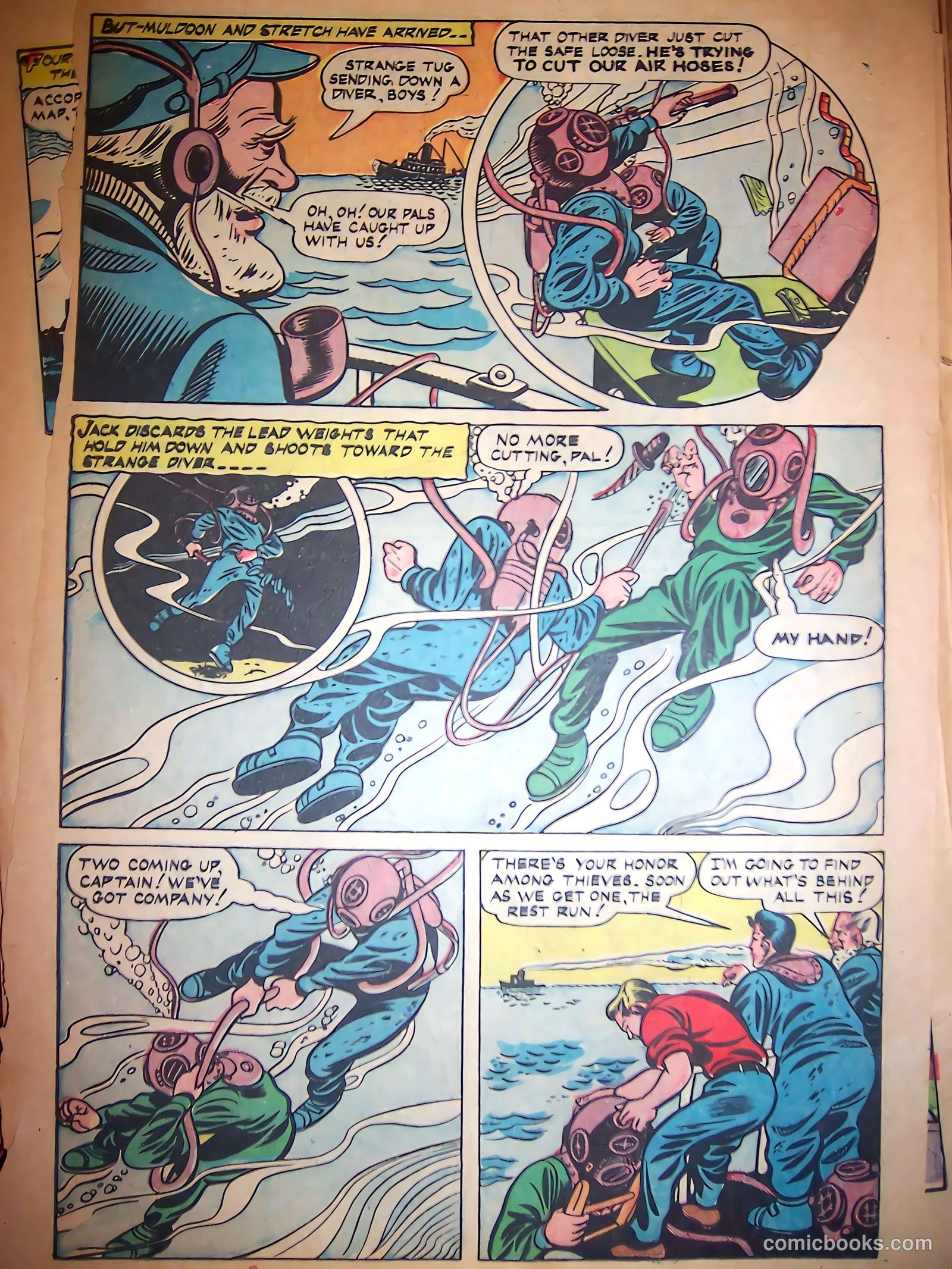
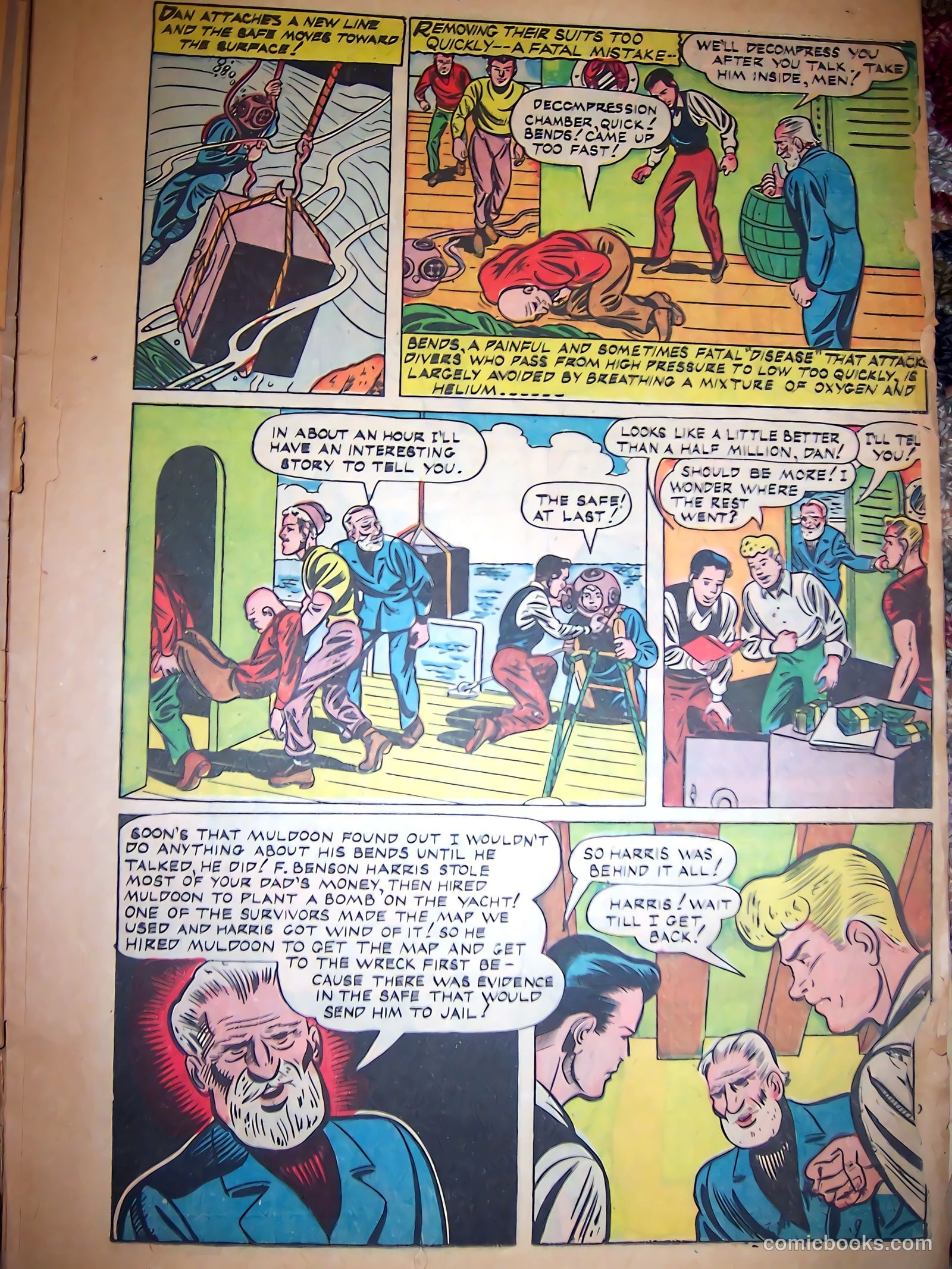
The Sunken Treasure
9 pp · adventure

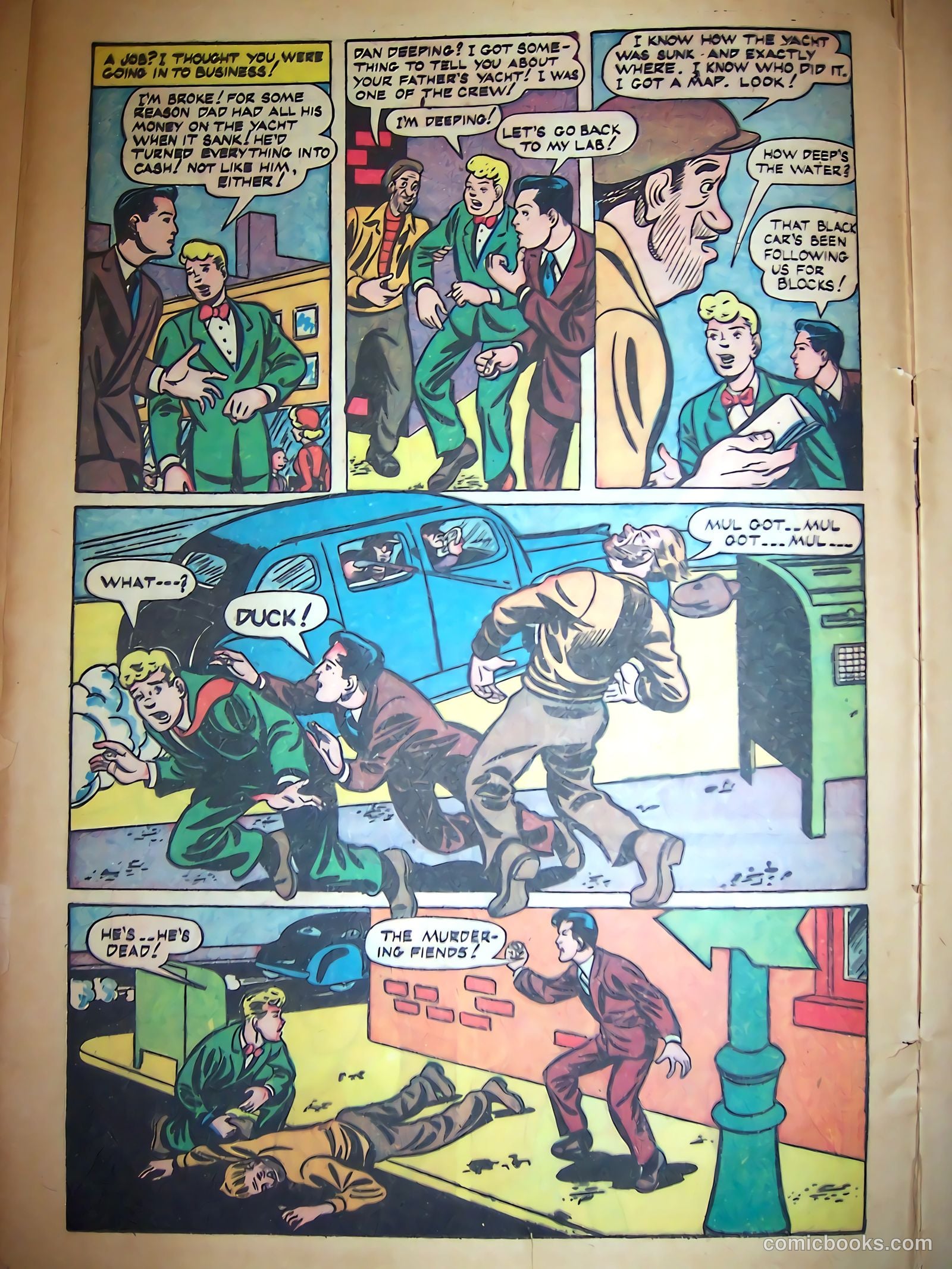
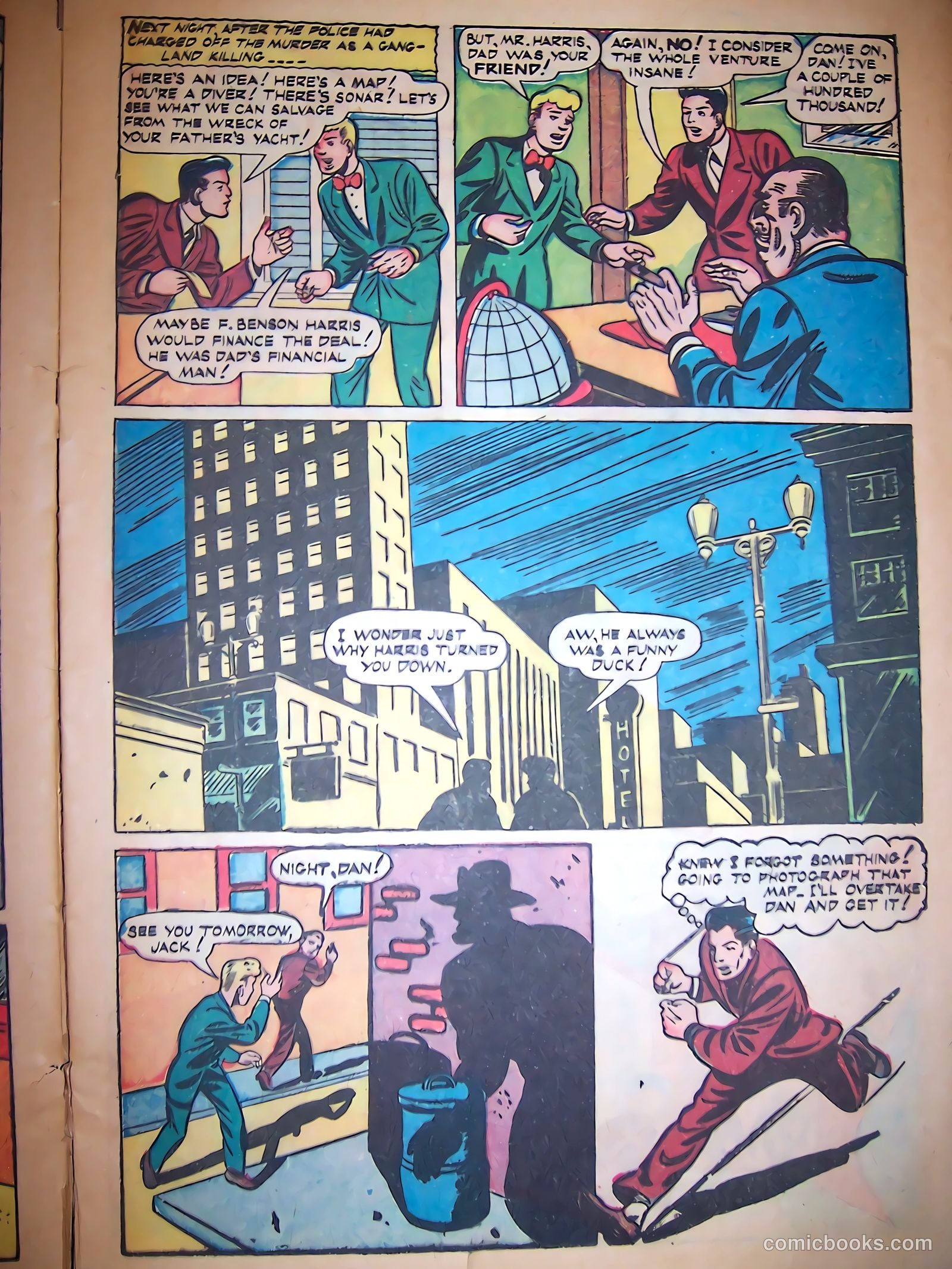
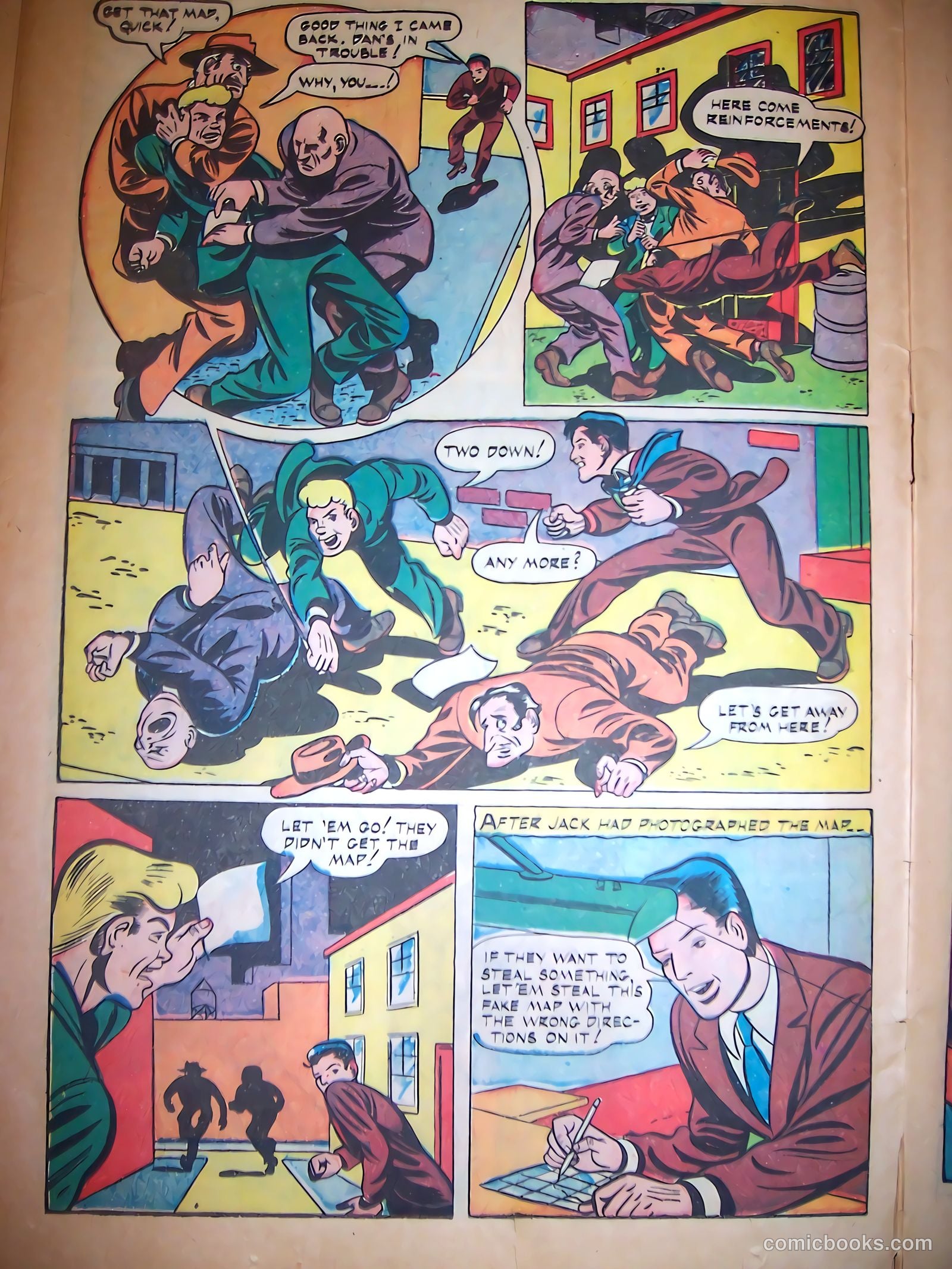
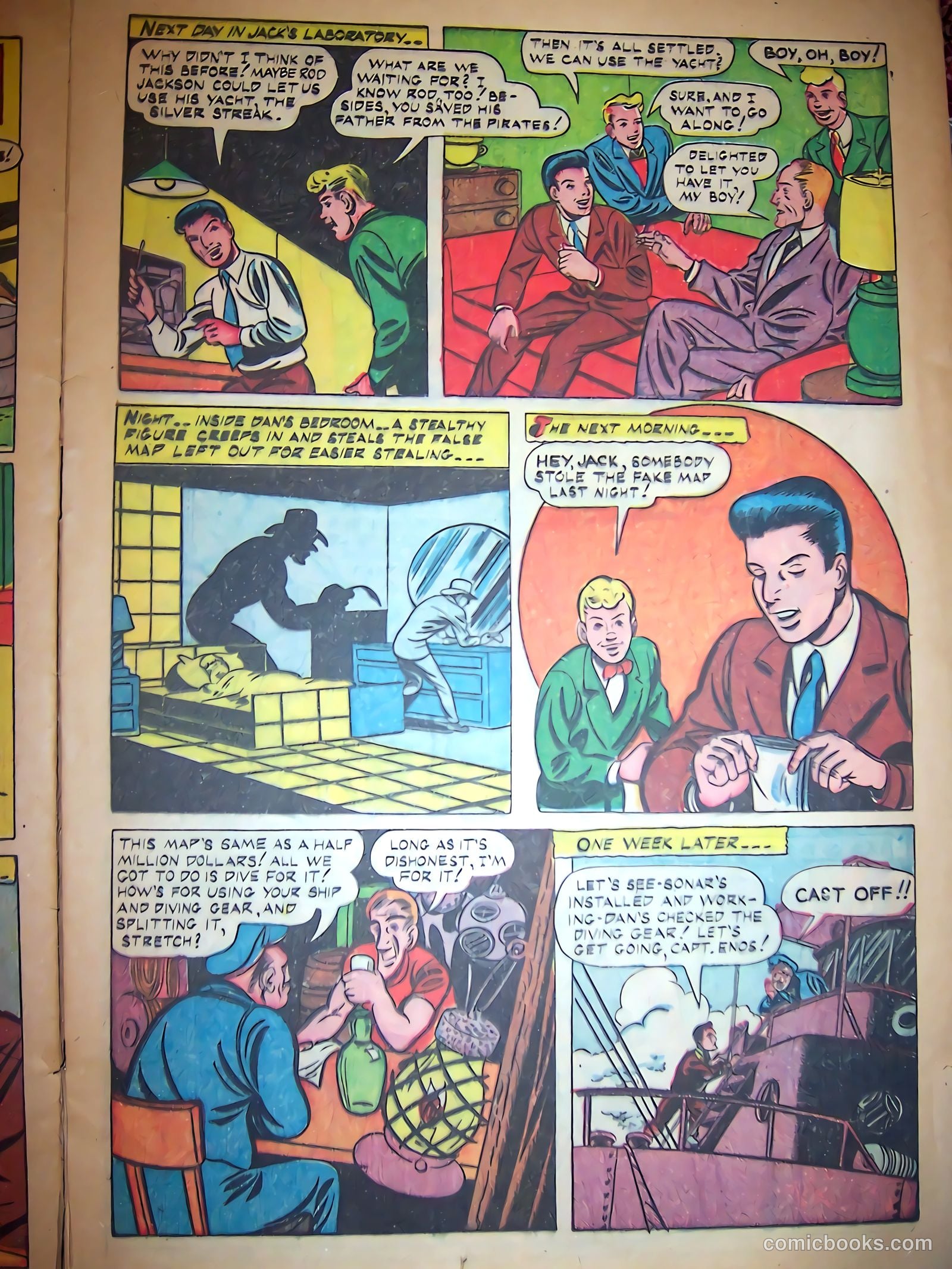
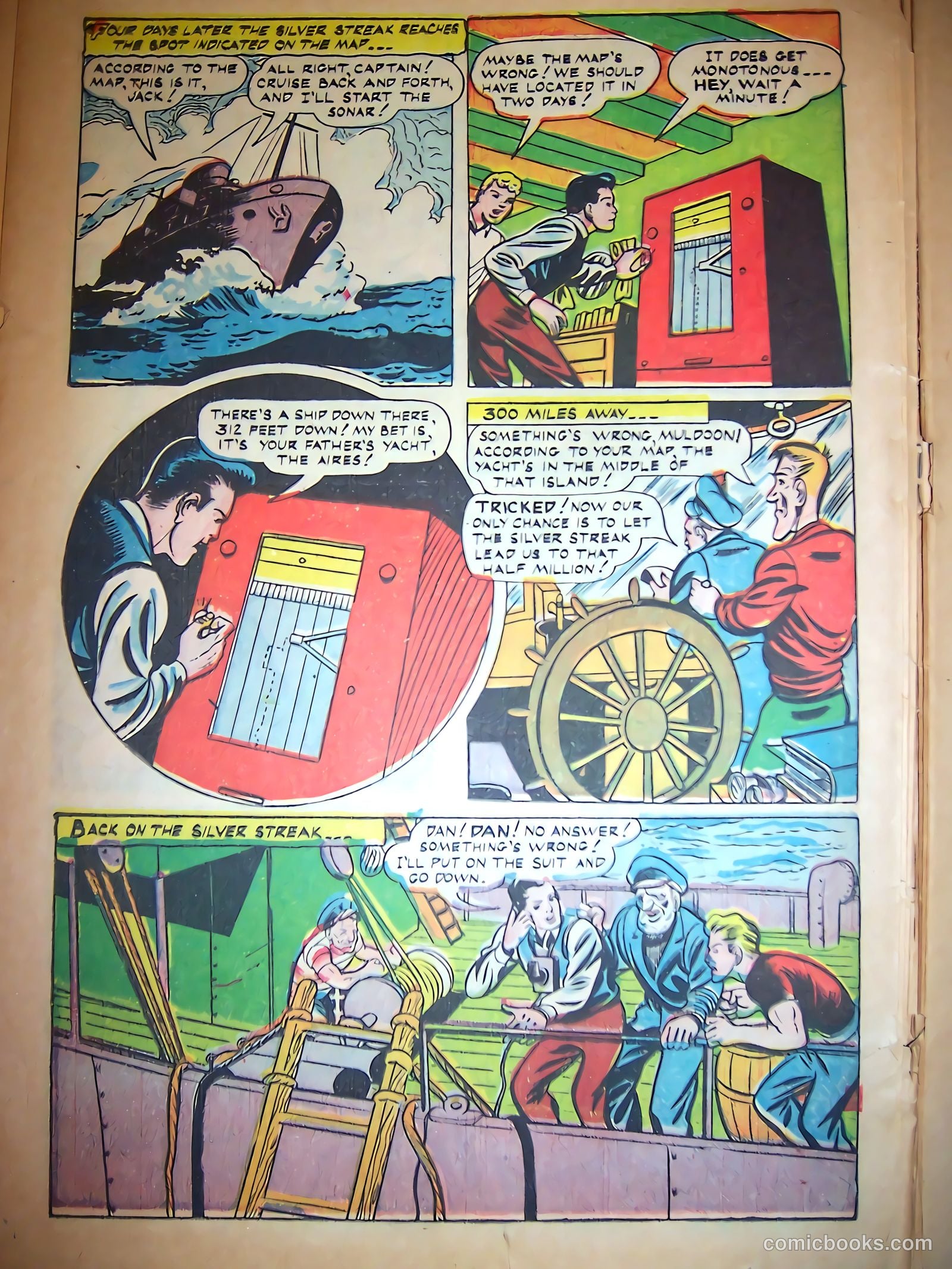
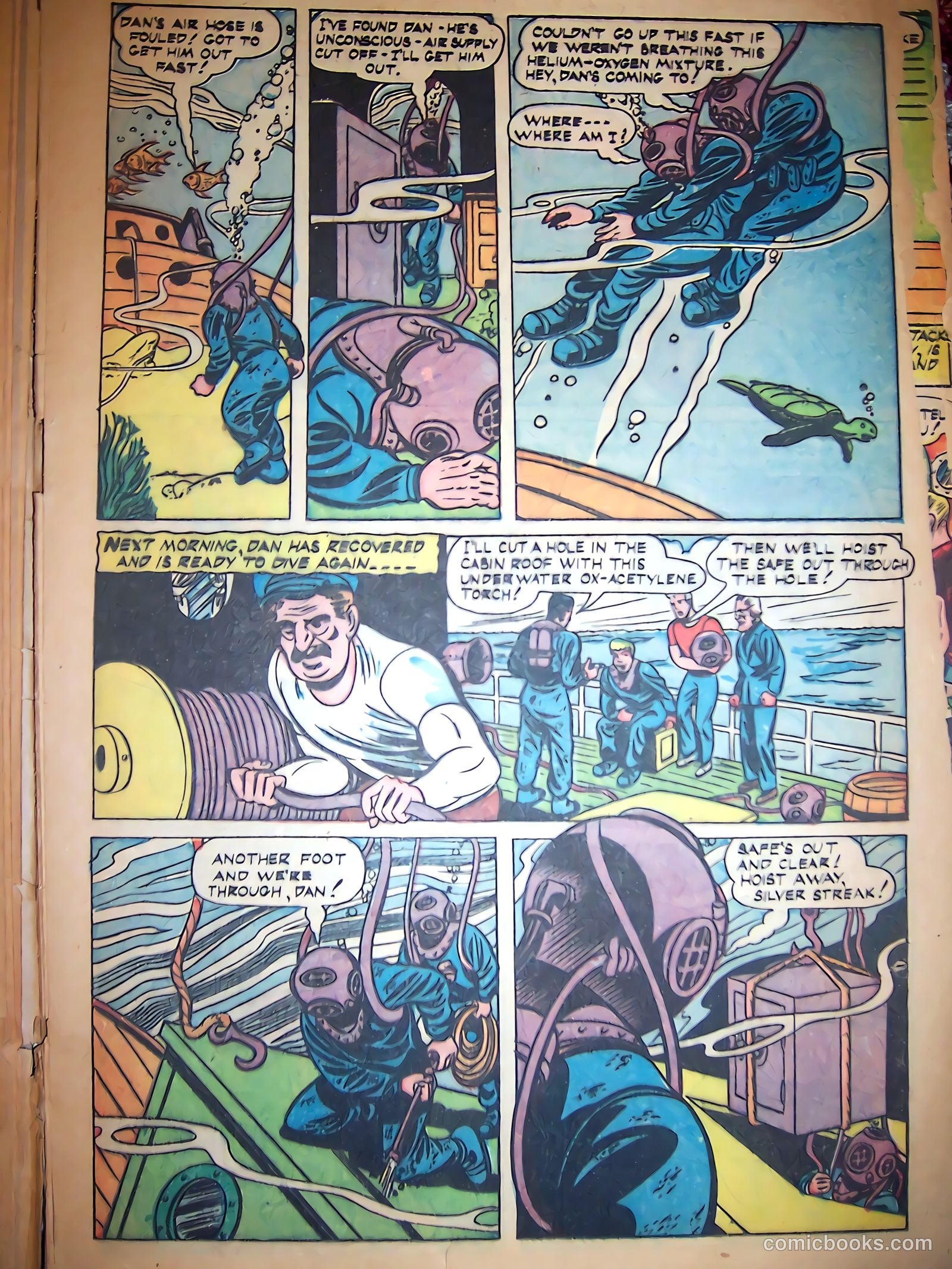
Jack Boyd's modified sonar technology becomes the key to a sunken fortune when his old friend Dan Deeping arrives desperate for work—his father's yacht, carrying a fortune in cash, went down years ago, and Jack knows exactly where and why. As the two prepare a salvage expedition aboard the yacht the Silver Streak, they find themselves racing against dangerous rivals who'll stop at nothing to reach the wreck first and claim what's waiting in the deep.

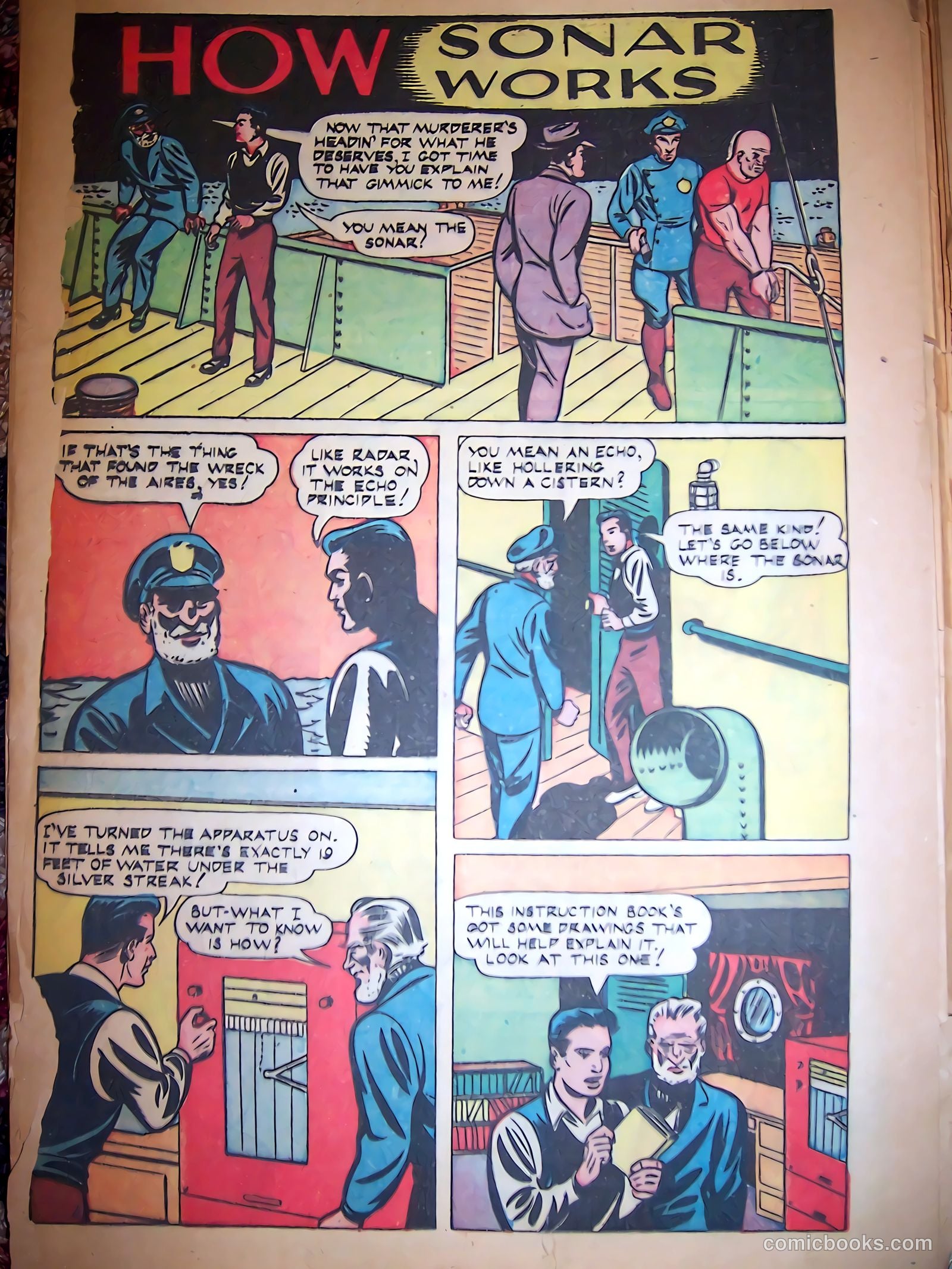
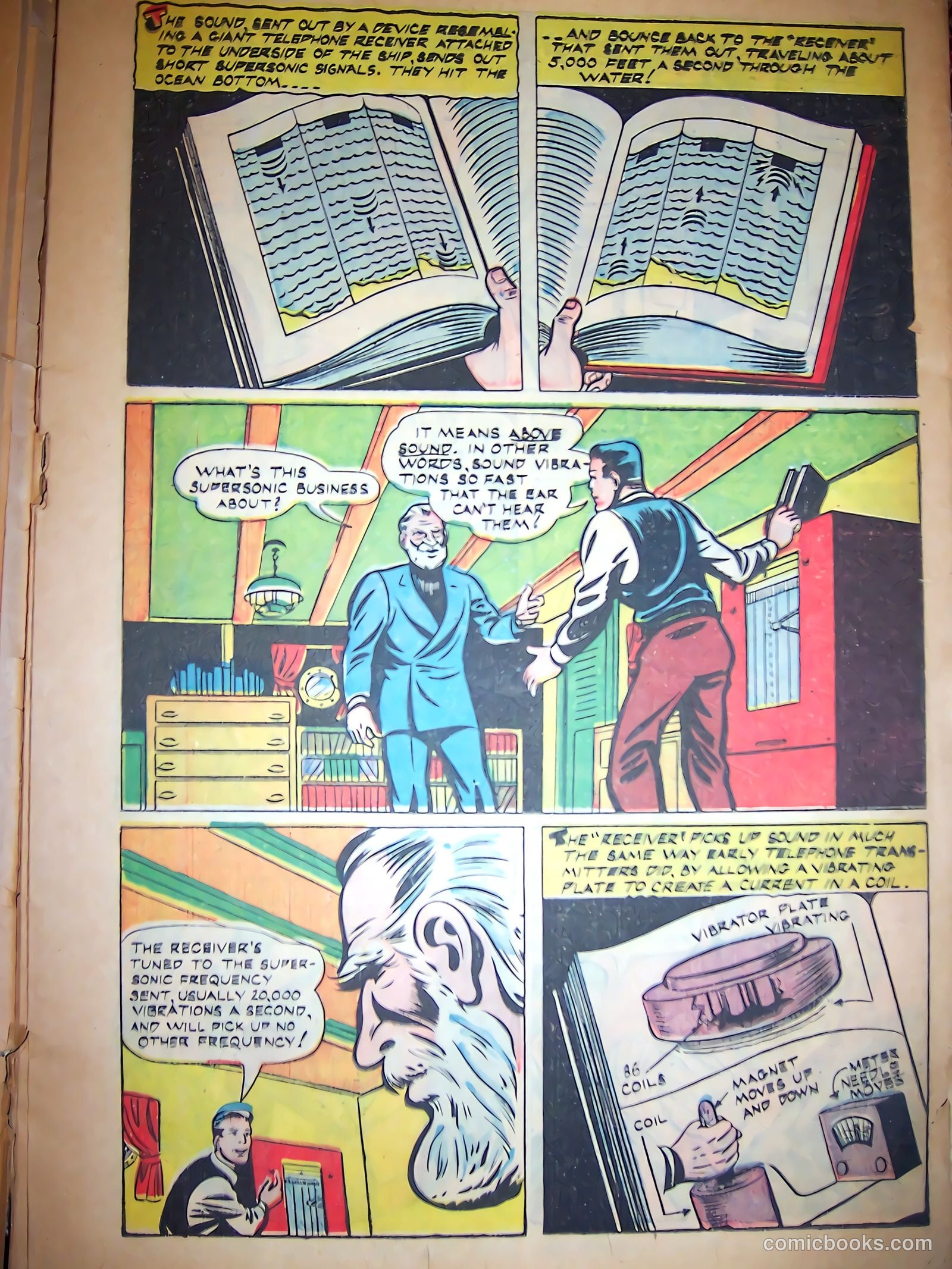
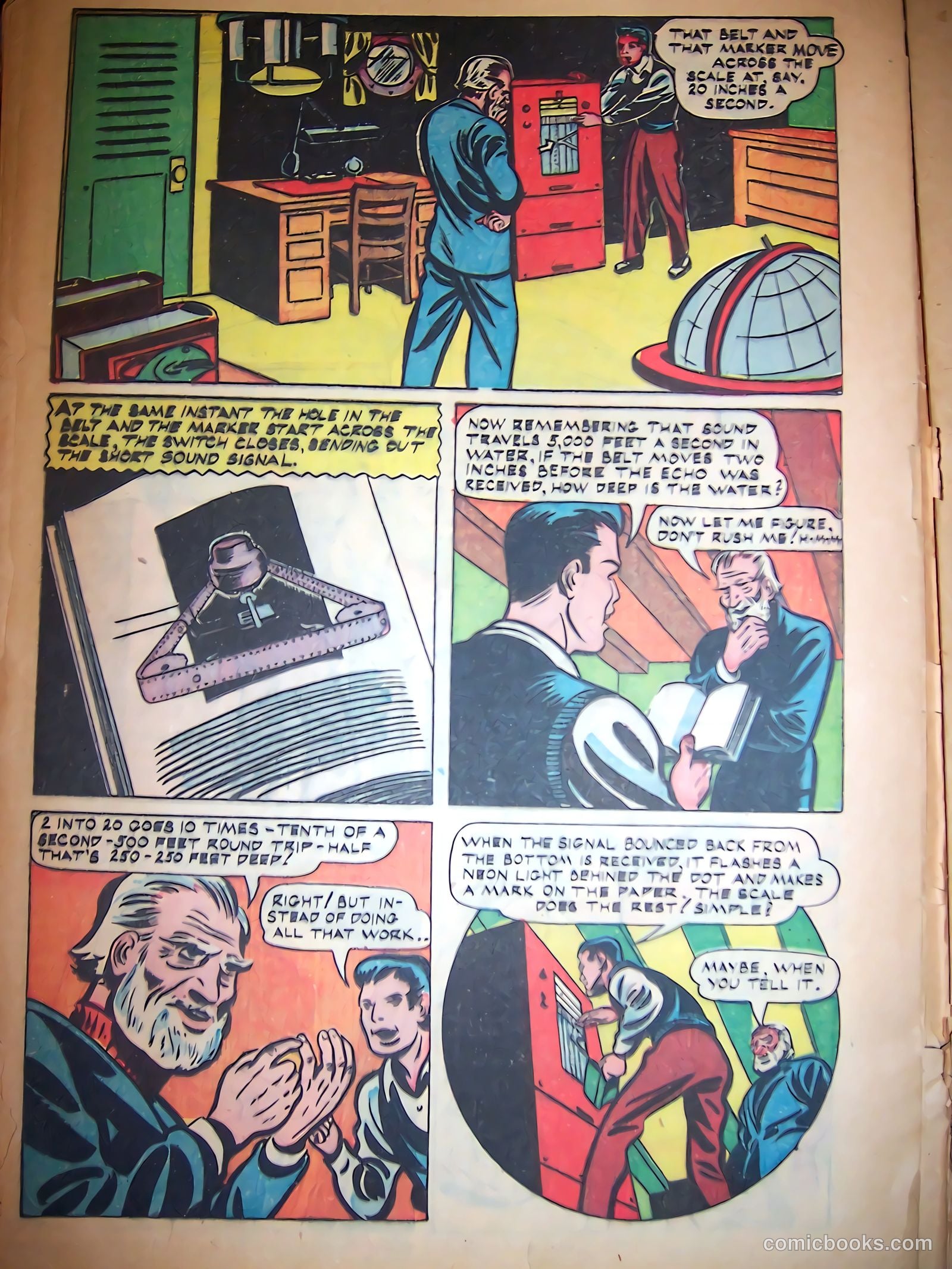
How Sonar Works
3 pp · non-fiction

A character aboard the Silver Streak learns how sonar technology works—the same system that located the wreck of the Aires—as an expert walks through the echo-based principles using instruction diagrams and practical calculations. From the supersonic signals bouncing off the ocean floor to the mechanical receiver that converts vibrations into readable measurements, this three-page feature breaks down the fascinating machinery behind underwater detection in clear, hands-on terms.

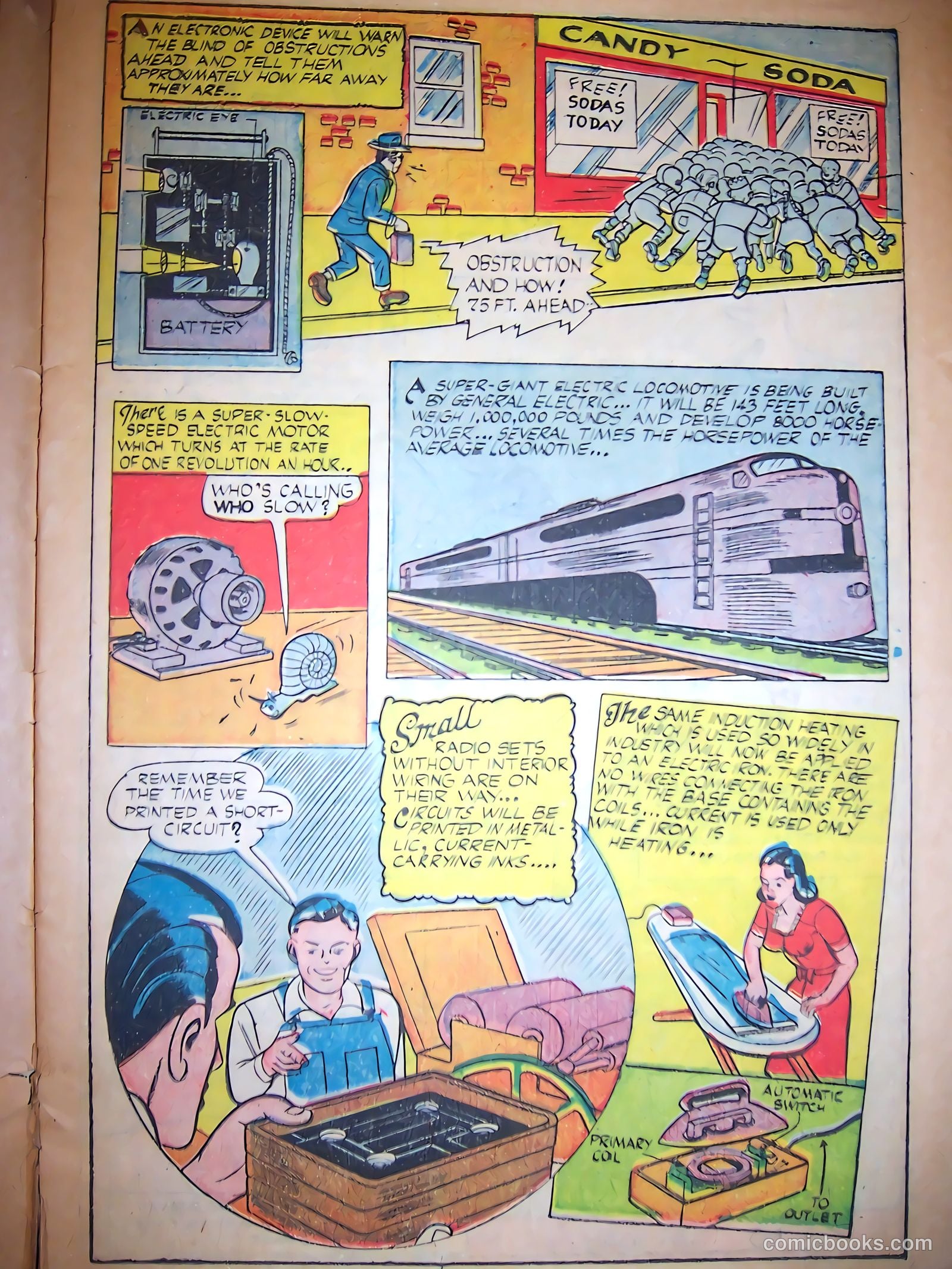
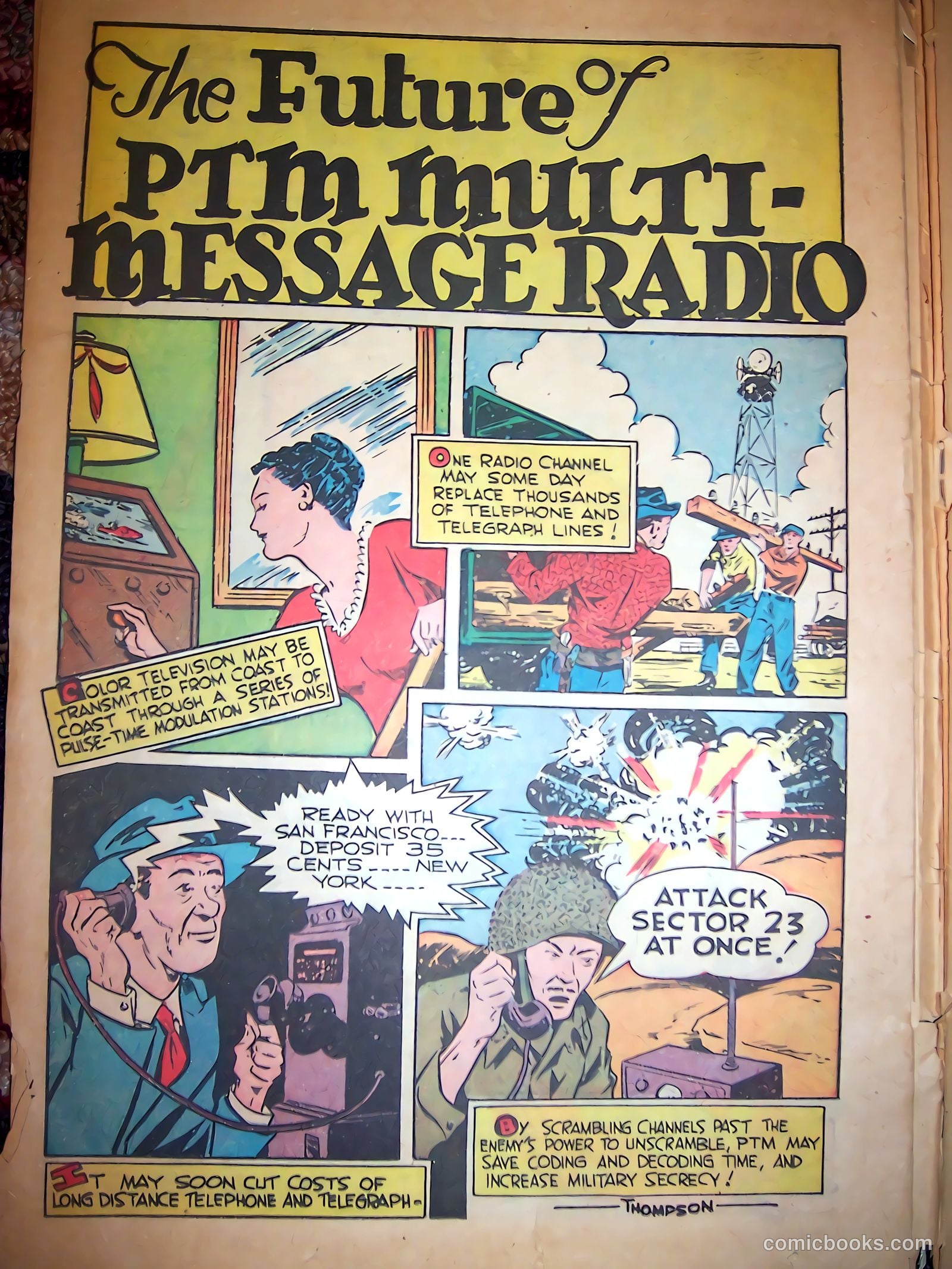
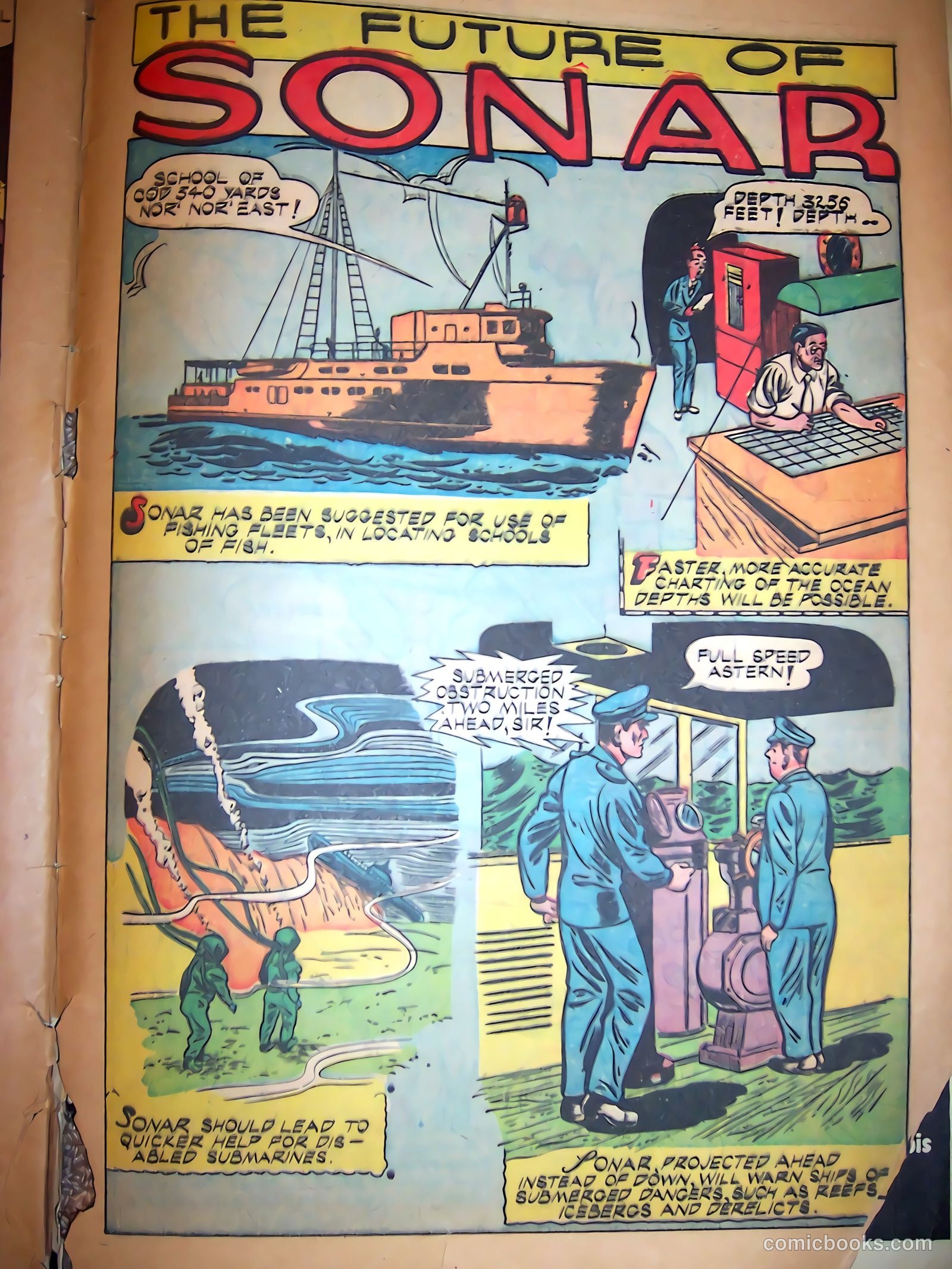
The Future of PTM Multi-Message Radio
1 pp · non-fiction
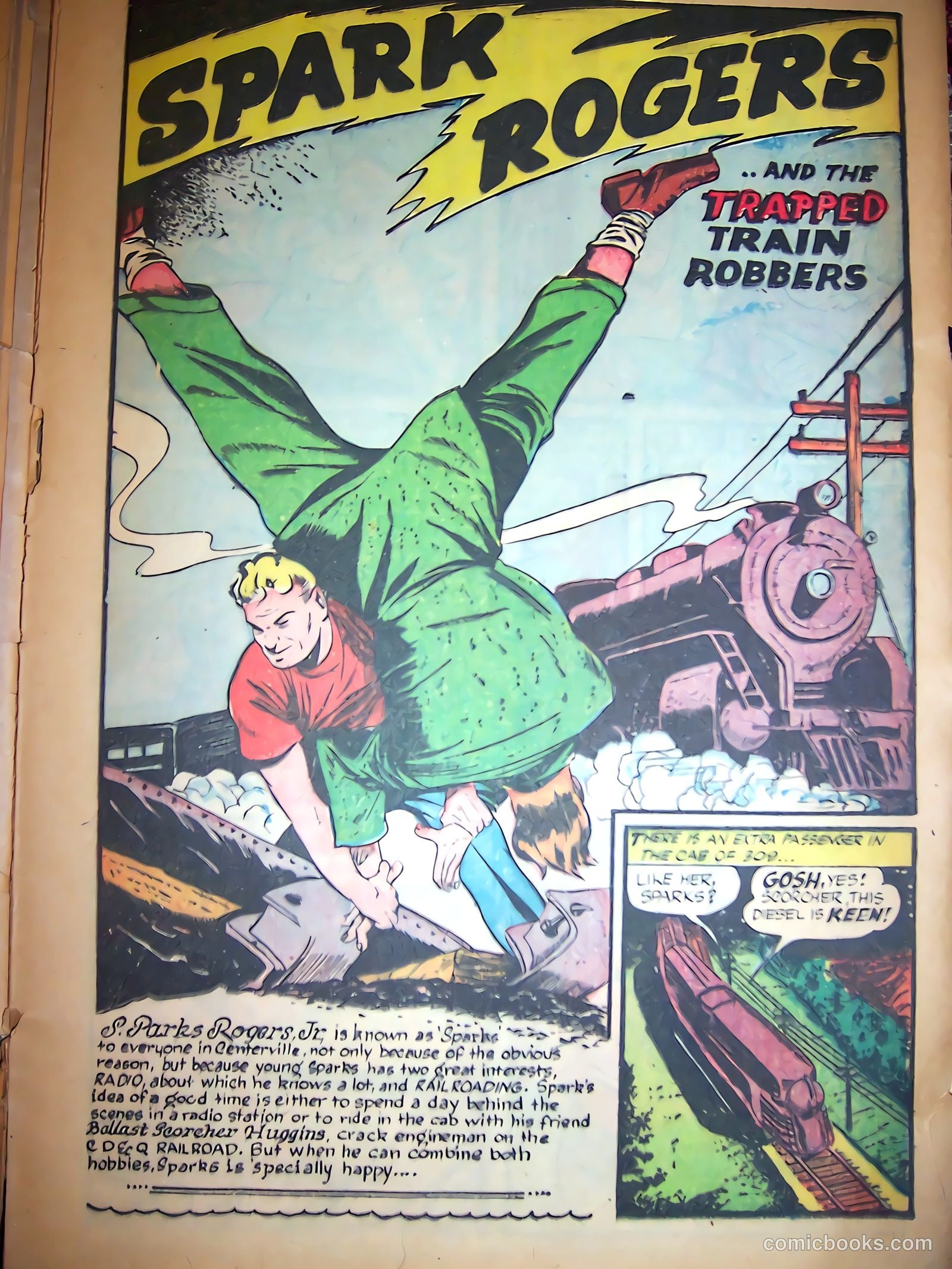
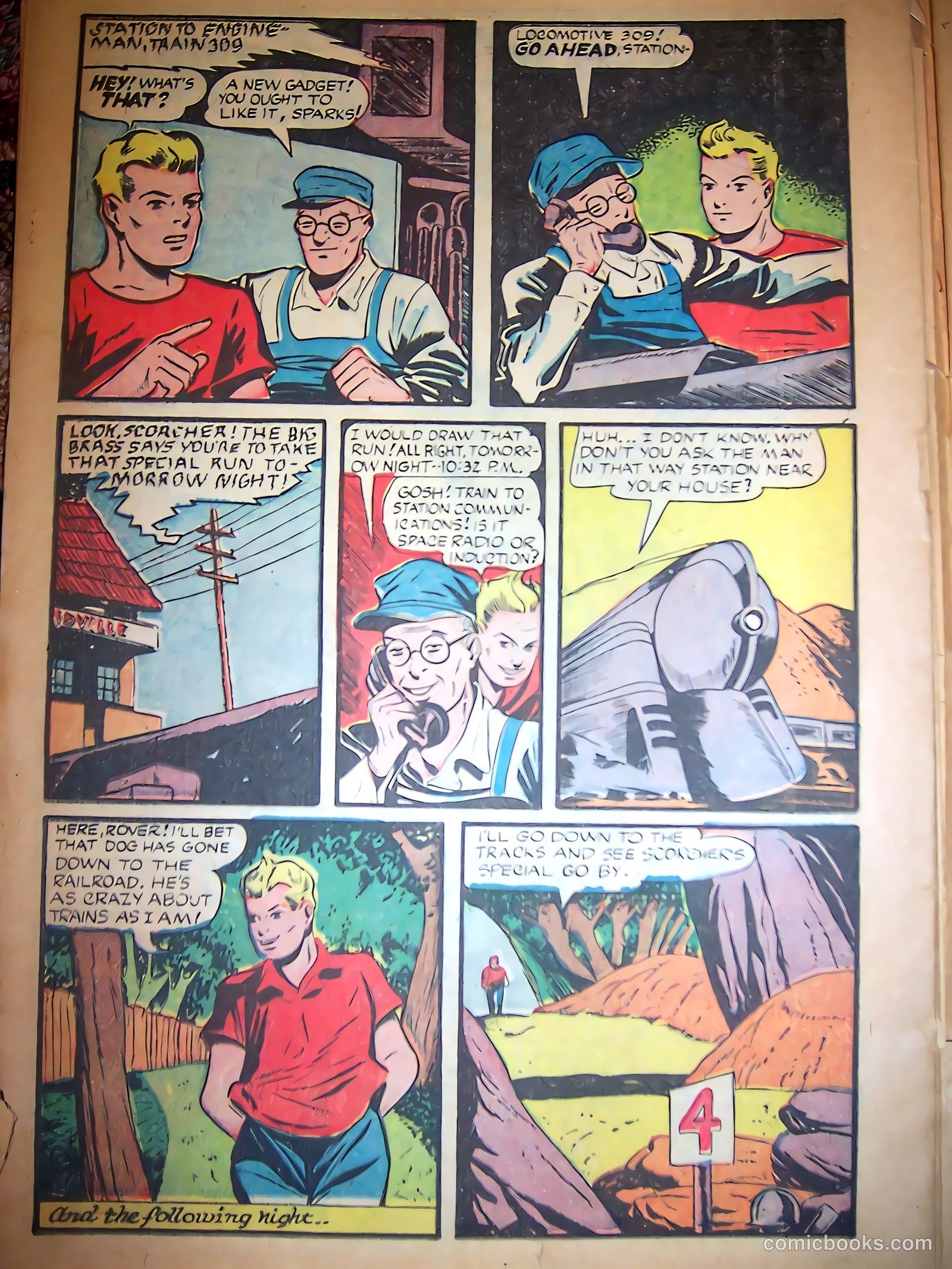
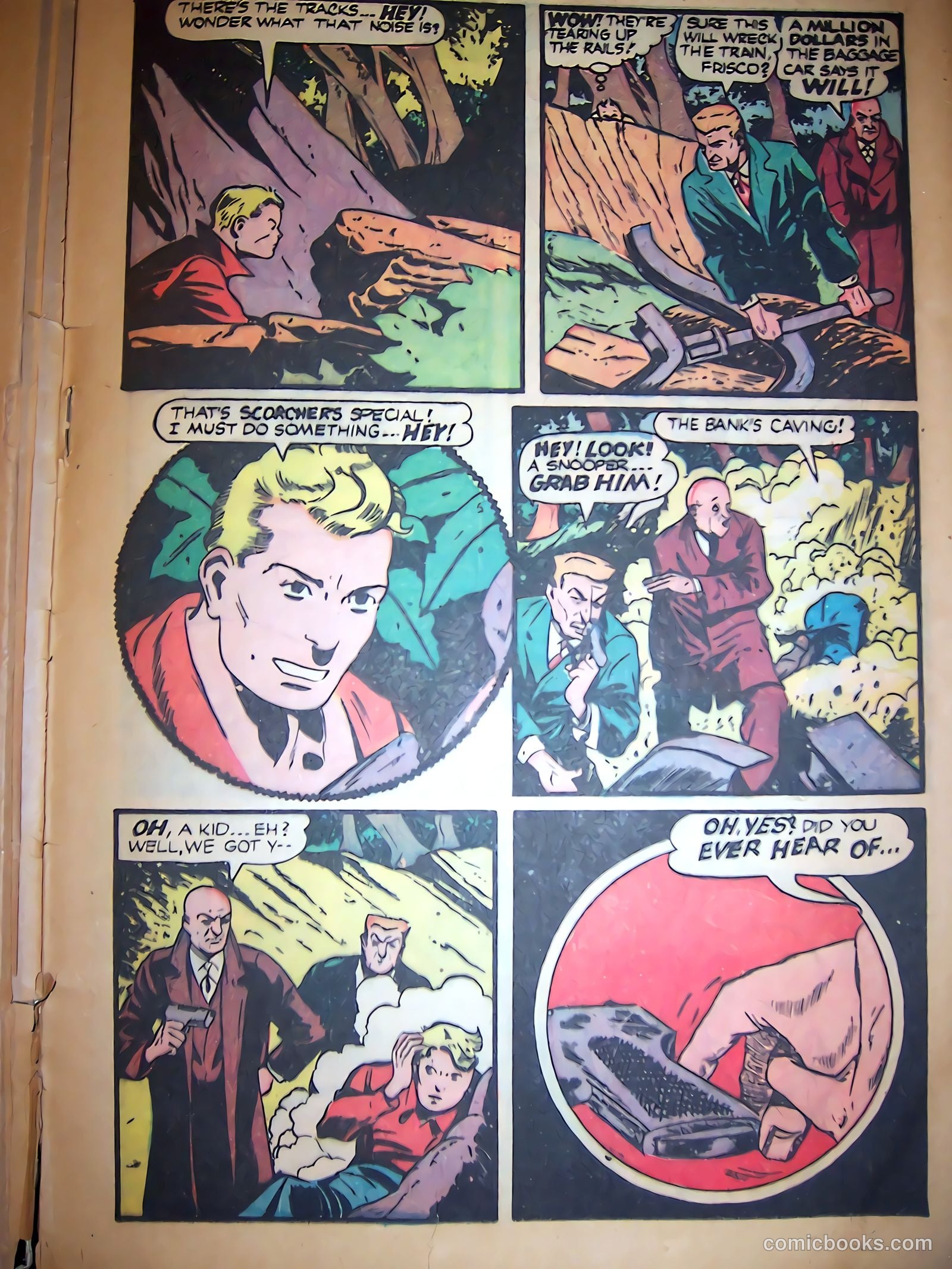
Trapped Train Robbers
8 pp · adventure

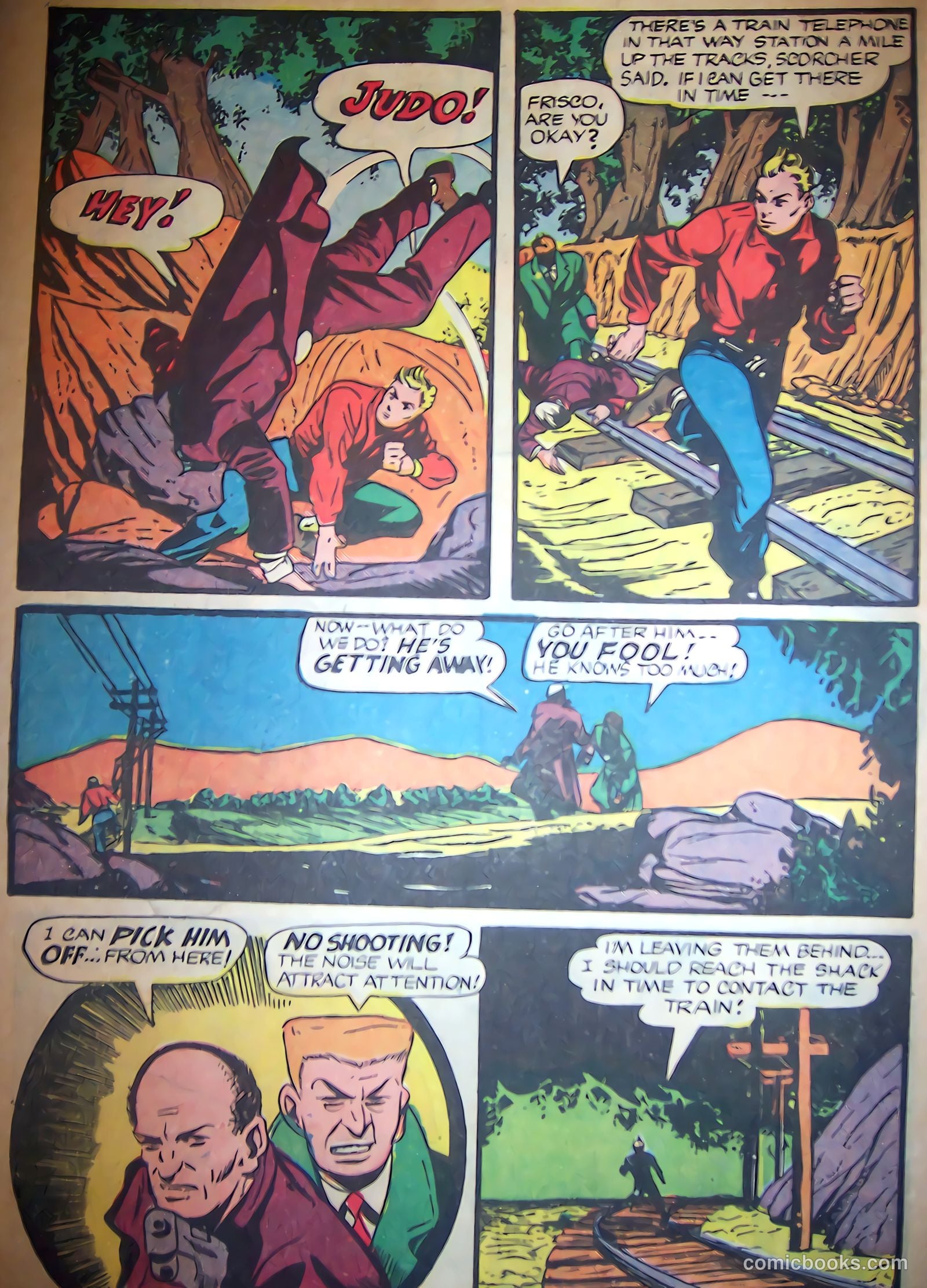
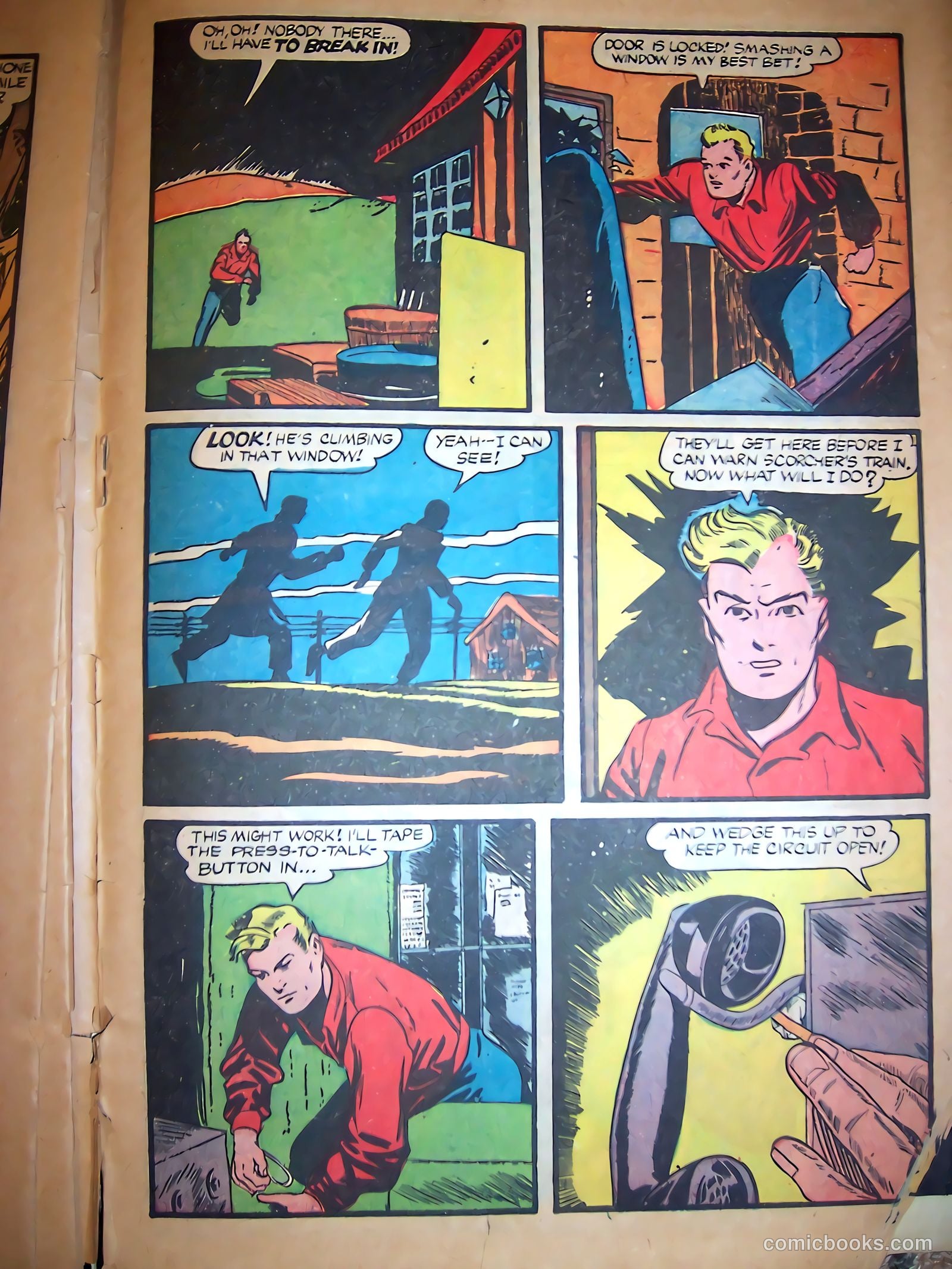
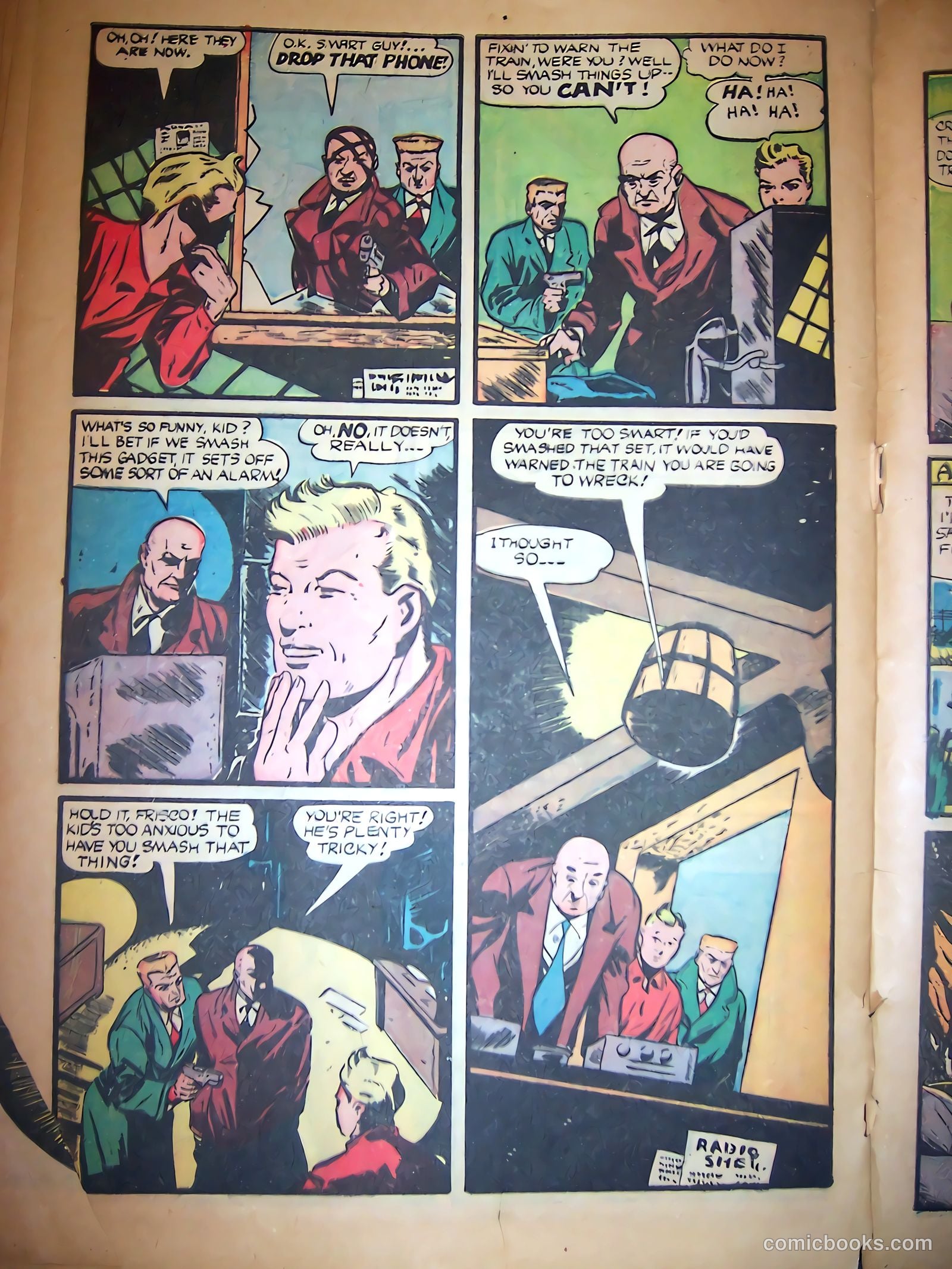
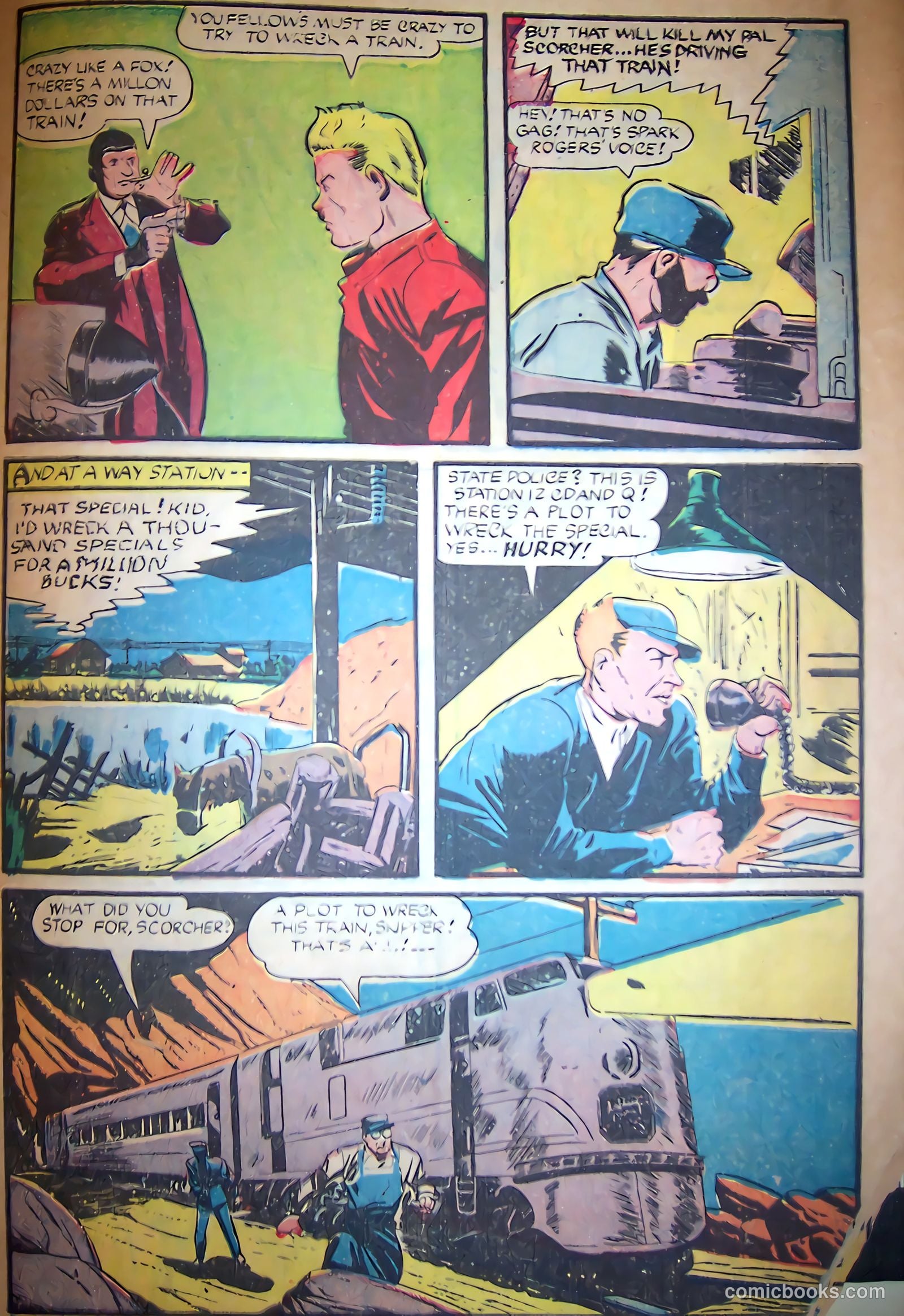
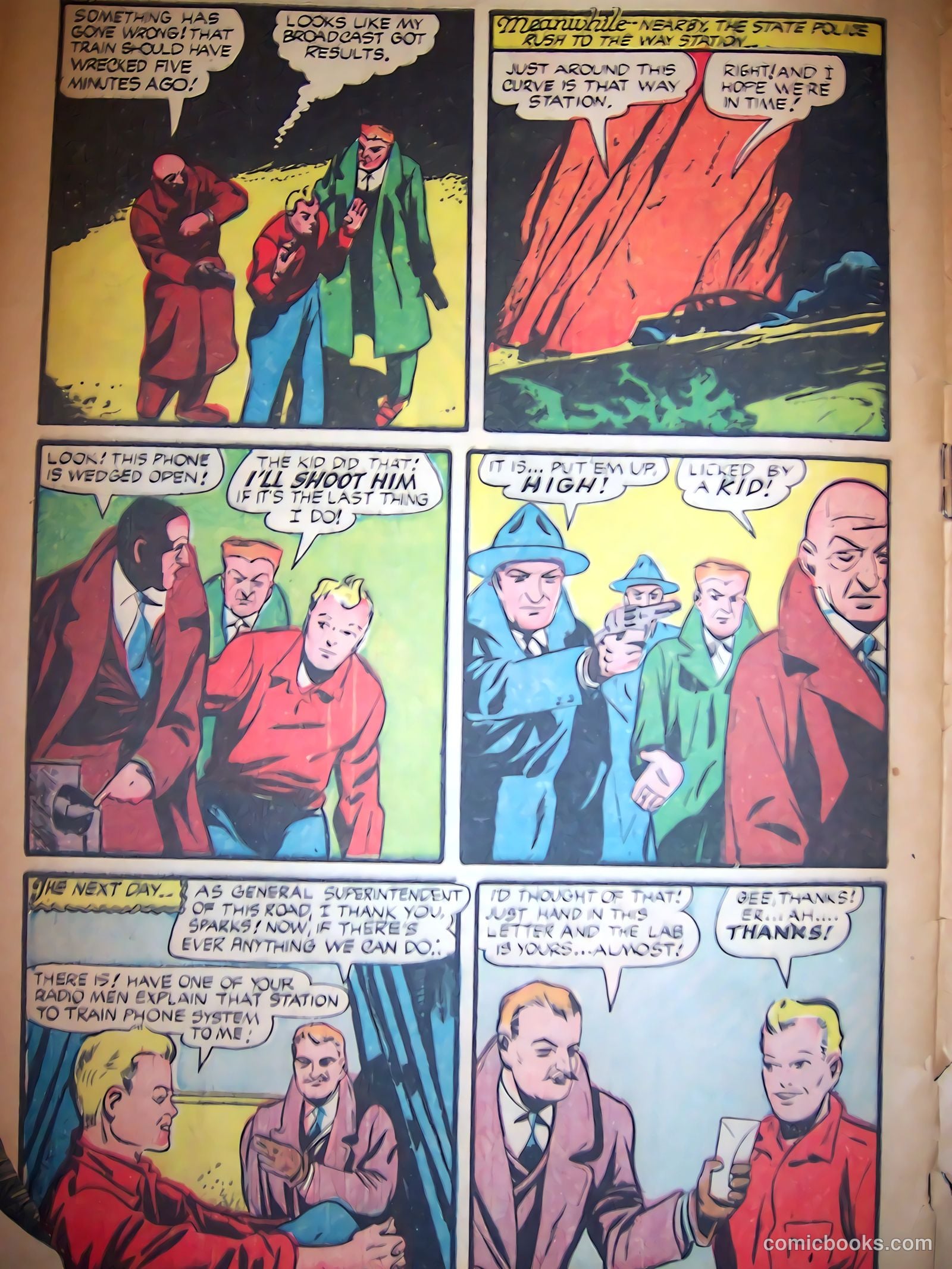
Young Sparks Rogers combines his twin passions for radio and railroading when he discovers a gang of thieves planning to derail his friend Scorcher's locomotive—and a fortune in cash—along the tracks outside town. Racing against the clock to warn the train, Sparks must outwit the robbers and use his wits (and a bit of judo) to get word through before disaster strikes. A thrilling race between a quick-thinking kid and criminals who'll stop at nothing to claim their prize.

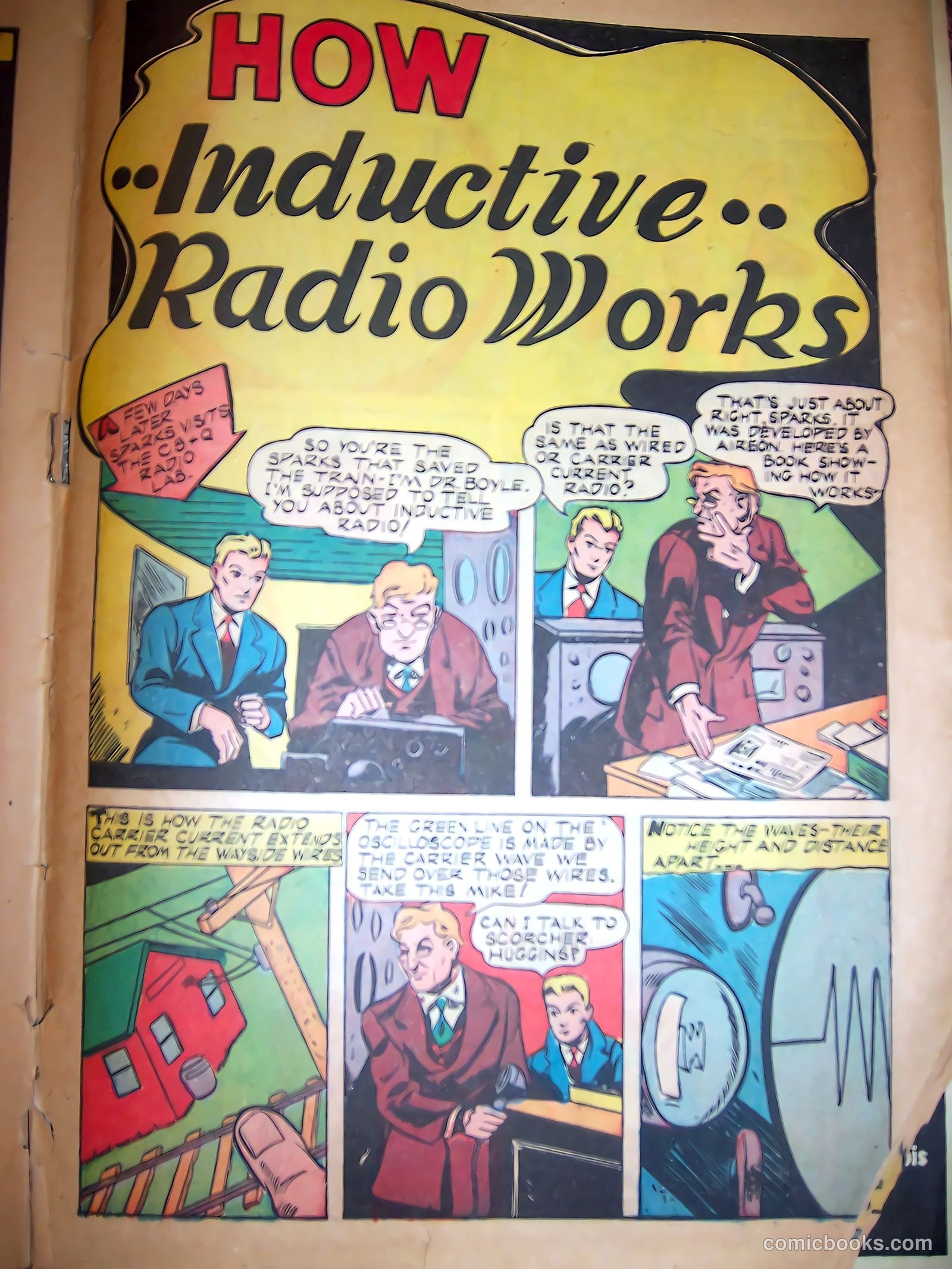
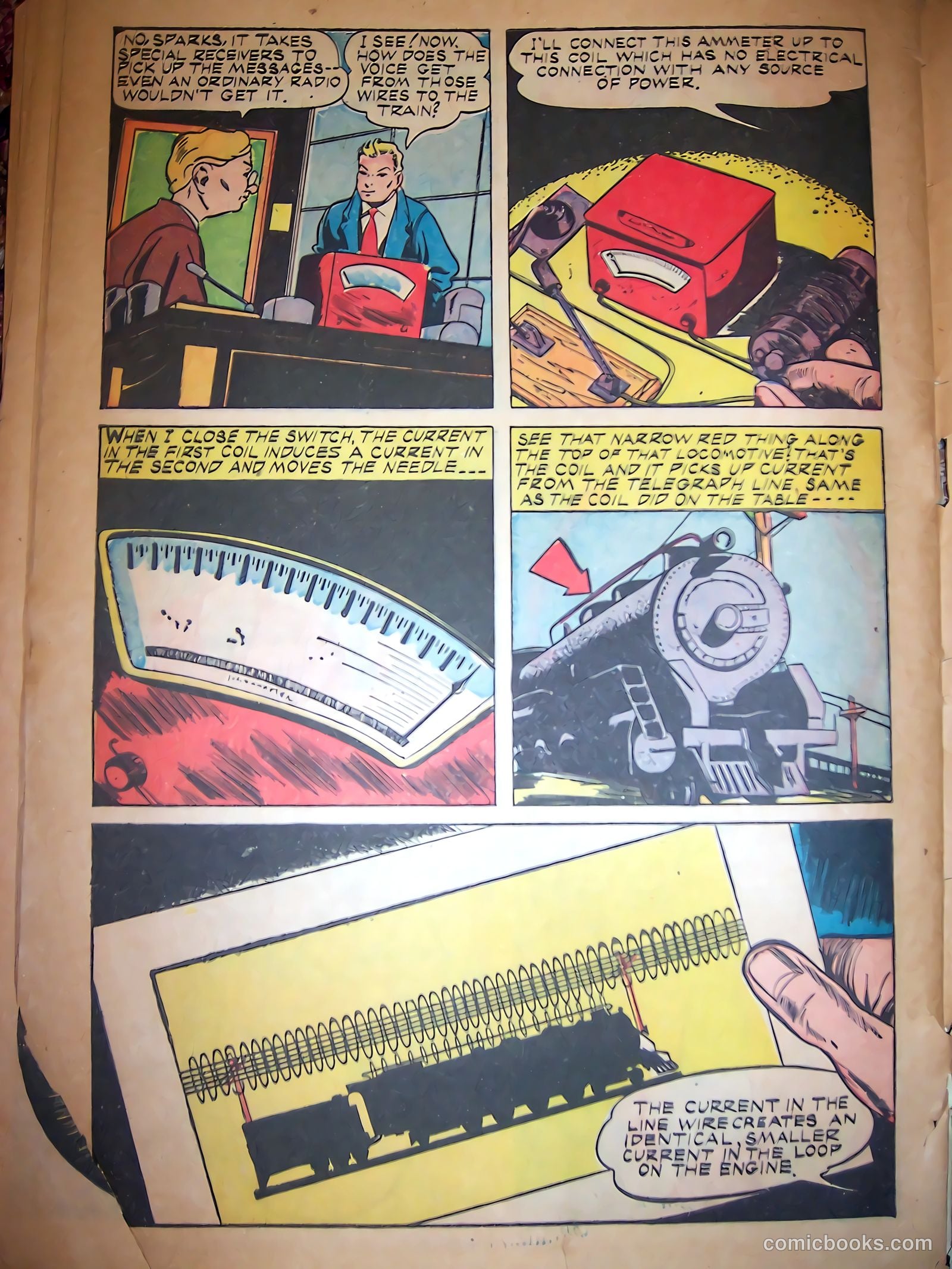
How...Inductive...Radio Works
4 pp · non-fiction

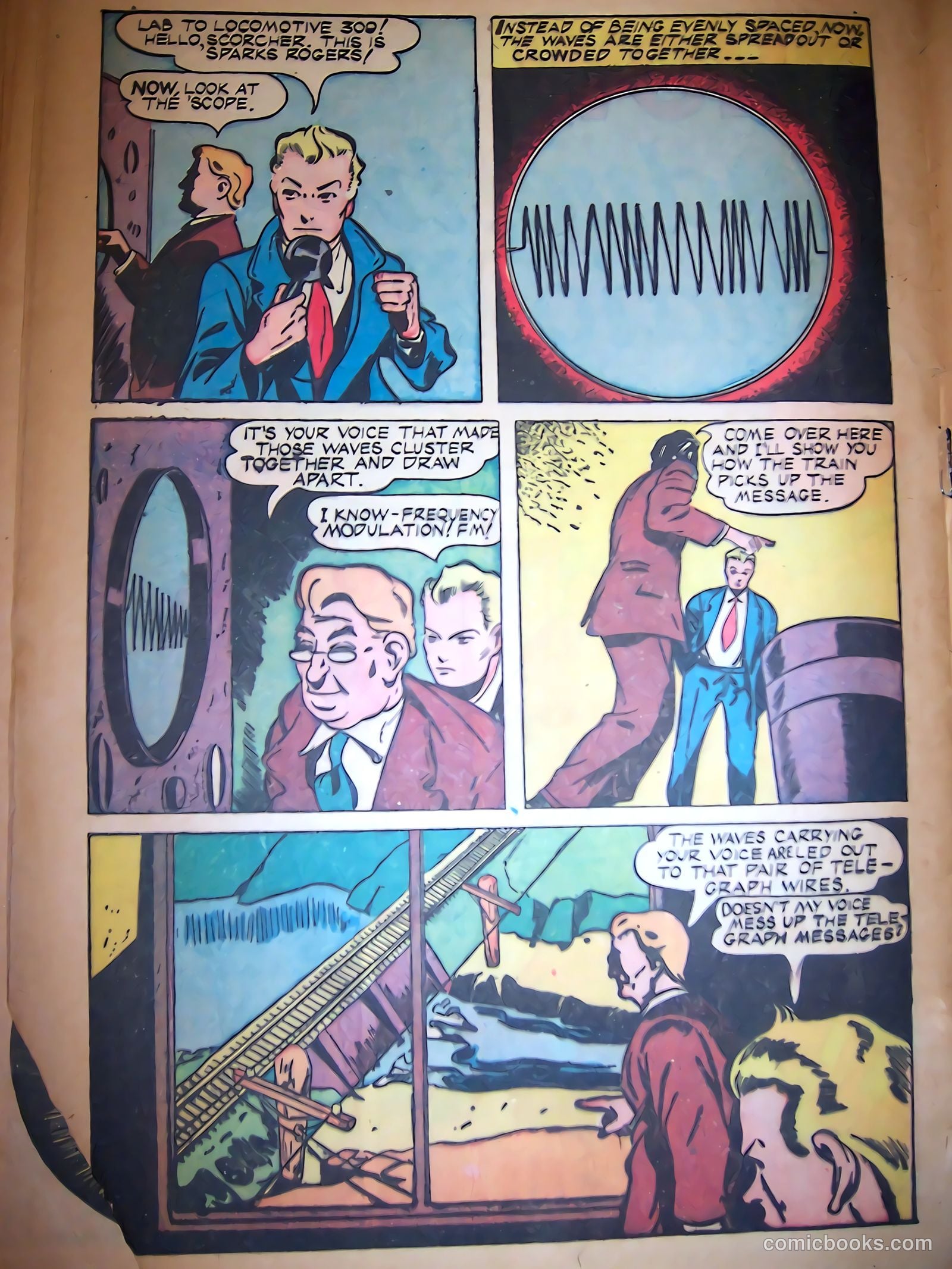
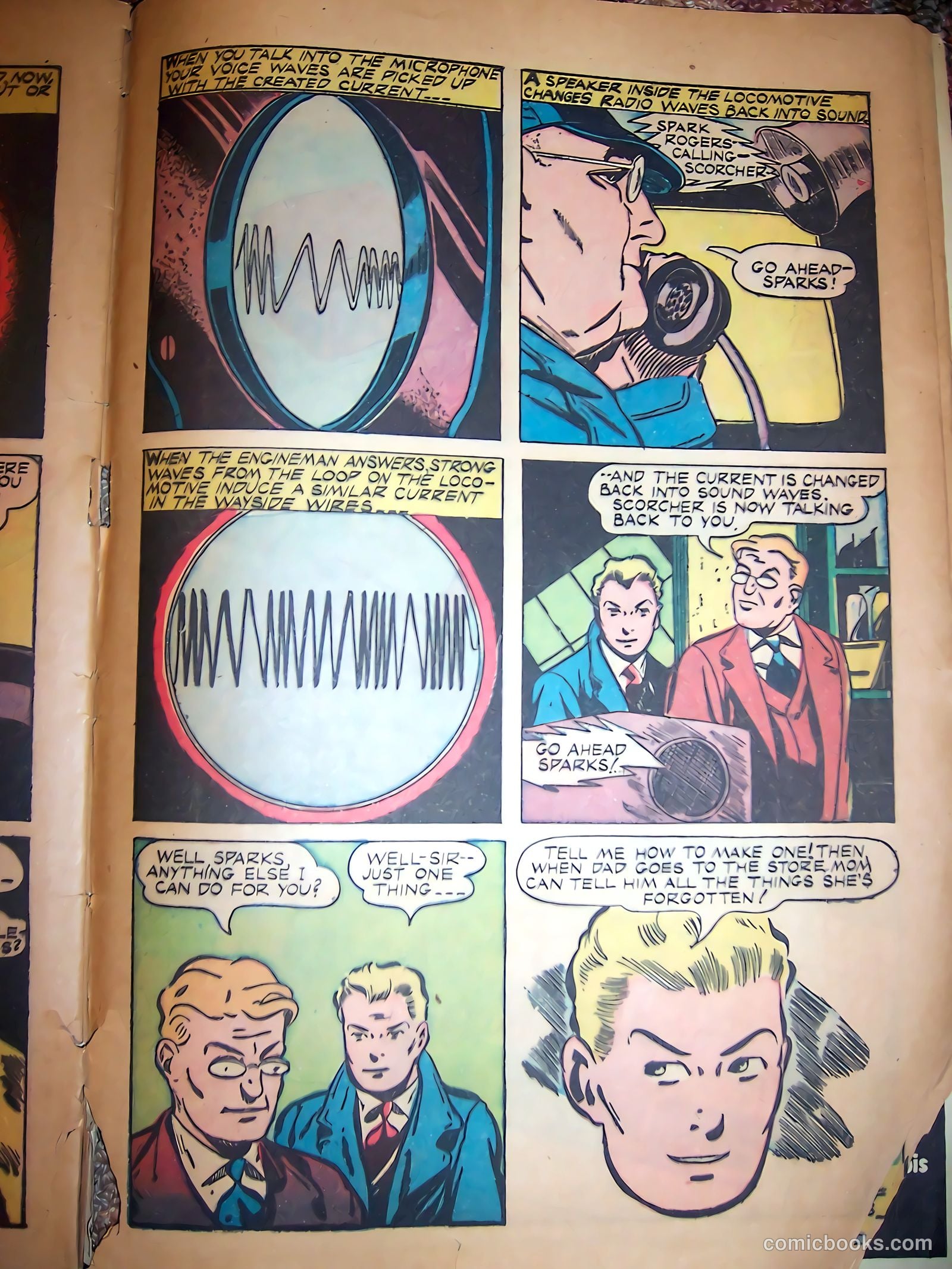
Sparks Rogers visits the CB-Q Radio Lab to learn about inductive radio from Dr. Boyle, who demonstrates how carrier current radio transmits voices over telegraph wires using frequency modulation. Through live demonstrations with an oscilloscope and a working connection to Locomotive 309, Sparks discovers how the system picks up and transmits messages between the wayside wires and the train's receiving coil.

Untitled story
1 pp · non-fiction
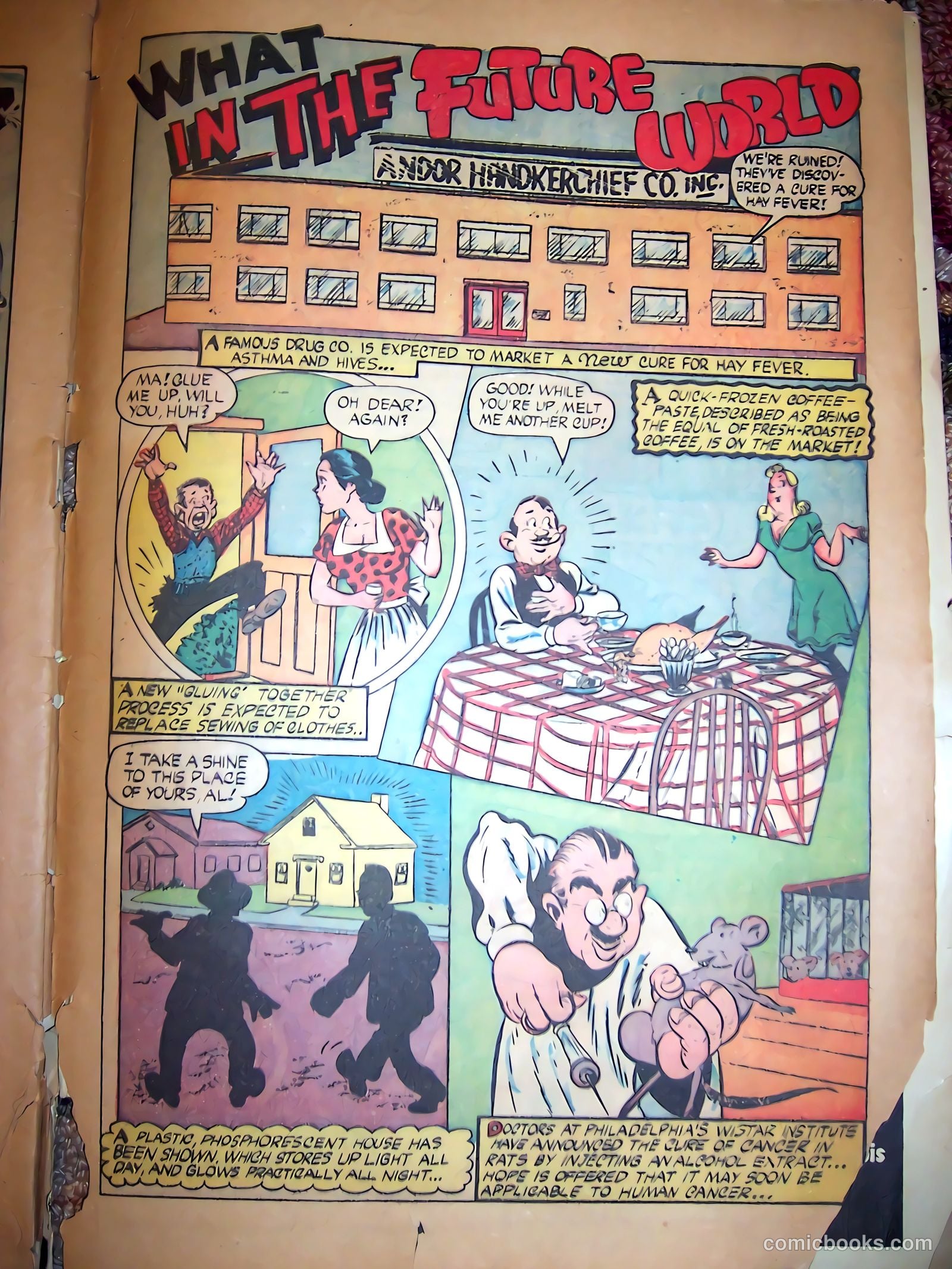
Untitled story
1 pp · science fiction
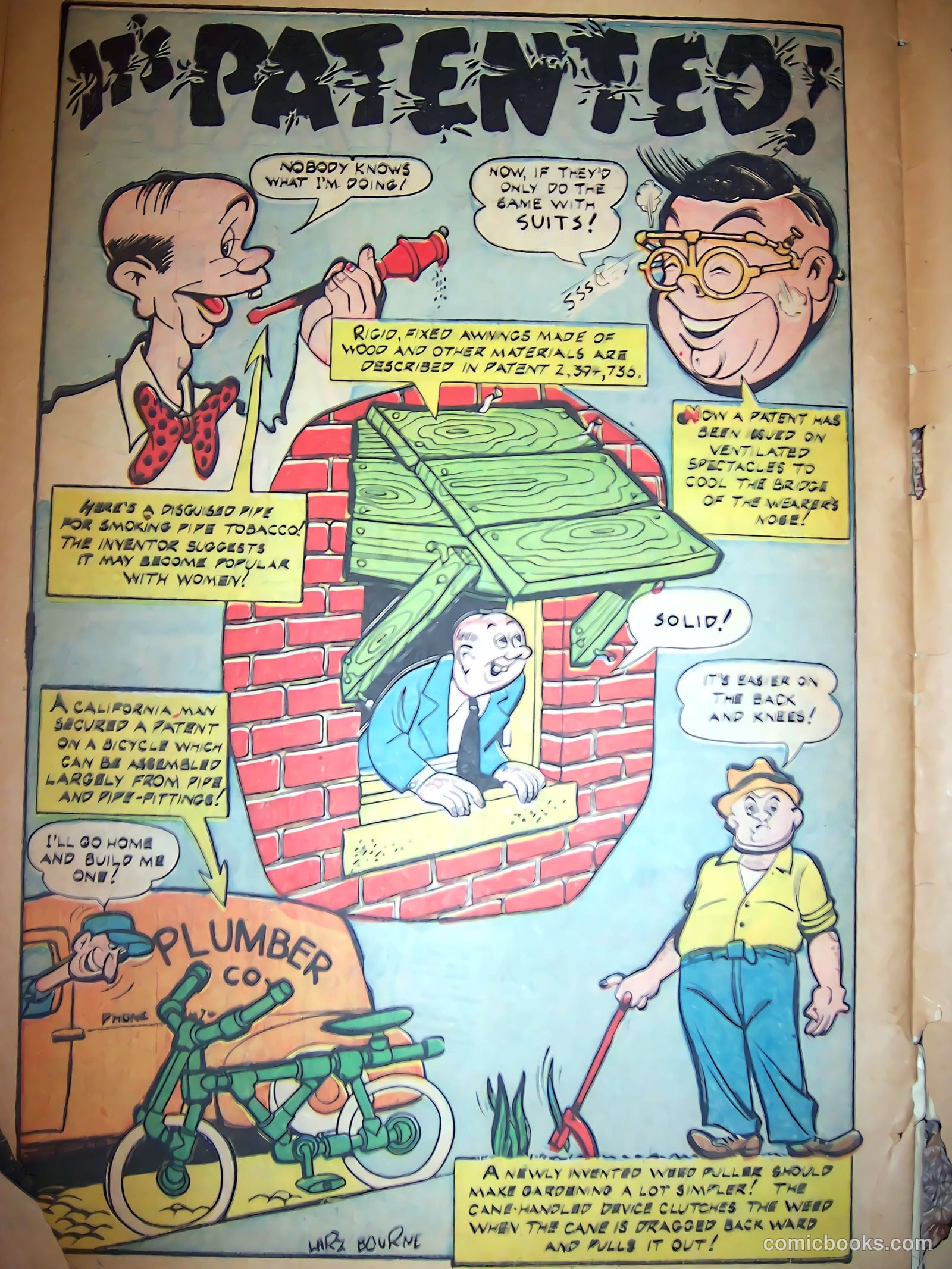
Untitled story
1 pp · non-fiction

Restored edition © comicbooks.com. Our digitization, remastering, and presentation are our own work.

See something wrong with this issue? Report it.