
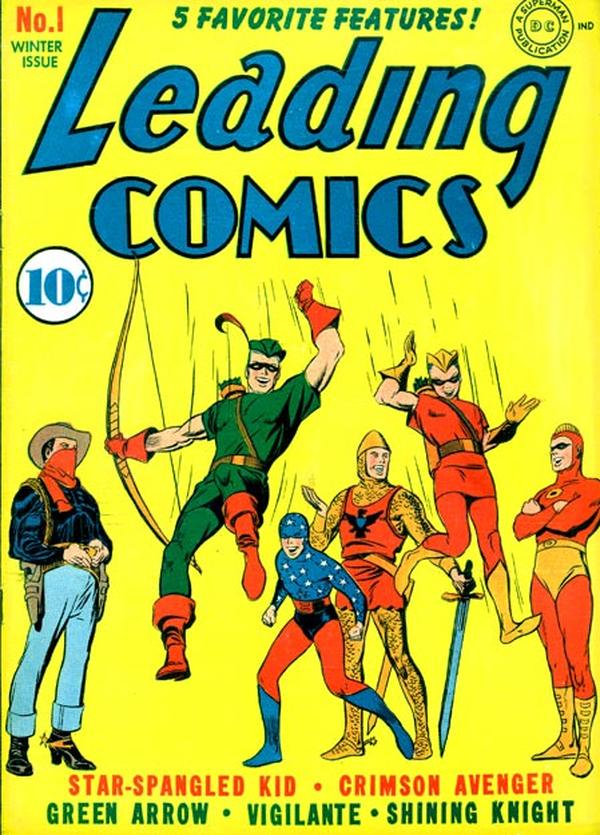
Leading Comics #1
☆ Be the first to review + Add to your collection — Join freeLeading Comics #1 introduced the Seven Soldiers of Victory — also known as Law's Legionnaires — making it the debut of DC's second-ever super-hero team, arriving just one year after the Justice Society of America established the team-up concept in All-Star Comics. Unlike the JSA, which assembled DC's marquee headliners, this title deliberately built its roster from second-tier anthology heroes, giving each character an individual chapter before converging in a shared framing story — a structural template that influenced how anthology-style team books would be organized for decades. The concept proved durable enough to be revived in Justice League of America #100–102 in 1972, adapted for animation in Justice League Unlimited, and completely reimagined by Grant Morrison in his acclaimed 2005 Seven Soldiers of Victory metaseries. The issue also marks the first appearance of the recurring villain the Hand and his henchman the Dummy, who would remain part of the team's mythology into the modern era.
"Blueprint for Crime [Chapter 1]" kicks off in Leading Comics #1 (1941), a standout early entry in DC's superhero lineup written by Mort Weisinger. With the Hand cornered and his scheme thwarted, he retreats to his stronghold—only to be spurred by a sudden glimmer of hope when a doctor offers a cure, igniting his pride and driving him to confront the Seven Soldiers of Victory on his own terms. The story's bold, dramatic tone is matched by Mort Meskin’s striking cover art, capturing the tension with a sharp, cinematic flair.
In "Blueprint for Crime [Chapter 1]," the mysterious and dying criminal mastermind known only as the Hand assembles a cadre of elite thieves and villains—the "fingers" of his scheme—before launching a final, audacious campaign of crime. With time running out, he dares the newly formed heroes to stop him, setting the stage for a high-stakes race across the city that could define the future of justice.
In "Chapter 5: The Red Dragon," the Shining Knight races to the Valley of Wamona to stop the Red Dragon from stealing a cache of pitchblend from the local Indians. With the fate of the valley hanging in the balance, the hero must confront the fiery threat before it’s too late.
In "The Stone People," Western Waddy trades his desert trails for the dazzling lights of Hollywood, chasing the sinister Dummy who’s turned his sights on high-profile targets. With the city’s glittering façade hiding a dangerous scheme, Waddy must unravel a plot where fame, fear, and fake stone statues collide—before the Dummy’s next move goes too far.
In "Blueprint for Crime, Chapter 7," the Hand, thwarted in his scheme against the Seven Soldiers of Victory, retreats to his stronghold to face them head-on. But when a doctor offers hope of a cure—meaning he might live—his pride swells, and he chooses to fight anyway, turning his desperation into a final, defiant stand.
ComicBooks.com Value
Show all 20 grades ▾
This exact issue on ebay
Read it digitally
Sell my copy
Have this issue — or a whole collection? Get a fair offer from us, skip the marketplace fees and the hassle.
We Buy Collections ▸History
The series was assembled by writer-editor Whitney (Whit) Ellsworth of All-American Comics — DC's sister imprint — approximately one year after DC launched the Justice Society in All-Star Comics, with the clear intention of replicating that team-book formula for All-American's own stable of characters. The creative team behind the debut was broad: Mort Weisinger is credited alongside Mort Meskin as the team's primary creators, while the archive volumes identify additional contributors including writers Bill Finger and Jerry Siegel, and artists George Papp, Creig Flessel, and Hal Sherman handling the individual heroes' solo chapters. The book ran for fourteen issues featuring the Seven Soldiers before abruptly converting to an all-humor, funny-animal format beginning with issue #15, a shift that was common as superhero interest softened in the mid-1940s.
Trivia · 8 facts
- First appearance of the Seven Soldiers of Victory (also known as Law's Legionnaires), DC Comics' second superhero team after the Justice Society of America.
- Cover-dated Winter 1941/1942; published by All-American Comics, DC's sister imprint, under editor Whitney (Whit) Ellsworth.
- Team created by Mort Weisinger and Mort Meskin; additional story and art contributions from Bill Finger, Jerry Siegel, George Papp, Creig Flessel, and Hal Sherman across the issue's chapters.
- Debut framing story is titled 'Blueprint for Crime!' — the Hand, learning he has only a month to live, places a newspaper ad challenging DC's heroes to a criminal contest, inadvertently uniting them as a team.
- First appearance of the villain the Hand (the team's arch-nemesis) and the Dummy, a recurring antagonist who would appear in later issues and be referenced decades later in All-Star Squadron.
- The roster features a structural oddity rare for superhero teams: it includes two sidekicks — Speedy and Stripesy — as full members, with Stripesy being the unusual case of an adult serving as partner to a teenage lead (the Star-Spangled Kid).
- Wing, the Crimson Avenger's Chinese-American companion, appears in the issue but was not officially counted among the seven named members during the original run; his status as an 'eighth soldier' was debated and retconned multiple times in later decades.
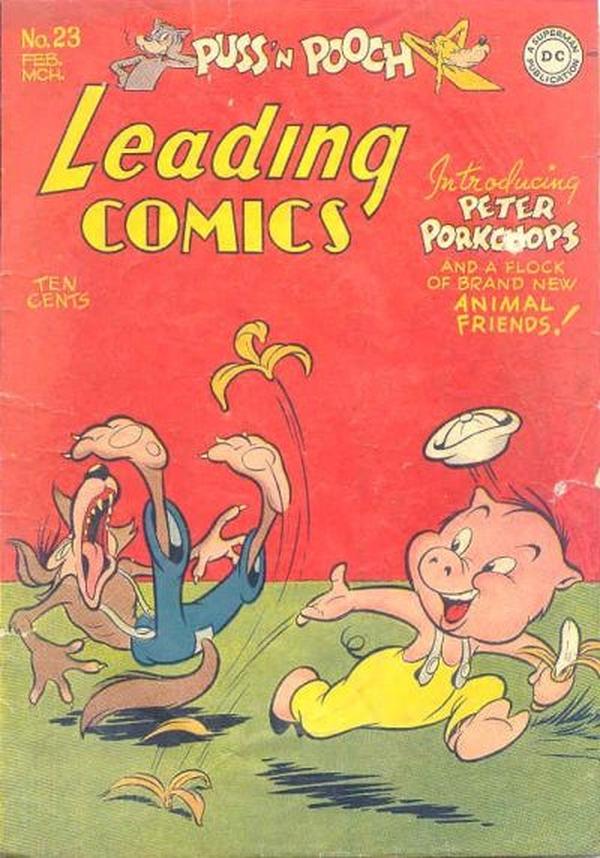
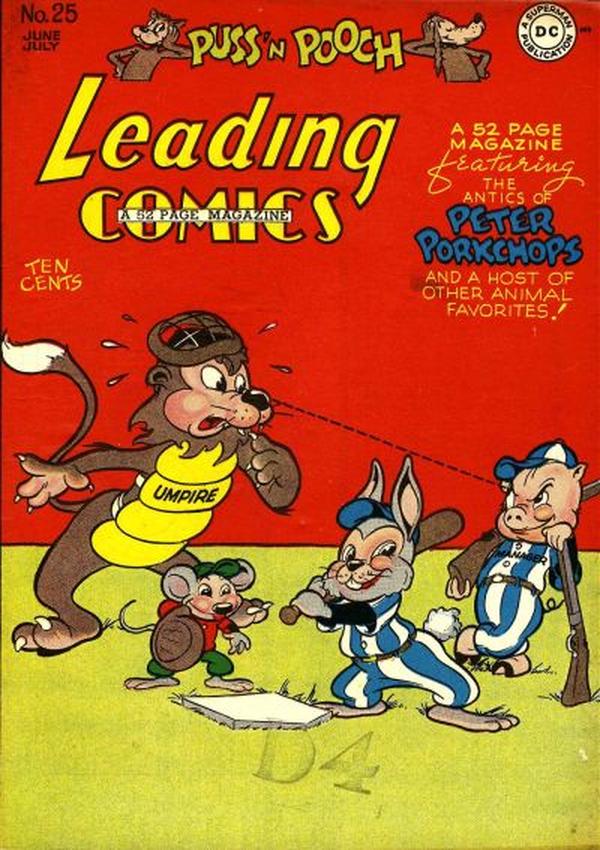
- The original run extended through Leading Comics #14 before the title converted to funny-animal content with issue #15; the fourteen superhero issues were later collected in three DC Archive Editions volumes (2005, 2007, 2008).
Full credits
Reprints
Reprinted in Seven Soldiers of Victory Archives #1 (2005), Green Arrow: A Celebration of 75 Years #[nn] (2016)
Key issues in Leading Comics
Reviews
Reader reviews
No reader reviews yet.