
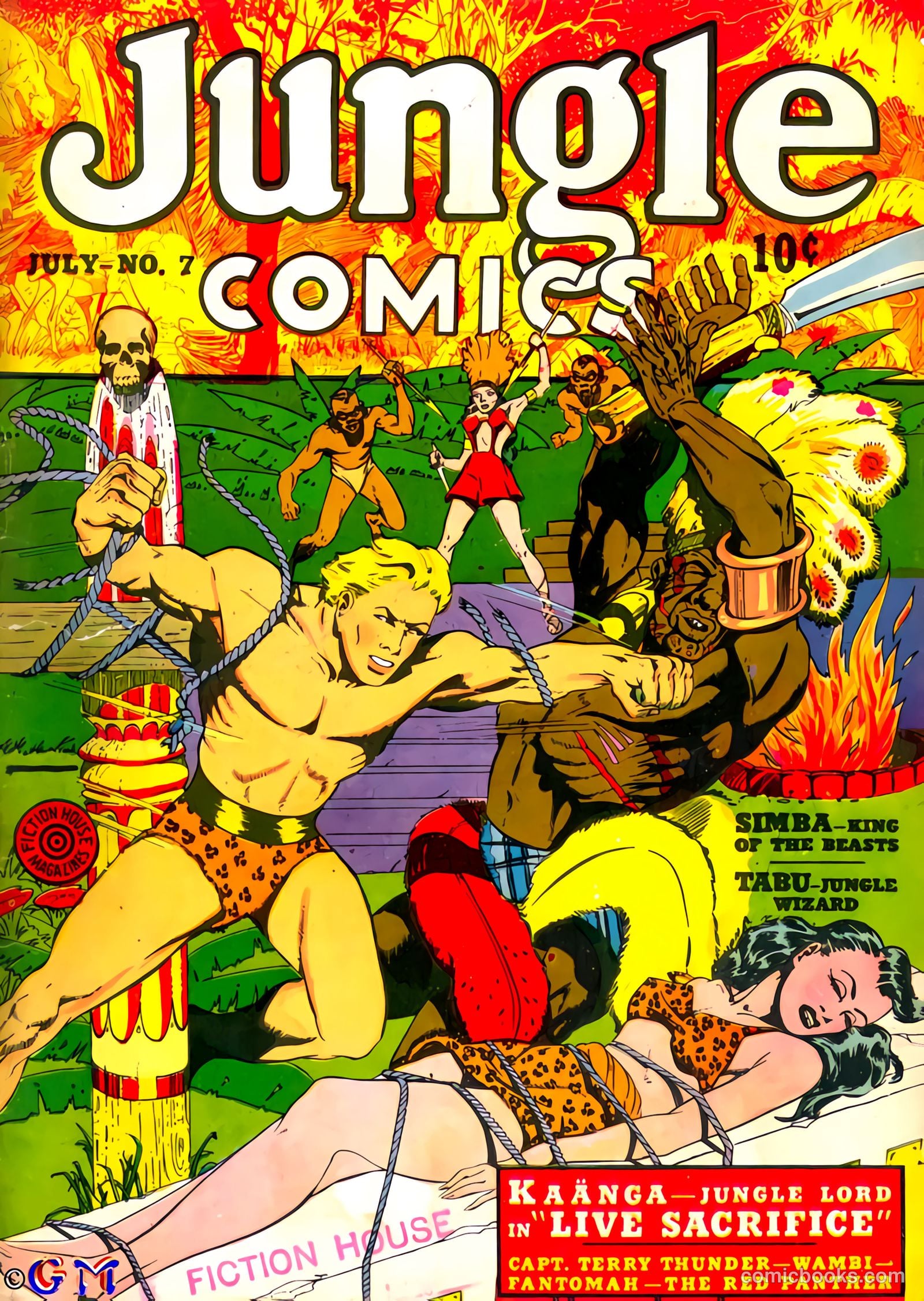
Jungle Comics #7
☆ Be the first to review + Add to your collection — Join freeJungle Comics #7 (July 1940) represents the series in its confident early stride — just seven months into Fiction House's bold expansion into comic books, with its full stable of Golden Age jungle characters running in parallel anthology format. The issue continued the early run of Fantomah, created by Fletcher Hanks under the pseudonym 'Barclay Flagg,' a character now recognized as one of the earliest superheroines in American comics, debuting just five issues prior in #2. As part of the Jungle Comics anthology, every issue in this opening year helped establish the template for the jungle-adventure genre in the Golden Age, with multiple features sharing a single book — a production model that Fiction House refined into a house style across its entire line.
This anthology issue features multiple adventure stories set in exotic locales. "Live Sacrifice" follows Kaänga, the jungle lord, as he confronts a temppress and her demonic master Mephistopheles in a supernatural battle involving sacrificial rituals and infernal combat. Another story chronicles a man's harrowing escape through a mysterious cavern filled with white cobras and strange creatures, where he narrowly avoids death before being caught in a whirlwind and transformed into stone. "Tabu—Jungle Wizard" depicts the wizard Tabu's conflict with the wind god, in which Tabu's magical spear transforms into a golden weapon that the enraged wind god hurls back, causing catastrophic destruction in the valley below.
ComicBooks.com Value
Show all 17 grades ▾
Find on ebay
Read it digitally
Sell my copy
Have this issue — or a whole collection? Get a fair offer from us, skip the marketplace fees and the hassle.
We Buy Collections ▸History
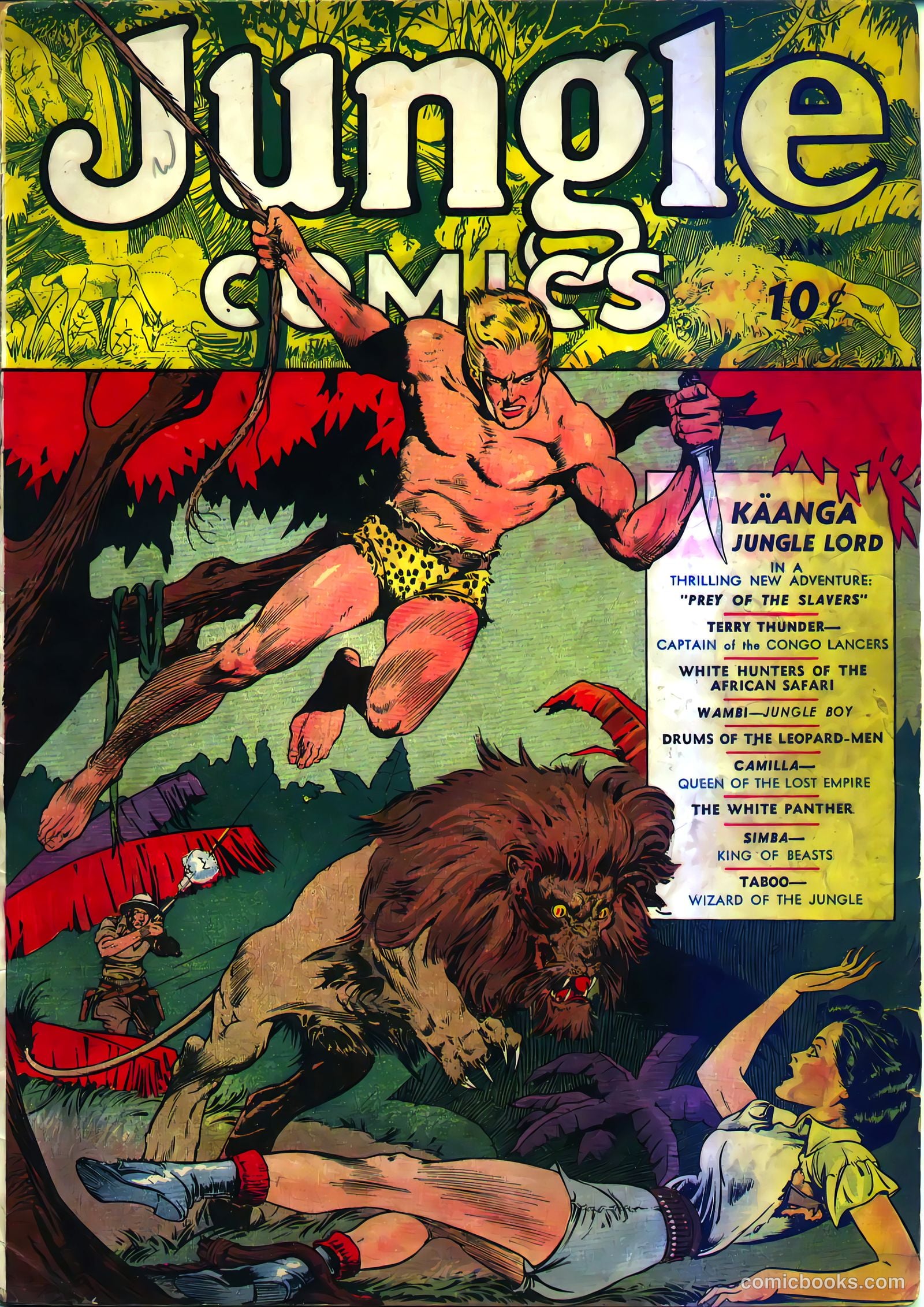
Jungle Comics was one of three titles Fiction House launched simultaneously with January 1940 cover dates — the others being Fight Comics and Planet Comics — after the success of Jumbo Comics convinced publisher Thurman Scott to expand fully into the comics field. The editorial infrastructure was built on the Eisner & Iger studio pipeline: Malcolm Reiss served as editor, Will Eisner (credited as William E. Eisner) as art director, and S. M. Iger as feature editor — an arrangement documented across multiple early issues by the Grand Comics Database. By the time issue #7 went to press, Eisner had departed the studio partnership he shared with Iger, but Iger's shop continued supplying art and scripts to Fiction House under the S. M. Iger Studio banner throughout the run.
Trivia · 7 facts
- The Kaänga lead story — titled 'Monster of the Dismal Swamp,' with art attributed to Dan Zolnerowich — involves Kaänga ending human sacrifices to a creature called the Storm Monster; the issue continues the anthology format established from issue #1.
- Fantomah, 'Mystery Woman of the Jungle,' appears in a Fletcher Hanks story (credited as 'Barclay Flagg') in which she punishes criminals who enslaved villagers for diamond-mine labor by consigning them to the 'Secret Pit of Jungle Horrors' — a characteristically surreal Hanks punishment.
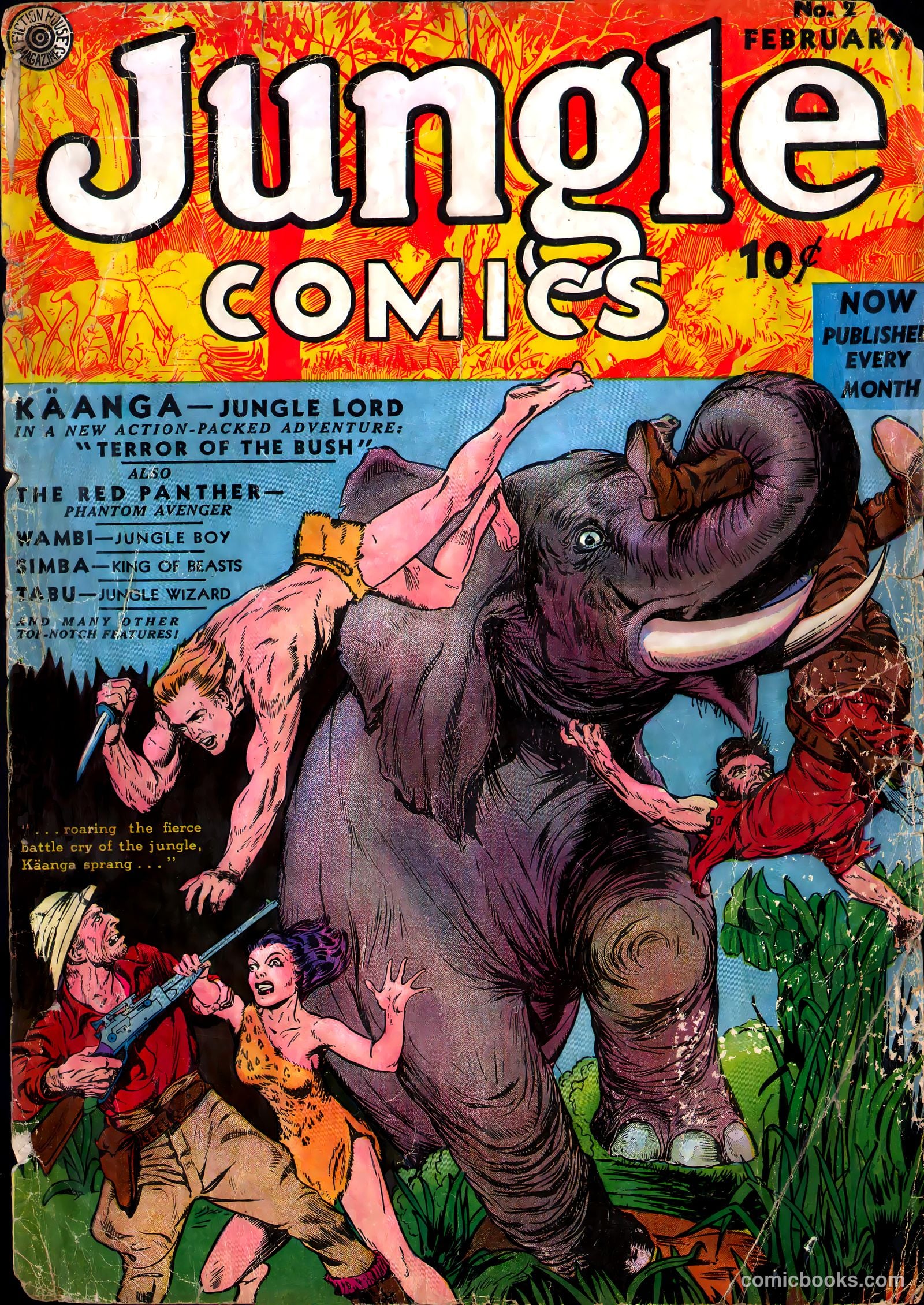
- Fantomah first appeared in Jungle Comics #2 (February 1940) and is now recognized as one of the earliest comic book superheroines — a character who ran continuously as a backup feature through issue #51 (March 1944).
- The issue's editorial team for the series' early run was Malcolm Reiss (editor), Will Eisner (art director), and S. M. Iger (feature editor), reflecting the Eisner & Iger studio's role in packaging the entire Fiction House comics line.
- The Red Panther appears in a story in which he rescues a geologist and a pilot from pygmies and helps them locate a large radium deposit (art by Al Gabriele), continuing his regular anthology slot.
- The book's anthology format showcased multiple recurring characters per issue — including Kaänga, Fantomah, the Red Panther, Tabu, Wambi, Simba, and Captain Terry Thunder — a deliberate editorial strategy Fiction House used across all its titles to maximize reader loyalty.
- Jungle Comics ran for 163 issues total (January 1940 – July 1954), making it one of the longer-running Fiction House titles, with early issues like #7 representing the series before any wartime content shifts had yet begun.
Reprints
↩ Reprints Jungle Comics #131 (1950)
Key issues in Jungle Comics
Reviews
Reader reviews
No reader reviews yet.