
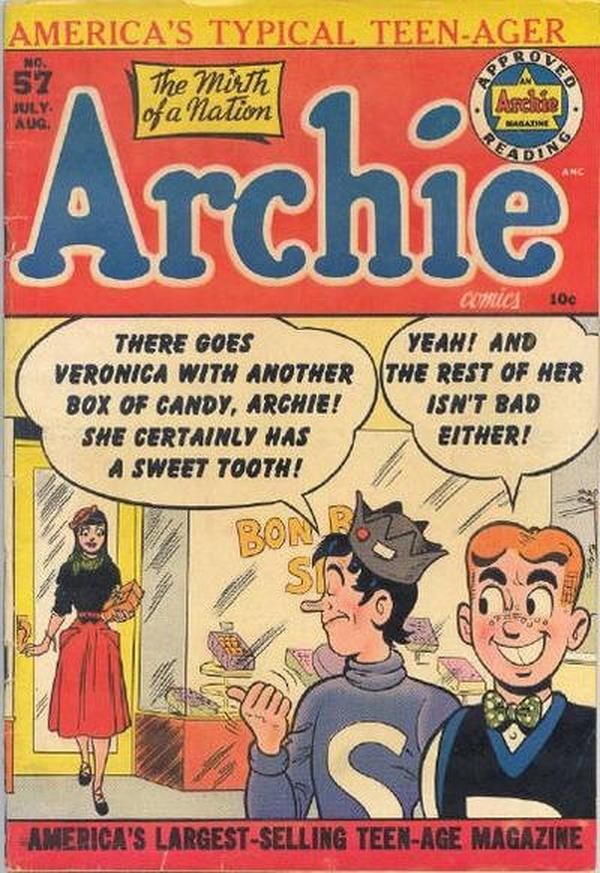
Archie Comics #57
☆ Be the first to review + Add to your collection — Join freeArchie Comics #57 (cover-dated May 1952) is a representative artifact of Archie Publications at peak Golden Age output — a period when the company was simultaneously publishing roughly sixteen different titles and cementing the teen-humor anthology format that would define American newsstand comics for decades. It sits within the transitional stretch where Bob Montana, the character's original visual architect, had largely committed to the King Features daily newspaper strip, leaving the comic-book flagship in the hands of a rotating studio of house artists. While the issue carries no single landmark debut, its very ordinariness is historically telling: it demonstrates how thoroughly the Archie formula had become a self-sustaining machine by 1952, capable of producing consistent, charming content across a massive line without its founding cartoonist at the drawing board.
In "Patch Me If You Can!" from Archie Comics #57 (1952), the annual Patch Hop takes a quirky turn when students must sew their patches during school hours on school grounds. Archie dodges Bedelia Glutenschnable while trying to get Veronica’s patch sewn, all while Reggie has his own plans for her patch and Betty’s determined to stitch hers onto Archie.
In "It's a Gift," Archie’s attempt to surprise Veronica with a thoughtful present backfires when he leaves it with Betty’s mother for safekeeping—only for Betty to stumble upon it and believe it’s meant for her. The mix-up sets off a quiet but perfectly pitched comic misunderstanding, with Jo’s usual good-natured confusion at the center of the chaos.
In this classic 1952 Archie Comics tale, Fred manipulates the system by paying Jughead’s dad to write a school composition for Archie—only for the truth to come out when the plagiarism is exposed. Forced to choose between honesty and loyalty, Archie steps forward to take the blame, determined to protect his father’s name.
ComicBooks.com Value
Show all 12 grades ▾
This exact issue on ebay
More listings for this title
Read it digitally
Sell my copy
Have this issue — or a whole collection? Get a fair offer from us, skip the marketplace fees and the hassle.
We Buy Collections ▸History
By May 1952, Archie Comic Publications — formerly M.L.J. Magazines — had been reshaping itself around its teen-humor brand for over a decade, ever since John L. Goldwater, Bob Montana, and Vic Bloom introduced Archie Andrews in Pep Comics #22 (December 1941). Montana, who had established the visual house style and written many of his own stories in the 1940s, was by this point devoting himself almost entirely to the syndicated Archie daily and Sunday strip for King Features, which he would continue until his death in 1975. Bill Vigoda — who had joined MLJ in 1943 and drawn his first Archie story in Archie Comics #10 (1944) — was the workhorse interior artist on the flagship title during this era, and Harry Lucey, who had rejoined the company in 1949 after a post-Army stint in advertising, was steadily increasing his contribution to the book he would eventually dominate through the 1960s and early 1970s.
Trivia · 8 facts
- Published by Archie Comic Publications; hit newsstands approximately May 1952, with a 1952 cover date, during the height of the company's Golden Age expansion.
- Falls within the prolific stretch when Archie Comics was simultaneously publishing approximately sixteen separate titles, making it one of the most active teen-humor publishers on the American newsstand.
- Bob Montana — the character's original visual creator, who had co-developed Archie with publisher John L. Goldwater and writer Vic Bloom for Pep Comics #22 (1941) — had by this point transitioned almost exclusively to the King Features syndicated Archie newspaper strip, which he drew from 1946 until his death in January 1975.
- Bill Vigoda, whose brother was actor Abe Vigoda, was the primary interior contributor to the flagship Archie title during this period, having drawn for the company continuously from 1943 through 1973.
- Harry Lucey, who had rejoined Archie Comics in 1949 after wartime service and an advertising career, was increasingly active on the title in 1952 and would go on to become the primary penciller on the Archie flagship from the late 1950s through the mid-1970s.
- Dan DeCarlo — who would later modernize the entire Archie house style and co-create Sabrina the Teenage Witch, Josie and the Pussycats, and Cheryl Blossom — had his earliest confirmed Archie credit dating to late 1951 and was freelancing for the company around this period, though his specific contribution to this issue is unconfirmed.
- The issue is an anthology of short humor stories in the established Archie format — gag-driven vignettes centered on Archie Andrews, Betty Cooper, Veronica Lodge, Jughead Jones, and Riverdale High's supporting cast — the same formula that fueled the franchise's longevity across eight decades.
- No dedicated key-issue database or collector resource flags Archie Comics #57 for a first character appearance, landmark story arc, or notable creative milestone.
Full credits
Reprints
Reprinted in The Jughead Jones Comics Digest #12 (1980), Archie Comics #22
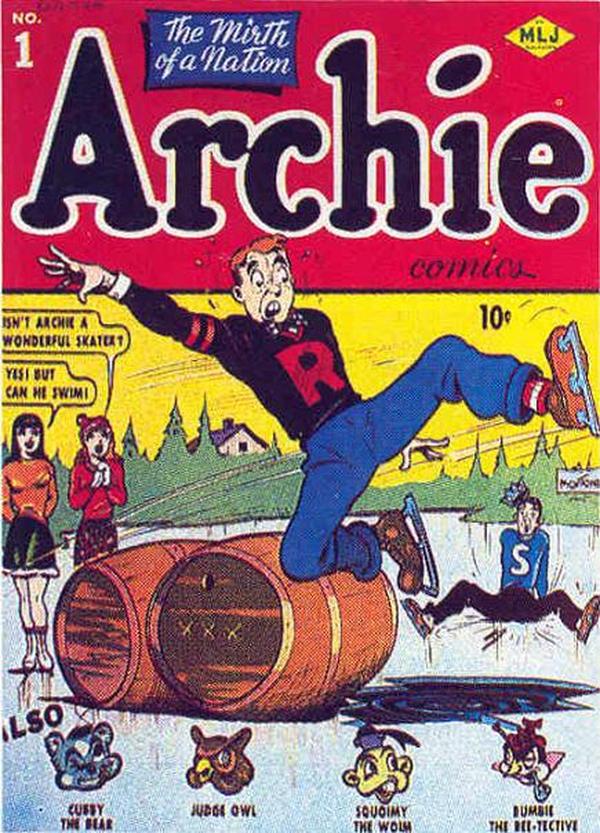
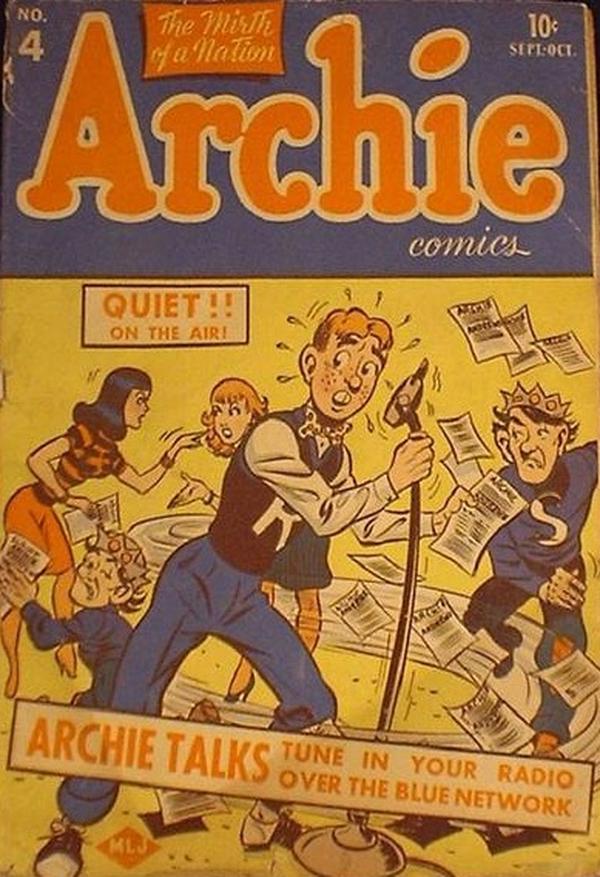
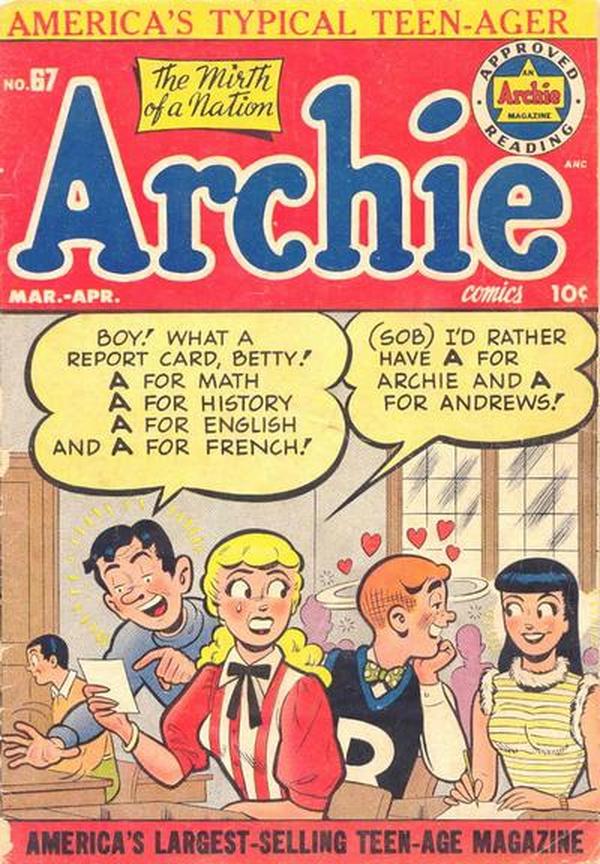
Key issues in Archie Comics
Reviews
Reader reviews
No reader reviews yet.