
Women Who Drew the Funnies
A handful of women broke into a page built by men.
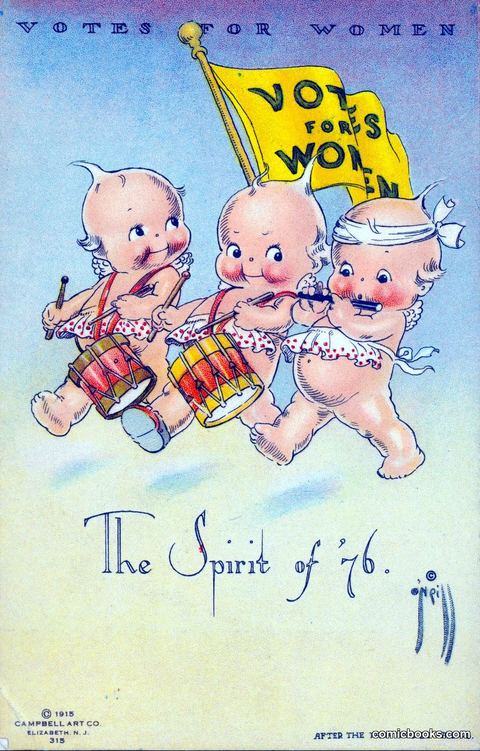
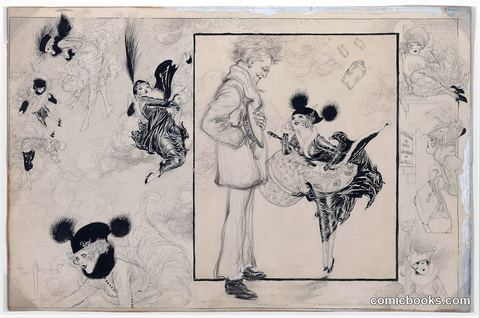
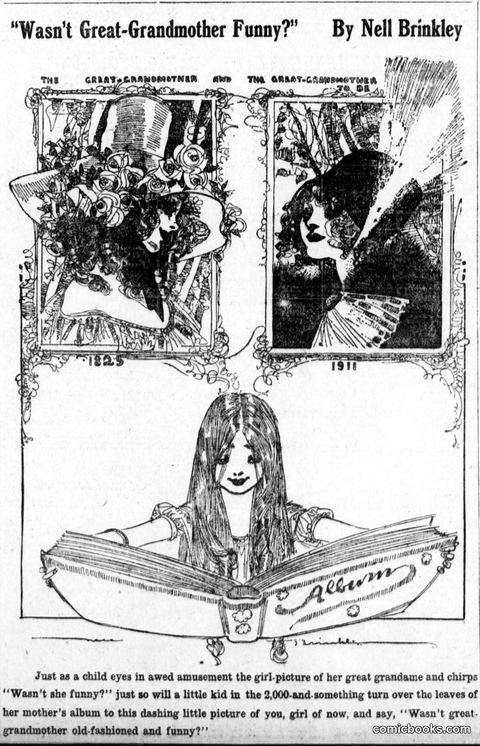
The comic page and the illustrated press that fed it were, around 1900, almost entirely a men's club — men drew the strips, men ran the syndicates, men signed the work. A few women got in anyway, and three of them shaped what everyone else saw. Rose O'Neill turned a round cartoon baby, the Kewpie, into one of the first great licensed-character empires, and drew those same babies marching for suffrage. Nell Brinkley became Hearst's star with swirling pen-and-ink serials whose heroine set hairstyles and reached the Ziegfeld stage. Grace Drayton, among the first syndicated women cartoonists, gave Campbell's Soup its round-cheeked Kids and ran her own strip about a dimpled girl.
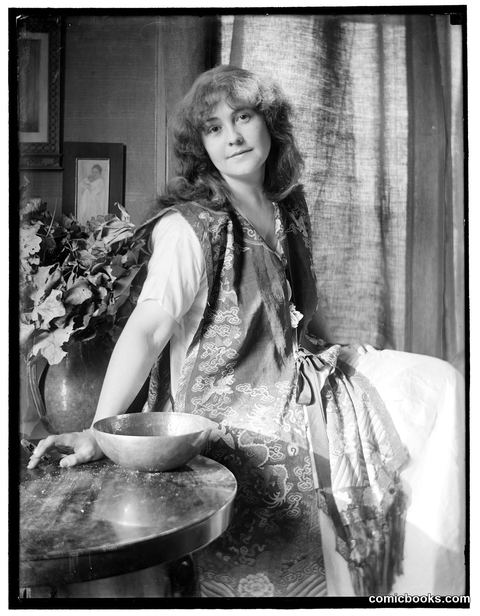
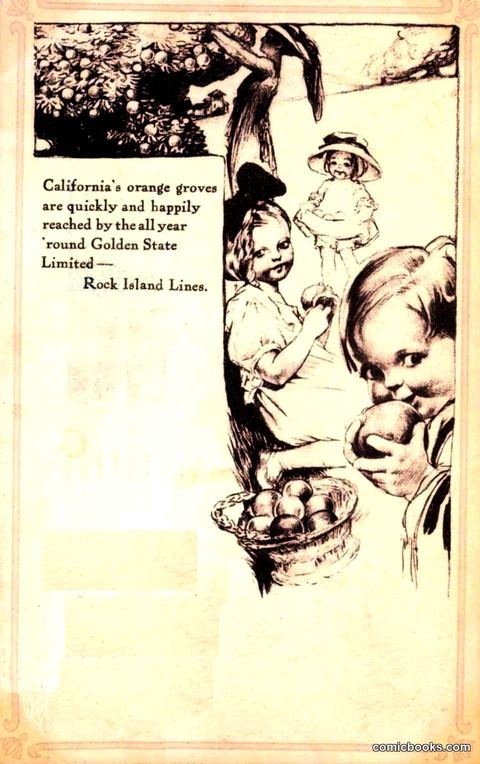
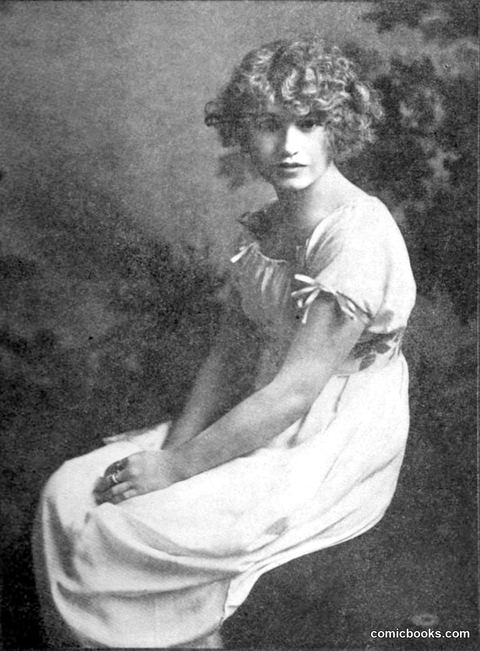
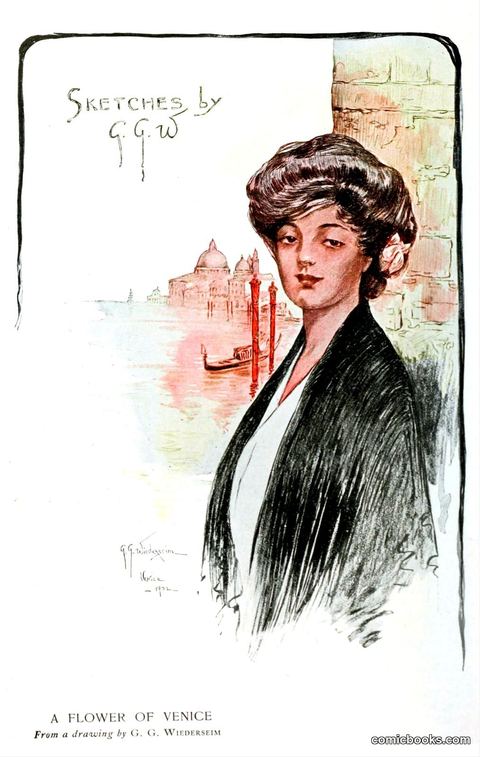
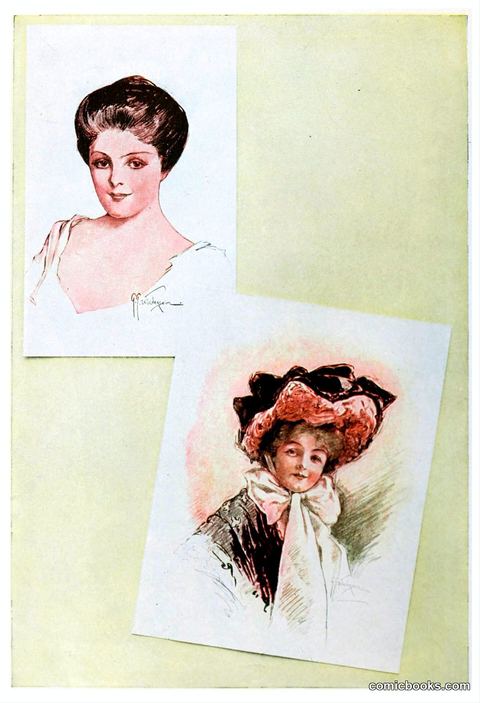
What you can actually see here is thinner than their fame deserves. Much of what these women made was advertising, postcards, and next-day newspaper work — printed to be used up and thrown out, rarely signed loudly, seldom kept. The gaps in this room are part of the exhibit. So is the range: a single hand moving from a suffrage banner to a society portrait to a soup ad, because that flexibility was how a woman held the work.
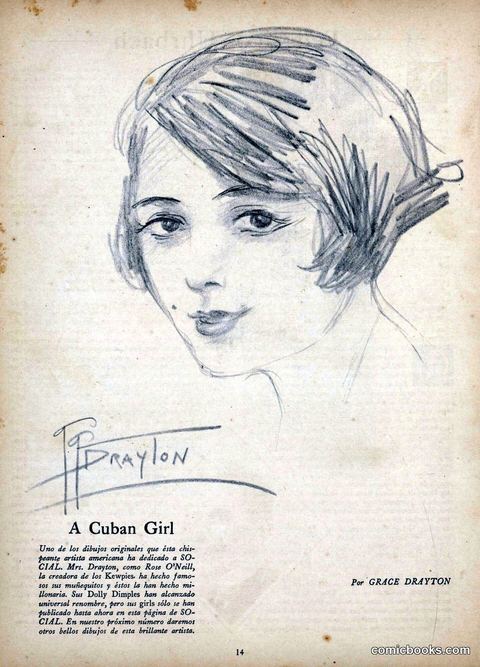
All works shown are in the public domain, digitally restored by ComicBooks.com.