
Captain Billy's Whiz Bang, July 1922 · page 6 of 67
Captain Billy's Whiz Bang #35 — page 6: what you’re looking at
What you’re looking at
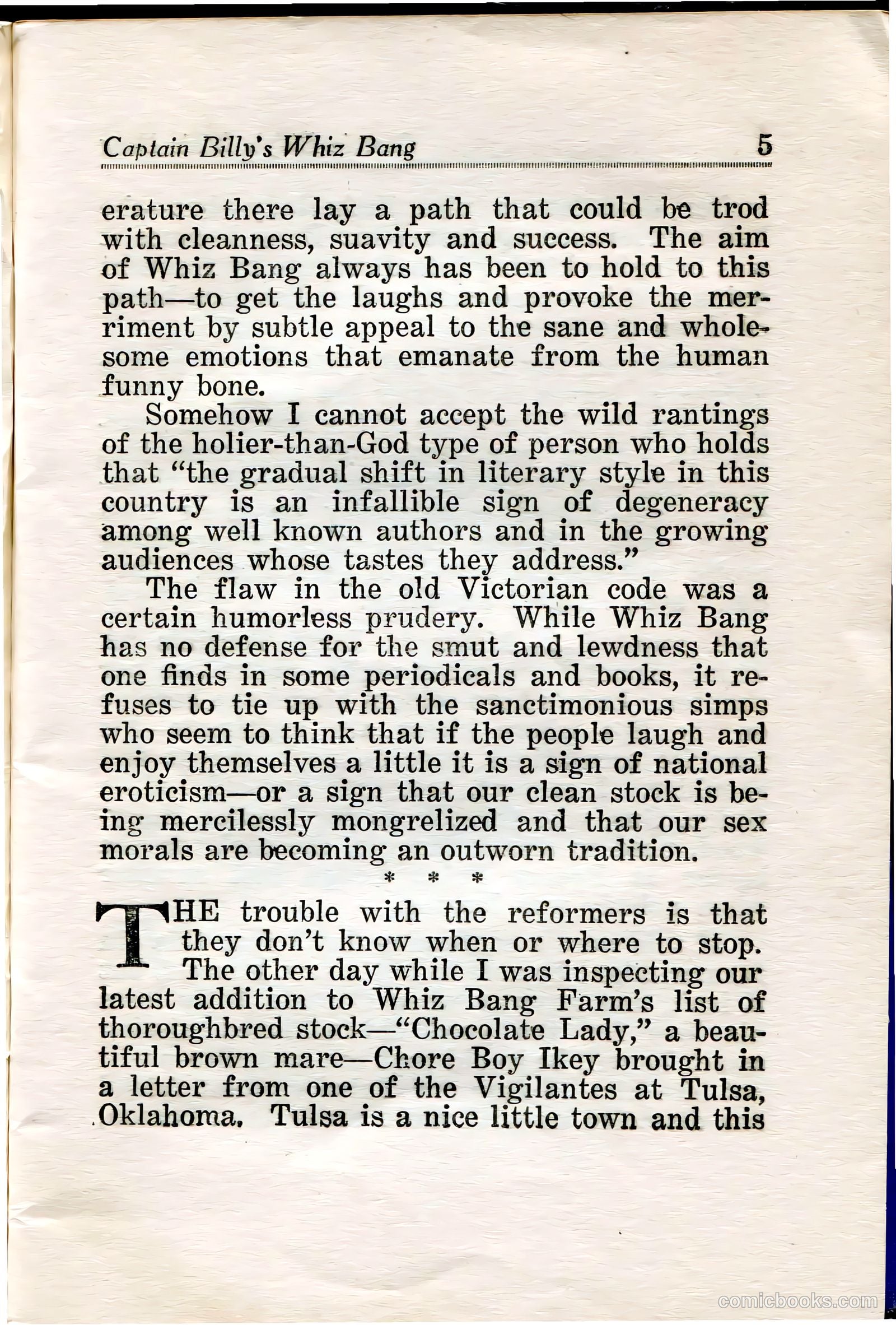
This page is an editorial defense of the magazine's satirical approach against moral critics. The editor argues that Whiz Bang seeks humor through "wholesome emotions" rather than crude smut, and attacks what he calls "sanctimonious simps"—likely referring to moral reformers and censorship advocates active in the 1920s who opposed changing literary and social standards. The text mocks Victorian prudery while distinguishing the magazine from genuinely obscene publications. The editor positions Whiz Bang as a moderate middle ground: respecting traditional morals but rejecting humorless rigidity. The reference to a letter from "Vigilantes at Tulsa, Oklahoma" suggests organized reform or censorship efforts in that town—possibly civic groups attempting to restrict the magazine's distribution. No specific cartoon is visible on this page; it's primarily text defending the magazine's editorial philosophy against contemporary morality campaigns.
📄 Transcribed text from this page (OCR, searchable)
Machine-transcribed from the original scan — historical spelling and the odd misread are preserved.
Captain Billy's Whiz Bang 5 erature there lay a path that could be trod with cleanness, suavity and success. The aim of Whiz Bang always has been to hold to this path—to get the laughs and provoke the mer- riment by subtle appeal to the sane and whole- some emotions that emanate from the human funny bone. Somehow I cannot accept the wild rantings of the holier-than-God type of person who holds that “the gradual shift in literary style in this country is an infallible sign of degeneracy among well known authors and in the growing audiences whose tastes they address.” The flaw in the old Victorian code was a certain humorless prudery. While Whiz Bang has no defense for the smut and lewdness that one finds in some periodicals and books, it re- fuses to tie up with the sanctimonious simps who seem to think that if the people laugh and enjoy themselves a little it is a sign of national eroticism—or a sign that our clean stock is be- ing mercilessly mongrelized and that our sex morals are becoming an outworn tradition. * * * THE trouble with the reformers is that they don’t know when or where to stop. The other day while I was inspecting our latest addition to Whiz Bang Farm’s list of thoroughbred stock—“Chocolate Lady,” a beau- tiful brown mare—Chore Boy Ikey brought in a letter from one of the Vigilantes at Tulsa, Oklahoma. Tulsa is a nice little town and this