
Captain Billy's Whiz Bang, June 1922 · page 60 of 68
Captain Billy's Whiz Bang #34 — page 60: what you’re looking at
What you’re looking at
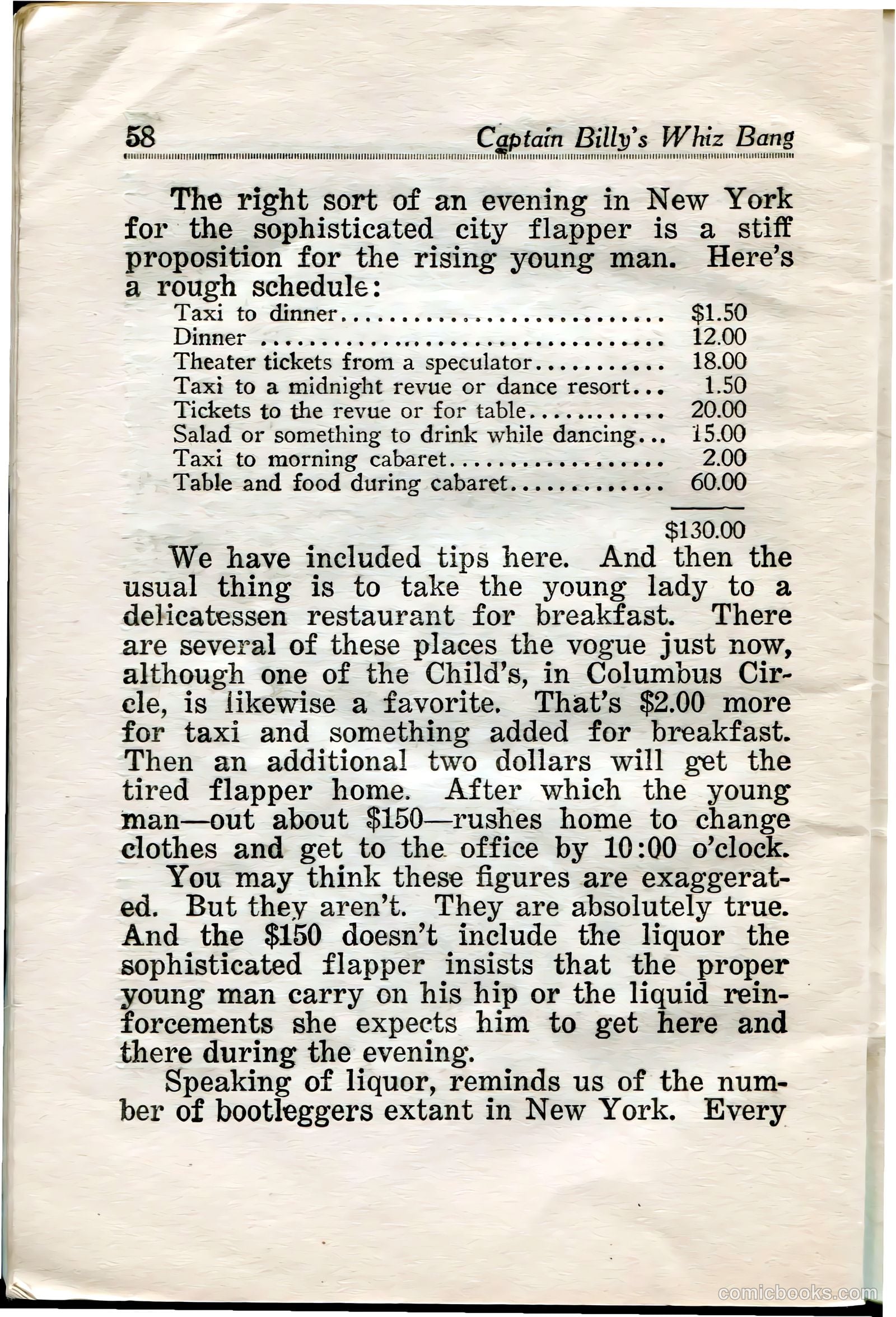
This is satirical commentary on the financial burden of dating a "flapper"—the modern, independent young women who emerged in the 1920s. The piece humorously itemizes an evening's expenses ($130-$150) for a young man attempting to impress a sophisticated New York city girl: dinner, theater, nightclubs, cabarets, and breakfast afterward. The satire targets both the flapper's expensive tastes and the young man's desperation to keep up. A crucial detail: the $150 total *excludes* alcohol—either what he must carry illegally (Prohibition was in effect) or purchase during the evening. The closing reference to "bootleggers extant in New York" underscores the era's illegal alcohol trade. The joke is that despite spending a fortune and rushing to the office exhausted at 10 a.m., the young man still hasn't fully satisfied his date's expectations. It's social commentary disguised as humor about changing gender dynamics and consumer culture in the Jazz Age.
📄 Transcribed text from this page (OCR, searchable)
Machine-transcribed from the original scan — historical spelling and the odd misread are preserved.
58 Captain Billy's Whiz Bang The right sort of an evening in New York for the sophisticated city flapper is a stiff proposition for the rising young man. Here's a rough schedule: Taxi to dinner.................... $1.50 Dinner........................... 12.00 Theater tickets from a speculator.... 18.00 Taxi to a midnight revue or dance resort... 1.50 Tickets to the revue or for table.......... 20.00 Salad or something to drink while dancing... 15.00 Taxi to morning cabaret................ 2.00 Table and food during cabaret............ 60.00 _______ $130.00 We have included tips here. And then the usual thing is to take the young lady to a delicatessen restaurant for breakfast. There are several of these places the vogue just now, although one of the Child's, in Columbus Cir- cle, is likewise a favorite. That's $2.00 more for taxi and something added for breakfast. Then an additional two dollars will get the tired flapper home. After which the young man—out about $150—rushes home to change clothes and get to the office by 10:00 o'clock. You may think these figures are exaggerat- ed. But they aren't. They are absolutely true. And the $150 doesn't include the liquor the sophisticated flapper insists that the proper young man carry on his hip or the liquid rein- forcements she expects him to get here and there during the evening. Speaking of liquor, reminds us of the num- ber of bootleggers extant in New York. Every