
Captain Billy's Whiz Bang, May 1922 · page 38 of 68
Captain Billy's Whiz Bang #33 — page 38: what you’re looking at
What you’re looking at
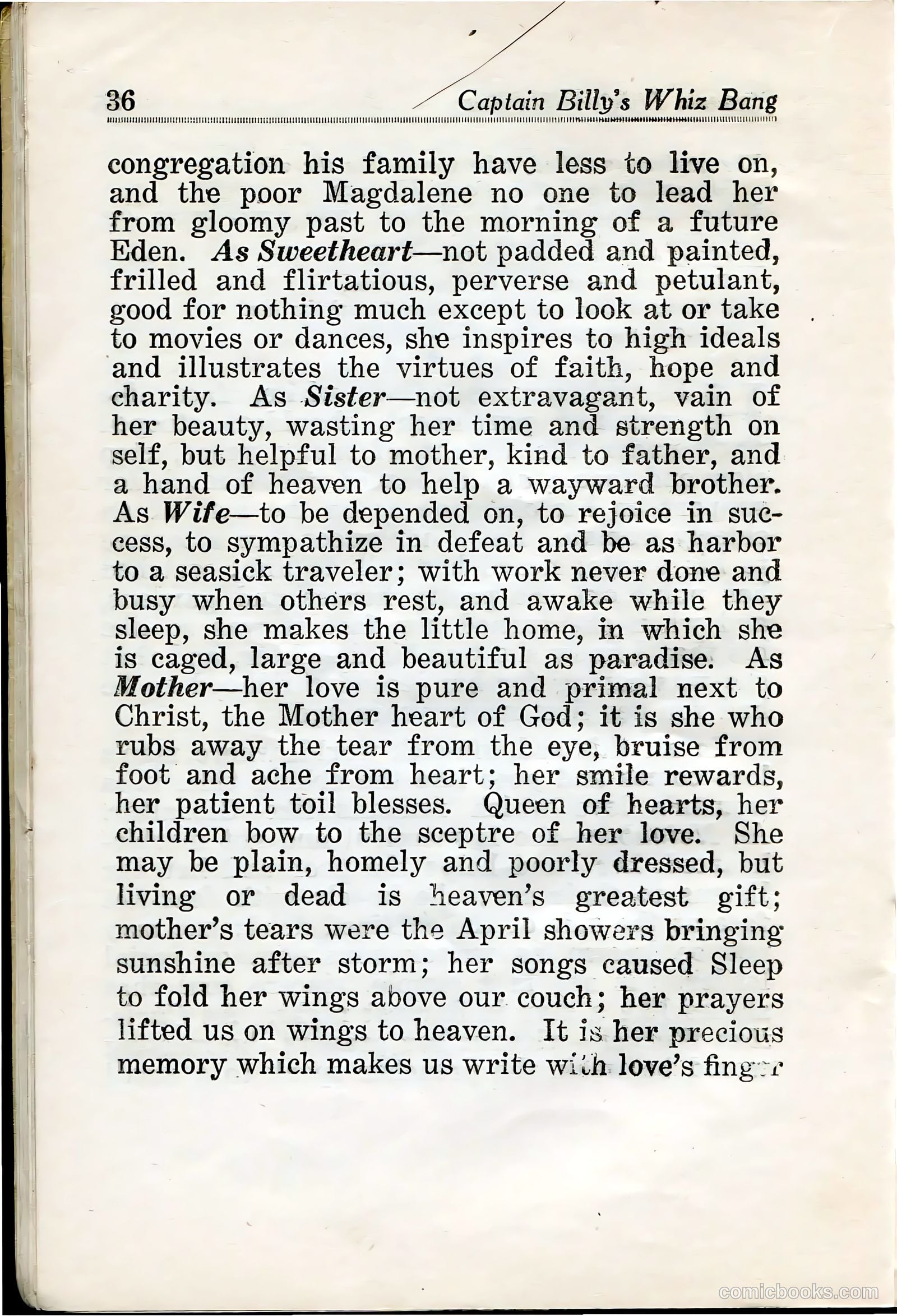
This page from *Captain Billy's Whiz Bang* contains no cartoon—it's a sentimental prose piece idealizing women across life stages. The text presents four archetypal female roles: "Sweetheart" (virtuous, inspiring), "Sister" (selfless, supportive), "Wife" (devoted, self-sacrificing), and "Mother" (supreme nurturer). The satire lies in the contrast between what women *should be* versus implied social reality. The passage mocks superficial "painted" sweethearts concerned only with movies and dances, while glorifying women confined to domestic servitude ("caged" in home). The religious language elevating motherhood ("Mother heart of God") alongside descriptions of endless labor and exhaustion suggests the author is critiquing—or possibly endorsing—the unrealistic pedestal placing women on while denying them autonomy or rest. The passage reflects early 20th-century anxieties about women's proper roles during a period of feminist activism.
📄 Transcribed text from this page (OCR, searchable)
Machine-transcribed from the original scan — historical spelling and the odd misread are preserved.
36 Captain Billy's Whiz Bang congregation his family have less to live on, and the poor Magdalene no one to lead her from gloomy past to the morning of a future Eden. As Sweetheart—not padded and painted, frilled and flirtatious, perverse and petulant, good for nothing much except to look at or take to movies or dances, she inspires to high ideals and illustrates the virtues of faith, hope and charity. As Sister—not extravagant, vain of her beauty, wasting her time and strength on self, but helpful to mother, kind to father, and a hand of heaven to help a wayward brother. As Wife—to be depended on, to rejoice in suc- cess, to sympathize in defeat and be as harbor to a seasick traveler; with work never done and busy when others rest, and awake while they sleep, she makes the little home, in which she is caged, large and beautiful as paradise. As Mother—her love is pure and primal next to Christ, the Mother heart of God; it is she who rubs away the tear from the eye, bruise from foot and ache from heart; her smile rewards, her patient toil blesses. Queen of hearts, her children bow to the sceptre of her love. She may be plain, homely and poorly dressed, but living or dead is heaven’s greatest gift; mother’s tears were the April showers bringing sunshine after storm; her songs caused Sleep to fold her wings above our couch; her prayers lifted us on wings to heaven. It is her precious memory which makes us write with love’s fing-r