
Captain Billy's Whiz Bang, August 1921 · page 34 of 68
Captain Billy's Whiz Bang #23 — page 34: what you’re looking at
What you’re looking at
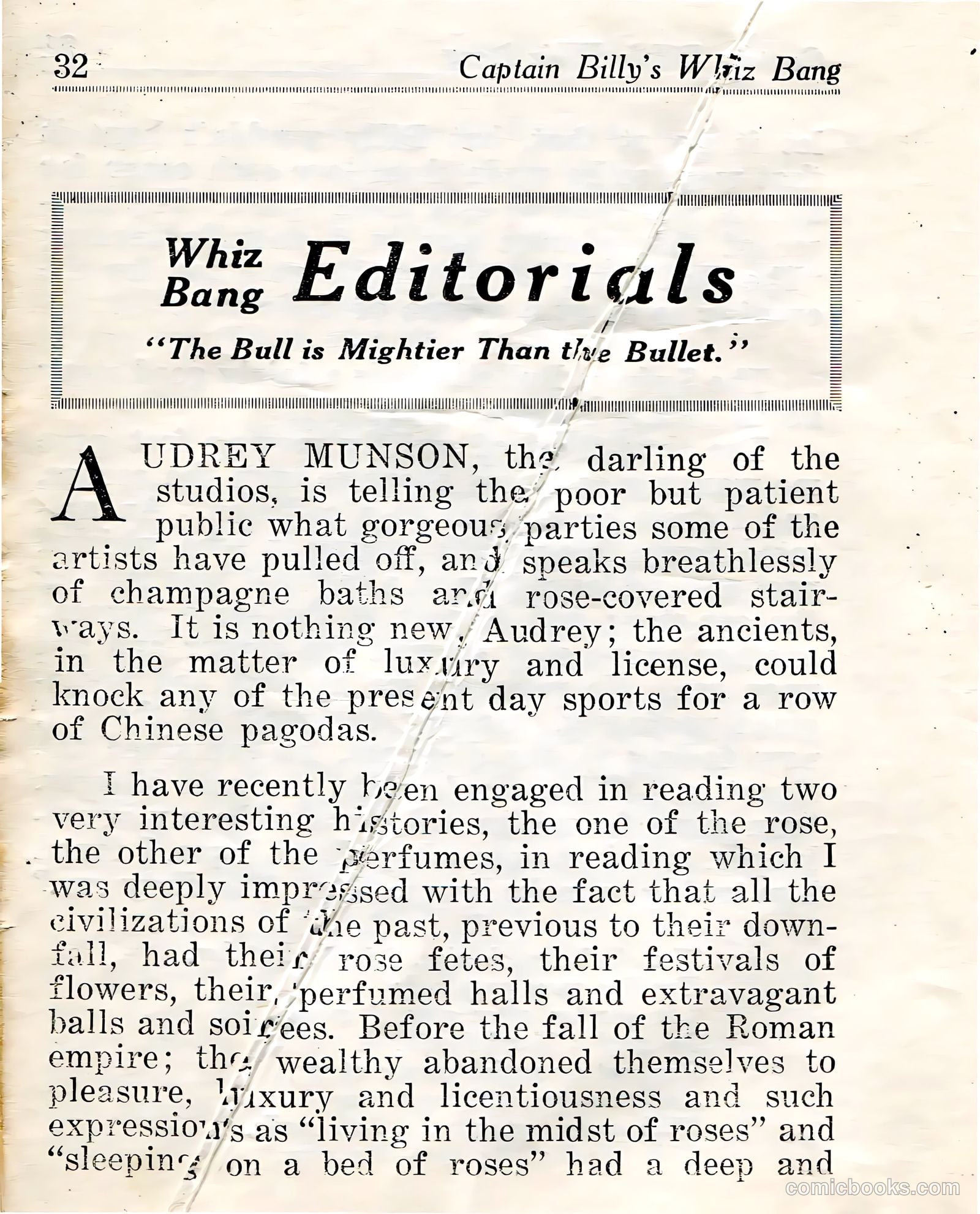
This editorial satirizes actress **Audrey Munson**, who was famous in the 1910s-20s as a sculptor's model and silent film actress. The piece mocks her for breathlessly describing lavish artist parties featuring champagne baths and rose-decorated staircases to the public. The satire's point: such excess isn't novel—ancient civilizations indulged similarly before collapsing. The editorial draws a moralistic parallel, suggesting that Rome's wealthy abandoned themselves to pleasure, luxury, and "licentiousness" before the empire's fall. By referencing roses, perfumes, and extravagant balls in past civilizations, the writer implies that modern American excess signals potential societal decline. The headline—"The Bull is Mightier Than the Bullet"—appears unrelated to this text section, possibly referencing another article. The overall tone reflects early 20th-century anxieties about wealth, morality, and civilization's fragility.
📄 Transcribed text from this page (OCR, searchable)
Machine-transcribed from the original scan — historical spelling and the odd misread are preserved.
32 Captain Billy's Whiz Bang Whiz Bang Editorials “The Bull is Mightier Than the Bullet.” AUDREY MUNSON, the darling of the studios, is telling the poor but patient public what gorgeous parties some of the artists have pulled off, and speaks breathlessly of champagne baths and rose-covered stair-ways. It is nothing new. Audrey; the ancients, in the matter of luxury and license, could knock any of the present day sports for a row of Chinese pagodas. I have recently been engaged in reading two very interesting histories, the one of the rose, the other of the perfumes, in reading which I was deeply impressed with the fact that all the civilizations of the past, previous to their down-fall, had their rose fetes, their festivals of flowers, their perfumed halls and extravagant balls and soirees. Before the fall of the Roman empire; the wealthy abandoned themselves to pleasure, luxury and licentiousness and such expression's as “living in the midst of roses” and “sleeping on a bed of roses” had a deep and