
Captain Billy's Whiz Bang, August 1921 · page 19 of 68
Captain Billy's Whiz Bang #23 — page 19: what you’re looking at
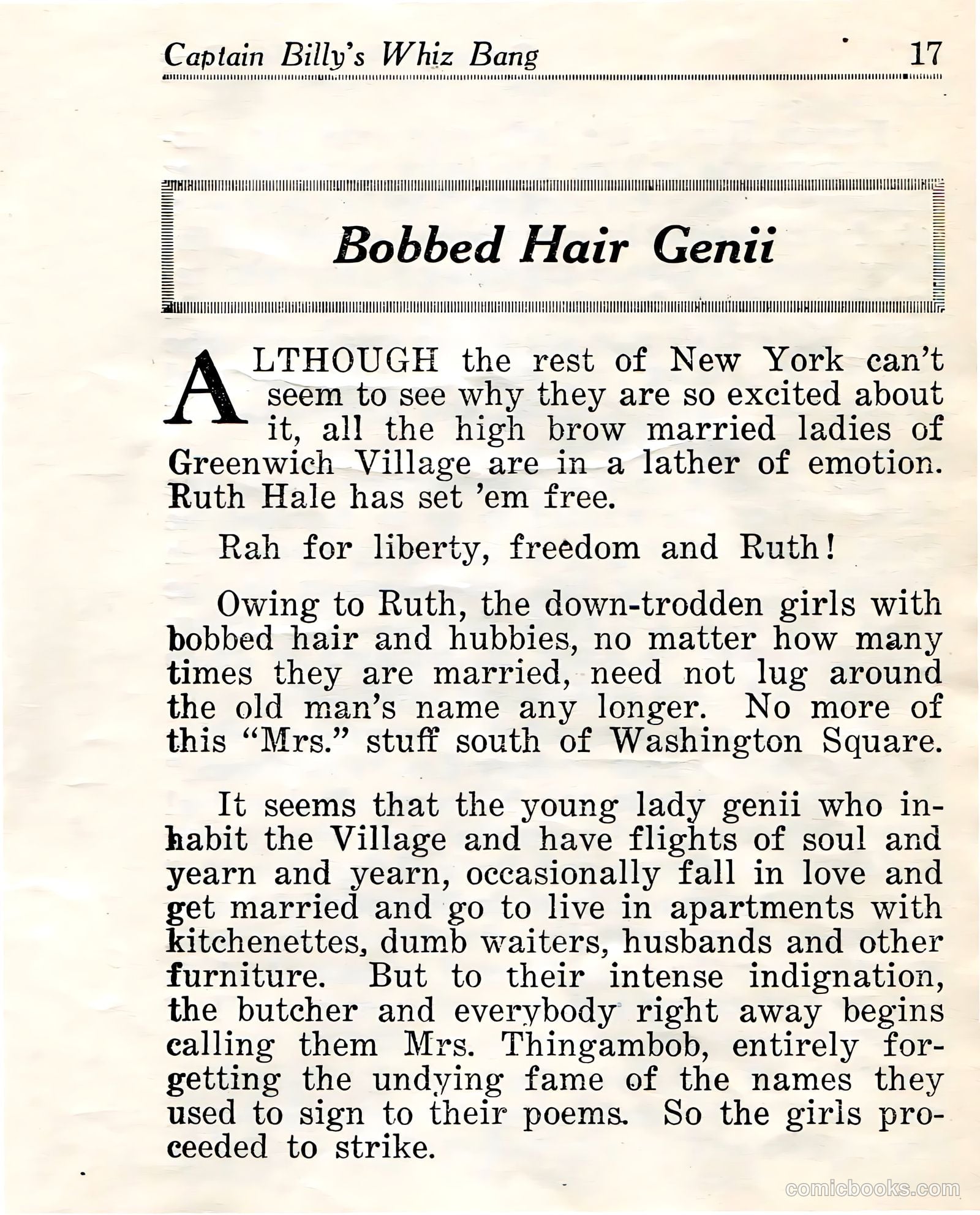
What you’re looking at
This satirical piece mocks the feminist activism of Ruth Hale, a real journalist and women's rights advocate who campaigned against married women being legally required to adopt their husbands' surnames. The satire targets Greenwich Village bohemians—young, artistic women with bobbed hair (a symbol of modern, rebellious femininity) who resent losing their maiden names and personal identities upon marriage. The piece ridicules them as self-absorbed "genii" obsessed with poetic fame, suggesting their protest is pretentious and absurd rather than principled. The joke: these aspiring poets care less about legal rights than about their vanity—they want recognition under their "undying" names rather than being addressed as "Mrs. Thingambob." The magazine dismisses their grievance as the petty concern of silly bohemians rather than recognizing it as legitimate advocacy for women's legal autonomy.
📄 Transcribed text from this page (OCR, searchable)
Machine-transcribed from the original scan — historical spelling and the odd misread are preserved.
Captain Billy's Whiz Bang 17 Bobbed Hair Genii ALTHOUGH the rest of New York can't seem to see why they are so excited about it, all the high brow married ladies of Greenwich Village are in a lather of emotion. Ruth Hale has set 'em free. Rah for liberty, freedom and Ruth! Owing to Ruth, the down-trodden girls with bobbed hair and hubbies, no matter how many times they are married, need not lug around the old man's name any longer. No more of this “Mrs.” stuff south of Washington Square. It seems that the young lady genii who in-habit the Village and have flights of soul and yearn and yearn, occasionally fall in love and get married and go to live in apartments with kitchenettes, dumb waiters, husbands and other furniture. But to their intense indignation, the butcher and everybody right away begins calling them Mrs. Thingambob, entirely for-getting the undying fame of the names they used to sign to their poems. So the girls pro-ceeded to strike.