
Captain Billy's Whiz Bang, July 1921 · page 5 of 68
Captain Billy's Whiz Bang #22 — page 5: what you’re looking at
What you’re looking at
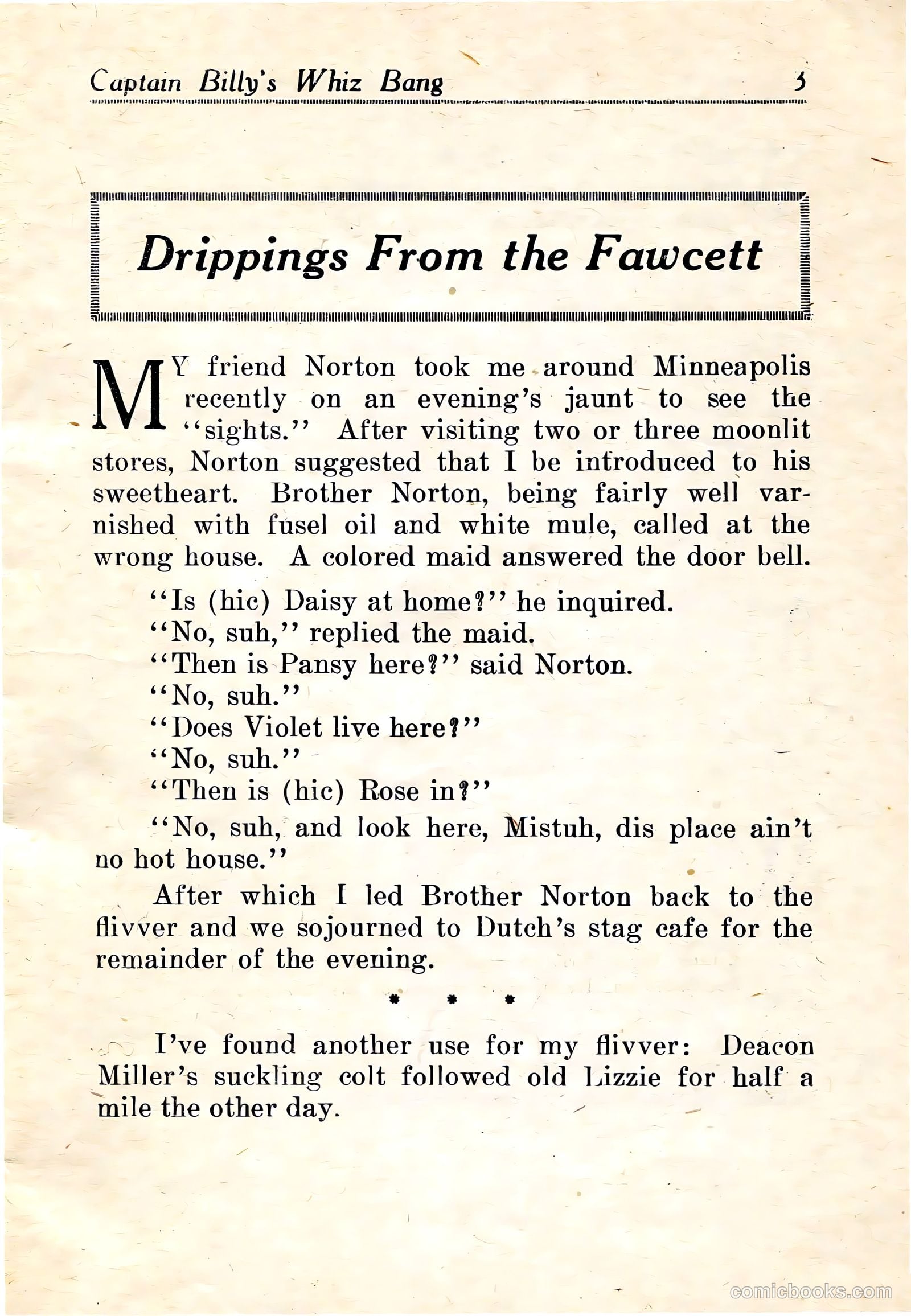
This is a humorous anecdote rather than a political cartoon. The joke relies on period stereotypes: a drunk man (Norton, intoxicated on "fusel oil and white mule"—bootleg liquor) repeatedly asks a Black maid about women with flower names (Daisy, Pansy, Violet, Rose), implying he's seeking a brothel. The maid's exasperated response—"dis place ain't no hot house"—delivers the punchline through dialect humor, a common comedic device of the era. The second brief anecdote about a "flivver" (Model T Ford) and a colt is simple wordplay about the vehicle's uses. The satire targets Prohibition-era drinking culture and male behavior rather than politics. The stereotyped dialect reflects 1920s entertainment conventions, though modern readers would find it offensive. No specific political figures appear to be referenced.
📄 Transcribed text from this page (OCR, searchable)
Machine-transcribed from the original scan — historical spelling and the odd misread are preserved.
Captain Billy's Whiz Bang 3 Drippings From the Fawcett MY friend Norton took me around Minneapolis recently on an evening's jaunt to see the "sights." After visiting two or three moonlit stores, Norton suggested that I be introduced to his sweetheart. Brother Norton, being fairly well varnished with fusel oil and white mule, called at the wrong house. A colored maid answered the door bell. "Is (hic) Daisy at home?" he inquired. "No, suh," replied the maid. "Then is Pansy here?" said Norton. "No, suh." "Does Violet live here?" "No, suh." "Then is (hic) Rose in?" "No, suh, and look here, Mistuh, dis place ain't no hot house." After which I led Brother Norton back to the flivver and we sojourned to Dutch's stag cafe for the remainder of the evening. * * * I've found another use for my flivver: Deacon Miller's suckling colt followed old Lizzie for half a mile the other day.