
Captain Billy's Whiz Bang, March 1921 · page 9 of 68
Captain Billy's Whiz Bang #18 — page 9: what you’re looking at
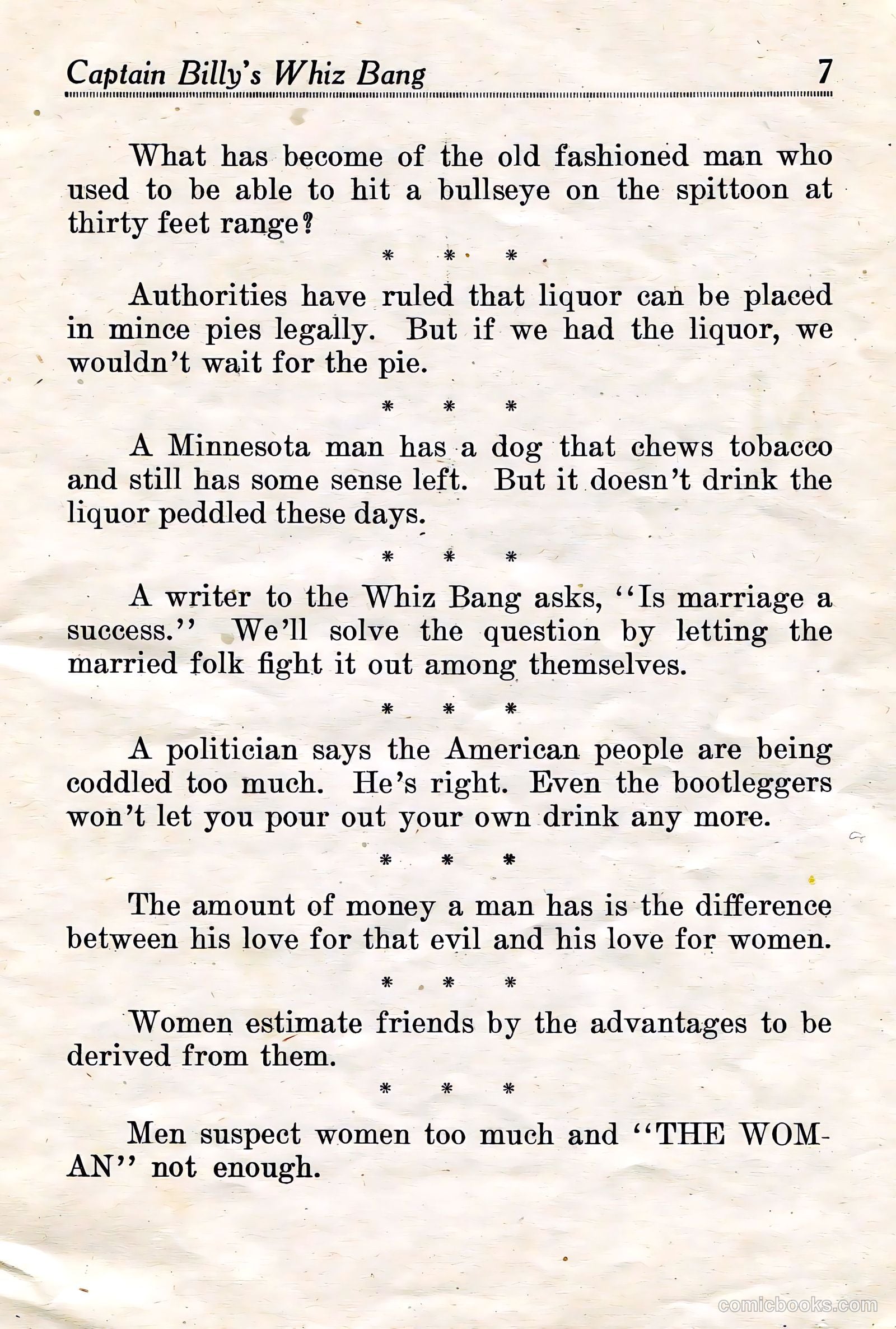
What you’re looking at
This page from the satirical magazine presents a series of brief, cynical jokes reflecting 1920s American anxieties. References include: **Prohibition era**: Multiple jokes target alcohol restrictions—liquor in mince pies, bootleggers controlling supply, inability to drink freely. The spittoon joke nostalgically contrasts pre-Prohibition masculinity with current constraints. **Social commentary**: Jabs at government paternalism ("coddled too much"), marriage skepticism, and gender dynamics. The final quips mock women's materialism and men's contradictory attitudes toward women. The tone is dismissive and misogynistic by modern standards, typical of 1920s "men's humor." No specific political figures appear identifiable. The satire targets broad social conditions—legal restrictions, changing gender relations, and perceived moral decline—rather than particular individuals or events.
📄 Transcribed text from this page (OCR, searchable)
Machine-transcribed from the original scan — historical spelling and the odd misread are preserved.
Captain Billy's Whiz Bang 7 What has become of the old fashioned man who used to be able to hit a bullseye on the spittoon at thirty feet range? Authorities have ruled that liquor can be placed in mince pies legally. But if we had the liquor, we wouldn't wait for the pie. A Minnesota man has a dog that chews tobacco and still has some sense left. But it doesn't drink the liquor peddled these days. A writer to the Whiz Bang asks, "Is marriage a success." We'll solve the question by letting the married folk fight it out among themselves. A politician says the American people are being coddled too much. He's right. Even the bootleggers won't let you pour out your own drink any more. The amount of money a man has is the difference between his love for that evil and his love for women. Women estimate friends by the advantages to be derived from them. Men suspect women too much and "THE WOM- AN" not enough.