
The Wasp, 1918 · page 311 of 330
The Wasp — 1918 — page 311: what you’re looking at
What you’re looking at
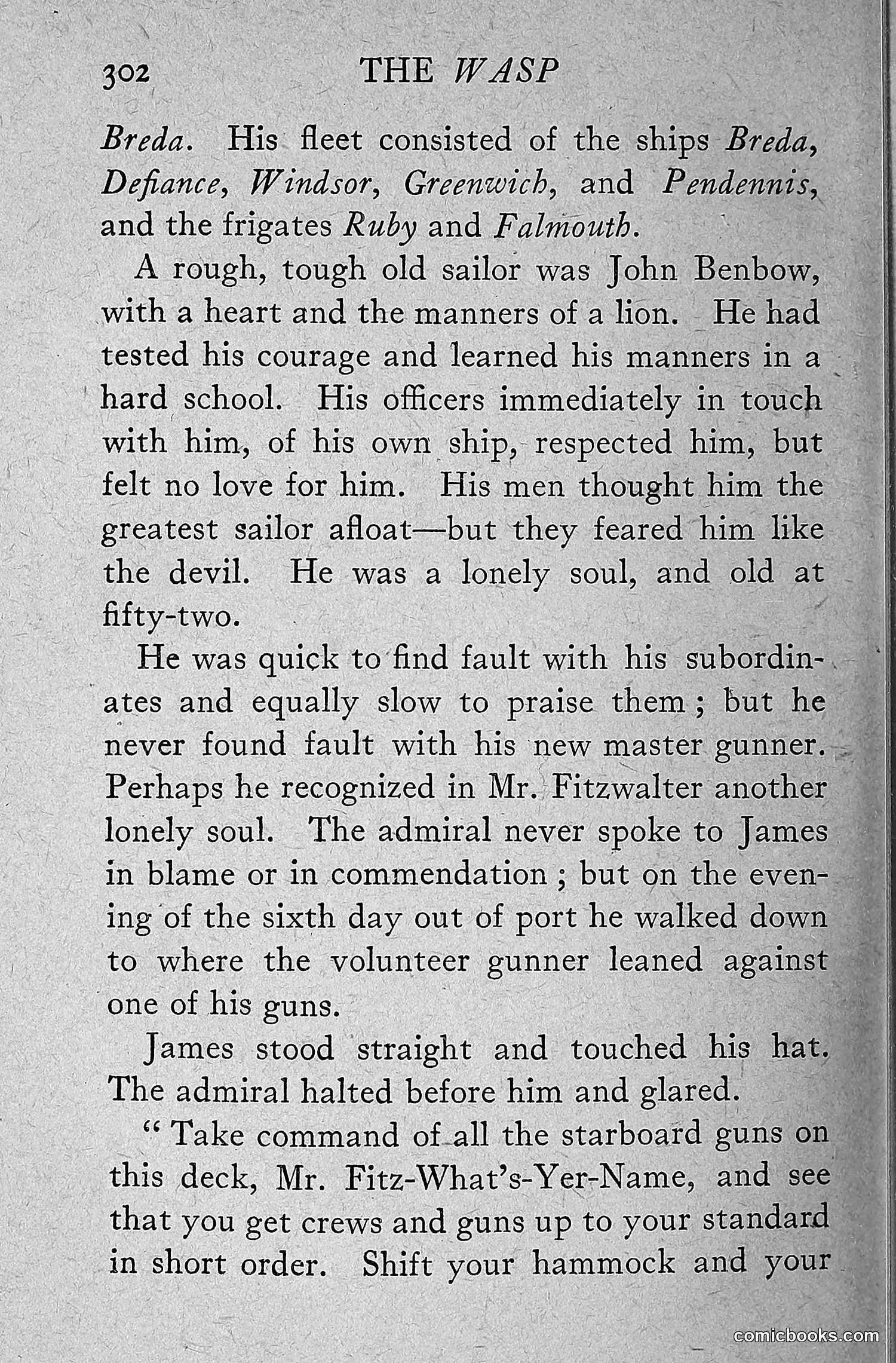
This page contains **narrative fiction rather than a political cartoon**—it's a serialized story about Admiral John Benbow, a historical naval figure, and his interaction with a volunteer gunner named James Fitzwalter. The text depicts Benbow as a harsh but respected military commander: feared by his men, respected for his sailing expertise, but emotionally isolated and quick to criticize. The story emphasizes the admiral's recognition of a kindred "lonely soul" in Fitzwalter, shown through his otherwise uncharacteristic decision to promote him without formal praise or blame. The satire appears **social rather than political**—critiquing rigid military hierarchies and the emotional toll of command. The admiral's gruff manner and the tension between discipline and recognition reflect 19th-century anxieties about naval authority and masculinity. Without seeing illustrations or additional context, the specific satirical point remains **unclear**, though the narrative tone suggests commentary on naval culture and leadership dynamics.
📄 Transcribed text from this page (OCR, searchable)
Machine-transcribed from the original scan — historical spelling and the odd misread are preserved.
302 THE WASP Breda. Wis fleet consisted of the ships Breda, Defiance, Windsor, Greenwich, and Pendennis, and the frigates Ruby and Falmouth. A rough, tough old sailor was John Benbow, with a heart and the manners of a lion. He had tested his courage and learned his manners in a hard school. His officers immediately in touch with him, of his own ship, respected him, but felt no love for him. His men thought him the greatest sailor afloat—but they feared him like the devil. He was a lonely soul, and old at ~ fifty-two. | oe He was quick to’find fault with his subordin-. | ates and equally slow to praise them; but he ~ never found fault with his new master gunner... | Perhaps he recognized in Mr. Fitzwalter another lonely soul. The admiral never spoke to James — | in blame or in commendation ; but on the even- ing of the sixth day out of port he walked down | to where the volunteer gunner leaned against || one of his guns. 4 James stood straight and touched his hat. The admiral halted before him and glared. 4 “Take command of-all the starboard guns on” this deck, Mr. Fitz-What’s-Yer-Name, and see : that you get crews and guns up to your standard — in short order. Shift your hammock and you COMME OOS Colm) | \j