
The Wasp, 1918 · page 290 of 330
The Wasp — 1918 — page 290: what you’re looking at
What you’re looking at
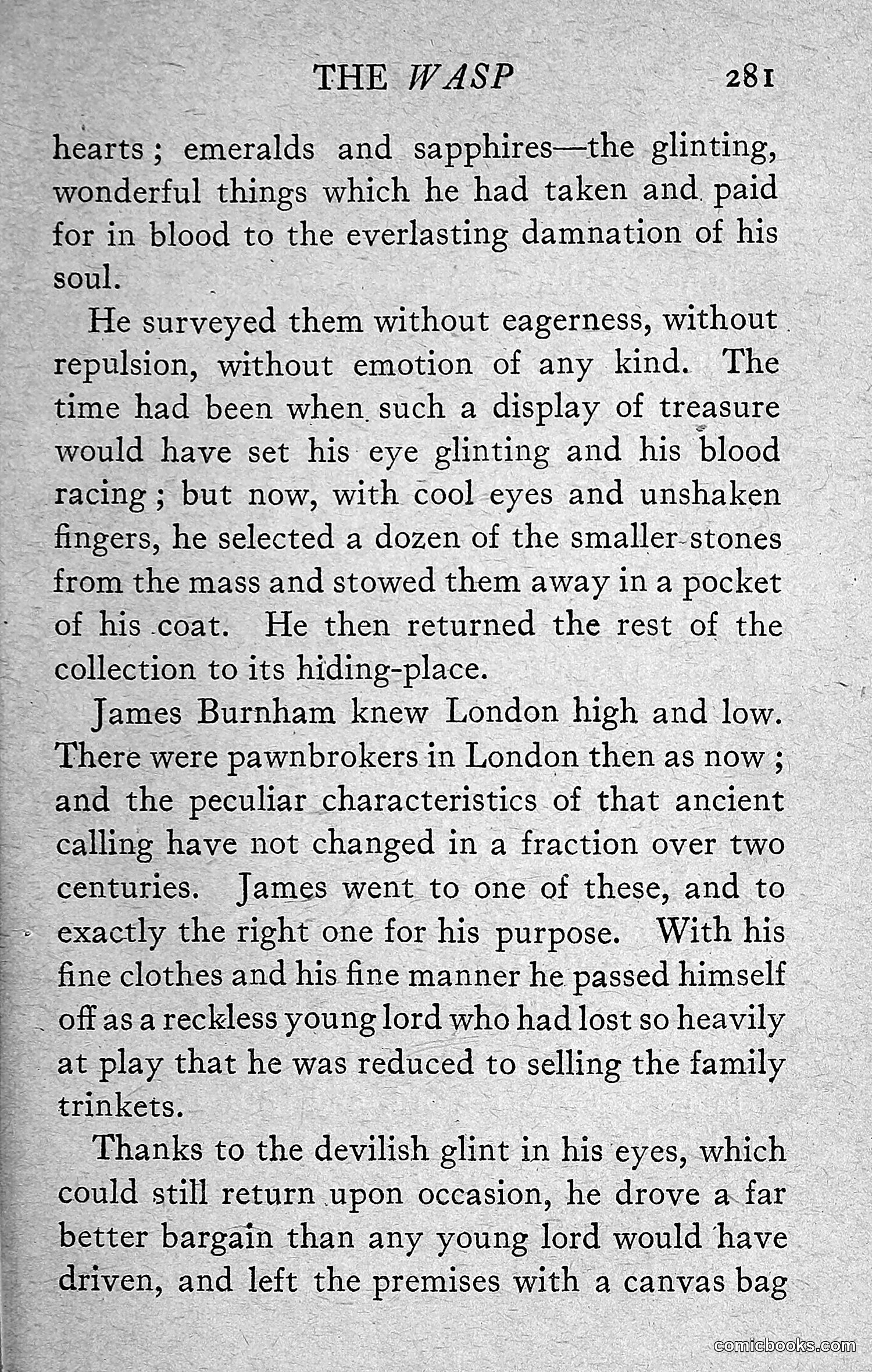
This page contains prose fiction rather than a political cartoon. It's an excerpt from a serialized story featuring the character **James Burnham**, a criminal who has stolen jewels (emeralds, sapphires) and is now pawning them to convert stolen goods into cash. The passage illustrates Burnham's moral corruption—he feels no emotion despite his crimes, suggesting spiritual damnation. He cleverly deceives a London pawnbroker by posing as a dissolute aristocrat forced to sell family heirlooms due to gambling losses, using his refined appearance and charm to negotiate better terms than his actual status would permit. The satire targets both the criminal underworld and the gullible merchant class: the pawnbroker is easily duped by performative gentility. This reflects Victorian-era anxieties about class deception and urban crime. Without additional context about the larger story, specific historical events referenced remain unclear.
📄 Transcribed text from this page (OCR, searchable)
Machine-transcribed from the original scan — historical spelling and the odd misread are preserved.
THE WASP 281 hearts; emeralds and sapphires—the glinting, wonderful things which he had taken and. paid for in blood to the everlasting damnation of his soul. He surveyed on without eagerness, without | repulsion, without emotion of any kind. The time had been when such a display of treasure would have set his eye glinting and his blood racing ; but now, with cool eyes and unshaken fingers, he selected a dozen of the smaller-stones from the mass and stowed them away ina pocket of his coat. He then returned the rest of the collection to its hiding-place. James Burnham knew London high and low. There were pawnbrokers in London then as now ; and the peculiar characteristics of that ancient calling have not changed in a fraction over two centuries. James went to one of these, and to - exactly the right one for his purpose. With his fine clothes and his fine manner he passed himself _ offasa reckless young lord who had lost so heavily _at play that he was reduced to selling the family trinkets. Thanks to the devilish glint in his eyes, which could still return upon occasion, he drove a far _ better bargain than any young lord would have driven, and left the premises with a canvas bag comlichooks.com