
The Wasp, 1918 · page 272 of 330
The Wasp — 1918 — page 272: what you’re looking at
What you’re looking at
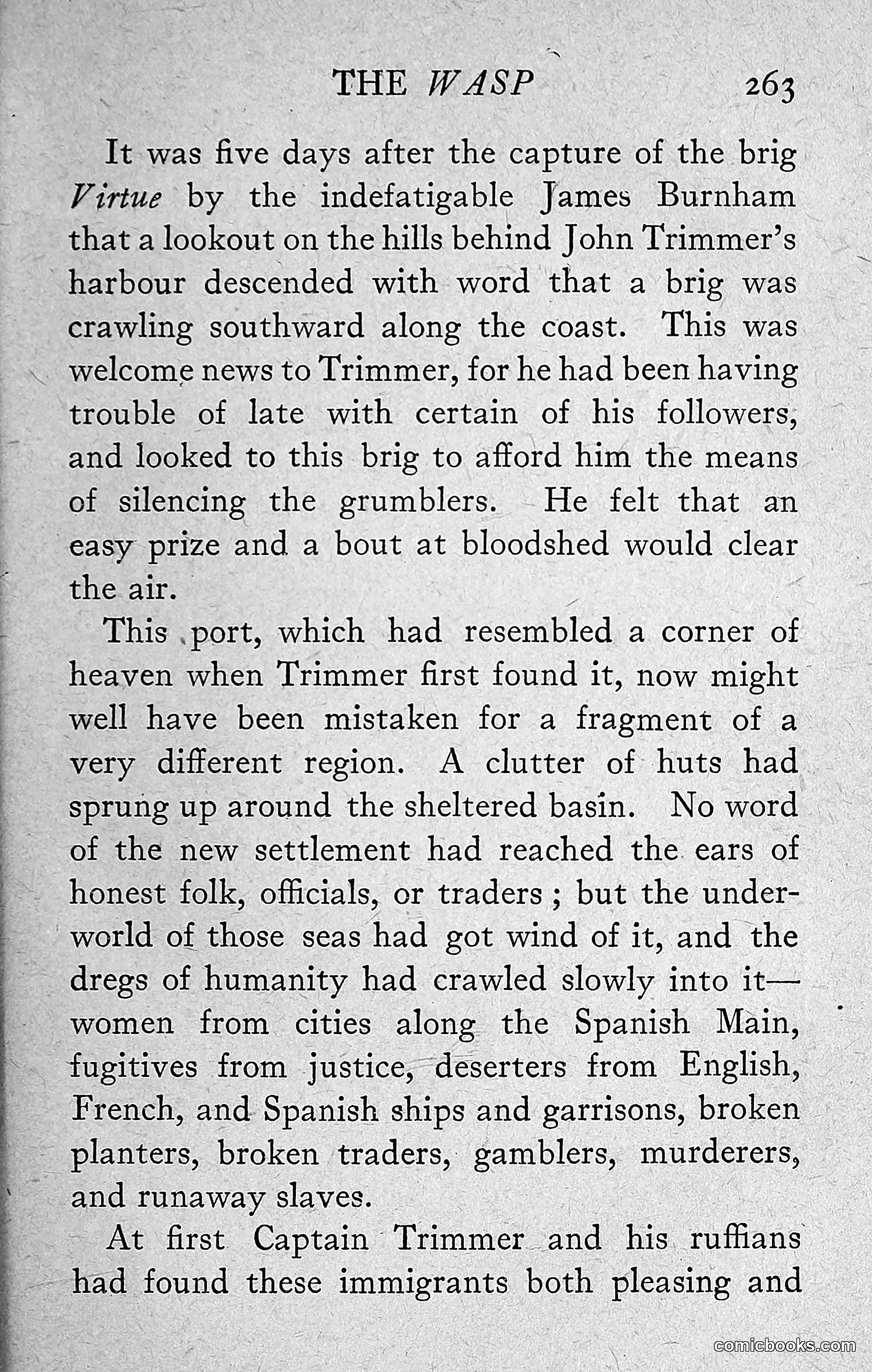
This appears to be a serialized fiction installment rather than a political cartoon. The passage depicts a lawless settlement established by Captain John Trimmer in an unspecified colonial port (possibly Caribbean, given references to "Spanish Main"). The narrative describes how Trimmer's harbor has attracted society's outcasts—deserters, fugitives, enslaved people, and criminals—after capturing the brig *Virtue*. Trimmer anticipates using another approaching vessel as a means to control his increasingly troublesome followers through violence and plunder. The satire appears directed at colonial enterprise and frontier lawlessness: the settlement initially seemed "a corner of heaven" but has devolved into a haven for humanity's "dregs." The text suggests commentary on how frontier communities, justified as civilizing ventures, actually became refuges for criminals and the dispossessed—critiquing both imperial ambitions and the moral compromises of colonial settlement. The historical context remains unclear without seeing the full publication.
📄 Transcribed text from this page (OCR, searchable)
Machine-transcribed from the original scan — historical spelling and the odd misread are preserved.
THE WASP 263 It was five days after the capture of the brig Virtue by the indefatigable James Burnham that a lookout on the hills behind John Trimmer’s harbour descended with word that a brig was crawling southward along the coast. This was welcome news to Trimmer, for he had been having trouble of late with certain of his followers, and looked to this brig to afford him the means of silencing the grumblers. He felt that an easy prize and a bout at bloodshed would clear the air. This .port, which had resembled a corner of heaven when Trimmer first found it, now might well have been mistaken for a fragment of a very different region. A clutter of huts had sprung up around the sheltered basin. No word of the new settlement had reached the ears of honest folk, officials, or traders ; but the under- world of those seas had got wind of it, and the dregs of humanity had crawled slowly into it— women from cities along the Spanish Main, fugitives from justice, deserters from English, French, and Spanish ships and garrisons, broken planters, broken traders, gamblers, murderers, and runaway slaves. At first Captain Trimmer and his ruffians had found these immigrants both pleasing and comichooks.com