
The Wasp, 1918 · page 23 of 330
The Wasp — 1918 — page 23: what you’re looking at
What you’re looking at
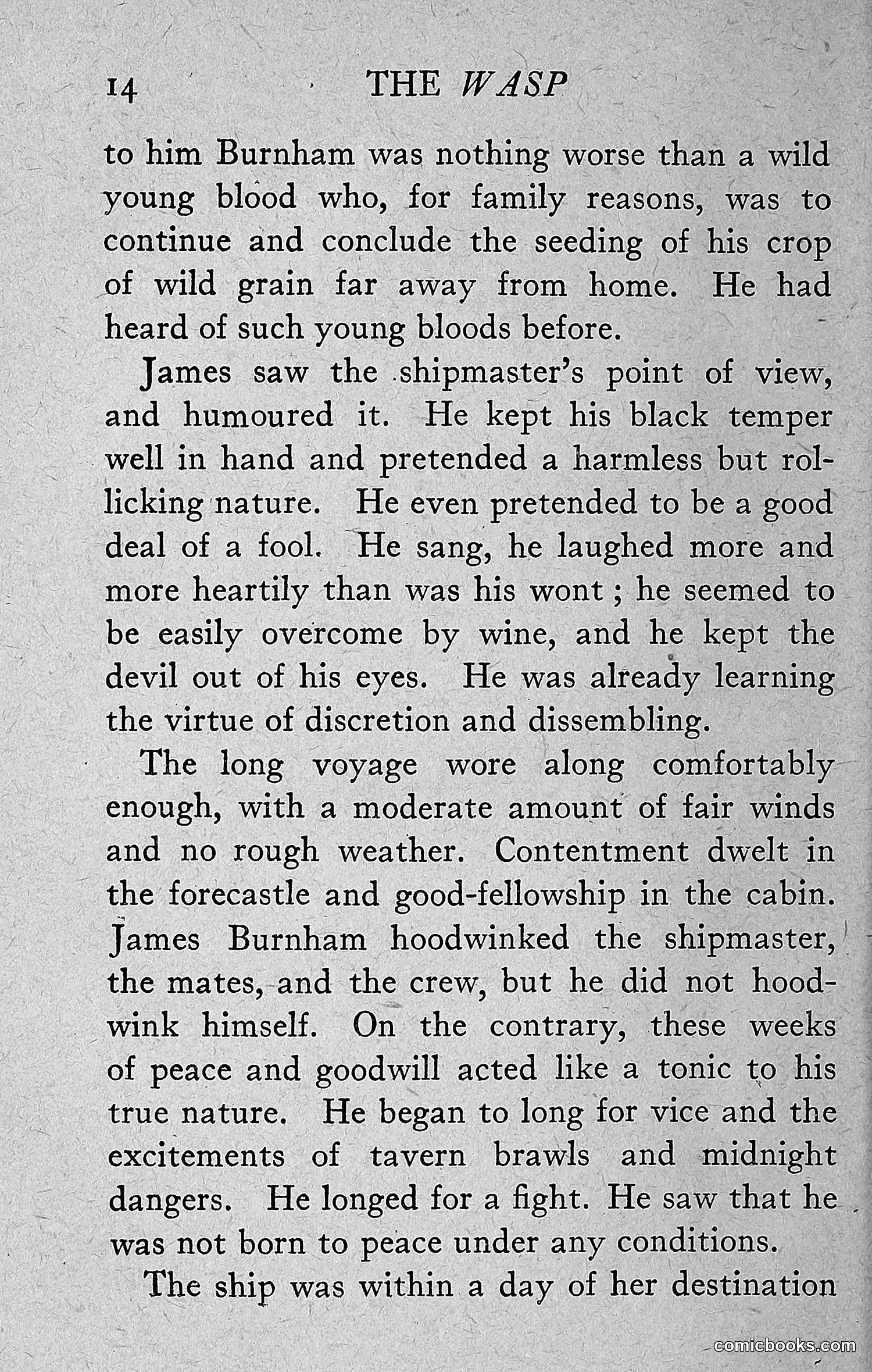
This page appears to be **prose fiction**, not a political cartoon. It's a narrative excerpt, likely from a serialized story in *The Wasp* magazine, concerning a character named James Burnham aboard a ship. The passage describes Burnham as a "wild young blood" sent away by family to reform during a voyage. The shipmaster views him as a troublemaker, but Burnham manipulates everyone—the captain, mates, and crew—by feigning cheerfulness and foolishness while suppressing his violent temperament. The satire targets **young aristocratic men** ("wild bloods") who are problematic enough that families exile them to sea, hoping ocean travel will domesticate them. The irony is that Burnham's forced respectability only intensifies his craving for vice, fighting, and danger—suggesting his true nature cannot be reformed by such measures. Without seeing the magazine's date or author, the specific social commentary remains unclear, though it reflects 19th-century concerns about uncontrollable youth and class behavior.
📄 Transcribed text from this page (OCR, searchable)
Machine-transcribed from the original scan — historical spelling and the odd misread are preserved.
i, 6 DHE spe to him Burnham was nothing worse than a wild young blood who, for family reasons, was to continue and conclude the seeding of his crop of wild grain far away from home. He had heard of such young bloods before. e James saw the shipmaster’s point of view, and humoured it. He kept his black temper well in hand and pretended a harmless but rol- licking nature. He even pretended to be a good © deal of a fool. He sang, he laughed more and more heartily than was his wont ; he seemed to be easily overcome by wine, and he kept the devil out of his eyes. He was already learning the virtue of discretion and dissembling. - The long voyage wore along comfortably enough, with a moderate amount of fair winds and no rough weather. Contentment dwelt in the forecastle and good-fellowship in the cabin. James Burnham hoodwinked the shipmaster,! ~ the mates, and the crew, but he did not hood- wink himself. On the contrary, these weeks of peace and goodwill acted like a tonic to his true nature. He began to long for vice and the excitements of tavern brawls and midnight dangers. He longed for a fight. He saw that he . was not born to peace under any conditions. The ship was within a day of her destination Bcomichooks:com) rs