
The Wasp, 1918 · page 132 of 330
The Wasp — 1918 — page 132: what you’re looking at
What you’re looking at
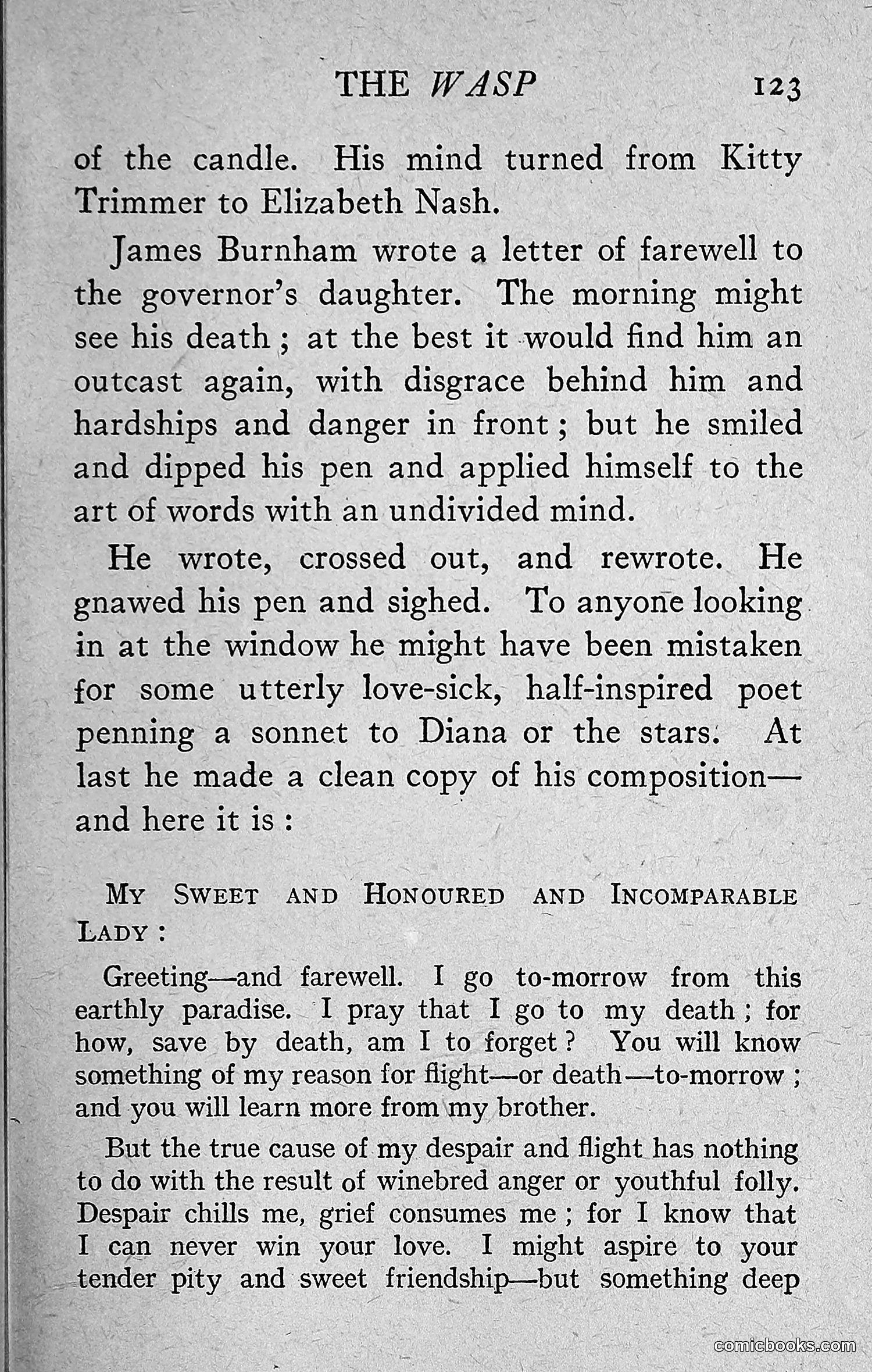
This page presents a serialized fictional narrative rather than political satire. It depicts James Burnham, facing exile or death by morning, composing a farewell letter to the governor's daughter. The text combines melodramatic romance with desperation—Burnham writes of hopeless love, stating he can never win her affection, only perhaps her pity. The satire likely targets sentimental Victorian literature and overwrought romantic conventions. The narrative voice mocks Burnham's tortured pose ("love-sick, half-inspired poet"), suggesting the absurdity of such theatrical despair. His repeated revisions and anguished composition style parody the overwrought emotional expression common in period literature. Without seeing the full magazine context or knowing the serial's overall plot, the specific political or social targets remain unclear, but *The Wasp's* satirical intent appears directed at romanticized suffering and literary excess rather than contemporary political figures.
📄 Transcribed text from this page (OCR, searchable)
Machine-transcribed from the original scan — historical spelling and the odd misread are preserved.
‘THE WASP 124 of the candle. His mind turned from Kitty Trimmer to Elizabeth Nash. 2 3 James Burnham wrote a letter of farewell to the governor’s daughter. The morning might see his death; at the best it -would find him an outcast again, with disgrace behind him and hardships and danger in front; but he smiled and dipped his pen and applied himself to the art of words with an undivided mind. He wrote, crossed out, and rewrote. He gnawed his pen and sighed. To anyone looking. in at the window he might have been mistaken for some utterly love-sick, half-inspired poet penning a sonnet to Diana or the stars: At last he made a clean copy of his composition— and here it is: 7 My SWEET AND HoNOURED AND INCOMPARABLE LADY : Greeting—and farewell. I go to-morrow from this earthly paradise. I pray that I go to my death; for how, save by death, am I to forget? You will know something of my reason for flight—or death—to-morrow ; and you will learn more from\my brother. But the true cause of my despair and flight has nothing to do with the result of winebred anger or youthful folly. Despair chills me, grief consumes me; for 1 know that I can never win your love. I might aspire to your tender pity and sweet friendship—but something deep comichooks.com