
The Wasp, 1918 · page 130 of 330
The Wasp — 1918 — page 130: what you’re looking at
What you’re looking at
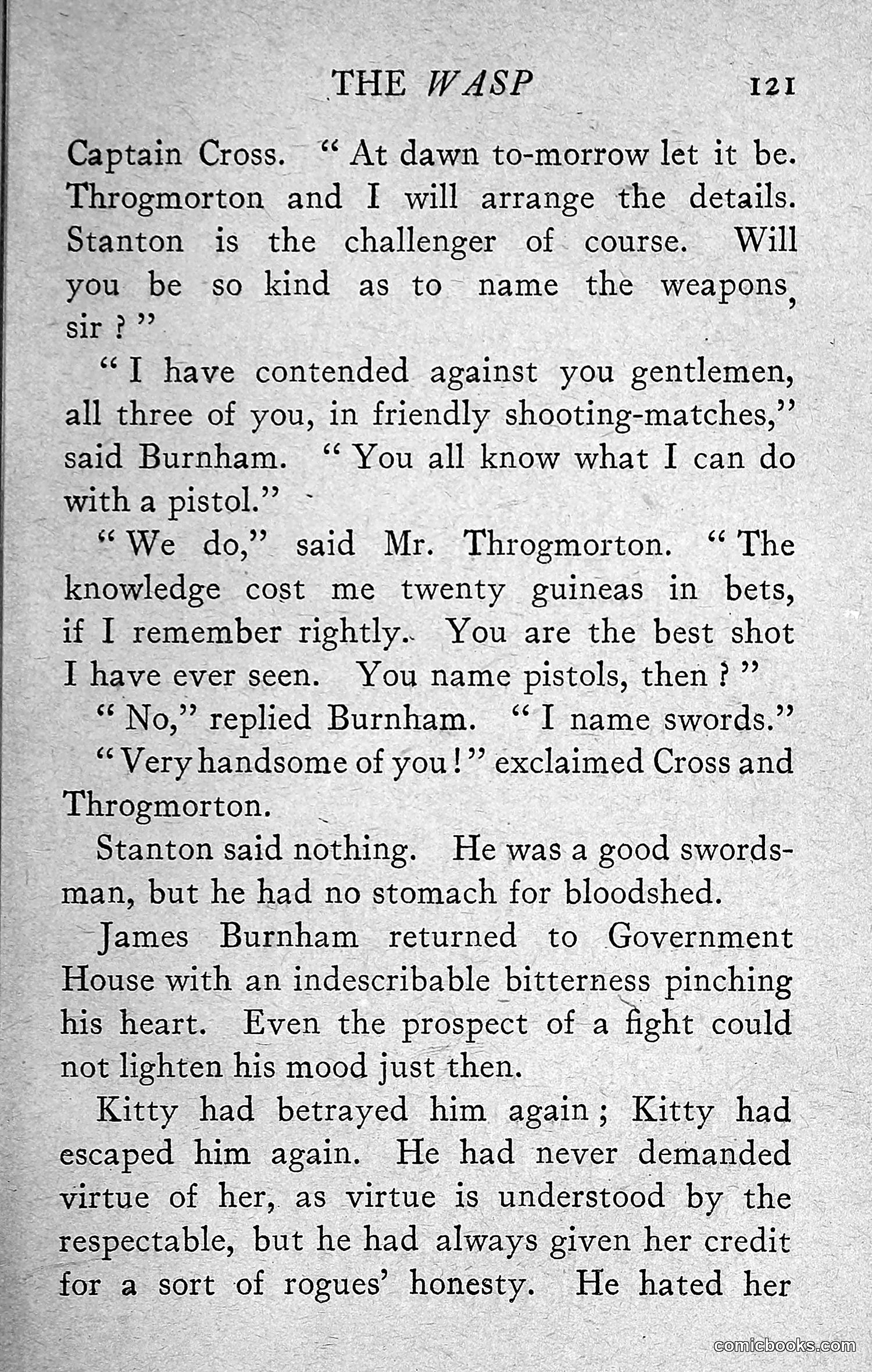
This page appears to be from a serialized fiction story rather than a political cartoon. It depicts a duel arrangement between James Burnham and an opponent (Stanton), with Captain Cross and Throgmorton as intermediaries negotiating the terms. The narrative centers on Burnham's emotional turmoil: he's challenging someone to a sword duel, yet his bitterness stems from romantic betrayal by a woman named Kitty, who has "escaped him again." The text suggests Burnham valued her "rogues' honesty" over conventional virtue. Without additional context about *The Wasp's* publication date or the broader narrative arc, the specific political or social satire remains unclear. The duel arrangement itself may satirize codes of honor among gentlemen, but the page primarily serves the serialized story's plot rather than standalone social commentary.
📄 Transcribed text from this page (OCR, searchable)
Machine-transcribed from the original scan — historical spelling and the odd misread are preserved.
THE WASP “421 Captain Cross. ‘“* At dawn to-morrow let it be. Throgmorton and [| will arrange the details. Stanton is the challenger of course. Will you be so kind as to name the weapons. Sir? ”? “1 have contended against you penton all three of you, in friendly shooting-matches,”’ said Burnham. “ You all know what I can do with a pistol.”” - : We do,” said Mr. Throgmorton. ‘ The knowledge cost me twenty guineas in bets, if I remember rightly. You are the best shot J have ever seen. You name pistols, then?” “No,” replied Burnham. ‘I name swords.” “Very handsome of you!” exclaimed Cross and Throgmorton. _ Stanton said nothing. He was a good swords- man, but he had no stomach for bloodshed. ‘James Burnham returned to Government House with an indescribable bitterness pinching his heart. Even the prospect of a fight could not lighten his mood just then. Kitty had betrayed him again; Kitty had escaped him again. He had never demanded virtue of her, as virtue is understood by the respectable, but he had always given her credit _ for a sort of rogues’ honesty. He hated her comichooks.com