
The Wasp, 1918 · page 111 of 330
The Wasp — 1918 — page 111: what you’re looking at
What you’re looking at
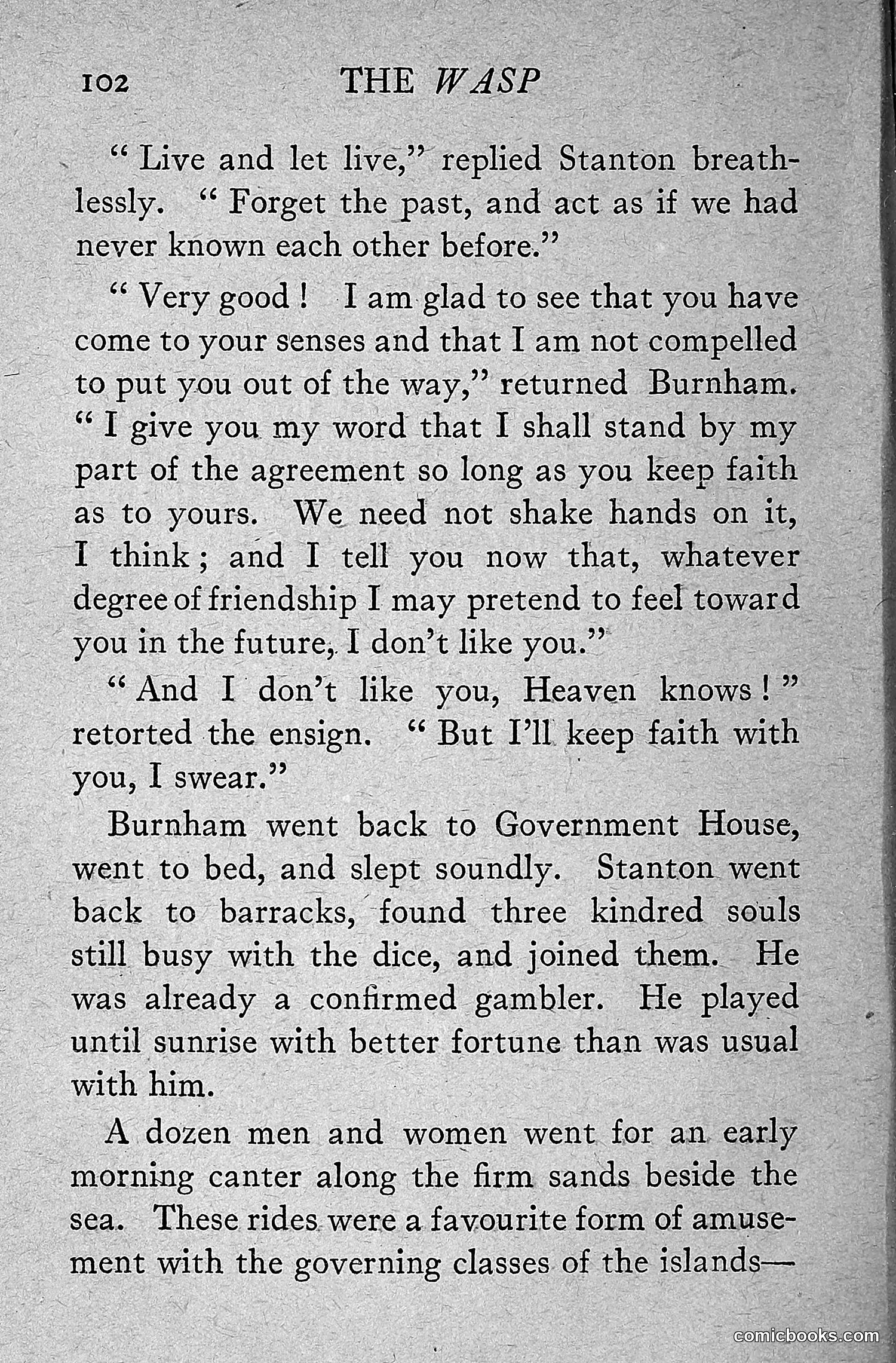
This page appears to be from a serialized narrative rather than a cartoon. It depicts a tense reconciliation between two men: **Stanton** and **Burnham**, likely colonial officials (references to "Government House" and "barracks" suggest a colonial setting, though the specific location is unclear). The exchange shows them agreeing to a cold truce—maintaining outward civility while mutually admitting dislike. Neither wants violence ("put you out of the way"), so they settle on performative friendship while keeping faith with an unstated agreement. The satire targets **colonial hypocrisy**: the governing classes publicly maintaining decorum while harboring genuine contempt. Stanton's immediate turn to gambling, and the reference to morning canters as elite amusement, underscore the frivolous, self-interested nature of colonial leadership. Without knowing the specific historical context or which colony is referenced, the broader point is clear: **The Wasp mocks the false civility and self-serving agreements among those in power**.
📄 Transcribed text from this page (OCR, searchable)
Machine-transcribed from the original scan — historical spelling and the odd misread are preserved.
‘ae ‘THE WASP 99 “Live and let live,” replied Stanton breath- lessly. “‘ Forget the past, and act as if we had never known each other before.” “Very good! I am-glad to see that you have — come to your senses and that I am not compelled to put you out of the way,” returned Burnham. ‘“‘T give you my word that I shall stand by my part of the agreement so long as you keep faith as to yours. We need not shake hands on it, I think; and I tell you now that, whatever degree of friendship I may pretend to feel toward you in the future, [ don’t like you.’” **And I don’t like you, Heaven knows! ” retorted the enplen * But ll keep faith with you, I swear.’ ; Burnham went back to Government House, went to bed, and slept soundly. Stanton went back to barracks, found three kindred souls still busy with the dice, and joined them. He was already a confirmed gambler. He played until sunrise with better fortune than was usual with him. A dozen men and women went for an early morning canter along the firm sands beside the sea. These rides were a favourite form of amuse- ment with the governing classes of the SE Icomichooks:com) a