
The Wasp, 1913 · page 23 of 364
The Wasp — 1913 — page 23: what you’re looking at
What you’re looking at
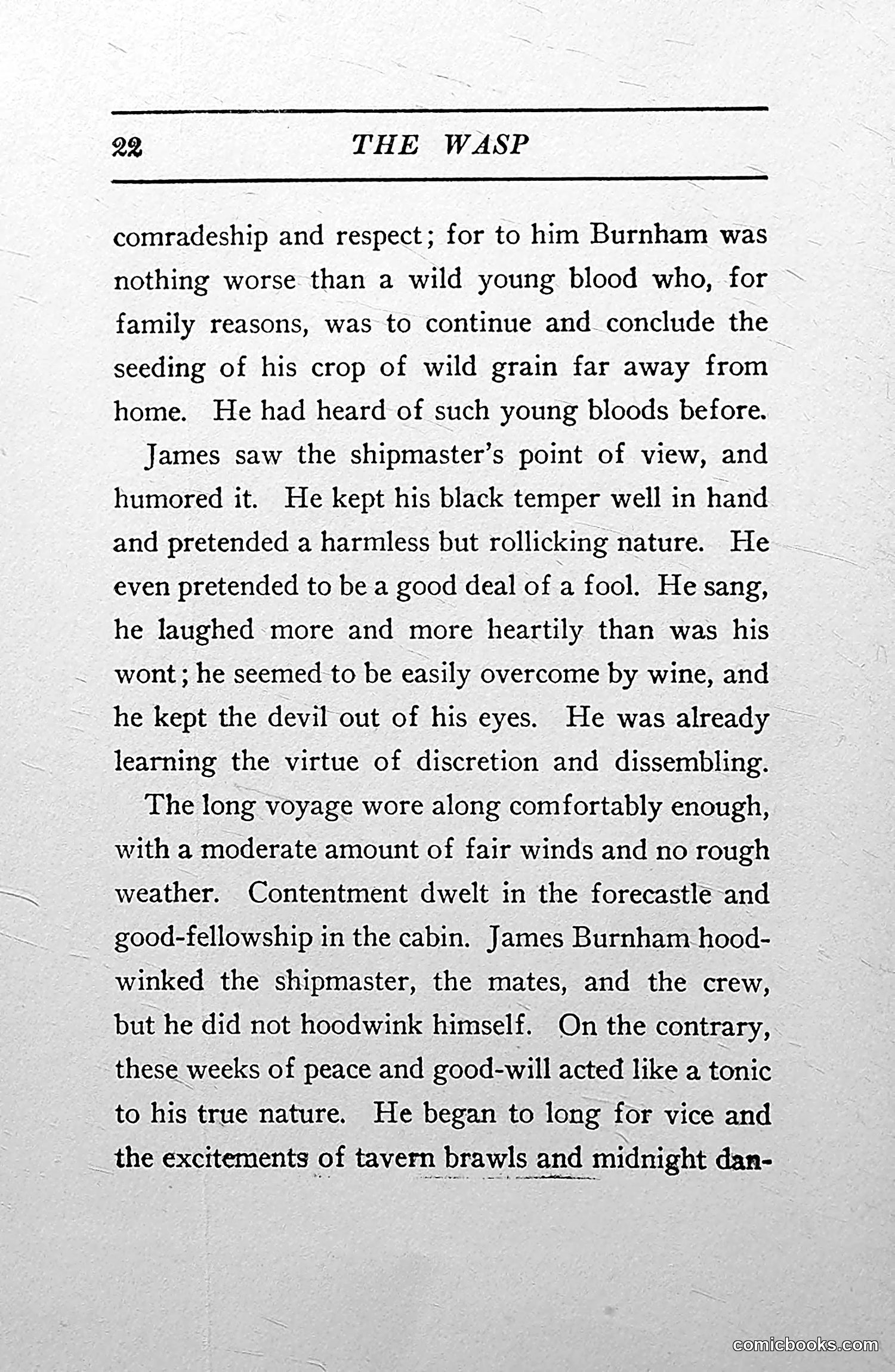
This page contains **serialized fiction**, not a political cartoon. It's a narrative excerpt about a character named James Burnham aboard a ship. The text describes Burnham—apparently a "wild young blood" of good family—deliberately deceiving a shipmaster and crew during a sea voyage. Despite outward performances of foolishness, drunkenness, and good humor, Burnham maintains inner discipline, "keeping the devil out of his eyes." The passage suggests his good behavior is merely tactical dissembling. The final lines reveal his true nature reasserting itself: the peaceful voyage acts as a "tonic" that awakens his appetite for "vice" and "tavern brawls." **Without seeing earlier installments, the specific satirical target is unclear**—whether this mocks a particular public figure, social class behavior, or hypocrisy generally. The passage emphasizes the contrast between performed respectability and suppressed vice, a common satirical theme of the era. The story appears to be building toward depicting Burnham's eventual moral deterioration or exposure.
📄 Transcribed text from this page (OCR, searchable)
Machine-transcribed from the original scan — historical spelling and the odd misread are preserved.
22 THE WASP comradeship and respect; for to him Burnham was nothing worse than a wild young blood who, for family reasons, was to continue and conclude the seeding of his crop of wild grain far away from home. He had heard of such young bloods before. James saw the shipmaster’s point of view, and humored it. He kept his black temper well in hand and pretended a harmless but rollicking nature. He even pretended to be a good deal of a fool. He sang, he laughed more and more heartily than was his wont ; he seemed to be easily overcome by wine, and he kept the devil out of his eyes. He was already learning the virtue of discretion and dissembling. The long voyage wore along comfortably enough, with a moderate amount of fair winds and no rough weather. Contentment dwelt in the forecastle and good-fellowship in the cabin. James Burnham hood- winked the shipmaster, the mates, and the crew, but he did not hoodwink himself. On the contrary, these weeks of peace and good-will acted like a tonic to his true nature. He began to long for vice and the excitements of tavern brawls and midnight dan- Comichooks.com