
The Wasp, 1913 · page 224 of 364
The Wasp — 1913 — page 224: what you’re looking at
What you’re looking at
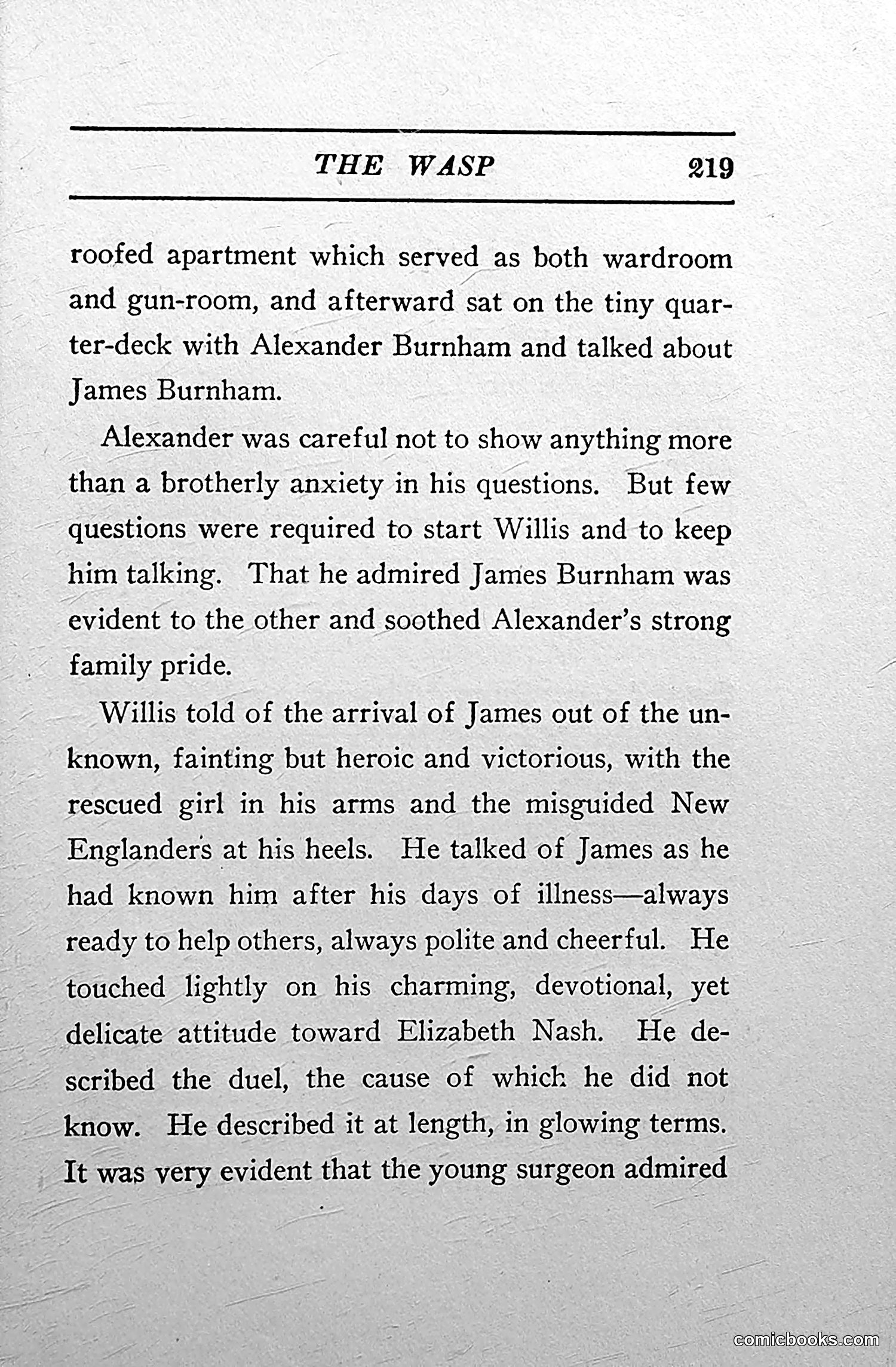
This appears to be a **page of prose text rather than a cartoon or satirical illustration**. It's from *The Wasp*, a 19th-century American satirical magazine, but this particular page contains narrative fiction describing conversations between characters named Alexander Burnham, Willis, and references to James Burnham and Elizabeth Nash. The text describes Willis recounting James Burnham's heroic deeds—rescuing a girl, his courteous behavior toward Elizabeth Nash, and a duel—to Alexander, who listens carefully to gauge James's character. The passage emphasizes James's virtues: helpfulness, politeness, and devotion. **Without seeing accompanying illustrations, I cannot identify what satire or social commentary this page contains.** It reads as straightforward narrative prose rather than the kind of biting political or social satire *The Wasp* was known for. More context about the publication date and surrounding pages would be needed to explain any satirical intent.
📄 Transcribed text from this page (OCR, searchable)
Machine-transcribed from the original scan — historical spelling and the odd misread are preserved.
THE WASP 219 roofed apartment which served as both wardroom and gun-room, and afterward sat on the tiny quar- ter-deck with Alexander Burnham and talked about James Burnham. Alexander was careful not to show anything more than a brotherly anxiety in his questions. But few questions were required to start Willis and to keep him talking. That he admired James Burnham was evident to the other and soothed Alexander’s strong family pride. Willis told of the arrival of James out of the un- known, fainting but heroic and victorious, with the rescued girl in his arms and the misguided New Englanders at his heels. He talked of James as he had known him after his days of illness—always ready to help others, always polite and cheerful. He touched lightly on his charming, devotional, yet delicate attitude toward Elizabeth Nash. He de- scribed the duel, the cause of which he did not know. He described it at length, in glowing terms. It was yery evident that the young surgeon admired Comichooks.com