
The Wasp, 1913 · page 188 of 364
The Wasp — 1913 — page 188: what you’re looking at
What you’re looking at
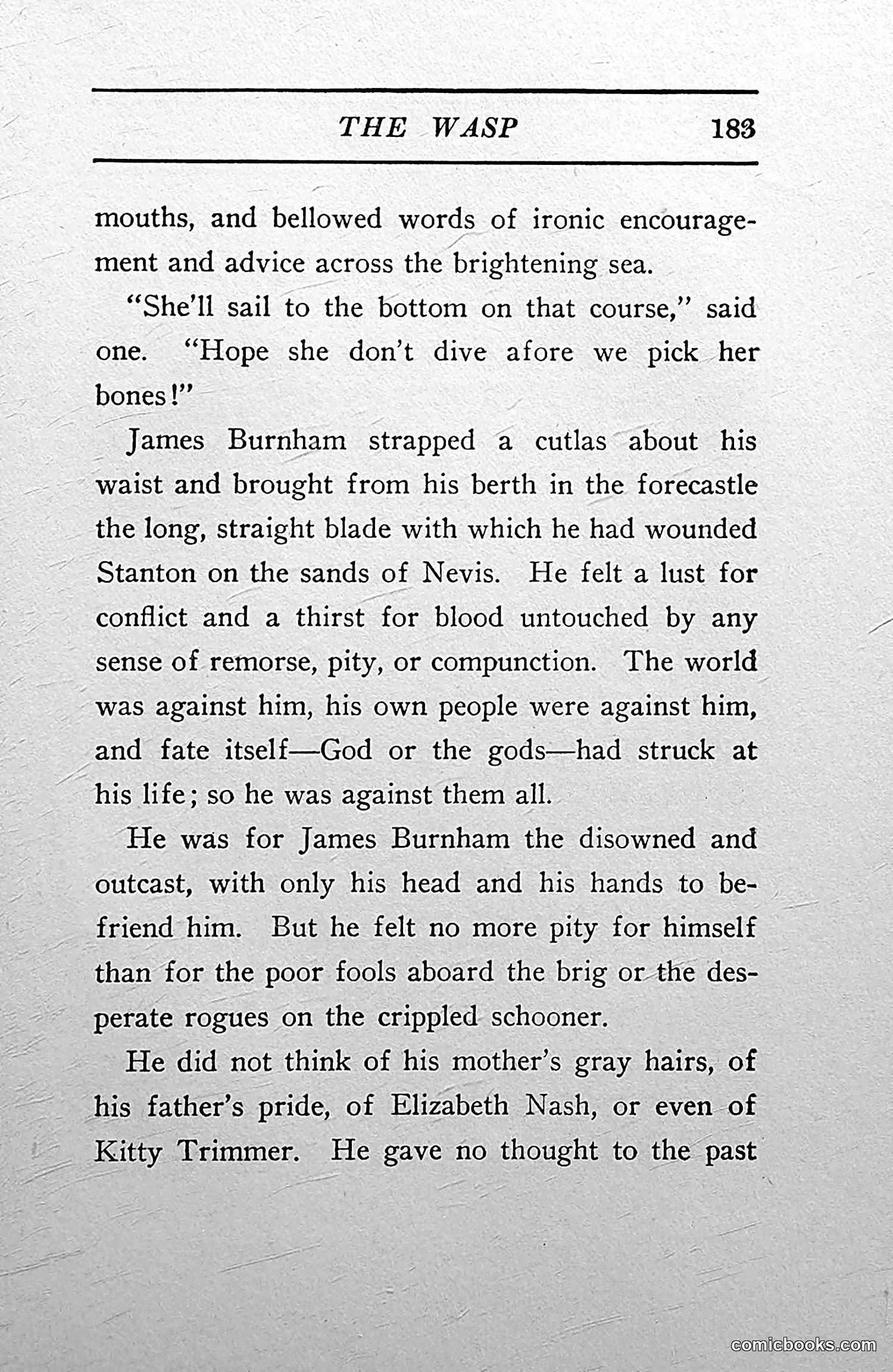
This page appears to be **literary fiction rather than political satire or cartooning**. It's a narrative excerpt from what seems to be a serialized adventure novel about James Burnham, a vengeful protagonist preparing for maritime conflict. The passage describes Burnham's bitter psychological state as he arms himself with a cutlass, having previously wounded someone named Stanton. References to a "brig," "schooner," and sailors making dark jokes about salvaging a ship suggest a nautical melodrama. The text emphasizes Burnham's emotional disconnection—his rejection of family (mother, father), romantic interests (Elizabeth Nash, Kitty Trimmer), and conventional morality. This appears to be **popular serialized fiction** typical of 19th-century magazines like *The Wasp*, not political or social satire. Without visible illustrations or more context, the specific satirical or comedic intent remains unclear.
📄 Transcribed text from this page (OCR, searchable)
Machine-transcribed from the original scan — historical spelling and the odd misread are preserved.
THE WASP 183 mouths, and bellowed words of ironic encourage- ment and advice across the brightening sea. “She'll sail to the bottom on that course,” said one. “Hope she don’t dive afore we pick her bones!’ James Burnham strapped a cutlas about his waist and brought from his berth in the forecastle the long, straight blade with which he had wounded Stanton on the sands of Nevis. He felt a lust for conflict and a thirst for blood untouched by any sense of remorse, pity, or compunction. The world was against him, his own people were against him, and fate itself—God or the gods—had struck at his life; so he was against them all. He was for James Burnham the disowned and outcast, with only his head and his hands to be- friend him. But he felt no more pity for himself than for the poor fools aboard the brig or the des- perate rogues on the crippled schooner. He did not think of his mother’s gray hairs, of his father’s pride, of Elizabeth Nash, or even of Kitty Trimmer. He gave no thought to the past Comichooks.com