
The Wasp, 1913 · page 132 of 364
The Wasp — 1913 — page 132: what you’re looking at
What you’re looking at
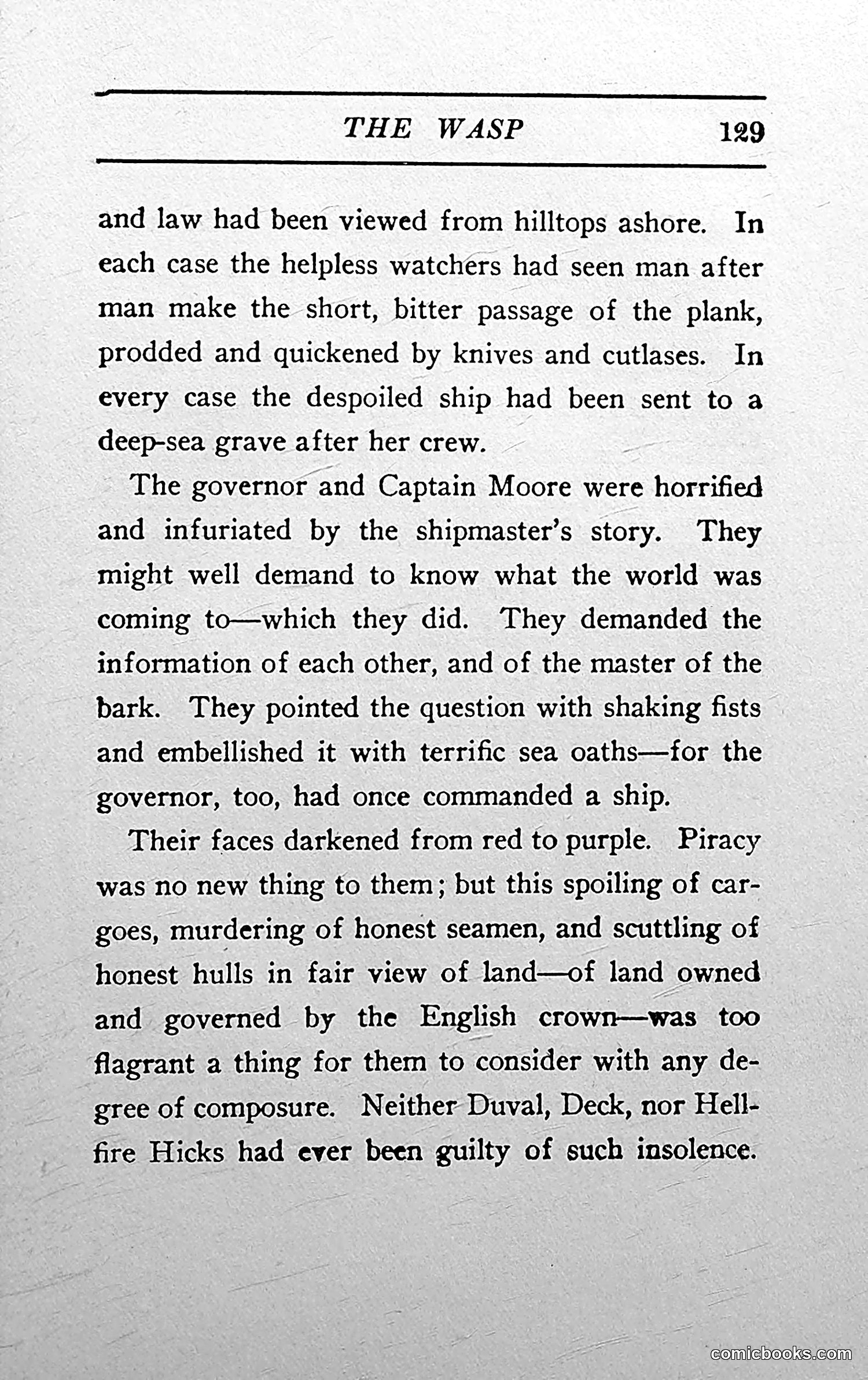
This page appears to be from a serialized fiction story rather than a political cartoon. It describes officials' (a governor and Captain Moore) outraged reaction to a shipmaster's account of piracy—specifically men being forced to walk the plank and ships being destroyed—occurring in view of English-controlled land. The narrative contrasts this "flagrant" behavior with three named figures: Duval, Deck, and "Hellfire Hicks," who "had ever been guilty of such insolence." These appear to be references to actual or semi-legendary pirates, though without additional context it's unclear whether they're historical figures or fictional characters within *The Wasp*'s narrative. The passage's tone is satirical—mocking the authorities' shock at piracy committed so brazenly near their own shores, implying hypocrisy or ineffectual governance. The satire likely critiques either colonial administration or contemporary attitudes toward maritime lawlessness.
📄 Transcribed text from this page (OCR, searchable)
Machine-transcribed from the original scan — historical spelling and the odd misread are preserved.
SSS THE WASP 129 and law had been viewed from hilltops ashore. In each case the helpless watchers had seen man after man make the short, bitter passage of the plank, prodded and quickened by knives and cutlases. In every case the despoiled ship had been sent to a deep-sea grave after her crew. The governor and Captain Moore were horrified and infuriated by the shipmaster’s story. They might well demand to know what the world was coming to—which they did. They demanded the information of each other, and of the master of the bark. They pointed the question with shaking fists and embellished it with terrific sea oaths—for the governor, too, had once commanded a ship. Their faces darkened from red to purple. Piracy was no new thing to them; but this spoiling of car- goes, murdering of honest seamen, and scuttling of honest hulls in fair view of land—of land owned and governed by the English crown—was too flagrant a thing for them to consider with any de- gree of composure. Neither Duval, Deck, nor Hell- fire Hicks had ever been guilty of such insolence. Comlicnooks.com