
The Wasp, 1913 · page 111 of 364
The Wasp — 1913 — page 111: what you’re looking at
What you’re looking at
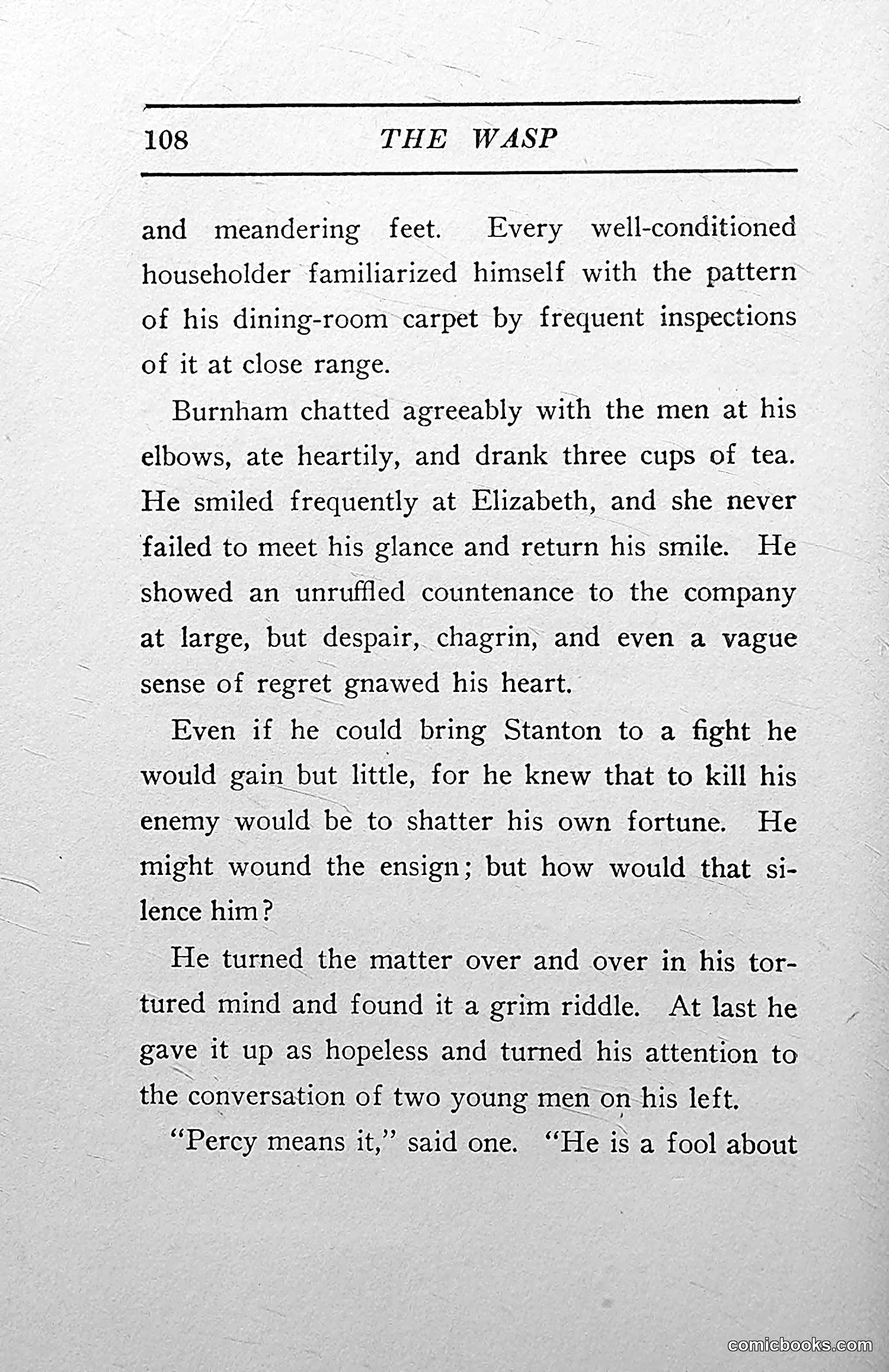
This page appears to be narrative fiction rather than a political cartoon. It depicts a character named Burnham attending a formal dinner where he maintains a composed public facade while internally struggling with a serious problem. Burnham is preoccupied with a conflict involving someone named Stanton (described as "the ensign") and a woman named Elizabeth. He recognizes that killing his rival would financially ruin him, yet wounding Stanton wouldn't resolve the underlying issue—creating an unresolvable dilemma that "gnawed his heart." The passage contrasts his outward charm—smiling at Elizabeth, chatting pleasantly, eating heartily—with his inner turmoil. At the page's end, he overhears two young men discussing someone named Percy, described as "a fool about" something (text cuts off). Without additional context about this serialized story, the specific historical or social references remain unclear, though the themes involve honor, romantic rivalry, and social performance typical of period fiction.
📄 Transcribed text from this page (OCR, searchable)
Machine-transcribed from the original scan — historical spelling and the odd misread are preserved.
———————— 108 THE WASP and meandering feet. Every well-conditioned householder familiarized himself with the pattern of his dining-room carpet by frequent inspections of it at close range. Burnham chatted agreeably with the men at his elbows, ate heartily, and drank three cups of tea. He smiled frequently at Elizabeth, and she never failed to meet his glance and return his smile. He showed an unruffled countenance to the company at large, but despair, chagrin, and even a vague sense of regret gnawed his heart. Even if he could bring Stanton to a fight he would gain but little, for he knew that to kill his enemy would be to shatter his own fortune. He might wound the ensign; but how would that si- lence him? He turned the matter over and over in his tor- tured mind and found it a grim riddle. At last he gave it up as hopeless and turned his attention to the conversation of two young men on his left. “Percy means it,” said one. “He is a fool about Comichooks.com