A complete issue · 532 pages · 1881
The Wasp — 1881

I can see this is a measurement/calibration page from what appears to be a archival document or microfilm, featuring Oregon Rule Co. rulers and a grayscale reference chart. However, this is not actually a page from *The Wasp* satirical magazine with political cartoons or commentary. This appears to be a technical documentation page—possibly from microfilm documentation, archival preservation, or print production materials—used for standardizing measurements and tonal values during scanning or reproduction. The rulers and grayscale patches serve quality-control purposes rather than satirical or editorial content. Without actual cartoon imagery or satirical text visible, I cannot identify political figures, social references, or explain period humor. The page's purpose is technical, not editorial.
I can see this is a page from The Wasp magazine, but the image quality is too dark and degraded for me to reliably make out specific cartoon details, text, or identifiable figures. The page appears to contain satirical content with some illustrated elements and text, but I cannot discern: - Specific caricatures or who they represent - Legible OCR text content to cross-reference - Clear visual details of any depicted scenes - Historical or political references with confidence To provide accurate analysis per your rules, I would need a clearer, higher-contrast image where the cartoons and text are legible. I cannot responsibly identify figures or explain satire based on unclear visual evidence.
I can see this is a California State Library catalog label (Accession No. 153681) affixed to what appears to be the cover or title page of *The Wasp* magazine. However, the image itself shows only a blank or nearly blank page with this library stamp and some handwritten notations on the label. Without being able to see the actual cartoon or satirical content that would have appeared on this page, I cannot identify specific figures, political references, or explain the satire's meaning. To provide accurate analysis of the cartoon's content and historical context, I would need to see the actual illustration or printed material beneath or adjacent to this library label.
I can see this is a cover or title page from *The Wasp* magazine, featuring a classical building with four columns and a pediment—a neoclassical structure resembling a government building or temple. However, the image quality and the page's apparent status as a digitization cover page make it impossible to identify specific figures, read any cartoon captions, or determine what political or social satire this particular illustration conveys. Without clearer text or visible cartoon details, I cannot reliably explain what event, person, or issue this illustration satirizes. To properly analyze this *Wasp* content, I would need a higher-resolution image showing the actual cartoon artwork and accompanying text.
I can see this is a page from *The Wasp* magazine, but the image quality is too degraded for me to reliably make out specific cartoon figures, text, or details. The page appears to show a grainy, noisy black and white scan with some darker areas that might represent illustrations or text, but I cannot discern them clearly enough to identify specific political figures, caricatures, or satirical references with confidence. To properly explain the cartoon's meaning and historical context, I would need a clearer image where the illustrations and any accompanying captions are legible. I cannot responsibly invent or guess at identities or meanings based on this degraded source material.
I can see this is a black and white page from *The Wasp* magazine, but the image quality is too degraded for me to reliably read the OCR text or identify specific figures, caricatures, or satirical content. The page appears to show grayscale printing with some darker areas on the right side that might indicate illustrations or cartoons, but I cannot discern enough detail to accurately identify the subjects, political references, or satirical points being made. To provide accurate historical analysis as requested, I would need either a higher-resolution image or clearer source material. I cannot responsibly guess at the identities or meanings without being able to see the actual content clearly.
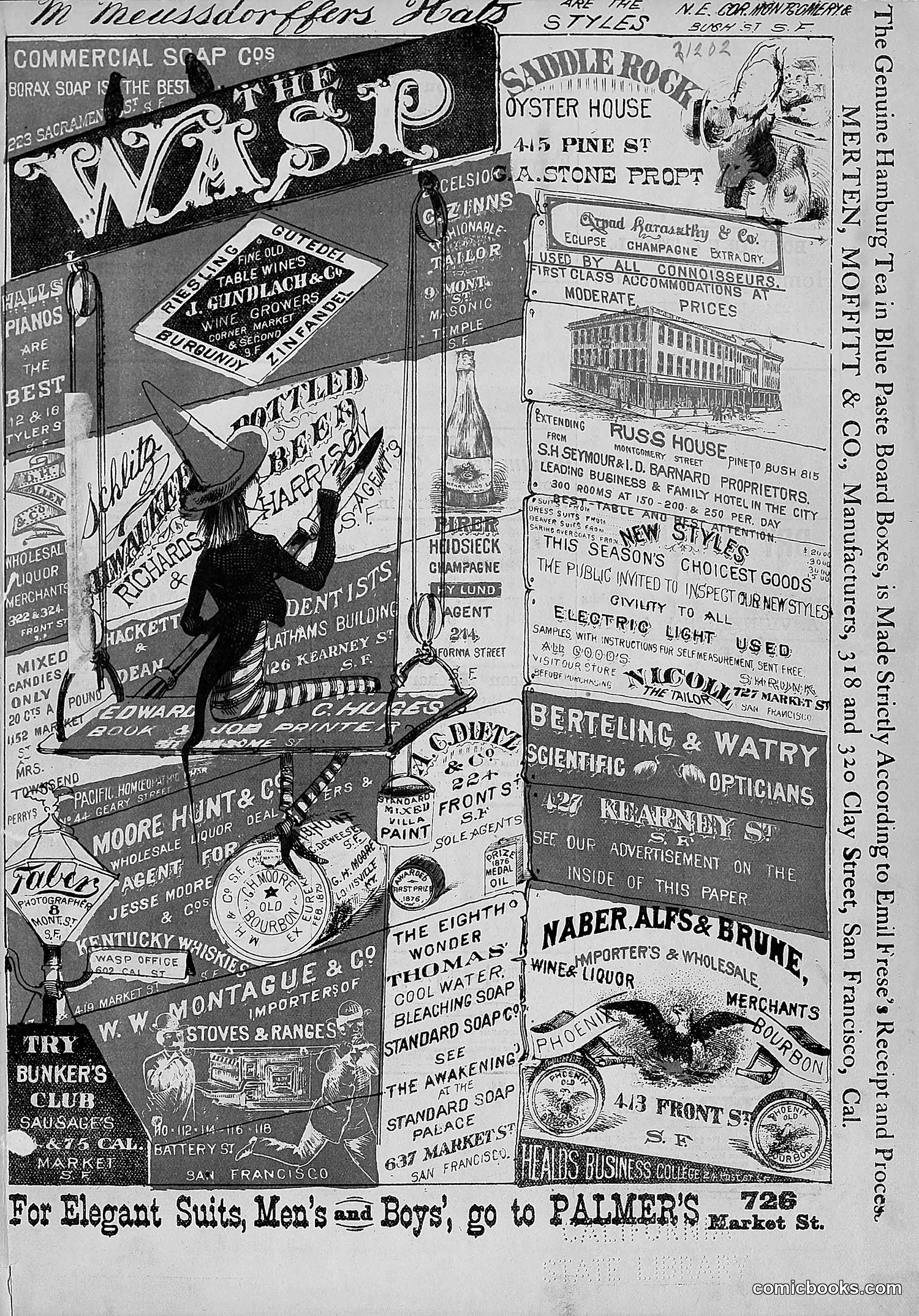
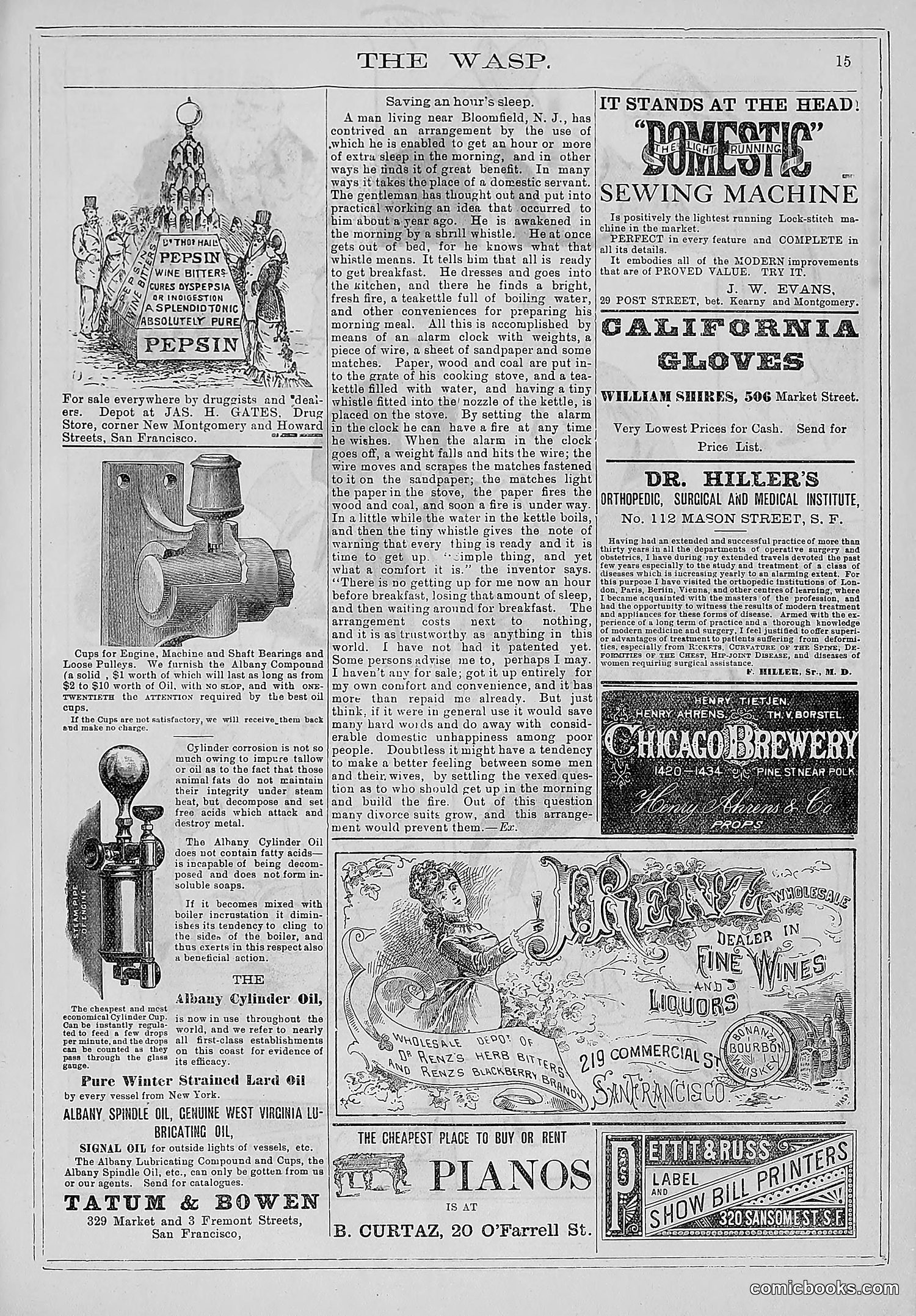
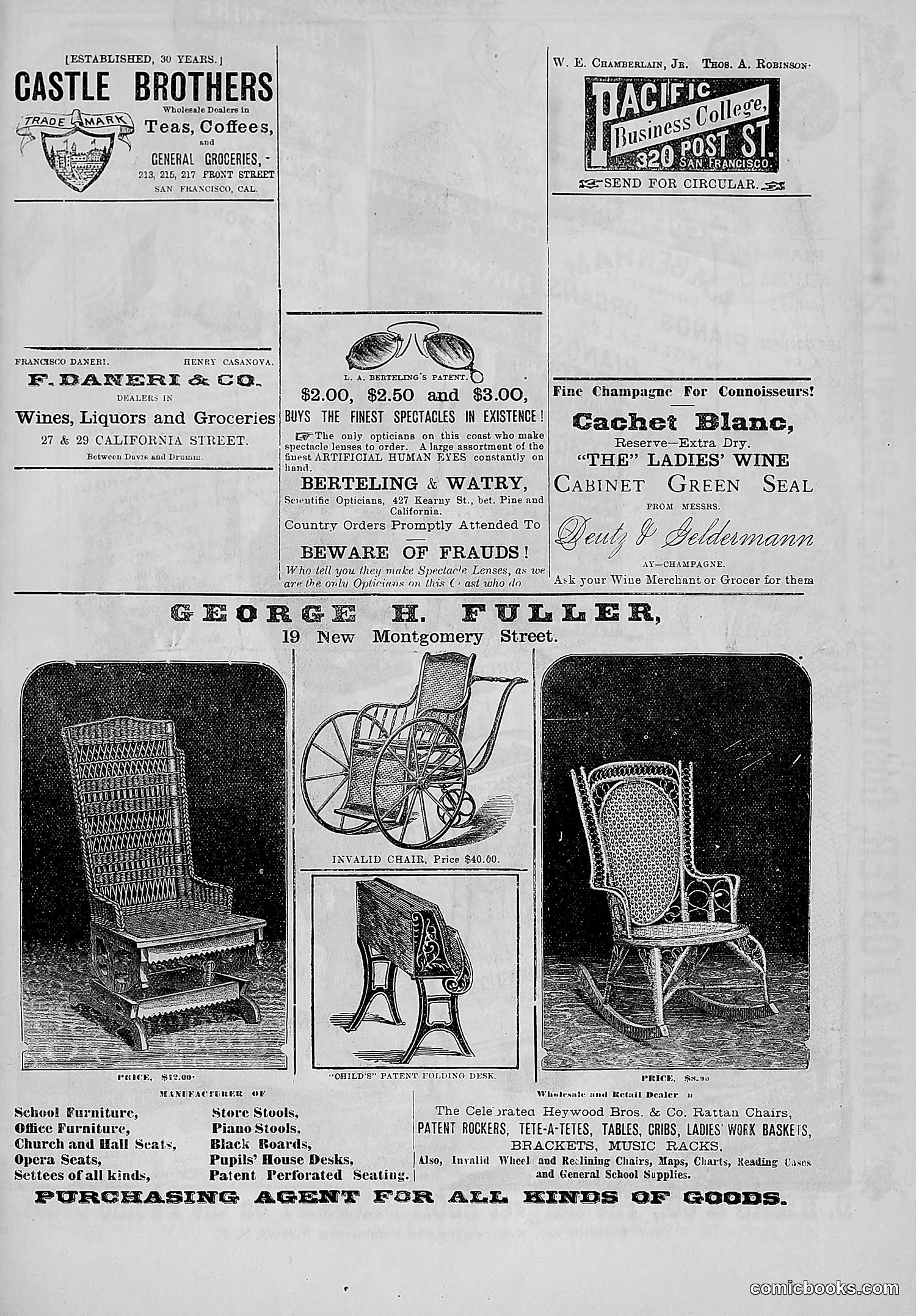
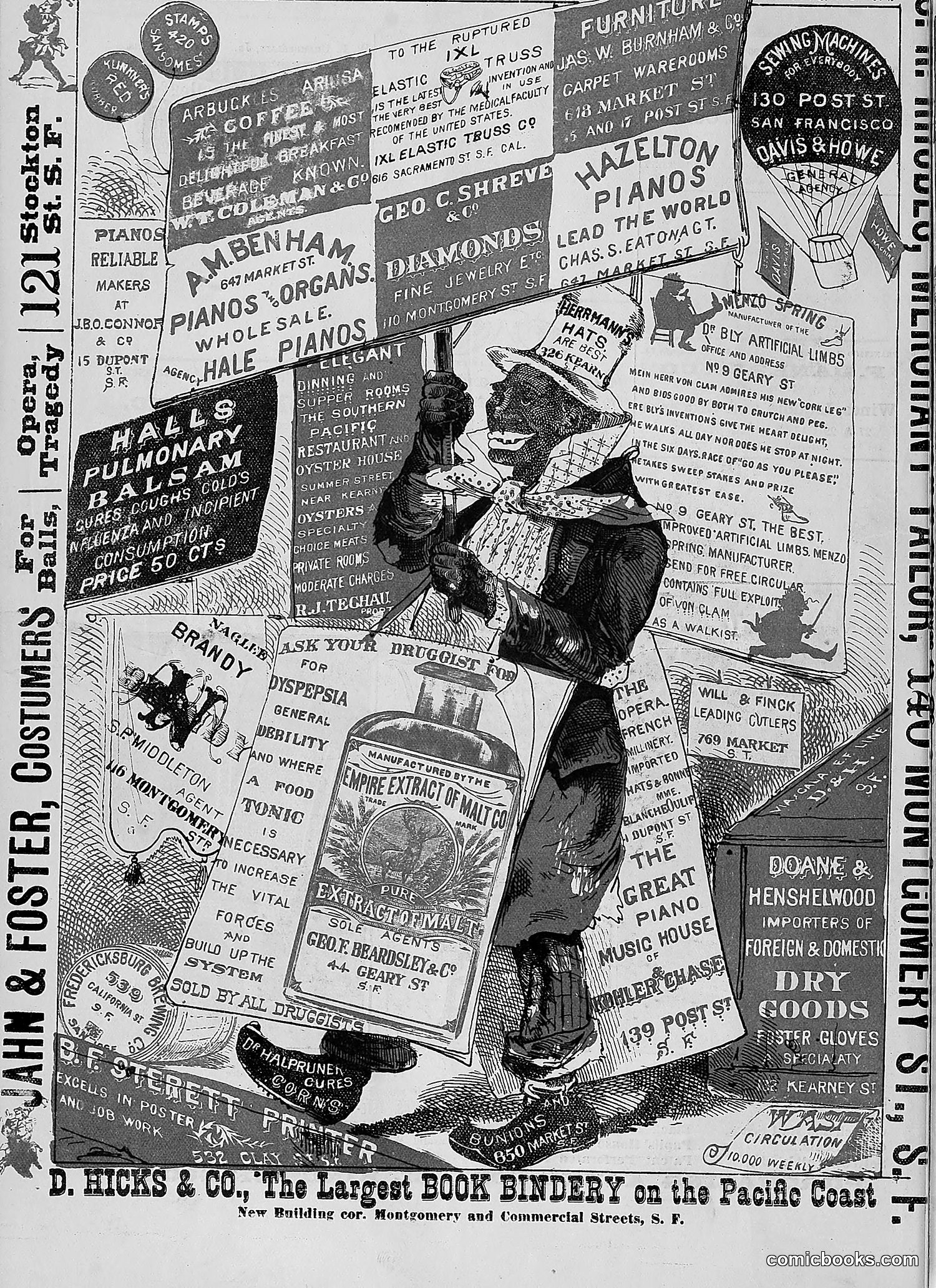
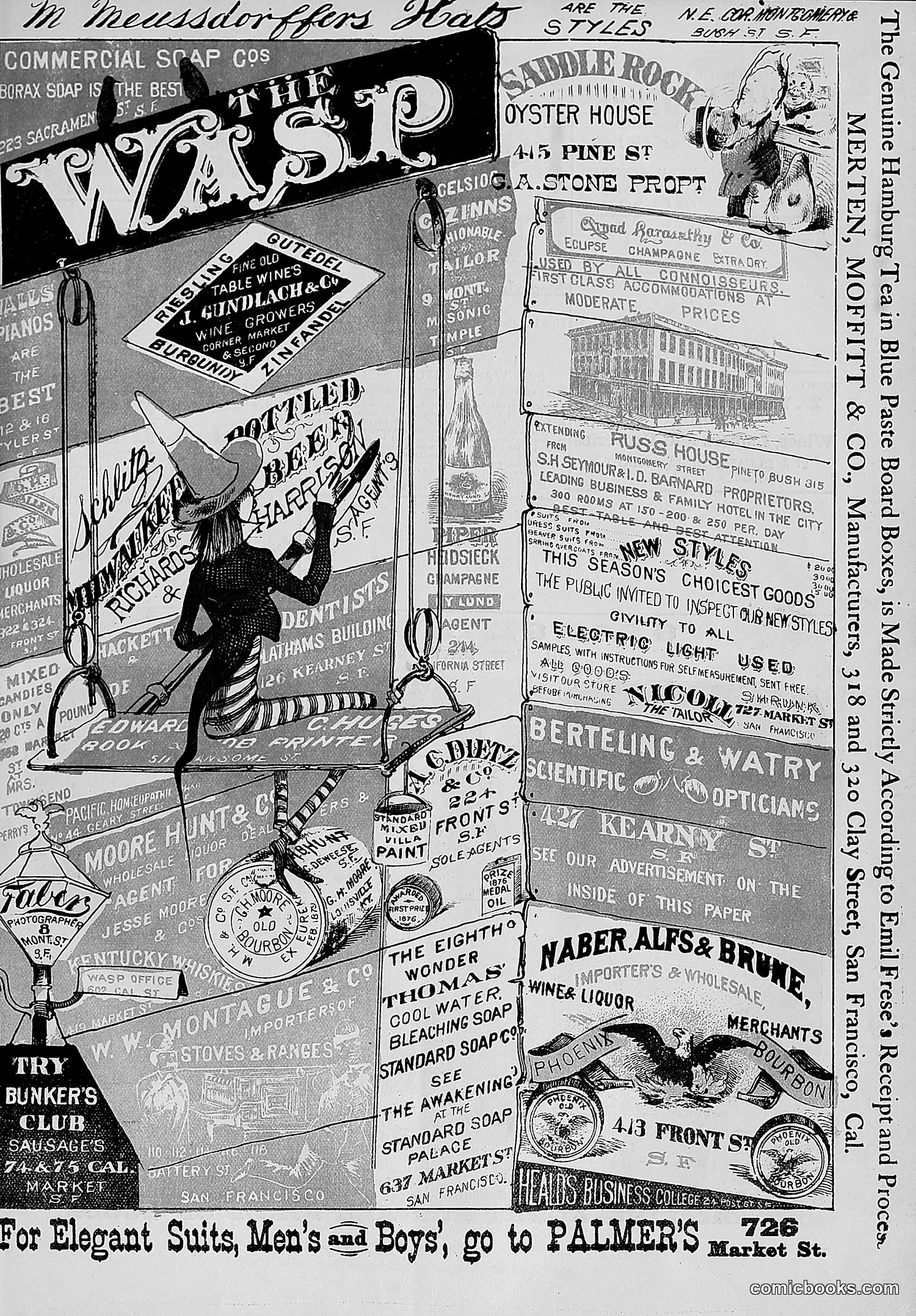
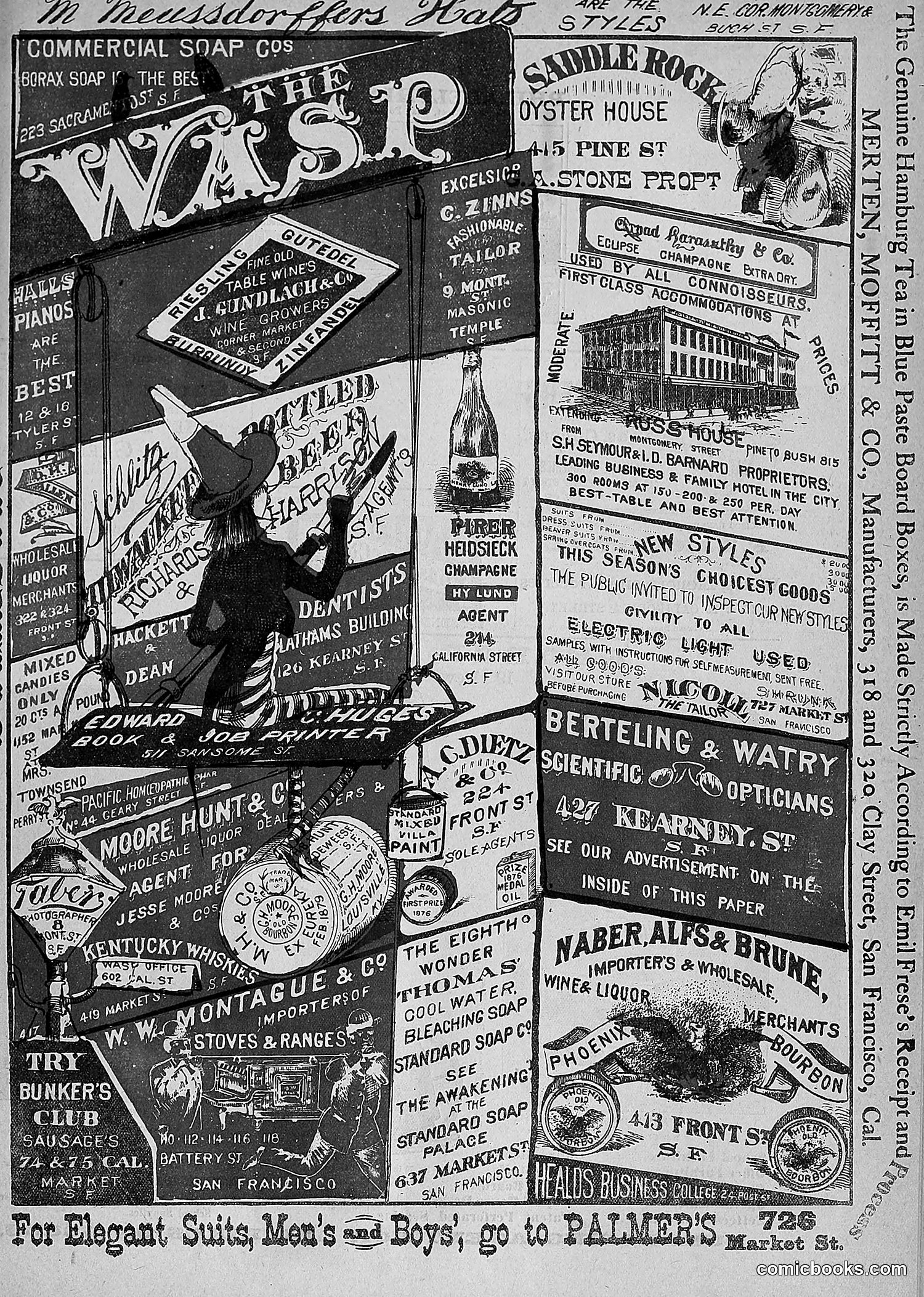
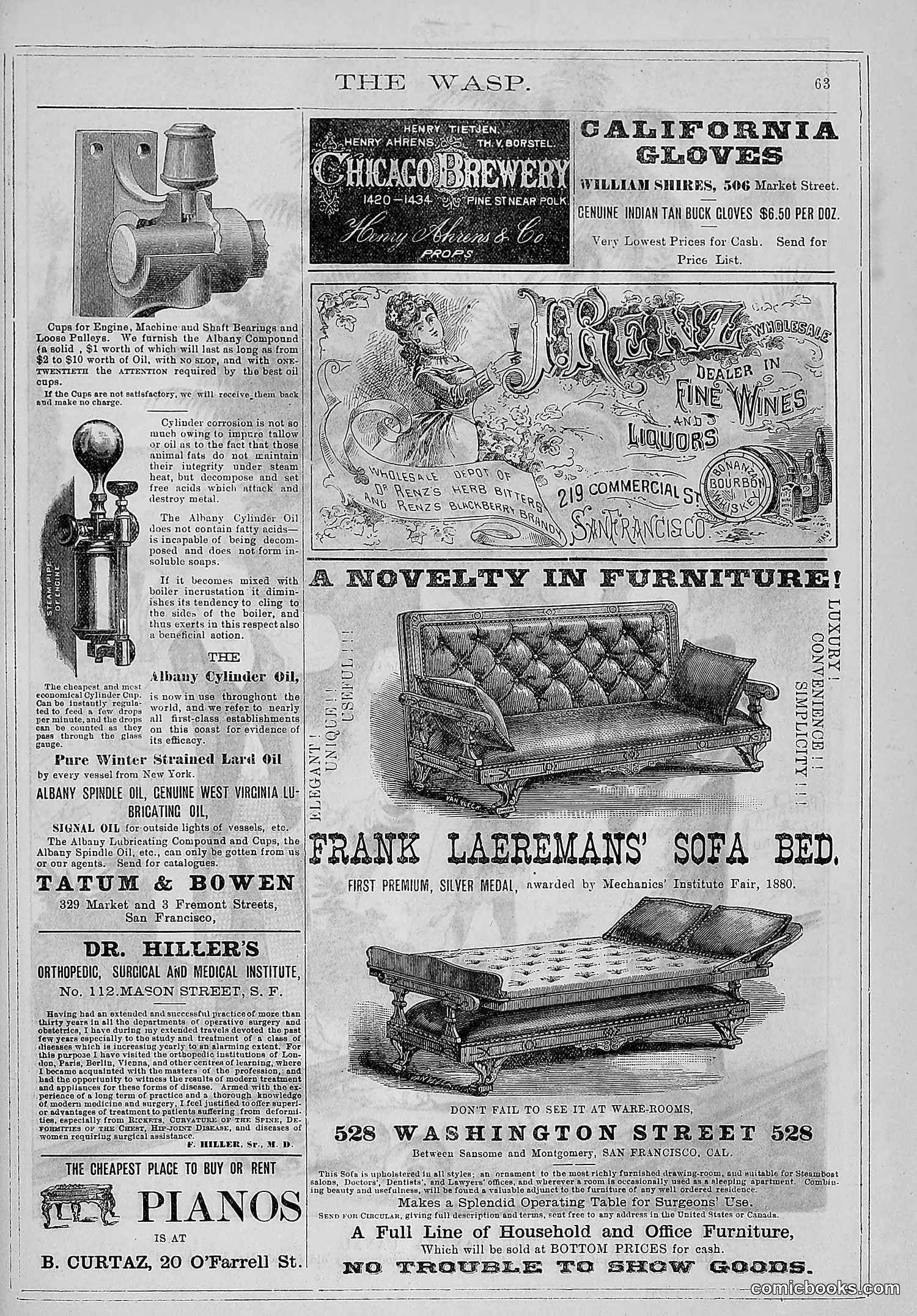
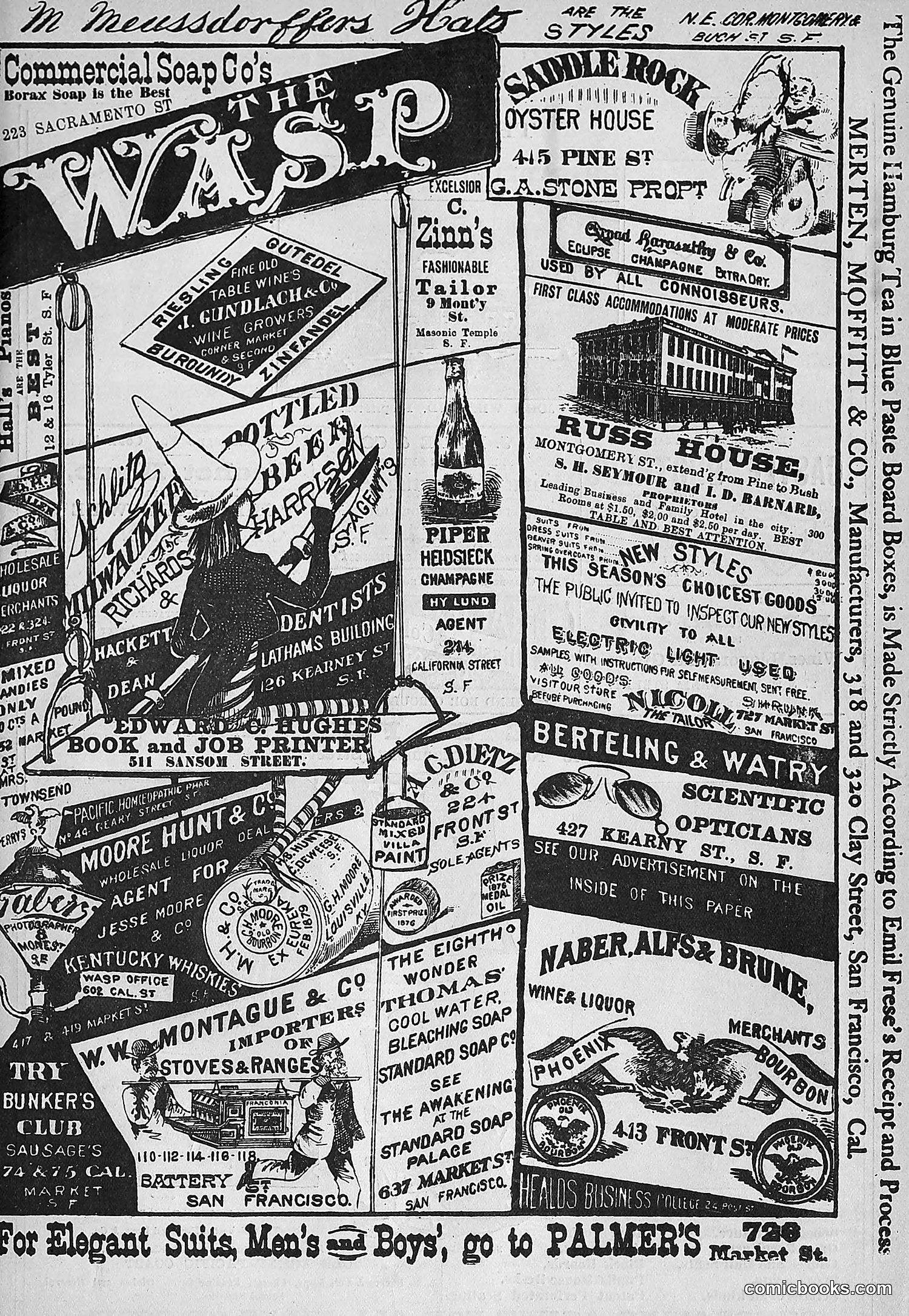
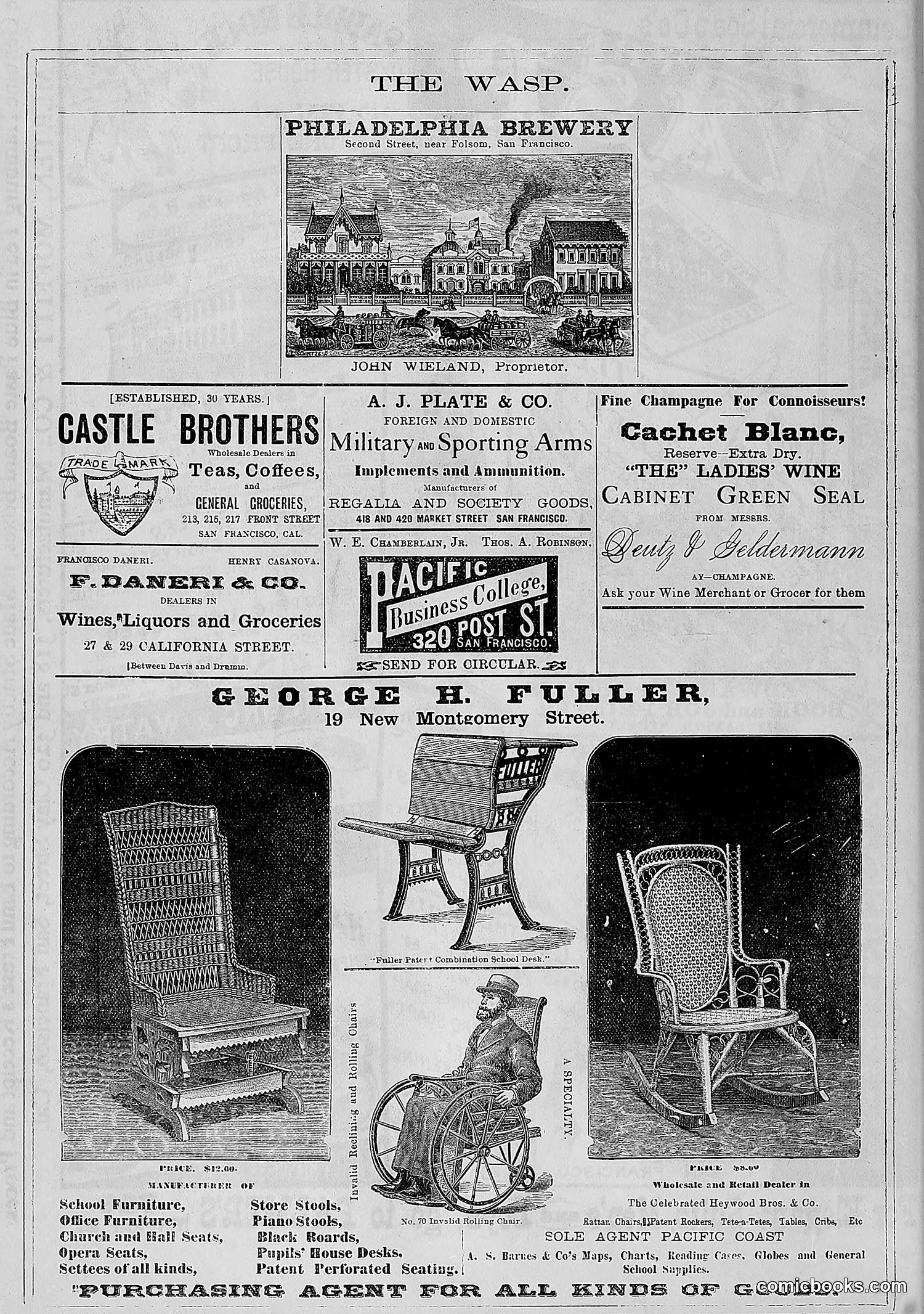
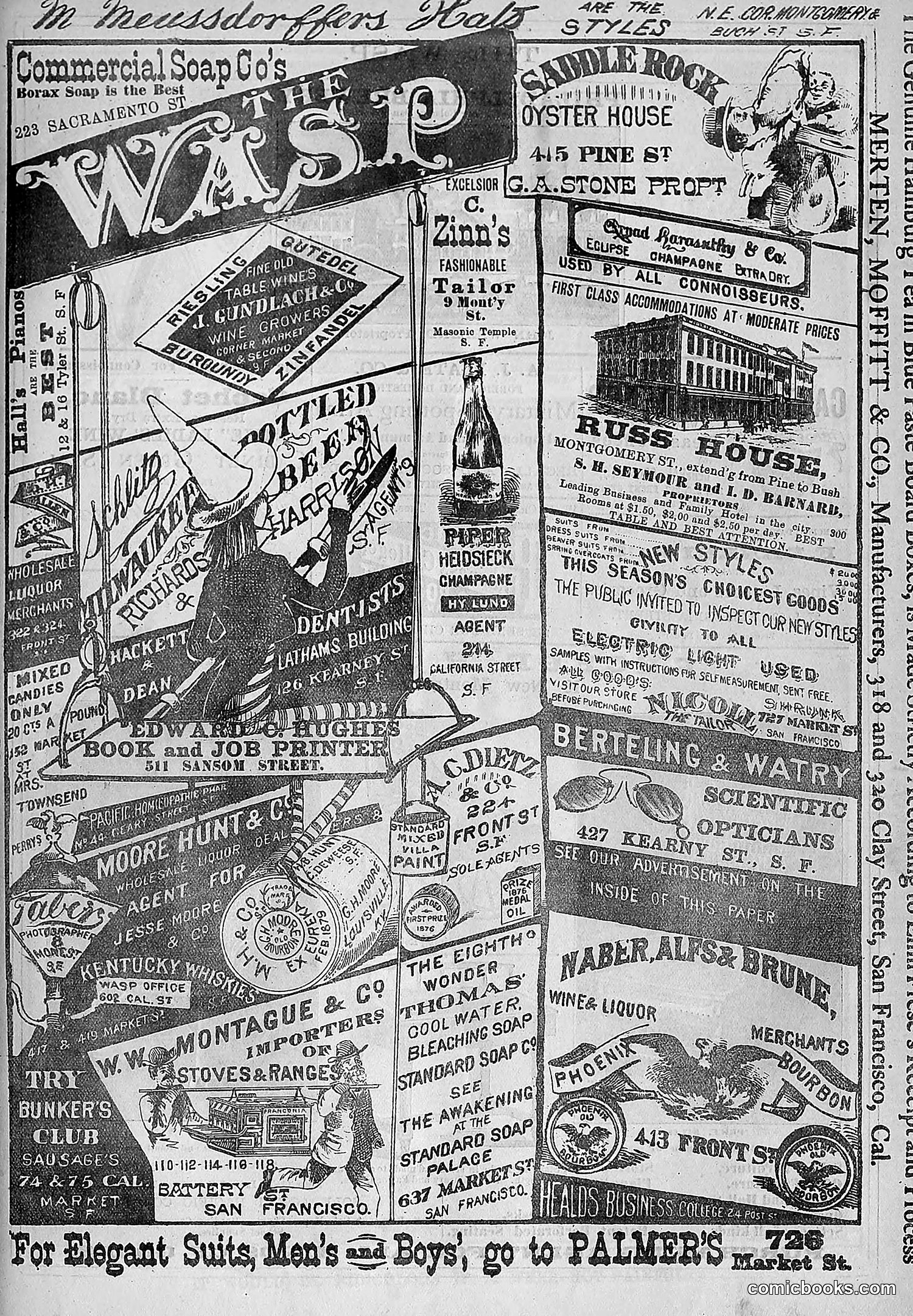
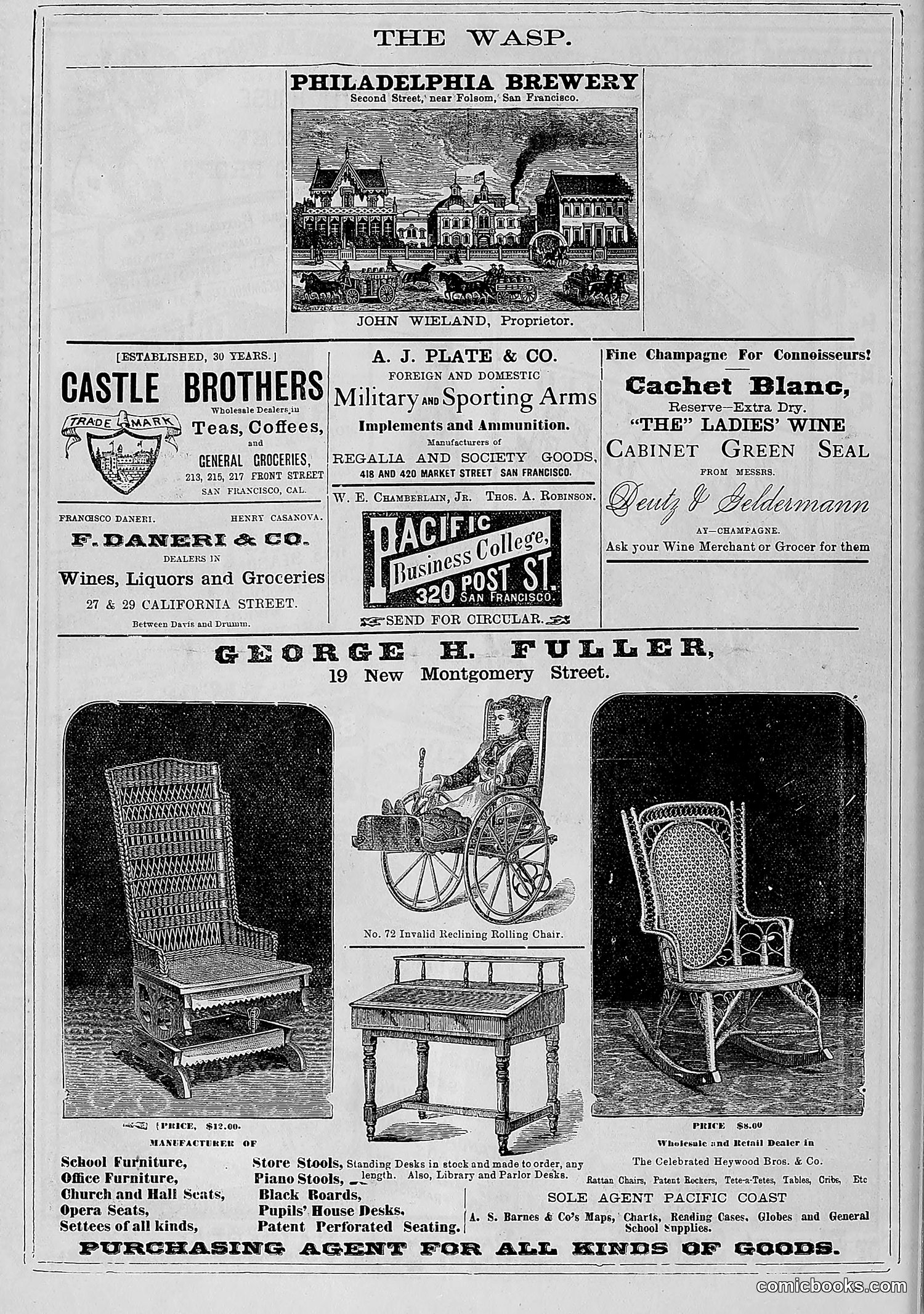
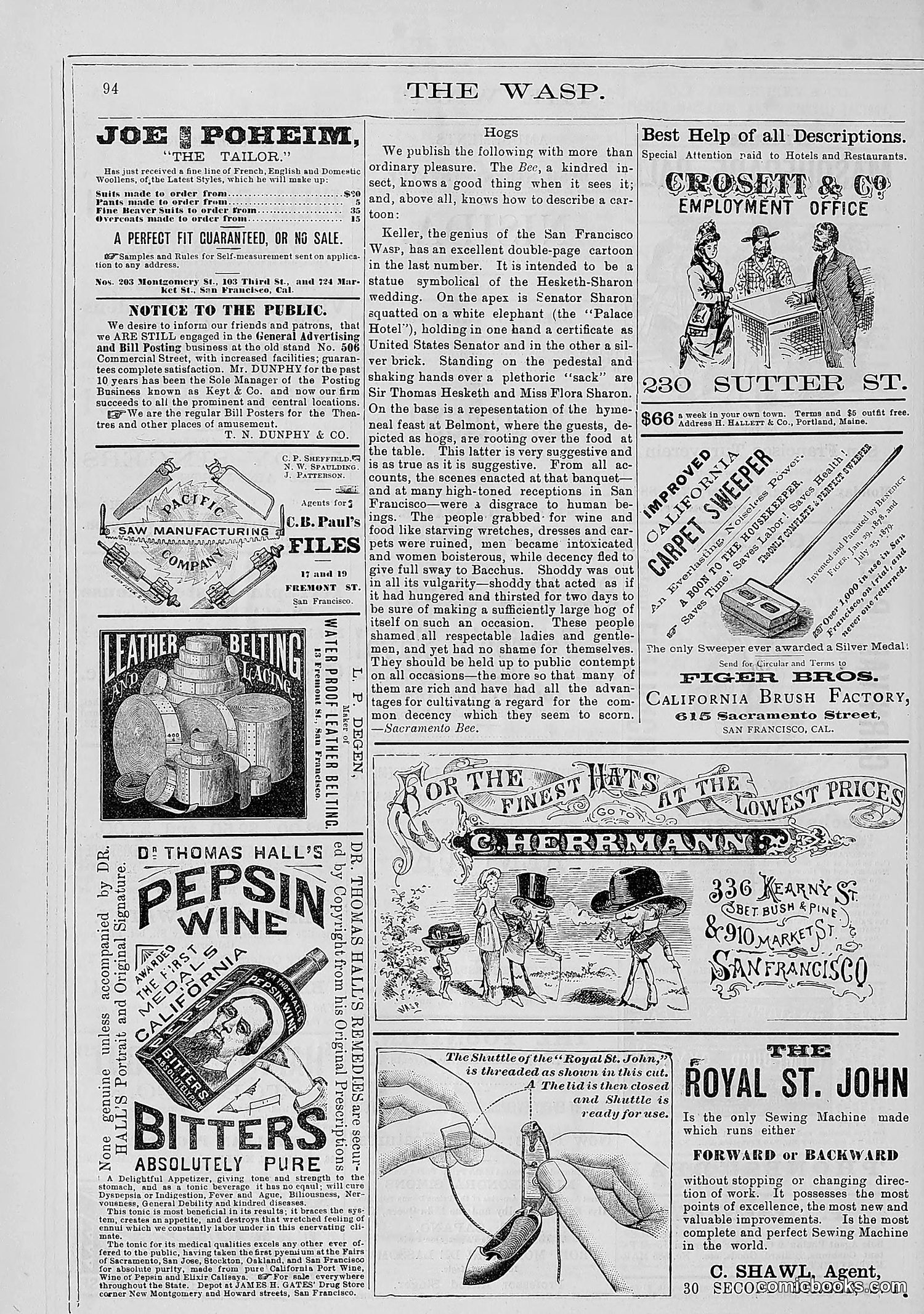
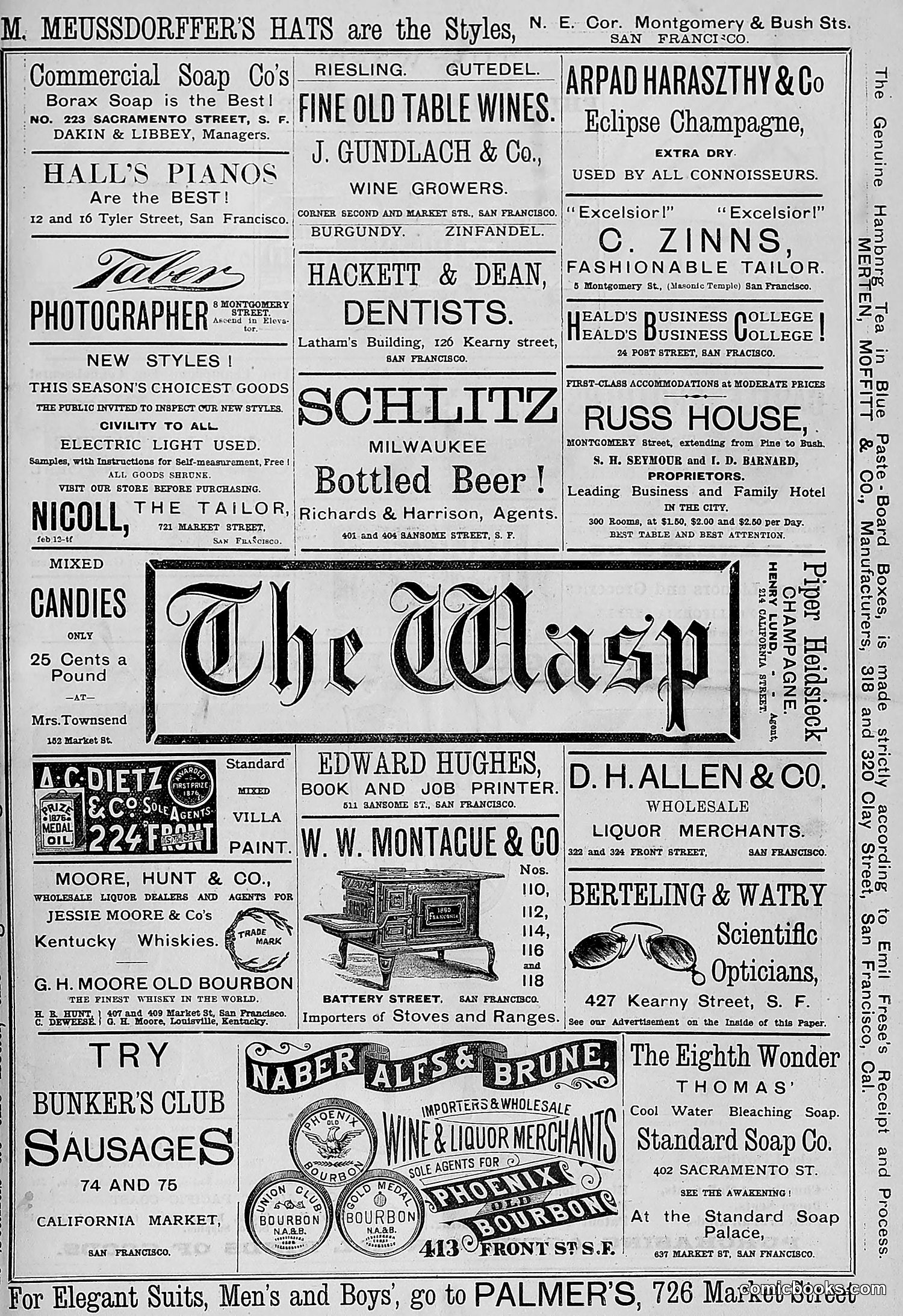
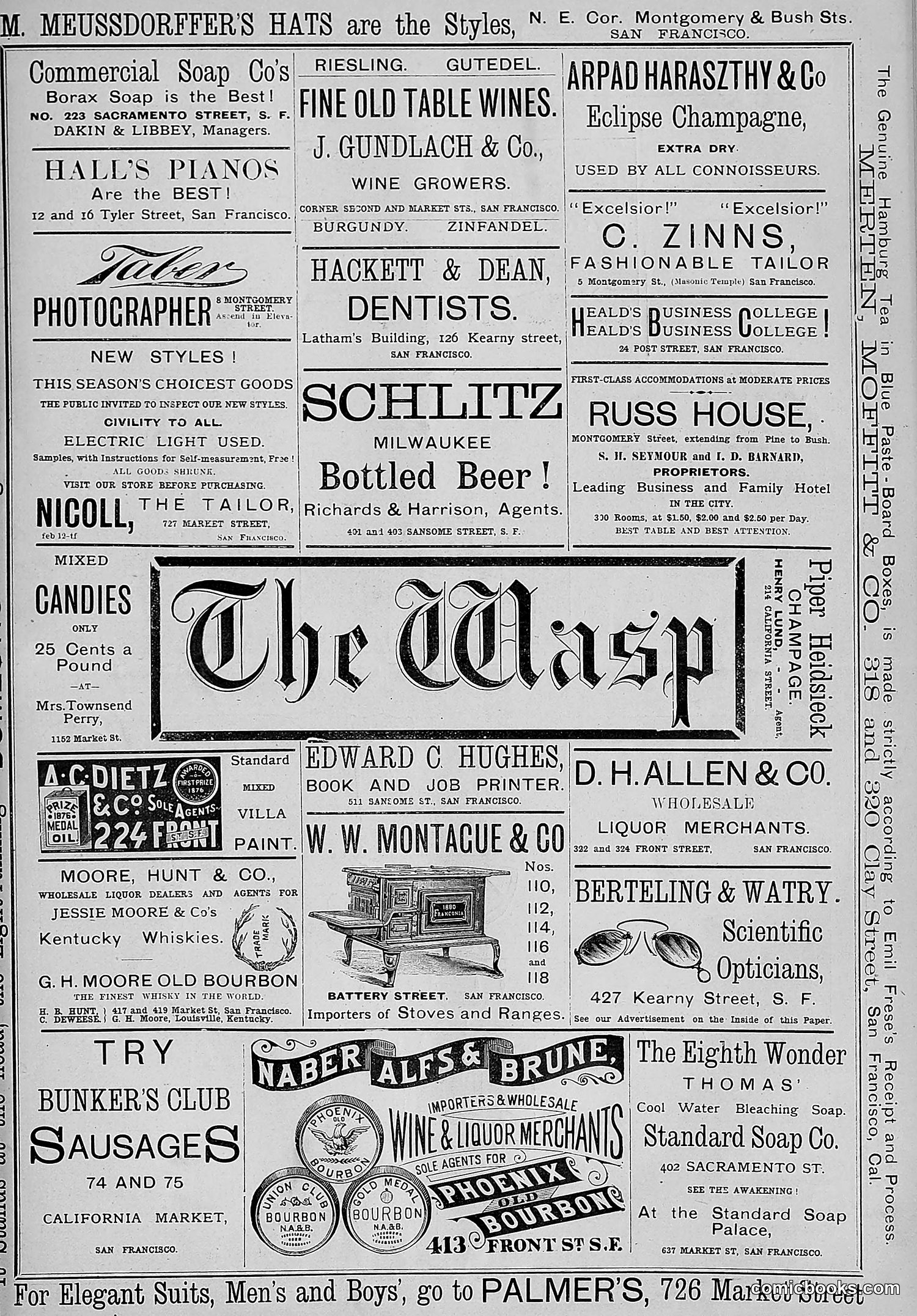
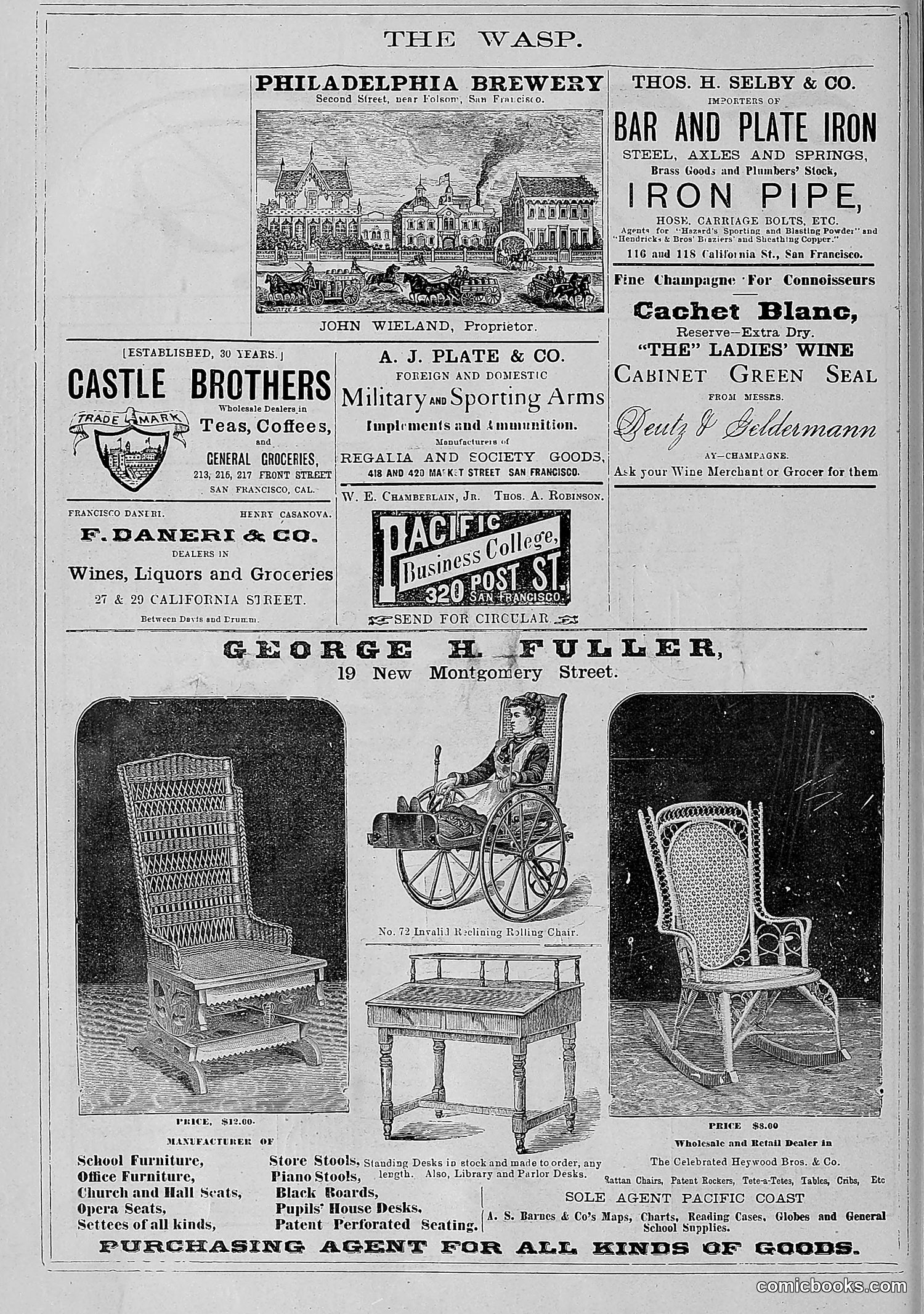
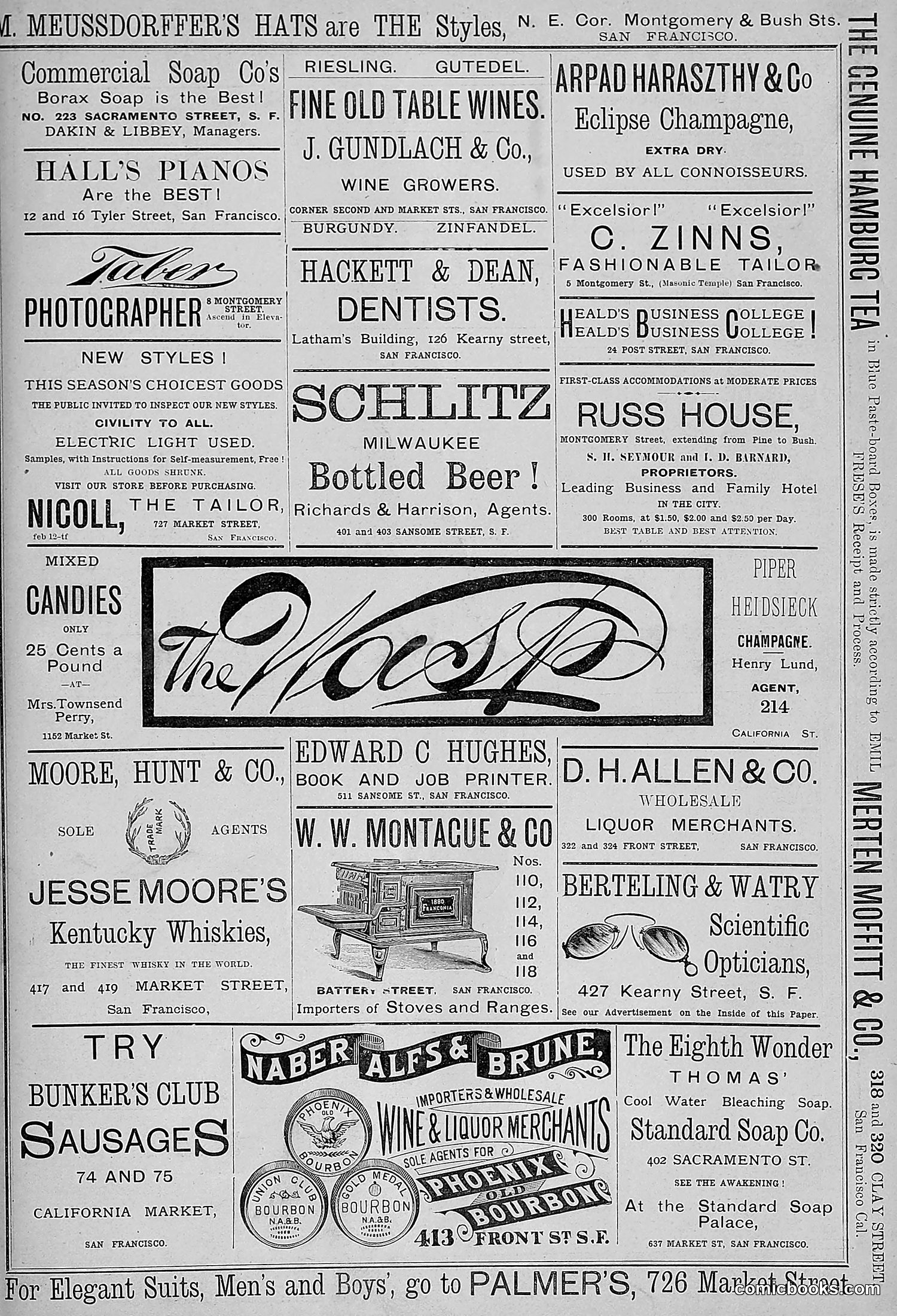
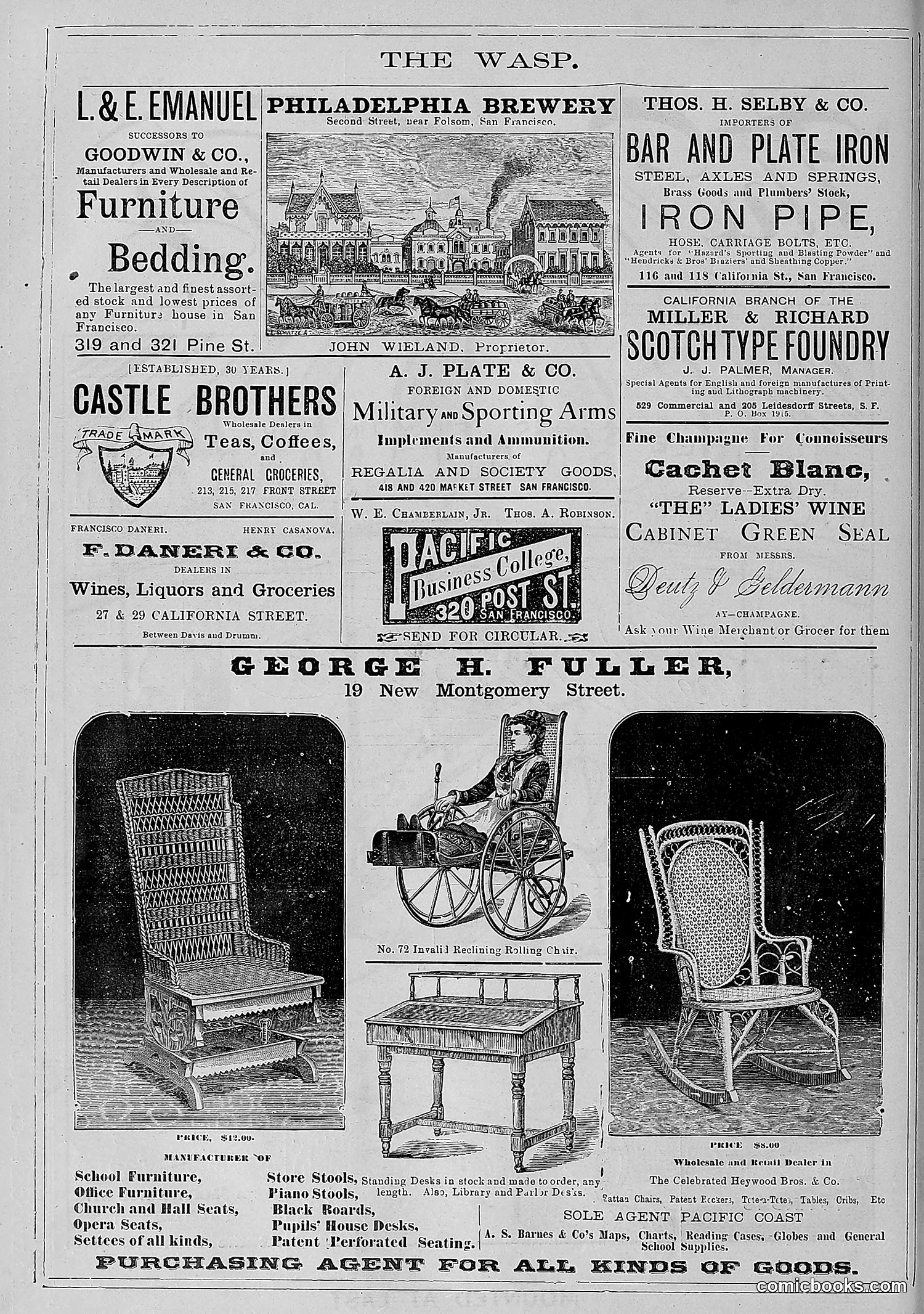
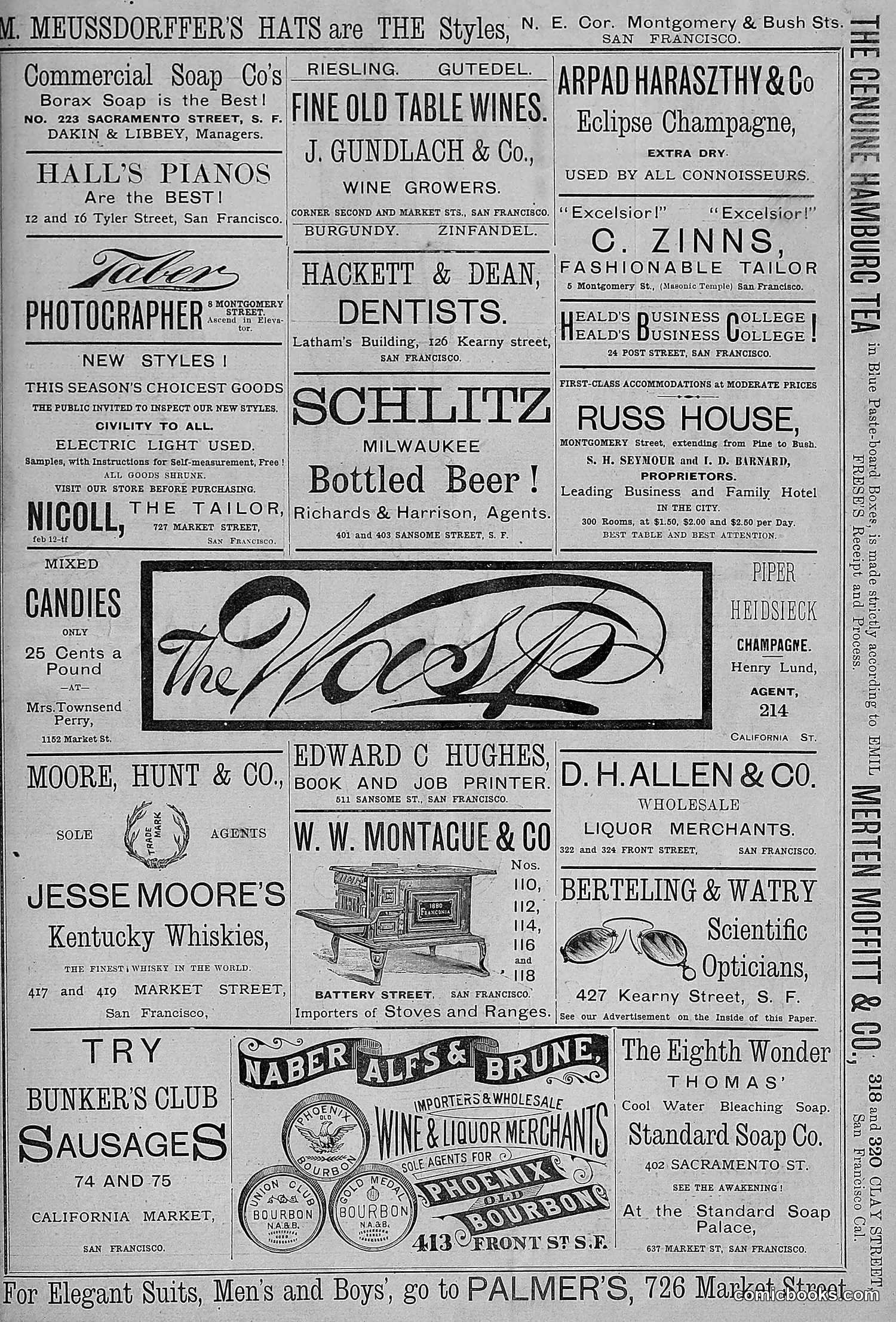
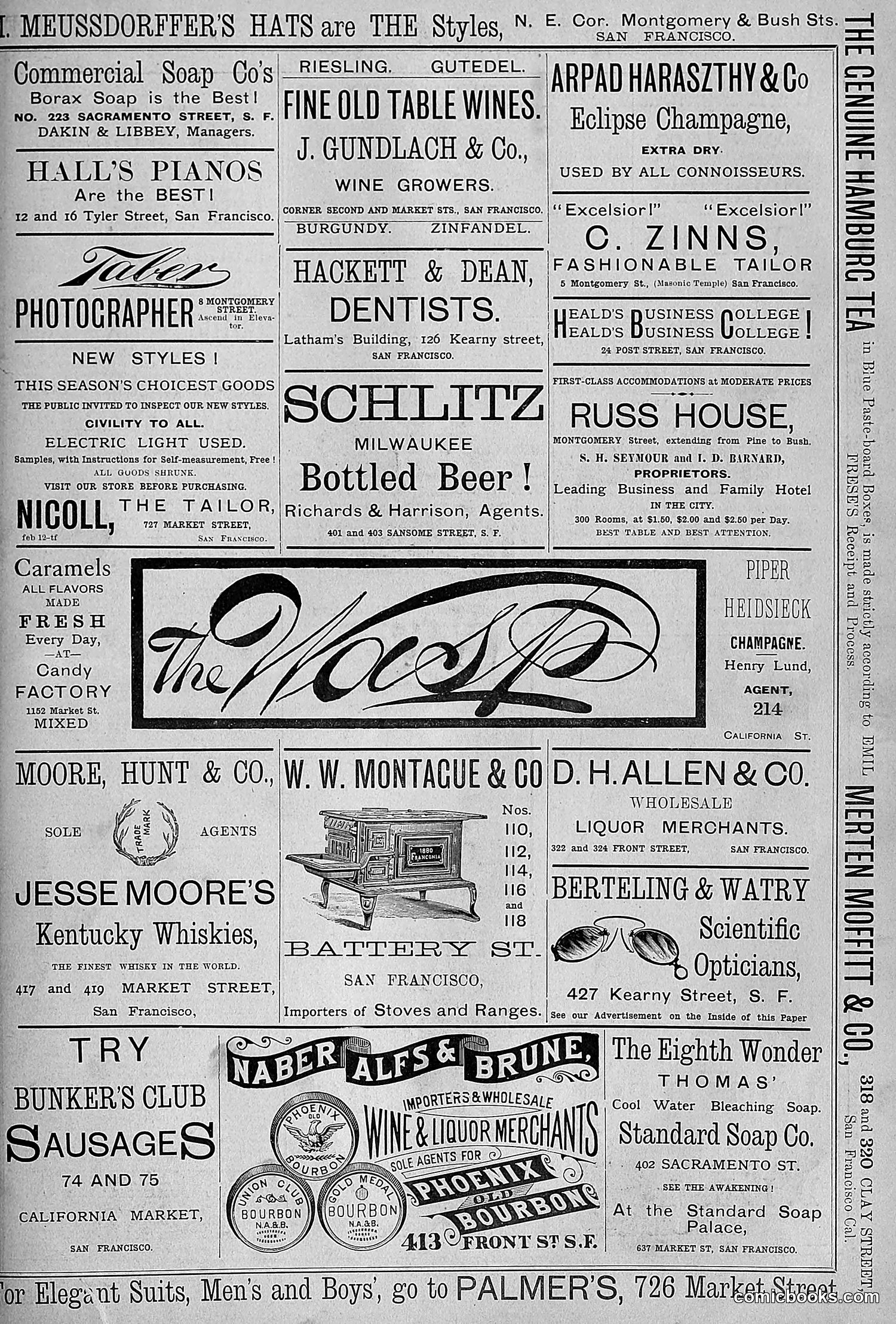
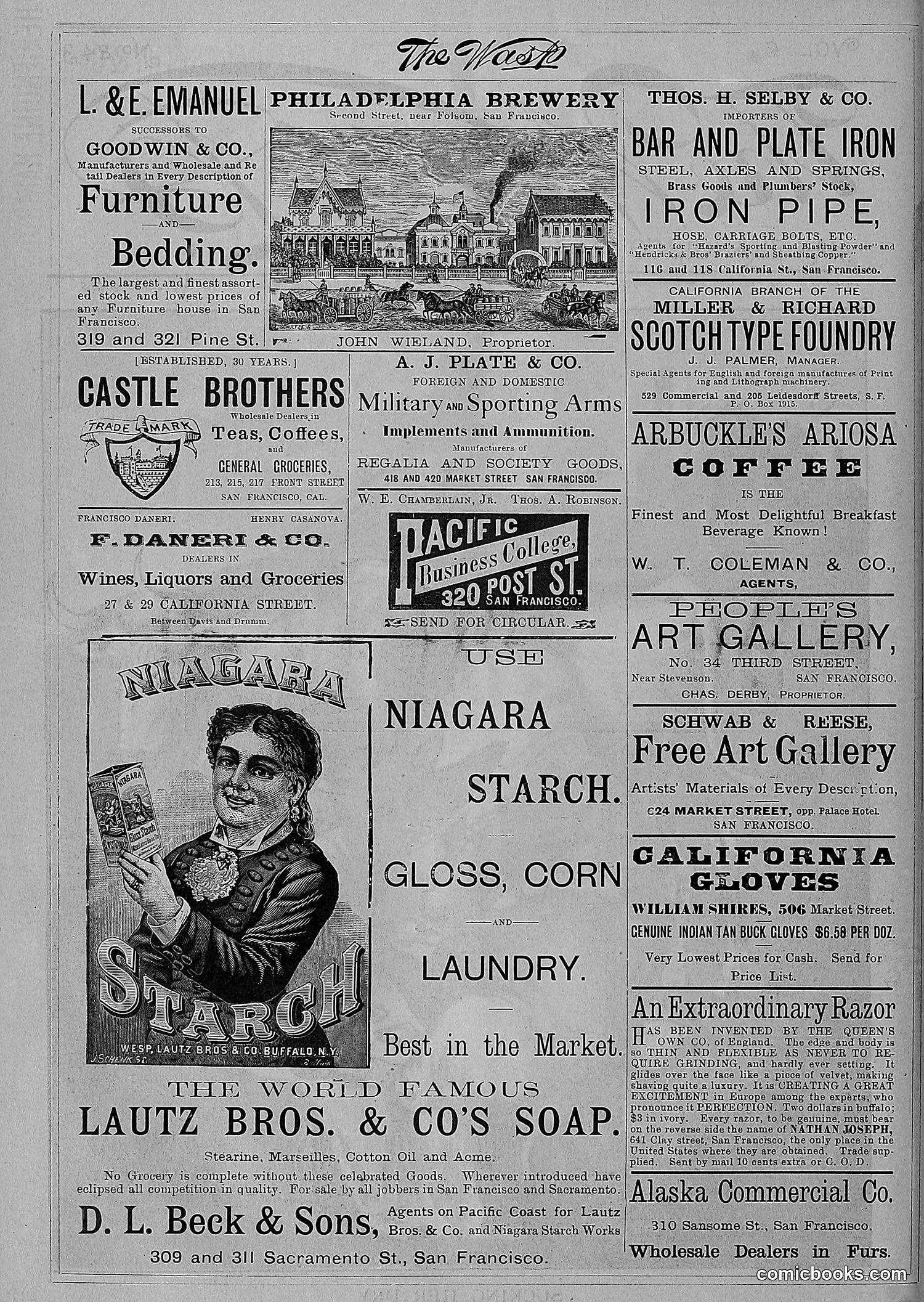
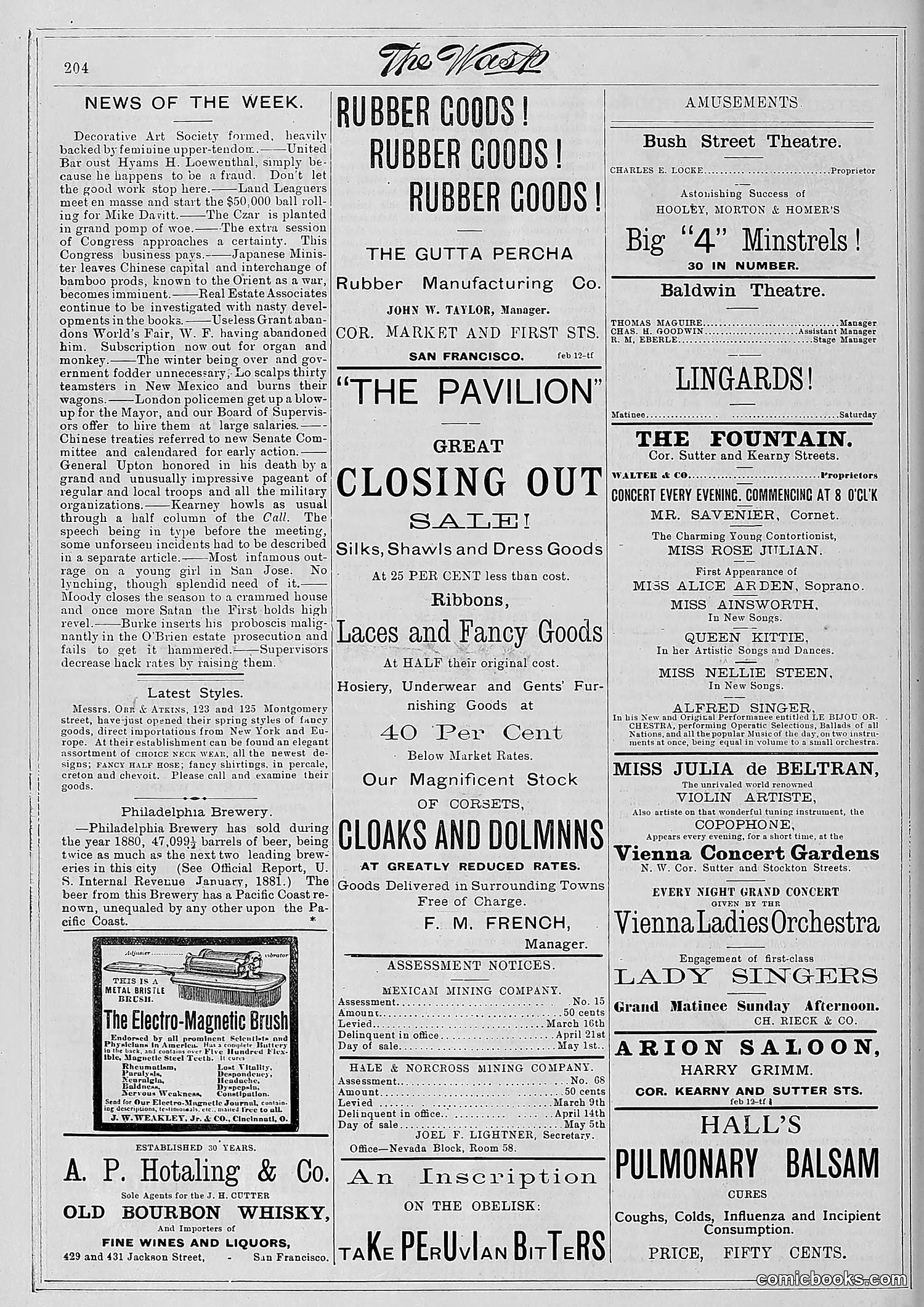
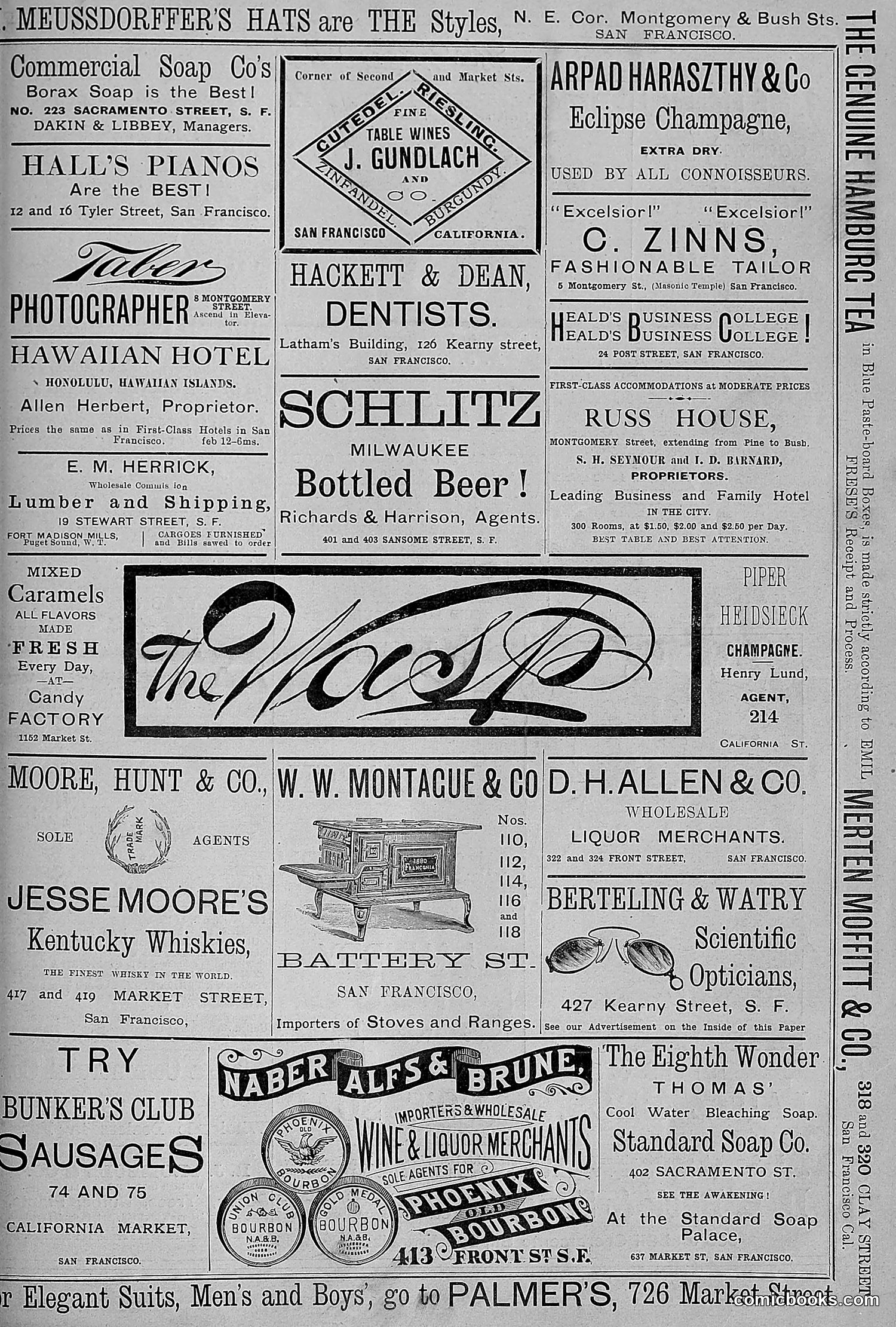
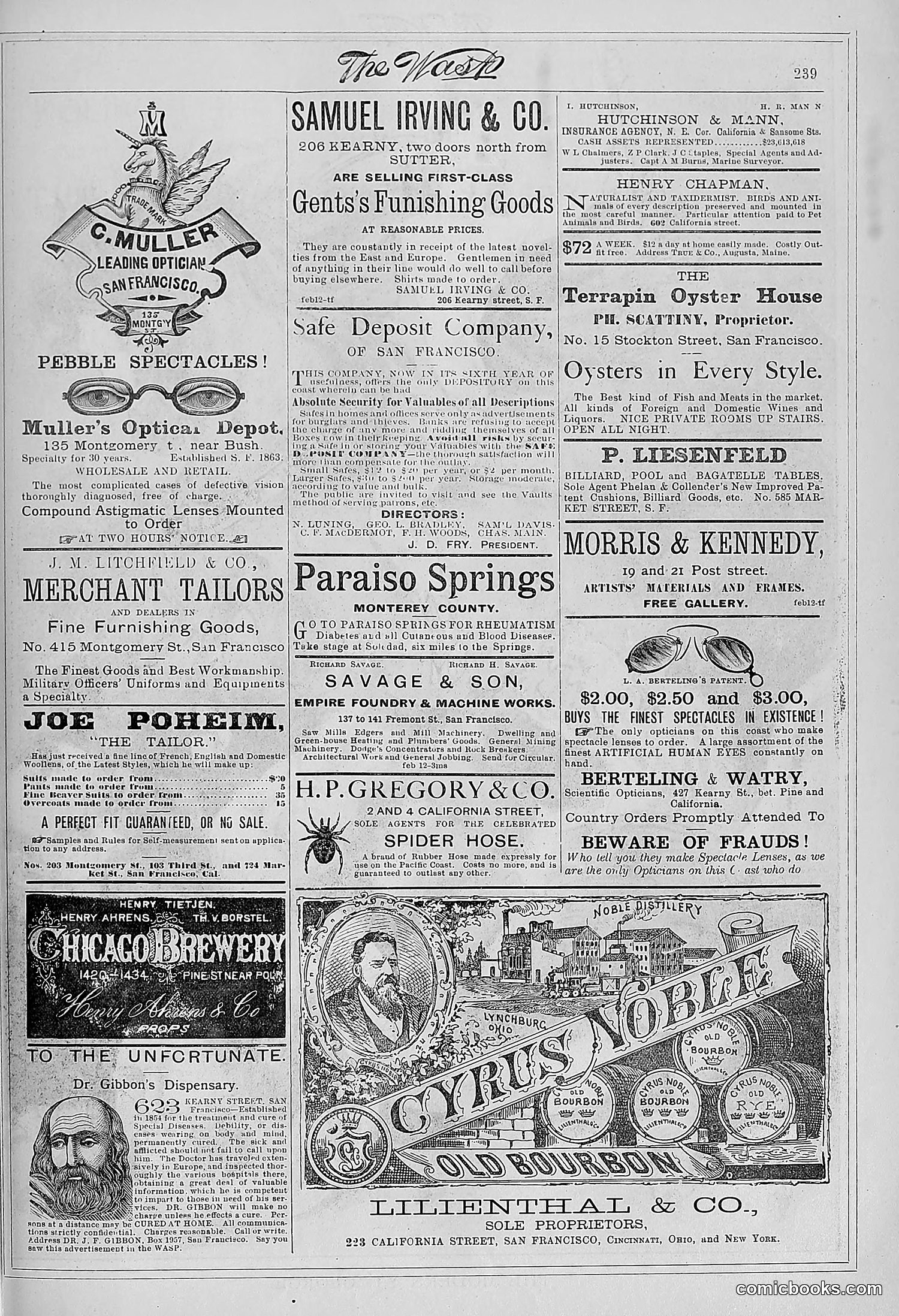
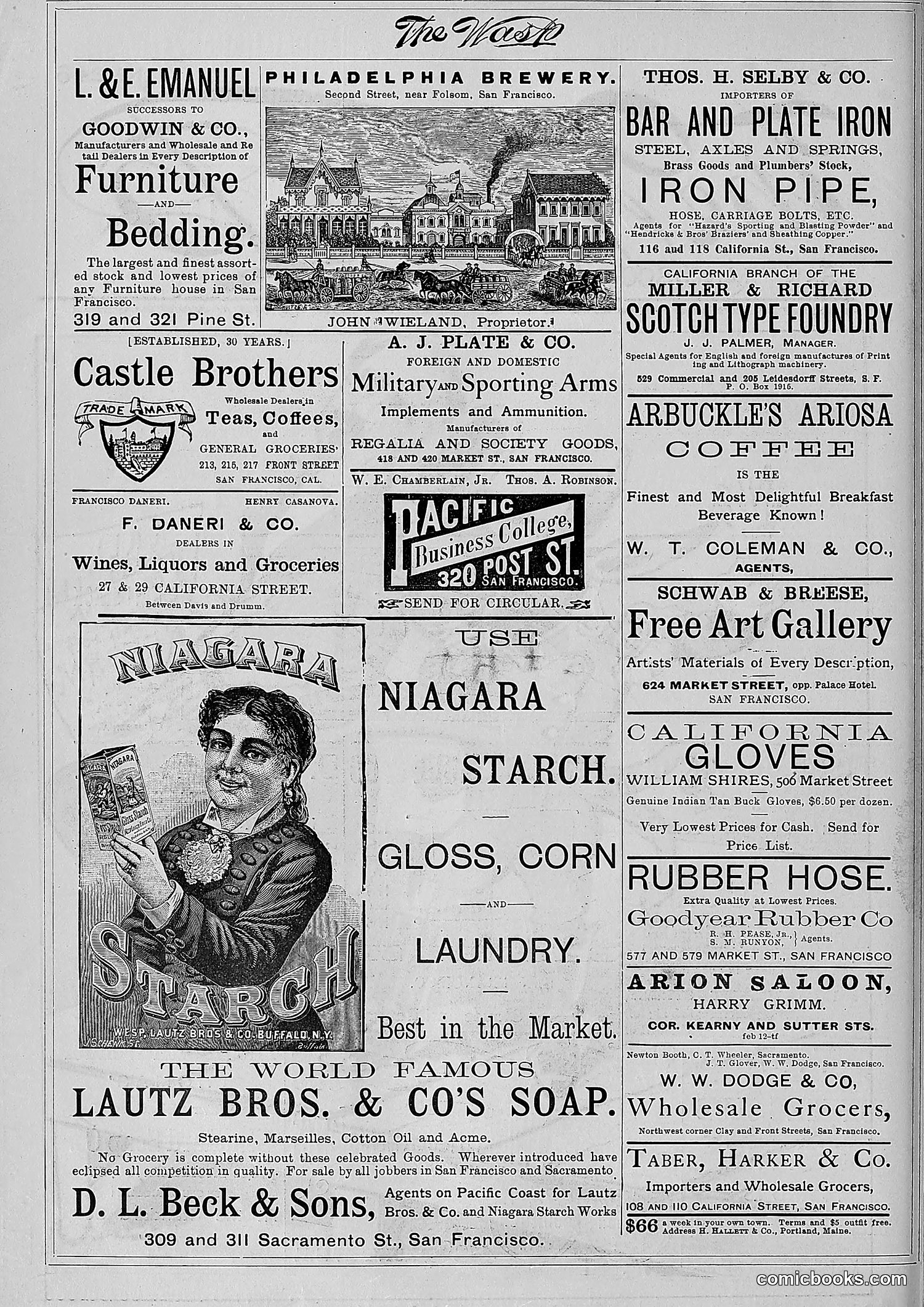
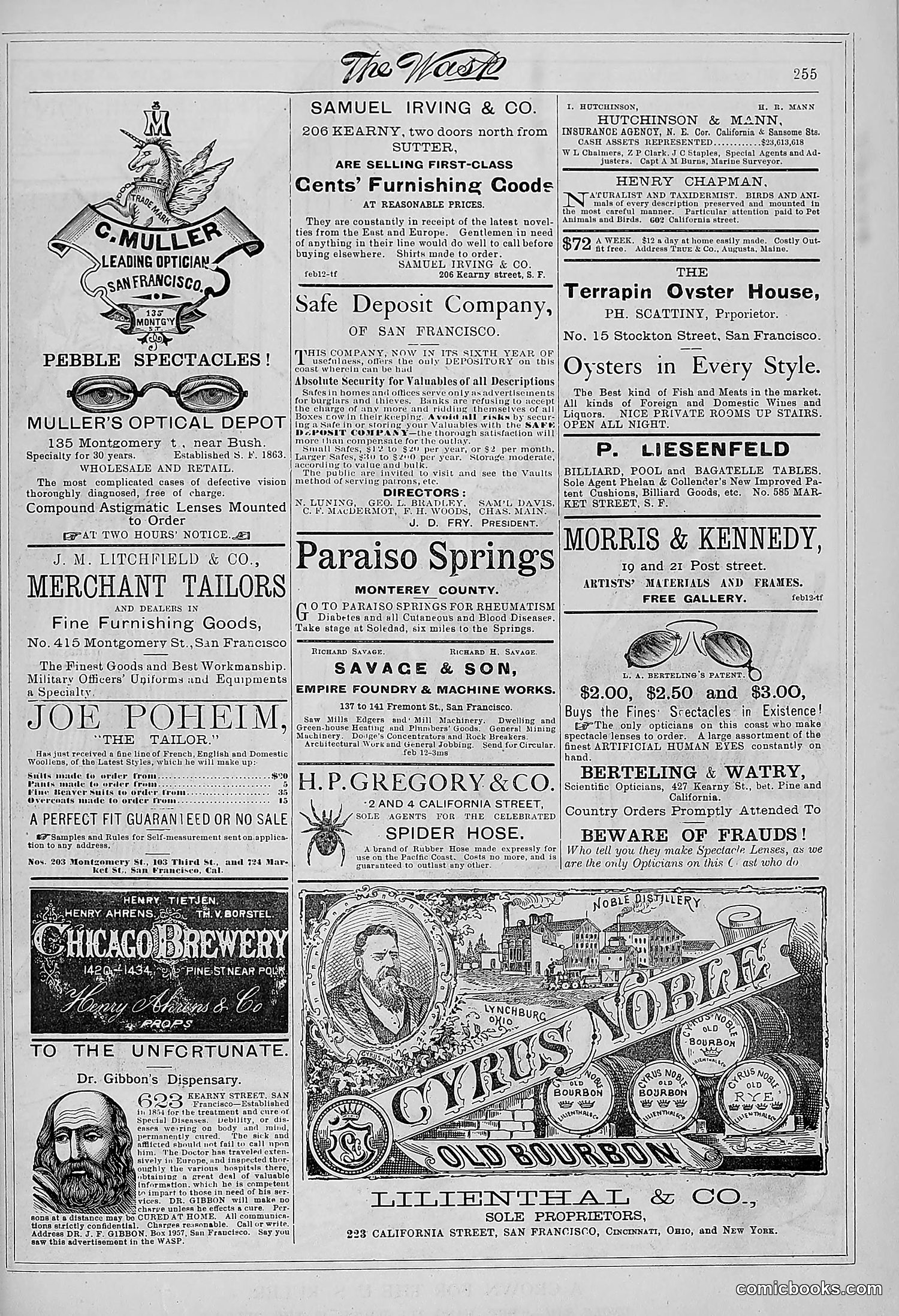
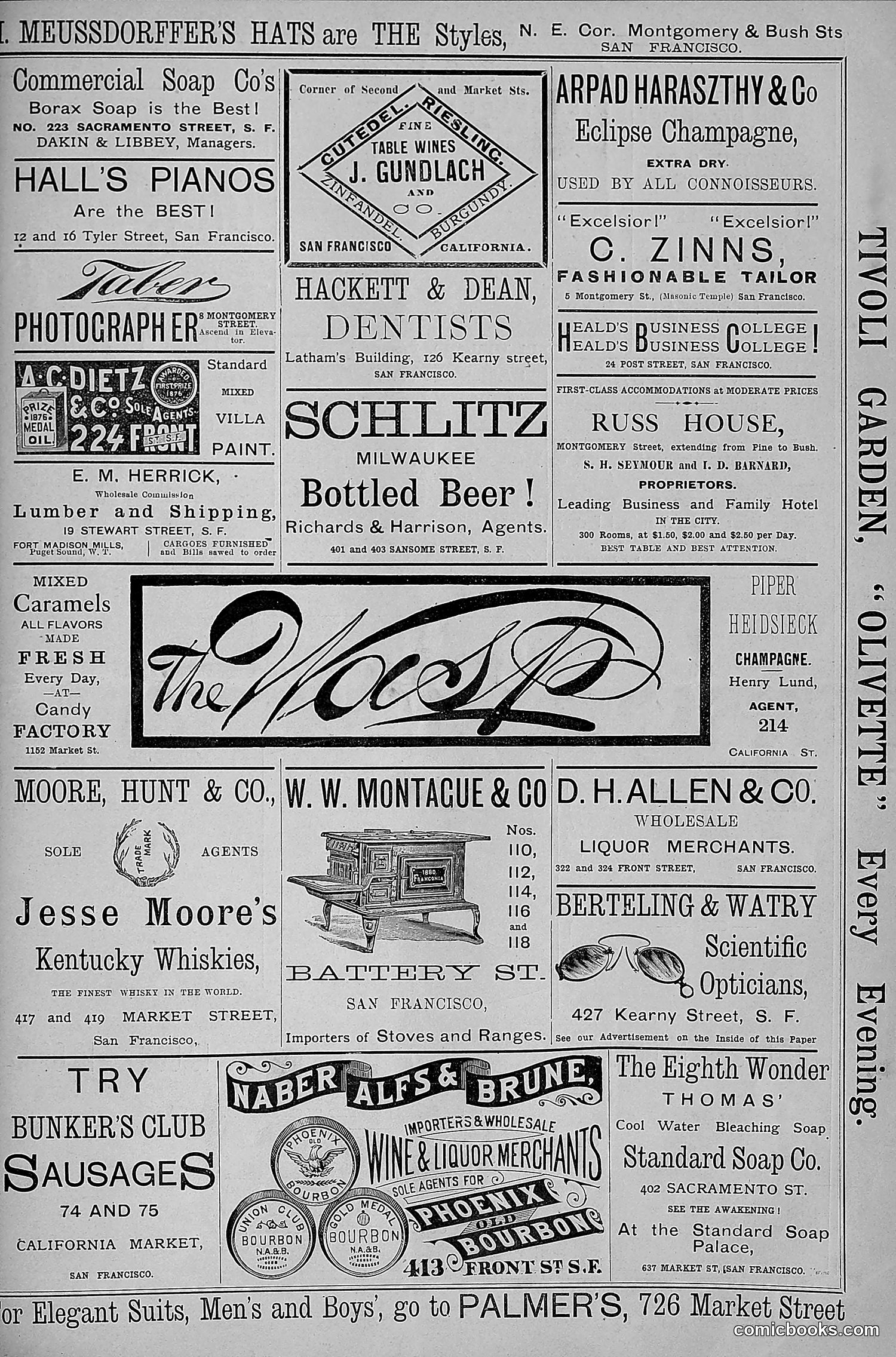
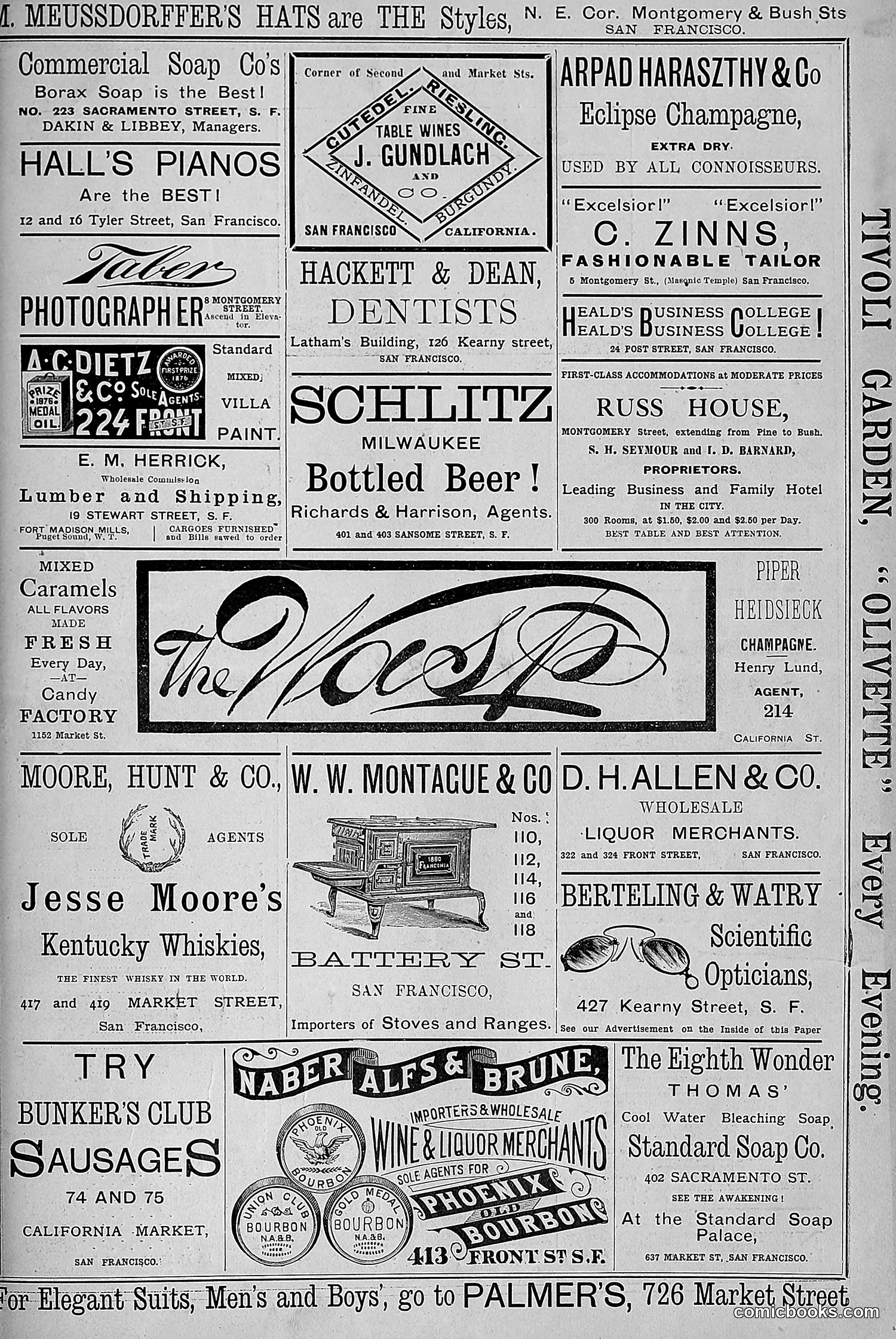
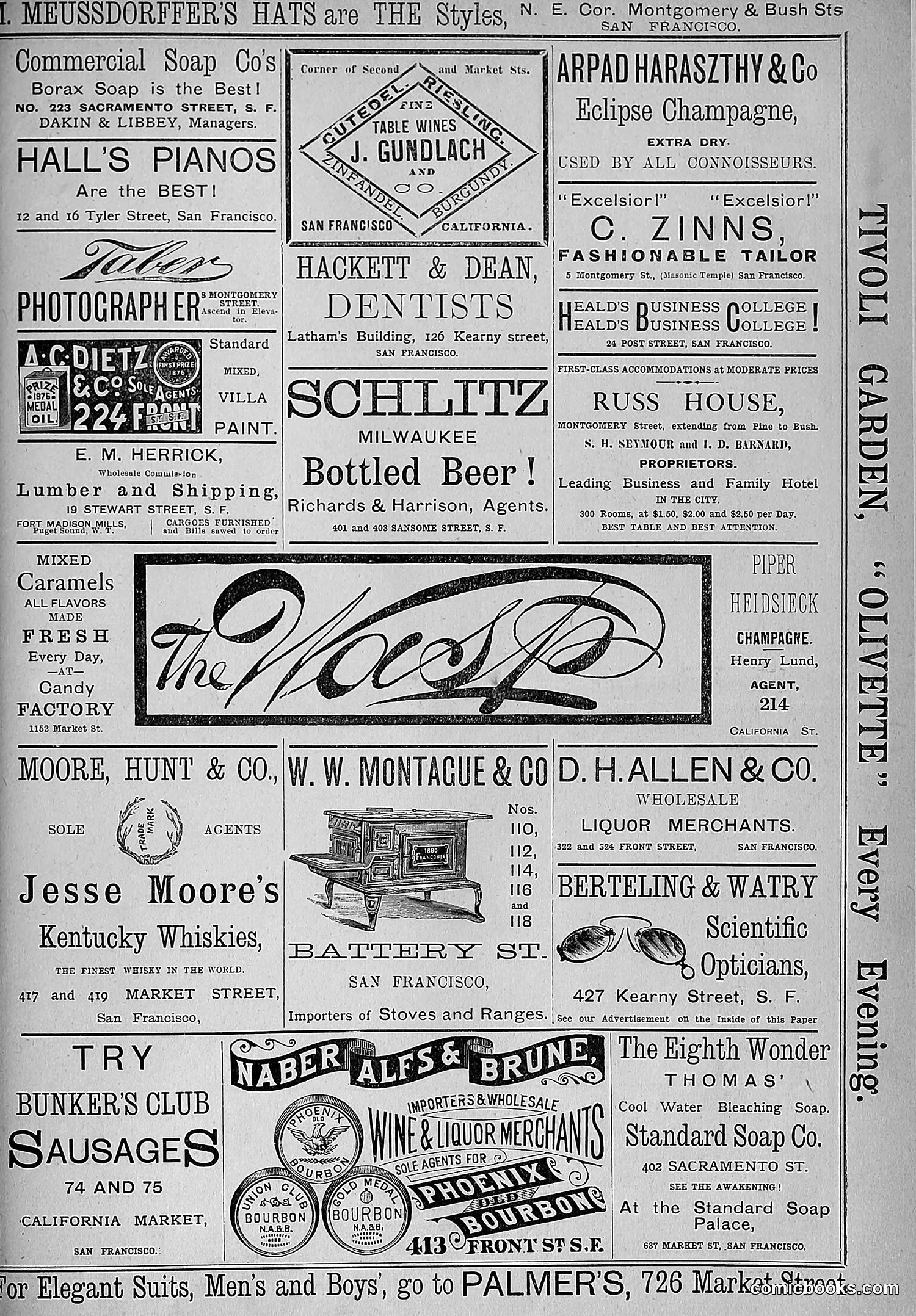
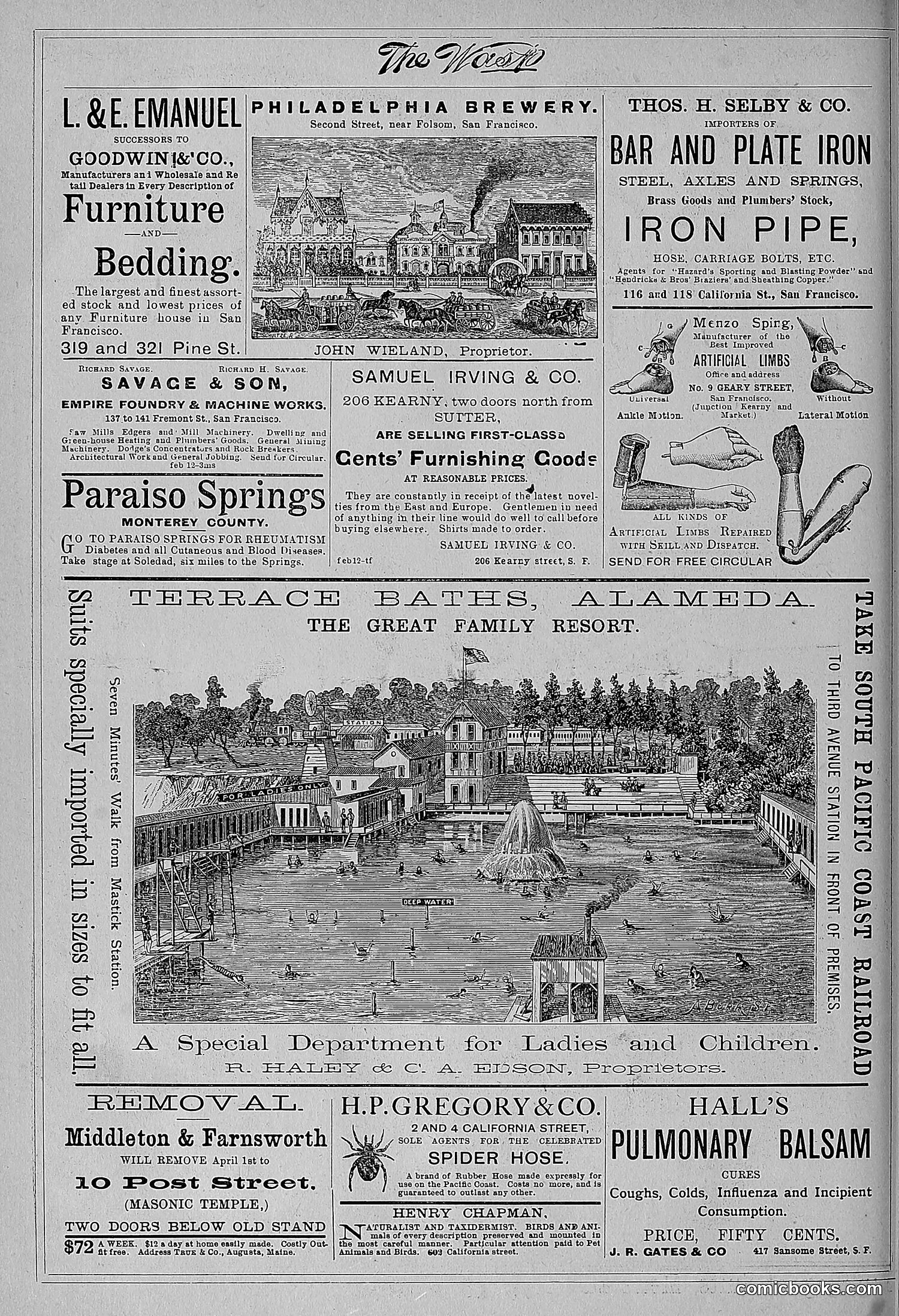
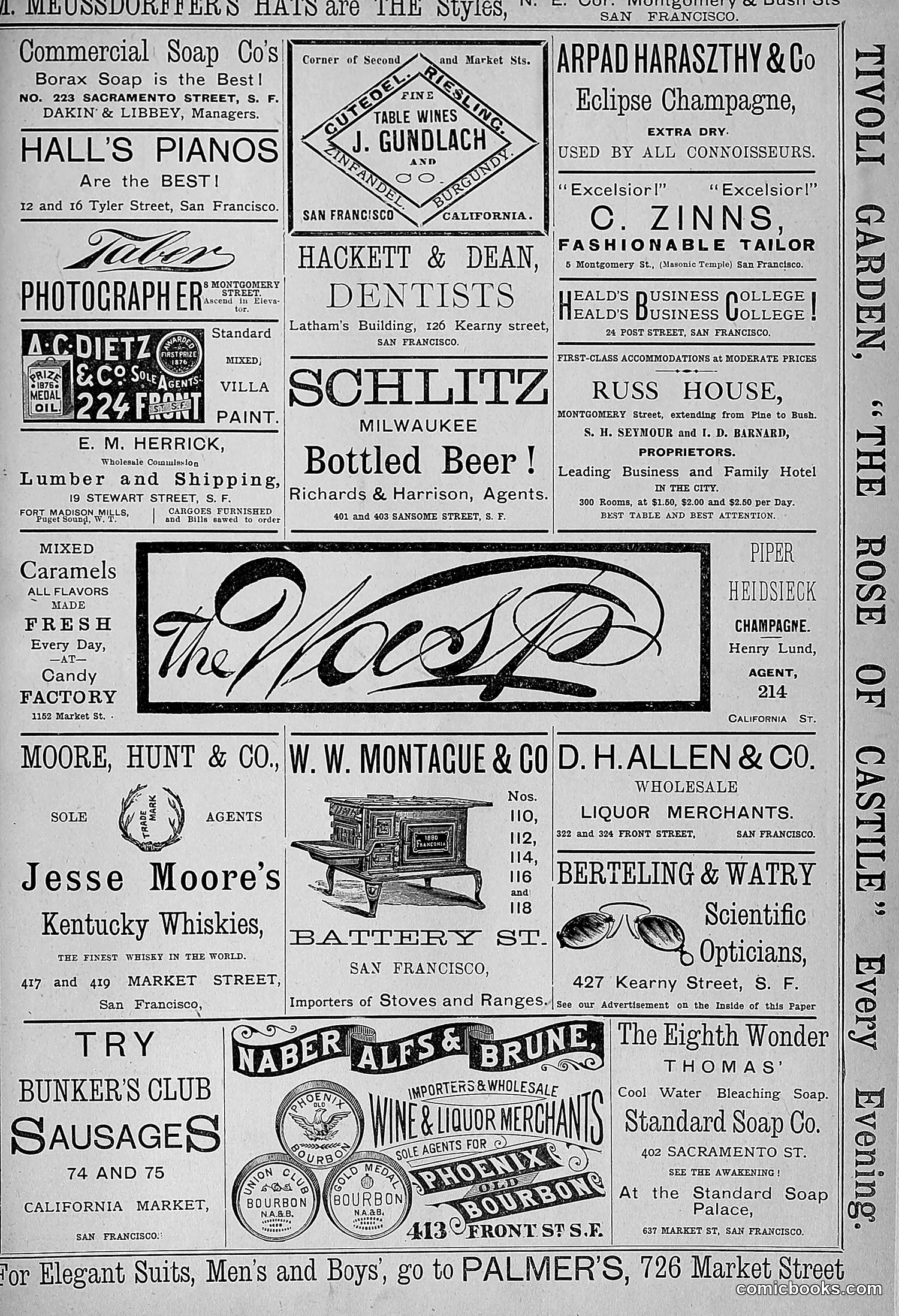
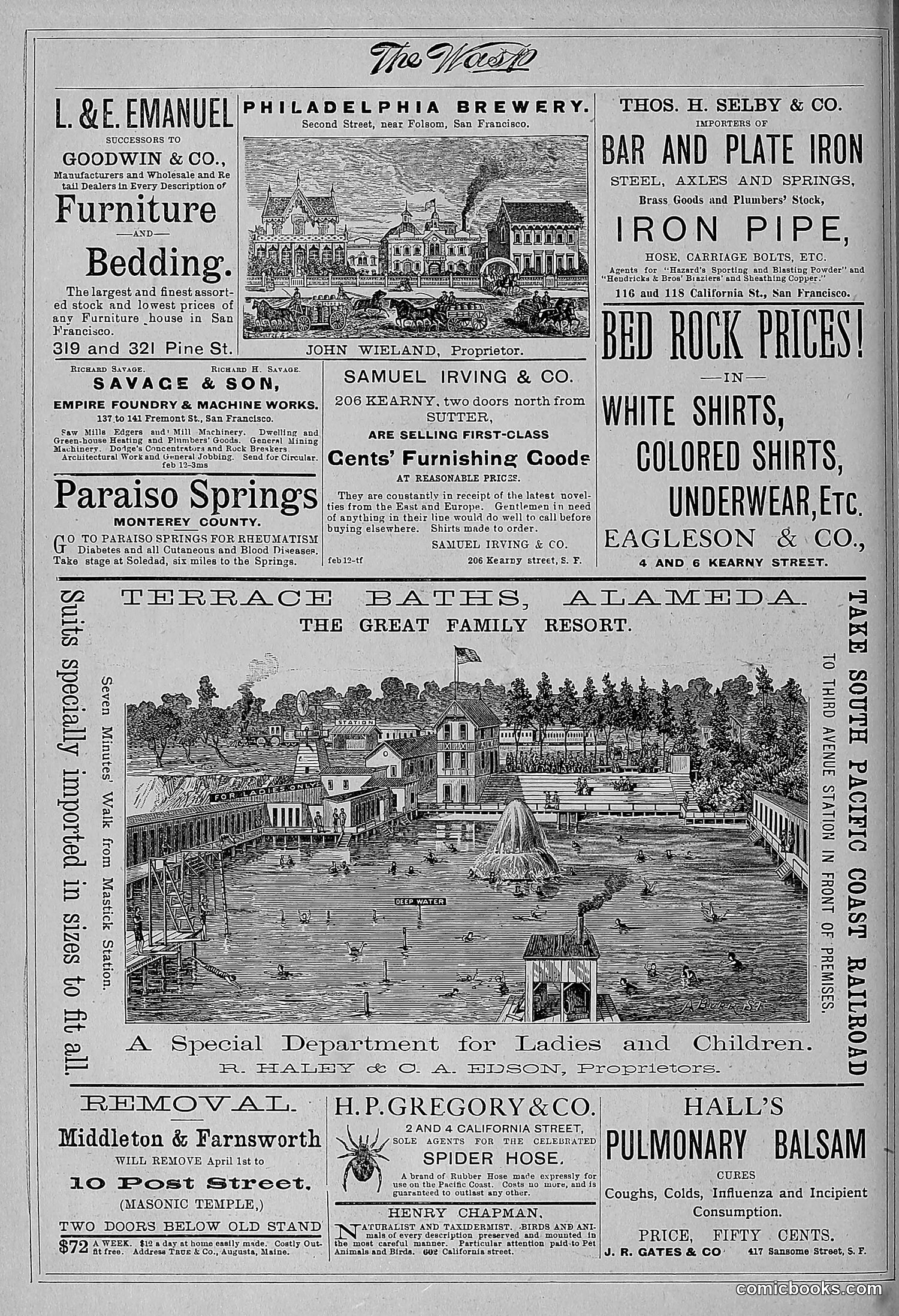
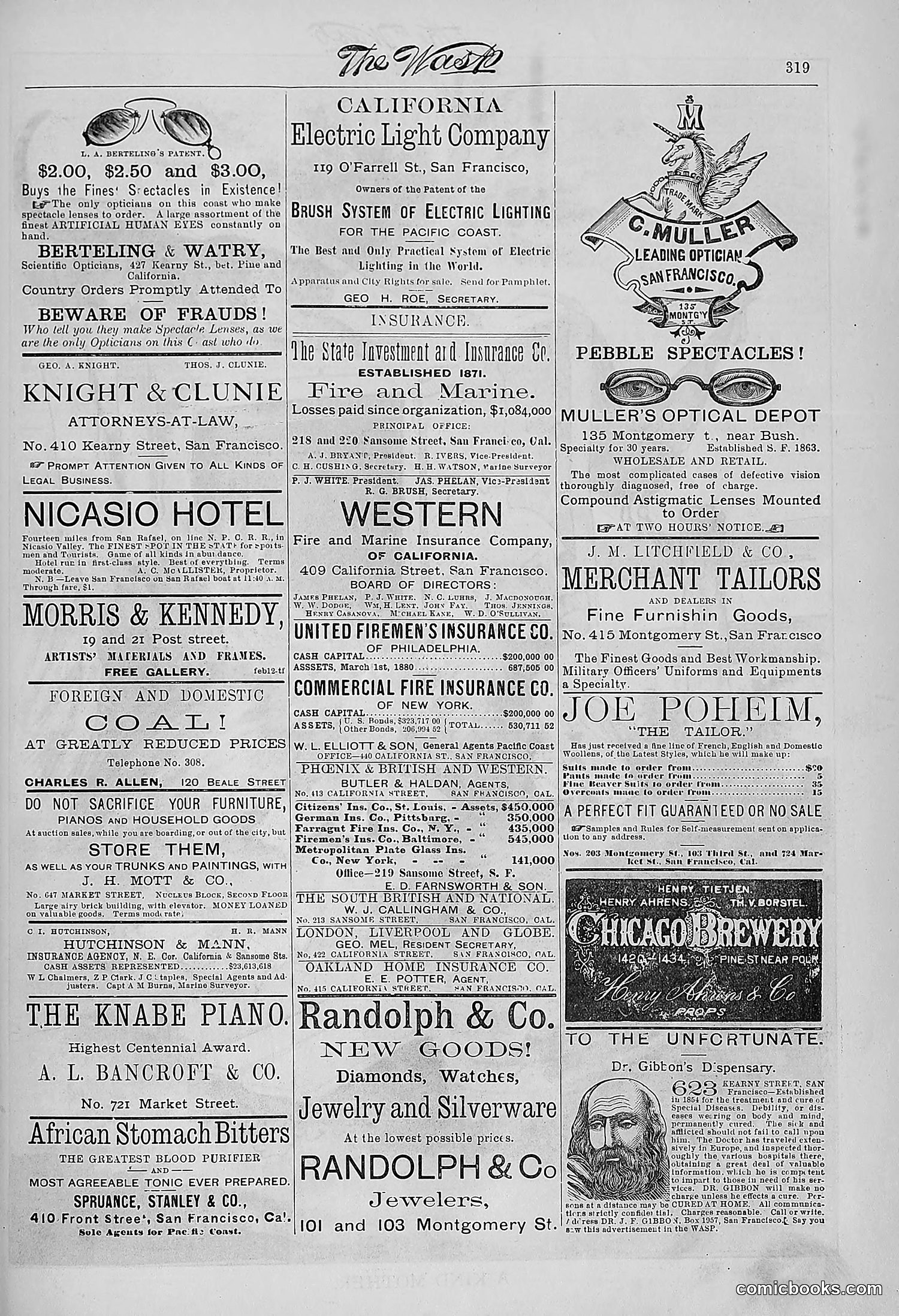
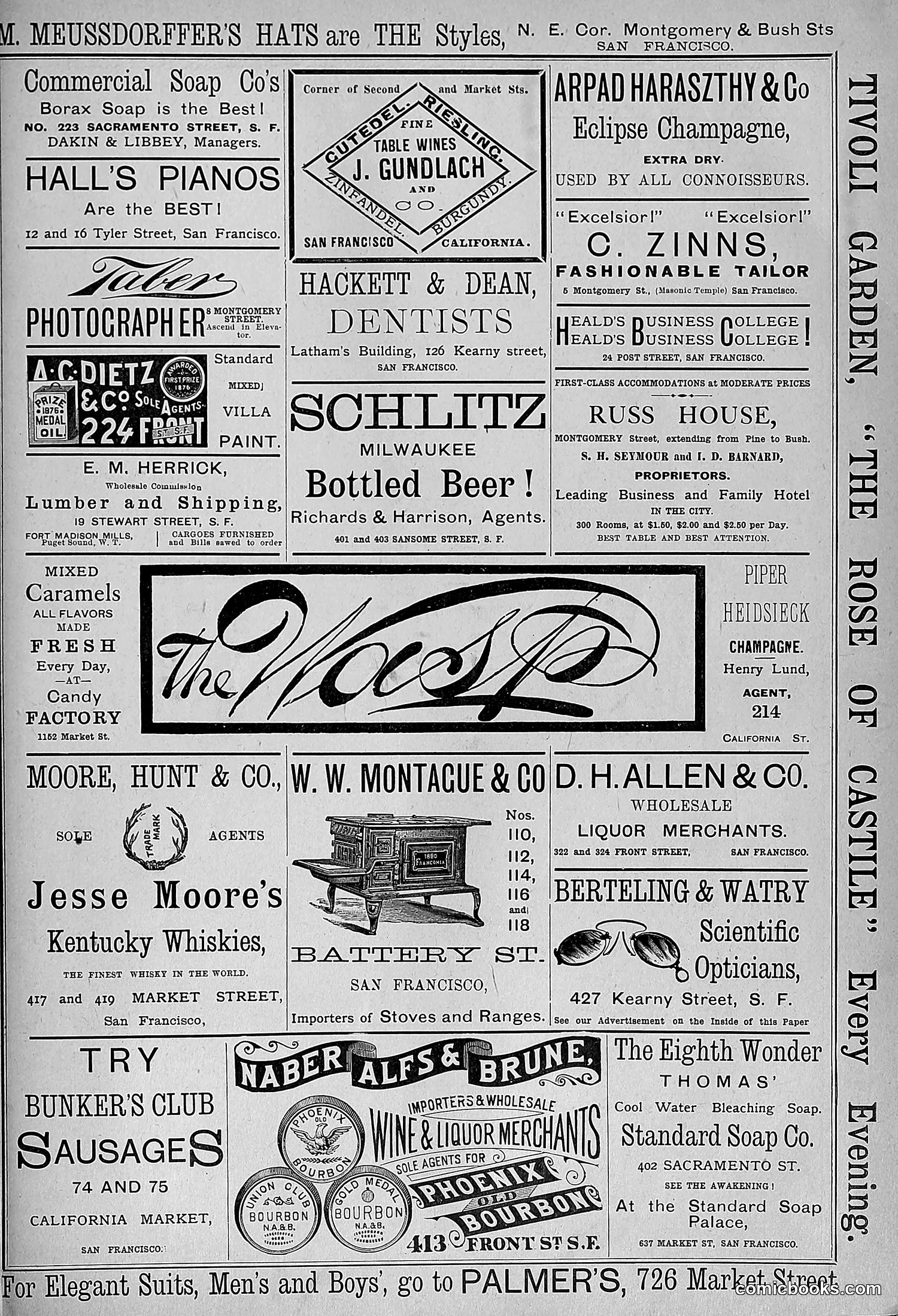
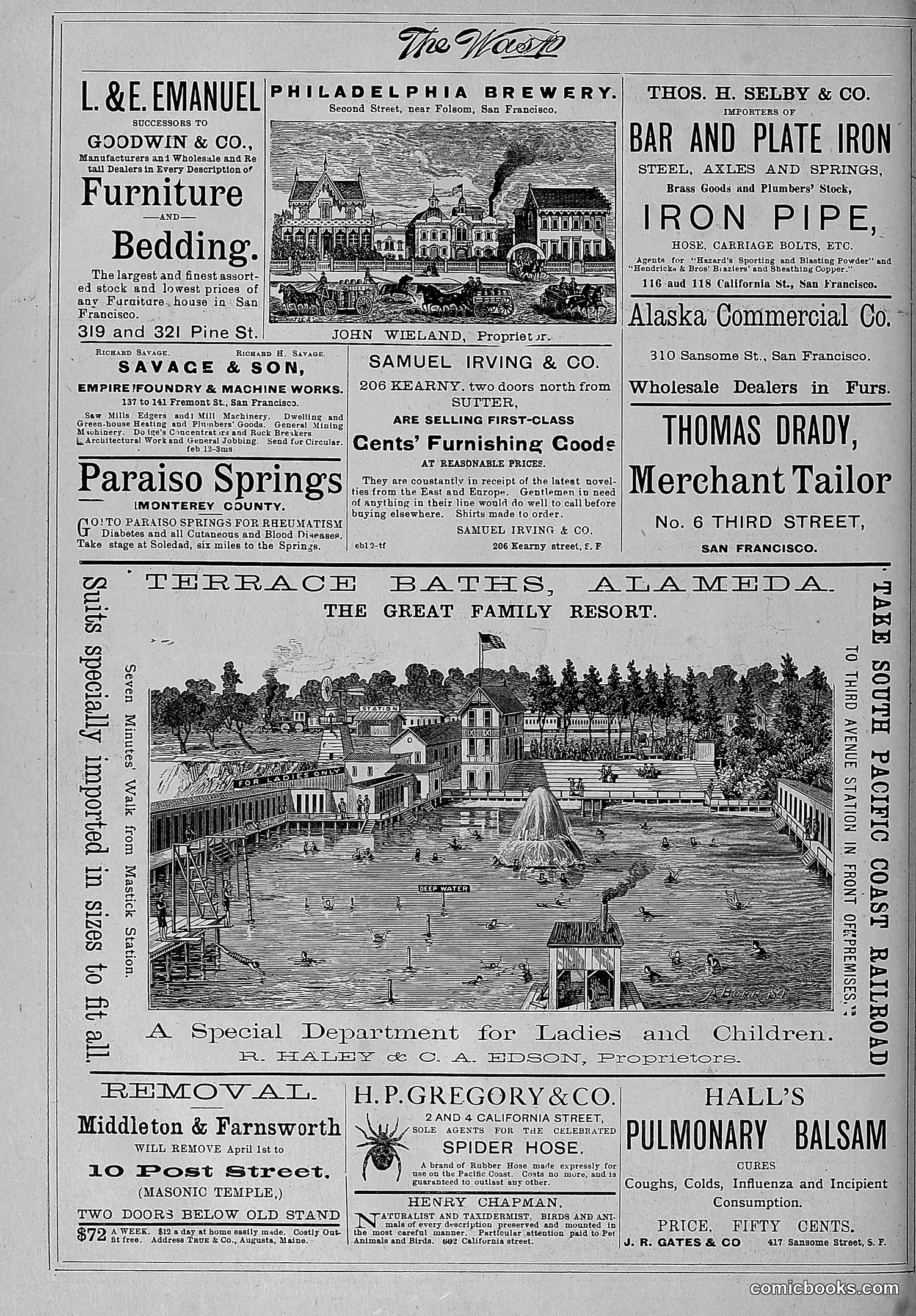
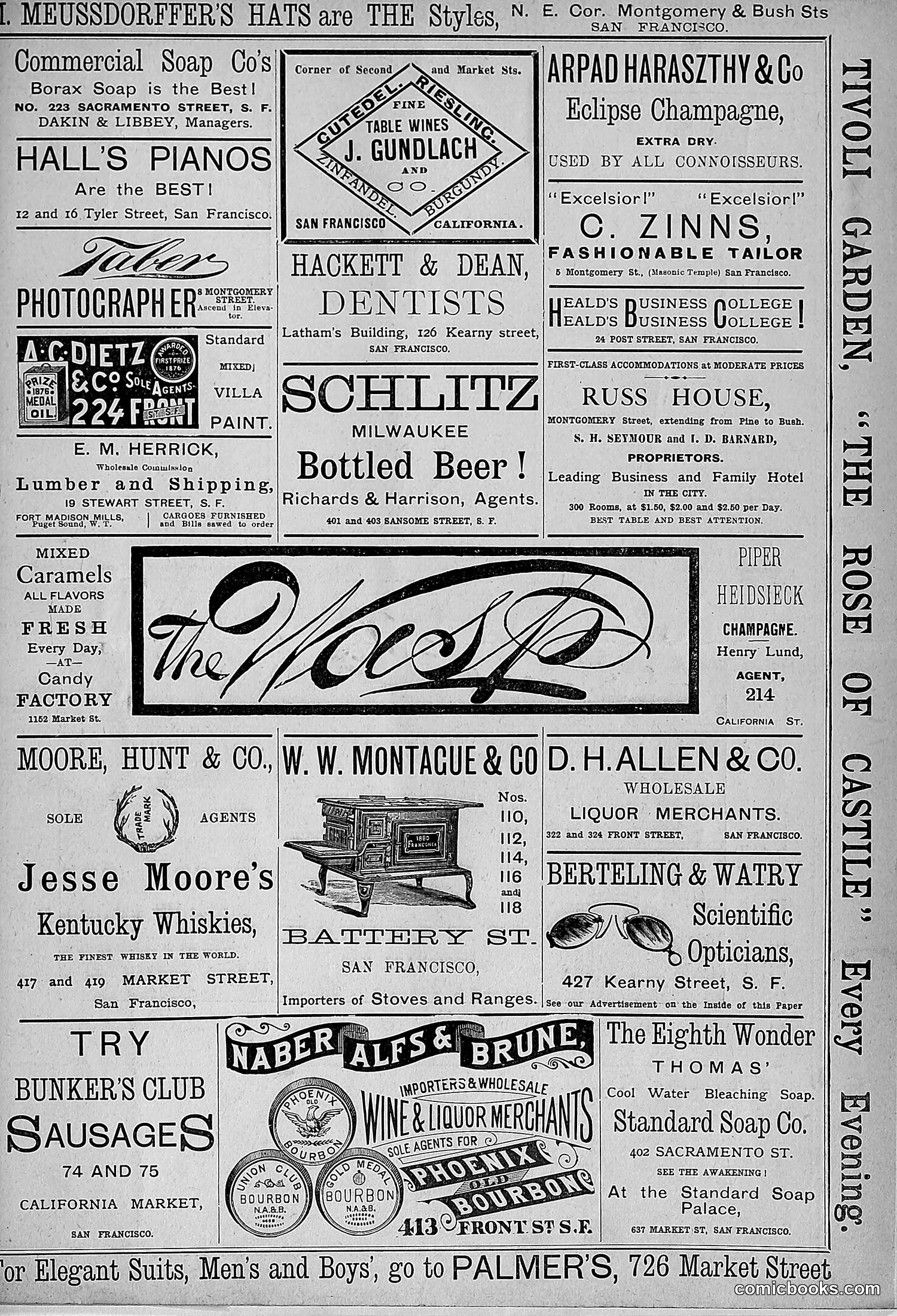
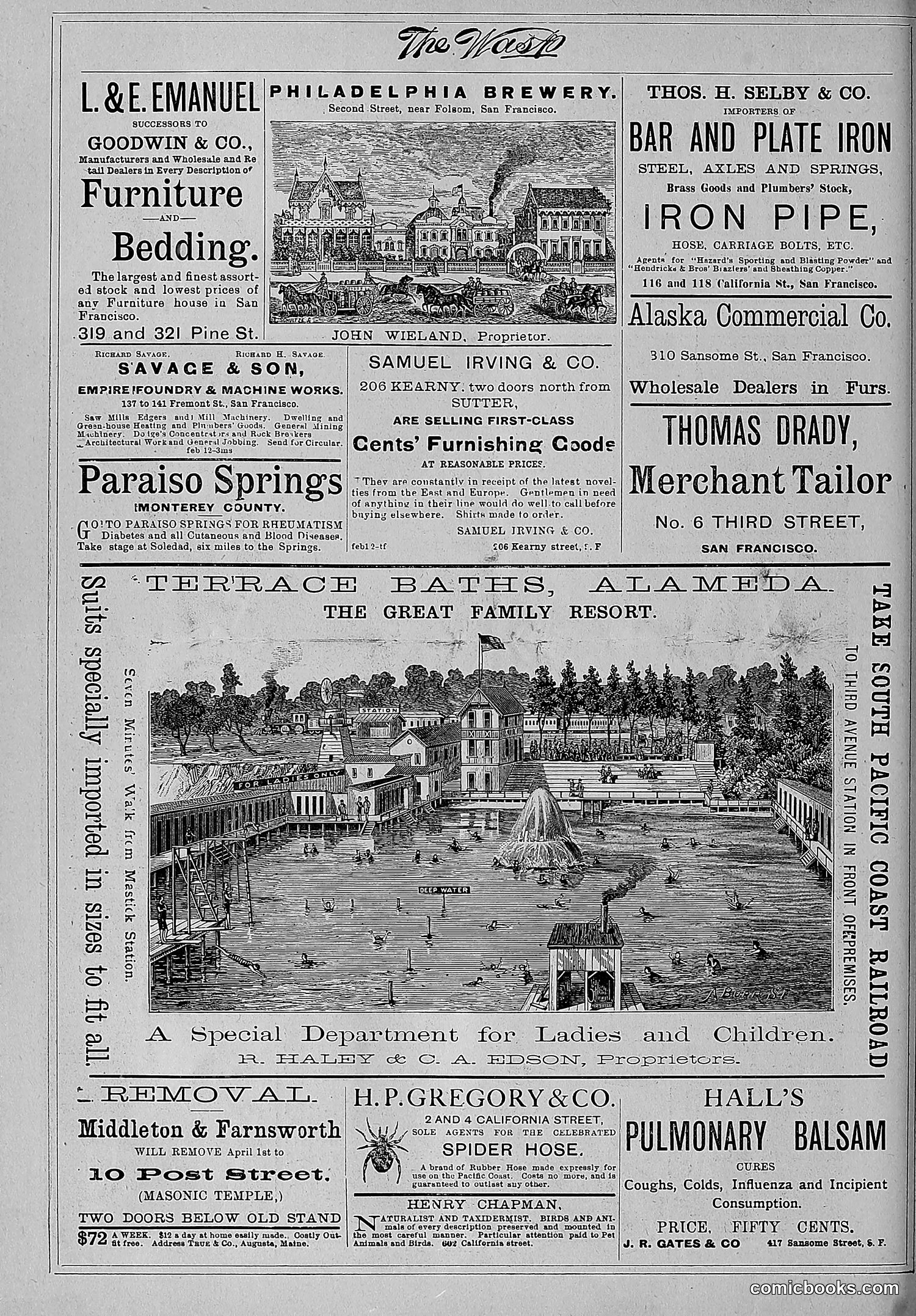
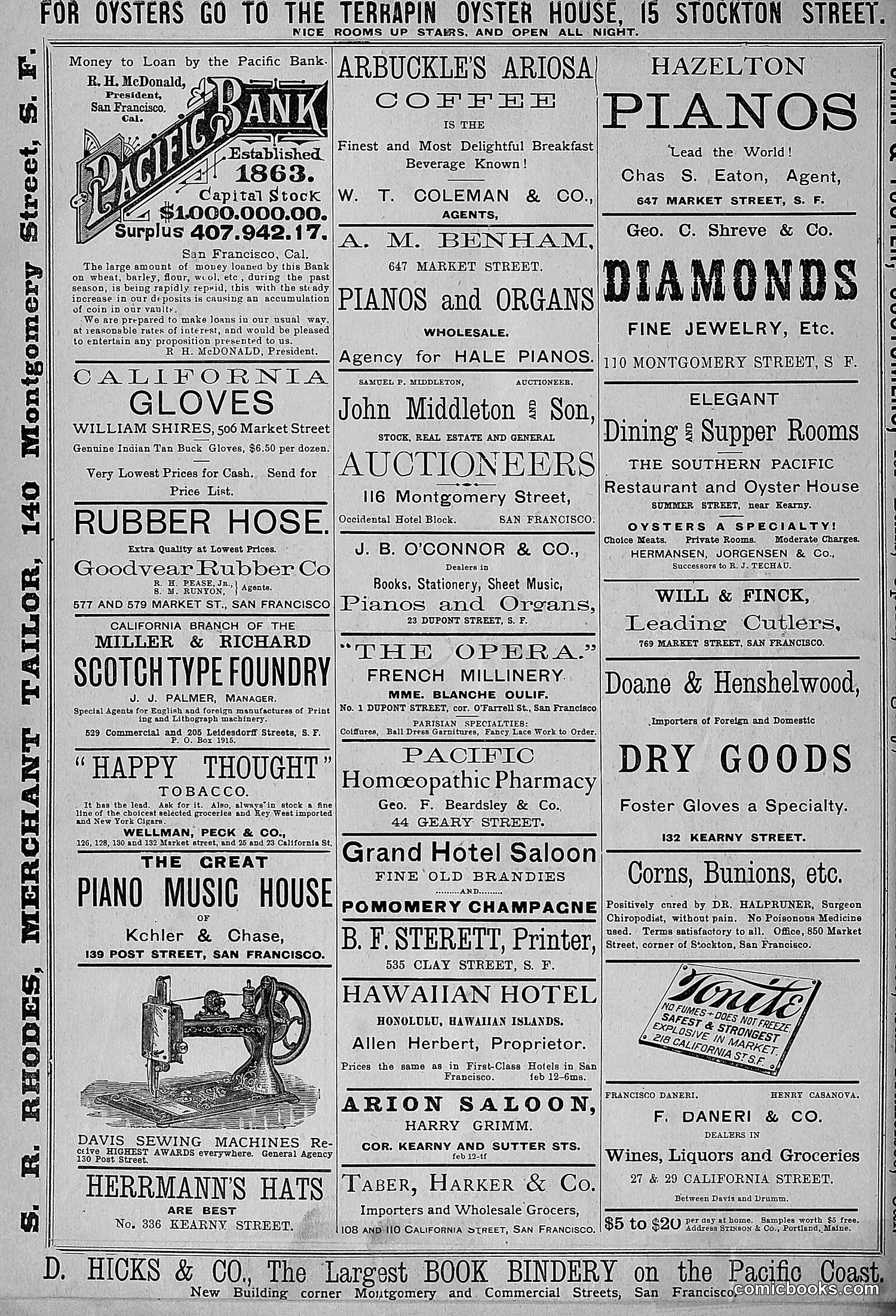
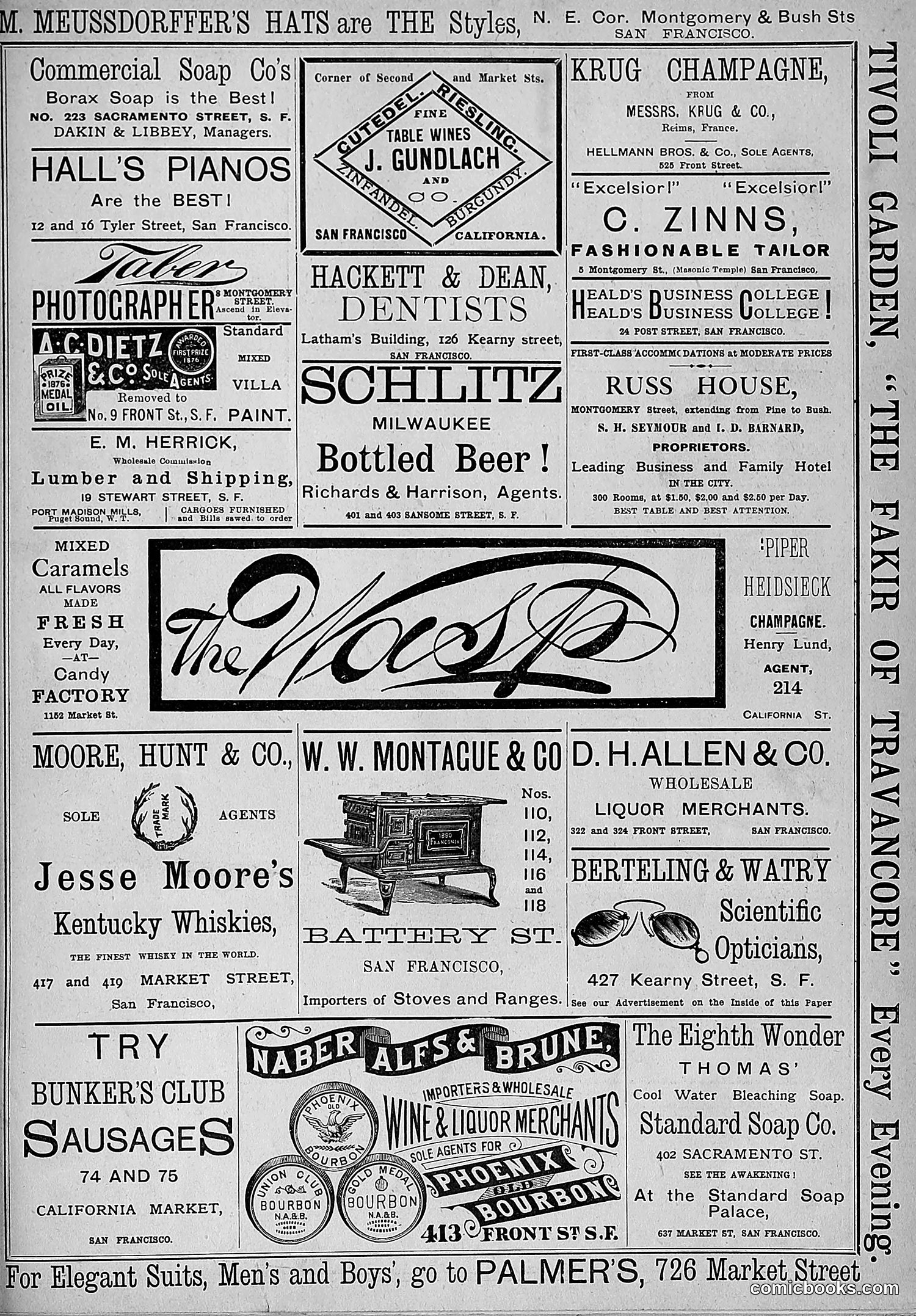
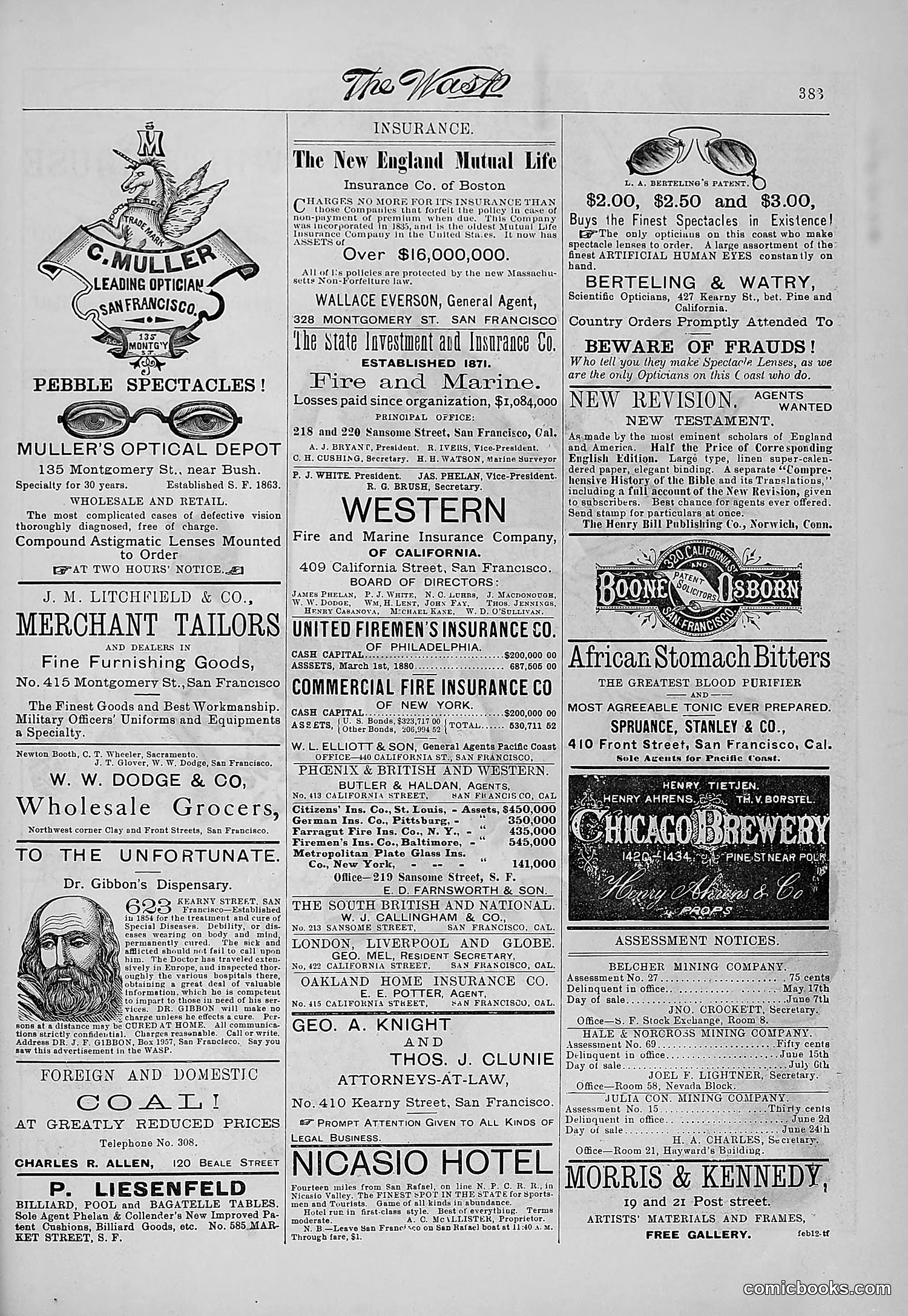
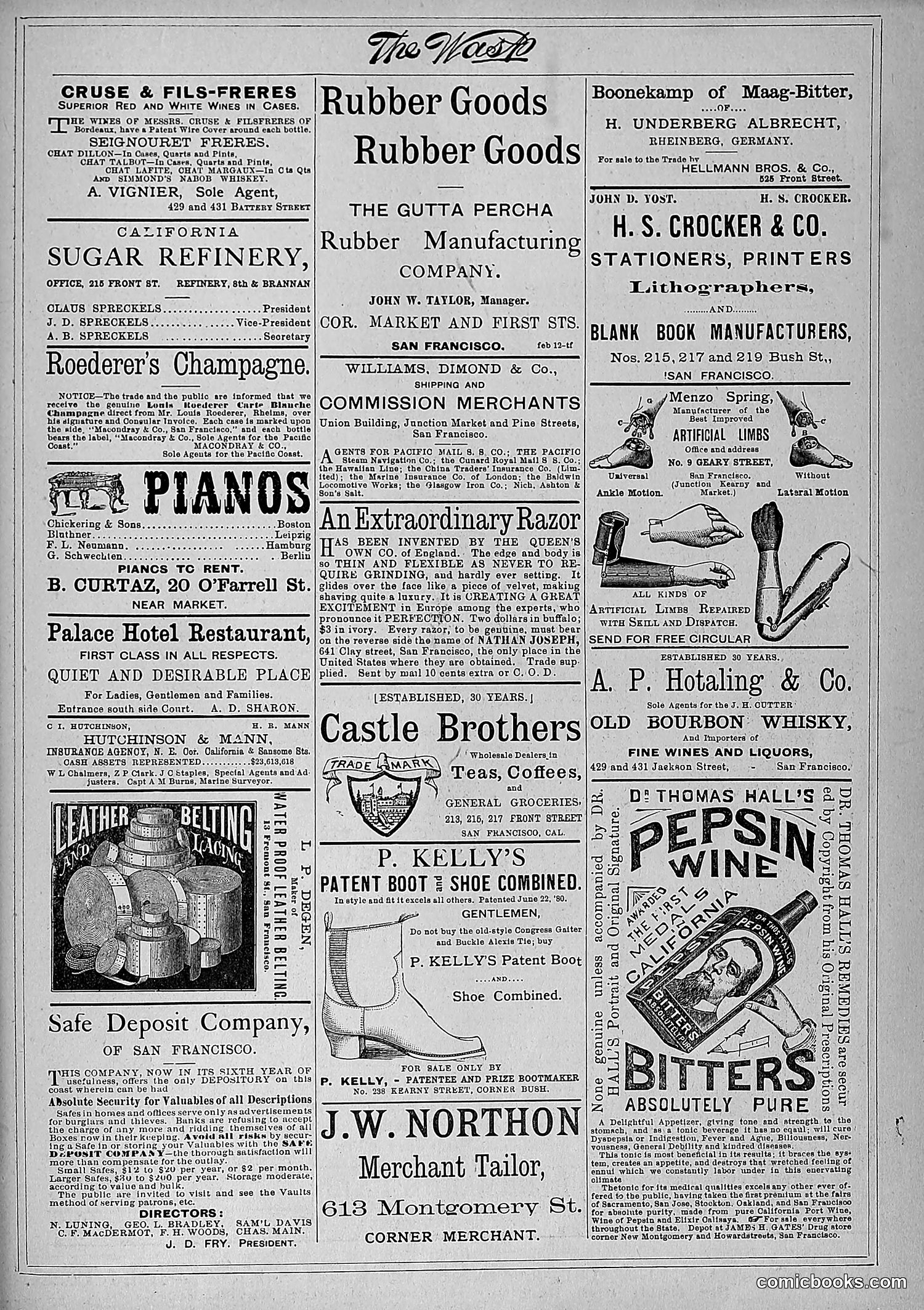
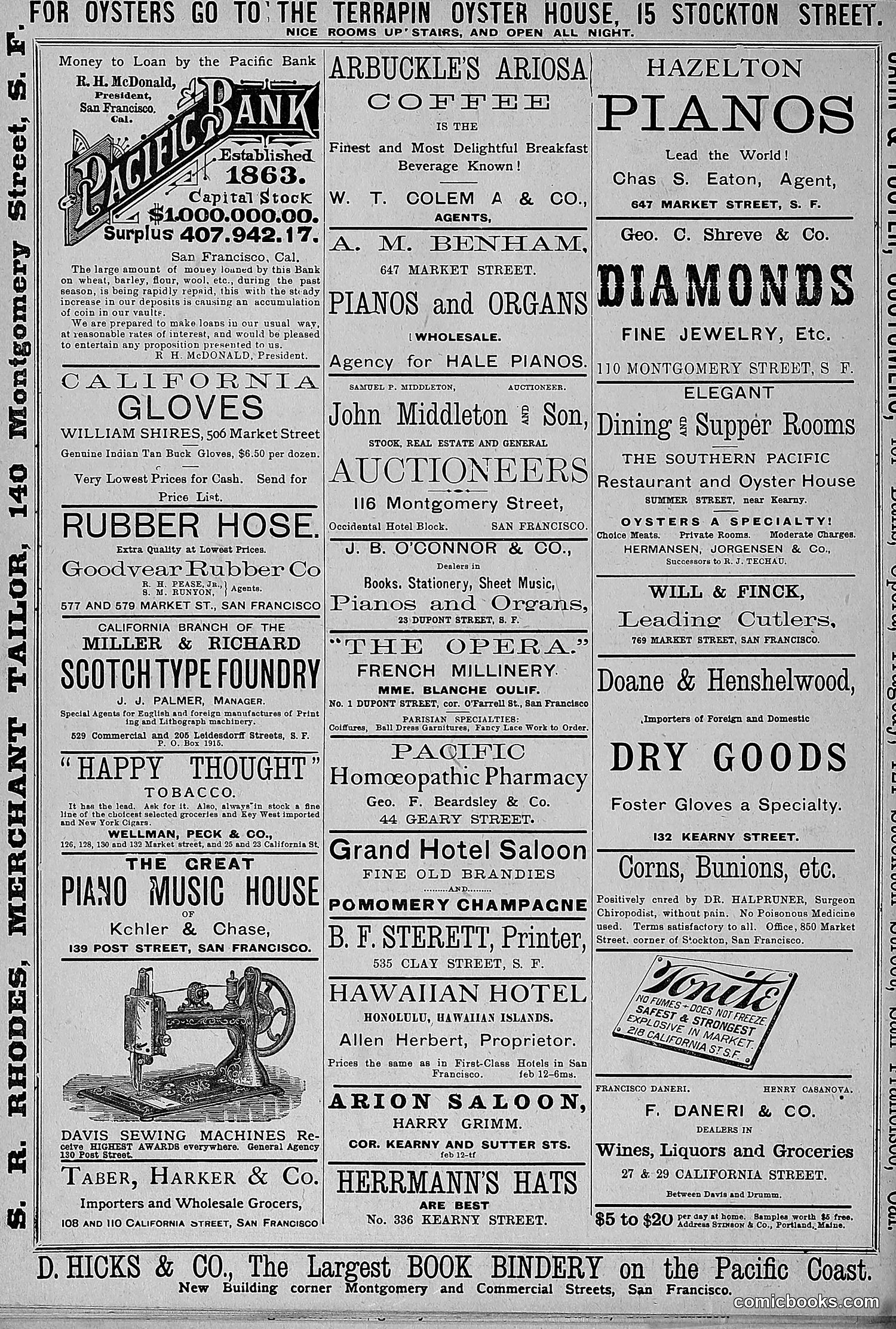
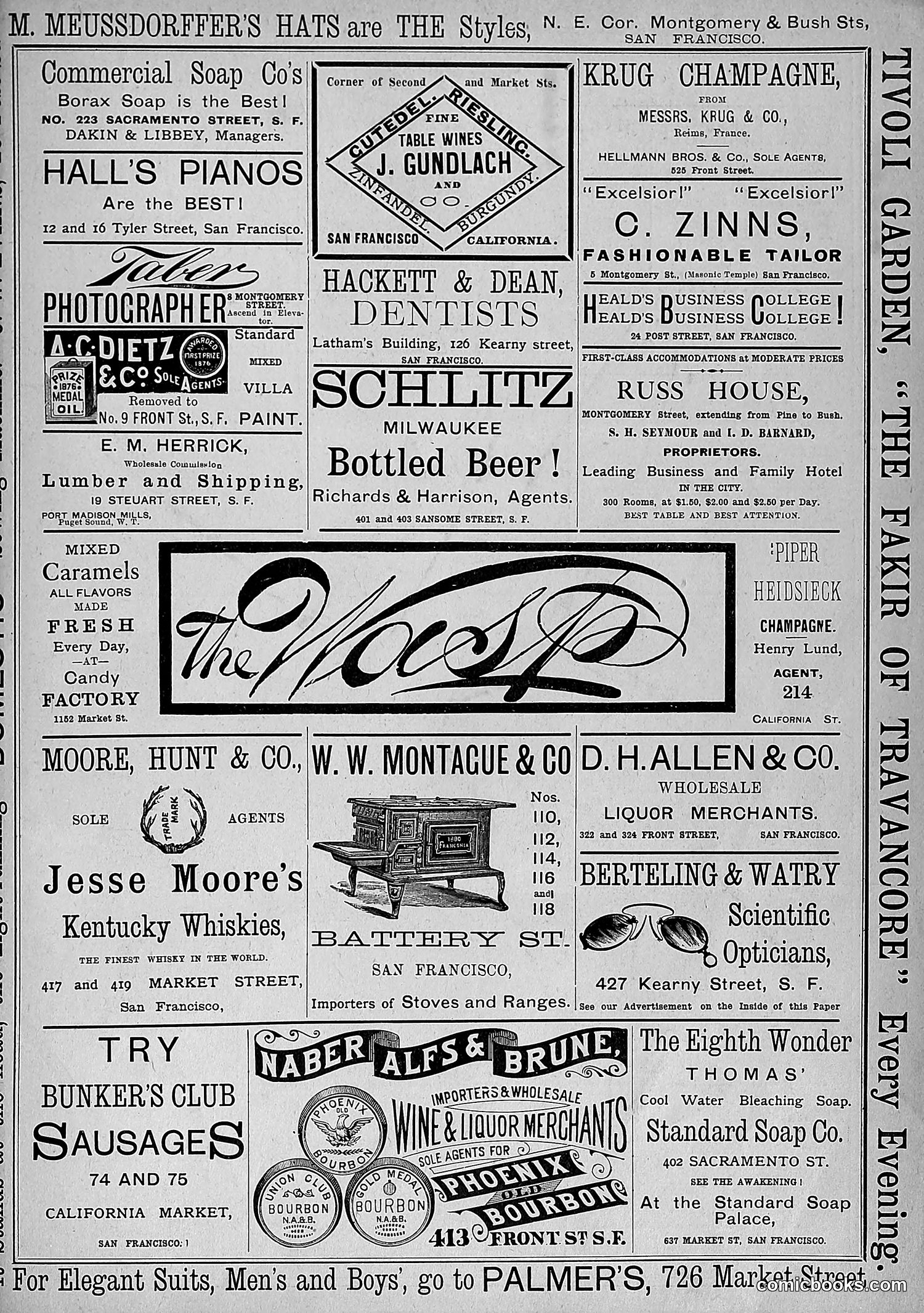
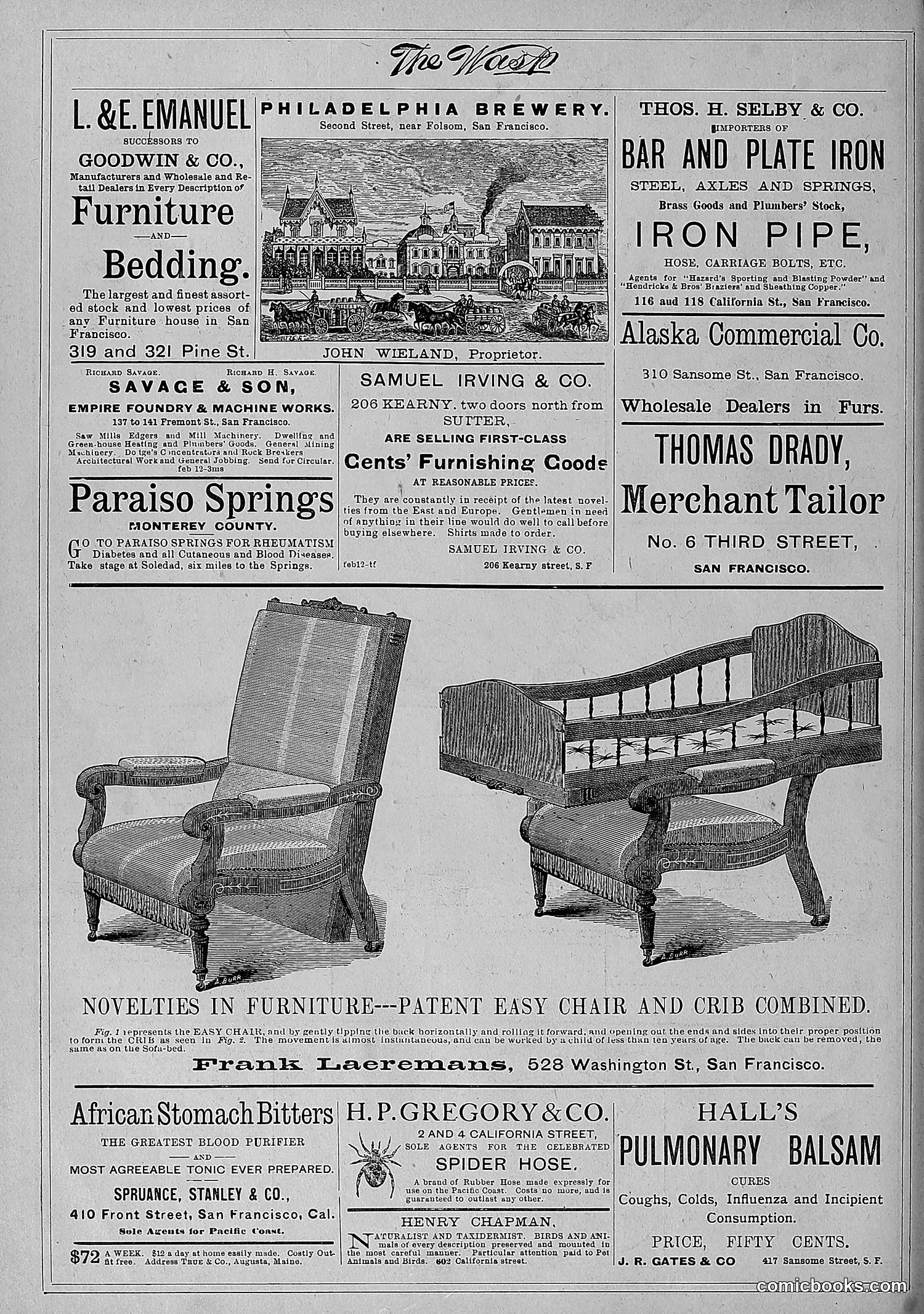
# Analysis of The Wasp Page This page is primarily **commercial advertising** rather than editorial satire. It displays dozens of San Francisco business advertisements from what appears to be the late 19th or early 20th century, including: - Wine and alcohol merchants (Naber, Alfs & Brune; various champagne distributors) - Restaurants (Saddle Rock Oyster House; Russ House) - Household goods (soaps, pianos, stoves) - Professional services (opticians, dentists) - Clothing retailers (Palmer's for suits) The decorative illustrations—including silhouetted figures in the margins—serve as visual breaks between advertisements rather than political commentary. **No clear satirical cartoons or political messaging is evident** on this page. It functions as a classified advertising section, typical of period magazines that relied on merchant advertisements for revenue.
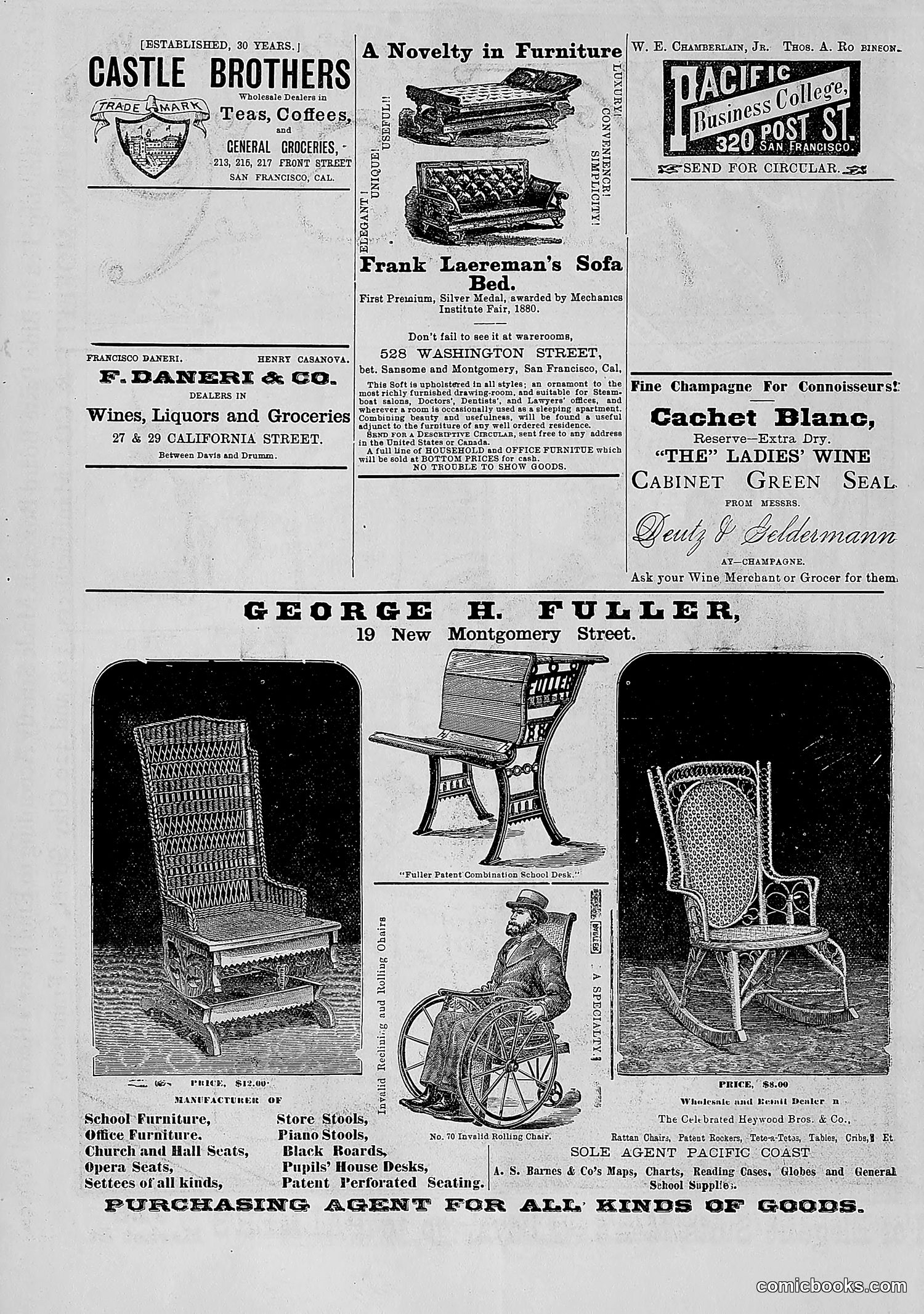
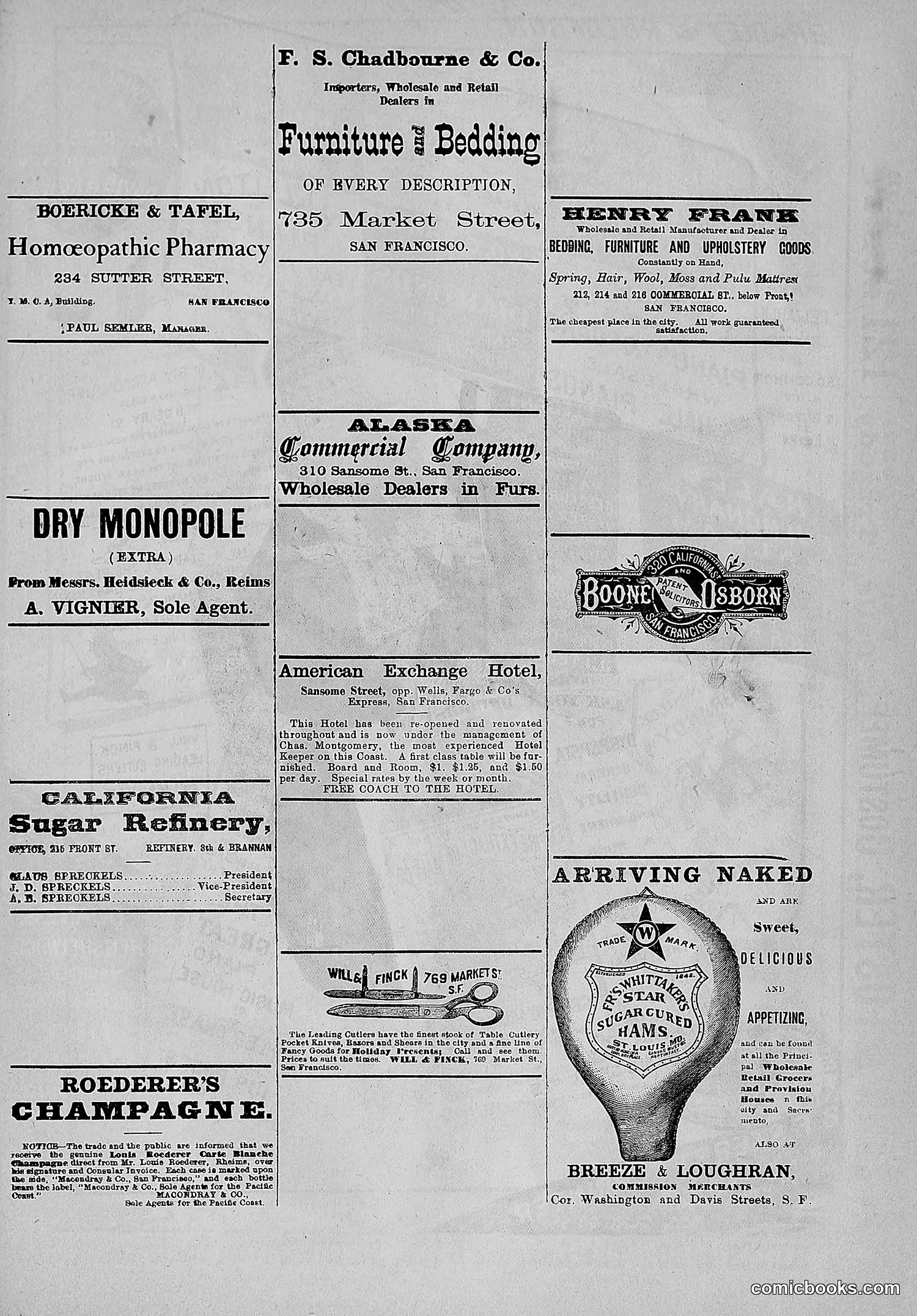
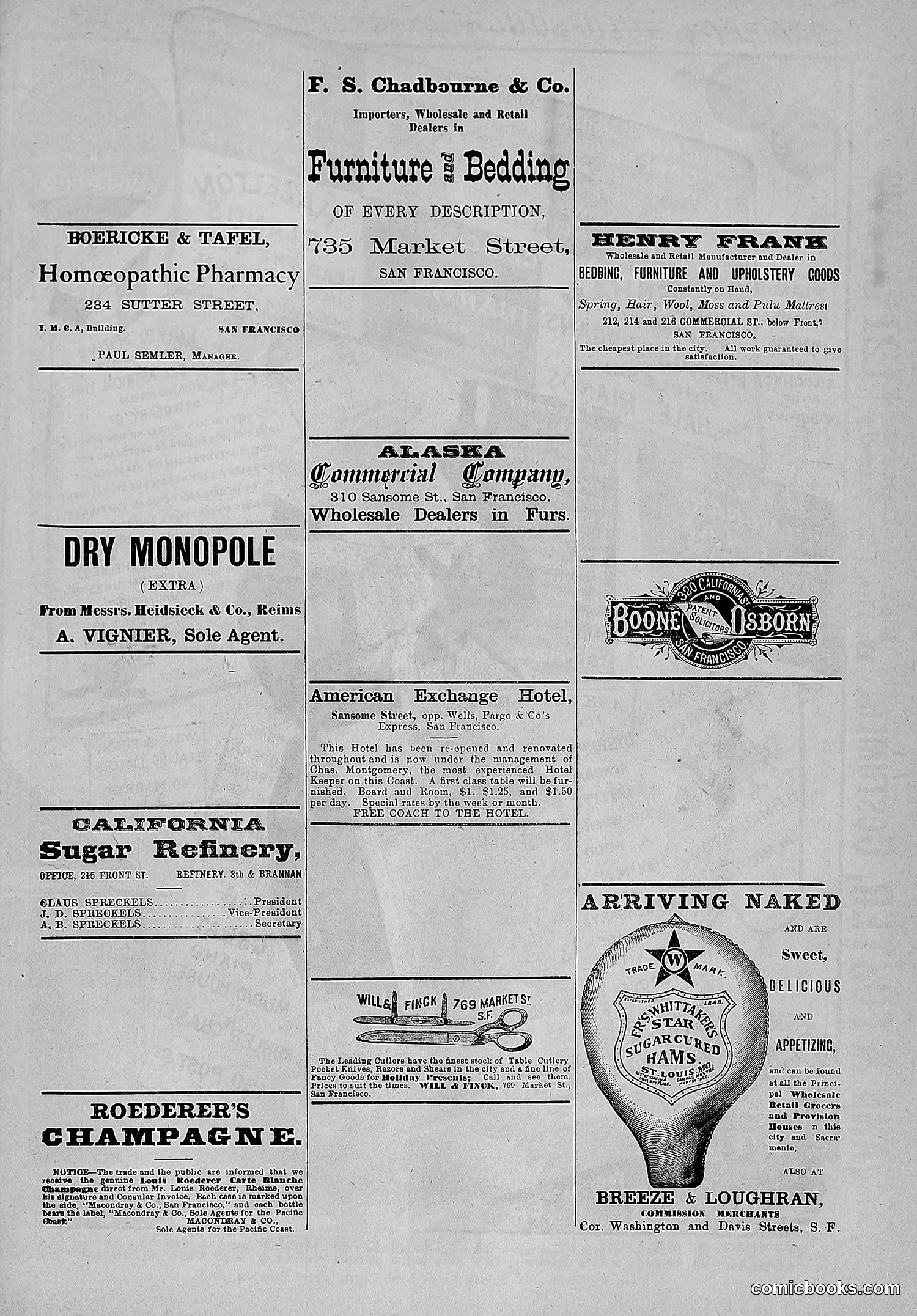
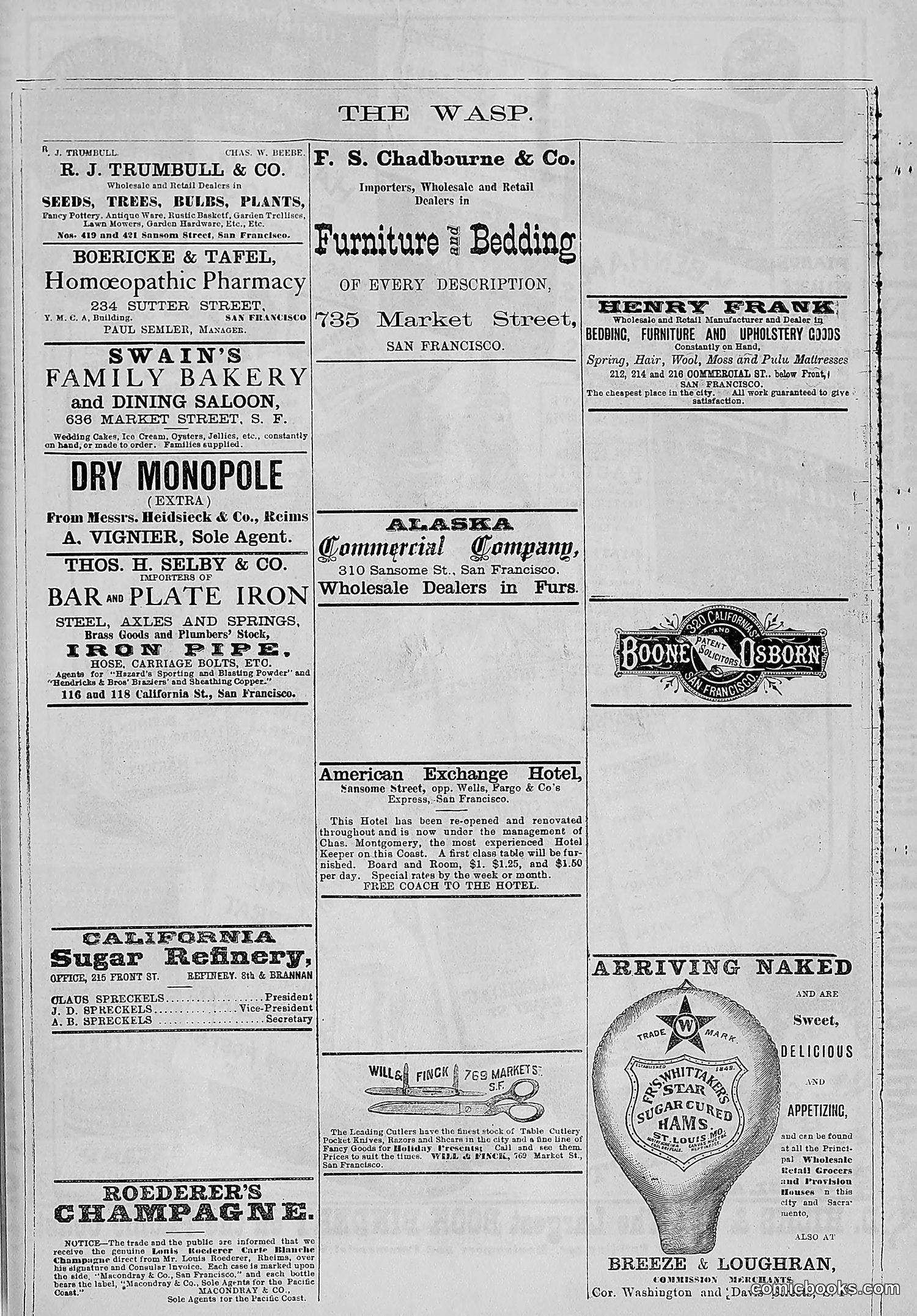
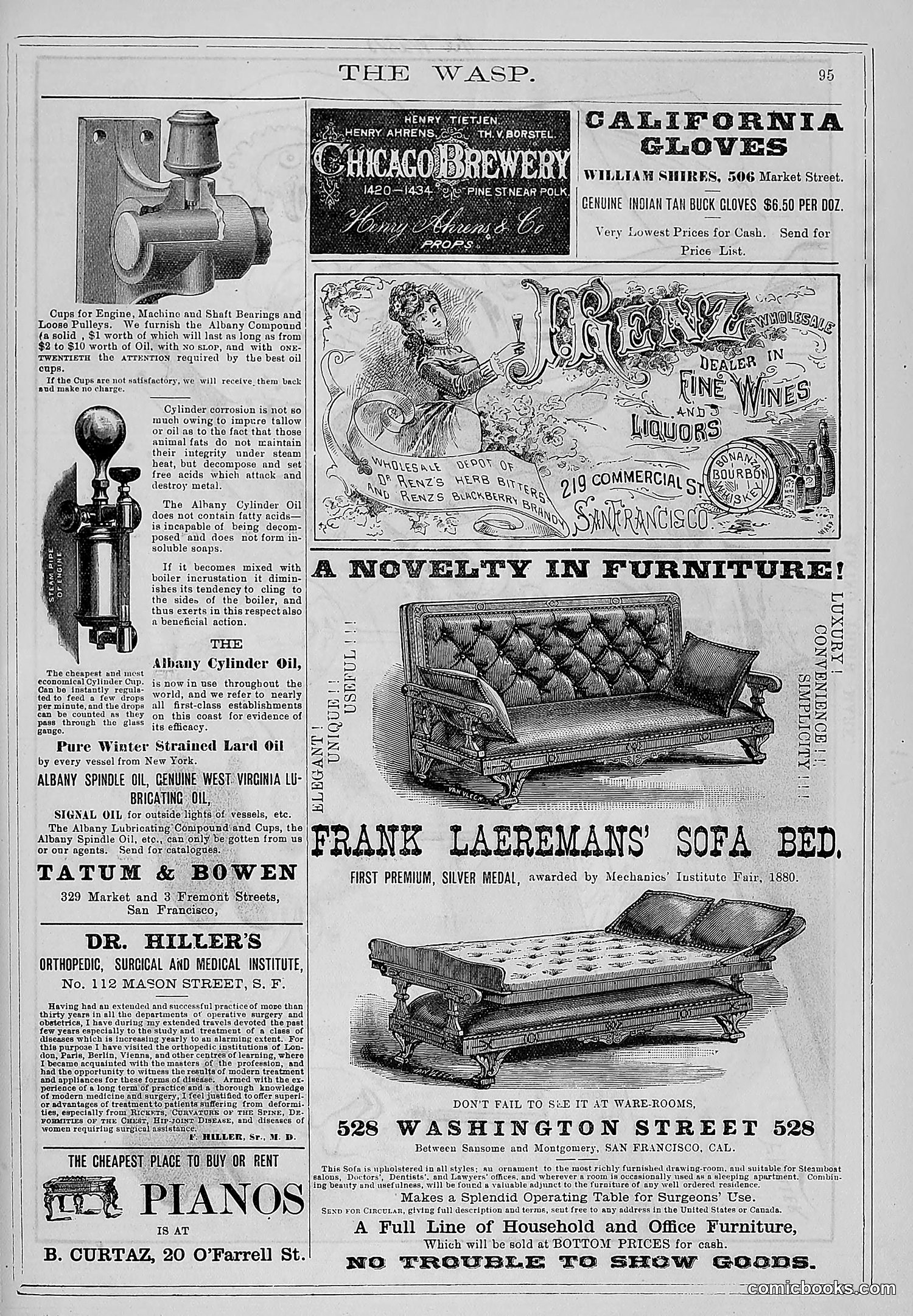
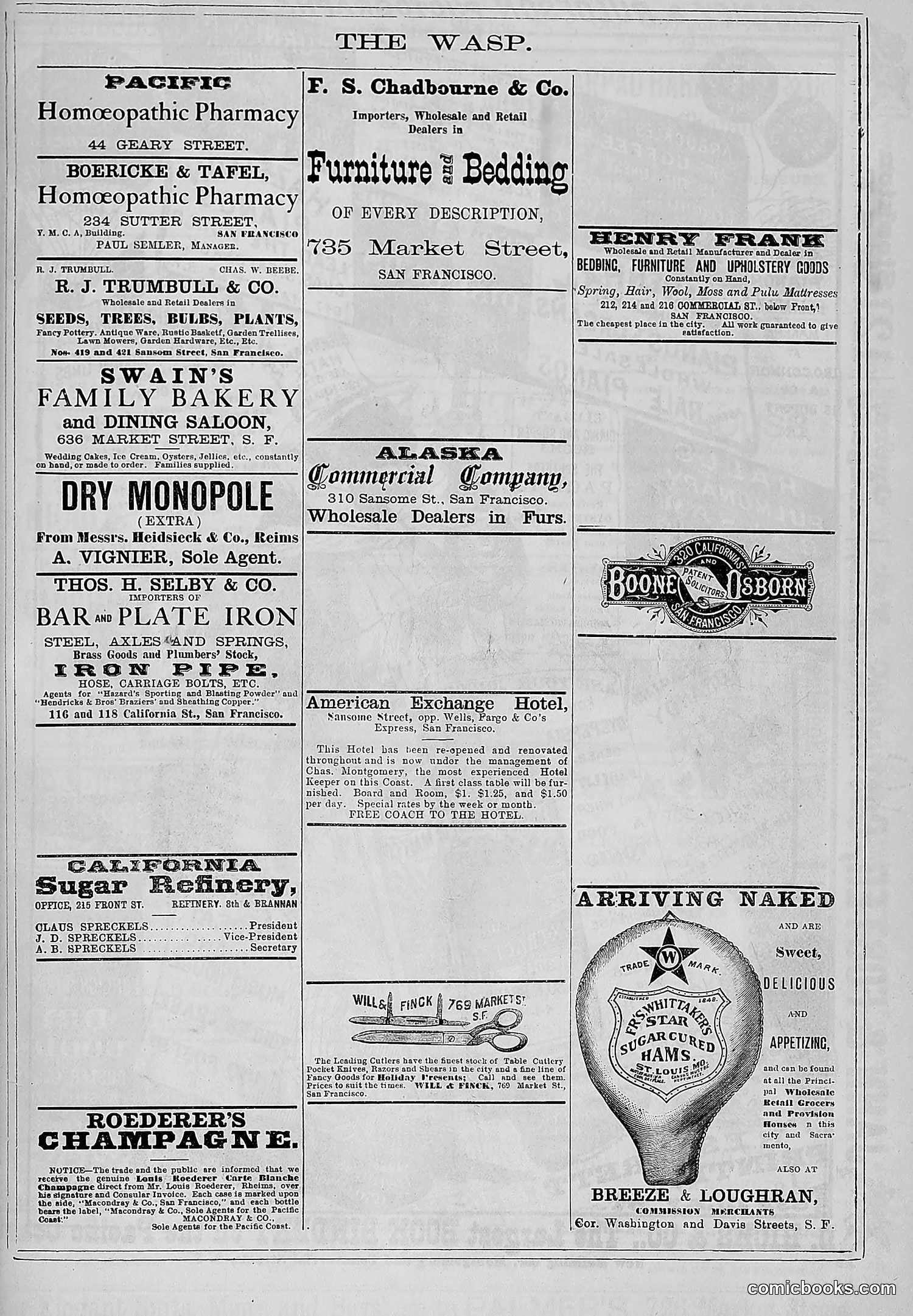
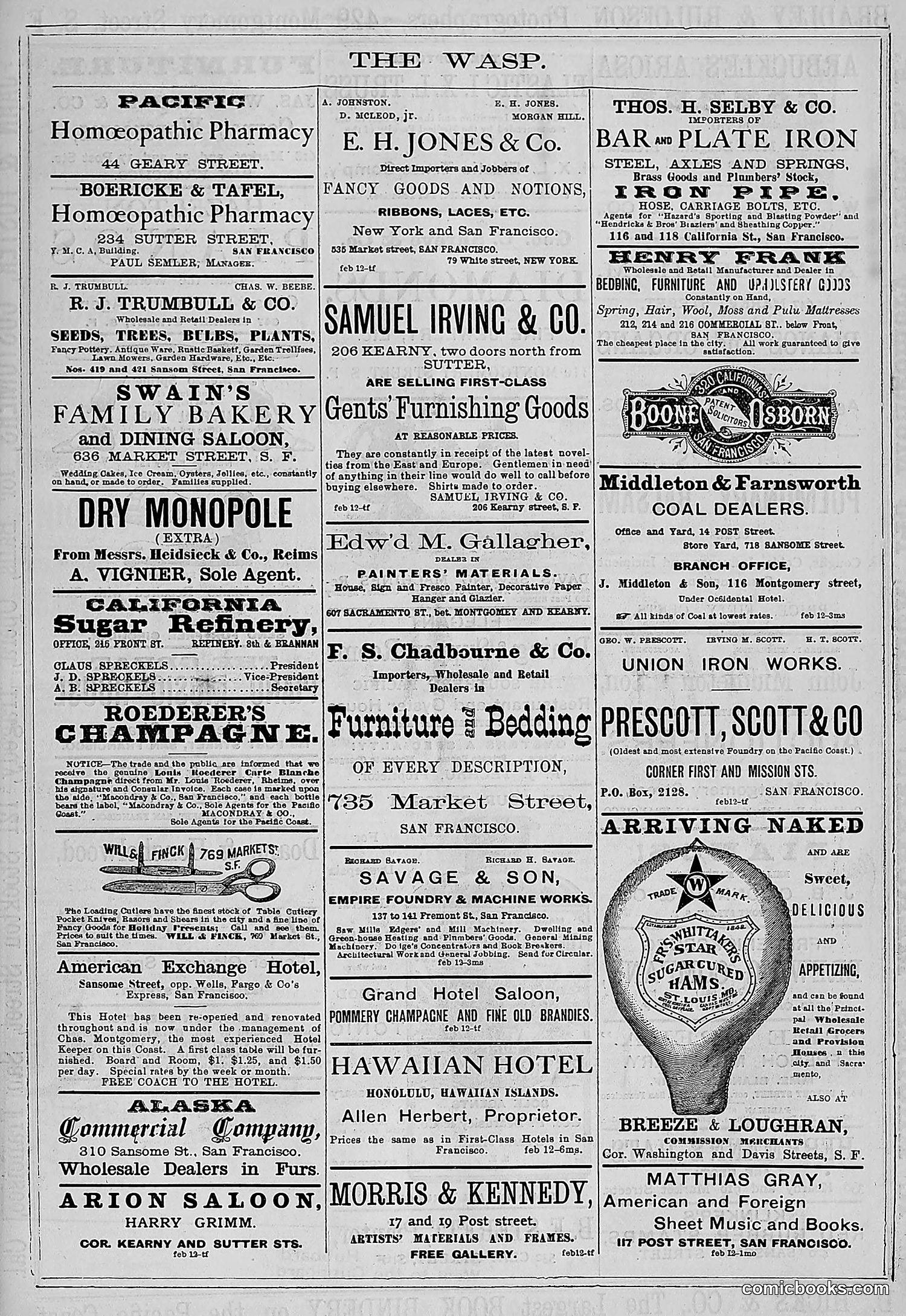
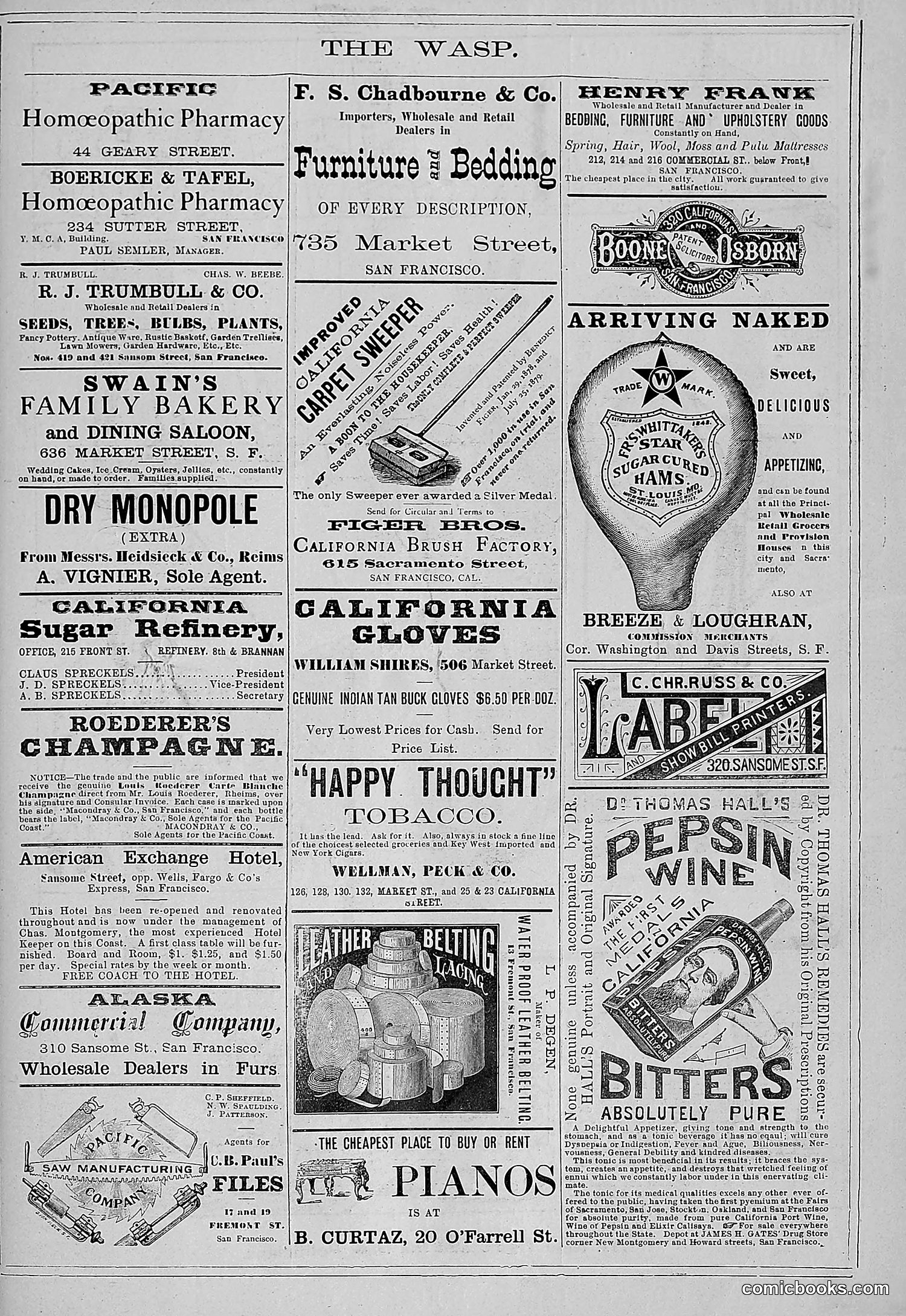
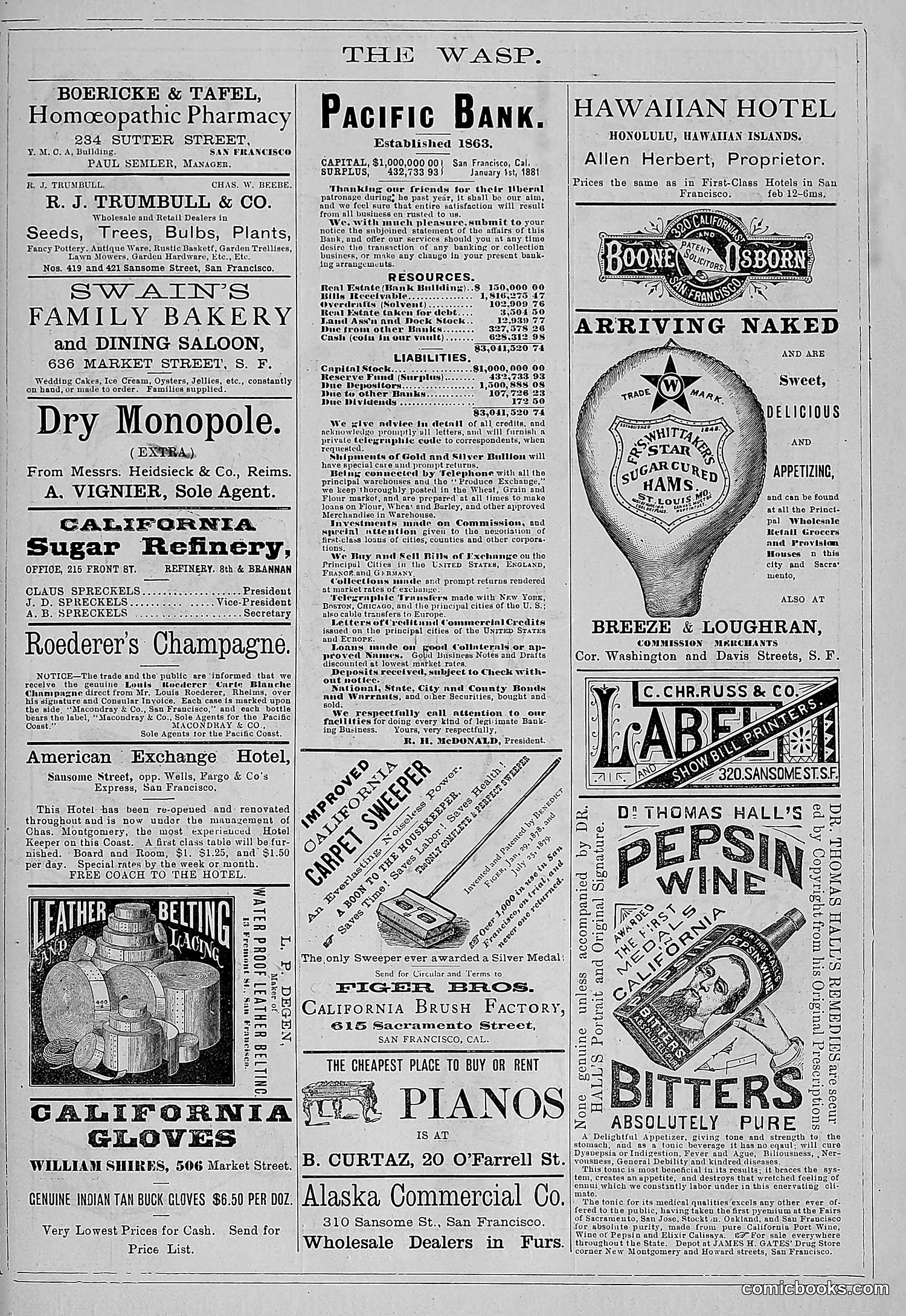
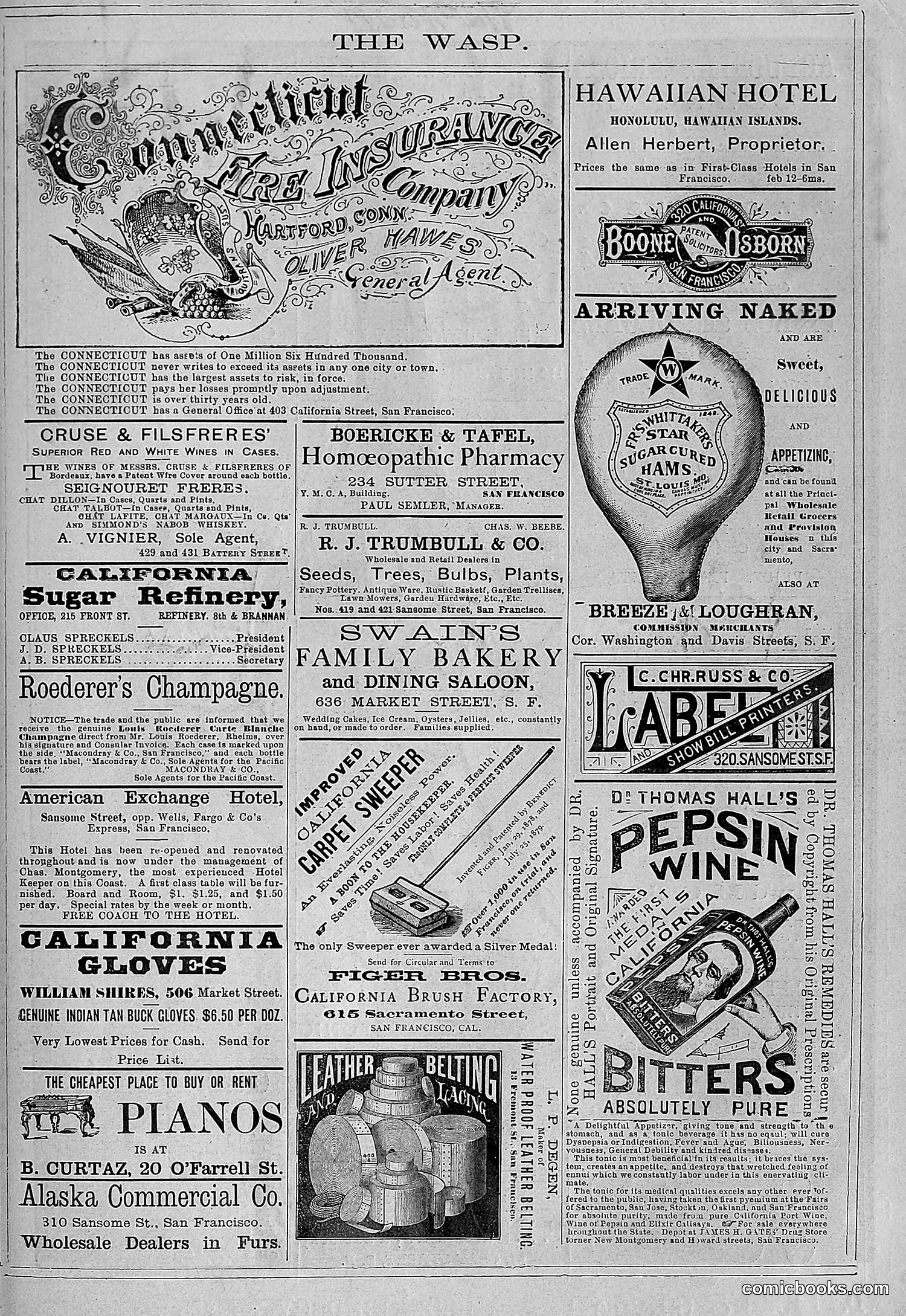
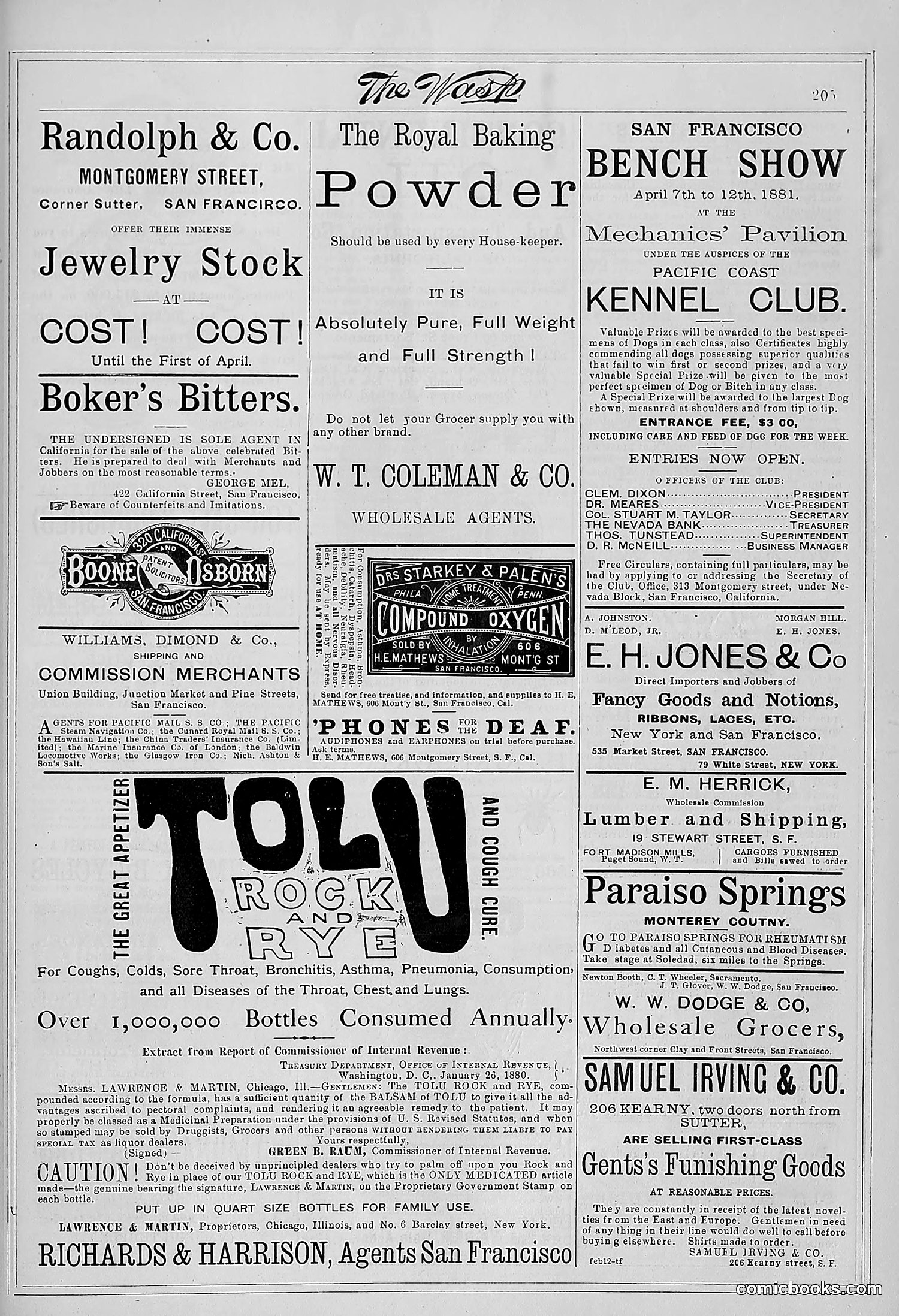
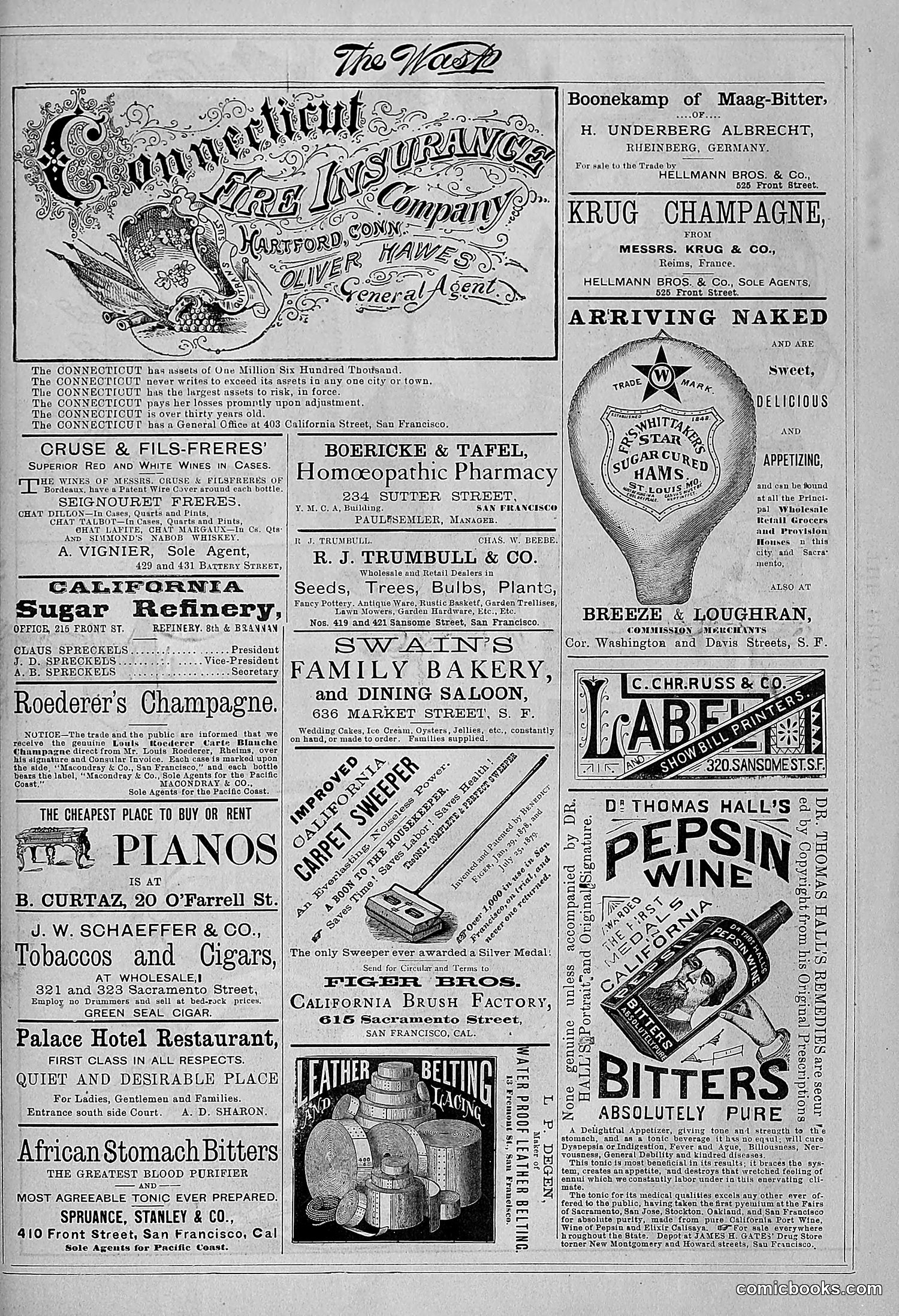
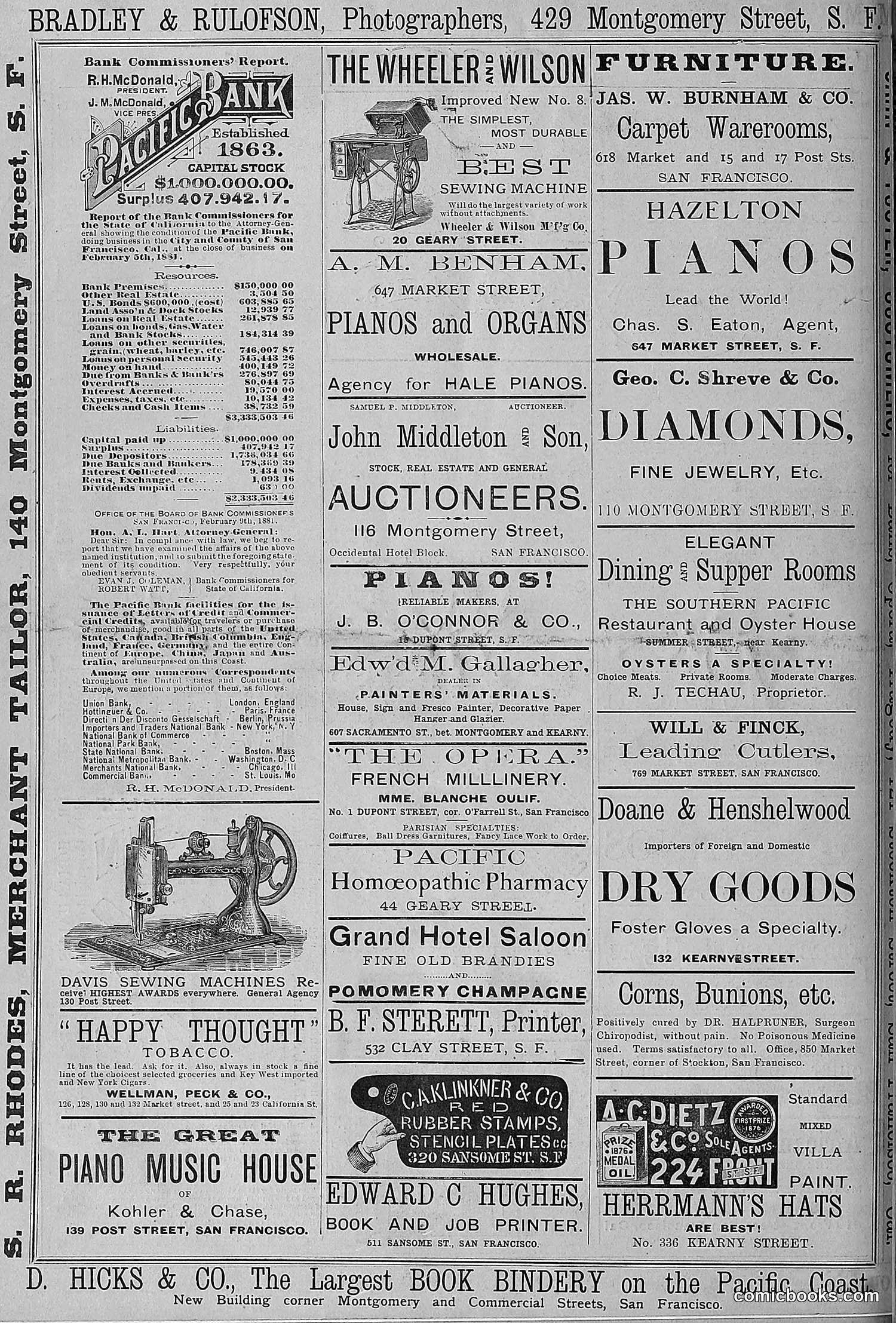
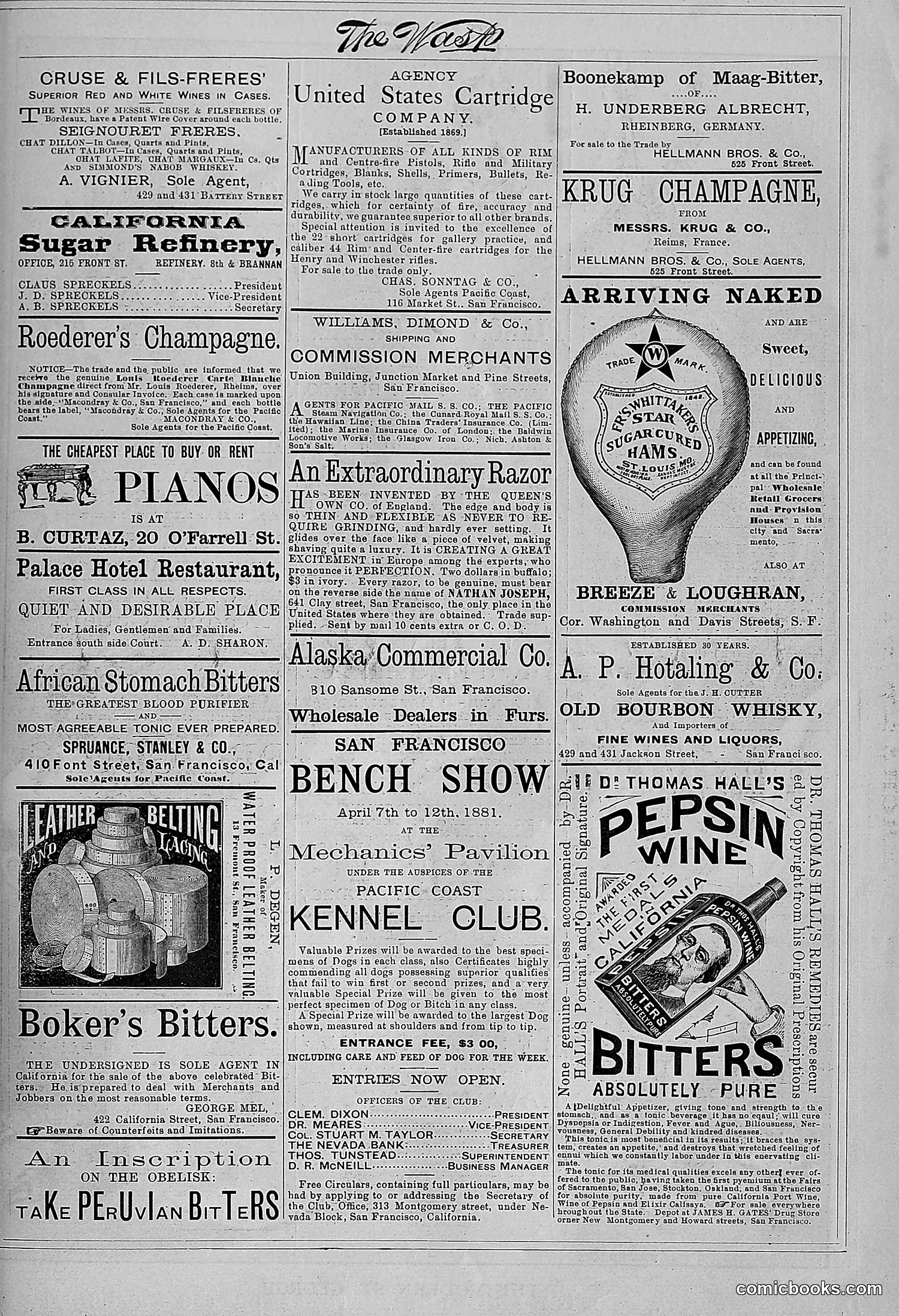
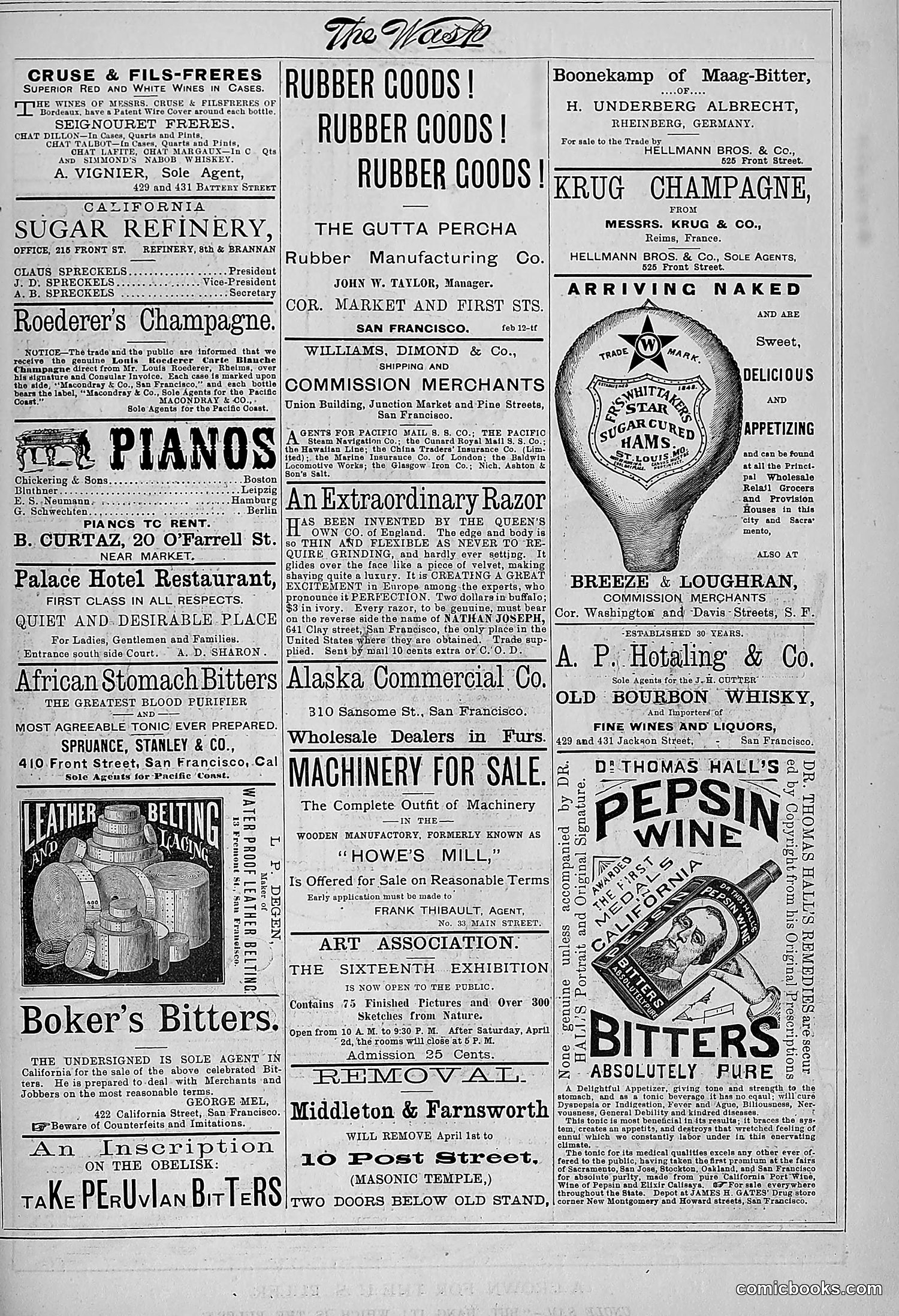
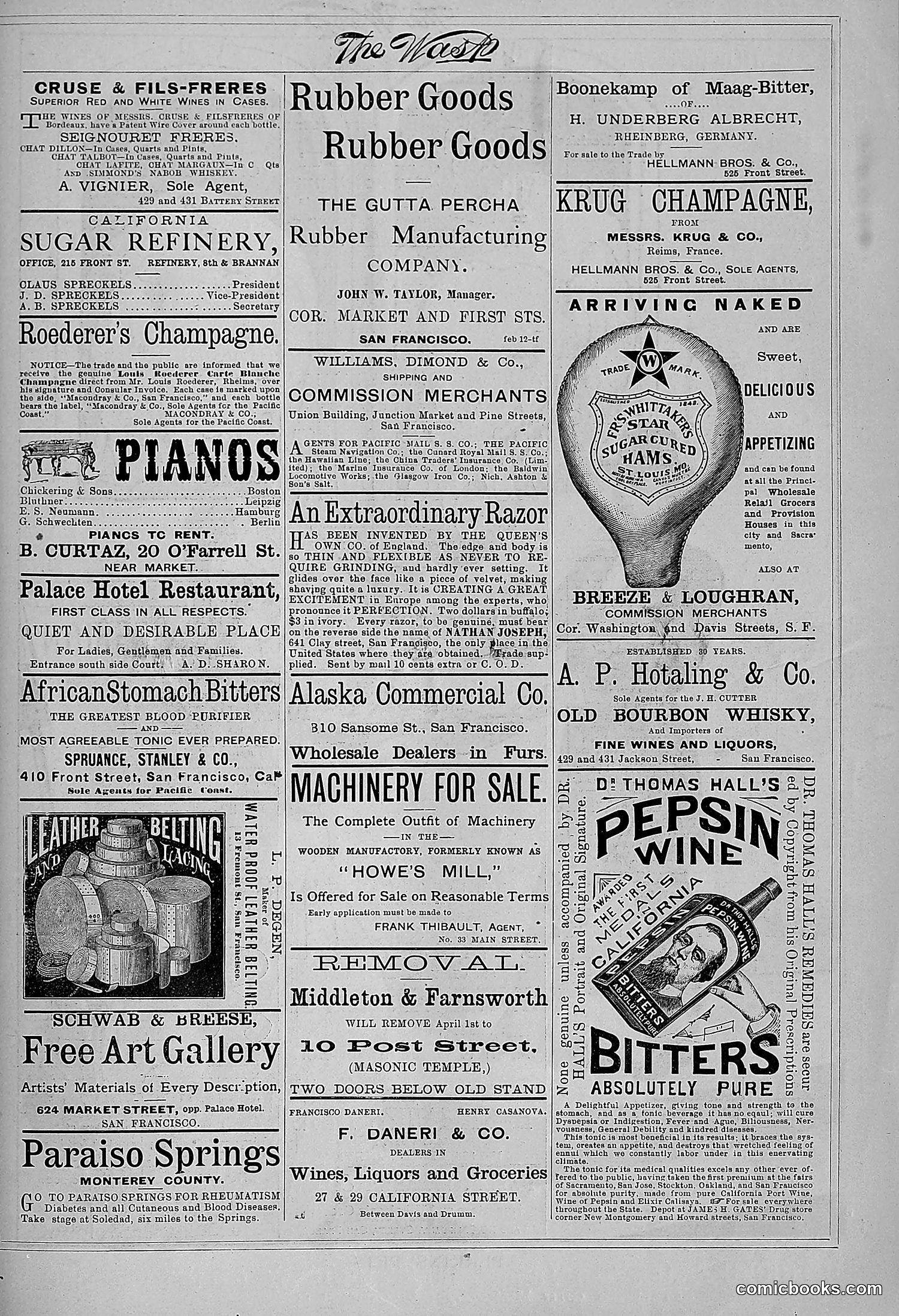
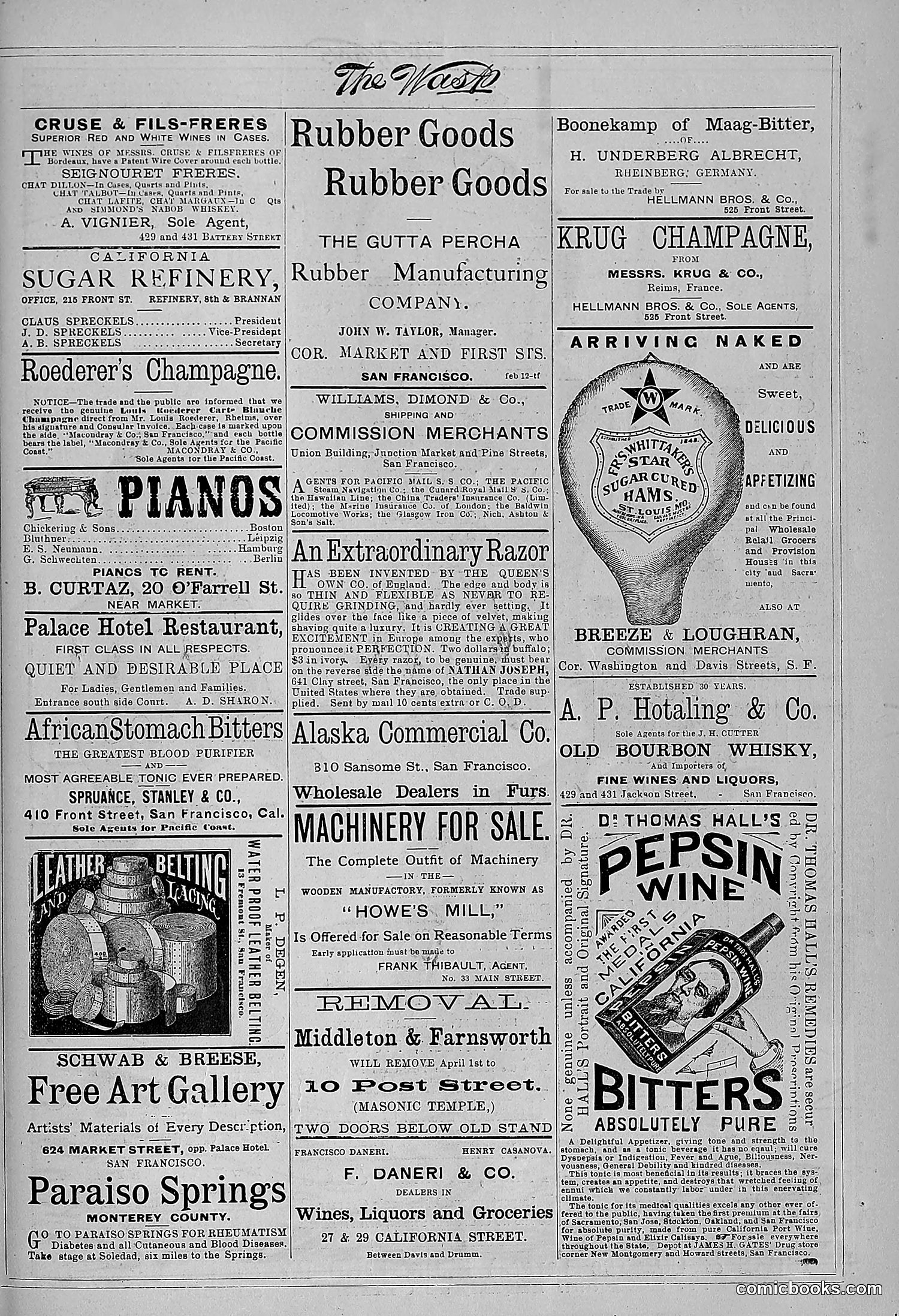
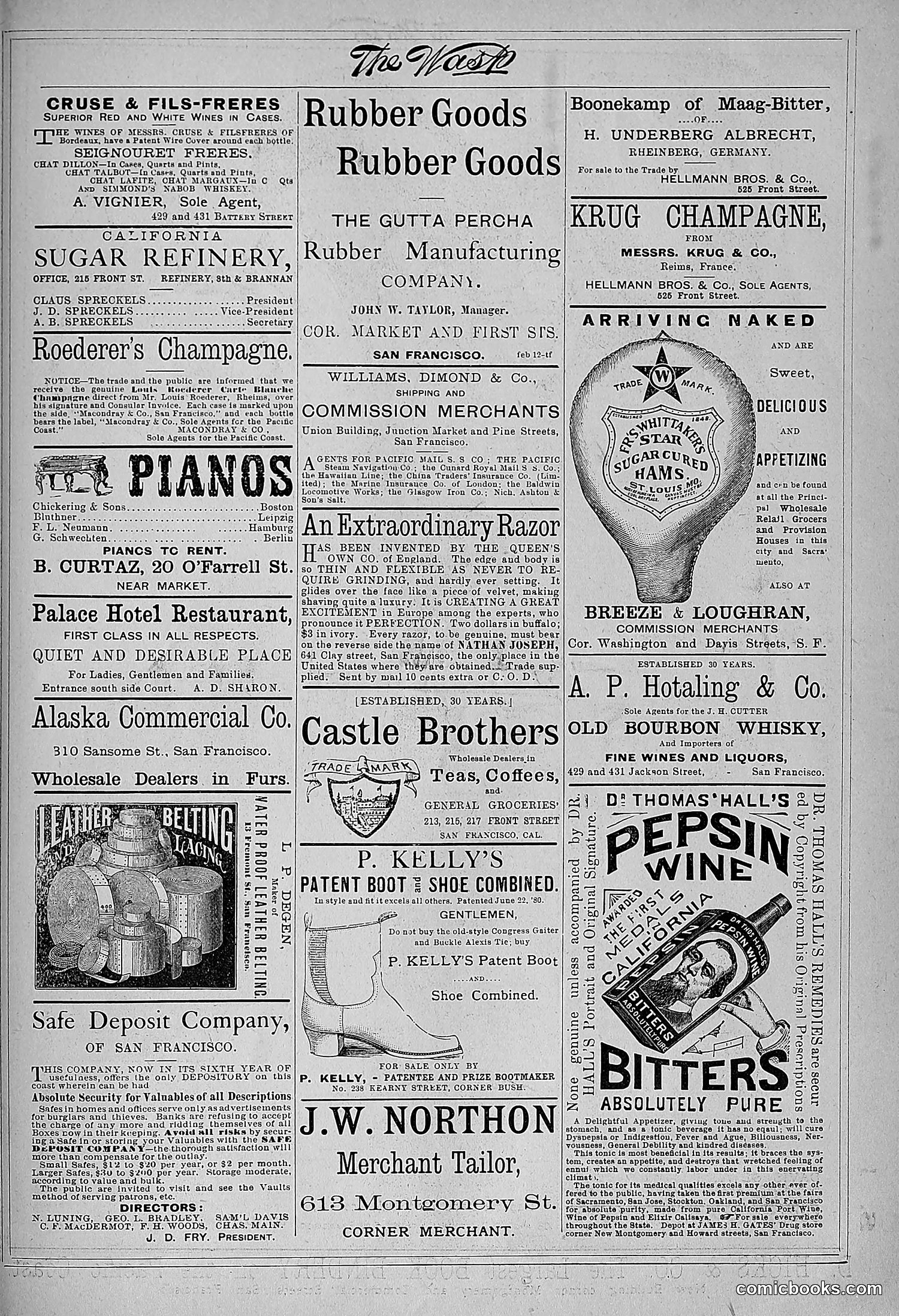
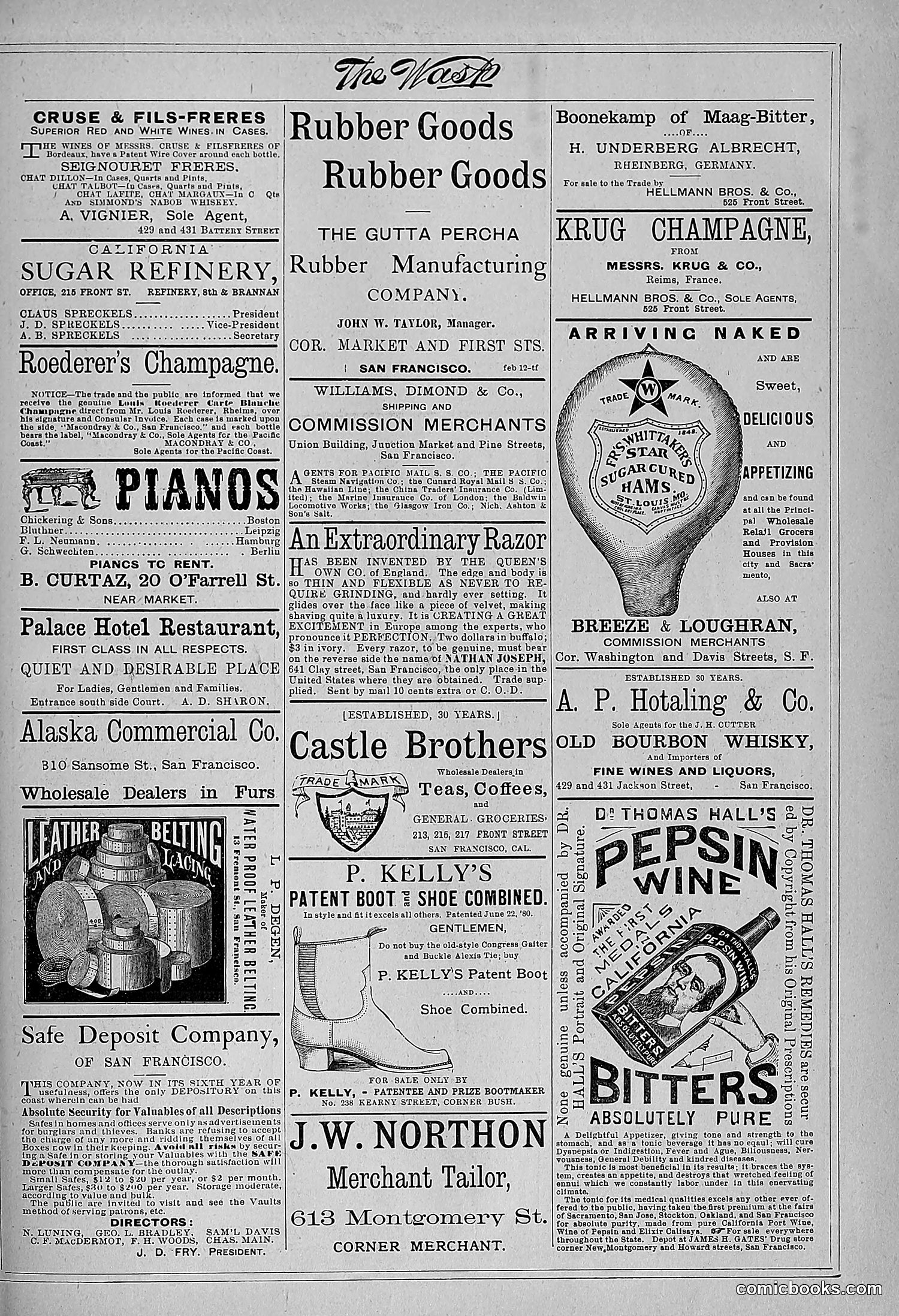
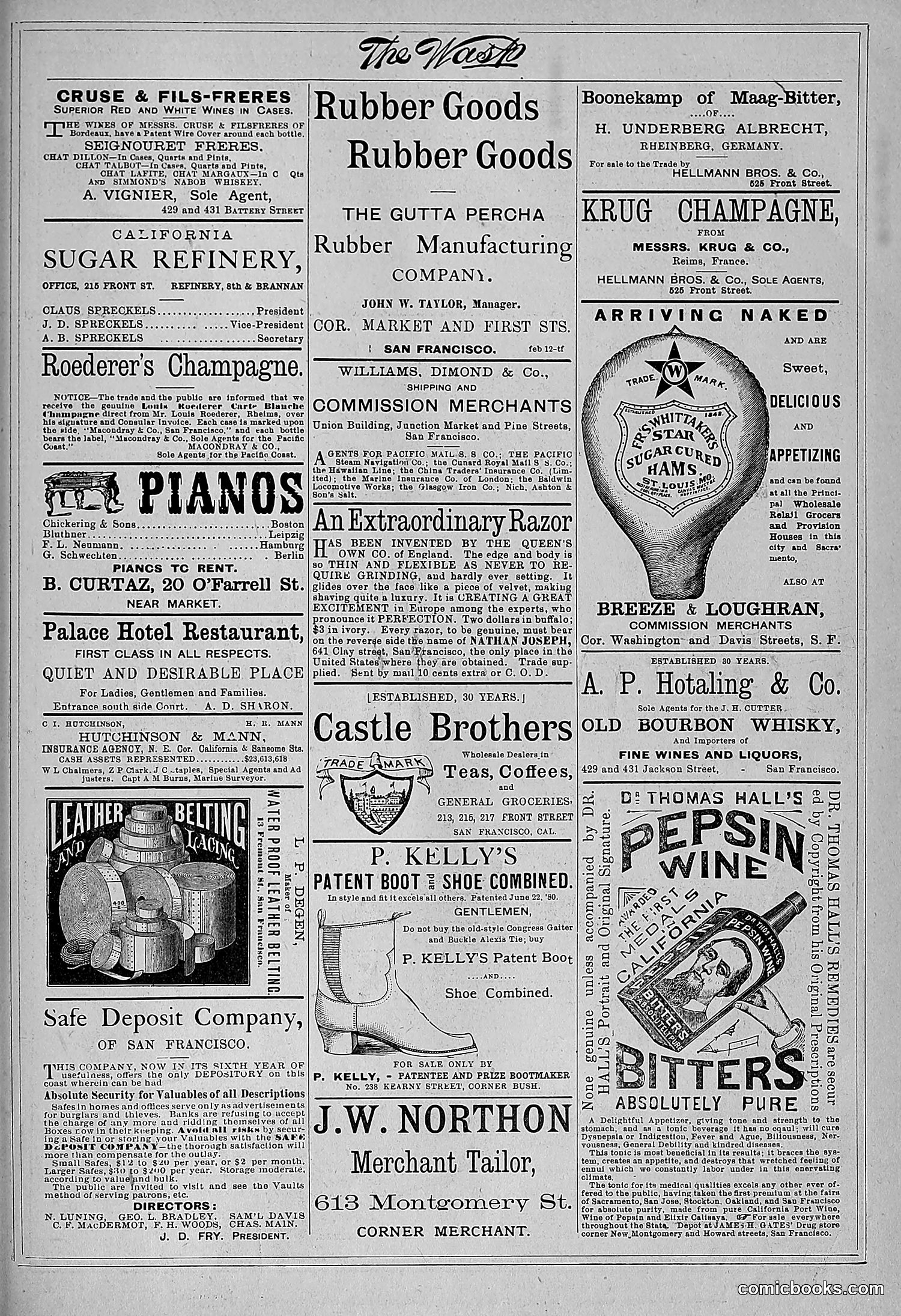
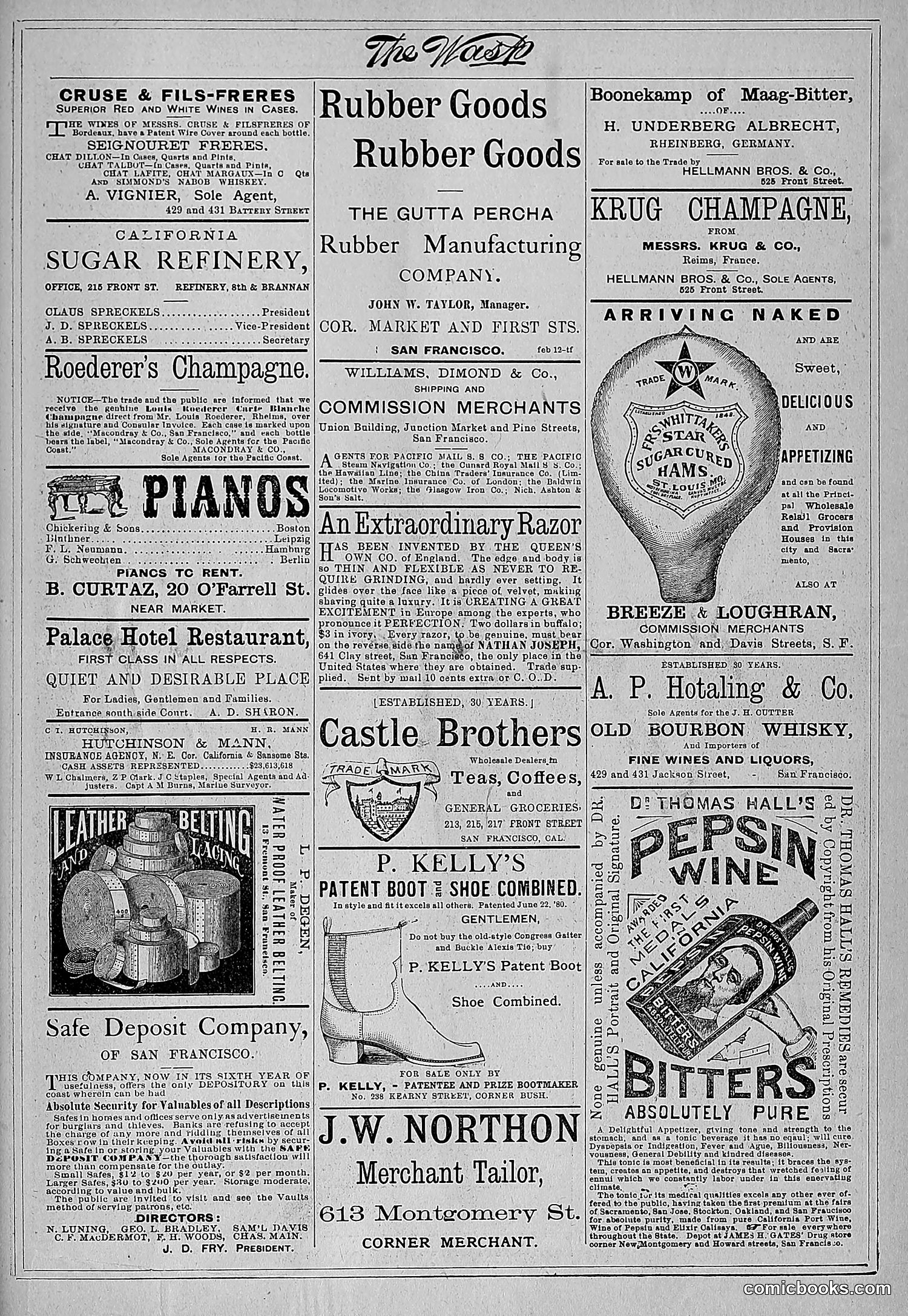
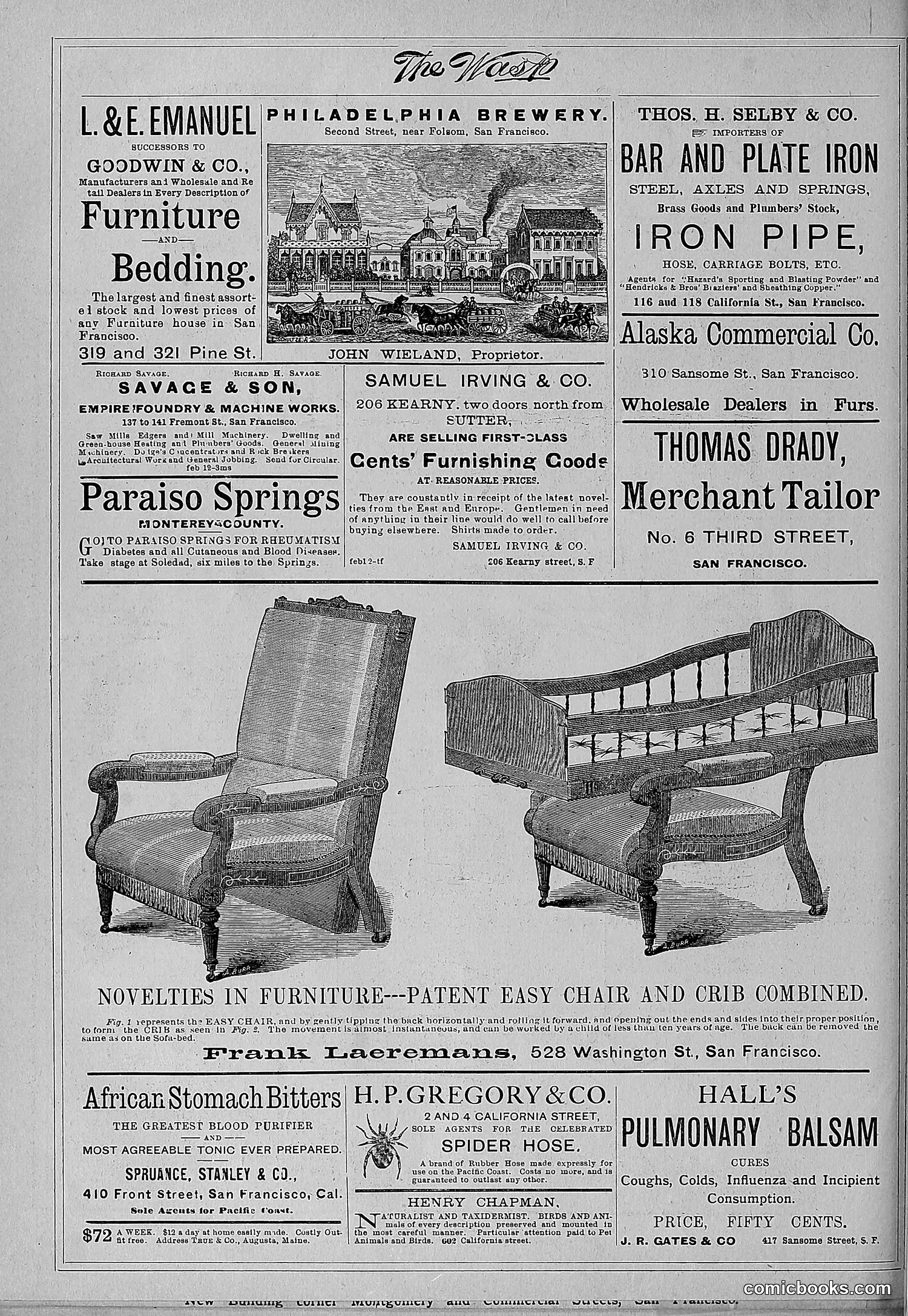
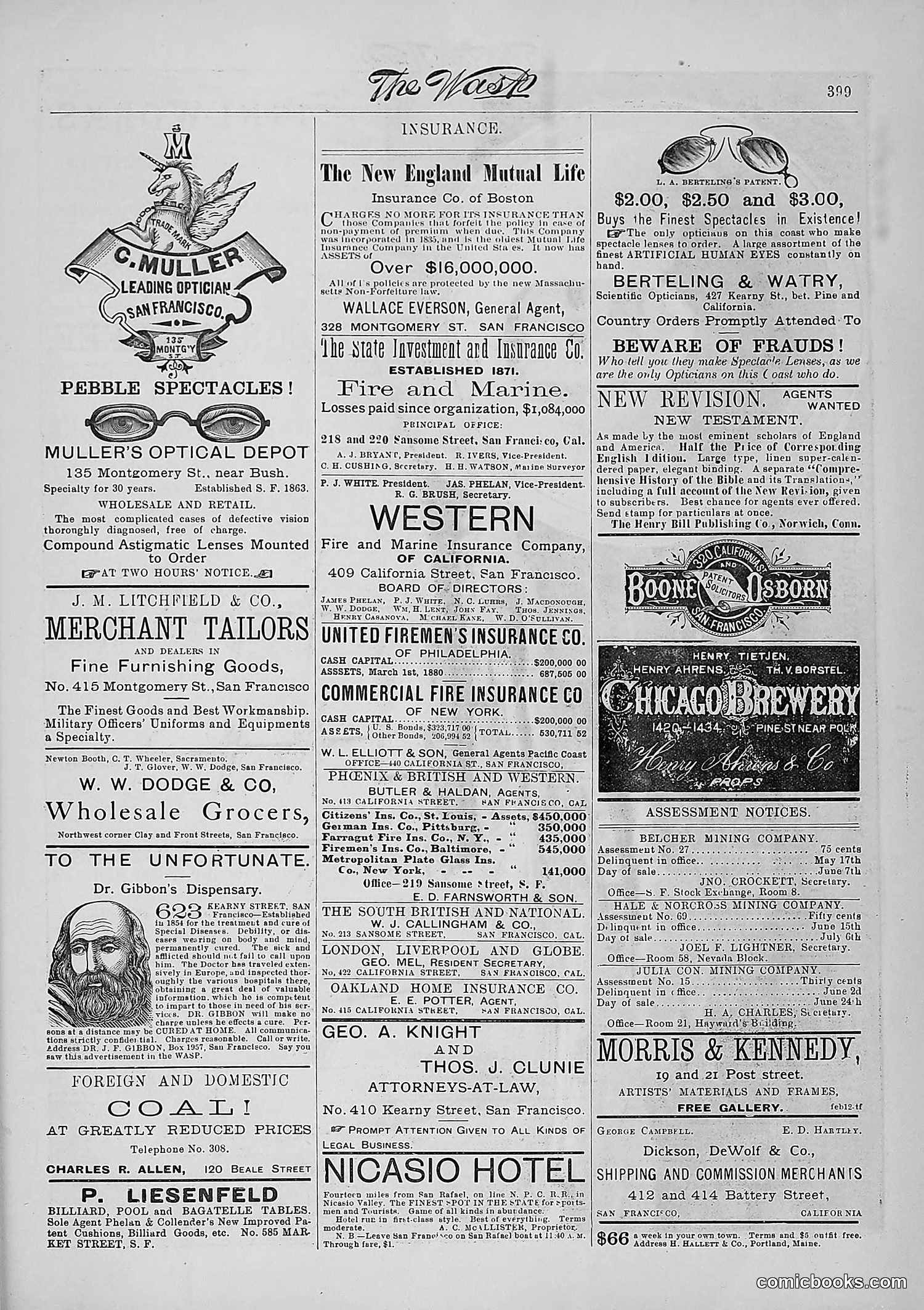
# Analysis This page is primarily **commercial advertising** with no visible political cartoons or satirical content. The advertisements represent San Francisco businesses from what appears to be the late 19th century, including: - Furniture and bedding dealers - A homeopathic pharmacy - A sugar refinery - A champagne distributor - Various other retail establishments The only illustrated elements are **product logos and trade marks** — such as the "Boone Osborn" brand mark and the "Arriving Naked" ham product label with its distinctive circular design. There is **no discernible satire or political commentary** visible on this page. It functions as a standard advertising insert rather than editorial content, which was common in period magazines.
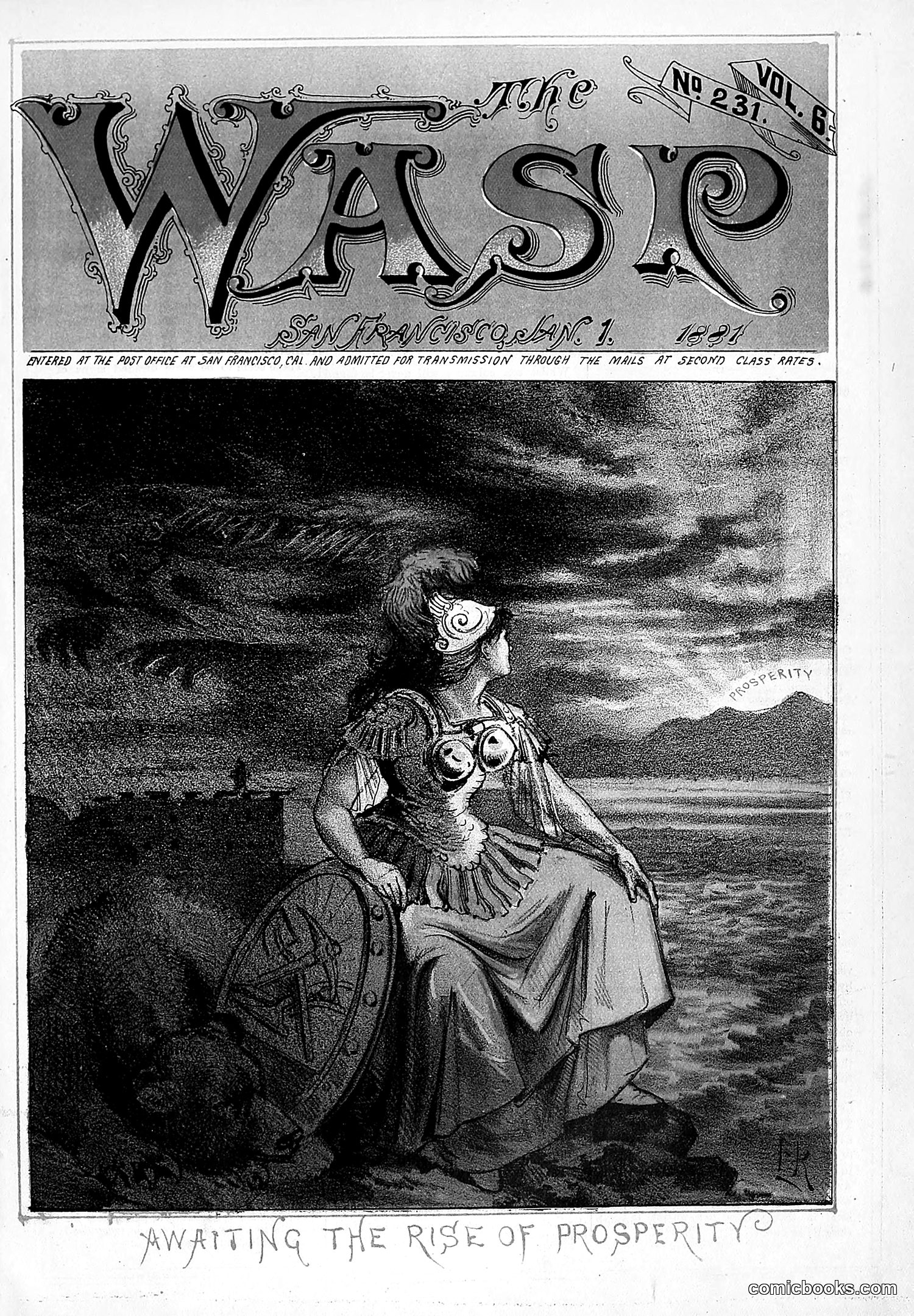
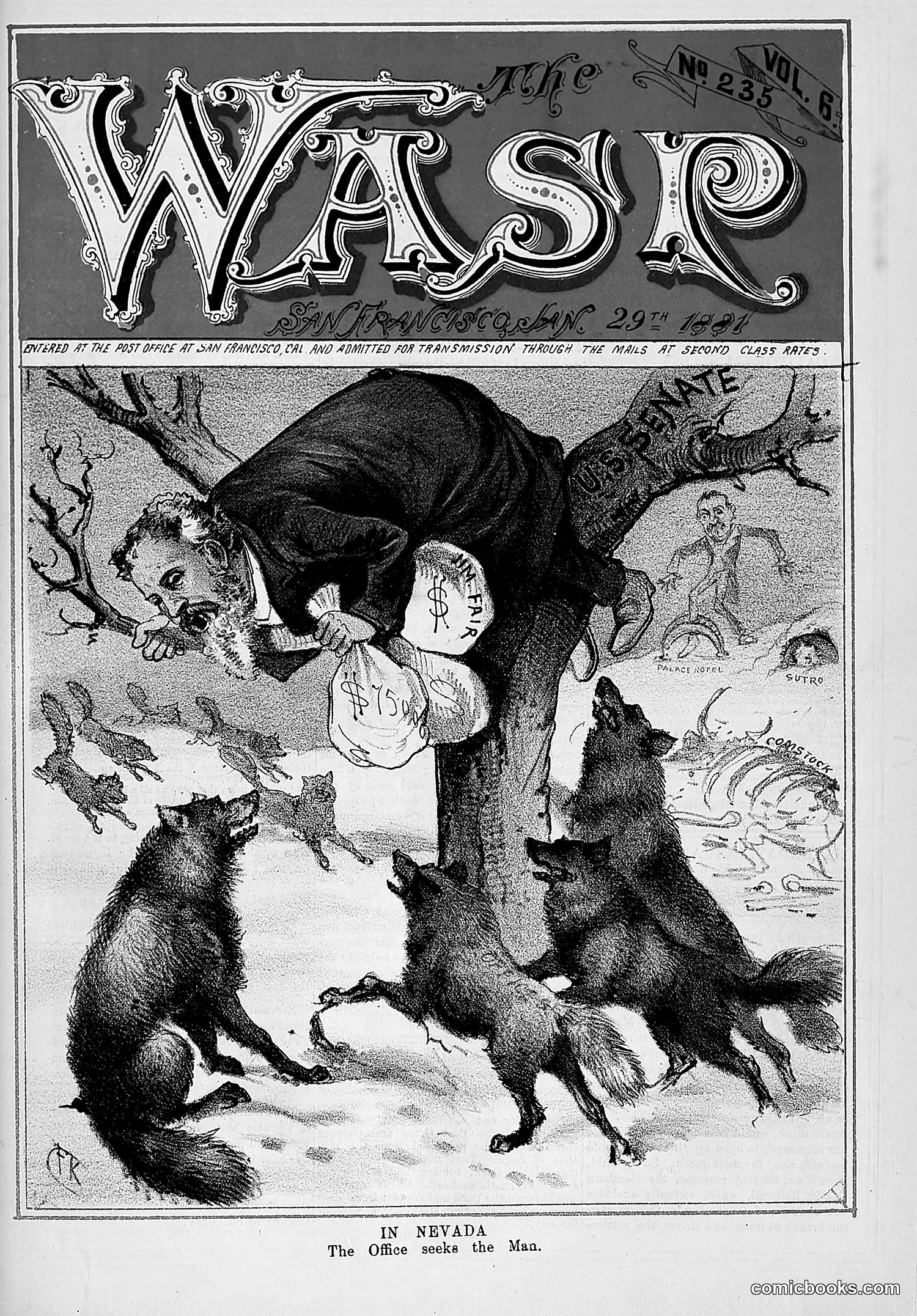
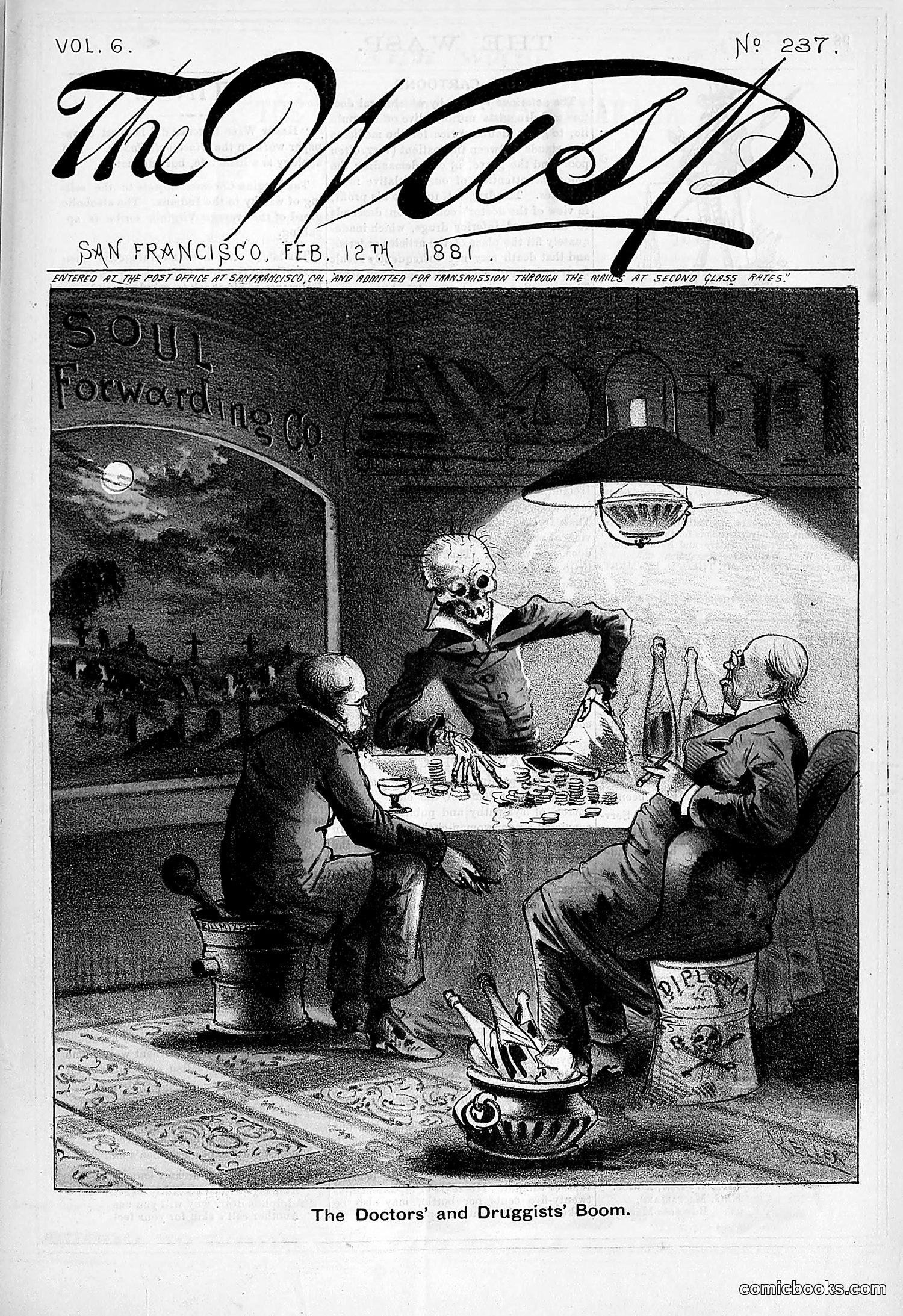
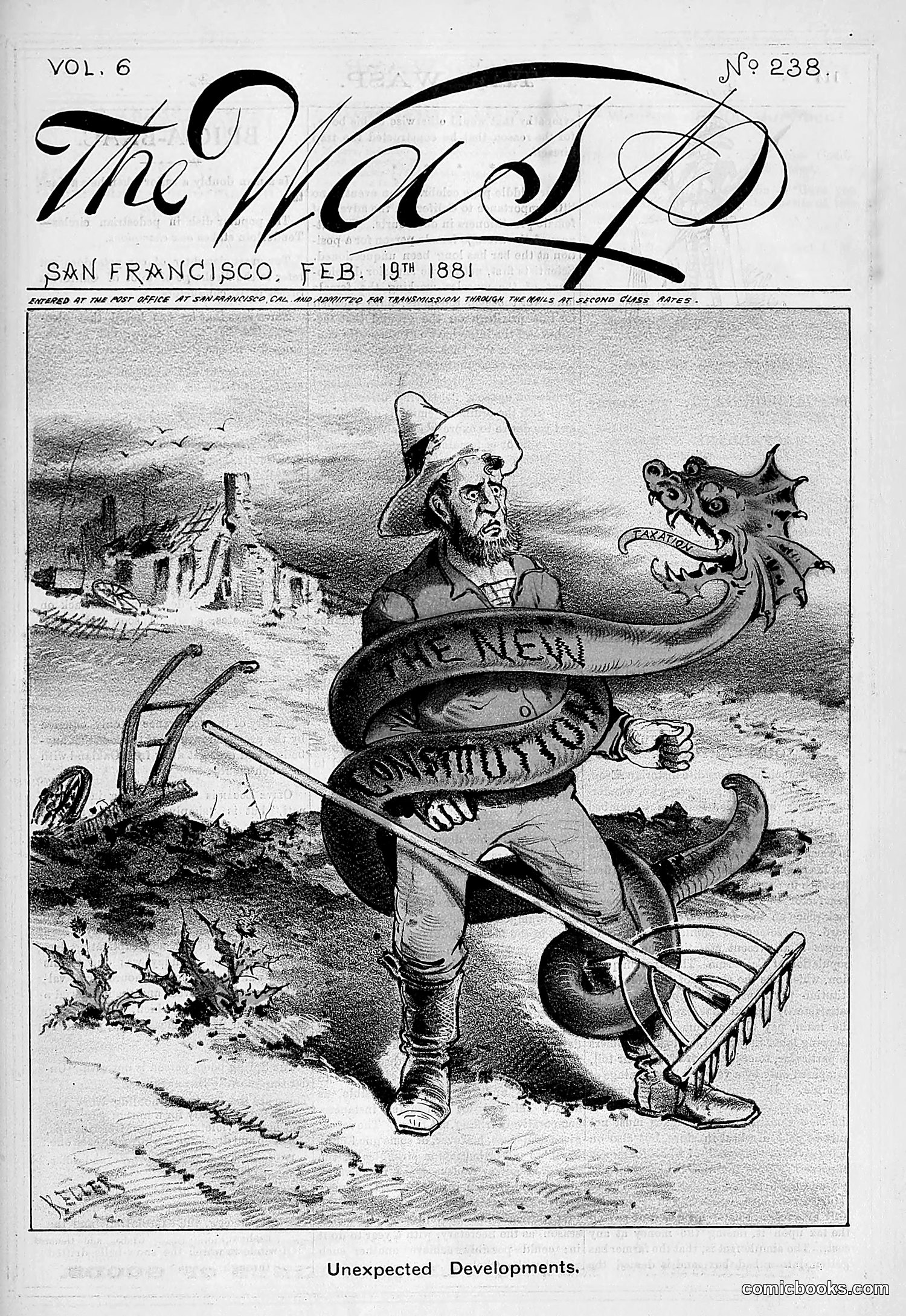
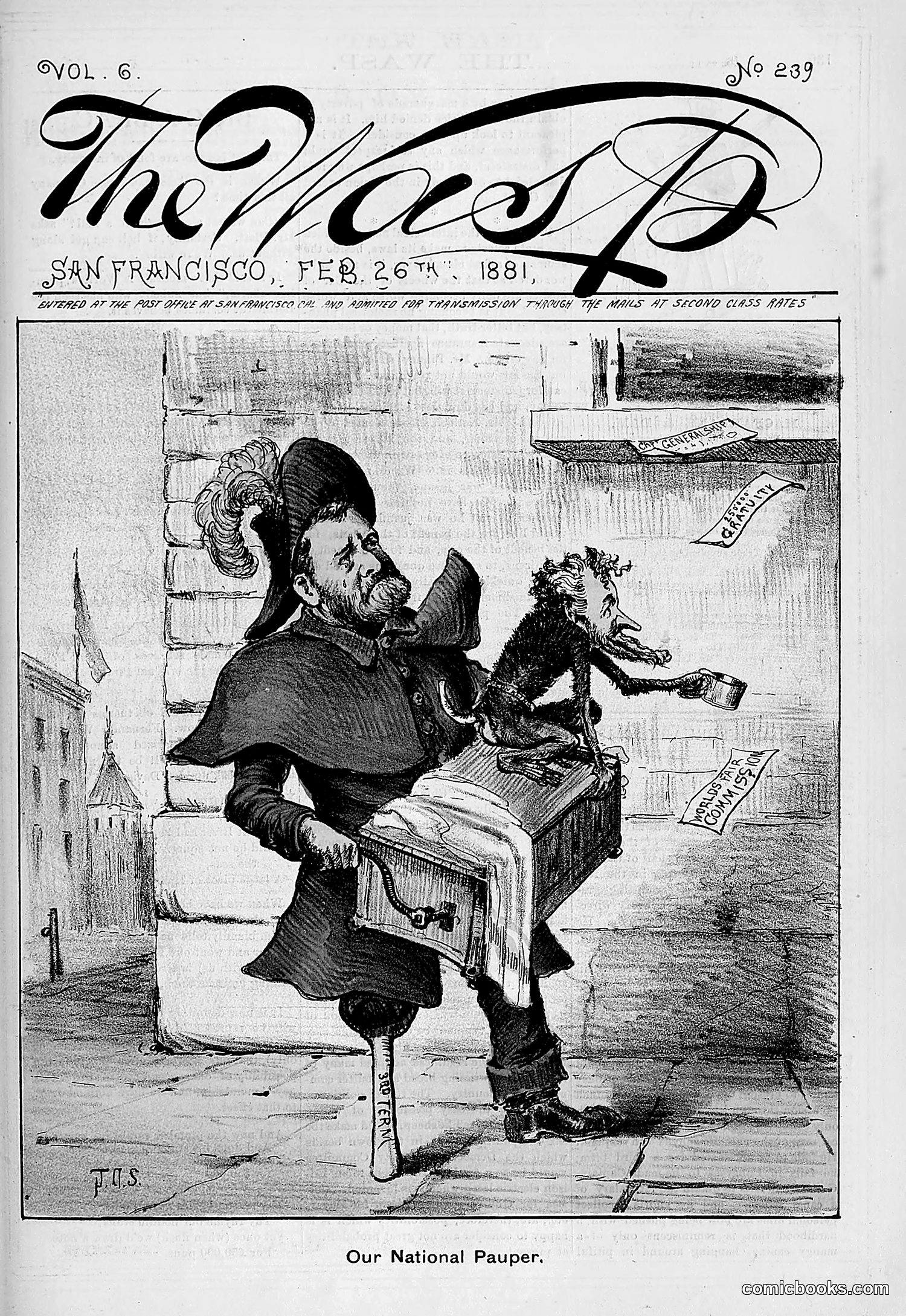
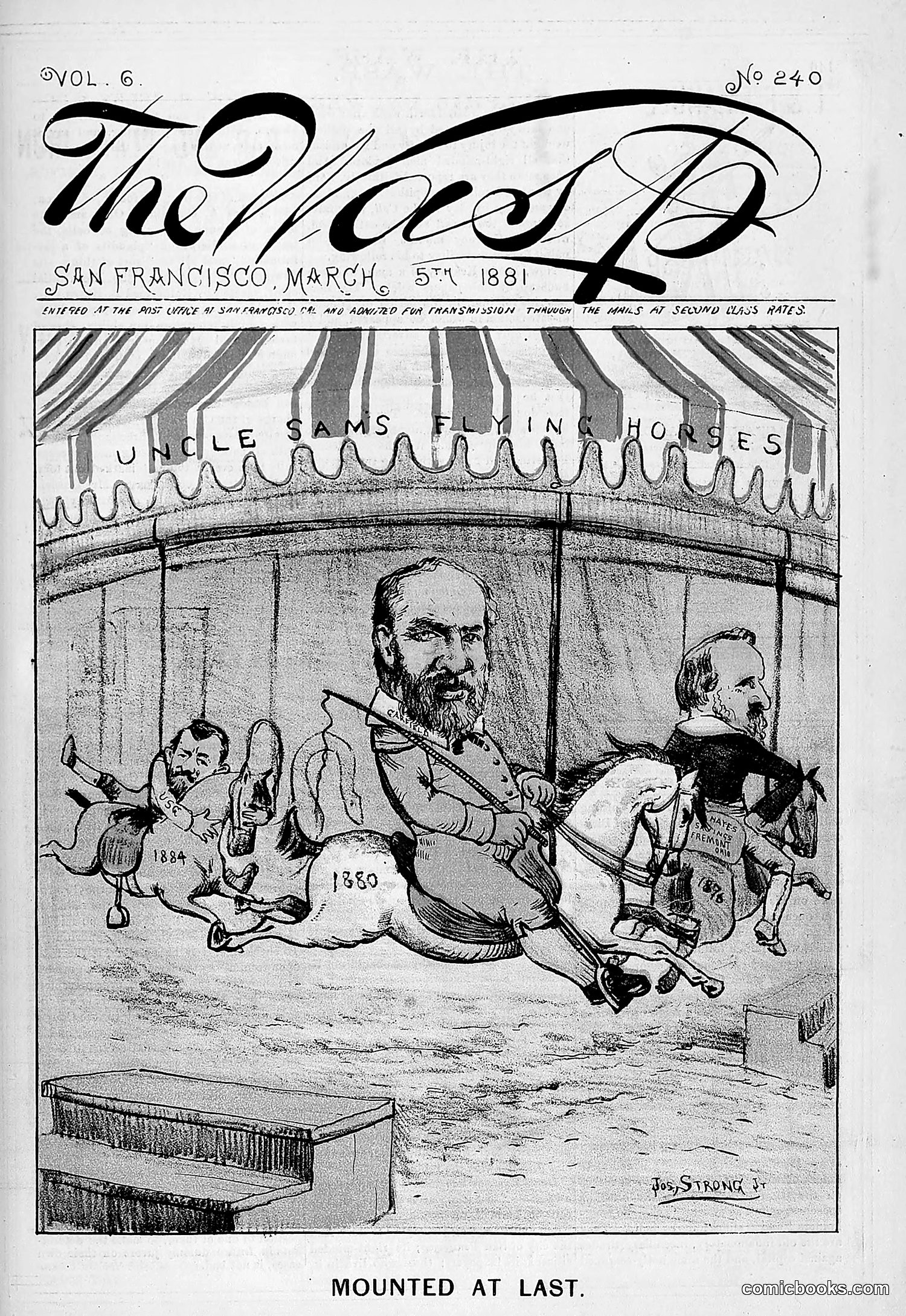
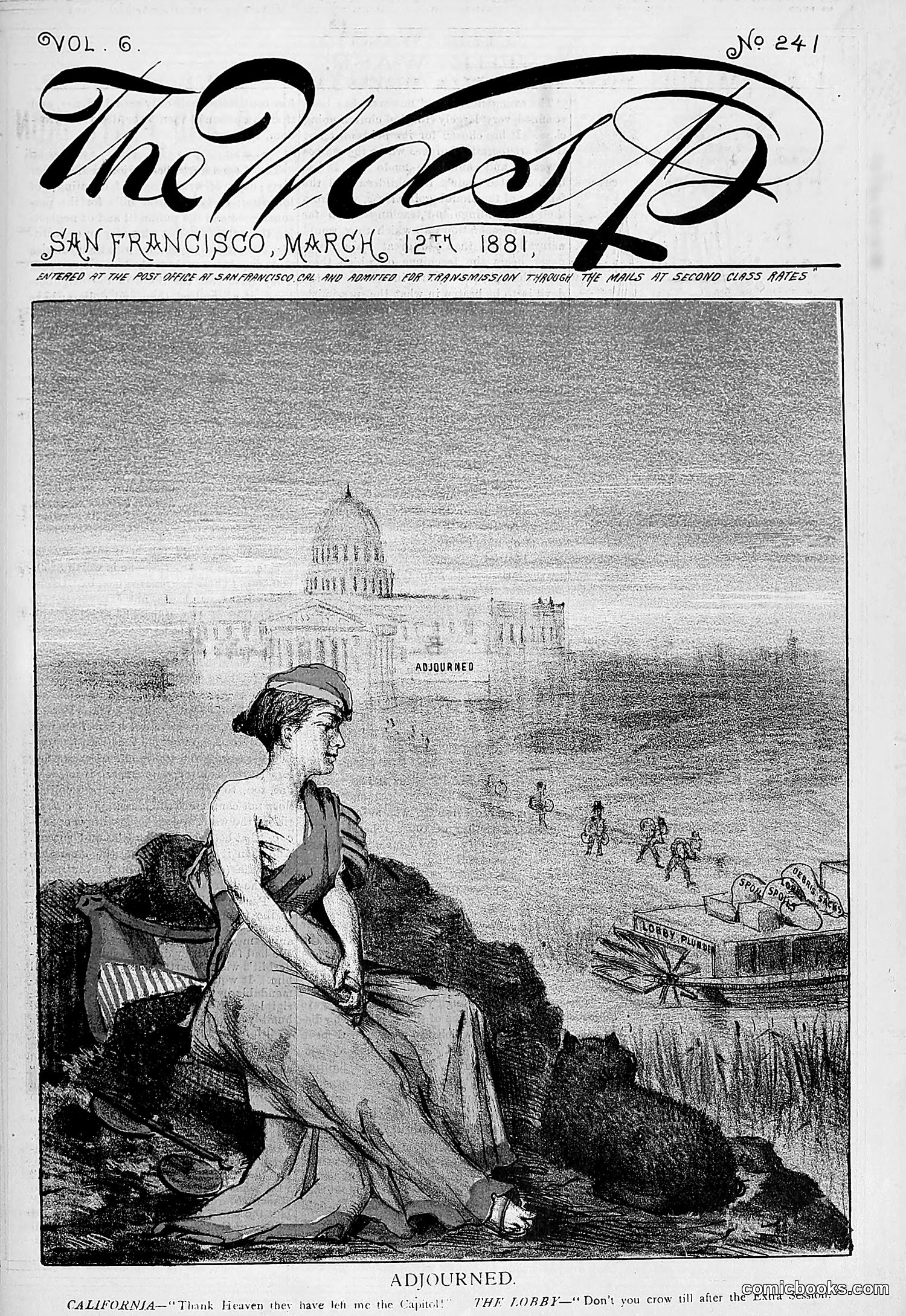
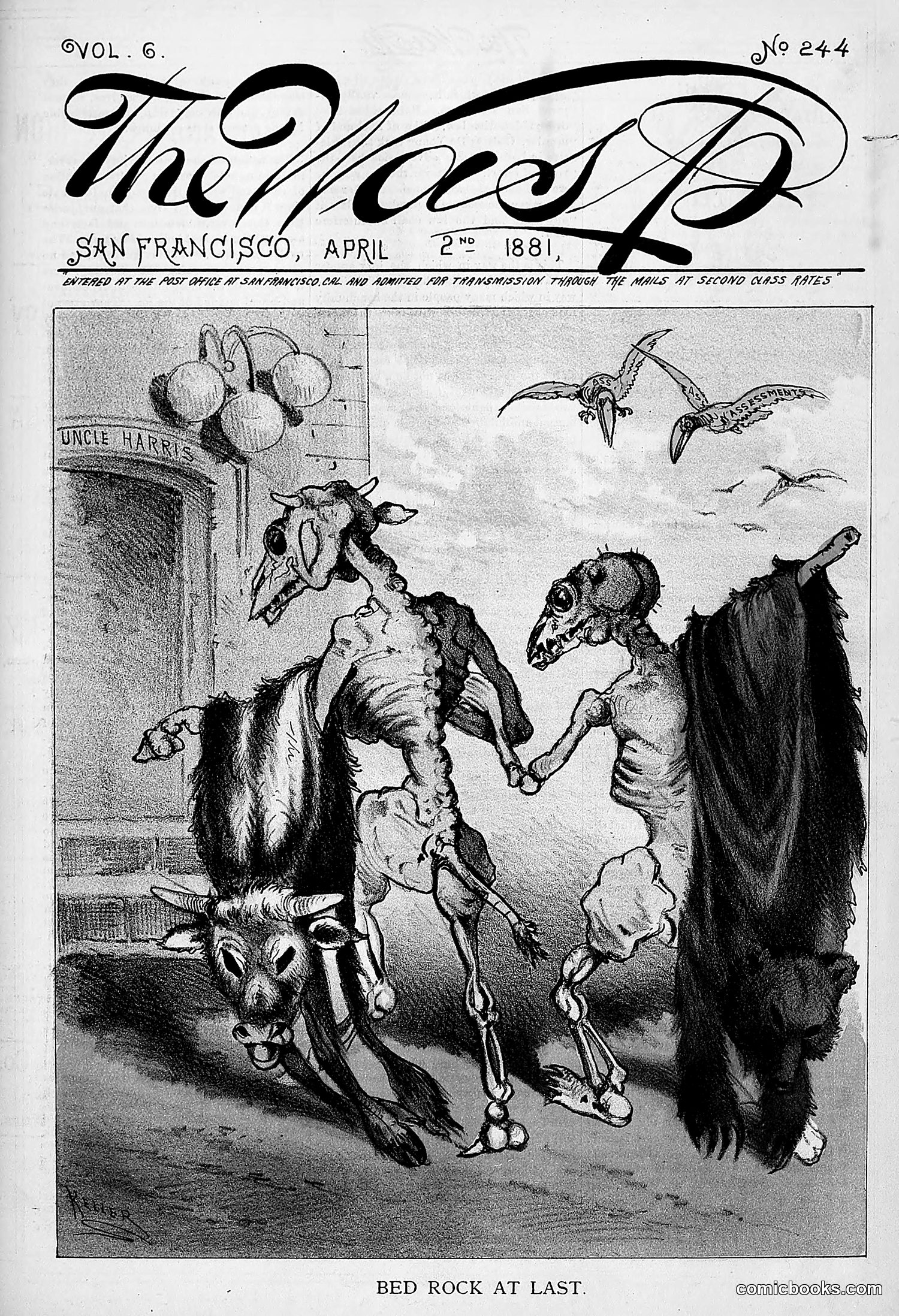
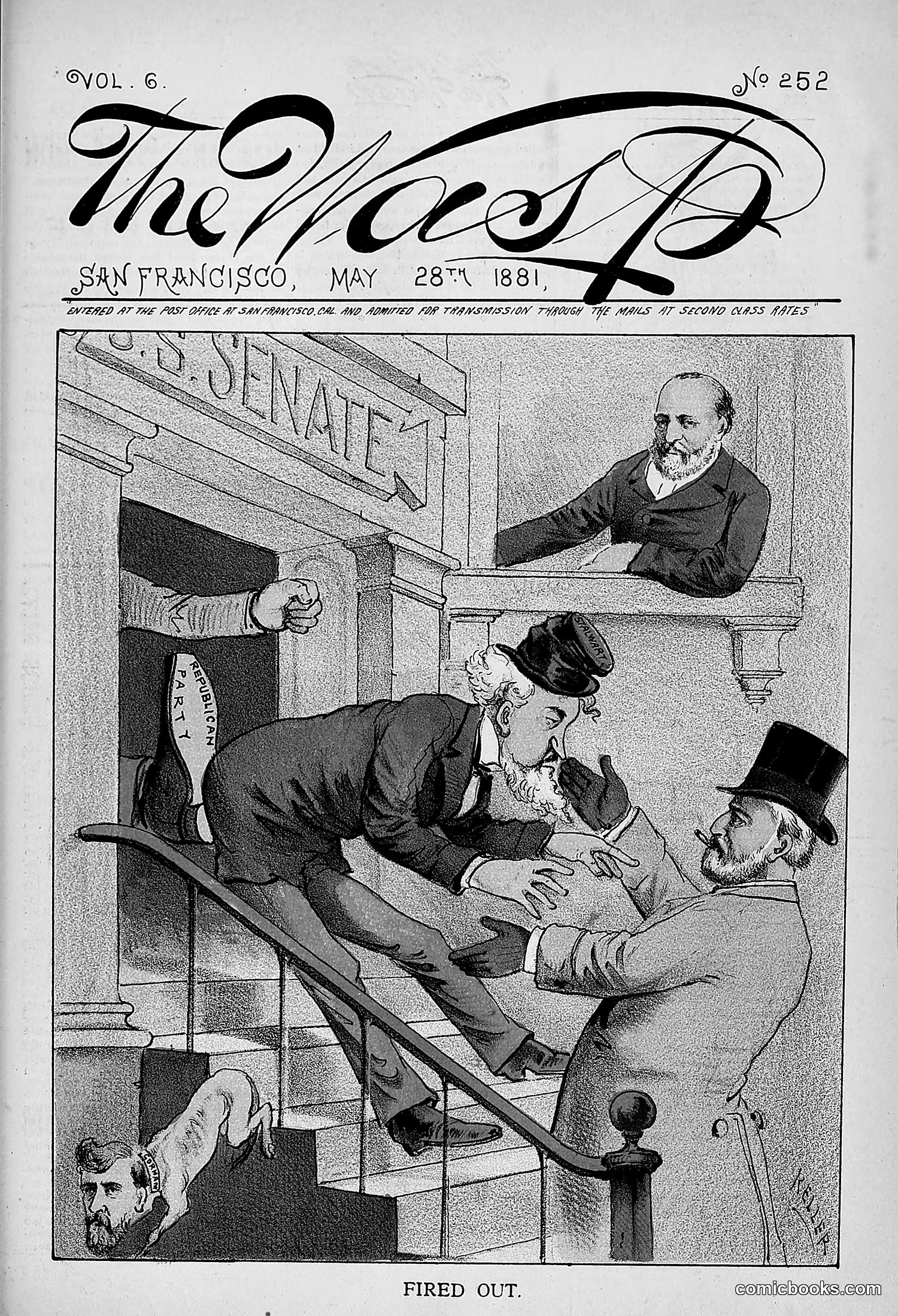
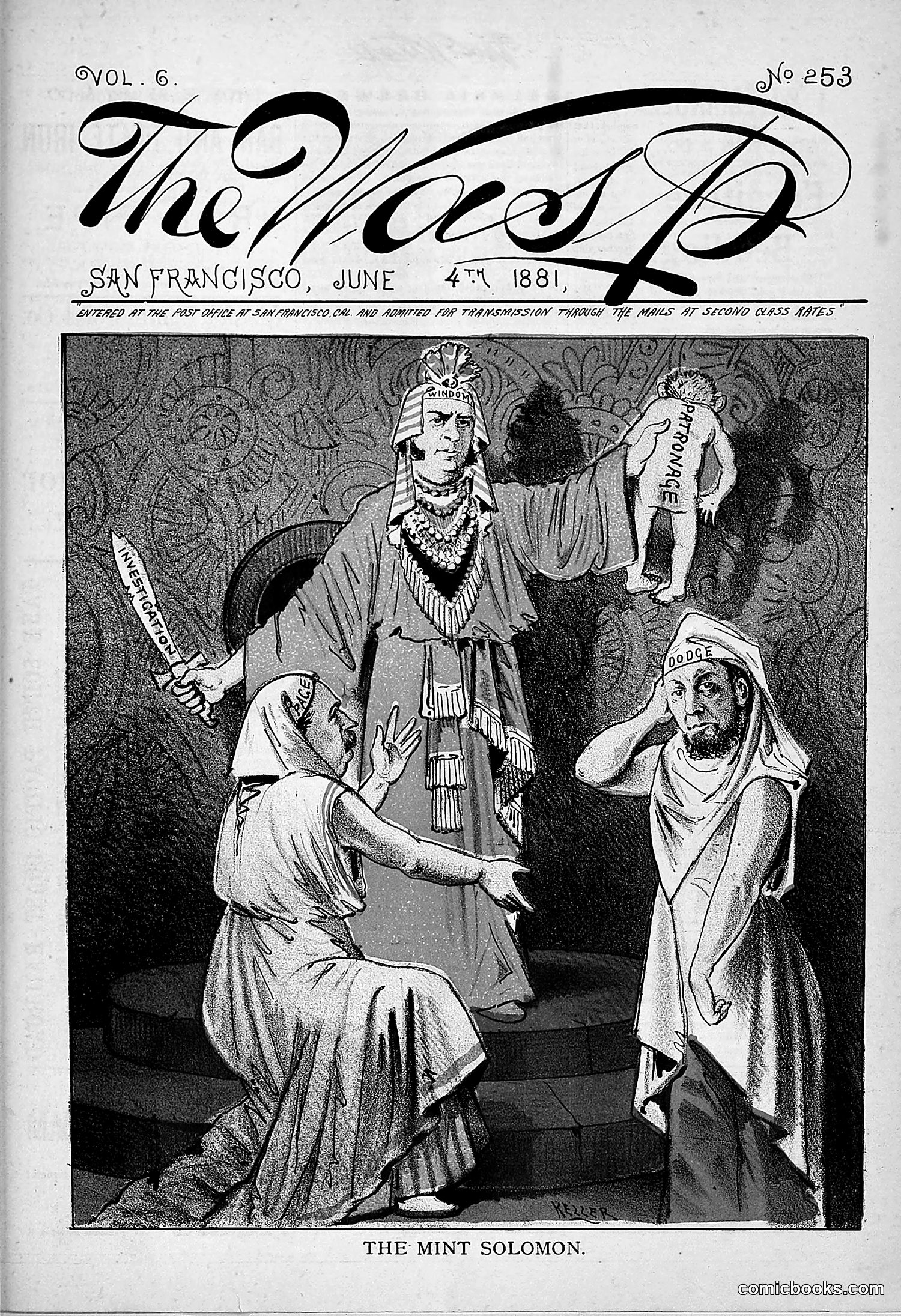
# Analysis of "The Wasp" Cover This is the title page/cover of *The Wasp*, Vol. 26, No. 231 (San Francisco, 1891). The main illustration depicts an allegorical female figure representing "Prosperity," seated by a ship's wheel overlooking water and mountains. She wears classical armor and a spiral-adorned headdress, gazing optimistically toward the horizon where "Prosperity" is labeled. The caption reads "Awaiting the Rise of Prosperity," suggesting the image satirizes California's economic situation in 1891—likely referencing post-boom economic uncertainty or recession. The classical female figure traditionally symbolizes national ideals or economic conditions. The composition suggests hopeful but passive waiting, possibly critiquing either blind optimism about economic recovery or political inaction during financial hardship.
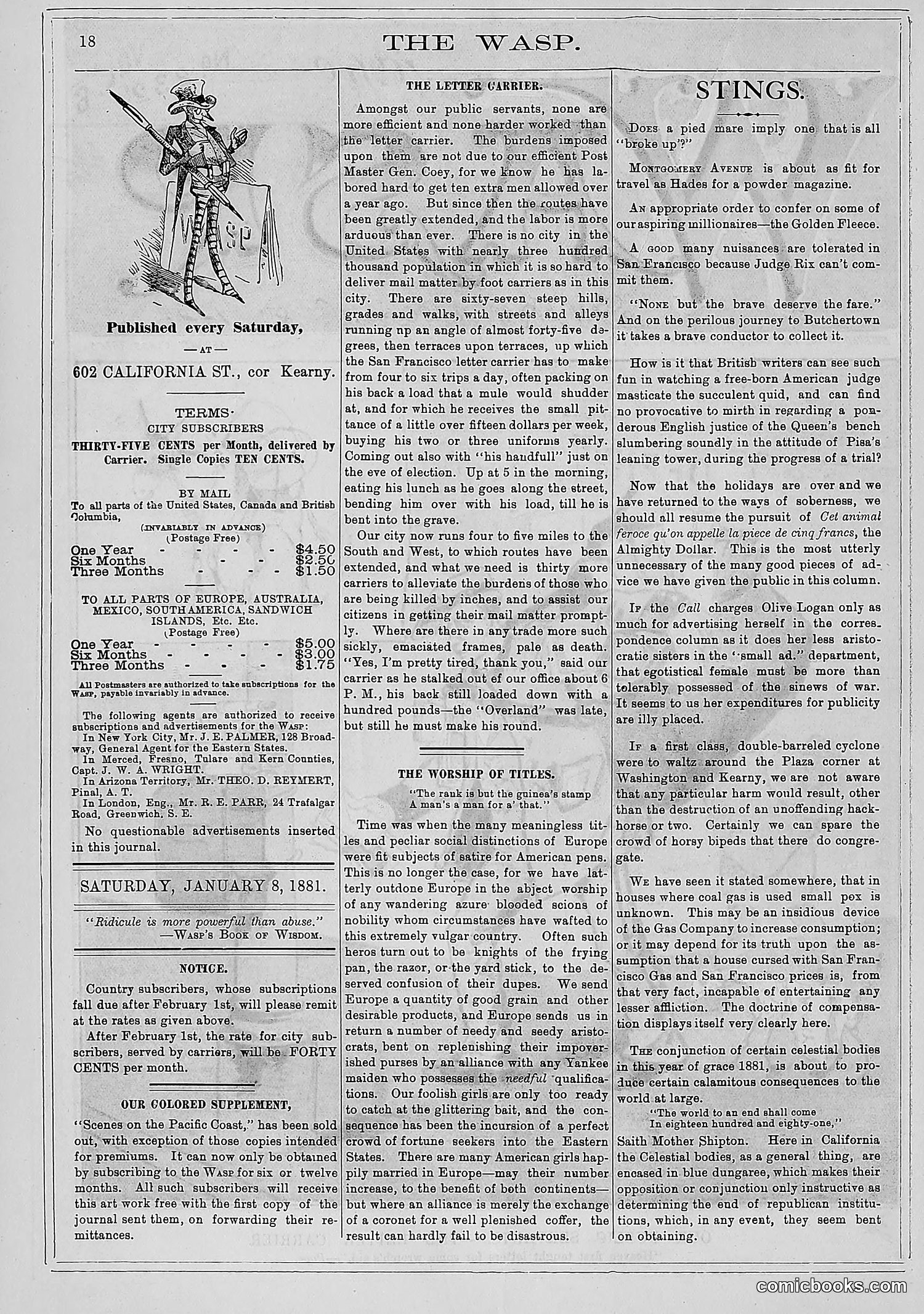
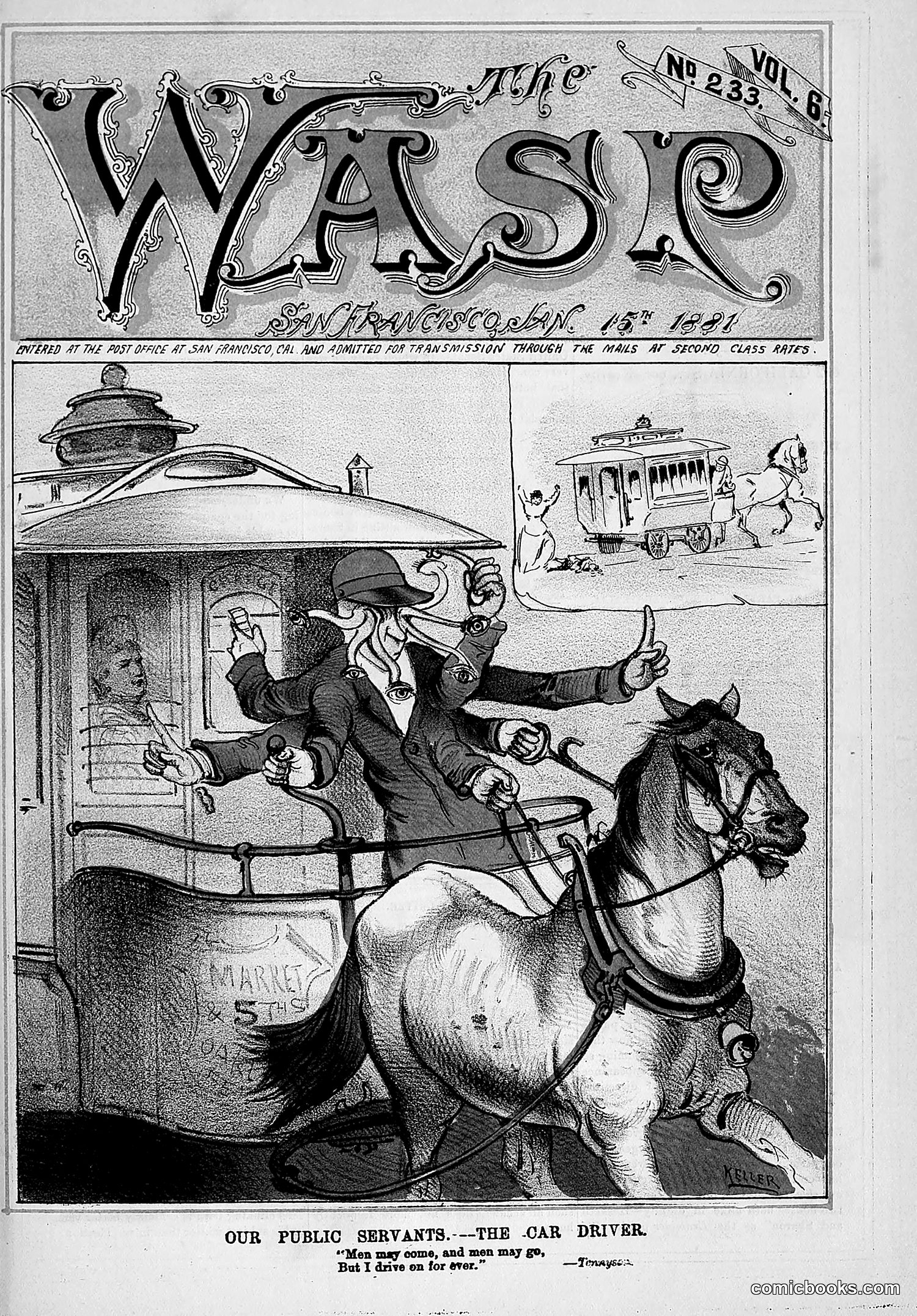
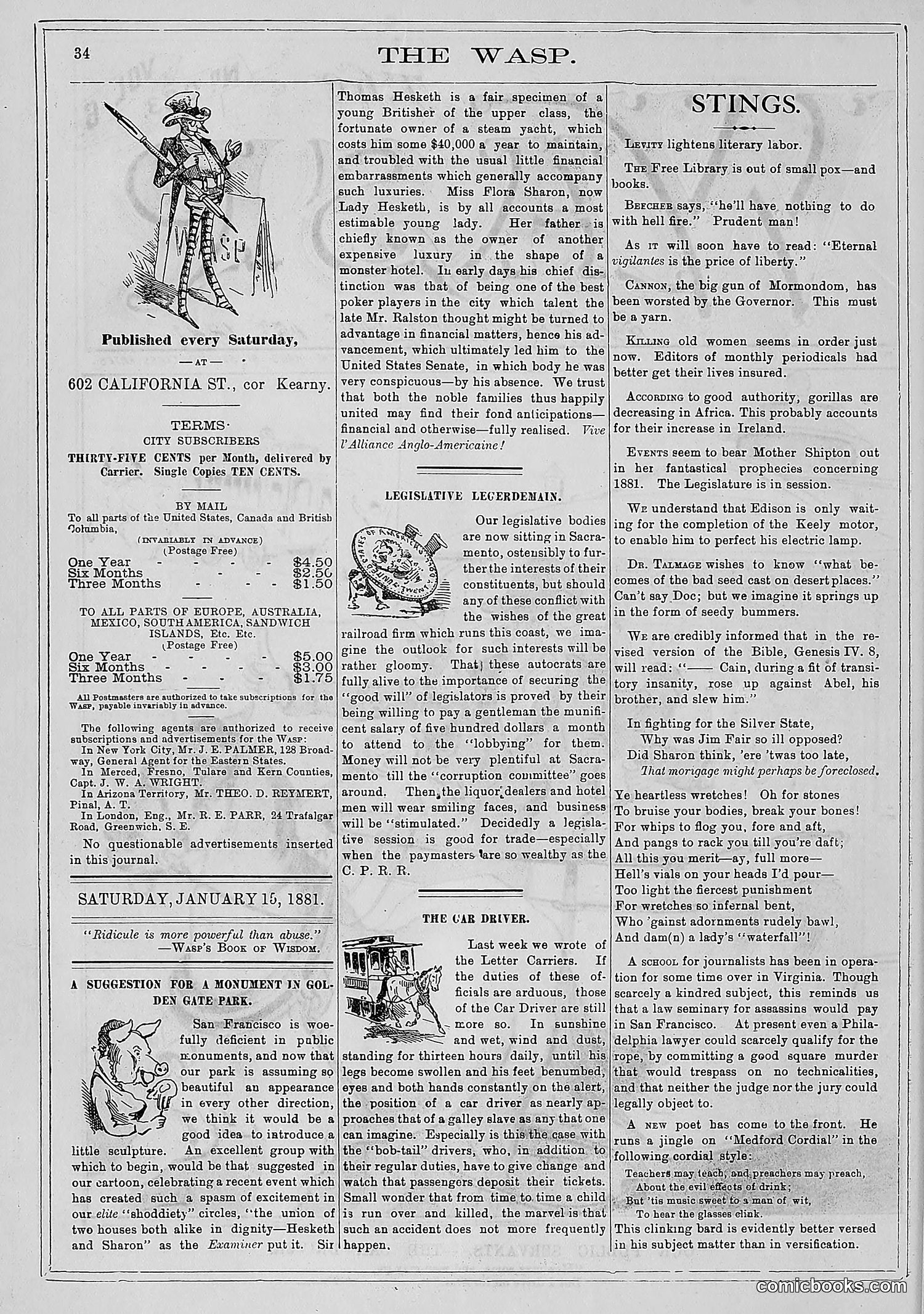
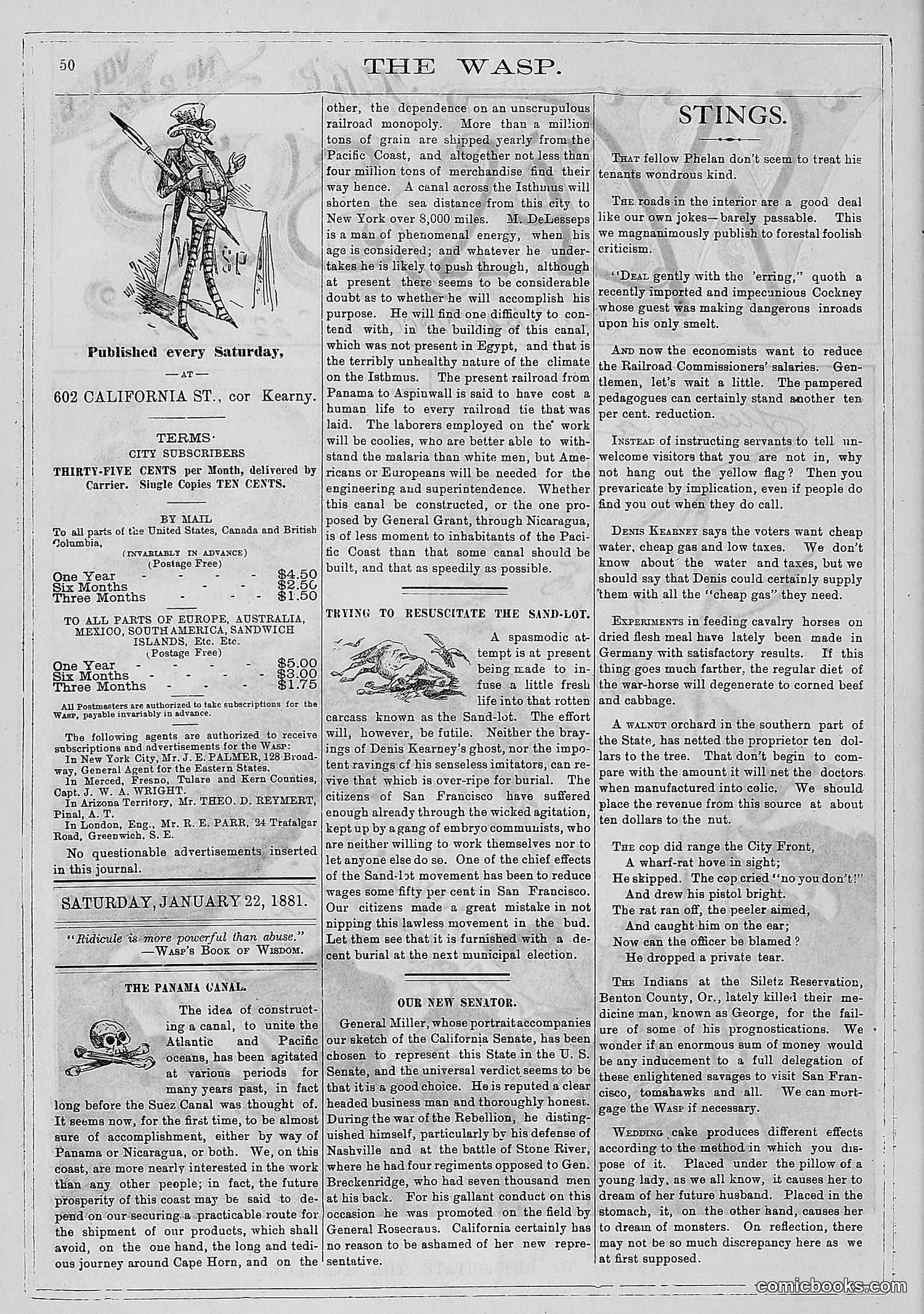
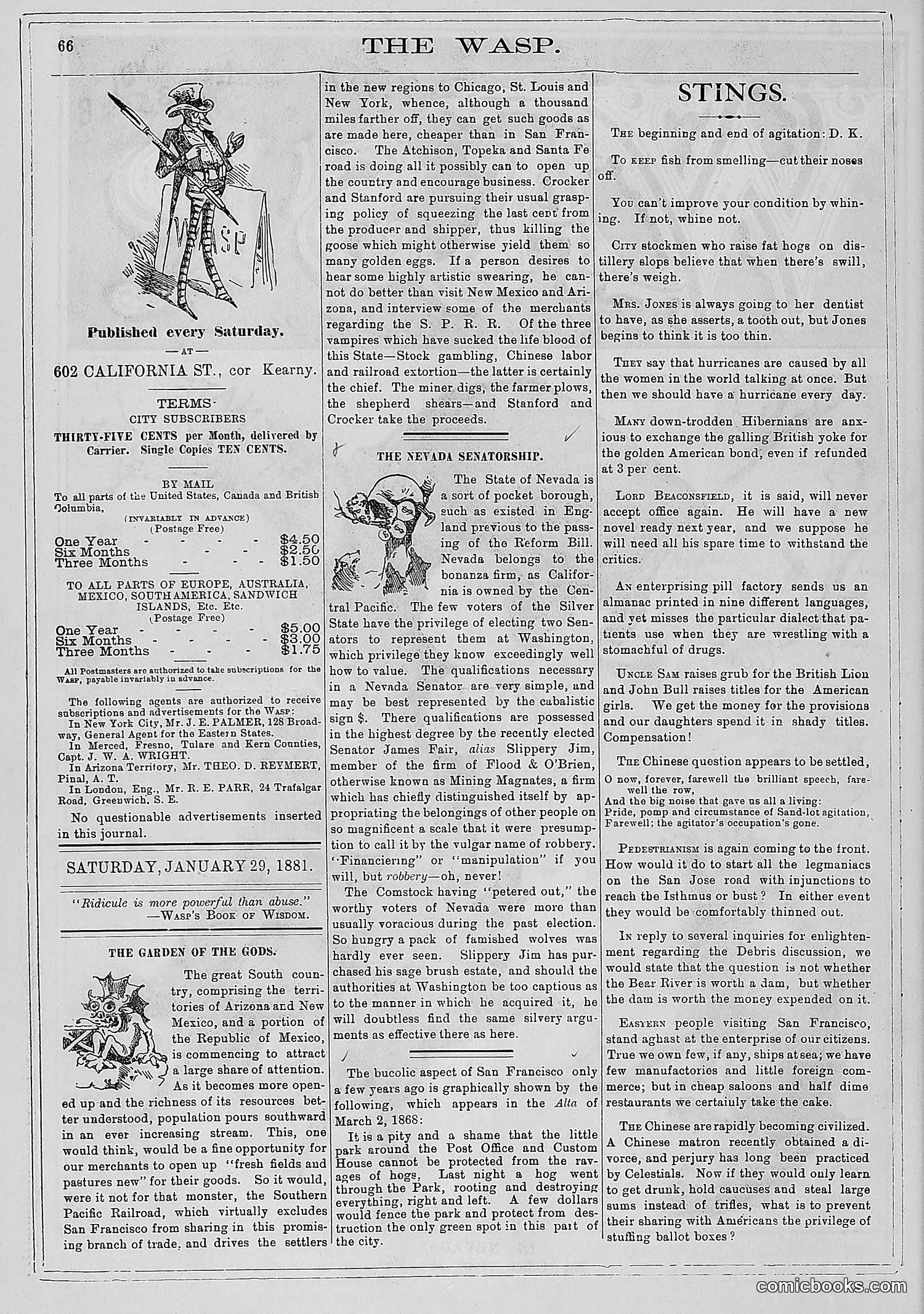
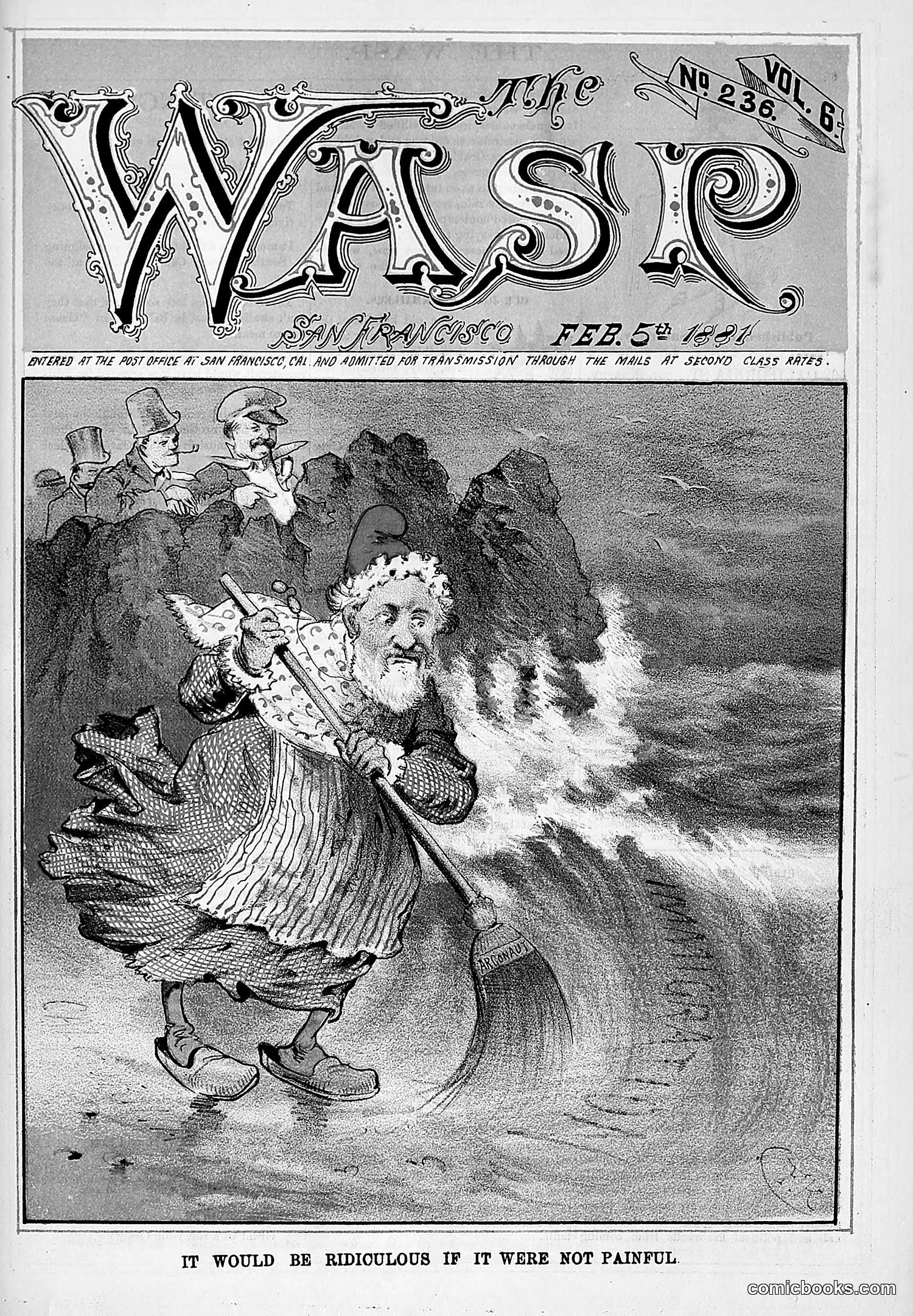
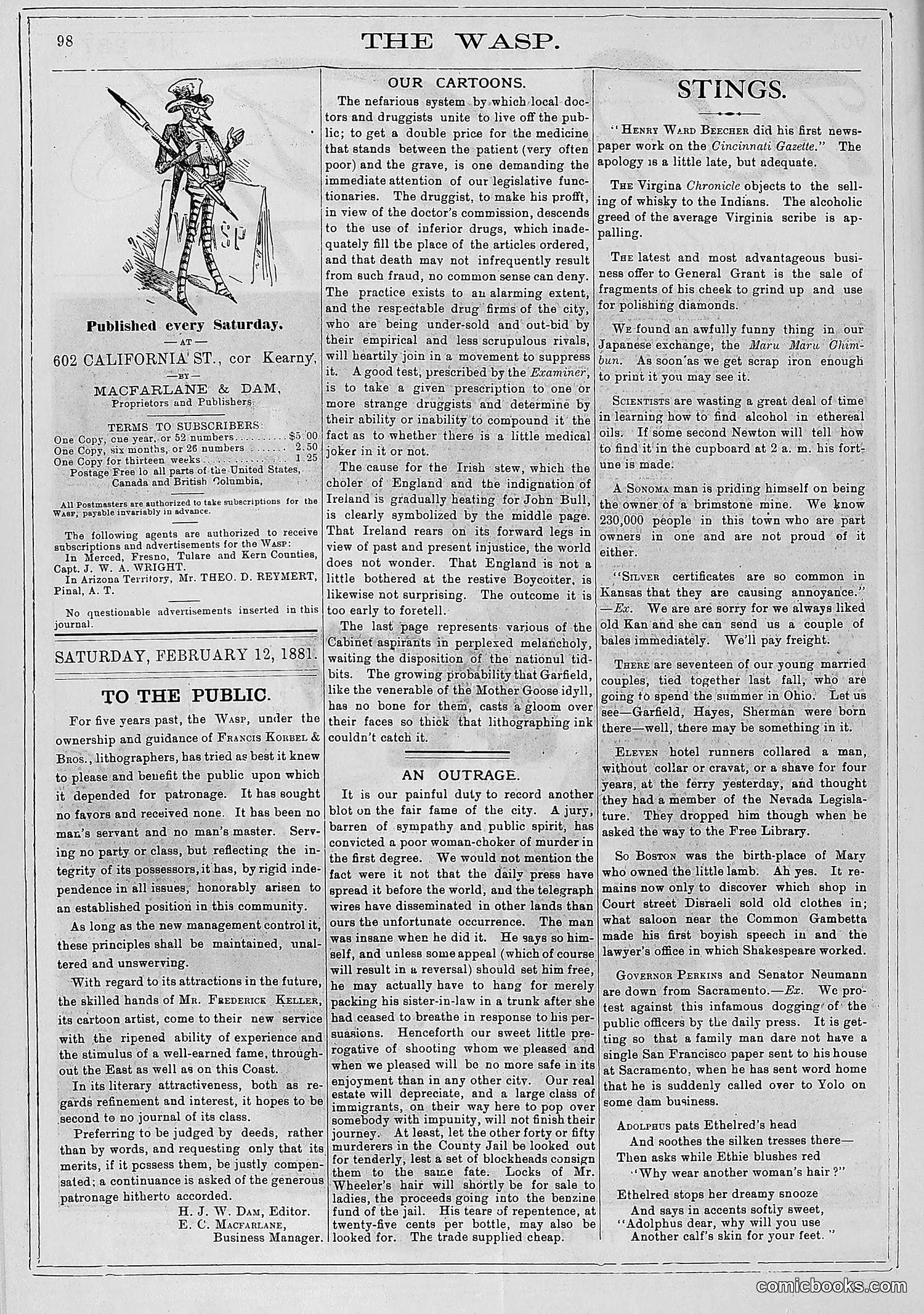
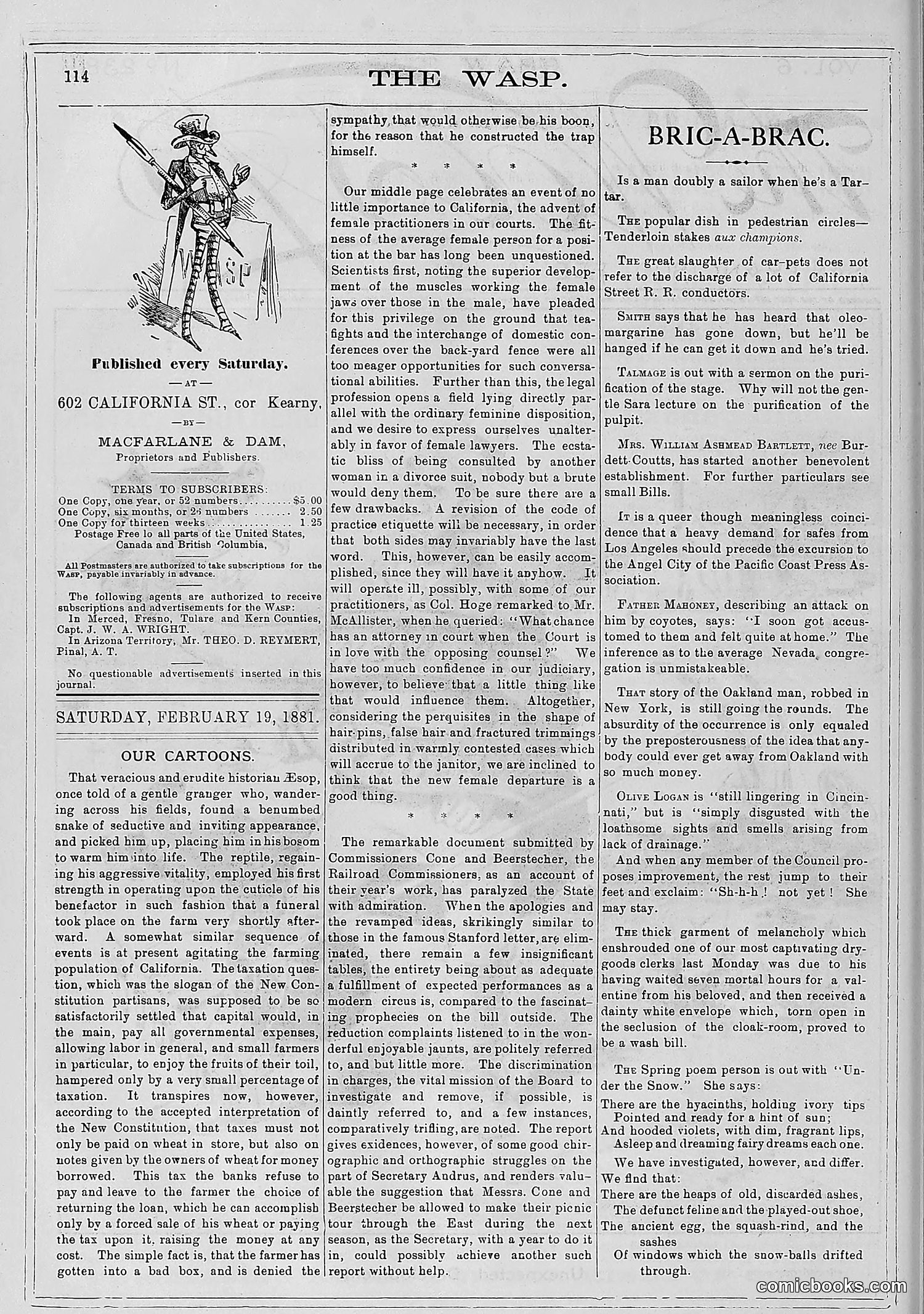
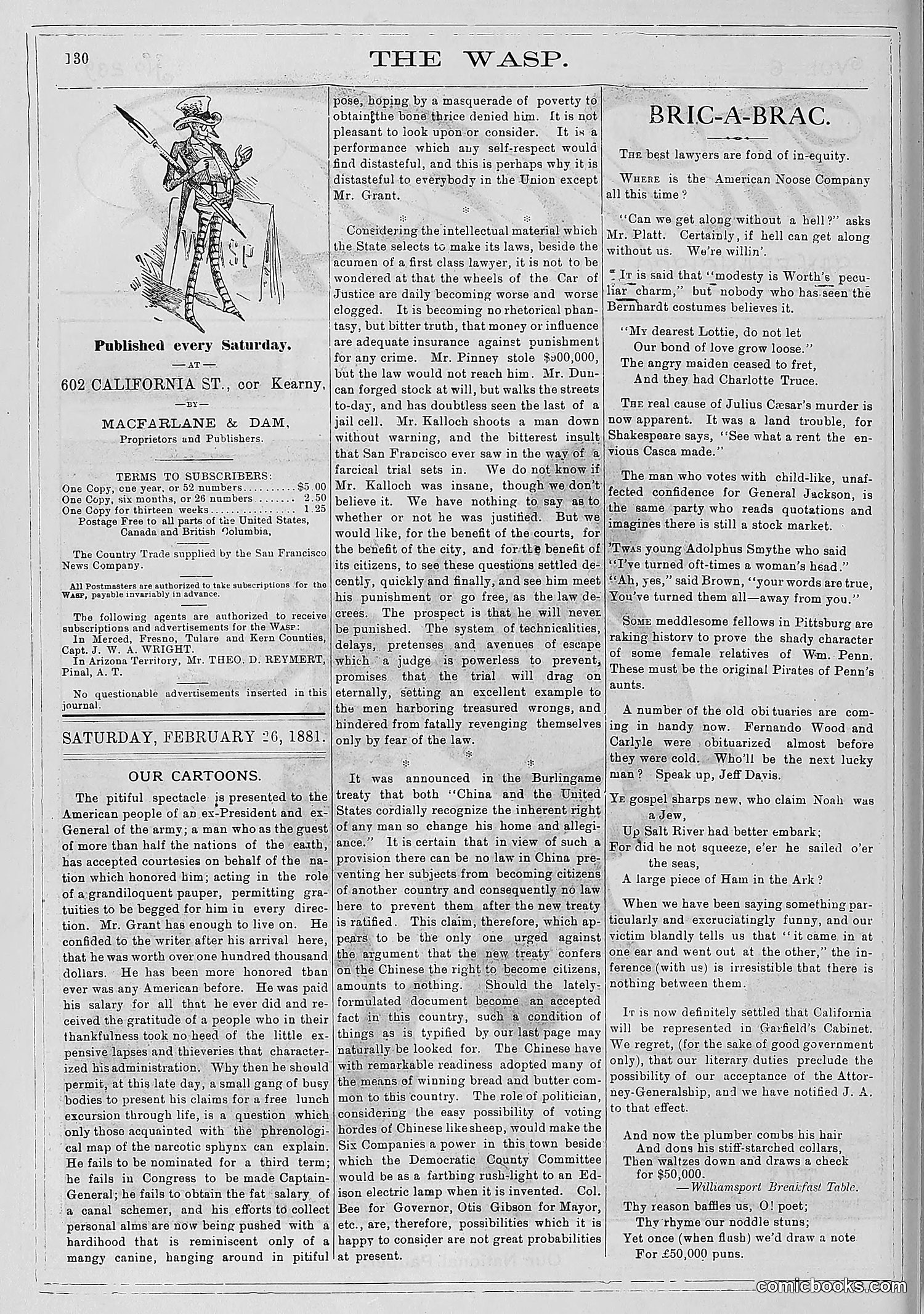
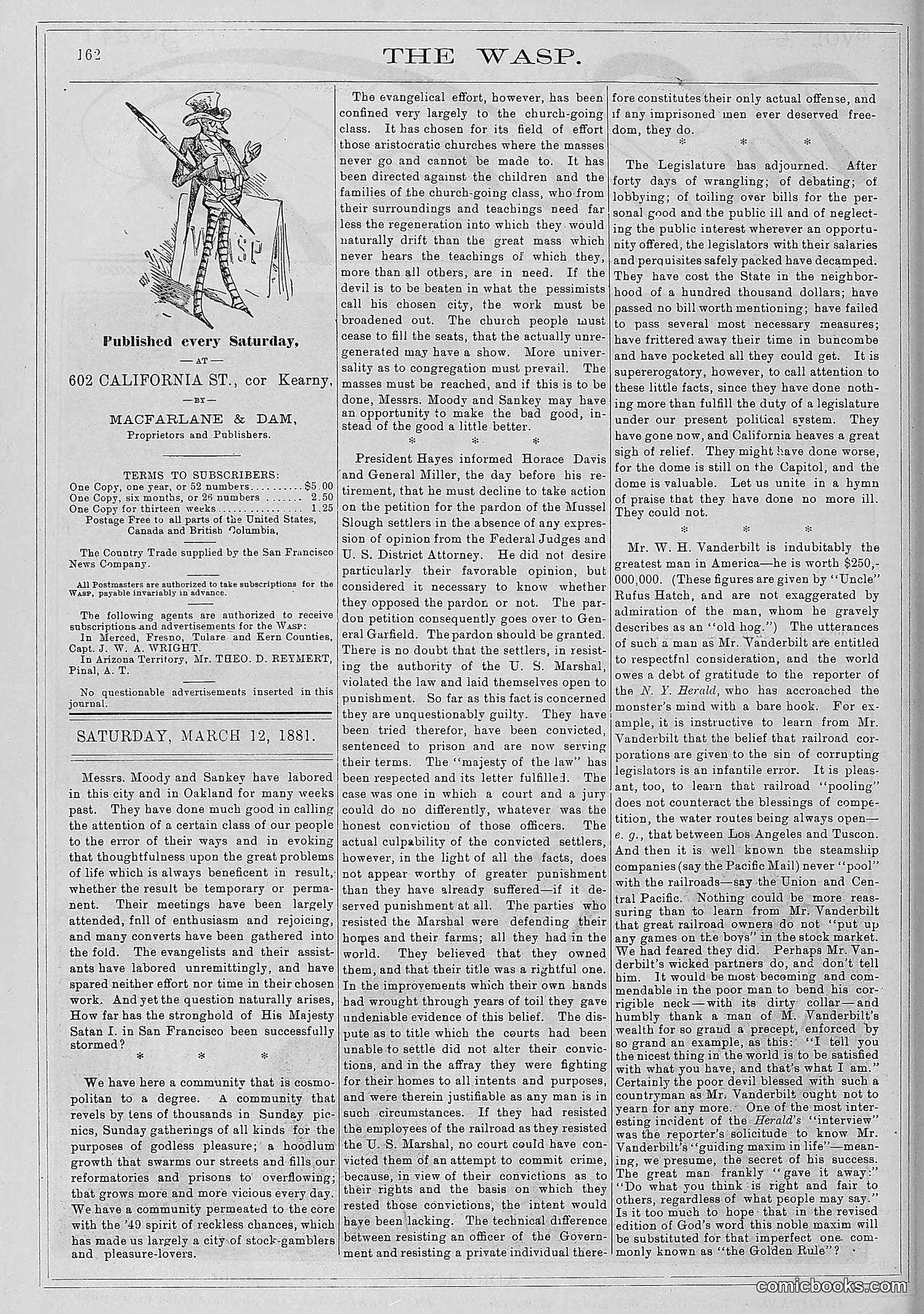
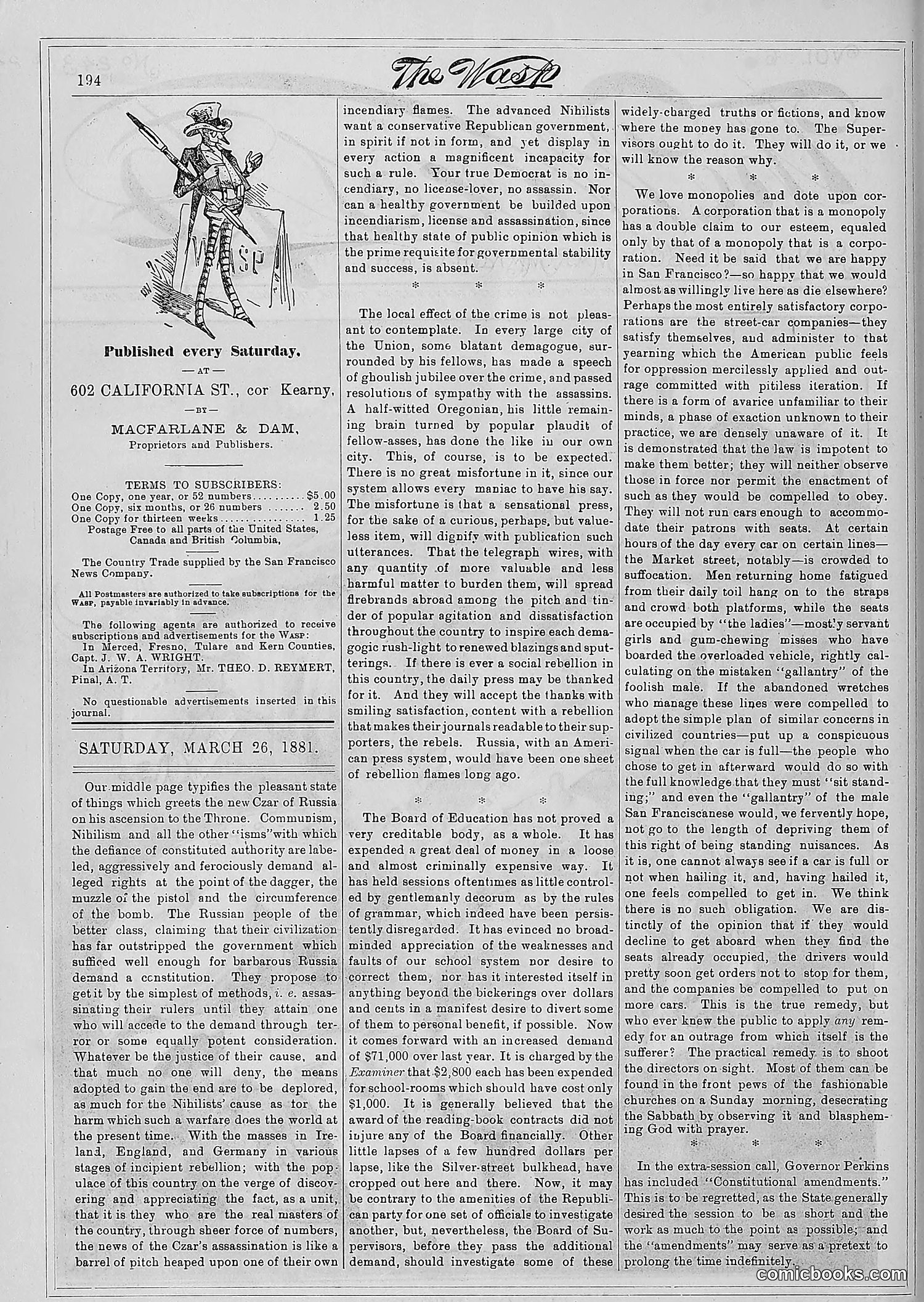
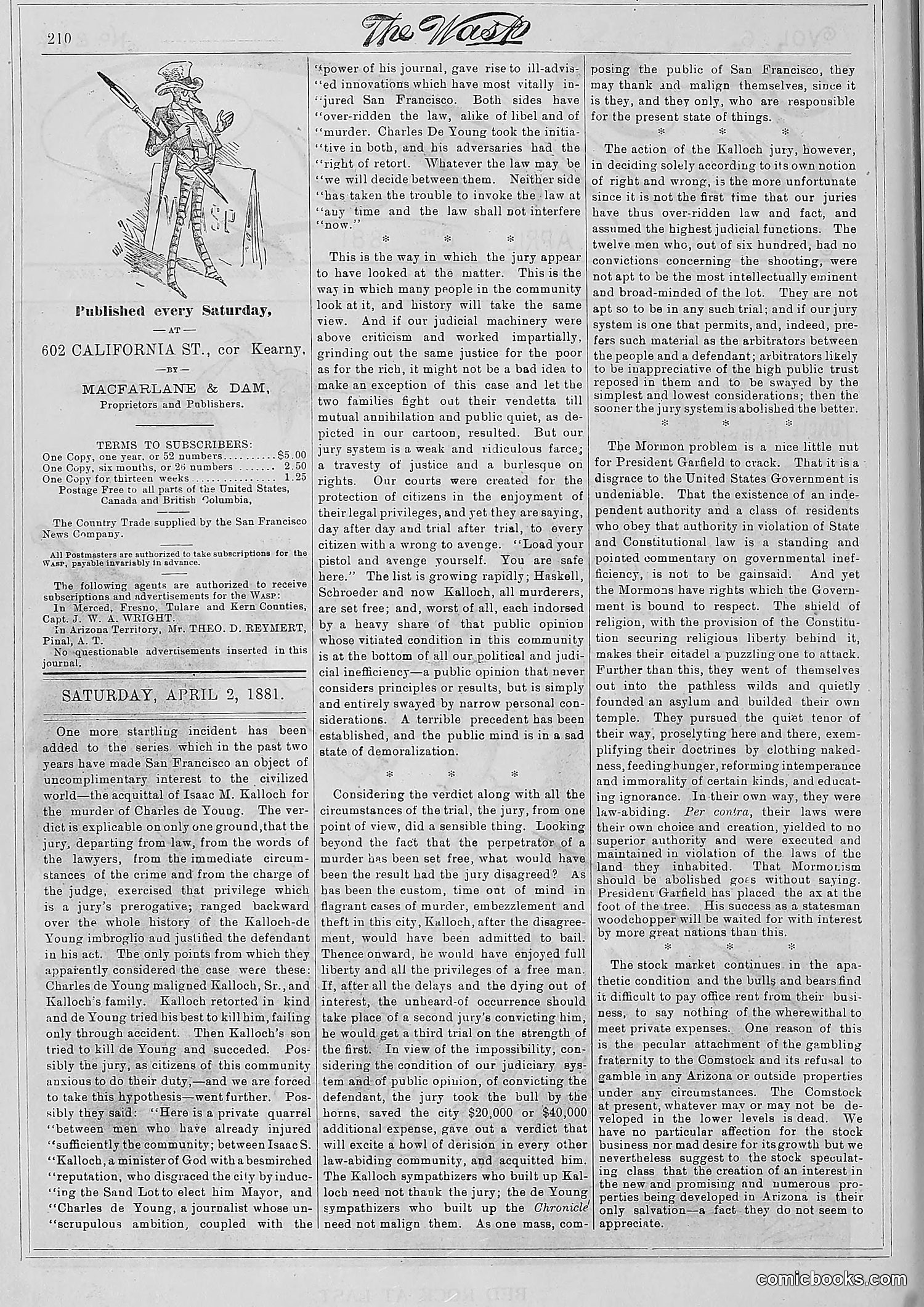
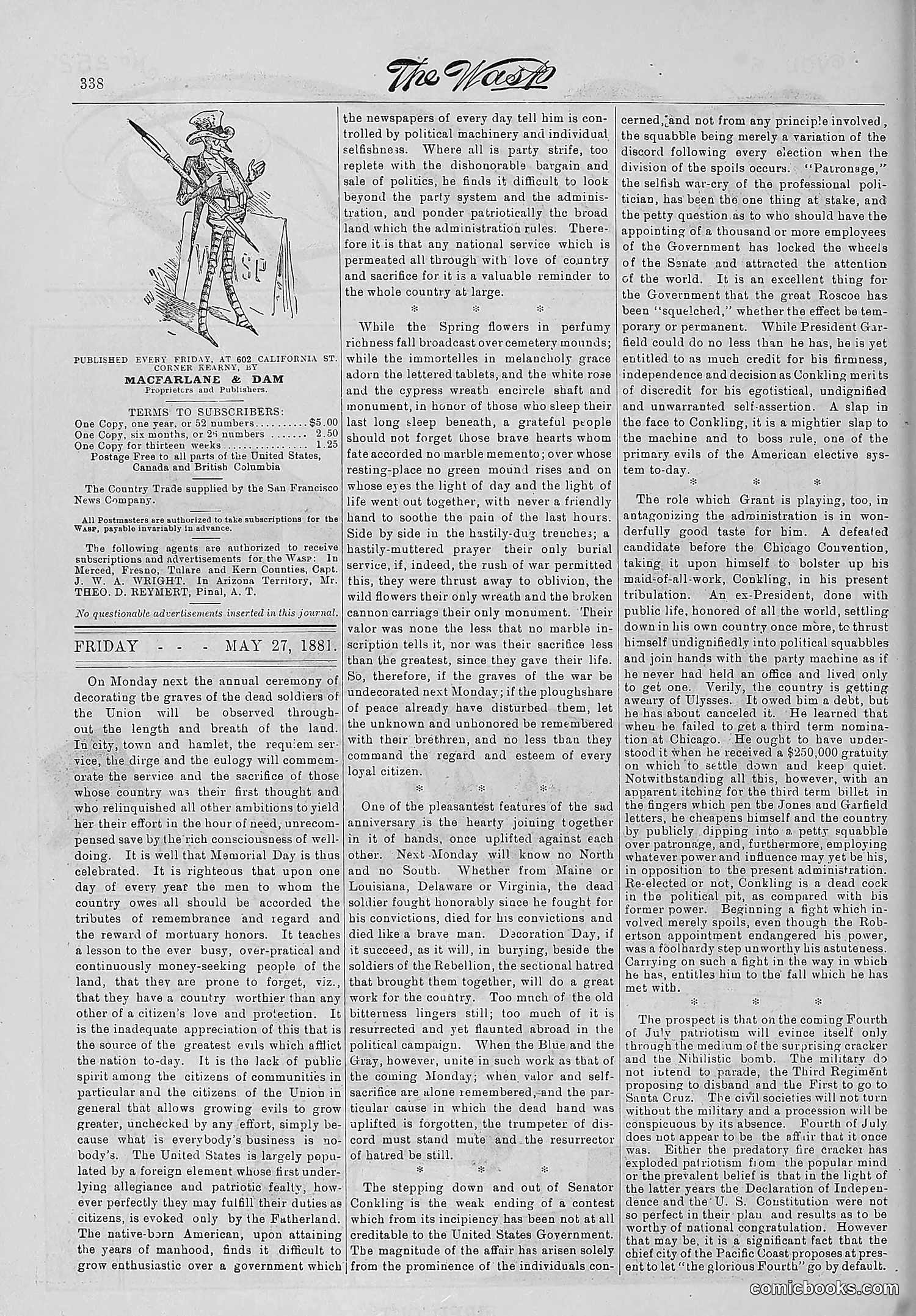
# The Wasp, January 1, 1881 — Page Analysis This is primarily a **title/masthead page** for Volume Six of *The Wasp*, a San Francisco satirical weekly. The left side features the publication's logo—a wasp depicted as a armed, costumed figure wielding a sword. The bulk of the page consists of **administrative content**: subscription rates (35 cents monthly for city delivery), mailing addresses, and the magazine's statement of purpose. The editors emphasize their journal aims to "adorn a tale" and "point a moral" through satire and wit, targeting dishonesty and hypocrisy. There is **no significant political cartoon** on this page—rather, it's a publisher's introduction discussing the magazine's mission and circulation growth during its first six months. The content is largely promotional rather than satirical commentary.
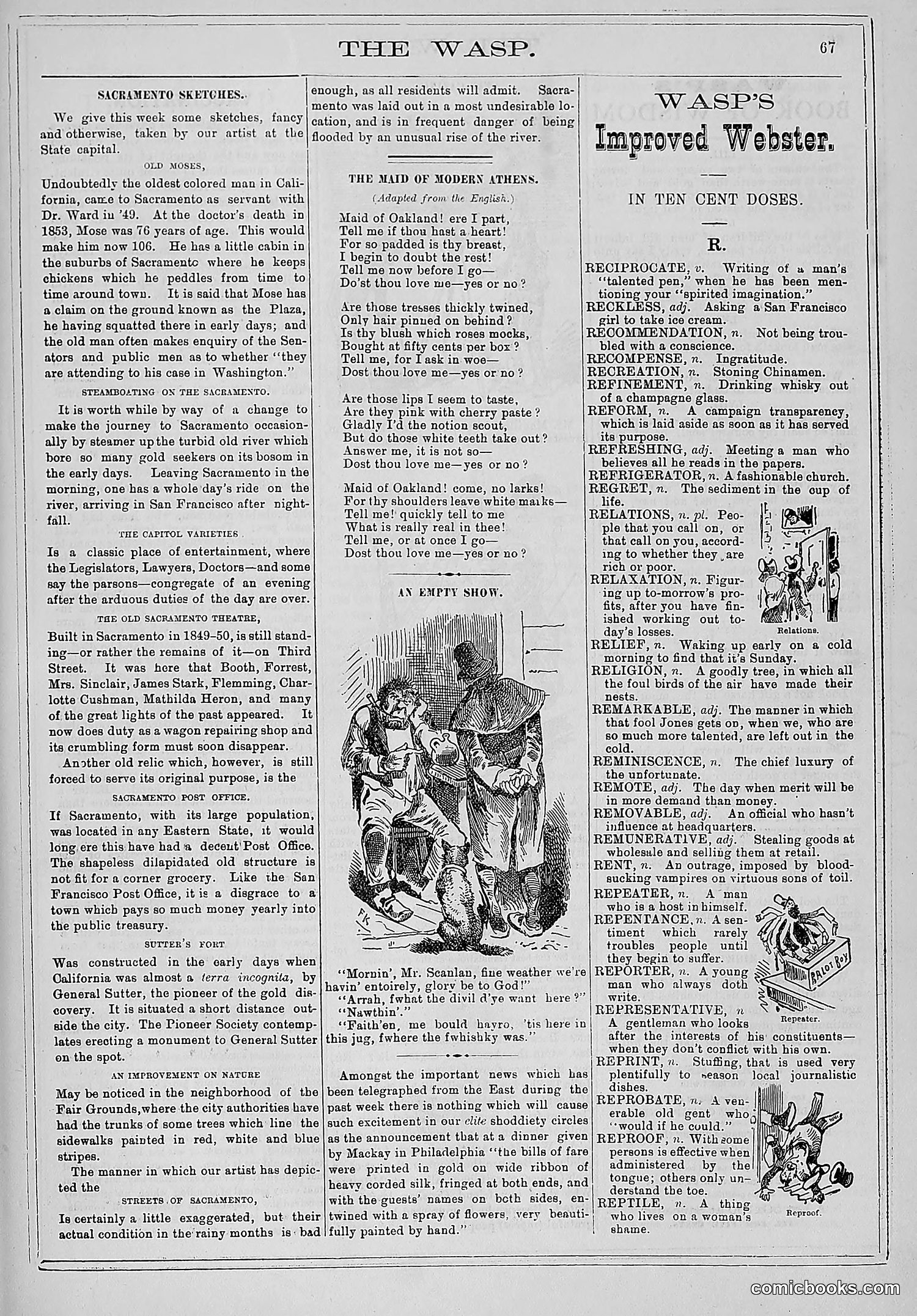
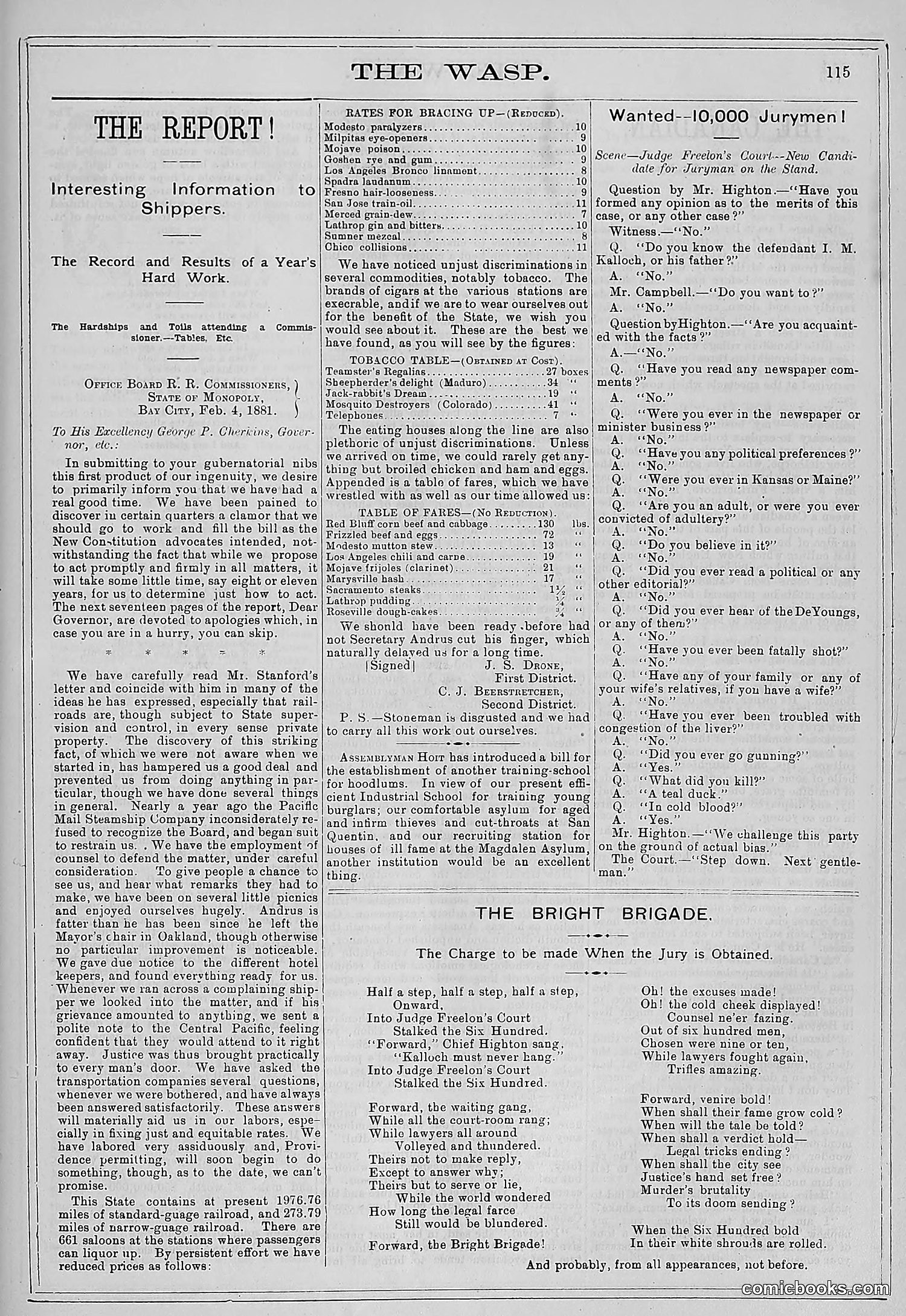
# The Wasp, Page 3: Analysis This page contains poetry and prose satire rather than visual cartoons. The main content is "Wasp's Book of Wisdom"—a numbered series of satirical observations on human nature and society. Key satirical targets include: - **Incompetence in business and government** (references to "Pacific enterprise," ineffectual officials) - **Social hypocrisy** (wealthy people's moral pretensions) - **Mental health of overworked professionals** (likely referencing exhaustion from seasonal excess) - **Legal/criminal justice absurdities** (references to hanging and punishment) The "Experimental Yeal-osophy" section at top satirizes a dubious cattle-vaccination scheme promoted as cheap public health. The tone is cynical about human folly, institutional incompetence, and social contradiction—typical of late-19th-century American satirical magazines like *The Wasp*.