
A complete issue · 18 pages · 1879
The Wasp — September 13, 1879

I can see this is a calibration/test page from a document rather than a political cartoon or satirical content from The Wasp magazine. The image shows two Oregon Rule Co. rulers with measurement scales (0-5 inches) and a grayscale color reference chart on a black background. This appears to be a technical documentation page used for photography, scanning, or archival purposes—likely included to standardize image quality and measurement accuracy when reproducing the original magazine pages. It's not satirical or editorial content, but rather a tool for ensuring consistent reproduction of historical materials.
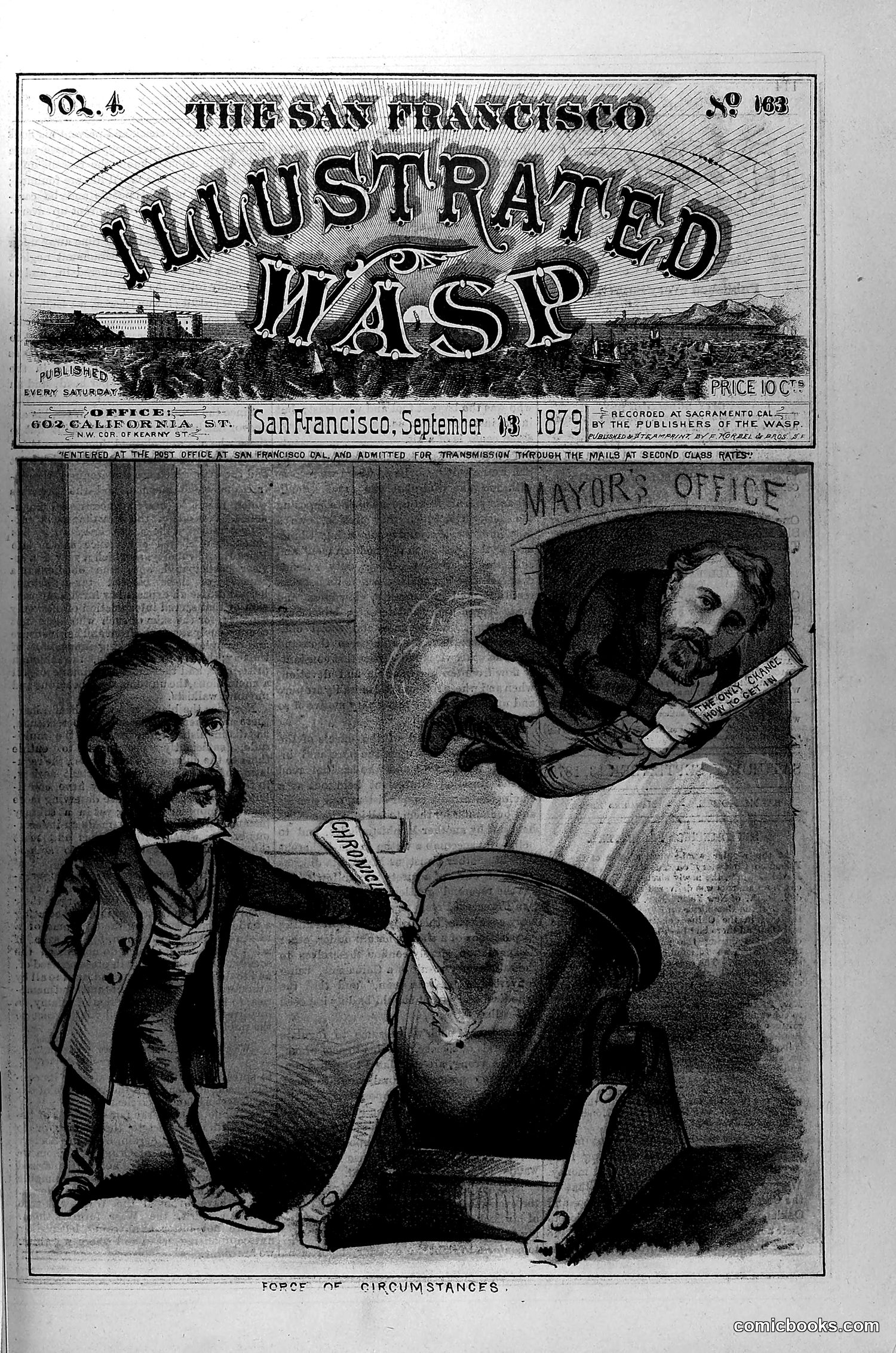
This September 1879 *Wasp* cartoon satirizes San Francisco political dynamics. The title "Force of Circumstances" suggests inevitable political pressure or coercion. The image shows a diminutive figure on the left (likely a political figure or mayor, given the "Mayor's Office" label visible) being squeezed or constrained by a large vice or mechanical device operated by another figure emerging from the office window above. The satire appears to critique how political circumstances—possibly factional pressure, corruption, or public demand—force elected officials into unwilling actions. The mechanical device metaphor suggests these pressures operate as irresistible, impersonal forces rather than legitimate democratic processes. Without clearer identification of the specific figures or 1879 San Francisco political context, the precise targets remain unclear, though the cartoon clearly mocks compromised mayoral authority.
The masthead cartoon shows a wasp emerging from a publication labeled "The Illustrated Wasp," representing the magazine's satirical nature. The main article criticizes the San Francisco Presbytery's actions regarding Chinese church membership and clergy ordination. The text attacks what it sees as moral hypocrisy: the Presbyterian church collects money from wealthy members while simultaneously excluding Chinese people from full participation and dignity. The Wasp satirizes this contradiction—accusing the church of preaching morality while practicing discrimination based on race and class. The piece argues that if the Presbyterians truly believed their religious principles, they would treat Chinese people equitably rather than relegating them to inferior status. This reflects 1879 anti-Chinese sentiment debates, though here the magazine critiques Christian institutions' racism rather than endorsing it.
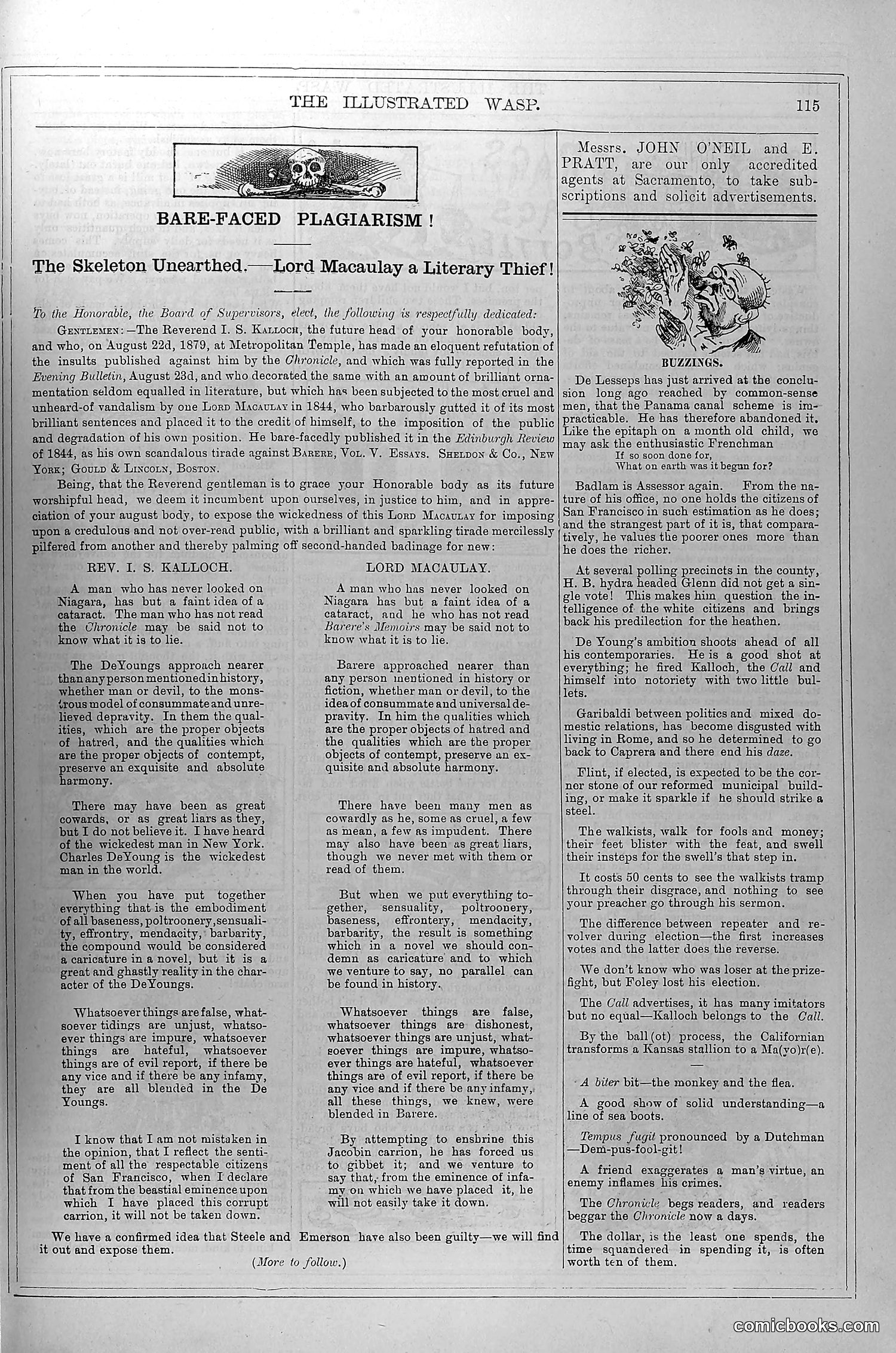
This page attacks Lord Macaulay for plagiarism. The main article, "Bare-Faced Plagiarism," accuses the famous British historian and essayist of stealing material without attribution, specifically referencing his *Edinburgh Review* essay from 1844 on Bacon. The skull illustration emphasizes moral death/shame. The piece compares Macaulay's conduct to theft, arguing his "brilliant sentences" were appropriated from earlier sources and falsely credited to himself—a serious charge against a celebrated intellectual figure. The satire targets how Macaulay leveraged borrowed material to build his reputation while deceiving the public. Supporting short pieces mock other local figures (Badlam, Flint, Garibaldi references suggest San Francisco context), but the Macaulay exposé dominates, presenting itself as righteous literary criticism defending intellectual honesty.
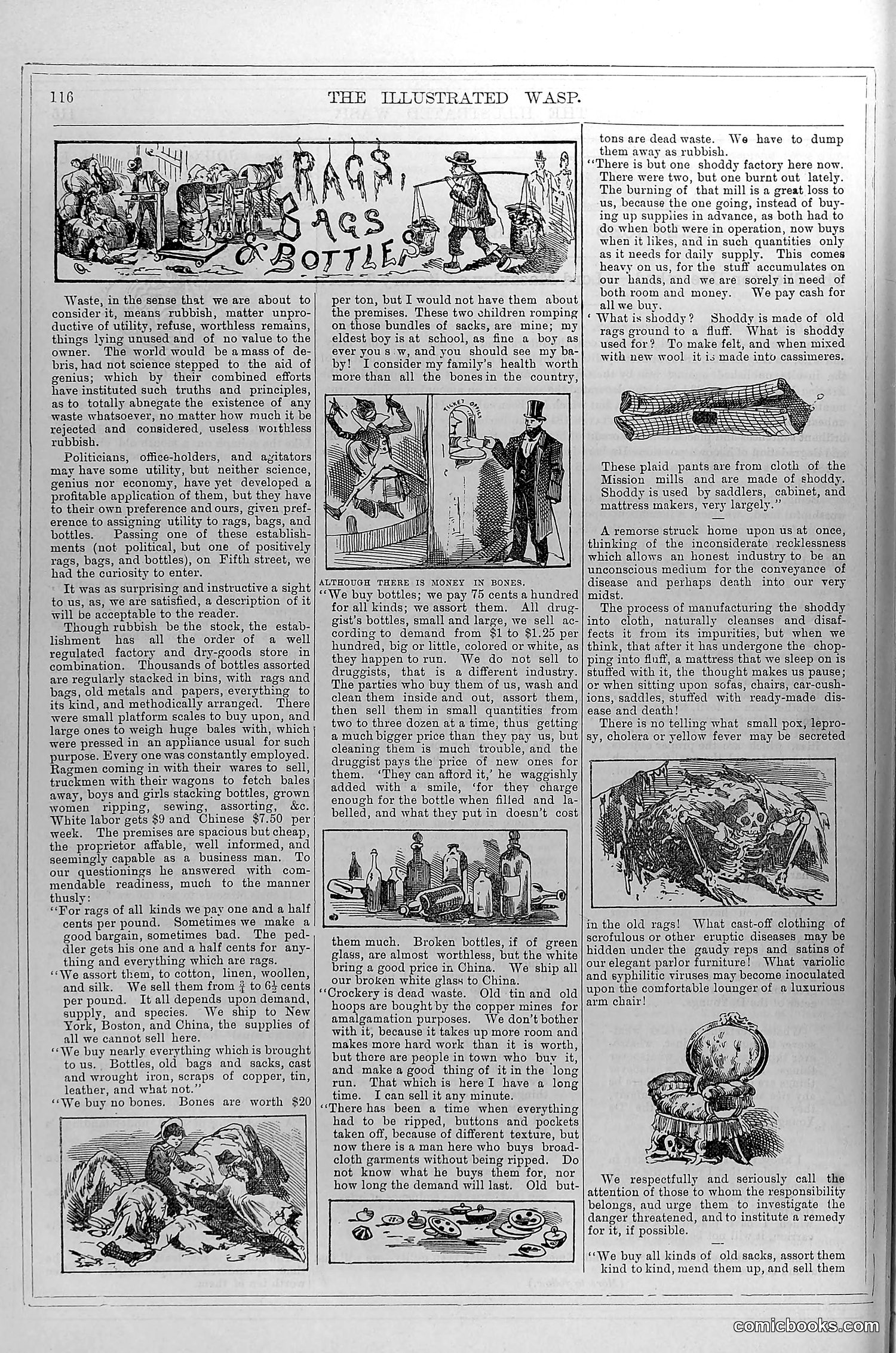
This satirical piece attacks the inefficiency of San Francisco's waste management and the exploitative recycling economy. The main article critiques how politicians and businessmen profit from what should be discarded, particularly bottles purchased from the poor at artificially low prices. The cartoons illustrate street children collecting bottles and rags for pittance—depicting the desperation of urban poverty. The satire targets the hypocrisy: while wealthy men profit substantially from this "waste," working-class children and Chinese laborers earn subsistence wages. The text sarcastically praises those who "developed a profitable application of their own preference"—meaning the bottle dealers—exposing how poverty becomes monetized by the indifferent rich.
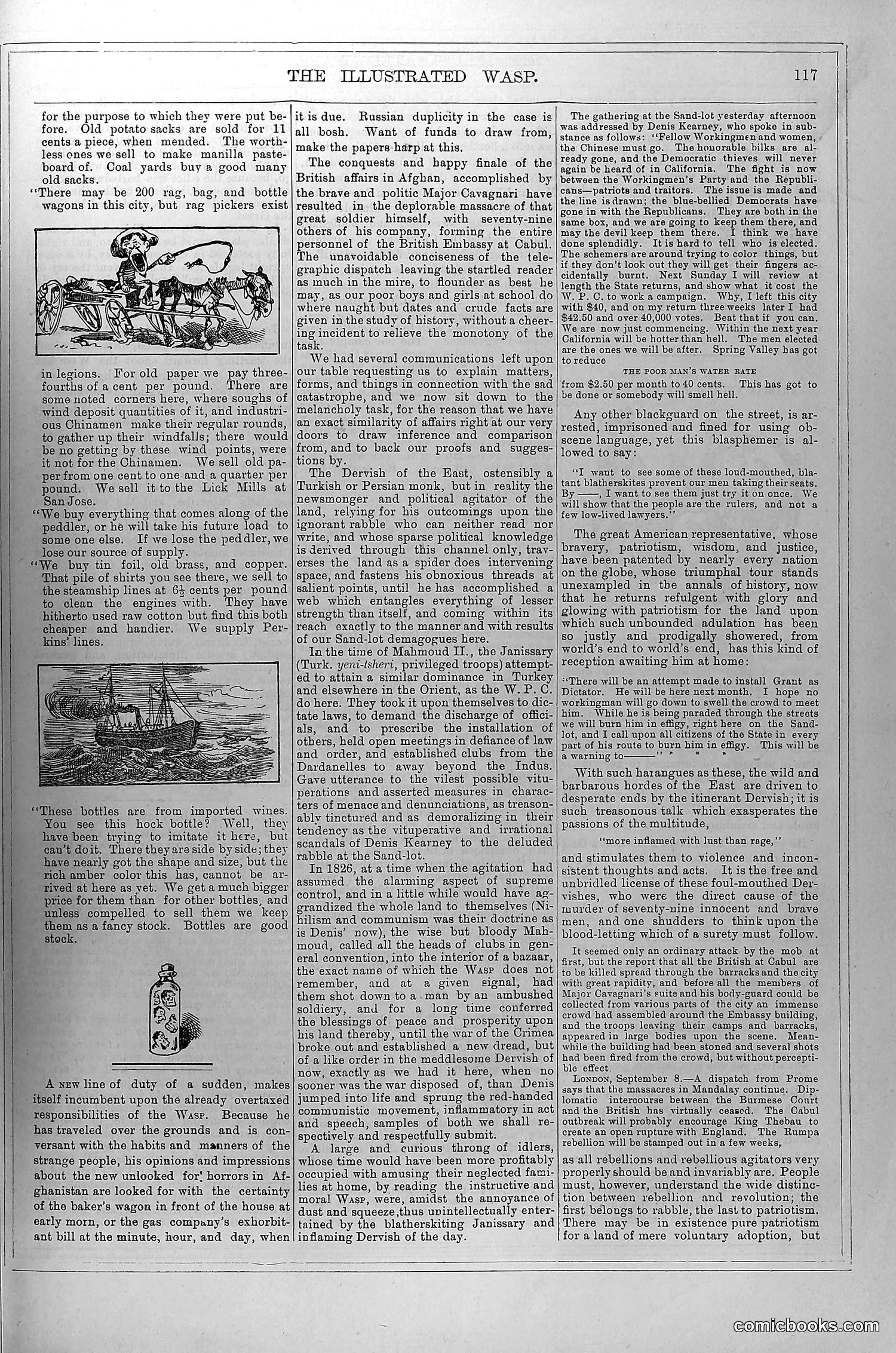
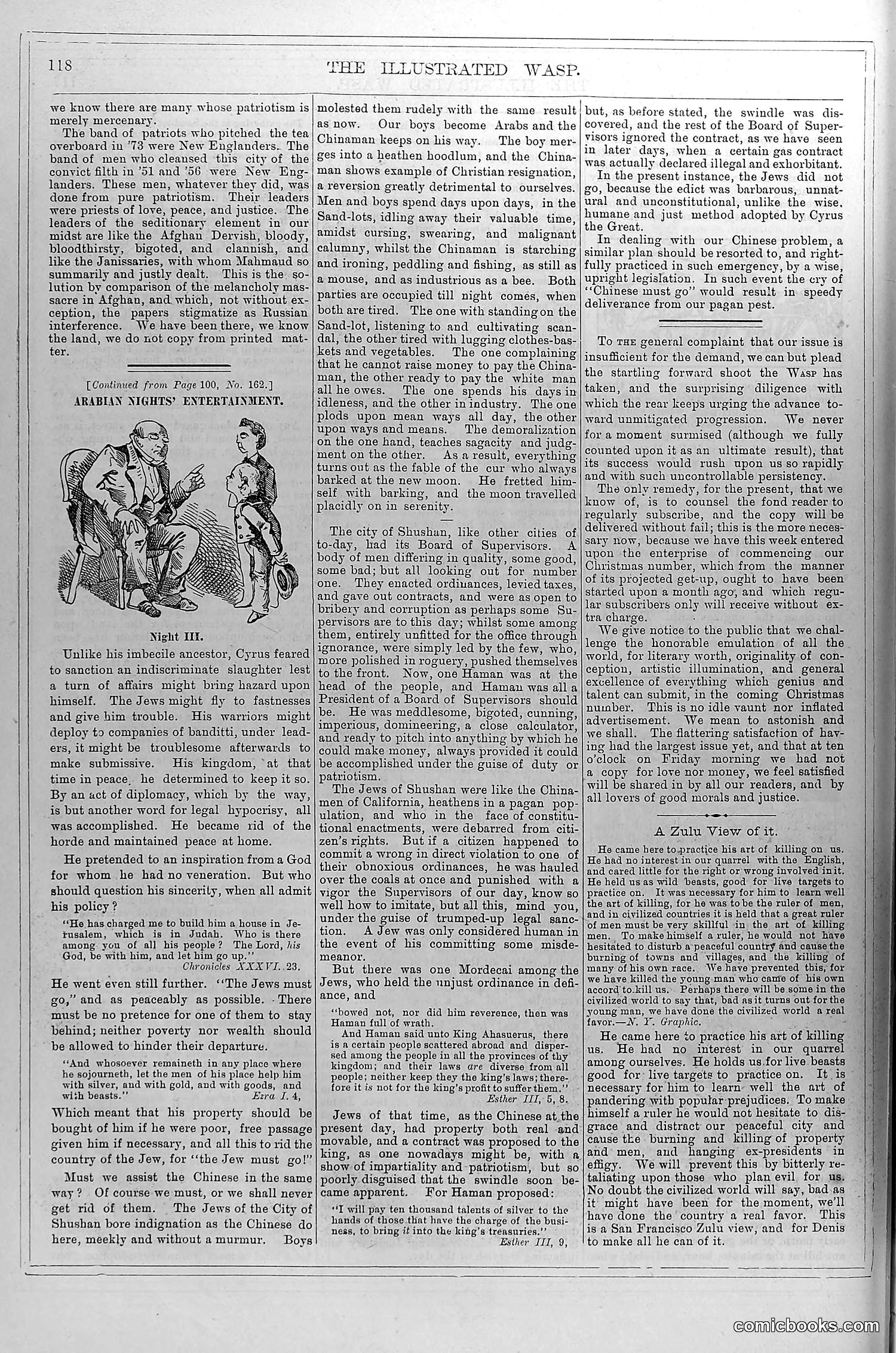
This page satirizes **Cyrus**, likely San Francisco's corrupt political leader, as a despot practicing arbitrary rule. The cartoon (labeled "Night III") depicts him as a tyrant who uses violence and intimidation to maintain power, comparing his governance to a despotic Arabian nights tale. The text criticizes his: - Use of bandits and mercenaries to enforce control - Arbitrary arrests and executions - Hypocrisy in claiming to pursue "peace" while ruling through fear - Treatment of marginalized groups (Chinese, Jews) as expendable The satire argues that such governance—maintaining order through terror rather than legitimate authority—ultimately fails. The piece calls for actual democratic principles and justice instead of autocratic despotism disguised as administration.
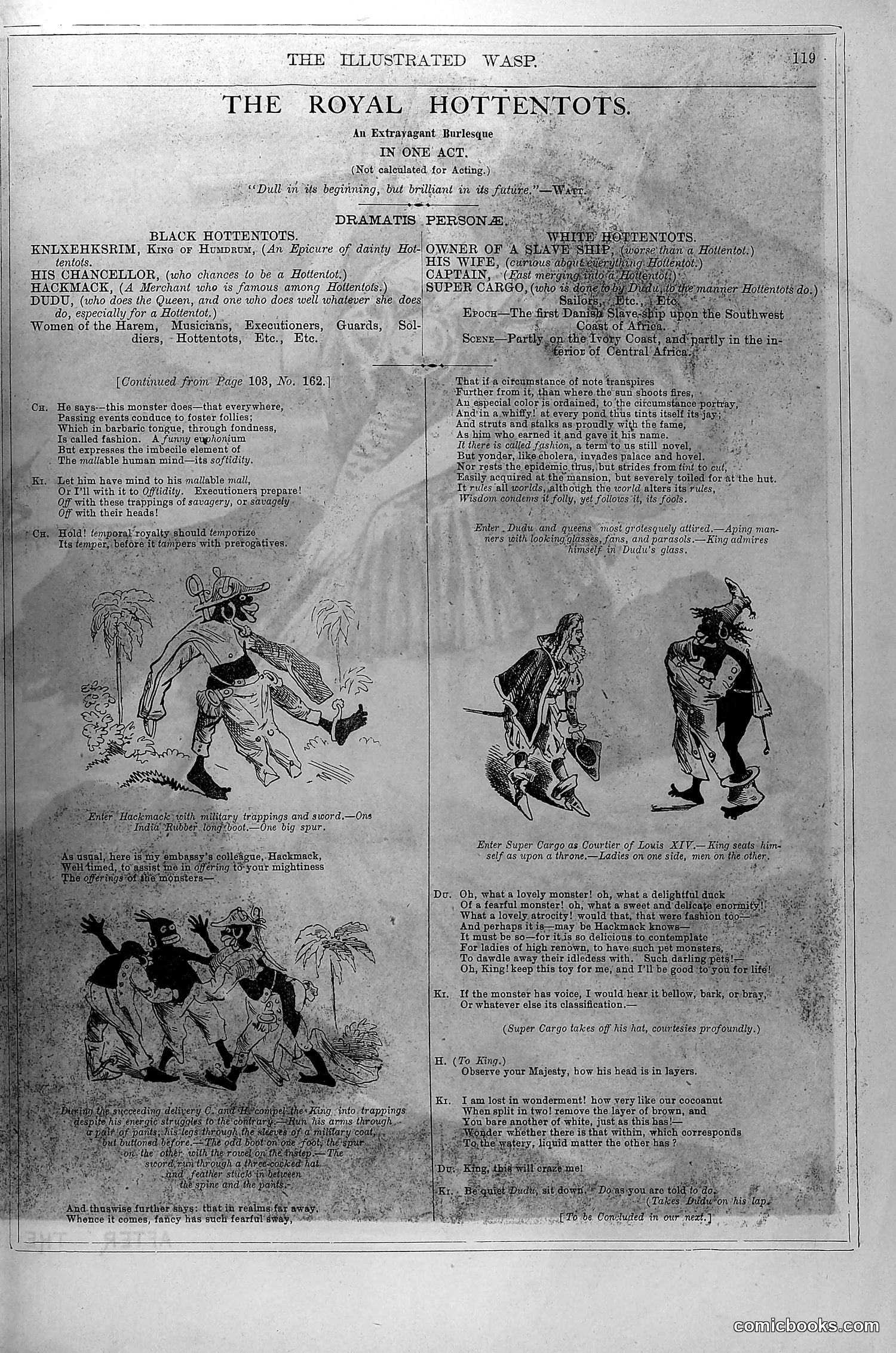
This page presents a one-act theatrical burlesque titled "The Royal Hottentots," mocking colonial-era attitudes toward African peoples. The dramatic personae list divides characters into "Black Hottentots" and "White Hottentots," suggesting the satire ridicules both African stereotypes and European colonizers equally. The illustrations depict exaggerated, caricatured figures in absurd situations—including a character in military dress with grotesque features. The text includes theatrical dialogue about "monsters" and "cocoanut" that relies on dehumanizing language typical of the era. The satire appears to mock both African people through stereotyping AND European colonizers through parody, though the execution relies heavily on racist caricature conventions standard to 19th-century American humor magazines. The "burlesque" format suggests absurdist theatrical comedy.
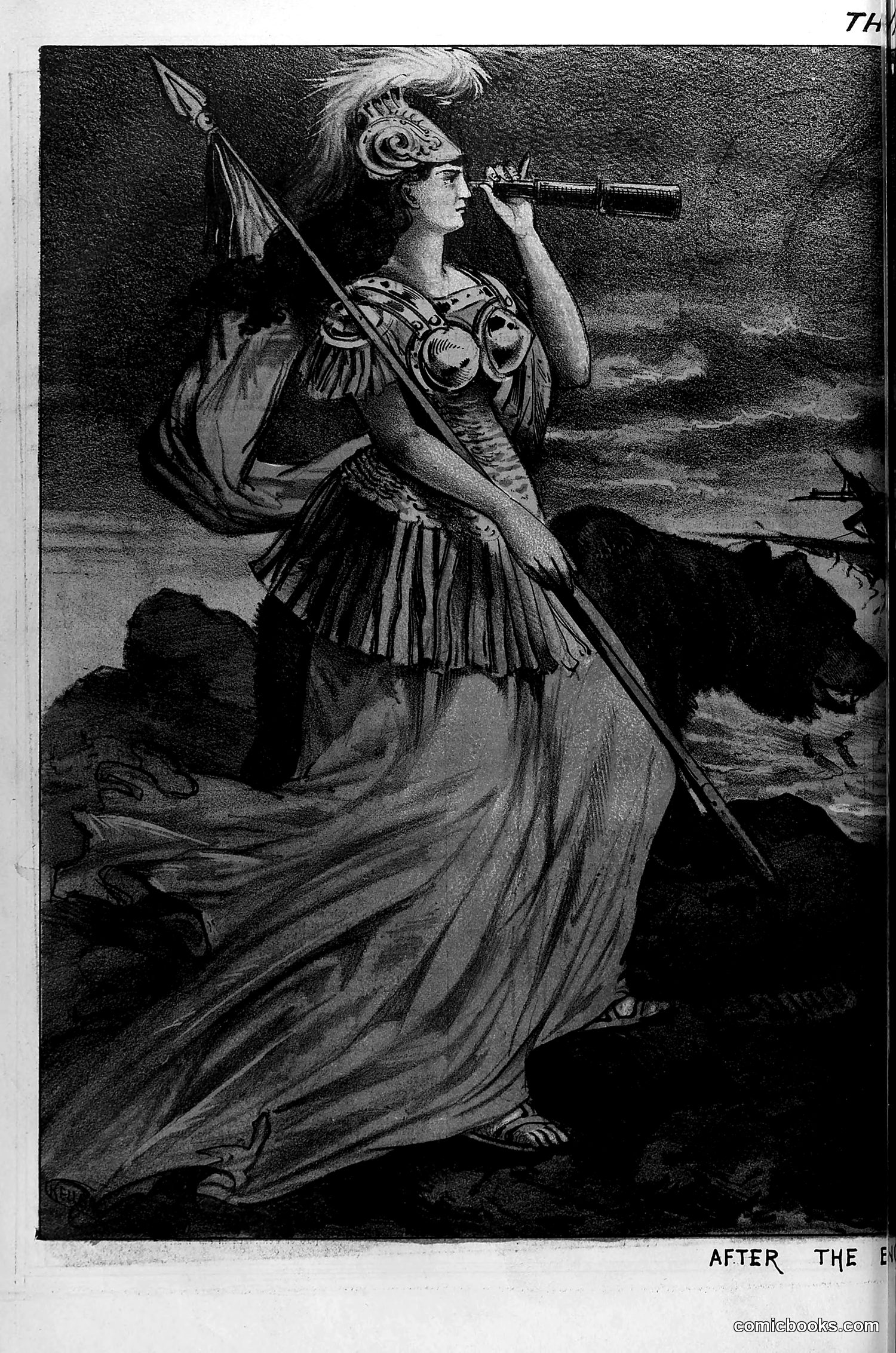
This engraving depicts a classical allegorical female figure—likely representing America or Liberty—dressed in Greco-Roman military attire with a plumed helmet, breastplate, and flowing robes. She holds a telescope or spyglass to her eye and carries a flag and sword, positioned dramatically on rocky terrain. The caption reads "AFTER THE E[...]" (text cut off), making the specific satirical point unclear without the complete title. However, the imagery suggests commentary on American military vigilance, expansion, or foreign policy observation during a particular historical moment. The classical personification was common in 19th-century American political satire to represent national character or destiny. Without the full caption, the precise satirical target remains uncertain.
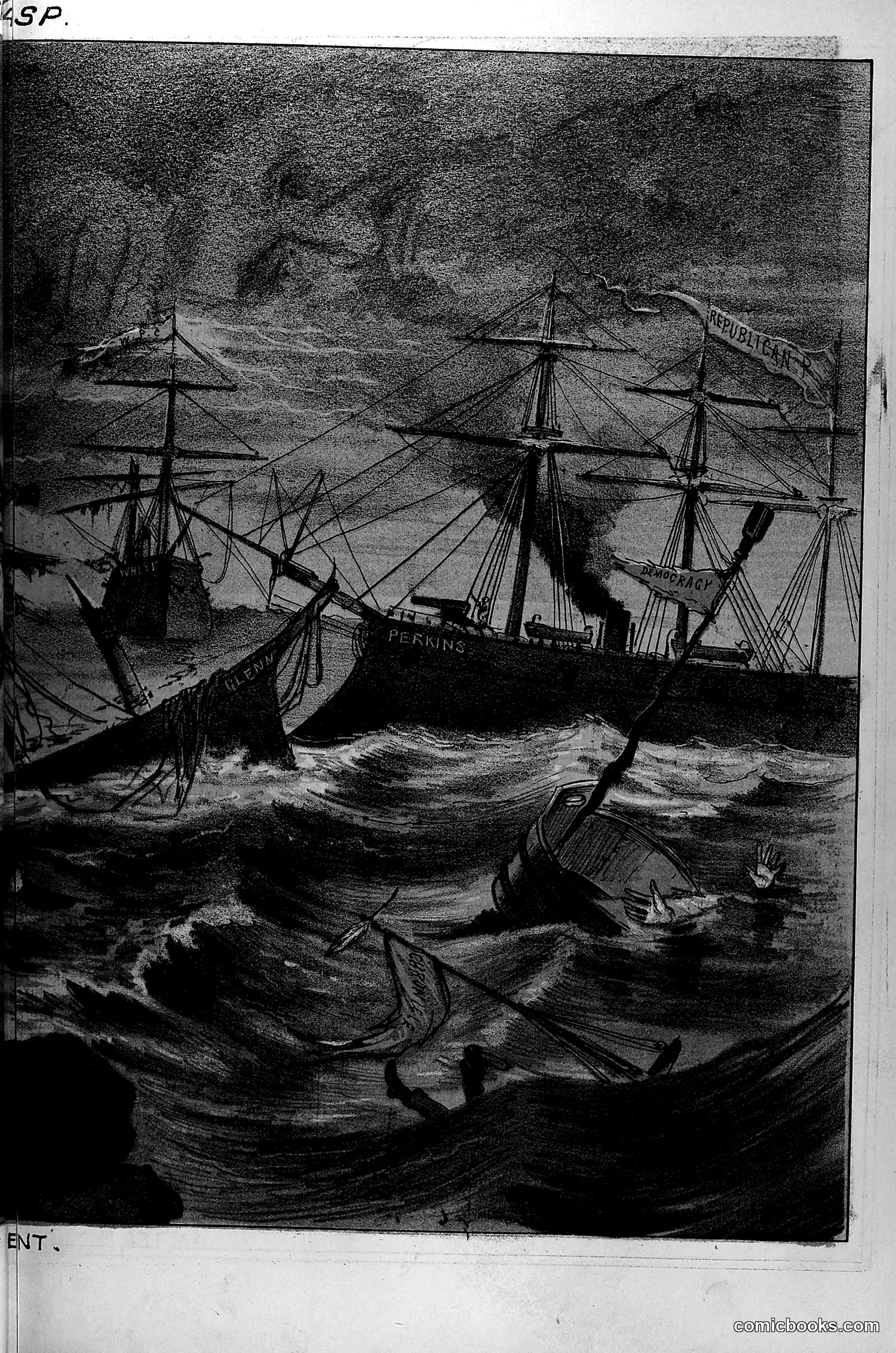
This engraving depicts a naval disaster at sea, showing multiple sailing vessels in distress amid turbulent waves. The central steamship is labeled "PERKINS," while other vessels appear damaged or sinking in the background. One ship displays what appears to be "REPUBLICAN" on its flag. This is likely political satire using maritime imagery as metaphor—a common technique in 19th-century American comics. The "Republican" ship and the chaos suggest commentary on Republican Party misfortunes or internal conflict. The "Perkins" vessel's prominence may reference a specific political figure or scandal, though without additional context it's unclear exactly which Perkins or incident is targeted. The drowning vessels represent political doom or electoral disaster, a metaphor popular in period satire.
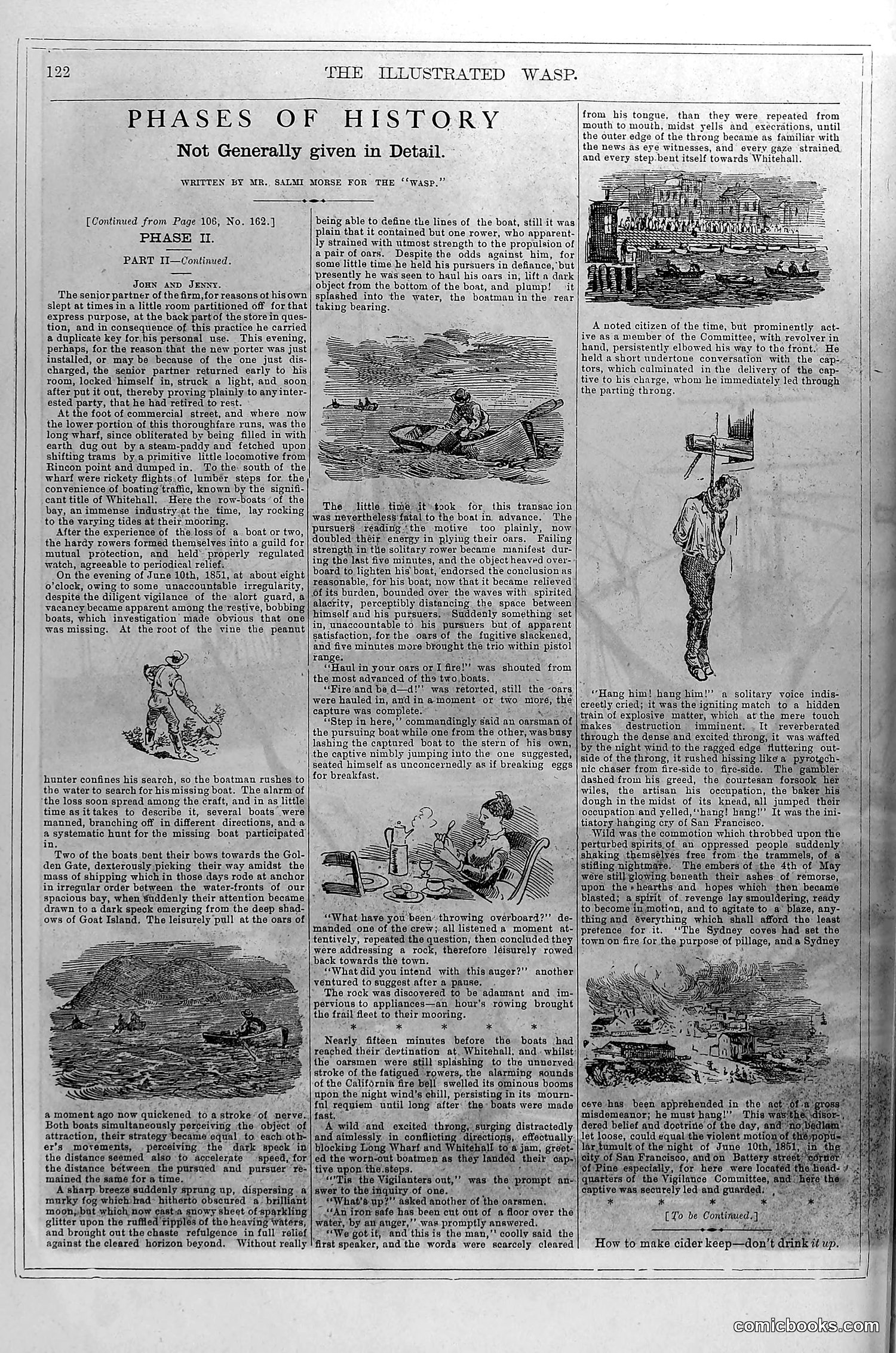
This page presents a serialized narrative titled "Phases of History: Not Generally given in Detail," written by Salmi Morse for *The Wasp*. It's Part II (Continued) of a story about a boating incident near San Francisco, involving a search for a missing boat and its crew. The text describes dramatic action: two boats pursuing each other near the Golden Gate, with one crew member missing. It includes dialogue and period details about rowing, water conditions, and the Vigilance Committee's involvement. The several illustrations show boatmen, water scenes, and figures in period dress. However, this appears to be serialized fiction rather than political satire or cartooning—entertainment content rather than commentary on current events or social issues. The page lacks the characteristic satirical caricature typical of *The Wasp*.
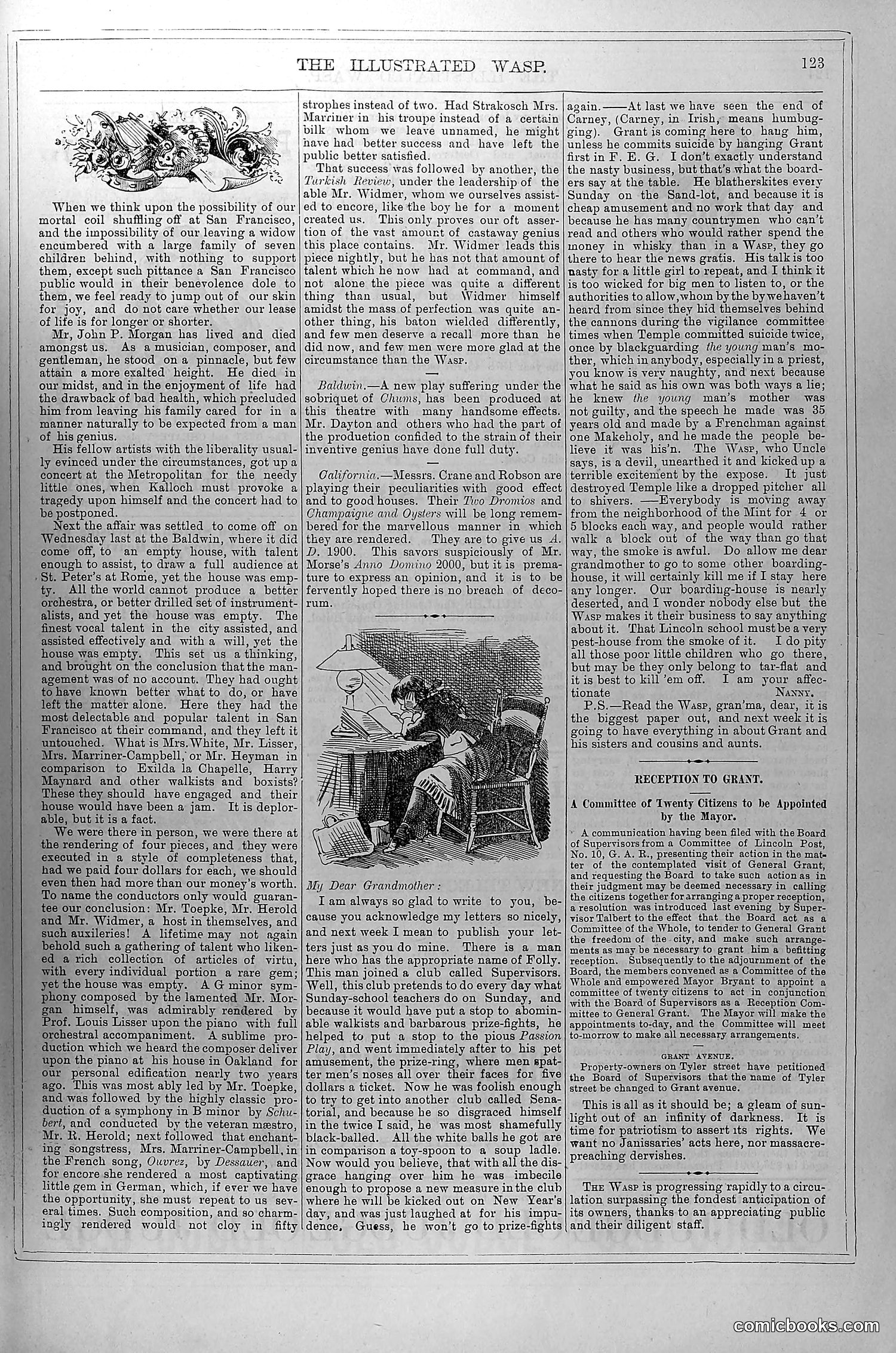
This page contains theater criticism and social commentary rather than political cartoons. The main illustration shows a woman writing at a desk—likely representing correspondence about San Francisco's cultural life. The text discusses theatrical productions, including a play called "Chums" and references to "Aino Domino 2000." It critiques the Metropolitan Theater's poor management and empty houses despite talented artists performing. A section titled "Reception to Grant" announces a committee of twenty citizens appointed by the Mayor to welcome General Grant, suggesting this dates to Grant's visit to San Francisco. The final item, "My Dear Grandmother," is a humorous letter supposedly from someone attending social events, poking fun at San Francisco society and etiquette of the era. The satire targets local theater management incompetence and social pretension among the wealthy.
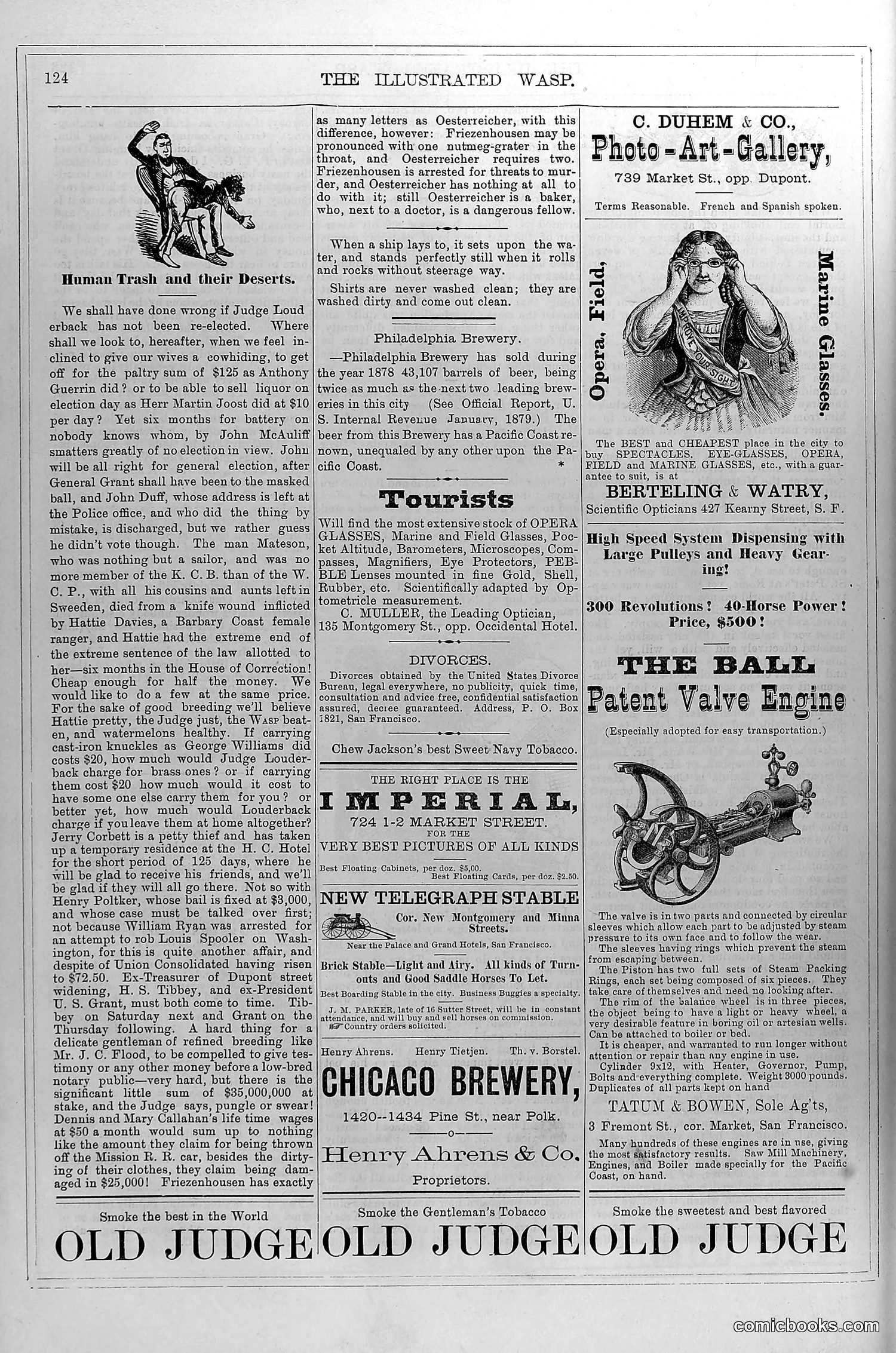
This page is primarily **advertisements and commercial notices** rather than political satire. The dominant content includes ads for breweries, photography galleries, eyeglasses, tobacco products, and a patent valve engine. The one editorial section, "Human Trash and their Deserts," appears to criticize **Judge Lord Coleridge's lenient sentencing** in a case involving a man named Friezenhousen. The piece sarcastically argues that while wealthy defendants receive light sentences, working-class people like sailors face harsh punishment for minor infractions. It's a social-class critique suggesting **judicial bias favoring the wealthy**. The rest of the page consists of business advertisements typical of late-19th-century American publishing.
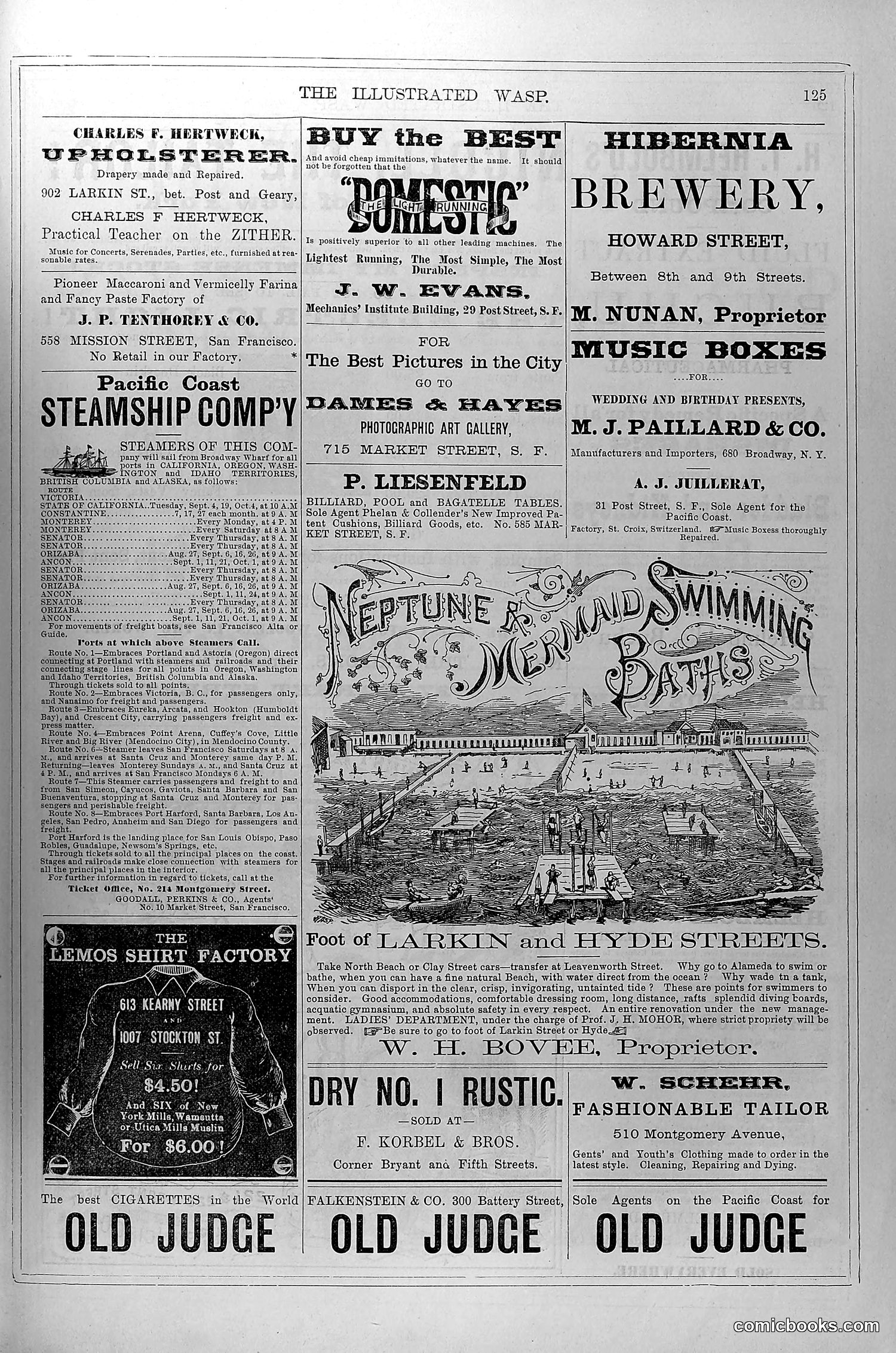
This page is **primarily advertising** for San Francisco businesses circa late 1800s, not political satire or editorial cartoons. The largest illustration depicts "Neptune Mermaid Swimming Baths" at the foot of Larkin and Hyde Streets—a commercial swimming facility. The ornate engraving shows a Victorian-era bathhouse with pavilions and swimmers, advertising it as a leisure destination with "clear, crisp, invigorating" water and "splendid diving boards." Other ads include the Pacific Coast Steamship Company (travel), Hibernia Brewery, music boxes, shirt factory, and Old Judge cigarettes—typical commercial content from *The Wasp*. While *The Wasp* was satirical, **this particular page contains no visible political cartoons or social commentary**—it's a standard advertising section using period illustration techniques to promote local businesses and services.
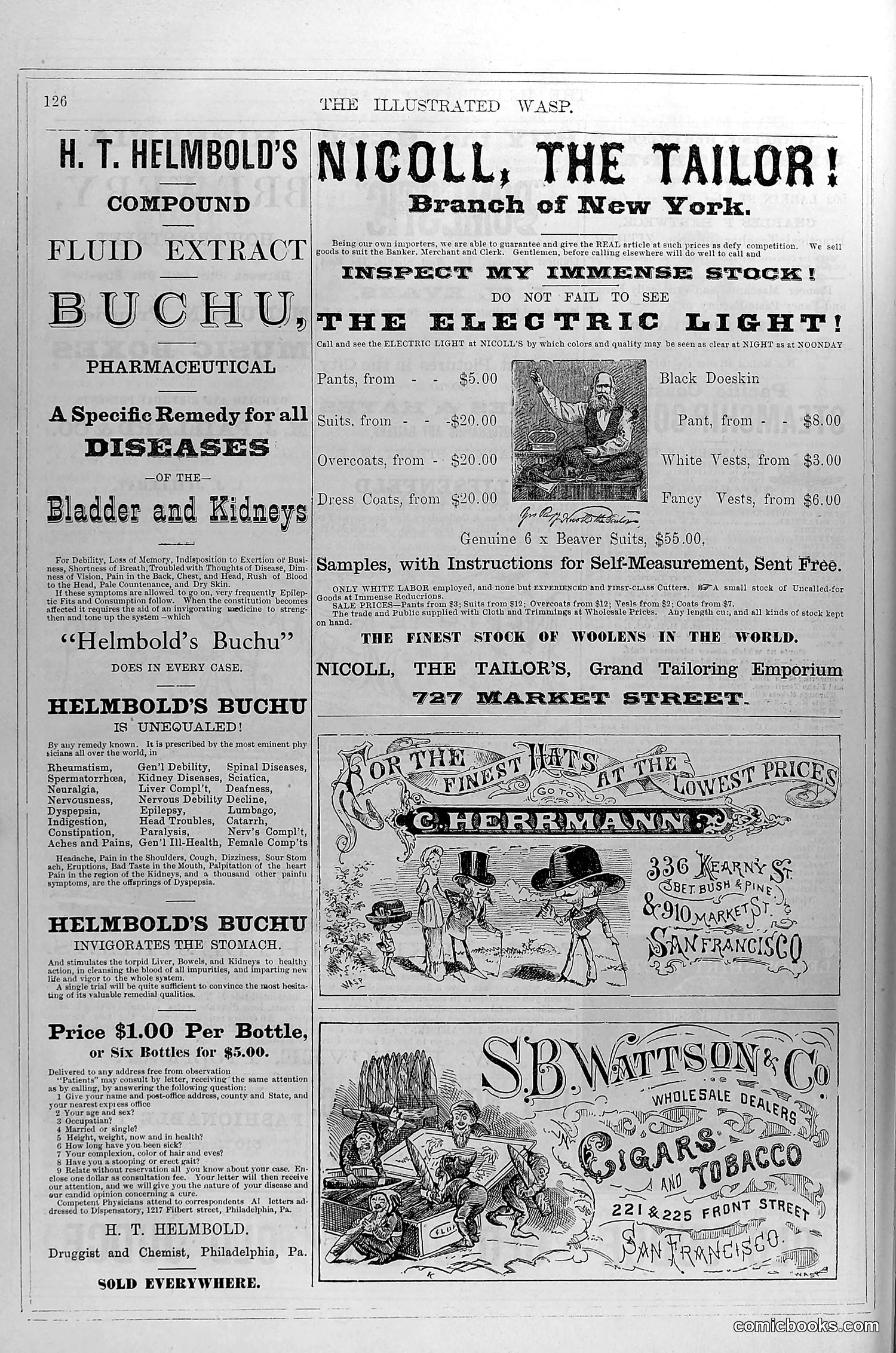
This page is primarily **advertisements**, not political satire or editorial content. The advertisements include: - H.T. Helmbold's "Buchu" pharmaceutical remedy, marketed as a cure for bladder, kidney, and various other diseases—a common patent medicine claim of the era - Nicoll, the Tailor on Market Street in San Francisco, advertising suits, coats, and custom tailoring with "electric light" showroom demonstrations - C. Herrmann hats at lowest prices - S.B. Wattson & Co. cigars and tobacco wholesale dealer The engravings accompanying these ads are decorative illustrations typical of 19th-century commercial printing—a well-dressed tailor, hat shoppers, and cigar smokers—not satirical cartoons. The page demonstrates how *The Wasp* magazine supplemented editorial content with paid advertisements to generate revenue.
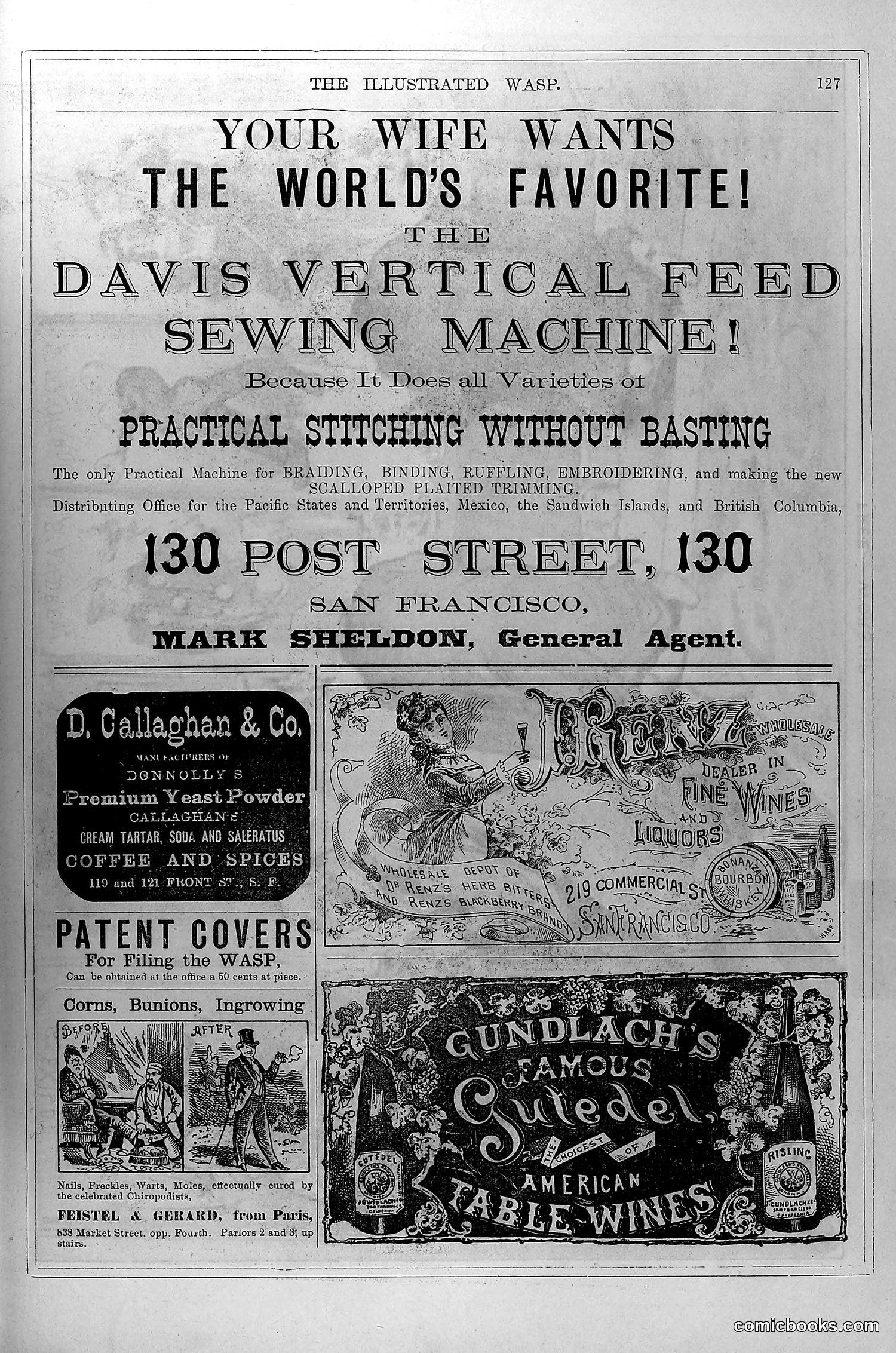
This page is primarily **advertising content** rather than political satire or cartoons. It contains commercial advertisements for San Francisco-area businesses circa the late 19th century, including: - Davis Vertical Feed Sewing Machine (top) - D. Callaghan & Co.'s Premium Yeast Powder and spices - Patent covers for treating corns and bunions - Felstel & Geraud's medical treatments - J. Renz's fine wines and liquors - Gundlach's Famous Suedel American table wines The page header identifies this as "The Illustrated Wasp," a satirical magazine, but this particular page serves as a revenue-generating advertisement section rather than containing editorial cartoons or political commentary. The imagery is decorative and product-focused rather than satirical.
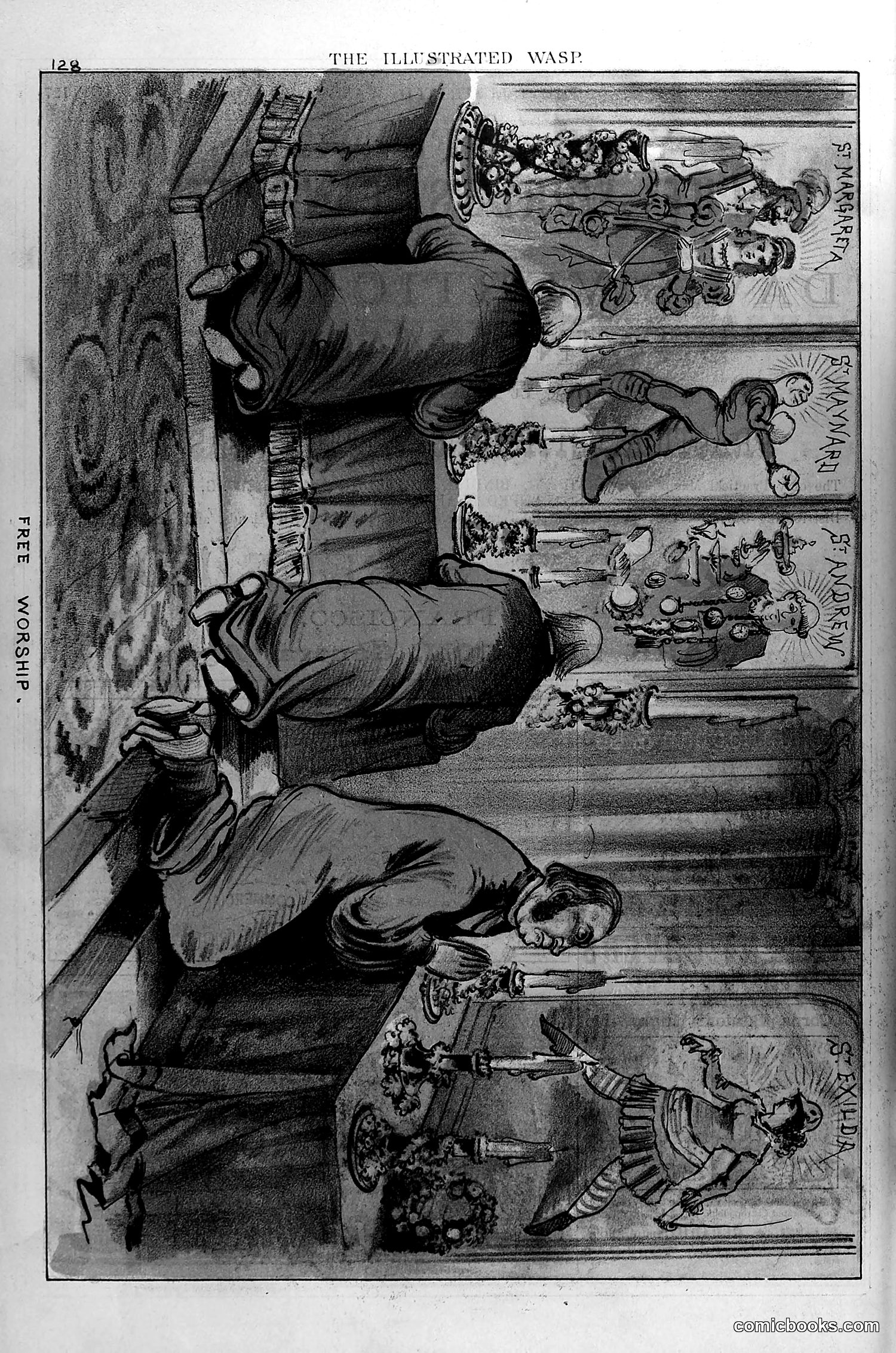
This page from *The Wasp* appears to be a satirical sequence depicting "fire worship" through multiple panels showing figures in various poses of reverence or submission before what looks like a fire or flame. The cartoon likely critiques a political or social movement of its era through the metaphor of religious "worship." The exaggerated body language and ritualistic positioning suggests mockery of blind devotion or fanaticism. Without clearer text identifying specific historical figures or dated context, I cannot definitively state which political movement or personalities are targeted. The style and printing suggest late 19th or early 20th-century American satire, but the exact subject and satirical point remain unclear from the visible image alone.

I can see this page contains a measurement scale and a color-checker or test pattern on the left side of the image, which appears to be archival documentation rather than the actual cartoon content from *The Wasp* magazine. The checkerboard pattern with varying gray tones and the ruler markings are standard tools used in photographing or digitizing historical documents to ensure accurate color reproduction and size reference during archival processes. Without visible cartoon imagery, satirical text, or identifiable political figures on this particular page, I cannot provide analysis of the intended satire or social commentary. This appears to be a technical documentation page rather than editorial content from the publication itself.