
A complete issue · 48 pages · 1929
Life — June 7, 1929
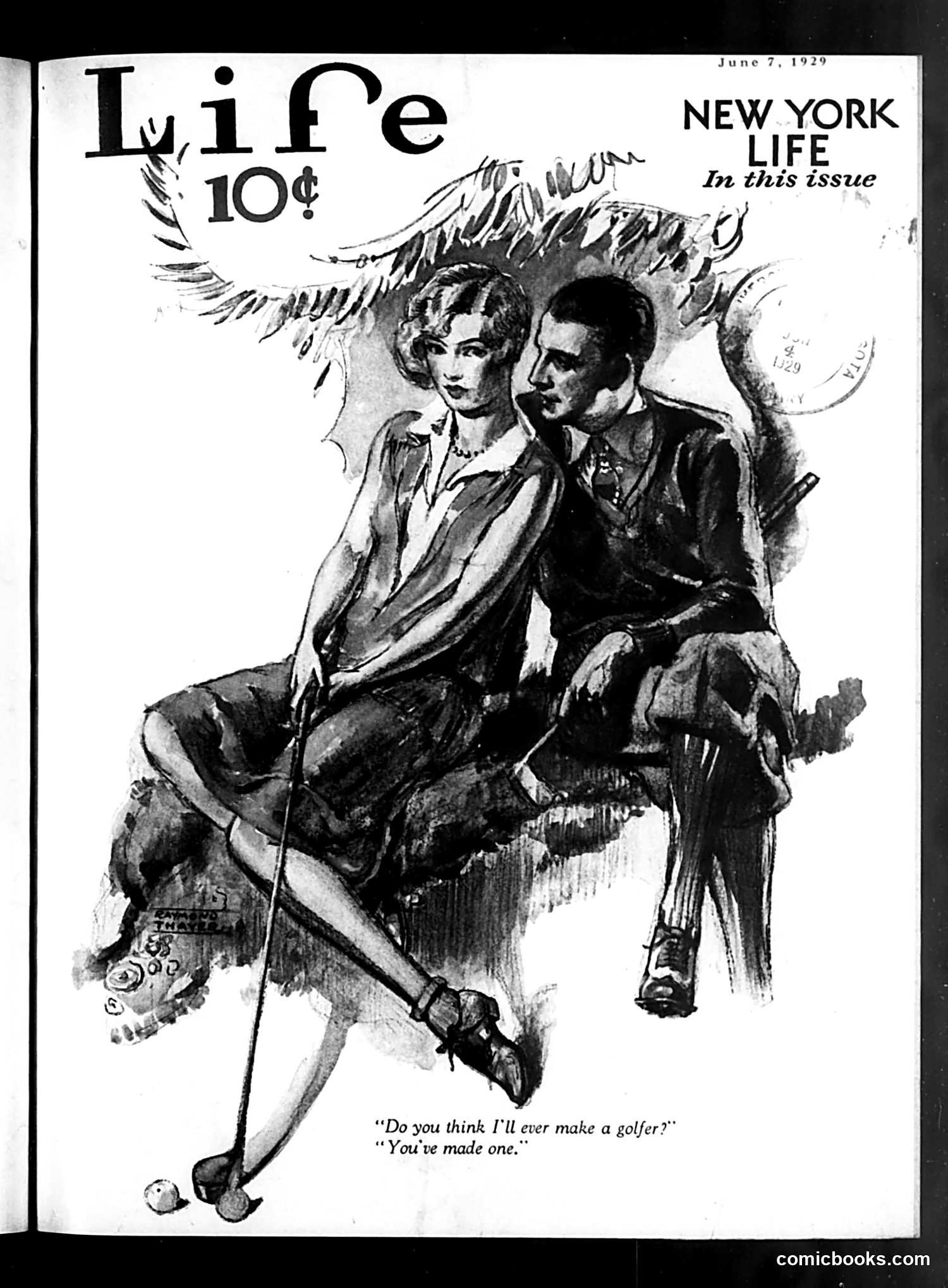
This cover depicts a romantic golf scene with a couple and the caption: "Do you think I'll ever make a golfer?" / "You've made one." The joke plays on the double meaning of "golfer"—the woman asks if she'll become skilled at golf, while the man's response suggests she's already made *him* into a golfer (implying she's distracted him from the sport through romance). This reflects 1920s social attitudes about women's increasing participation in leisure activities like golf, which had been traditionally male-dominated. The satire gently pokes fun at how romantic interests compete with sporting pursuits, a common theme in period humor. The illustration's Art Deco style and fashionable clothing are typical of Life's sophisticated, upper-class readership.
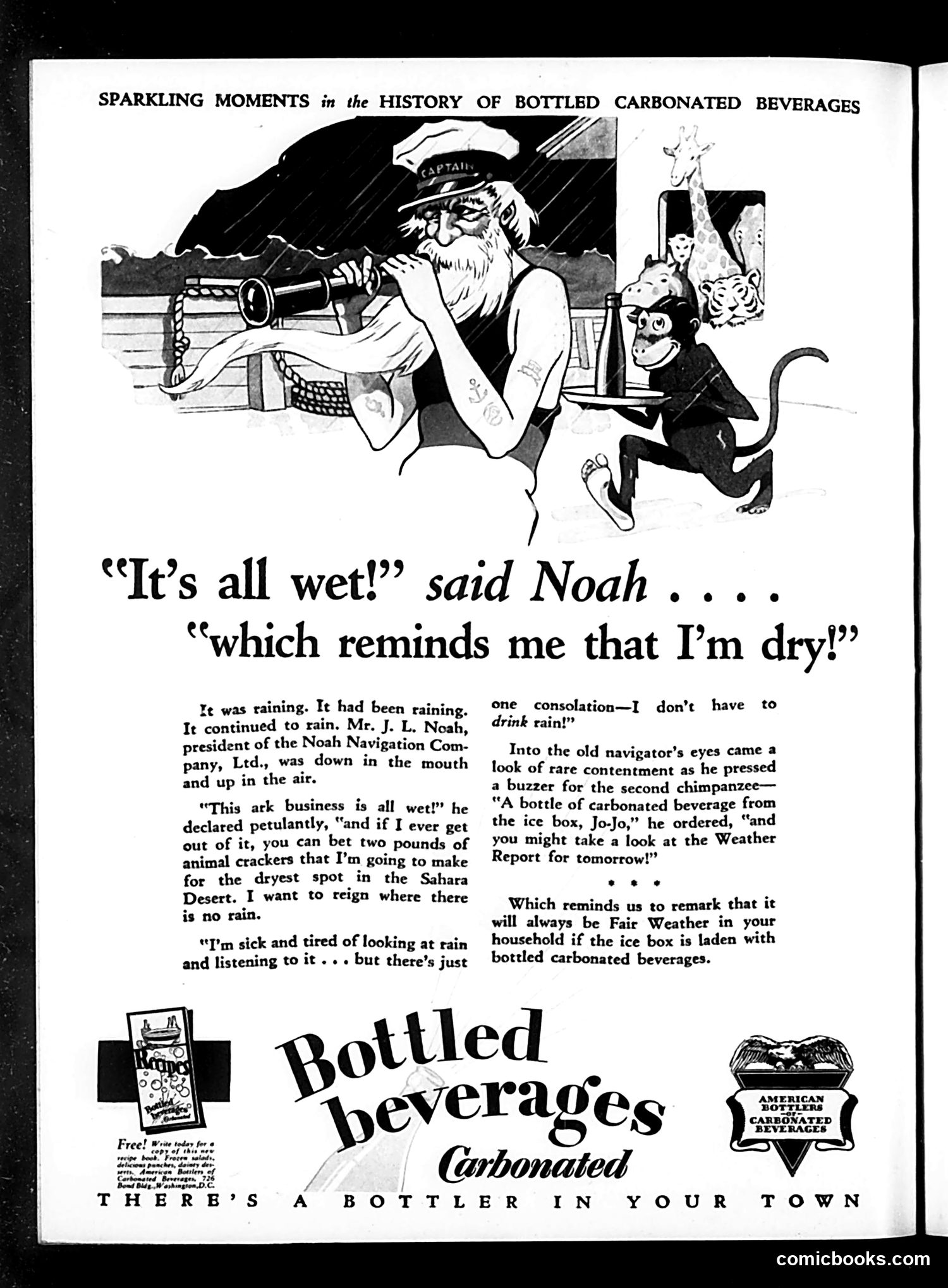
This is primarily an **advertisement for bottled carbonated beverages**, disguised as humorous editorial content—a common advertising approach of the era. The cartoon depicts **Noah** (the biblical figure, identifiable by his captain's hat and beard) complaining about rain during the flood, while a monkey holds a bottle of carbonated beverage. The joke is a pun: Noah says "It's all wet" (about the rain), which "reminds me that I'm dry"—meaning thirsty. The narrative frames a fictional anecdote about Mr. J.L. Noah, president of the Noah Navigation Company, who humorously laments the constant rain and wishes for the Sahara Desert's dryness. The solution offered: bottled carbonated beverages provide refreshment and "fair weather" indoors. The satire gently mocks both the rainy climate and offers the product as comedic relief—typical mid-century advertising that blended entertainment with marketing.
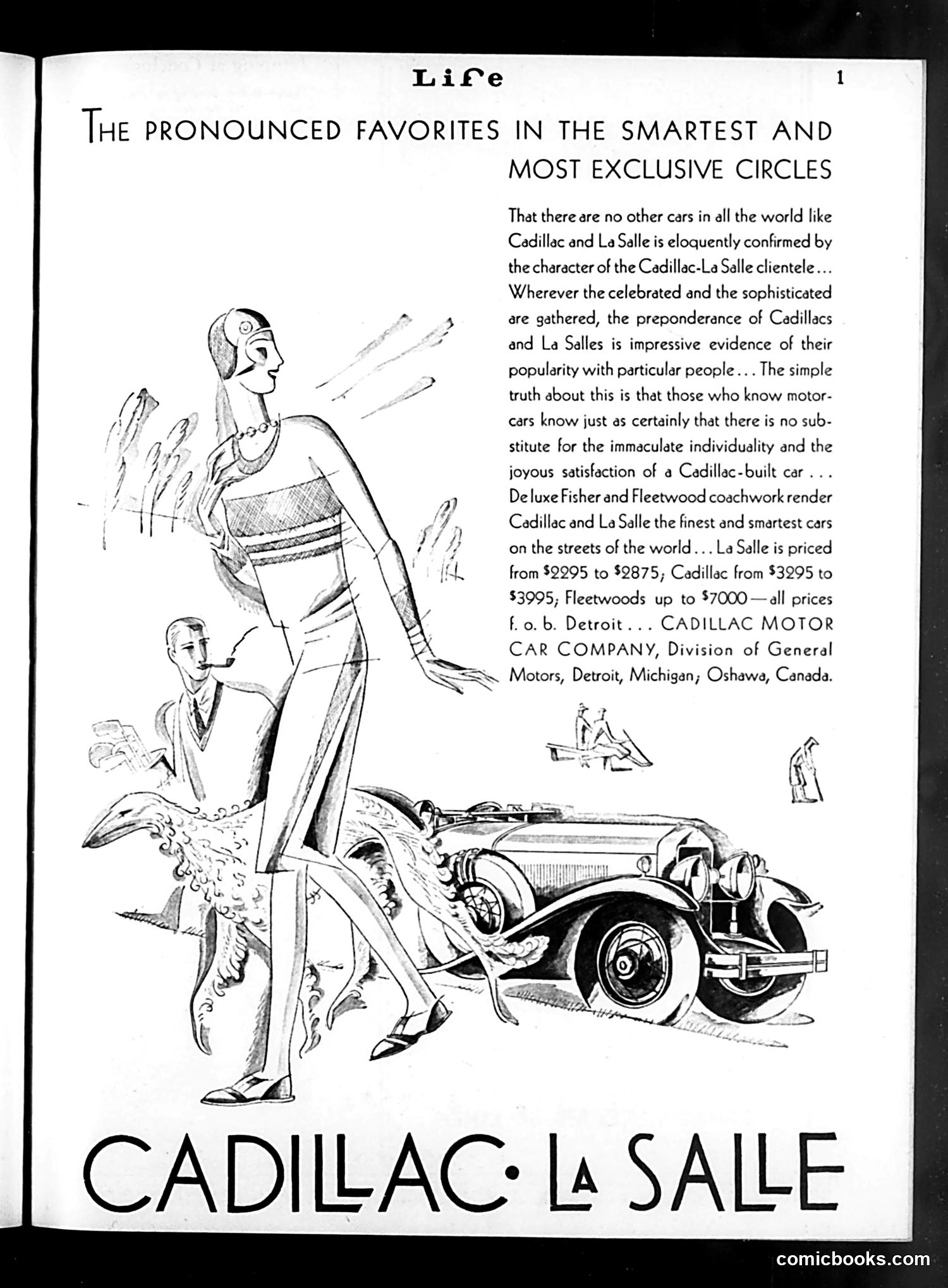
This is primarily a **luxury automobile advertisement**, not political satire. The page promotes Cadillac and La Salle cars to wealthy consumers. The illustration depicts an elegantly dressed woman in 1920s-30s style clothing, accompanied by attendants and a Cadillac automobile. The imagery suggests exclusivity and sophistication—appealing to "the celebrated and the sophisticated." The text explicitly states these cars are favorites among elite social circles, emphasizing their individuality and superiority. It notes De Luxe Fisher and Fleetwood coachwork options, with prices ranging from $2,295 to $7,000—substantial sums for the era, targeting the wealthy. The small figures in the background appear to be onlookers admiring the car and its fashionable owner, reinforcing the aspirational, status-conscious messaging typical of 1920s-30s luxury advertising.
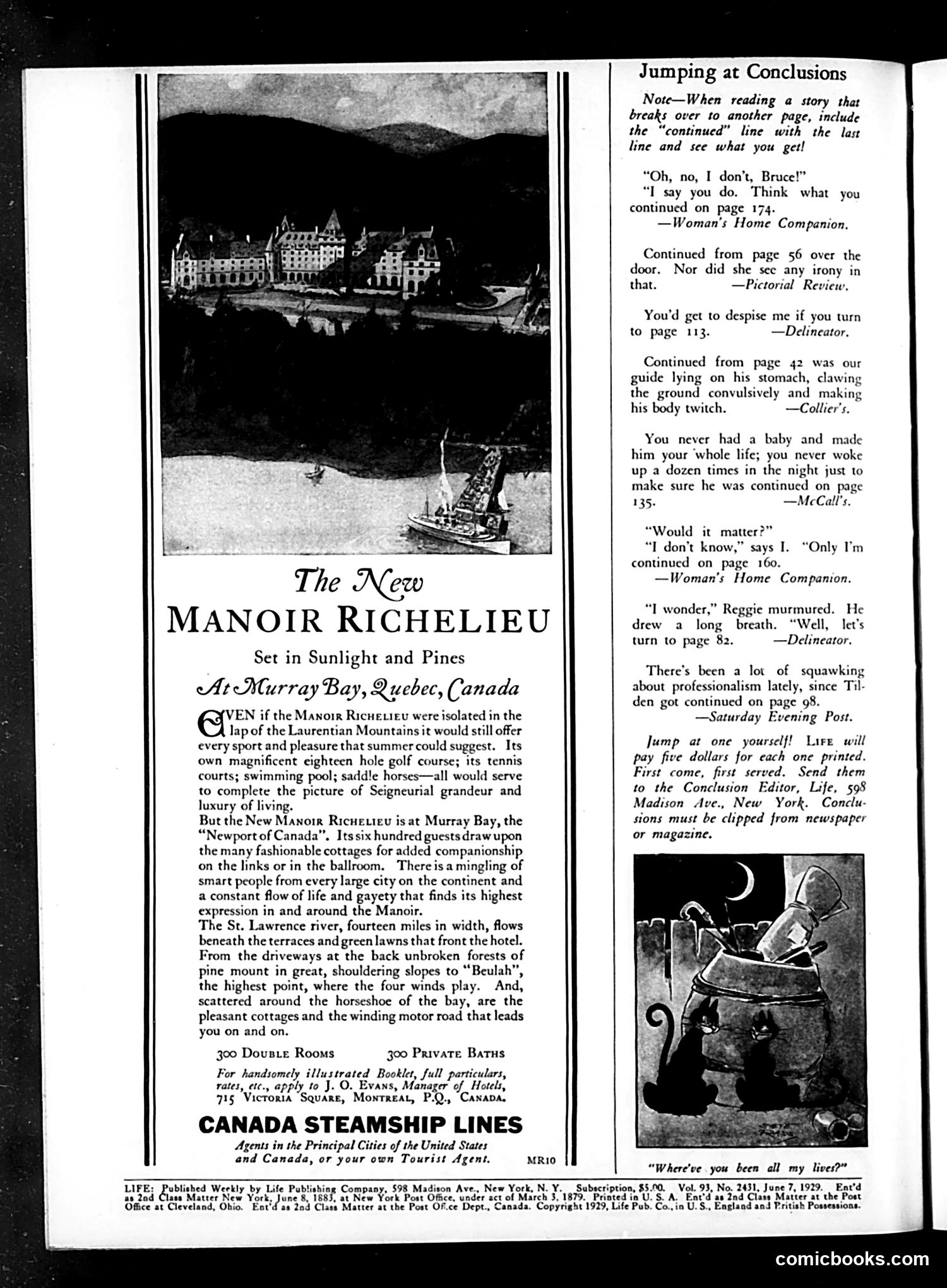
This page is primarily **advertising**, not satire or commentary. The left side features a full-page ad for the "New Manoir Richelieu," a luxury hotel resort in Murray Bay, Quebec, Canada. It emphasizes amenities like an eighteen-hole golf course, tennis courts, and horseback riding, targeting wealthy tourists seeking "Seigneurial grandeur." The right side contains a section titled "Jumping at Conclusions"—a recurring *Life* feature showcasing humorous story fragments and reader submissions. These brief, absurdist snippets are designed for entertainment rather than political commentary. The small illustration at bottom shows a domestic scene, likely accompanying one of these joke snippets. The page represents typical 1920s *Life* content: advertising revenue mixed with light humor for leisure-class readers.
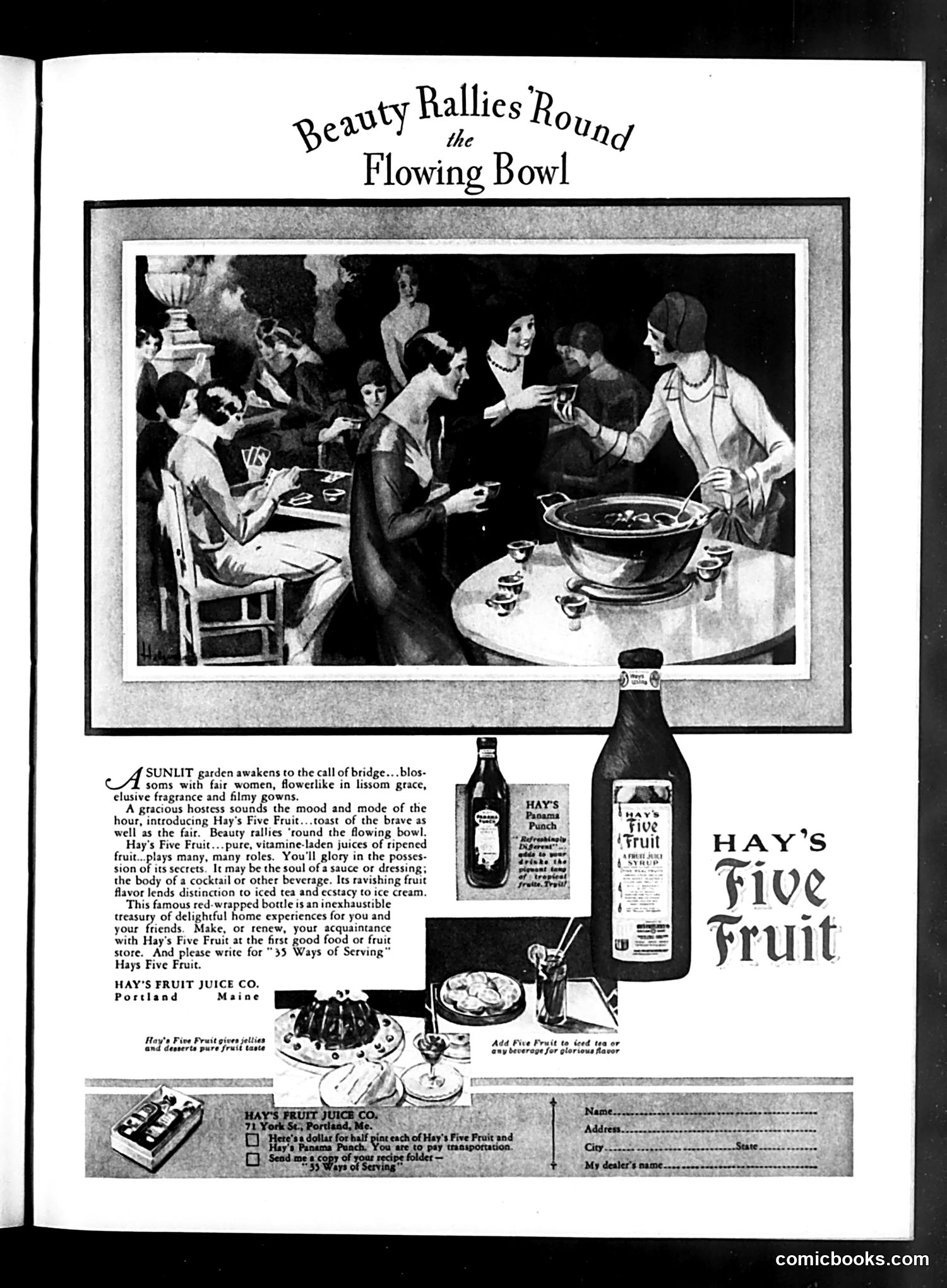
This page is primarily **advertising, not satire or political commentary**. It's a Hay's Fruit Juice Company advertisement from Life magazine. The top illustration shows an upper-class social gathering—a "Beauty Rallies Round the Flowing Bowl"—where well-dressed women in 1920s attire gather around a large punch bowl. The scene depicts leisure-class entertainment typical of the era. The advertisement uses this aspirational social imagery to sell Hay's Five Fruit juice as a sophisticated beverage suitable for entertaining guests. The text promises the product will enhance one's social standing and entertaining abilities. The copy emphasizes luxury, purity, and vitamins—marketing appeals common to interwar consumer products. There's a coupon at bottom for ordering information or recipes, standard for period advertising.
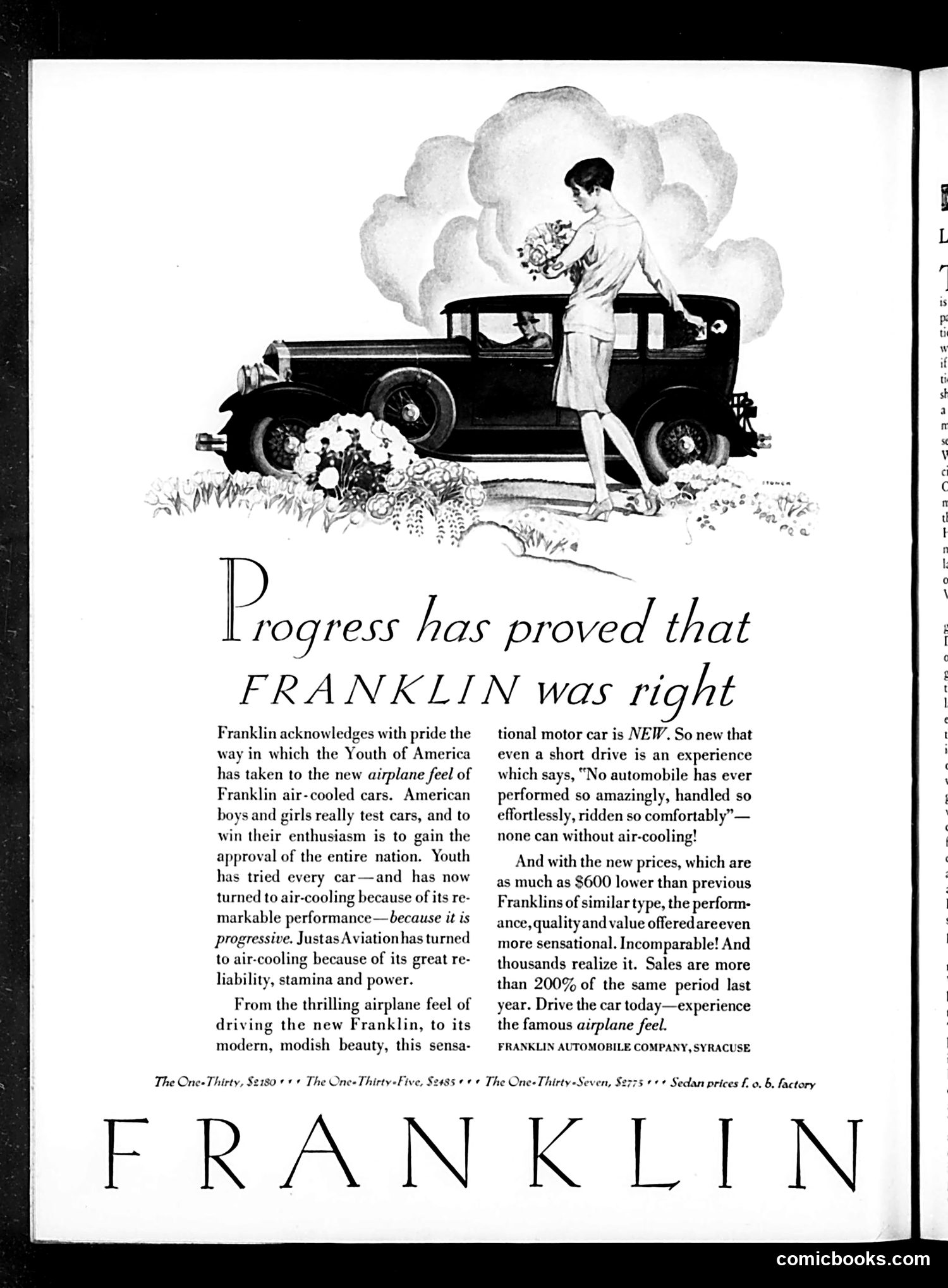
This is primarily a **Franklin automobile advertisement**, not political satire. The image shows a stylishly dressed woman admiring a Franklin car beside flowers, representing aspirational 1920s consumer culture. The ad's satire is **commercial rather than political**: it mockingly claims "Progress has proved that FRANKLIN was right," referencing Franklin's earlier marketing emphasis on air-cooling technology. The copy playfully suggests competitors dismissed this innovation until sales success vindicated it. The "airplane feel" messaging appealed to 1920s fascination with aviation as the ultimate symbol of modernity. The ad positions Franklin as progressive and forward-thinking, with price reductions ($600 cheaper) and superior performance to justify purchasing. This reflects post-WWI American optimism about technology and consumer goods.
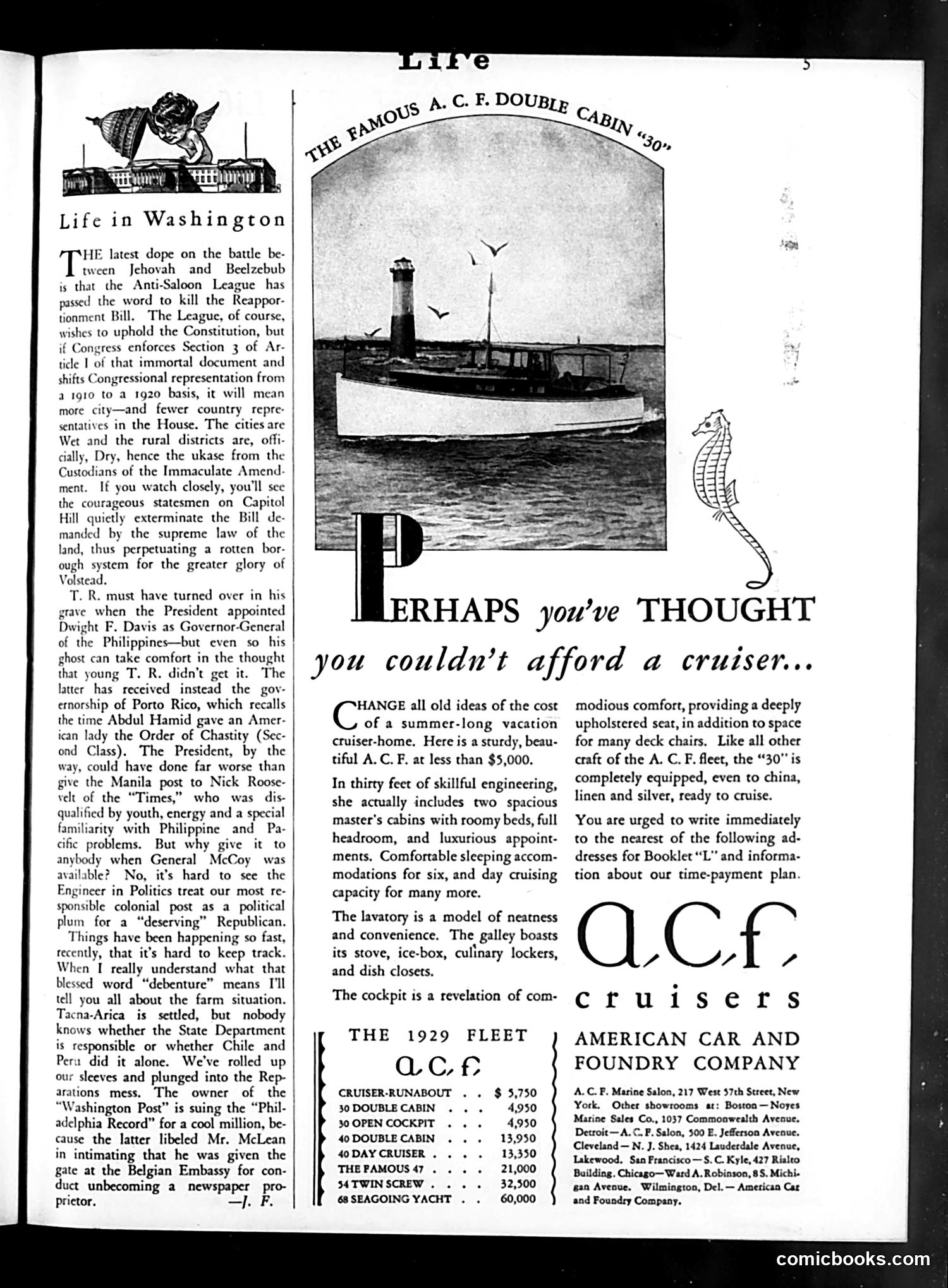
This page contains a political column titled "Life in Washington" alongside an advertisement for A.C.F. cruisers. The column discusses Congressional representation changes resulting from the 1910-1920 census, noting that cities will gain representatives while rural areas lose them. It then critiques President Dwight F. Davis's appointment as Governor-General of the Philippines, suggesting it's a political favor to a young man lacking qualifications. The author expresses concern about General McCoy's colonial appointment and references ongoing tensions regarding the farm situation and tariffs—though admitting uncertainty about responsibility between Chile and Peru. The tone is satirical, mocking political patronage and the administration's handling of colonial and domestic affairs. The accompanying ship advertisement appears to be standard commercial content rather than satirical commentary.
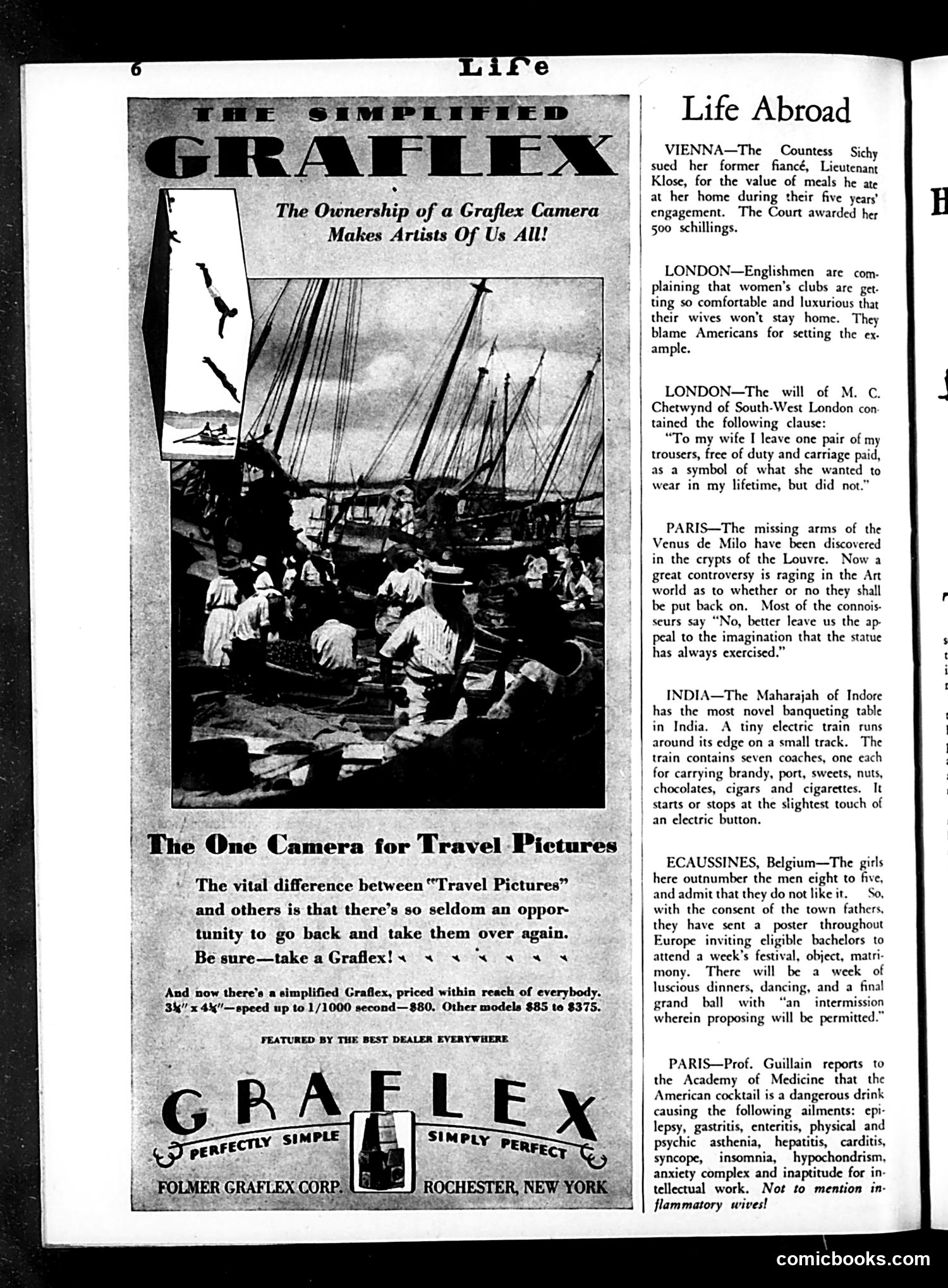
This page is primarily an **advertisement for Graflex cameras**, not satirical content. The large left-side ad promotes the Graflex as "The One Camera for Travel Pictures," showing a photograph of what appears to be a harbor or dock scene with sailing vessels and workers. The right side contains a "Life Abroad" column featuring international social gossip and news briefs from Vienna, London, Paris, India, Belgium, and Paris again—covering topics like a woman suing her fiancé, complaints about women's clubs, the Venus de Milo arms controversy, and a Maharajah's novelty banqueting train. There is no political cartoon or caricature on this page. The content reflects *Life* magazine's typical blend of lifestyle advertising and cosmopolitan society commentary aimed at affluent American readers.
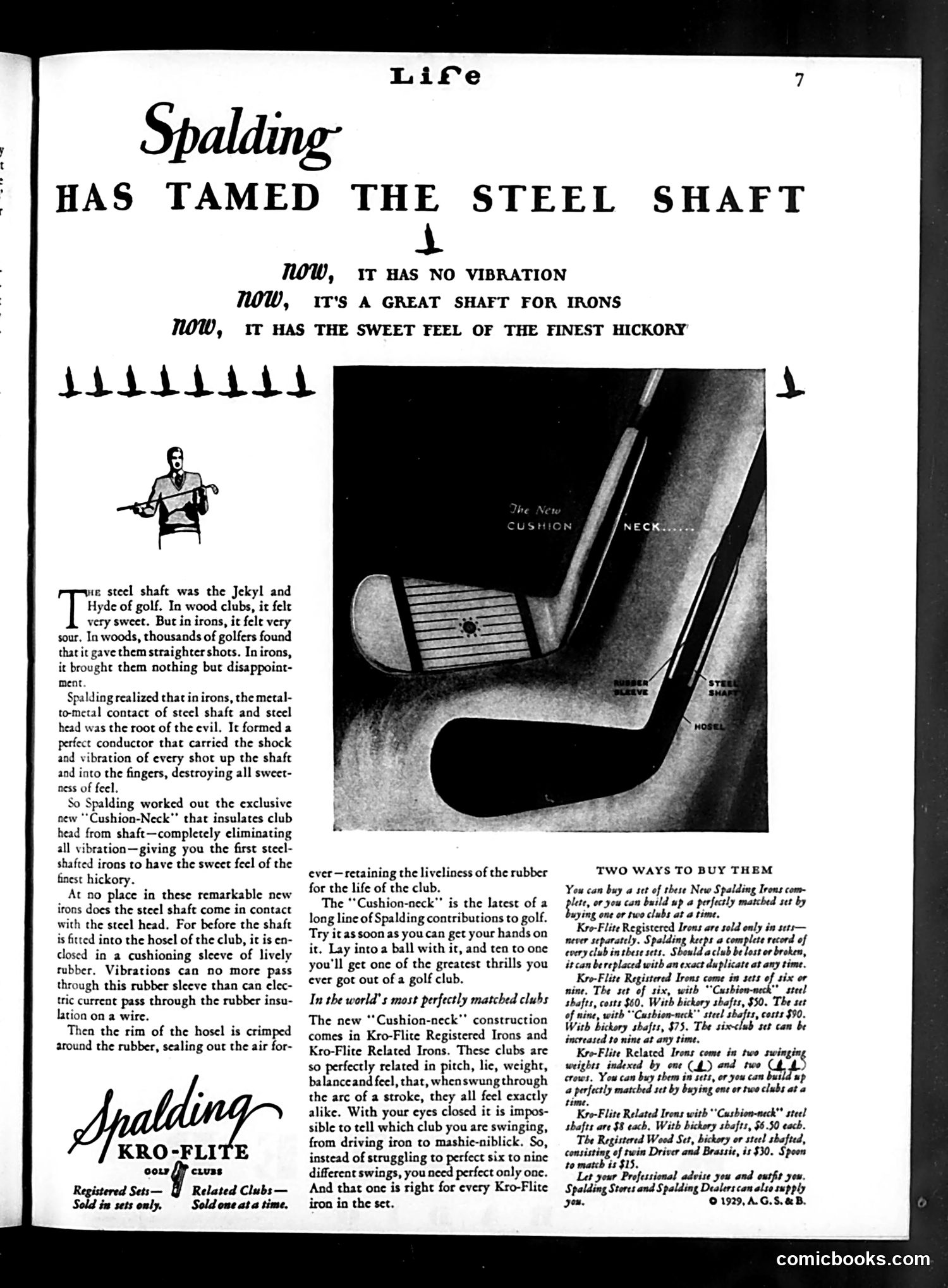
This page is **primarily an advertisement**, not a political cartoon. It promotes Spalding "Kro-Flite" golf clubs, specifically their new "Cushion-Neck" iron design. **The pitch:** Spalding claims to have solved a longstanding problem with steel-shaft golf irons—vibration and loss of feel upon impact. The "Cushion-Neck" insulation system allegedly eliminates this vibration while preserving the satisfying feedback golfers want. **Visual elements:** A diagram shows the club's internal construction; a golfer demonstrates proper swing form. **The social context:** This reflects early 20th-century golf's prominence among affluent Americans. The ad assumes readers are familiar with—and can afford—premium golf equipment and its technical refinements. There is no satire or political content here; it's a straightforward commercial advertisement.
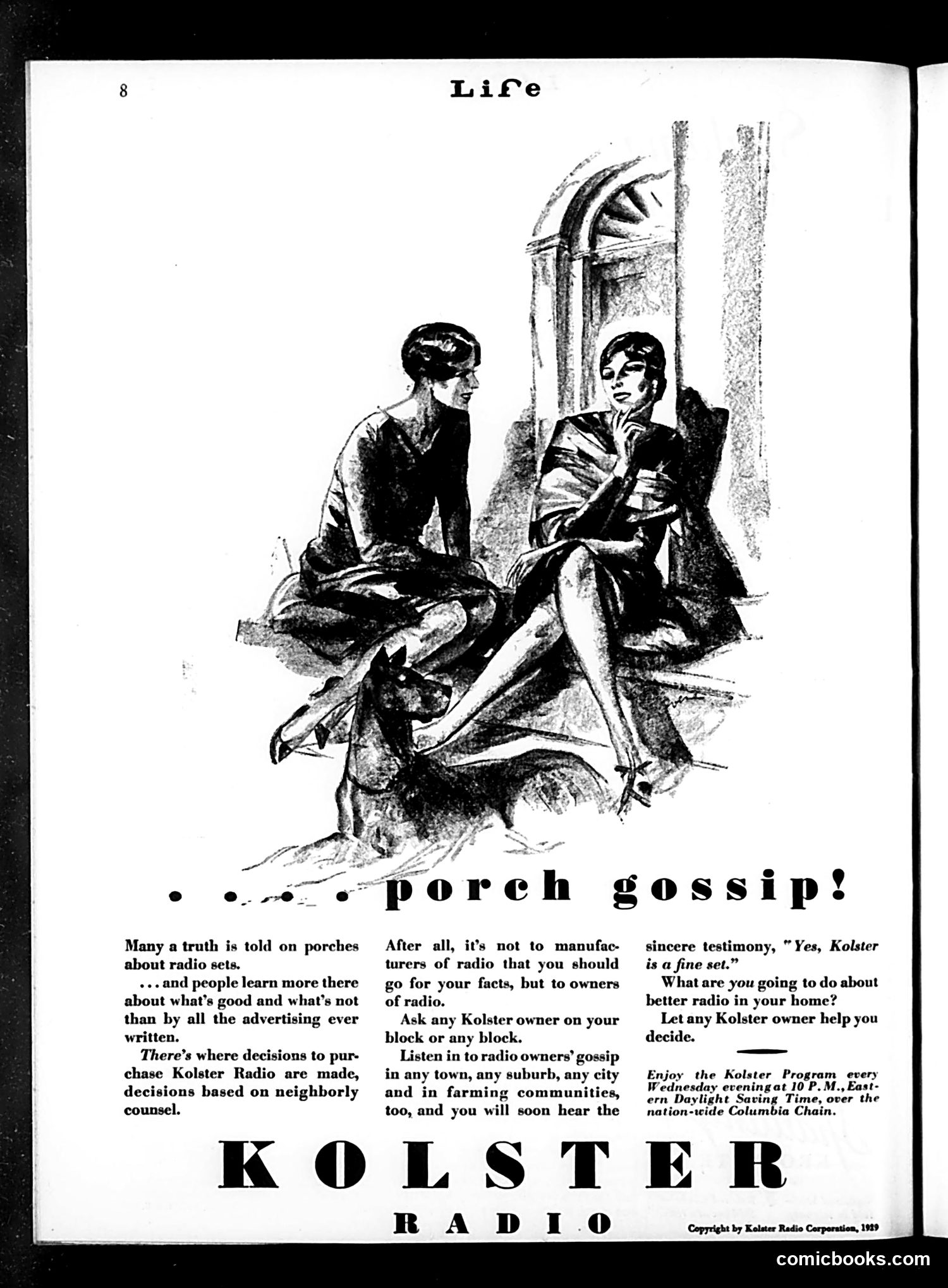
This is a **Kolster Radio advertisement**, not political satire. The illustration shows two women gossiping on a porch—a common social scene of the era. The ad's "porch gossip" framing is a marketing strategy: it claims that radio owners make purchasing decisions based on **word-of-mouth recommendations from neighbors** rather than manufacturer advertising alone. The key message is that Kolster Radio's reputation spreads through personal testimony ("sincere testimony, 'Yes, Kolster is a fine set'"). The ad encourages potential customers to ask current Kolster owners in their community about the product, suggesting this peer endorsement is more persuasive than traditional advertising. This reflects early radio marketing tactics relying on grassroots social proof rather than corporate claims.
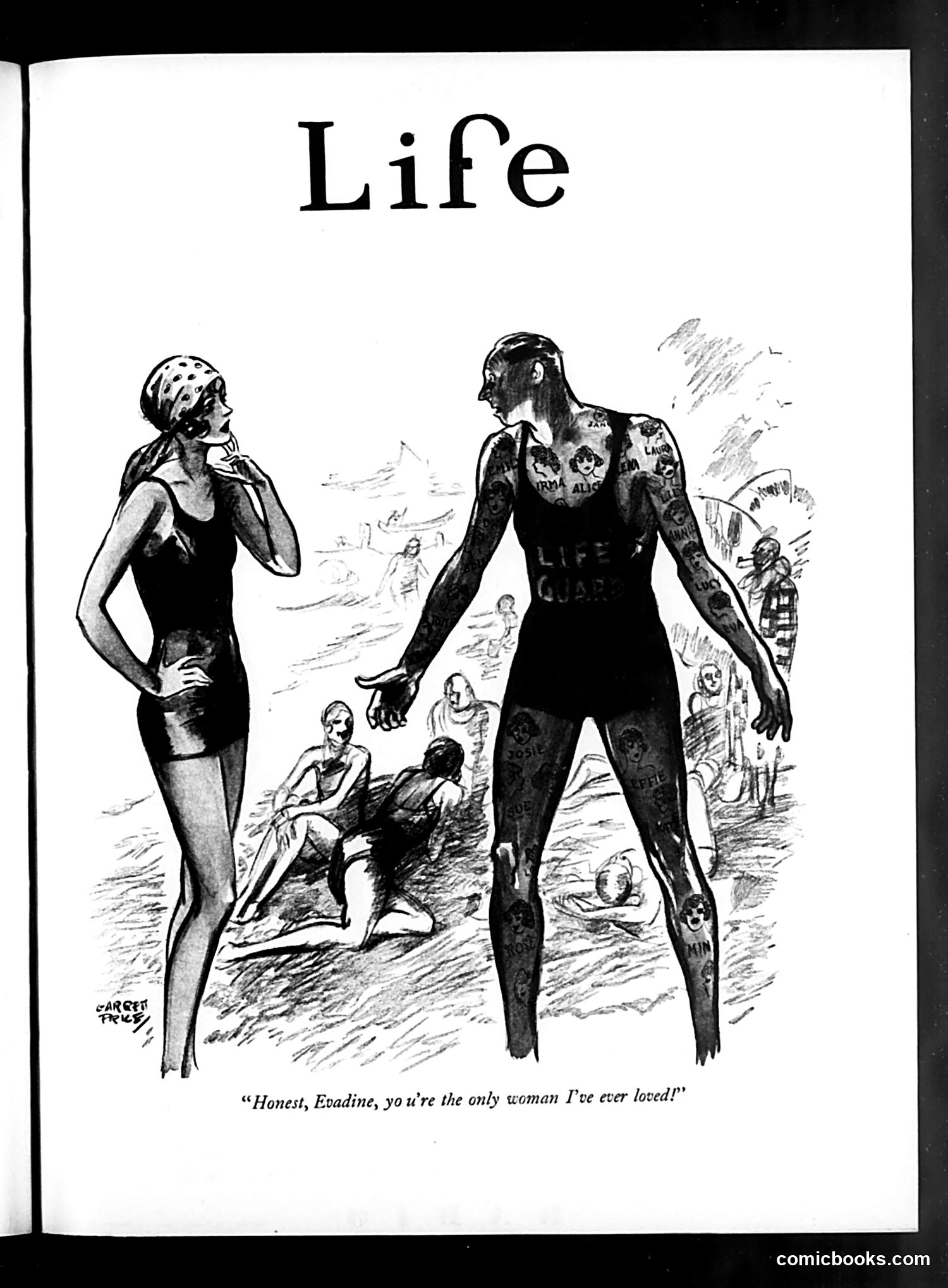
This appears to be a vintage Life magazine illustration titled "Life," depicting a beach scene with two figures in swimwear. The caption reads: "Honest, Evadine, yo're the only woman I've ever loved!" The cartoon satirizes romantic declarations at the beach—a common setting for flirtation and courtship. The humor lies in the implausibility of the man's claim given the beach's crowded setting visible in the background, with multiple other beachgoers present. The exaggerated physiques and the man's heavily tattooed body (marked with "LIFE GUARD" text visible on his suit) suggest this may mock either superficial beach romance or the boastful declarations of lifeguards specifically. The cartoon's satire targets insincere romantic language and the performative nature of beach socializing, likely resonating with early-to-mid 20th century audiences familiar with these social dynamics.
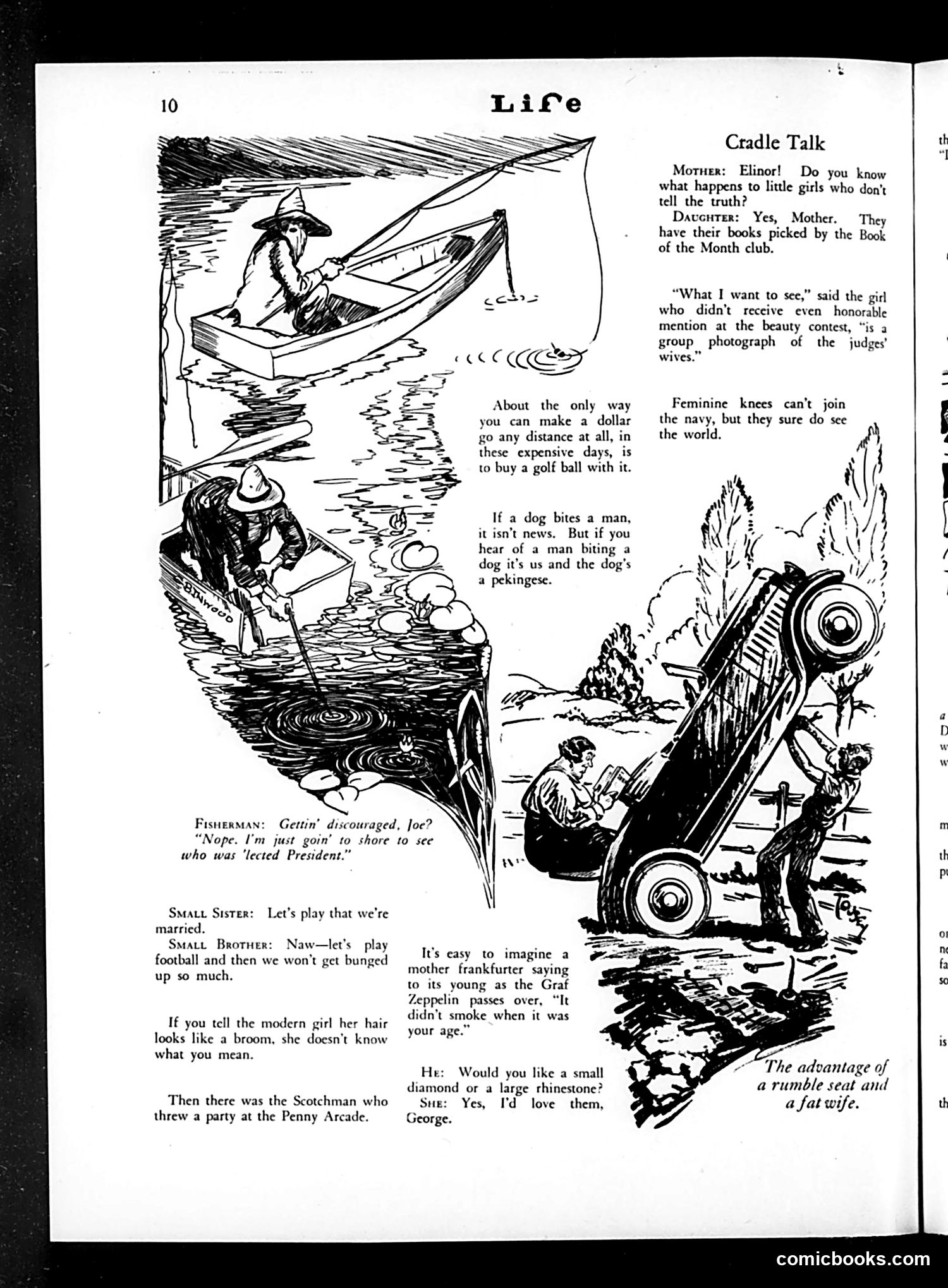
This page contains several short humorous vignettes rather than unified political commentary. The "Cradle Talk" section satirizes modern girls and women through domestic and social scenarios: 1. **The fishing scene** shows a fisherman avoiding shore visits—likely commenting on 1920s social changes. 2. **The car crash cartoon** (captioned "The advantage of a humble seat and a fat wife") depicts a vehicle accident with dark humor about wives as protective padding—reflecting period misogyny. 3. **Scattered dialogue snippets** mock modern girls' materialism (Book of the Month clubs), gender equality (women in the navy), beauty standards, and courtship games ("playing married"). 4. **The Scotchman's party reference** appears to be a separate anecdote. The overall tone satirizes contemporary social shifts, women's changing roles, and modern courtship customs that seemed foolish or concerning to the magazine's 1920s audience.
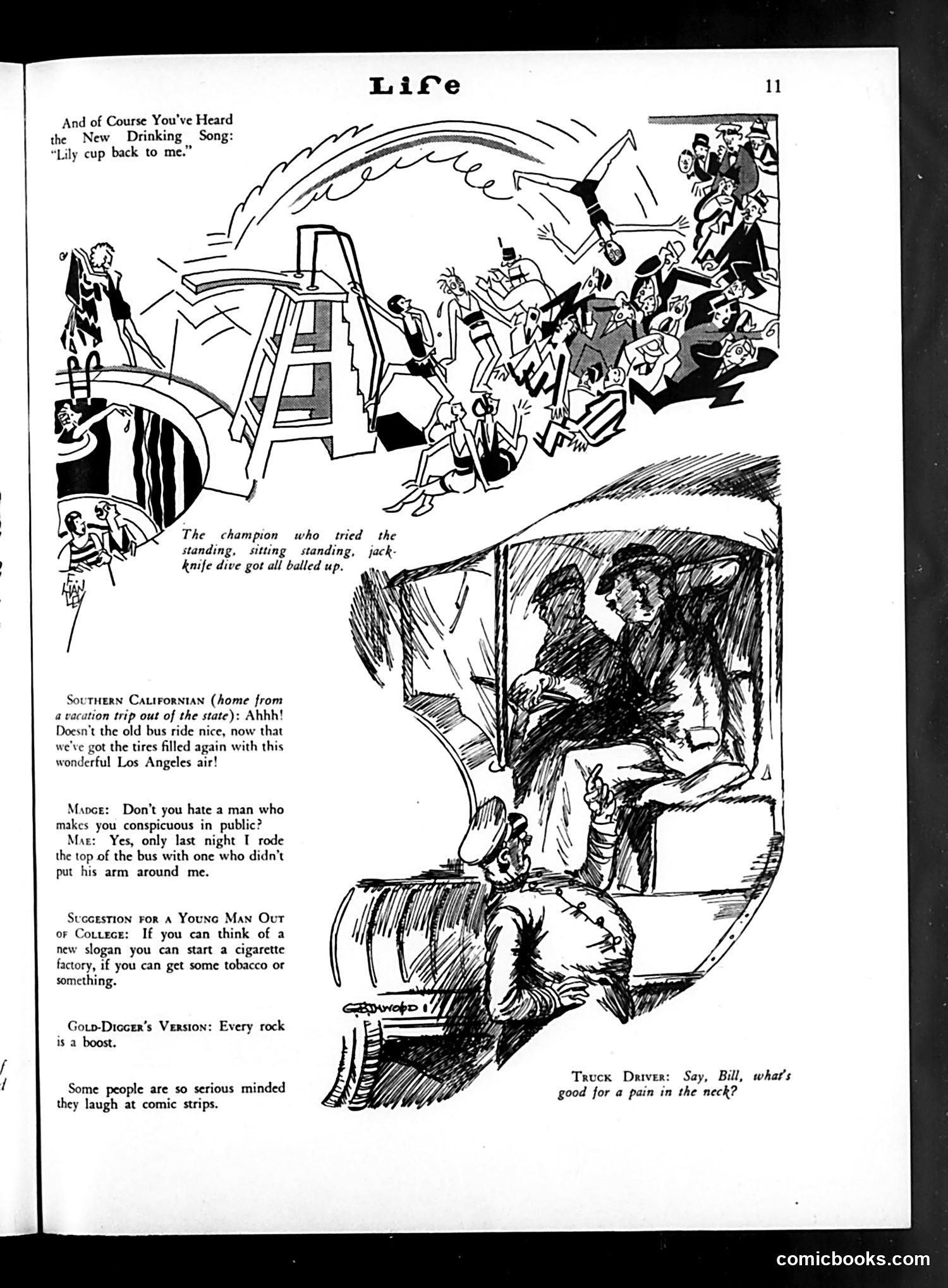
This page contains several short humorous anecdotes and one larger cartoon. The main cartoon depicts a chaotic scene at what appears to be a public gathering or venue, with figures scattered around a ladder or stand, illustrating the caption: "The champion who tried the standing, sitting, standing, jackknife dive got all balled up." The surrounding text includes brief satirical snippets mocking various social types: a Southern Californian boasting about bus travel, a complaint about men who make themselves "conspicuous in public," a suggestion for unemployed college graduates to start cigarette factories, and a Gold-Digger's cynical definition that "Every rock is a boob." The humor targets early 20th-century American social pretensions and stereotypes, using exaggeration and wordplay typical of Life's style.
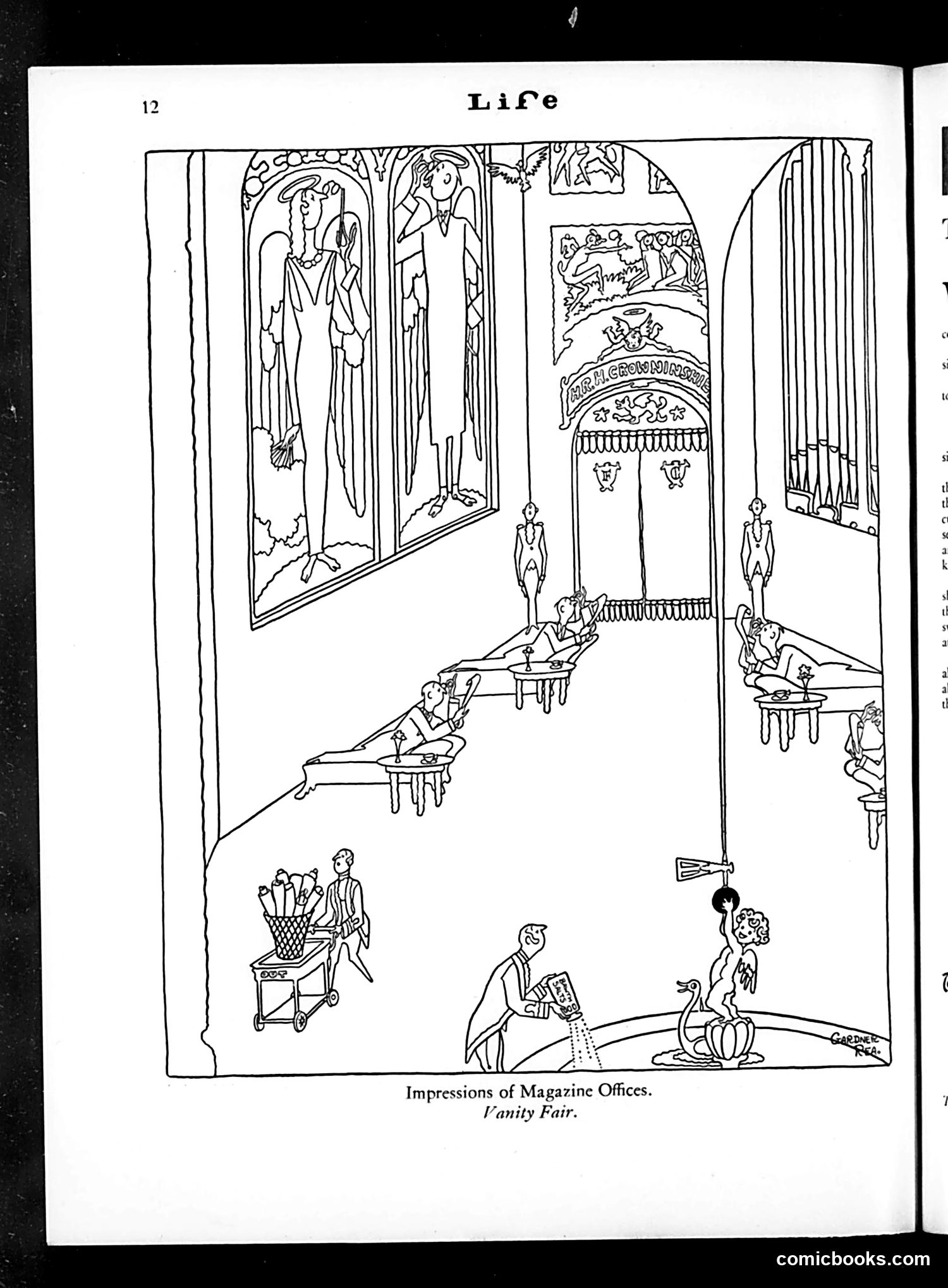
This satirical illustration depicts the interior of a magazine office building, shown in cross-section. The cartoon mocks the hierarchical nature and various operations of magazine publishing operations of the era. The image shows multiple floors with different activities: editorial work, advertising, and administrative tasks occurring simultaneously. Figures are scattered across different levels—some seated at desks working, others conducting business or managing operations. At ground level, someone waters a plant while others handle shopping carts and perform menial tasks. The satire likely critiques the disparate working conditions, class divisions, and bureaucratic complexity within magazine offices—contrasting intellectual labor upstairs with mundane support work below. The ornate architectural details suggest the pretension of such establishments despite their internal inefficiencies.
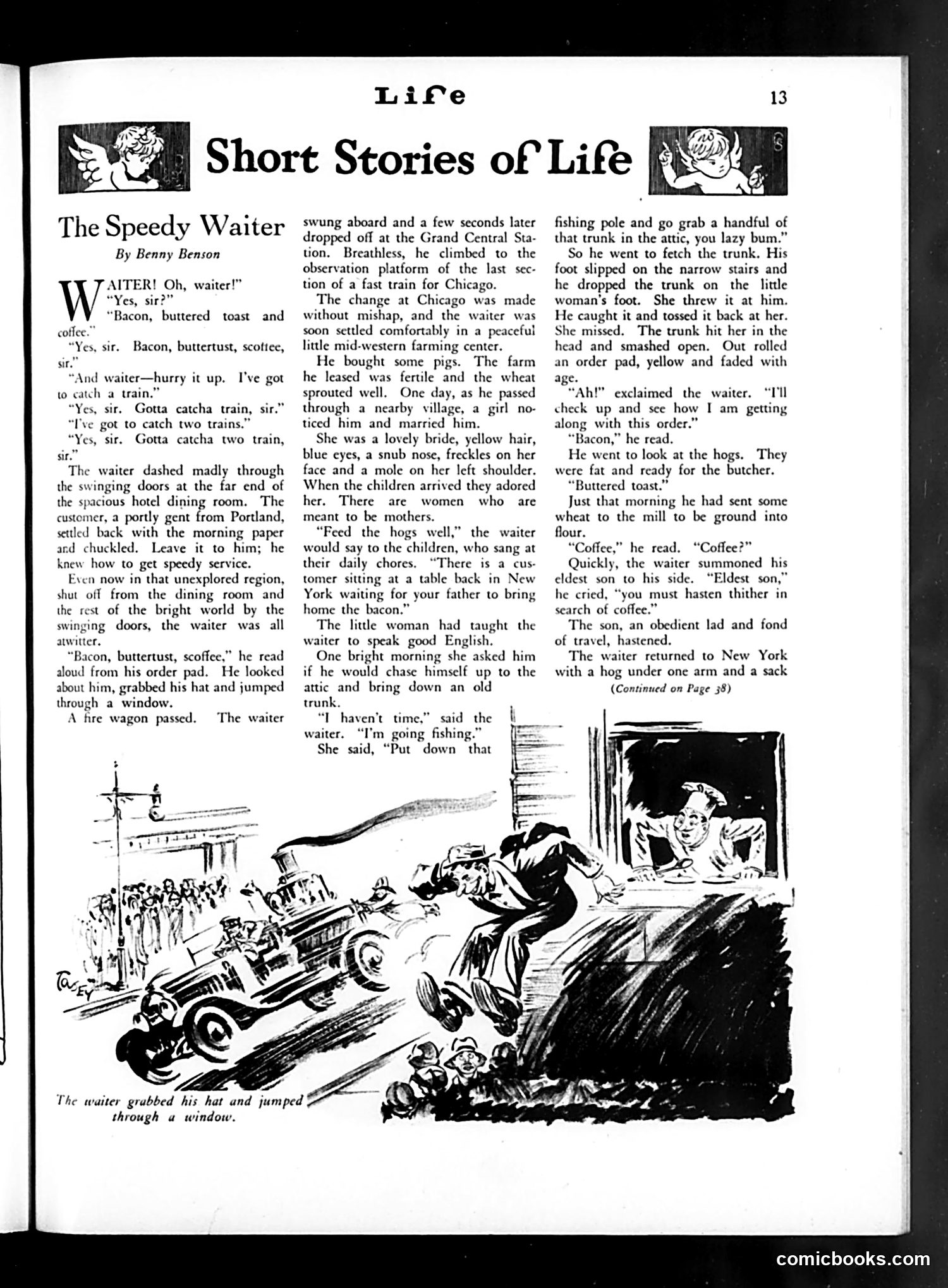
This is a humorous short story about a waiter's frantic day. The narrative follows a harried restaurant worker rushing to serve customers while simultaneously managing personal errands—catching trains, attending to farm business, and retrieving a hog. The accompanying illustration depicts the waiter literally jumping through a window in a state of chaos, with cars and crowds visible outside, emphasizing the story's comedic premise of extreme time pressure. The humor derives from the contrast between the waiter's job responsibilities and his increasingly absurd attempts to accomplish everything simultaneously. This reflects early-20th-century American themes of urban speed, multitasking, and the pressures of service-industry work—treating serious workplace stress as comedic fodder for entertainment purposes.
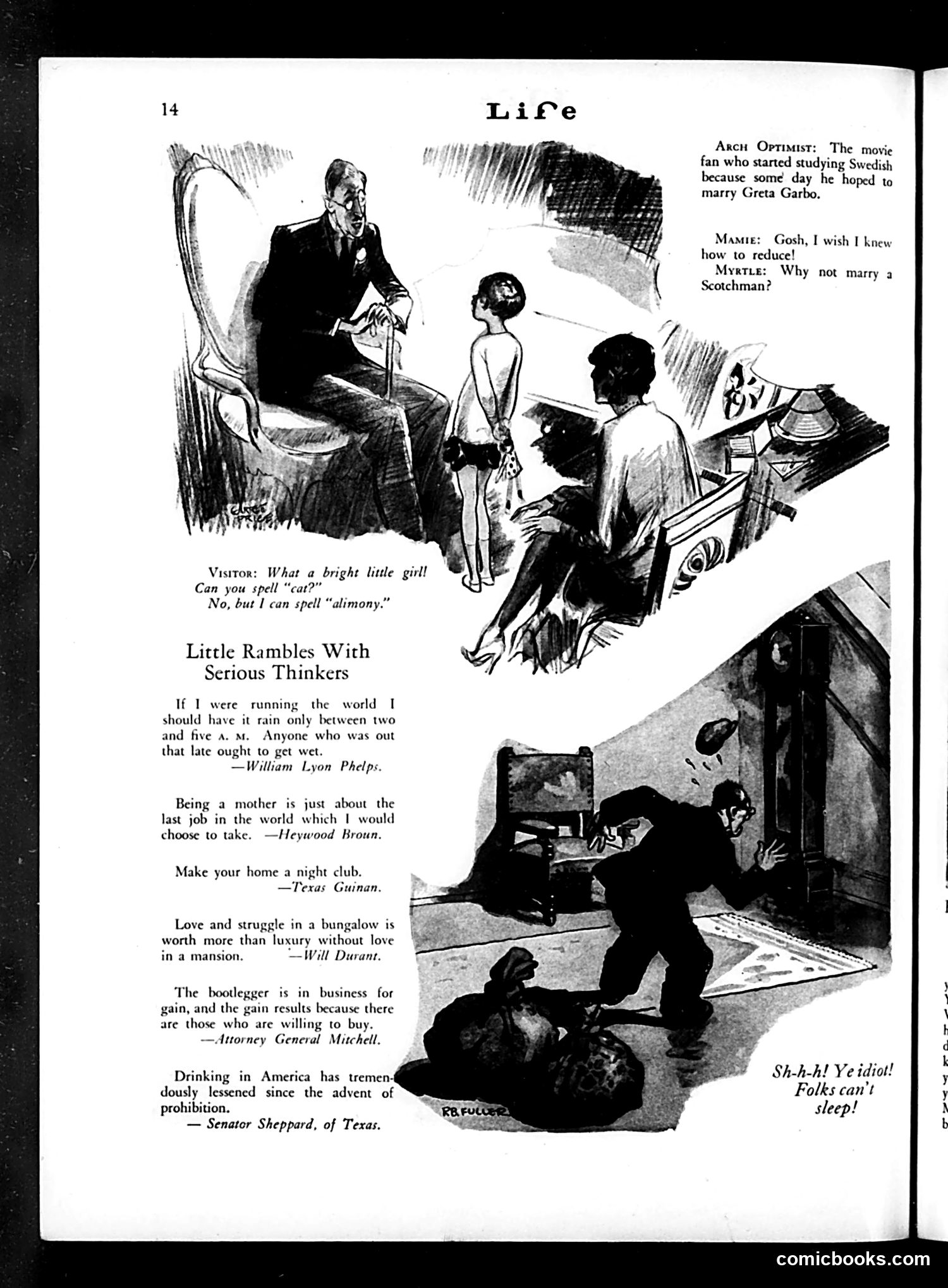
**Top Cartoon:** A visitor asks a well-dressed man seated with three children if the bright girl can spell "cat." She replies she can spell "alimony" instead. This jokes about divorce and child support—the man appears to be paying alimony, making the child's unexpected knowledge of that term darkly humorous. **Bottom Section:** "Little Rambles With Serious Thinkers" collects quotations from public figures (William Lyon Phelps, Heywood Broun, Will Durant, etc.) on life philosophy. The accompanying illustration shows police conducting a raid, with the caption "Sh-h-h! Ye idiot! Folks can't sleep!"—likely satirizing Prohibition-era law enforcement and the disruption caused by alcohol raids.
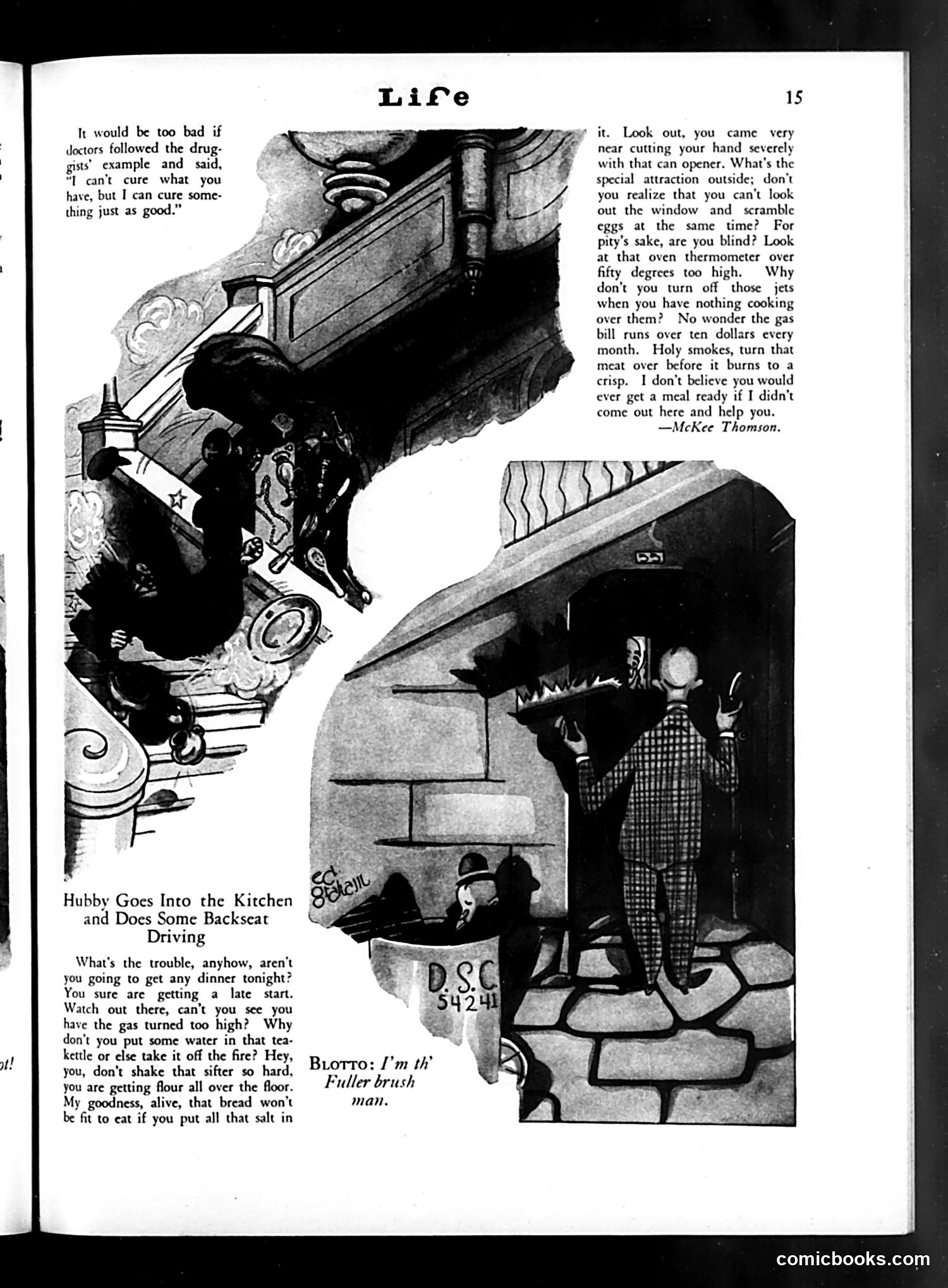
This page contains two satirical cartoons about domestic life and housekeeping, likely from the early 20th century. The top cartoon, "Hubby Goes Into the Kitchen and Does Some Backseat Driving," depicts a husband criticizing his wife's cooking and kitchen management. The accompanying text mocks husbands who offer unsolicited advice—pointing out gas flame height, oven temperature, multitasking impossibilities, and high utility bills—while contributing nothing themselves. The satire targets men who complain about domestic expenses and food quality without understanding actual cooking demands. The bottom cartoon caption reads "Blotto: I'm th' Fuller brush man," showing what appears to be a disheveled visitor at a doorway, likely referencing Fuller Brush Company salesmen who were common door-to-door peddlers of the era. Both pieces humorously critique domestic gender dynamics of their time.
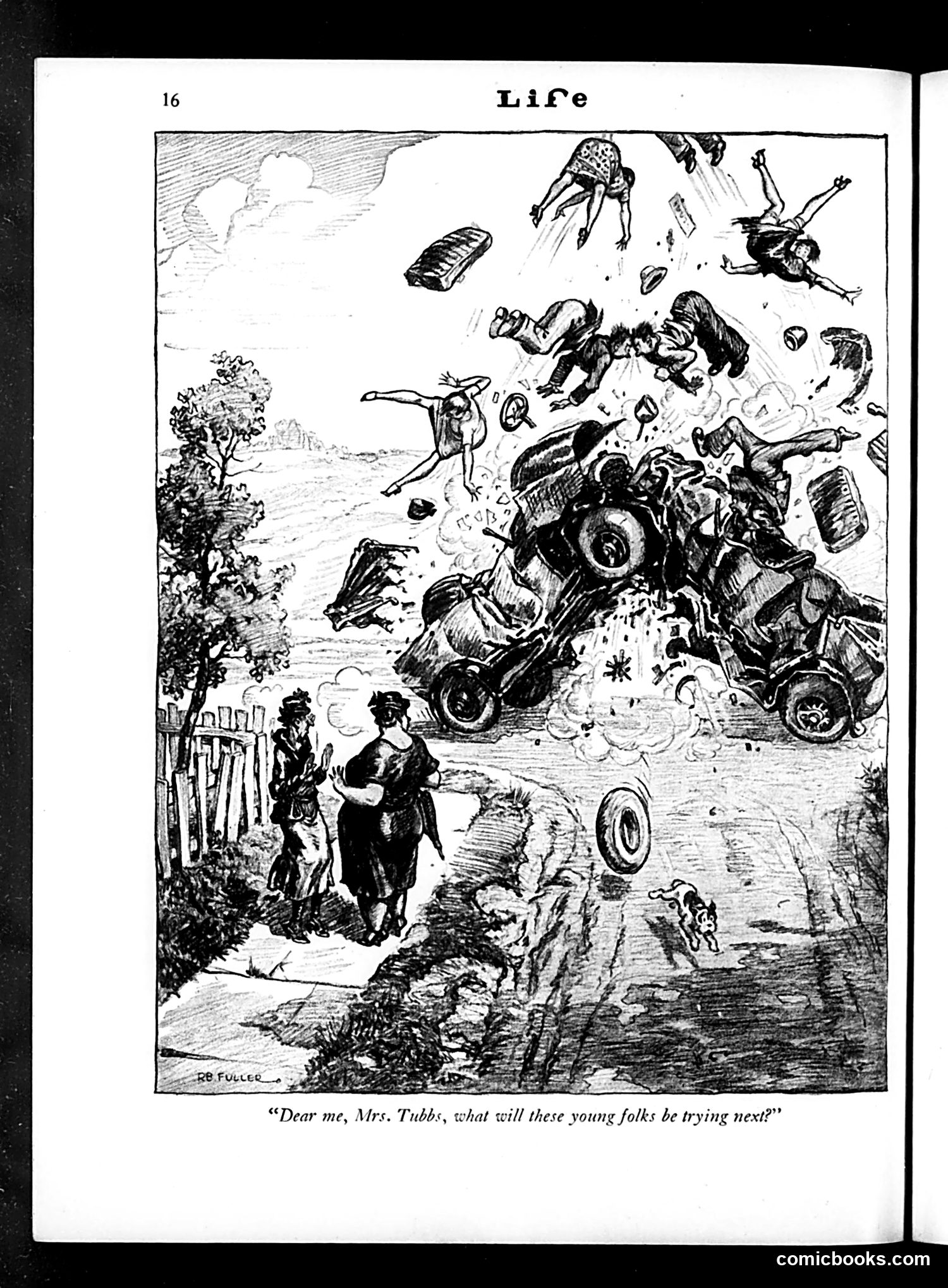
This is a satirical cartoon from *Life* magazine showing a chaotic car crash scene. Two well-dressed older figures (appearing to be a couple) stand safely by a fence on the left, observing the mayhem. The caption reads: "Dear me, Mrs. Tubbs, what will these young folks be trying next?" The satire targets generational attitudes toward reckless youth behavior and dangerous driving. The pileup of automobiles with bodies flying through the air represents the hazards of early-20th-century motor vehicles. The cartoon mocks older generations' bewilderment at young people's risk-taking with new technology (cars), suggesting they view such accidents as inevitable follies of youth rather than consequences of dangerous driving. The artist is signed "R.B. Fuller."
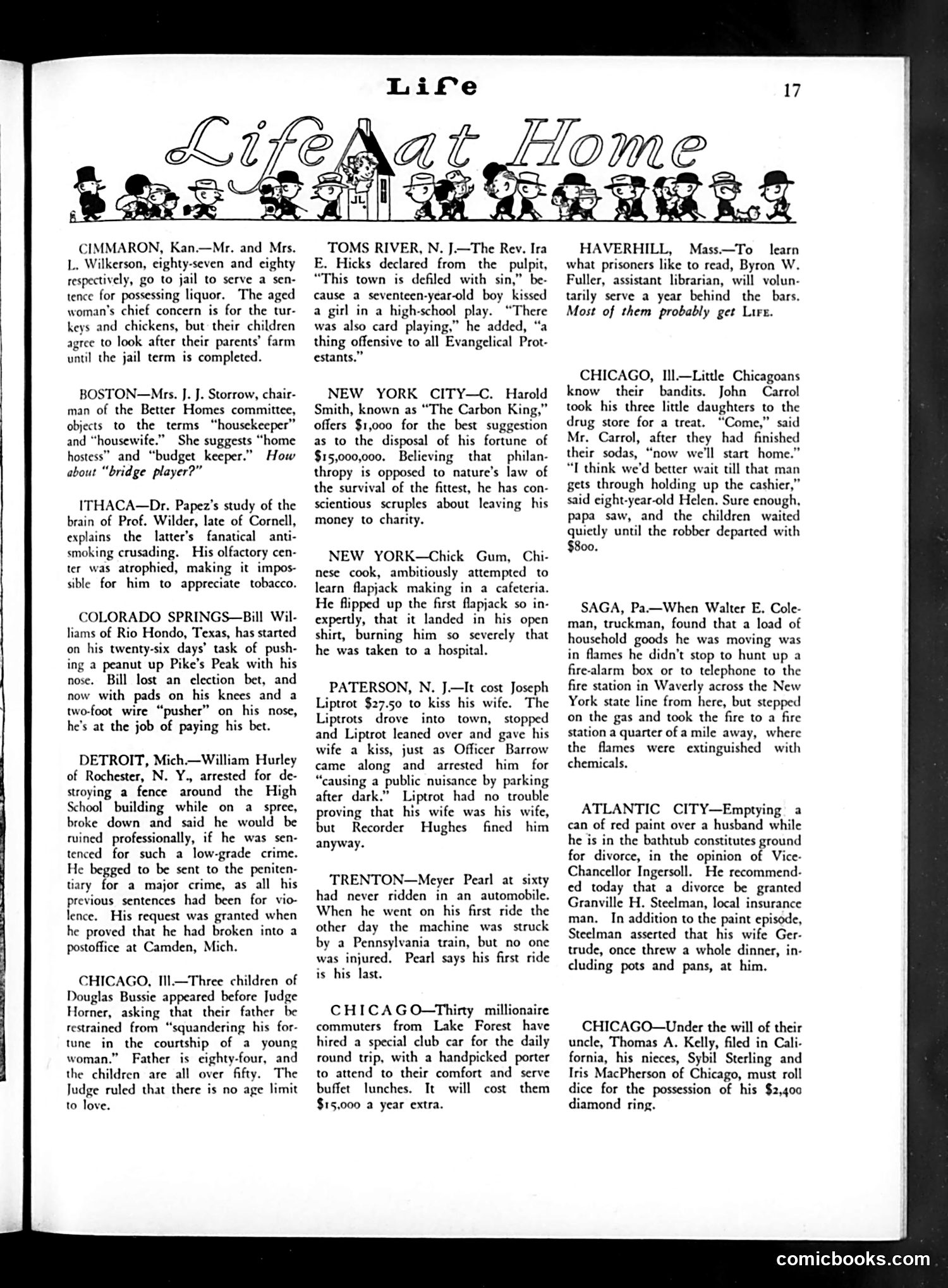
This page from *Life* magazine's "Life at Home" humor section contains brief, satirical anecdotes about everyday American incidents rather than political cartoons. The humor targets various social situations: - Elderly couple jailed for liquor possession - A teenage boy kissing a girl during a school play (deemed offensive to "Evangelical Protestants") - A Chinese cook attempting to learn flapjack-making - A man arrested for kissing his wife in public after paying for the privilege - A woman hospitalized after a cooking accident with a flapjack - A woman divorcing over her husband's bathtub behavior The satire mocks Prohibition-era moral strictness, religious prudishness, emerging immigration experiences, and domestic absurdities. The tone is lighthearted rather than cutting, reflecting early 1920s middle-class American society's quirks and anxieties.
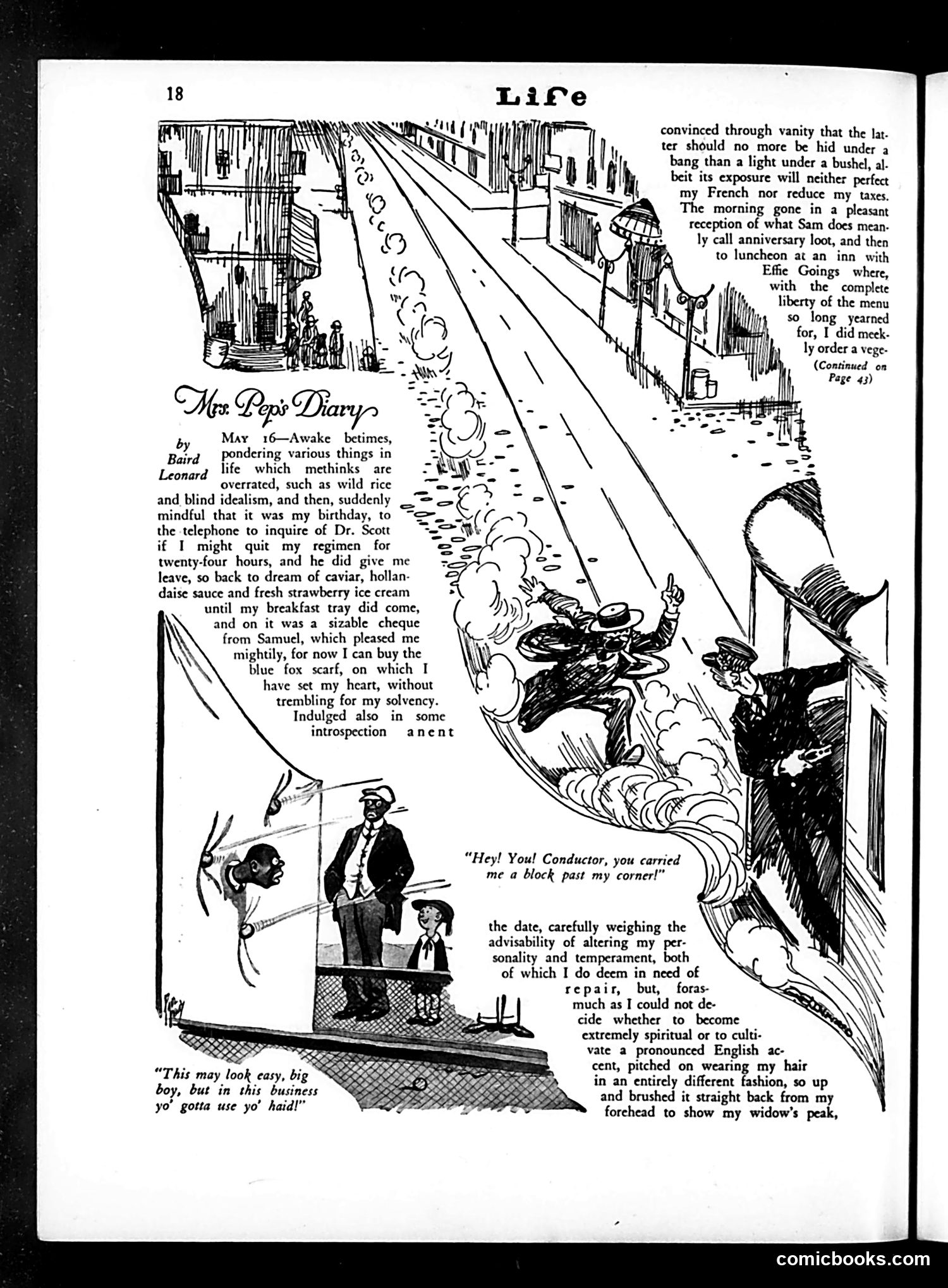
This is a humorous diary entry dated May 16, featuring social satire about upper-class leisure and pretension. The main illustration shows a woman on what appears to be a luxury ocean liner or yacht, surrounded by steam/smoke effects suggesting motion or indulgence. The diary entry mocks genteel vanity: the narrator celebrates her birthday by calling a doctor to request a 24-hour break from her "regimen," then fantasizes about caviar, hollandaise sauce, and strawberry ice cream—luxuries she's apparently denied herself. She's recently purchased an expensive blue fox scarf despite financial concerns about solvency. The side illustrations show street scenes with working-class figures (conductor, laborers), contrasting sharply with the narrator's self-indulgent preoccupations, highlighting the gap between her aspirations and reality.
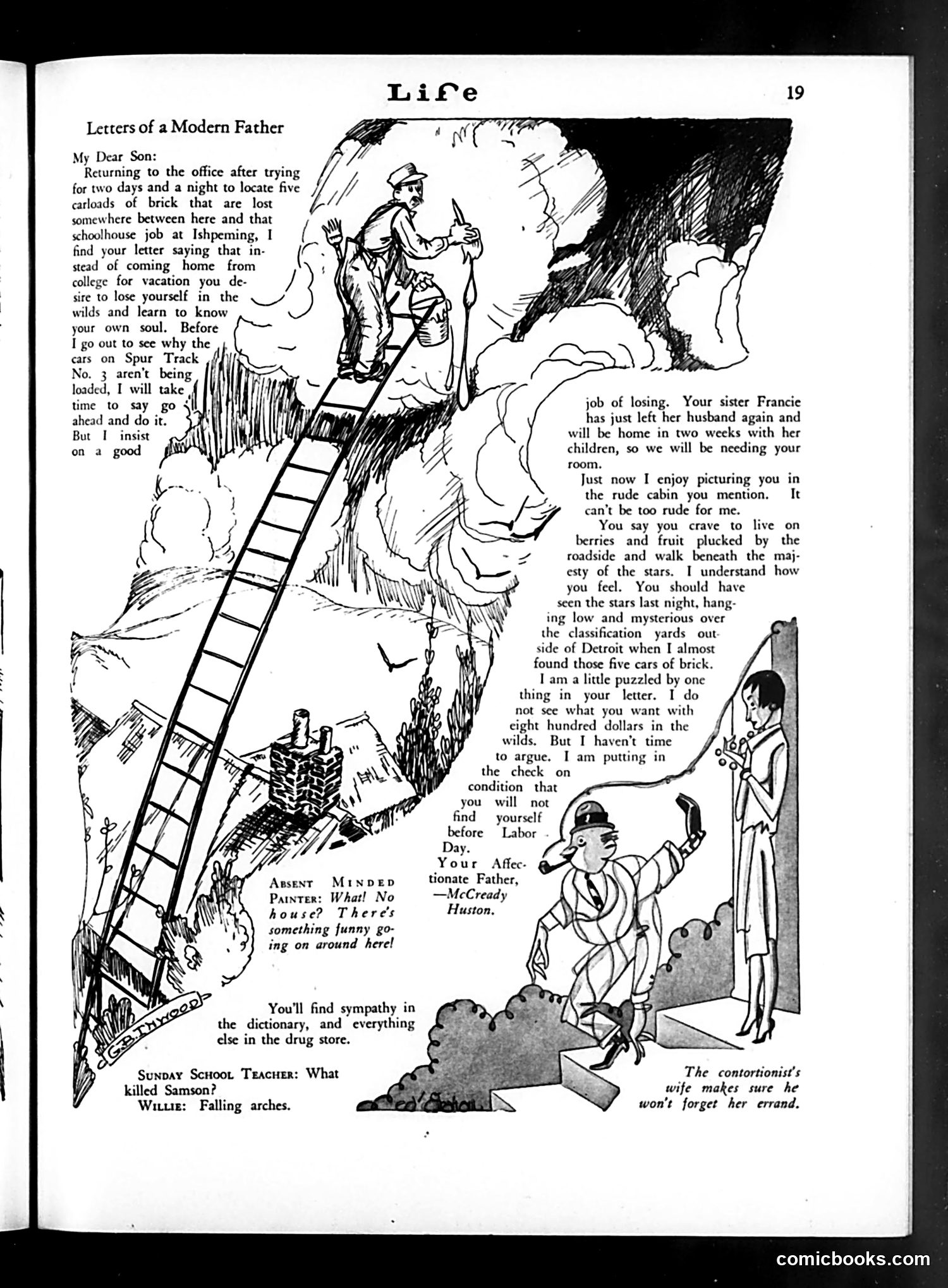
This page features satirical humor typical of early 20th-century Life magazine. The main piece, "Letters of a Modern Father," mocks both the romanticized idealism of youth and the practical frustrations of working fathers. A college son wants to spend vacation in the wilderness living simply and "finding his soul," while his father—exhausted from locating lost railroad cargo—gently deflates this romantic notion by describing his own unexpected beauty (stars over Detroit's industrial yards) and imposing practical conditions, like requiring the son not return before Labor Day. The scattered jokes below ("Absent Minded Painter," "Sunday School Teacher") follow the era's quick-gag format. The cartoon showing the contortionist's wife making her errand demand is a visual pun on marital obligation transcending even physical extremes—typical vaudeville-era humor reflecting early 20th-century domestic comedy conventions.
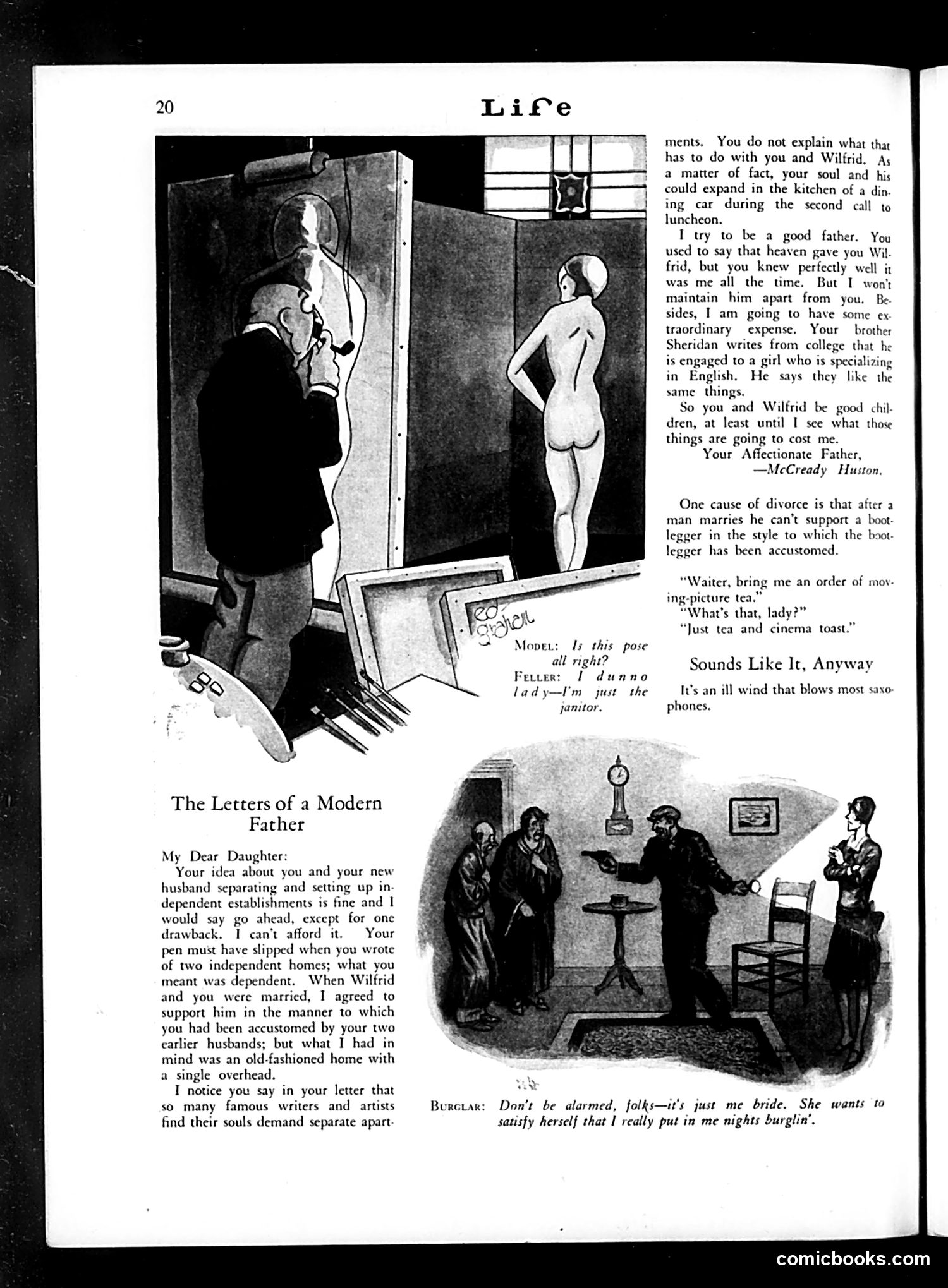
This page contains multiple satirical pieces mocking 1920s social attitudes and domestic life. **"The Letters of a Modern Father"** depicts a wealthy father refusing to fund his daughter's desire for separate households with her new husband (Wilfrid). He complains about supporting her previous two husbands and now her brother's college-engaged fiancée. The satire targets post-WWI economic anxieties and rapid changes in marriage/divorce customs—the father represents old-fashioned values clashing with modern independence. His reference to "bootlegger" expenses alludes to Prohibition-era excess. **The top illustration** appears to show a model posing for an artist, with flippant commentary about whether the pose is acceptable—satirizing both the modeling industry and casual attitudes toward female nudity. **"Sounds Like It, Anyway"** mocks saxophones as noise-makers. **The burglar cartoon** shows a thief assuring companions his bride is just checking he's genuinely working nights—joking about marital distrust and crime. Overall, the page satirizes modern marriage instability, financial pressures, generational conflict, and Prohibition-era social upheaval.
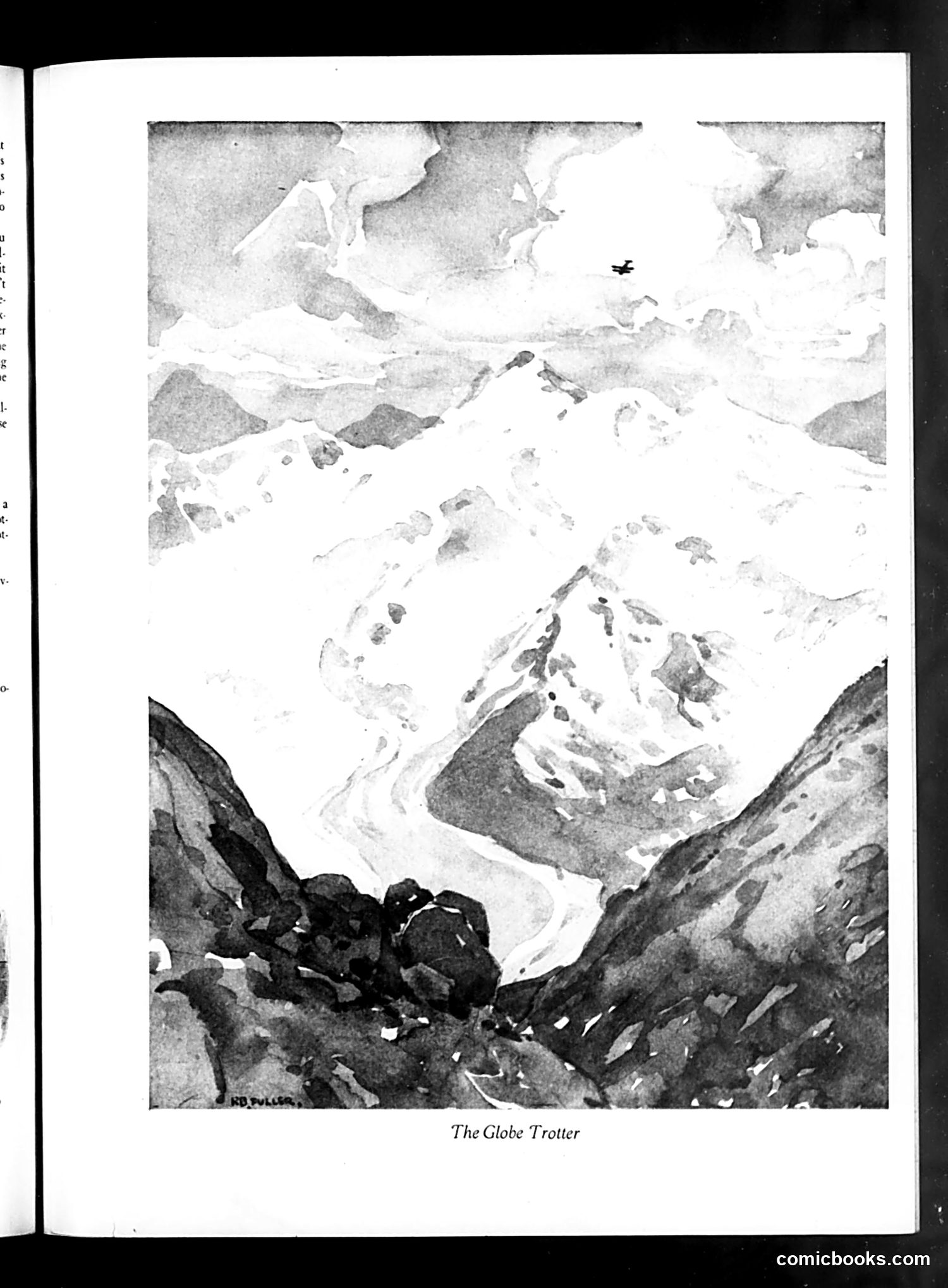
This appears to be a photograph rather than a political cartoon—specifically an aerial or mountainous landscape image showing snow-covered terrain with dark rocky outcrops and what may be a glacier or ice field winding through a valley. A small airplane is visible in the sky. The caption "The Globe Trotter" suggests this is documenting travel or exploration, likely from an early aviation era when aerial photography and long-distance flying were novel pursuits. The photograph serves as visual evidence of modern transportation's capacity to traverse remote, previously difficult-to-access geographical regions. Without additional context from the surrounding page, the specific satirical point—if any—remains unclear, though the image likely celebrates technological progress in exploration.
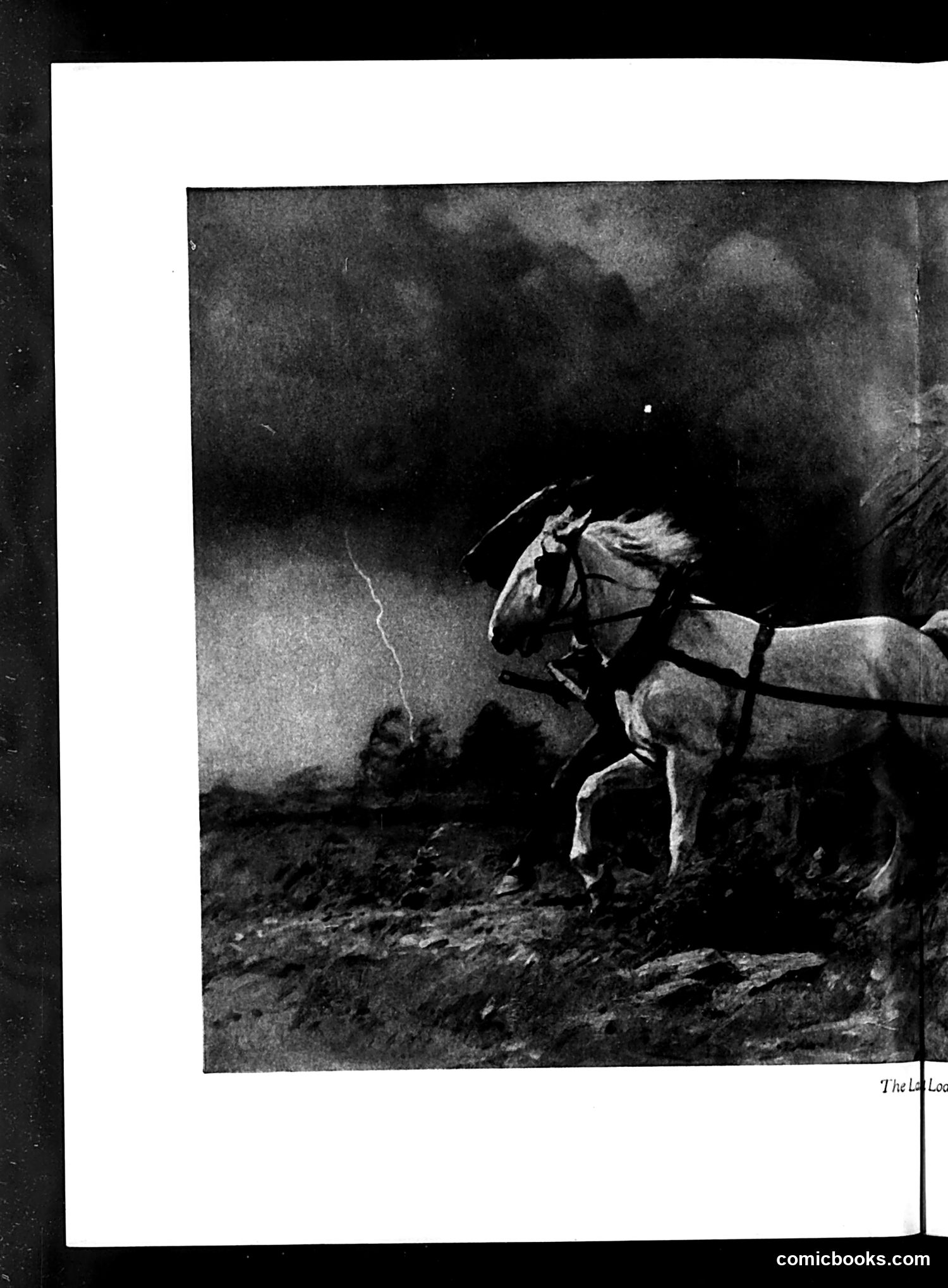
This black and white photograph shows a horseman riding through a dramatic stormy landscape with lightning visible in the dark sky. The image appears to be a dramatic illustration rather than a cartoon or comic. Without additional visible text on the page identifying the subject, I cannot definitively explain what political or social reference this depicts. The scene suggests a heroic or urgent narrative—possibly referencing a historical ride or journey—but the specific meaning requires either clearer caption text or additional context from the magazine issue. The photograph's dramatic composition and inclusion in *Life* magazine suggests it carried satirical or illustrative purpose, but the precise reference remains unclear from this image alone.
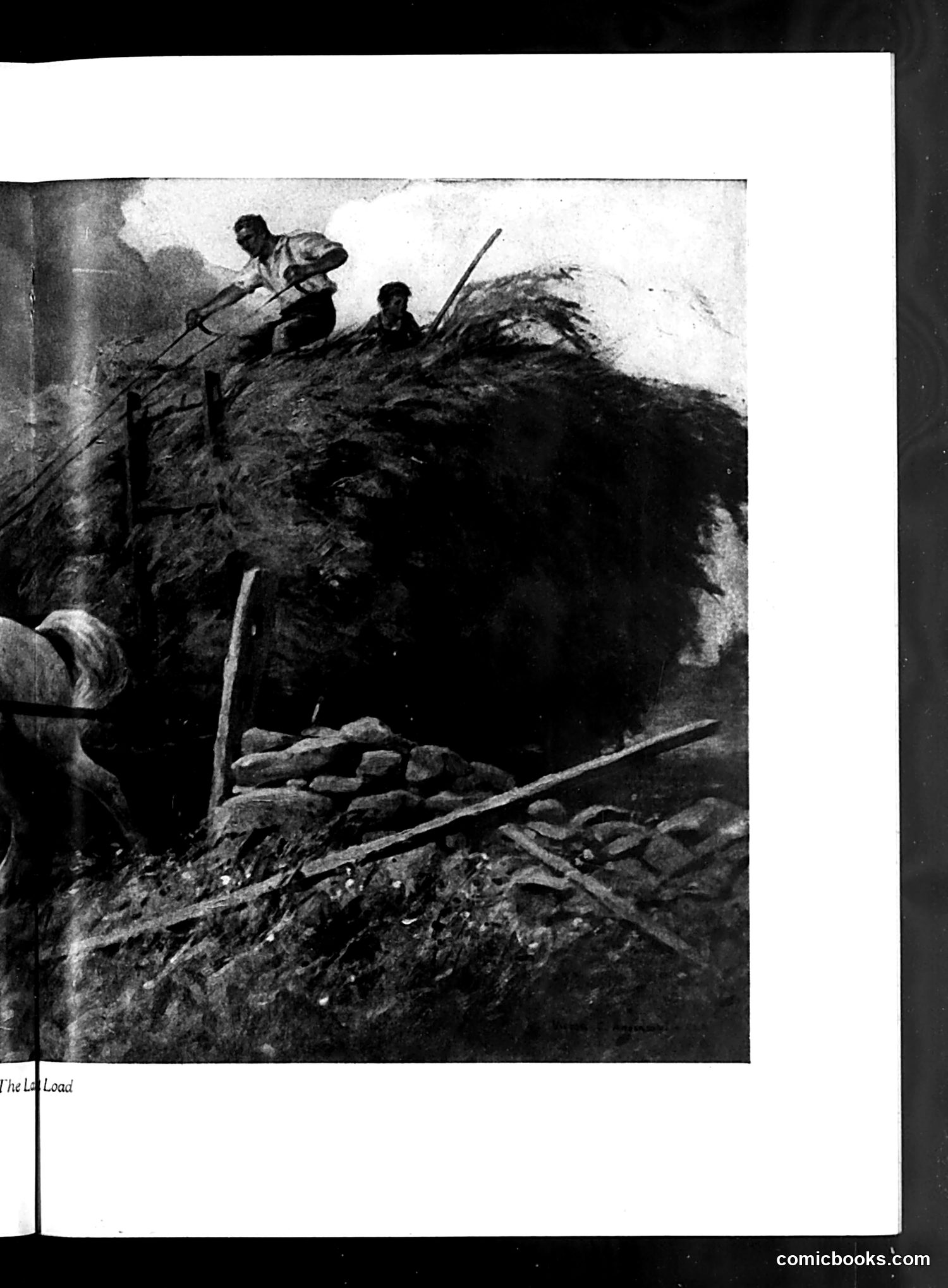
This black and white photograph shows workers excavating or mining on a hillside, using picks and shovels to move earth and rock. The image appears to be titled "The Load" (partially visible at bottom left). Without additional context from the surrounding page, the specific satirical point is unclear. However, given this is from *Life* magazine—known for social and political commentary—the photograph likely critiques labor conditions, working-class exploitation, or industrial practices of its era. The heavy manual labor depicted, the arduous conditions, and the title "The Load" suggest commentary on the burden placed on workers. The exact political or social target remains uncertain without seeing accompanying text or the full page.
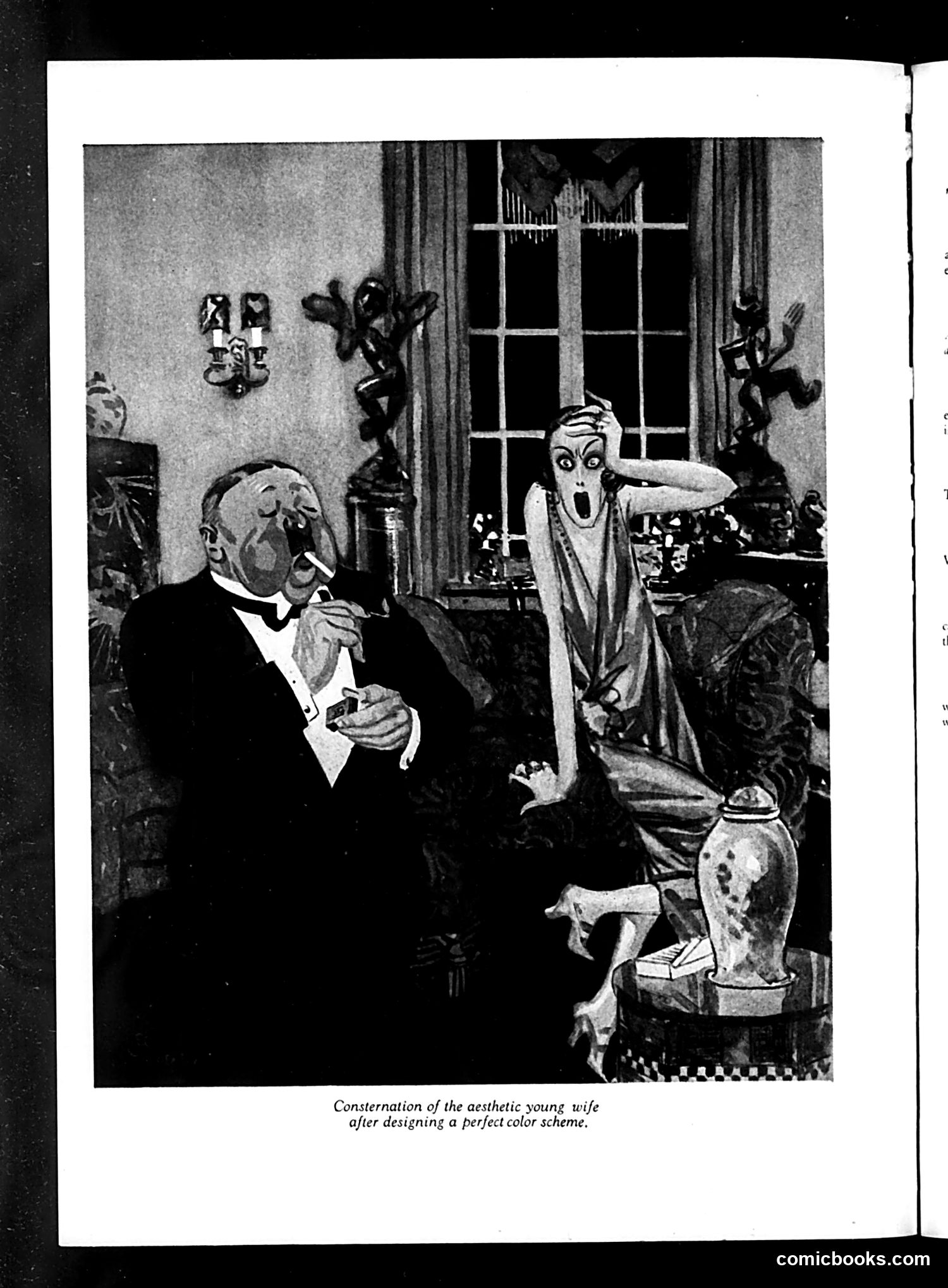
This satirical illustration depicts a couple in an elegant interior. The woman displays exaggerated shock and dismay while the man, dressed formally in a tuxedo, appears oblivious or dismissive. The caption mocks the "aesthetic young wife" who has carefully planned "a perfect color scheme" for their home's décor—likely referring to fashionable interior design trends of the era. Her consternation suggests her husband has somehow violated or ruined her artistic vision, perhaps through poor taste, carelessness, or indifference to her aesthetic efforts. The satire targets both the pretentiousness of obsessive interior decorating and the marital dynamic where spouses have conflicting priorities regarding home design. The woman's melodramatic expression exaggerates the cultural anxiety some households experienced over maintaining fashionable appearances.
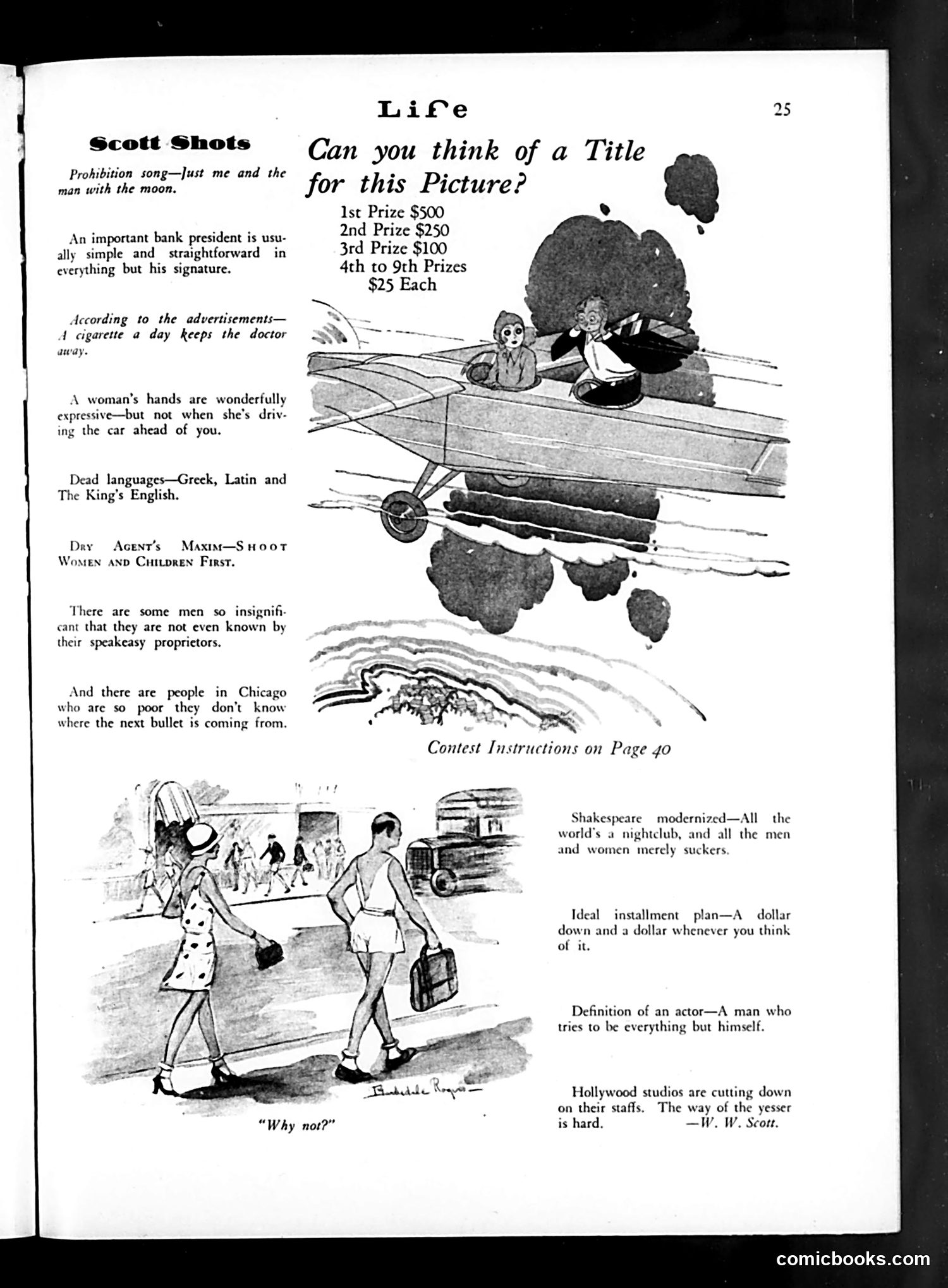
This page from *Life* magazine presents satirical "Scott Shots"—brief, cynical observations on contemporary American life, likely from the 1920s based on references to Prohibition and speakeasies. The main cartoon shows an airplane in distress, with passengers and cargo falling. A contest invites readers to title the picture (prizes $500 down to $25), suggesting the absurd humor of the scene. The "Scott Shots" mock various targets: bank executives' dishonest signatures, misleading cigarette advertisements, distracted female drivers, the decline of proper English, the motto to "shoot women and children first" (mocking chivalry), wealthy Chicagoans unaware of gang violence, and modern corruptions like nightclubs and installment buying. The bottom cartoon labeled "Why not?" shows two women on a street—one apparently propositioning the other—capturing era anxieties about changing female morality and behavior during the Jazz Age. The tone is darkly humorous, reflecting post-WWI disillusionment and social upheaval.
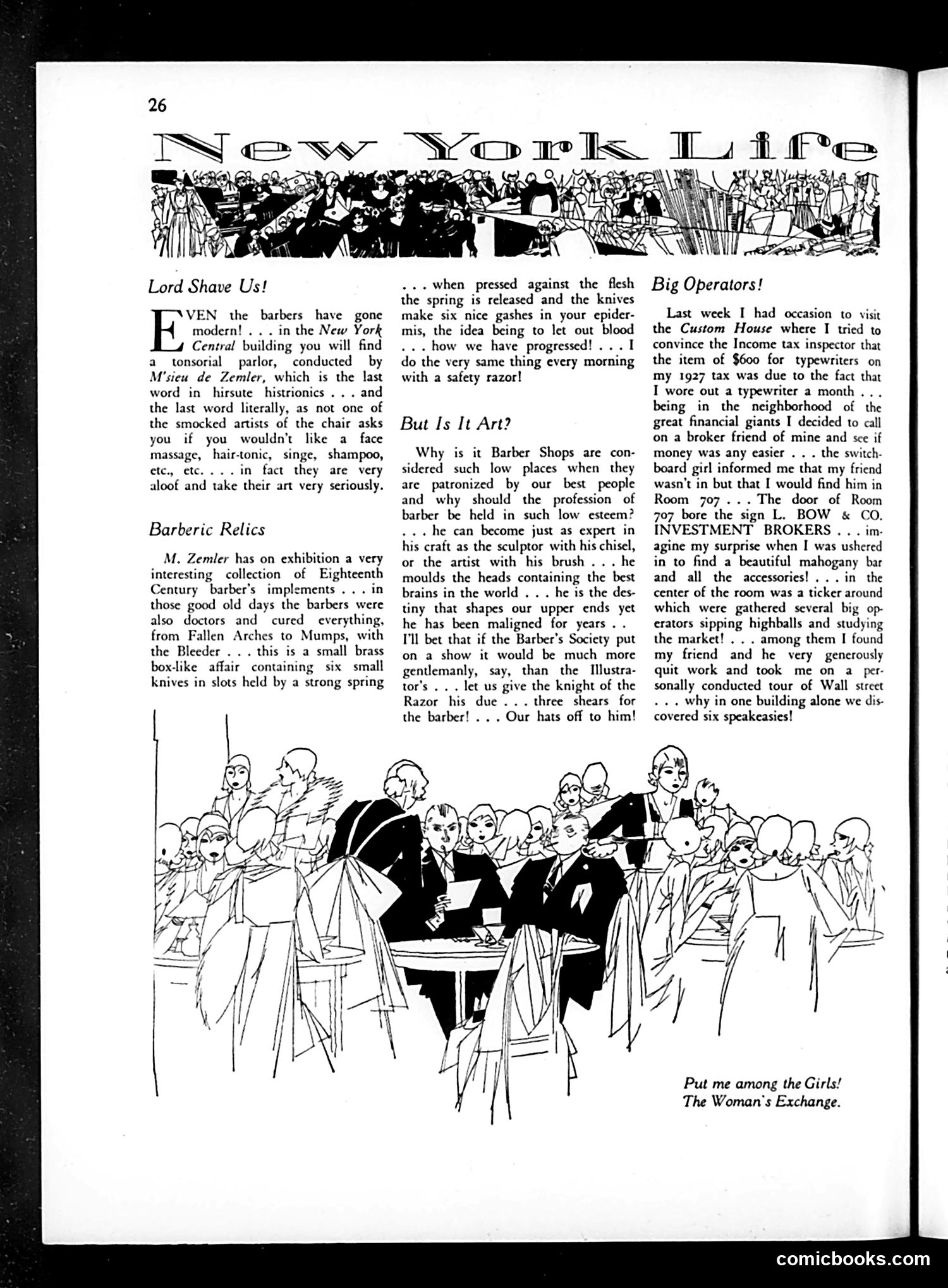
This page contains three separate satirical pieces mocking early 1920s American society: **"Lord Shave Us!"** ridicules modern barber shops claiming artistic pretension. The joke: a fancy New York barber parlor insists on sterile professionalism, yet the author performs the identical function (making cuts) with his safety razor each morning—exposing the pretense that barbering is "art." **"Barberic Relics"** sarcastically defends barbers' historical importance (they were physicians who performed bloodletting with multi-bladed devices) while questioning why the profession remains low-status despite serving society's elite. **"Big Operators!"** satirizes Wall Street excess during Prohibition. The author visits a brokerage office expecting serious finance but finds it's actually a speakeasy—brokers drink highballs while operating the stock ticker. The implied critique: financial markets are frivolous gambling dens, not legitimate enterprises, and Prohibition is openly ignored by the wealthy. The cartoon illustration shows a crowded social gathering, reinforcing themes of excess and performative respectability.
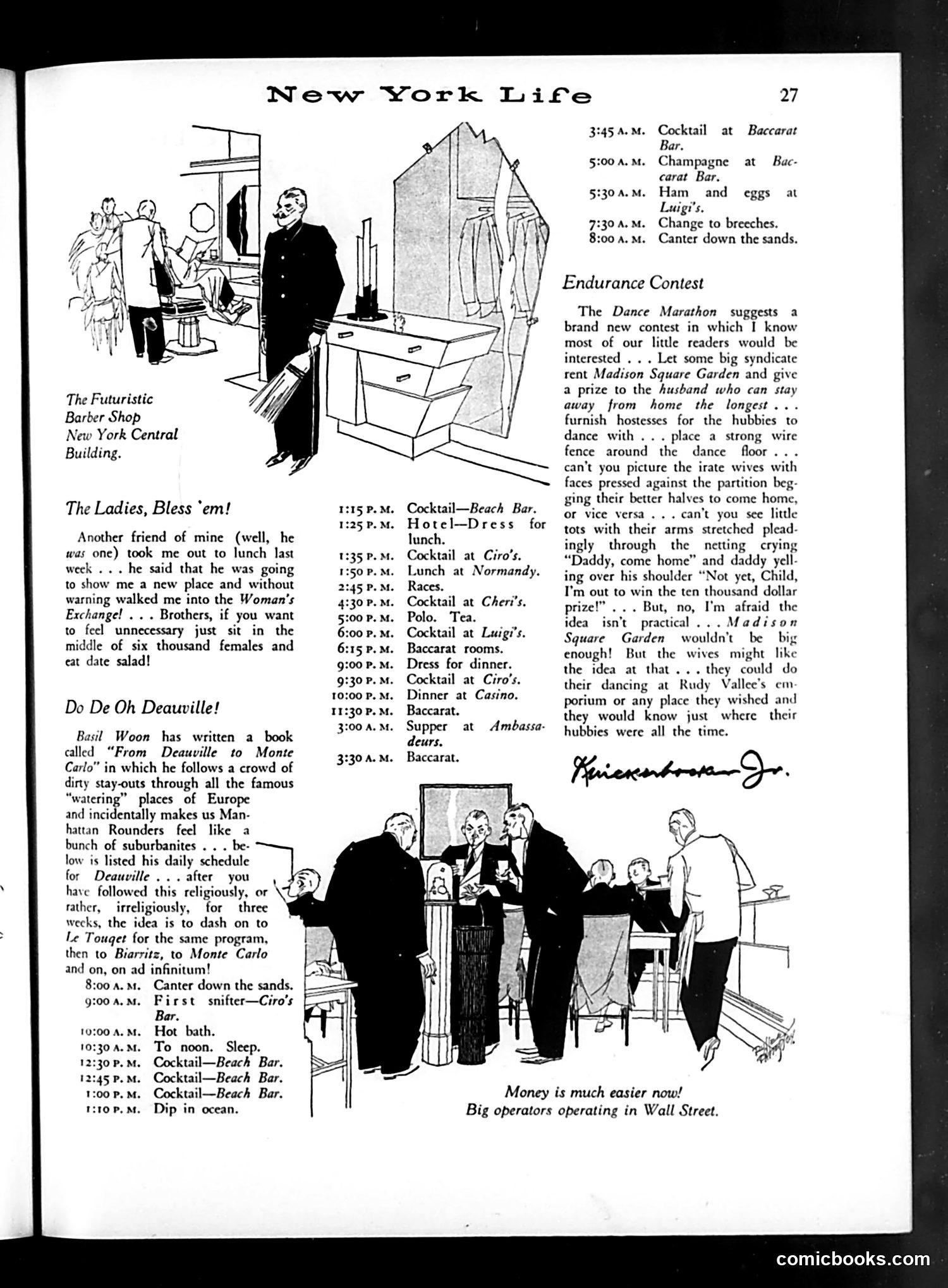
This page from *Life* magazine contains three satirical pieces about 1920s social life: **"The Futuristic Barber Shop"** (top left): A simple architectural joke about modernist design in New York's Central Building. **"Do De Oh Deauville!"** mocks the European leisure lifestyle of wealthy Americans. It parodies Basil Woon's travel book by presenting an absurdly packed daily schedule of the French Riviera social circuit—essentially continuous drinking (multiple cocktails listed hourly) punctuated by gambling, racing, and minimal sleep. The satire ridicules both the excess and the pretension of "society" people who follow such exhausting routines. **"The Ladies, Bless 'em!"** jokes about a man accidentally taking a male friend to an all-female establishment (the Woman's Exchange), where he felt out of place and unnecessary. **"Endurance Contest"** proposes a humorous "dance marathon" prize for husbands staying away from home longest, satirizing both the contemporary dance marathon fad and marital discord—implying wives would be desperate to retrieve their husbands. The final caption references Wall Street operators, likely alluding to post-1920s financial speculation culture.
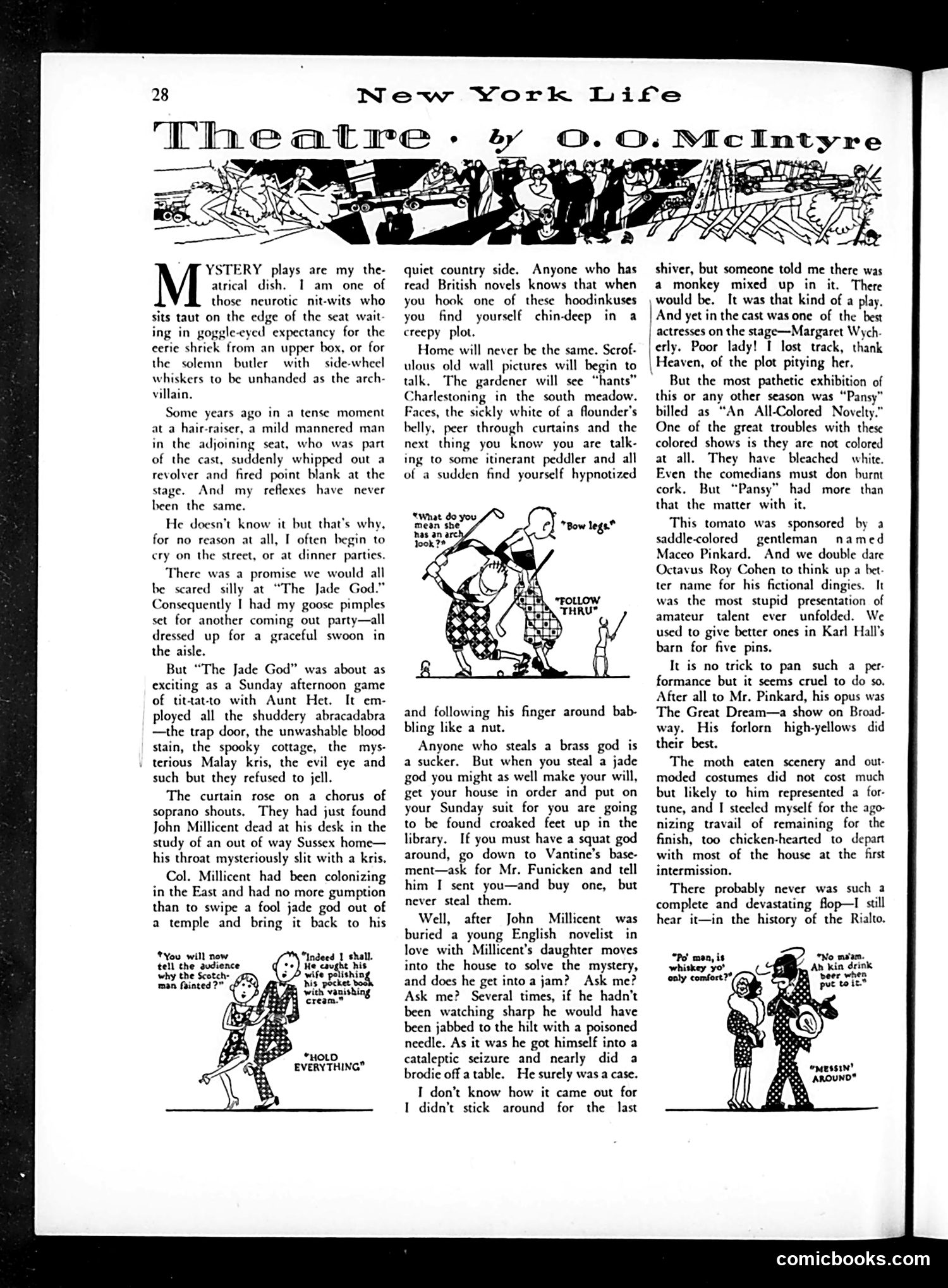
This is a theatre review column by O.O. McIntyre critiquing current Broadway productions. McIntyre satirizes the tired conventions of mystery plays—particularly "The Jade God," which disappoints despite employing all the standard gothic clichés: trap doors, blood stains, spooky cottages, and mysterious daggers (a Malay kris). The column mocks the plot's predictability: stealing a sacred jade idol from a temple triggers supernatural consequences. McIntyre also criticizes "Pansy," billed as an "All-Colored Novelty," for failing authentically—the colored performers wear "bleached white" makeup and burnt cork, suggesting the production lacks genuine African American representation and relies on racist theatrical traditions. The cartoons illustrate McIntyre's comedic asides about theatre-goers' overwrought reactions. McIntyre emerges as a witty observer of Broadway's recycled formulas and entertainment industry compromises.
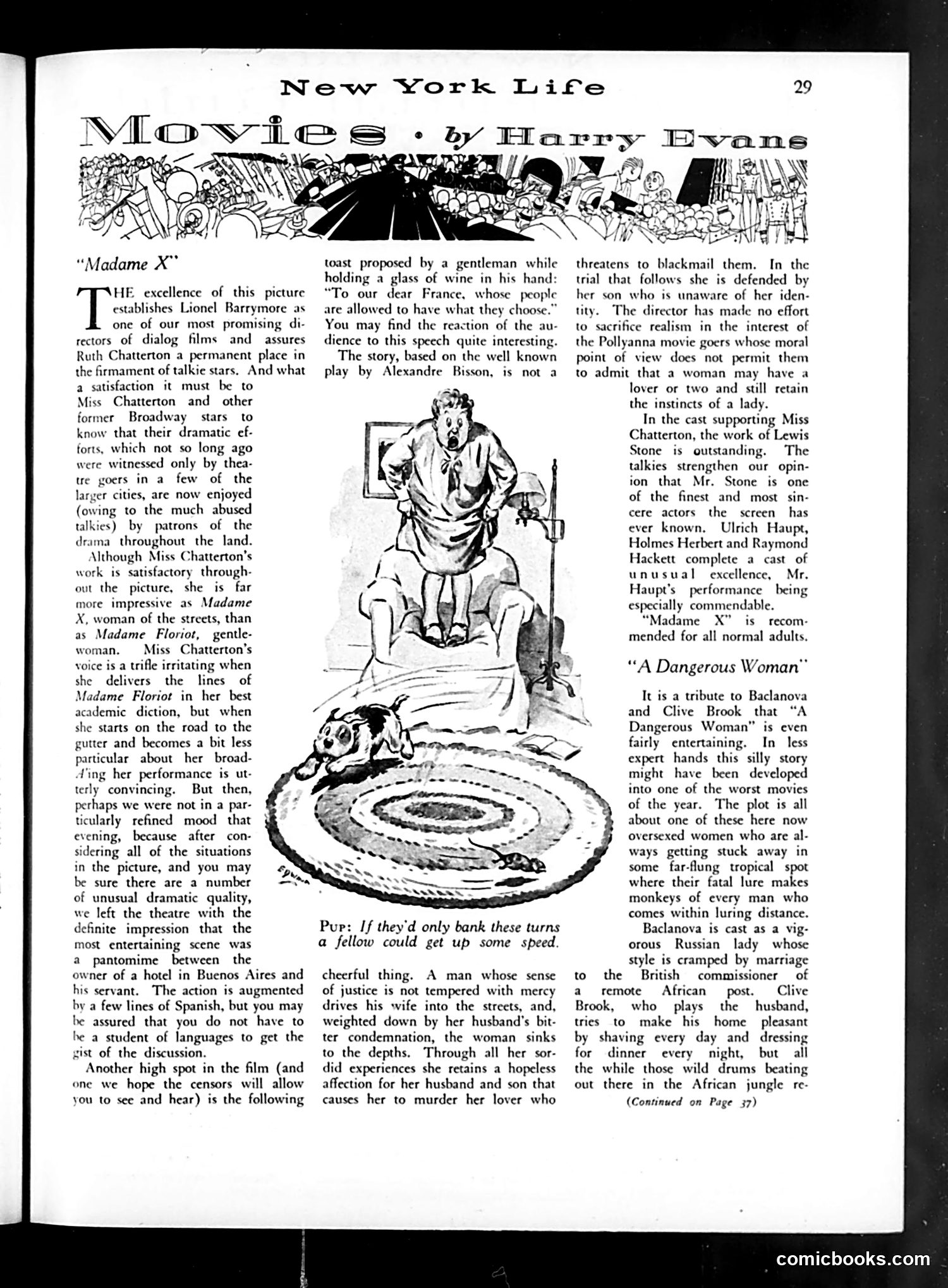
This page reviews two films from the early "talkie" era (sound films). **"Madame X"** stars Ruth Chatterton and is directed by Lionel Barrymore. The reviewer praises the film's dramatic realism—it depicts a woman driven to prostitution by her harsh husband, who later defends herself in court without knowing her son is her lawyer. The reviewer notably approves that the film doesn't sanitize this morally complex story for prudish audiences. A highlighted scene shows a humorous pantomime between a Buenos Aires hotel owner and servant, and includes a patriotic toast to France's freedoms. **"A Dangerous Woman"** stars Baclanova and Clive Brook. The reviewer dismisses this as a "silly story" about an "oversexed woman" stranded in a tropical location—apparently a well-worn plot device. The review suggests only skilled performers like Brook and Baclanova prevent it from being terrible. Both reviews reflect 1920s attitudes about cinema's moral content and the novelty of sound films featuring Broadway actors.
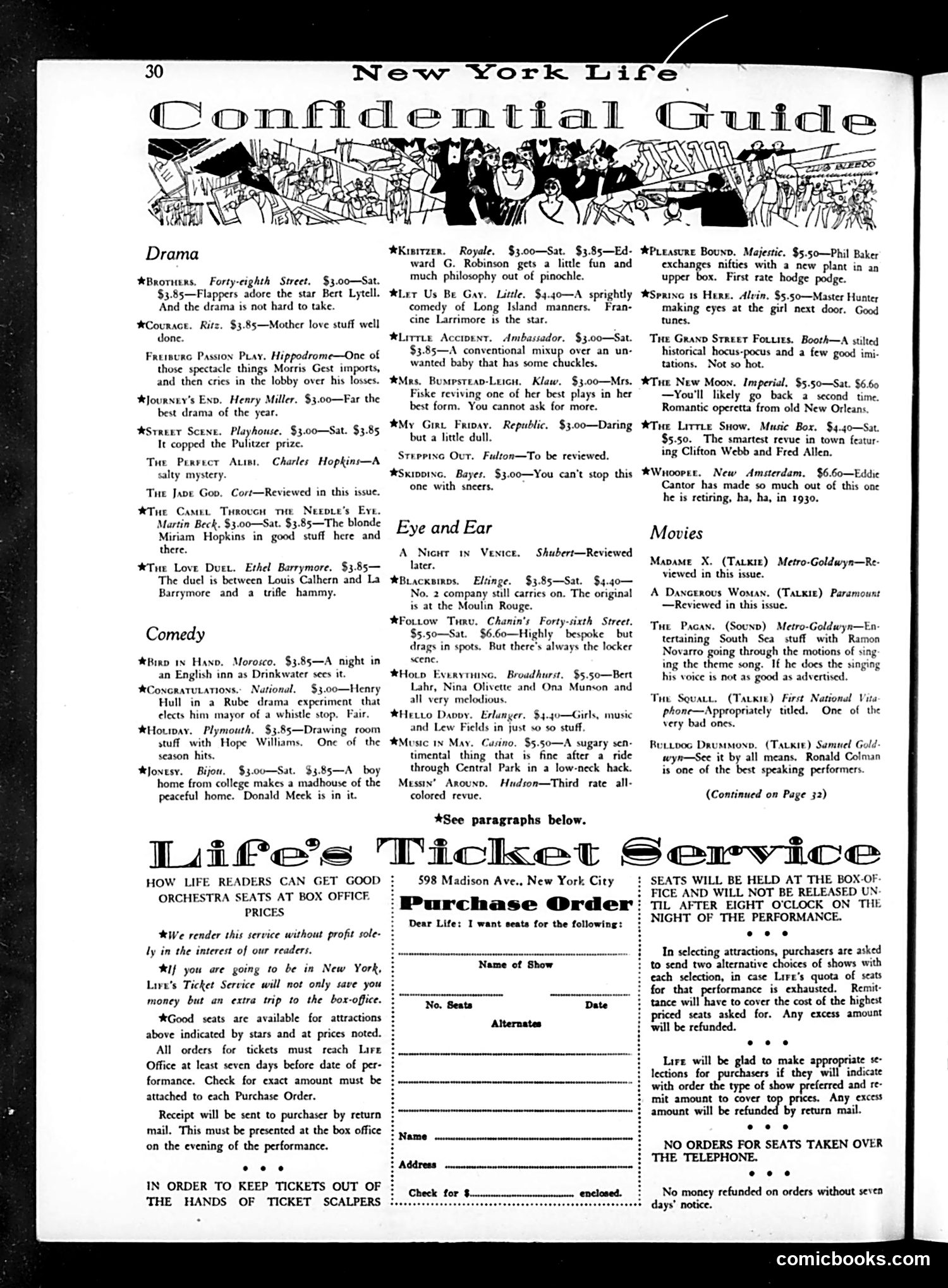
This page is primarily a **theater and entertainment guide**, not a political cartoon. It's a "Confidential Guide" listing Broadway shows, films, and entertainment venues in New York City circa the 1920s-30s (based on references to "talkies," Eddie Cantor retiring "in 1930," and flappers). The content consists of: - **Theater reviews** with ticket prices and star ratings (marked with asterisks) - **Satirical commentary** on shows—critics mock certain productions as overly sentimental, drag-filled, or mediocre - **Movie reviews** noting the novelty of sound films ("talkie") - **A ticket service advertisement** for Life magazine readers to purchase orchestra seats The tone is witty and irreverent (calling one revue "third rate all-colored revue," mocking actors' performances). This reflects Life's satirical purpose: entertaining urban sophisticates with insider entertainment criticism and social commentary on contemporary leisure activities.
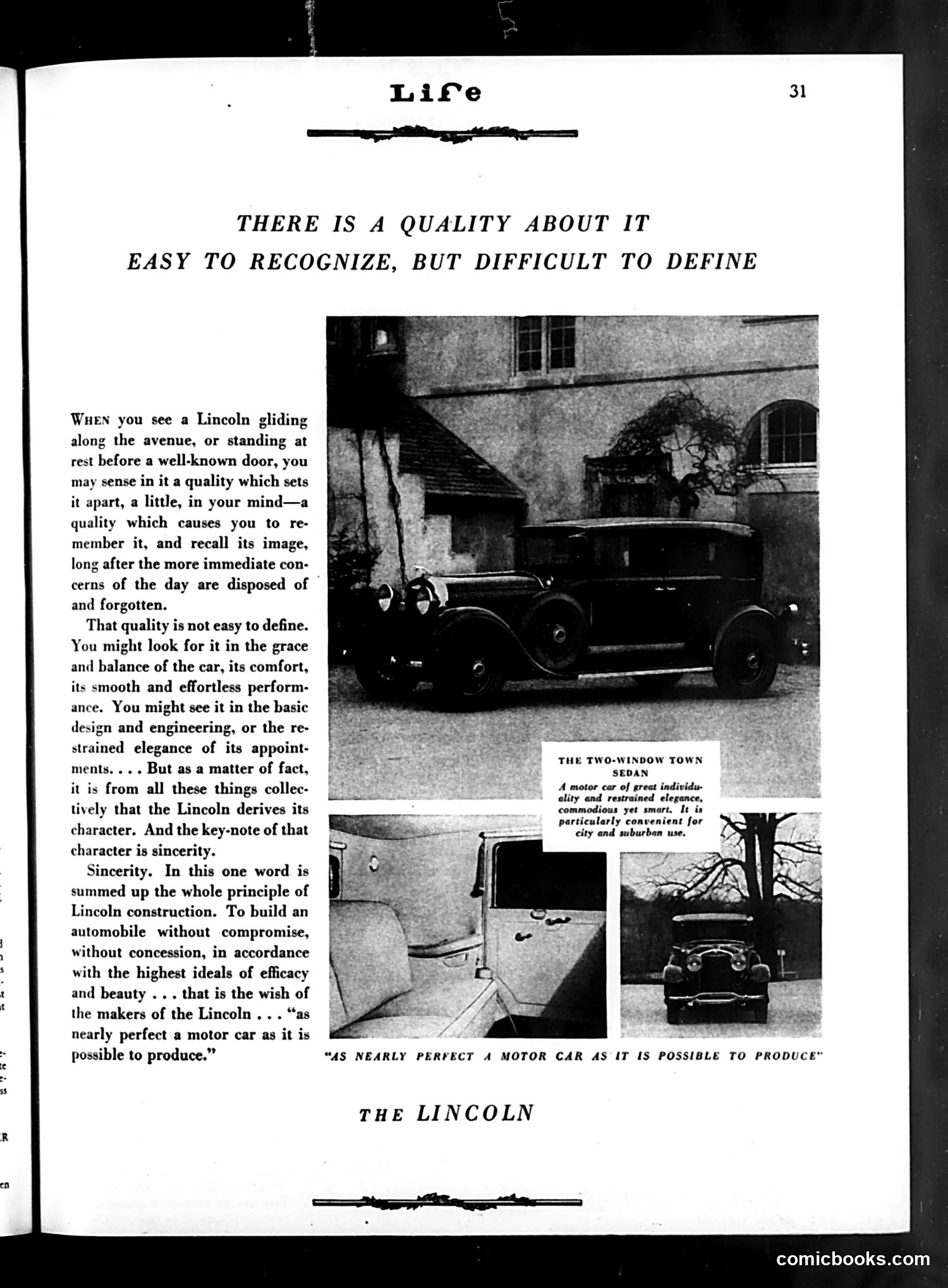
This is **not a cartoon or satire**—it's a luxury car advertisement from Life magazine's advertising section (page 31). The content promotes the Lincoln automobile through philosophical copy emphasizing its "sincerity" as a defining quality. The page features three photographs of Lincoln vehicles (a two-window town sedan and interior/exterior views) alongside text arguing that Lincoln's excellence derives from principled construction "without compromise" rather than any single design element. The accompanying caption quotes the makers' goal: "as nearly perfect a motor car as it is possible to produce." This represents typical 1920s-30s prestige advertising strategy: positioning an expensive product as embodying moral virtue and refined craftsmanship rather than mere luxury or performance. The appeal targets affluent, educated readers who would value philosophical substance alongside material status.
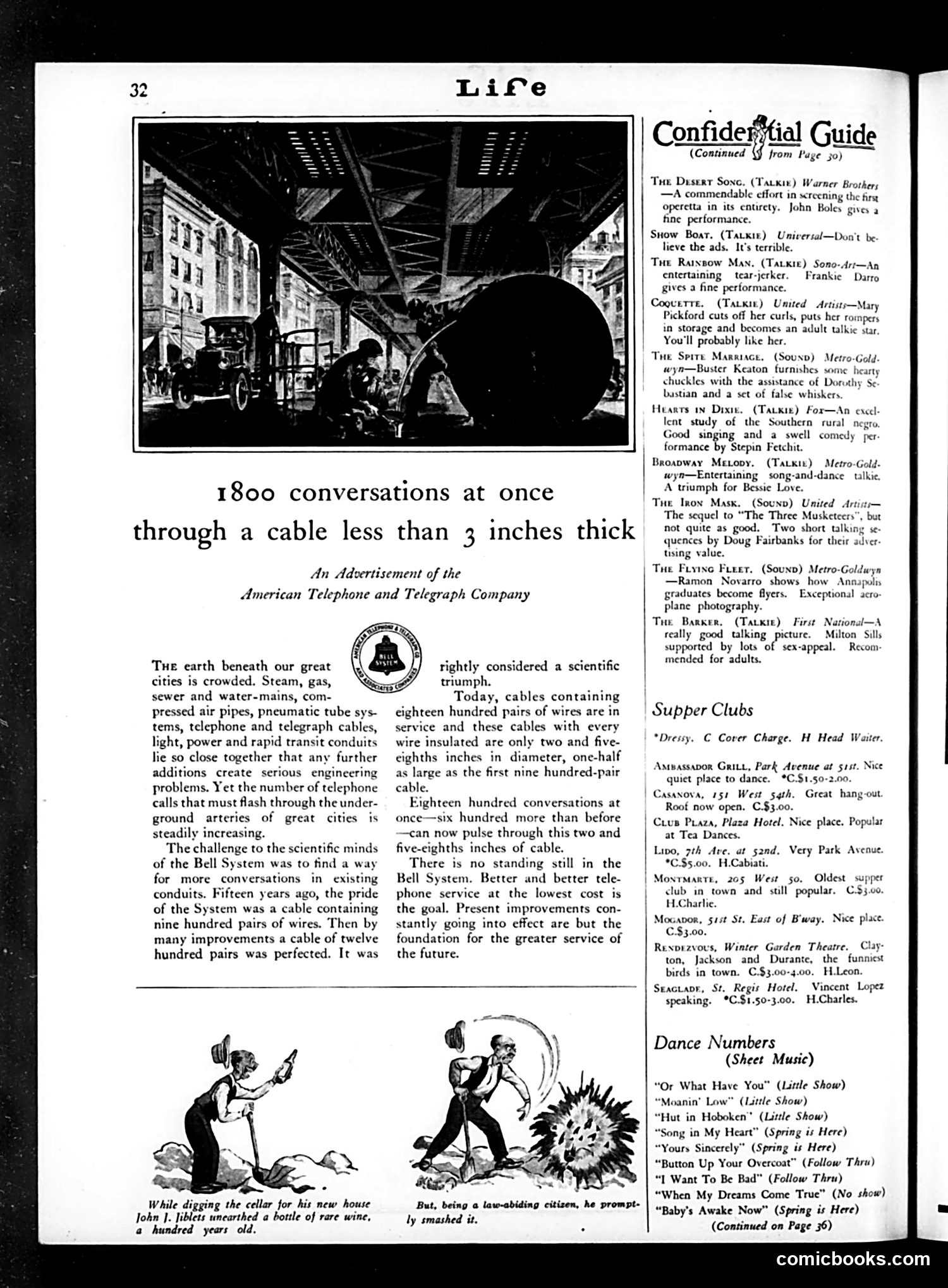
This page is primarily **an advertisement for AT&T's telephone technology**, disguised as editorial content in *Life* magazine. The top image shows underground infrastructure beneath a city street, illustrating the cramped conditions beneath urban areas. The ad's point: AT&T engineers have solved a major engineering problem—fitting more telephone conversations through existing underground cables. Where a cable once carried 900 pairs of wires, the new design carries 1,800 conversations through a cable only 2.625 inches thick (half the previous size). This demonstrates technological progress and innovation. The small cartoon below is unrelated satire: a man named John J. Jiblets finds a 100-year-old bottle of wine while digging his cellar but—being a "law-abiding citizen"—smashes it, presumably due to Prohibition laws. It's dark humor about government alcohol restrictions. The right column contains entertainment reviews and nightclub listings, typical *Life* magazine content of this era.
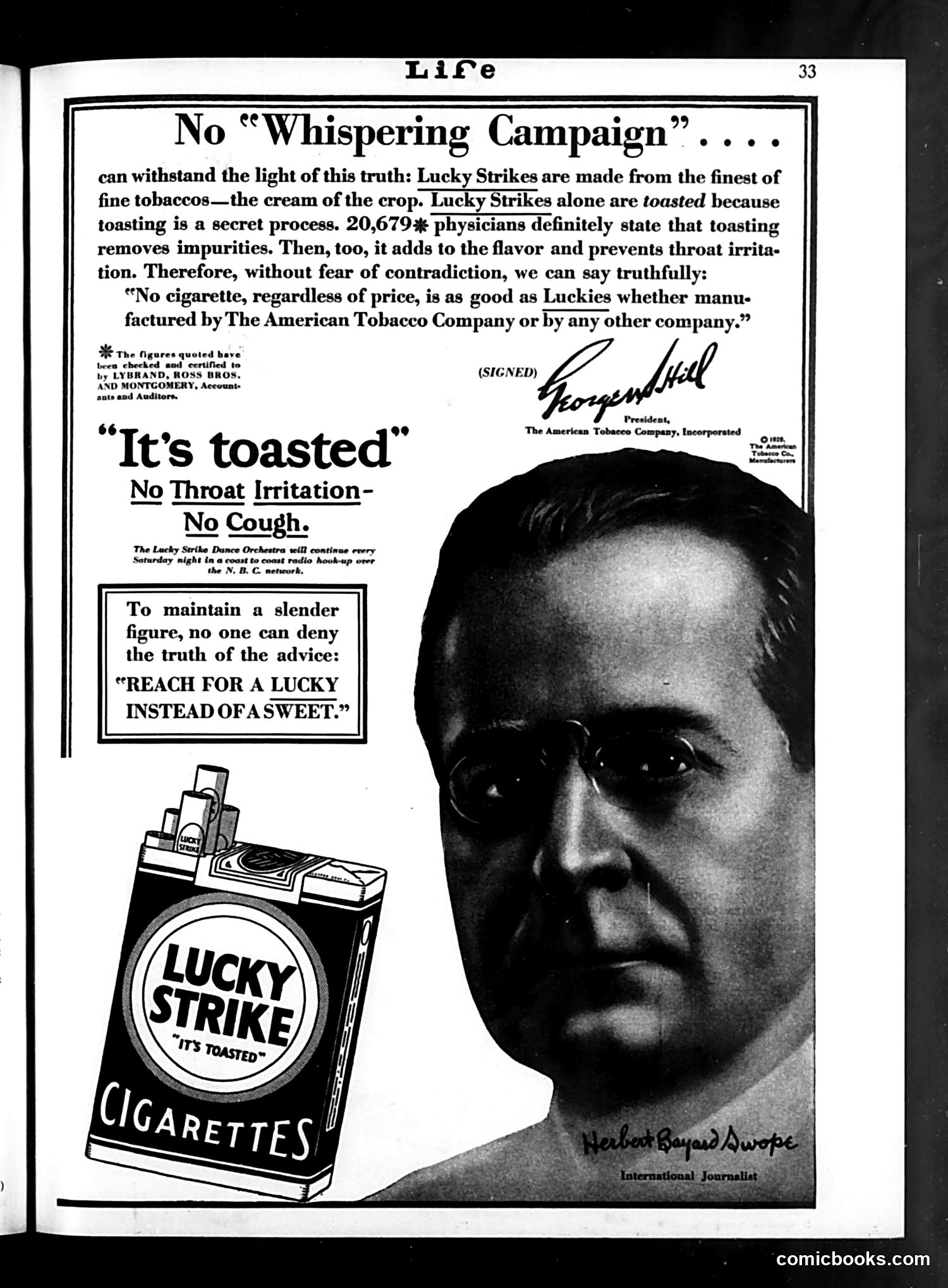
This is a **cigarette advertisement**, not political satire. The page promotes Lucky Strike cigarettes using several persuasion tactics common to 1920s-30s advertising: **Key Claims:** - Lucky Strikes are "toasted" (allegedly a secret process removing impurities) - 20,679 physicians endorse toasting as healthful - The tagline "No Throat Irritation—No Cough" implies cigarettes are medically safe **Marketing Strategy:** The ad includes a photograph of a man identified as an "International Journalist" (signature appears to read "Herbert Bayard Swope"), lending credibility through celebrity endorsement. The phrase "Reach for a Lucky instead of a sweet" targets weight-conscious consumers, particularly women concerned with maintaining "a slender figure." **Context for Modern Readers:** This represents pre-FDA regulation era advertising, when cigarette companies made unsubstantiated health claims and cited dubious "physician" statistics. Such advertising would be illegal today.
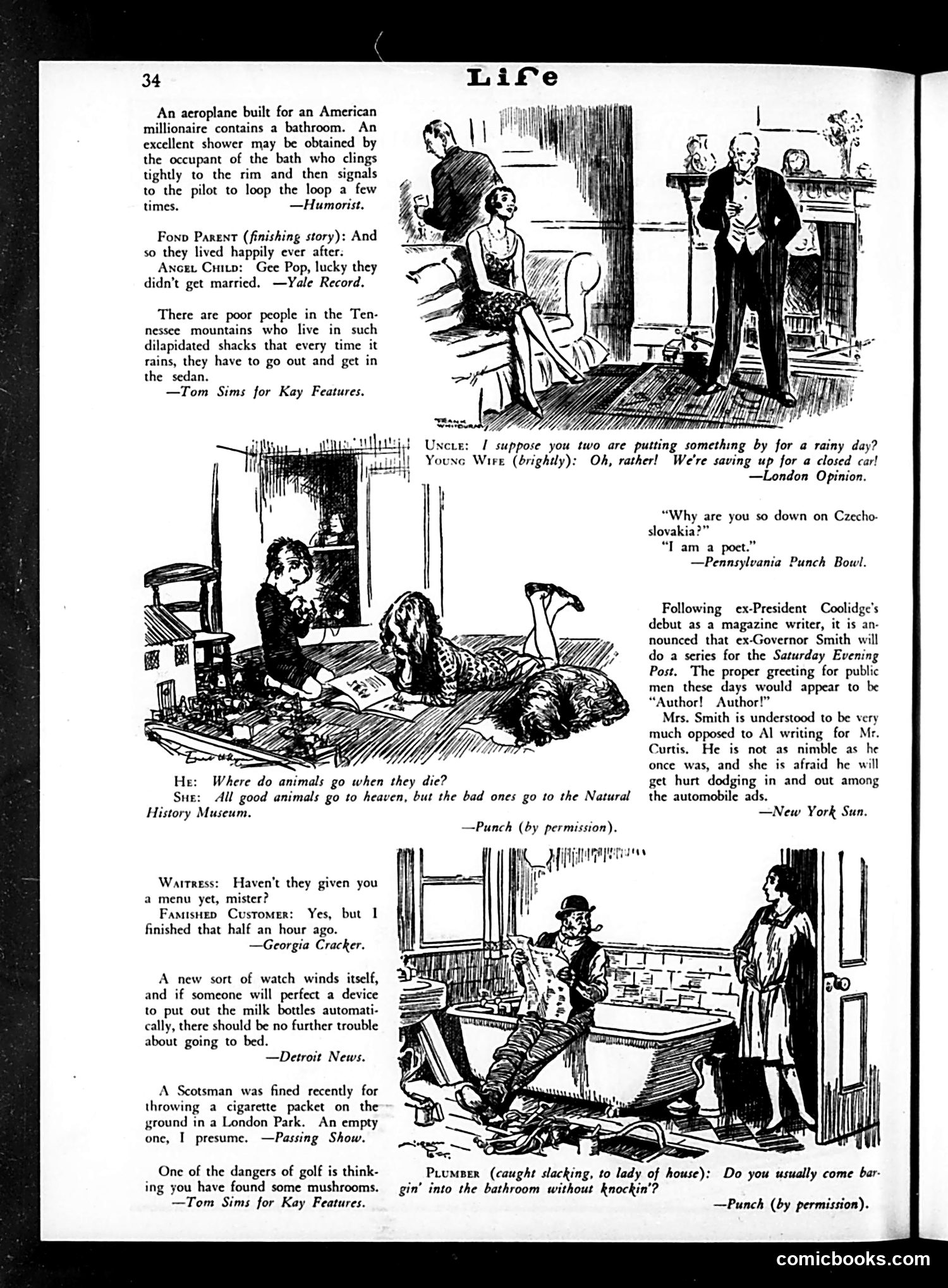
This page collects brief jokes and cartoon gags typical of 1920s American humor magazines. Key content includes: **Social commentary**: Jokes mock wealth disparities—a millionaire's airplane has a bathroom (absurdly requiring loop-the-loops for showers), while poor Tennessee mountain families must flee their collapsing shacks to sit in their one possession, a sedan. **Political reference**: The text announces ex-President Coolidge and ex-Governor Al Smith will write for magazines. The satire suggests politicians are now becoming writers, and the joke implies Smith's wife Catherine opposes his writing for Curtis Publishing, fearing he'll get "hurt dodging in and out among the automobile ads"—mocking magazine clutter. **General satire**: Other jokes target modern conveniences (self-winding watches), class pretension (finishing school children), and bathroom etiquette. The cartoons illustrate these brief quips with period-appropriate illustrations. The page reflects 1920s concerns: economic inequality, celebrity politicians, and rapid technological/social change.
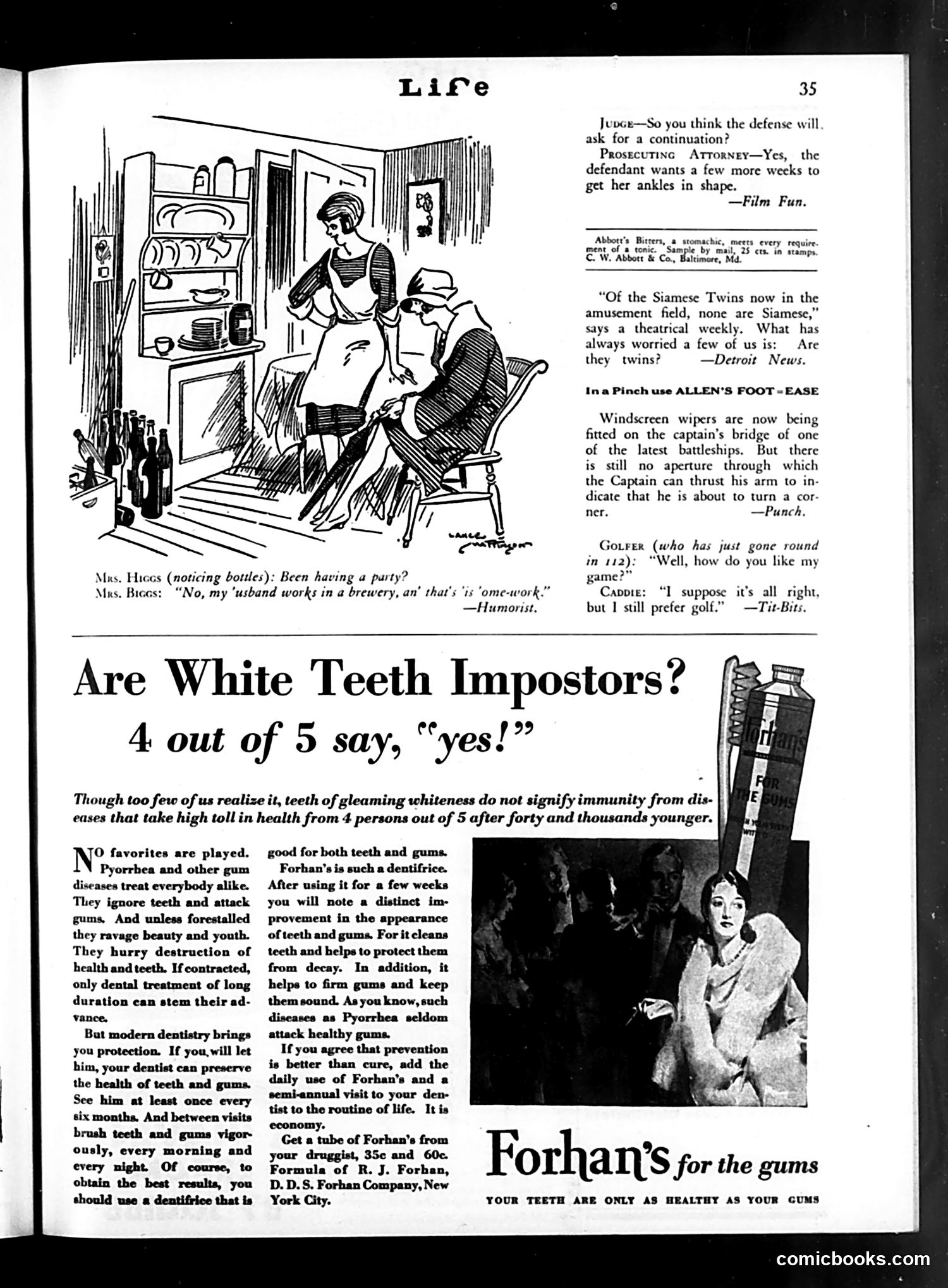
This page combines brief satirical jokes with a Forhan's toothpaste advertisement. **The Cartoons/Jokes:** The top cartoon depicts a woman in a kitchen with two men, one seated. The caption jokes that a defendant in court wants "a few more weeks to get her ankles in shape"—likely referencing 1920s fashion or a specific legal case where a woman's appearance mattered to her defense. Additional short jokes mock theatrical "Siamese twins" acts, battleship design flaws, and a husband whose brewery work explains bottles at home. These are light, topical humor typical of the era. **The Advertisement:** The larger "Are White Teeth Impostors?" ad warns that white teeth don't guarantee gum health, promoting Forhan's dentifrice as prevention against pyorrhea (gum disease). It reflects early 20th-century dental hygiene messaging and advertising strategy: creating health anxiety to sell products. The page is primarily advertising-driven rather than political satire.
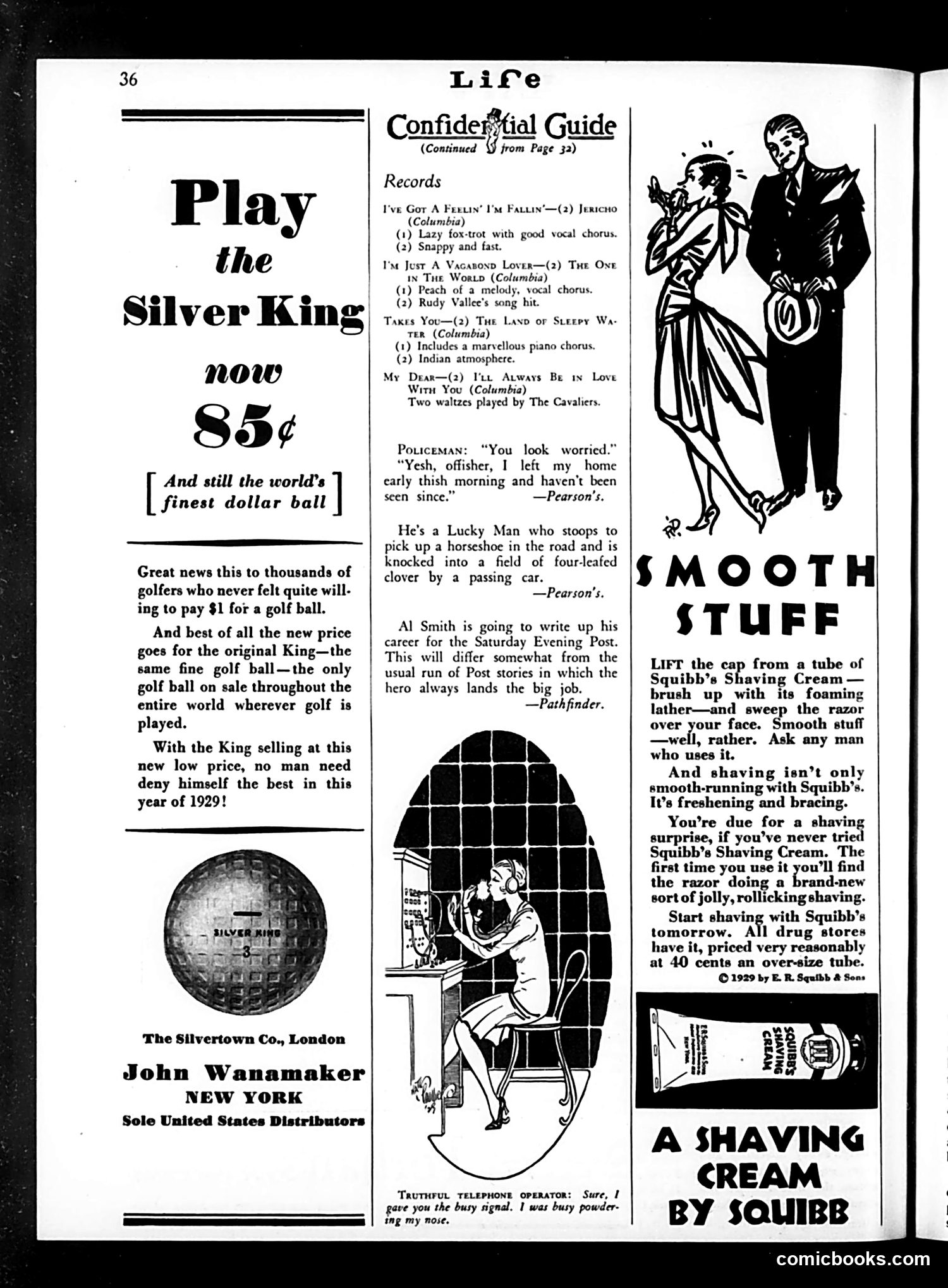
This page mixes advertising with satirical humor typical of Life magazine's format. **Main Advertisement:** The Silver King golf ball is being promoted at the reduced price of 85¢ (down from $1), positioned as good news for golfers in 1929—just before the stock market crash made such savings significant. **Satirical "Confidential Guide" Section:** This features brief jokes and quips, including: - A drunk man's excuse to a policeman about leaving home and not being seen since - A joke about Al Smith (likely the 1928 presidential candidate) writing his career memoir - A telephone operator admitting she gave a "busy signal" while powdering her nose—poking fun at operator reliability and vanity **"Smooth Stuff" Advertisement:** Squibb's Shaving Cream ad uses suggestive language ("smooth," "bracing," "jolly, rollicking") typical of 1929 advertising style. The page reflects 1920s consumer culture and light social satire about contemporary figures and everyday annoyances.
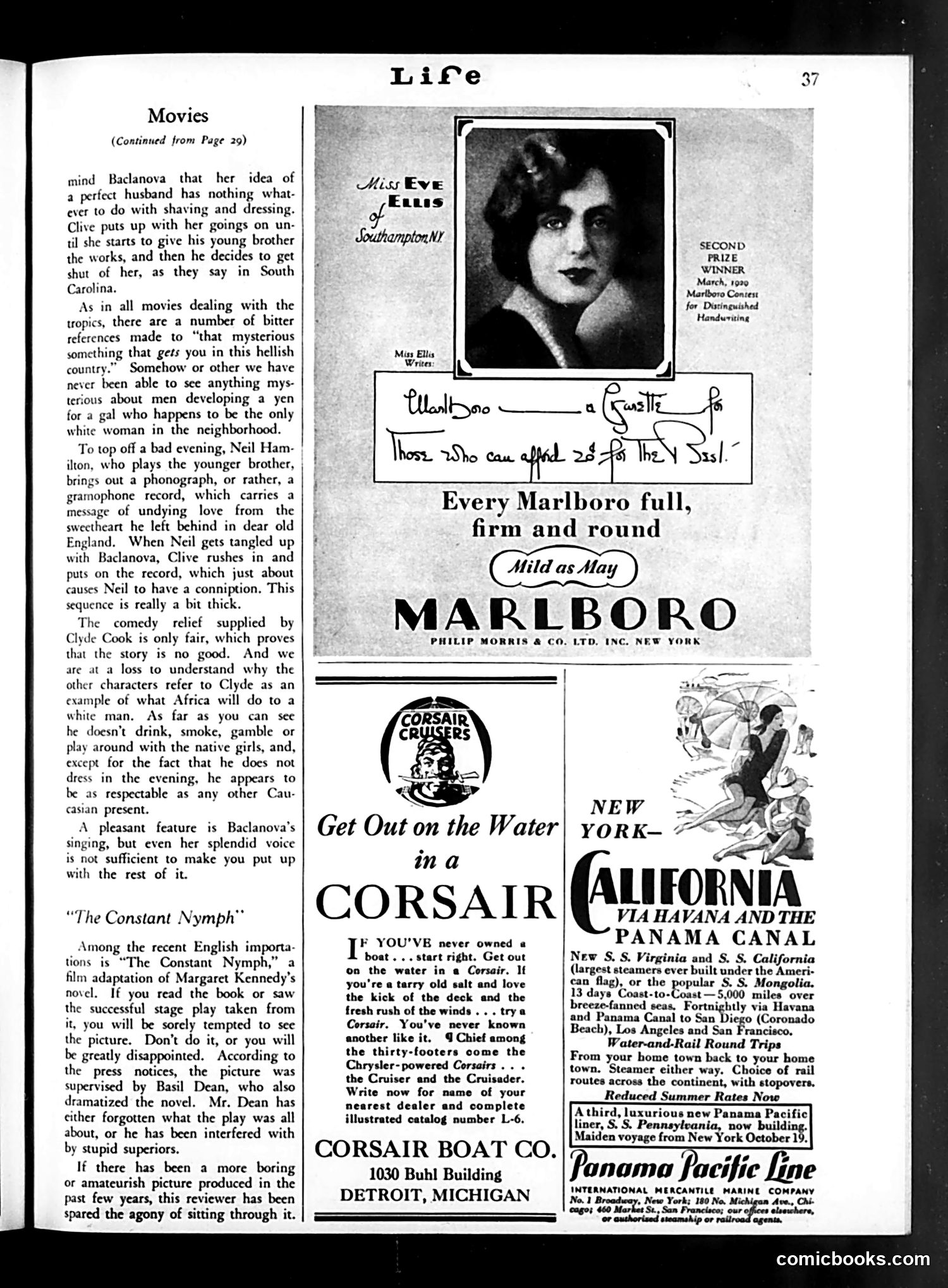
This page is primarily **advertising** with brief movie reviews. The top section reviews films featuring actress Bela Baclanova in tropical settings. The reviewer sarcastically critiques the film's reliance on clichéd references to "mysterious something" that supposedly affects white people in colonial environments—a common trope in 1920s cinema that the critic finds unconvincing and lazy. The handwritten note from "Miss Ellis" appears to be a reader submission winning a Marlboro handwriting contest (second prize, March 1920). The bulk of the page contains advertisements for luxury goods: Marlboro cigarettes, Corsair speedboats, and Panama Pacific Line cruise ships to California. These ads target affluent readers with disposable income for recreational boats and leisure travel—typical Life magazine advertising from the Jazz Age era.
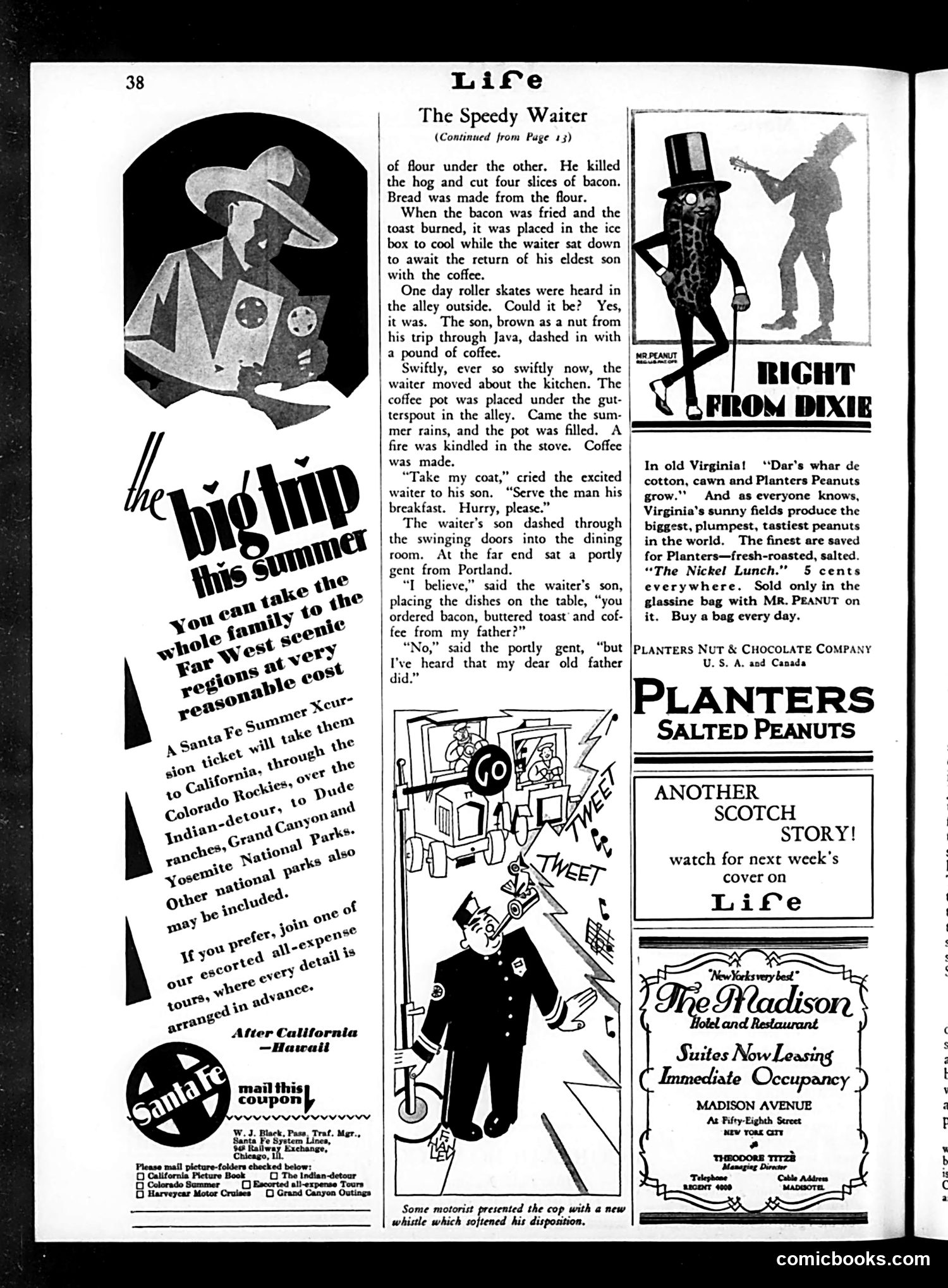
This humorous story satirizes the absurdity of inefficient service stretched to comic extremes. A waiter takes so long to prepare breakfast that his son must travel to Java (Indonesia) to retrieve coffee beans, returning as an adult. When service is finally completed, the original customer has died and his son receives the meal instead. The joke mocks both the waiter's incompetence and—implicitly—complaints about slow restaurant service common in the era. The punchline hinges on the passage of generations, making literal the customer's exasperation. The page also contains advertisements for Santa Fe Railway tours and Planters Peanuts (featuring Mr. Peanut), reflecting 1920s-30s commercial culture. A cartoon about a motorist bribing a traffic cop with a whistle appears below, suggesting police corruption was a recognized social issue worthy of satirical treatment.
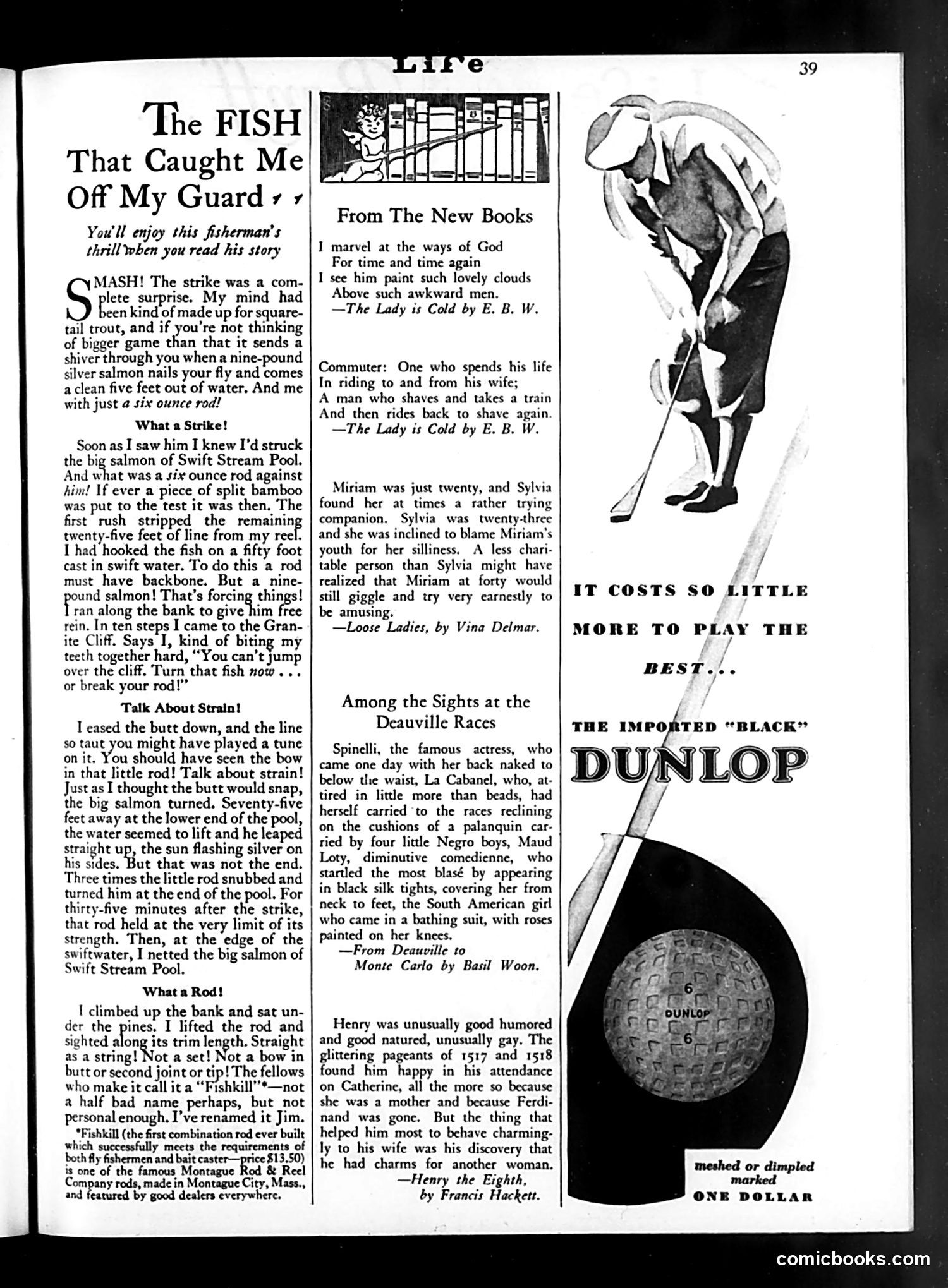
This is primarily a **fishing advertisement disguised as editorial content**—a common Life magazine format of the 1920s-30s. The main story, "The Fish That Caught Me Off My Guard," is a dramatic first-person fishing narrative that builds tension around landing a nine-pound salmon with a supposedly fragile rod. The payoff is subtle product placement: the unnamed "Fishkill" rod (actually a Montague brand) performed flawlessly under extreme strain, proving its quality. The right column contains **literary excerpts and gossipy society items**—typical Life filler showcasing contemporary novels and scandalous European high-society behavior (actresses at the Deauville Races appearing semi-nude or in provocative outfits). The **Dunlop golf ball advertisement** (bottom right) is straightforward product marketing. The implicit message: this magazine appeals to affluent, sporting gentlemen interested in quality equipment, literature, and society gossip. The fishing story validates the Montague rod through narrative rather than direct claims—a subtle advertising technique.
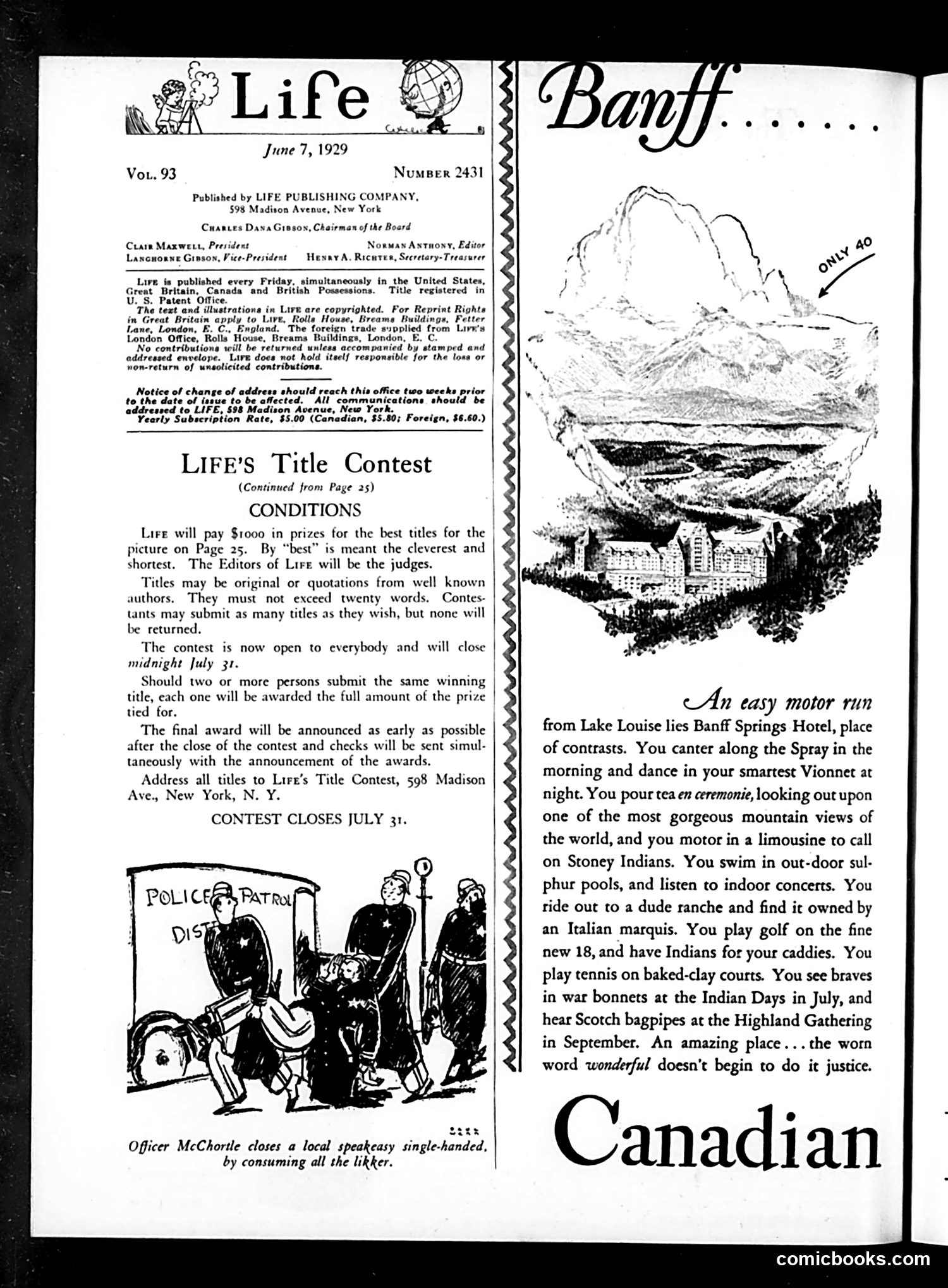
This June 1929 page contains a political cartoon and travel advertisement. **The Cartoon:** Officer McChortle, a police officer, stands at a speakeasy door during Prohibition. The caption jokes that he "closes a local speakeasy single-handed, by consuming all the likker." This satirizes law enforcement's complicity in Prohibition's failure—rather than actually shutting down illegal alcohol operations, corrupt officers simply drank the contraband themselves. It's dark humor about widespread police corruption during the 1920s-1930s Prohibition era. **The Advertisement:** The right page promotes Banff Springs Hotel in Canada, emphasizing luxury amenities (golf, tennis, tea service, limousines, Indian attractions) and positioning it as an exclusive destination for wealthy Americans seeking sophistication and exotic experiences. Together, these pages represent Life magazine's dual function: satirizing American social problems (corruption, failed drug policy) while catering to affluent readers through aspirational travel ads.
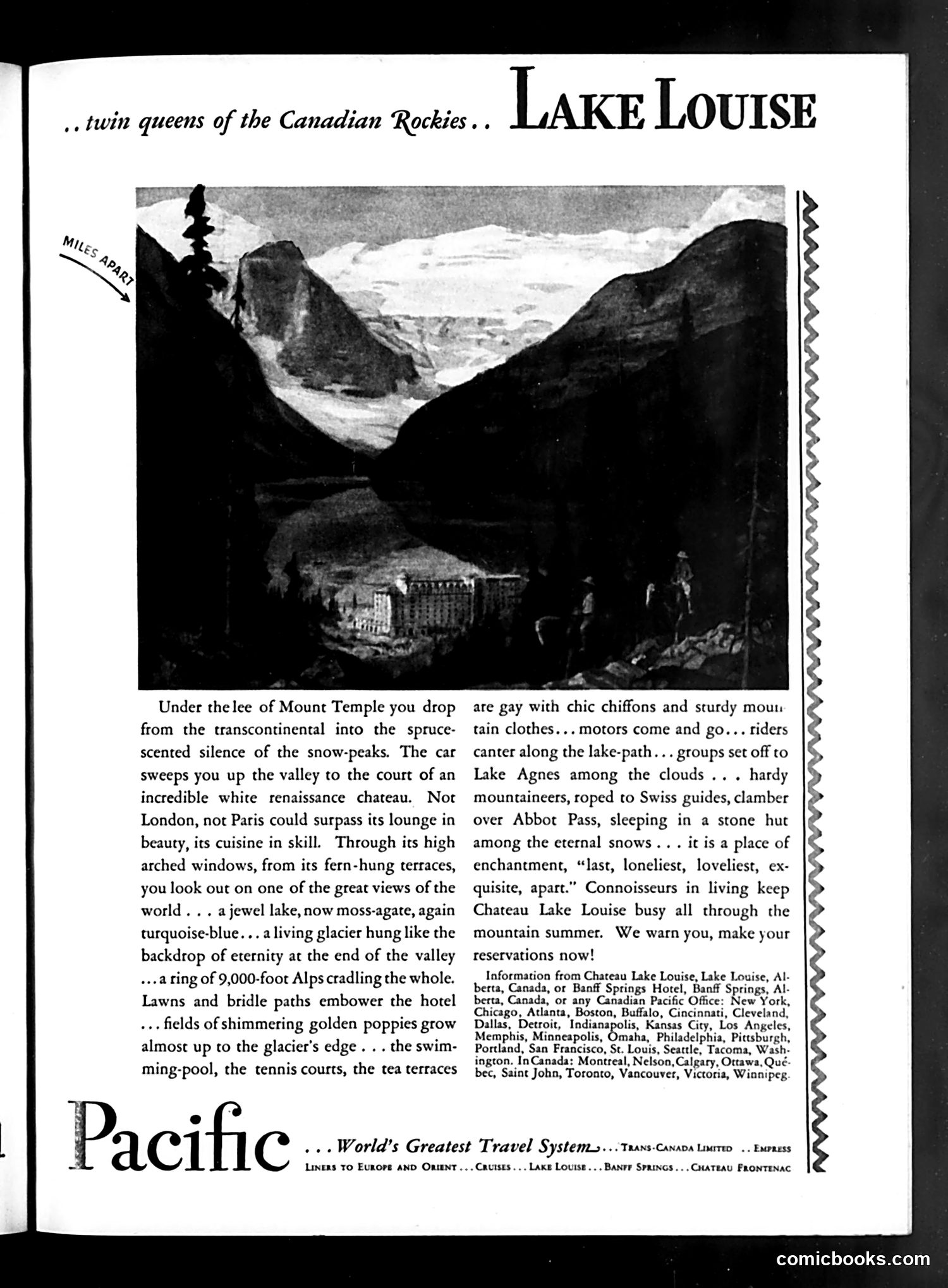
This is not a cartoon or satire—it's a full-page travel advertisement for the Canadian Pacific Railway promoting Chateau Lake Louise in the Canadian Rockies. The ad uses luxurious, romantic language to market the resort as an exclusive destination rivaling European luxury. It emphasizes the hotel's grandeur ("white renaissance chateau"), stunning natural views (glaciers, alpine peaks, the turquoise lake), and amenities (swimming pools, tennis courts, fine dining) to attract wealthy travelers. The photograph shows the hotel nestled in a dramatic mountain valley, designed to convey the exclusivity and natural beauty being advertised. The text addresses affluent readers ("connoisseurs in living") and urges immediate reservations, suggesting high demand. This represents early-20th-century luxury travel marketing—selling both the destination and the aspirational lifestyle it represents.
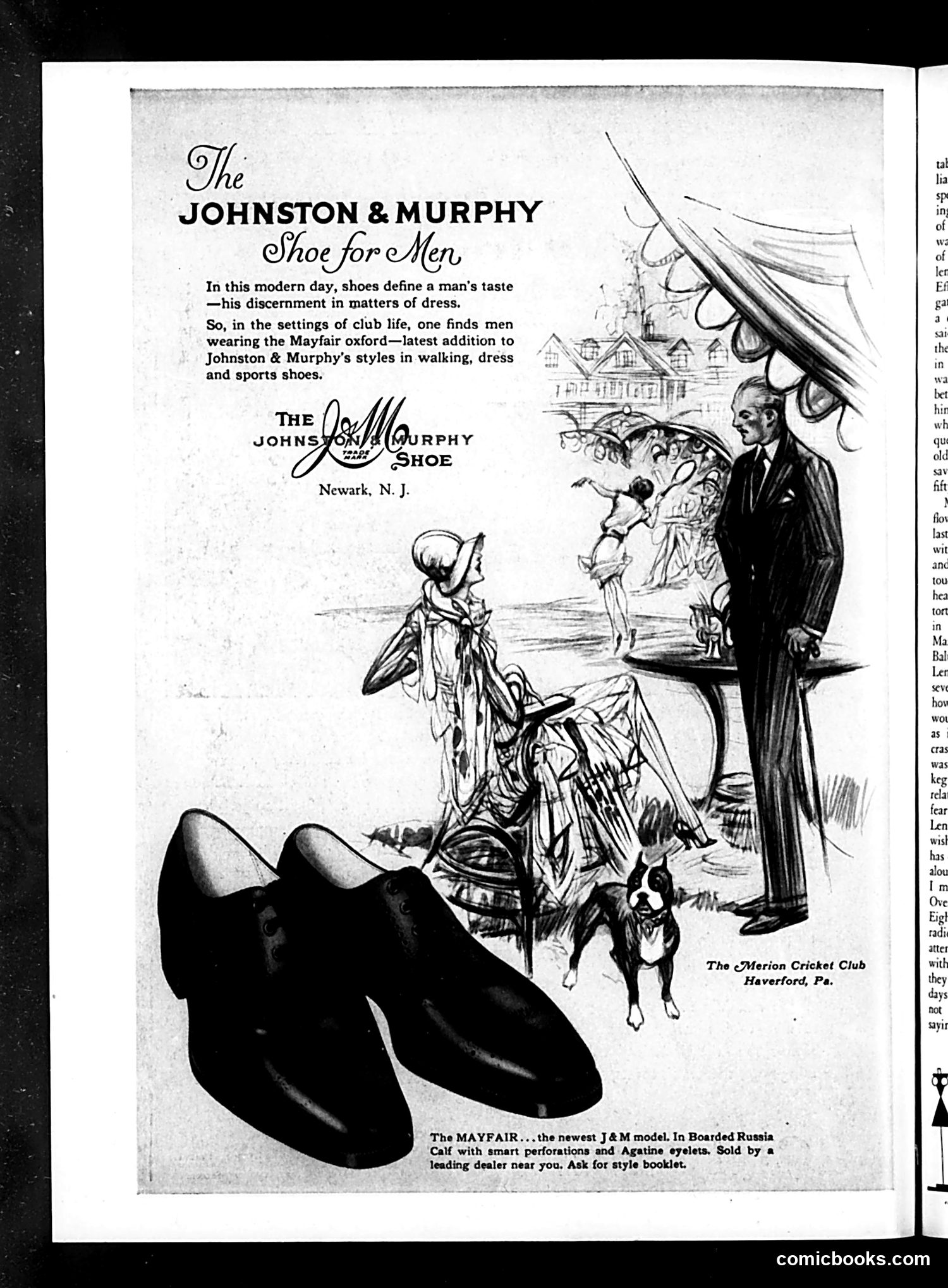
This is primarily a **shoe advertisement**, not satire. It promotes the Johnston & Murphy "Mayfair Oxford" shoe from Newark, N.J., marketed as a status symbol defining a man's taste and discernment. The advertisement uses aspirational imagery: a well-dressed gentleman at an exclusive country club (The Merion Cricket Club, Haverford, PA) surrounded by leisure activities—women in fashionable dress, a small dog, and club architecture visible in background. The message appeals to affluent male readers by associating the shoe with club life, refined taste, and social standing. The prominent shoe imagery at bottom showcases the product's "smart perforations and Agatine eyelets" in "Boarded Russia Calf" leather—luxury details for discerning buyers. This reflects early 20th-century *Life* magazine's mix of satirical content and upscale advertising targeting wealthy male readers.
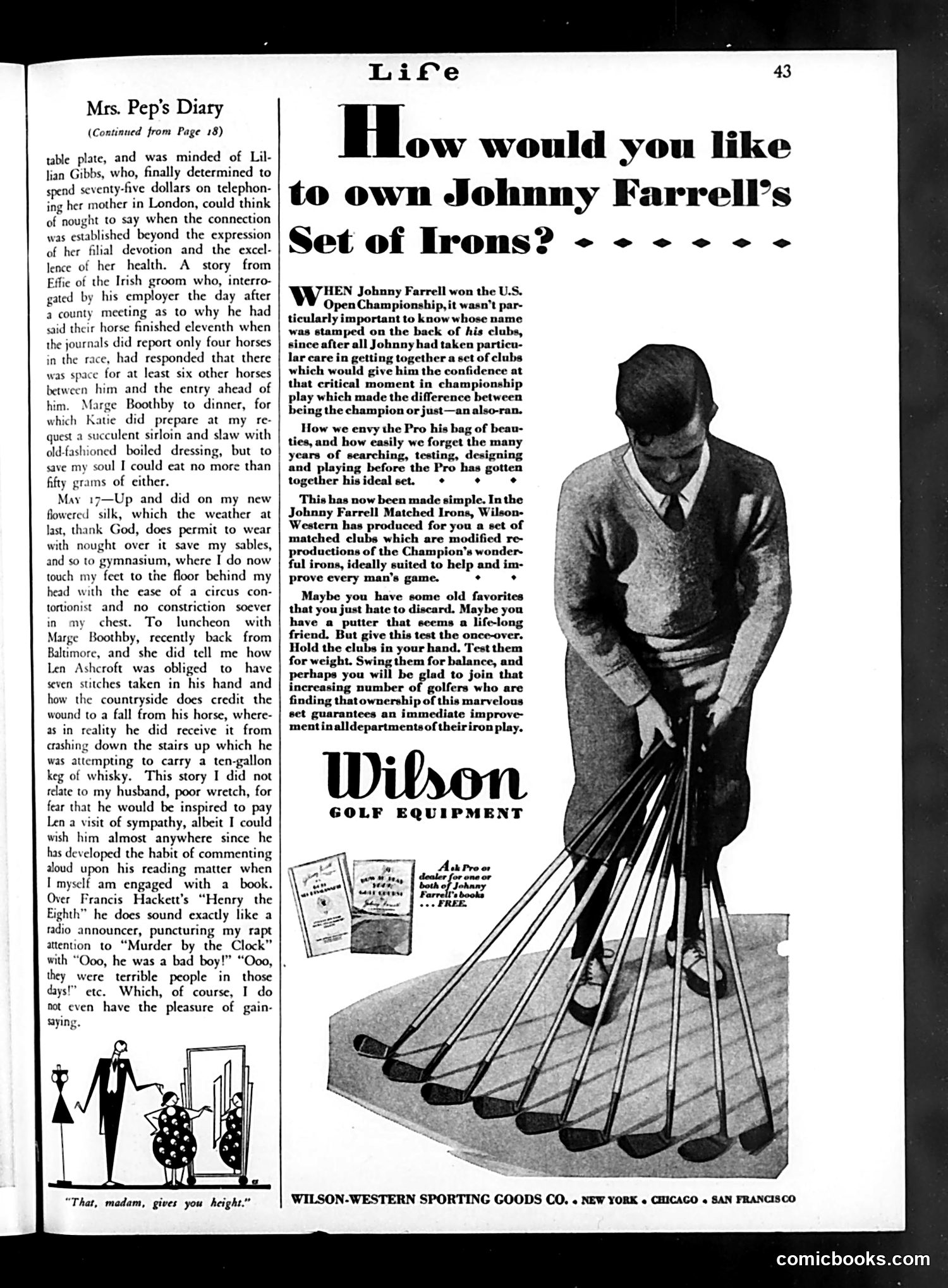
This page contains two distinct elements: **Left side ("Mrs. Pep's Diary"):** A serialized humor column featuring a society woman's observations about upper-class life—social gatherings, gossip about acquaintances, domestic staff anecdotes, and personal routines (gymnasium visits, shopping). The humor relies on period mannerisms and understated British-influenced social commentary typical of 1920s-30s magazine satire. **Right side:** A full-page advertisement for Wilson-Western golf equipment, leveraging celebrity endorsement. Johnny Farrell was a real professional golfer who won the U.S. Open Championship (1928). The ad capitalizes on his success, marketing "matched irons" as reproductions of his championship clubs—appealing to amateur golfers' desire to improve by owning equipment used by champions. The small cartoon at bottom-left satirizes social climbing or physical fitness, with the caption "That, madam, gives you height." This is primarily **advertising content** disguised within editorial context, a common magazine practice of that era.
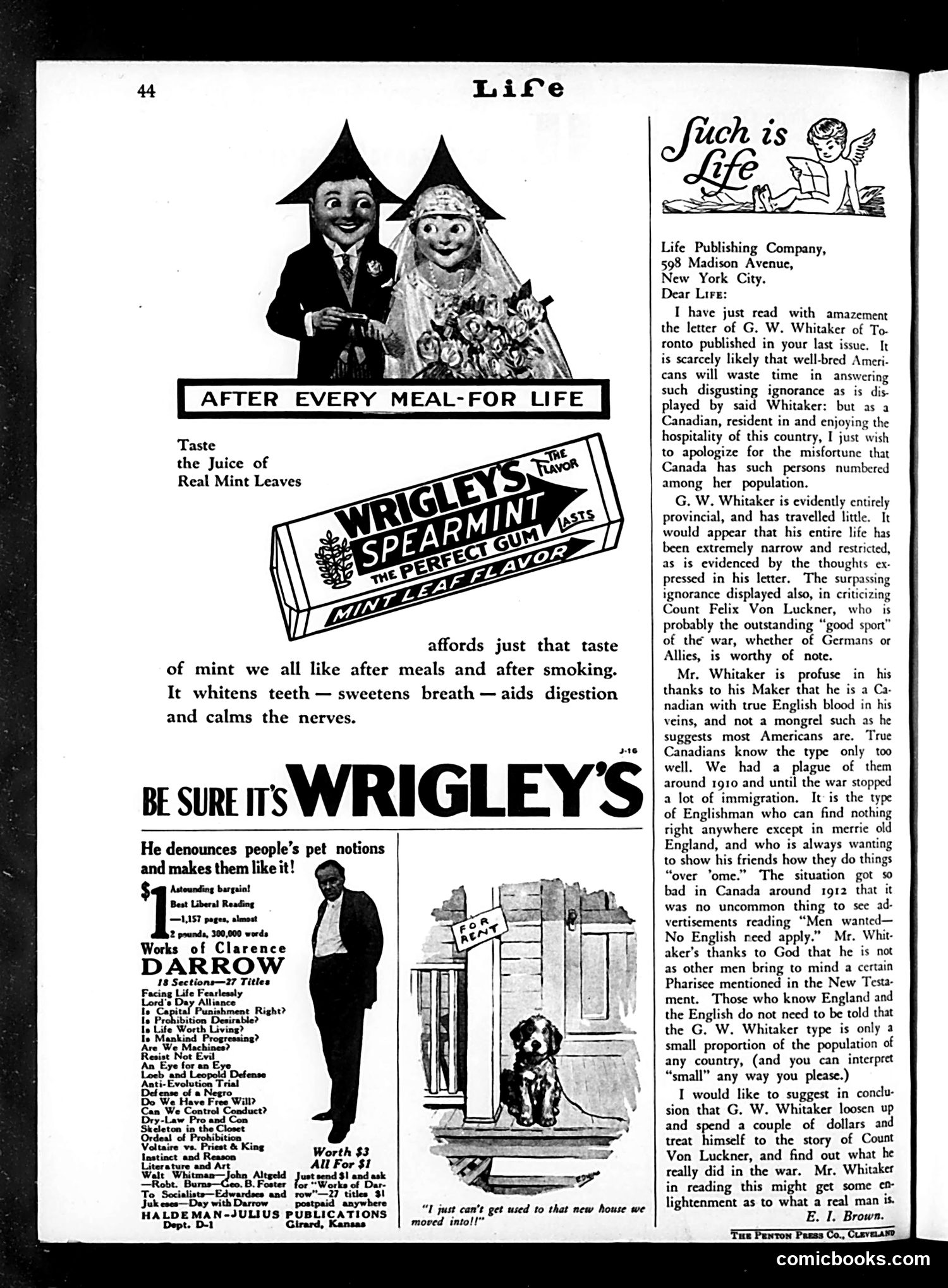
This page combines advertising with reader correspondence. The top features a **Wrigley's gum advertisement** showing a newlywed couple with the slogan "After Every Meal—For Life," a common marketing pitch positioning the product as essential to daily life and dental health. Below is a **Clarence Darrow book advertisement** offering his collected works cheaply—appealing to "liberal" readers interested in his famous legal defenses and social commentary. The main content is a **letter to the editor** from E.I. Brown, a Canadian, responding to an earlier letter by G.W. Whitaker (also Canadian) who apparently made disparaging comments about Americans. Brown defends Americans and criticizes Whitaker as a narrow-minded, snobbish English expatriate—the type who complained about Canada's immigration and looked down on locals. Brown's sarcastic closing reference to a Pharisee suggests Whitaker's self-righteousness. The cartoon below shows a man and dog outside a new house, humorously capturing domestic adjustment struggles.
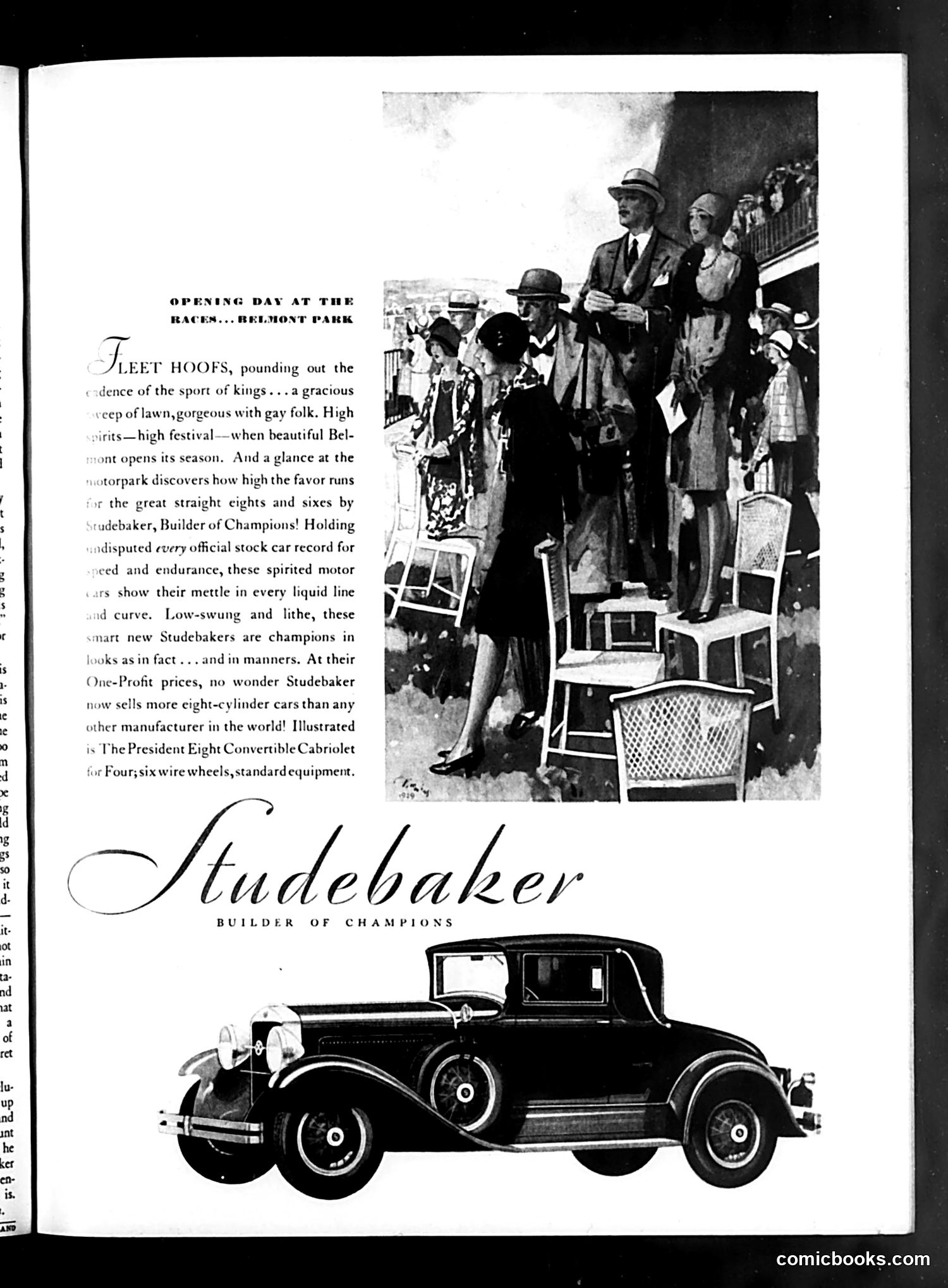
This is primarily a **Studebaker automobile advertisement**, not political satire. The page uses a photograph of elegantly dressed spectators at Belmont Park racetrack's opening day as aspirational imagery to sell cars. The text argues that Studebaker automobiles are "champions" like the racehorses at Belmont—fast, elegant, and record-breaking. It claims Studebaker holds "every official stock car record" and sells more eight-cylinder cars than competitors, positioning the brand as superior in "looks as in fact... and in manners." The photograph shows well-dressed men and women in 1920s attire (hats, formal wear) enjoying the social spectacle of horse racing, a leisure activity associated with wealth and status. By placing the Studebaker car at the bottom, the ad suggests owning this vehicle grants comparable prestige and class. This reflects Depression-era marketing: luxury brands maintained aspirational messaging despite economic hardship, targeting affluent consumers who frequented high-society events like Belmont Park openings.
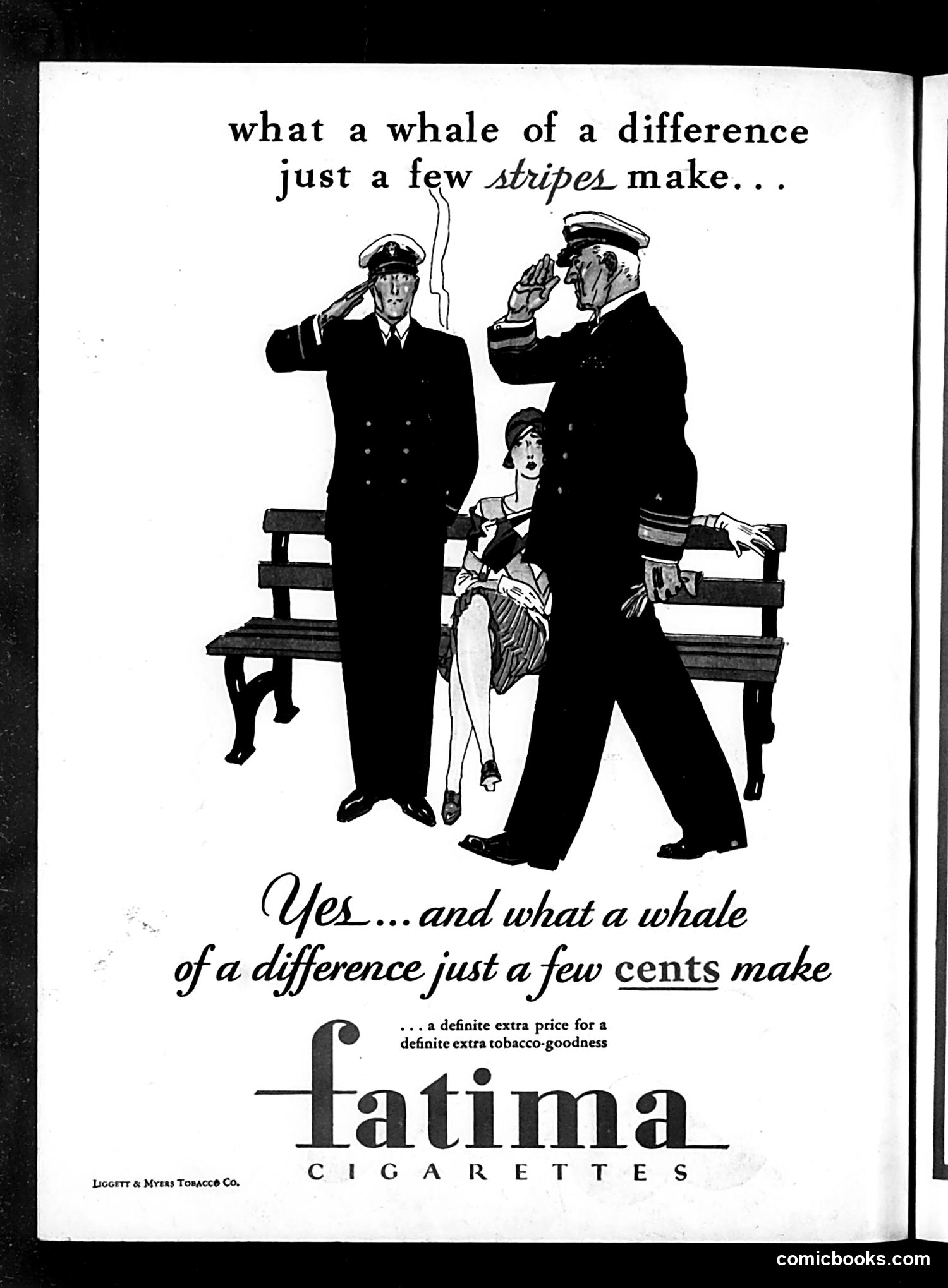
This is a cigarette advertisement for Fatima brand, not political satire. The ad uses a visual pun: two uniformed men (likely sailors or military personnel, distinguished by their "stripes") flank a woman on a bench. The joke plays on "stripes" as both military rank insignia and the striped pattern on the woman's clothing. The ad argues that small price differences yield significant quality improvements—just as uniform stripes denote rank differences. Fatima cigarettes, though costing only "a few cents" more than competitors, supposedly offer superior tobacco quality. This was standard early 20th-century advertising rhetoric, making vague quality claims to justify premium pricing. The military figures likely suggest sophistication or authority endorsing the product.