
A complete issue · 22 pages · 1902
Life — August 7, 1902
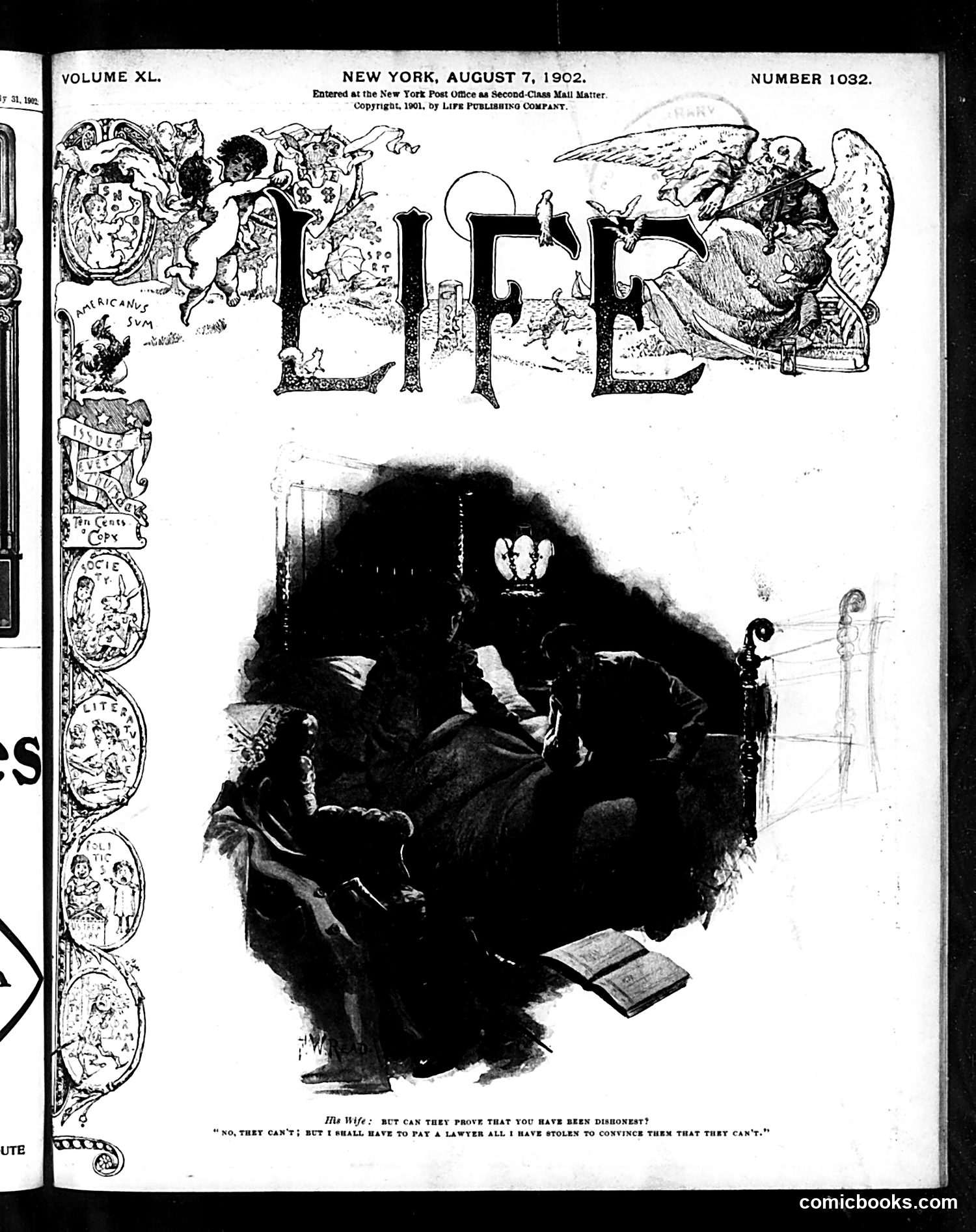
This satirical cartoon depicts a wealthy woman confronted by her husband about dishonesty. The caption reads: "No, test can't; but I shall have to pay a lawyer all I have stolen to convince them that they can't." The image shows a darkly-shaded domestic scene with what appears to be an affluent couple in dispute. The satire targets wealthy women's financial autonomy and the legal vulnerabilities of marriage during the Gilded Age. The joke suggests that even if a wife's financial misconduct could be proven, the cost of legal defense would consume her ill-gotten gains anyway—satirizing both marital power dynamics and the expensive legal system available primarily to the wealthy.
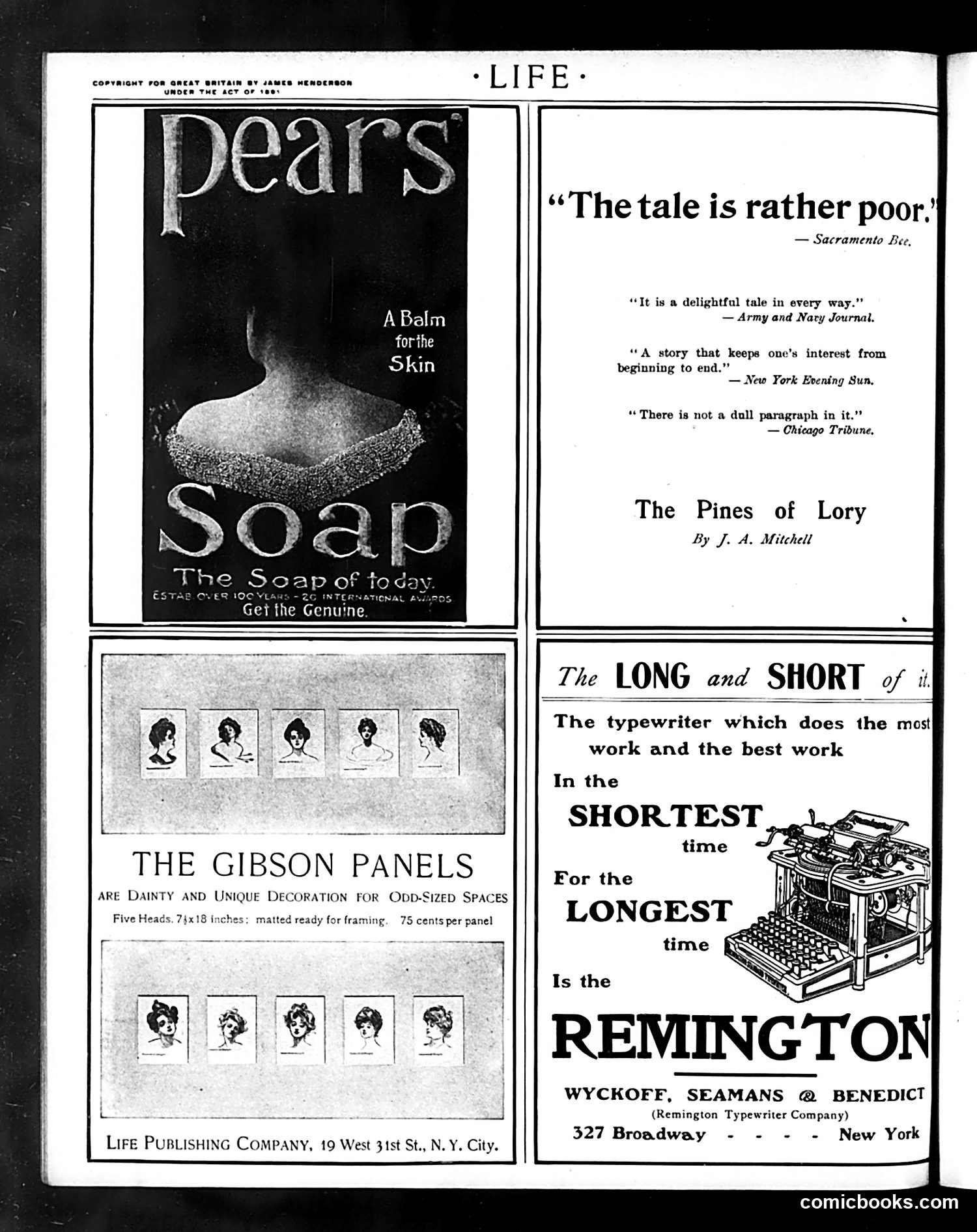
This page is primarily **advertising**, not satirical content. It contains four ads: 1. **Pears' Soap** - A beauty/skincare product advertisement 2. **"The Pines of Lory" by J.A. Mitchell** - A book promotion with positive reviews from various publications 3. **Gibson Panels** - Decorative wall panels featuring illustrations of women's heads, marketed as "dainty and unique decoration" 4. **Remington Typewriter** - Office equipment ad emphasizing durability The only potential satire is subtle: the Gibson Panels advertisement features idealized female portraits typical of Charles Dana Gibson's "Gibson Girl" style illustrations—representing early 1900s beauty standards. However, this appears to be straightforward product advertising rather than social commentary or political satire.
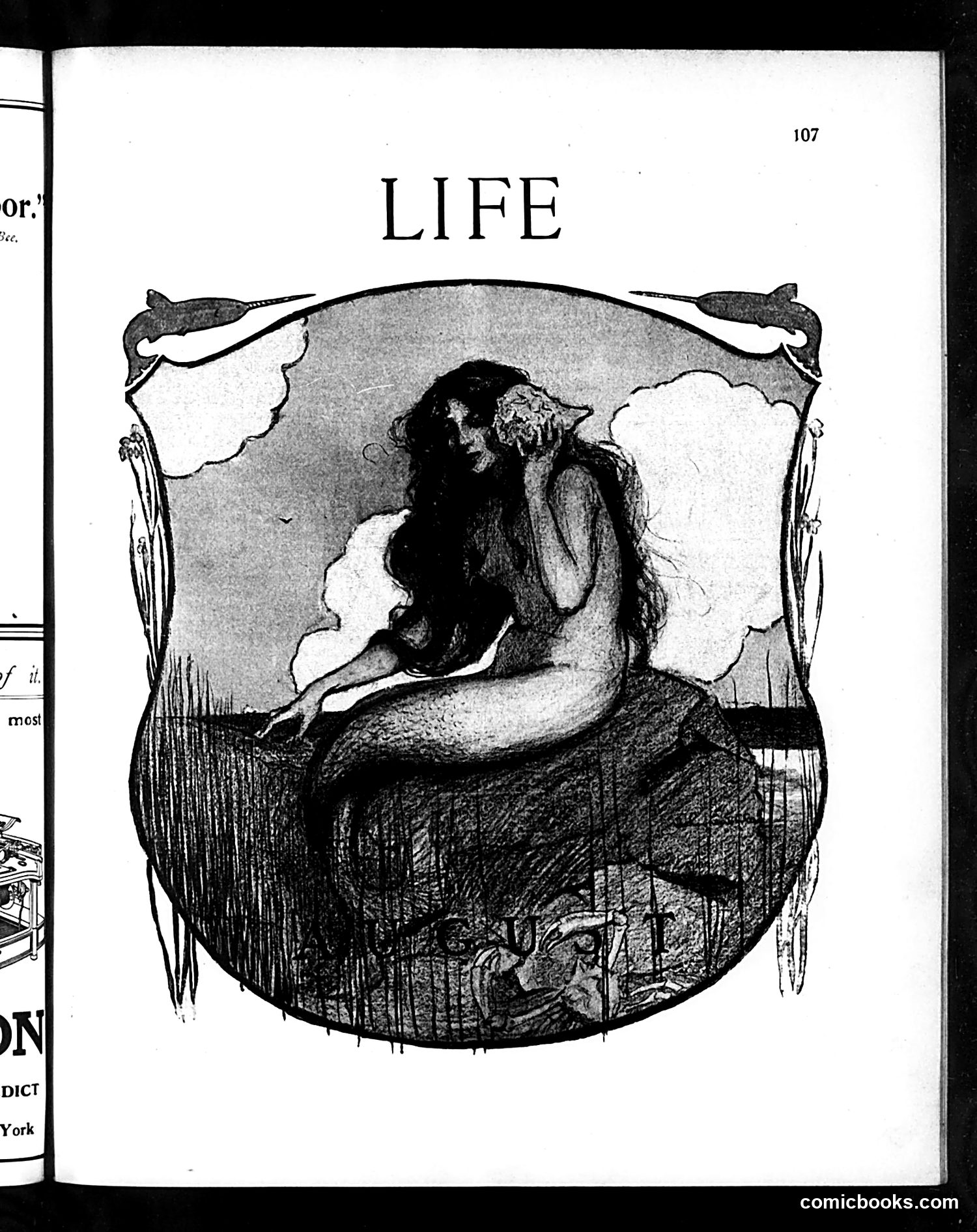
This page features a single illustration titled "LIFE" showing two figures in an intimate embrace within a circular frame. The art style and composition suggest early 20th-century satirical commentary. The figures appear to represent allegorical or symbolic representations rather than specific named individuals. The decorative border with fish motifs and the romantic imagery likely comment on themes of human connection, mortality, or the passage of time—common subjects for Life magazine's satire. Without additional context or visible text identifying the specific figures or contemporary reference, the precise political or social critique remains unclear. The dramatic contrast between light and shadow emphasizes the emotional intensity of the scene.
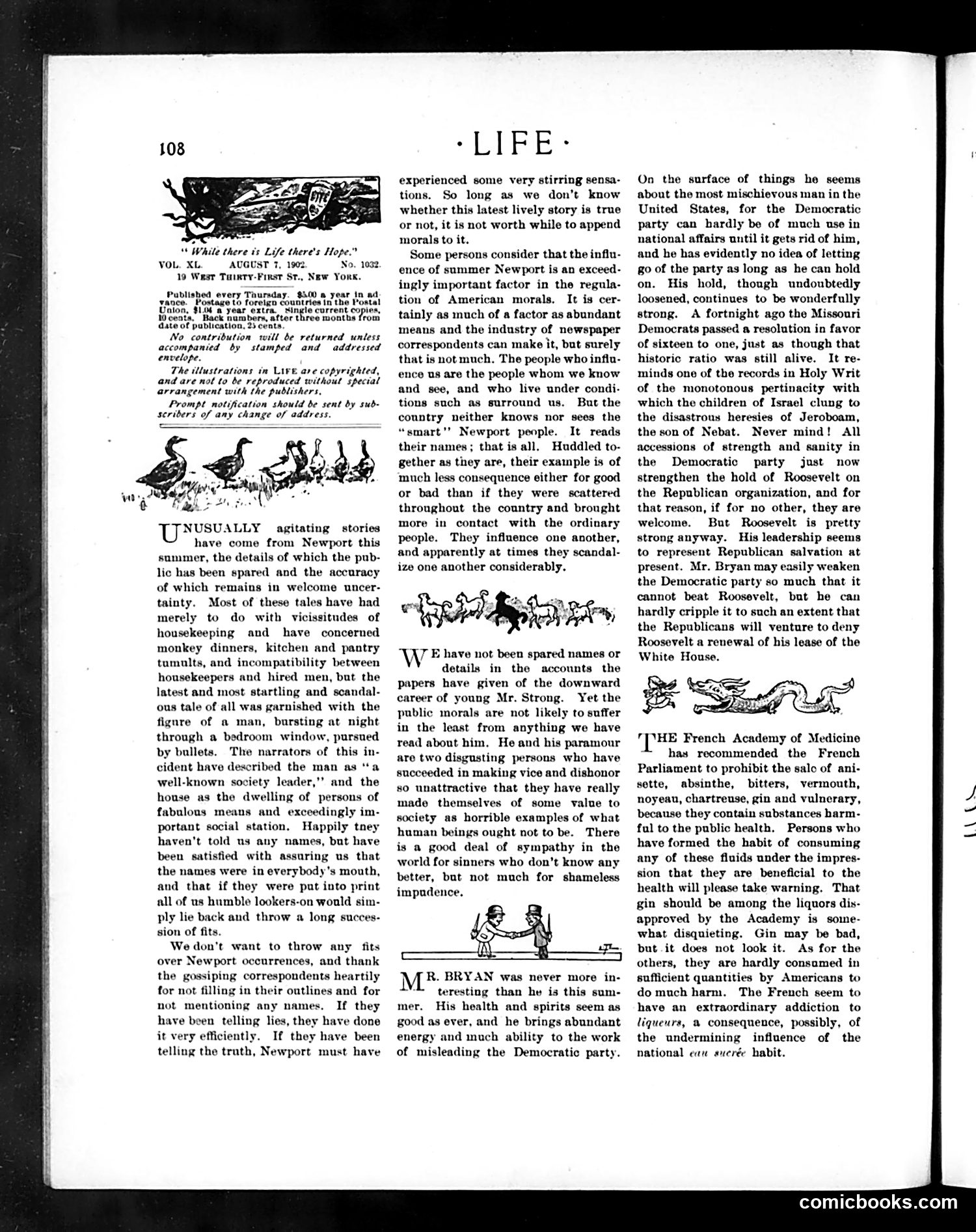
This page contains political commentary about Newport society and Democratic Party leadership, circa early 1900s. The text criticizes "Mr. Strong," a young man from a prominent Newport family whose scandalous behavior has damaged Democratic Party interests. The article suggests his moral failings reflect poorly on the party's reputation. The page also discusses President Roosevelt's political strength, suggesting Democrats cannot easily defeat him. A separate section critiques the French Academy of Medicine's recommendations regarding absinthe and other liqueurs, warning Americans against adopting such habits. The decorative illustrations (ducks, figures) are typical period ornaments rather than satirical cartoons. The satire operates primarily through the written commentary rather than visual caricature on this particular page.
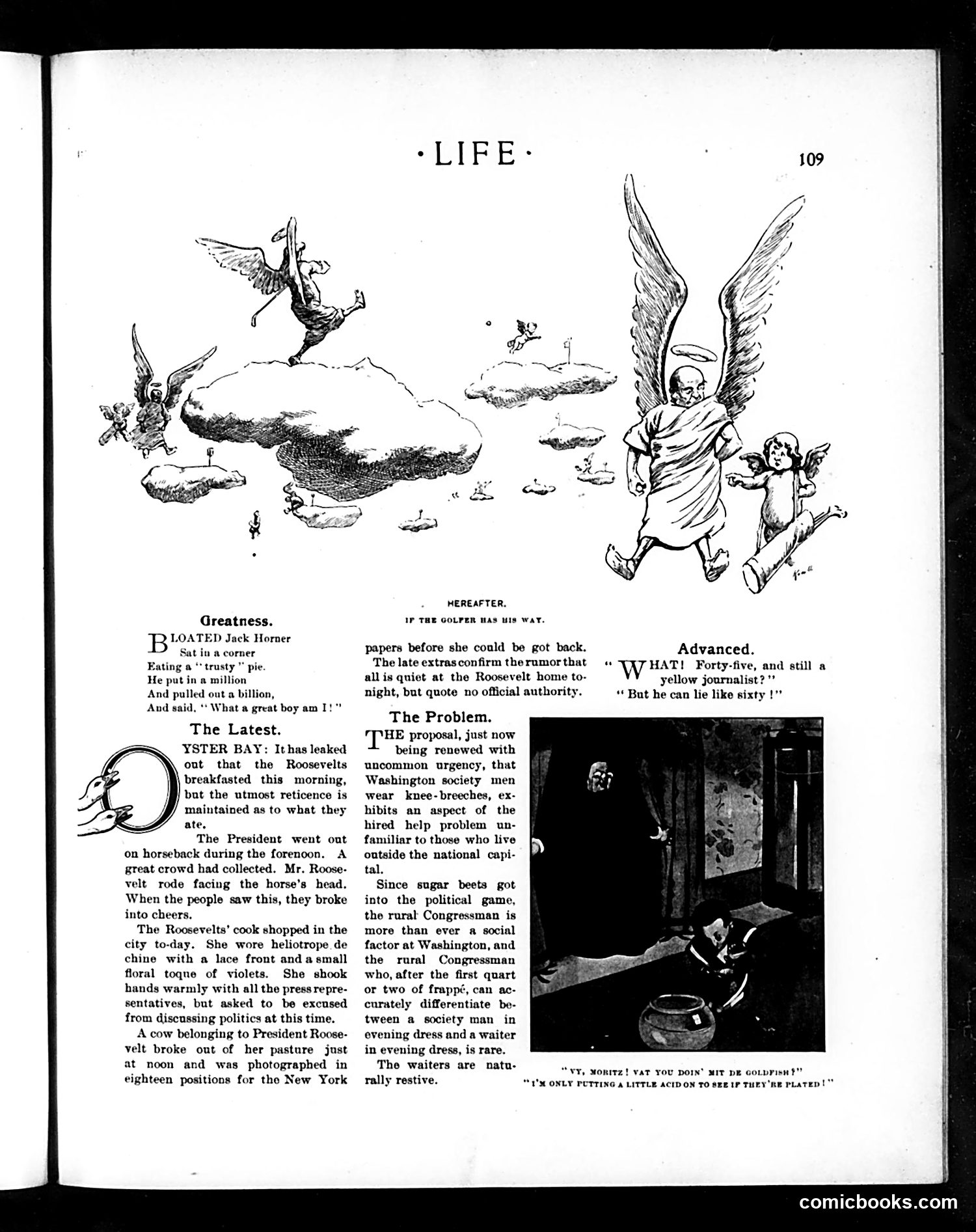
This page contains several brief satirical items about President Roosevelt and Washington society circa the Progressive Era. **"Greatness"** mocks a boastful Jack Horner character pulling out a billion-dollar plum—satirizing inflated claims of achievement. **"The Latest"** reports Roosevelt rode horseback through town, drawing crowds and cheers. The Roosevelt cook appeared in fashionable dress, shaking hands with press representatives who avoided political discussion—likely satirizing how the Roosevelt administration controlled public image and media access. **"The Problem"** critiques a Washington society proposal regarding women wearing knee-breeches at formal events, connecting fashion to class and rural vs. urban political divisions. The photograph shows a humorous "Hereafter" scenario of Goldfinnch behavior. The tone is light mockery of Roosevelt-era politics and Washington society pretension.
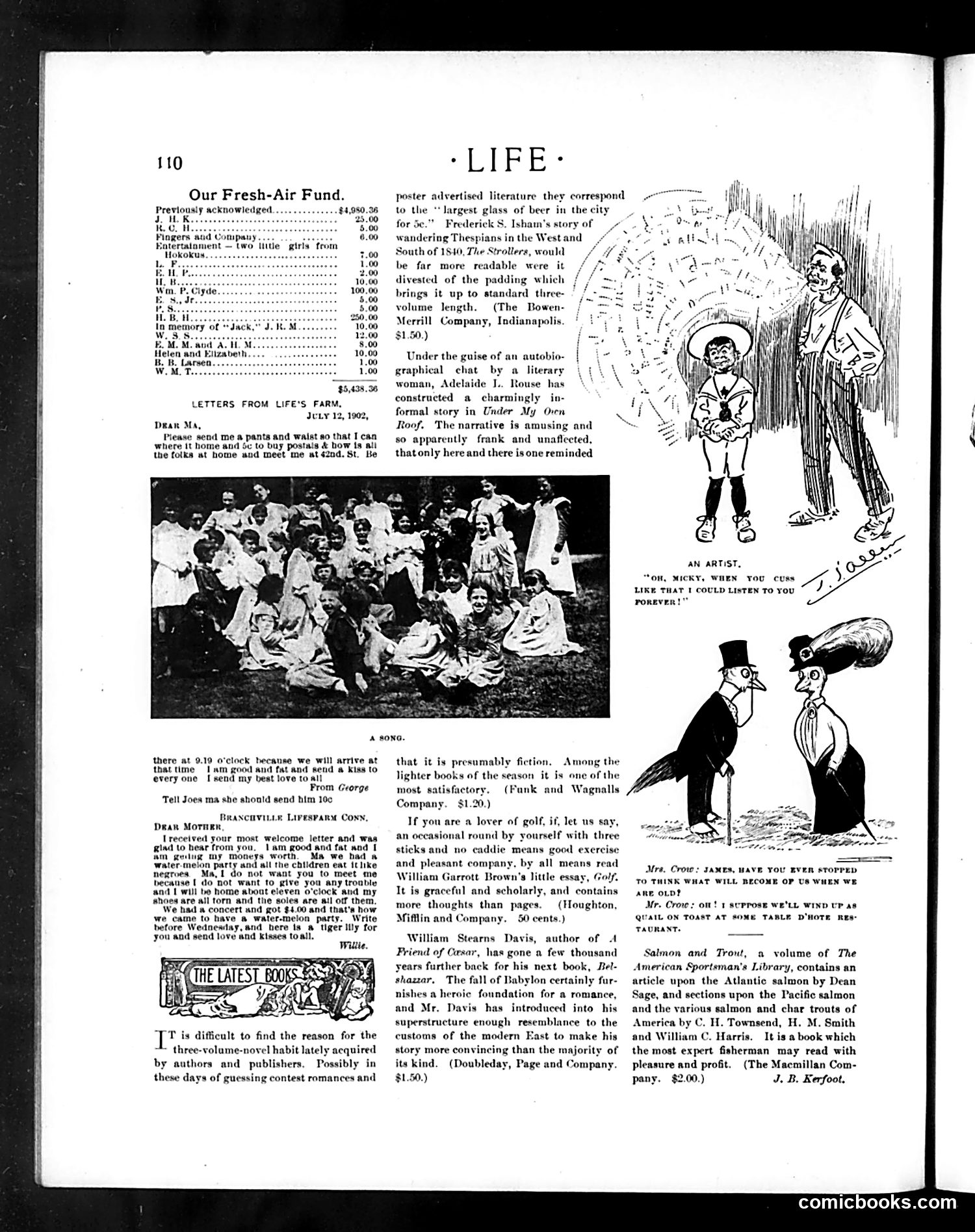
This page contains three distinct cartoons with satirical commentary: 1. **"An Artist"** (top): Shows a well-dressed man admiring a woman's appearance while she stands against a tree. The caption reads: "Oh, Nicky, when you curse like that I could listen to you forever!" This satirizes romantic idealization—the man finds the woman's rough language charming rather than off-putting, mocking sentimental notions of romance. 2. **"Mrs. Crow" dialogue** (bottom): Two bird figures discuss stopping at a restaurant, with one crow saying "James, have you ever stopped to think what the price of an egg is?" This appears to satirize domestic concerns about household economics and rising food costs. The page mixes book reviews with lighthearted social satire typical of Life magazine's humor approach to contemporary manners and relationships.
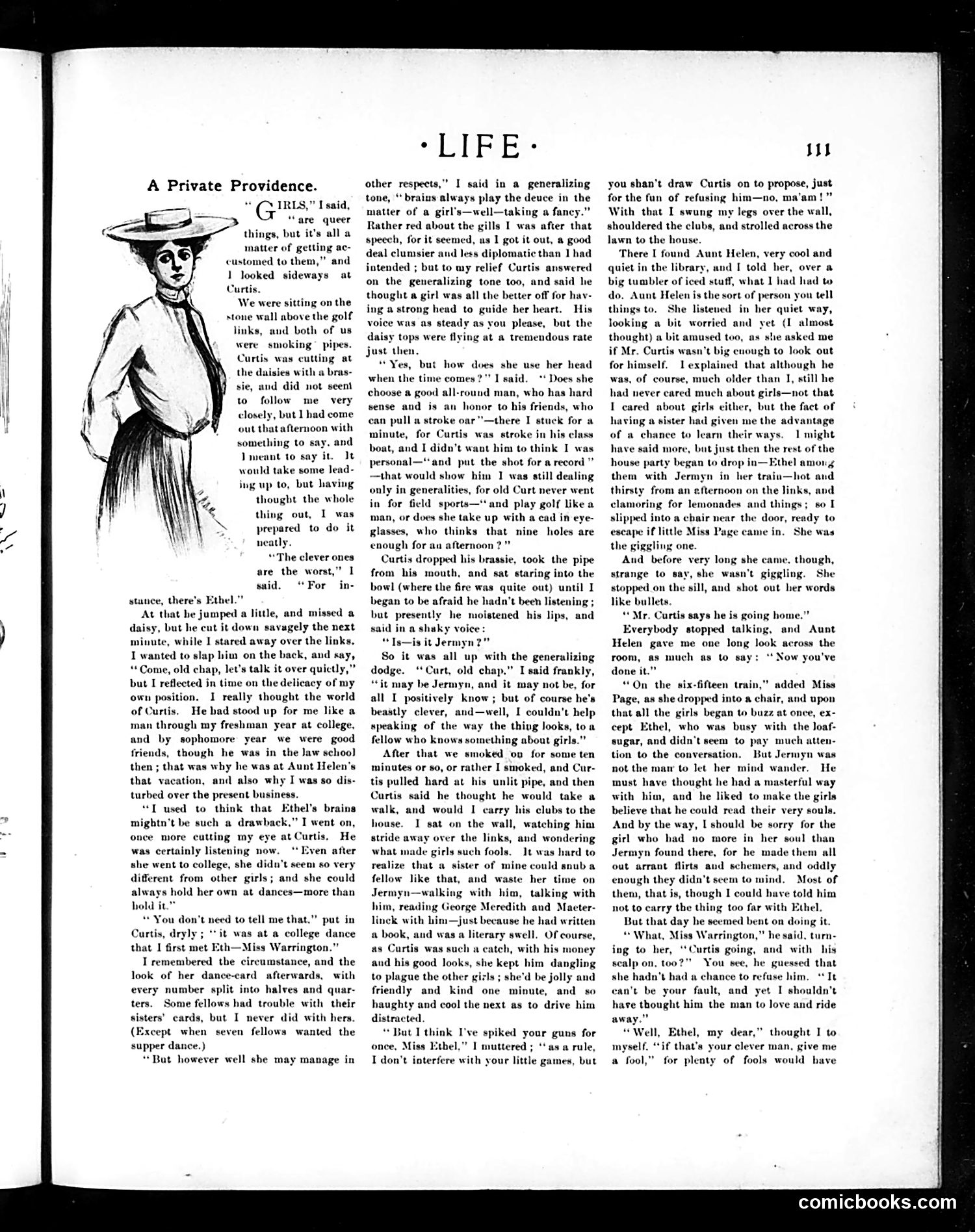
This page contains a short story rather than a political cartoon. The illustration shows a man in a hat and smoking jacket, seemingly a gentleman character named Curtis who is the subject of discussion in the narrative. The story concerns Curtis's courtship habits and romantic choices. The text discusses Curtis's approach to pursuing women—specifically his tendency to generalize about girls and his somewhat old-fashioned or diplomatic manner. Characters debate whether Curtis will propose to a woman named Miss Page, with various observations about his character and eligibility as a suitor. This appears to be a humorous domestic fiction piece typical of *Life* magazine's satirical content, poking fun at upper-class courtship conventions and male romanticism of the early 20th century.
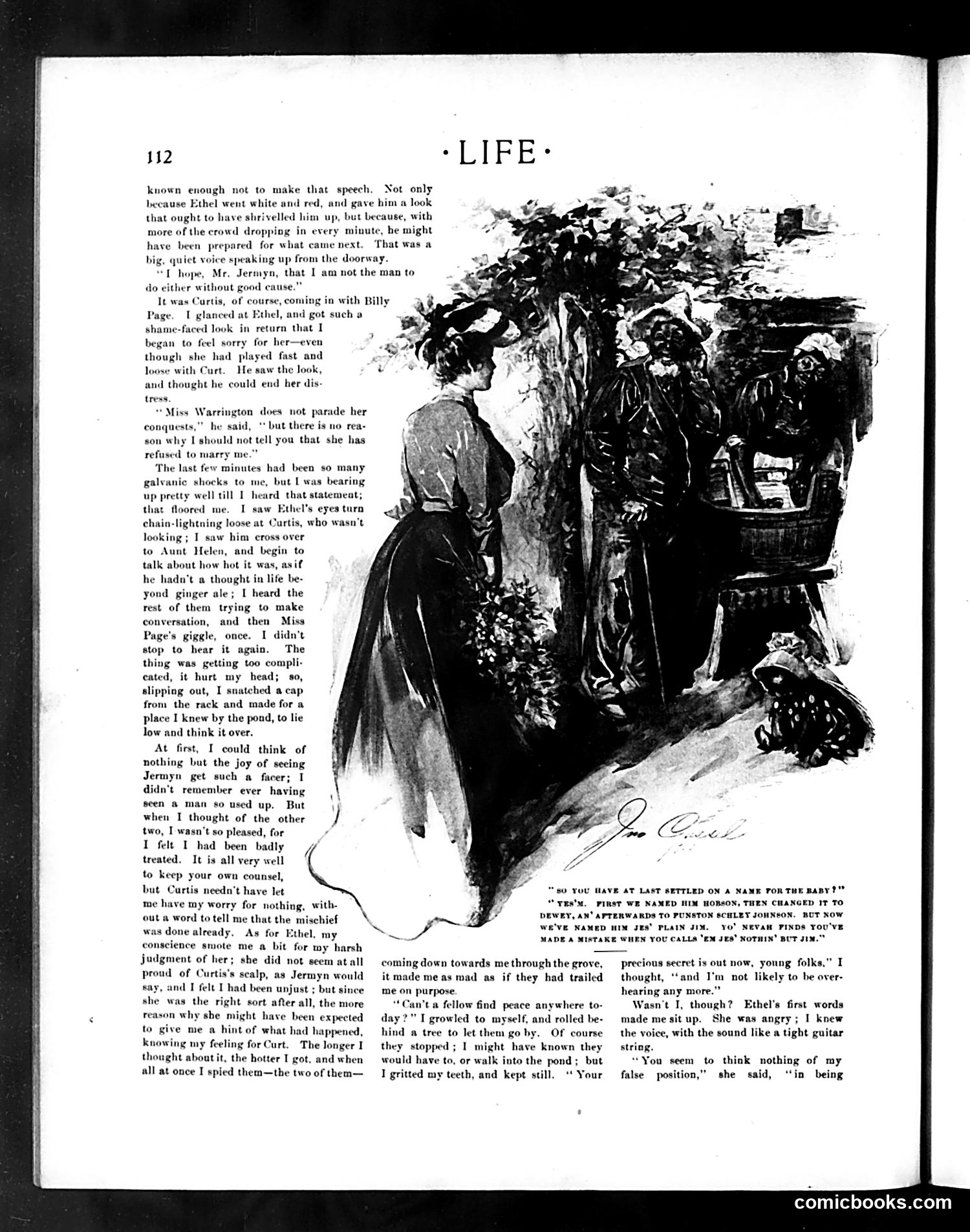
This page from *Life* magazine contains a narrative story with an accompanying illustration rather than political satire. The illustration shows a woman in period dress speaking with what appears to be a man near a carriage or vehicle in a wooded setting. The text discusses a character named Ethel and references to Curtis, Curt, Billy Page, and Aunt Helen—apparently characters in a romantic or domestic narrative. The dialogue mentions naming a baby ("Jess" or "plain Jim"), suggesting this is serialized fiction about courtship, marriage, or family matters. Without the magazine's date or full context visible, the exact social commentary remains unclear, though the story appears to explore romantic relationships and social expectations of the era in which it was published.
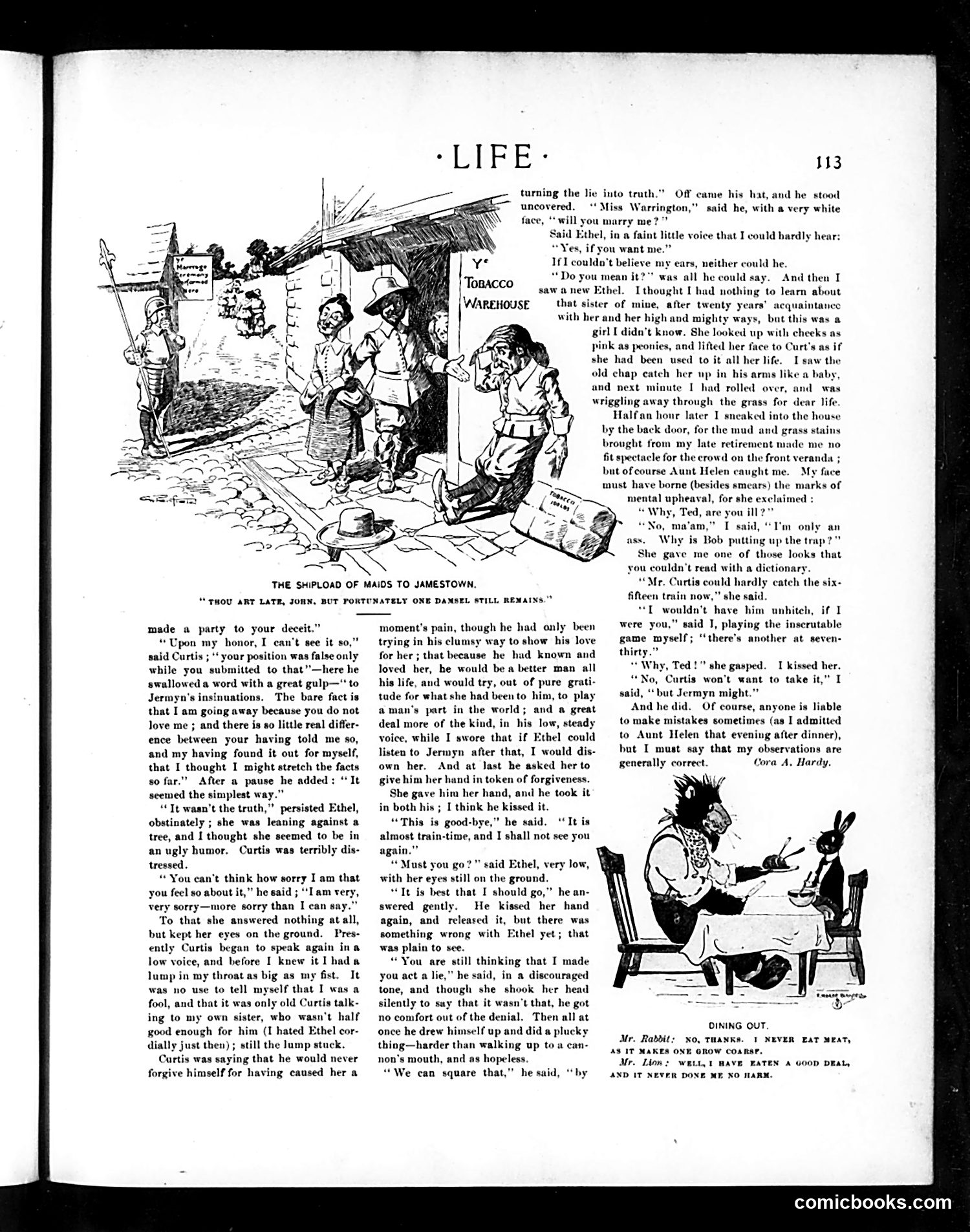
This Life magazine page contains two distinct items: **Upper illustration**: "The Shipload of Maids to Jamestown" depicts a historical scene with the caption "Thou art late, John, but fortunately one damsel still remains." This appears to be satirical commentary on colonial Virginia's early practice of importing women settlers, treating marriage as a transactional commodity. The humor targets both colonial desperation and the objectification of women. **Lower illustration**: "Dining Out" is a joke about vegetarian dining. A rabbit questions whether meat is served, while a lion asserts he "never eat meat" because "it makes one grow corpsy." The humor derives from the absurdity of a carnivore claiming vegetarianism—poking fun at fashionable dietary trends or pretentious diners.
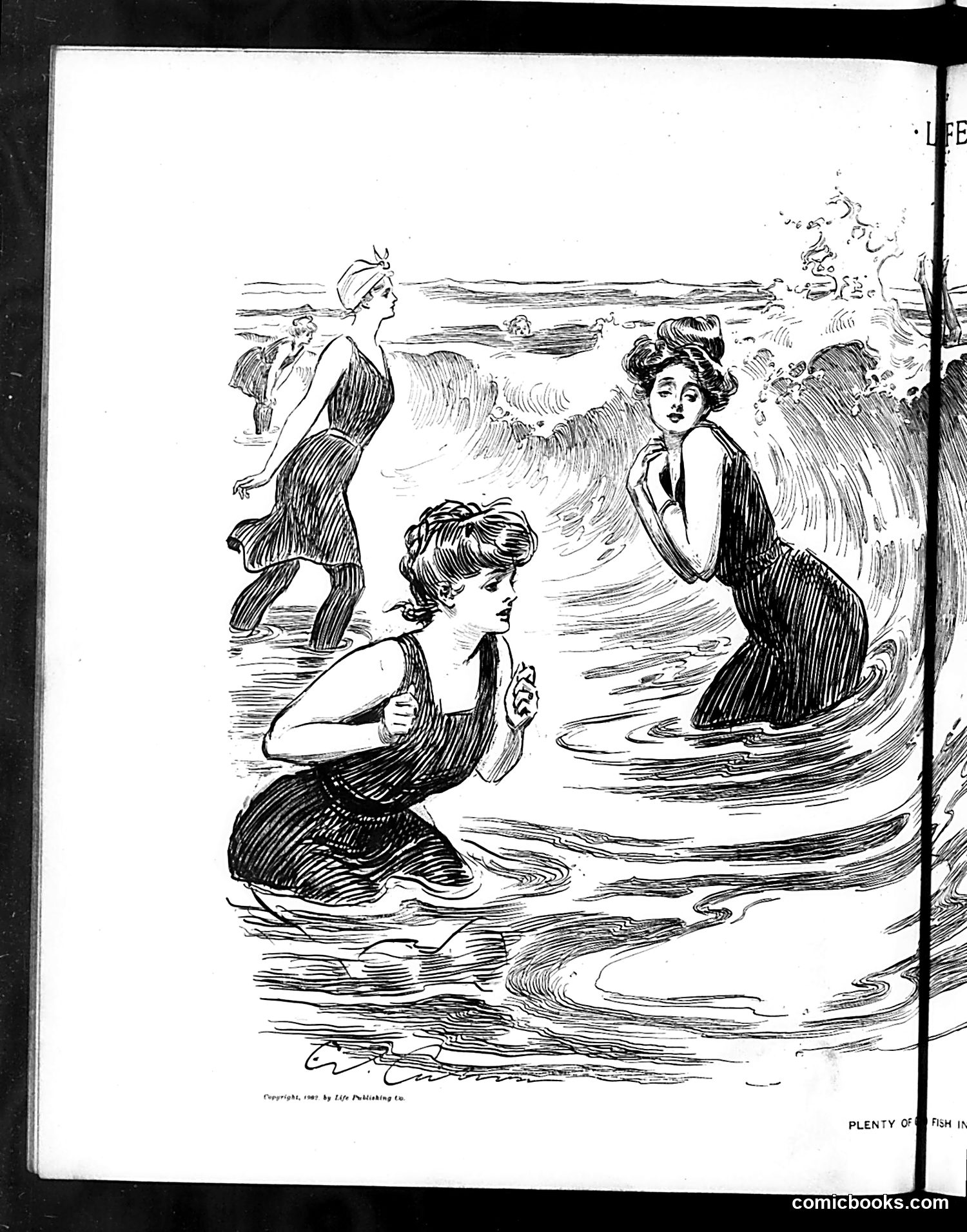
This illustration depicts a beach bathing scene, likely from the early 20th century based on the artistic style and swimwear shown. The cartoon appears to satirize Victorian-era social conventions around women's swimming attire and public modesty. The scene shows women in the ocean wearing one-piece swimming costumes typical of that period. The humor likely stems from the tension between propriety and practicality—the swimsuits are modest by modern standards yet apparently scandalized conservative observers of the era. One woman kneels in shallow water while others wade, suggesting an awkward negotiation between fashion, decorum, and aquatic enjoyment. The copyright attribution to "Life Publishing Co." confirms this is from Life magazine's satirical content mocking social attitudes toward women's bodies and bathing culture of the time.
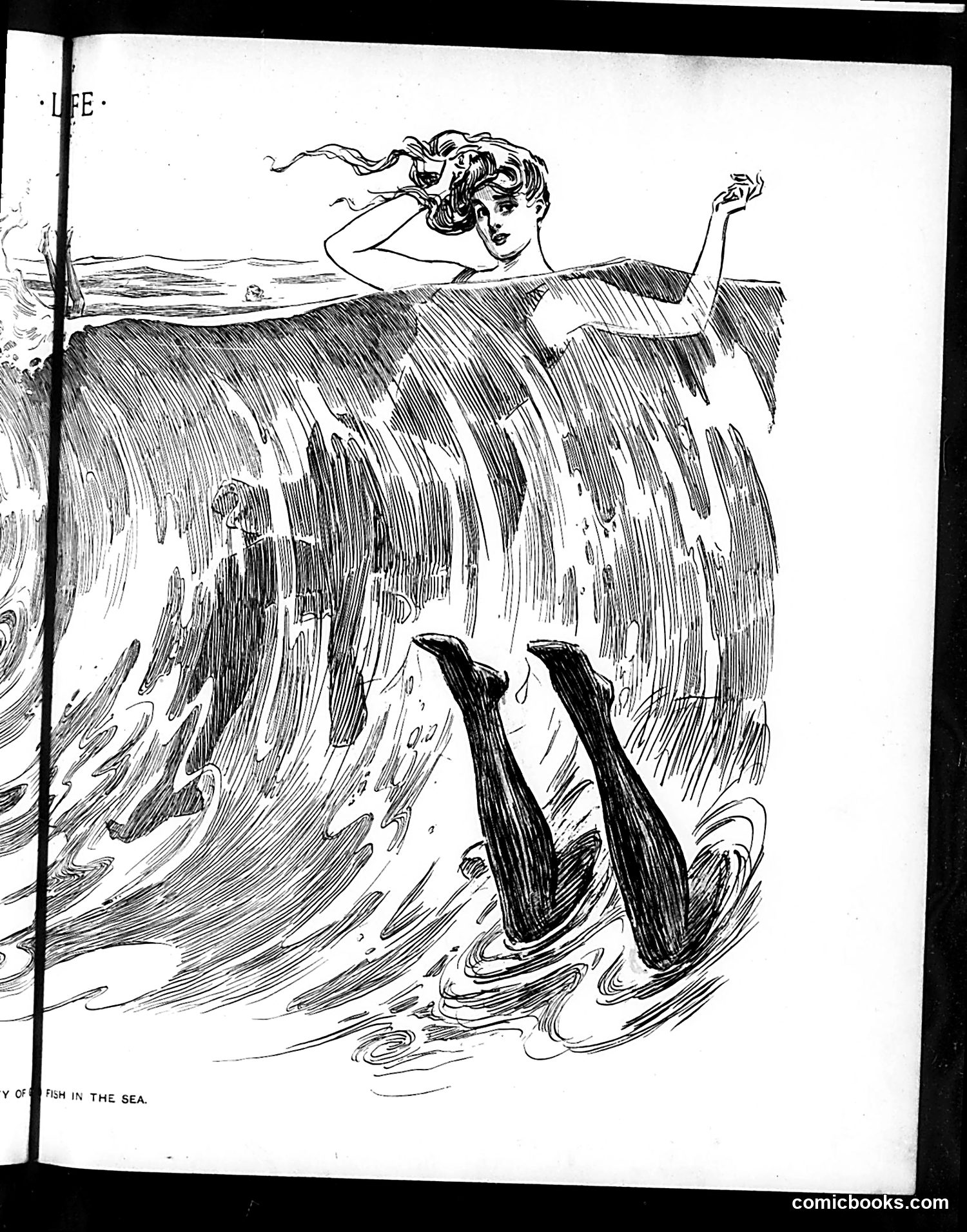
This is a humorous illustration from *Life* magazine showing a woman lounging on a large wave in the ocean, with her legs prominently displayed above the water's surface. The partial caption at bottom reads "...Y OF FISH IN THE SEA," suggesting the full caption likely contains a phrase like "plenty of fish in the sea." The cartoon appears to be a visual pun playing on that common romantic expression. By depicting a woman literally using the ocean as a resting place while displaying her legs, the cartoonist makes a cheeky joke about female attractiveness and romantic prospects. This reflects early-to-mid 20th century humor sensibilities that often objectified women while presenting them as carefree or flirtatious figures.
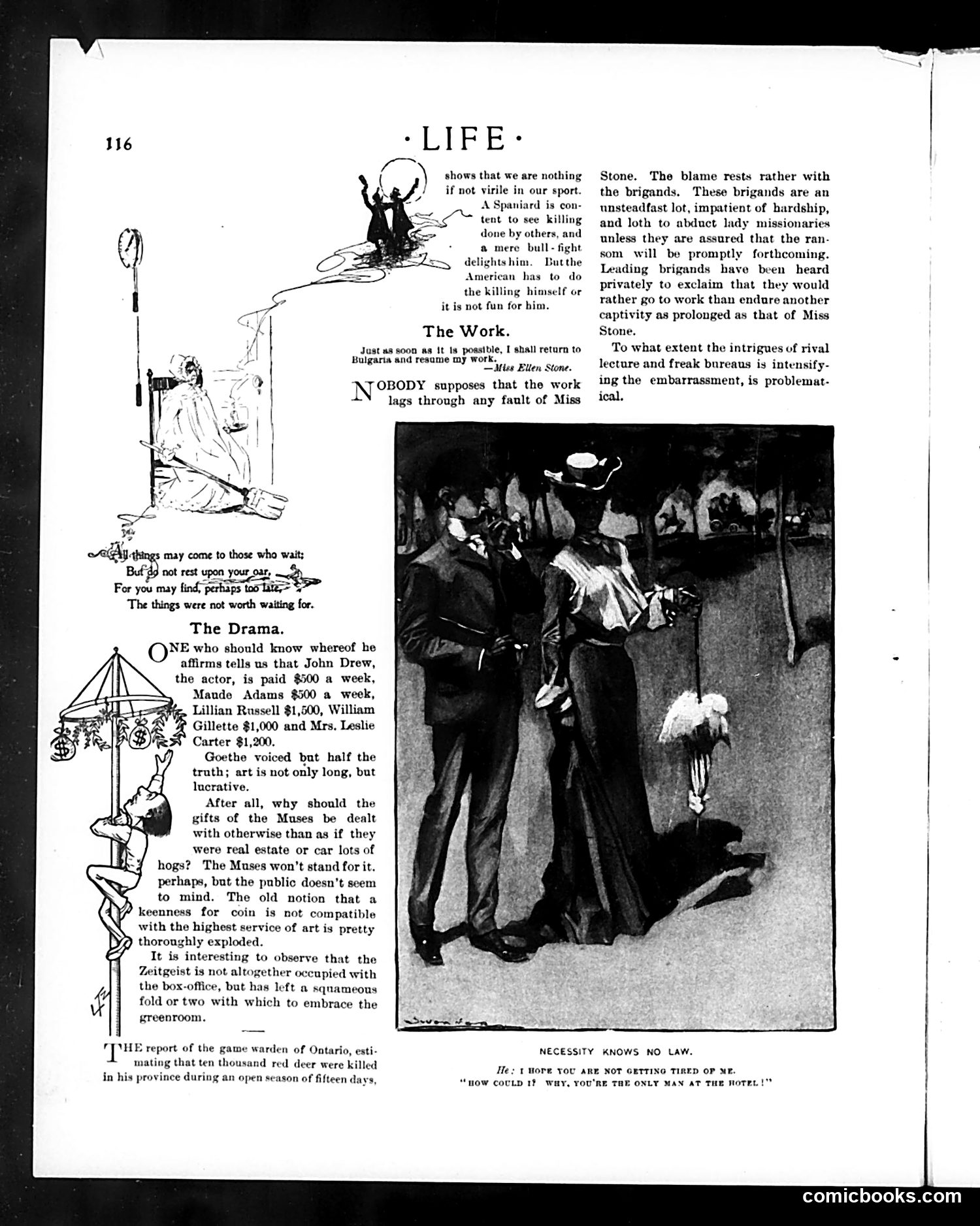
This page contains three distinct satirical pieces: **"The Work"** section quotes Miss Lura Stone, apparently a lady missionary, expressing frustration about work delays and promising to return to Bulgaria. **"The Drama"** section satirizes Broadway actors' salaries, listing John Drew ($800/week), Maude Adams ($800/week), Lillian Russell ($1,500), William Gillette ($1,000), and Mrs. Leslie Carter ($1,500). The satire questions why artistic gifts should be treated as real estate or "car lots of hogs"—mocking the wealthy compensation actors receive while the public remains indifferent. **The photograph** captioned "Necessity Knows No Law" shows what appears to be a domestic dispute, with dialogue suggesting a man defending his hotel residence to a woman. The overall theme critiques wealth disparity and societal priorities regarding entertainment versus other professions.
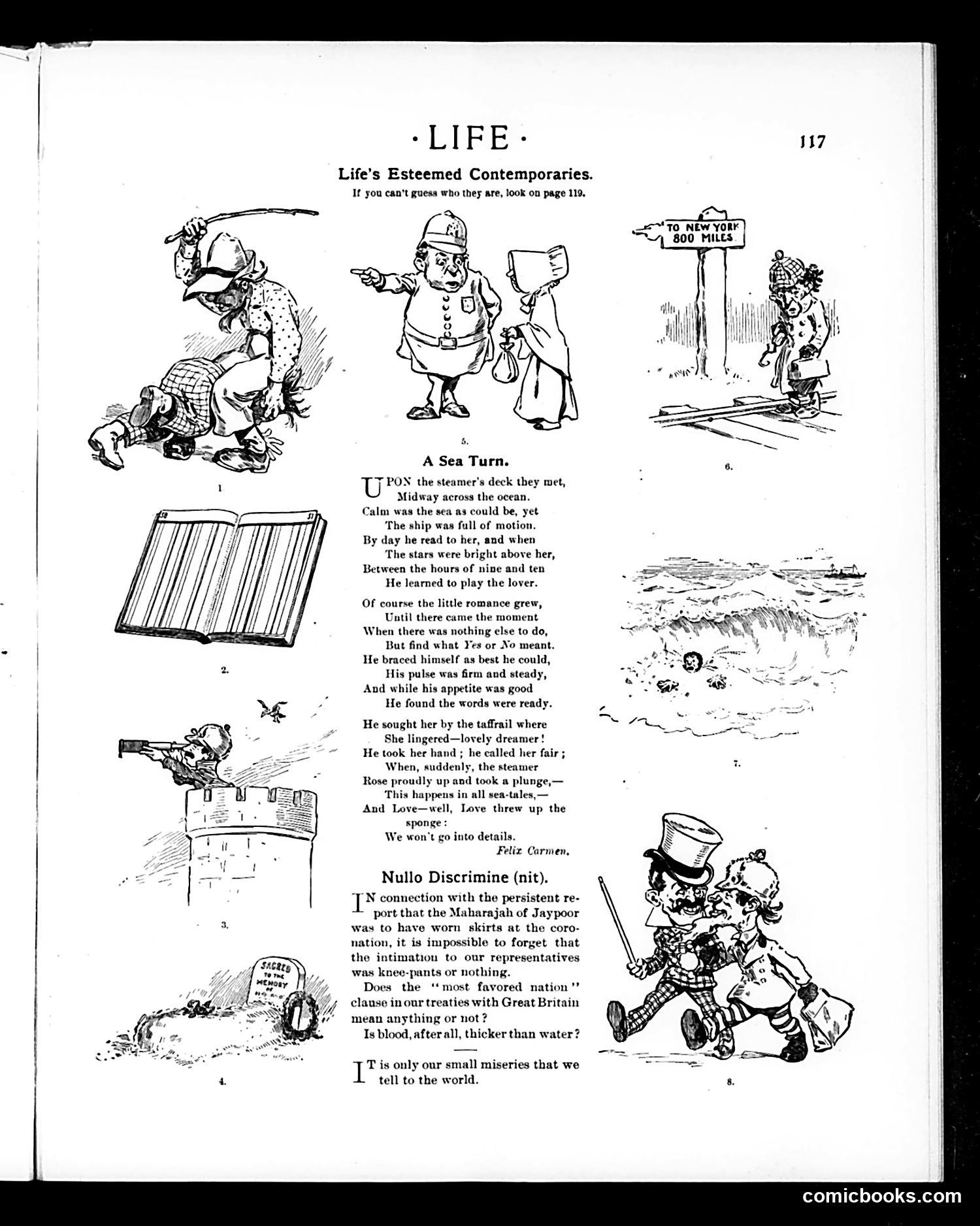
This page contains two distinct pieces of satirical content: **"A Sea Turn"** is a humorous poem about a romantic proposal aboard a steamship that fails when the vessel hits rough seas and the suitor becomes seasick—a common trope in maritime romance stories that Life playfully subverts. **"Nullo Discrimine (nit)"** satirizes British imperial attitudes toward Indian allies. It references the Maharajah of Jaypoor's coronation attendance, where British diplomats allegedly insisted Indian representatives wear "knee-pants or nothing" rather than traditional skirts—despite Britain's "most favored nation" trade status with India. The title (Latin for "without discrimination") is ironic: Life argues Britain *does* discriminate, treating Indian allies as subordinates. The closing rhetorical questions mock Britain's hypocrisy about blood relations and shared interests while imposing cultural humiliations. The numbered cartoon illustrations (1-8) appear to be visual jokes keyed to page 119's answer key, typical of Life's contemporary-figures guessing game format.
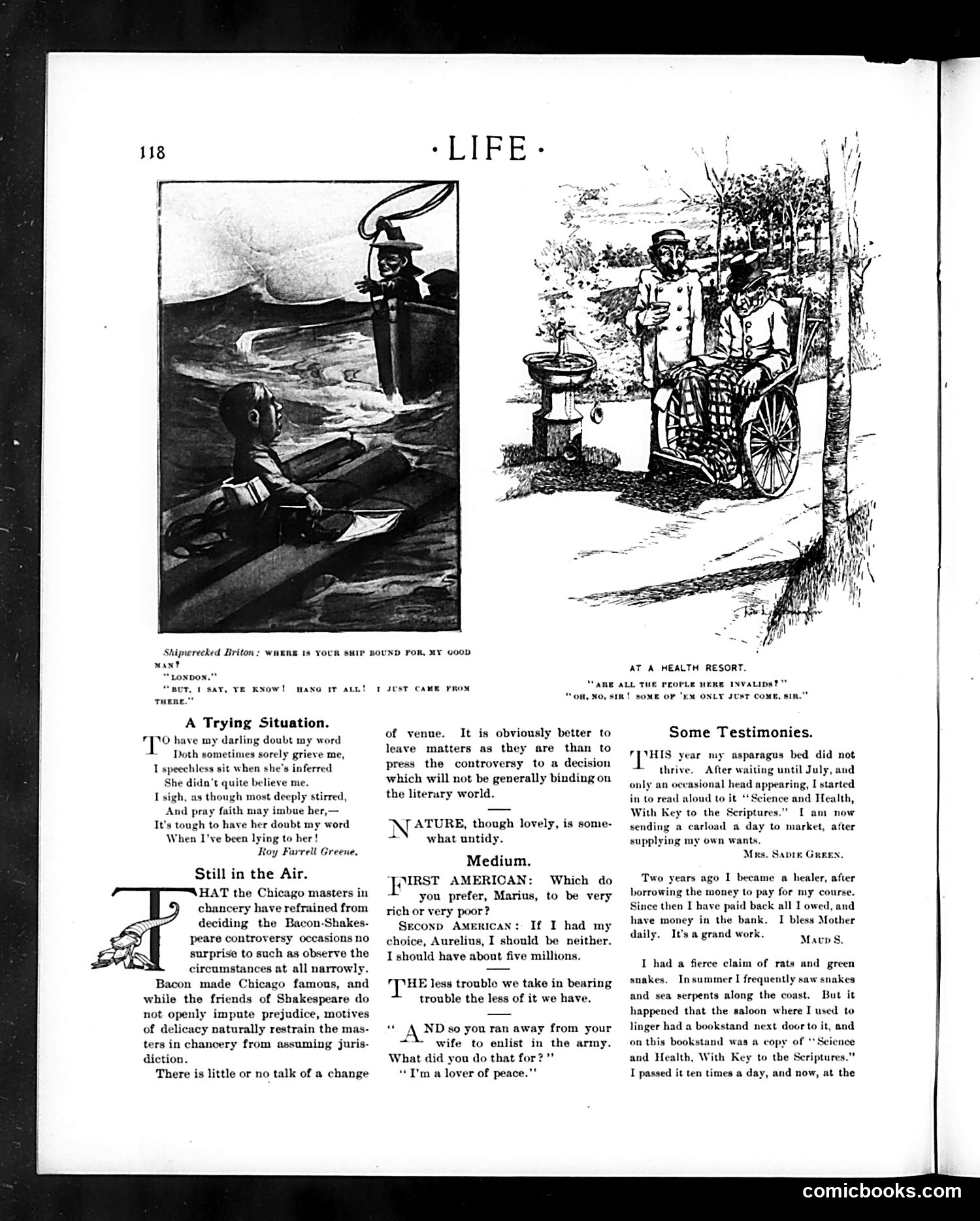
This page contains several distinct satirical pieces: **Top left cartoon**: A shipwrecked Briton claims his vessel was bound for London, but a companion says "I just came from there"—mocking British pretension or unreliable storytelling. **"A Trying Situation"**: A poem by Roy Farrell Greene satirizes marital dishonesty. A husband laments his wife doubting him, complaining it's "tough to have her doubt my word / When I've been lying to her!"—the joke being his admission that he habitually lies. **"Still in the Air"**: A brief piece mocking Chicago courts' refusal to settle the long-running "Bacon-Shakespeare controversy" (whether Francis Bacon wrote Shakespeare's works). It suggests Chicago won't rule because Bacon made the city famous, so local judges lack impartiality. **"Some Testimonies"**: Parodies Christian Science testimonials—exaggerated claims of miraculous healings through reading "Science and Health"—including implausible assertions about asparagus production and snake disappearance. The page satirizes pretension, dishonesty, provincial bias, and pseudo-scientific faith-healing.
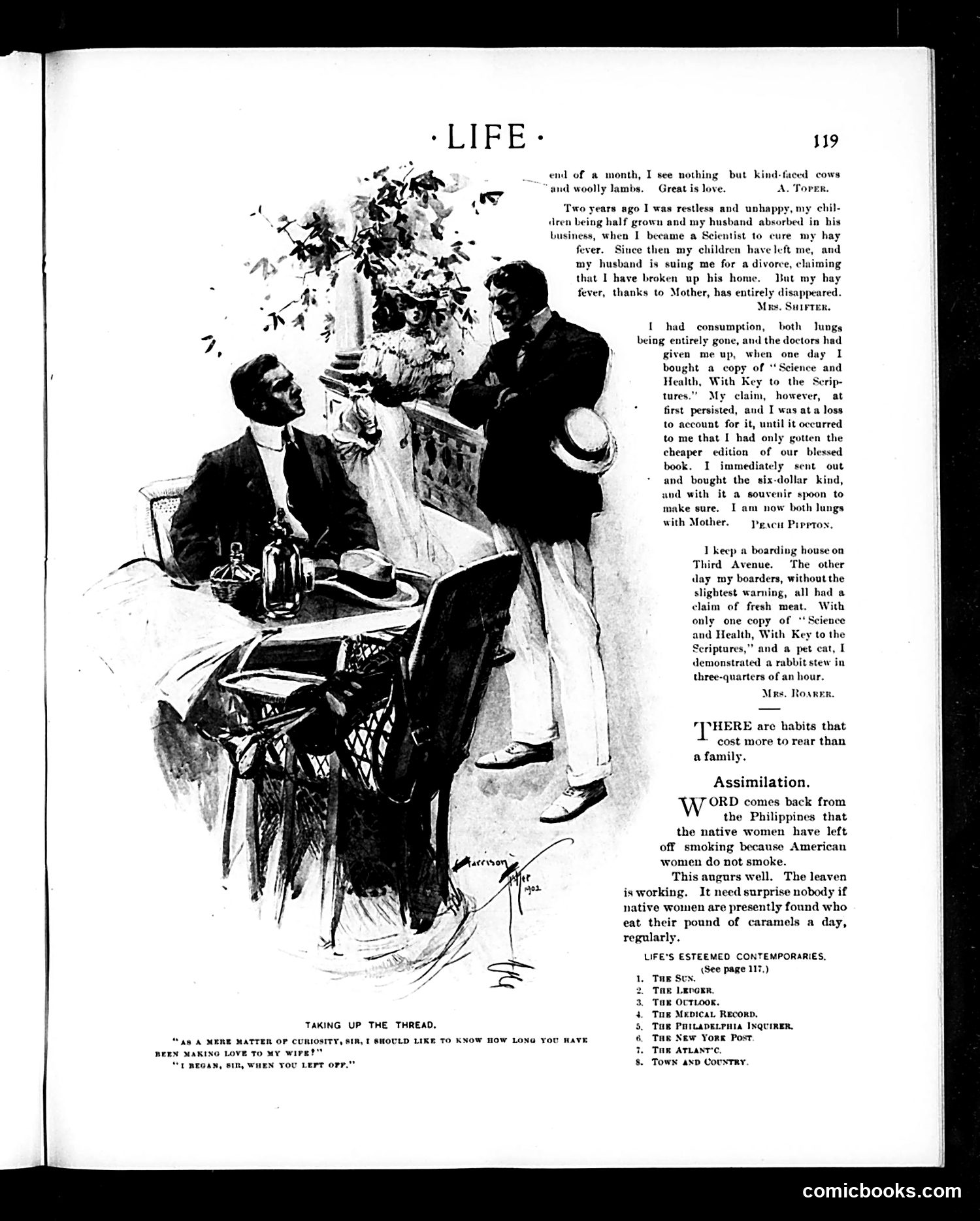
This cartoon depicts two well-dressed men and a woman examining what appears to be a floral arrangement or plant. The caption quotes one man asking another: "As a mere matter of curiosity, sir, I should like to know how long you have been making love to my wife?" The response is: "I began, sir, when you left off." The satire mocks infidelity and marital indifference—specifically, a husband's neglect of his wife, which creates an opening for another man's romantic attention. The "thread" metaphor suggests the woman's affections have been seamlessly transferred from one man to another due to the husband's inattention. This reflects early 20th-century satirical commentary on marriage, neglect, and the consequences of taking spouses for granted.
This page contains three distinct humor pieces satirizing American life and politics: **"The Jackpot"** (main poem): A traveler discovers an ancient Egyptian tomb's warning inscription: "Who openeth a jackpot may not always rake it down." The poet reflects on this maxim's relevance to modern American politics—particularly how political "booms" for office candidates often fizzle or backfire. The satire targets politicians and candidates who pursue office aggressively, suggesting overconfidence often leads to failure. **Senator Heyfield's Irish anecdote**: A humorous story about an Irishman predicting another Irishman will fail at his job, despite apparent success. It mocks Irish-American stereotypes and stubborn pessimism. **Geography lesson anecdote**: A schoolteacher asks about geographical terms; a child responds to "strait" with "beats three of a kind"—confusing the geography term with poker terminology, satirizing how American popular culture (gambling) infiltrates even children's minds. The page also contains period advertisements (Wilson Whiskey, Murray & Lanman's Florida Water, and Milo Egyptian Cigarettes).
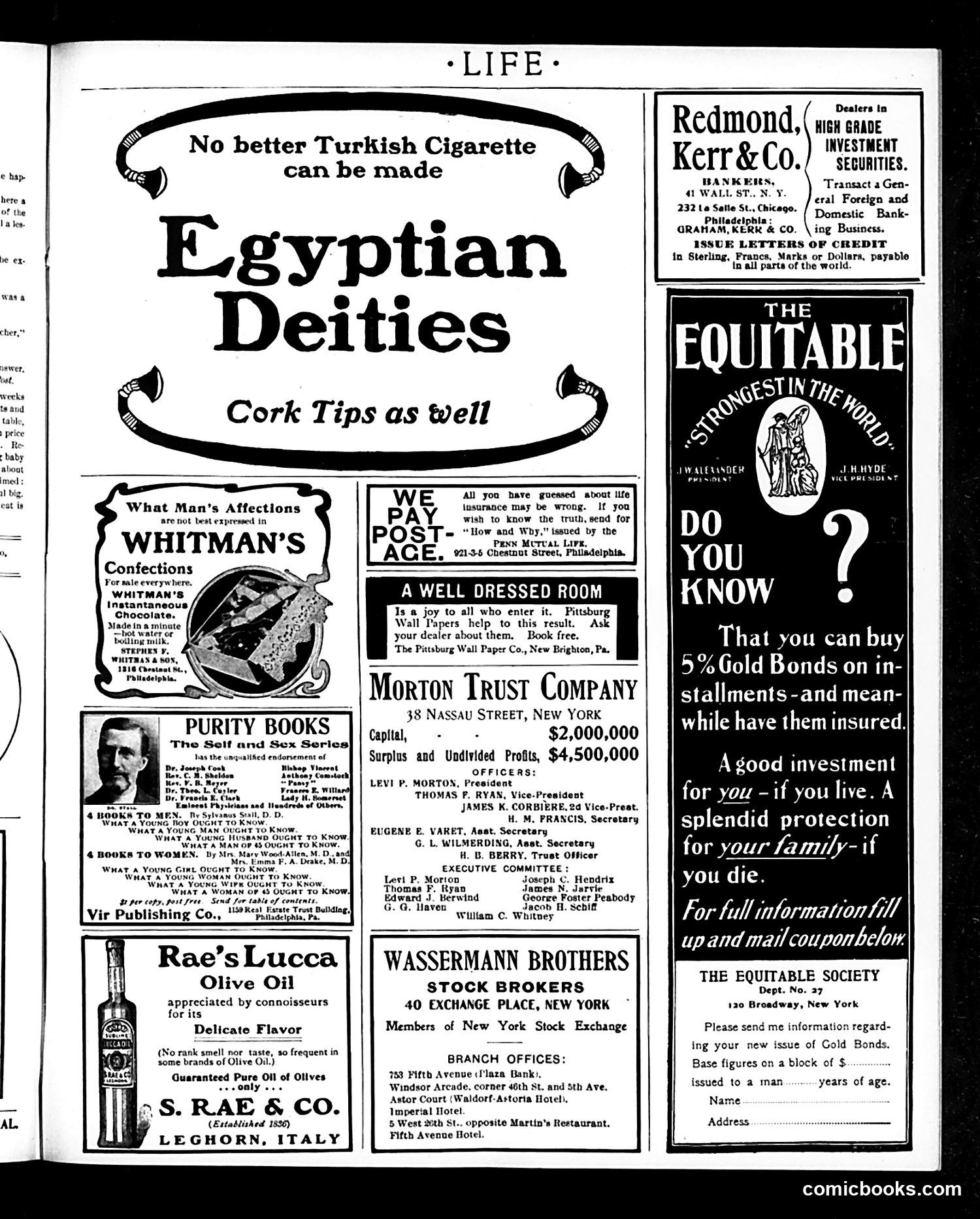
This is primarily an **advertising page** with minimal editorial content. The only notable visual element is a large advertisement for "Egyptian Deities" cigarettes at the top, featuring decorative Art Deco-style borders and promising "cork tips as well." The page consists of period commercial advertisements for various products and services typical of early 20th-century America: cigarettes, chocolates, self-help books, life insurance, olive oil, financial services, and investment bonds. The ads reference recognizable figures like **Anthony Comstock** (the famous anti-obscenity crusader) endorsing a "Self and Sex" book series—likely satirizing the tension between Comstock's prudish reputation and frank discussion of sexuality. Most ads emphasize luxury, respectability, and financial security—hallmarks of affluent Gilded Age marketing. There is no apparent political satire or social commentary visible on this page; it functions as straightforward commercial space in Life magazine's advertising section.
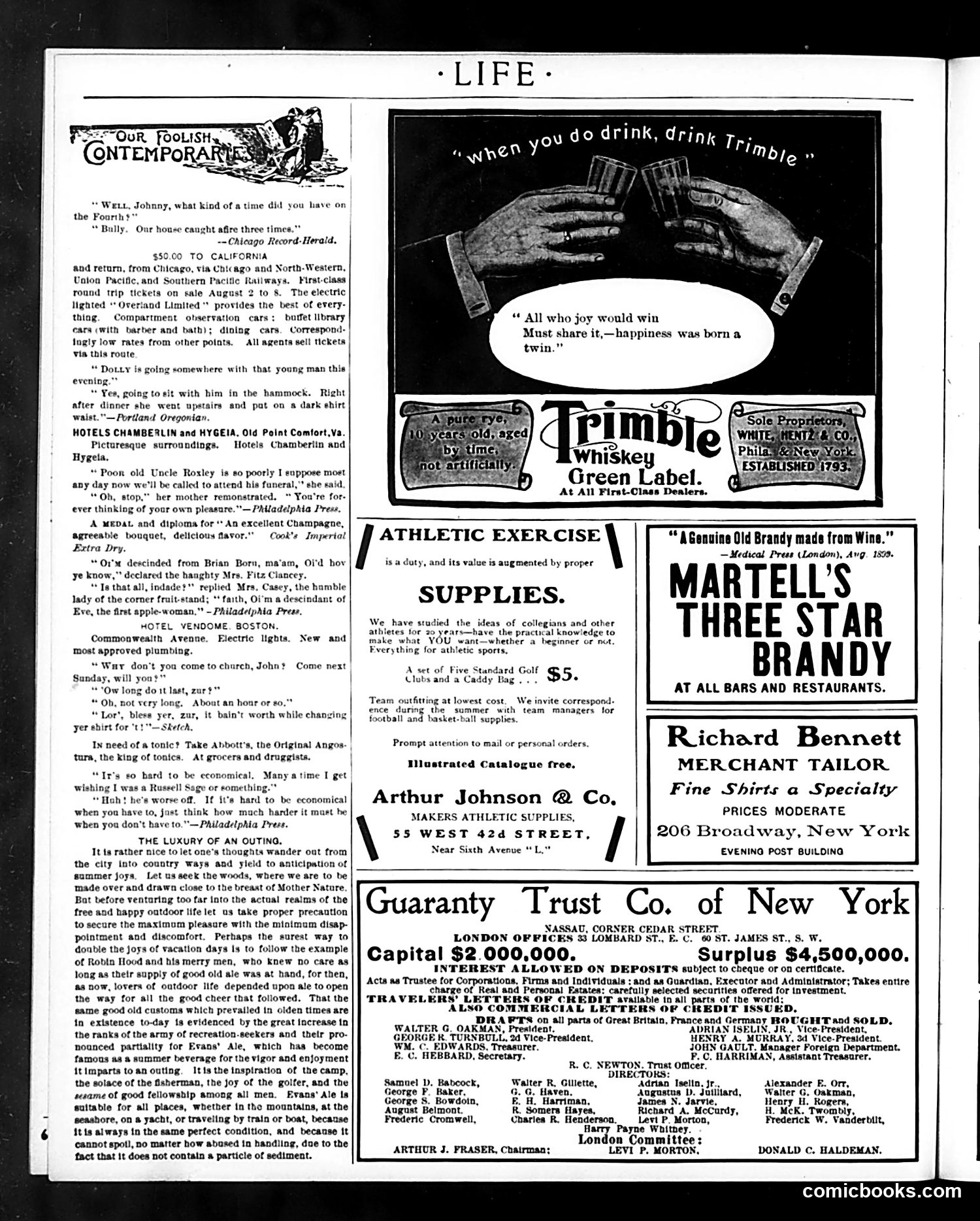
This page is primarily **advertising** with minimal editorial content. The satirical cartoons visible are brief, genteel humor pieces typical of *Life*'s style: **"Our Foolish Contemporaries"** section contains short, mild jokes mocking everyday situations—a child saying their house caught fire on Independence Day (dark humor about fireworks accidents), social pretense about Irish ancestry, and observations about romantic courtship customs. The **dominant content** comprises full-page and quarter-page advertisements for: - Railroad travel to California - Hotels and resorts - Alcoholic beverages (Trimble Whiskey, Martell's Brandy, Evans' Ale) - A merchant tailor - A trust company A substantial article titled **"The Luxury of an Outing"** romanticizes vacation leisure while promoting Evans' Ale as essential to outdoor recreation. The satire is gentle social commentary on American manners and pretension. There are no political cartoons or caricatures. This represents *Life* as primarily a **vehicle for upscale advertising** targeting affluent readers interested in travel, spirits, and leisure activities.
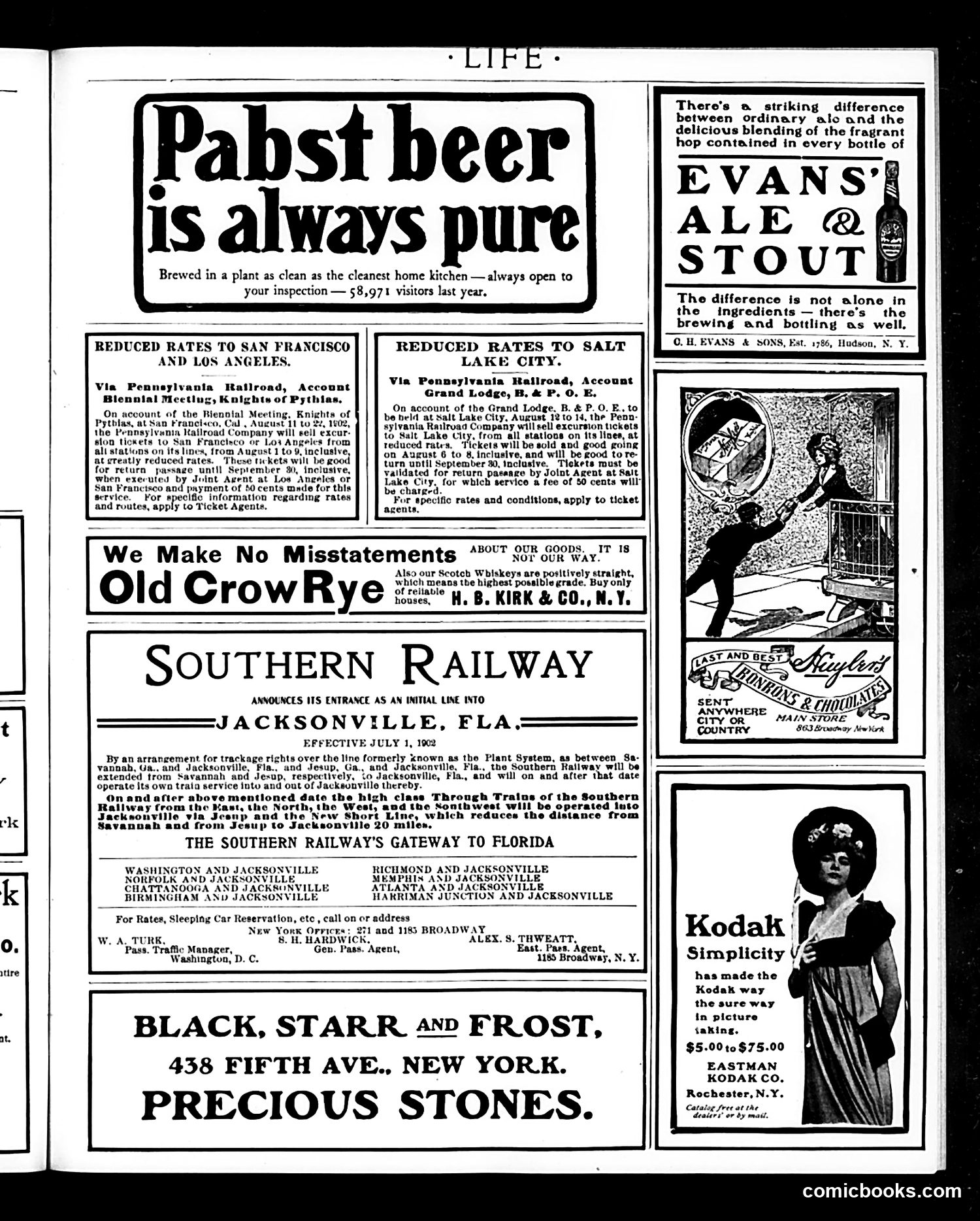
This is primarily an **advertising page** from Life magazine (circa 1902, based on dated railroad announcements). It contains no political cartoons or satirical content—just commercial advertisements typical of the era. The ads promote: - **Pabst Beer**: emphasizing factory cleanliness and public inspection (responding to contemporary food-safety concerns) - **Pennsylvania Railroad**: discounted excursion fares for fraternal organizations (Knights of Pythias, Elks lodges) - **Southern Railway**: announcing expanded service into Jacksonville, Florida - **Old Crow Rye whiskey**: claiming authenticity and quality - **Evans' Ale & Stout**: comparing their brewing superiority - **Kodak cameras**: promoting affordable photography ($5–$75 range) - **Black, Starr & Frost**: luxury jeweler advertising precious stones The page reflects early-1900s consumer culture: breweries marketing purity (food-safety panic era), railroads competing for passenger traffic, and photography equipment becoming accessible to middle-class consumers. No satire is present—it's straightforward commercial messaging.
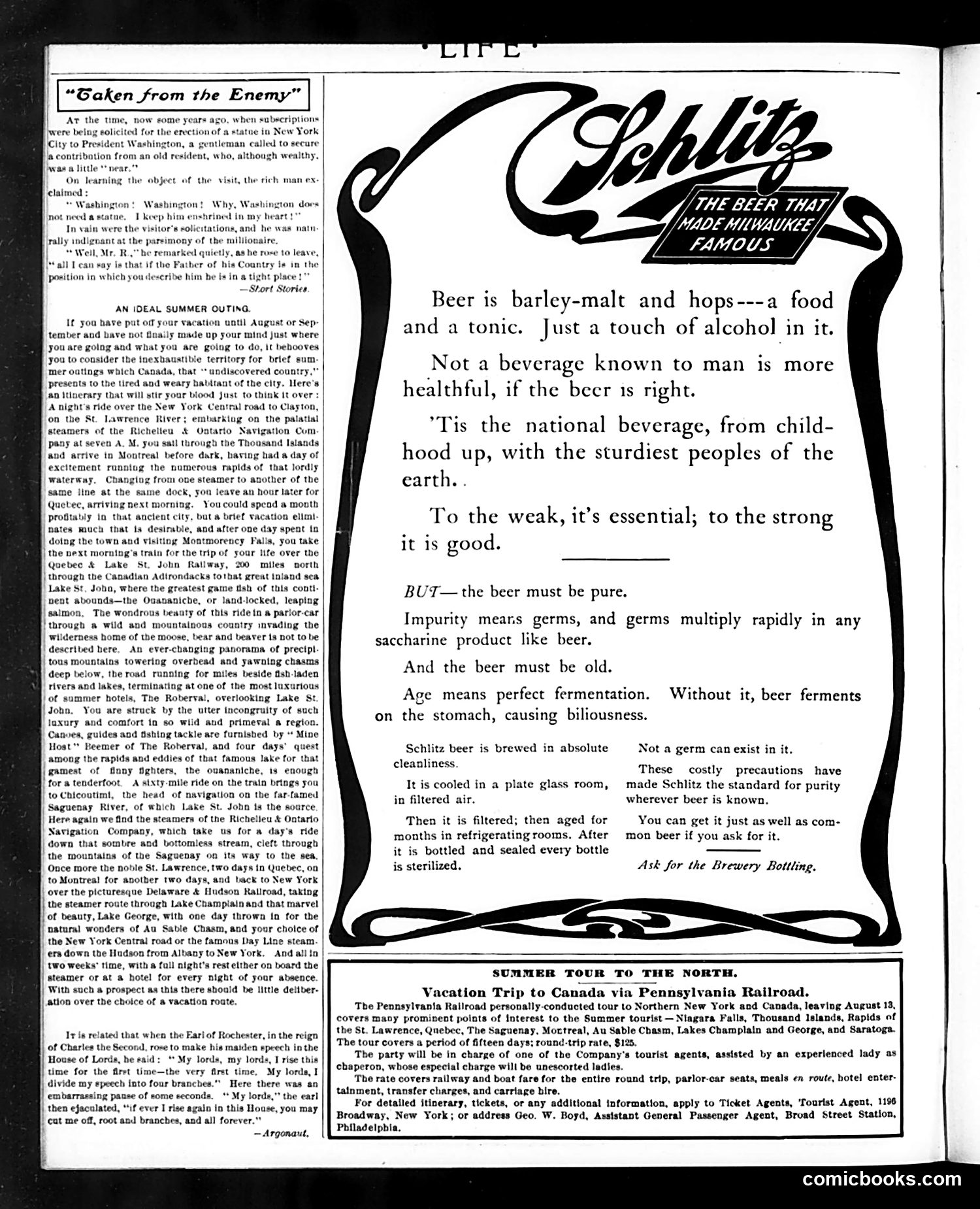
This page is primarily a **Schlitz beer advertisement** promoting the brand as "the beer that made Milwaukee famous." The ad emphasizes purity through elaborate claims about cleanliness, fermentation control, and sterilization processes—marketing strategies typical of early 20th-century beer advertising that positioned beer as a healthful beverage rather than mere alcohol. The left column contains an unrelated satirical anecdote titled "Taken from the Enemy," recounting a (likely apocryphal) story about a wealthy man's stingy refusal to donate to a Washington monument fund, mocking miserliness. The remainder of the page advertises a "Summer Tour to the North"—a Canadian vacation itinerary via Pennsylvania Railroad, detailing steamship journeys through the St. Lawrence River, Thousand Islands, and Quebec, emphasizing adventure and luxury accommodations. The page reflects turn-of-the-century American leisure culture and aggressive corporate advertising, with no political satire present.
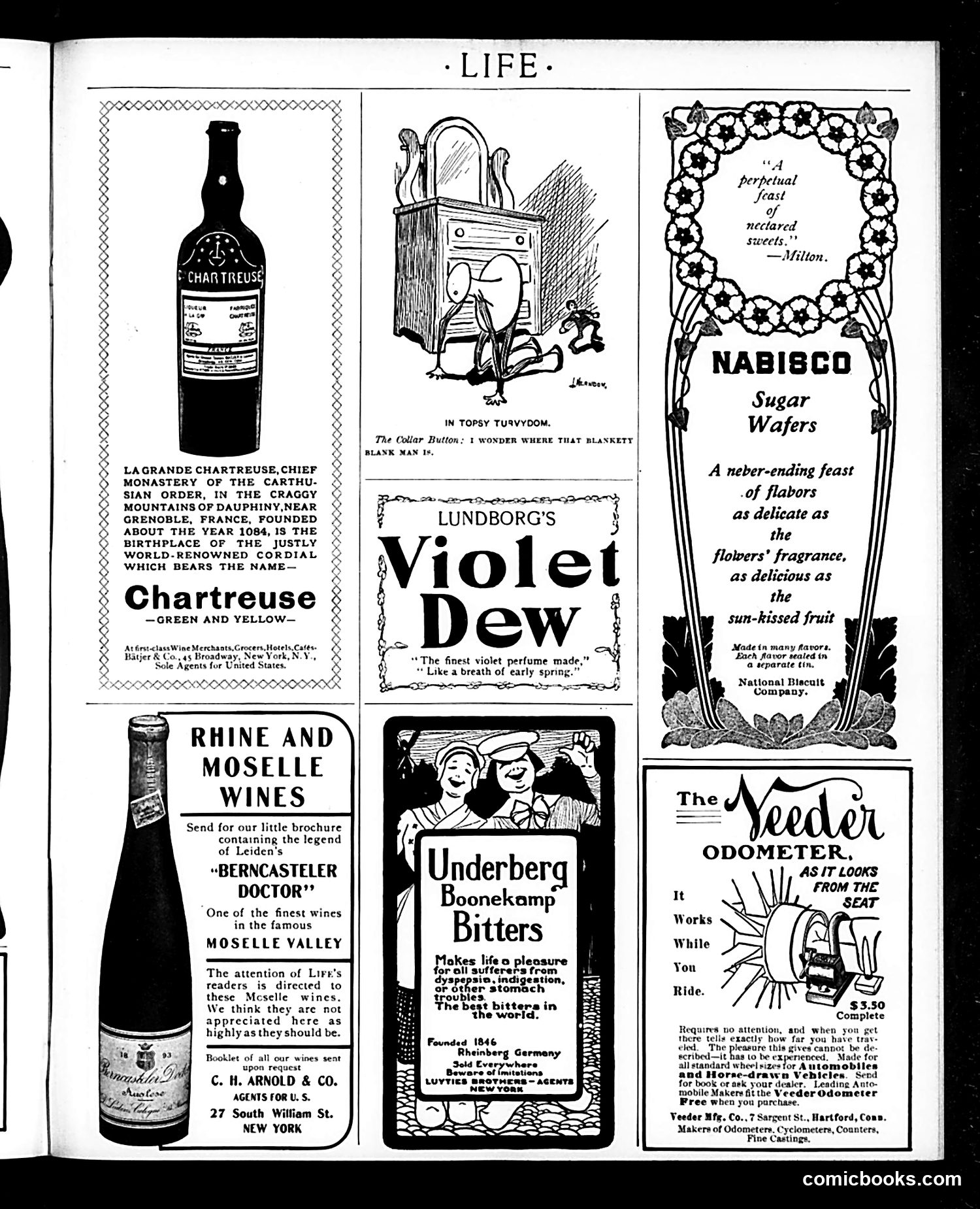
This is primarily an **advertisement page** from Life magazine, not a political cartoon. The page contains six product advertisements arranged around one small cartoon. The single cartoon—titled "In Topsy Turvydom"—depicts a man searching frantically for a lost collar button beneath furniture, with the caption suggesting bewilderment about where "that blankety blank man" is. This appears to be **gentle domestic humor** about the universal frustration of losing small clothing items, a relatable everyday annoyance. The advertisements promote luxury goods typical of the early 20th century: imported liqueurs (Chartreuse, Rhine and Moselle wines), perfume (Violet Dew), medicinal bitters, sugar wafers, and an early automobile odometer. These ads reflect the magazine's affluent readership and the consumer culture of the era. There is no political satire present on this page.
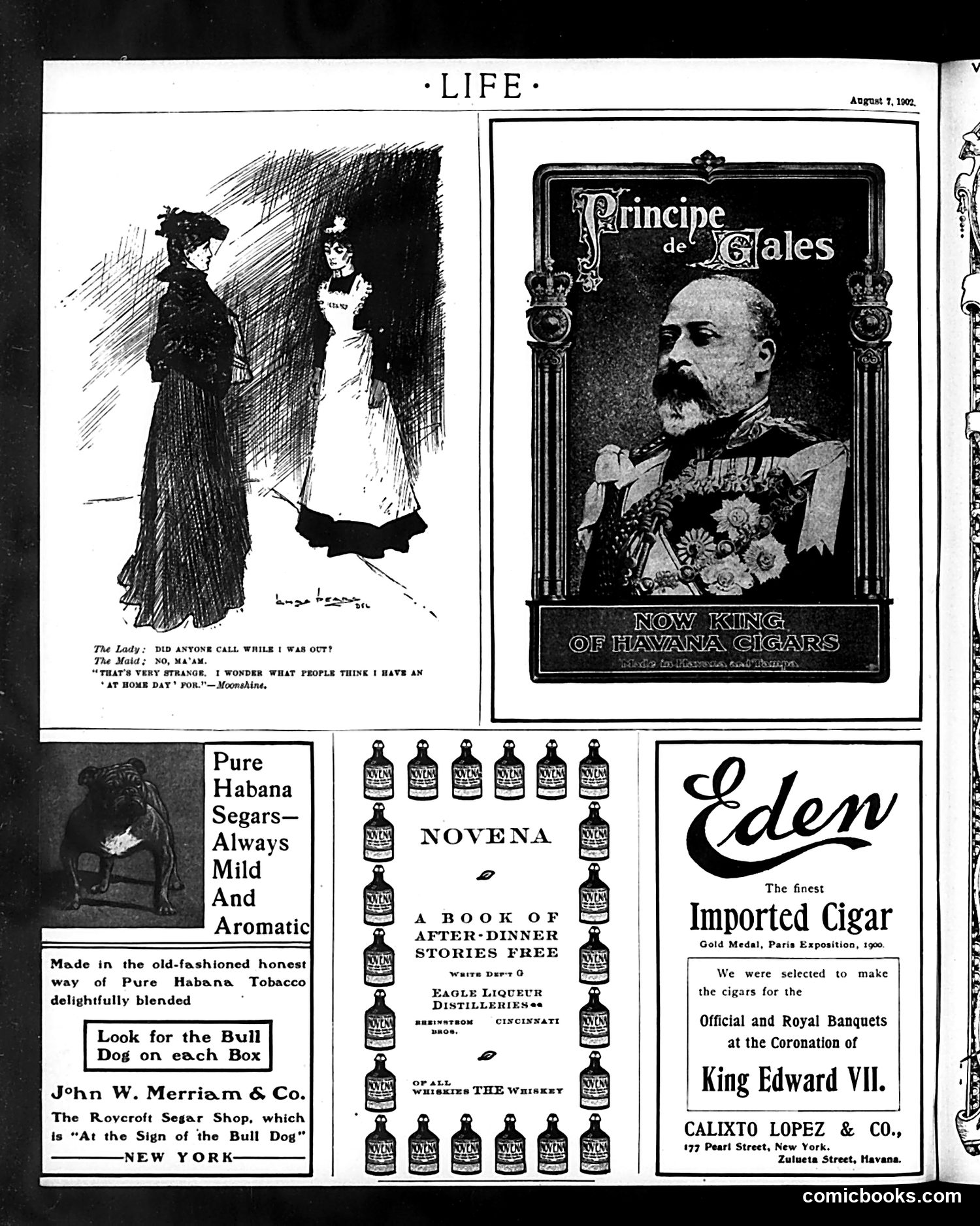
The cartoon satirizes upper-class social pretension. A fashionably dressed lady asks her maid if anyone called while she was out. When told "no," she expresses puzzlement, wondering what people think she does on her "at home day"—a scheduled time when wealthy women received social visitors. The joke targets the anxiety of social status: the lady is troubled that *no one* visited during her designated reception hours, suggesting she lacks sufficient social importance to attract callers. This reveals the shallow concern with appearances and social standing among the elite. The phrase "Moonshine" (meaning nonsense/absurdity) confirms the satirical intent—mocking the artificial importance placed on these social rituals. The page is otherwise advertisements for cigars and liqueur, exploiting associations with royalty and prestige to sell luxury goods.