
A complete issue · 16 pages · 1894
Life — August 16, 1894
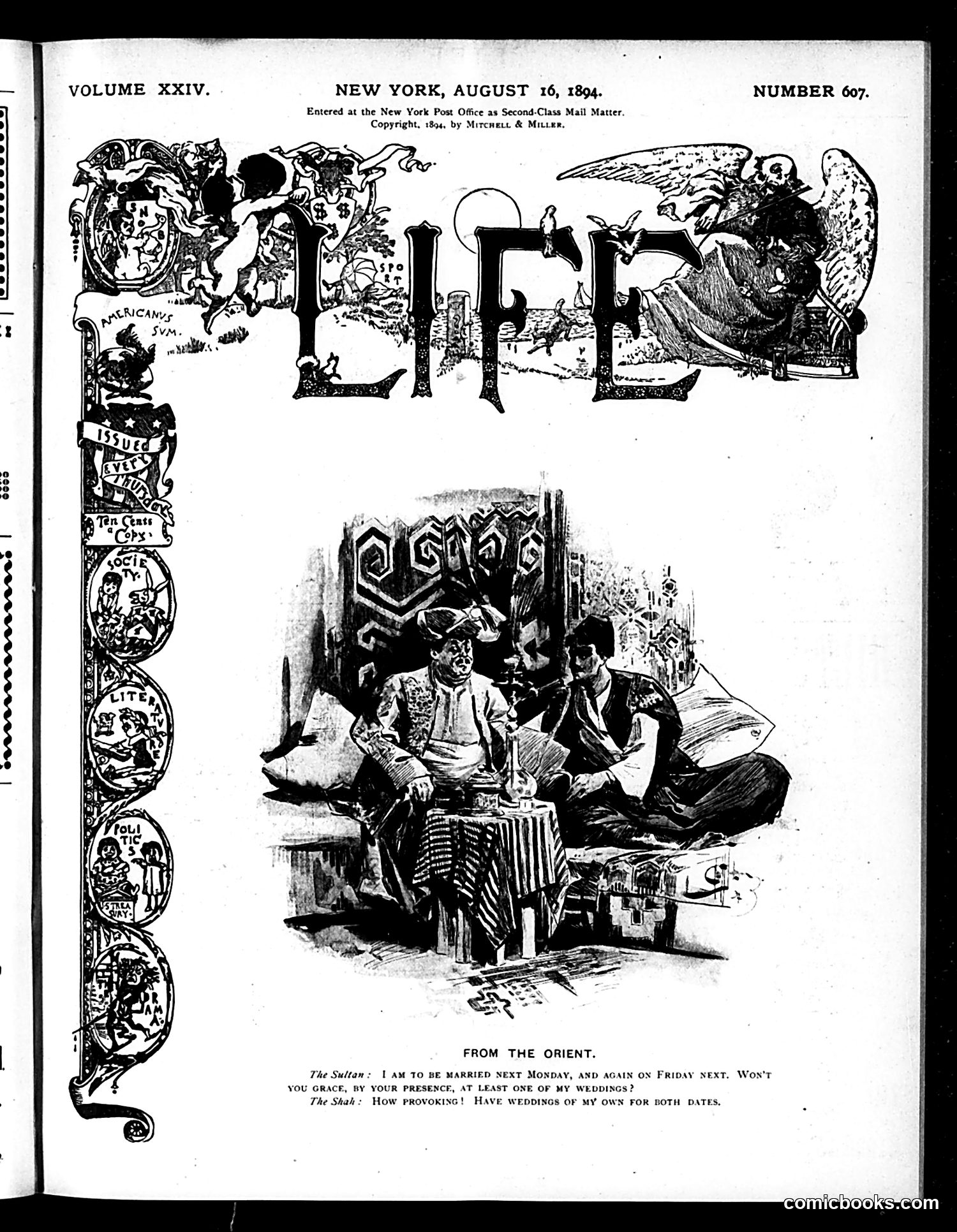
This cartoon satirizes polygamy and marital excess among Ottoman rulers. The illustration shows two men in Oriental dress discussing marriages. According to the dialogue, the Sultan announces he will marry on Monday and again on Friday, asking the Shah (Persian ruler) to attend "at least one of my weddings." The Shah responds that this is "provoking," claiming to have his own weddings scheduled for both dates—implying he too practices serial marriage or polygamy. The satire mocks the Western stereotype of Oriental despots maintaining multiple simultaneous wives, presenting it as absurdly routine business. The "From the Orient" title signals this is exoticized commentary on non-Western marital practices, reflecting 19th-century American attitudes toward Islamic and Middle Eastern customs.
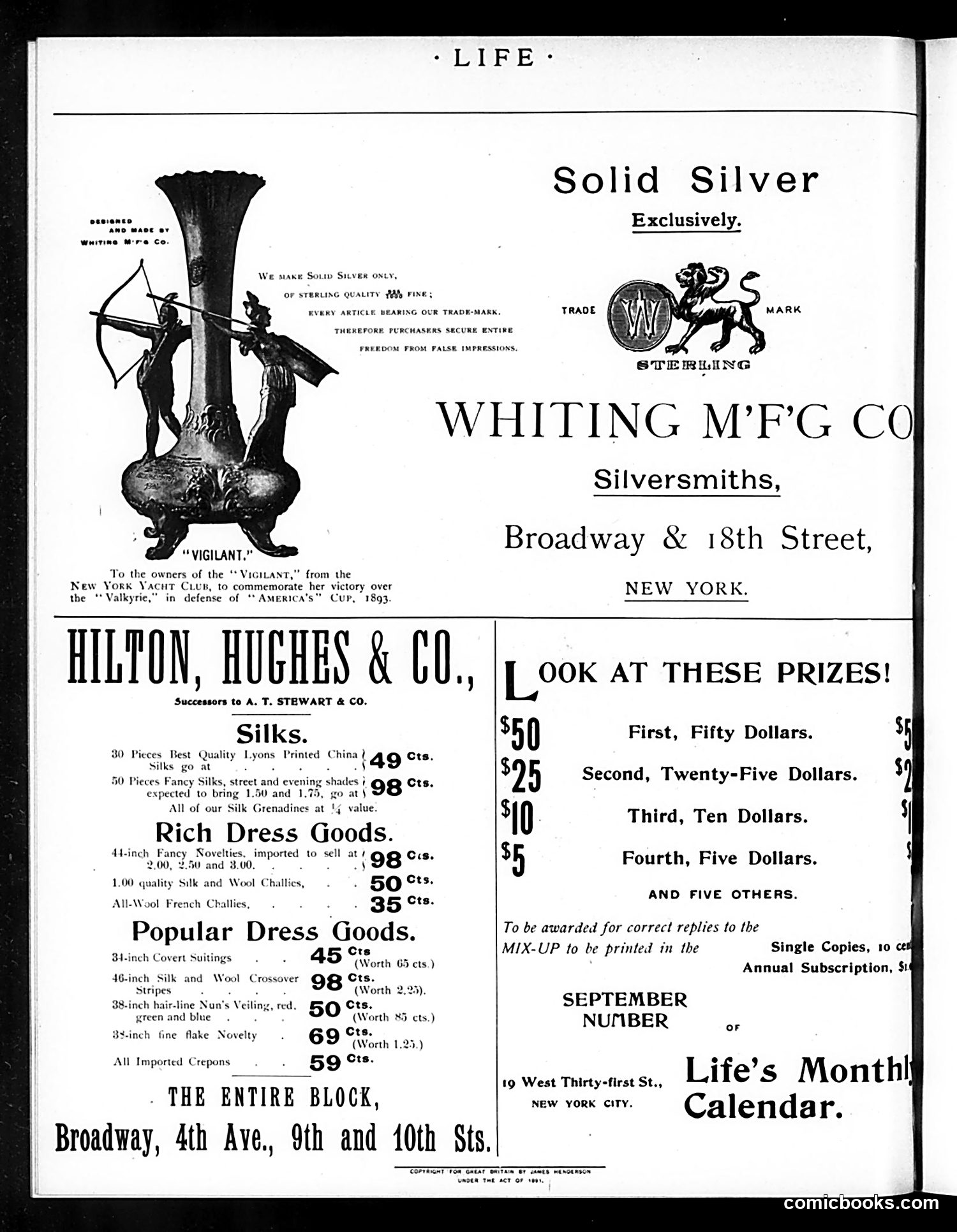
This page is primarily **advertising**, not editorial content or satire. The main illustration—showing two archer figures flanking a tall decorative vessel—commemorates the yacht "Vigilant," which won an America's Cup race in 1893 (as noted in the caption). This was a significant American sporting victory that advertisers leveraged for prestige. The page features ads from three companies: **Whiting M'FG Co** (silversmiths), **Hilton, Hughes & Co** (silk and dress goods), and **Life magazine itself** (promoting a contest with cash prizes in their September issue). The yacht imagery served as patriotic, upper-class branding for luxury goods—appealing to wealthy readers who would recognize the America's Cup reference. There is no political satire present; this is straightforward commercial promotion using contemporary sporting achievement.
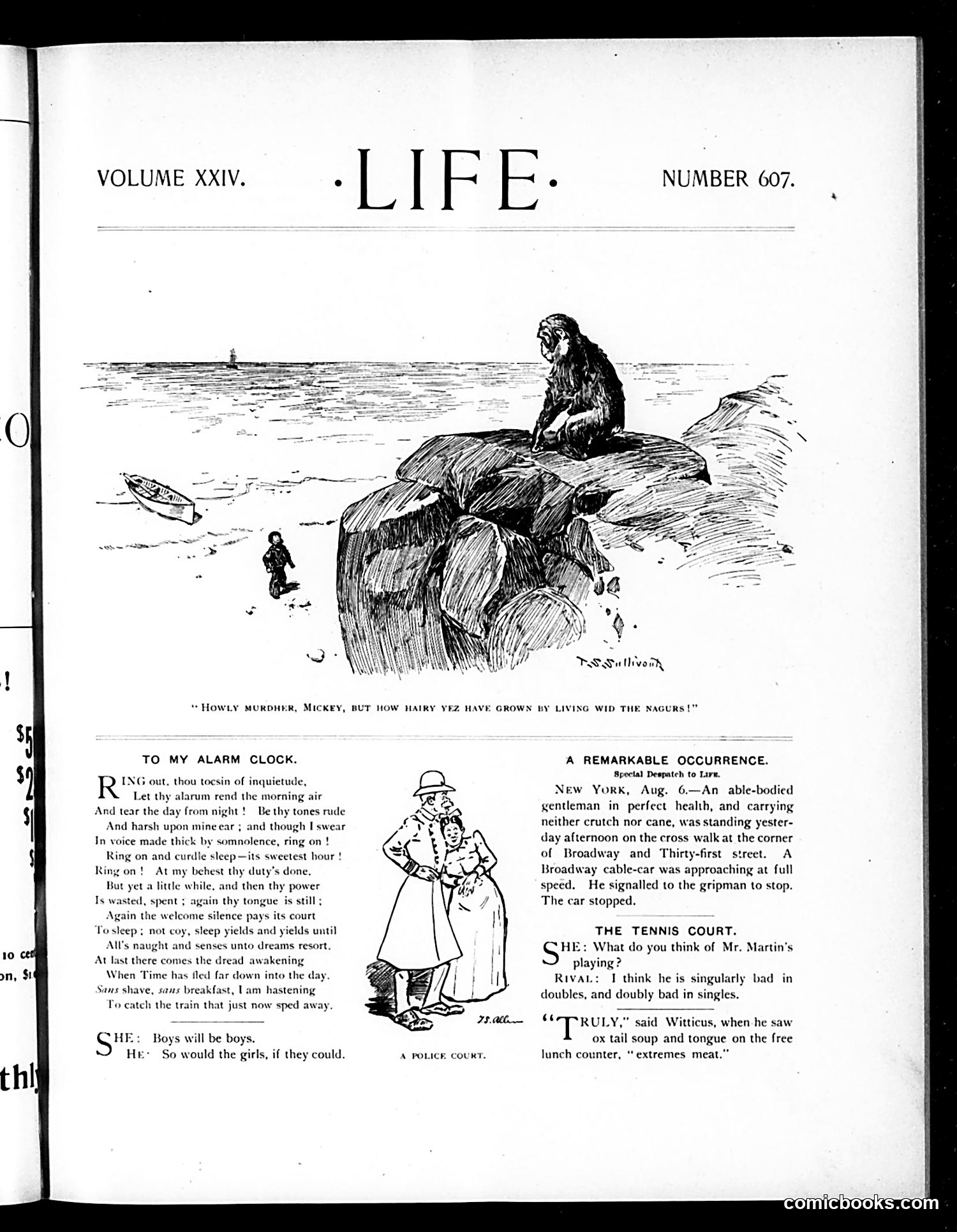
The main illustration depicts a monkey or ape sitting on rocks by the seashore, captioned "Howly murderer, Mickey, but how hairy yez have grown by living wid the Nagurs!" This appears to be a racist caricature playing on period stereotypes, with the Irish-accented dialect ("yez," "wid") suggesting commentary on Irish-American attitudes. The page contains three brief satirical items: "To My Alarm Clock" is a humorous poem about oversleeping, "A Police Court" shows a woman character, and "The Tennis Court" features a joke about poor tennis playing. The overall content reflects early 20th-century Life magazine's style: light social satire mixed with crude ethnic humor typical of that era's publication standards.
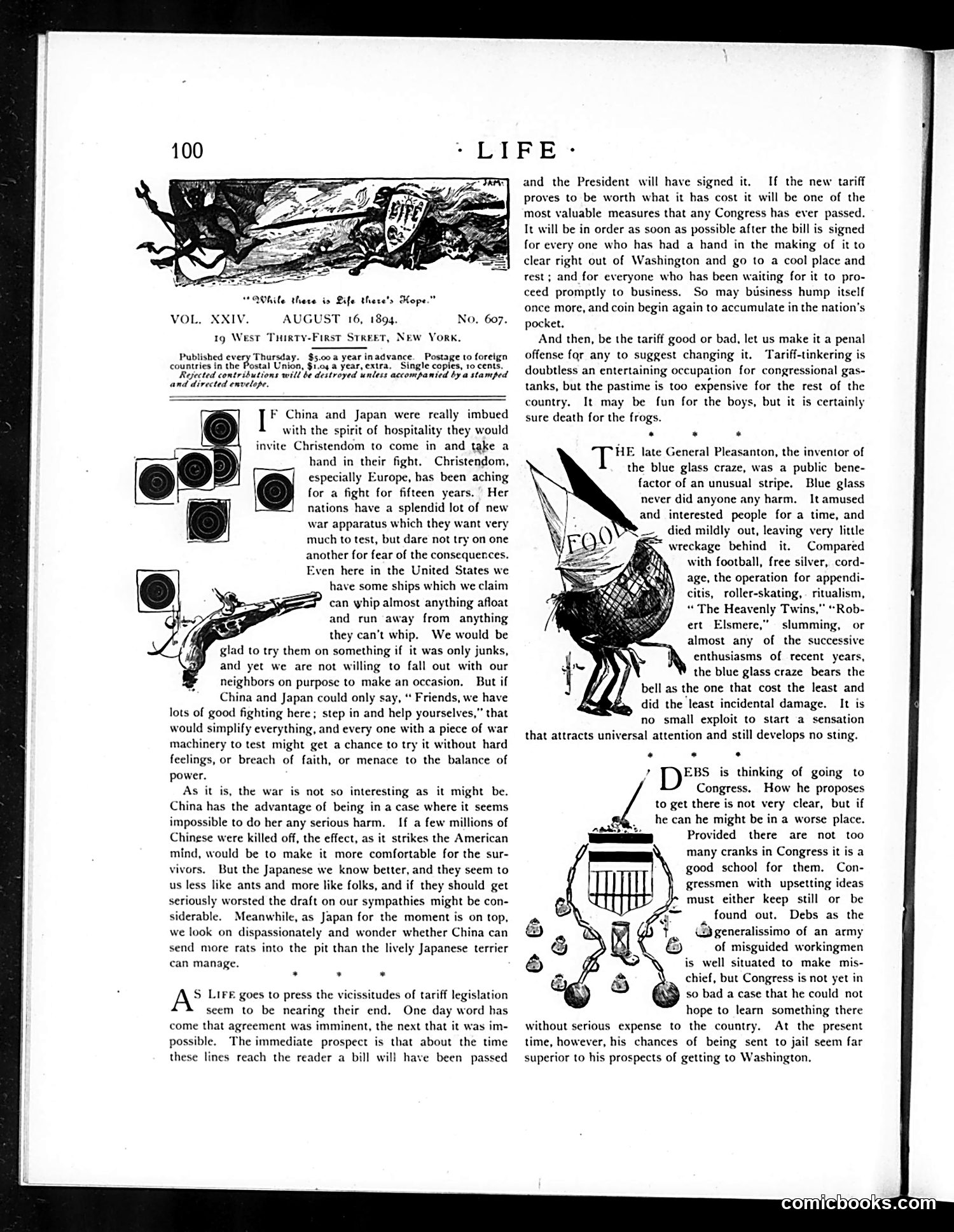
The page contains three distinct satirical pieces: **Top cartoon**: Shows a frog labeled "Life there is Life there's Hope"—unclear reference without additional context. **Middle section**: Critiques the "blue glass craze," a fad where General Pleasanton promoted blue glass as curative. The text mocks this as harmless compared to more serious fads (football, roller-skating, ritualism), noting it "attracted universal attention and still develops no sting"—satirizing public gullibility for pseudoscientific trends. **Bottom cartoon**: Depicts Congress as a bottle filled with "cranks," suggesting congressional members are misguided idealists. The text sarcastically notes Congress members with "upsetting ideas" serve as "a good school," implying they're dangerously incompetent rather than instructive. Both pieces target American public credulity and congressional dysfunction during the 1890s.
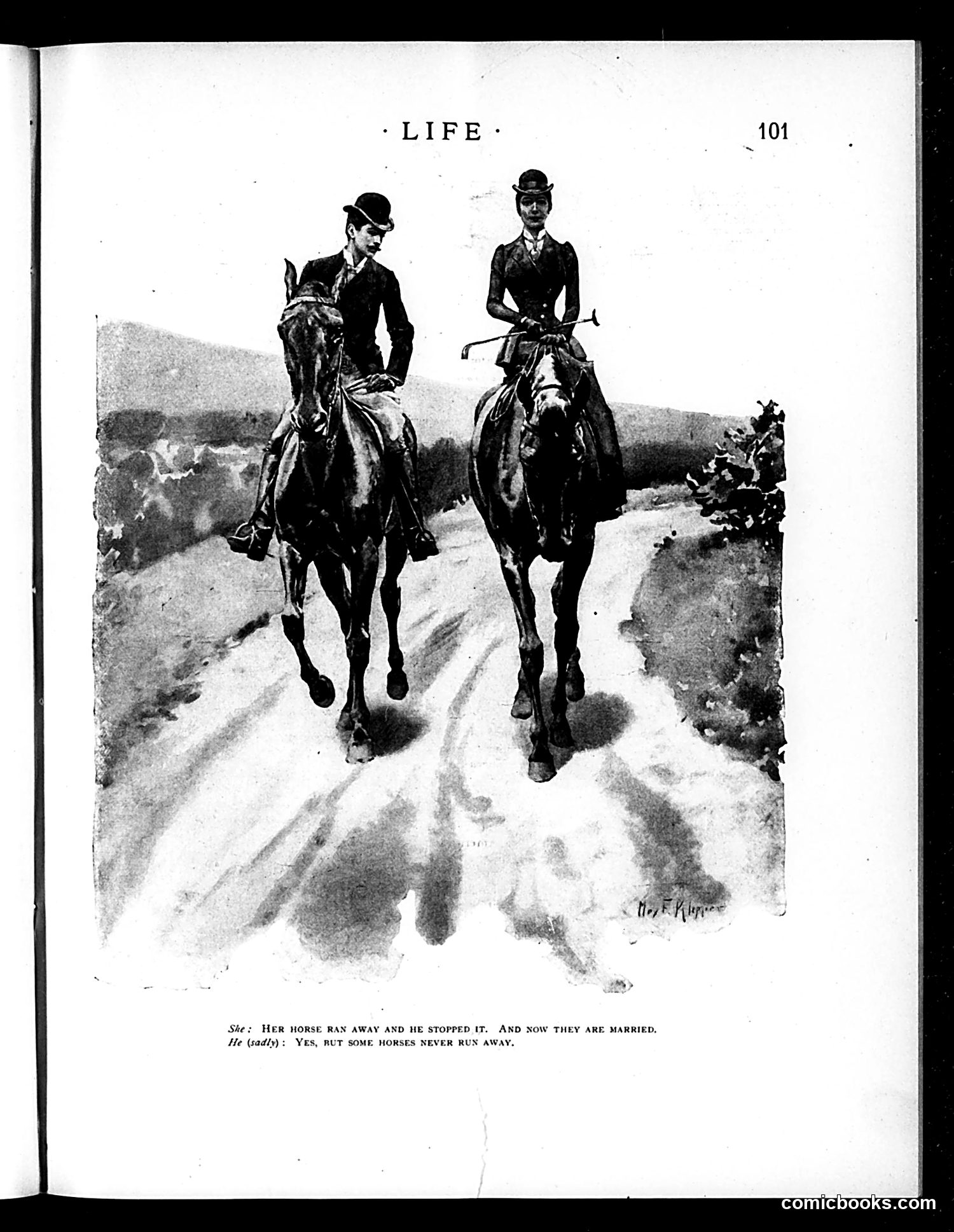
This page from *Life* magazine (page 101) depicts two well-dressed riders on horseback traveling down a country road. The caption presents a dialogue about marriage: **She:** "Her horse ran away and he stopped it. And now they are married." **He (sadly):** "Yes, but some horses never run away." The satire is a commentary on **courtship and marriage conventions**. The joke suggests that women often marry men based on dramatic "rescue" moments rather than genuine compatibility. The male speaker's melancholy response implies that some men—presumably less fortunate or decisive—never get the opportunity for such heroic gestures, thus missing chances at matrimony. This reflects early 20th-century gender dynamics, where women were portrayed as seeking protection and dramatic male intervention, while also gently mocking both genders' romantic expectations.
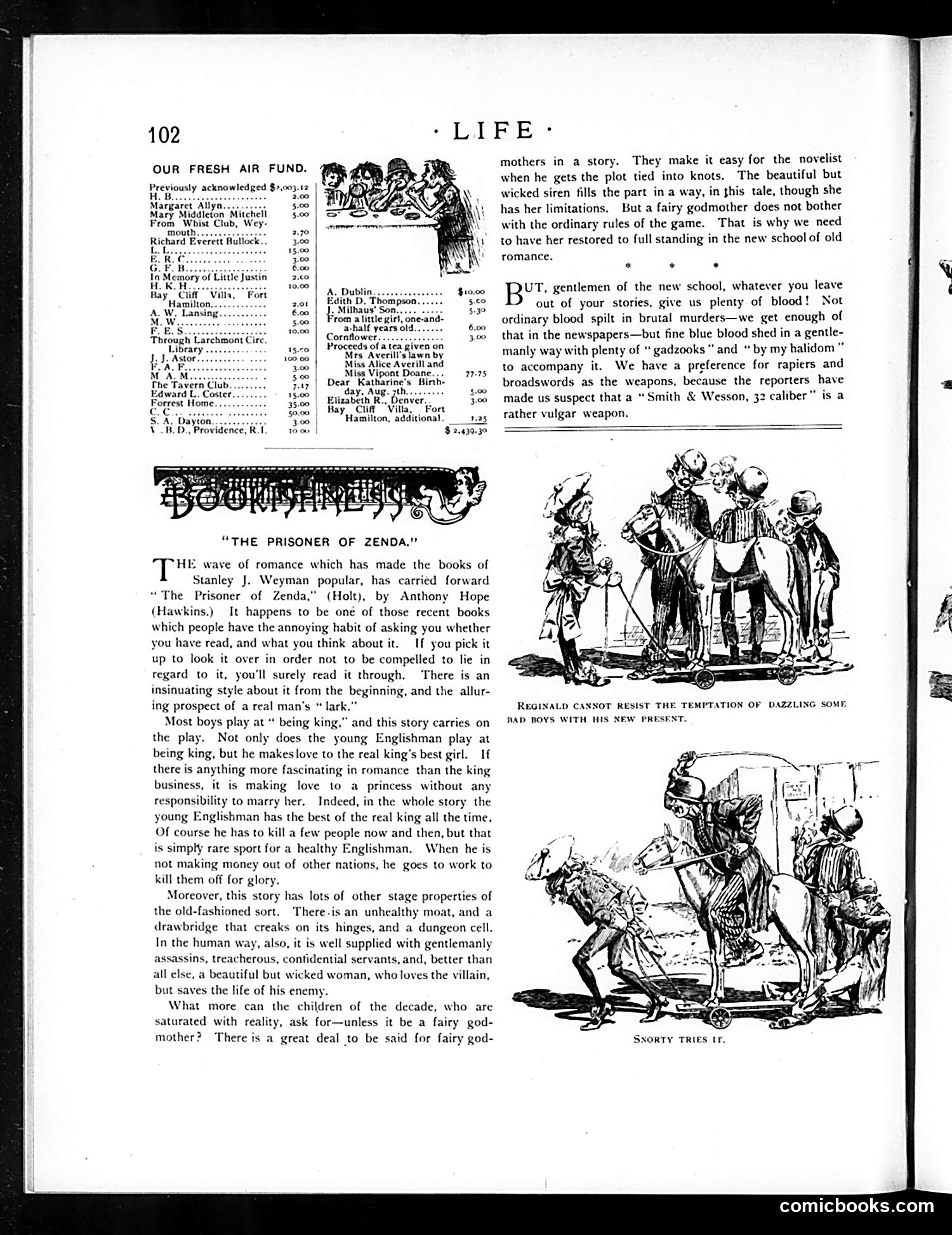
This page reviews "The Prisoner of Zenda," a popular romantic adventure novel by Anthony Hope Hawkins. The text argues that modern fiction overly emphasizes brutal realism and crime reporting, contrasting this with the appeal of romantic fantasy literature. The two illustrations accompanying the review depict scenes from the story: the first shows characters in period costume, likely representing the romantic intrigue central to the plot; the second, captioned "SORTY TRIES IT," appears to show comedic action. The review's broader point critiques the "new school" of realistic fiction favored by contemporary writers, arguing that audiences—particularly children—still need the escapism and moral clarity that fairy tales and romantic adventure stories provide, rather than constant exposure to sensational crime narratives.
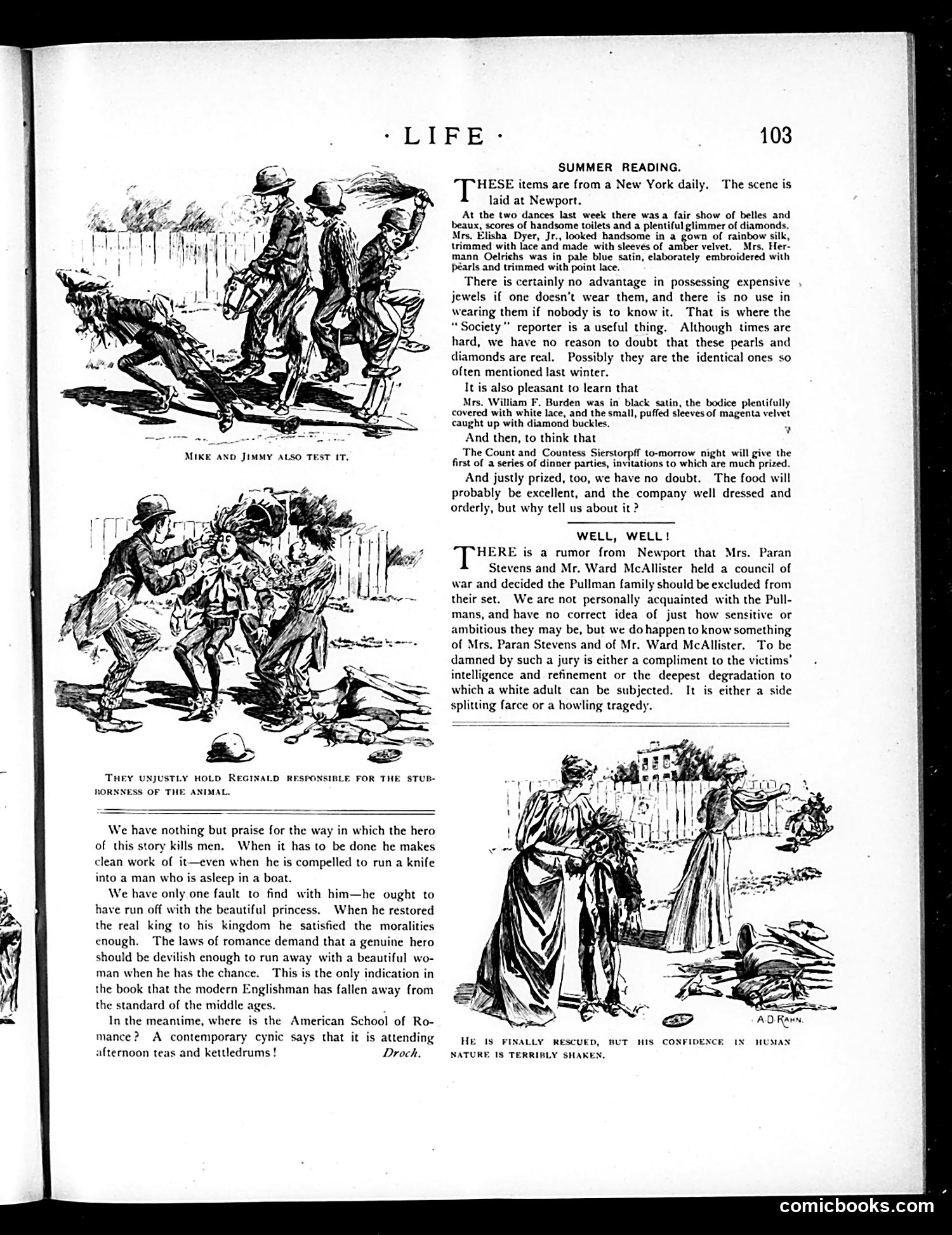
This page contains **summer social satire** set at Newport, Rhode Island—then America's premier wealthy resort. The cartoons mock high-society pretension, particularly around displaying expensive jewelry and hosting elaborate dinner parties. The text criticizes wealthy women like Mrs. Elisha Dyer and Mrs. William F. Burden for ostentatiously wearing valuable pearls and diamonds to public events, arguing that true refinement wouldn't require such displays. A secondary joke mocks gossip about Mrs. Paran Stevens and Mr. Ward McAllister (prominent Newport socialites) supposedly orchestrating society guest lists—suggesting their influence over who gets invited to exclusive dinners. The overall message: nouveau riche Newport society values appearances over actual breeding or intelligence.
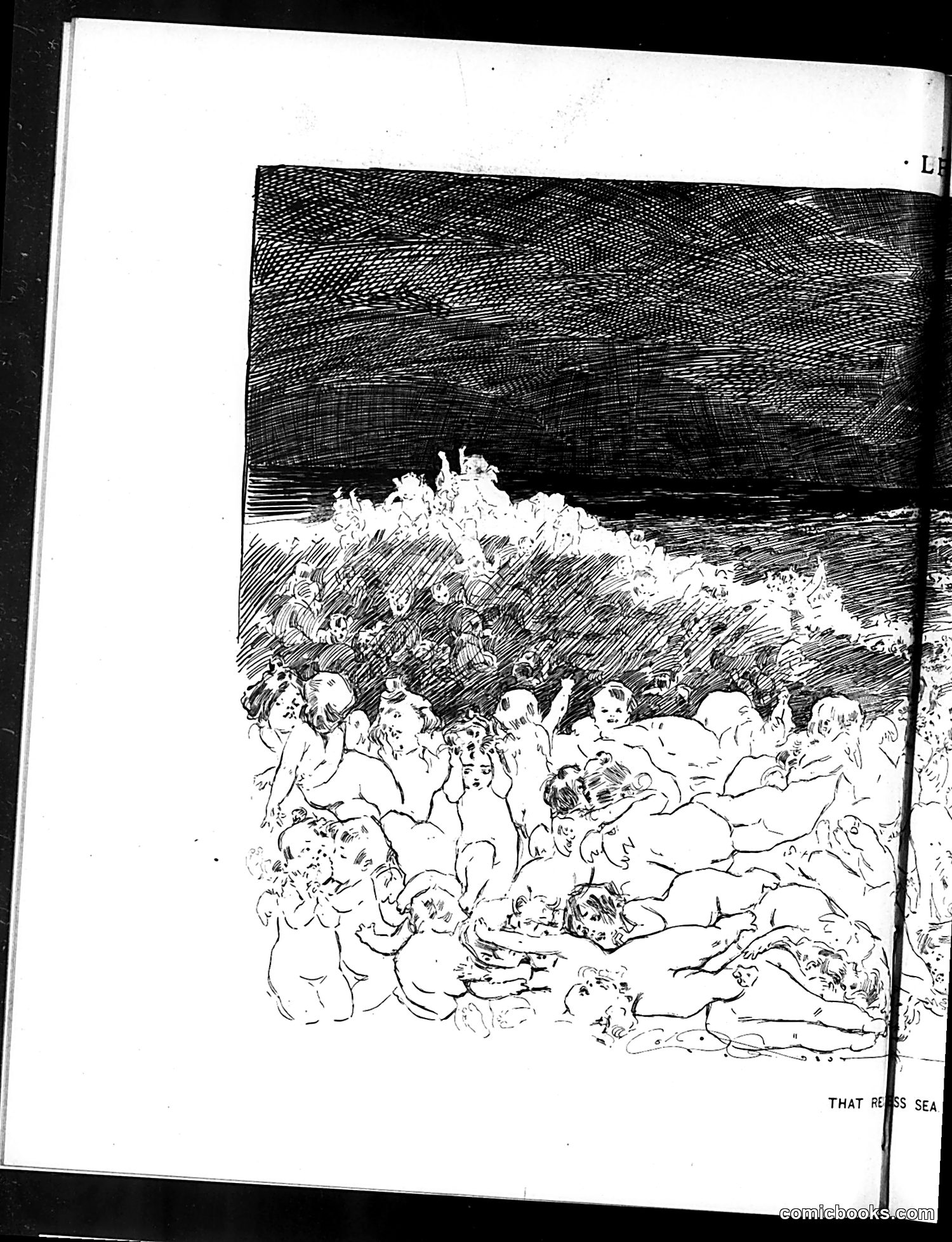
This engraving depicts a classical or mythological scene rather than a political cartoon. It shows numerous cherubs or putti (baby angels) gathered in clouds above a turbulent sea, which appears dark and stormy in the background. The text fragment at the bottom reads "THAT RESTS SEA" (likely incomplete). The style and subject matter suggest this is an allegorical or decorative illustration, possibly referencing classical art traditions rather than contemporary satire. Without the complete caption or surrounding context from the Life magazine page, it's difficult to determine if this carries specific satirical intent about a particular political or social issue of its era. The image appears to be predominantly artistic rather than satirical in nature.
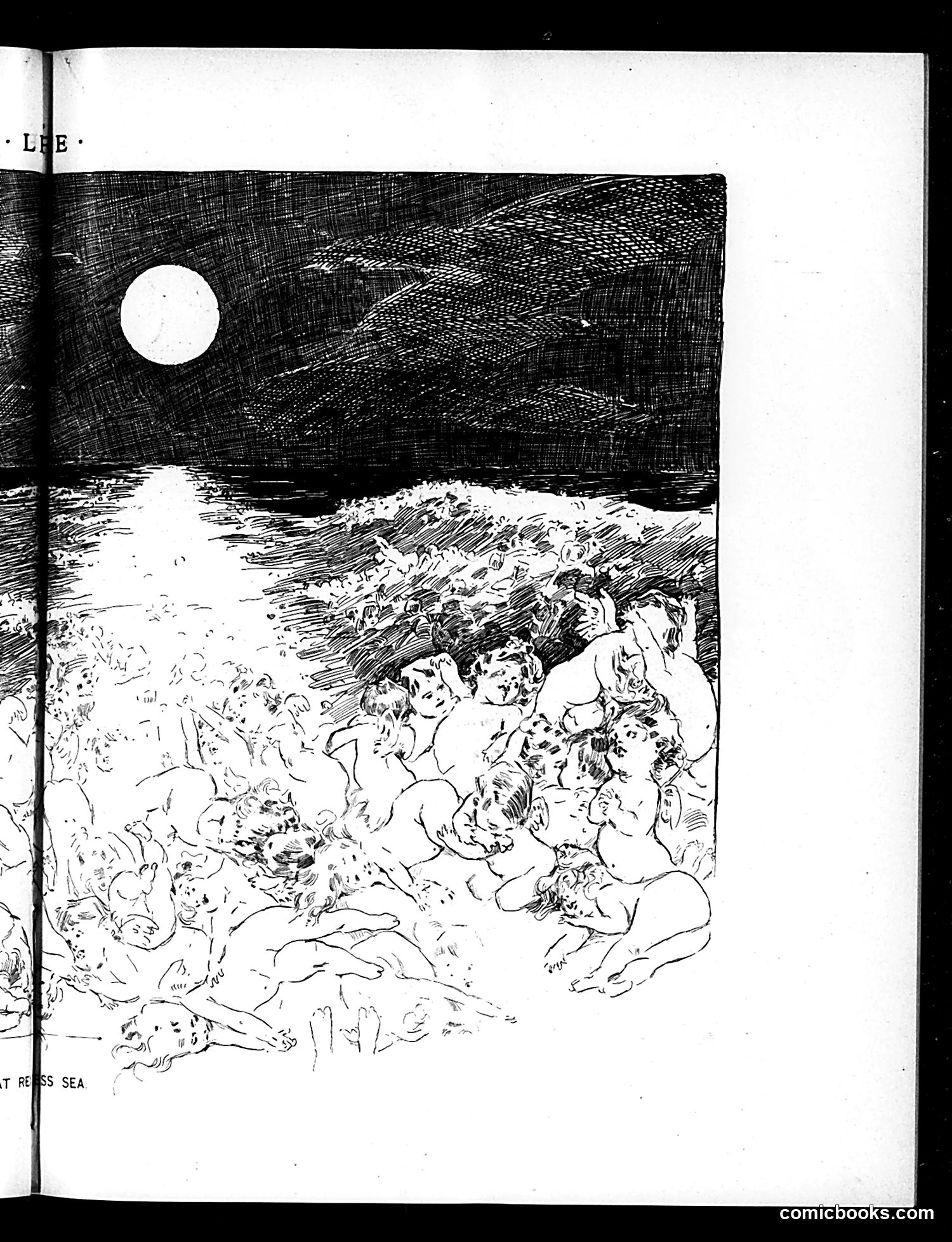
This page features a classical allegorical engraving showing cherubs or putti (baby-like figures) gathered on a moonlit beach beside turbulent waters. The scene appears mythological or fantastical rather than explicitly political satire. The text fragment "T RESS SEA" (likely "STRESS SEA" or similar) is partially visible, but without complete text context, the specific satirical meaning is unclear. The moon, dramatic seascape, and classical artistic style suggest this may reference literary or artistic themes popular in early 20th-century American culture. However, without fuller OCR text or publication date, I cannot confidently identify what social, political, or cultural commentary this cartoon intended. The image appears decorative or illustrative of a story or poem rather than direct political satire.
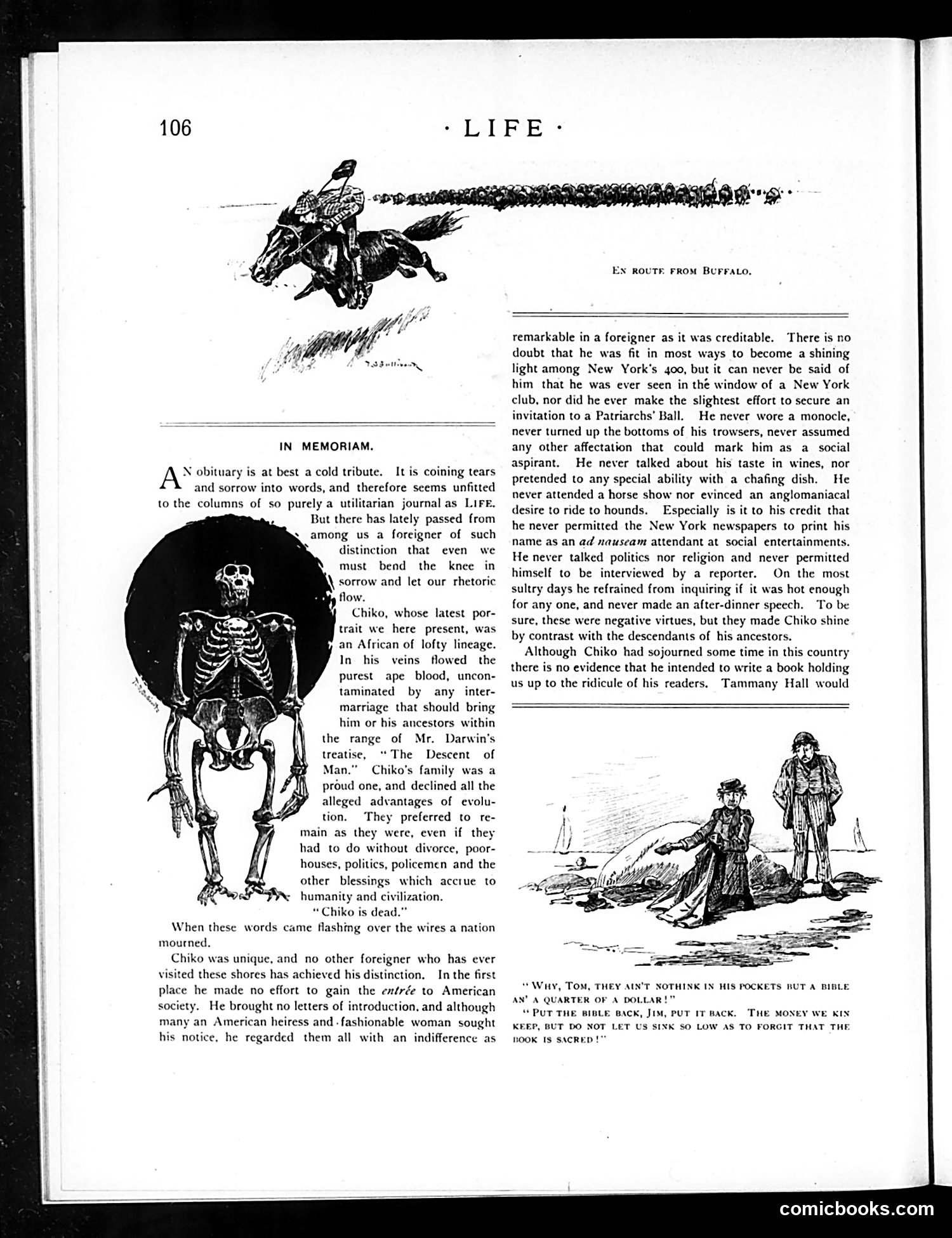
This page contains an obituary titled "In Memoriam" for someone named Chiko, described as "an African of lofty lineage." The text satirizes Chiko's unsuccessful attempts at New York high society—he never secured club memberships, wore proper attire, or cultivated social pretenses despite his distinguished ancestry. The skeleton illustration accompanying the obituary is a memento mori device emphasizing death. The accompanying cartoon (bottom right) depicts what appears to be a biblical or moral scene with dialogue about a Bible and money, likely contrasting spiritual and material values. The page's satire targets both Chiko's social pretensions and perhaps broader attitudes about race and class in Gilded Age America. The "En Route from Buffalo" heading suggests travel or movement, though its specific reference remains unclear without additional context.
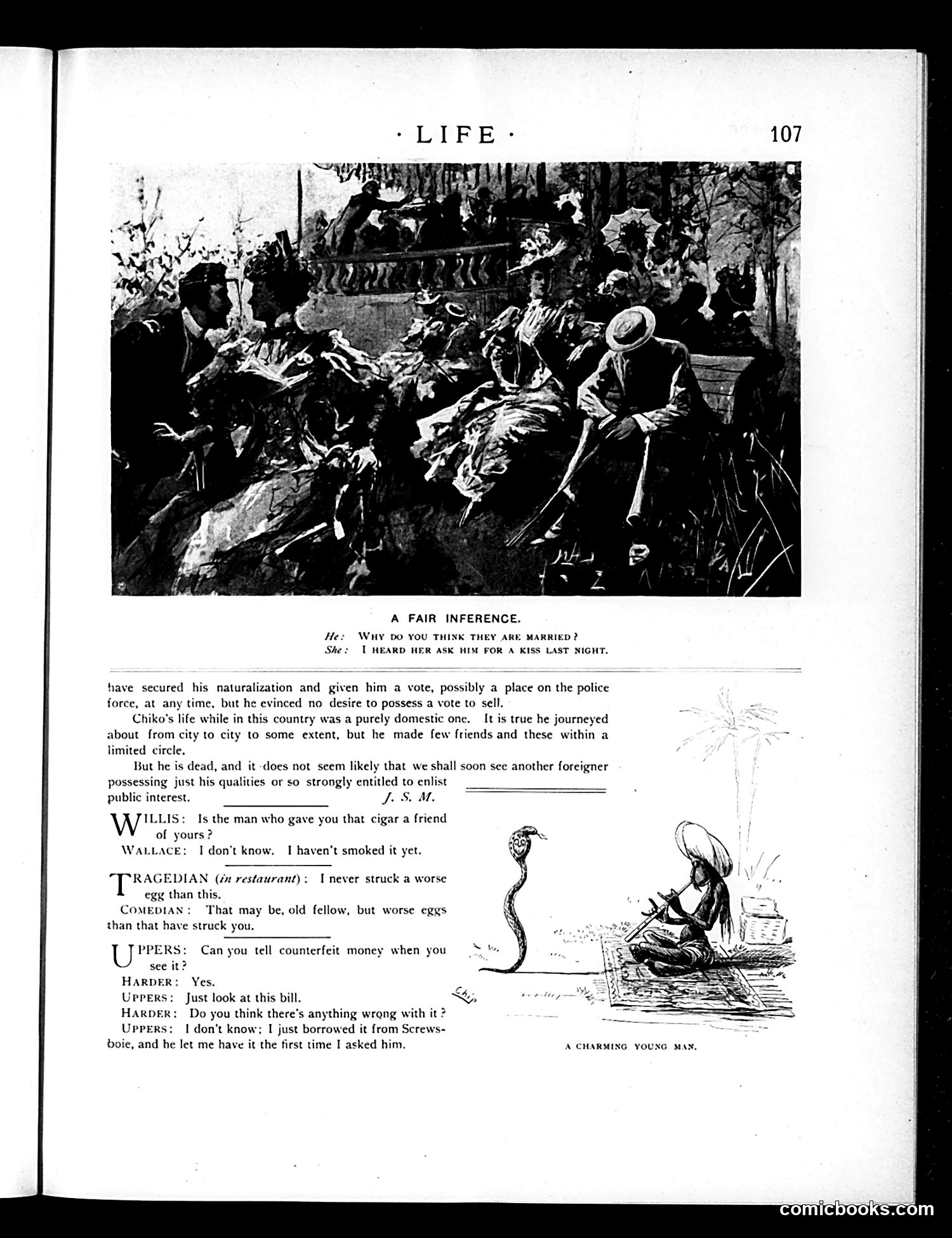
**Top image:** A crowded garden party scene captioned with dialogue: "He: Why do you think they are married? / She: I heard her ask him for a kiss last night." This satirizes the assumption that physical affection between couples indicates matrimony—playing on Victorian-era propriety where such public display would be scandalous outside marriage. **Bottom illustration:** Titled "A Charming Young Man," shows a figure with a snake, accompanying dialogue about counterfeit money. A character named "Screwsboie" apparently lent counterfeit currency to another, who casually borrowed it again—satirizing dishonesty and casual criminality treated as a social inconvenience rather than serious wrongdoing. Both pieces mock social hypocrisy and moral laxity among the era's upper classes.
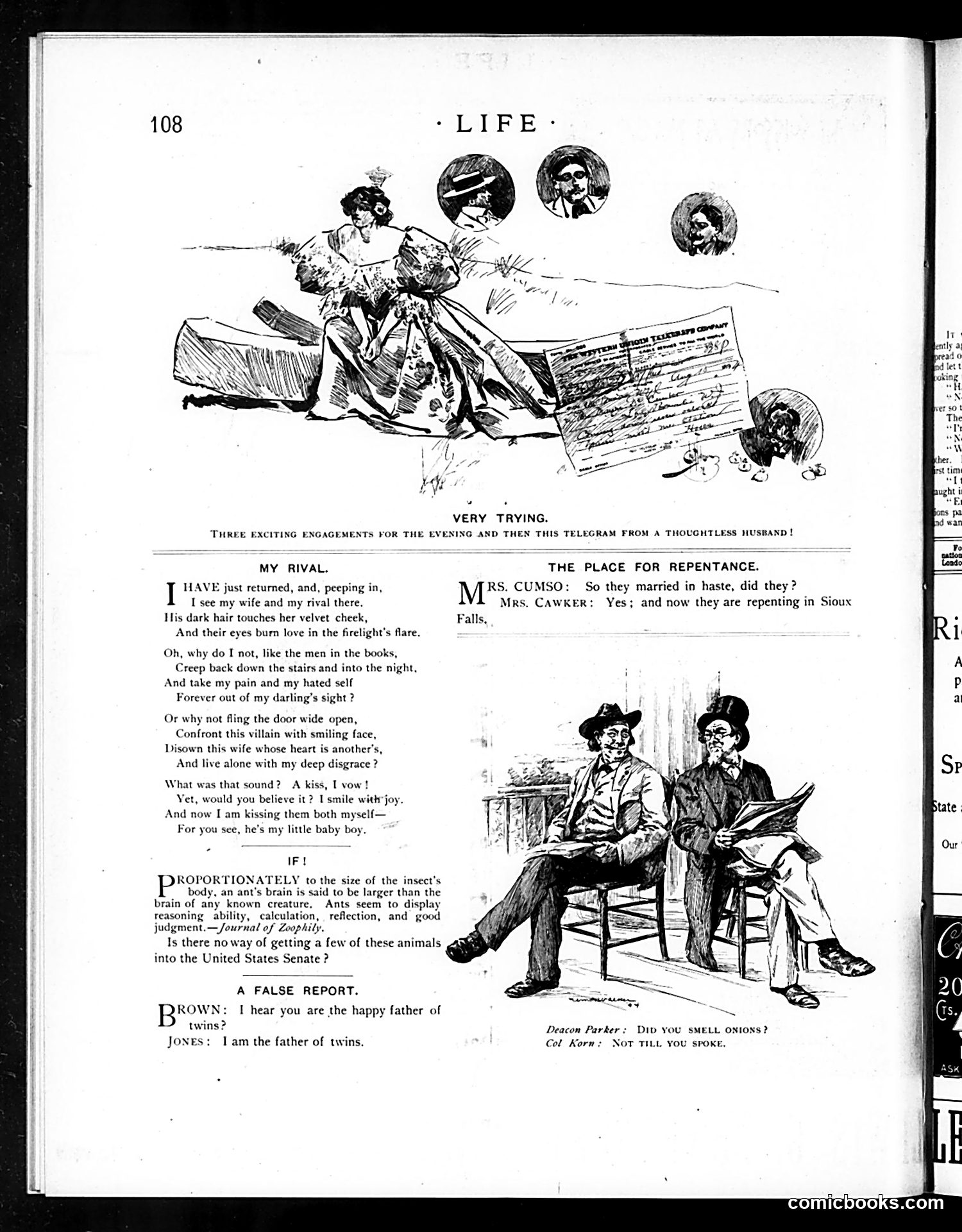
This page contains several unrelated comic sketches typical of early-20th-century *Life* magazine satire: **"My Rival"**: A poem about a husband discovering his wife with another man in intimate circumstances—only to reveal the "rival" is their baby son. The joke mocks melodramatic Victorian literature conventions. **"If I"**: A brief piece suggesting ants have superior reasoning to U.S. senators, satirizing congressional incompetence through absurdist comparison. **"A False Report"**: A short joke playing on the ambiguity of "father of twins"—one man claims fatherhood of two children; another claims fatherhood of twins (implying his wife had twins). The humor relies on miscommunication. **"The Place for Repentance"** and **"Did You Smell Onions?"**: Brief dialogue jokes about hasty marriages and social awkwardness. The top illustration depicts a woman juggling three evening engagements while receiving a telegram—satirizing the demands on society women's schedules. The page is primarily humor and light satire rather than serious political commentary.
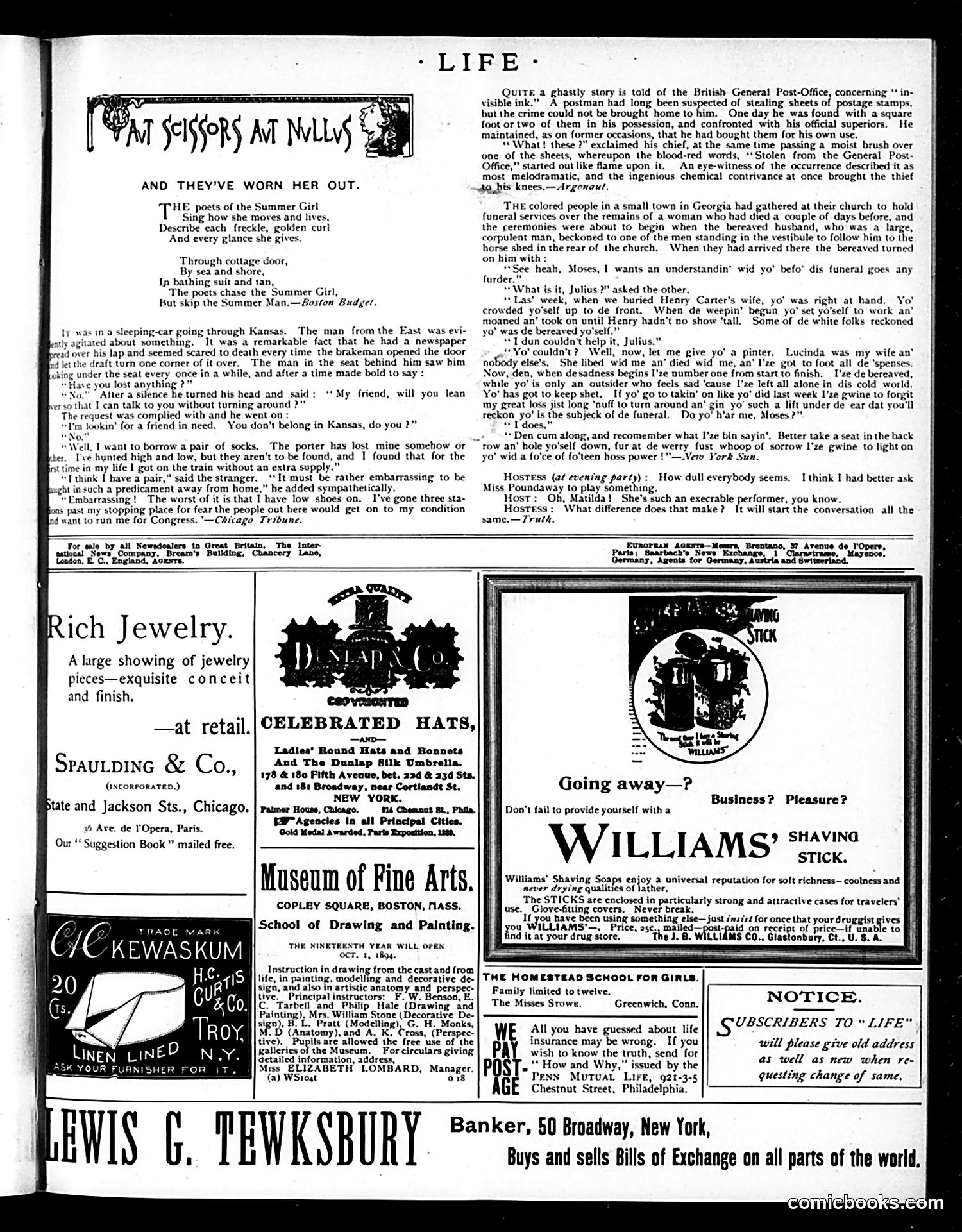
This page contains three distinct humorous pieces typical of *Life* magazine's satirical content: 1. **The cartoon title** mocks the literary obsession with the "Summer Girl"—poets celebrate her beauty while ignoring the "Summer Man," satirizing romantic literature's gendered focus. 2. **The Kansas sleeping-car anecdote** humorously depicts social embarrassment: an Eastern gentleman, anxious about maintaining appearances, must borrow socks from a stranger to hide his shabby condition, fearing ridicule. The joke is his fear of being mistaken for someone worthy of "running for Congress." 3. **The Georgia funeral scene** uses dialect humor (common in period satire, though offensive by modern standards) to depict a widower correcting another mourner for "stealing his grief"—demanding he remain the primary bereaved since *he* paid for the funeral. The page also includes period advertisements (jewelry, hats, banking services) and a notice requesting address changes from *Life* subscribers.
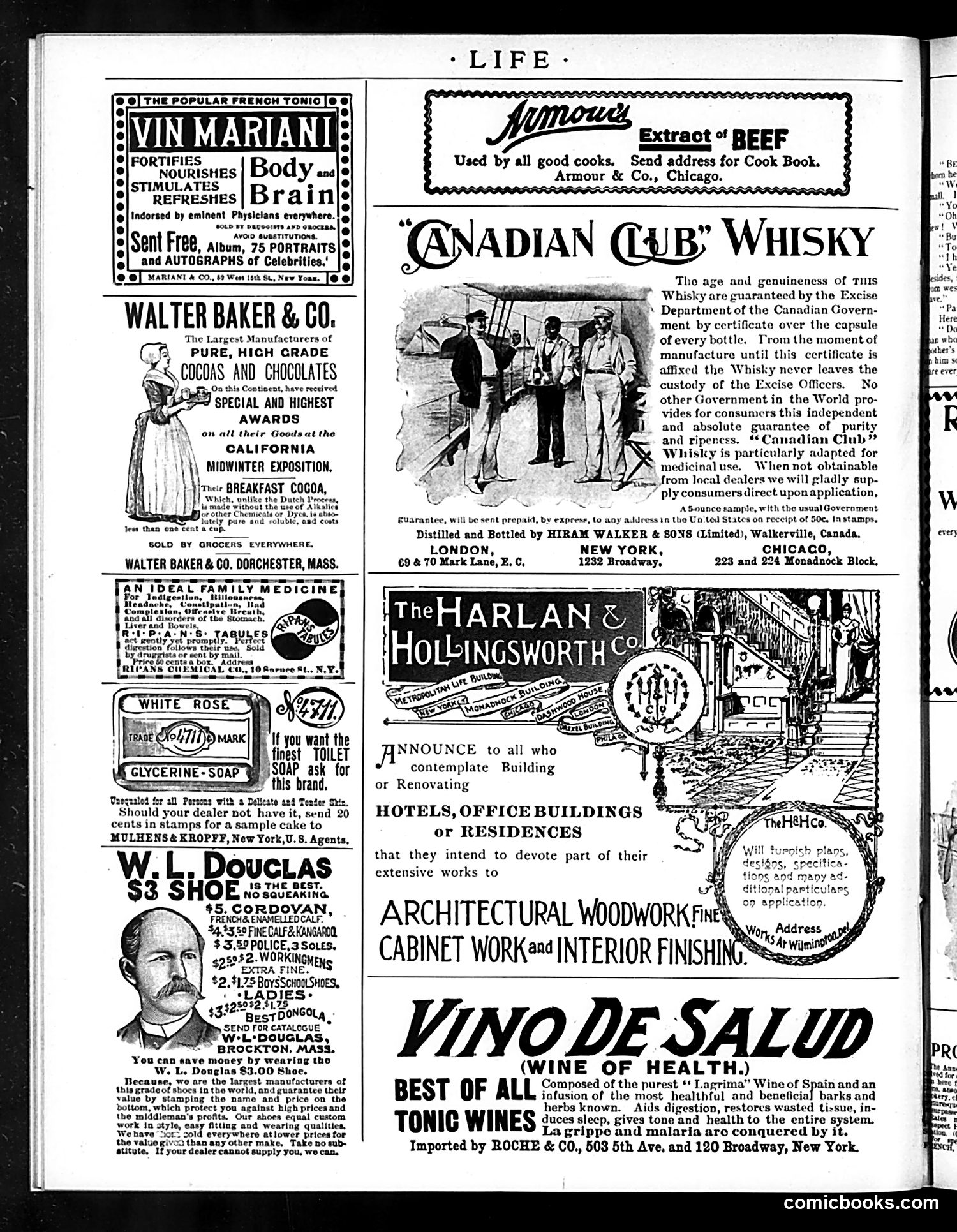
This is primarily a **advertising page** from Life magazine, not a political cartoon. It contains multiple product advertisements from the 1890s-early 1900s era. Notable ads include: - **Vin Mariani** (French tonic wine) and **Canadian Club Whisky** — medicinal alcohol products marketed as health tonics - **Walter Baker & Co. cocoa** — emphasizing purity and California Exposition awards - **W.L. Douglas shoes** — promoting affordability through direct manufacturing claims - **Vino de Salud** — another "wine of health" tonic claiming to cure malaria and influenza - **Harlan & Hollingsworth Co.** — architectural/woodwork services The satirical content is *implicit* rather than explicit: these ads reveal period attitudes about alcohol as legitimate medicine, unregulated health claims, and the marketing language used to sell products with minimal oversight. Modern readers should note that products like these "tonic wines" were common remedies before FDA regulations and contained significant alcohol or questionable ingredients presented as curative.
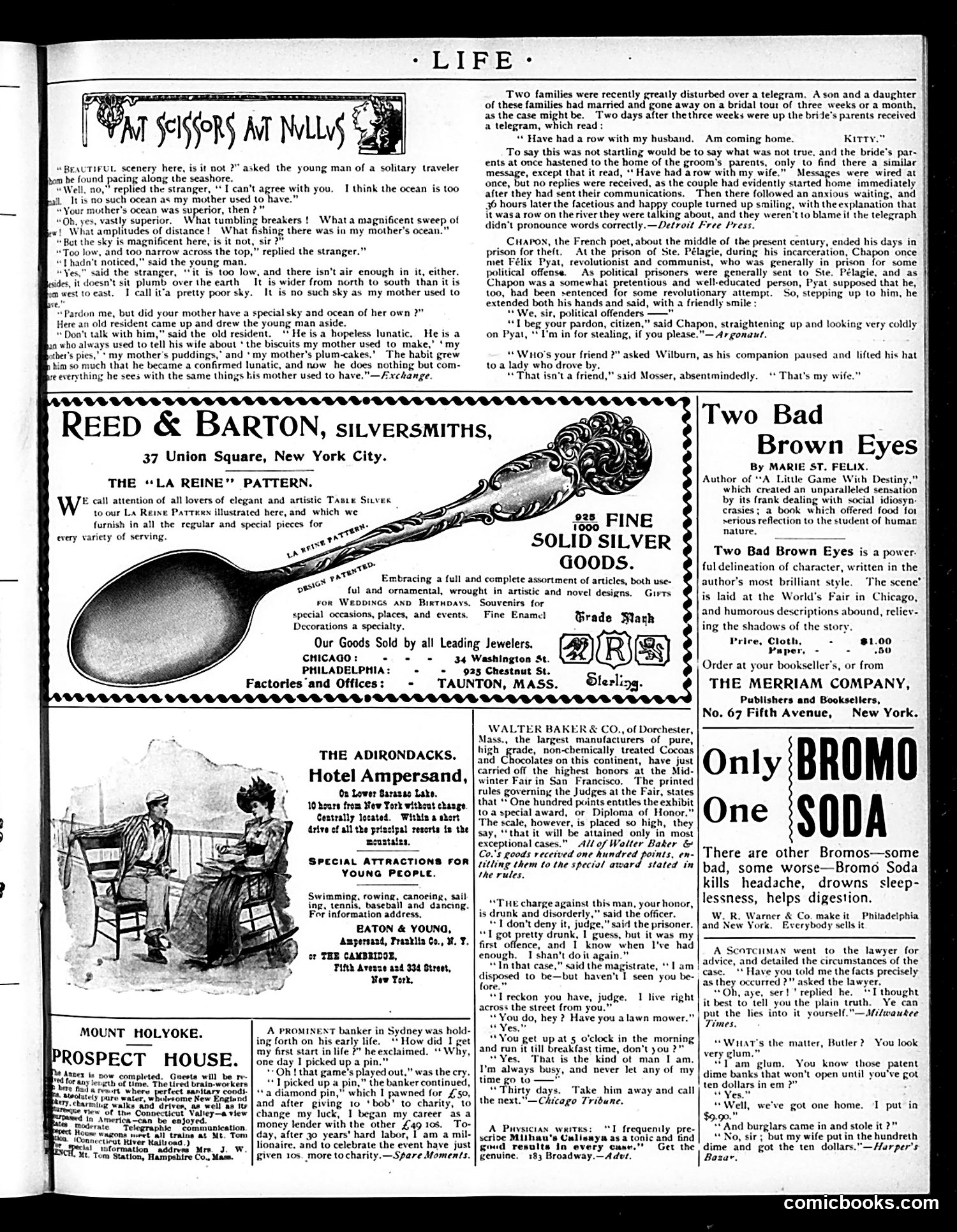
This page contains three distinct humor pieces: **"At Scissors and Nulls"** (top): A comic dialogue where a young traveler encounters a delusional old man who constantly compares everything unfavorably to what "his mother" had—her superior ocean, sky, etc. The joke satirizes excessive nostalgia and maternal comparison; the punchline reveals he's become a "confirmed lunatic" from this habit. It's gentle mockery of sentimental idealization of the past. **The Telegram Stories** (middle): Two newlyweds separately send telegrams saying "Have had a row with my husband/wife" during their honeymoon, alarming both sets of parents. The resolution reveals they were rowing a boat on a river—a pun playing on the telegraph's failure to clarify pronunciation. It's a straightforward comedic misunderstanding. **Chapon and Pyat** (bottom): A historical anecdote where revolutionary Pyat, imprisoned for political reasons, tries to befriend fellow prisoner Chapon with friendly overtures. Chapon coldly rejects him, revealing he's imprisoned for theft, not politics—implying he considers himself socially superior despite being a common criminal. It's satire on class pretension. The page is primarily entertainment with period advertising.
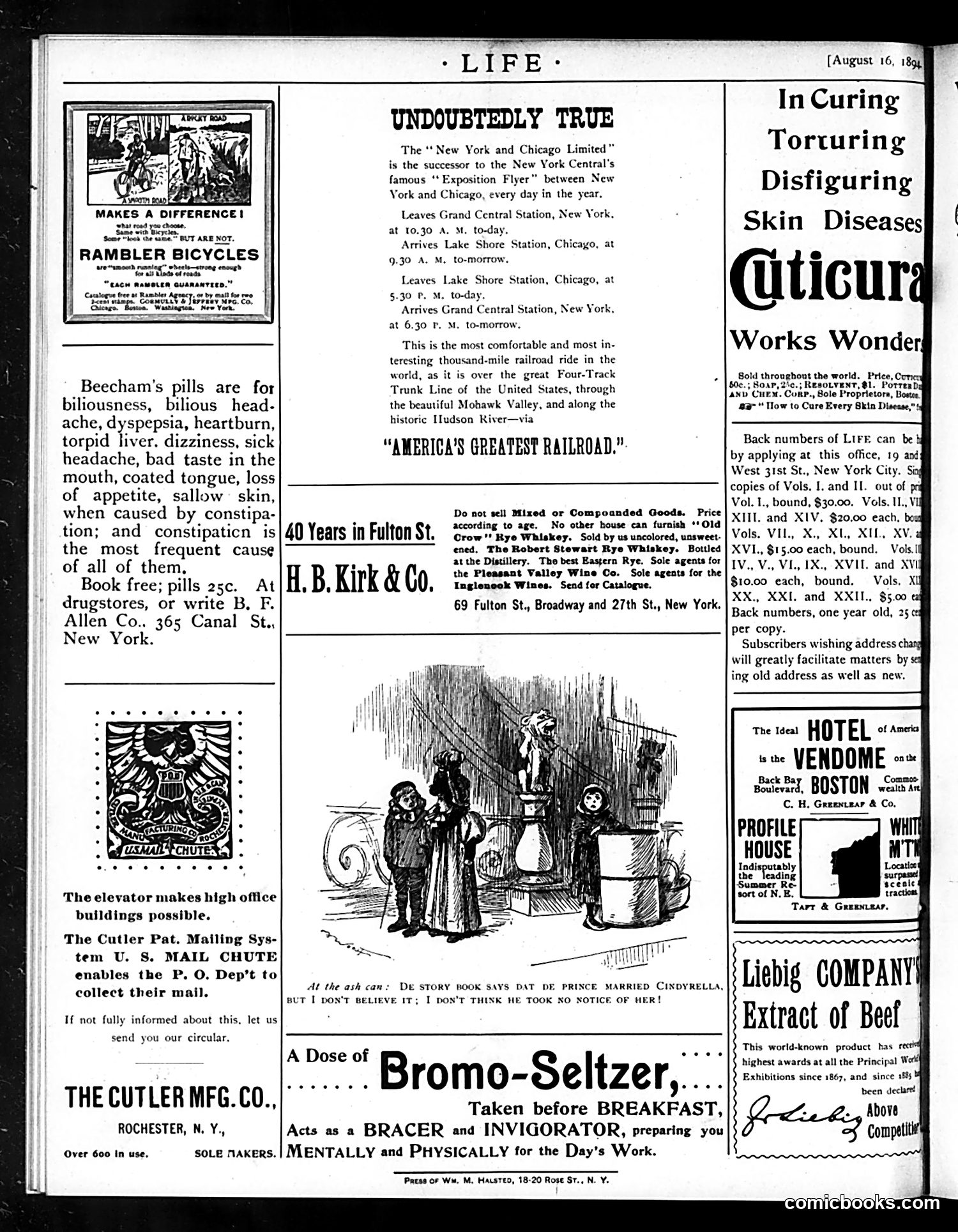
The central cartoon depicts a working-class child at an ash can, rejecting a fairy tale. The child says: "De story book says dat de prince married Cinderella, but I don't believe it; I don't think he took no notice of her!" **What this means:** This is social satire mocking the gap between romantic fantasy and working-class reality. The child—represented with dialect suggesting immigrant or poor urban background—dismisses the Cinderella story as implausible. The joke is that a poor girl becoming a prince's bride is pure fantasy; in real life, wealthy men don't marry poor women. The child's cynicism reflects actual social hierarchies of 1894 America, where class mobility through romance was virtually impossible. The satire targets both the fairy tale's false promises and the harsh socioeconomic realities that make such stories laughable to those living in poverty.