A complete issue · 36 pages · 1936
Judge — April 1936
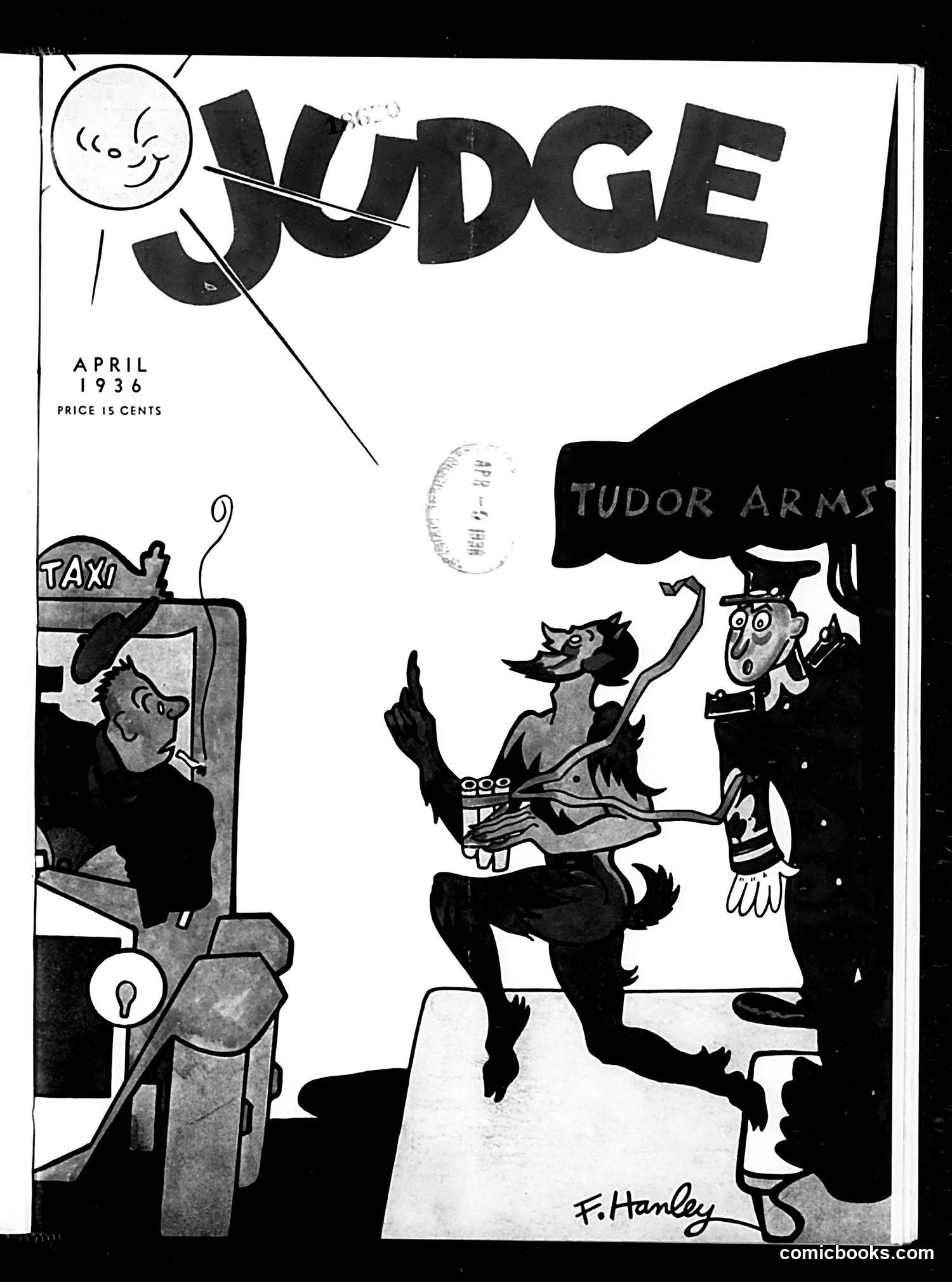
# Judge Magazine Cover, April 1936 This cover satirizes the entertainment scene at the Tudor Arms, likely a New York nightclub. The central figure is a female performer dancing provocatively with what appears to be a musical instrument, while a well-dressed man (possibly a club owner or patron) gestures enthusiastically from the right. A taxi driver on the left observes the scene, suggesting the contrast between ordinary working people and the nightlife elite. The satire targets the glamorous nightclub culture of 1930s America—the excess, performances, and social mixing of the era. The "Judge" magazine's humor typically mocked current social trends and entertainment venues. The crude caricature style was standard for the period's satirical commentary on urban nightlife and celebrity culture.
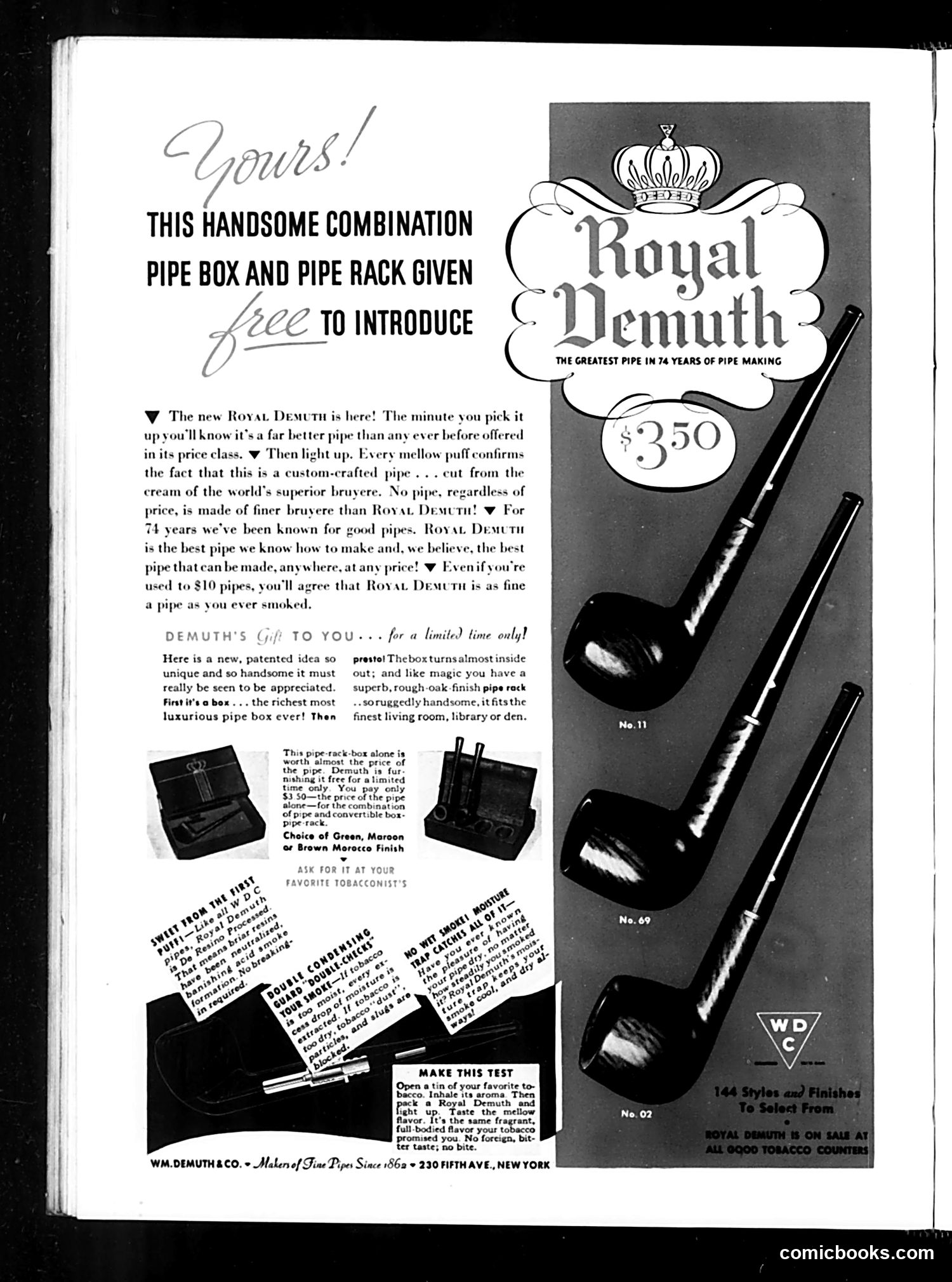
# Analysis This page is **primarily an advertisement**, not satire or political commentary. The left side advertises a "Royal Demuth" pipe ($3.50) being offered free with a pipe box and rack purchase. The ad emphasizes the pipe's quality, claiming 74 years of pipe-making expertise and superior bruyere wood construction. The right side shows three pipe models (No. 11, No. 49, No. 02) with various finishes available. The bottom includes a "Make This Test" section encouraging readers to compare the Royal Demuth pipe's tobacco flavor against competitors. **This is straightforward product marketing**, not political satire. Judge magazine included paid advertisements alongside its satirical content. No political figures or social commentary are present—just a tobacco pipe company leveraging magazine space to promote their product to readers.
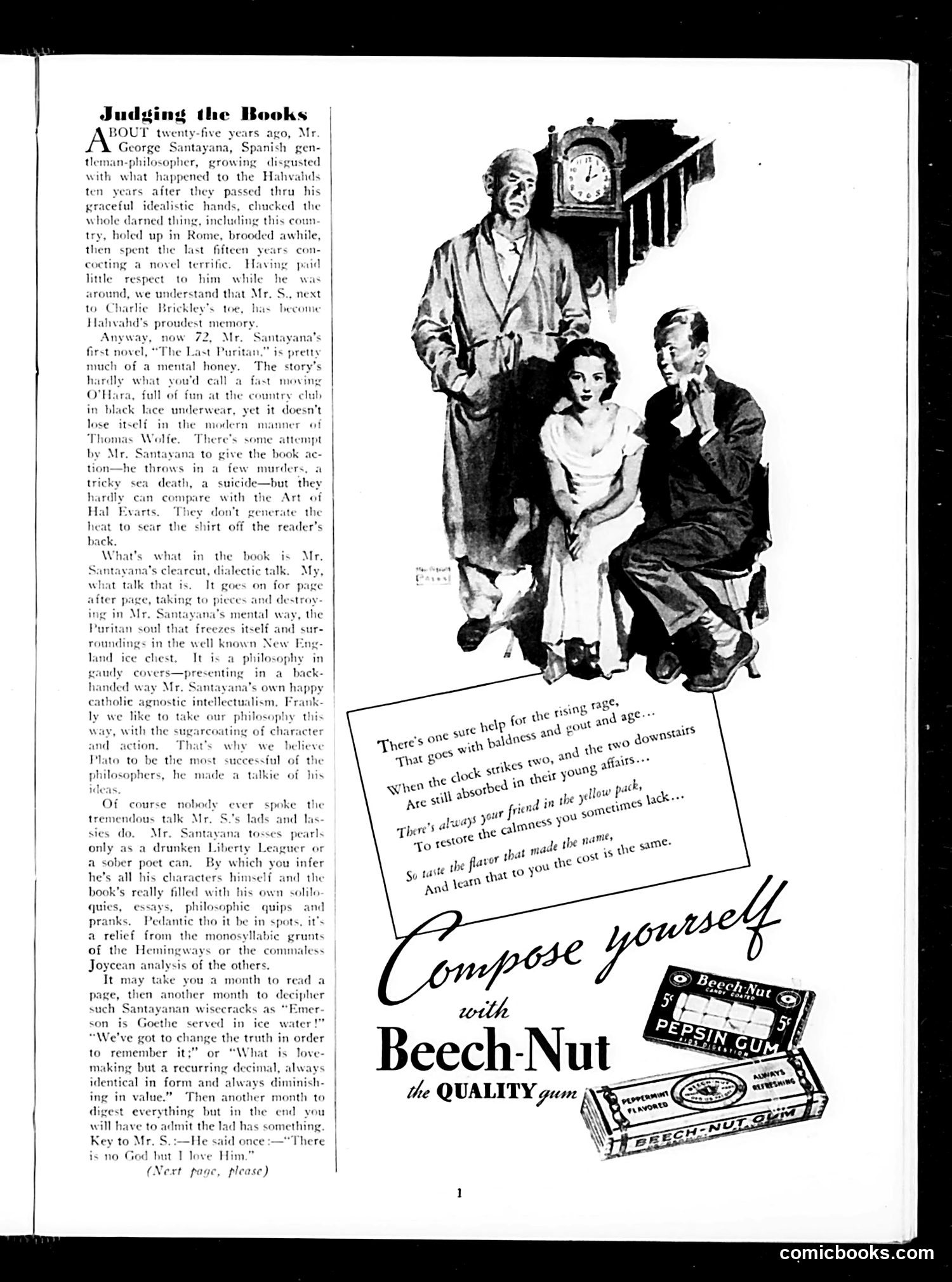
# "Judging the Books" - Judge Magazine Book Review This page contains a book review of George Santayana's novel "The Last Puritan," alongside a Beech-Nut gum advertisement. The reviewer critiques Santayana's work as a "mental honey"—superficially pleasant but lacking substance. The review dismisses the plot as derivative (comparing it unfavorably to Hal Eaarts' work) and mocks the author's philosophical digressions throughout the narrative. The satirical point appears to target Santayana's pretentious intellectualism and his tendency to interrupt fictional storytelling with abstract philosophy. The reviewer suggests the book would bore general readers despite Santayana's reputation as a serious thinker. The advertisement uses this critique as an ironic juxtaposition—suggesting Beech-Nut gum provides more genuine comfort than Santayana's intellectual musings.
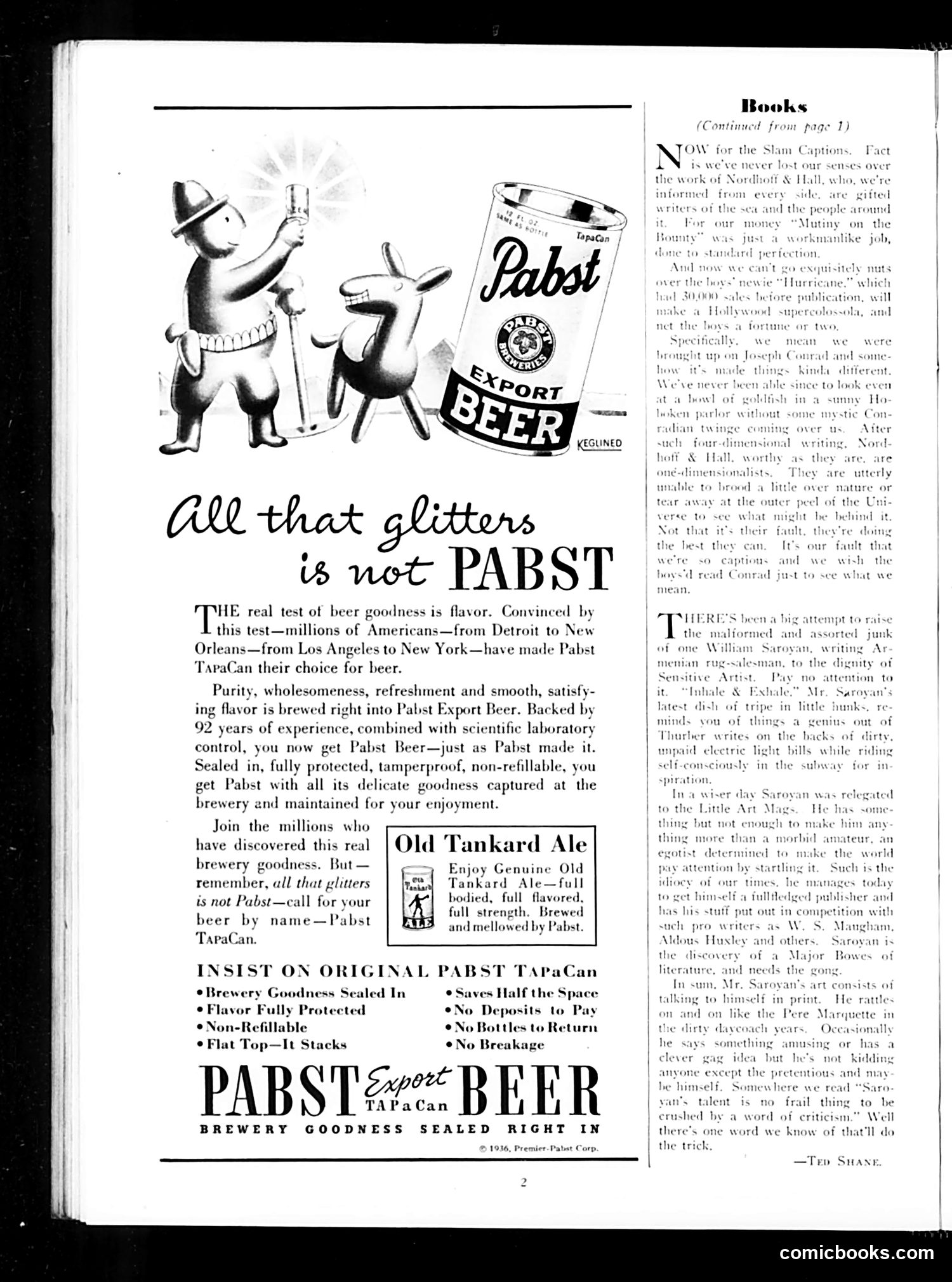
# Analysis This page is primarily **advertising**, not political satire. The left side features a large Pabst Export Beer advertisement with cartoon characters (anthropomorphic figures in formal dress) promoting the beer's quality and the TaPaCan container format. The right side contains book reviews, including commentary on works by William Saroyan and discussion of various literary figures. One review critiques Saroyan's writing style, suggesting his attempts at avant-garde art fall short. **No political cartoons appear on this page.** The only visual satire is the humorous mascot characters in the beer ad, which use whimsy to market the product rather than comment on current events or politics. This is a commercial page embedded within Judge magazine's editorial content.
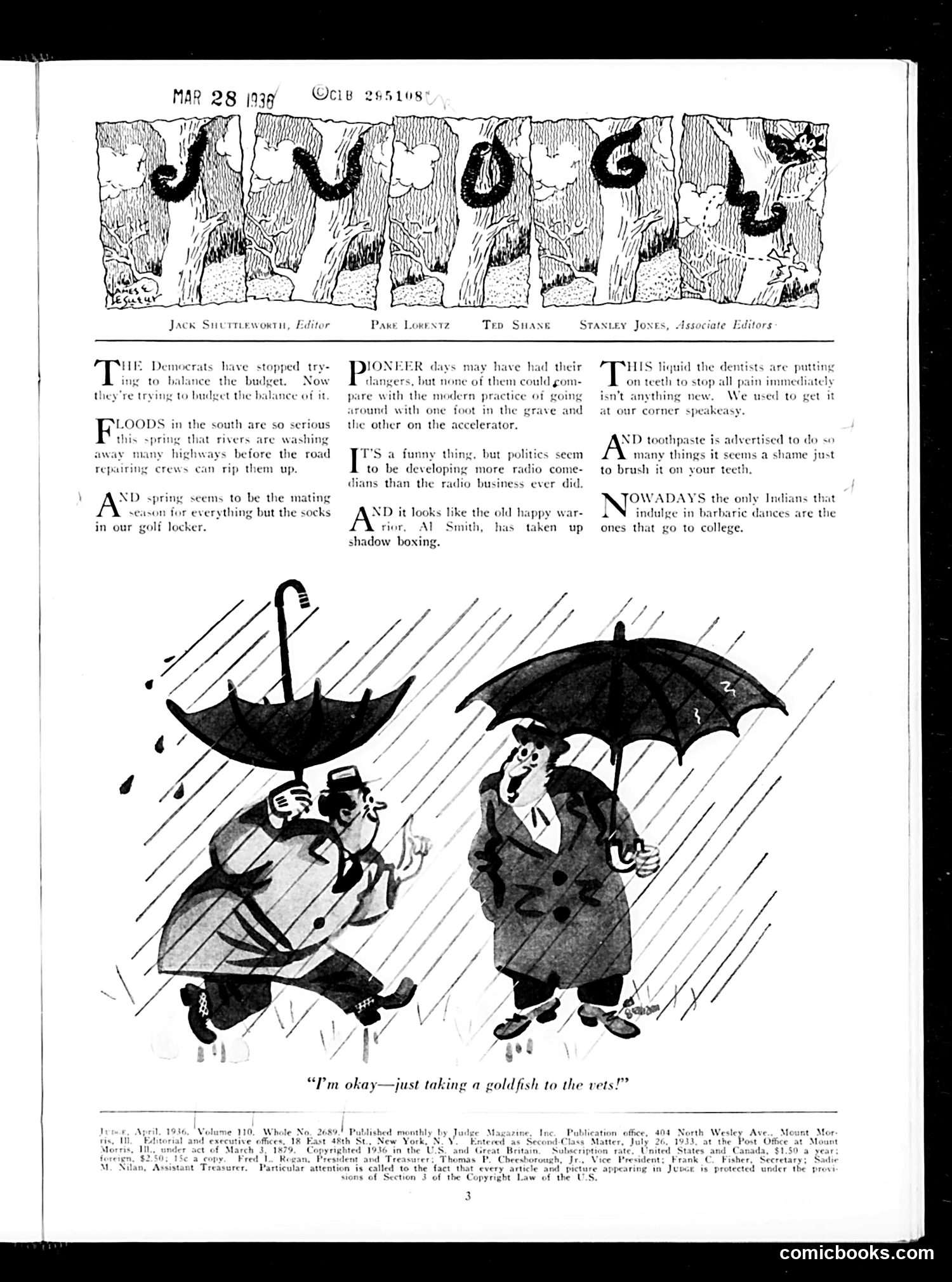
# Analysis of Judge Magazine Page (March 28, 1936) The main cartoon depicts two figures in heavy rain: a thin man on the left holding an umbrella (appearing to be a politician or public figure) and a larger, well-dressed man on the right with a substantial umbrella. The caption reads: "I'm okay—just taking a goldfish to the vets!" This appears to be social commentary on economic disparity during the Great Depression. The contrast between the poorly-equipped thin figure (likely representing an ordinary citizen struggling in hard times) and the well-off figure casually taking a goldfish to a veterinarian satirizes wealth inequality—while common people suffer serious hardships, the wealthy maintain frivolous luxuries. The editorial commentary above references political budget debates and Depression-era flooding, supporting this economic critique.
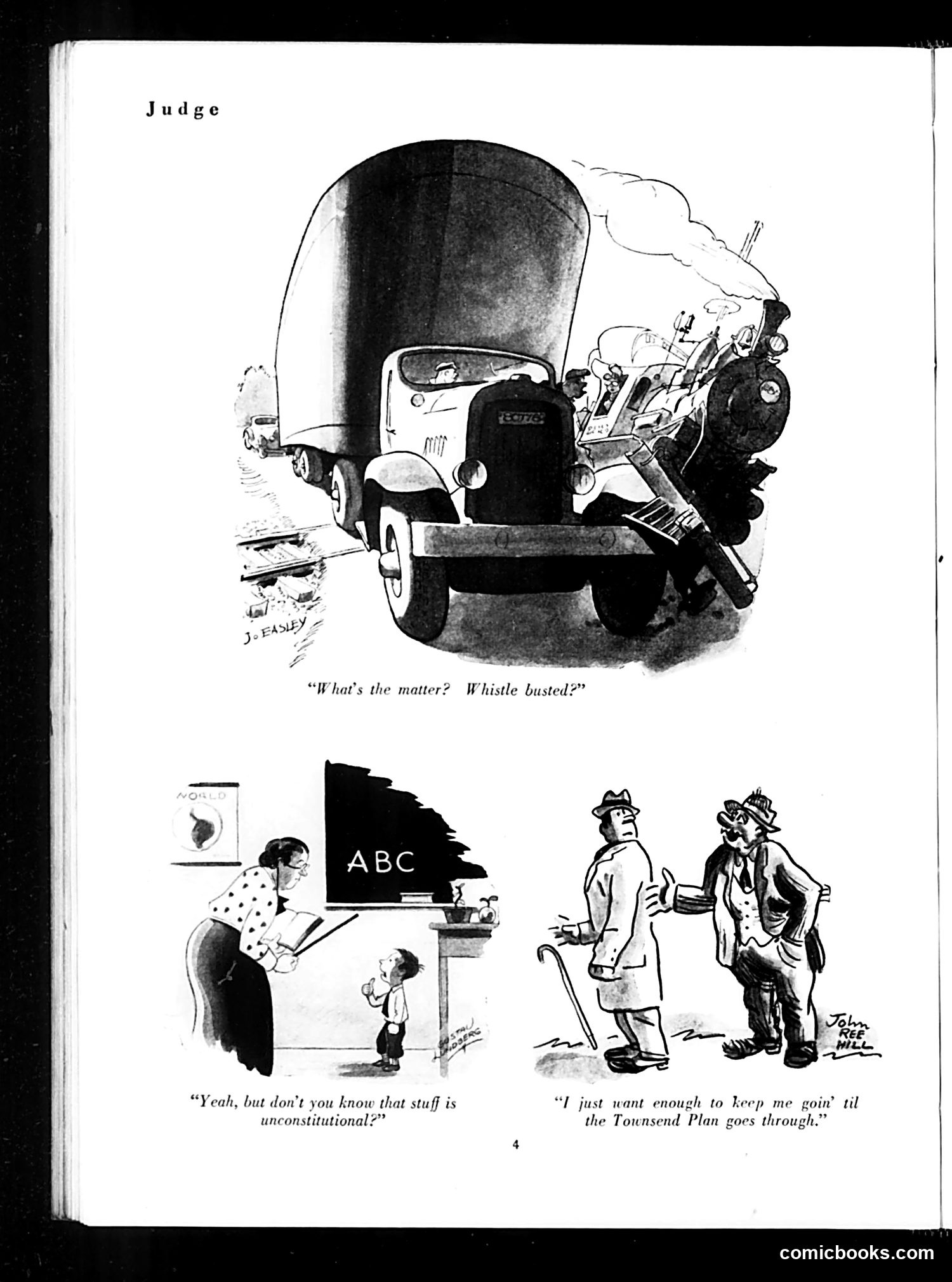
# Judge Magazine Cartoon Analysis This page contains three satirical cartoons about traffic safety and constitutional law, circa early-to-mid 20th century. The top cartoon depicts a massive truck colliding with a small car, with the caption "What's the matter? Whistle busted?" - mocking inadequate safety warnings. The bottom-left cartoon shows a woman teaching a child the ABC's, with the caption about "unconstitutional stuff" - likely satirizing debates over educational content or censorship. The bottom-right cartoon references "the Townsend Plan," a Depression-era social security proposal, with a man hoping to "keep me goin' til the Townsend Plan goes through" - mocking reliance on this controversial relief program. The overall theme appears to be critiquing contemporary safety failures, constitutional debates, and economic desperation of the era.
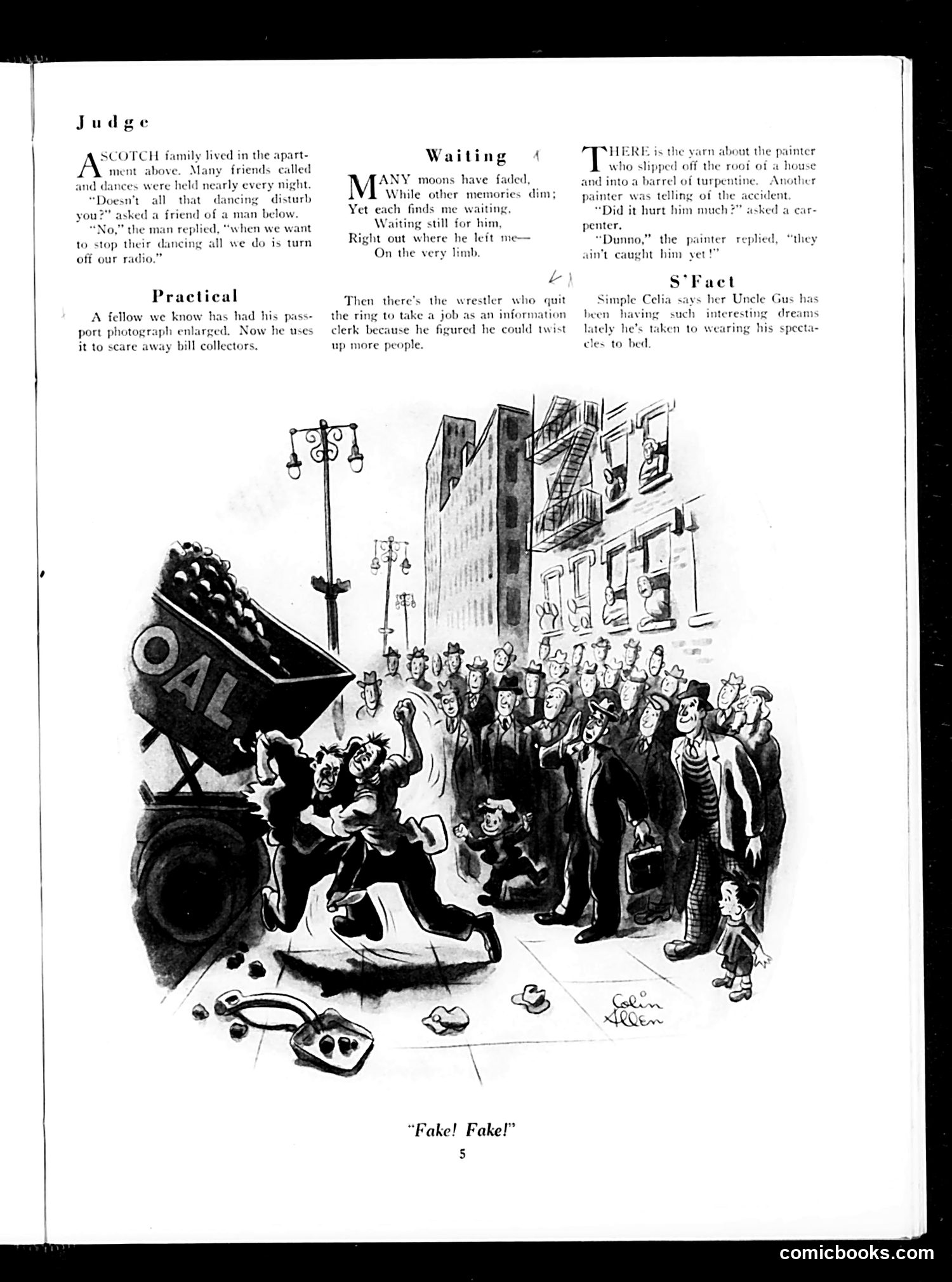
# "Fake! Fake!" - Judge Magazine Cartoon Analysis This cartoon depicts a street vendor operating a trash-collection apparatus labeled "GAIL" while a crowd of well-dressed onlookers watches. A figure lies on the ground beneath the device, seemingly caught in its mechanism. The cartoon's title "Fake! Fake!" suggests this is satirizing fraudulent or deceptive practices. The "GAIL" device appears to reference a specific scam or confidence scheme of the era—possibly involving waste collection or some street-level swindle targeting urban crowds. The cartoonist (signed by what appears to be Cesare Maccari or similar) is mocking public gullibility and the prevalence of street frauds in early 20th-century American cities. The well-dressed observers' reactions suggest they're either complicit, foolish, or outraged witnesses to the deception. Without additional context about the specific "GAIL" reference, the precise scandal remains unclear.
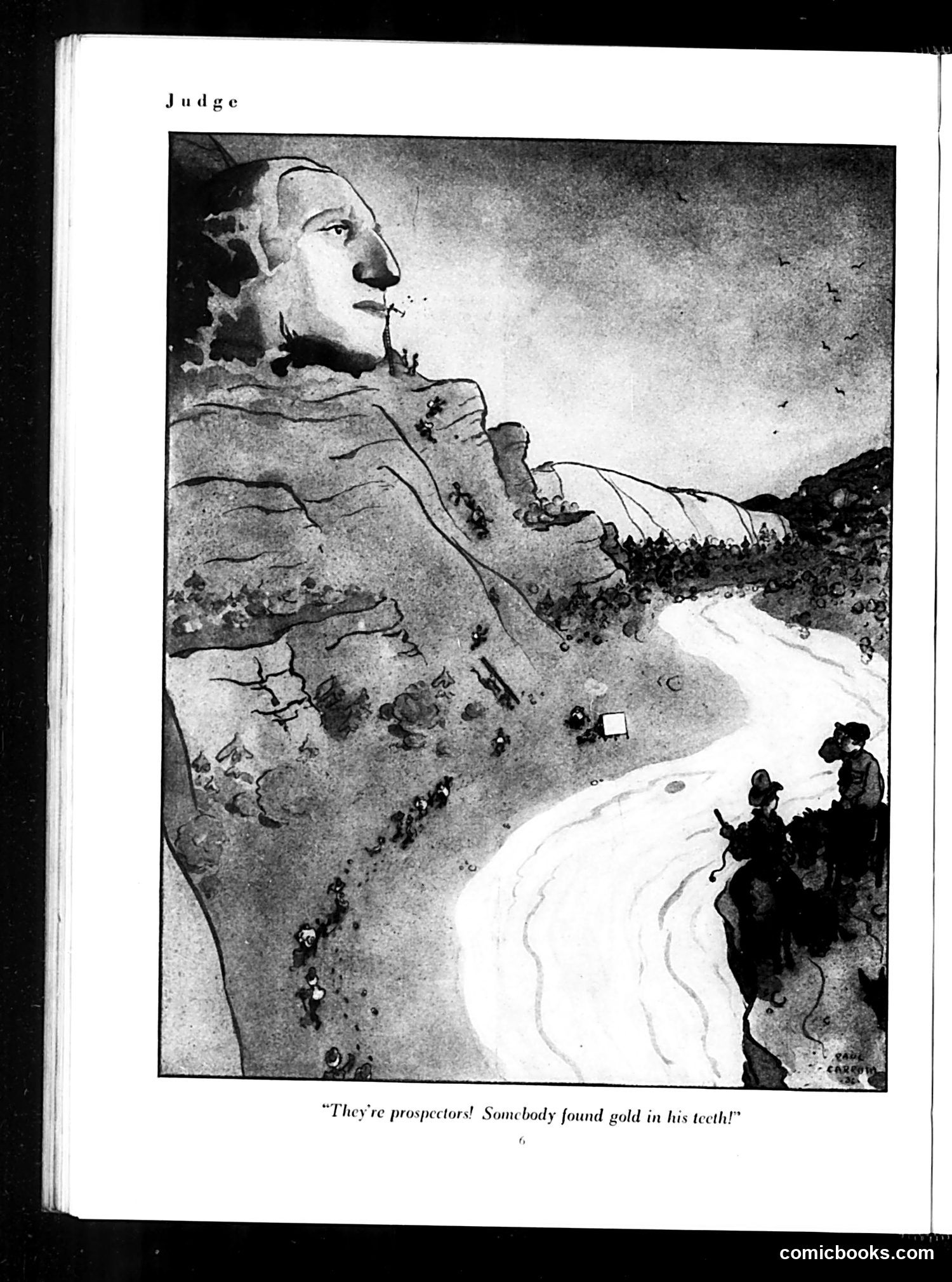
# Analysis of Judge Magazine Page This page shows a satirical cartoon titled "They're prospectors! Somebody found gold in his teeth!" The image depicts an enormous male figure (rendered as a caricatured head and shoulders) with a cigarette, overlooking a snowy landscape. Small human figures stand in the foreground, apparently prospectors examining the giant's face. The joke plays on the term "prospectors"—miners searching for gold—by literalizing it: they've discovered gold in the giant figure's teeth. This is visual wordplay typical of Judge's humor style. The cartoon likely satirizes either a specific public figure (the caricatured features suggest a named person, though identification isn't clear from the image alone) or comments more broadly on commercialism, greed, or human nature. Without dating information visible on the page, the exact historical context remains unclear.
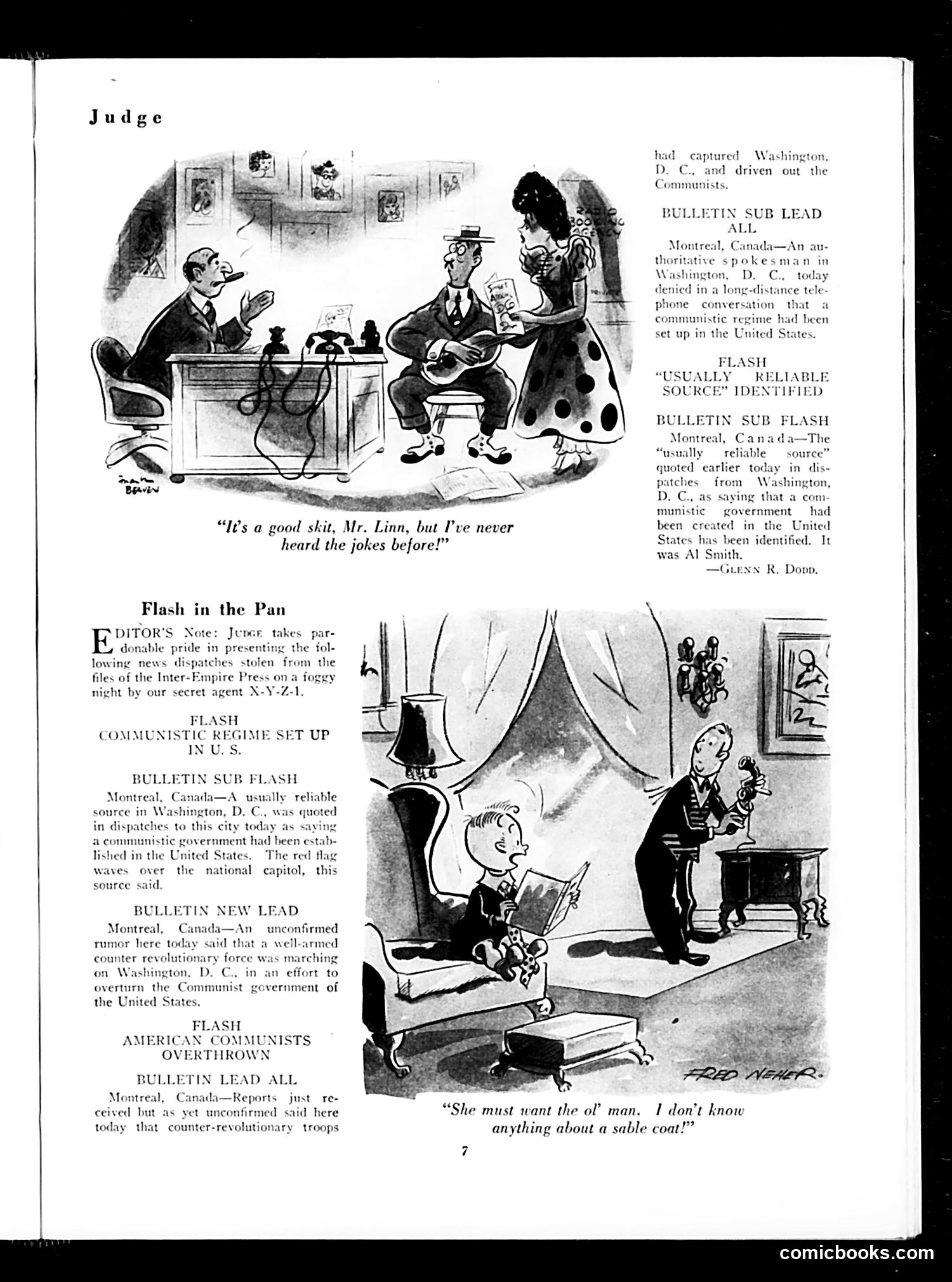
# Historical Context for Modern Readers This page from *Judge* magazine contains Cold War-era anti-communist satire, likely from the early 1950s. The cartoons mock communist propaganda and infiltration fears prevalent in post-WWII America. **Top cartoon:** A judge listens skeptically to a performer (labeled "Mr. Linn") playing guitar with communist-themed jokes, suggesting communist propagandists were disguising ideology as entertainment. **Bottom cartoon:** A child asks an adult about a "sable coat," implying communist infiltrators used material temptations to recruit Americans—a common McCarthy-era anxiety about communist seduction of citizens. The accompanying "bulletins" satirize exaggerated anti-communist warnings circulating at the time, mocking both the communist threat narrative *and* the sometimes-hysterical American response to it. The magazine presents these as absurdist news dispatches to highlight their questionable credibility.
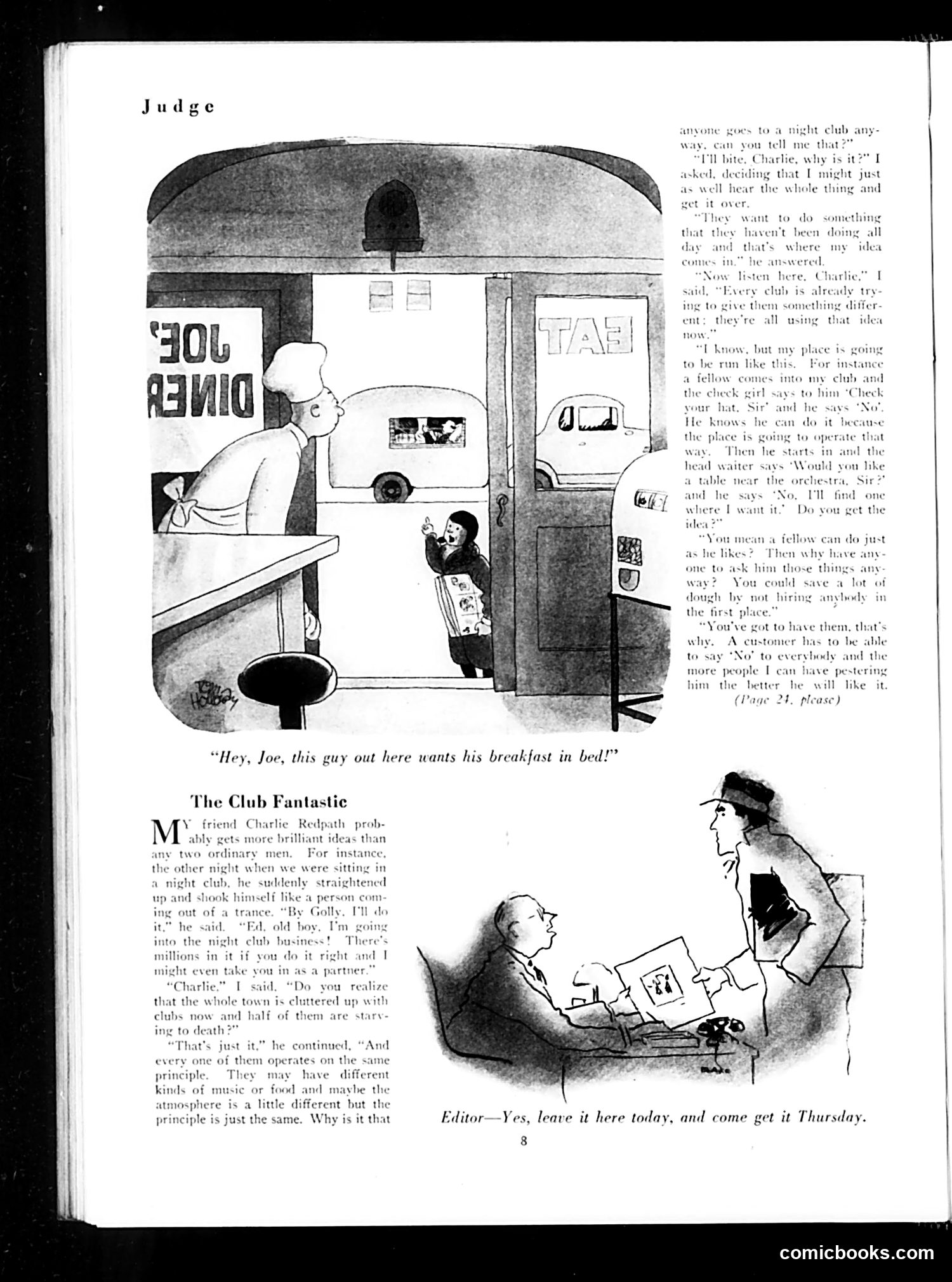
# "The Club Fantastic" — Judge Magazine Satire This page satirizes the nightclub boom of the 1920s-30s, a period when clubs proliferated rapidly despite Prohibition. The cartoon depicts a shabby nightclub operating the same way as upscale competitors—offering elaborate service rituals (hat checking, table seating near orchestras, breakfast in bed) to make patrons feel important. The satirical point: Charlie Redpath proposes opening a nightclub based on this simple principle—that customers enjoy *feeling catered to* and special, regardless of actual quality. The humor mocks both: 1. **Club owners**: operating identical, gimmicky establishments 2. **Patrons**: believing themselves unique when receiving identical treatment 3. **The service economy**: reducing hospitality to theatrical gestures The dialogue emphasizes this absurdity: why hire staff just to say "no" to customers? Because customers *enjoy being pestered* by attentive service. The editor's caption ("leave it here today, come get it Thursday") adds dry commentary on editorial deadlines, typical of Judge's format.
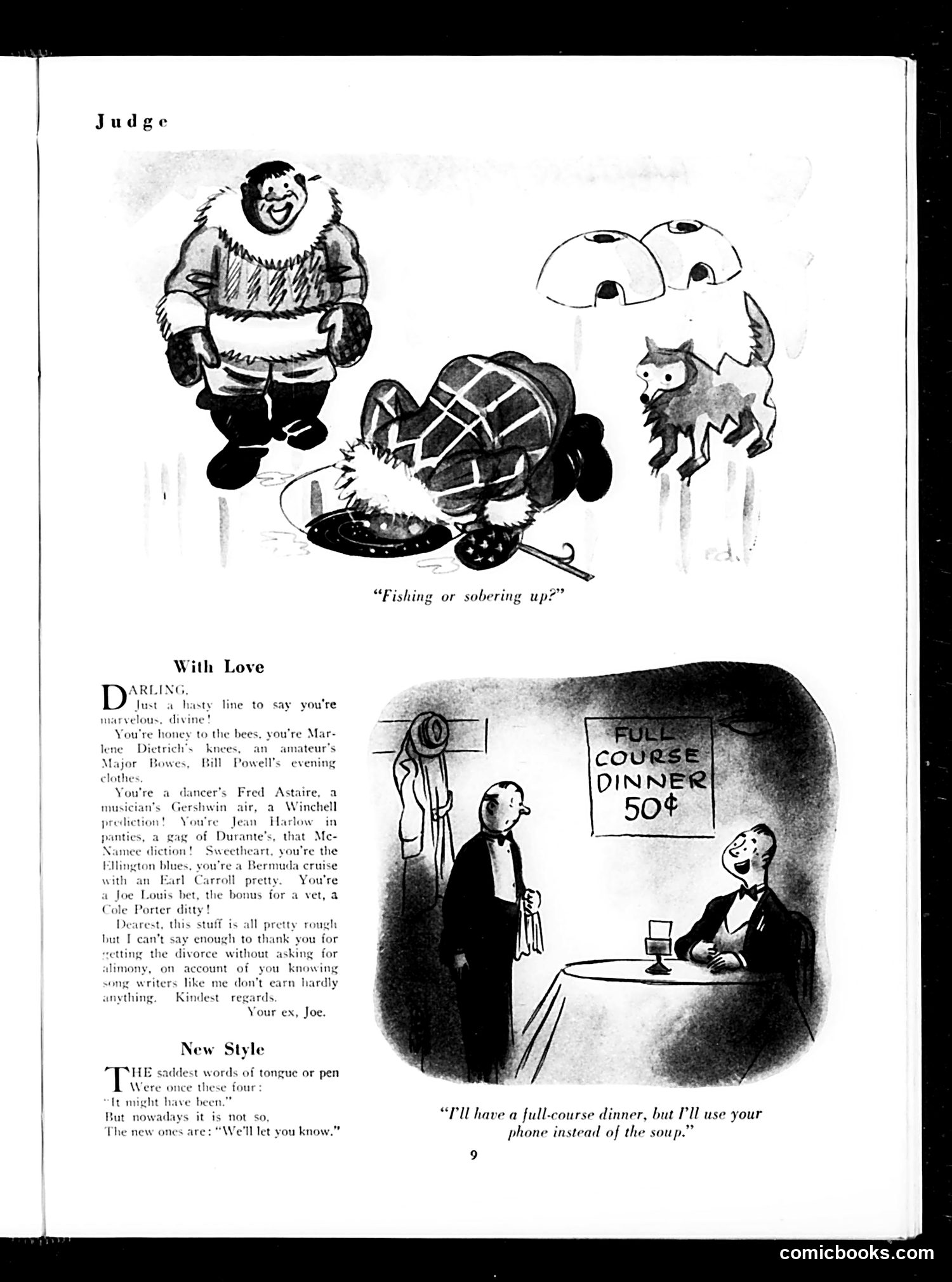
# Judge Magazine Page Analysis This page contains three distinct satirical pieces from what appears to be the 1930s-40s era: **"With Love"** is a divorce announcement disguised as flattery. A man named Joe thanks his ex-wife for divorcing him without demanding alimony, then compliments her by comparing her to contemporary celebrities (Marlene Dietrich, Fred Astaire, Jean Harlow, Joe Louis). The satire mocks both the hollow flattery men use and the economic desperation of songwriters who "don't earn hardly anything." **"Judge"** cartoon shows a figure examining someone's catch, asking "Fishing or sobering up?"—satirizing Prohibition-era concerns about alcohol and rehabilitation. **"New Style"** contrasts old expressions of regret ("It might have been") with modern corporate non-committal language ("We'll let you know"), mocking 1930s-40s business culture's evasiveness. The restaurant cartoon jokes about a man ordering an expensive dinner but requesting to use someone's phone instead of eating soup—suggesting financial desperation masked by false bravado.
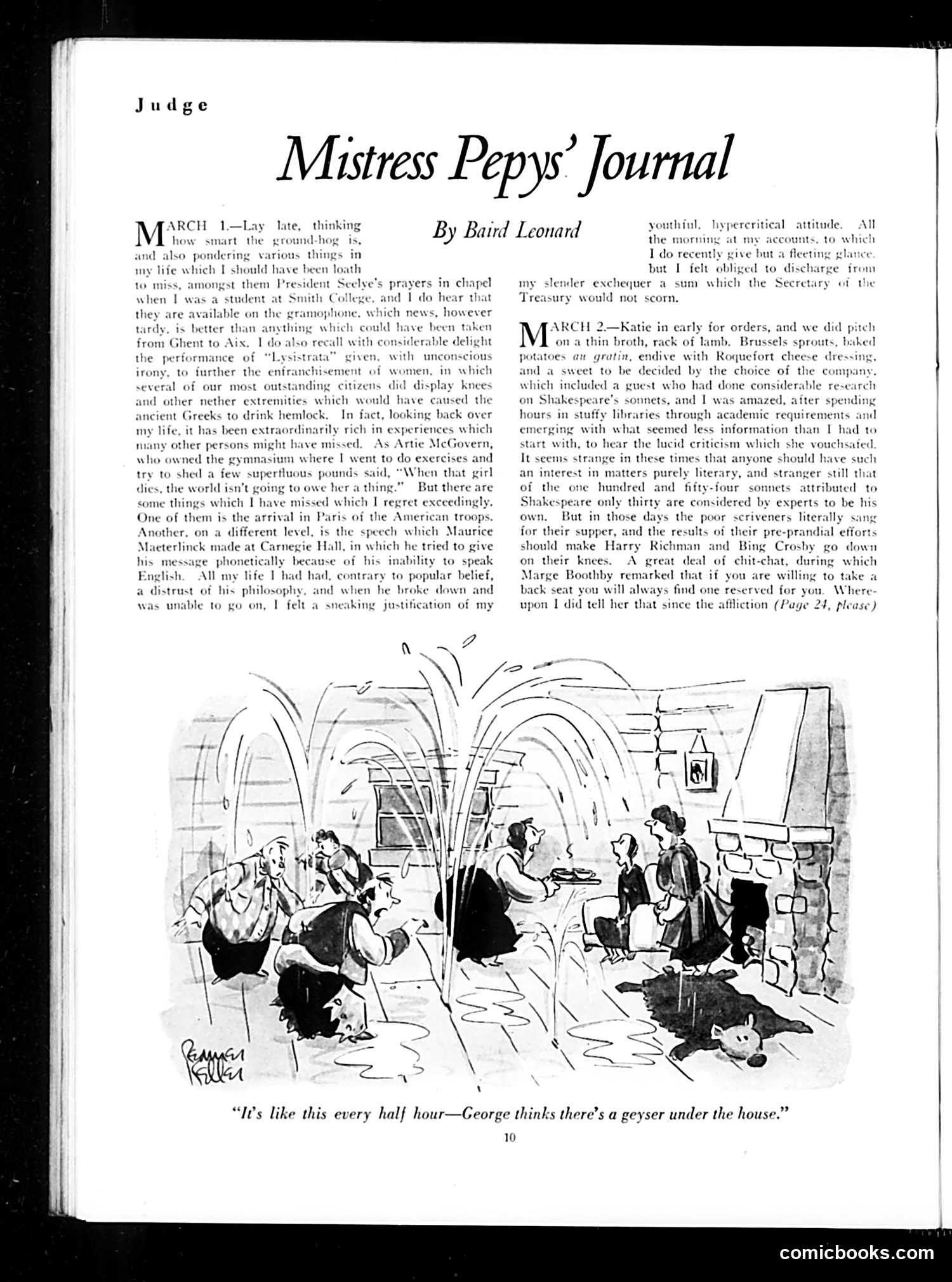
# "Mistress Pepys' Journal" — Explanation for Modern Readers This is a humor column by Baird Leonard mimicking Samuel Pepys's famous 17th-century diary, but set in contemporary (1920s-30s) times. The narrator is a society woman commenting wryly on cultural life—attending dinners, discussing Shakespeare's sonnets, managing household accounts. The accompanying cartoon shows a domestic interior with what appears to be a flooded or geyser-damaged room, with multiple well-dressed figures observing the chaos. The caption jokes: "It's like this every half hour—George thinks there's a geyser under the house." The humor works on two levels: the column's literary pretension (imitating Pepys while discussing modern trivialities) and the cartoon's domestic absurdity—a husband's bizarre explanation for recurring household disasters. The satire gently mocks both uppercrust social pretension and marital dynamics, likely resonating with Judge magazine's educated, urban readership of that era.