A complete issue · 36 pages · 1934
Judge — November 1934
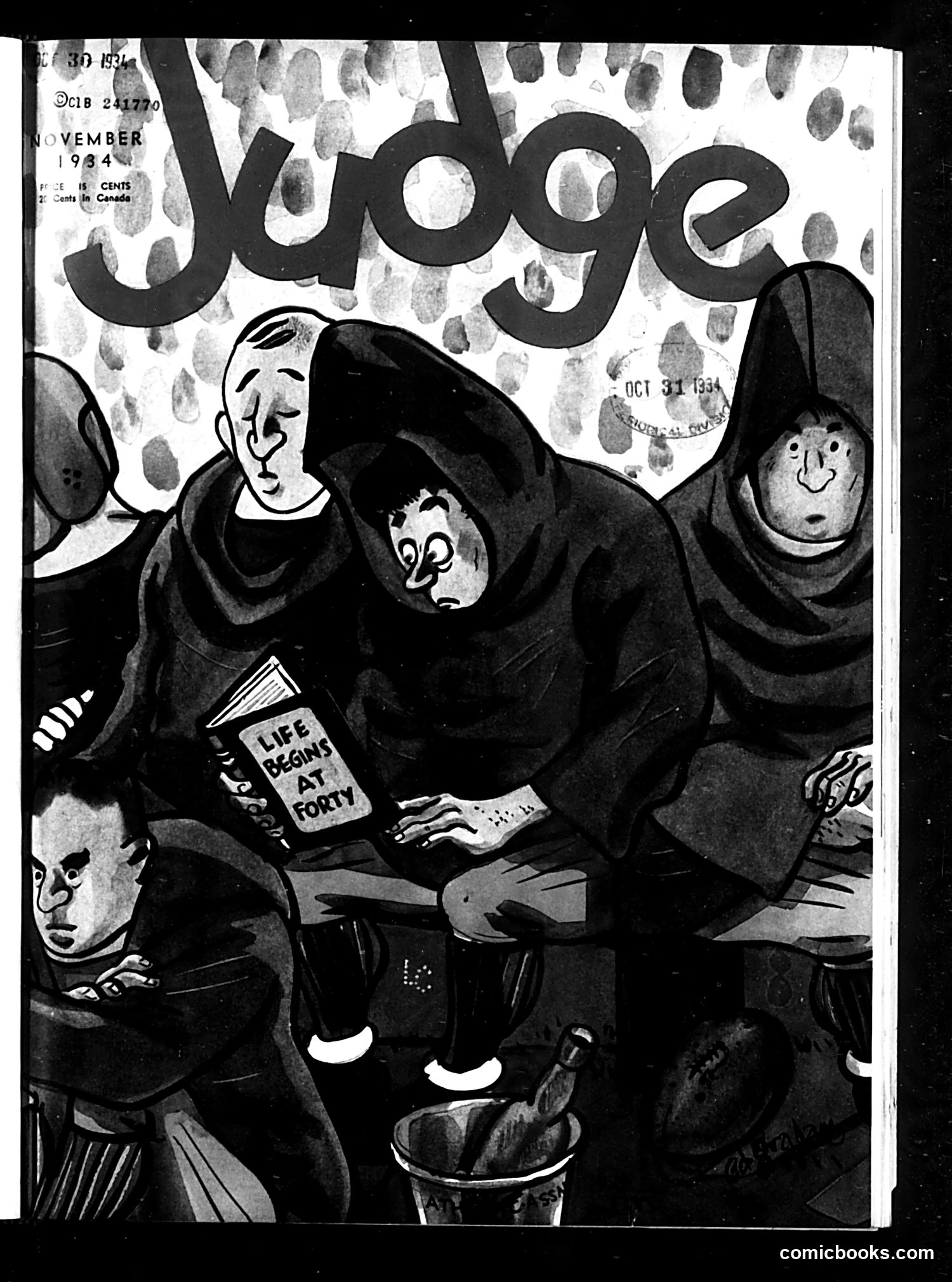
# Judge Magazine Cover - November 1934 This satirical cover depicts four caricatured figures representing different age groups or life stages. The central figure holds a book titled "LIFE BEGINS AT FORTY," suggesting the magazine's theme addresses aging and life milestones. The exaggerated facial expressions and physical caricatures are typical of 1930s satirical art, though the specific identities of these figures remain unclear from the image alone. The spotted background and theatrical styling suggest this is commentary on social attitudes about aging and youthfulness during the Depression era. The "$0.15" price and "November 1934" date confirm this is from Judge's satirical commentary period. The overall tone appears to mock contemporary attitudes about getting older—a recurring theme in American humor magazines of this era.
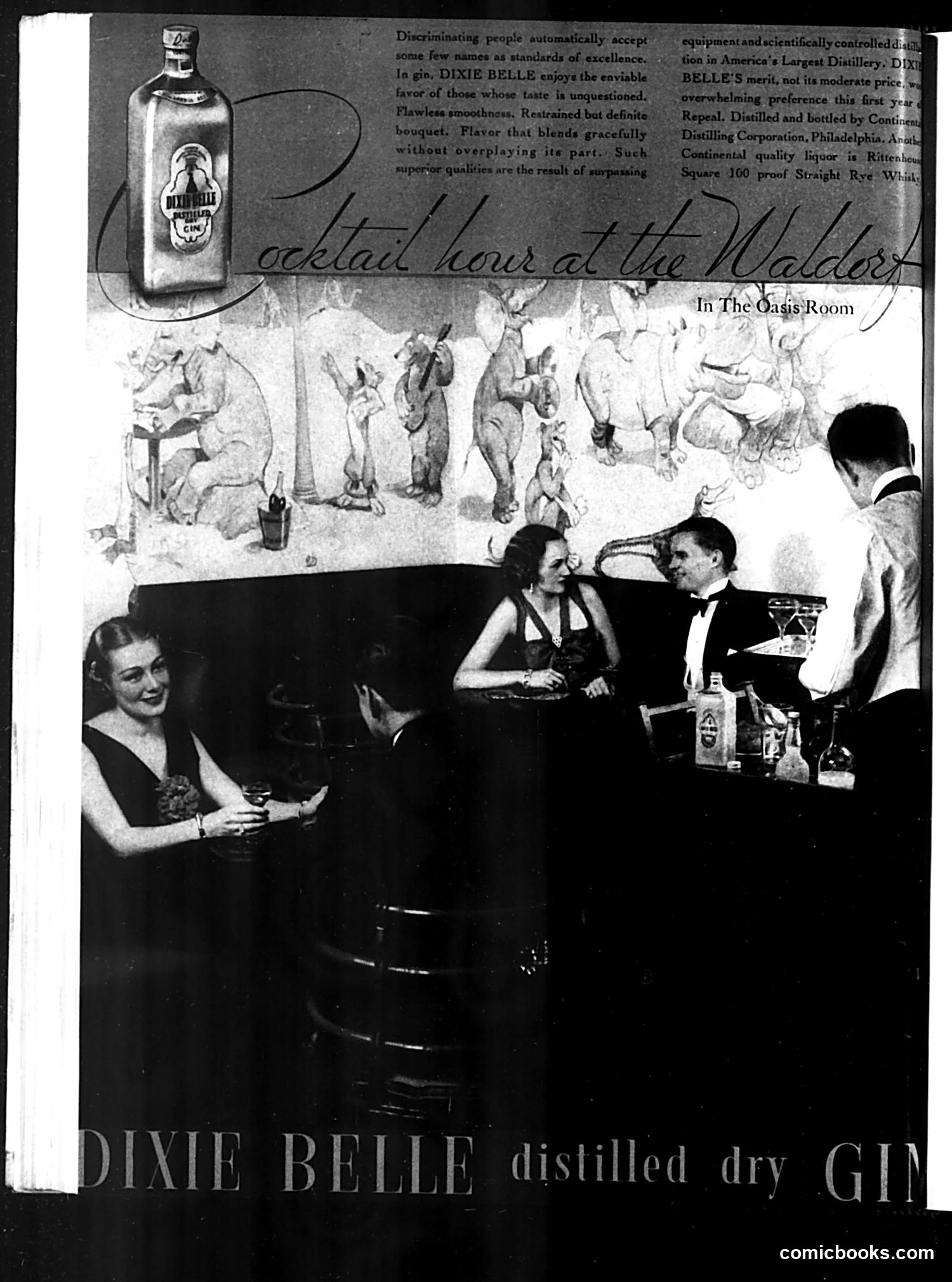
# Analysis This page is primarily **advertising**, not political satire. It promotes Dixie Belle distilled dry gin through two integrated elements: The top features promotional text praising the product's "flawless smoothness" and "restrained but definite bouquet," emphasizing its quality and moderate price. The bottom photograph shows an upscale social scene labeled "Cocktail hour at the Waldorf / In The Oasis Room"—depicting well-dressed patrons enjoying drinks at this prestigious Manhattan hotel. This aspirational imagery links the gin brand to sophistication and elite leisure. The decorative mural above depicts classical/mythological figures, reinforcing the product's association with refinement. This represents typical **Prohibition-era advertising** (likely 1920s-1930s), when alcohol marketing relied on lifestyle imagery and coded language rather than direct promotion, given legal restrictions on liquor advertising.
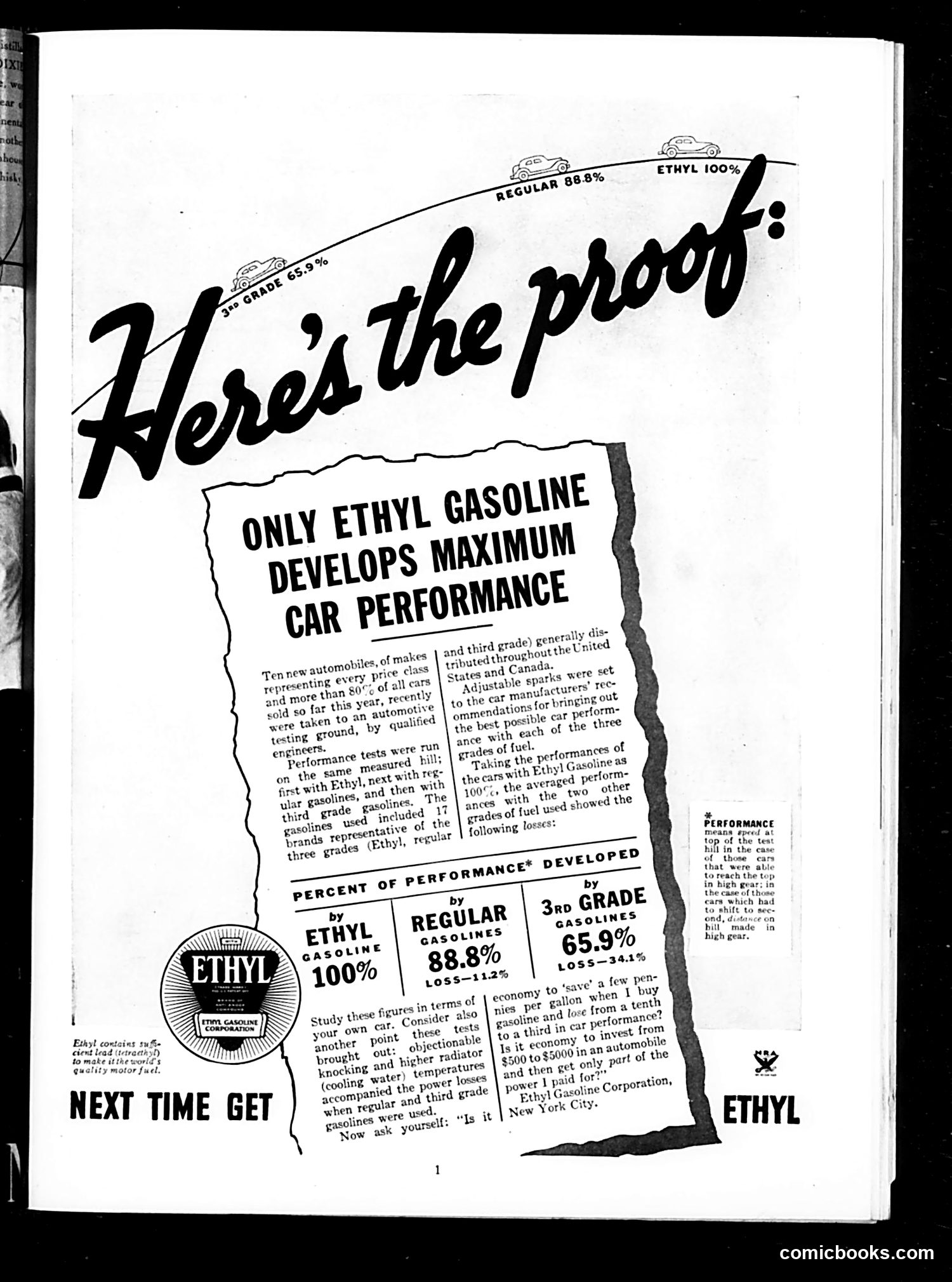
# Analysis This is primarily **advertising content**, not satire. It's a paid advertisement for Ethyl Gasoline, promoting a fuel additive product. The ad claims that Ethyl Gasoline produces superior car performance compared to regular gasoline and third-grade gasoline. It presents a performance comparison showing Ethyl achieving 100% development versus Regular's 88.8% and third-grade's 65.9%. The "proof" consists of test results from ten automobile manufacturers comparing fuel performance metrics like hill-climbing ability and knocking resistance. The visual shows cars climbing an inclined line, illustrating the performance hierarchy. The circular Ethyl logo and repeated branding ("NEXT TIME GET ETHYL") reinforce the sales message. This reflects early-to-mid 20th-century automotive marketing when leaded gasoline additives were promoted as performance enhancers without health warnings.
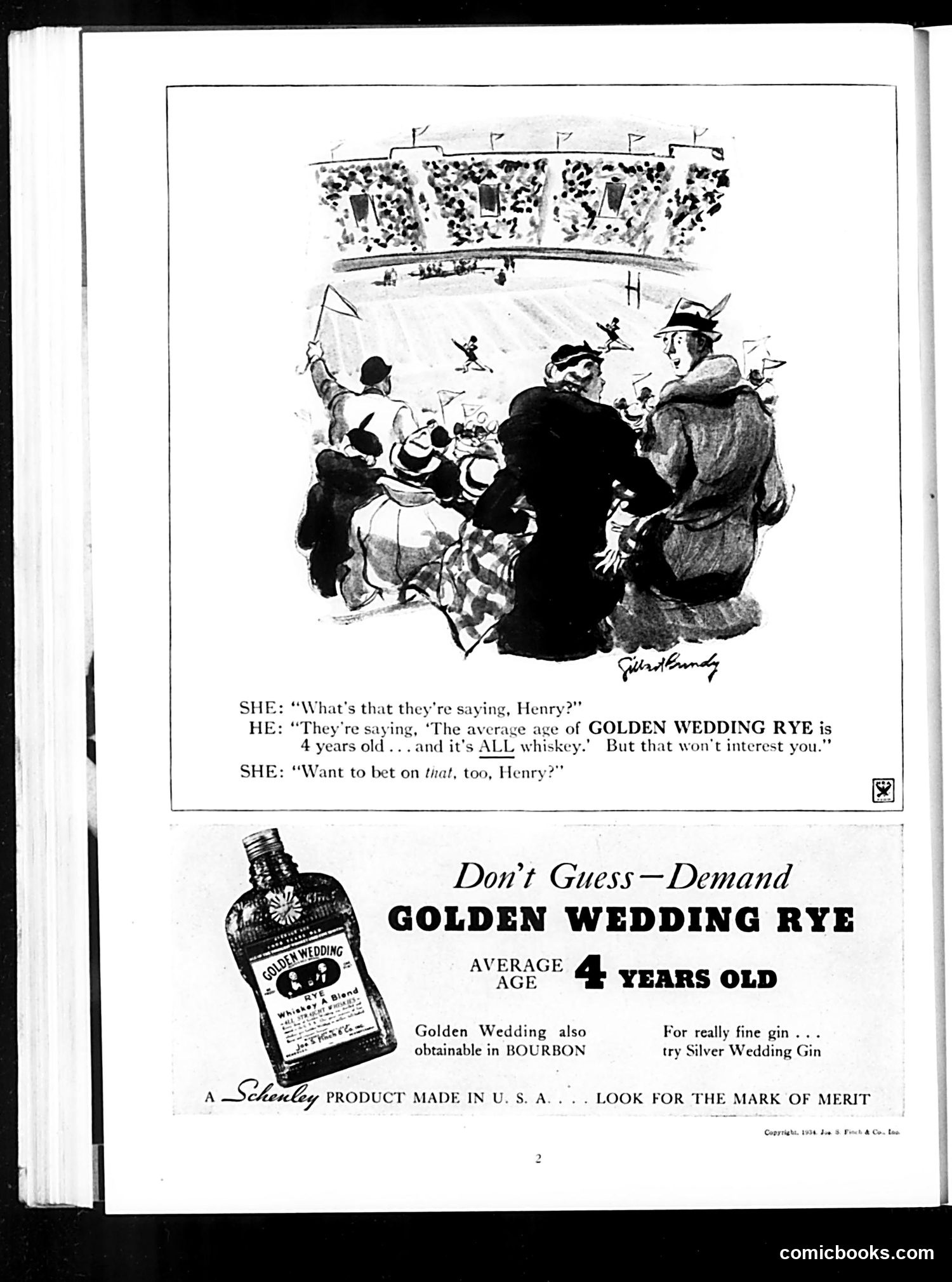
# Golden Wedding Rye Advertisement This page is primarily a **whiskey advertisement** for Golden Wedding Rye, a Schenley product made in the USA. The cartoon above depicts a couple at what appears to be a sporting event (likely a baseball game, given the stadium setting). The husband dismisses his wife's question about spectators' conversation, claiming they're discussing whiskey age and that "it's ALL whiskey"—implying he finds the topic uninteresting. When she asks if he wants to bet on the whiskey claim, his response suggests he's preoccupied or indifferent. The ad's message—"Don't Guess—Demand"—emphasizes that consumers should specifically request Golden Wedding Rye by name rather than accepting unknown alternatives. This reflects early 20th-century advertising strategy promoting brand loyalty and product specificity during Prohibition's aftermath.
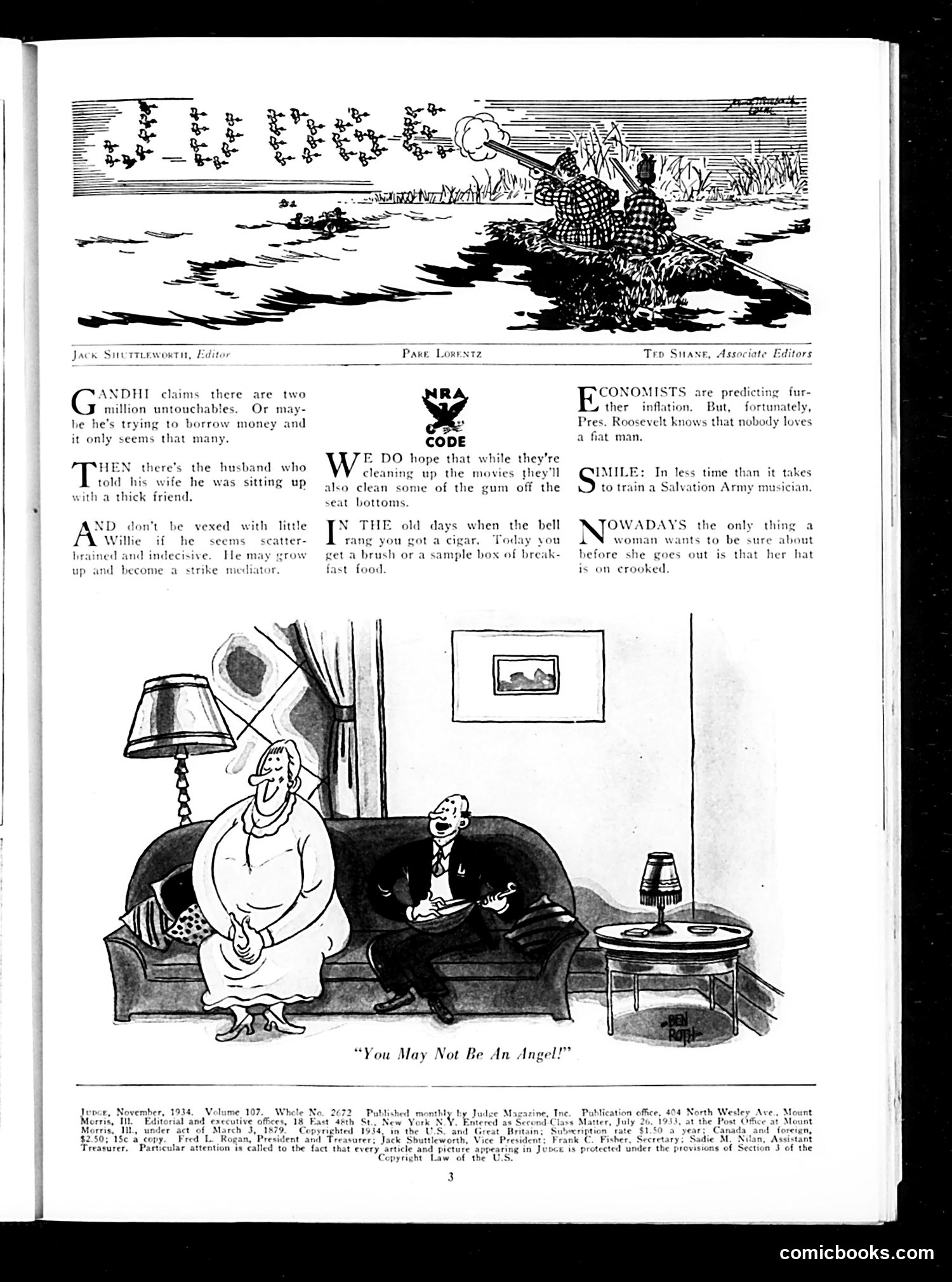
# Analysis of Judge Magazine Page (November 1914) **Top Illustration:** A satirical scene showing two figures by a waterside with "GOOD" written on a barrel, likely referencing NRA (National Recovery Administration) codes or industrial regulation—though the exact context is unclear without fuller dating certainty. **Main Cartoon ("You May Not Be An Angel!"):** A domestic scene showing a woman on a sofa with a man, captioned with the title. The joke appears to satirize courtship or marriage dynamics, suggesting infidelity or impropriety—a common Judge magazine theme mocking middle-class morality. **Text Snippets:** Brief satirical quips about Gandhi's finances, marriage troubles, movie censorship, and women's concerns about crooked hats—typical period humor targeting political figures, social conventions, and everyday anxieties. This reflects 1914 American popular culture and social commentary.
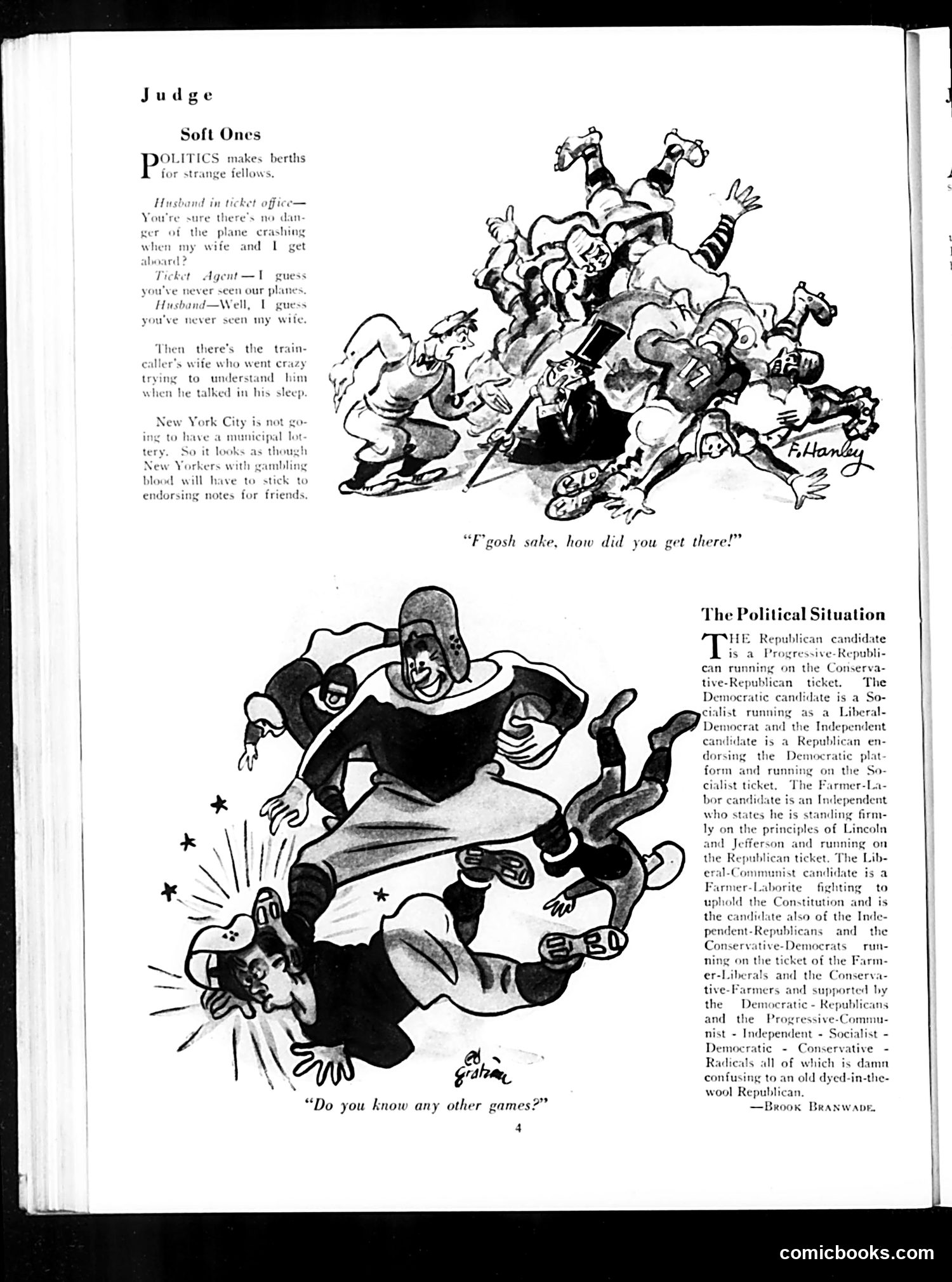
# Judge Magazine Page Analysis This page contains two satirical cartoons mocking American politics, likely from the early 20th century. **"Soft Ones"** (top): A chaotic pile of politicians tumbles together, captioned "F'gosh sake, how did you get there!" The accompanying text jokes about politics creating "strange fellows" and references New York City's upcoming municipal lottery, suggesting politicians will resort to endorsing questionable ventures. **"The Political Situation"** (bottom): Shows a figure juggling multiple heads/candidates representing various political parties and platforms—Progressive Republican, Conservative Republican, Liberal Democrat, Socialist, Farmer-Labor, etc. The caption "Do you know any other games?" satirizes the confusing proliferation of political tickets and candidates, mocking how many competing ideologies and parties make American politics bewilderingly complex.
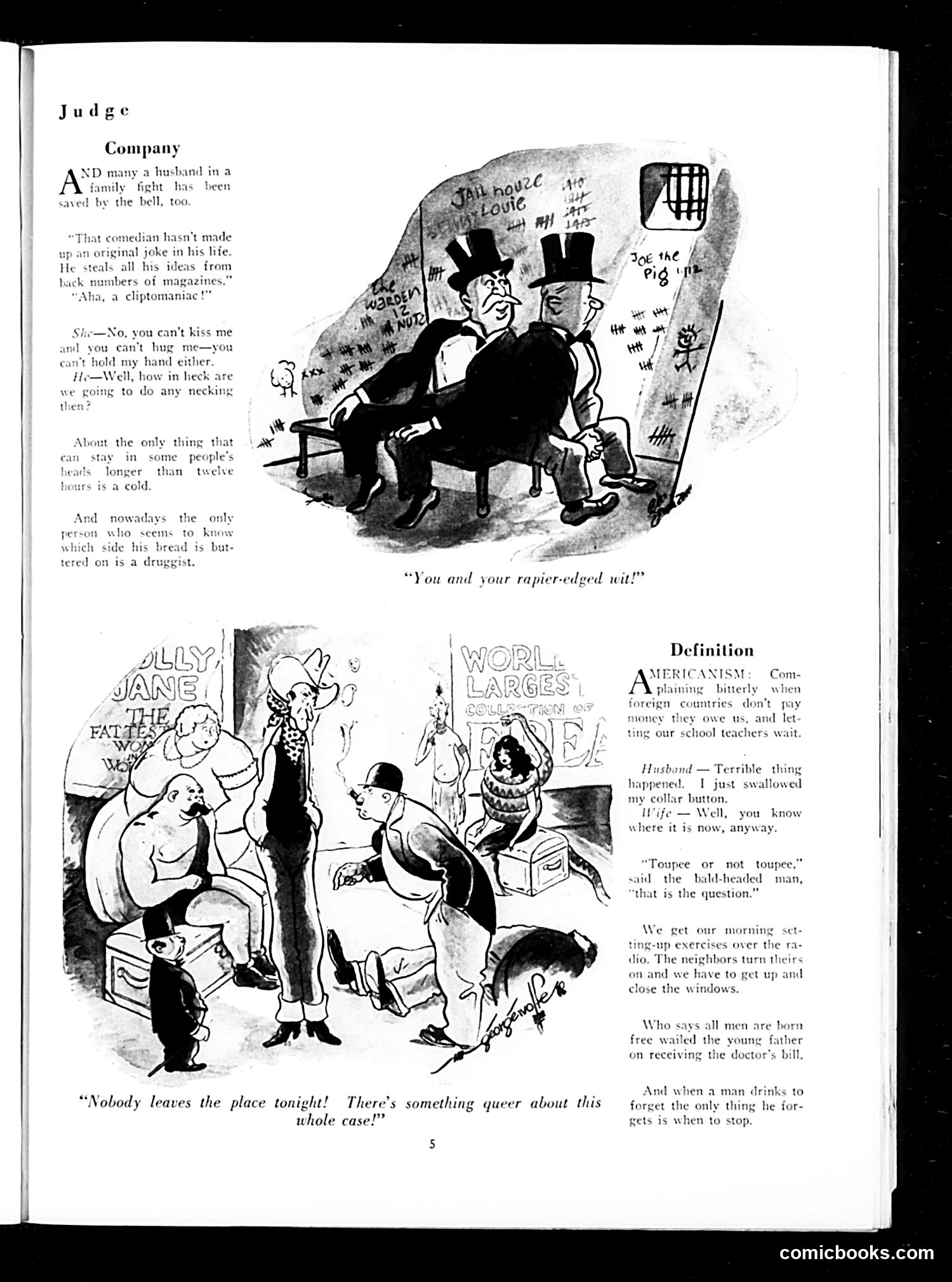
# Analysis of Judge Magazine Page This page contains two distinct satirical pieces from Judge magazine (early 20th century). **Top cartoon ("You and your rapier-edged wit!"):** Two well-dressed men in a prison cell discuss comedy. The satire targets joke-stealing in the entertainment industry—one accuses the other of plagiarizing magazine jokes rather than creating original material. The cell setting suggests this intellectual theft is a serious transgression worthy of imprisonment. **Bottom cartoon and "Definition" section:** The chaotic scene mocks contemporary social anxieties. The "Definition" defines Americanism sarcastically as complaining when foreigners don't pay debts while Americans dodge school-teacher salaries. The accompanying vignettes satirize domestic absurdities—radio noise complaints, doctor's bills, and drinking problems—suggesting American life is fundamentally chaotic and hypocritical despite claims of superiority.
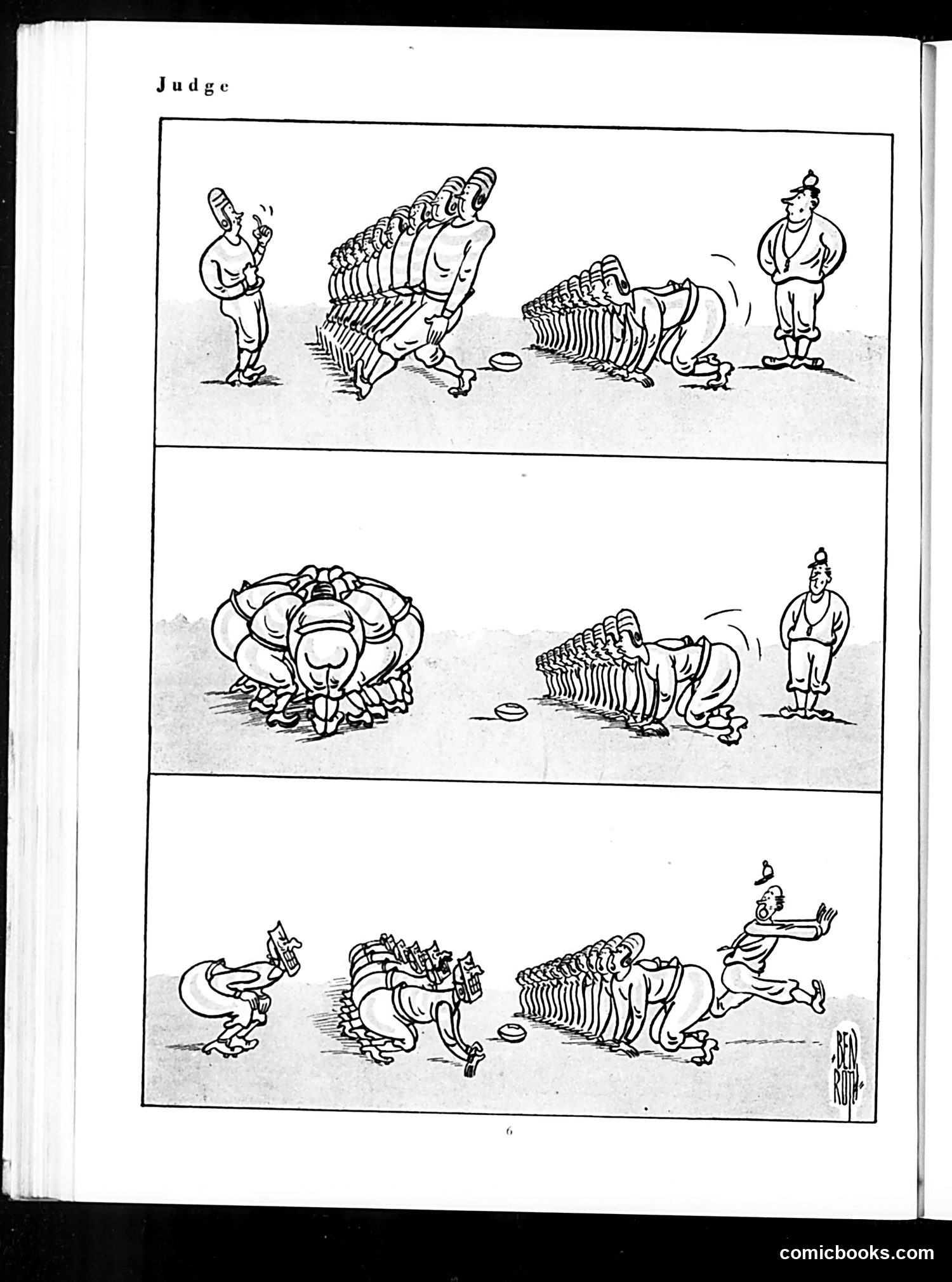
# Judge Magazine: "Judge" Cartoon Analysis This three-panel satirical cartoon depicts a judge presiding over what appears to be a jury or group of seated figures. The progression shows: 1. **Top panel**: A judge stands while multiple figures sit in rows 2. **Middle panel**: The seated group has transformed into a large, bulbous mass 3. **Bottom panel**: Chaos ensues with figures scattering in different directions The satire likely mocks the judicial process—possibly commenting on jury incompetence, judicial corruption, or the unpredictability of courtroom proceedings. The transformation of organized jurors into a chaotic blob suggests how quickly order dissolves or how the justice system becomes unwieldy. Without additional context or visible text identifying specific figures, the exact political target remains unclear, but it's characteristic of Judge's commentary on institutional dysfunction.
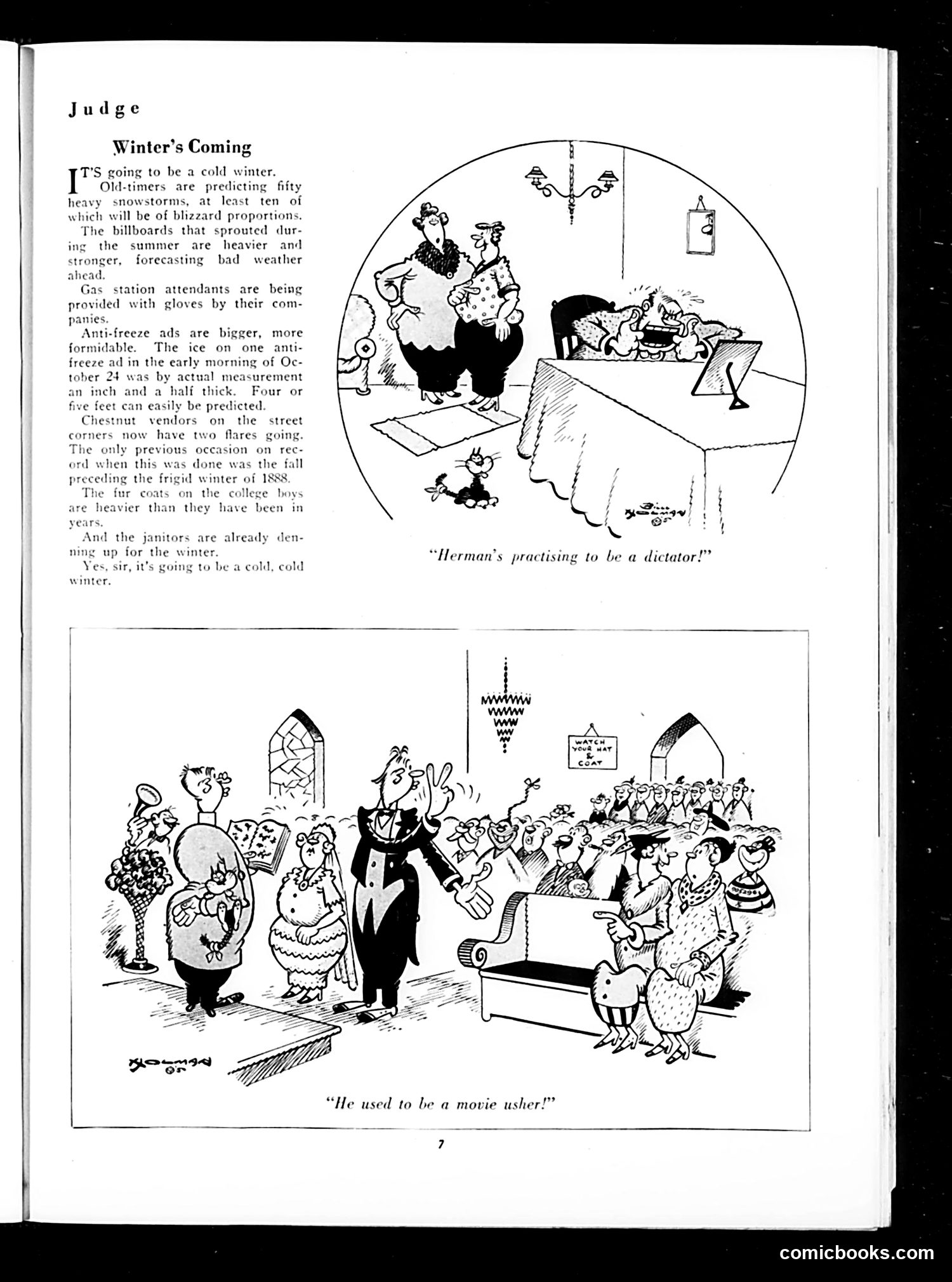
# Judge Magazine Page Analysis This page contains two satirical cartoons about winter preparation and social commentary. **Top cartoon:** Shows a domestic scene where "Herman's practising to be a dictator!" depicts a man gesturing authoritatively while his wife and child appear submissive—satirizing how ordinary men adopt domineering behavior, likely reflecting 1920s-30s anxieties about authoritarian movements gaining popularity. **Bottom cartoon:** "He used to be a movie usher!" shows a formally-dressed man addressing a crowd of common people, suggesting someone of humble origins (a theater usher) has risen to public prominence or authority. This appears to mock social climbers or self-made figures claiming undeserved status. The accompanying text humorously predicts an exceptionally cold winter based on dubious evidence: billboard durability, anti-freeze advertising size, and vendor preparations. The satire mocks people who claim predictive knowledge from flimsy indicators—a timeless human tendency toward false certainty.
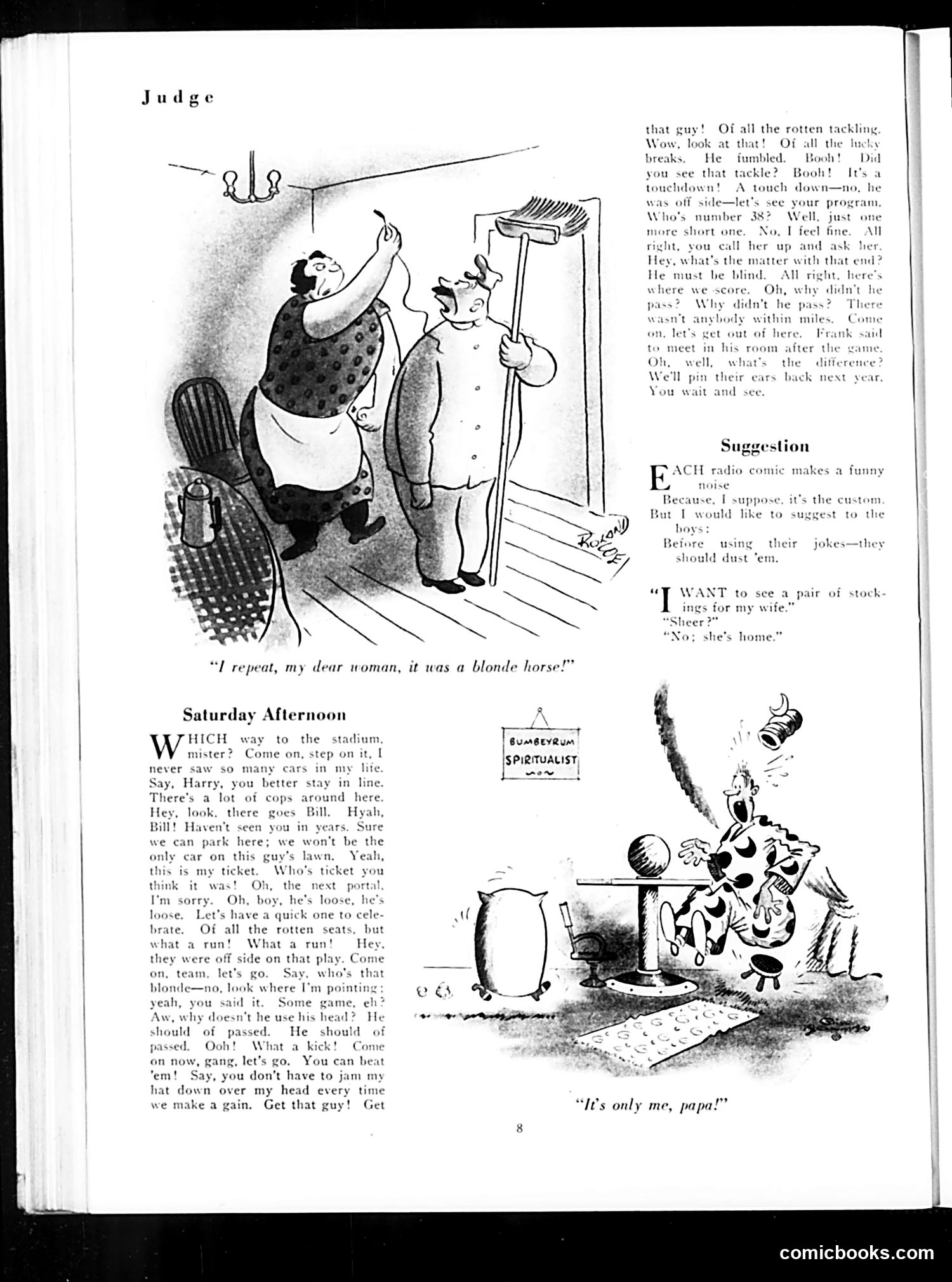
# Explanation for Modern Readers This page from *Judge* magazine contains three separate satirical pieces about American leisure and entertainment: **"Judge" (top cartoon):** A woman at what appears to be a sporting event disputes with a man about what horse she saw, insisting it was "a blonde horse." The satire mocks domestic arguments and the confusion of spectators at crowded public events. **"Saturday Afternoon":** A long monologue capturing the chaotic experience of attending a football game—traffic jams, parking violations, ticket confusion, loud fans, and constant shouting complaints about plays, tackles, and fumbles. It satirizes the rowdy, intoxicated fan culture and aggressive behavior at stadium events. **"Suggestion" and "stockings" jokes:** Brief radio-comedy satire suggesting comedians should "dust" their old jokes before using them; followed by a domestic joke about a husband wanting to buy stockings (implying an affair), but the wife says they're home—a mild double entendre. Overall, the page mocks working-class leisure activities, drinking culture, marital discord, and tired entertainment formulas of the era.
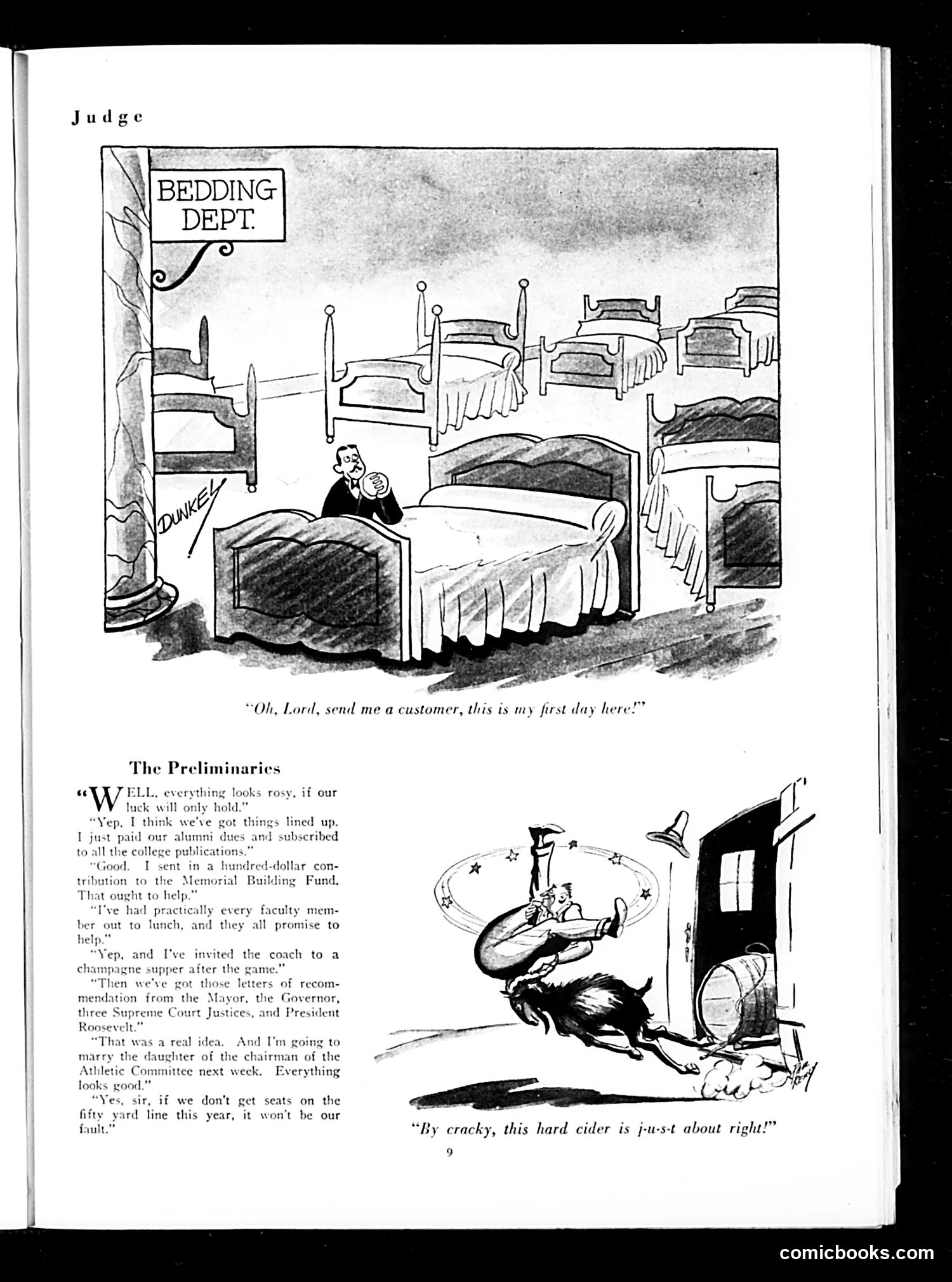
# Analysis of Judge Magazine Page The top cartoon satirizes a struggling bedding department employee's first day, praying desperately for customers—a straightforward joke about retail anxiety. "The Preliminaries" is more significant: it mocks college fundraising excess. Two figures discuss securing a football stadium's fifty-yard-line seats through inflated means: alumni donations, faculty pledges, invitations to coaches, and notably, letters of recommendation from the Mayor, Governor, three Supreme Court Justices, and **President Roosevelt**. The satire targets how colleges leverage prominent political figures' names and prestige to advance athletic programs. The final cartoon shows someone enjoying hard cider, appearing intoxicated—likely commenting on Prohibition-era hypocrisy (hard cider production/consumption during the alcohol ban). The overall theme critiques how American institutions, particularly universities, mobilize political connections and resources disproportionately for athletics rather than academics.
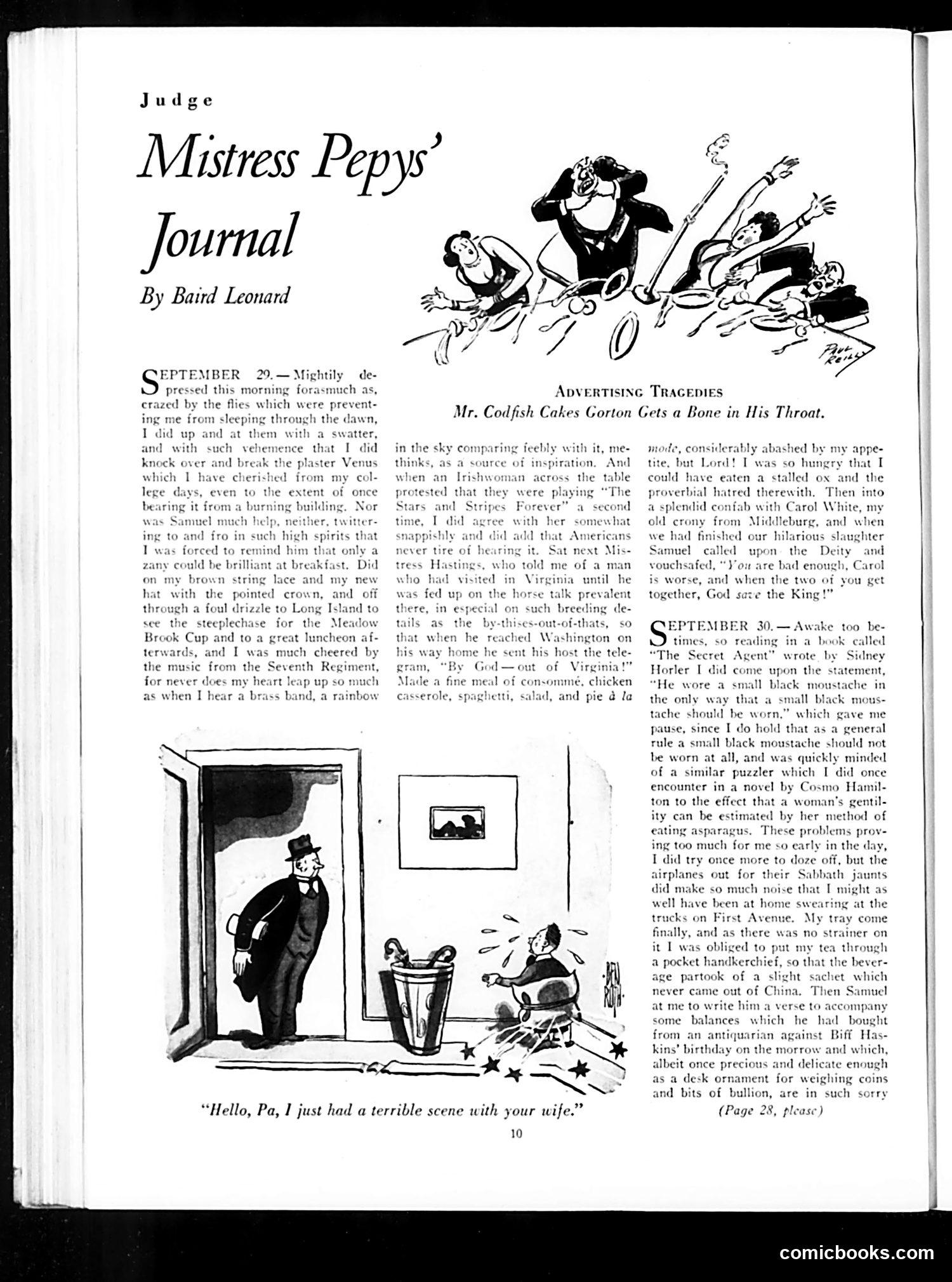
# Judge Magazine: "Mistress Pepys' Journal" (Page 10) This page presents a humorous diary column mimicking Samuel Pepys' famous 17th-century diary, but set in what appears to be the 1920s-30s. The column satirizes upper-class social life through trivial complaints and name-dropping. **The main cartoon** shows a man entering a room saying "Hello, Pa, I just had a terrible scene with your wife"—a domestic joke about marital discord, illustrated with slapstick visual chaos (overturned furniture, scattered objects). **The text entries** record mundane social events (steeplechase racing, lunch parties) mixed with petty grievances (flies preventing sleep, airplane noise). There's a section titled "Advertising Tragedies" mentioning "Mr. Codfish Cakes Gorton" getting a bone in his throat—likely mocking commercial product names and advertising claims. The satire targets pretentious, leisured society people who treat insignificant problems as major dramas while referencing popular novels and social status. The Pepys framing device elevates trivial modern gossip to mock historical importance.