A complete issue · 36 pages · 1933
Judge — August 1933
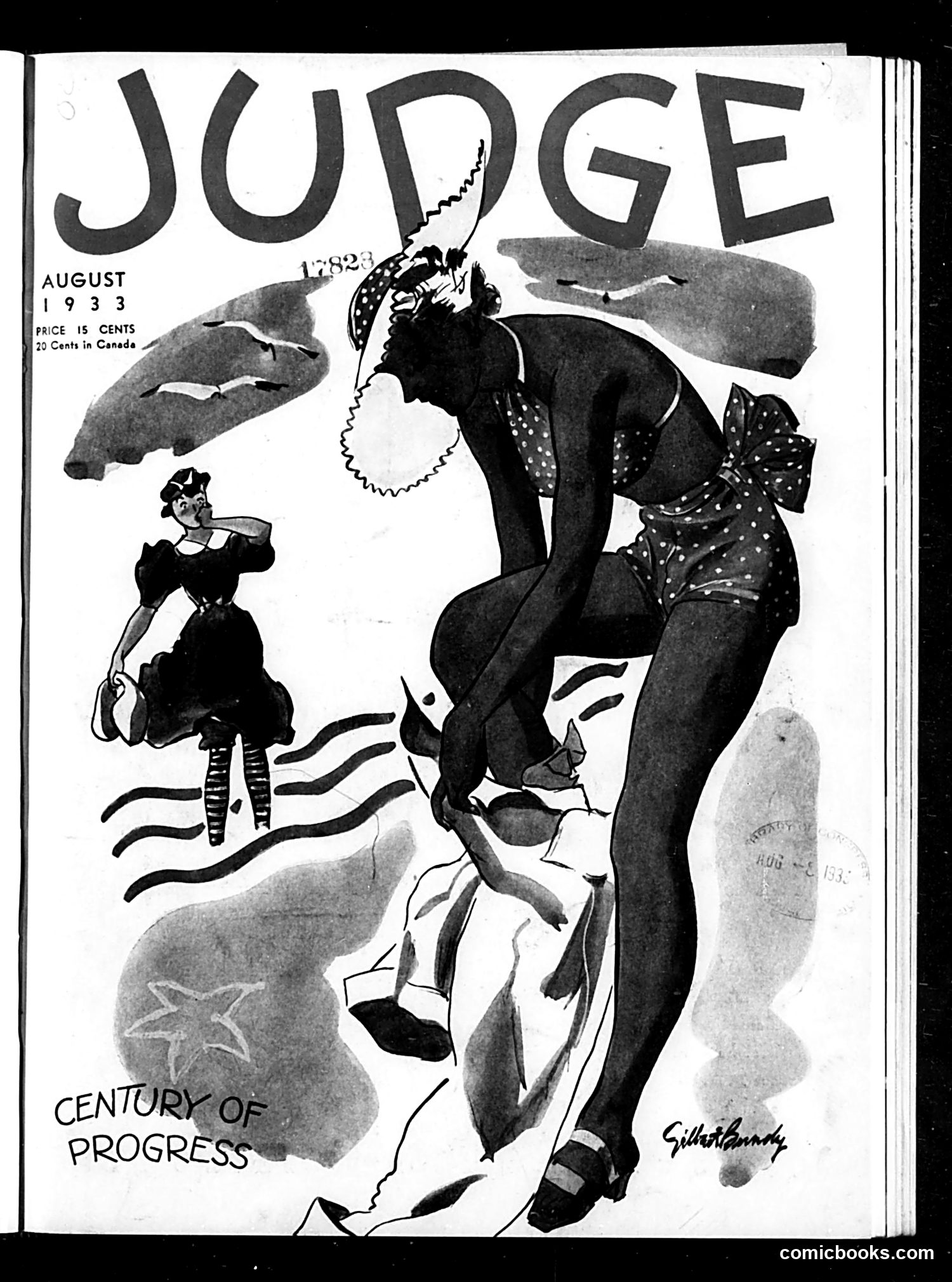
# Judge Magazine Analysis - August 15, 1925 This cover illustrates "Century of Progress" through a grotesque, exaggerated female figure emerging from what appears to be a cocoon or chrysalis. The imagery suggests transformation or evolution, likely mocking 1920s optimism about modernization and women's changing roles. A smaller, fashionably-dressed woman on the left appears startled or disapproving—possibly representing "old-fashioned" values confronting the "new woman" of the Jazz Age. The exaggerated proportions and caricatured style typical of Judge magazine's satirical approach suggest the cartoonist is mocking contemporary enthusiasm about women's liberation, fashion modernization, or social progress generally. The overall tone appears skeptical, using grotesque imagery to question whether "progress" represented genuine improvement or merely absurd change.
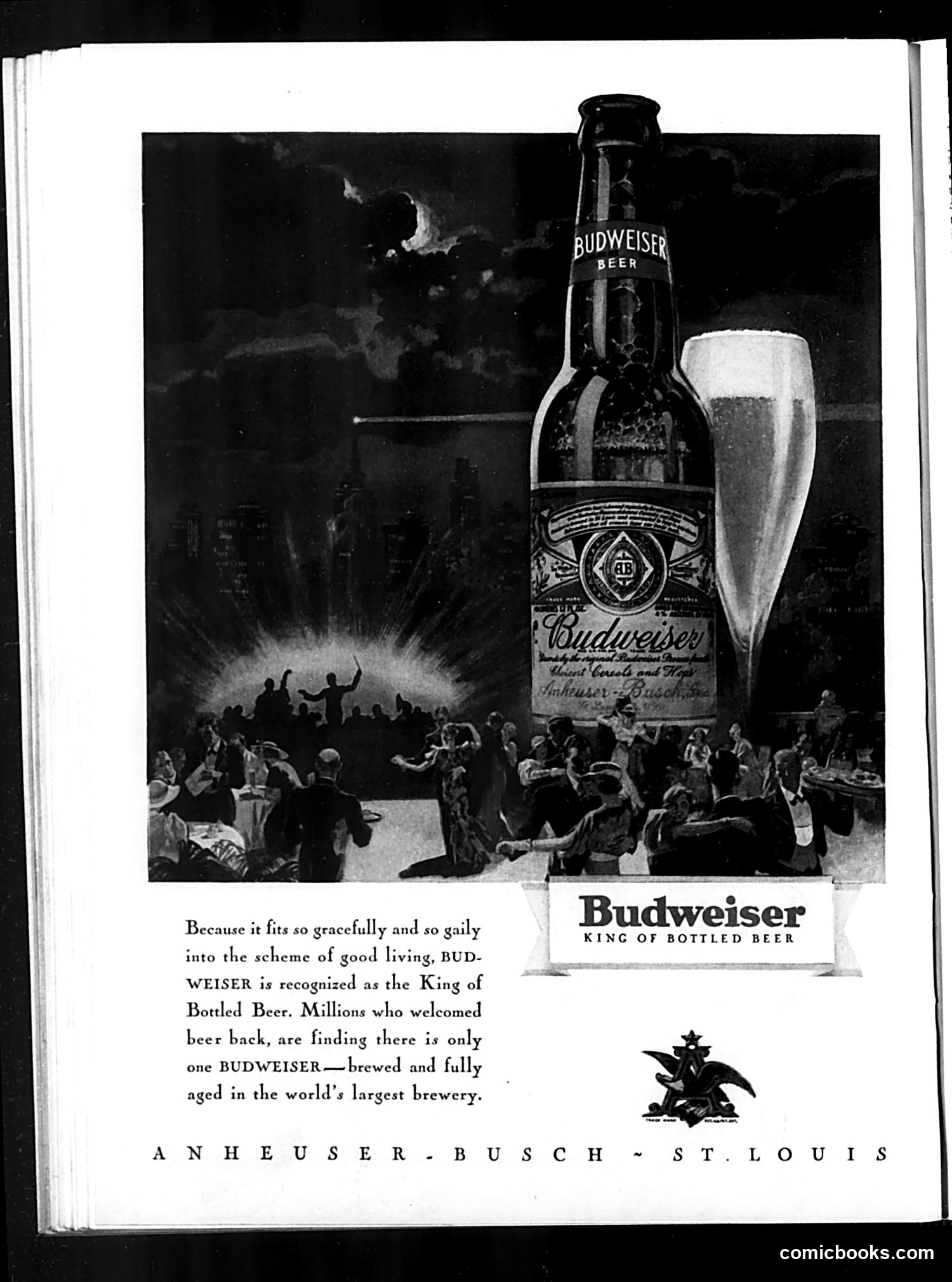
# Analysis This page is primarily a **Budweiser beer advertisement**, not political satire. The ad features a bottle and glass of Budweiser towering over a celebratory crowd scene, with text describing it as the "King of Bottled Beer." The imagery appears to reference **beer's return to American markets**, likely following Prohibition's end in 1933. The text celebrates that "millions who welcomed beer back" are choosing Budweiser specifically. The dramatic nighttime crowd scene with searchlights suggests a triumphant public celebration. This is commercial advertising leveraging a significant historical moment—the legalization of beer—rather than political commentary. The "King of Bottled Beer" tagline positions Budweiser as the premium choice for consumers rejoining the beer-drinking market.
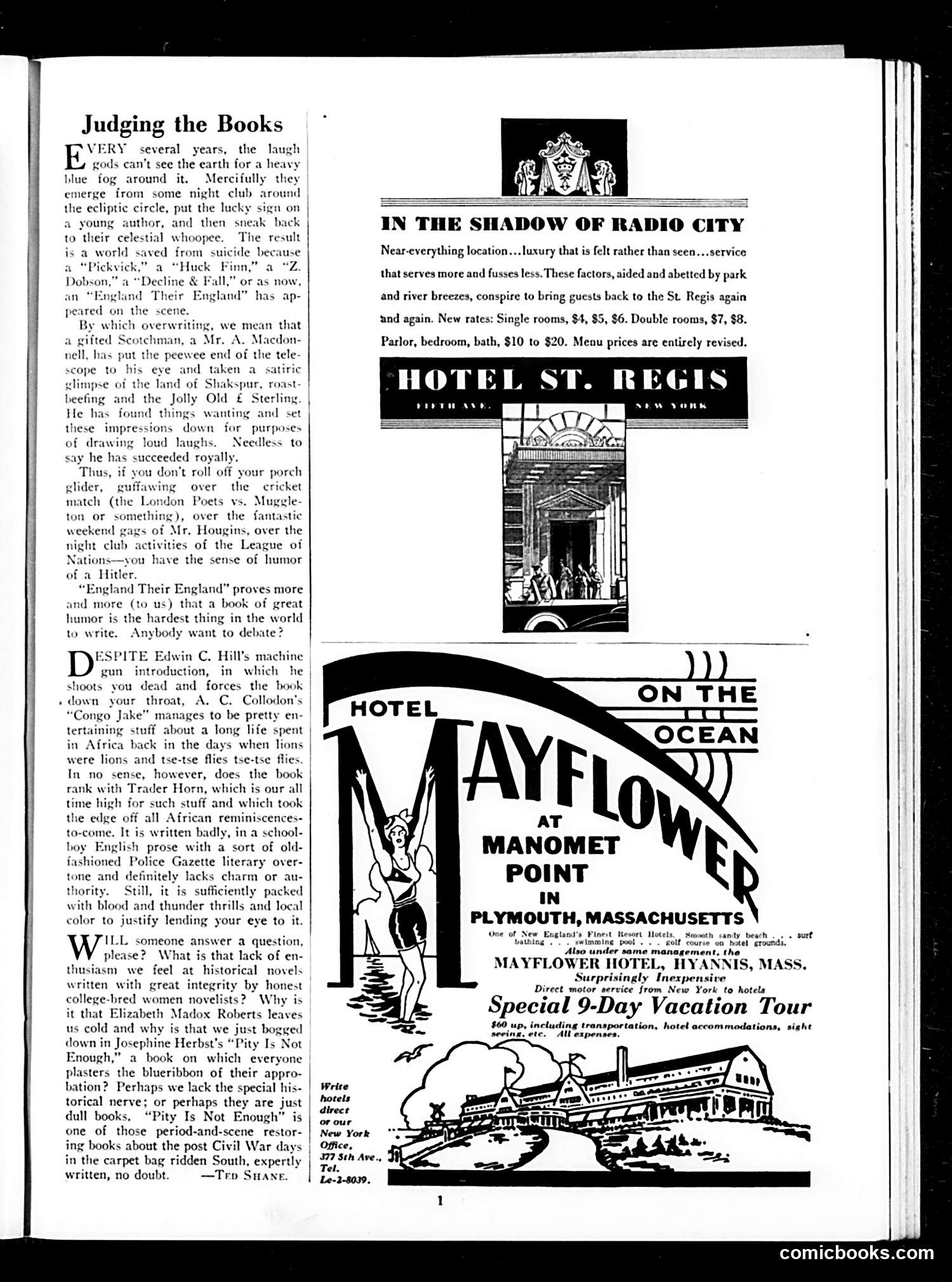
# Analysis This page is **primarily advertising** rather than editorial cartoon content. The top half features hotel advertisements (Hotel St. Regis in New York and Mayflower Hotel in Massachusetts), while the left column contains a book review section titled "Judging the Books." The review discusses several books, including works by A.A. Macdonell and Edwin C. Hill, praising their humor. A notable mention criticizes "Elizabeth Madox Roberts" for lacking "enthusiasm" and "historical novelty," suggesting disappointment with her serious literary approach compared to humorous works. The satire is subtle—the reviewer contrasts entertaining, character-driven books with earnest historical fiction, implying that serious literature sometimes fails to engage readers effectively. No specific political figures or events are caricatured on this page.
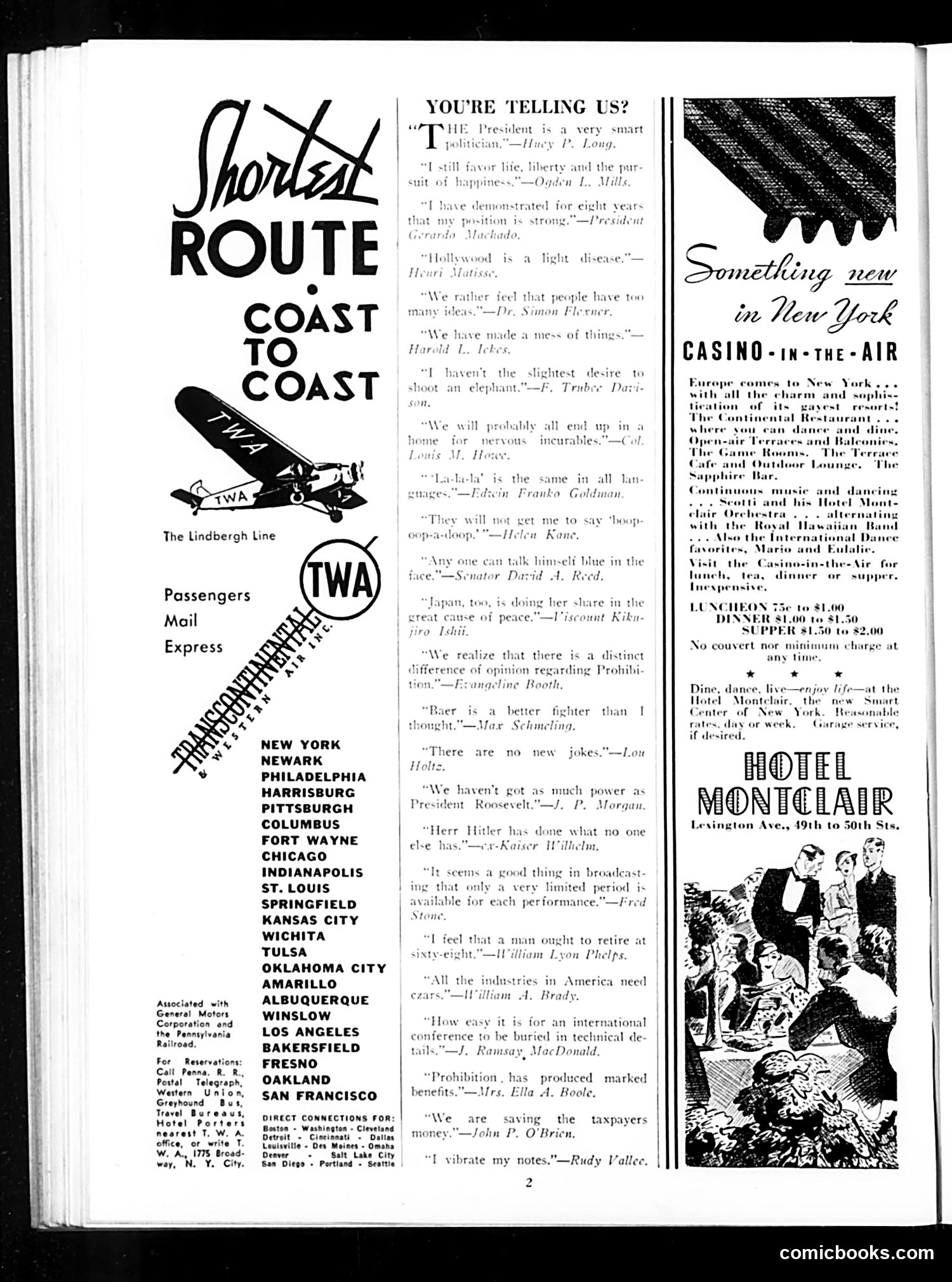
# Analysis of Judge Magazine Page This page is primarily **advertising and filler content** rather than political satire. The left side features a TWA (Transcontinental & Western Air) advertisement for their "Shortest Route Coast to Coast" airline service, listing numerous American cities served by the Lindbergh Line. The center column contains a section titled "YOU'RE TELLING US?" — a humor feature presenting satirical quotes attributed to famous figures of the era (Hoey P. Long, Orson L. Mills, President Gerardo Machado, and others). These appear to be mock statements offering contradictory or absurd viewpoints on contemporary issues like politics, Hollywood, and Prohibition. The right side advertises the Hotel Montclair and the Casino-in-the-Air nightclub in New York. **The page offers social commentary through humor** rather than visual cartooning, mocking public figures and 1920s-30s concerns like Prohibition.
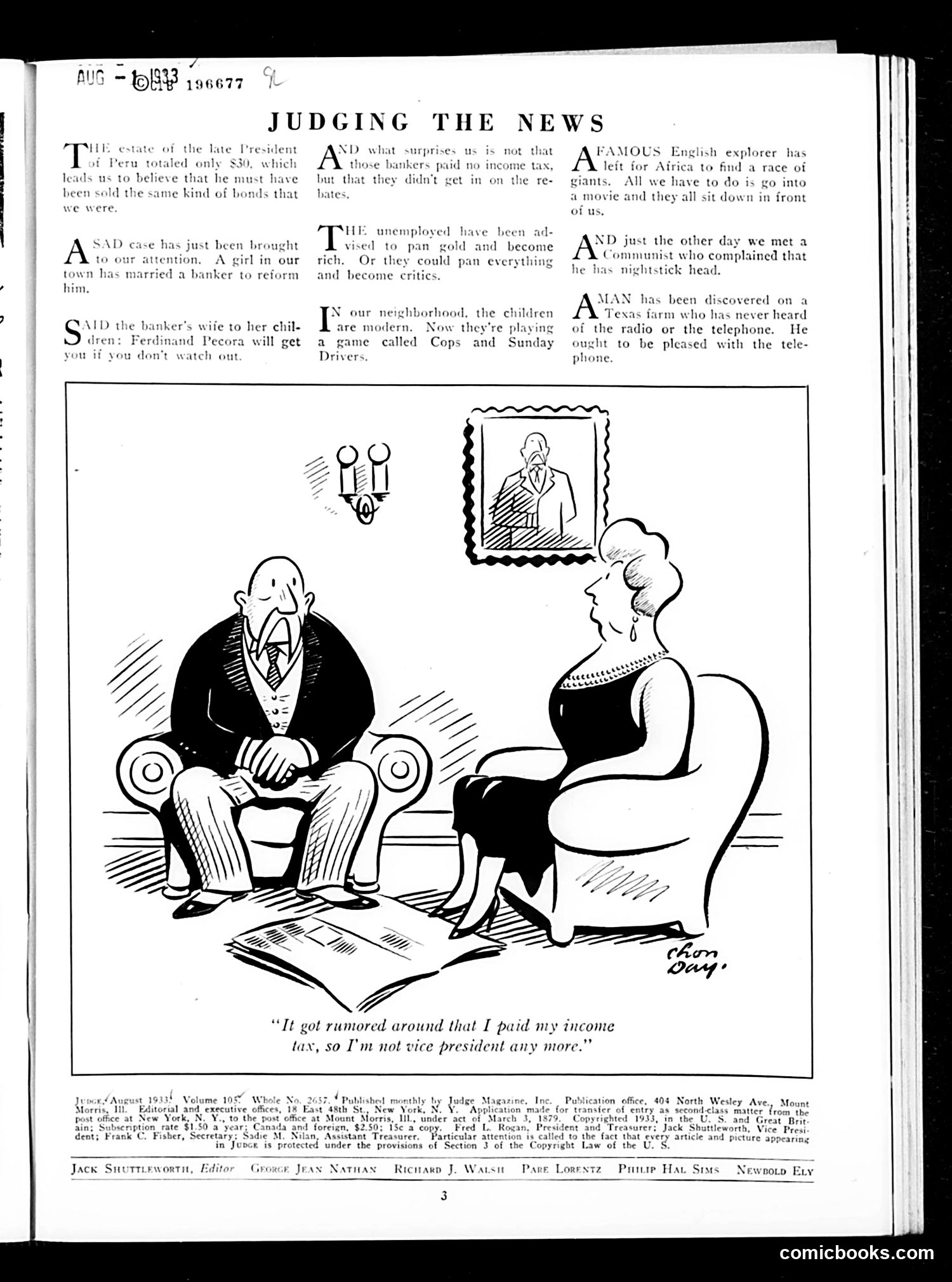
# Cartoon Analysis This cartoon satirizes income tax complaints. A well-dressed man sits with a woman, gesturing toward a portrait on the wall. His caption reads: "It got rumored around that I paid my income tax, so I'm not vice president any more." The joke targets wealthy individuals avoiding taxes. The reference to losing a "vice president" position suggests that tax avoidance was so common among the elite that actually *paying* taxes made one socially or professionally suspect—an embarrassment among peers who typically evaded them. The surrounding "Judging the News" section contains brief satirical takes on contemporary issues: the President's estate sale, unemployed Americans becoming gold prospectors, children's games, and a Texas farmer discovering modern technology. The cartoon mocks both tax dodging culture and the irony that honest taxpaying had become unusual enough to damage one's reputation.
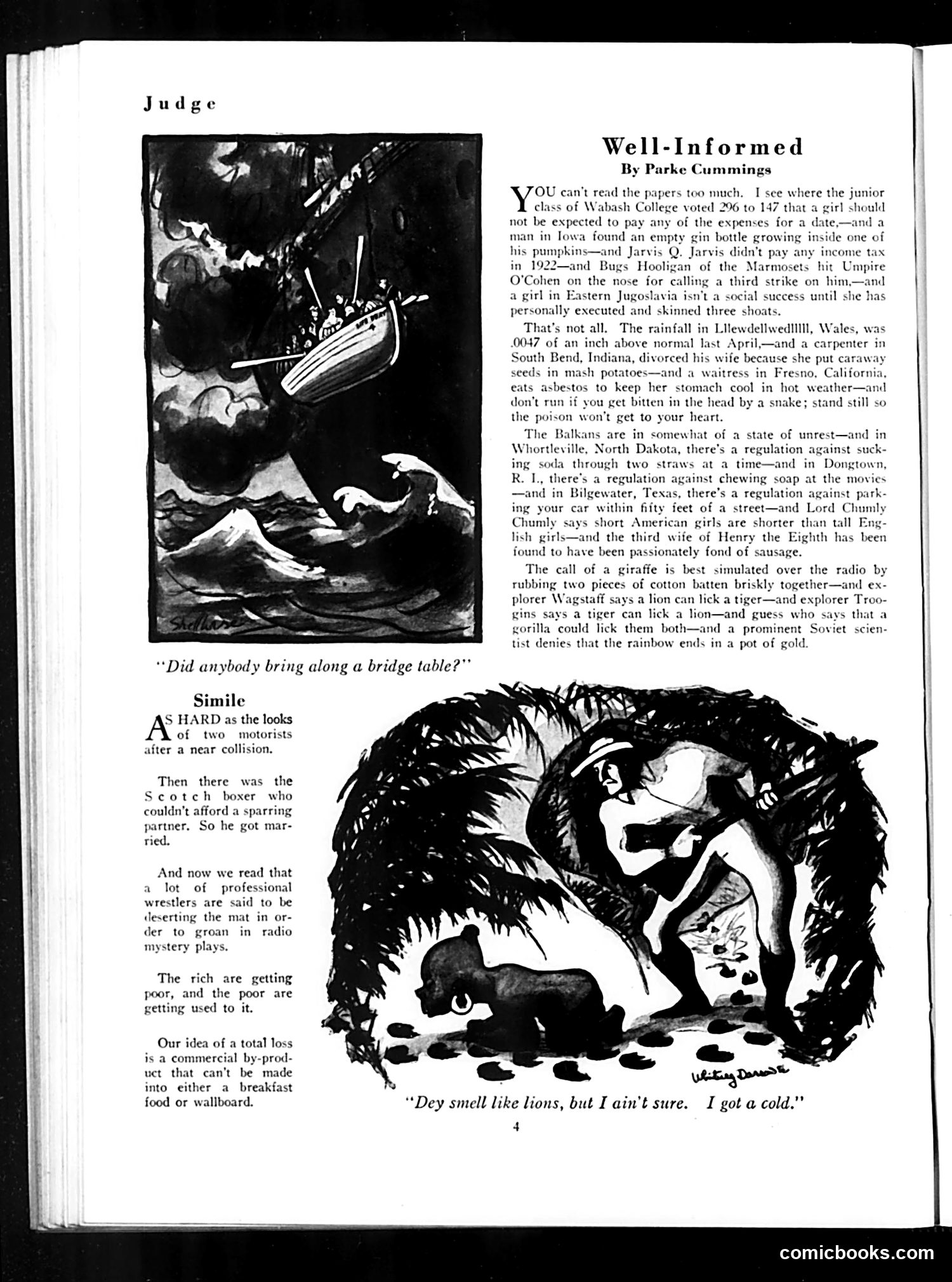
# Judge Magazine Page Analysis This page contains two satirical sections by Parke Cummings: **"Well-Informed"** is a humorous collection of absurd facts and regulations—mostly fabricated—designed to mock social pretension and arbitrary rules. Examples include unlikely statistics (rainfall measurements, income taxes from the 1920s) and ridiculous local ordinances (regulations against sucking soda through straws or parking near streets). The satire targets those who pride themselves on knowing obscure trivia. **"Simile"** presents brief comic vignettes comparing situations. The visible cartoon shows two figures huddled in what appears to be a cave or enclosed space, with one saying "Dey smell like lions, but I ain't sure. I got a cold." The humor derives from the absurd situation and character dialect typical of Depression-era comedy. The page mocks both pretentiousness and everyday mishaps.
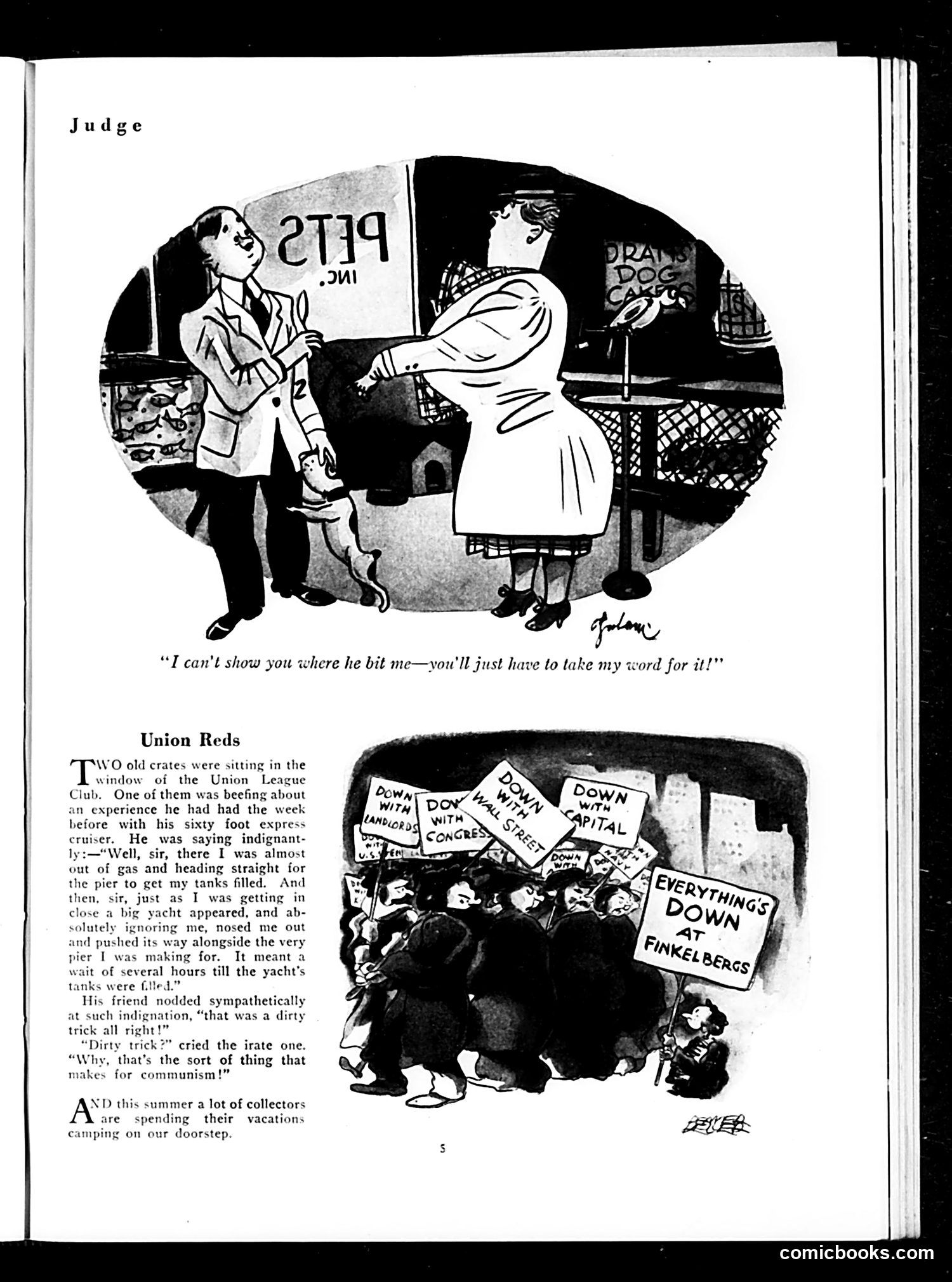
# Analysis **Top Cartoon ("Judge"):** A man shows a woman a bruise, claiming someone bit him. She responds skeptically that she can't verify his story and he'll have to prove it himself—a joke about unsubstantiated claims requiring evidence. **Bottom Cartoon ("Union Reds"):** Two older men discuss a labor incident involving a yacht and a "sixty-foot cruiser." One describes being ignored by union workers who blocked access to a pier. His friend calls this "a dirty trick" for communism, and the first agrees. The cartoon satirizes union activism by depicting it as communist-influenced obstruction. The accompanying text about "collectors spending vacations camping on our doorstep" suggests Red-baiting anxiety—a common Cold War-era concern about communist organizing or surveillance. Judge magazine frequently ran anti-communist and anti-labor union content during this period.
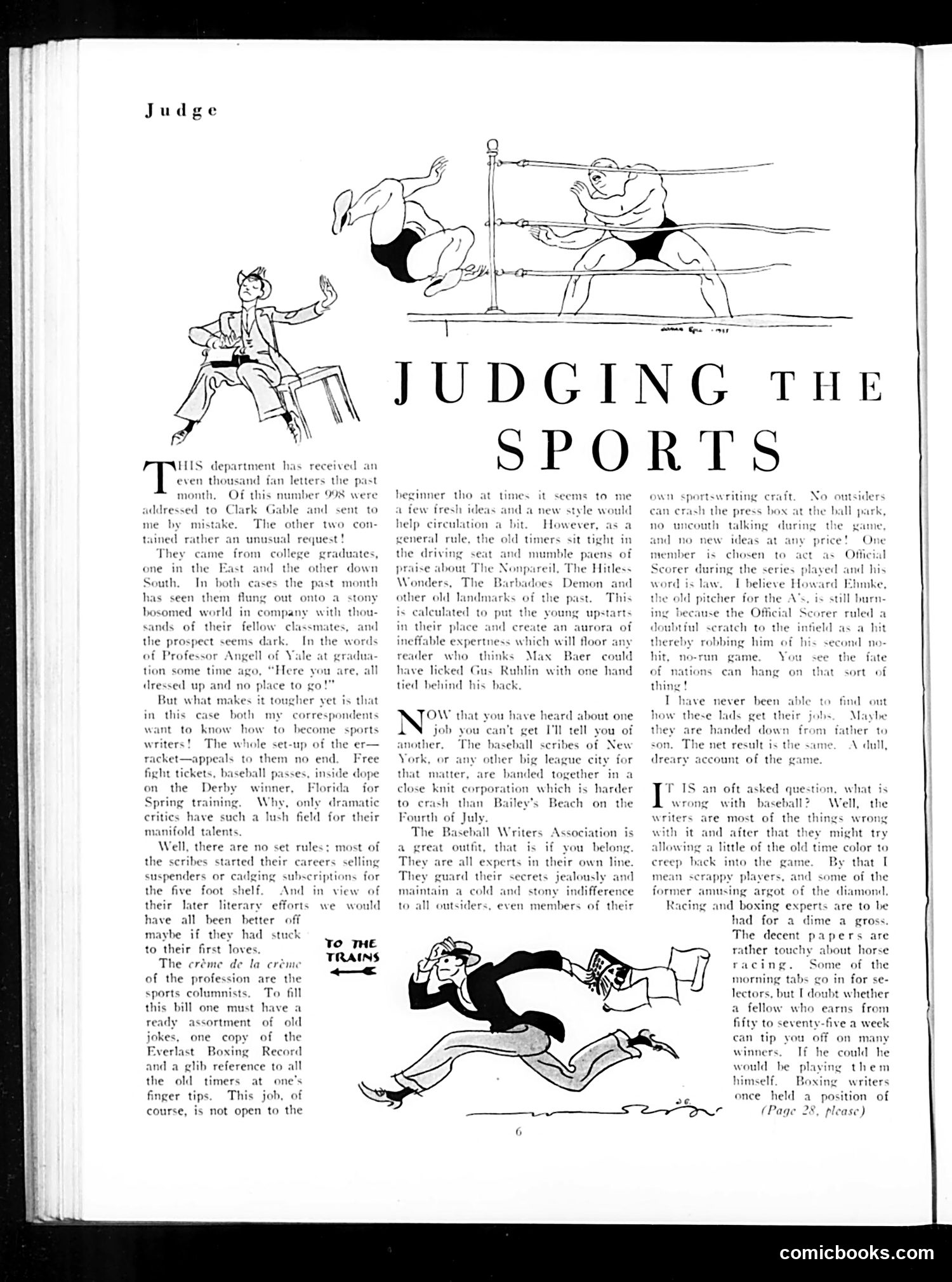
# "Judging the Sports" - Judge Magazine Sports Commentary Page This page satirizes sports journalism and the difficulty of predicting sports outcomes. The main article discusses how sportswriters struggle to judge games fairly, mentioning baseball, horse racing, and boxing. The cartoons illustrate the chaos of sports commentary: one shows a wrestling match with judges, another depicts a man racing against a horse (labeled "TO THE TRAINS"), mocking the absurdity of certain sporting predictions or matchups. The text humorously notes that sportswriters jealously guard insider knowledge about games and athletes, creating an exclusive "Baseball Writers Association." The satire targets both the pretentiousness of sports experts and readers' fascination with their dubious predictions and gossip about athletes.
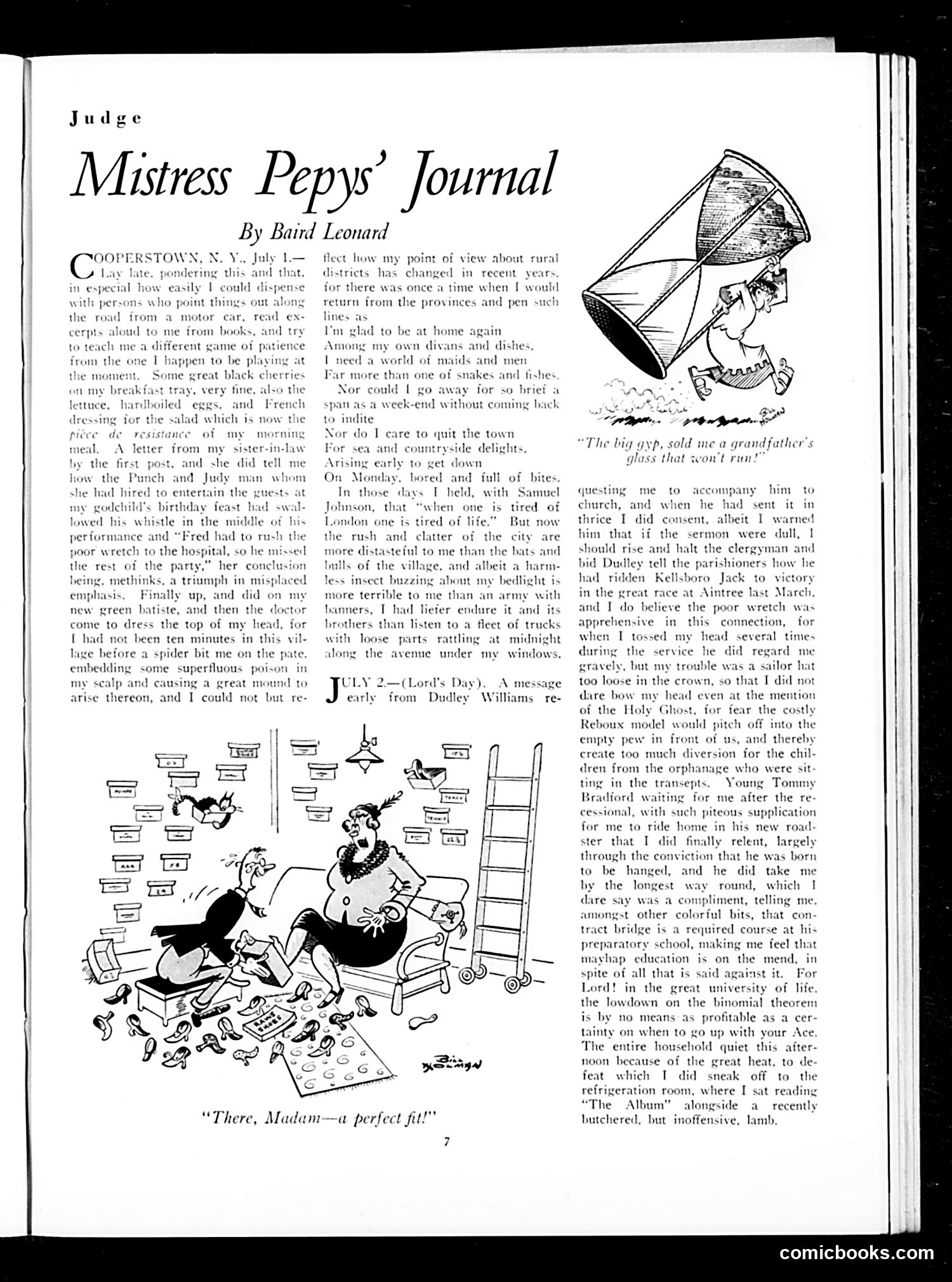
# "Mistress Pepys' Journal" - Judge Magazine Satire This column mimics Samuel Pepys's famous 17th-century diary but applies it to modern (1920s-era) upper-class domestic life. "Baird Leonard" writes as a wealthy woman reflecting on rural versus urban living, social obligations, and domestic servants. The satire mocks: 1. **Pretentious literary affectation** — adopting Pepys's style for trivial complaints (spider bites, loose hat crowns at church) 2. **Class consciousness** — obsession with servants, weekend country visits, and social propriety 3. **Modern inconveniences** — trucks rattling at midnight, heat, boredom contrasted with romanticized rural nostalgia The two cartoons illustrate domestic chaos: one showing a cluttered woman's room ("a perfect fit!"), the other depicting a woman struggling with an oversized hat ("The big gyp, sold that grandfather's glass that won't run!"). The humor lies in treating petty modern anxieties with mock-serious, literary grandeur—deflating upper-class pretension through absurdist juxtaposition of high style and mundane complaint.
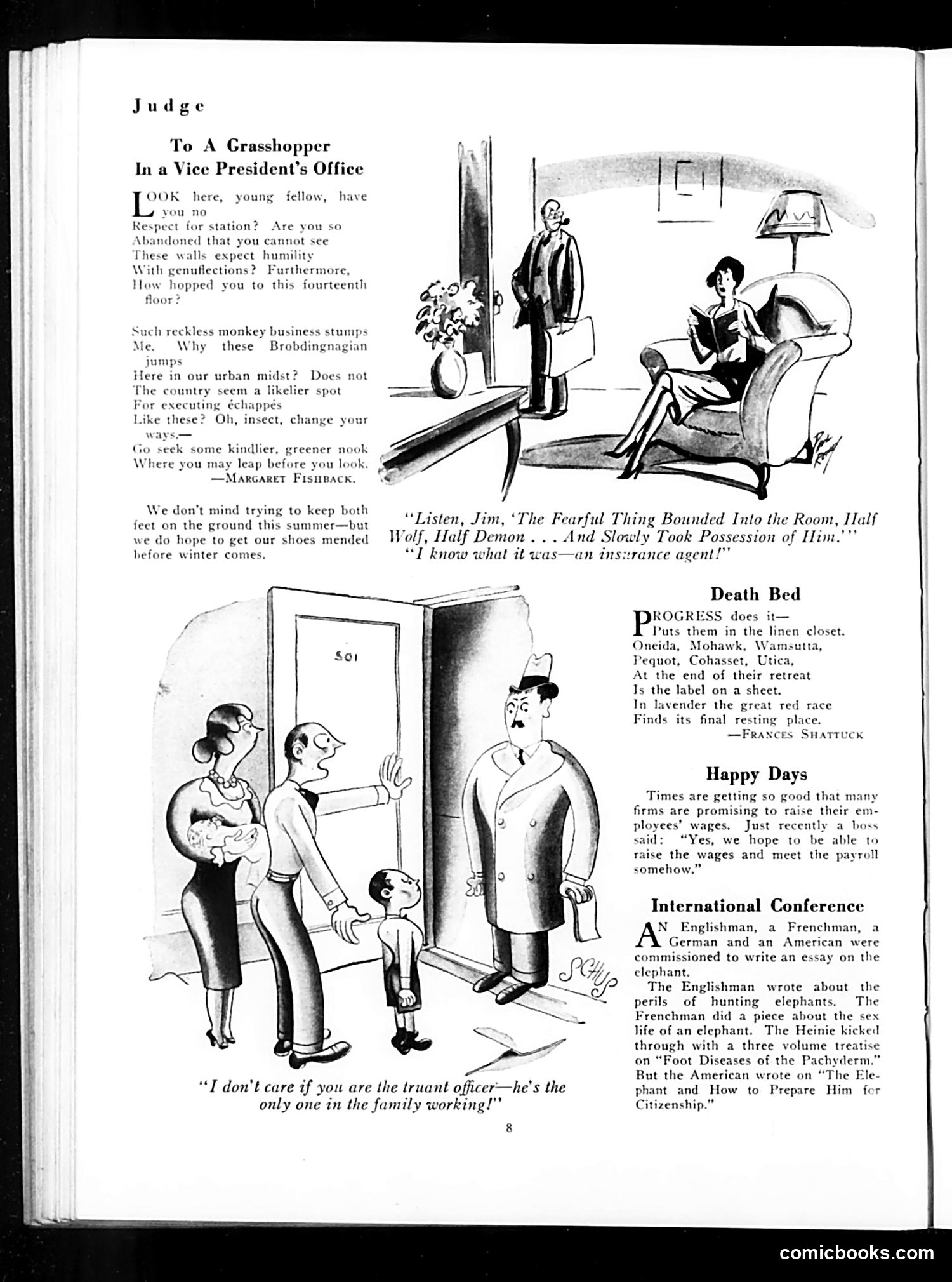
# Judge Magazine Page Analysis This page contains several satirical pieces typical of early 20th-century American humor: **"To A Grasshopper"** mocks bureaucratic pomposity—a Vice President's aide lecturing a grasshopper about respecting formal office decorum, treating an insect as if it were an undisciplined employee. **The insurance agent cartoon** jokes about paranoia and salesmen; what appears as a supernatural "fearful thing" is merely an insurance agent—suggesting they're viewed as intrusive or unwelcome. **"Death Bed"** satirizes Native American blanket brands (Oneida, Mohawk, Wamsutta, etc.) by treating their "final resting place" as a linen closet label—dark humor about both commercialization and indigenous peoples' historical decimation. **"Happy Days"** mocks employers' hollow wage-raising promises—they hope to raise wages "somehow" while barely meeting payroll, exposing economic strain beneath optimistic rhetoric. **"International Conference"** stereotypes national character through elephant essays: the English emphasize hunting tradition, French focus on sexuality, Germans produce dense academic tomes, and Americans aim for practical assimilation/citizenship—poking fun at perceived national traits.
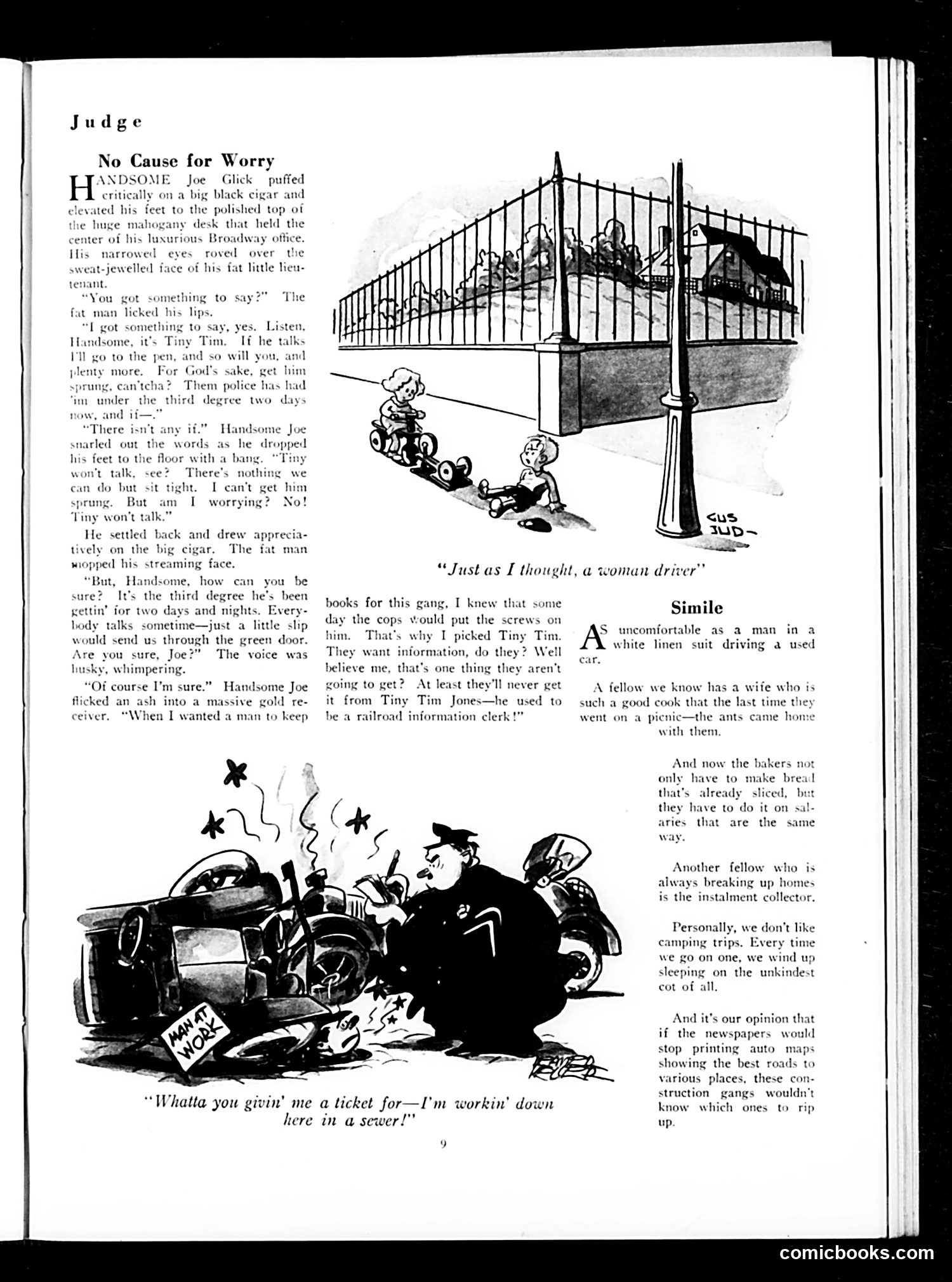
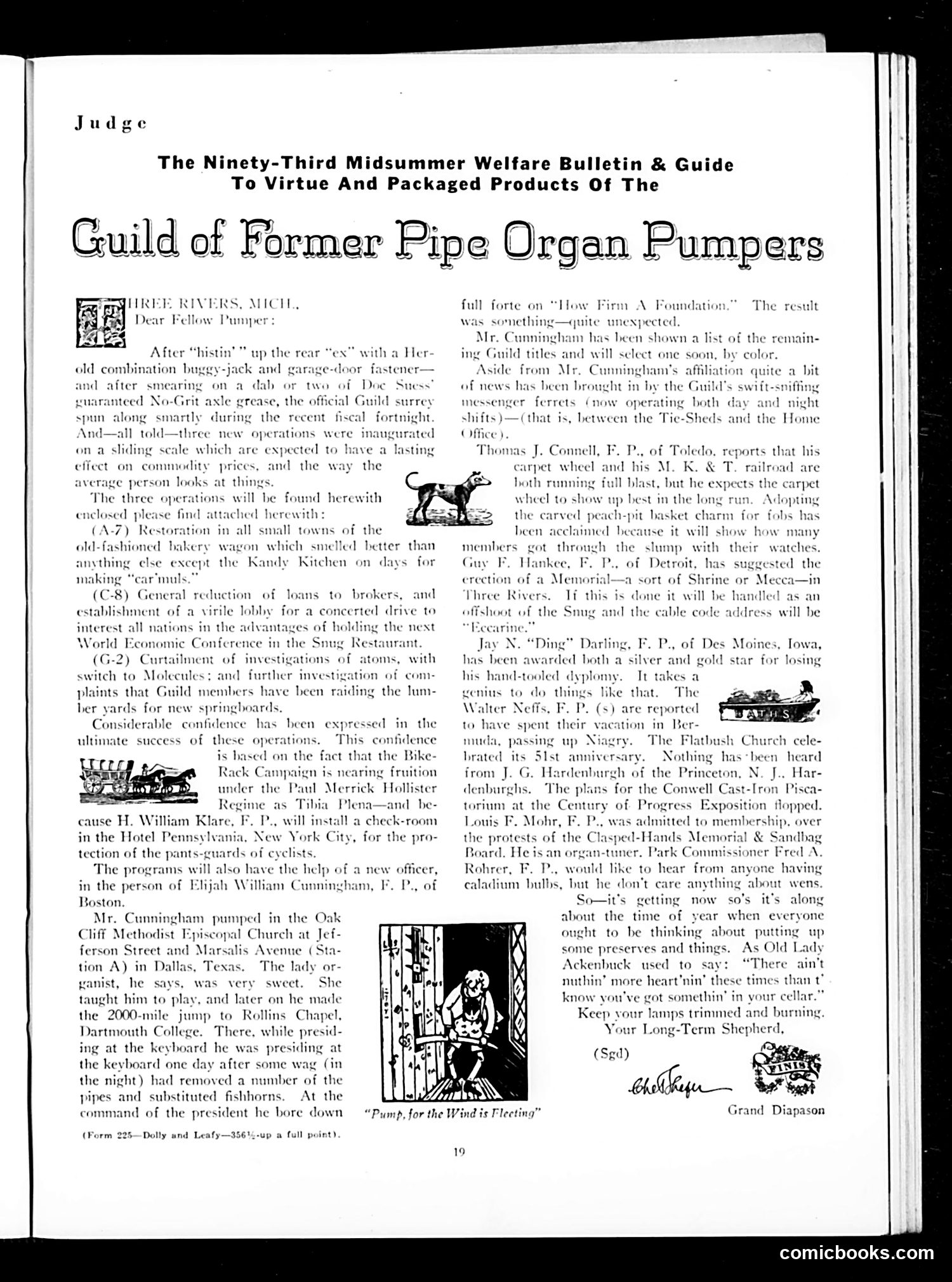
# Judge Magazine Page Analysis This page contains two distinct pieces of satire from Judge magazine: **Main Story: "No Cause for Worry"** A crime story featuring "Handsome Joe Glick," a gangster boss confidently assuring his nervous lieutenant that their arrested associate "Tiny Tim Jones" won't inform on them. The joke: Joe selected Tiny Tim specifically because he was a railroad information clerk—a man whose entire job was providing information to the public. The irony is that Joe trusts a compulsive informant not to inform, despite police interrogation. **Lower Cartoon:** Shows a cop ticketing a man working in a sewer, captioned "Whatta you givin' me a ticket for—I'm workin' down here in a sewer!" The adjacent caption "Just as I thought, a woman driver" suggests the joke involves prejudice about women drivers being careless or unsafe. **Right Column: "Simile"** A collection of brief, witty comparisons satirizing everyday life—uncomfortable situations, inflation, and humorous complaints about modern conveniences and social problems. The page exemplifies Judge's mix of narrative comedy, visual gags, and observational humor targeting 1920s-era American society.
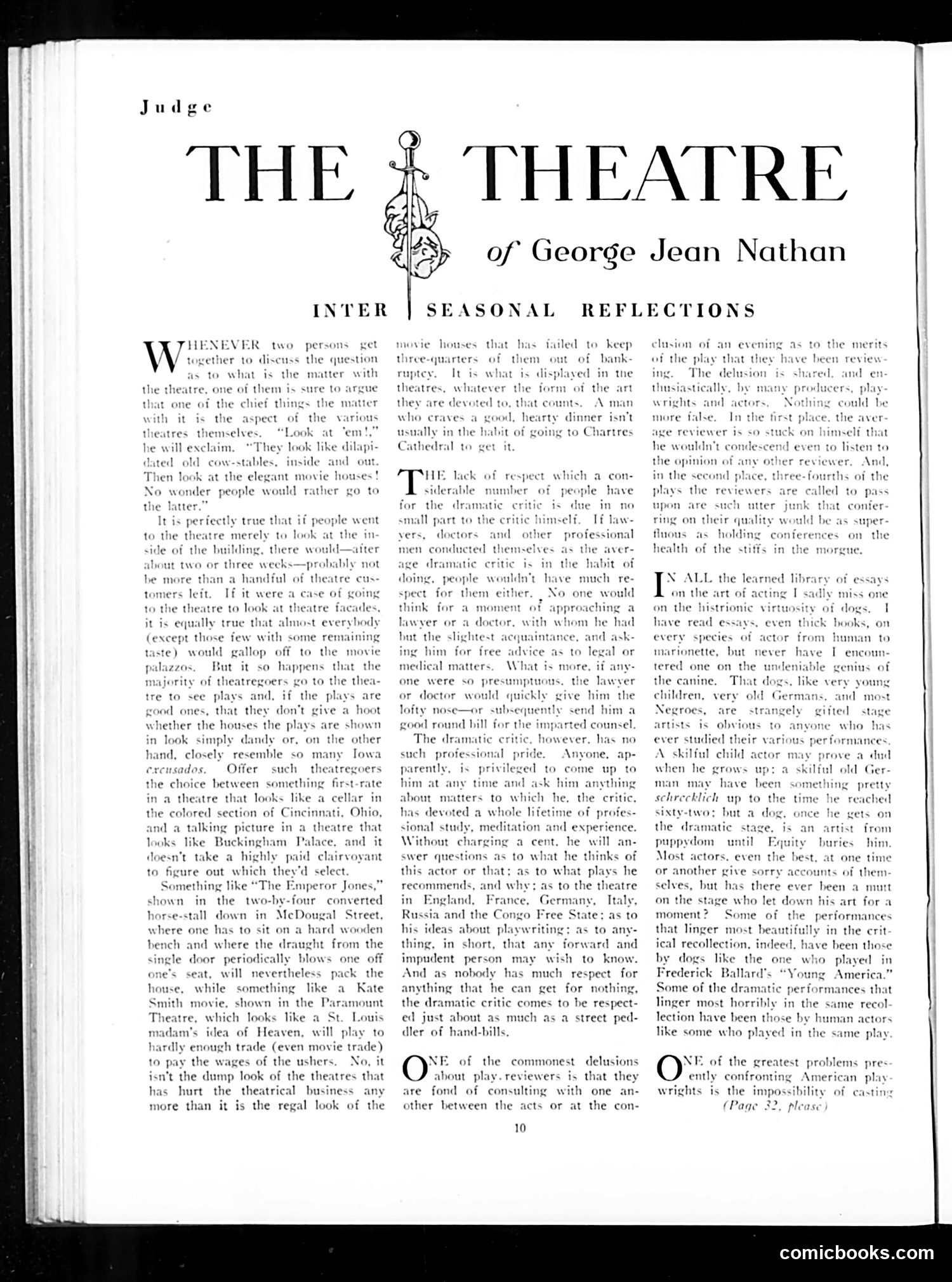
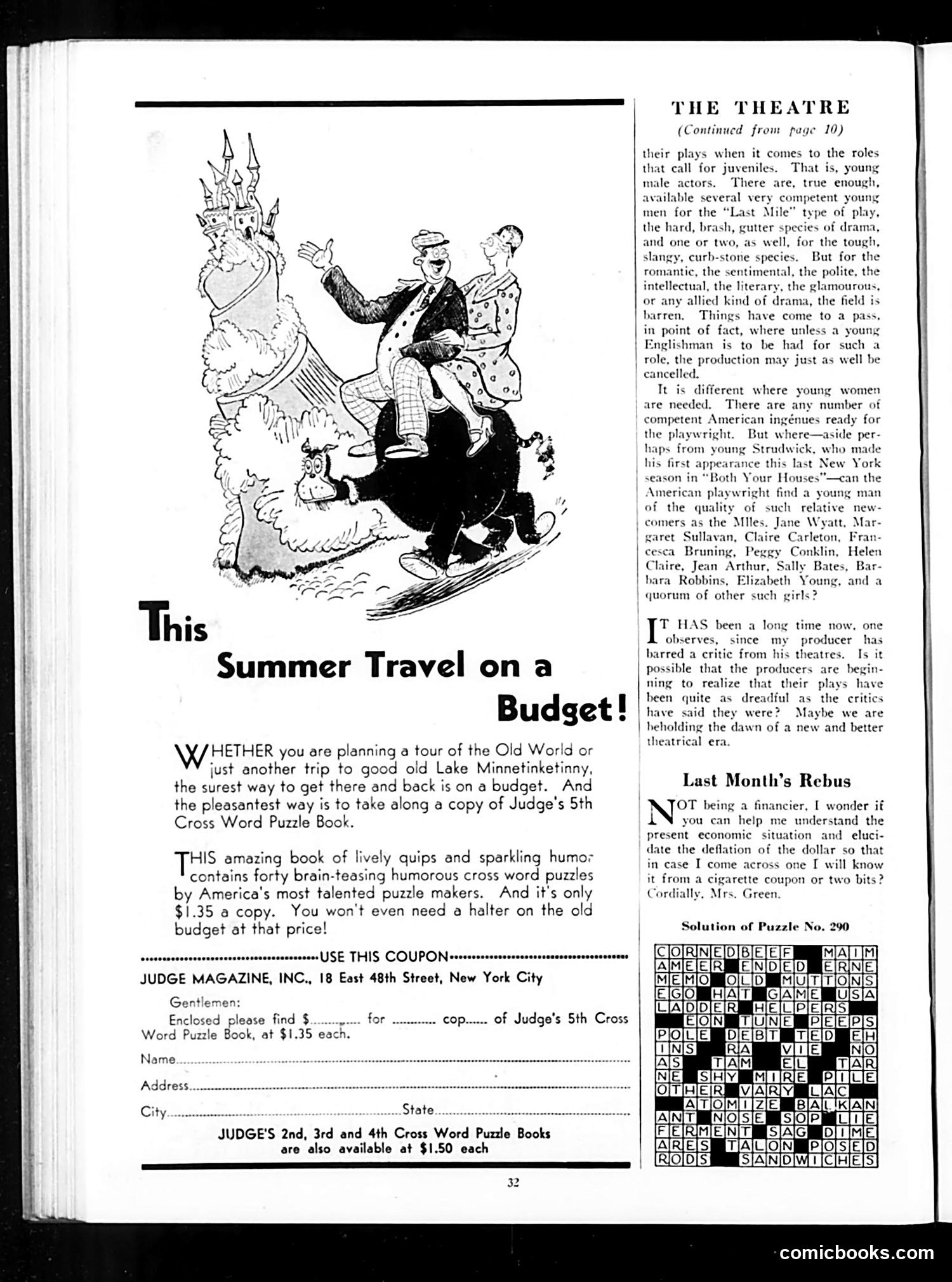
# Analysis of Judge Magazine Page This is an editorial essay by George Jean Nathan titled "The Theatre: Inter-Seasonal Reflections"—not a cartoon, but rather critical commentary on American theater and drama critics. Nathan argues that theatre audiences and critics lack proper respect for their craft. He contrasts shabby but authentic theaters with elegant movie houses, noting people prefer movies despite superior theatrical performances. His main complaint concerns dramatic critics who, despite lifelong dedication to theater, receive less professional deference than lawyers or doctors. The public treats critics dismissively, yet feels entitled to ask their free opinions on plays and performances. Nathan also criticizes actors and reviewers who consult with one another casually between acts, suggesting unprofessional conduct. He laments that young, talented actors like those trained in Germany are rarely properly recognized in American theater. The piece reflects early 20th-century anxieties about theater's decline amid rising film popularity and the low cultural status of drama criticism as a profession.