A complete issue · 36 pages · 1932
Judge — February 20, 1932
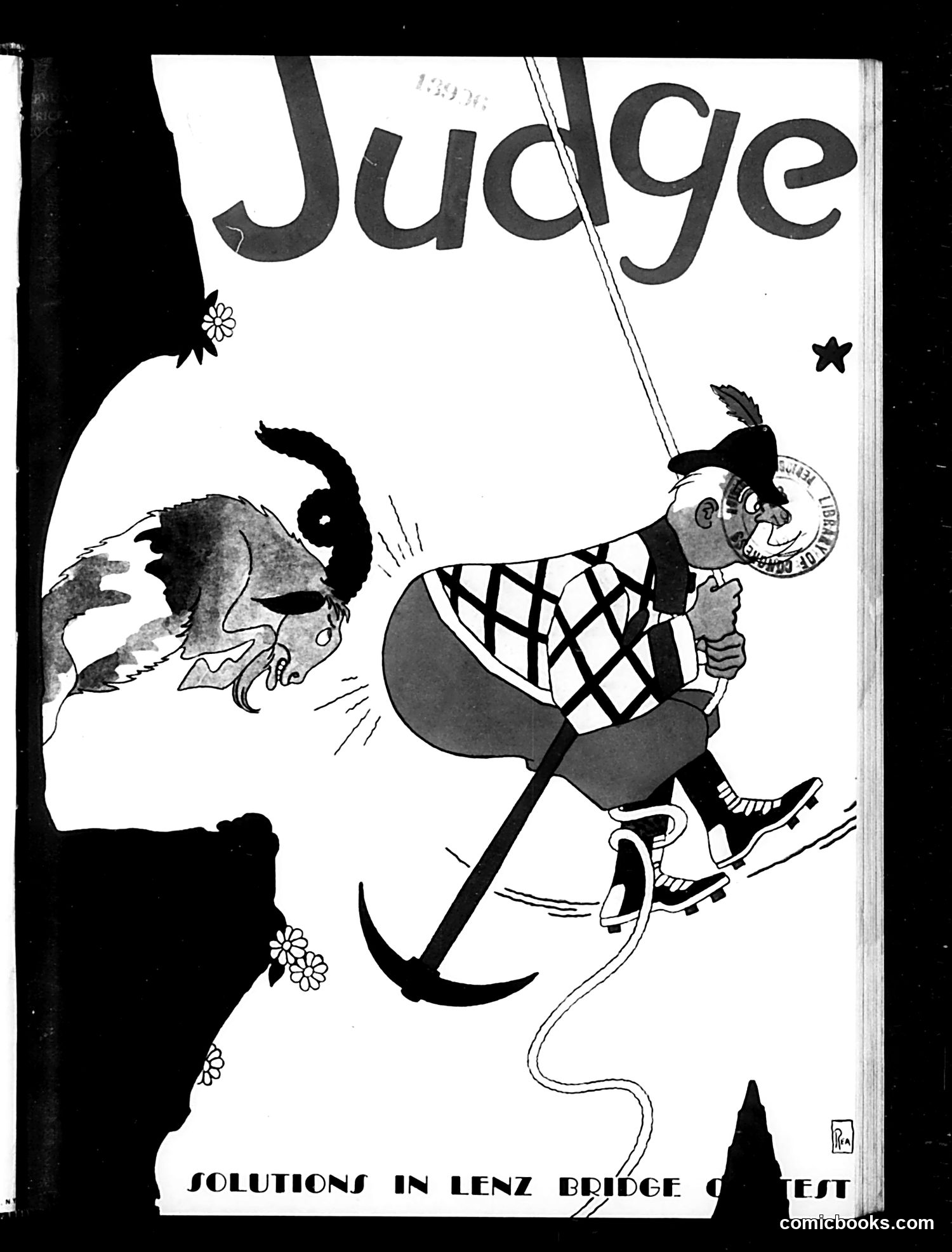
# Judge Magazine Cover Analysis This appears to be a Judge magazine cover titled "Solutions in Lenz Bridge Contest." The illustration depicts a caricatured figure (likely a judge or authority figure, given the context) precariously balanced on a tightrope while being menaced by a demon or devil-like creature on the left. The figure holds an umbrella and appears to be struggling for balance. The "Lenz Bridge" reference and the precarious tightrope imagery suggest this satirizes a legal or political controversy requiring careful judgment—the figure must navigate between opposing forces without falling. The demon likely represents one side of a dispute or threat. Without more specific historical context about the Lenz Bridge case, the exact controversy remains unclear, but the central metaphor portrays decision-making as dangerously balanced.
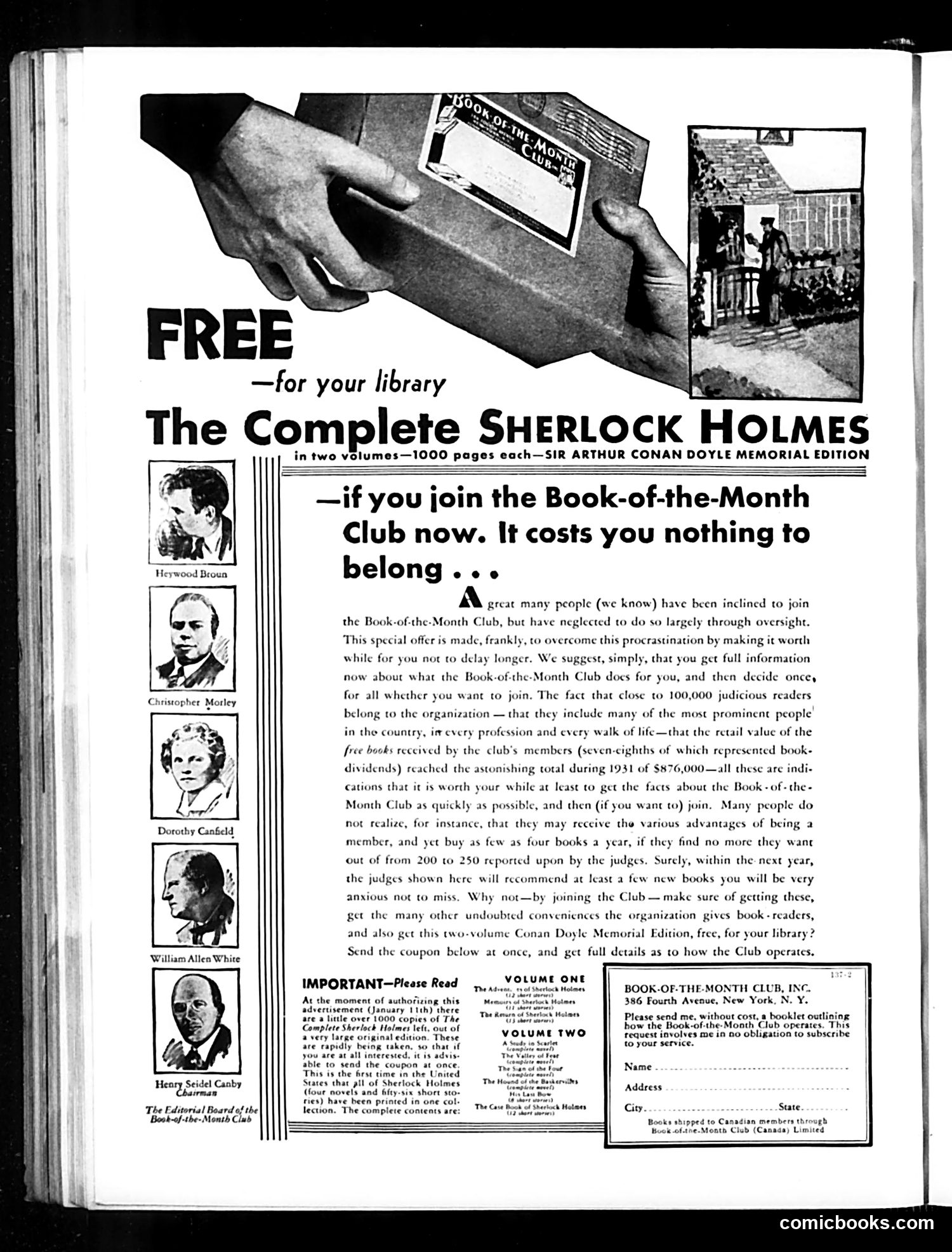
# Analysis This page is primarily **advertising, not satire or political content**. It promotes the Book-of-the-Month Club's free offer of a complete two-volume Sherlock Holmes memorial edition by Sir Arthur Conan Doyle. The left side features **portraits of five celebrity judges** who selected the club's monthly offerings: Heywood Broun, Christopher Morley, Dorothy Canfield, William Allen White, and Henry Seidel Canby (identified as "Chairman"). Their inclusion lends prestige to the club's book selections. The advertisement emphasizes membership benefits and encourages readers to join using the coupon provided. There is **no political satire or social commentary**—this is a straightforward commercial promotion appearing in Judge magazine.
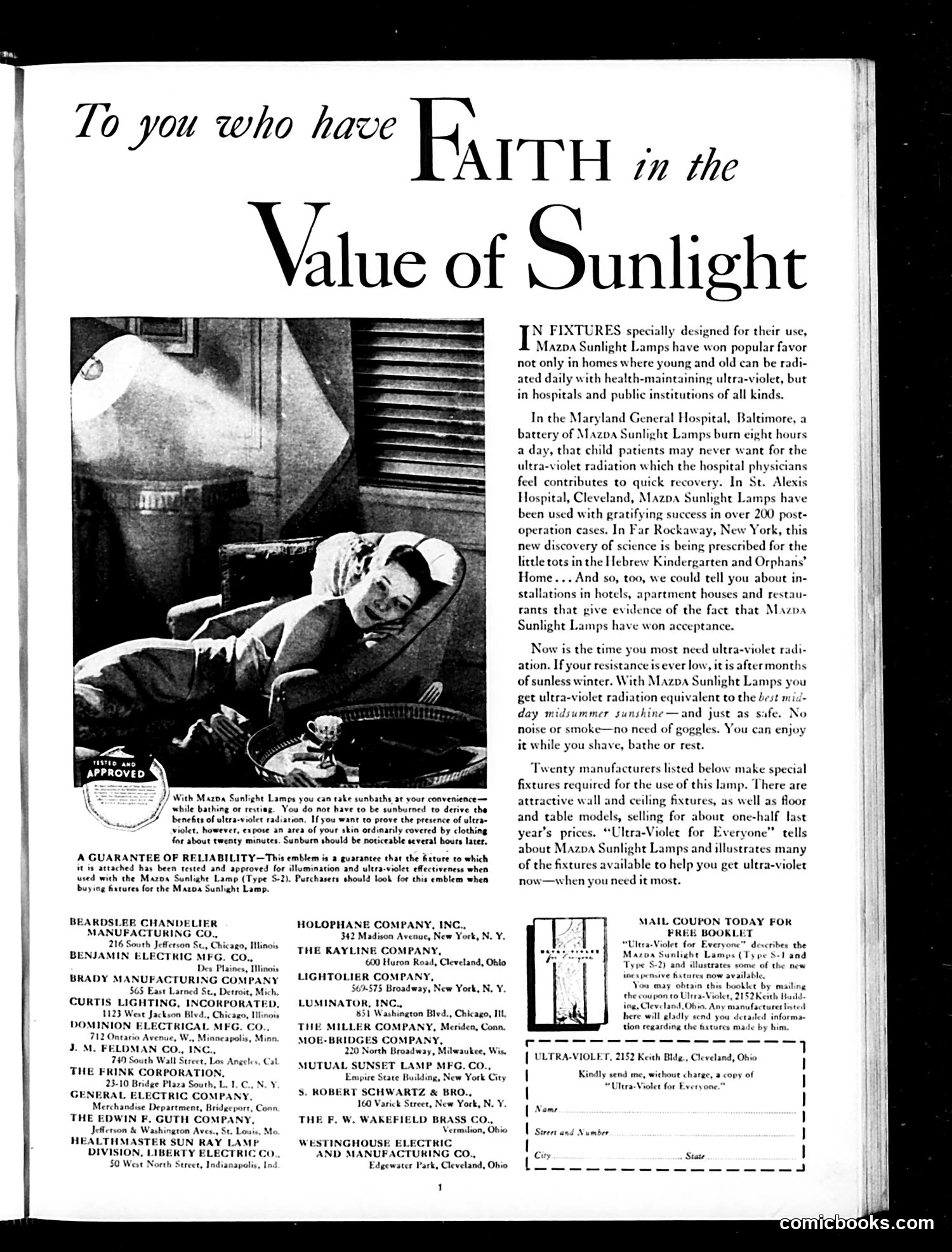
# Analysis This page is **primarily advertising**, not satire or political commentary. It promotes Mazda Sunlight Lamps, ultraviolet therapeutic devices marketed for health benefits. The image shows a patient receiving UV lamp treatment, likely for rickets or other conditions. The text claims these lamps provide "ultra-violet radiation equivalent to the best mid-day midsummer sunshine" and were used in hospitals, orphanages, and homes. The headline "To you who have Faith in the Value of Sunlight" appeals to period health beliefs about sunshine's medicinal properties. Twenty manufacturers are listed as approved fixture makers. This reflects 1920s-30s enthusiasm for UV therapy—then considered genuinely therapeutic—before the health risks of UV exposure were understood. The page represents commercial exploitation of legitimate (if incomplete) medical science of that era.
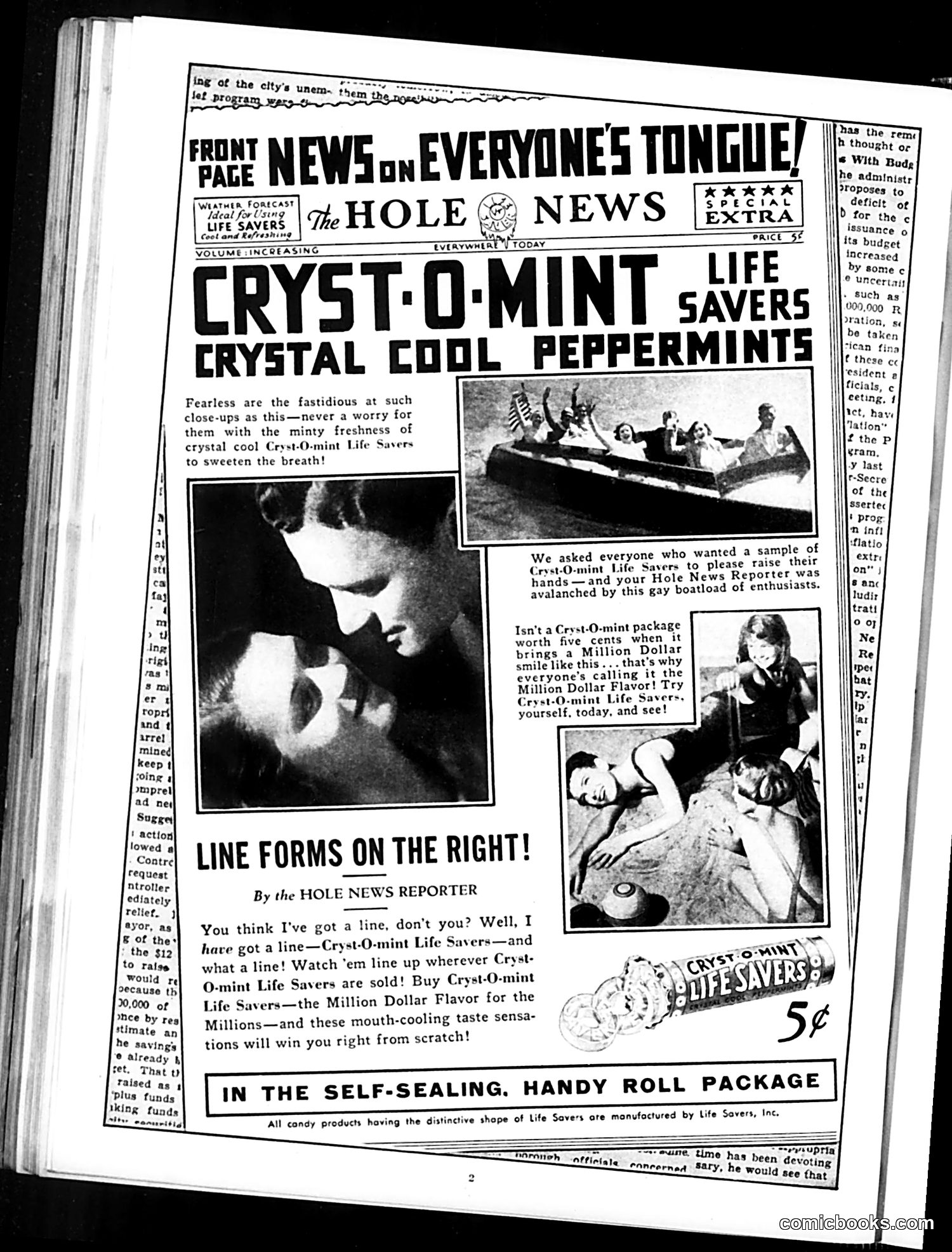
# Analysis This page is **primarily a vintage advertisement**, not political satire. It promotes Cryst-O-Mint Life Savers candy with the headline "CRYST-O-MINT LIFE SAVERS—CRYSTAL COOL PEPPERMINTS." The advertisement uses early 20th-century marketing tactics: a "Hole News" publication format (pun on the product's ring shape), testimonial-style photos of people enjoying the candy, and claims about freshness and appeal. The tagline references a "Million Dollar Flavor" promotion. The only satirical element is the framing device—presenting candy marketing as breaking news—which gently mocks how aggressively advertising was packaged as journalism in this era. The price of 5¢ and "self-sealing, handy roll package" reflect period product details. Overall, this is commercial content rather than political commentary.
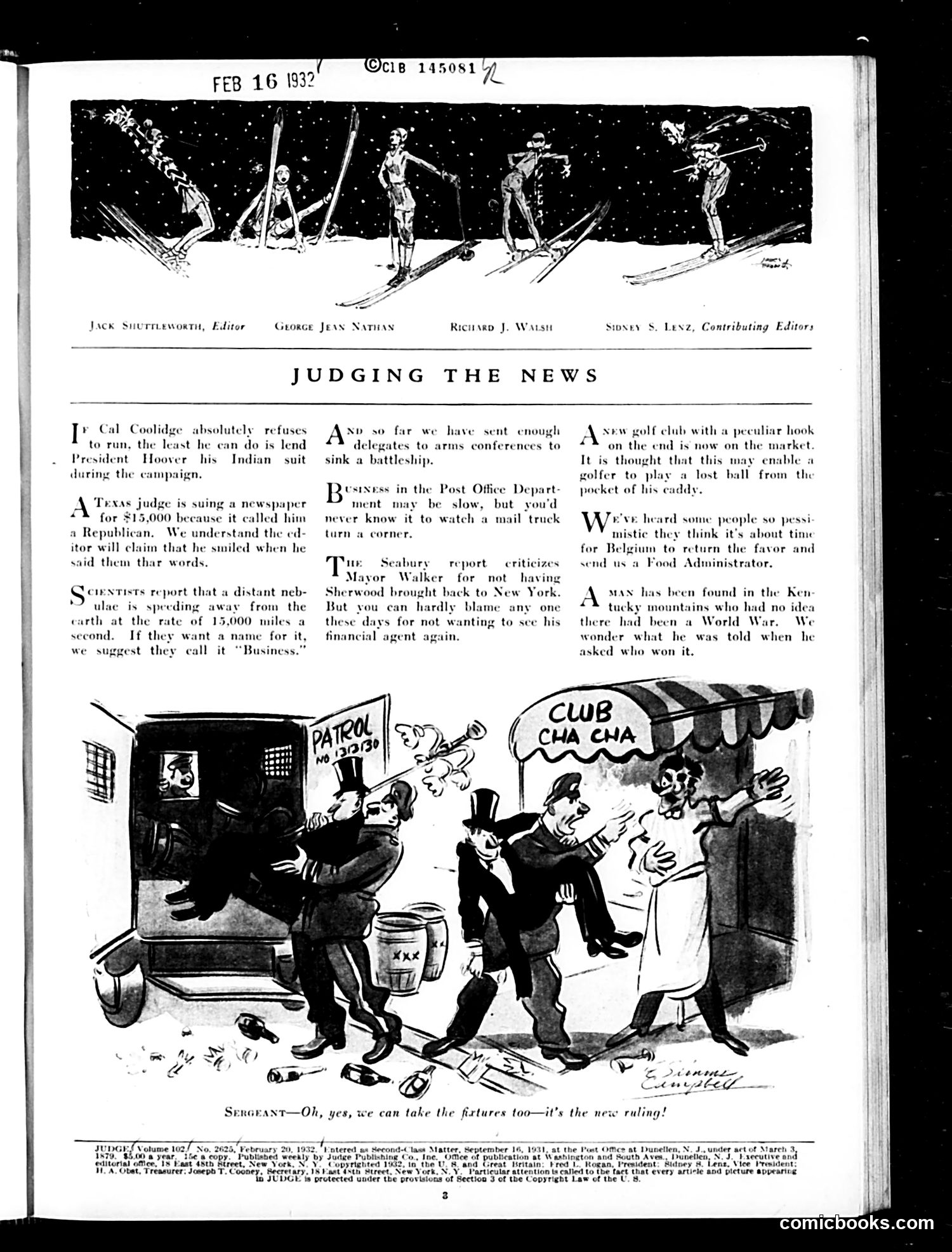
# "Judging the News" – February 16, 1932 This page satirizes recent news items through brief commentary and a cartoon. The main cartoon depicts Prohibition enforcement officers raiding an illegal "Club Cha Cha" nightclub. A police sergeant tells the proprietor: "Oh yes, we can take the fixtures too—it's the new ruling!" The joke targets the absurdity of Prohibition (1920-1933): authorities were confiscating not just alcohol but now club furnishings as contraband. The satire mocks both the futility of enforcement and the expanding scope of seizures during the final years of Prohibition, suggesting the policy had become increasingly ridiculous and heavy-handed. The surrounding items comment on Cal Coolidge's refusal to lend money, a slow Post Office, and a man from Kentucky's mountains unaware of WWI—typical light satirical observations of the era.
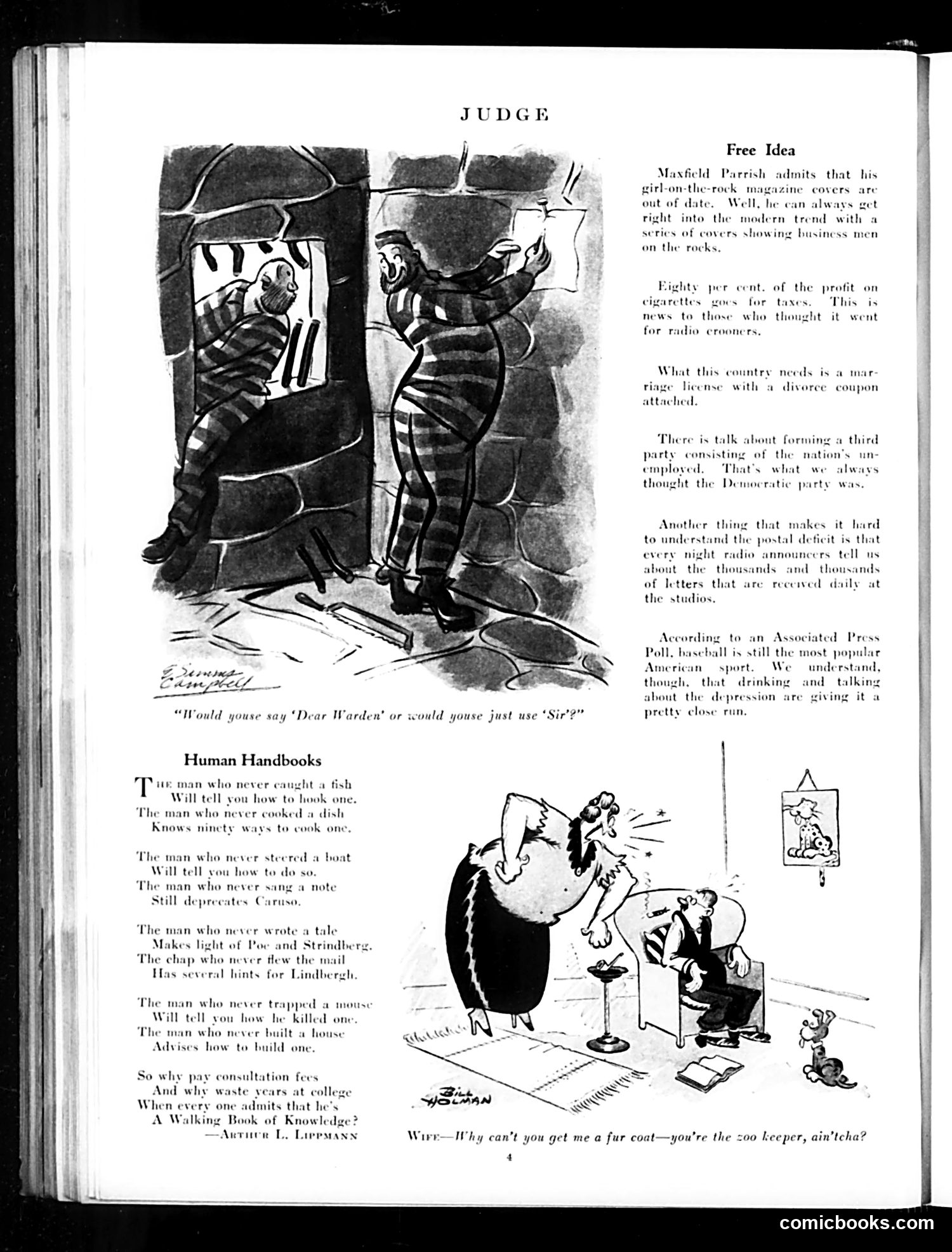
# Analysis of Judge Magazine Page This page contains two cartoons and a poem satirizing early 20th-century American life. **Top cartoon**: Two men in a train compartment; one asks the other to say "Dear Warden" or use "Sir" instead of casual address. This mocks pretentious formality and class consciousness in confined social spaces. **"Human Handbooks" poem**: Uses folk-wisdom format to mock self-help culture and consultation fees. It suggests that so-called experts (those who've never done something themselves) profit by advising others—a critique of professional expertise and education's value. **Bottom cartoon**: A wife demands a fur coat from her husband, who humorously compares himself to a "zoo keeper." This satirizes consumerism, marital dynamics, and women's material expectations—common Judge themes mocking domestic relationships and spend-thrift wives.
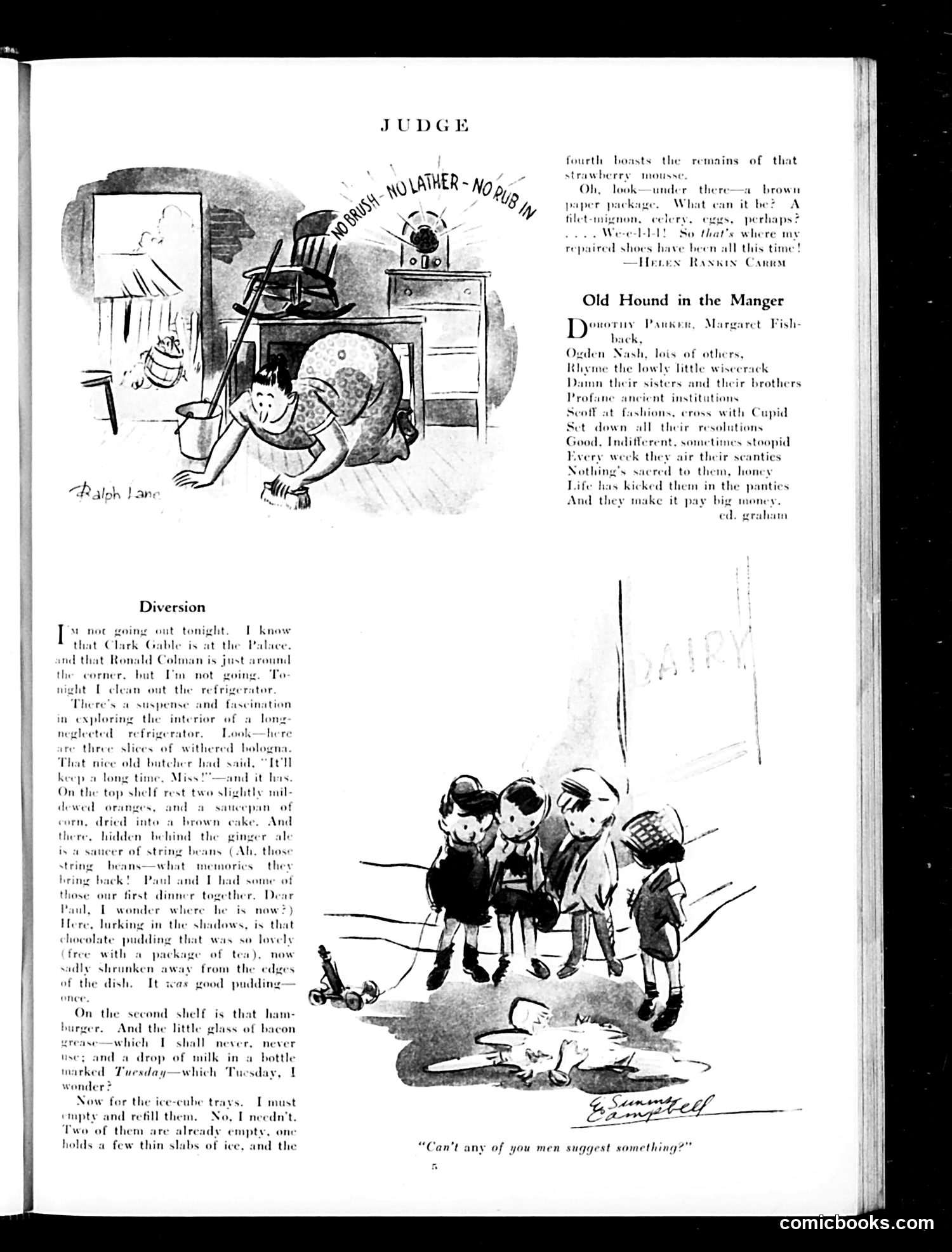
# Analysis of Judge Page **Top Cartoon ("No Lather - No Rub In"):** A figure struggling inside what appears to be a large globe or spherical object. The caption suggests difficulty or futility—likely satirizing some contemporary problem or political situation where effort yields no results. Without clearer context, the specific target is unclear. **Middle Section ("Old Hound in the Manger"):** Verse about characters including Dorothy Parker and Margaret Fishback, mocking socialites or literary figures for their pretentious behavior and scandalous activities. This appears to be society gossip humor. **Bottom Cartoon ("Diversion"):** A humorous domestic scene where someone prefers exploring a neglected refrigerator over going out, referencing Clark Gable and Ronald Colman (contemporary Hollywood stars). The satire mocks Depression-era domestic distraction and foodstuff curiosities.
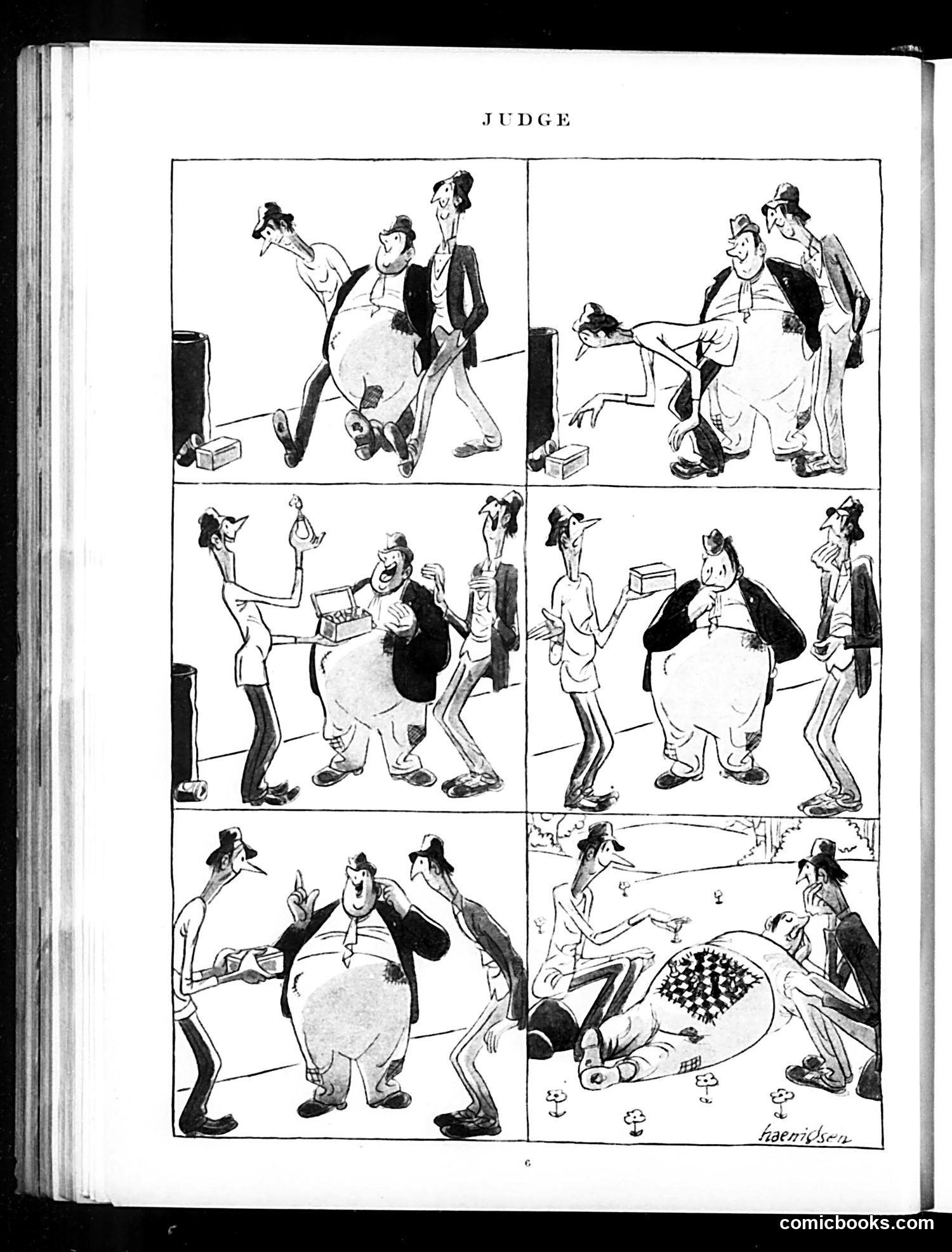
# "Judge" - Political Cartoon Analysis This six-panel comic titled "JUDGE" depicts a satirical narrative about judicial corruption or bribery. The central figure—a portly judge—is shown interacting with various parties who appear to be offering him money or bribes (visible in panels showing cash/boxes). The progression suggests the judge's progressive moral compromise: he initially refuses or hesitates, but gradually accepts payments. By the final panel, he's shown playing chess—possibly symbolizing how justice becomes a calculated game rather than principled deliberation. The caricature style and exaggerated physique emphasize the judge's greed and moral weakness. Without visible dates or specific references, the cartoon likely critiques turn-of-the-century judicial corruption, a common satirical target in American magazines of that era. The artist's signature reads "Hendrickson."
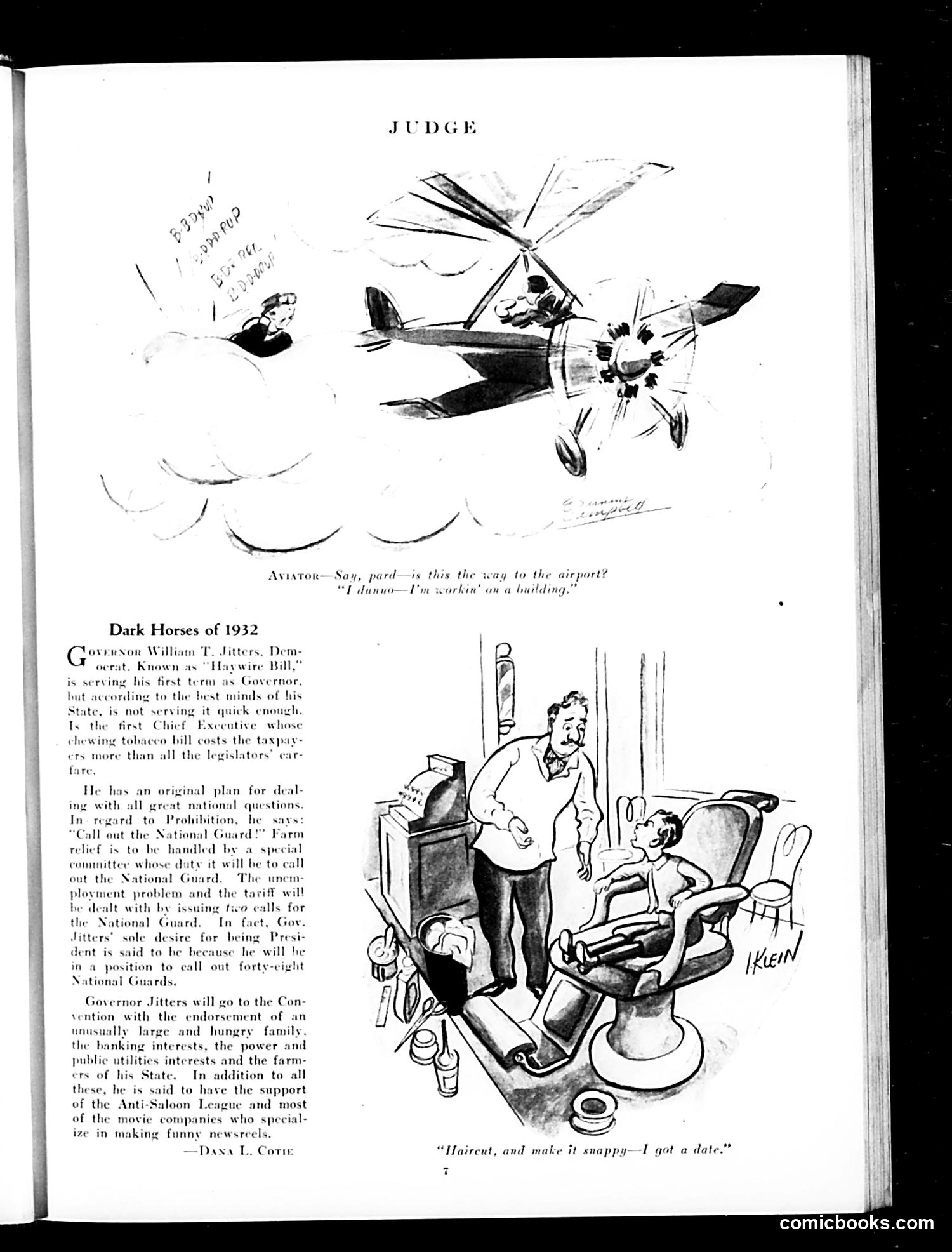
# Judge Magazine Political Cartoon Analysis **Top cartoon**: An aviator asks a construction worker for directions to the airport. The worker replies he's "workin' on a building," a visual pun on the phrase "working on" — suggesting the worker is literally constructing rather than merely employed. **Bottom section**: A satirical article titled "Dark Horses of 1932" mocks Governor William T. Jitters (a fictional "Haywire Bill"), a Democratic candidate. The satire ridicules his proposed solutions: he wants to handle Prohibition, unemployment, and tariffs by calling out the National Guard—absurdly treating every problem identically. The piece further lampoons him for his expensive chewing tobacco habit and suggests his political support comes from self-interested groups (banking, utilities, farmers) and movie studios profiting from "funny newsreels." The accompanying cartoon shows a barber's shop scene with caption "Haircut, and make it snappy—I got a date," likely illustrating the frivolous nature of political candidates. This reflects 1932 election-year satirizing of undistinguished political candidates.
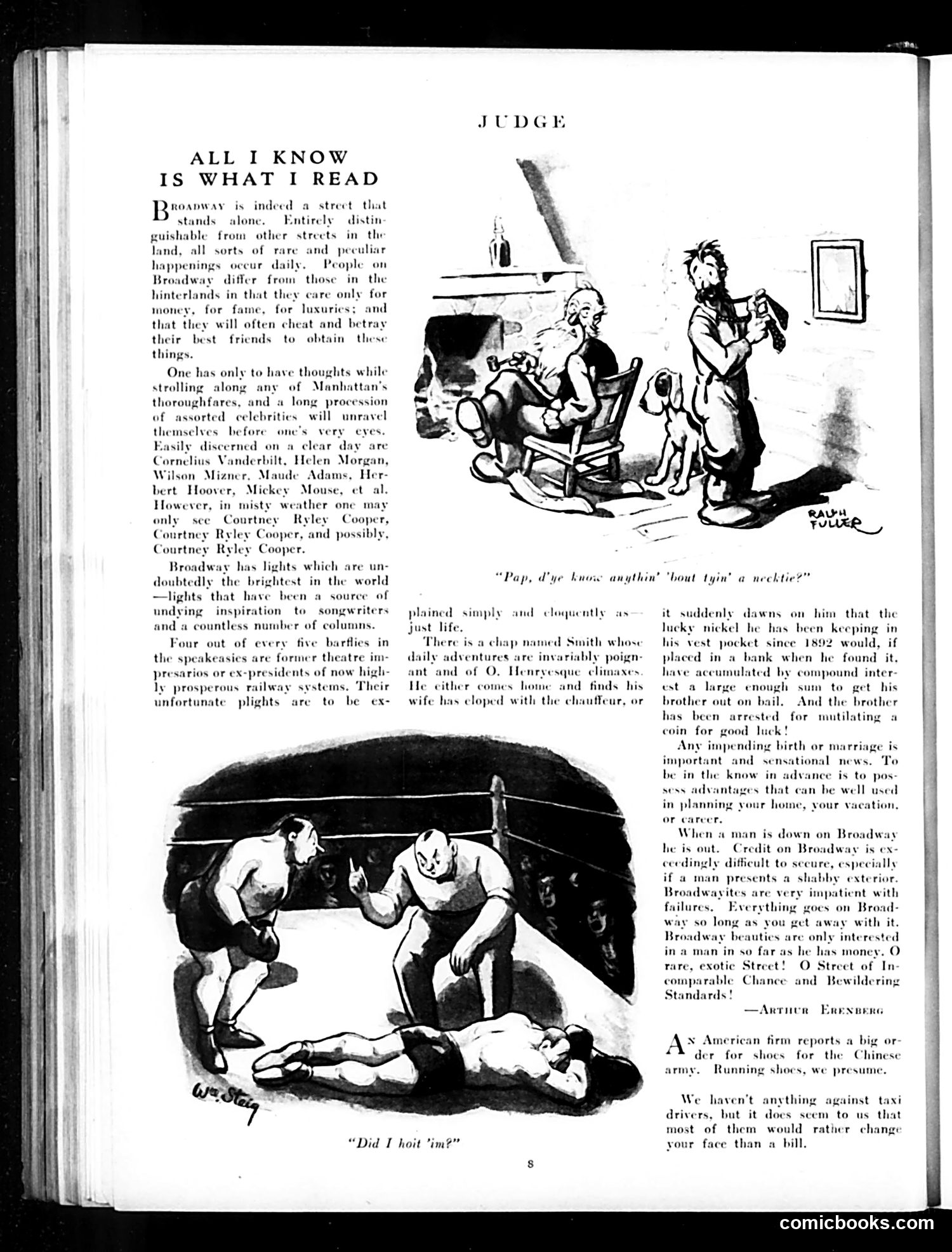
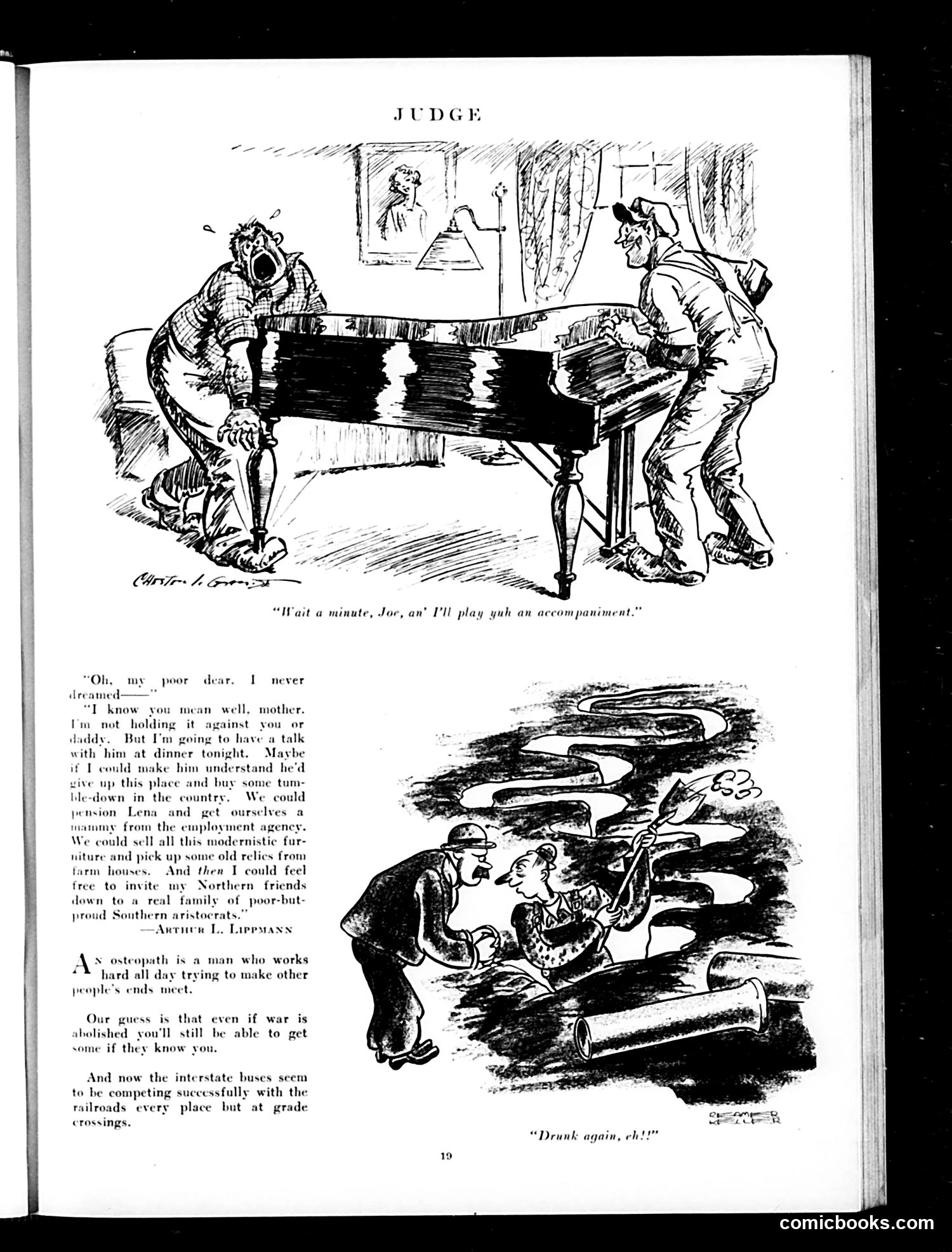
# Analysis of This Judge Magazine Page This page satirizes Broadway and New York's theatrical district circa the 1920s-30s (Prohibition era, given references to "speakeasies"). The top cartoon shows a man being arrested with a woman and child present—captioned "Pap, d'ye know anythin' 'bout tyin' a necklace?"—likely mocking petty crime and domestic chaos on Broadway. The lower cartoon depicts men in what appears to be an underground setting, captioned "Did I hoit 'im?"—possibly referencing violence or criminal activity. The essay "All I Know Is What I Read" by Arthur Greenberg mocks Broadway's superficiality: celebrities, speakeasy barflies (failed theater producers), people willing to betray friends for money and fame. It ridicules the district's obsession with wealth, gossip, and appearance—noting that credit is impossible for shabby-looking people, and that luck rather than merit determines success. The final quips mock taxi drivers and report a Chinese army shoe order sarcastically as "running shoes"—likely an ethnic joke. The satire targets Broadway's moral decay and materialism.
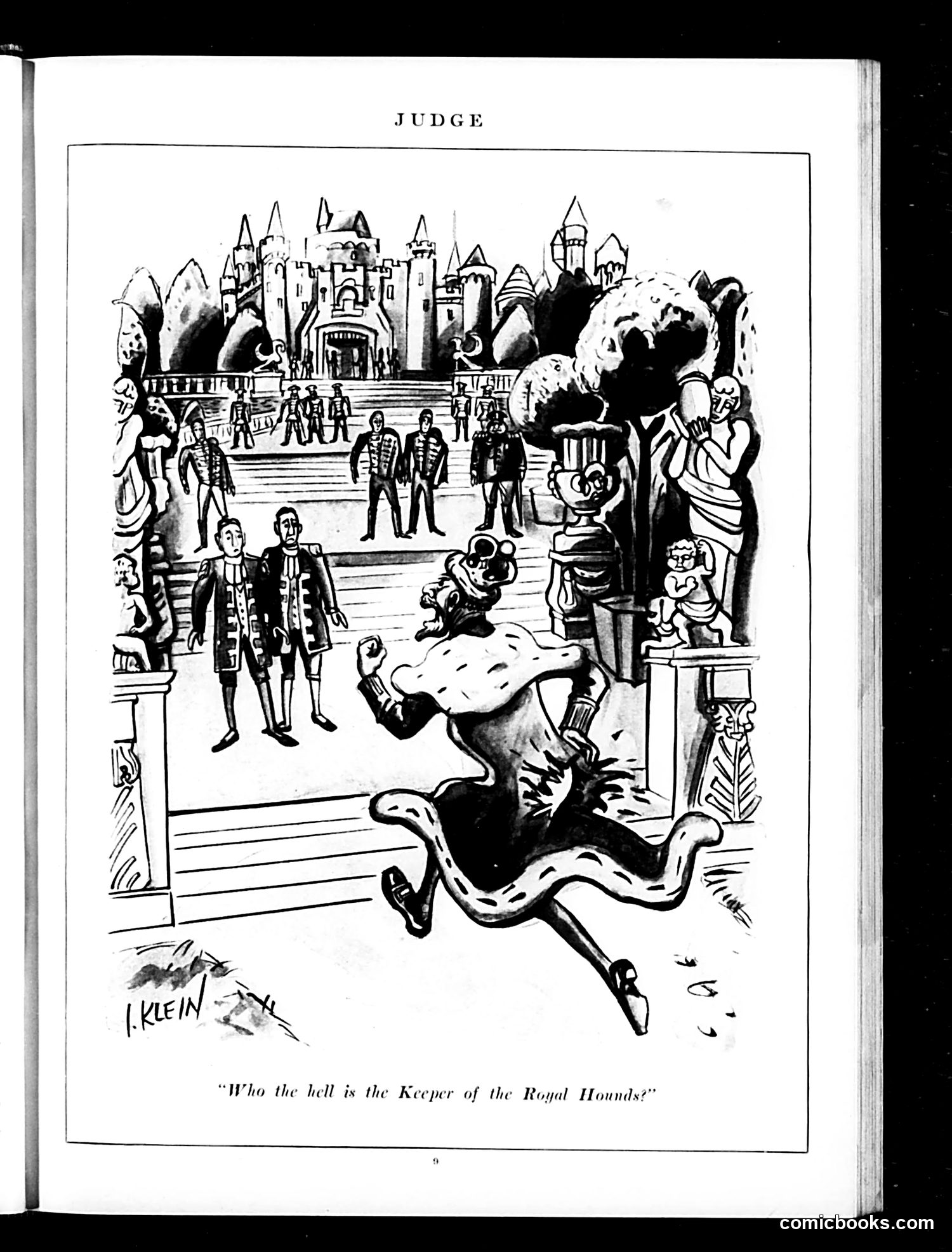
# Analysis of "Judge" Cartoon This single political cartoon depicts a chaotic scene at what appears to be a royal palace or formal court setting. A disheveled figure runs frantically through the grounds while formally-dressed officials and guards stand about, seemingly confused or indifferent. The caption—"Who the hell is the Keeper of the Royal Hounds?"—suggests the cartoon satirizes governmental incompetence or administrative chaos. The running figure likely represents either a loose dog or someone in disarray, while the composed officials represent bureaucratic indifference to disorder. The cartoon critiques how authority figures fail to maintain proper oversight or control, appearing complacent amid obvious problems. Without the publication date visible, the specific political target remains unclear, but it's characteristic of *Judge* magazine's satirical approach to governance and institutional responsibility.
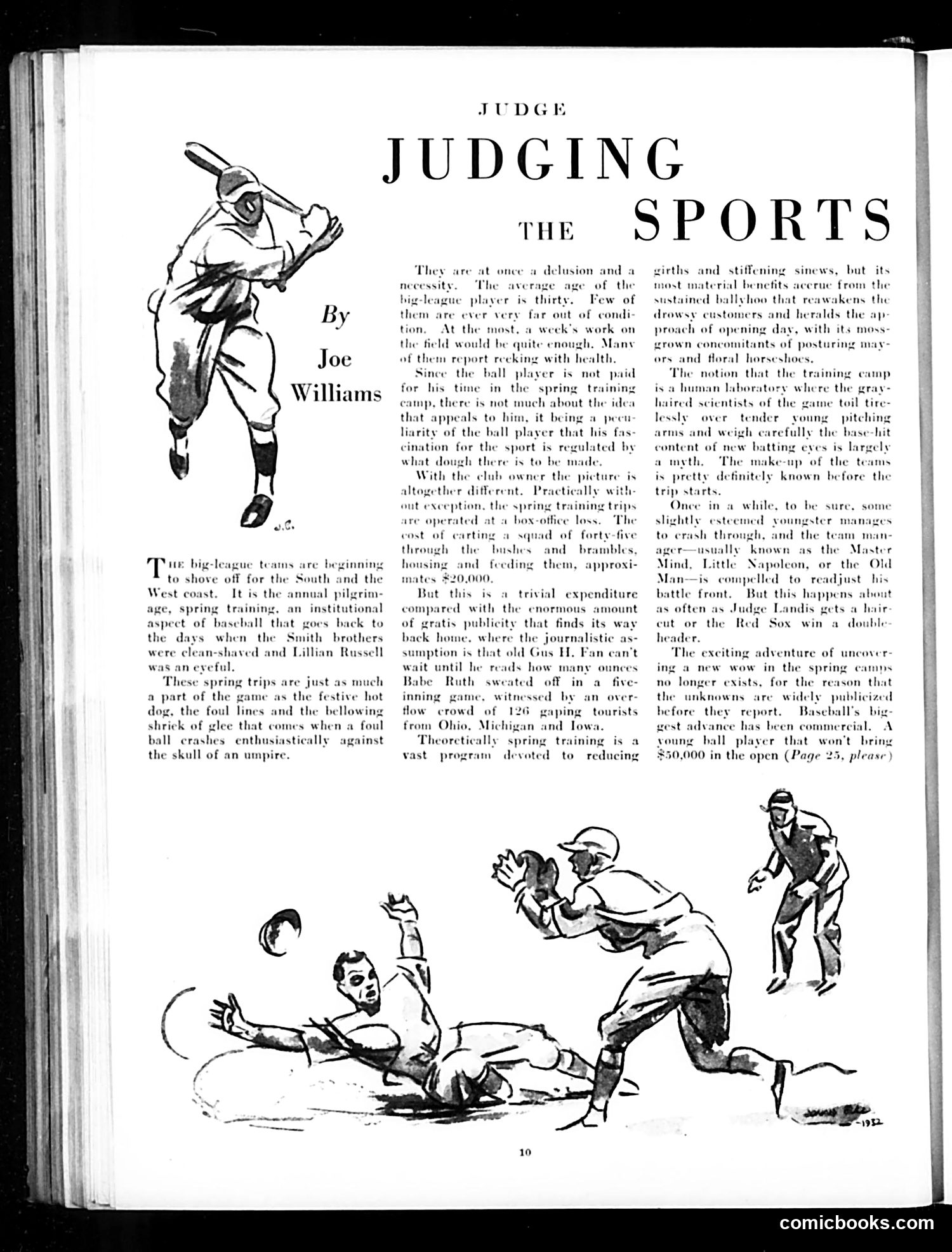
# "Judging the Sports" by Joe Williams This article satirizes **spring training in Major League Baseball** as pure commercial theater rather than athletic necessity. Williams argues that players—paid only during the season—have little incentive to train seriously in spring, yet club owners run these trips at a loss for the **publicity value**. The satire targets the media's role in creating mystique around spring training. References to "old Gus H. Fan" and breathless reporting about Babe Ruth sweating in front of small tourist crowds mock how baseball generates customer excitement through manufactured drama and journalistic hype. Williams debunks the romantic notion that training camps develop young talent ("gray-haired scientists" carefully grooming prospects). Instead, team rosters are predetermined; the camps primarily serve as **commercial promotion** for the upcoming season—complete with "floral horseshoes" and ceremonial mayors. The punchline: baseball's greatest achievement isn't athletic development but **commercial advancement**. The "exciting adventure" of discovering unknown talent is dead because modern publicity exposes prospects before spring training even begins.