A complete issue · 37 pages · 1931
Judge — June 27, 1931
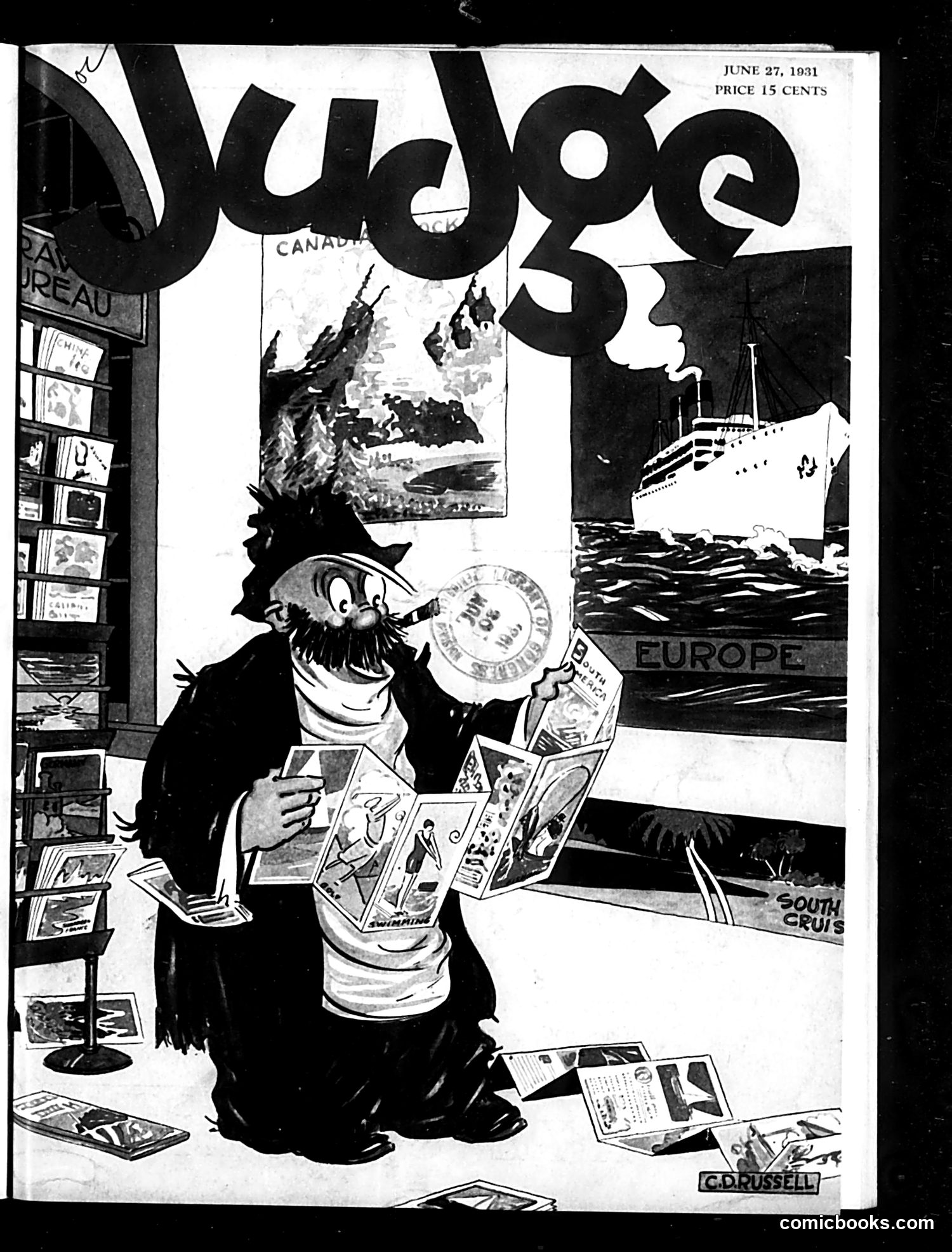
# Explanation for Modern Readers This June 1931 *Judge* cover satirizes travel enthusiasm during the Great Depression. A disheveled character in worn clothing eagerly peruses travel brochures at a travel bureau, dreaming of European cruises and exotic destinations—visible through the window poster showing a luxury ocean liner labeled "EUROPE." The satire is clear: while ordinary Americans struggled with unemployment and poverty, travel companies aggressively marketed expensive vacations. The contrast between the character's shabby appearance and his yearning for luxury travel mocks both the absurdity of promoting expensive leisure during economic hardship and the allure of escapism that such advertising exploited during desperate times. The artist (signed "South Cruis") critiques consumerism and the disconnect between advertising promises and economic reality.
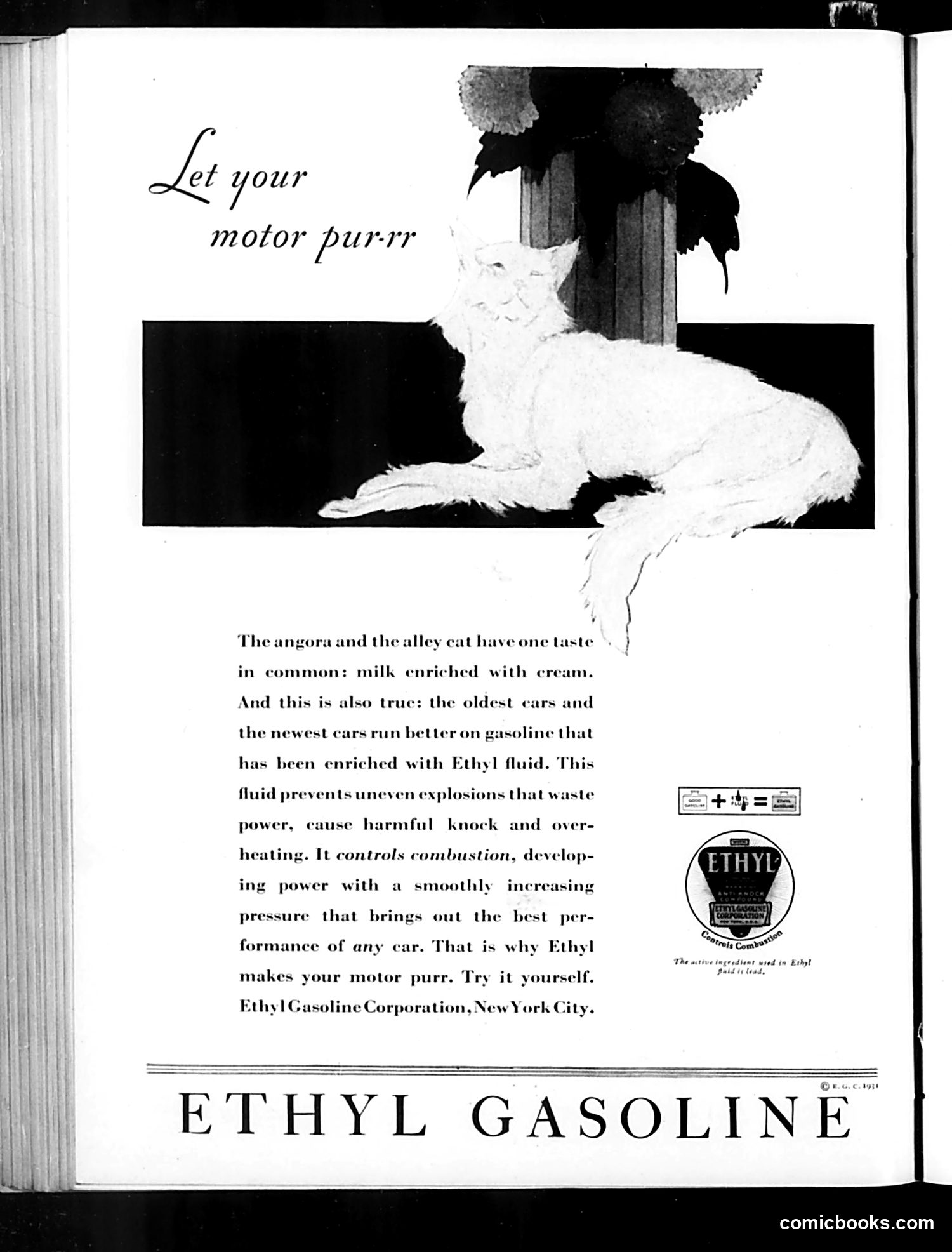
# Analysis This appears to be a **product advertisement rather than political satire**. The page promotes Ethyl Gasoline, a commercial fuel product from the Ethyl Gasoline Corporation of New York City. The "cartoon" is actually a marketing illustration: a white cat lounging contentedly, with text claiming cats and cars share a common preference—enriched milk and gasoline with Ethyl fluid, respectively. The analogy attempts humor through an absurd comparison while pitching product benefits. The advertisement emphasizes that Ethyl fluid prevents engine knocking and "uneven explosions," controlling combustion for better performance. This was a genuine automotive innovation of the early twentieth century. There is **no political commentary or social satire present**—this is straightforward commercial advertising using a cute animal mascot for appeal.
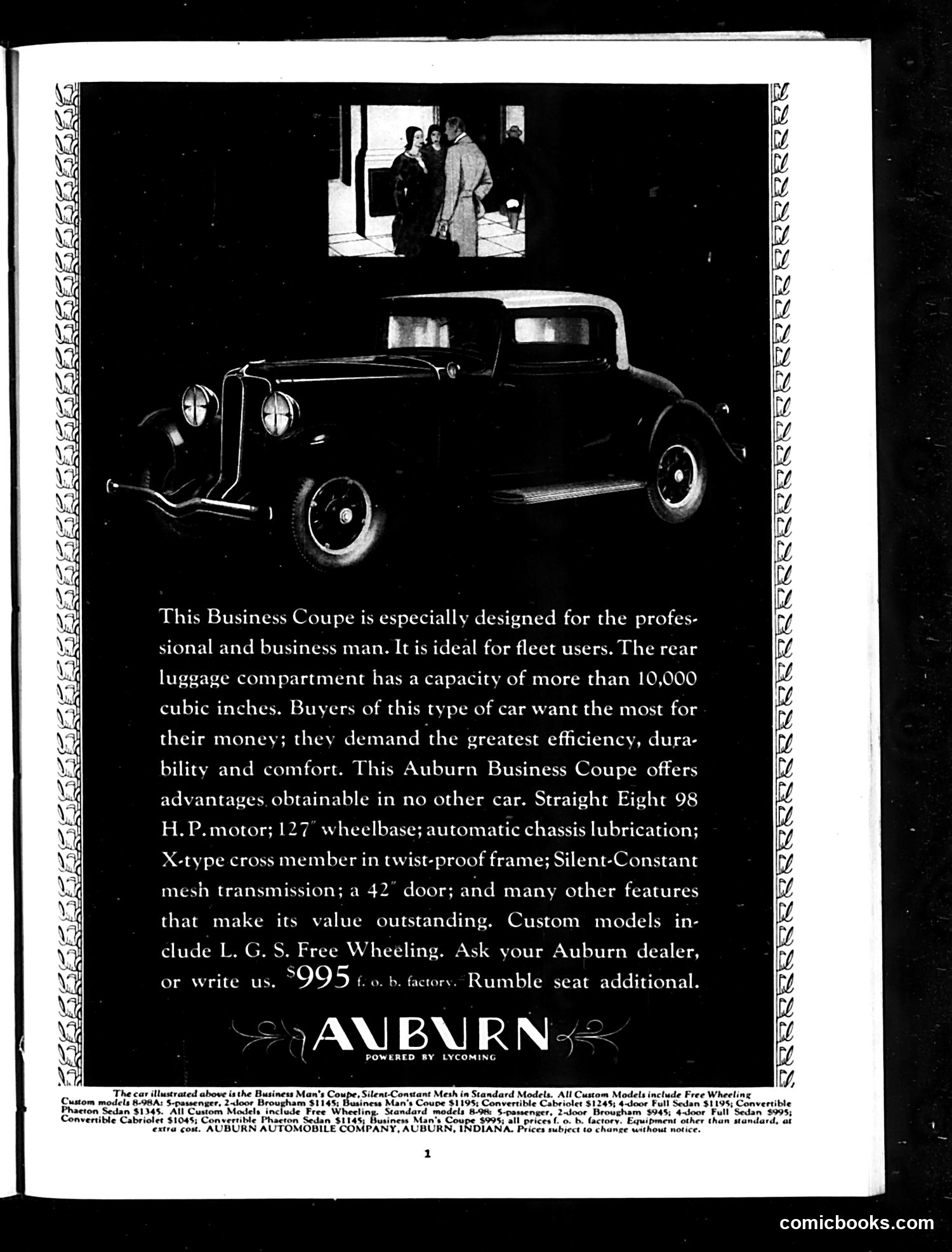
# Analysis This page is **not a cartoon or satire**—it's a straightforward automobile advertisement for the Auburn Business Coupe. The image shows a sleek 1930s-era car with an inset photograph above depicting what appears to be a business scene with well-dressed men. The ad targets professional businessmen and fleet buyers, emphasizing practical features: a large rear luggage compartment (10,000+ cubic inches), an efficient Straight Eight 98 H.P. motor, and a 127-inch wheelbase. The tagline promises "advantages obtainable in no other car." The $995 price point (factory) reflects the vehicle's positioning as an upscale, practical business vehicle during the Depression era. This is pure commercial advertising, not satirical content.
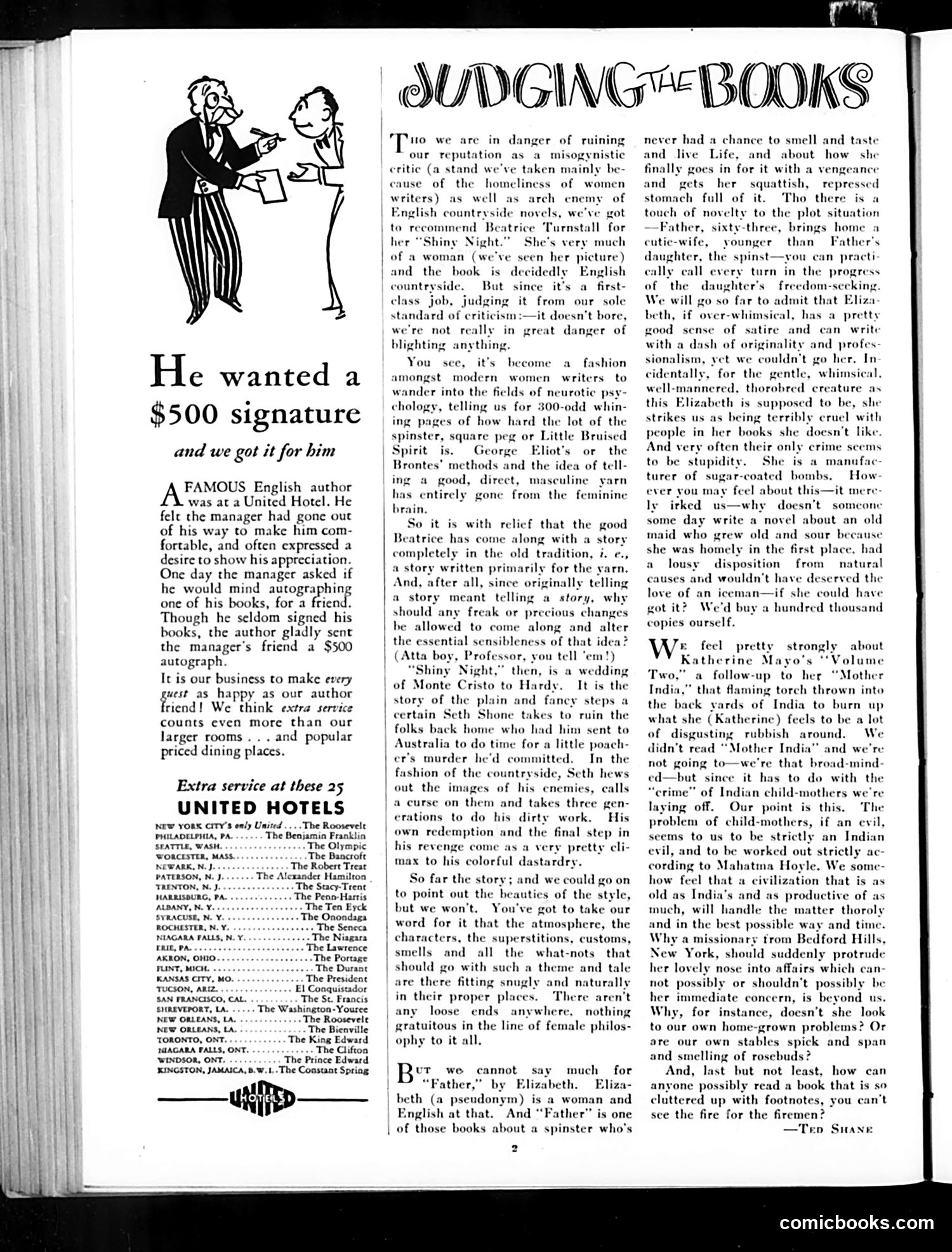
# "Judging the Books" - A Publisher's Complaint This page satirizes modern literary criticism and publishing. The cartoon shows a man (apparently a publisher) complaining to a woman about the difficulty of pleasing contemporary critics. The article criticizes female literary critics who've become fashionable among "neurotic psychology" readers, claiming they write tediously about psychological themes rather than actual storytelling. The piece specifically targets the trend of misogynistic criticism toward female writers and English countryside novels. The humor lies in the ironic complaint: a publisher wanting a famous author's $500 signature—suggesting the real goal is profit, not literary merit. The satire mocks both pretentious modern criticism and the commercial book industry's opportunism, while also containing somewhat dismissive attitudes toward female authors and critics typical of the era.
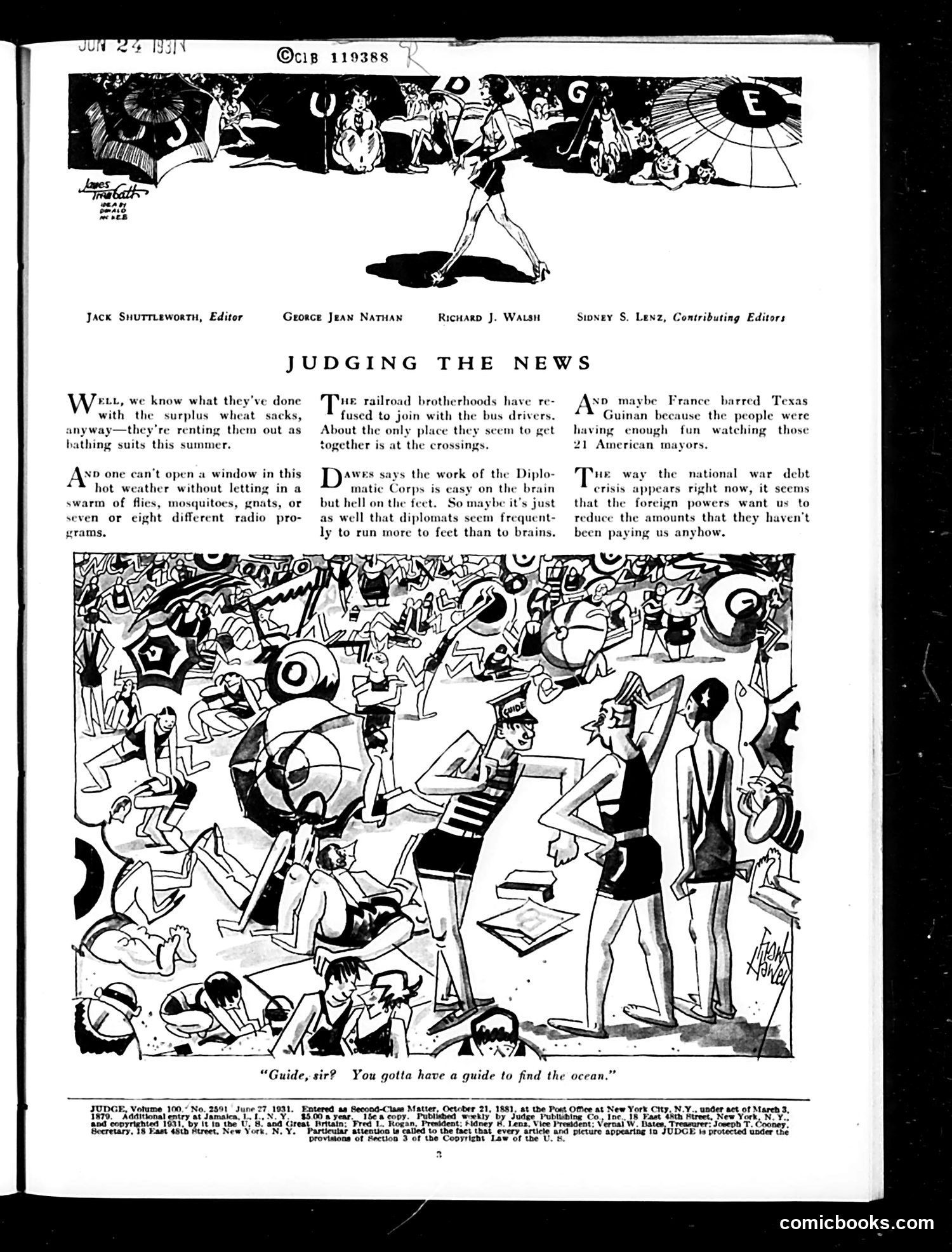
# Analysis of "Judging the News" (Judge Magazine, June 27, 1931) This page satirizes contemporary social issues through brief commentary and a chaotic beach scene cartoon. The text mocks: 1. **Summer heat complaints** — people blaming weather rather than actual conditions 2. **Diplomatic Corps** — criticizing their ineffectiveness, suggesting they're all talk ("brains") with no practical results ("feet") 3. **War debt crisis** — referencing the ongoing international debt negotiations from WWI, suggesting foreign powers want debt forgiveness America won't grant The large cartoon below depicts a crowded, absurdly chaotic beach scene (likely referencing summer tourism during the Great Depression). The caption "Guide, sir? You gotta have a guide to find the ocean" suggests overwhelming crowds and confusion—satirizing either overcrowded public spaces or the bewildering complexity of contemporary life during economic crisis.
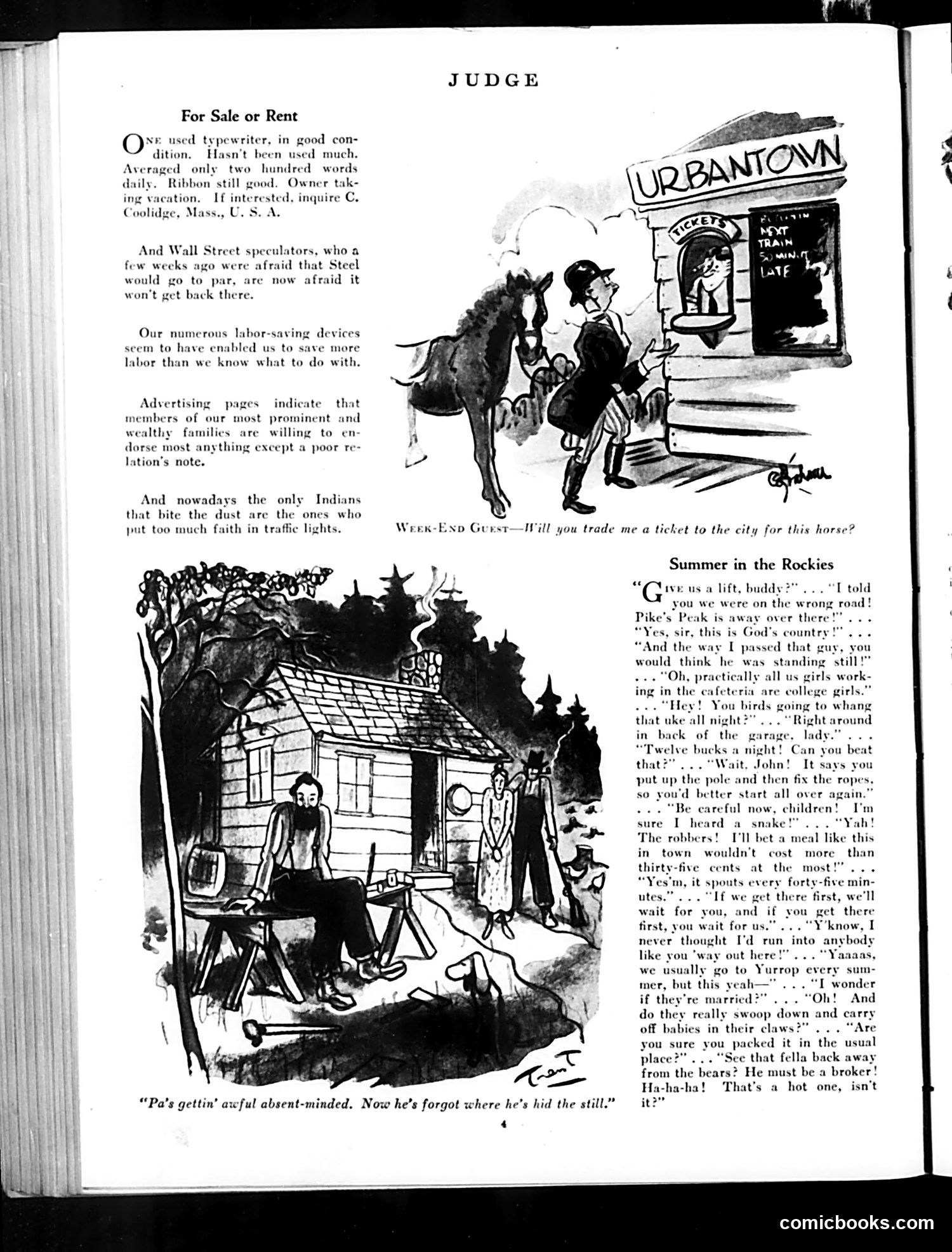
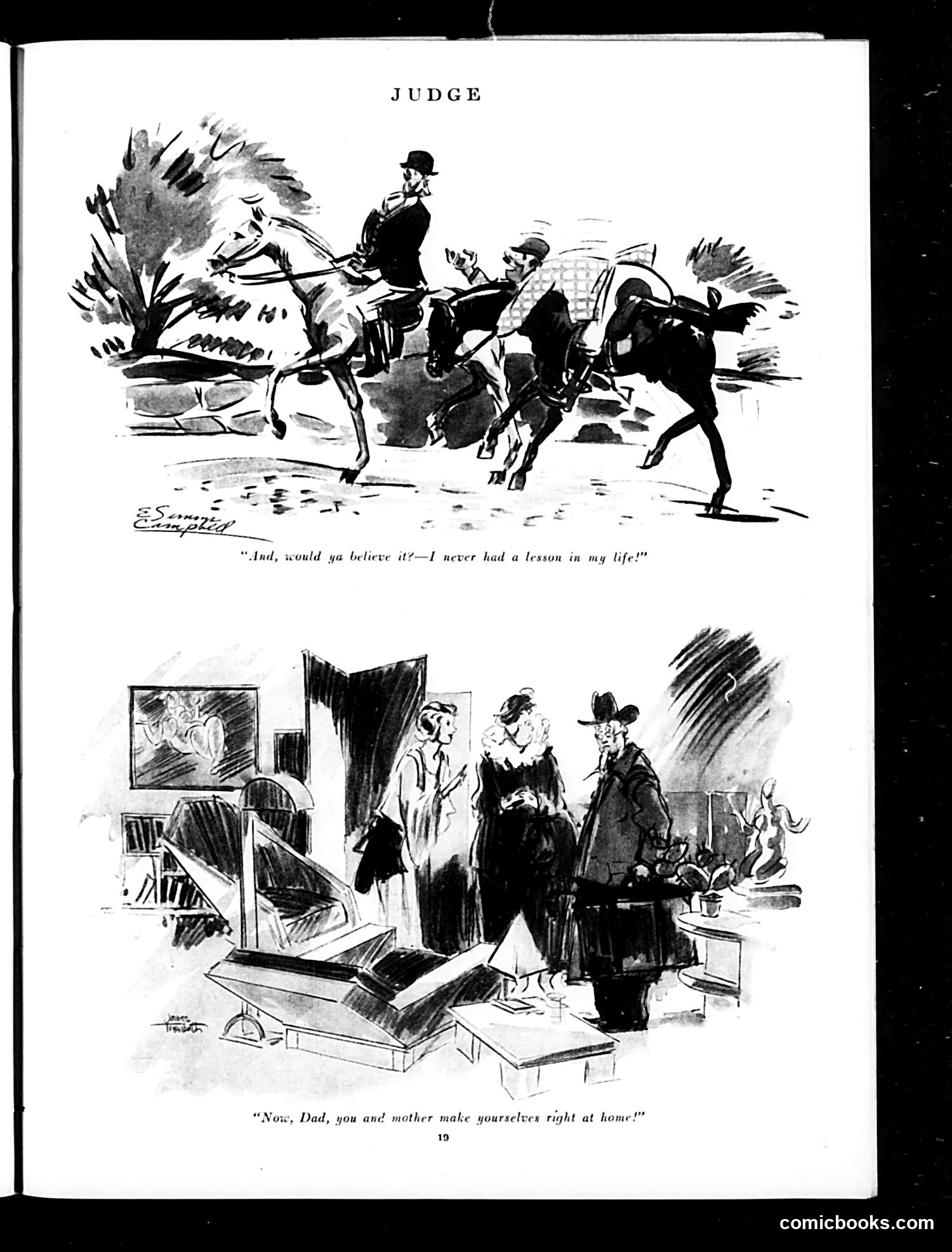
# Analysis of Judge Magazine Page **Top Cartoon ("Week-End Guest"):** A man offers to trade his horse for a city train ticket at an "Urbantown" station. The joke satirizes the absurdity of rural visitors unfamiliar with urban life, stereotyping country people as simple-minded for valuing a horse over modern transportation—a common early 20th-century city/country divide trope. **Bottom Cartoon ("Summer in the Rockies"):** Depicts a cabin scene with dialogue capturing tourists' chaotic mountain vacation experience—lost directions, wildlife encounters, mechanical breakdowns, and exaggerated fears about bears and robbery. It mocks urban tourists' romantic notions of rustic adventure clashing with actual hardship and their nervous inexperience outdoors. Both cartoons mock early 1900s American urban-rural cultural gaps and tourist pretensions.
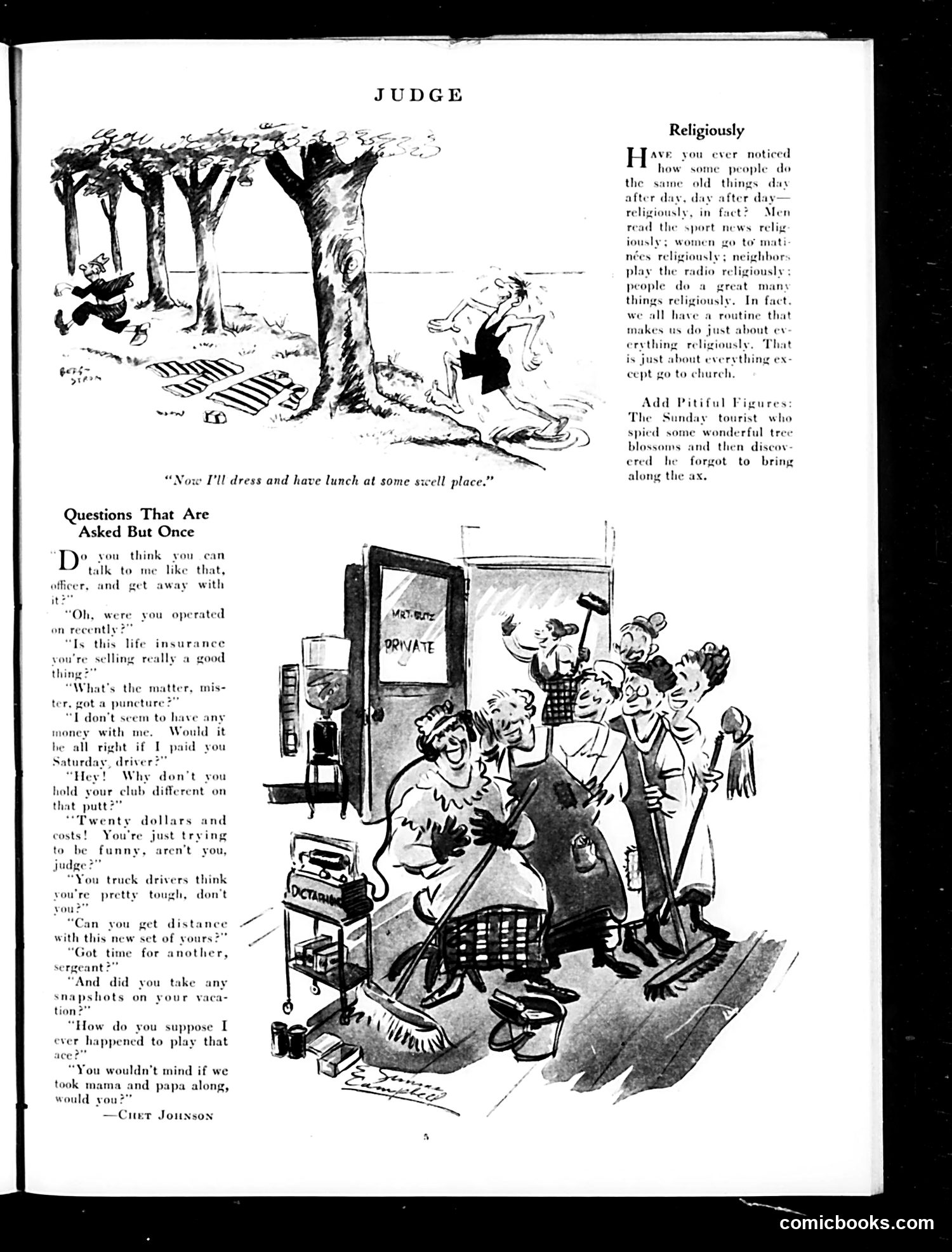
# Analysis of Judge Magazine Page **Top Section ("Religiously"):** Satirizes how people perform routines "religiously" without genuine devotion—reading news, listening to radio, attending church—suggesting habit rather than sincere belief. The example of a Sunday tourist who admires tree blossoms but forgets to bring an ax is absurdist humor about selective attention. **Bottom Section ("Questions That Are Asked But Once"):** A cartoon showing a crowded taxi or car interior with multiple passengers. The dialogue satirizes repetitive, annoying questions taxi drivers receive from customers—about operations, insurance, accidents, money, and driving ability. The humor derives from the relatable irritation of hearing the same questions repeatedly. Chet Johnson is credited as the artist.
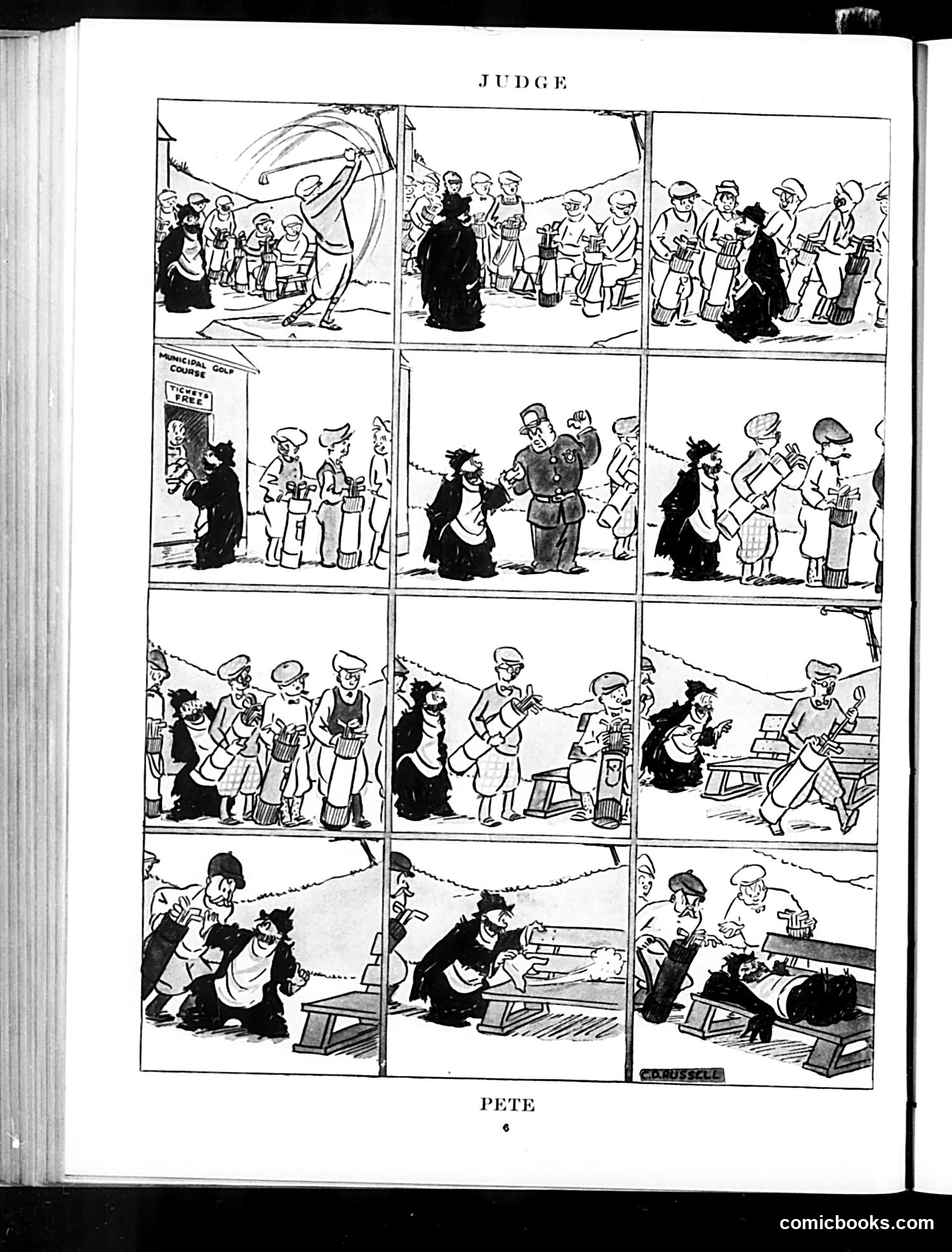
# Judge Magazine Comic Strip Analysis This is a sequential comic strip titled "Judge" (with "Pete" credited at bottom) depicting what appears to be a judicial or authority figure (dressed in black, prominent in each panel) interacting with groups of working-class men in caps and work clothes, seemingly at a golf course (visible signage in one panel). The narrative progresses from the figure's arrival through increasingly physical interactions, culminating in the final panels where the figure appears to be knocked down or falling. The satire likely critiques judicial authority, corruption, or abuse of power—the repeated confrontations suggest either comeuppance for an arrogant official or commentary on class conflict. Without additional historical context or publication date, the specific political reference remains unclear, though the anti-authority tone is evident.
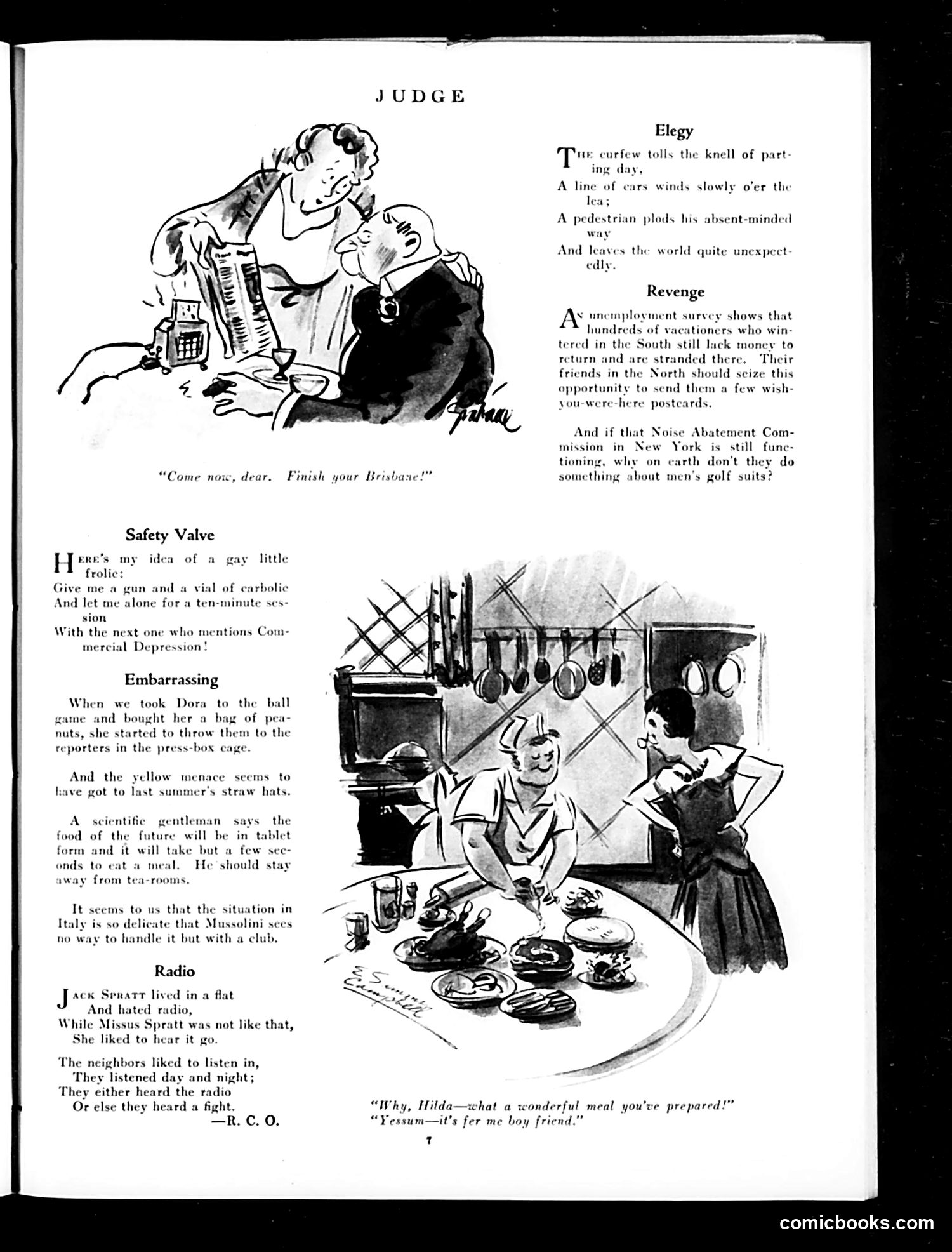
# Judge Magazine Page Analysis This page contains several short humorous pieces satirizing 1920s-30s American life: **"Elegy"** mocks careless pedestrians struck by automobiles—a growing social problem as car traffic increased. **"Revenge"** jokes about Depression-era unemployment, suggesting stranded vacationers deserve sardonic postcards rather than help. **"Safety Valve"** expresses frustration with constant talk of the "Commercial Depression" (likely the Great Depression), fantasizing violent relief. **"Embarrassing"** contains racist imagery ("yellow menace") referencing Asian Americans, mocking a woman throwing peanuts at reporters. **"Radio"** satirizes the new technology's social disruption—families arguing over radio versus fighting neighbors. The bottom cartoon shows a woman serving food to her boyfriend, with social commentary about class and courtship rituals. The page reflects contemporary anxieties: automobile dangers, economic hardship, racial prejudices, and rapid technological change reshaping domestic life.
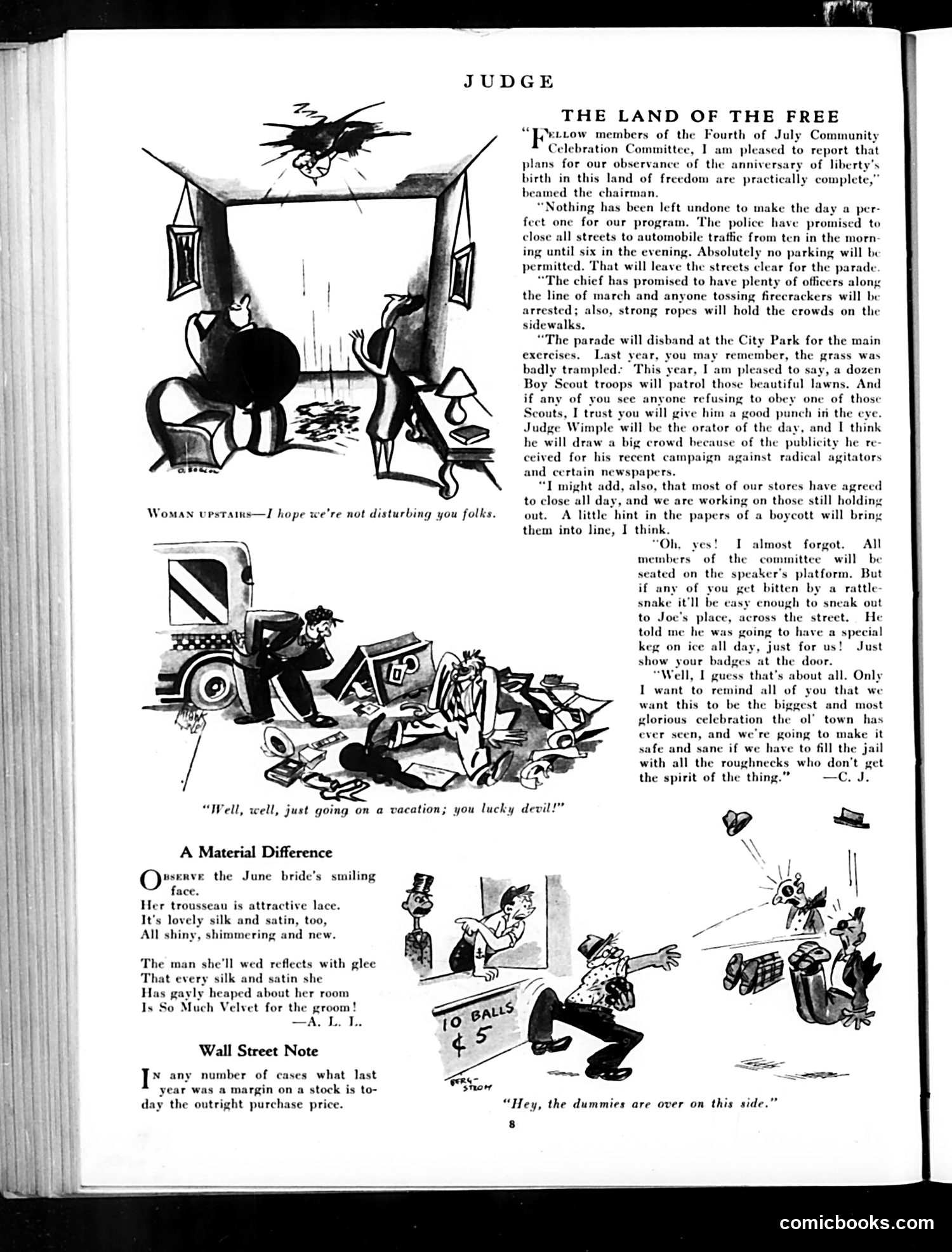
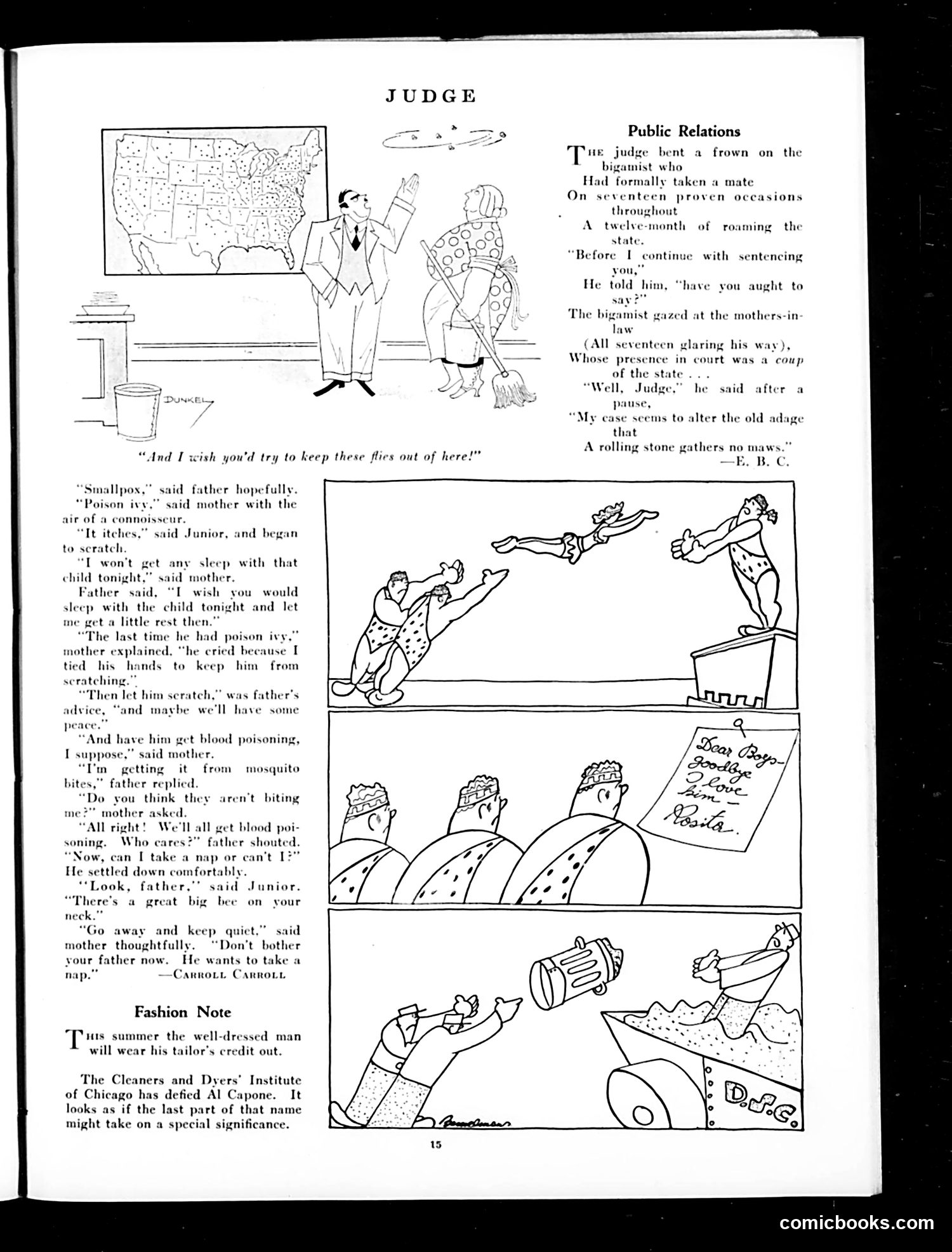
# Analysis of Judge Magazine Page This page satirizes American civic hypocrisy around the Fourth of July celebration. The main article "The Land of the Free" presents a committee chairman listing preparations that contradict the holiday's promise of liberty: police will ban traffic and parking, arrest firecracker-throwers, restrain crowds with ropes, enforce Boy Scout patrols (with implicit threat of violence—"give him a good punch"), coerce store closures through boycott threats, and jail "roughnecks" who don't comply—all while claiming to celebrate freedom. The satire is heavy-handed: the chairman ironically promises to make the celebration "safe and sane" by filling "the jail with all the roughnecks," exposing the contradiction between proclaimed liberty and actual authoritarian control. The companion cartoons mock social pretense: "Woman Upstairs" shows domestic disruption, while "A Material Difference" jokes about marriage economics (the groom sees his bride's trousseau as personal wealth gain). The "Wall Street Note" references stock-market margin practices, unrelated to the freedom theme but typical of Judge's satirical mix.
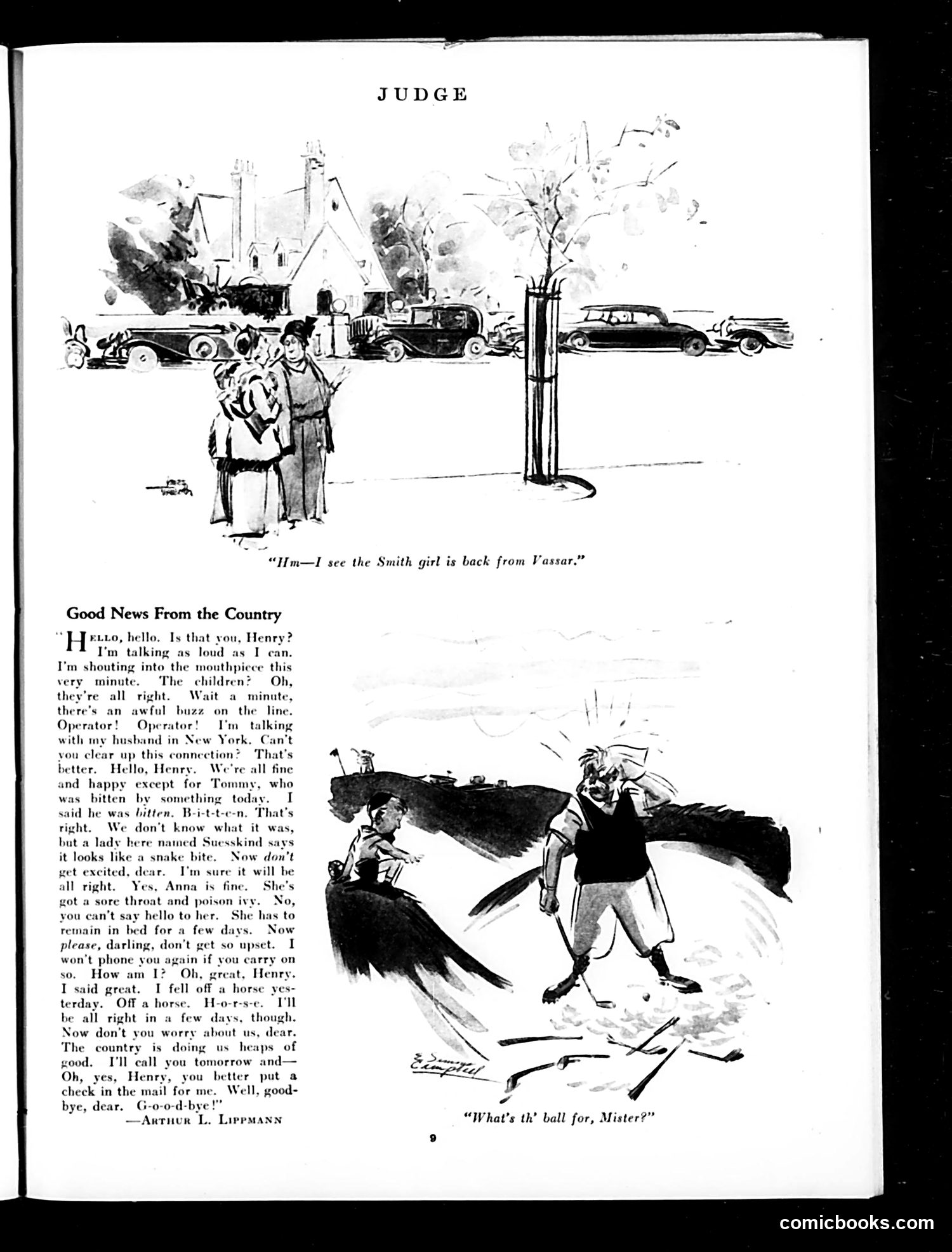
# Explanation for Modern Readers This page contains two unrelated satirical pieces from *Judge* magazine: **Top cartoon:** A society joke about a young woman returning from Vassar College (an elite women's institution). The caption "I see the Smith girl is back from Vassar" appears to mock wealthy families' social pretensions—suggesting her return is notable gossip among the upper classes. **Main story:** "Good News From the Country" satirizes rural life and early telephone technology. A woman calls her husband in New York, struggling with poor phone connection while breathlessly reporting domestic disasters: a child bitten (possibly by a snake), another child with poison ivy, and she herself having fallen off a horse. The humor lies in her contradicting herself ("don't get upset") while describing catastrophes, and the absurdity of outdated telephone service. The author (Lippmann) mocks both rural incompetence and city-dwellers' anxiety about country living. **Bottom cartoon:** Shows a child asking about a ball in a snowy scene—likely commenting on winter sports or children's play, though context is unclear without the caption.
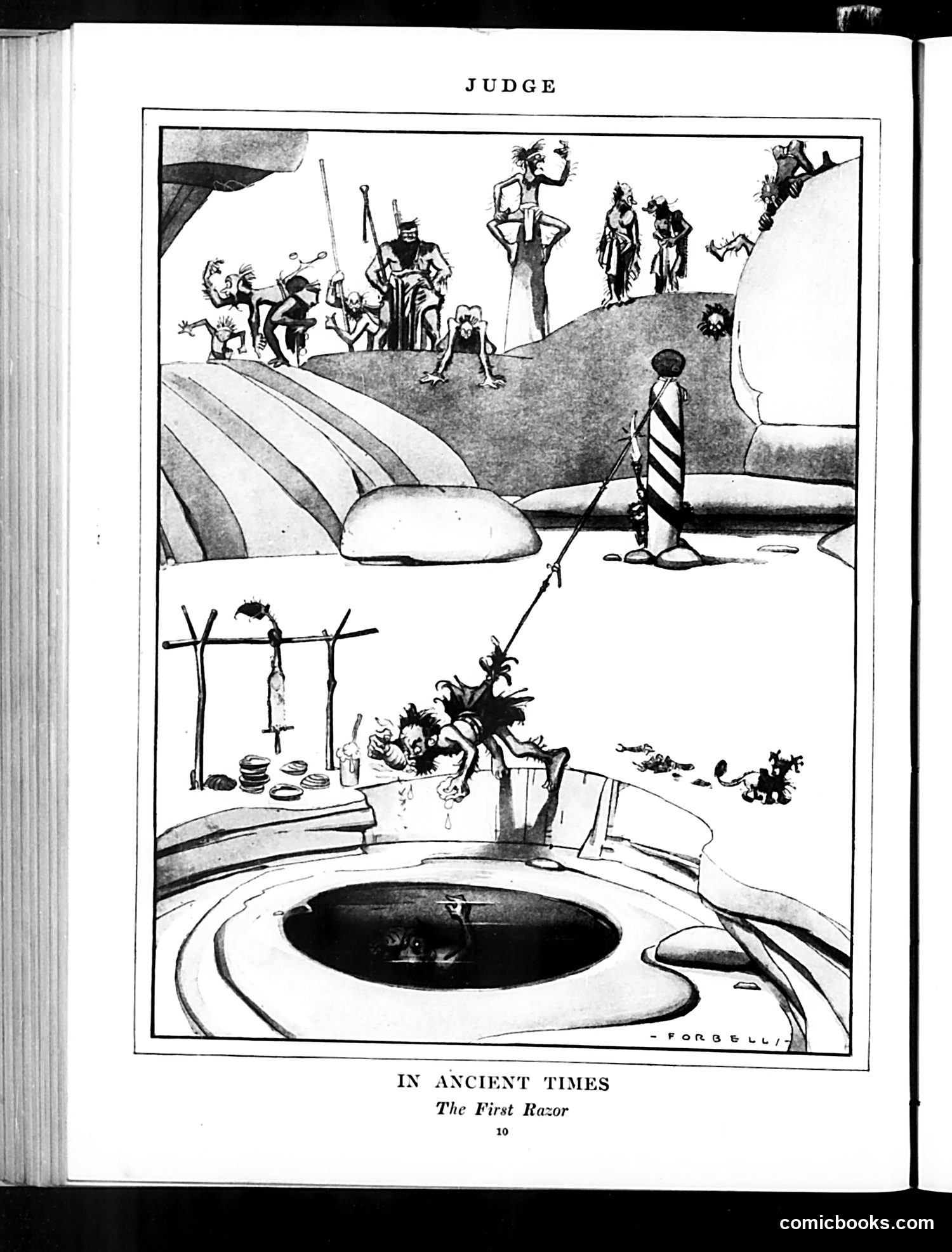
# "The First Razor" - Judge Magazine Cartoon This cartoon satirizes humanity's invention of the razor in ancient times. The upper panel shows a primitive society with figures observing a central character demonstrating the first razor. The lower panel depicts the chaotic result: a figure bleeding profusely after apparently using it, suspended over a pit while others watch in alarm. The joke is straightforward slapstick humor: the "first razor" was likely dangerously crude and ineffective, causing the hapless user serious injury rather than a clean shave. By framing this as "ancient times," the cartoonist humorously suggests that even humanity's earliest attempts at personal grooming were disasters—a commentary on either primitive technology or human clumsiness with new inventions.