A complete issue · 36 pages · 1931
Judge — May 2, 1931
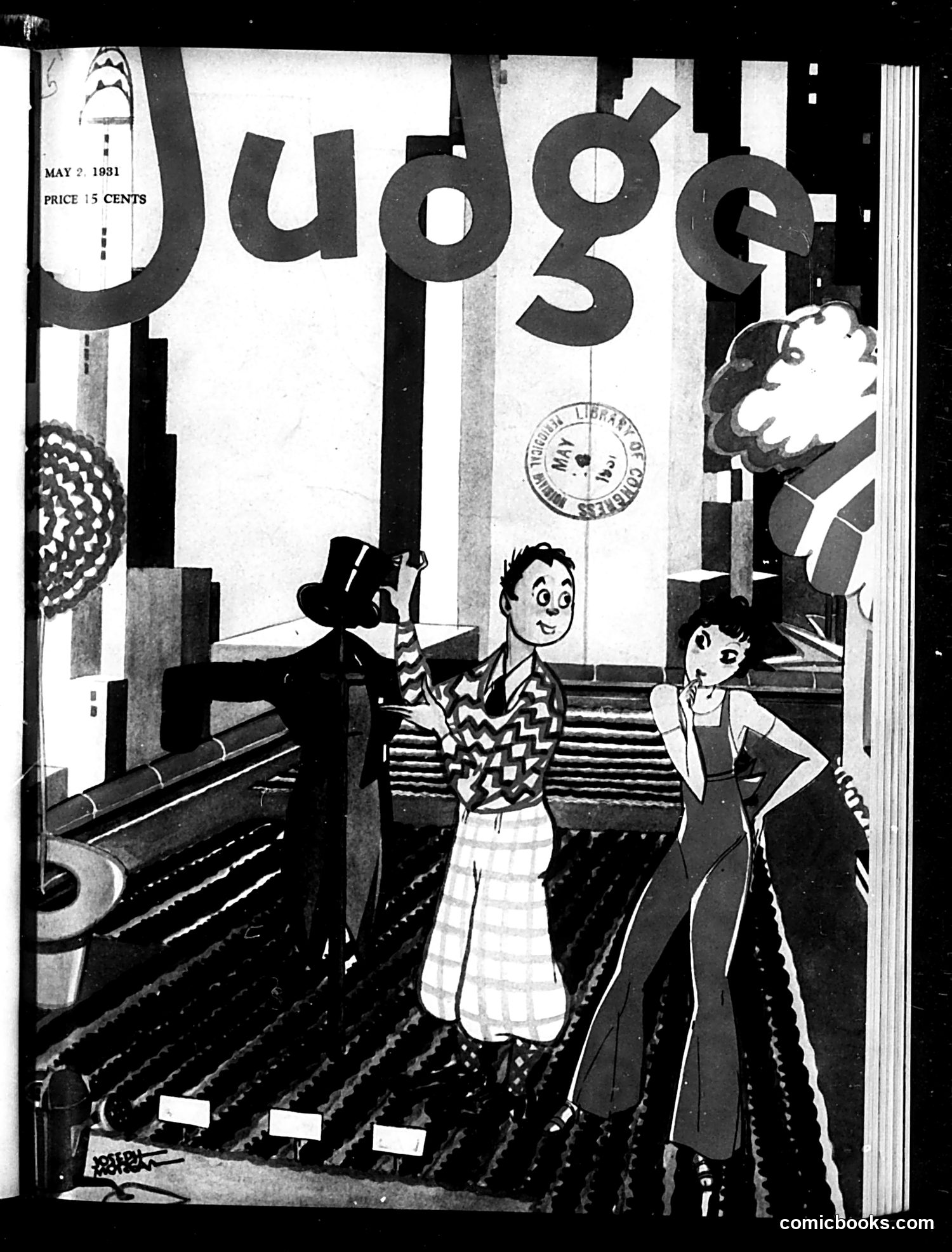
# Judge Magazine, May 1931 This cover depicts three characters in what appears to be a theater or nightclub setting beneath large numbers "1931." The central figure in a patterned jacket holds a top hat, flanked by two women in performance attire. A library stamp visible on the page indicates institutional ownership. The specific identities of these figures are unclear from the image alone. However, given Judge magazine's satirical nature and the 1931 date, this likely comments on contemporary entertainment, possibly vaudeville or theatrical performers. The stylized, caricatured art style was typical of the era's comics and satire. The "15 cents" price reflects Depression-era economics. Without additional context identifying the specific performers or referencing the article text, the precise satirical target remains uncertain.

# Analysis This page is primarily an **advertisement for Ethyl Gasoline**, not political satire. The "Power under control" headline uses an eagle silhouette as a metaphor for automotive performance. The ad compares controlling an eagle's wing power to controlling gasoline combustion. It claims Ethyl fluid prevents engine "knock" (pre-detonation), uneven explosions, and overheating—delivering smooth, consistent power. The Ethyl Corporation (New York City) marketed this as a performance advantage for automobiles. While *Judge* magazine typically contained satire, this particular page is straightforward commercial messaging, using evocative imagery rather than political commentary. The eagle represents mastery and control, appealing to aspirational motorists of the era.
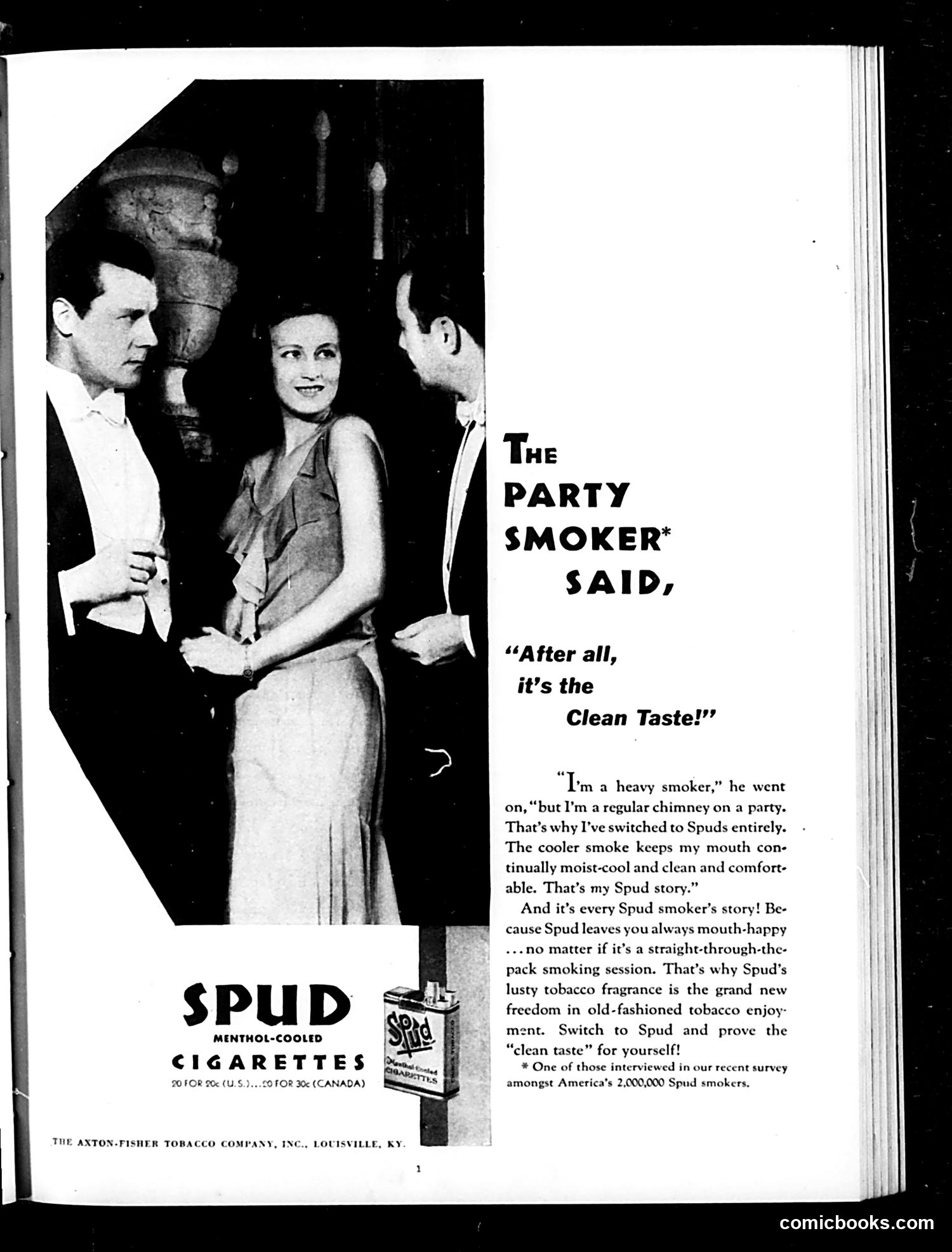
# Analysis This page is primarily a **cigarette advertisement**, not political satire. It promotes Spud menthol-cooled cigarettes with a social scene showing well-dressed people at what appears to be a formal party or event. The "party smoker" quote emphasizes the product's appeal to social smokers, claiming the "clean taste" makes smoking pleasant in social situations. The advertisement positions Spud as superior because it keeps "your mouth...cool and comfortable." This reflects 1930s-40s advertising conventions when cigarettes were marketed as sophisticated, socially desirable products with health-adjacent claims ("clean taste"). The Anton-Fisher Tobacco Company, Louisville, KY published this. There is no political cartoon or satire on this page—it is purely commercial messaging presented in Judge magazine's format.
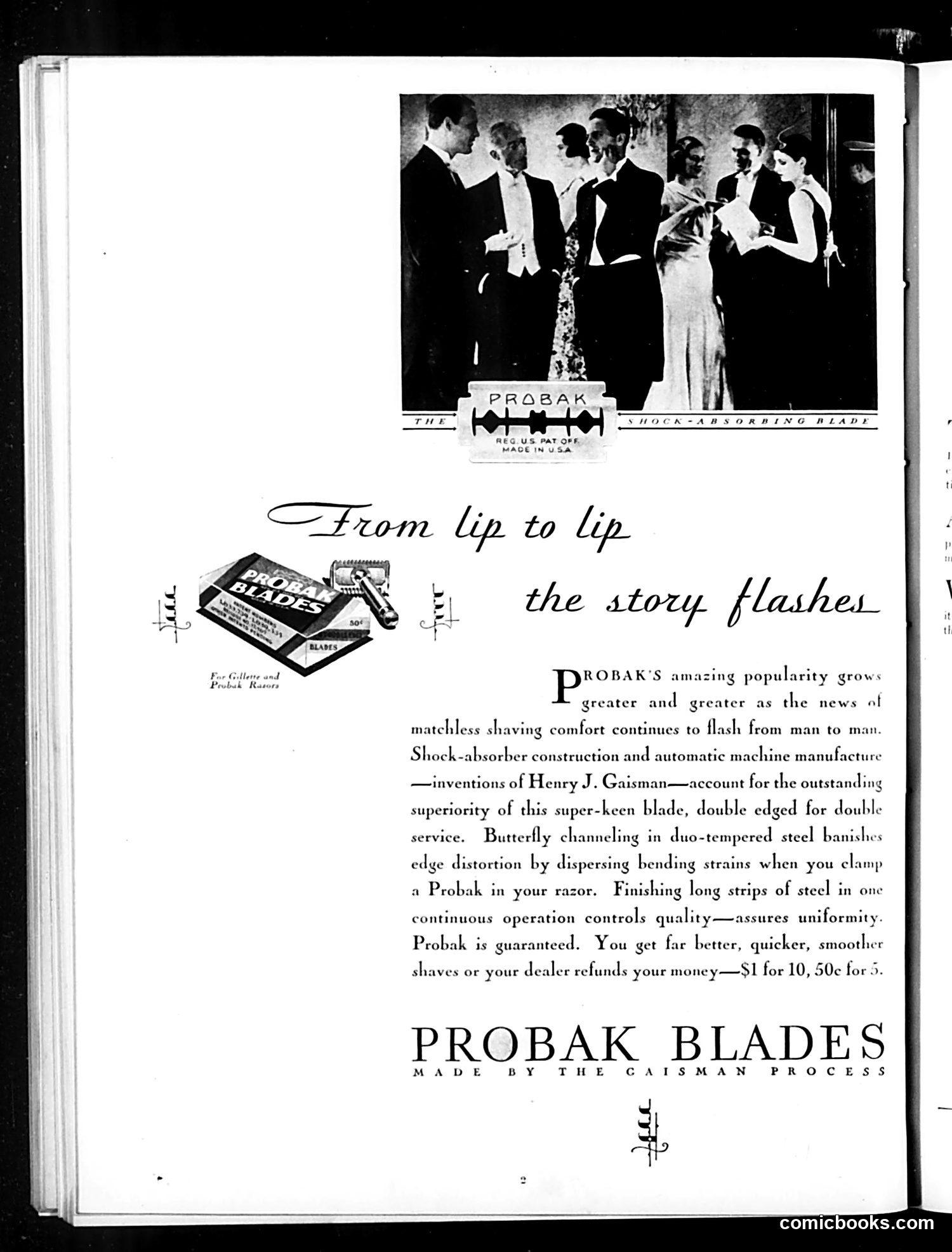
# Analysis This page is primarily **advertising, not satire or political commentary**. It's a full-page advertisement for Probak razor blades, featuring a photograph of well-dressed people at what appears to be a formal social gathering (a cocktail party or similar event). The ad's headline—"From lip to lip the story flashes"—uses social gossip as a marketing angle, suggesting that Probak blades' quality spreads through word-of-mouth recommendations. The copy emphasizes technical features: shock-absorbing construction, double-edged design, and guaranteed quality. The ad attributes these innovations to "Henry J. Gaisman" and the "Gaisman Process," positioning Probak as a premium product backed by scientific advancement. This is straightforward commercial messaging, not editorial cartoons or political satire.
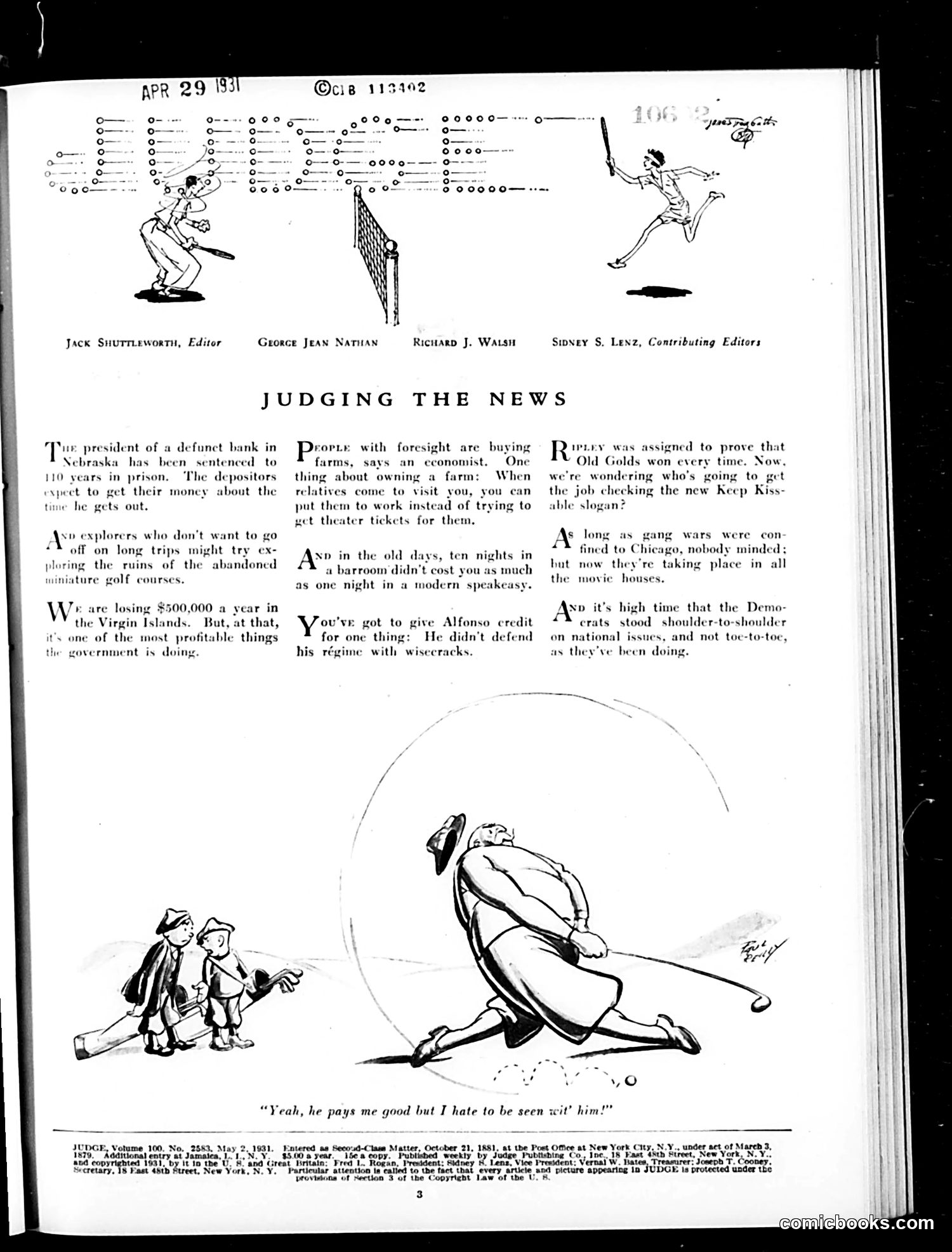
# "Judging the News" - April 29, 1931 This page contains editorial commentary and cartoons critiquing current events. The main cartoon depicts a man swinging a golf club while appearing to stumble or fall, captioned "Yeah, he pays me good but I hate to be seen wit' him!" The commentary addresses several topics: a defunct Nebraska bank president sentenced to prison; farmers buying land with foresight (contrasted with those seeking theater tickets); explorers avoiding Arctic expeditions; the financial drain of the Virgin Islands; gang wars now appearing in movie theaters; and credit given to someone named Alfonso for "not defending his regime with wisecracks." The golf cartoon likely satirizes a wealthy patron embarrassed by association with his employee—a commentary on class pretension during the Depression era. The specific references are unclear without additional historical context, though the tone reflects 1931's economic crisis concerns.
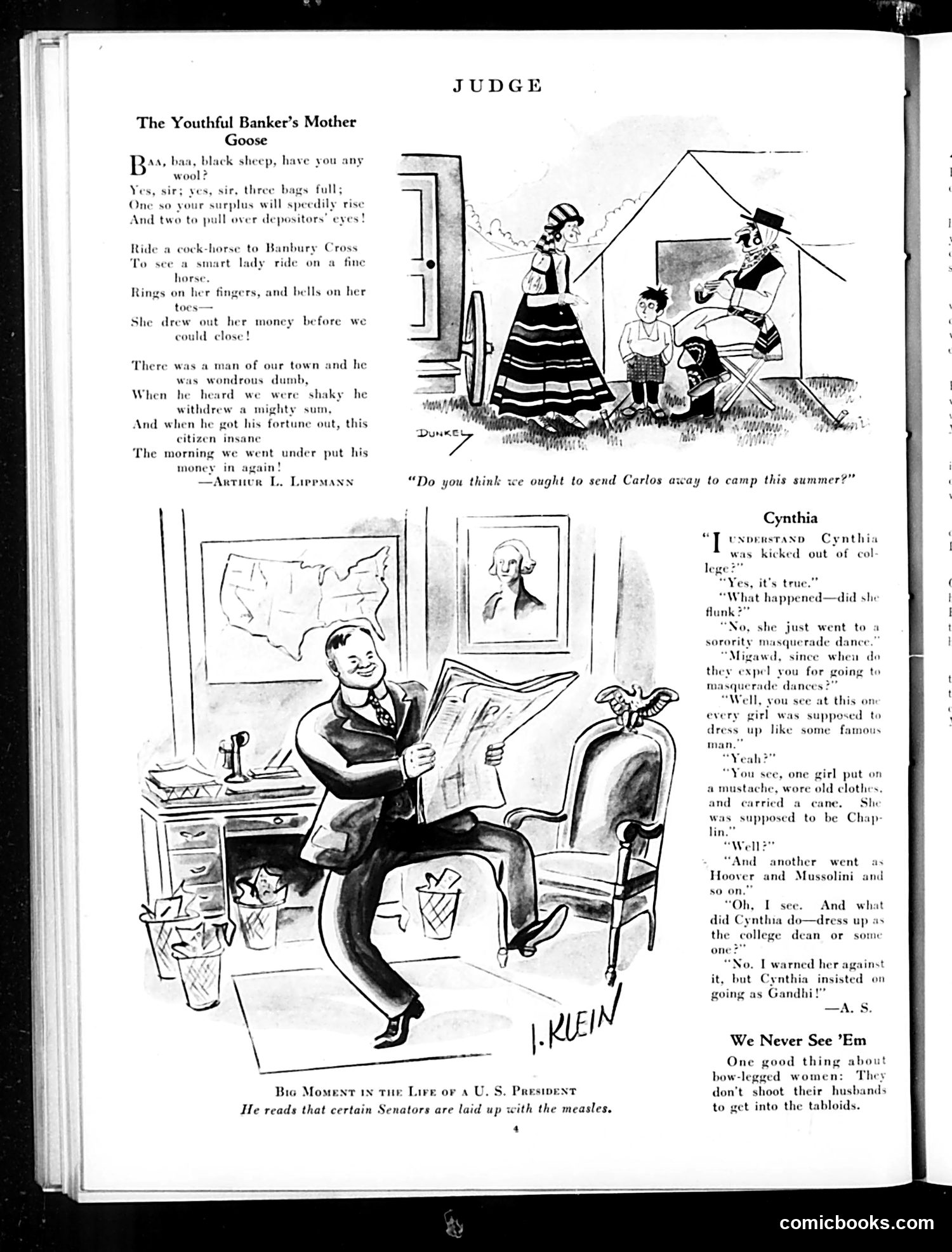
# Analysis of Judge Magazine Page **"The Youthful Banker's Mother" (top cartoon):** A humorous poem about a wealthy woman who flaunts her riches—rings, bells, fine horses—while her banker husband remains financially unstable. The satire targets nouveaux-riche display and financial precariousness masking itself through conspicuous consumption. **"Big Moment in the Life of a U.S. President" (middle cartoon):** Shows a president reading newspapers while surrounded by waste baskets, with the caption suggesting certain senators "are laid up with the measles." This appears to satirize either presidential isolation from legislative reality or senators' frequent absences affecting governance. **"Cynthia" (right column):** A brief anecdote mocking a college girl who attended a masquerade as Gandhi, causing offense—likely satirizing pretentious or ignorant costume choices among privileged youth.
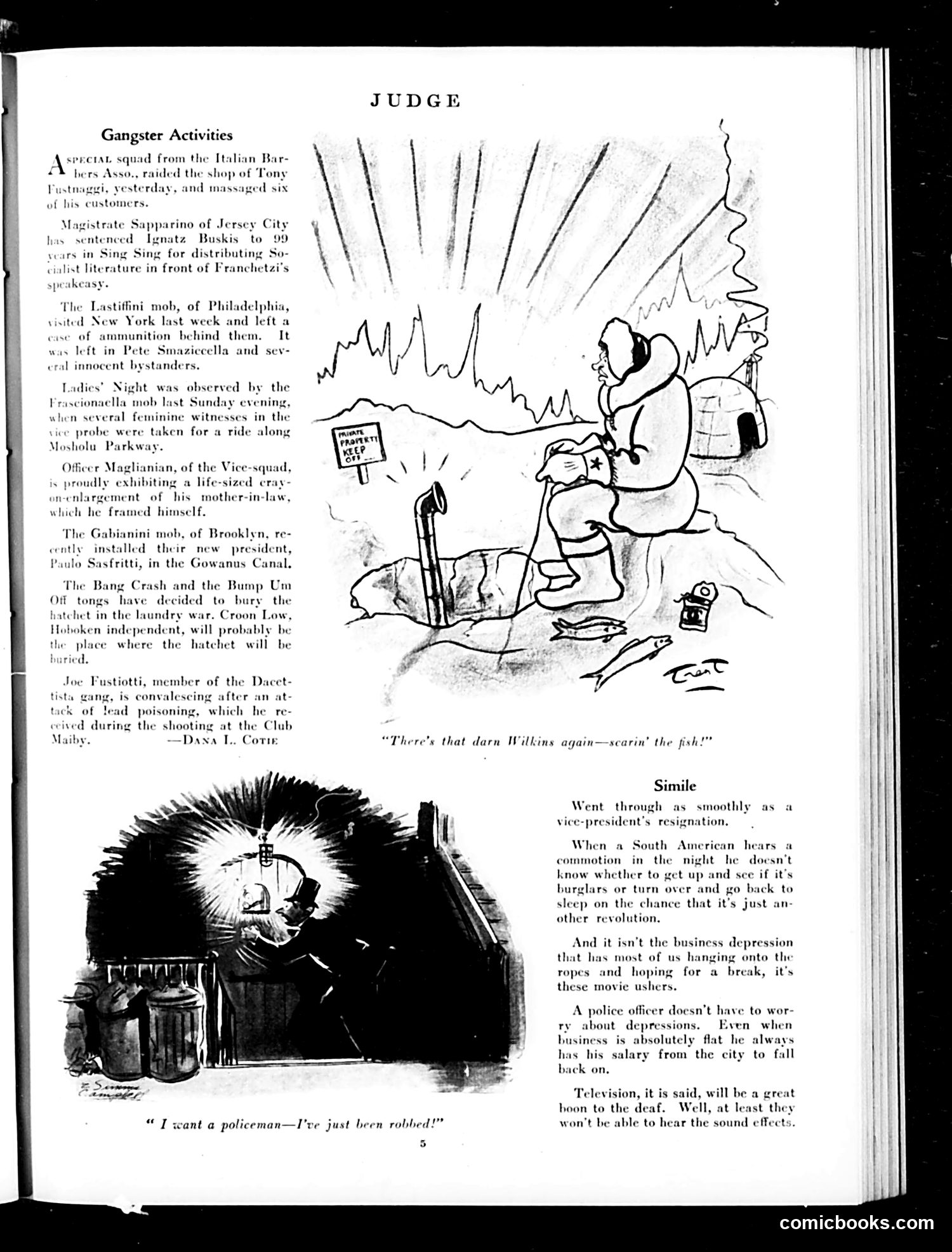
# Analysis of Judge Page This page contains two distinct cartoons satirizing different aspects of 1920s-30s American life. **Top cartoon:** Depicts gangster activity, referencing real criminal incidents (Italian Barbers Association raid, Lasitanni mob, Gabiniani mob of Brooklyn). The humor mocks how organized crime figures conduct themselves like respectable citizens—here, someone fishing while armed gangsters operate around them. The caption "There's that darn Wilkins again—scarin' the fish!" treats violence as an everyday nuisance. **Bottom cartoon:** Shows a robbery victim pleading "I want a policeman—I've just been robbed!" The satire criticizes police ineffectiveness during the crime wave, suggesting citizens cannot rely on law enforcement for protection. Both cartoons reflect Prohibition-era anxieties about lawlessness and governmental failure to maintain order.
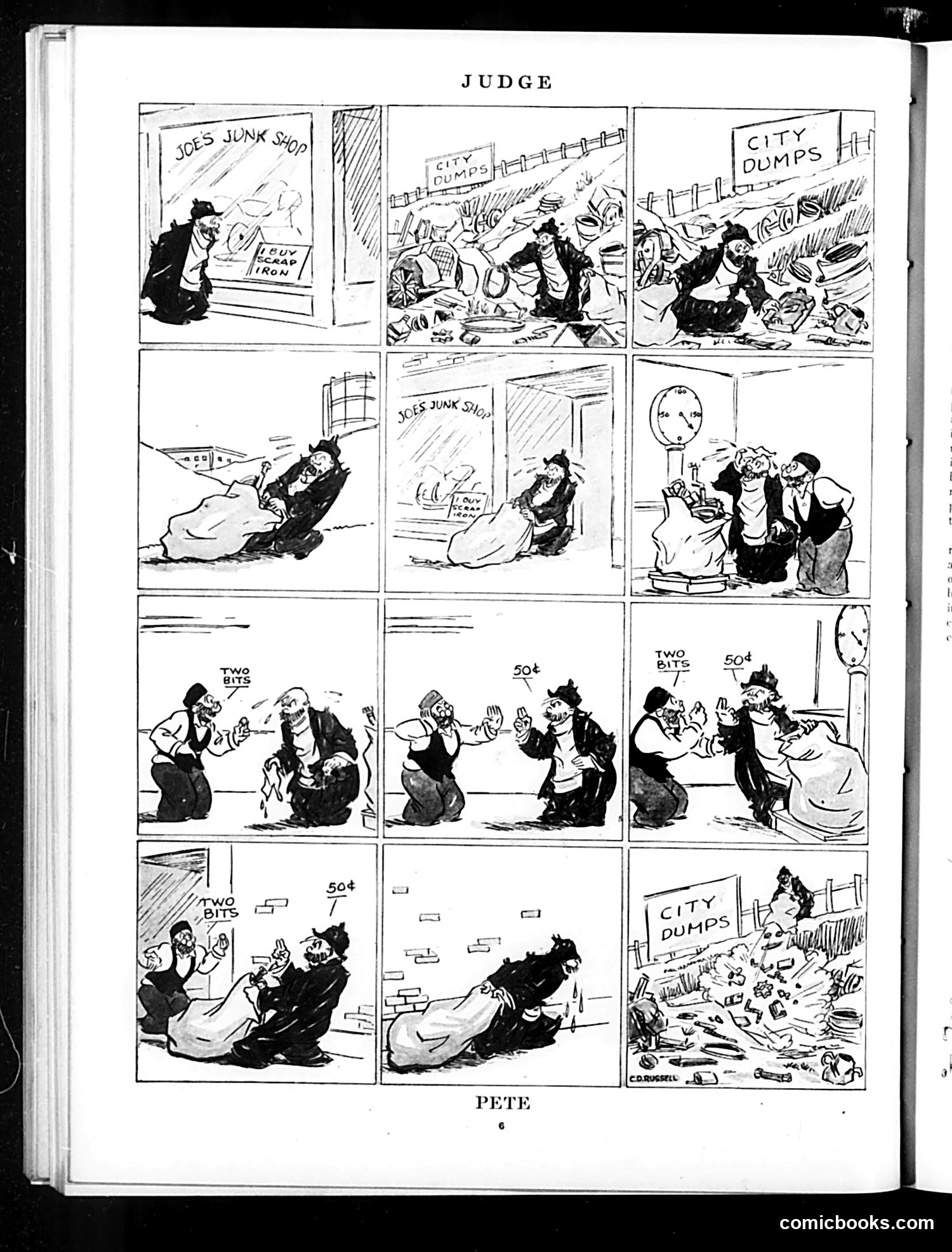
# Judge Comic: "Judge" and "Pete" This appears to be a two-panel comic strip satirizing urban poverty and homelessness. The narrative follows a destitute man moving between locations—from Joe's Junk Shop to the City Dumps—scavenging for survival. The repeated exchanges of "two bits" and "50¢" suggest he's panhandling or trading scraps. The satire targets economic inequality: the contrast between established businesses (junk shops, dumps) and those forced to live in squalor. The figure's journey through progressively degraded spaces—from commerce to waste disposal—critiques how society relegates the poor to its margins. The strip's dark humor and visual economy reflect Judge magazine's working-class audience perspective on Depression-era hardship and municipal indifference to vagrancy and destitution.
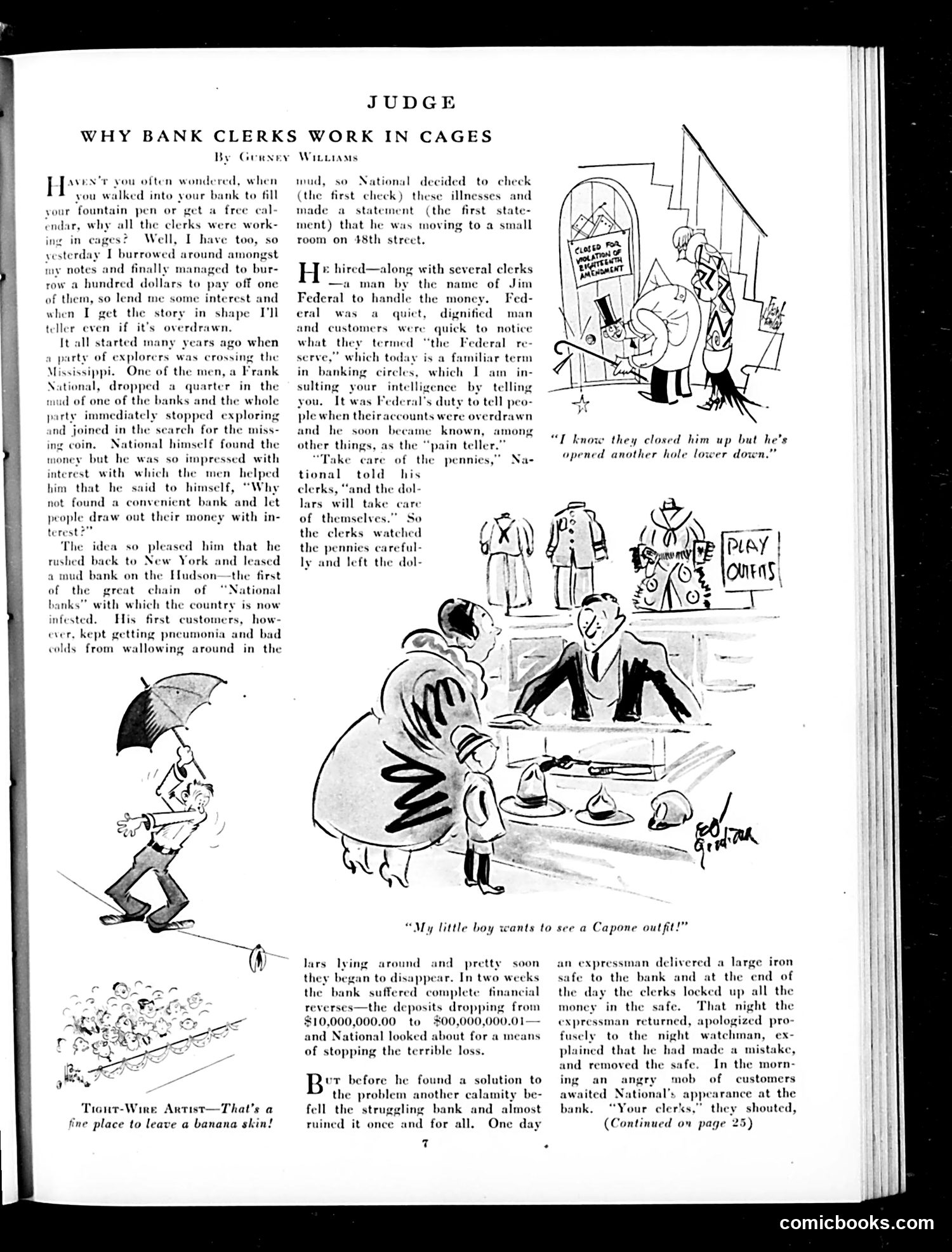
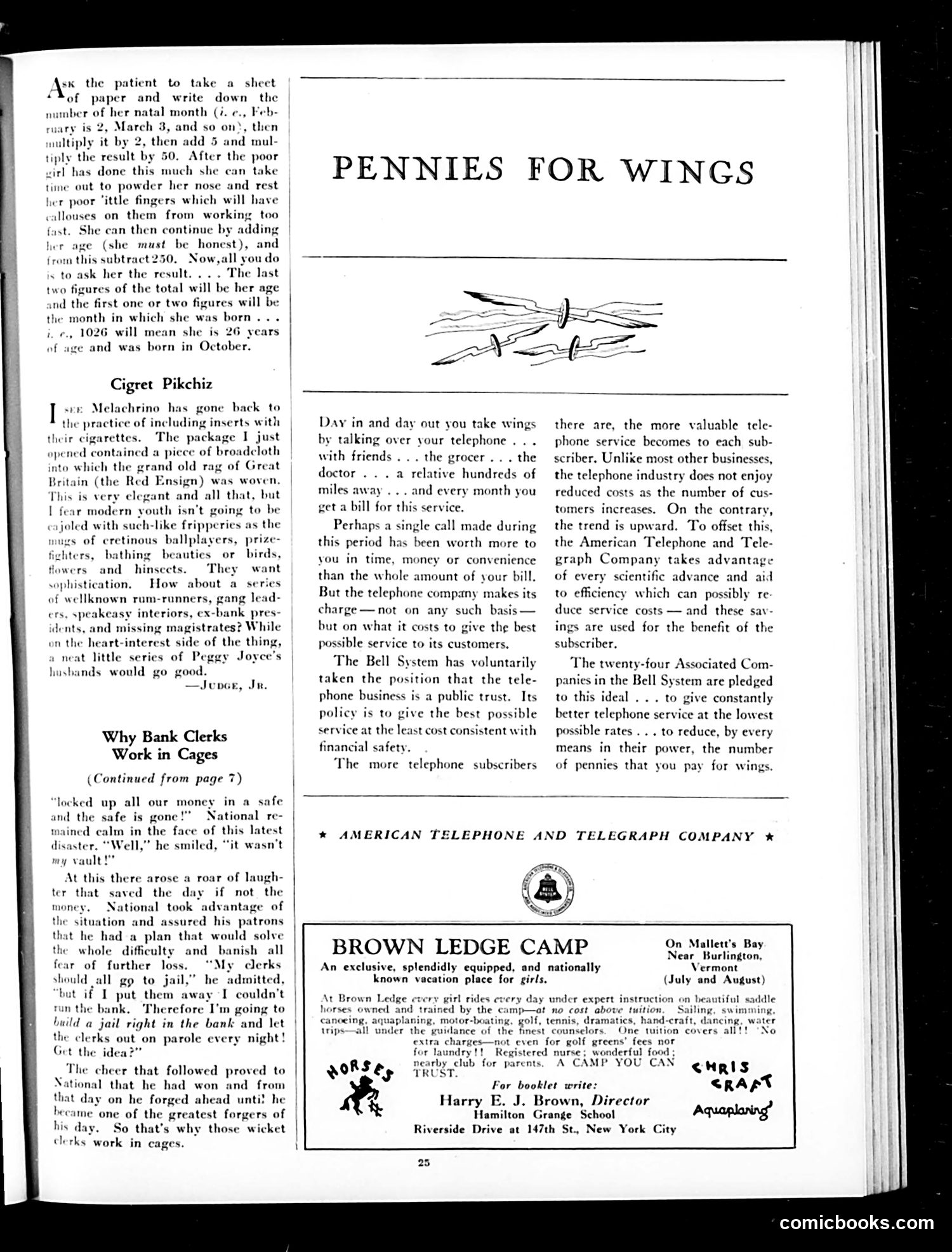
# "Why Bank Clerks Work in Cages" — Judge Magazine Satire This humorous article by Chesney Williams explains the origin of bank clerk cages through a fictional tall tale. The satire mocks banking practices and incompetence. The story claims a man named "Frank National" founded the first bank after finding a lost quarter, eventually moving to a proper building. He hired "Jim Federal" to handle money—a man so quiet he became known as the "pain teller" for delivering bad news about overdrafts. The satire's point: bank clerks need protective cages because the organization is chaotic and unreliable. The story illustrates this through two disasters—clerks losing track of pennies (causing massive deposit losses) and an expressman accidentally removing the entire safe. The cartoons reinforce the joke: one shows clerks confined in a cage labeled "play chetis"; another depicts a customer requesting a "Capone outfit" (likely referencing 1920s gangster Al Capone), suggesting banks are as lawless as organized crime. The satire suggests American banking is fundamentally ridiculous and poorly managed.
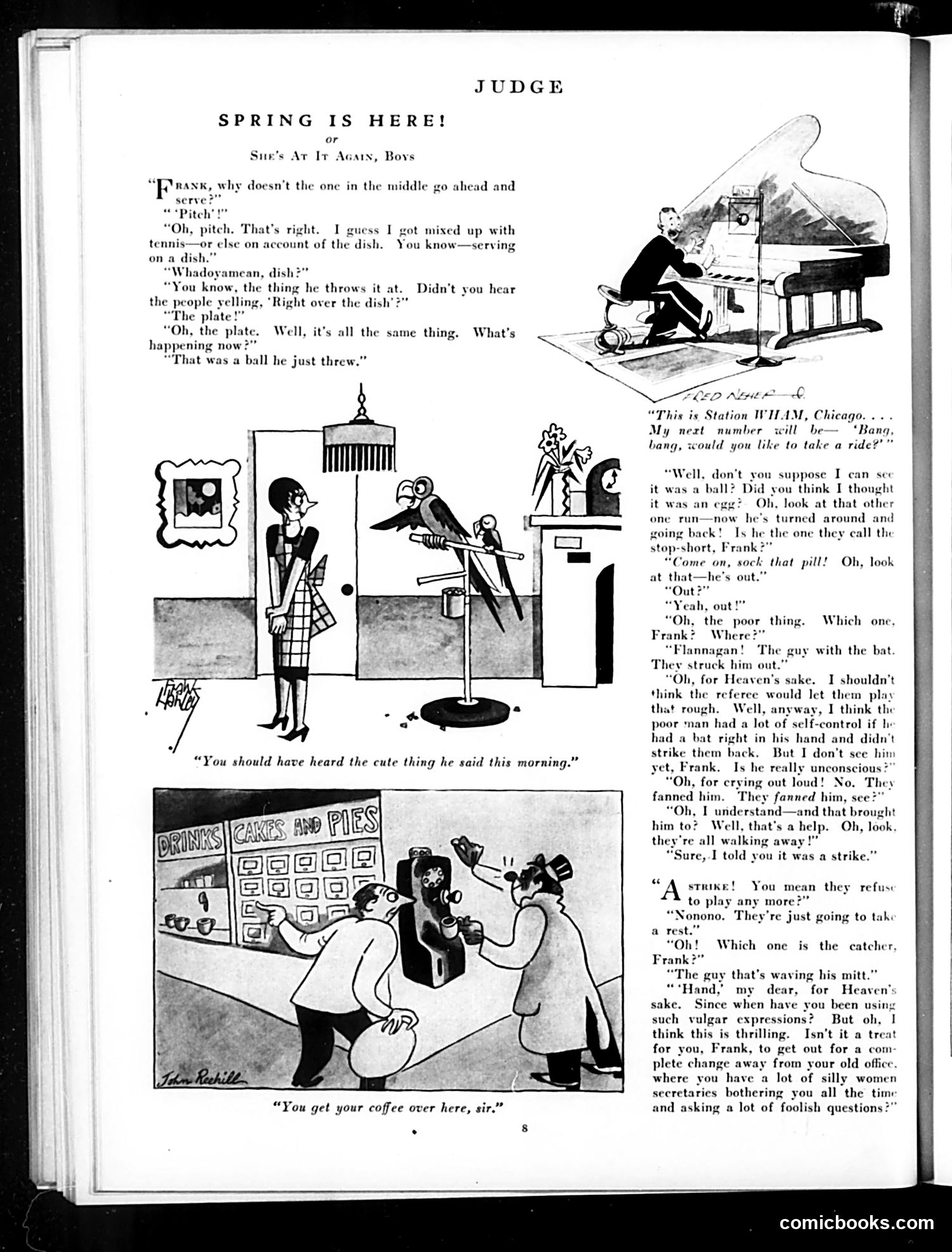
# Explanation for Modern Readers This page satirizes spring baseball season and the clash between urban office culture and outdoor leisure. The main comic shows a woman unfamiliar with baseball terminology confusing "serving" (tennis) with "pitching," and mixing up baseball vocabulary—calling the plate a "dish," misunderstanding "striking out," and misusing the word "hand" instead of "mitt." The satire targets white-collar workers, particularly office men, taking rare breaks from work. The woman's cluelessness about sports reflects 1920s-era gender stereotypes (she's unfamiliar with "masculine" pursuits), while her complaints about "silly women secretaries" suggest frustration with the modern office workplace. The smaller cartoon shows a woman at a lunch counter, establishing the broader theme: spring brings relief from confining office routines. The humor rests on contrasting sophisticated urbanites' ignorance of common athletic knowledge and their eagerness to escape mundane professional life.
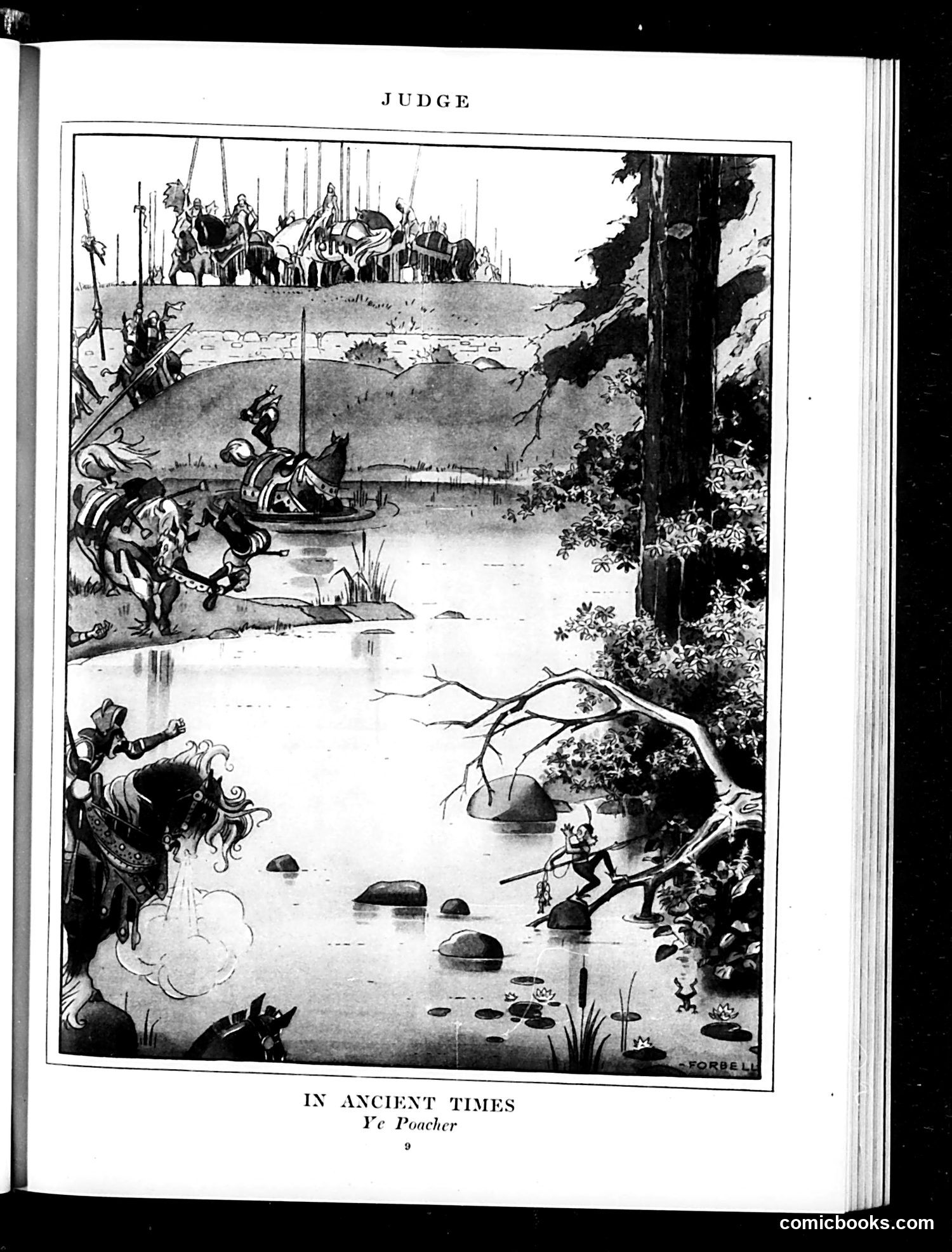
# "Judge in Ancient Times: Ye Poacher" This satirical illustration depicts a medieval or ancient hunting scene. A figure identified as "Ye Poacher" (lower left, shown in elaborate dress) appears to be illegally hunting or fishing in restricted waters or lands. The scene shows armed guards or nobles on the riverbank and fortified positions in the background, suggesting this is aristocratic or royal property being violated. The satire likely comments on class tensions: poaching was historically a crime that poor people committed for survival, while the wealthy controlled hunting and fishing rights. By presenting it as "ancient times," the cartoonist may be suggesting these class-based inequalities persist despite being outdated customs. The detailed armor and medieval setting emphasize how longstanding these social divisions are. The artist's signature "FORBEL" appears in the lower right.
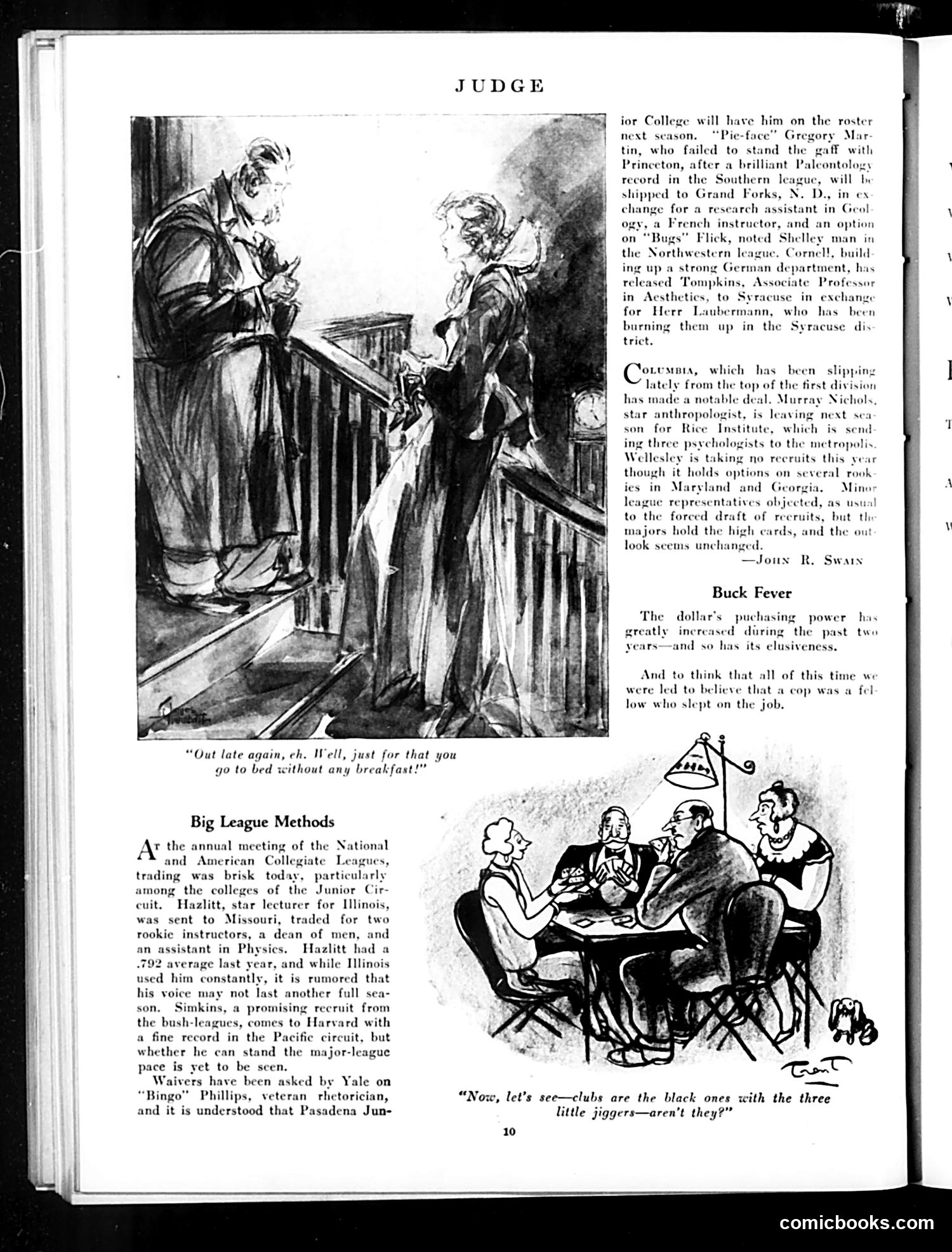
# Satire of College Athletic Recruitment This page satirizes college athletics' increasingly commercialized recruiting practices, presented as if universities were trading academic faculty like baseball players. **The Main Cartoon** (top): Shows a stern figure (likely a college administrator) scolding someone about staying out late—a commentary on loose discipline. **"Big League Methods"**: Mocks how colleges now "trade" professors between institutions. The text describes absurd exchanges: Illinois trades lecturer Hazlitt to Missouri for "two rookie instructors, a dean of men, and an assistant in Physics"—treating education like professional sports drafts. Yale is asking waivers on "Bingo" Phillips, a rhetorician. **The Lower Cartoon**: Appears unrelated socially insensitive humor about card games and racial stereotypes (text mentions "black ones"). **"Buck Fever"**: A brief quip about inflation and police corruption—the dollar's value increased but remains elusive, and people mistakenly believed cops were lazy. The satire critiques how higher education had adopted big-business methods, commodifying faculty and turning academia into a competitive market resembling professional baseball.