A complete issue · 36 pages · 1930
Judge — September 20, 1930
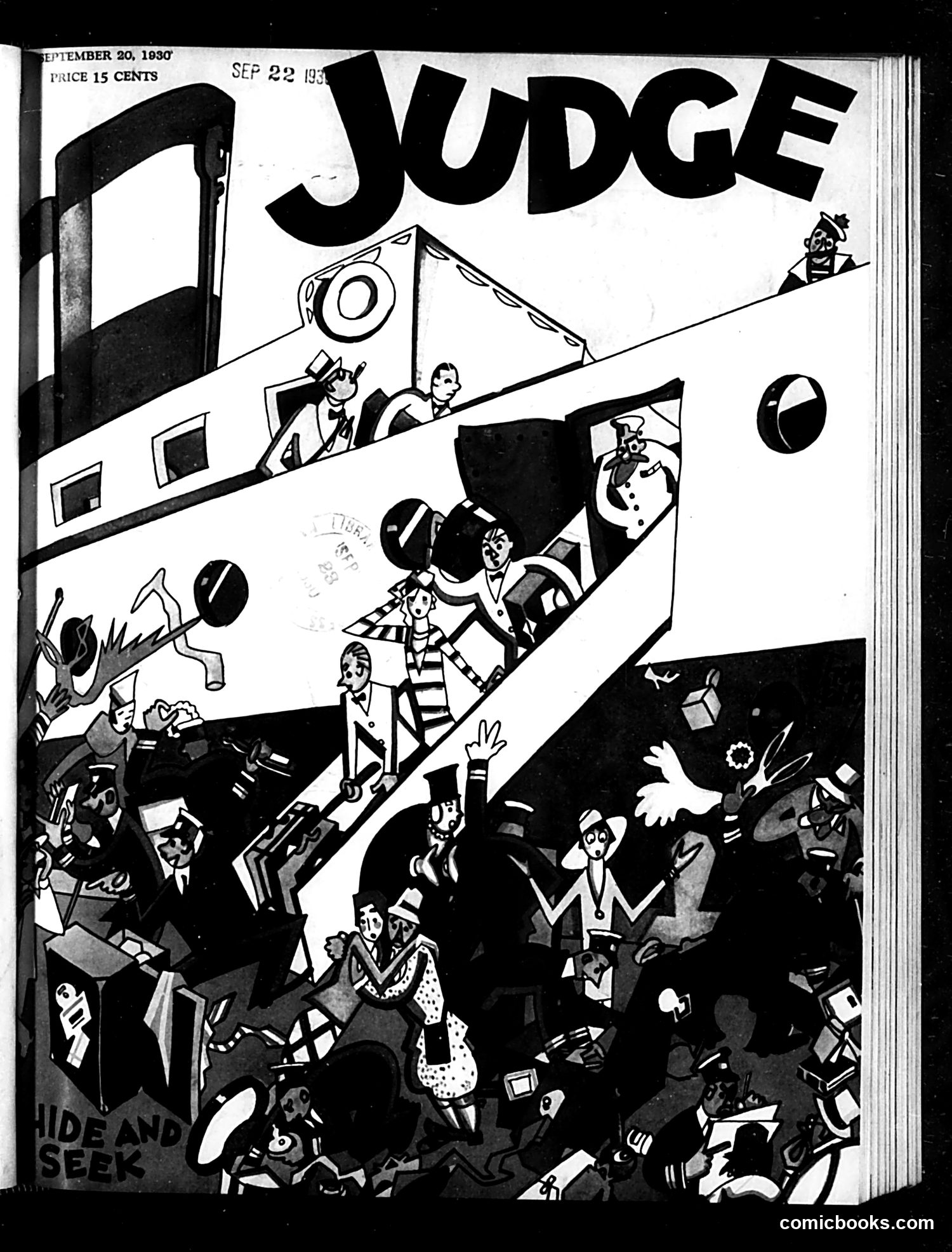
# Judge Magazine Cover Analysis — September 20, 1930 This cover depicts a chaotic "Hide and Seek" scene set in what appears to be a building or ship with multiple levels. Well-dressed figures and children are scattered throughout various hiding spots — behind doors, in compartments, and on different floors — while playing the children's game. The satirical point likely comments on social behavior during the Great Depression (1930), possibly mocking how people of different classes or social standings were "hiding" or concealing themselves during economic crisis. The elaborate, busy composition with figures cramped into confined spaces could reference housing shortages, overcrowding, or the desperate circumstances many faced. The specific political reference remains unclear without additional context.
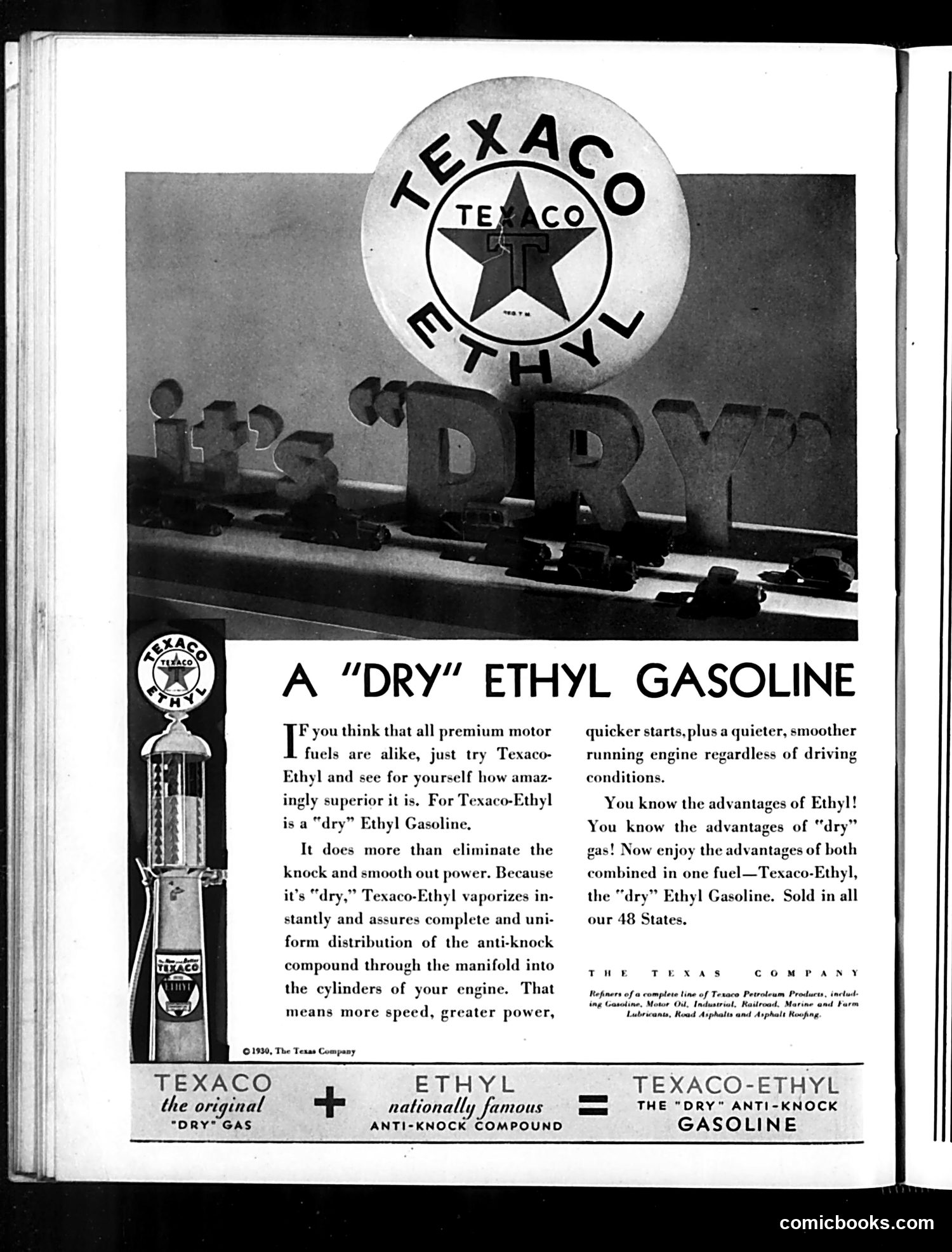
# Analysis This page is **not a cartoon or satirical content** — it's a **full-page advertisement** for Texaco-Ethyl gasoline from 1930. The ad features the Texaco star logo and imagery of a railroad car or train mechanism, emphasizing the product's "dry" formula. The text promotes Texaco-Ethyl as a premium fuel combining two benefits: Texaco's original "dry" gasoline with an ethyl anti-knock compound. The advertisement highlights practical engine benefits: smoother running, quicker starts, and improved power distribution. The claim that it's "sold in all our 48 States" suggests nationwide availability was a competitive selling point in this era. This represents typical Judge magazine revenue — paid advertising rather than editorial satire.
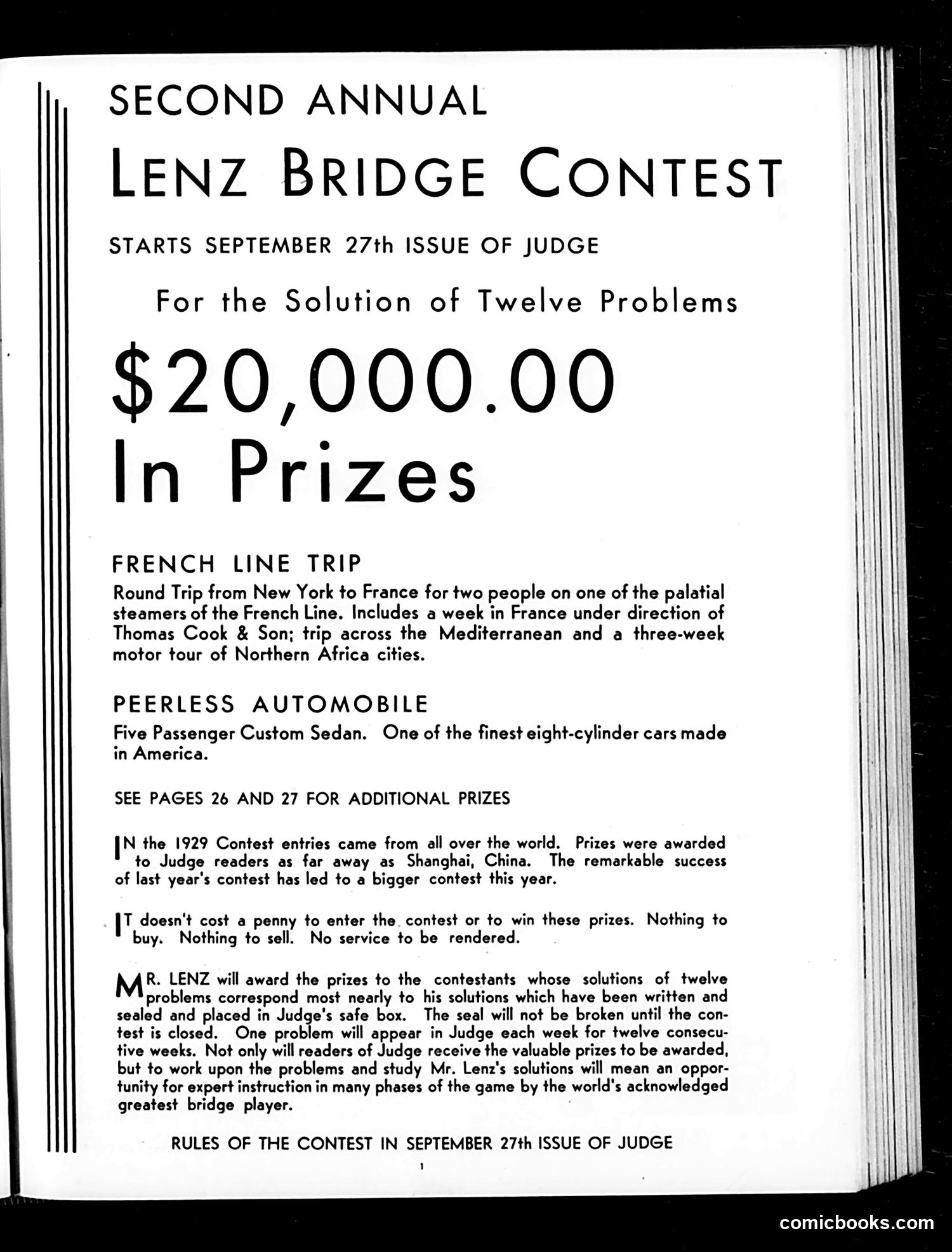
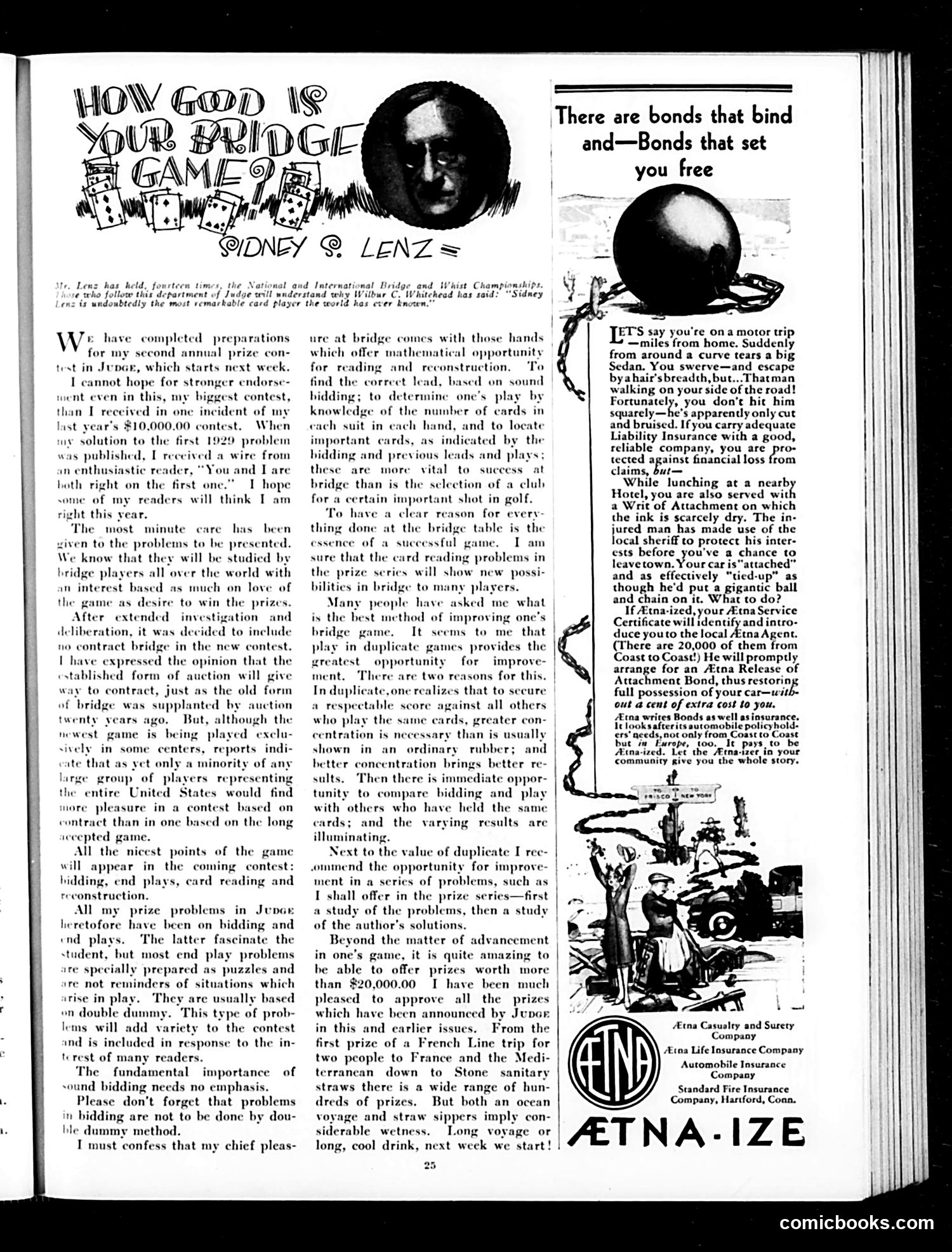
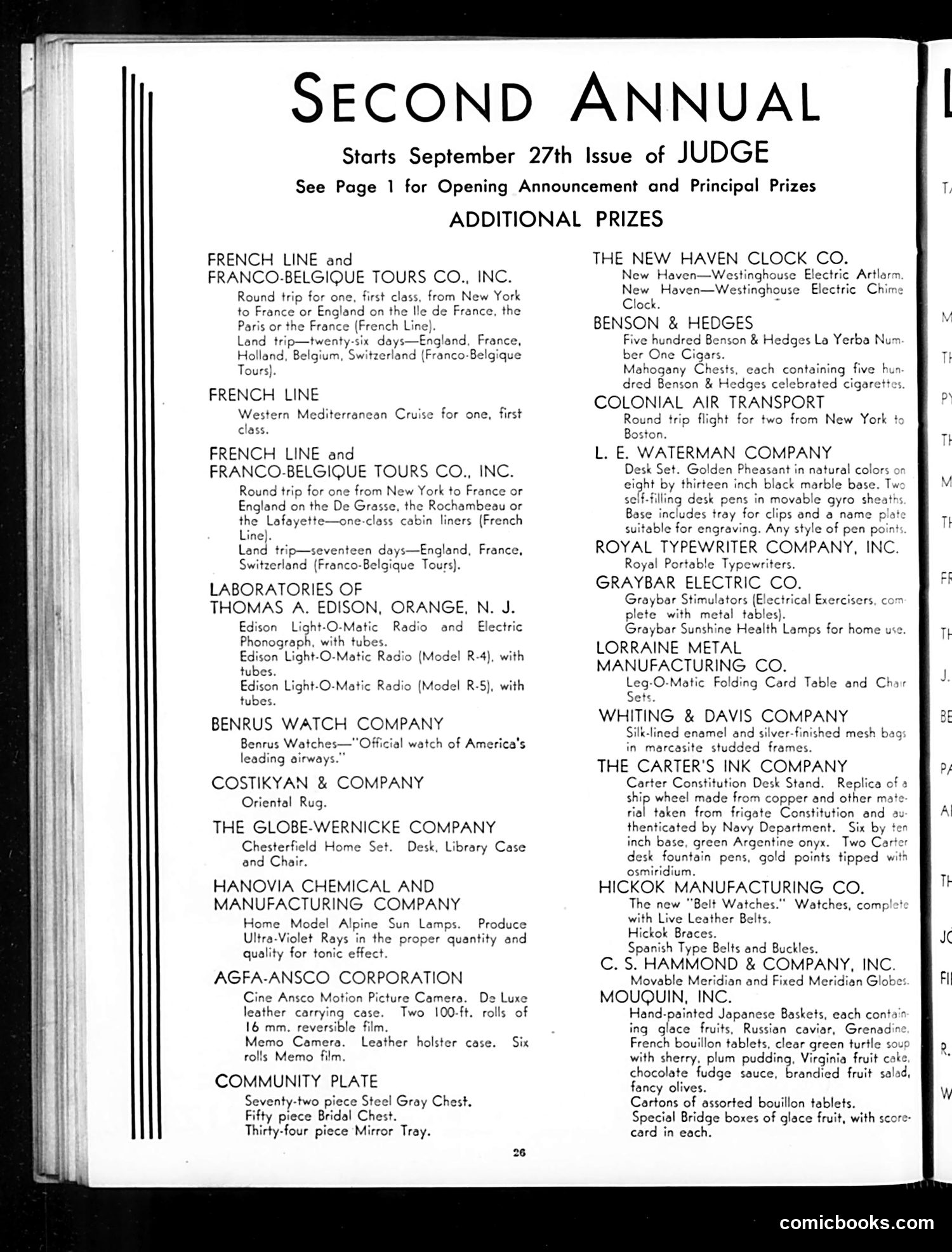
# Analysis This is primarily **advertising content**, not a political cartoon or satire. It announces Judge magazine's "Second Annual Lenz Bridge Contest," a puzzle competition starting September 27th with $20,000 in prizes. The prizes include a French Line ocean voyage and a Peerless automobile—luxury items reflecting 1920s-30s affluence. The contest presents bridge (the card game) problem-solving as entertainment for Judge's educated, wealthy readership. The text emphasizes the contest's legitimacy and ease of entry ("doesn't cost a penny"), suggesting such contests may have faced skepticism or regulatory questions. The reference to Mr. Lenz's bridge solutions implies he was a recognized authority on the game. This represents mainstream magazine commerce of the era—using prestigious prizes to boost circulation and reader engagement.
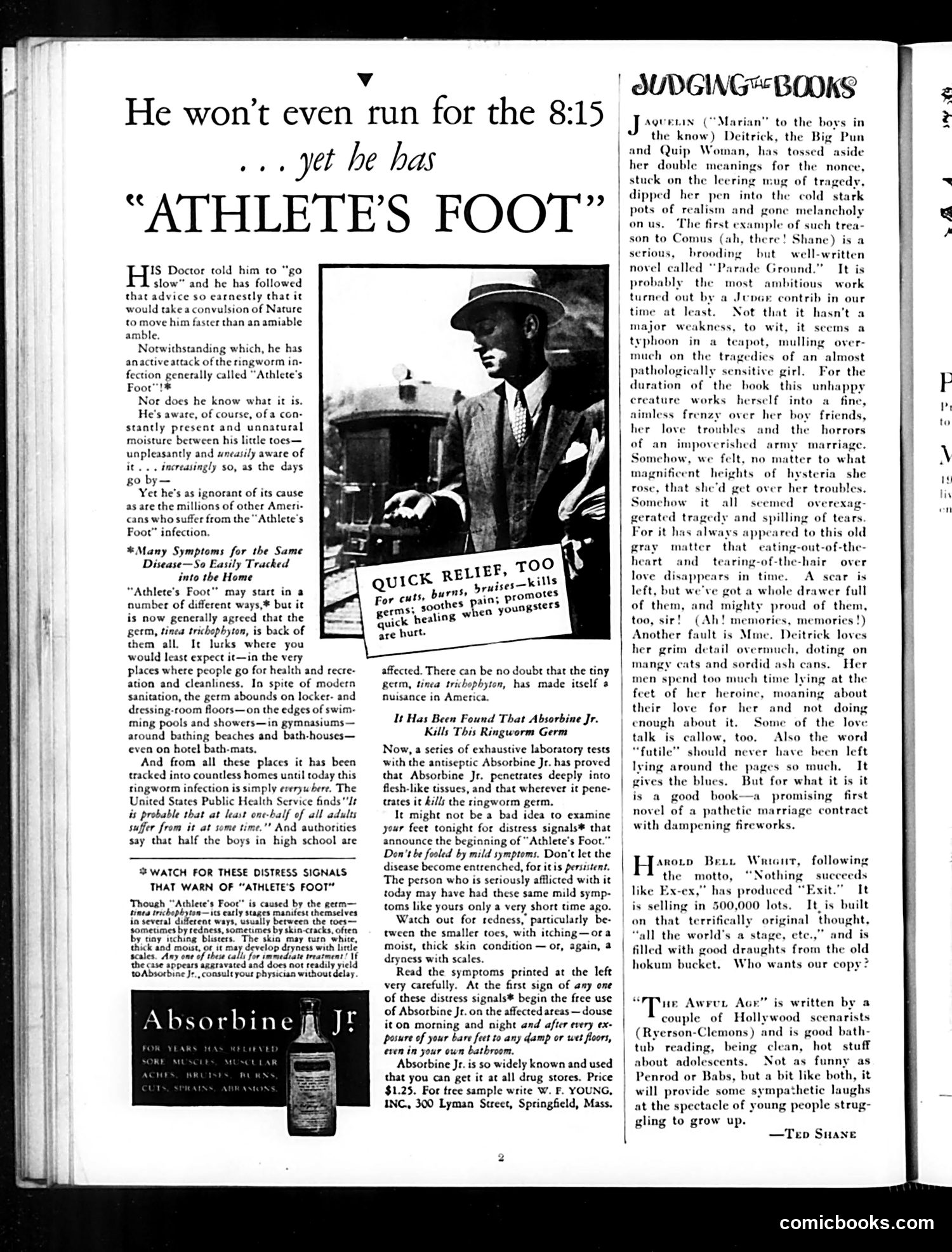
# Analysis of Judge Magazine Page This page is primarily **advertising and book reviews** rather than political satire. The main content features an **Absorbine Jr. advertisement** targeting "Athlete's Foot" fungal infection—a genuine medical condition. The ad uses humor by depicting a man who won't run for the 8:15 train due to the condition, positioning the product as a cure. The right column contains **book reviews** by Ted Shane, discussing novels including "Parade Ground" and "The Awful Age." These are straightforward literary critiques without satirical intent. The page reflects 1920s-era advertising practices: mixing product promotions with entertainment content, using exaggeration and situational humor to sell remedies for common ailments. There is no identifiable political cartoon or social satire present.
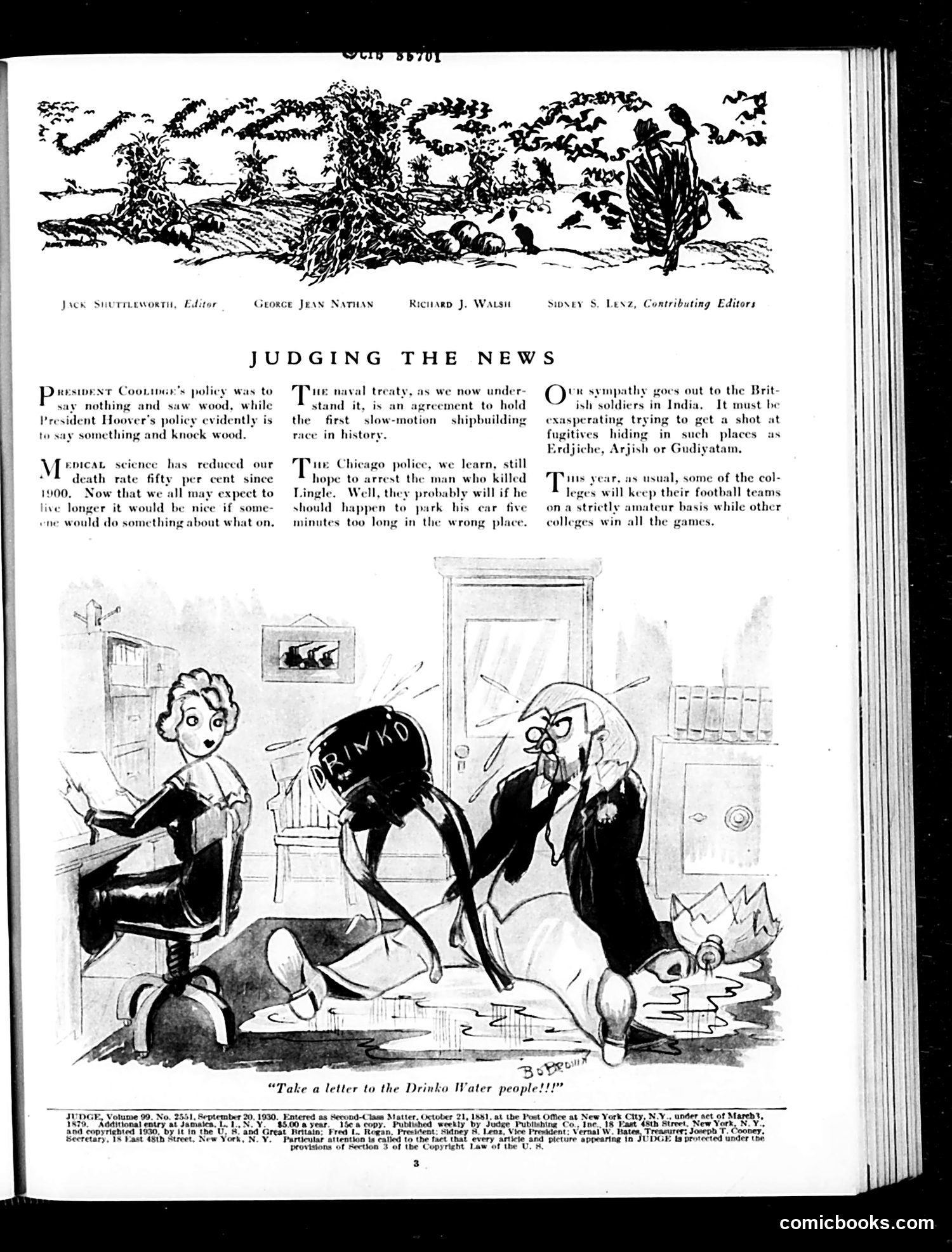
# "Judging the News" - September 20, 1930 The main cartoon shows a figure labeled "PRIMO" (likely Primo Carnera, the heavyweight boxer) delivering what appears to be a wrecking ball to a domestic interior. Two other figures react in alarm—one reading, one gesturing frantically. The caption reads "Take a letter to the Drinka Water people!!!" The joke satirizes Carnera's devastating boxing power by suggesting his mere presence causes household destruction comparable to a wrecking ball. The reference to "Drinka Water" is unclear but may be a brand name relevant to 1930s advertising. The page's editorial section ("Judging the News") above contains brief commentary on President Coolidge's policies, medical science advances, and international naval treaties—typical early Depression-era political observations.
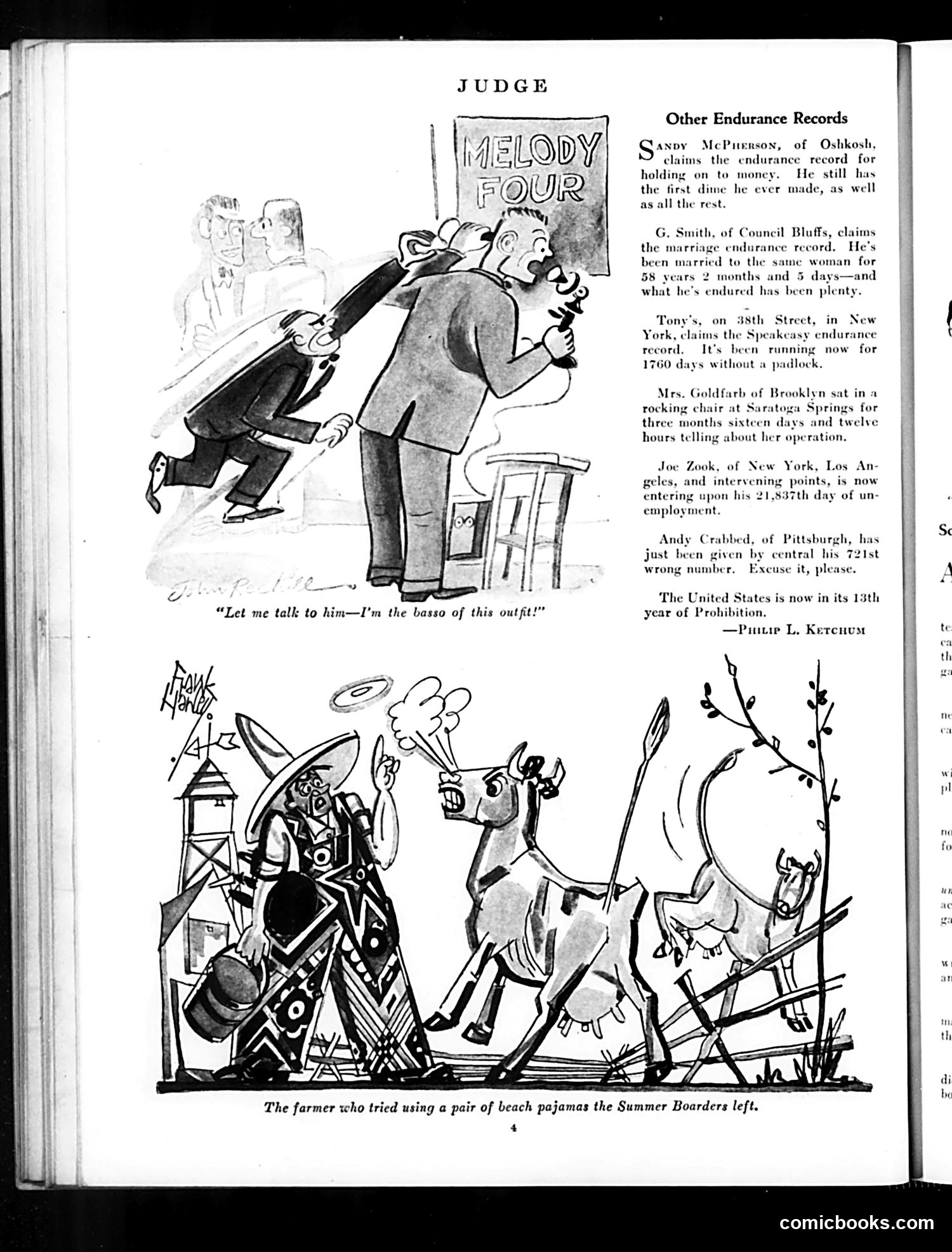
# Political Cartoon Analysis The top cartoon depicts Prohibition-era enforcement. A man labeled "MELODY FOUR" (likely referencing a speakeasy or jazz venue) is being confronted by what appears to be a federal agent or enforcer saying "Let me talk to him—I'm the boss of this outfit!" The satire mocks the chaotic enforcement of Prohibition, suggesting rival authorities or criminal organizations competing for control of illegal liquor operations. The bottom cartoon shows a disheveled figure with farm animals, captioned about "beach pajamas" and "Summer Boarders." This appears to satirize rural residents' confusion or frustration with urban visitors' casual summer fashions—likely depicting class tensions between city tourists and country folk during the 1920s vacation season. Both cartoons mock contemporary social conflicts.
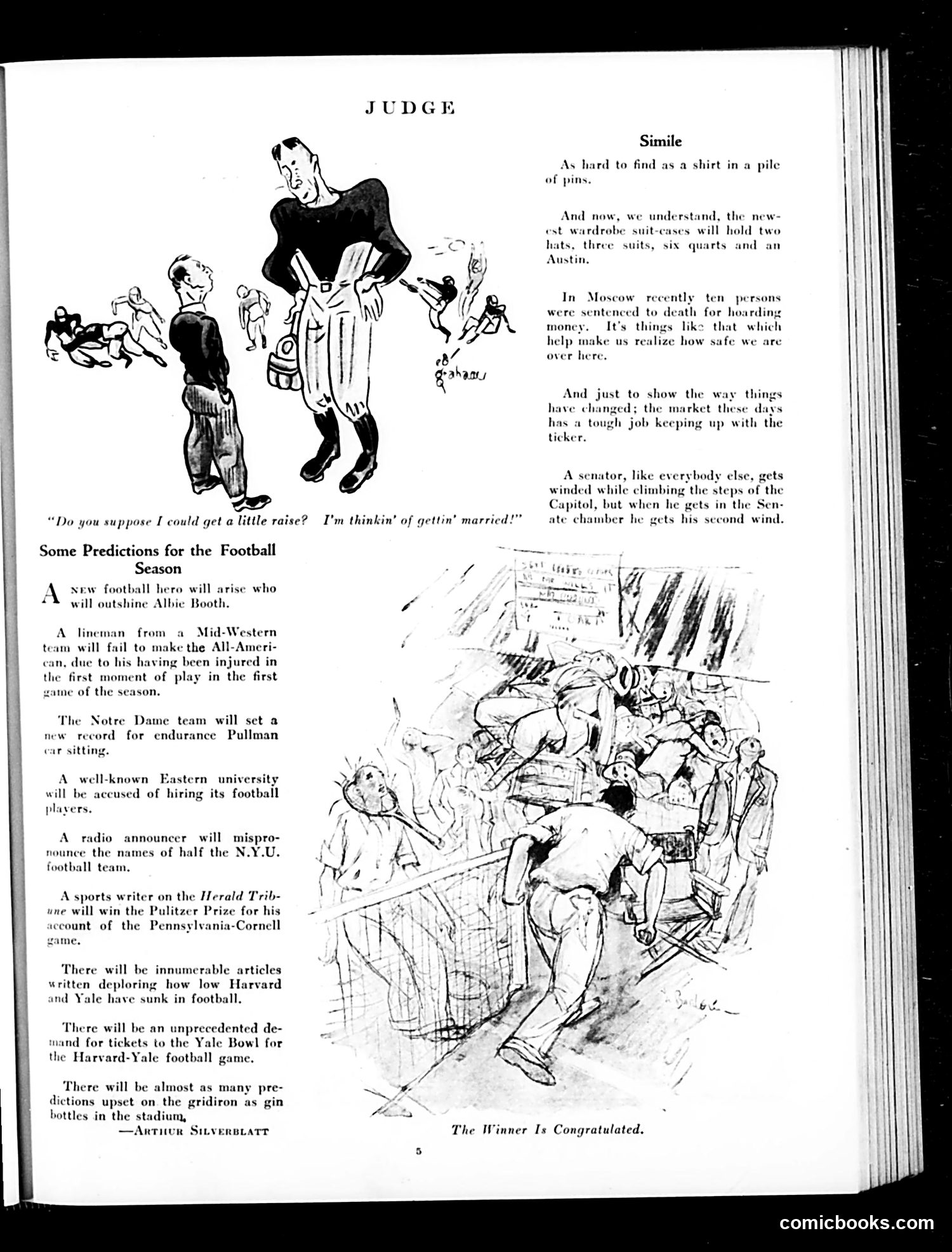
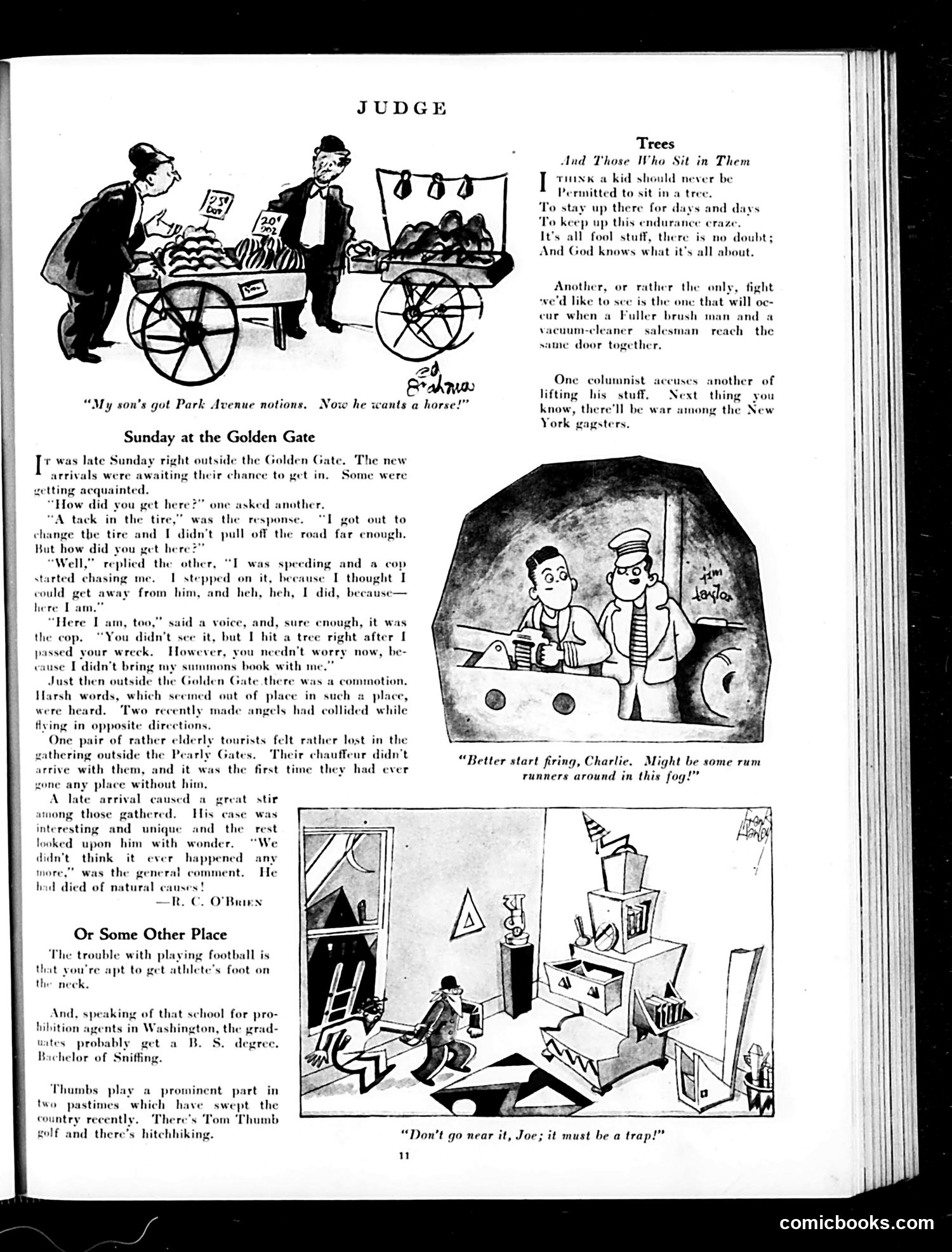
# Analysis of Judge Magazine Page The page contains two distinct satirical sections: **Top cartoon**: A judge figure towers over small people, illustrating a simile about finding something "hard to find as a shirt in a pile of pins." The accompanying text references wardrobe suit cases, Moscow executions for hoarding money, and Senate politics—suggesting commentary on economic inequality and governmental absurdity. **"Some Predictions for the Football Season"**: This section offers humorous forecasts about college football, including predictions about Notre Dame's endurance records, Eastern university scandals, radio announcers' errors, and Harvard-Yale game ticket demand. The bottom sketch titled "The Winner Is Congratulated" depicts a chaotic sports scene, likely satirizing the rowdy celebration or confusion following a game. Overall, the page combines political commentary with sports satire typical of Judge's general-interest humor.
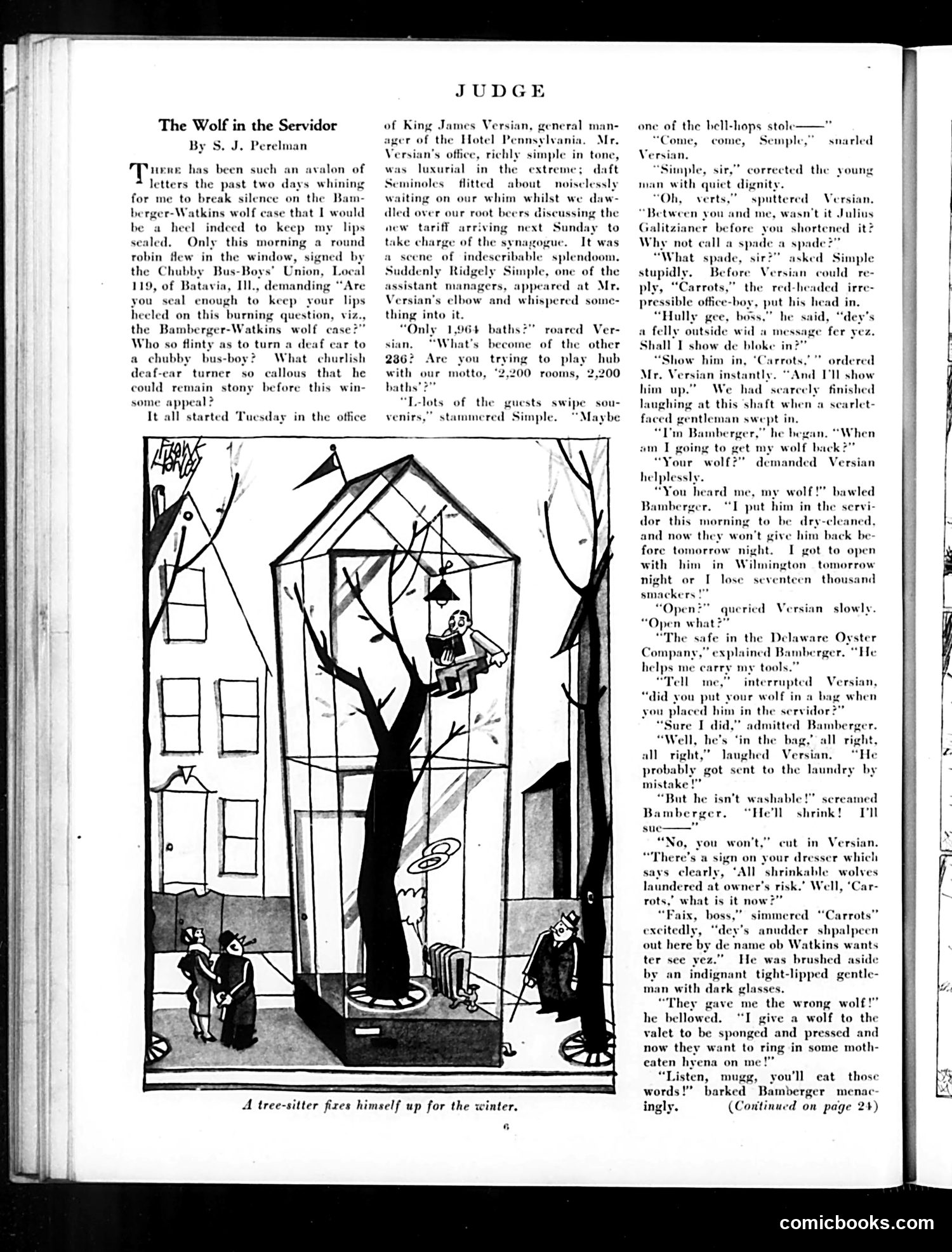
# "The Wolf in the Servedor" by S.J. Perelman This is a humorous short story about a hotel manager (Mr. Versian) dealing with a guest who left his wolf in the servidor (storage room) for cleaning. The narrative involves escalating absurdity: the wolf won't be returned, it's being sent to a laundry, and there are disputes about shrinkage and proper care. The accompanying illustration shows a tree growing through a building's interior—likely depicting the surreal, chaotic situation described in the text. This appears to be satirical fiction rather than political commentary. The humor relies on the incongruity of treating a wolf like dry-cleaning and the bureaucratic confusion that ensues—typical of Perelman's absurdist comedy style popular in mid-20th century American magazines.
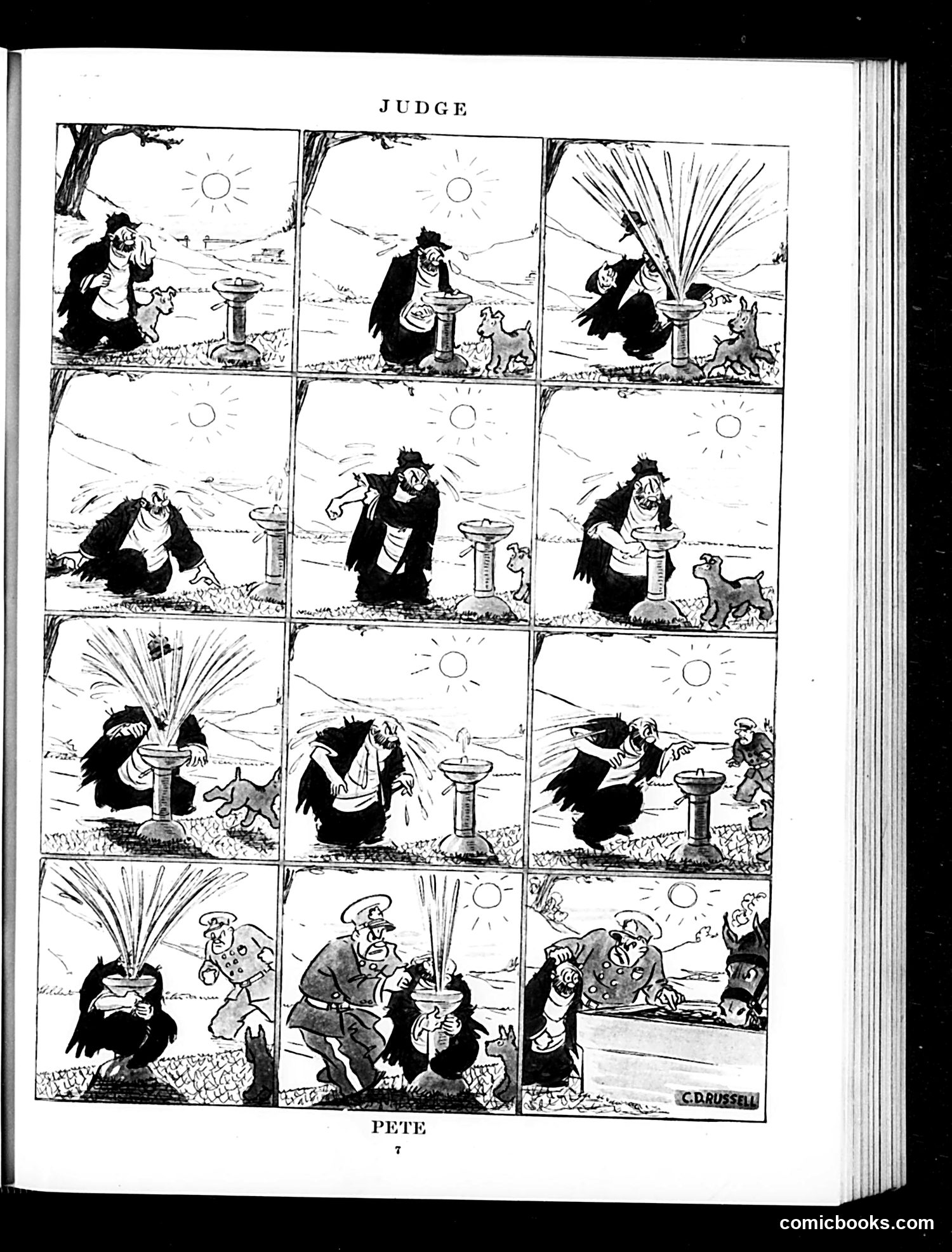
# "Judge and Pete" Comic Strip Analysis This appears to be a sequential comic strip titled "Judge" (top) and "Pete" (bottom) from Judge magazine. The strip depicts a figure in formal attire (appears to be a judge or authority figure) interacting with what looks like a dog or small animal near a sundial or pedestal in an outdoor setting. The narrative progresses through twelve panels showing escalating action—the figure's apparent frustration builds, culminating in panels with what appear to be police or uniformed officials arriving at the scene. The humor appears to derive from slapstick physical comedy and the contrast between the formal setting and increasingly chaotic events, though without additional context or visible dialogue, the specific satirical target remains unclear.
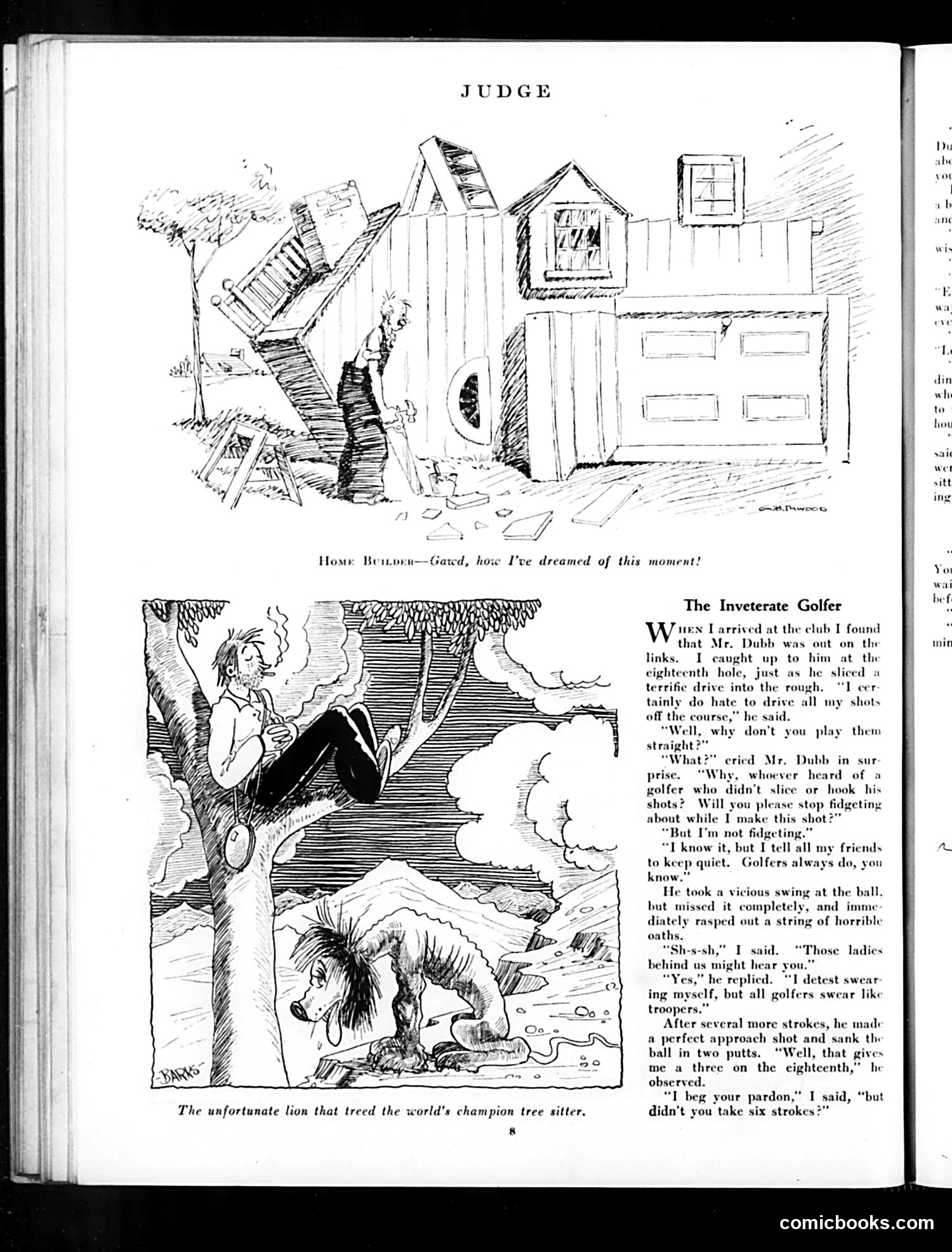
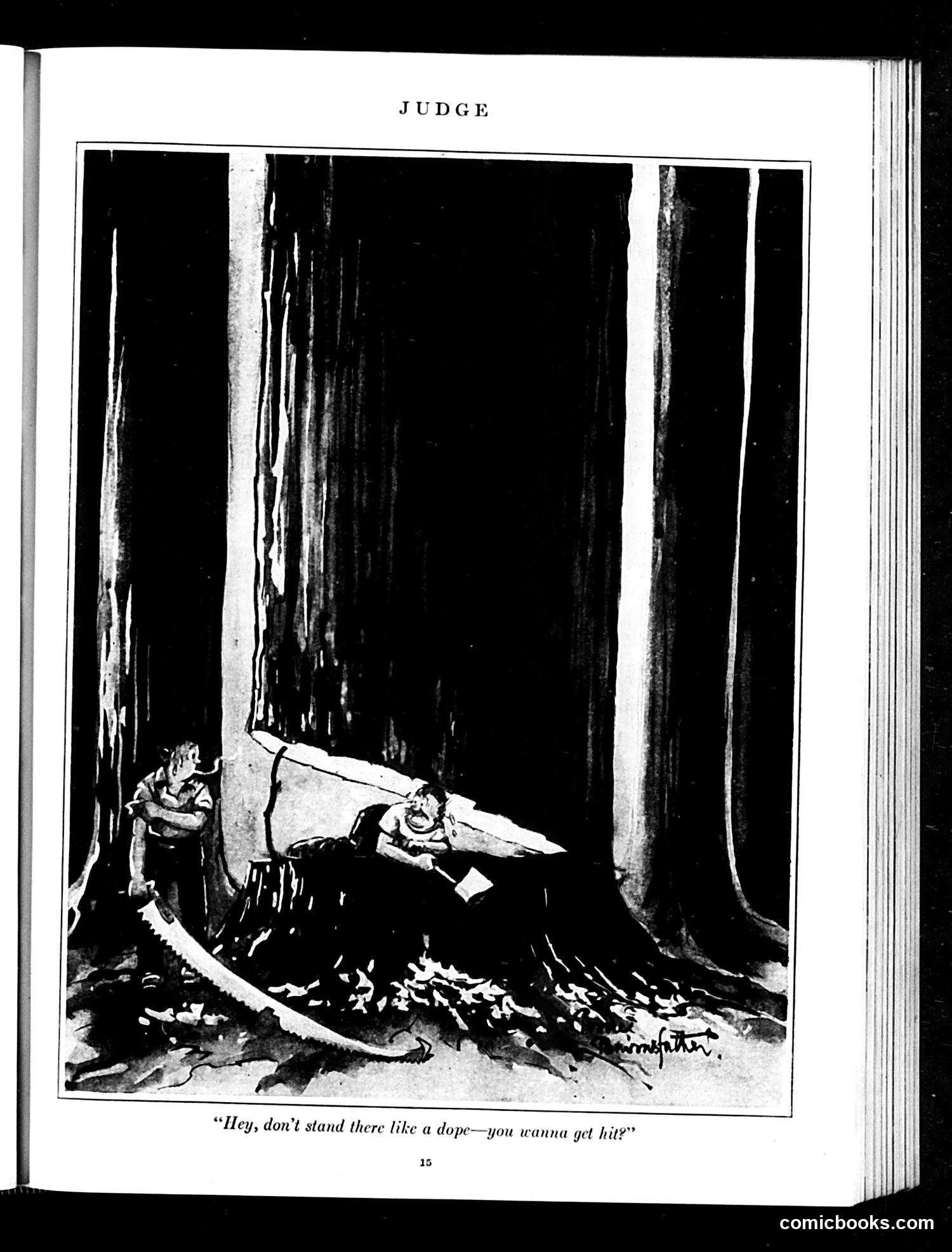
# Judge Magazine Page Analysis This page contains two unrelated satirical cartoons: **"Home Builder"** (top): Mocks someone's aspirations to build their dream home. The crude, collapsing structure with a garage door and crooked roof suggests incompetence or delusion—the caption "Gad, how I've dreamed of this moment!" implies the builder's fantasies don't match reality. **"The Inveterate Golfer"** (main story): A humorous anecdote about Mr. Dubb, an obsessive golfer with terrible skills. The satire targets golfers' contradictory behavior—Dubb insists he "hates" slicing drives off-course while simultaneously claiming all golfers do this routinely. He demands silence from companions, expects others to accept crude language ("swear like troopers"), and miscounts his strokes (takes six but claims three). The joke exposes the self-deluding arrogance and hypocrisy of serious amateur golfers. The cartoon below the text shows a lion treed by someone, mocking tree-sitters—likely referencing 1920s-era sit-down protestors.
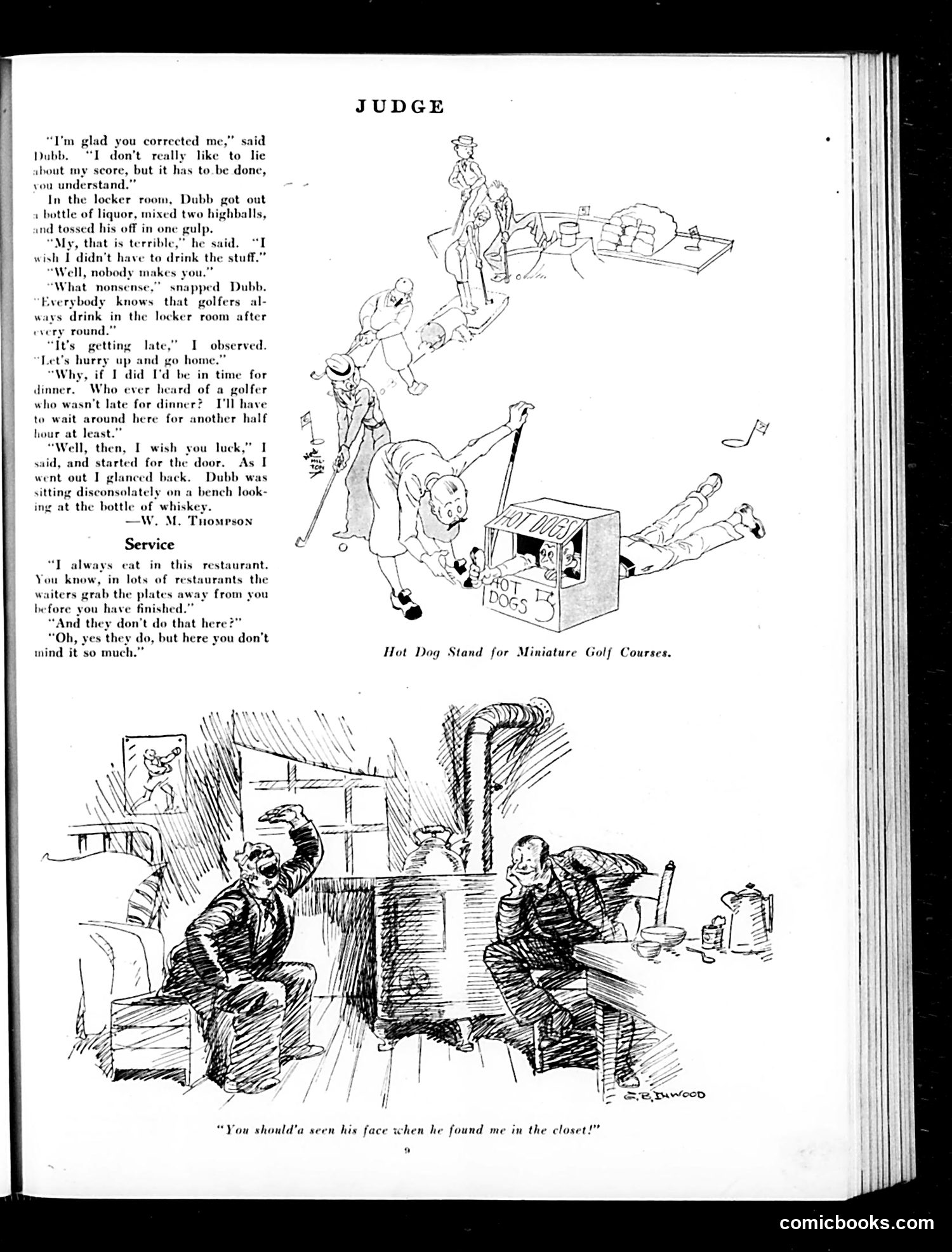
# Judge Magazine Page Analysis This page contains two satirical pieces mocking social pretense among the leisure class circa early 20th century. **Top section ("Judge" by W.M. Thompson):** A golfer named Dubb exemplifies masculine hypocrisy. He lies about his golf score, then claims he *must* drink whiskey in the locker room despite disliking it—justifying it as what "everybody knows" golfers do. The joke targets how men perform expected behaviors (drinking, poor sportsmanship) while pretending social pressure forces them, when they could simply refuse. **Bottom section (cartoon by S.E. Burwood):** A humorous domestic scene where one man found his friend hiding in a closet. The joke appears to involve marital deception or infidelity—the caption's tone suggests the discovery was embarrassingly comic. **Overall theme:** Both pieces satirize upper-middle-class men who rationalize questionable behavior (cheating, drinking, possibly infidelity) as unavoidable social conventions rather than personal choices. The satire mocks their self-deception and moral flexibility.
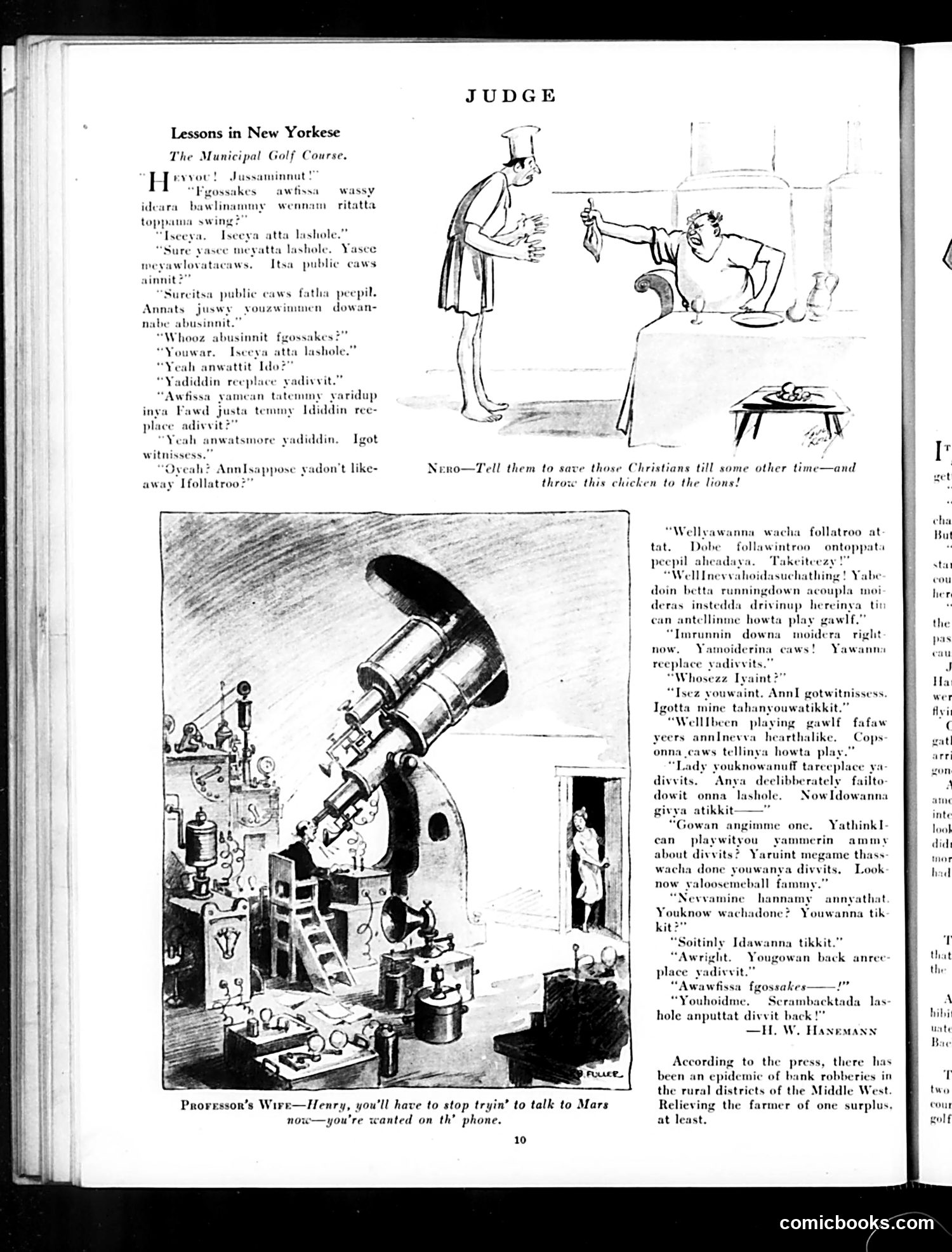
# Judge Magazine Page Analysis This page contains two distinct satirical pieces: **"Lessons in New Yorkese"** mocks working-class New York City dialect and speech patterns, featuring a golf course conversation rendered in exaggerated phonetic spelling ("jussaminnut," "wassy ideara," "lashole"). The humor targets how New Yorkers supposedly butcher English pronunciation and grammar. **"Professor's Wife"** cartoon depicts a telescopic setup where a professor is attempting to communicate with Mars via telephone, while his wife interrupts to tell him he's wanted on the phone. The joke satirizes both the era's fascination with Mars communication (popular in early 20th-century scientific speculation) and domestic marital dynamics—the mundane interrupting the grandiose. **The lions/Christians caption** references early Christian persecution by Romans, making a dark joke about prioritizing trivial matters ("save those Christians till some other time"). The bank robbery commentary at bottom is straightforward social commentary: rural bank robberies are actually benefiting struggling farmers by reducing their surplus wealth obligations. All pieces target contemporary American social anxieties and popular preoccupations of the period.