A complete issue · 36 pages · 1930
Judge — May 10, 1930
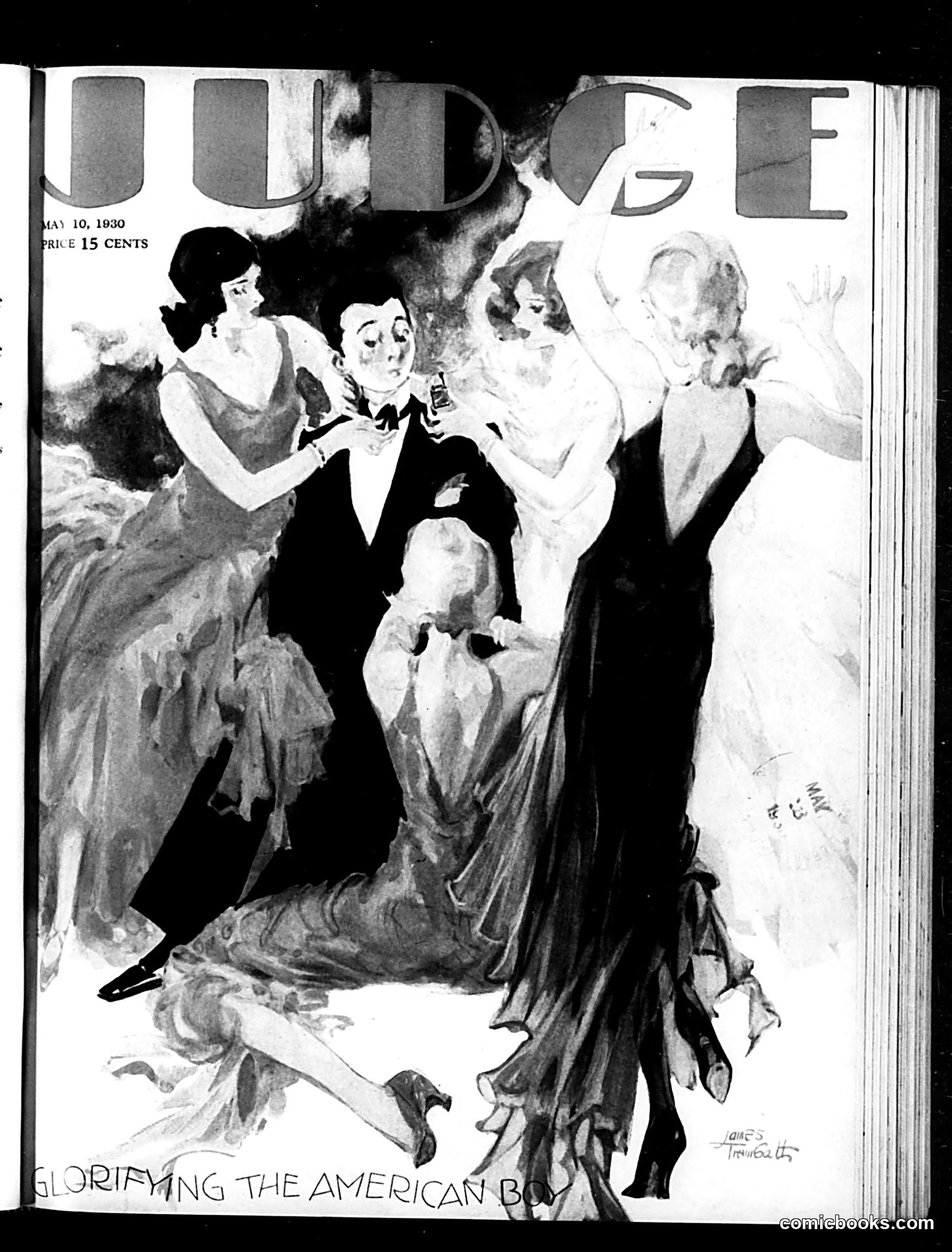
# Analysis of Judge Magazine Cover, May 10, 1930 This cover illustrates "Glorifying the American Boy" through satirical contrast. A young man in formal attire (tuxedo, bow tie) sits surrounded by glamorous women in evening wear, appearing overwhelmed or distressed by their attention. The title sarcastically critiques how American culture was "glorifying" young men by exposing them to seduction and excess during the Jazz Age/Prohibition era. The satire targets concerns about moral corruption of youth through nightlife, flirtation, and hedonistic entertainment. The women's revealing, fashionable gowns and the theatrical composition suggest speakeasy culture. The boy's uncomfortable expression suggests anxiety about this supposed "glorification"—implying that surrounding youth with temptation and vice was actually corrupting rather than elevating them. This reflects 1930s anxieties about changing social morality and youth behavior.
# Analysis This page is **primarily a business advertisement**, not editorial content or satire. It promotes Globe-Wernicke's "Visible Record" filing system with "Automatic Record Control" features. The image shows two businessmen in suits examining a large filing cabinet or visible record system. The advertisement emphasizes that this equipment "AUTOMATICALLY exposes" vital business facts in sales, collections, accounts, and inventory—helping prevent stock shortages and improve cash flow and credit. The "New way to get facts automatically" headline is a straightforward marketing claim about labor-saving office technology, not satire. This reflects early-to-mid 20th century business enthusiasm for mechanized record-keeping systems that promised efficiency and profitability. There is no identifiable political cartoon or satirical commentary on this page.
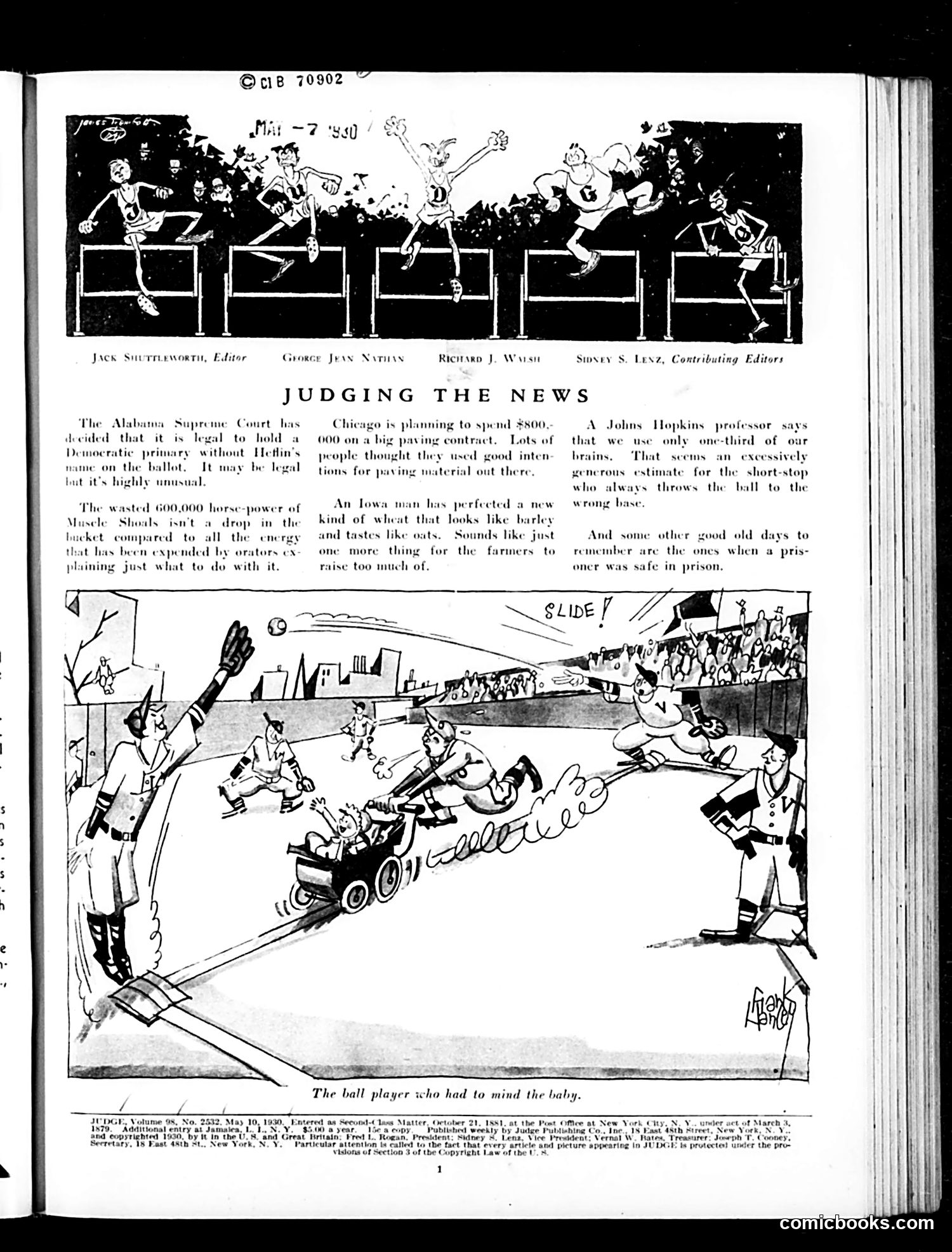
# "Judging the News" - Judge Magazine This page satirizes recent news stories through editorial commentary and cartoon. The top section critiques: 1. **Alabama Supreme Court's Democratic primary ruling** - mocking the legal/procedural complexity 2. **Chicago's $800,000 horse-power contract** - sarcastically questioning whether such energy expenditure was necessary 3. **An Iowa farmer's wheat/barley hybrid** - humorously noting it looks and sounds like both crops 4. **A Johns Hopkins professor's brain theory** - joking that "one-ball" players always throw to the wrong base The bottom cartoon, "The ball player who had to mind the baby," depicts a baseball game where a player must tend an infant while playing, satirizing the conflict between professional sports and domestic responsibilities. The humor relies on the absurdity of combining these incompatible activities.
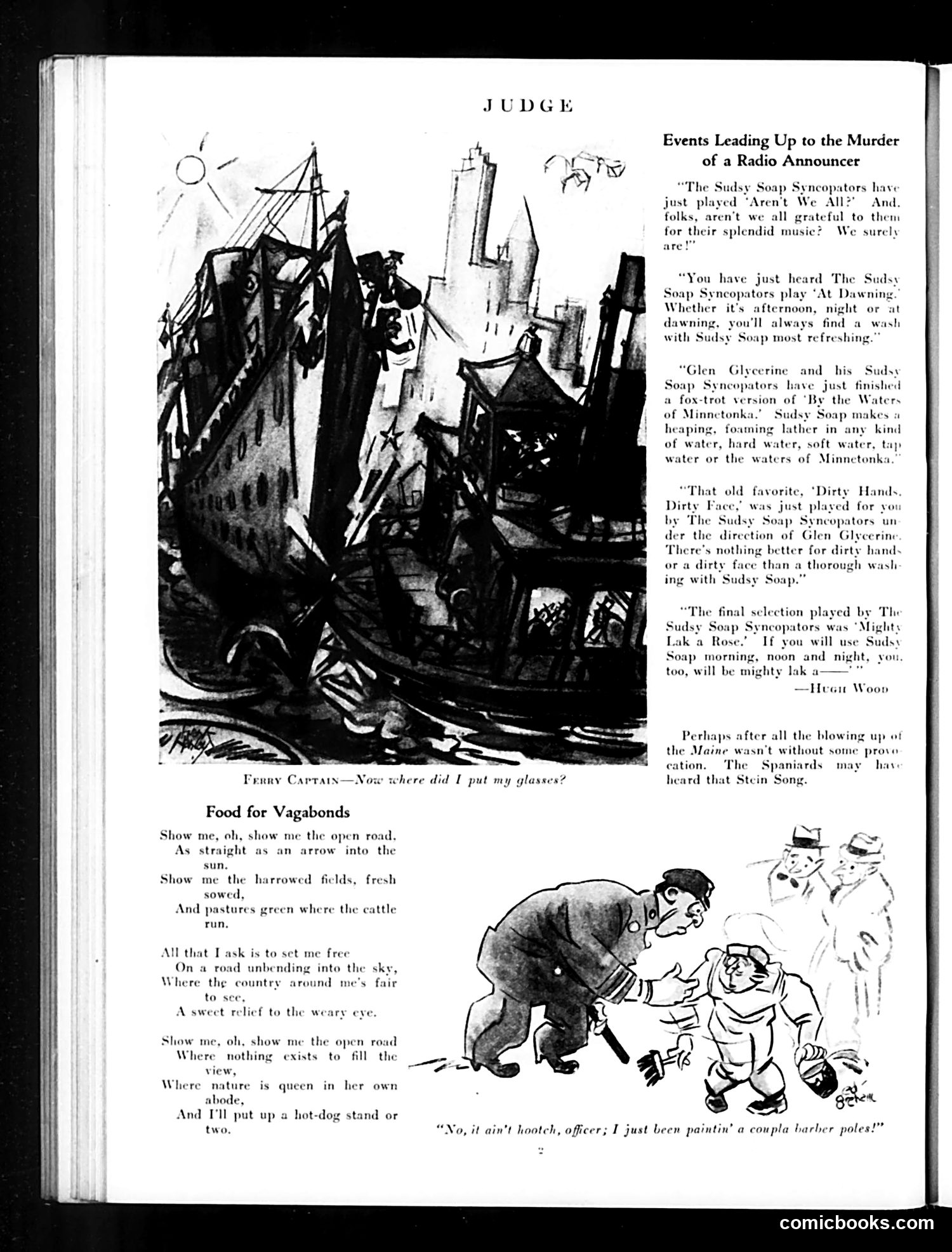
# Analysis of Judge Magazine Page The page contains three distinct elements: 1. **Top illustration**: A dramatic naval scene labeled "Funny Captain—Now where did I put my glasses?" This appears to be a humorous take on absent-minded military leadership, depicting a befuddled captain aboard a ship. 2. **"Events Leading Up to the Murder of a Radio Announcer"**: Satirical commentary on popular radio programming, specifically the Sudsy Soap Syncopators and Glen Glycerine. The text mocks soap advertising jingles and musical performances, suggesting radio listeners were fatigued by repetitive commercials and sponsored programming. 3. **"Food for Vagabonds"**: A poem about freedom and open roads, paired with a cartoon showing what appears to be a police officer or authority figure confronting a vagrant about painting utility poles. The overall theme critiques radio commercialism and authority harassment of the homeless.
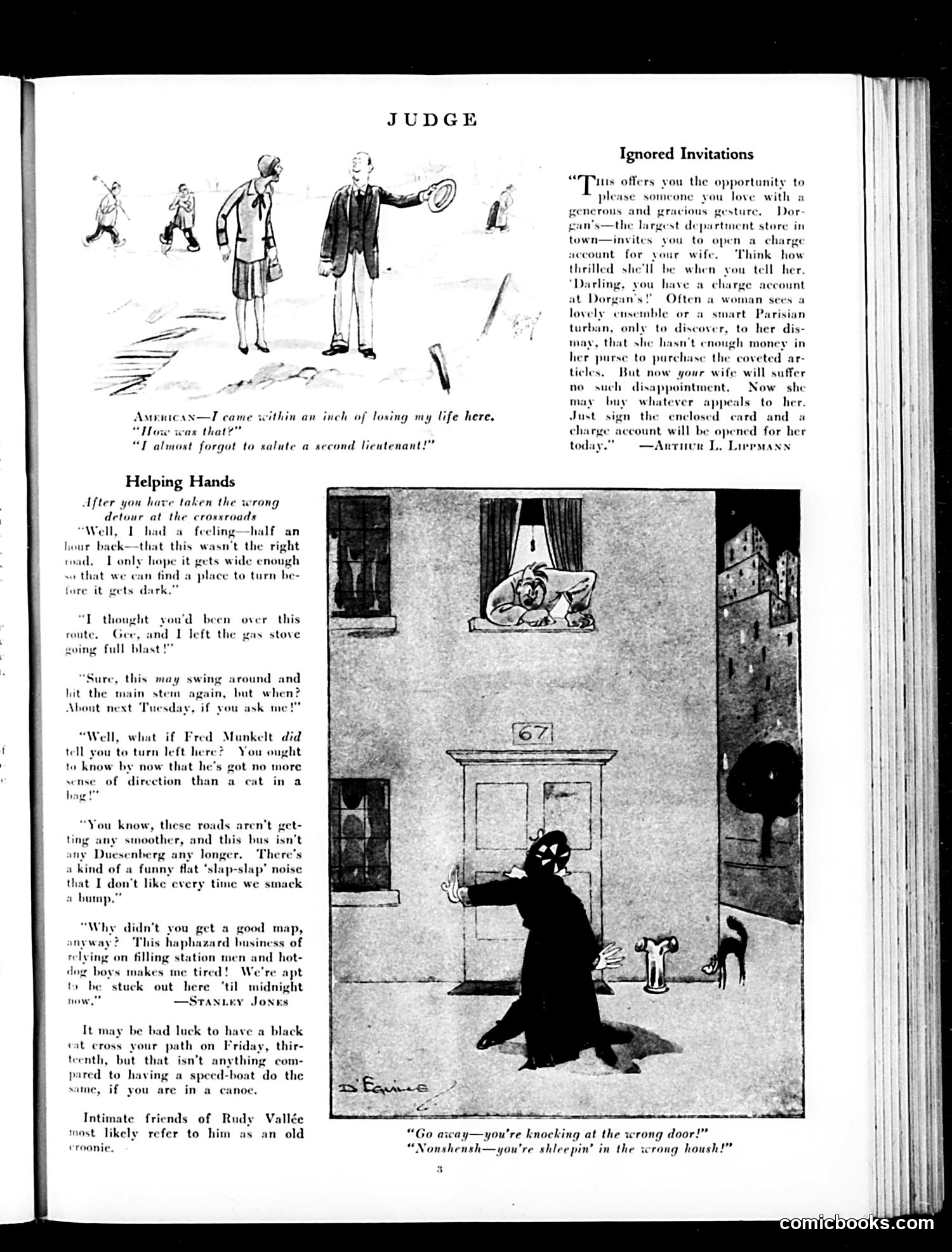
# Analysis of Judge Magazine Page This page contains two distinct sections: **"Ignored Invitations"** (top right): A satirical piece by Arthur L. Lippmann mocking wealthy husbands who offer their wives charge accounts at department stores as gestures of generosity. The joke critiques how such "gifts" are actually controlling—the wife gets unlimited shopping freedom, but only at one store, undermining the supposed kindness. **"Helping Hands"** (left): A humorous dialogue about mistaken directions at a crossroads, culminating in frustration about poor roads and unreliable transportation. **Cartoon (center)**: A Felix-the-Cat-style black cat character knocks on the wrong apartment door at night, mistakenly entering someone's home while they sleep. The caption plays on the humor of nocturnal confusion and trespassing. The page primarily targets early-20th-century domestic life and urban inconveniences.
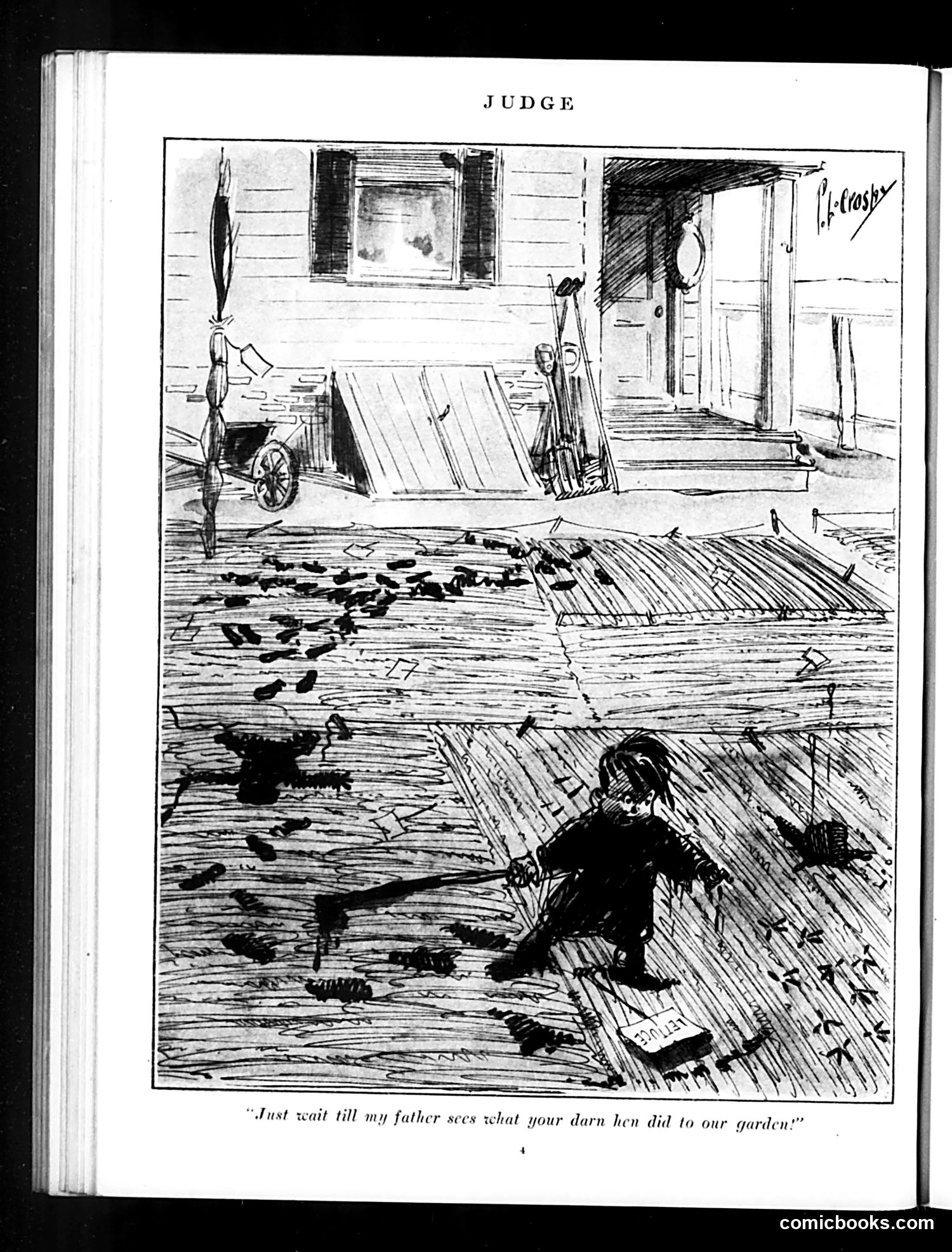
# Cartoon Analysis This cartoon depicts a domestic scene where a child has apparently caused damage in a garden—scattered tools and disturbed ground are visible. The child's threat ("Just wait till my father sees what your darn hen did to our garden!") shifts blame from themselves to a neighbor's hen. The satire targets **childhood dishonesty and excuse-making**. Rather than admit responsibility for the mess, the child falsely accuses an animal to deflect parental punishment. The cartoon's humor lies in the transparent absurdity of the excuse and the child's confident indignation—attitudes Judge's readers would recognize from their own households. This is social satire about human nature and family dynamics rather than political commentary. The setting appears to be a modest suburban or rural American home, typical of Judge's early 20th-century audience.
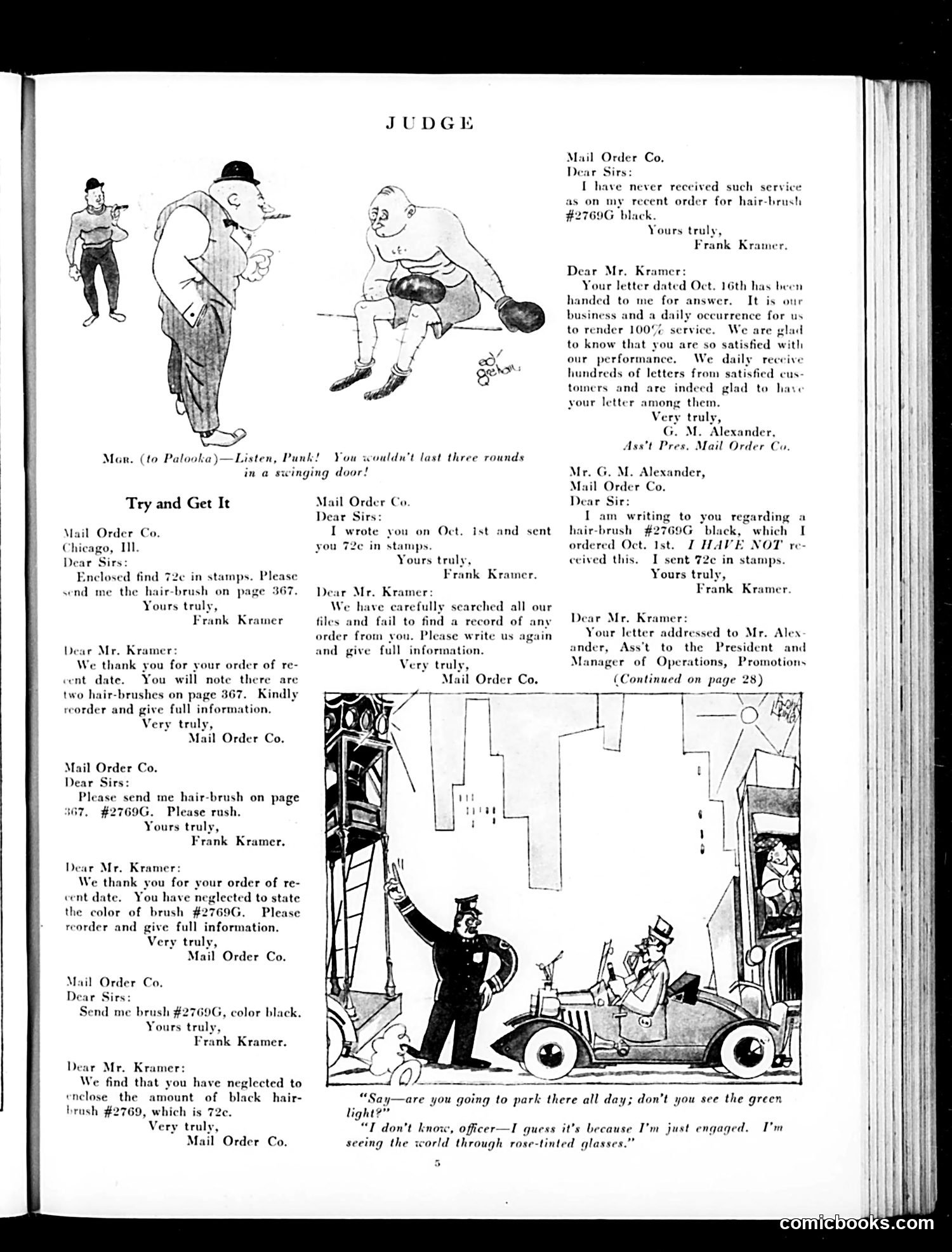
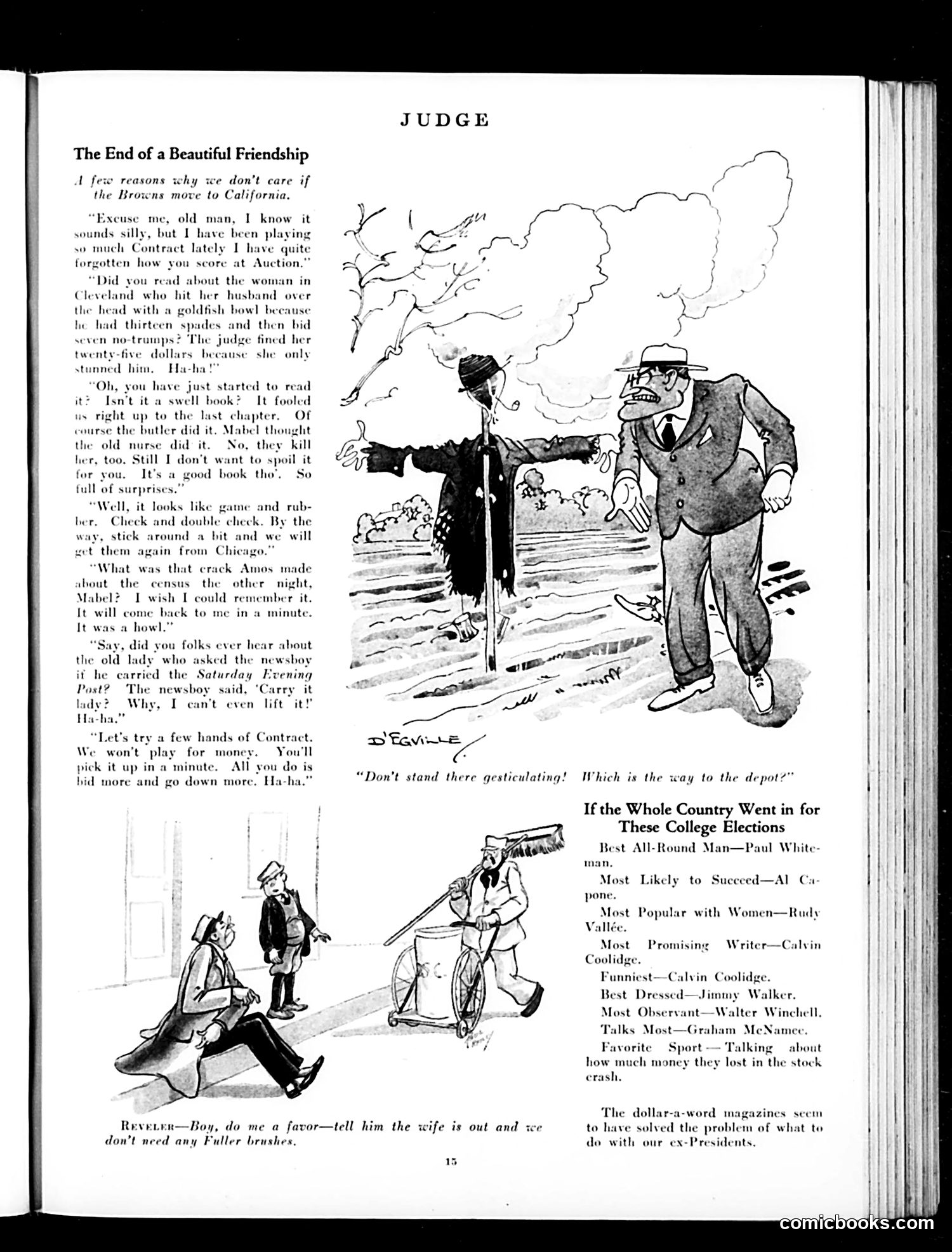
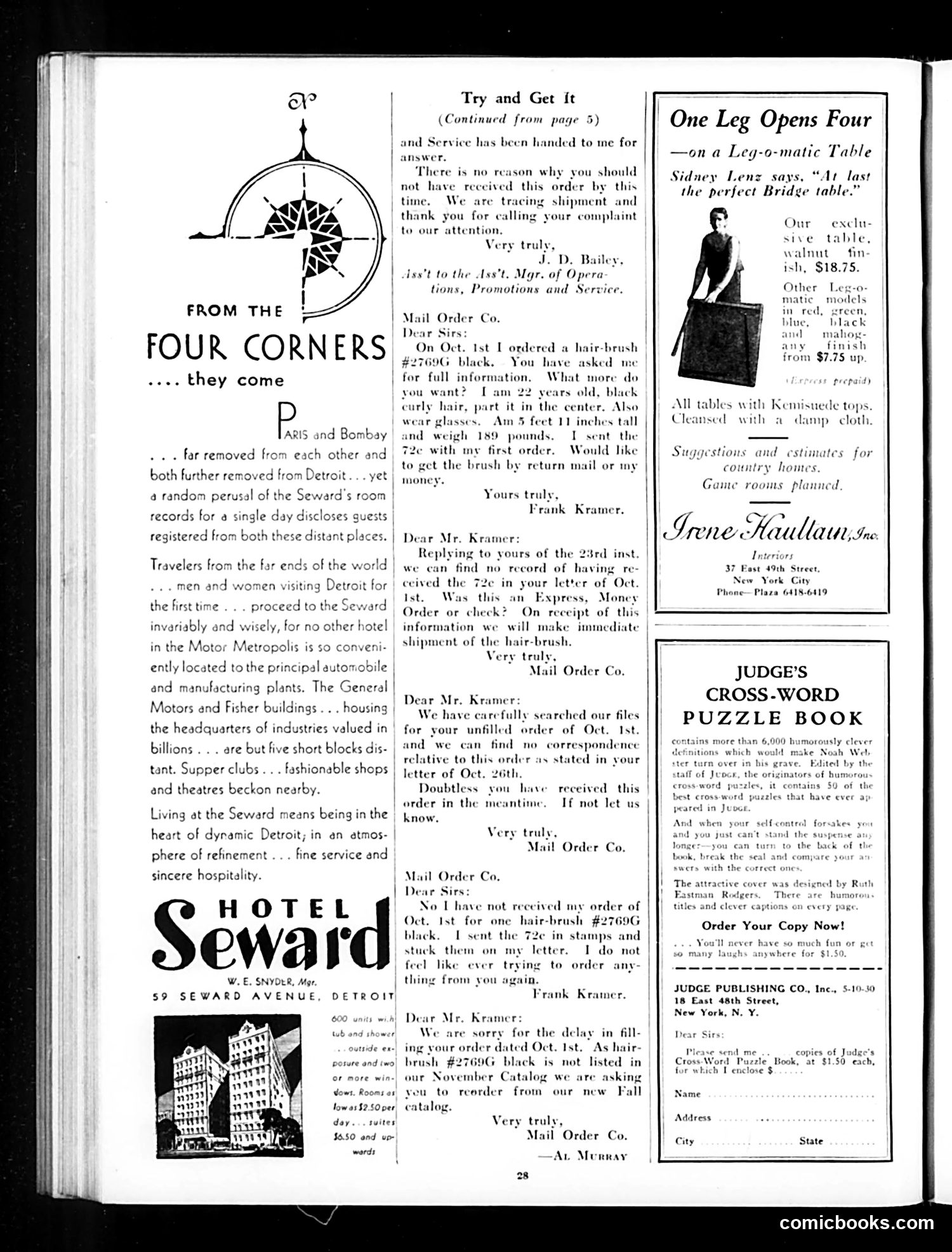
# Analysis of Judge Page This page is primarily **humorous reader correspondence** rather than political satire. The top cartoon depicts a boxing referee addressing a boxer named Panoka, warning he "couldn't last three rounds in a swinging door"—a sarcastic insult about fighting ability. The bulk of the page consists of **complaint letters to a mail-order company** from customer Frank Kramer, who repeatedly ordered a hairbrush (#2769G, black) but received incorrect items or incomplete orders. The Mail Order Co. responds with bureaucratic confusion, losing records and requesting clarification. The bottom cartoon shows a traffic cop and driver, appearing unrelated to the hairbrush correspondence. The satire targets **mail-order shopping frustrations and corporate incompetence**—a relatable complaint for early 20th-century consumers ordering via catalog.
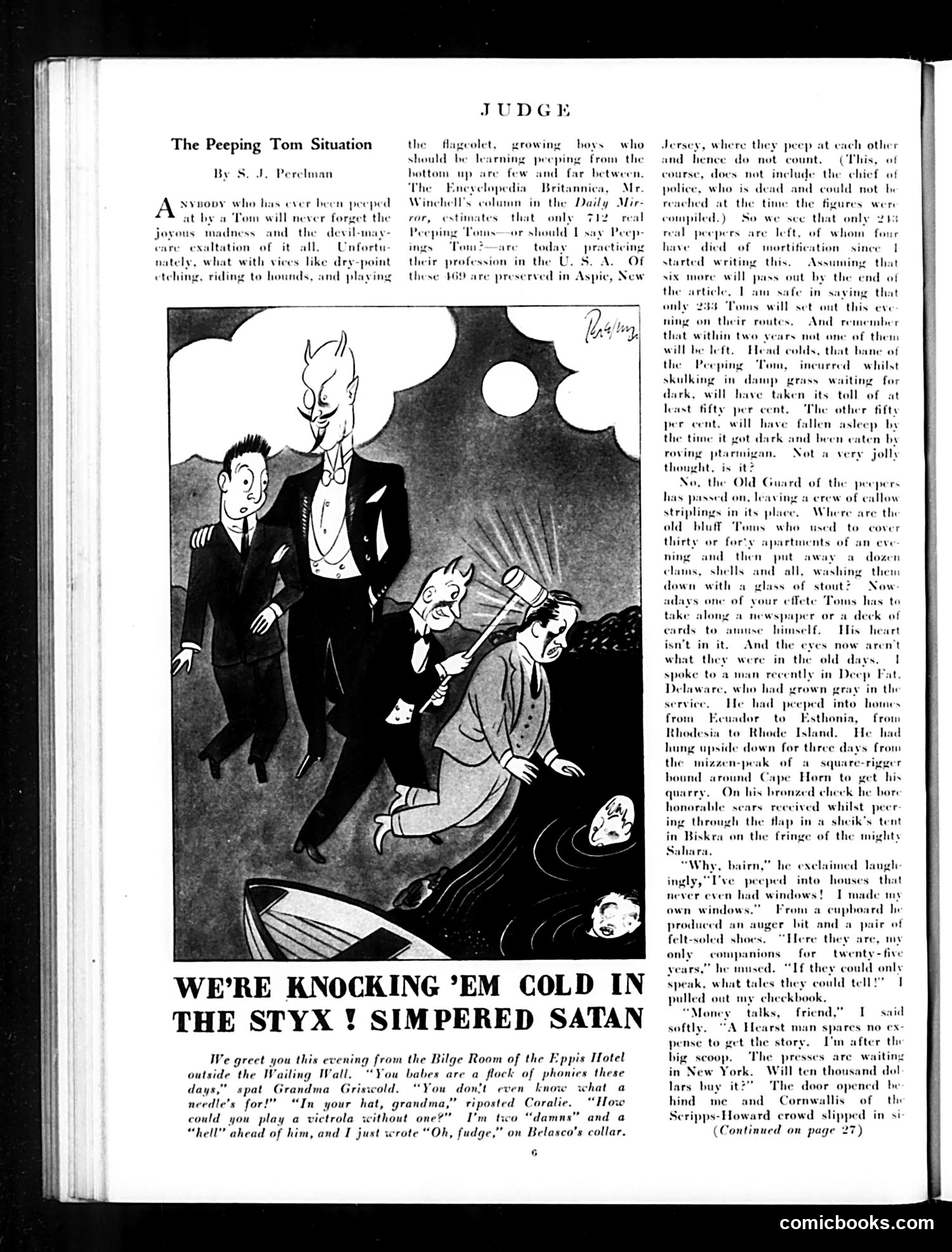
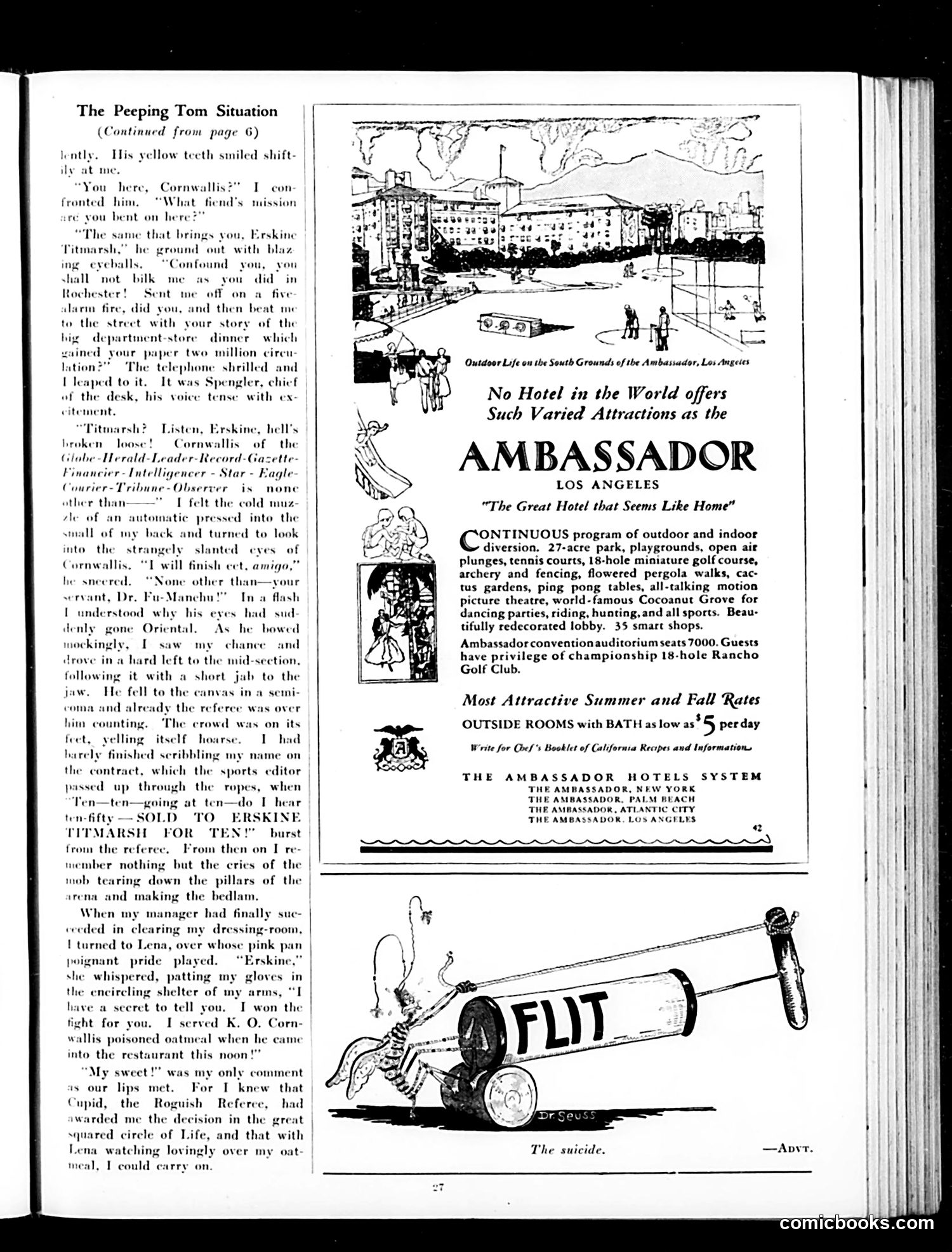
# "The Peeping Tom Situation" by S.J. Perchman This satirical article and accompanying cartoon mock a contemporary phenomenon: the "Peeping Tom" voyeur. The piece claims 712 such incidents have been recorded in Aspen, New Jersey, and warns that within two years, half the peeping toms will have abandoned the practice due to exhaustion and attrition. The cartoon depicts well-dressed men and devils peering through windows at unsuspecting residents. The satire targets both the absurdity of the peeping tom problem's apparent prevalence and the Victorian-era social anxieties about privacy and morality. The exaggerated statistics and deadpan tone suggest the author is mocking sensationalist reporting about crime and social decline during this period.
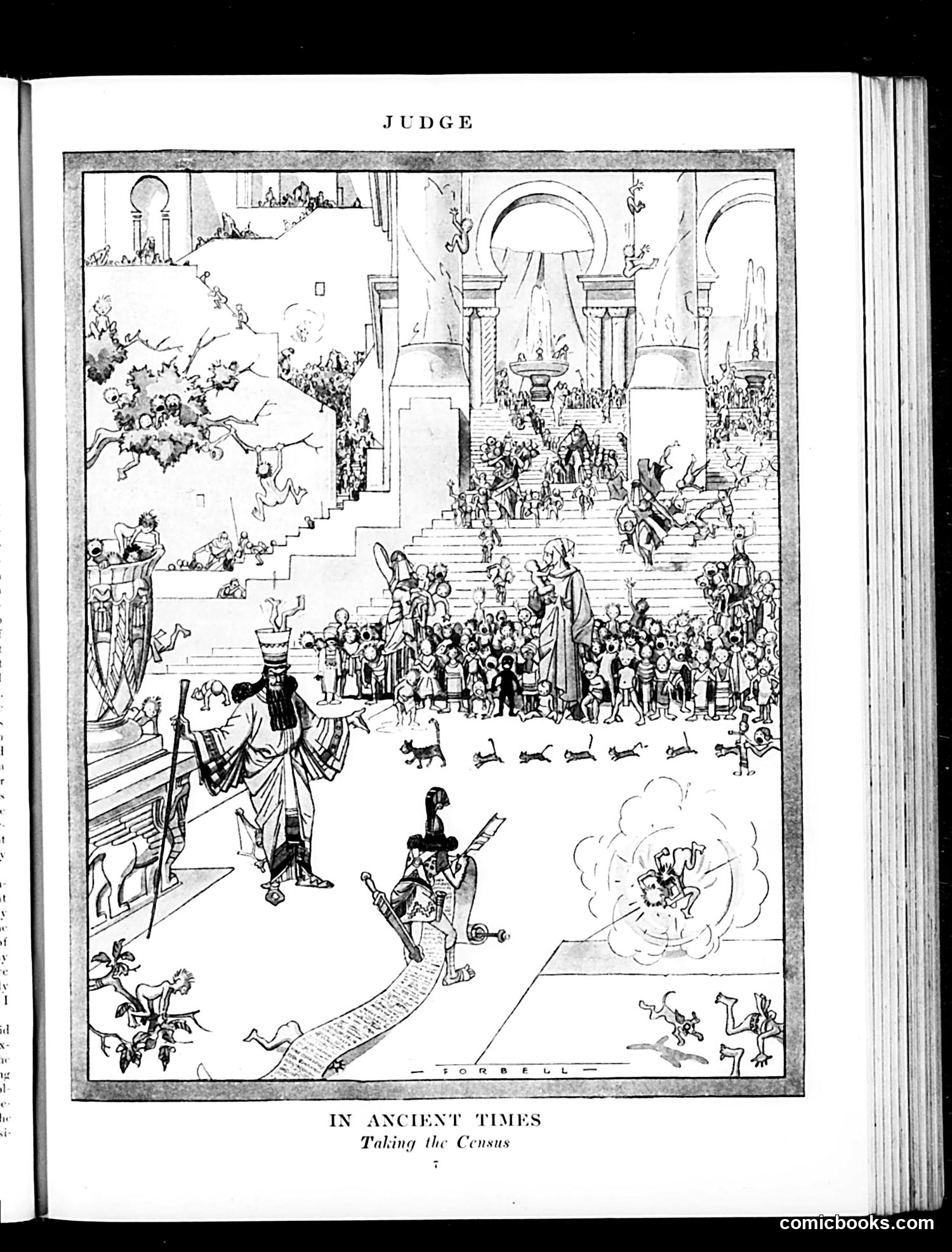
# Judge Cartoon: "In Ancient Times—Taking the Census" This satirical cartoon depicts an ancient Roman census scene with elaborate architectural grandeur—massive columns, arches, and temple-like structures filled with crowds. A robed official on the left presides over the proceedings while armed soldiers and citizens populate the scene. The satire likely critiques contemporary census-taking practices by showing the absurd formality and military oversight required in ancient times to count populations. The exaggerated scale of the Roman bureaucracy—complete with soldiers, elaborate architecture, and ceremonial pomp—suggests Judge magazine is mocking either the complexity of modern census procedures or government overreach in data collection. The juxtaposition of "ancient times" with contemporary concerns implies this was topical commentary on early 20th-century American census debates.
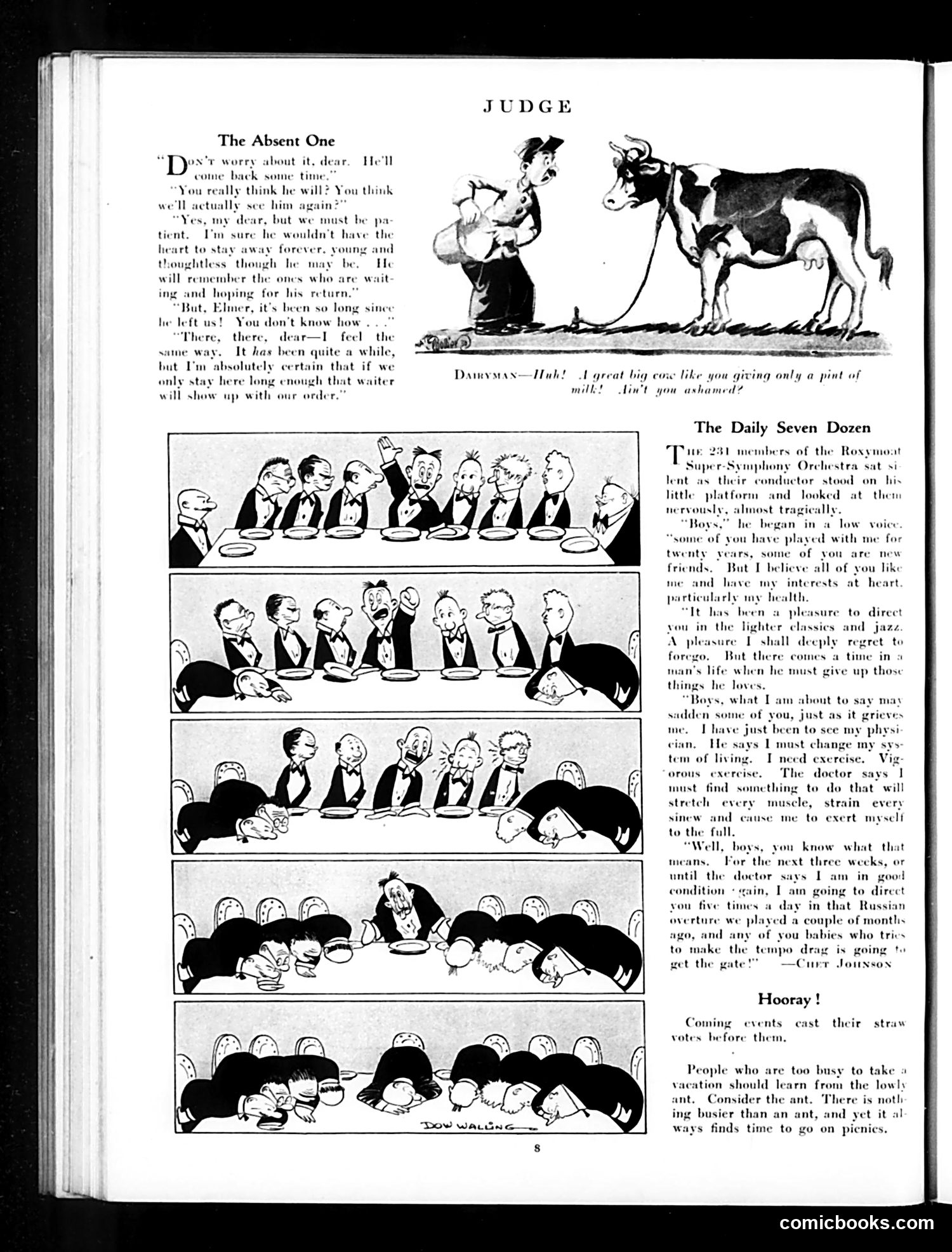
# Judge Magazine Page Analysis This page contains three satirical pieces from Judge magazine: **"The Absent One"** (top): A domestic cartoon about a wife reassuring her husband that an absent family member will eventually return. The humor plays on marital patience and long-suffering domesticity—likely referencing a serviceman or absent breadwinner, though the specific context is unclear. **"The Daily Seven Dozen"** (center): A multi-panel comic depicting an orchestra conductor addressing his 231 musicians. He's been told by his doctor to exercise vigorously, so he's decided to conduct them five times daily for three weeks as his fitness regimen. The satire mocks both the conductor's absurd solution and the orchestra members' resigned suffering—a commentary on workplace exploitation disguised as health concern. The final panels show musicians progressively collapsing from exhaustion. **"Hooray!"** (bottom right): Brief aphoristic humor about busy people and the work ethic of ants—conventional moralizing presented ironically. The page reflects Judge's typical early-20th-century blend of domestic comedy, workplace satire, and light philosophical quips.
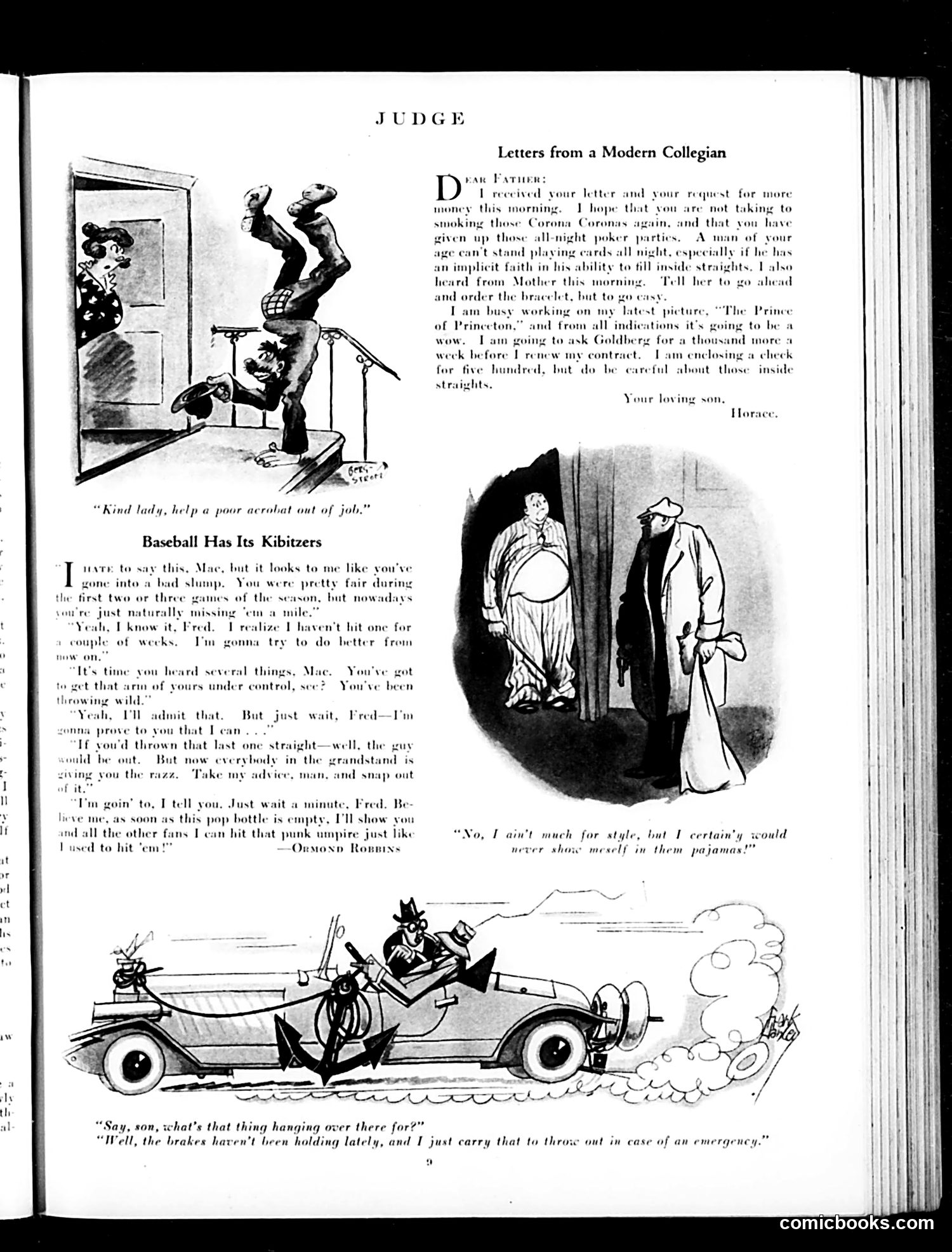
# Judge Magazine Page Analysis This page contains three distinct pieces of early 20th-century American humor: **"Baseball Has Its Kibitzers"**: A dialogue between a struggling baseball player (Mac) and a critical spectator (Fred). The satire targets armchair critics who heckle athletes from the grandstand, offering unsolicited advice and blaming the umpire. The cartoon shows a fan threatening to hit the umpire with a beer bottle—mocking how worked-up fans become over the game. **"Letters from a Modern Collegian"**: A letter from college student Horace to his father requesting more money. The satire mocks wealthy collegians' frivolous spending on poker, late-night parties, and luxury items like bracelets. References to "Corona Coronas" (cigars) and contract negotiations suggest he's also pursuing show business aspirations. **Bottom Cartoon**: Shows a reckless driver in a convertible with a tire or brake-related device hanging from the car "in case of emergency"—satirizing dangerous driving practices and mechanical negligence among motorists. The overall theme is American excess and poor judgment across social classes.
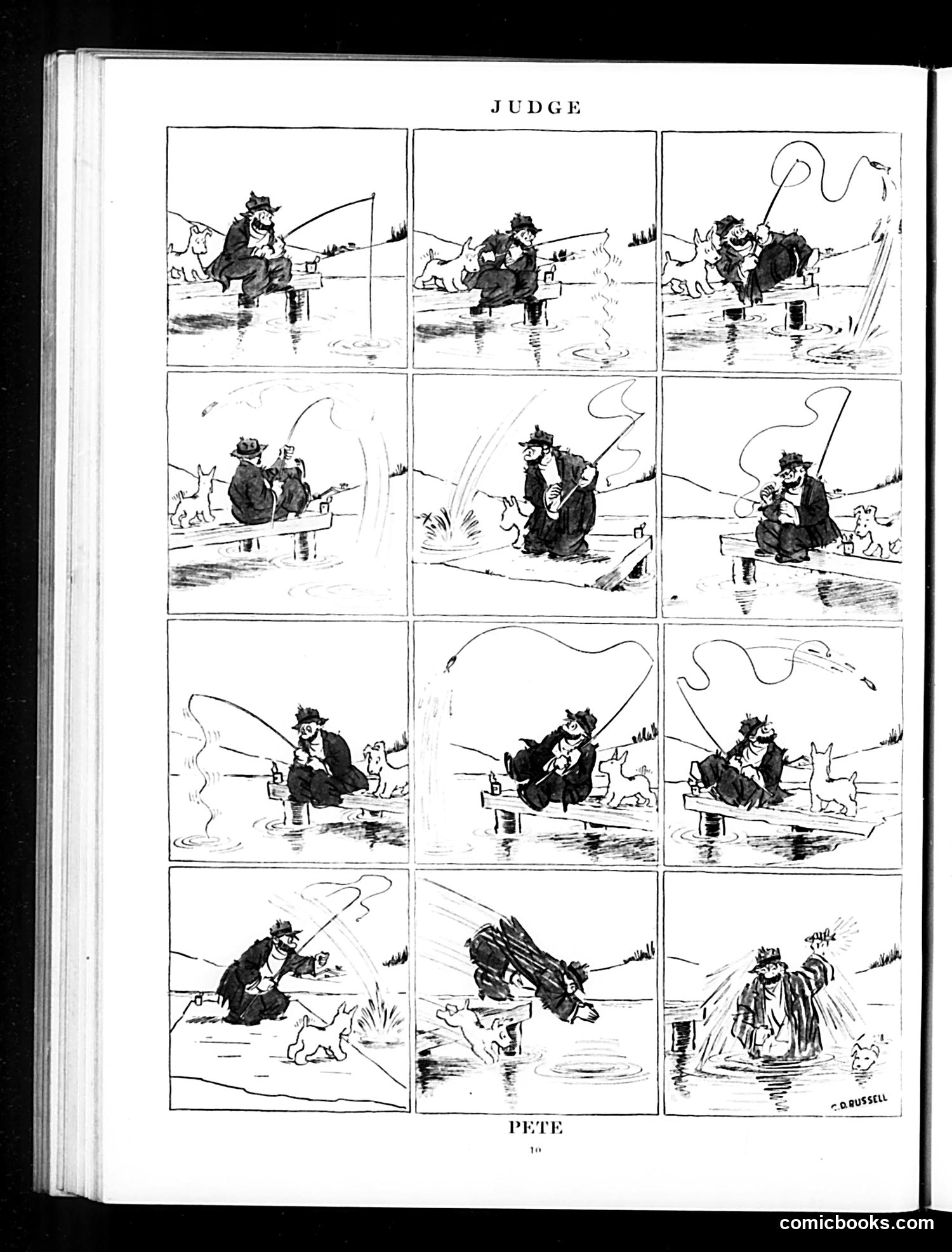
# Analysis of "Judge to Pete" Cartoon This is a twelve-panel comic strip showing a man fishing while a small dog observes. The title "Judge to Pete" suggests the man is "Judge" and the dog is "Pete." The humor appears to derive from slapstick misadventure: Judge repeatedly struggles with his fishing line—it tangles, whips around him, and eventually pulls him into the water. The dog remains a bemused witness throughout. Without additional context from Judge magazine's specific political climate, the satire's target is unclear. However, the strip may mock incompetence or foolishness, possibly referencing a public figure nicknamed "Judge" or satirizing fishing culture. The cartoonist C. Russell signed the work. The comedy is primarily physical rather than explicitly political.