A complete issue · 36 pages · 1929
Judge — August 31, 1929
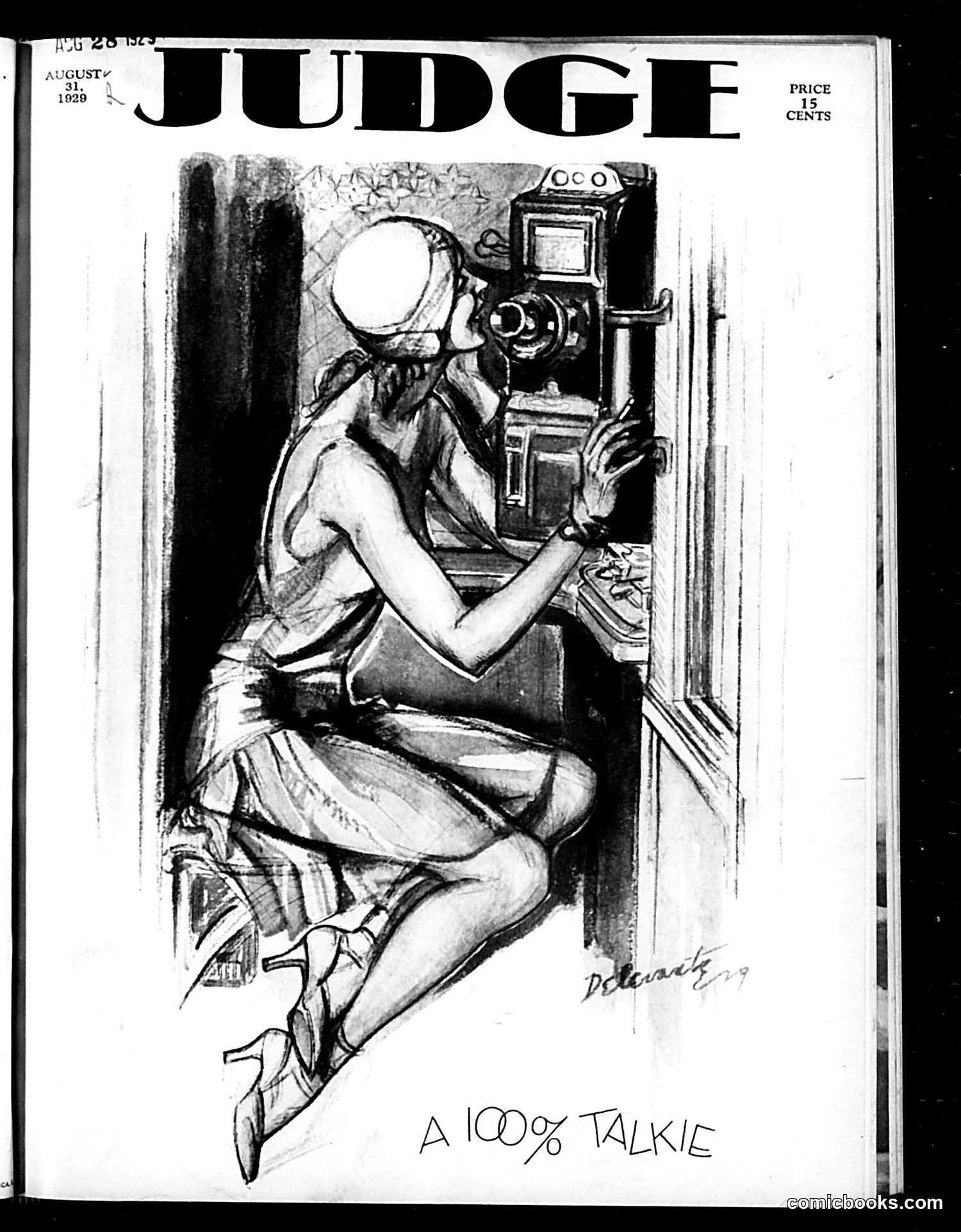
# "A 100% Talkie" This Judge magazine cover from August 31, 1928 satirizes the film industry's transition to sound cinema. The illustration shows a woman operating an early movie camera, with the caption "A 100% Talkie." The satire likely mocks how the new "talking picture" technology was being heavily marketed as a complete innovation, while the image suggests the absurdity of the medium—a woman must physically control the camera and sound equipment simultaneously, depicted in an exaggerated, awkward pose. The cartoon appears to comment on either the impracticality of early sound-film equipment or the industry's over-promotion of talkies as revolutionary, when the actual filming process remained cumbersome. The 15-cent price and publication date confirm this captures a moment during cinema's major technological transition from silent to sound films.
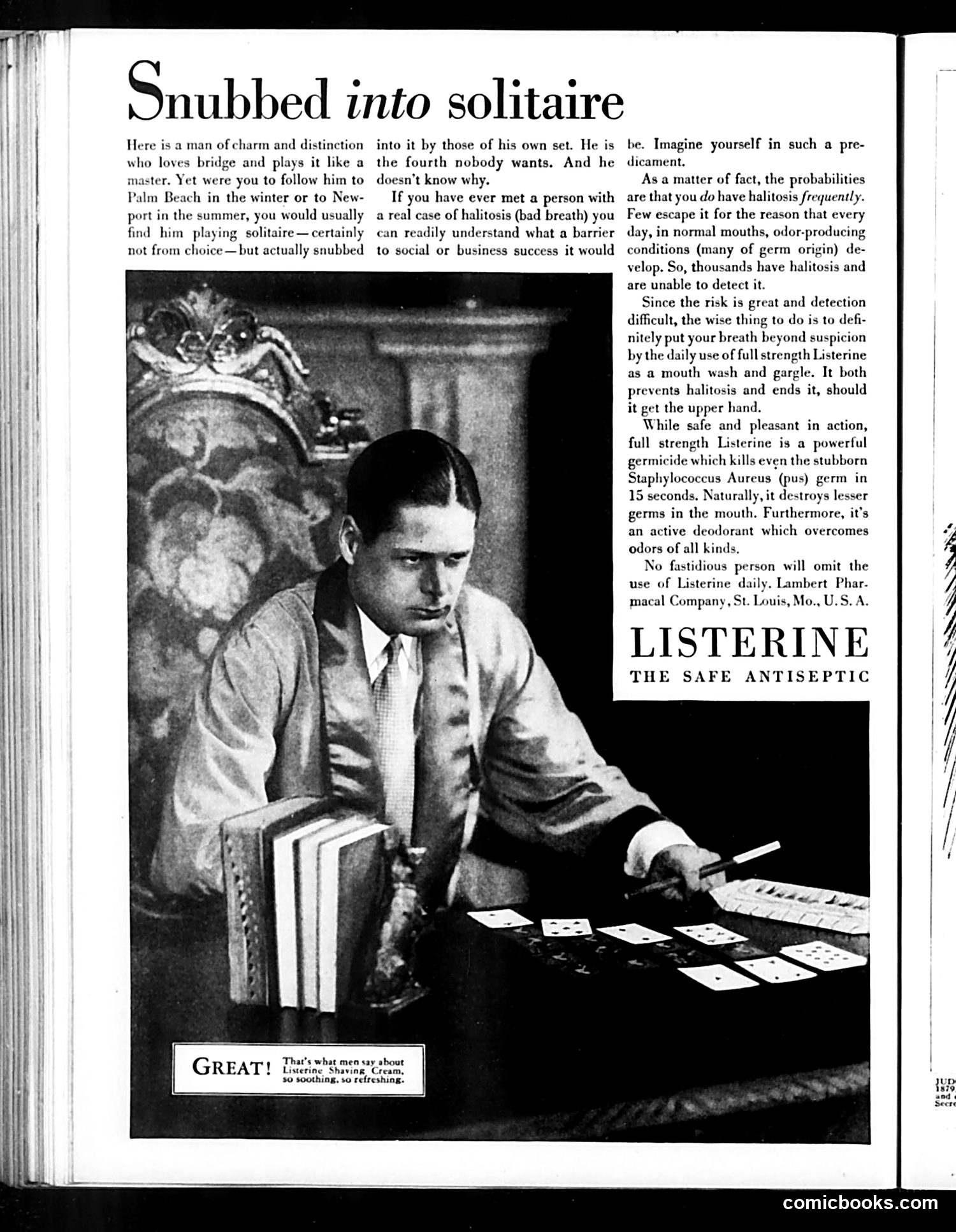
# Analysis This page is **primarily a Listerine advertisement**, not a political cartoon. The image shows a man playing solitaire alone, illustrating the article's headline: "Snubbed *into* solitaire." The text describes a man of "charm and distinction" who is socially isolated—he plays solitaire by choice rather than circumstance. The satirical implication is that he suffers from halitosis (bad breath), which the ad claims is a social barrier to business and personal success. The advertisement then pivots to promoting Listerine mouthwash as a solution, claiming it kills odor-causing germs and prevents halitosis. The satire targets social anxieties about hygiene and acceptance, using isolation as a cautionary tale to sell the product. This reflects early 20th-century marketing that weaponized insecurity to drive consumer purchases.
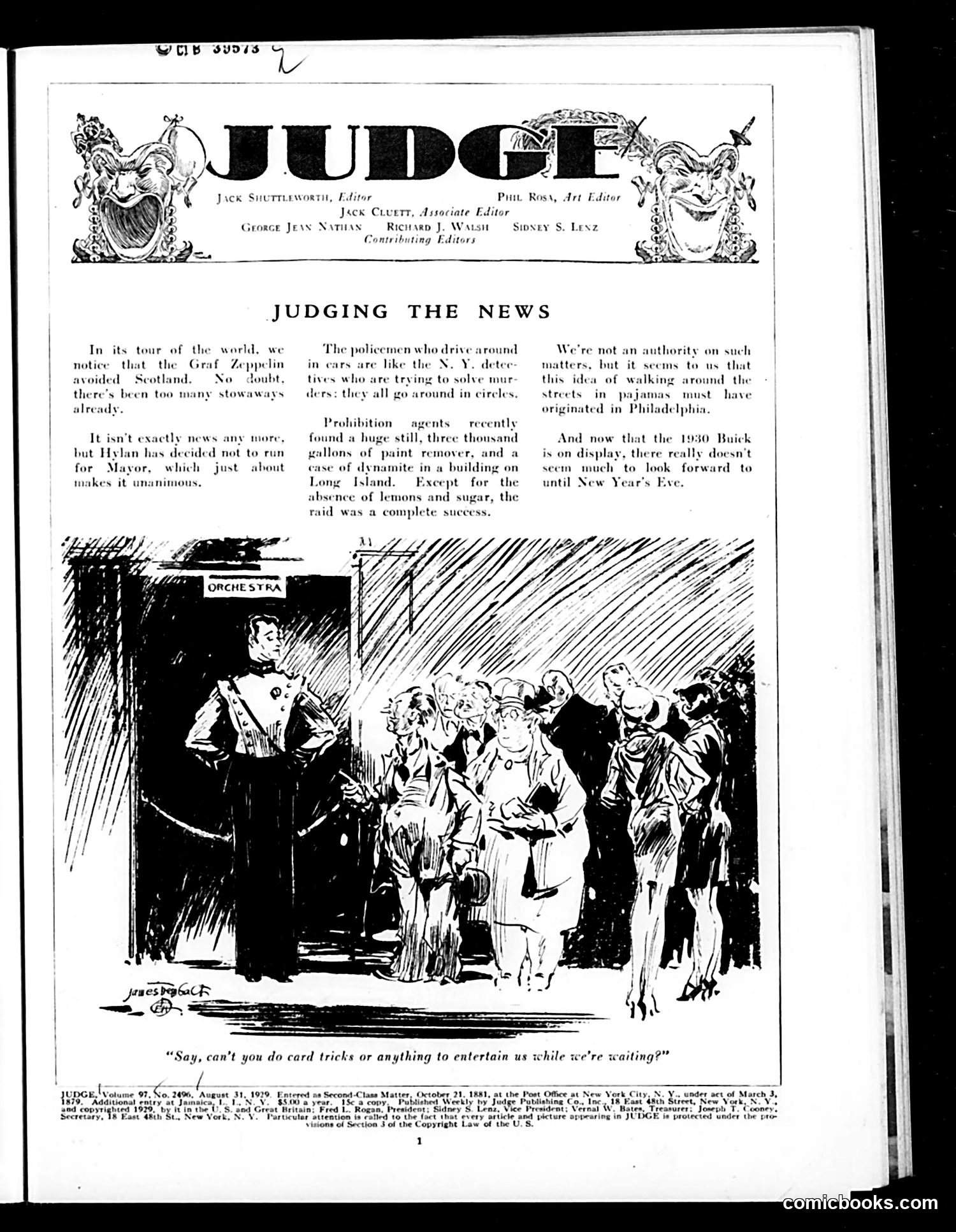
# Analysis of Judge Magazine Page **Main Cartoon Caption:** "Say, can't you do card tricks or anything to entertain us while we're waiting?" **Context:** This cartoon depicts an orchestra conductor facing impatient audience members, likely referencing delays or waiting in entertainment venues. The humor plays on the conductor's formal role—typically to lead musicians—being repurposed as an entertainer for restless patrons. **Editorial Section "Judging the News":** Brief commentary on contemporary events including: - Graf Zeppelin's tour (aviation milestone) - Hylan's decision not to run for Mayor (New York politics) - Police prohibition enforcement (paint remover raid on Long Island) - 1930 Buick automobile display The content reflects 1929-1930 American social and political concerns: aviation advancement, local politics, Prohibition enforcement, and consumer goods.
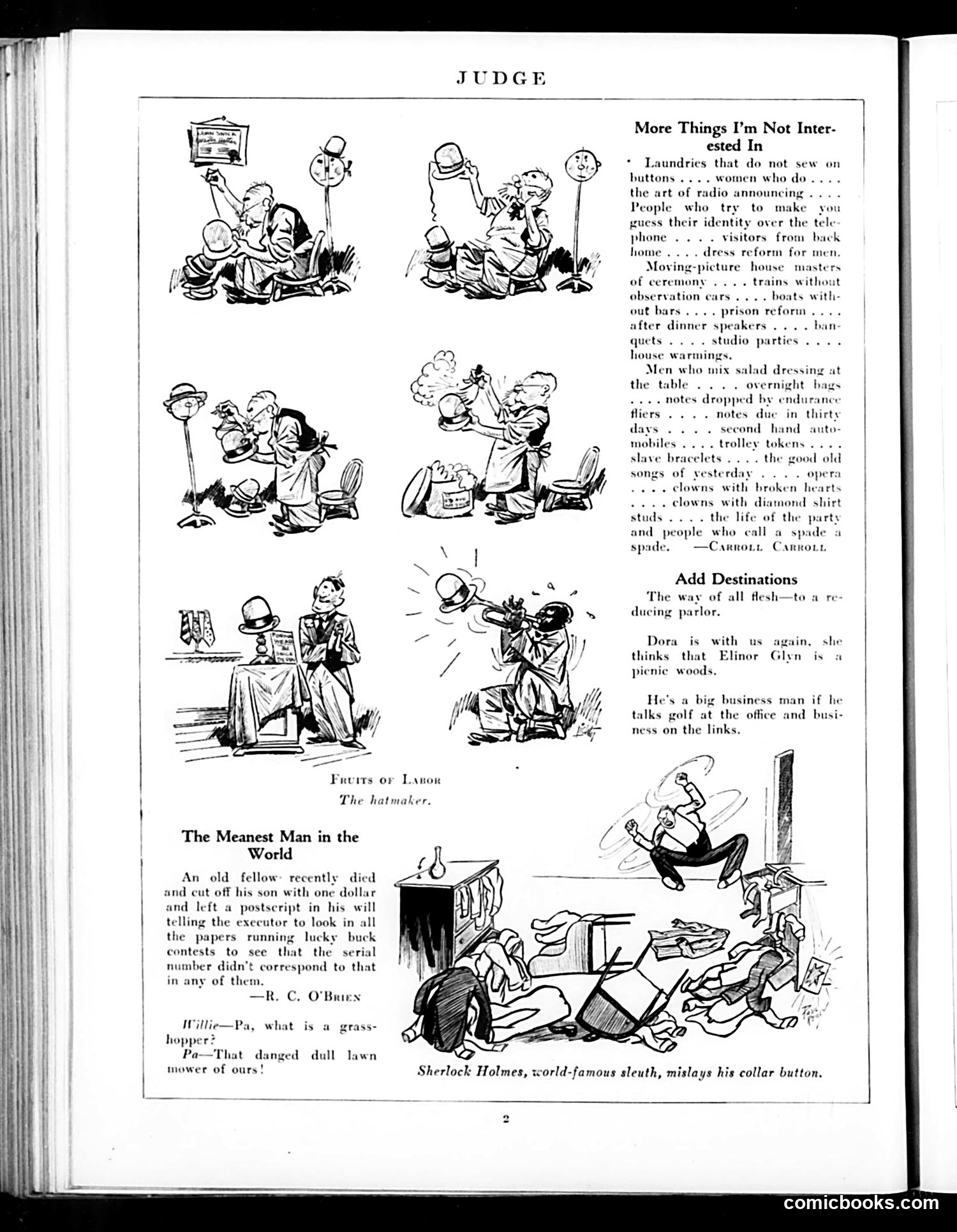
# Analysis of Judge Magazine Page This page contains several satirical cartoons and humorous pieces typical of Judge magazine's style. The top section shows "Fruits of Labor" depicting "The hatmaker" - various cartoon scenes of workers and daily life observations. The main featured piece is "The Meanest Man in the World," a joke by R.C. O'Brien about a miserly fellow who died and left instructions to his executor to search through his papers for hidden lucky tickets, ensuring the serial numbers matched contests - the joke being his obsession with winning prizes even in death. Below is a brief exchange between "Willie" and "Pa" about a "grasshopper" (a lawn mower), showing typical domestic humor. The bottom illustration shows Sherlock Holmes "mislaying his collar button" - a humorous reference to the famous detective in an undignified domestic situation surrounded by chaos.
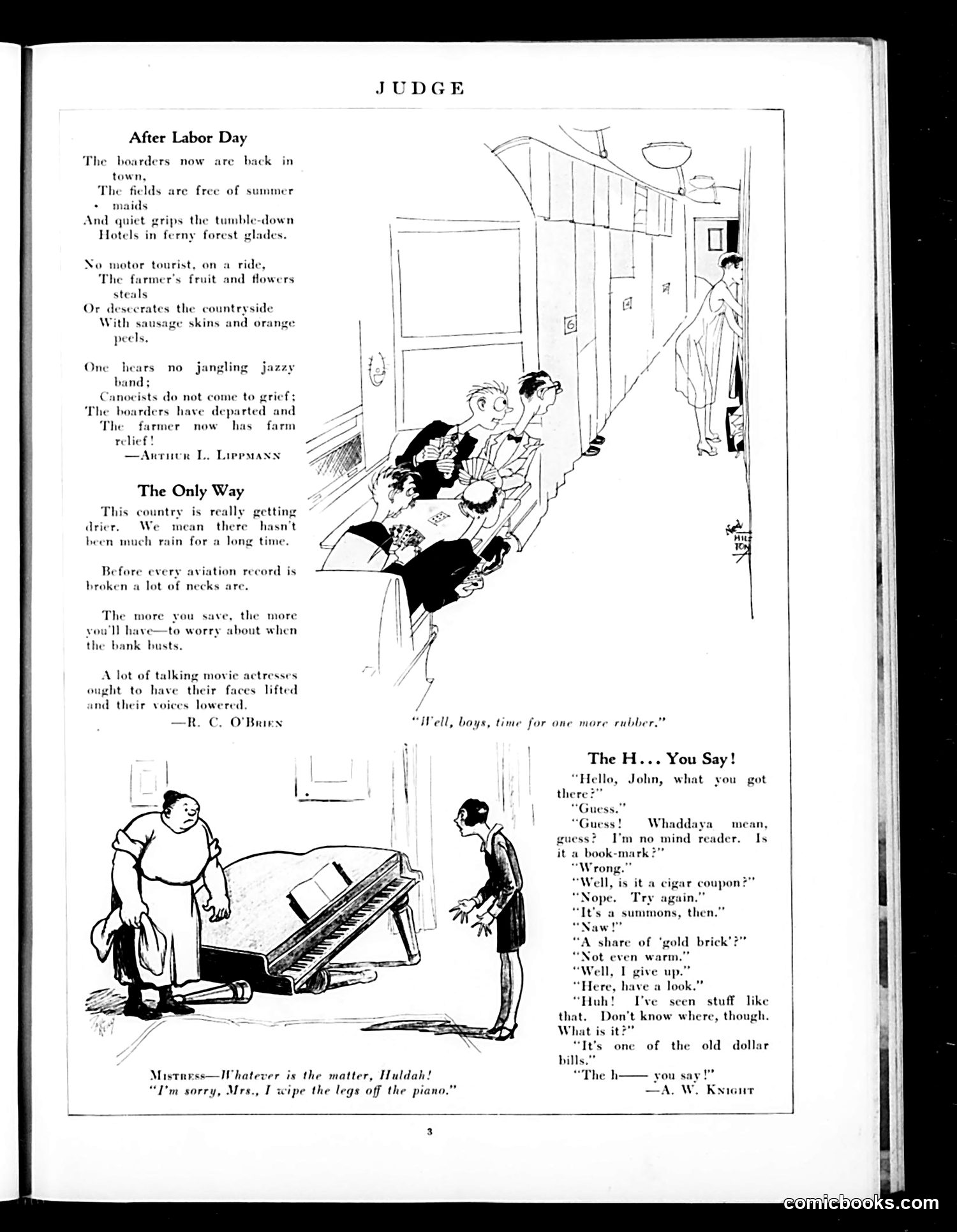
# Analysis of Judge Magazine Page This page contains three separate pieces of satirical humor typical of Judge magazine's format: 1. **"After Labor Day"** - A poem by Arthur L. Lippmann satirizing post-summer rural disruption: tourists abandon the countryside, leaving farmers without income from selling fruit and flowers to visitors. The accompanying illustration shows people on what appears to be a slide or chute, captioned "Well, boys, time for one more rubber." 2. **"The Only Way"** - Social commentary on American economic anxiety and bank failures (likely referencing early 20th-century financial instability). 3. **"The H... You Say!"** - A humor piece showing someone trying unsuccessfully to guess what an object is through questioning. The bottom cartoon depicts a woman apologizing to her husband for getting piano legs dirty—a euphemistic joke reflecting Victorian sensibilities about modest language.
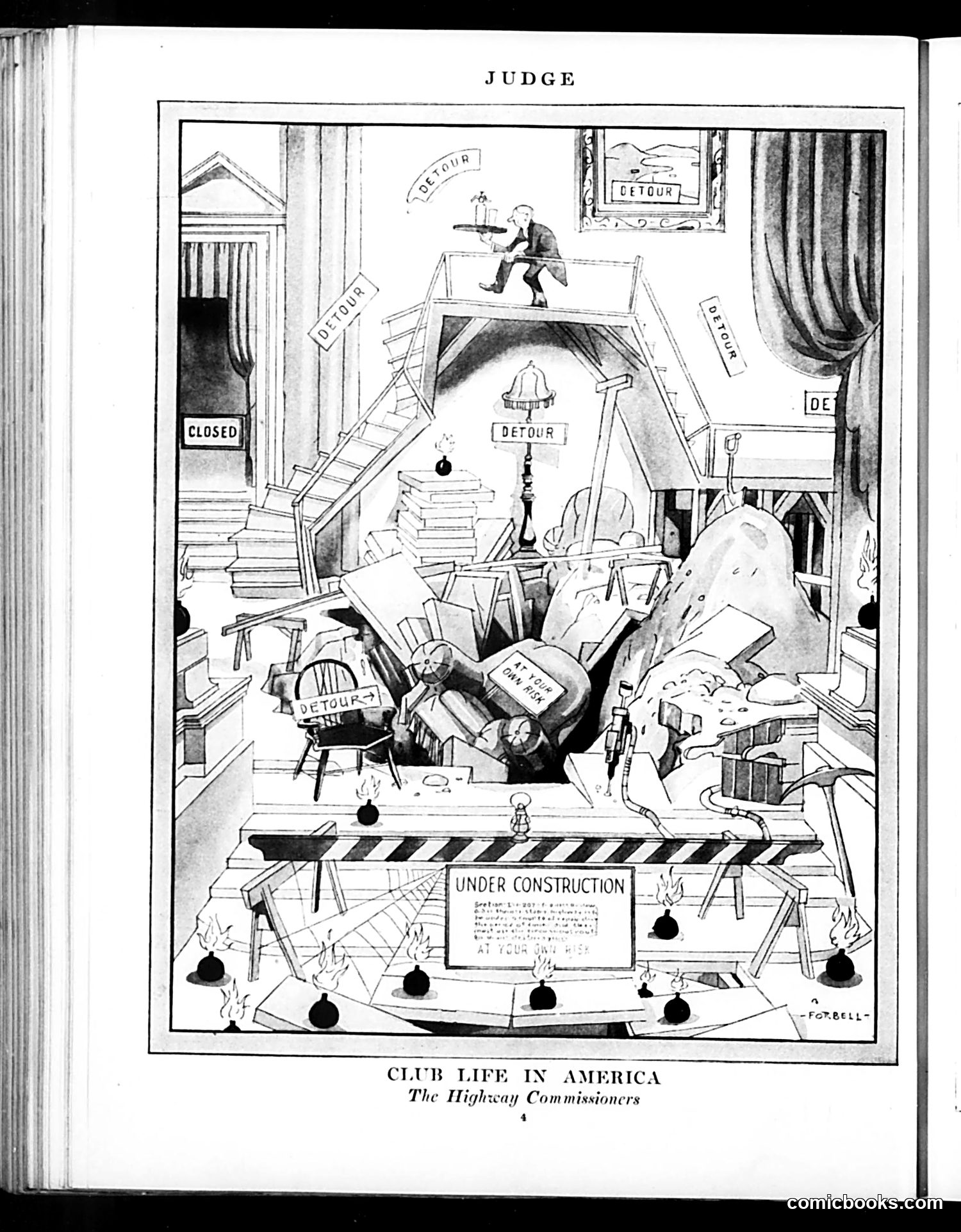
# "The Highway Commissioners" This cartoon satirizes the chaos and dysfunction of highway construction and maintenance oversight in America. The central image depicts a courtroom ("Judge") literally under construction—filled with scaffolding, debris, blocked entrances ("CLOSED"), and detour signs. Workers navigate confusion while various officials appear trapped or ineffectual amid the mess. The satire targets "Highway Commissioners"—government officials responsible for road infrastructure. The cartoon suggests these bureaucrats create more obstruction than progress, turning what should be orderly judicial/administrative proceedings into literal chaos. The multiple "DETOUR" signs emphasize wasted time and resources. The burning debris symbolizes destruction without productive outcome. Overall, it mocks government incompetence and the public inconvenience caused by poorly managed public works projects.
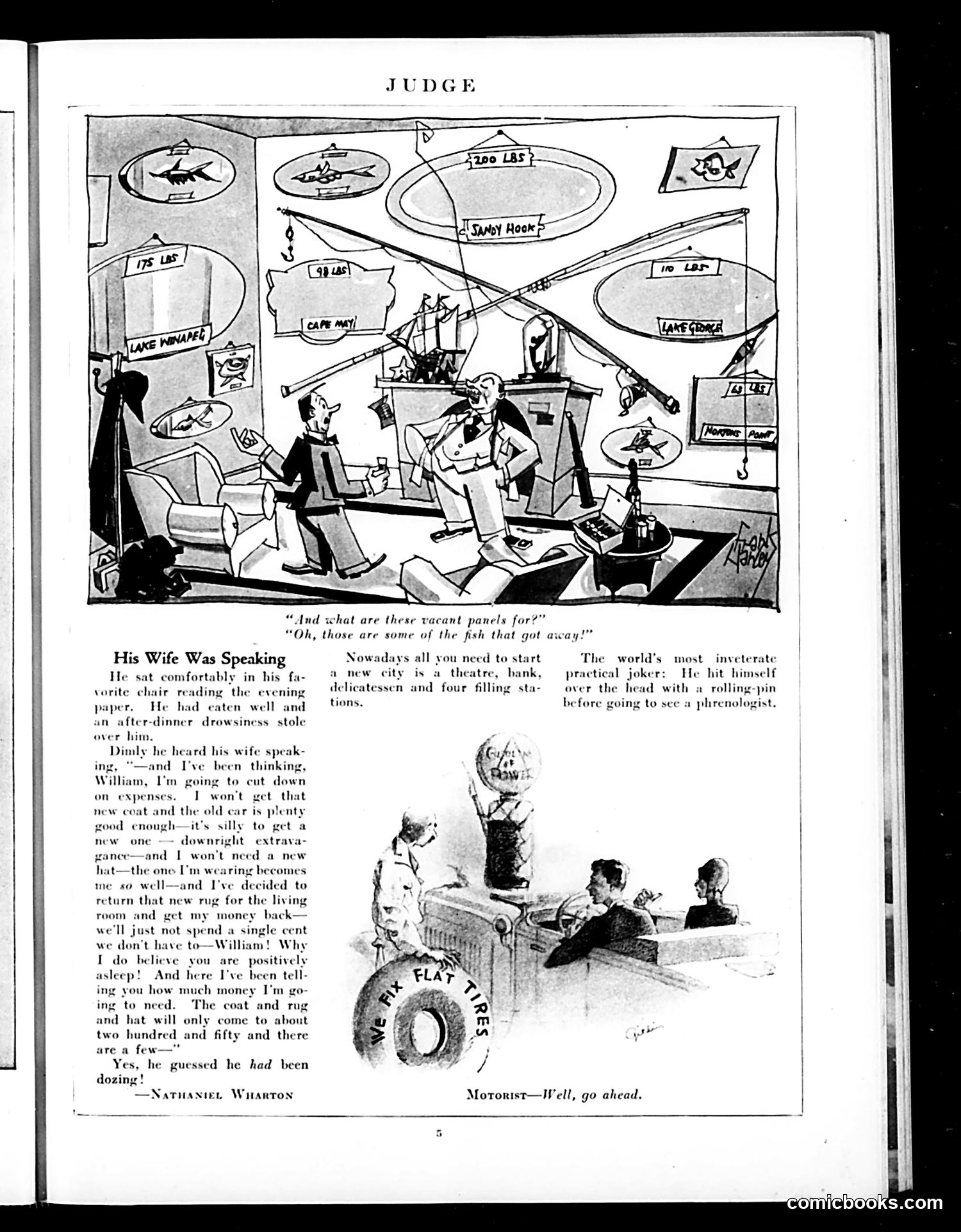
# Analysis of Judge Magazine Page **Top cartoon** ("And what are these vacant panels for?"): A satirical take on early 1920s urban development. The illustration shows a fishing enthusiast's boat converted into a makeshift city, with various labeled compartments (banks, theaters, filling stations). The joke critiques the rapid, improvised nature of new city planning during America's post-WWI building boom—suggesting cities were being constructed haphazardly, like someone cramming amenities into a boat. **Bottom section** includes two short humorous pieces: "His Wife Was Speaking" depicts marital comedy about household budget cuts, and "Motorist—Well, go ahead" shows a motorist encountering an obstacle labeled "We Fix Flats," likely poking fun at roadside service stations and automobile culture's rapid expansion in the 1920s. The page reflects 1920s concerns about urban growth, consumerism, and modern inconveniences.
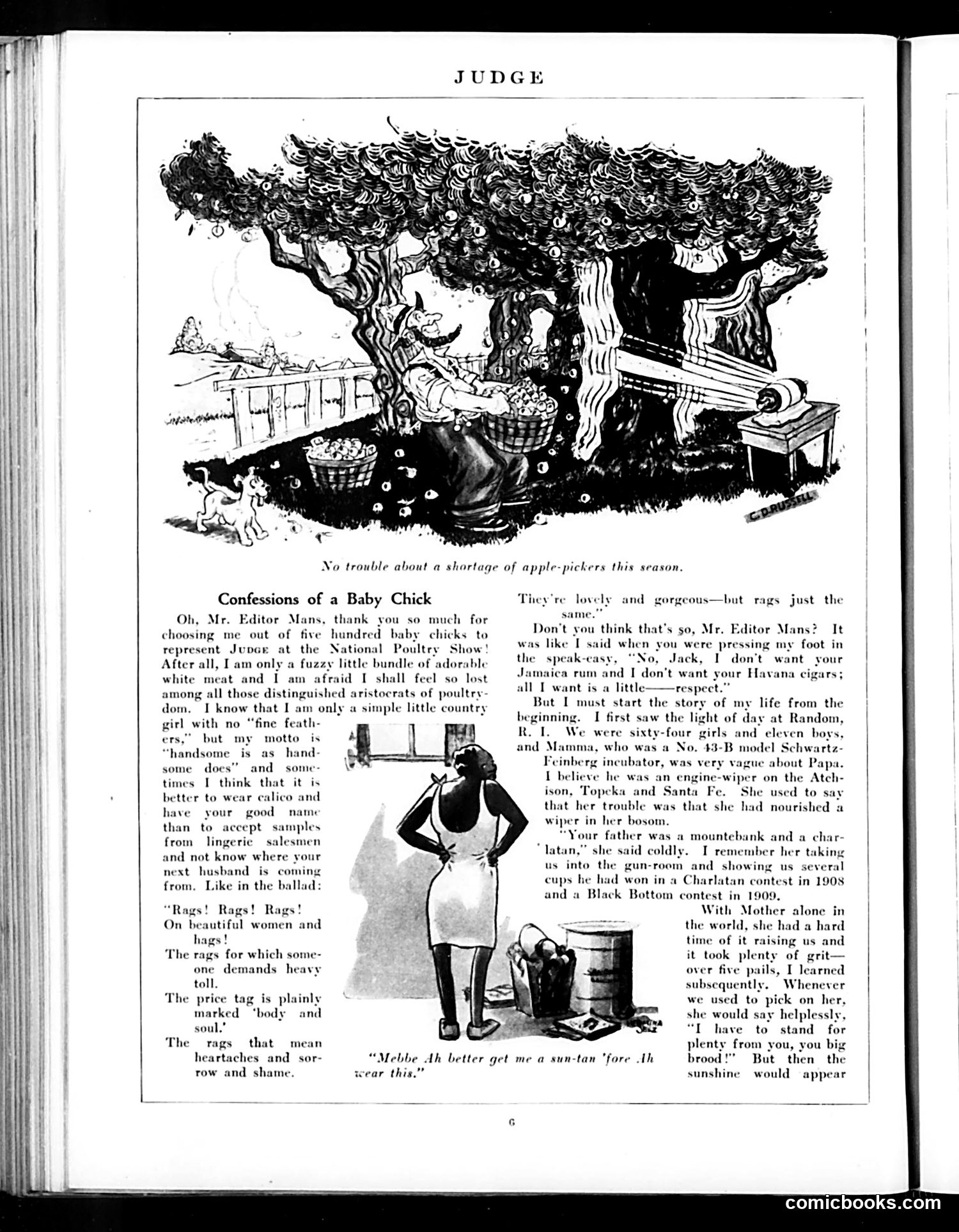
# Analysis of Judge Magazine Page **Top Cartoon:** Depicts a rural scene with a woman and child harvesting apples beneath a large tree. The caption reads "No trouble about a shortage of apple-pickers this season," appearing to satirize labor availability concerns—likely referencing anxieties about farm labor during an agricultural period when such shortages were economically significant. **Main Article:** "Confessions of a Baby Chick" is a first-person narrative from a female chick discussing her origins and family background. It satirizes the pretensions of show animals and pedigree breeding culture. The accompanying illustration shows a woman in form-fitting clothing, captioned "Mebbie Ah better get me a sun-tan 'fore Ah wear this," mocking vanity and fashion consciousness. The page combines rural/agricultural humor with satirical commentary on social status and appearance.
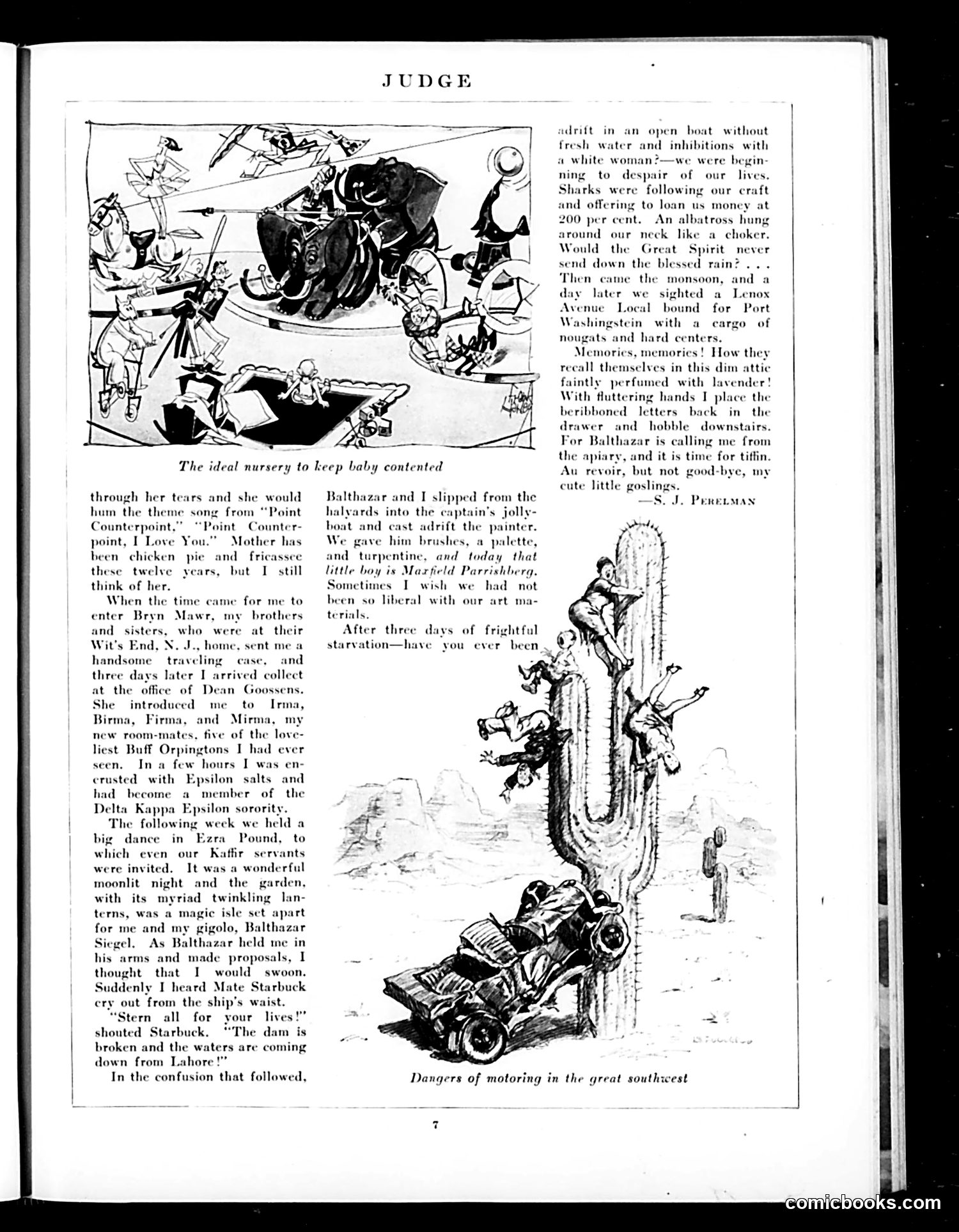
# Understanding This Judge Magazine Page This page contains two distinct satirical pieces from Judge, an American humor magazine. **Top cartoon** ("The ideal nursery to keep baby contented"): A chaotic domestic scene mocking overwrought literary pretension and absurd parenting. The accompanying text is a rambling, nonsensical memoir-style narrative that satirizes affectation—referencing "Point Counterpoint" (likely Aldous Huxley's novel), elite women's colleges like Bryn Mawr, Greek sororities, and romantic melodrama. The humor comes from the narrator's increasingly absurd experiences (room-mates who are chickens, a ship disaster interrupting a college dance, casual cruelty presented as whimsy). **Bottom cartoon** ("Dangers of motoring in the great southwest"): An illustration of a vehicle precariously perched on a tall saguaro cactus in the Arizona desert. This appears to be straightforward satirical commentary on the hazards and absurdities of early automobile travel in America's remote southwestern regions. Both pieces reflect Judge's satirical approach: mocking contemporary social trends, literary culture, and modern conveniences through exaggeration and surrealism.
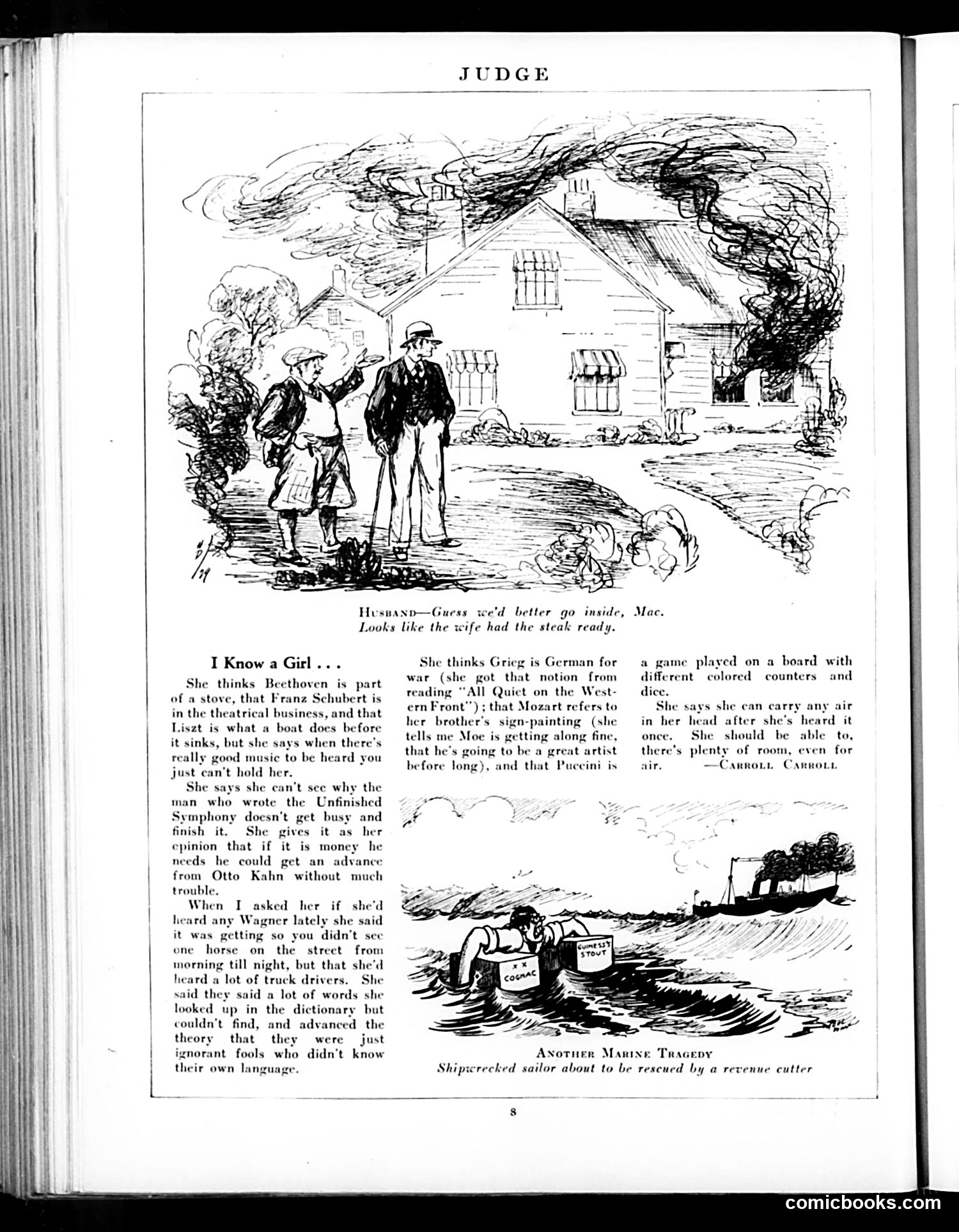
# Analysis of Judge Magazine Page This page contains two satirical pieces: **"I Know a Girl"** mocks a woman's profound ignorance of classical music and composers. She confuses famous musicians with mundane things (Beethoven = a stove part; Liszt = a boat sinking motion; Puccini = a board game). The humor lies in her simultaneously claiming to love "really good music" while demonstrating she knows nothing about it. The Wagner joke—conflating the composer with horse-drawn wagons disappearing from streets due to motorization—references early 20th-century urban change. **"Another Marine Tragedy"** (lower cartoon) depicts a shipwrecked sailor about to be rescued by a revenue cutter. The caption's dark humor suggests this "tragedy" is ironic—the sailor's rescue by a government vessel may involve legal consequences (possibly bootlegging during Prohibition era, given the reference to "revenue cutter"). Both pieces employ typical Judge magazine satire: social commentary through exaggeration and wordplay, targeting cultural pretension and contemporary anxieties.
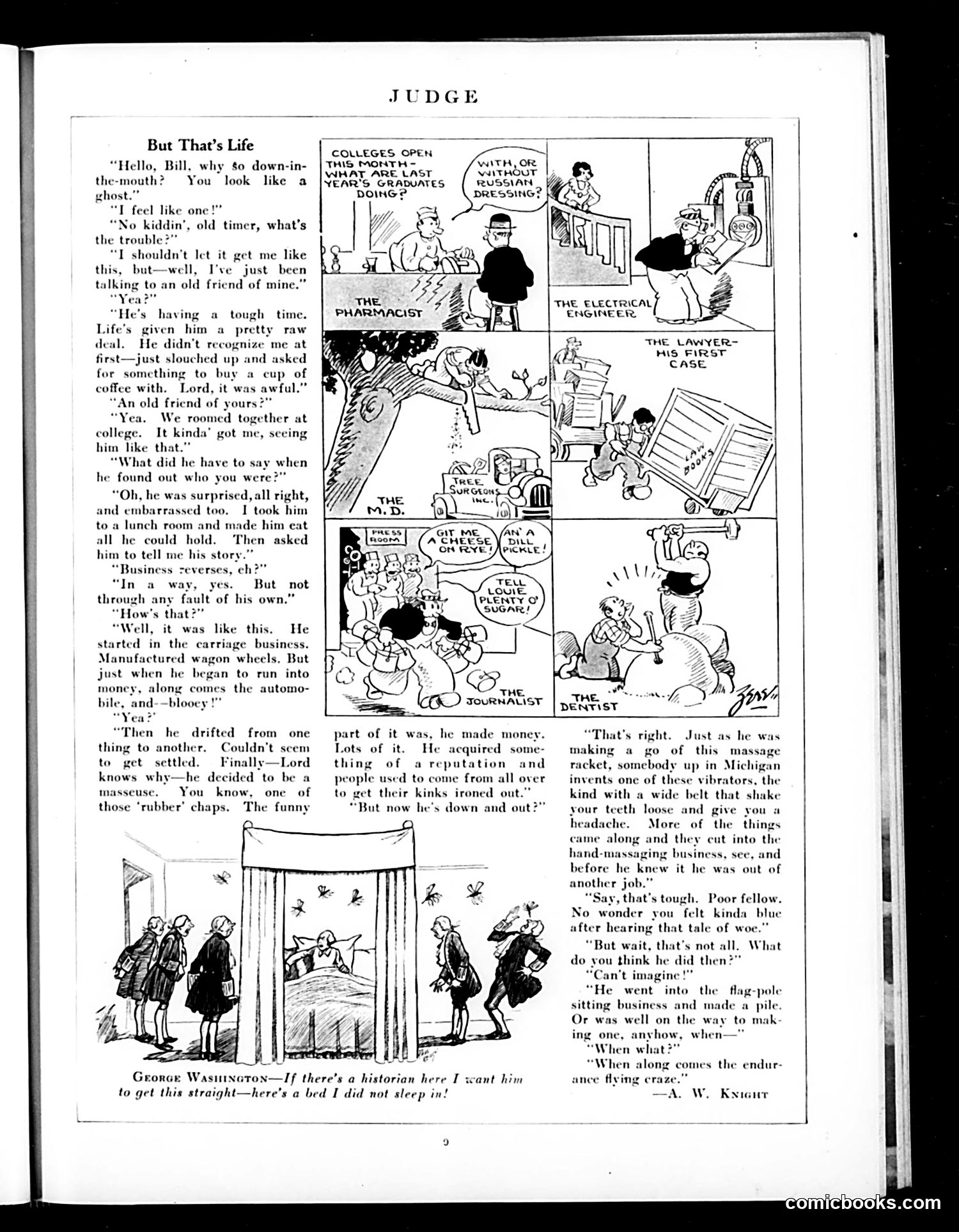
# Satire Explanation for Modern Readers This page from *Judge* satirizes economic obsolescence and bad luck during rapid technological change. The main story "But That's Life" follows a man whose friend repeatedly loses jobs because new inventions disrupt his industries: the automobile replaces carriage manufacturing, electric vibrators undercut manual massage therapy, and aircraft somehow threaten a flag-polishing business. The accompanying comic strip mocks college graduates' career prospects, showing them scattered across unstable professions (pharmacist, engineer, lawyer, doctor, journalist, dentist). The George Washington cartoon at bottom appears to reference historical authenticity. The satire reflects early-to-mid 20th century anxieties about technological disruption making skilled trades obsolete faster than workers can adapt—a perpetual anxiety, though the specific technologies referenced (automobiles, electric massagers, early aviation) date this as probably 1910s-1920s era.
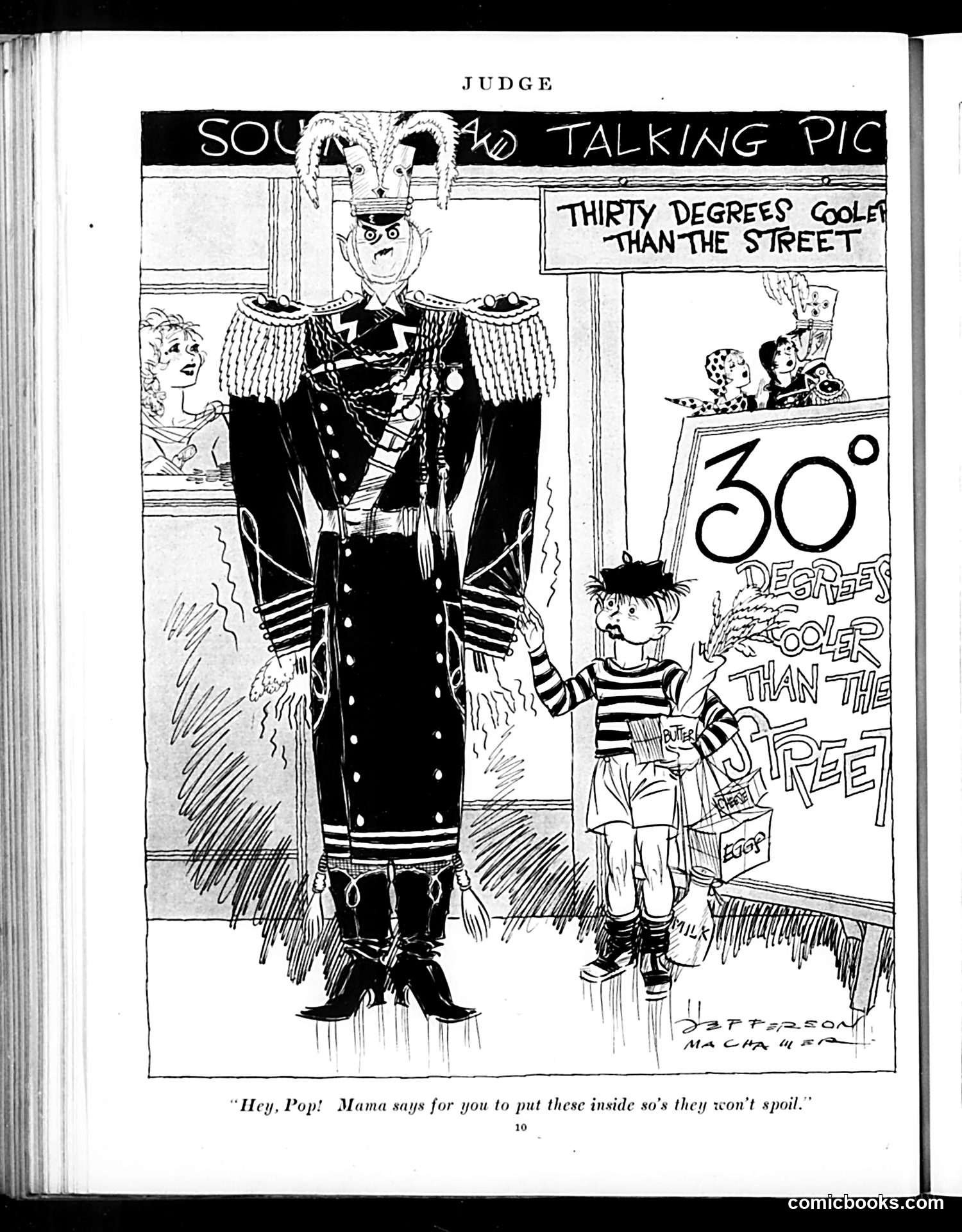
# "Sound and Talking Pig" Cartoon Analysis This Judge magazine cartoon satirizes a military officer (identifiable by ornate uniform with epaulettes and decorations) as a grotesque pig-headed figure. The humor derives from calling him a "talking pig"—suggesting he's all bluster and no substance. The domestic scene shows a child delivering groceries to "Pop," with a sign advertising that the establishment is "thirty degrees cooler than the street." The mother's instruction to store items "inside so's they won't spoil" appears to be a double entendre: the cartoon implies the officer-character himself needs cool storage to prevent moral or intellectual "spoiling." This likely mocks a specific political or military figure of the era through crude caricature—a common Judge magazine practice. The exact target remains unclear without additional historical context, but the satire clearly attacks the figure's character and competence through animalistic imagery.