
A complete issue · 16 pages · 1909
Judge — September 18, 1909
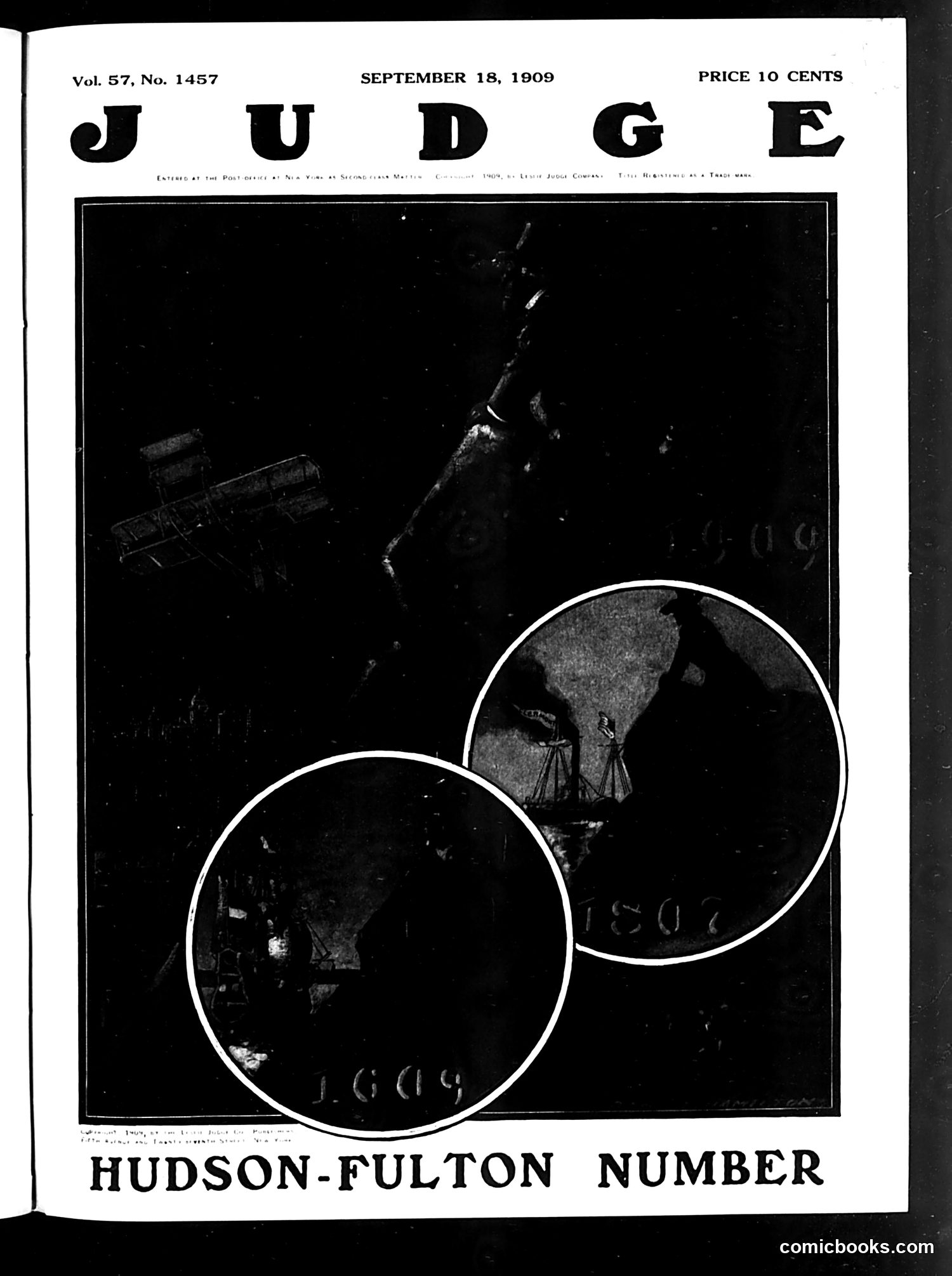
This is a **Hudson-Fulton Number** special issue of *Judge* magazine from September 18, 1909. The Hudson-Fulton Celebration commemorated the 300th anniversary of Henry Hudson's 1609 voyage and Robert Fulton's 1807 steamboat invention on the Hudson River. The two circular images appear to show **historical vessels or nautical scenes** related to these achievements, though the dark photography makes specific details difficult to discern. The upper portion shows what appears to be rigging or ship equipment. This special edition celebrates early American exploration and industrial innovation. The exact satirical commentary, if present, remains unclear from the image quality, but the page establishes the historical context being commemorated through this celebratory issue.
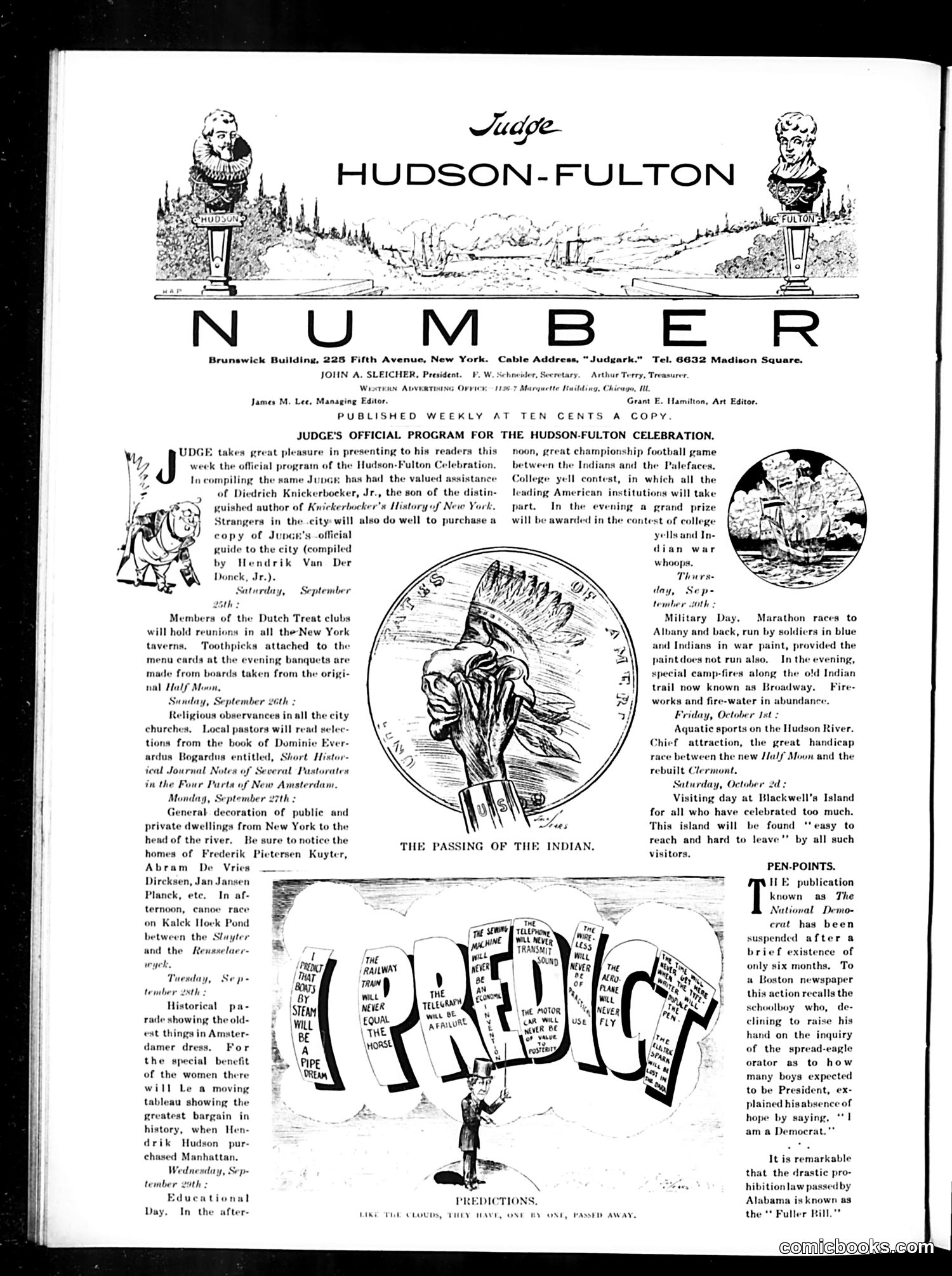
This page announces Judge's official program for the Hudson-Fulton Celebration (September-October, likely 1909, commemorating Hudson's and Fulton's historical voyages). The central cartoon "THE PASSING OF THE INDIAN" depicts a Native American figure being displaced, while the large "JUDGE" text below shows the publication being carried away by this displacement—a satirical commentary on American expansion and industrialization erasing indigenous peoples. The page lists celebration events including Dutch Treat club gatherings, religious services, military parades, and sports competitions. A smaller illustration titled "PREDICTIONS: LIKE THE CLOUDS, THEY HAVE ONE BY ONE PASSED AWAY" appears to reference failed political prophecies or predictions, though the specific reference is unclear without additional context. The overall tone reflects Progressive Era attitudes toward "civilization" and progress.
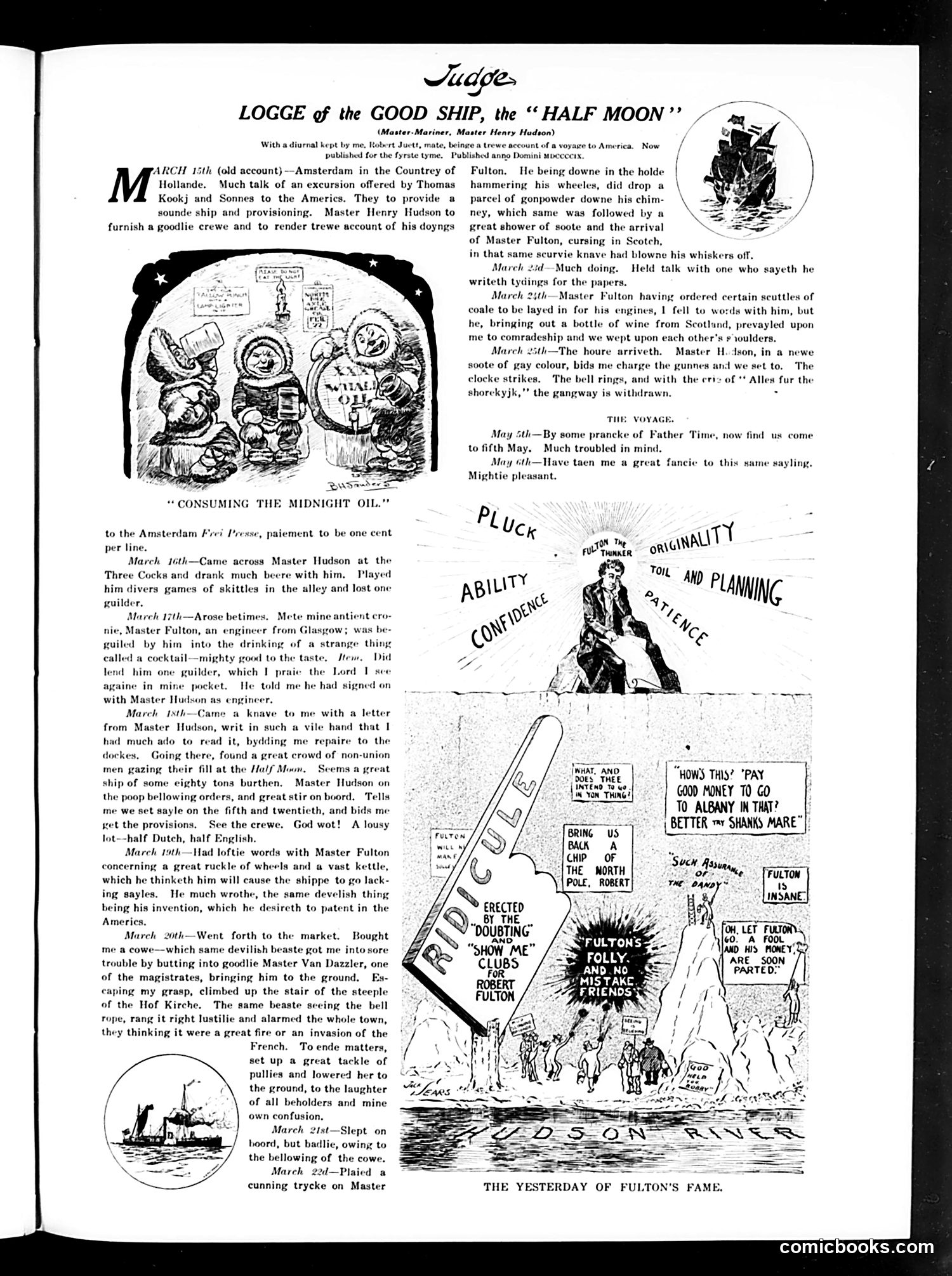
This is a satirical ship's log purporting to document a voyage to America by Master Henry Hudson. The top narrative describes Hudson's 1609 voyage, mixing historical details with humorous observations about crew behavior and maritime mishaps. The lower cartoon, titled "The Yesterday of Fulton's Fame," depicts Robert Fulton's steamship on the Hudson River surrounded by skeptics and critics. The caption shows contemporary doubts about Fulton's invention, with figures questioning his abilities and expressing skepticism ("Folly and no mistake," "Doubtful show me"). This contrasts Fulton's eventual success with initial public ridicule. The satire likely comments on how groundbreaking innovations face resistance before acceptance, using Hudson's and Fulton's historical examples as parallel narratives.
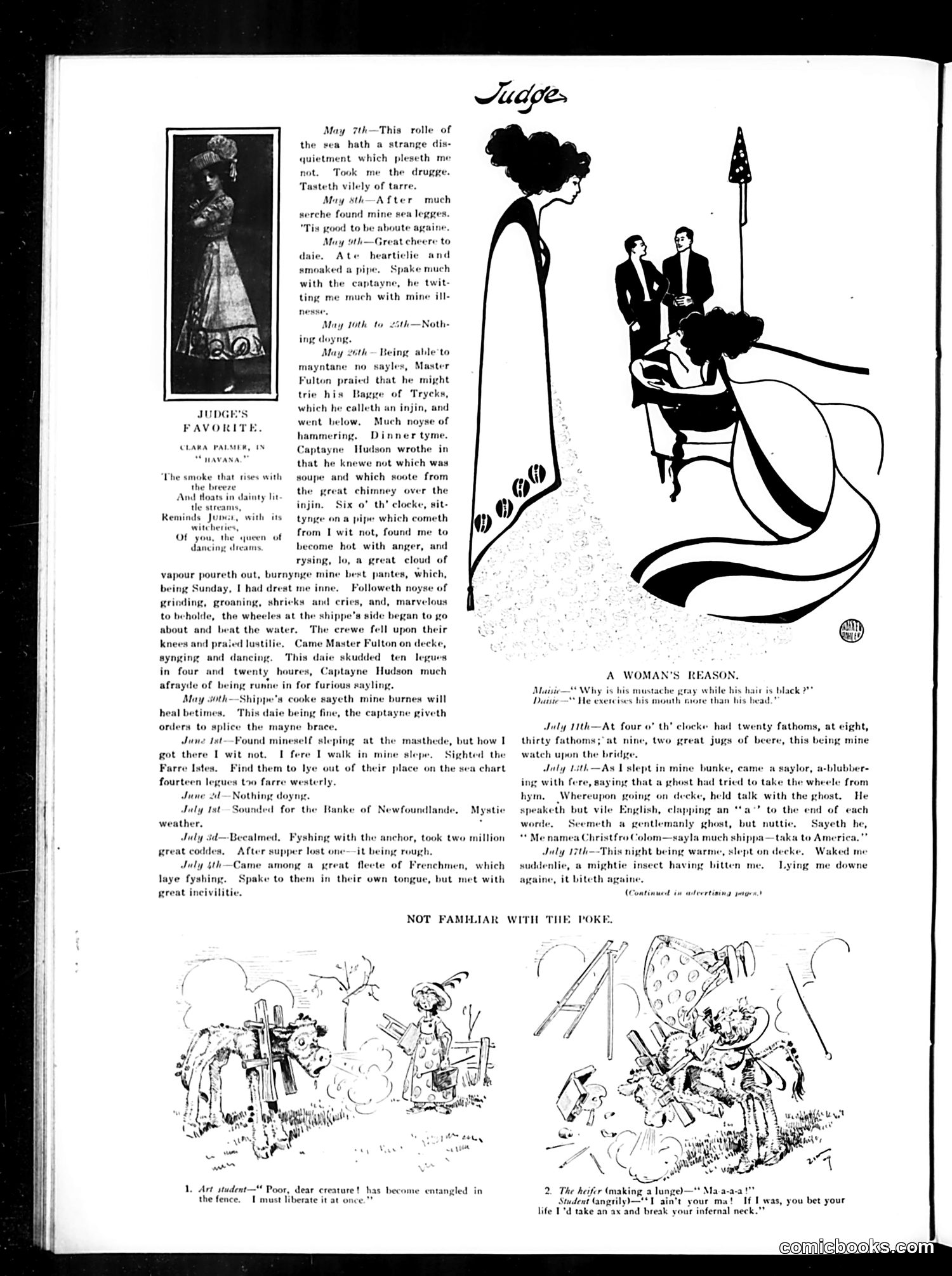
This page contains two distinct sections: **Upper half:** A serialized diary entry ("Judge's Favorite") attributed to Clara Palmer, describing naval life during what appears to be a military voyage. The accompanying illustration shows a fashionably dressed woman, likely Palmer herself, observing sailors and officers. The diary entries humorously contrast genteel expectations with rough maritime realities—mentions of sea legs, pipe-smoking, and ship's commotion. **Lower half:** Two cartoon panels titled "Not Familiar with the Poke," depicting slapstick comedy. The captions suggest physical mishaps involving students or sailors unfamiliar with some implement or practical joke (the "poke"). The humor is purely situational rather than topical. The page mixes social satire (woman's perspective on military culture) with traditional slapstick comedy.
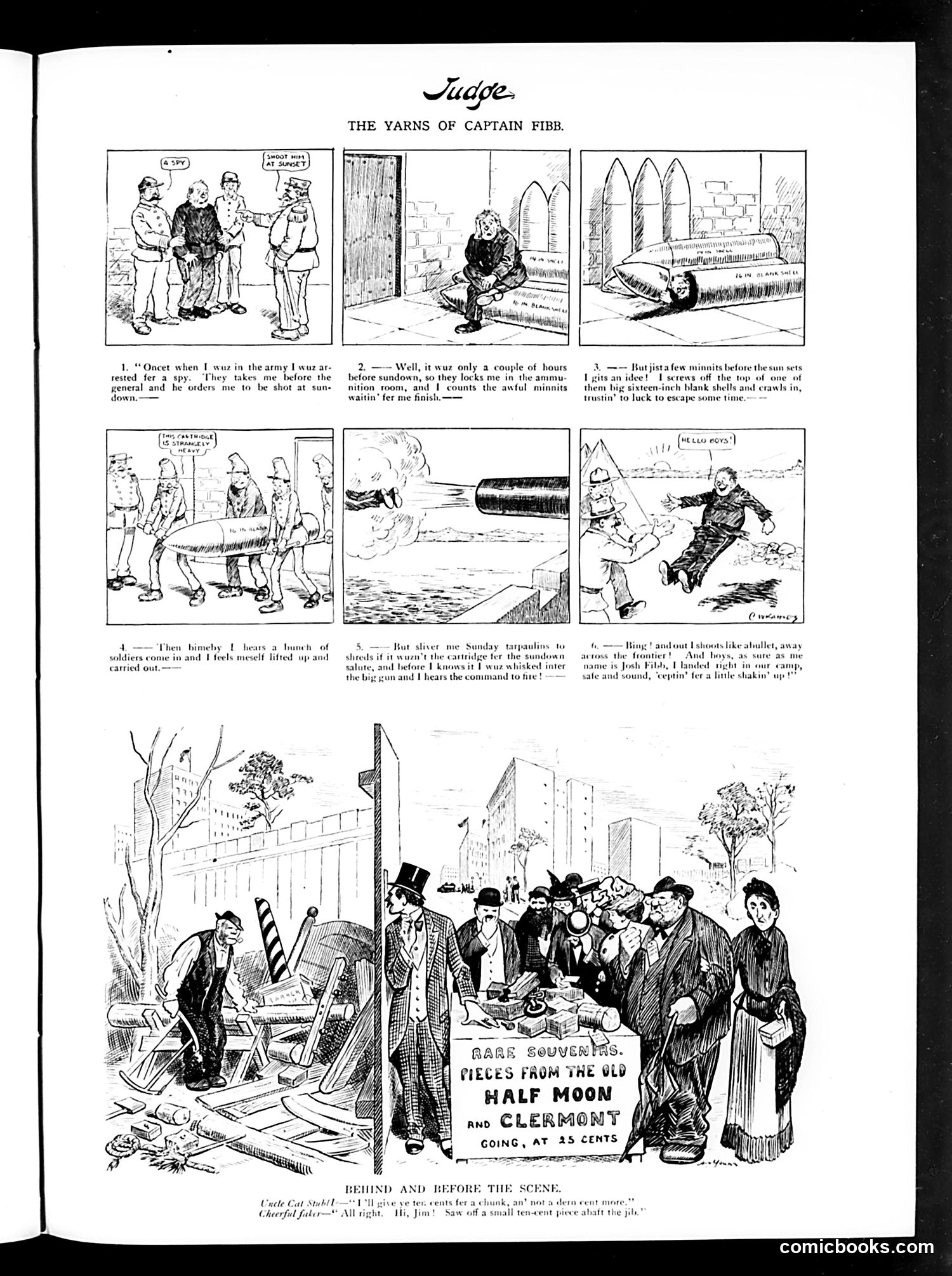
This is a humorous comic strip about Captain Fibb, an elderly military storyteller. The narrative follows his tall tales: he claims to have been in the army during peacetime, then describes increasingly implausible war experiences—hiding in ammunition before sunrise, escaping as a mummy before sunset, and surviving a cannon blast that lifted him across a field. The satire targets the exaggeration common to military veterans' reminiscences. The final panels show Fibb as a charlatan peddling "pieces from the old Half Moon and Clermont" as souvenirs at 25 cents—playing on gullible tourists. The joke is that his fabricated war stories match his fraudulent souvenir scheme: both are invented tales meant to deceive for profit.
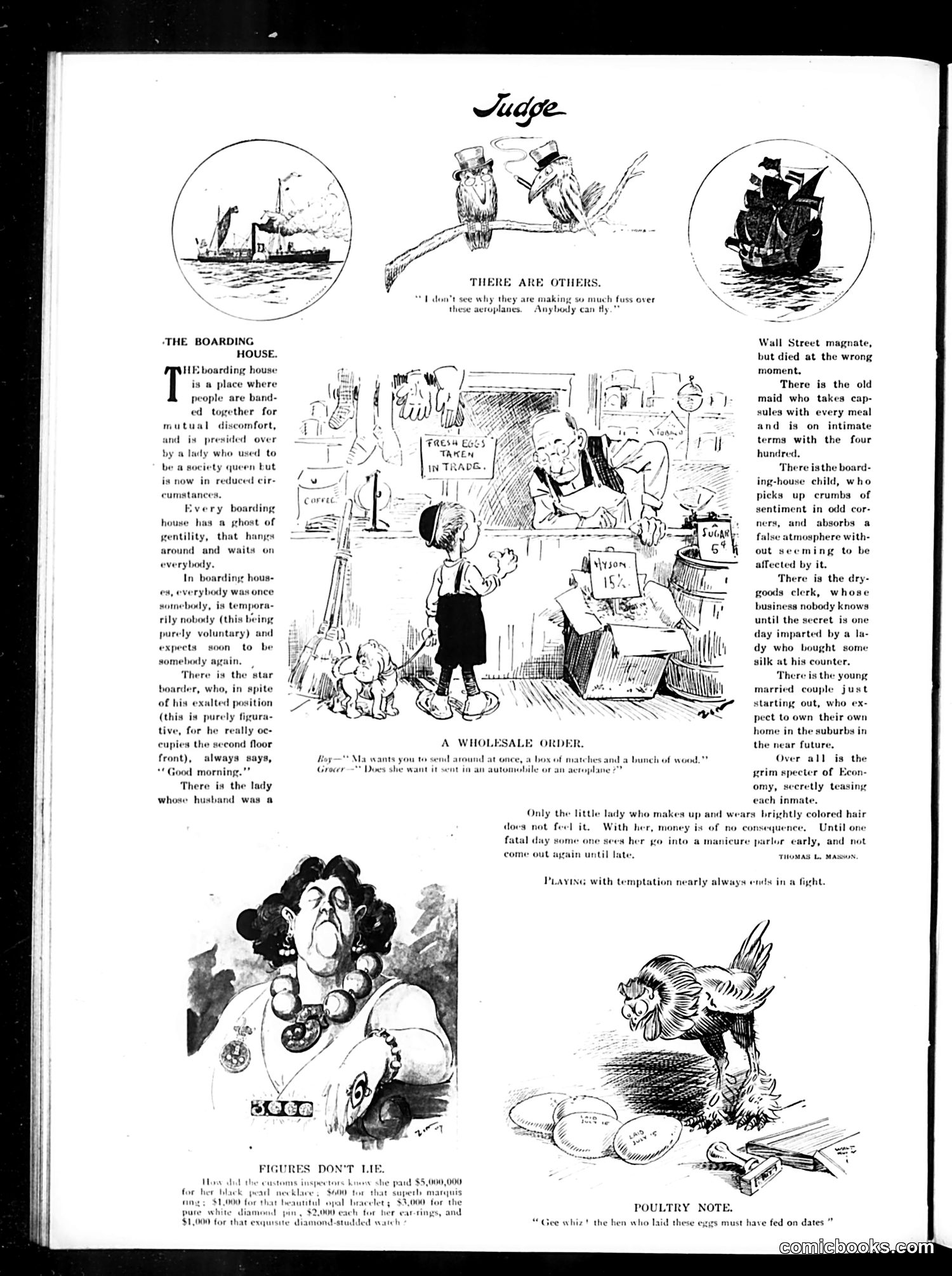
This page satirizes boarding-house life, a common American living arrangement of the era. The central cartoon depicts the typical boarding-house hierarchy and its residents: the proprietress (a formerly wealthy woman now reduced to running the establishment), the self-important "star boarder," a wealthy widow with a pearl-necklace-obsessed husband, and various other lodgers—including an old maid, a dry-goods clerk with mysterious employment, and a young couple expecting suburban homeownership. The satire's point: boarding houses represent *mutual discomfort* masked by forced gentility. Everyone is temporarily poor or in decline, united only by economic necessity and social pretense. The "grim specter of Economy" secretly torments each resident. Secondary cartoons joke about aeroplanes ("anybody can fly"), financial collapse ("Wall Street magnate...died at the wrong moment"), and jewelry fraud. The page mocks middle-class aspiration and the facade of respectability in crowded, economically-driven shared housing.
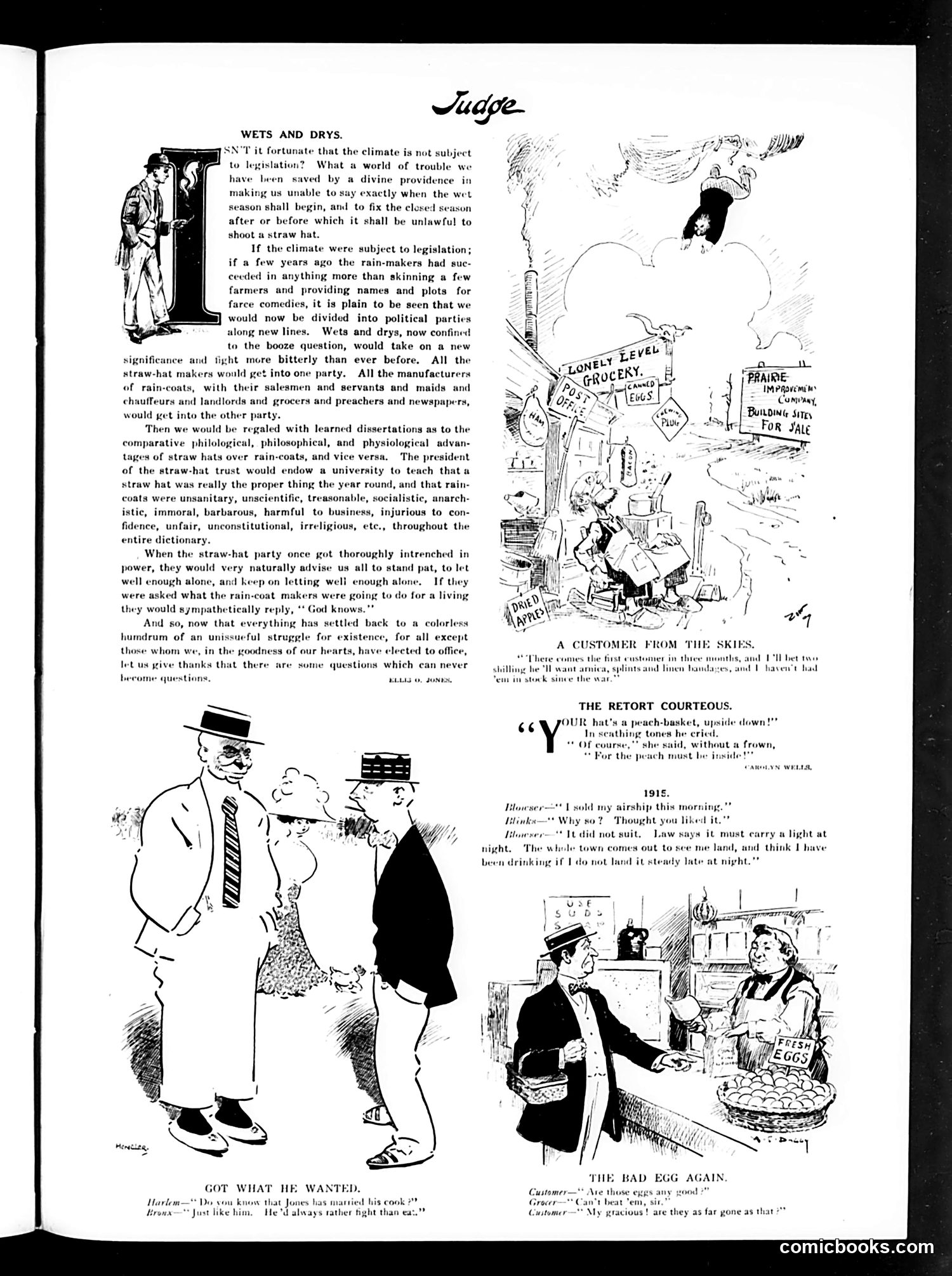
This page satirizes the "Wets vs. Drys" political debate—the Prohibition movement that dominated early 20th-century American politics. **Main Editorial ("Wets and Drys"):** The author humorously imagines what would happen if rain-making technology worked: society would split into rival political parties as bitterly divided as the actual liquor debate. Manufacturers of rain coats would war against straw-hat makers; universities would publish pseudo-scientific defenses of each position. The satire mocks how Prohibition advocates turned a simple moral question into an all-consuming partisan crusade affecting every institution. **Three Comic Strips Below:** - "Got What He Wanted": A Harlem man marries his cook—satirizing working-class life choices - "The Retort Courteous" and "The Bad Egg Again": Mild domestic humor about eggs and airships The page uses exaggeration to critique Prohibition's divisive, ideological fervor consuming American politics and society.
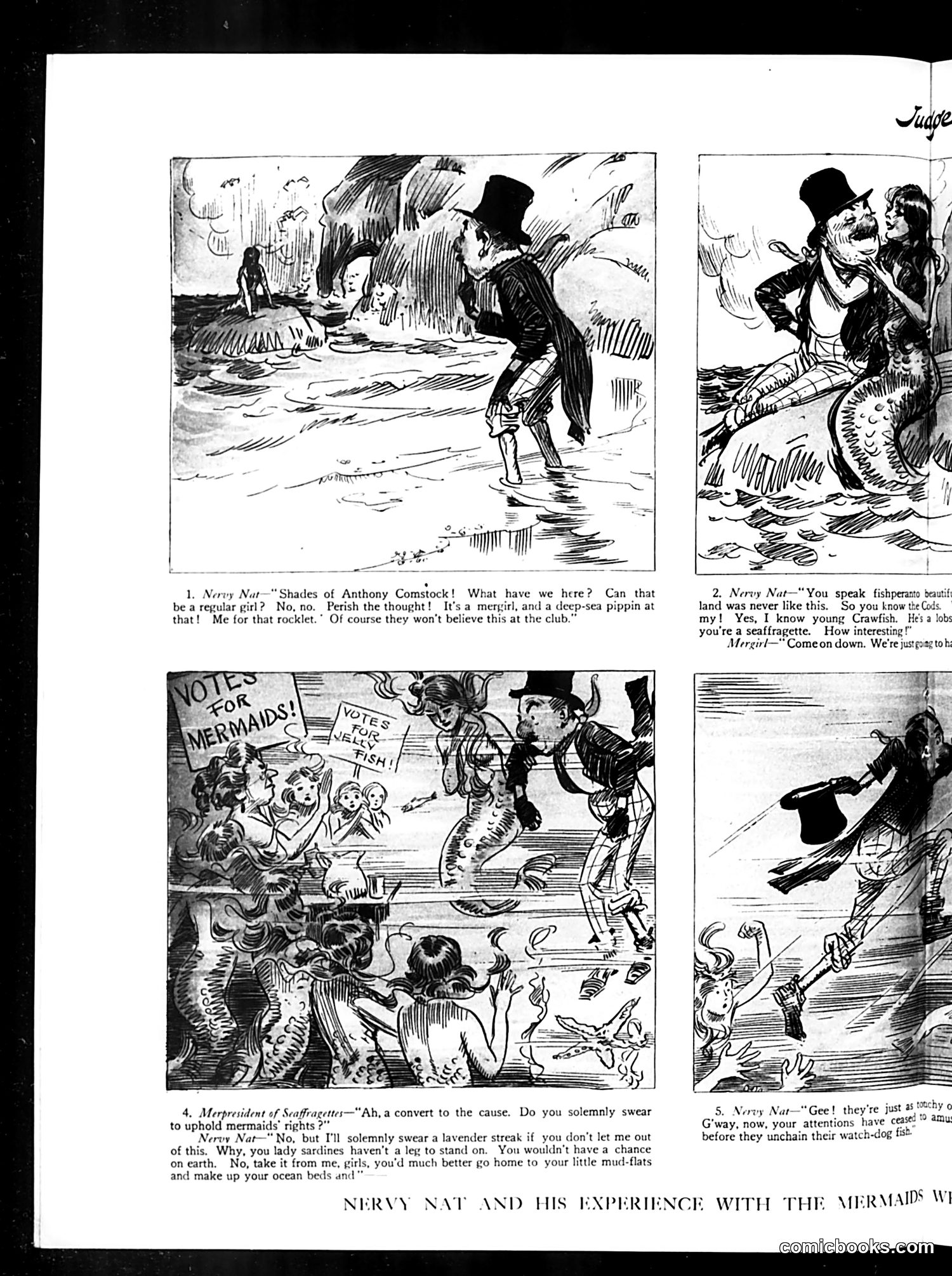
This is a humorous underwater fantasy strip featuring "Nervy Nat," a recurring character who encounters mermaids and sea creatures. The satire targets women's suffrage activism (referenced as "scaffragettes"—a pun on "suffragettes"). In panel 4, mermaids recruit Nat to their cause, swearing him to "uphold mermaids' rights." Nat's response mocks suffragettes by suggesting women lack standing to demand equality ("You wouldn't have a chance on earth...you'd much better go home to your little mud-flats"). The humor relies on absurdist sea-creature puns (sardines, crawfish, cod) and the irony of women's rights activism presented through fictional mermaids. The strip uses fantastical situations to ridicule real-world feminist organizing, a common Judge magazine approach. Reference to "Anthony Comstock" (a famous censor) adds another layer of social commentary.
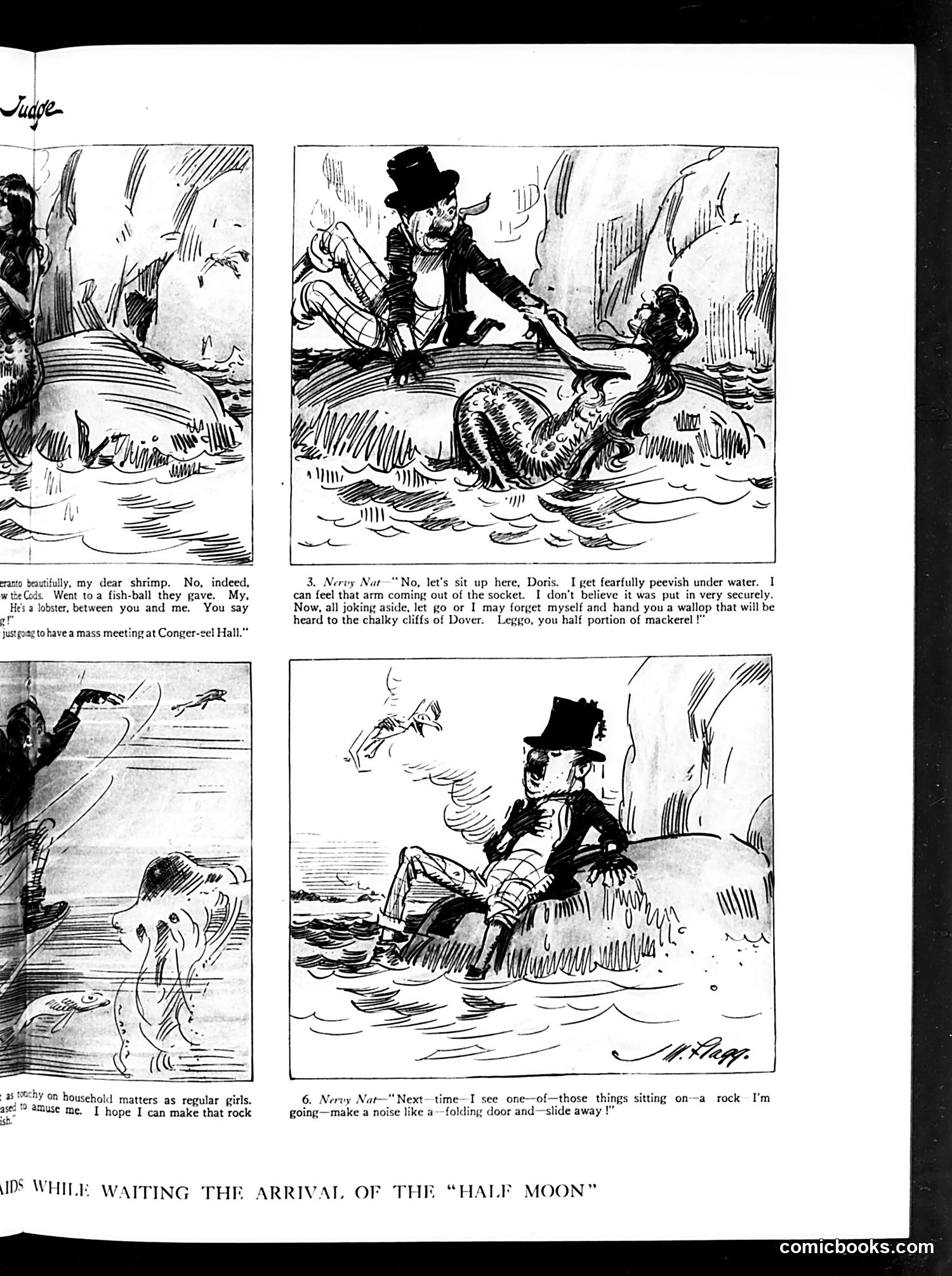
This page depicts "Nervy Nat," a recurring character in Judge magazine's humor strips. The comic shows a mischievous boy (Nat) interacting with mermaids and sea creatures while "waiting the arrival of the 'Half Moon'"—likely a ship or boat. The humor is typical of early-20th-century children's comics: slapstick physical comedy and cheeky dialogue. Nat torments the mermaids with crude jokes and rough behavior—pulling their arms, threatening violence, and making loud noises to scare creatures away. The mermaids respond with exasperated complaints about his recklessness. The satire targets nothing political; rather, it's simple comedic entertainment mocking a troublemaking boy's impudent behavior toward fantastical creatures. The nautical setting and character names (Doris, Leggo) suggest seaside adventure humor aimed at young readers.
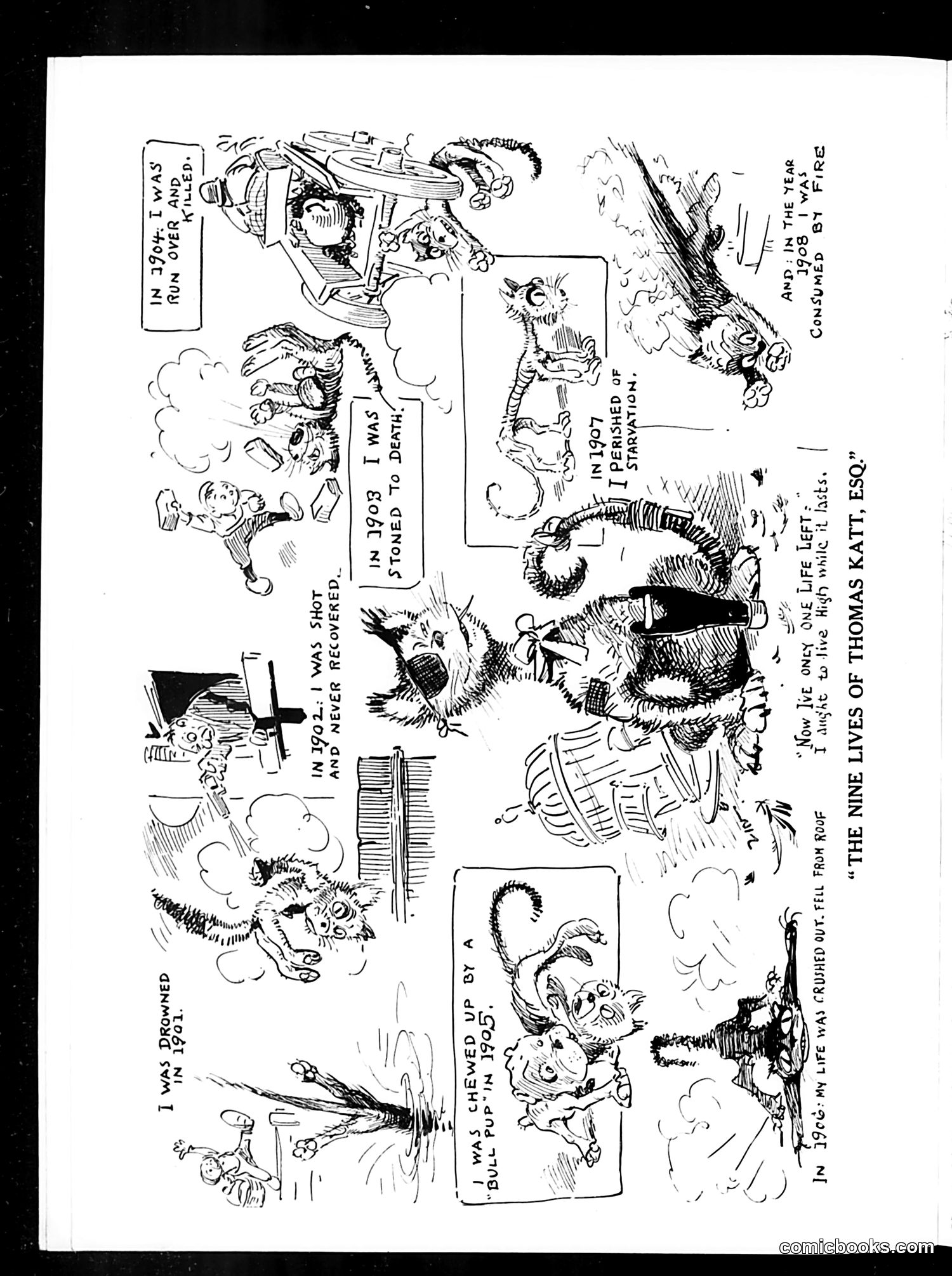
This page from *Judge* magazine contains multiple satirical panels depicting a character's misfortunes across different years (1921-1925). The OCR text is severely corrupted and largely illegible, making precise interpretation difficult. However, the visual narrative appears to chronicle someone's repeated failures or comeuppances over time—each panel showing the figure in progressively unfortunate circumstances (drowning, explosions, crashes). The style and layout suggest this is a serialized joke about a recurring character experiencing comic misadventure. Without legible text, I cannot identify the specific figure or political reference with certainty. The satire likely targeted a public figure or represented a commentary on broader social/economic conditions of the early 1920s, but the exact meaning remains unclear from this corrupted source material.
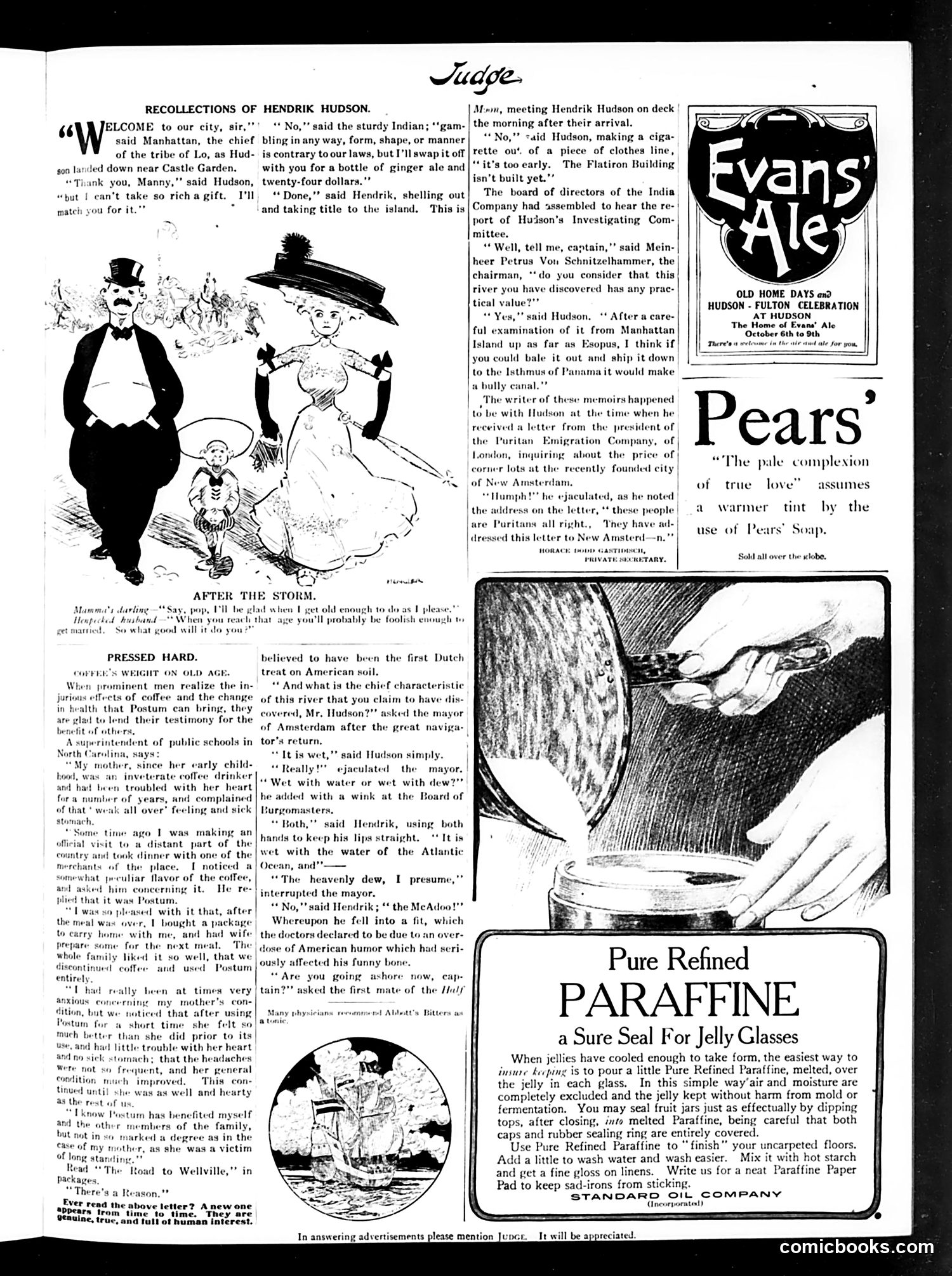
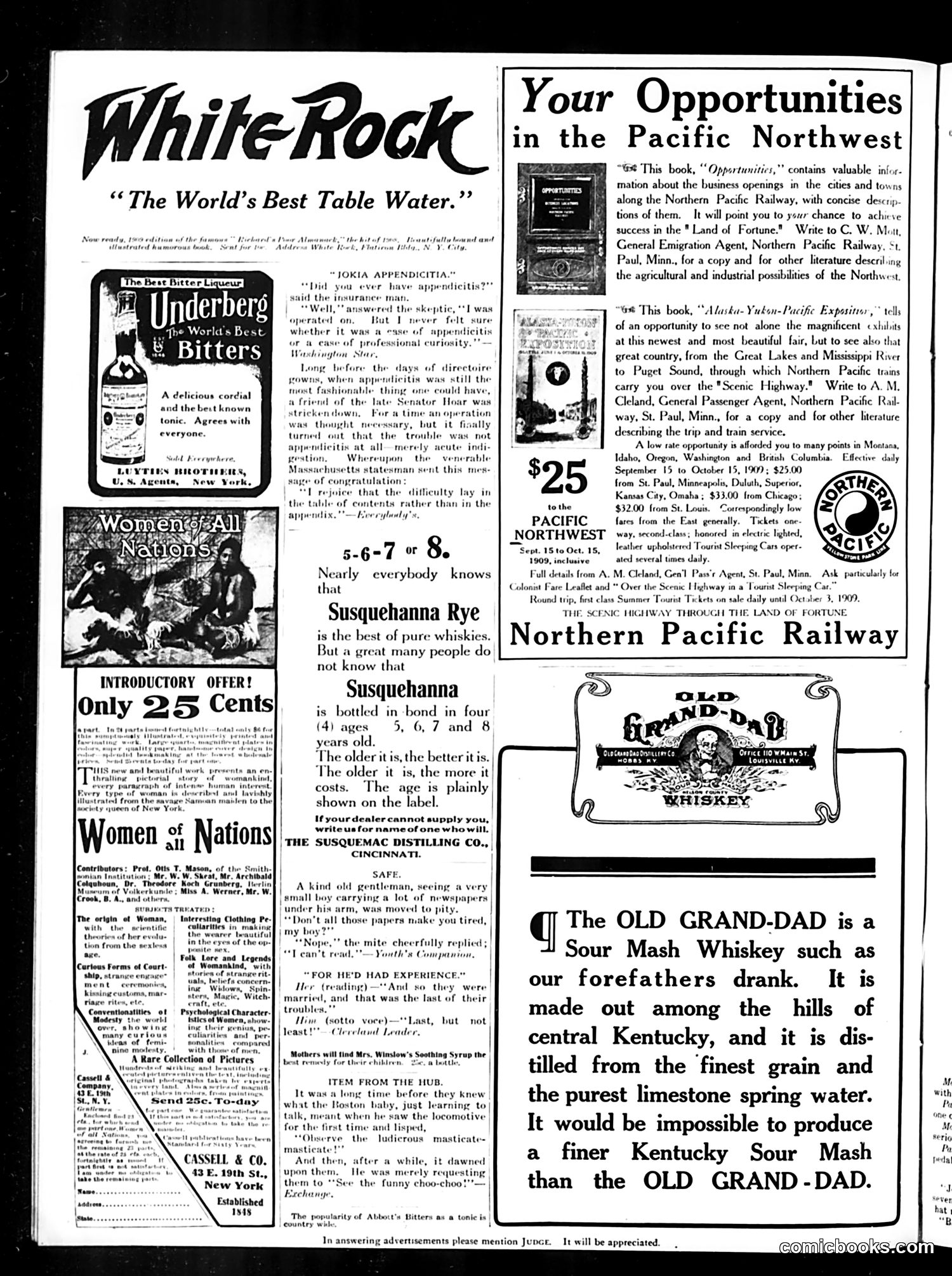
This page presents humorous fictional "recollections" of explorer Henry Hudson's arrival in Manhattan, satirizing both the historical encounter and contemporary American attitudes. The cartoon "After the Storm" depicts Hudson meeting Manhattan's Native American inhabitants, who offer to trade the island for "a bottle of ginger ale and twenty-four dollars"—a joke referencing the famous (likely apocryphal) story that Native Americans sold Manhattan for trinkets. The text humorously portrays Hudson interacting with Dutch colonial officials, who interrogate him about the Hudson River's practical value. Hudson's deadpan responses—describing the river as "wet" and suggesting it could be dammed to create a Panama-like canal—mock both Hudson's supposed observations and American commercial ambitions. The satire plays on nostalgia for "Old Home Days" (an actual 1909 Hudson-Fulton Celebration occurred) while gently ridiculing American greed, the colonial enterprise, and overwrought historical commemoration. The page also contains unrelated period advertisements.
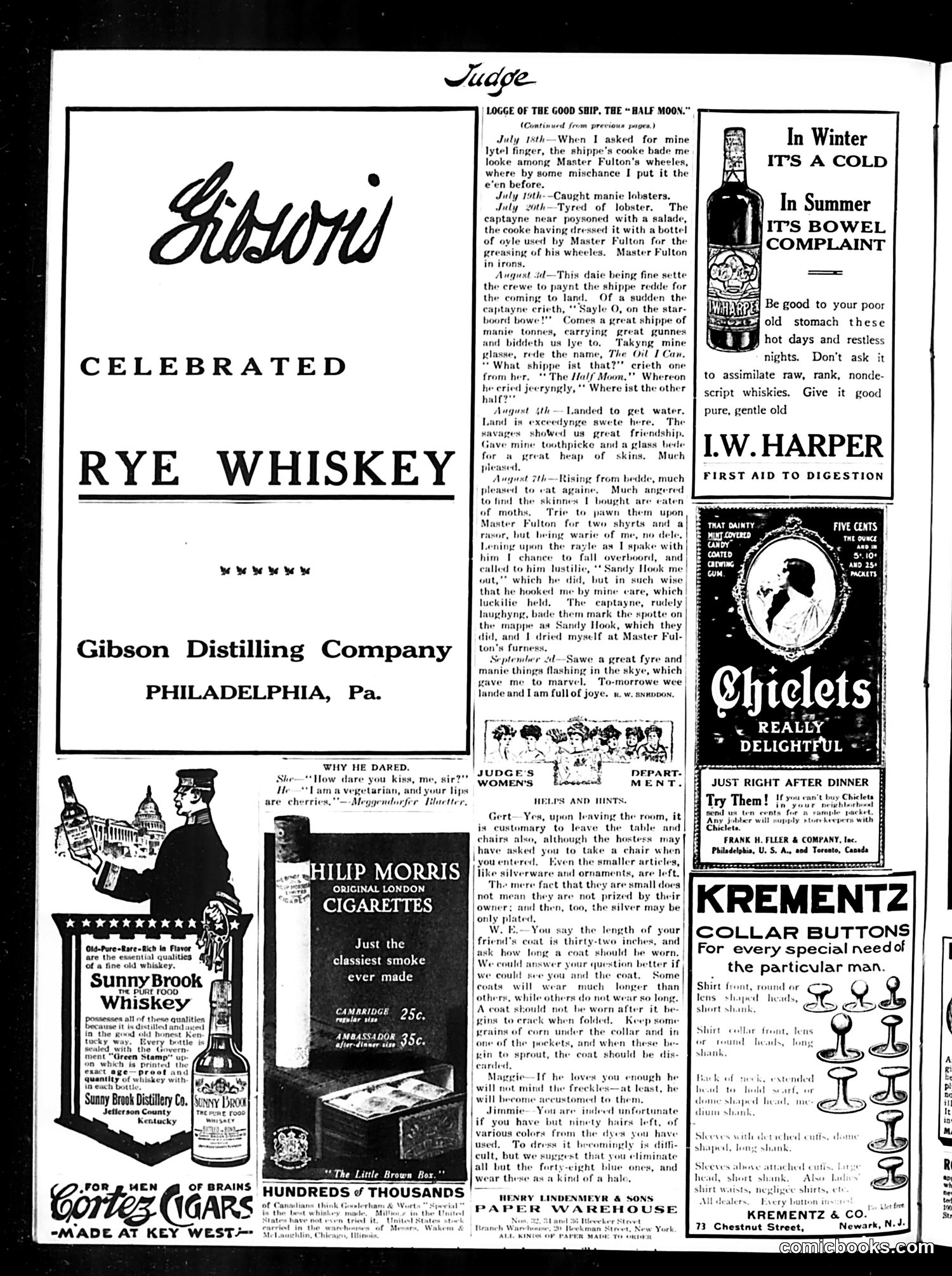
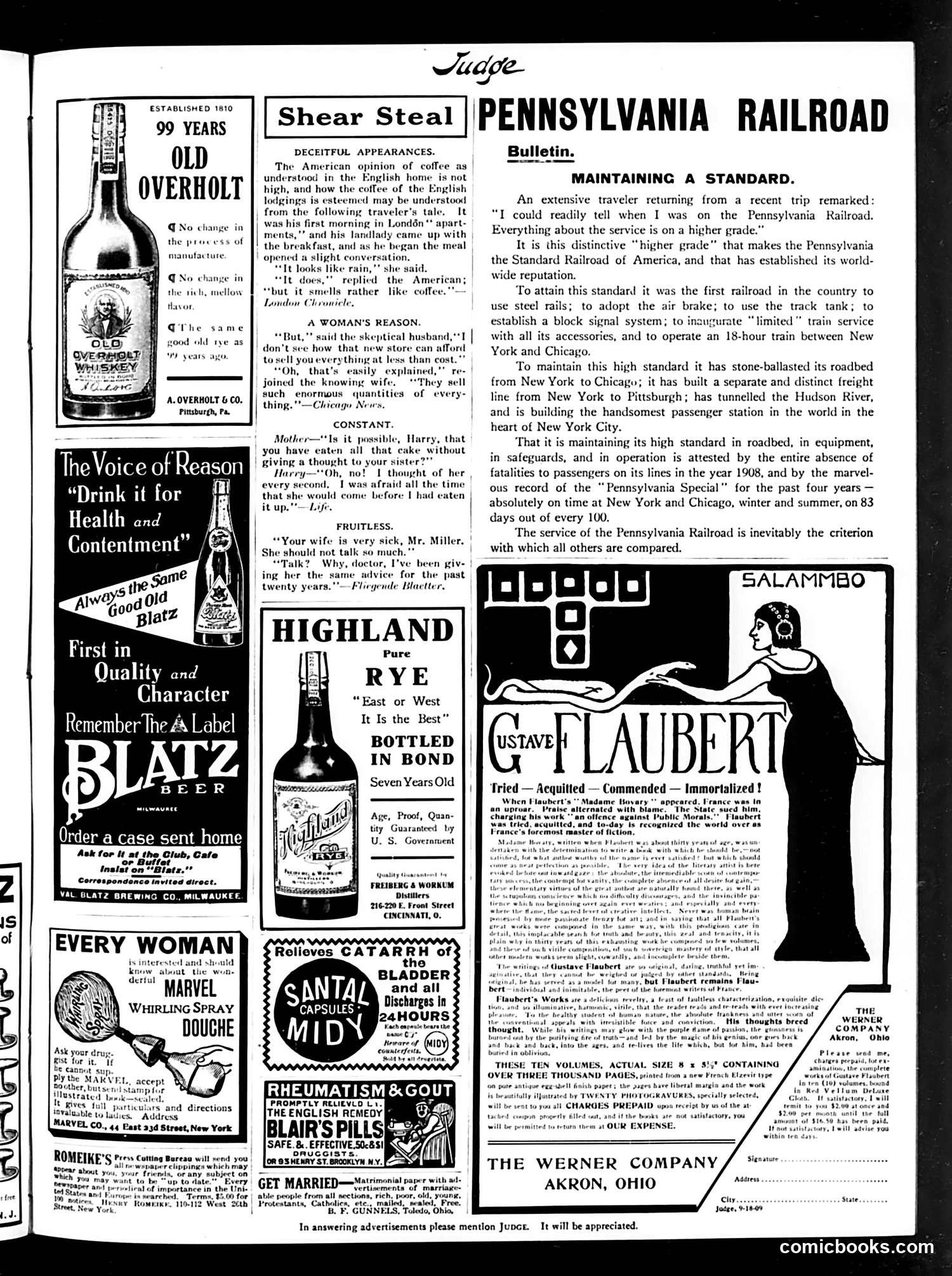
This page is primarily **advertising with minimal cartoon content**. The main featured advertisements are for liquor (Gibson Distilling Company's rye whiskey, Sunny Brook whiskey, I.W. Harper whiskey) and tobacco (Philip Morris cigarettes, Cortes cigars). The only substantive editorial content is a serialized narrative titled "Logge of the Good Ship, the 'Half Moon,'" presented as a mock-historical ship's log written in faux-archaic English. It appears to be a humorous account of a voyage, featuring references to Robert Fulton (the steamboat inventor) and various comedic mishaps involving lobsters, lobster-oil salad dressing, and encounters with Native Americans trading furs. The page also includes small items under "Judge's Women's Department" with domestic advice, and a brief "Why He Dared" joke about kissing. **Overall, this is primarily a commercial/advertising page rather than a satirical one.**
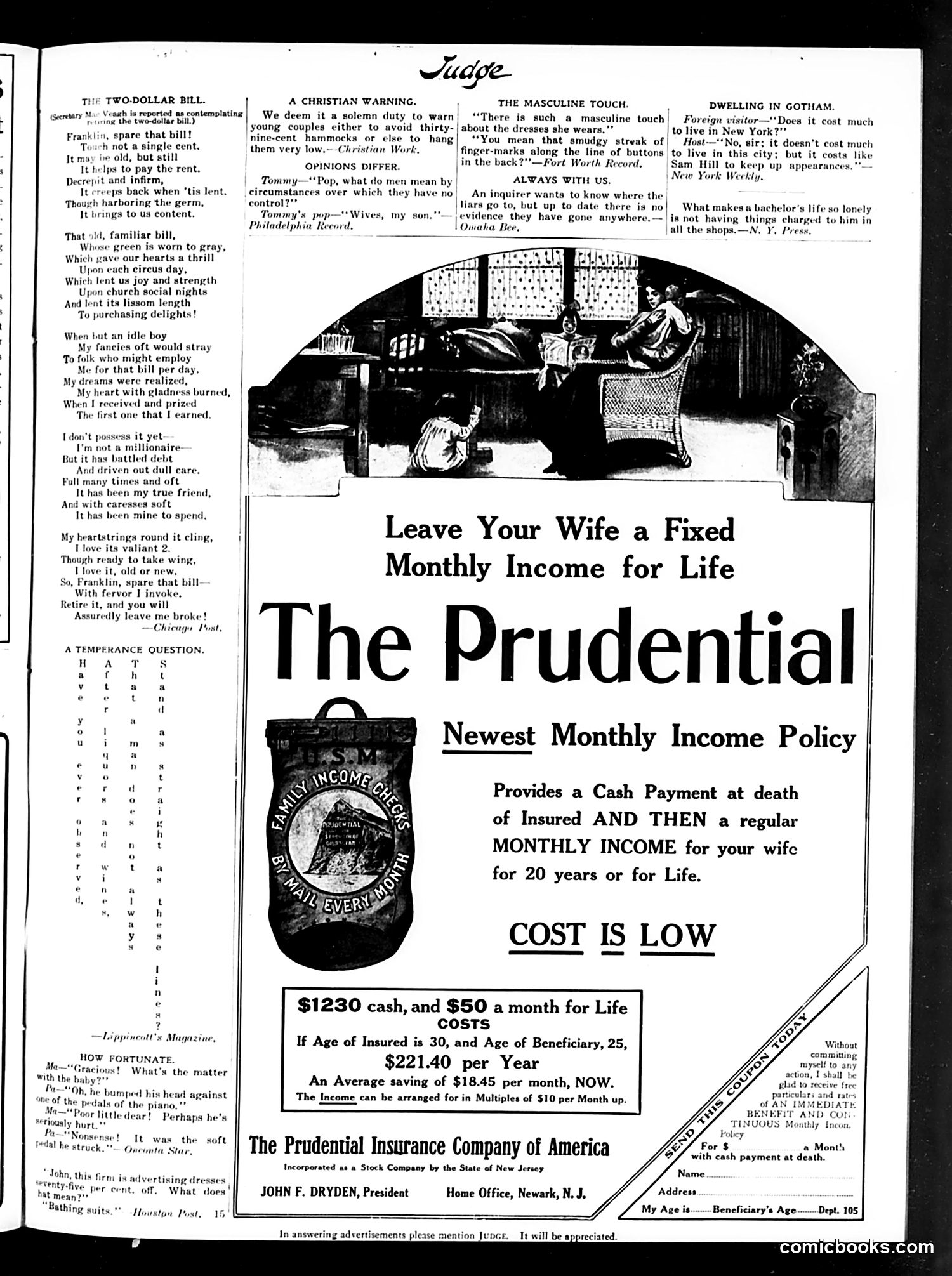
This page contains several satirical short jokes and an insurance advertisement, typical of Judge's format. **The Poems/Jokes:** - "The Two-Dollar Bill" is a nostalgic poem defending worn currency against potential removal from circulation - "A Temperance Question" and "How Fortuna" are brief humorous anecdotes about domestic life - "Opinions Differ," "Christian Warning," "The Masculine Touch," "Always With Us," and "Dwelling in Gotham" are one-liner jokes about marriage, morality, and urban life **The Satire:** The jokes gently mock contemporary social issues: wives controlling husbands ("circumstances over which they have no control"), urban pretense, marital dissatisfaction in bachelor life, and moral hypocrisies. The humor is gentle domestic comedy rather than sharp political satire. **The Advertisement:** The Prudential Insurance ad promotes a "Monthly Income Policy" ensuring wives receive financial security after a husband's death—reflecting era concerns about female financial vulnerability and dependence, while simultaneously marketing security to male breadwinners. The page is primarily humorous content with an integrated insurance pitch.
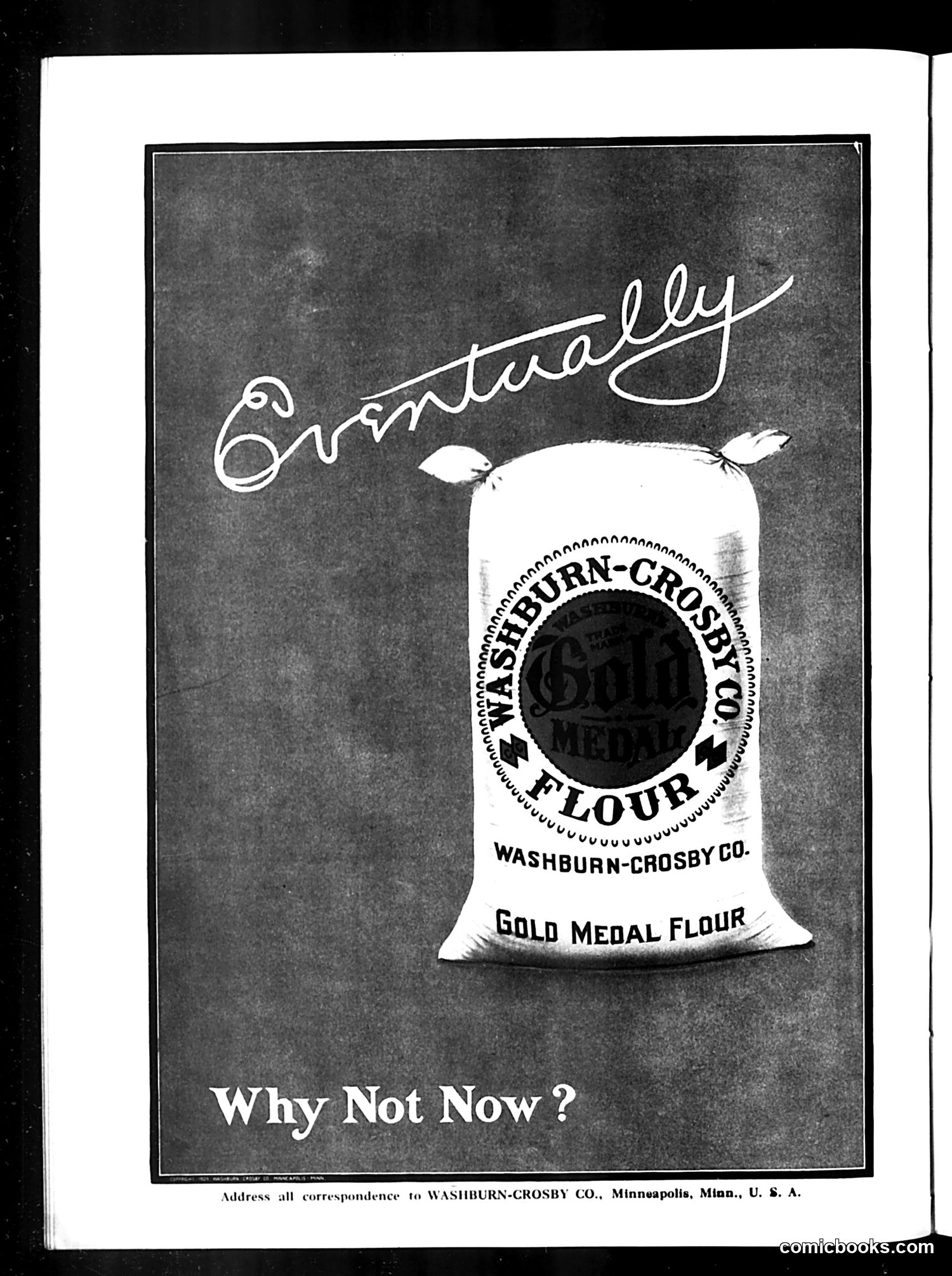
This page is primarily **advertising, not satire or political commentary**. It features a full-page advertisement for "Gold Medal Flour" by the Washburn-Crosby Company (Minneapolis, Minnesota). The ad shows a flour sack with the Gold Medal Flour branding and uses the slogan "Why Not Now?" to encourage consumers to purchase the product. The word "Eventually" appears at the top in cursive script, suggesting the advertisement's logic: if you'll buy this flour eventually, why delay? This is a straightforward commercial advertisement rather than political or social satire. The Judge magazine apparently sold advertising space to flour manufacturers alongside its editorial cartoons and satirical content.