
A complete issue · 16 pages · 1905
Judge — January 7, 1905
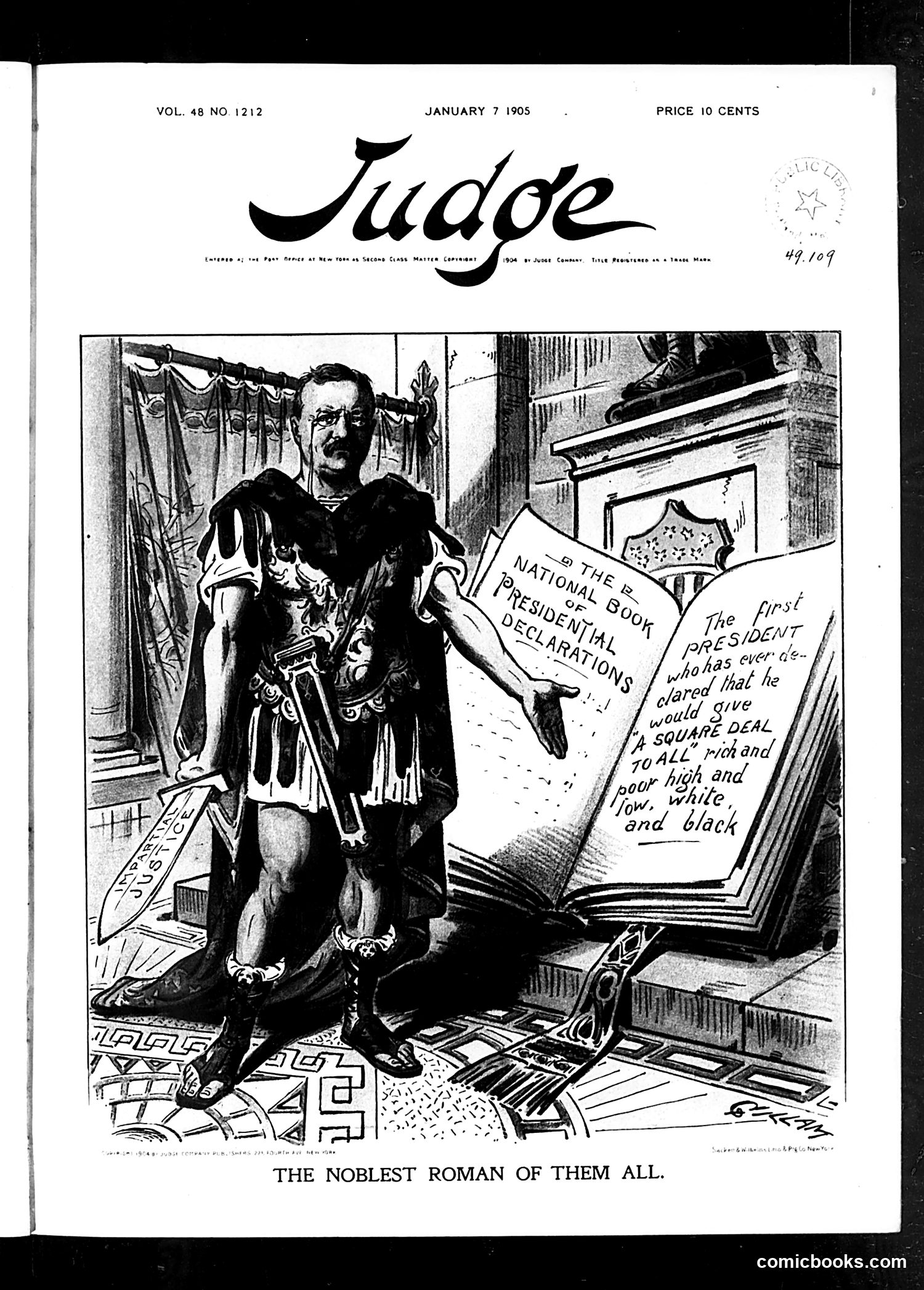
This political cartoon depicts a Roman-costumed figure reading "The National Book of Presidential Declarations." The caption reads "The Noblest Roman of Them All," referencing Shakespeare's *Julius Caesar*. The cartoon appears to satirize a sitting U.S. president (likely Theodore Roosevelt, given the 1905 date) regarding his presidential declarations about treating all citizens—"rich and poor, high and low, white and black"—equally. The Roman costume and Shakespeare reference suggest ironic commentary on the president's stated ideals versus actual policies or implementation. The "square deal" reference aligns with Roosevelt's Progressive platform. The satire likely critiques the gap between the president's noble-sounding rhetoric and practical reality regarding racial or economic equality.
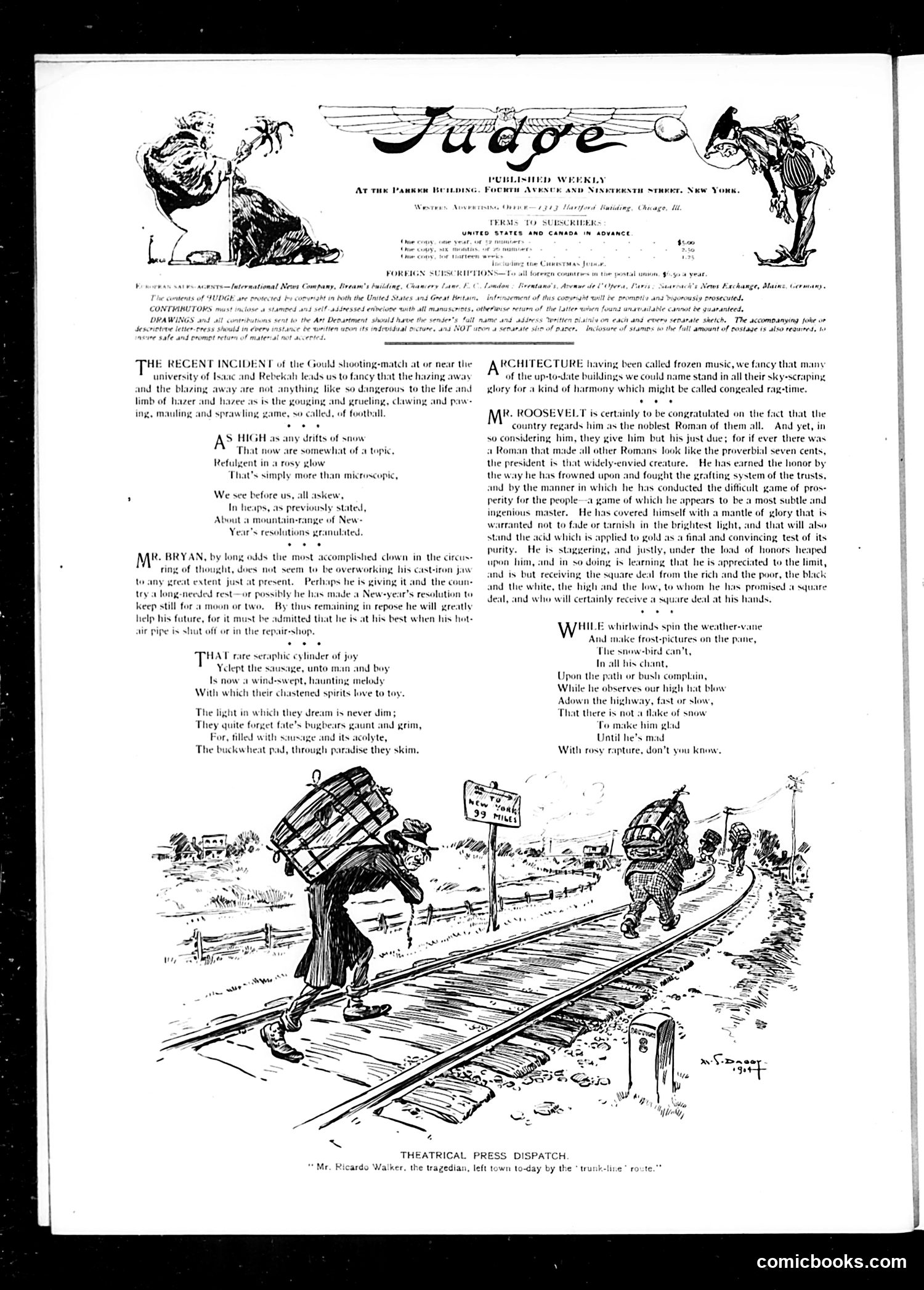
This page contains three distinct pieces of social commentary: 1. **"The Recent Incident"** - A poem mocking a shooting accident at a university involving a "Gould" (likely referencing a wealthy industrialist family), satirizing the casual danger of firearms among the privileged class. 2. **"Mr. Roosevelt"** - Praises President Roosevelt as embodying Roman nobility and strength, contrasting him favorably with other political figures. The text suggests he's being elevated as an ideal leader for the nation. 3. **"Theatrical Press Dispatch"** - The cartoon depicts a chaotic railroad scene with a figure carrying an oversized basket labeled "Mr. Ricardo Walker, the tragedian, left town today by the 'trash-line' route." This appears to satirize a theatrical performer's departure, using the railroad/trash imagery as mockery. The page reflects early 20th-century American satirical humor targeting wealthy elites, political leadership, and entertainment figures.
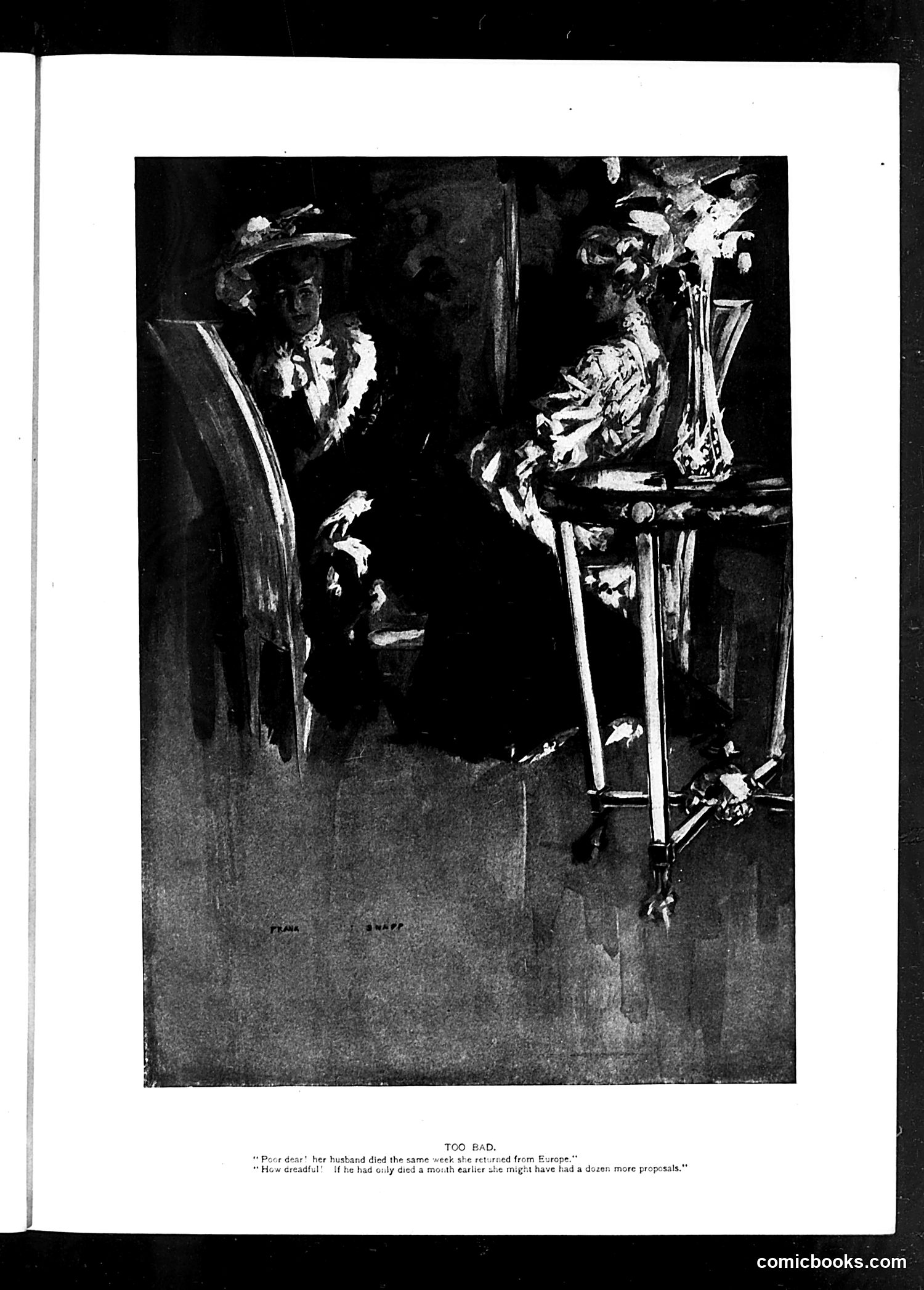
This cartoon satirizes a widow's misfortune. The caption reads: "Poor dear! her husband died the same week she returned from Europe" and "How dreadful! If he had only died a month earlier she might have had a dozen more proposals." The satire targets the callous materialism and social conventions of the era. The joke is darkly cynical: a woman's value in the marriage market depends on her availability and perceived wealth (suggested by her European travel). The cartoon mocks both the widow's supposed mercenary nature and society's reduction of women to marriageable commodities whose worth fluctuates with circumstance. The wealthy woman's fashionable dress and the formal interior setting emphasize the upper-class social world being ridiculed.
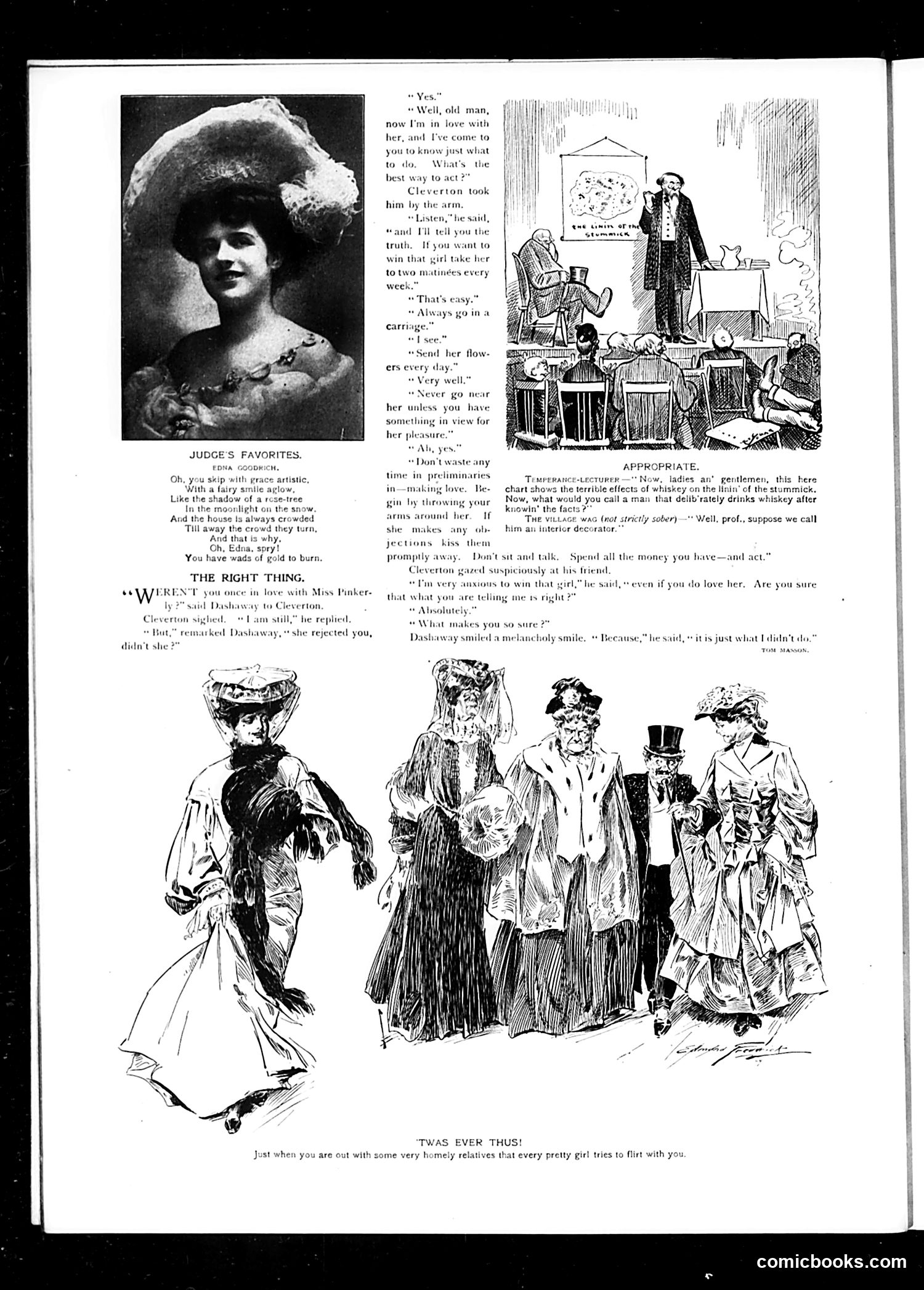
This page contains three satirical pieces about courtship and romance, typical of early 20th-century Judge magazine humor. **"Judge's Favorites"** features a photograph of an attractive woman with a poem celebrating her grace and beauty. **"The Right Thing"** depicts a dialogue between Cleverton and Miss Pinkerton about courtship etiquette. The satire mocks conventional romantic advice—Cleverton suggests practical tactics like taking her on carriage rides and sending flowers. The joke is that such formulaic approaches to romance are superficial. **"'Twas Ever Thus!"** shows a man awkwardly surrounded by homely female relatives while attempting to flirt with a pretty woman—satirizing how family obligations frustrate romantic pursuits. The overall humor targets both gender relations and the artificial "rules" governing Edwardian courtship customs.
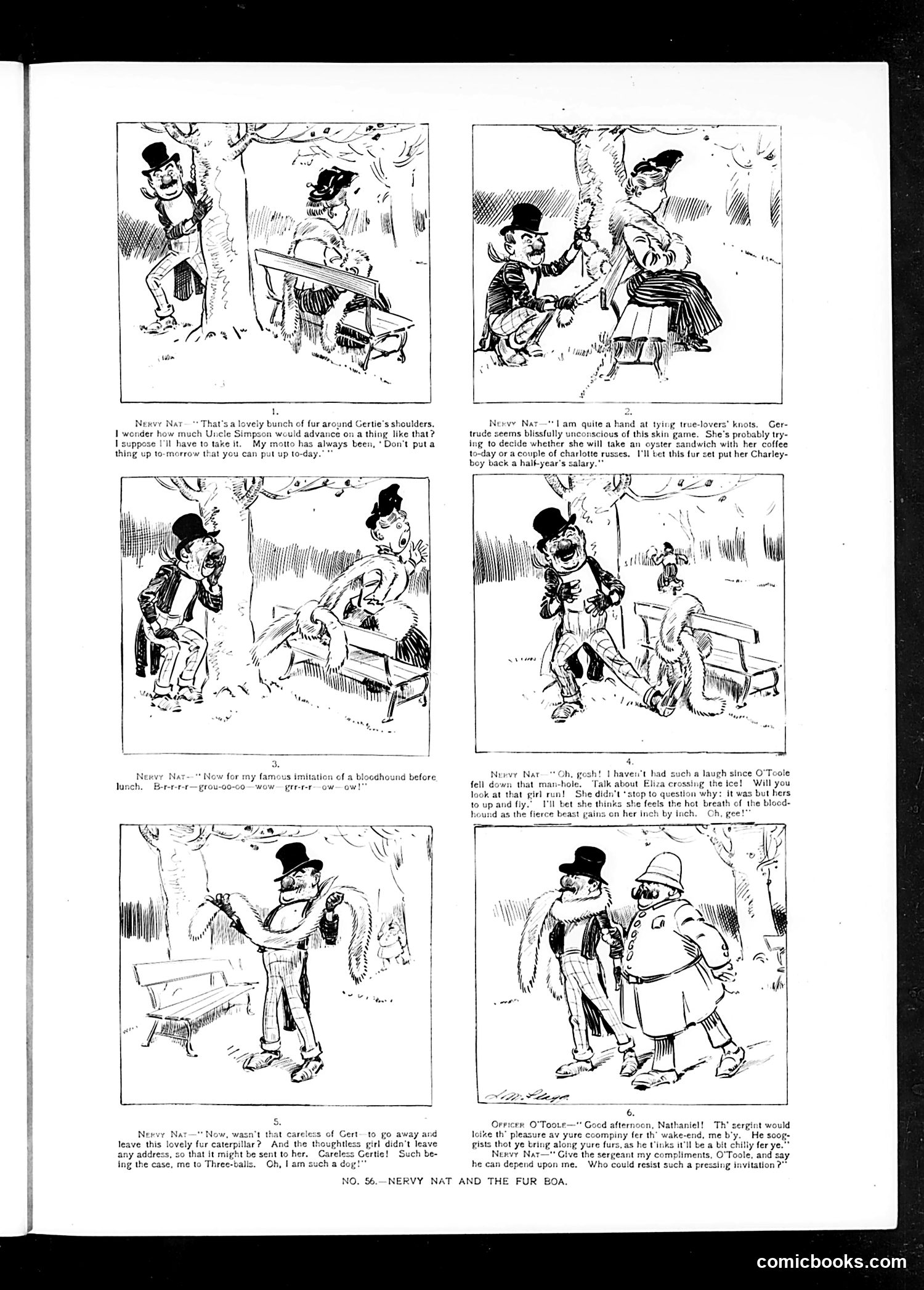
This comic strip follows a working-class character (Nervy Nat) attempting to romance a woman by complimenting her fur boa—a fashionable accessory of the era. The humor derives from Nat's transparent flattery and scheming: he praises the fur extravagantly, lies about knowing its origins, and eventually tries to convince her to let him "borrow" it, promising to return it after he pawns or sells it to pay debts. The satire targets working-class male desperation and dishonesty in courtship, while also gently mocking women's susceptibility to flattery over possessions. The repeated dialogue about "charlotte russes" (a dessert) and settling debts suggests Nat's financial straits. The strip exemplifies Judge magazine's humor: lighthearted mockery of urban social climbing and romantic schemes among the lower classes, presented through exaggerated caricature and slapstick situations.
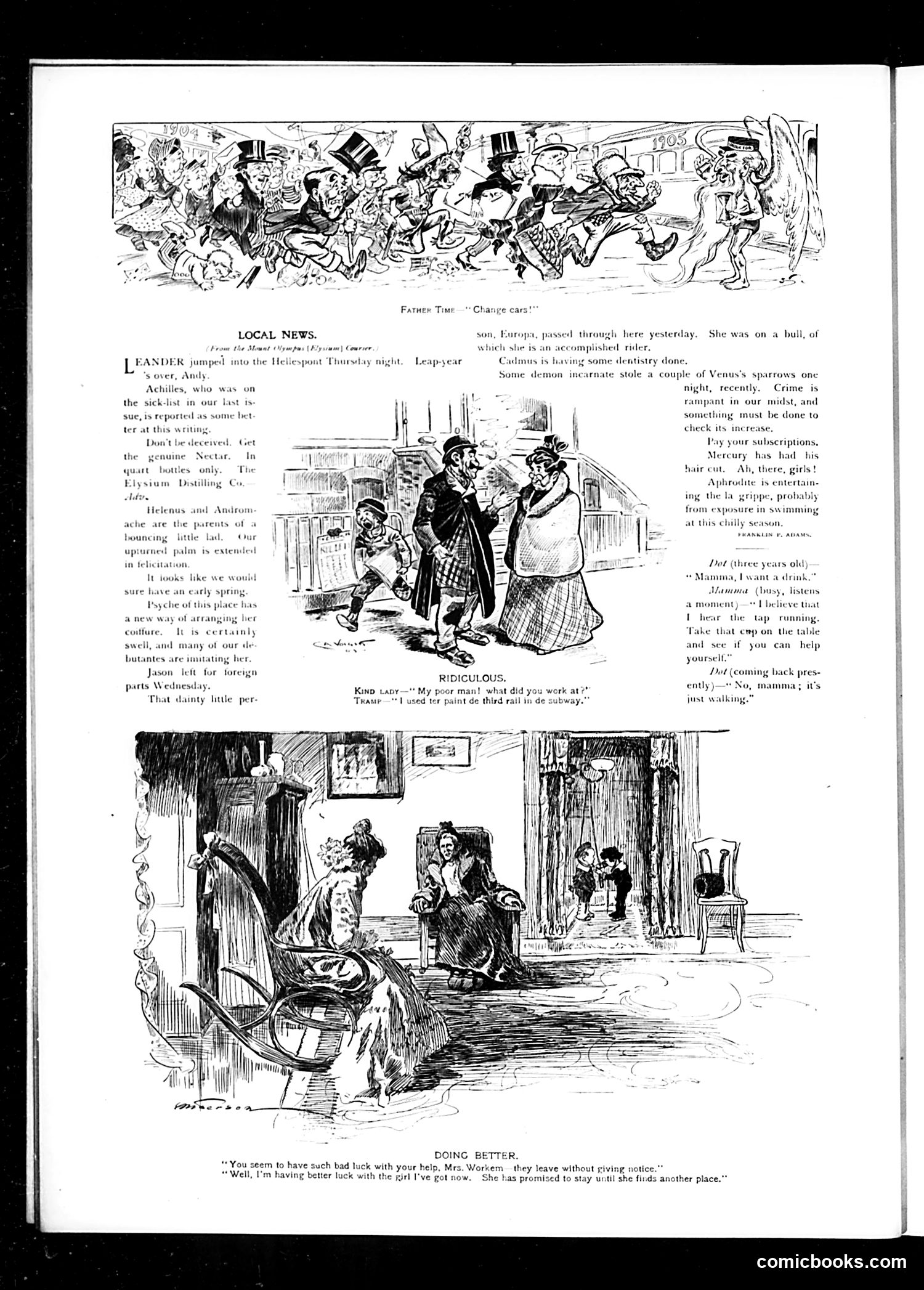
This page contains classical mythology-themed humor masquerading as "LOCAL NEWS" from Mount Olympus. The satire uses mythological figures to comment on contemporary social issues. The "news items" reference Greek gods and heroes—Leander, Achilles, Jason, Europa—in deliberately mundane situations (dental work, stolen sparrows, haircuts) to mock both classical literature and local gossip columns. The humor lies in trivializing epic narratives. The middle cartoon titled "RIDICULOUS" depicts a domestic servant interaction, likely satirizing class relations and household labor disputes of the era—a "kind lady" questioning a servant about employment, with the servant's response suggesting workers frequently quit without notice. The bottom cartoon "DOING BETTER" continues this servant-employer theme, with a woman boasting she's "having better luck" with her current maid, who promised to stay longer. Together, these pieces comment on the servant problem—a common middle/upper-class complaint of the period about domestic workers' unreliability and frequent departures.
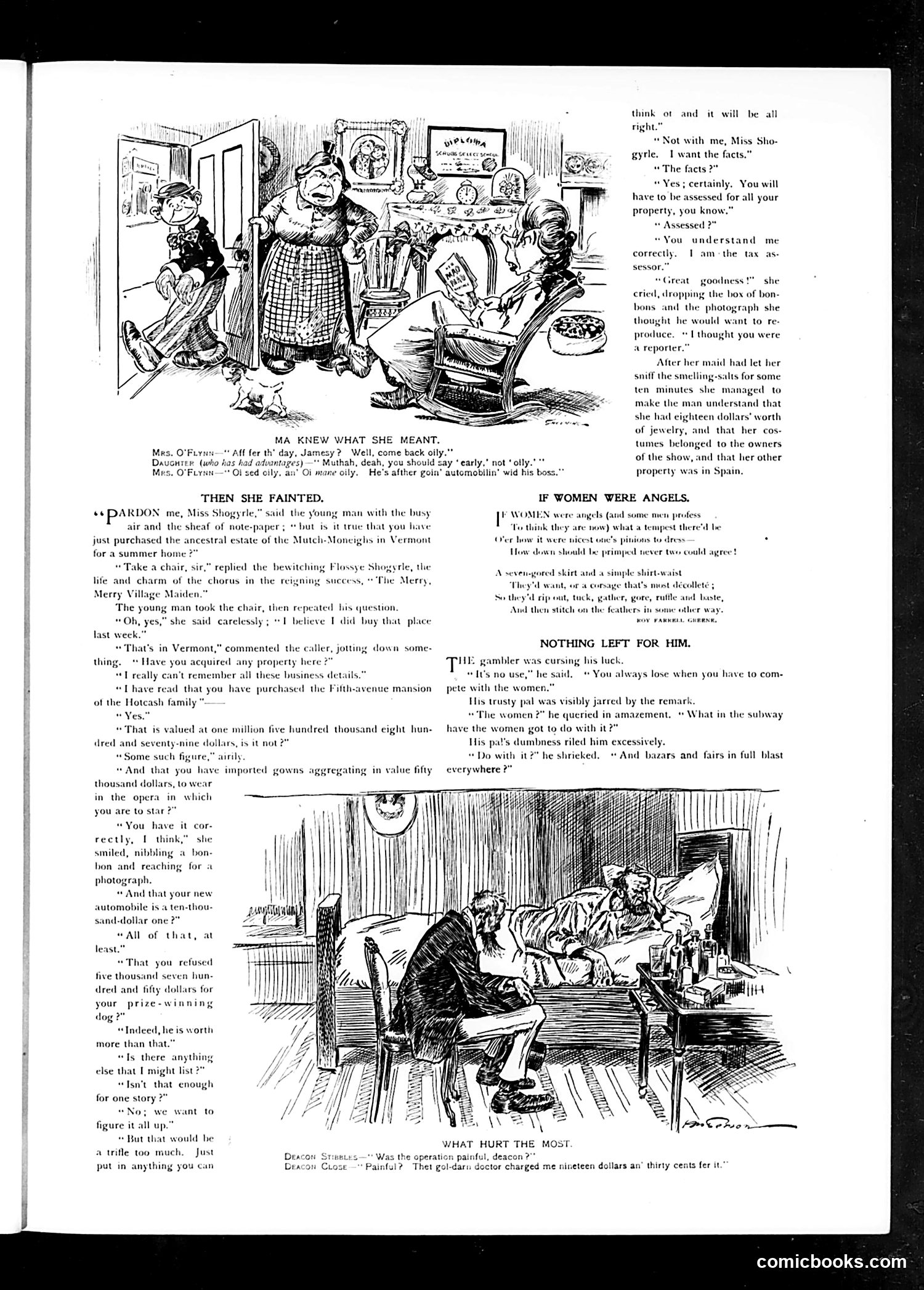
This Judge magazine page contains three satirical pieces about early 1900s American social pretense and gender dynamics. **"Ma Knew What She Meant"** mocks a chorus girl's sudden discovery that the visitor is a tax assessor, not a reporter. The joke: she'd been casually listing fabricated wealth (Vermont estate, expensive gowns, luxury car) to impress someone she thought would publicize her status. When exposed as a tax official, she faints—her false claims now have legal consequences. **"If Women Were Angels"** satirizes female inconsistency regarding fashion and modesty. It suggests women demand modest dress codes while simultaneously wanting elaborate, revealing costumes with "rutile and baste"—mocking the perceived hypocrisy. **"Nothing Left for Him"** jokes that a gambler loses at bazaars and charity fairs because women dominate these venues, leaving him no opportunity to win money. The cartoons reflect period anxieties about social climbers, women's increasing public visibility, and changing gender roles in early 20th-century America.
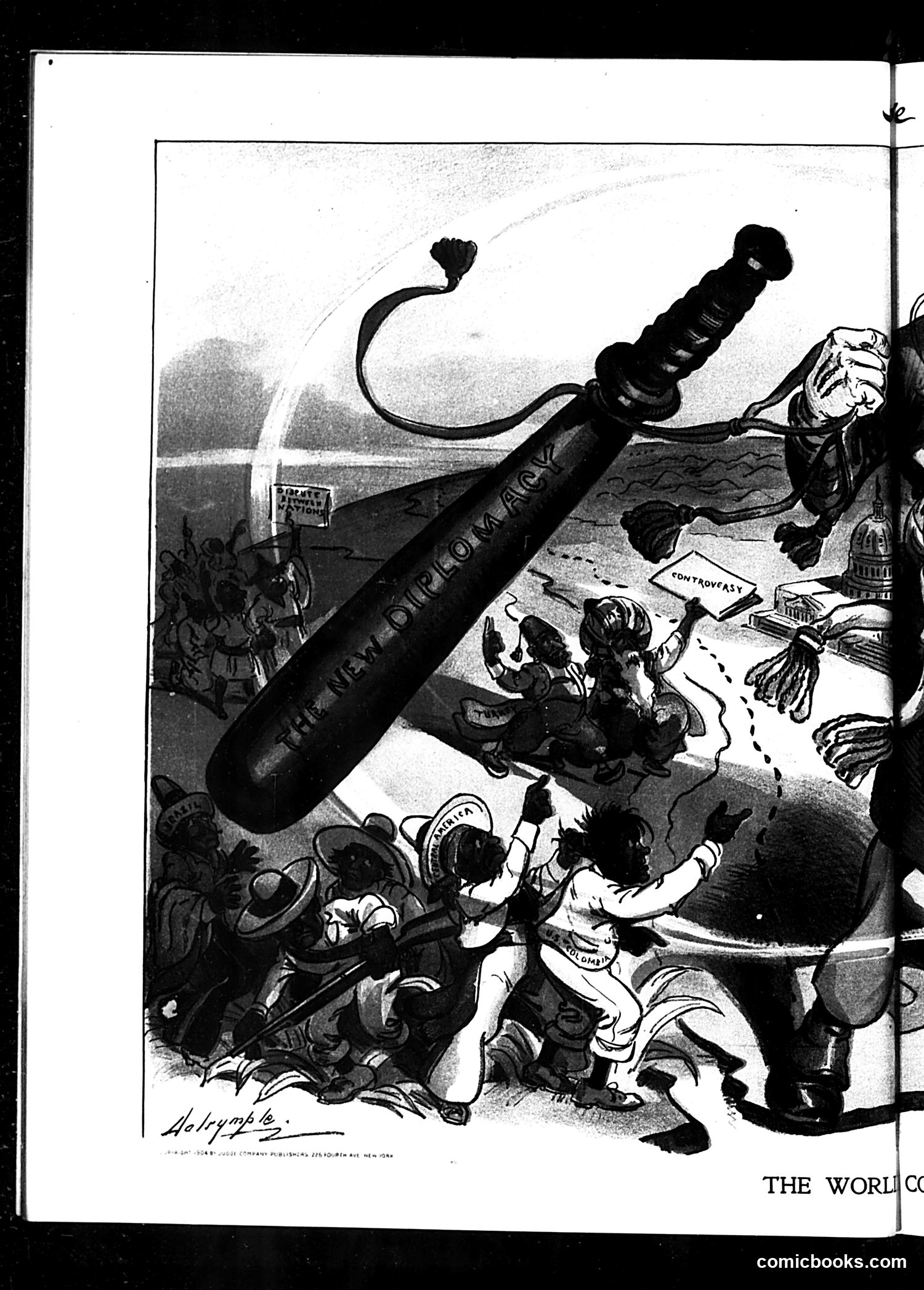
This appears to be a satirical cartoon from *Judge* magazine depicting a large military shell or torpedo labeled "THE NEW DIPLOMACY" raining destruction upon a crowd of civilians below. The weapon bears text suggesting it represents a new approach to international relations, likely critiquing militaristic foreign policy disguised as "diplomacy." The masses of fleeing figures—some wearing various national dress or symbols—suggest this "new diplomacy" affects multiple nations or peoples. The artist's signature appears at bottom left. Without the publication date visible, the specific historical context is unclear, but this likely satirizes early-20th-century imperialism or military interventionism presented as peaceful policy. The cartoon's point: calling such aggressive tactics "diplomacy" is hypocritical and deadly.
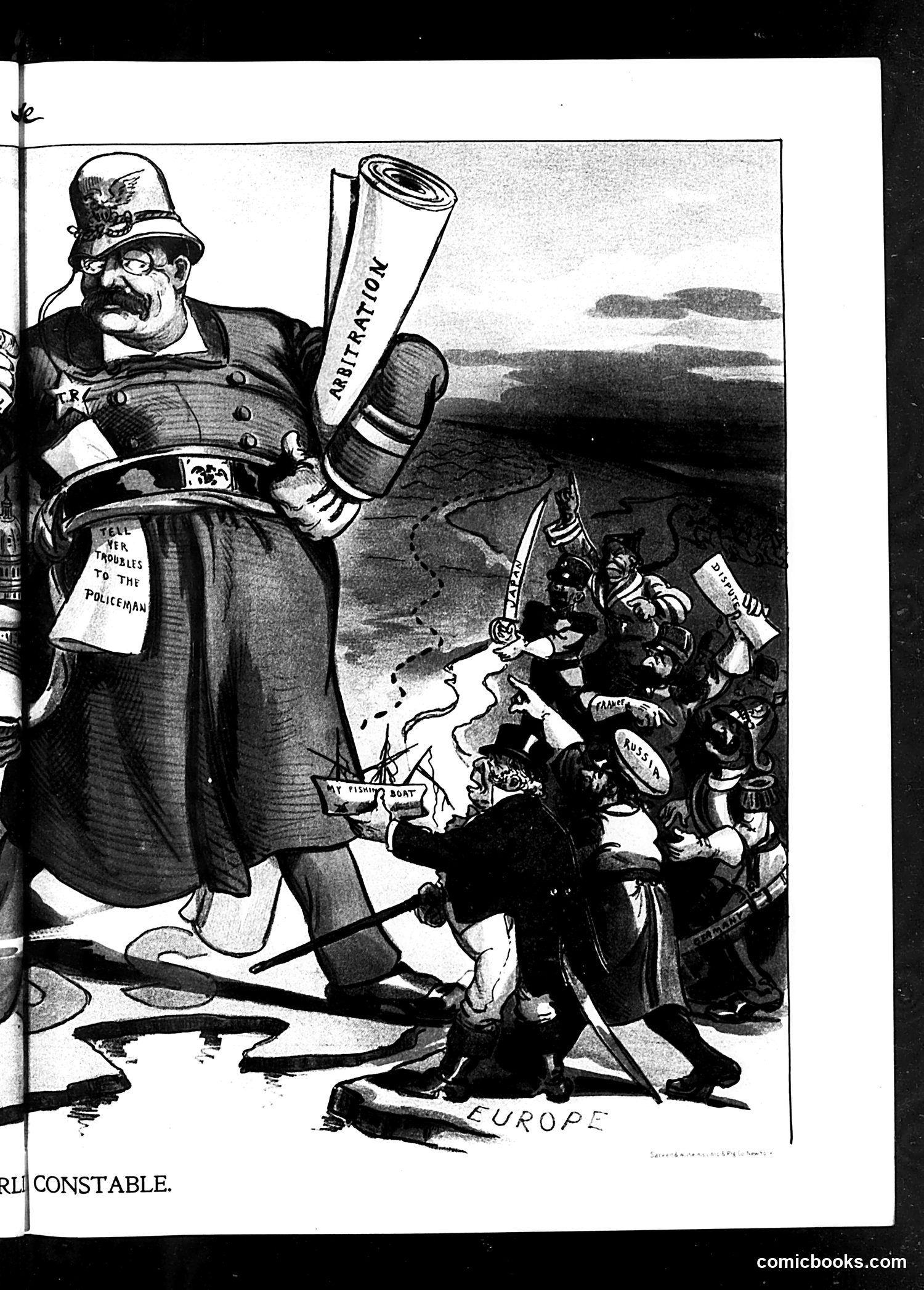
This Judge magazine cartoon depicts a large military figure labeled "CONSTABLE" (likely representing European authority or a specific nation's military power) wielding a large artillery shell labeled "ARBITRATION" over a chaotic scene below labeled "EUROPE." Below, smaller figures representing various European nations appear distressed or engaged in conflict, with labels suggesting "MY FIGHTING BOAT" and other territorial/military references visible. The satire critiques the hypocrisy of using "arbitration" (peaceful conflict resolution) as cover for military aggression. The enormous constable figure ironically threatens smaller nations with an instrument of war while claiming to impose arbitration—suggesting powerful nations used diplomatic language to justify military intervention in European affairs. The cartoon likely comments on pre-WWI or interwar European power dynamics and imperial overreach.
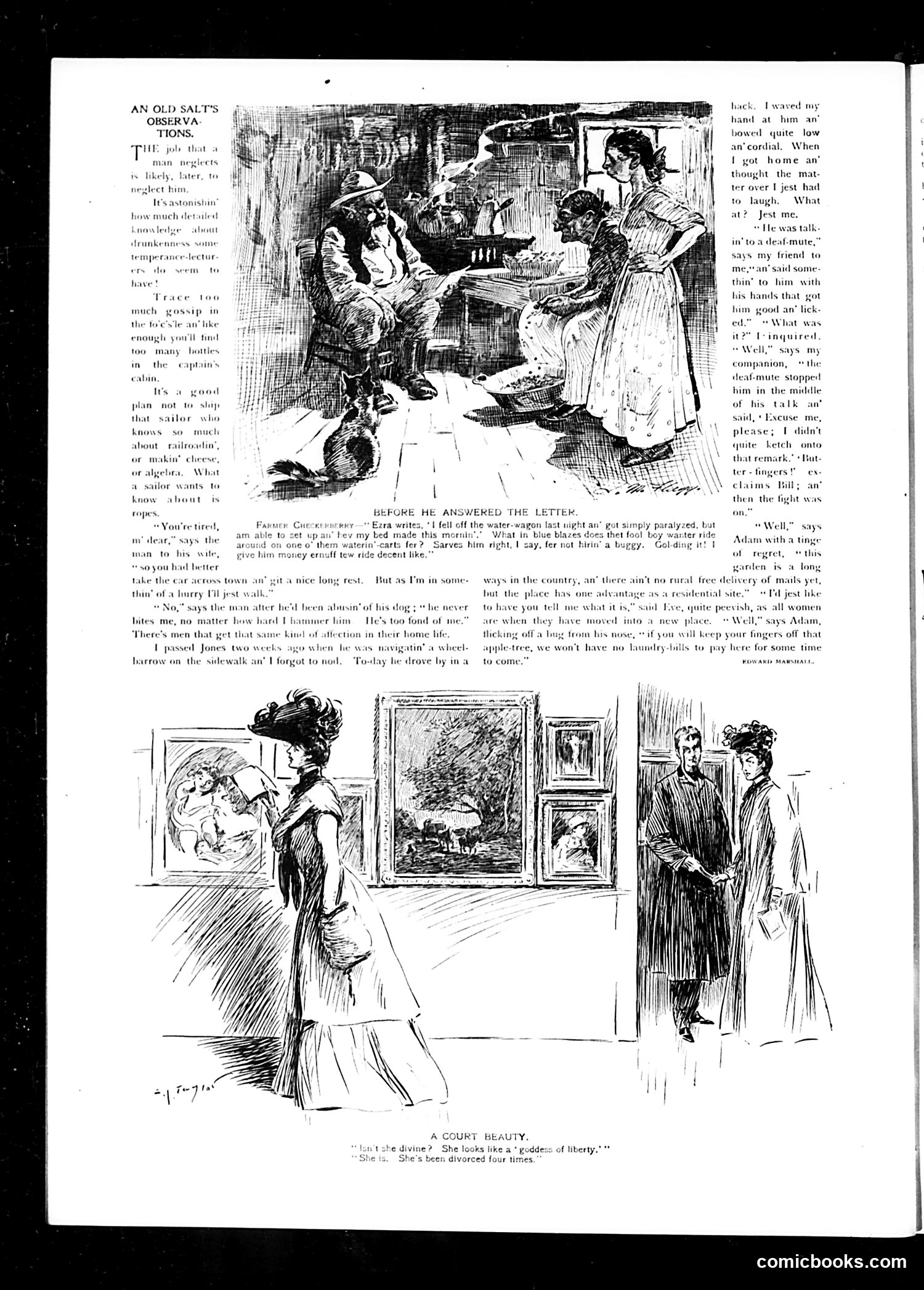
This page contains two satirical pieces from *Judge* magazine: **Upper section ("An Old Salt's Observations"):** A seasoned sailor relates anecdotes about maritime life and human nature. The humor relies on working-class dialect and observations about gossip, drinking, and social behavior among sailors and dock workers. No specific political figure is targeted; the satire is social commentary on drunkenness, loose talk, and the folly of seeking advice from unreliable characters. **Lower section ("A Court Beauty"):** This cartoon satirizes a well-dressed woman viewing artworks in a gallery. The caption mocks her as a "goddess of liberty" who has been "divorced four times"—suggesting satire of wealthy society women's marital instability and their pretensions to cultural sophistication. The joke equates her superficial "beauty" with moral or marital instability rather than genuine refinement. Both pieces target working and upper-class social behaviors through humor and caricature typical of *Judge's* satirical approach.
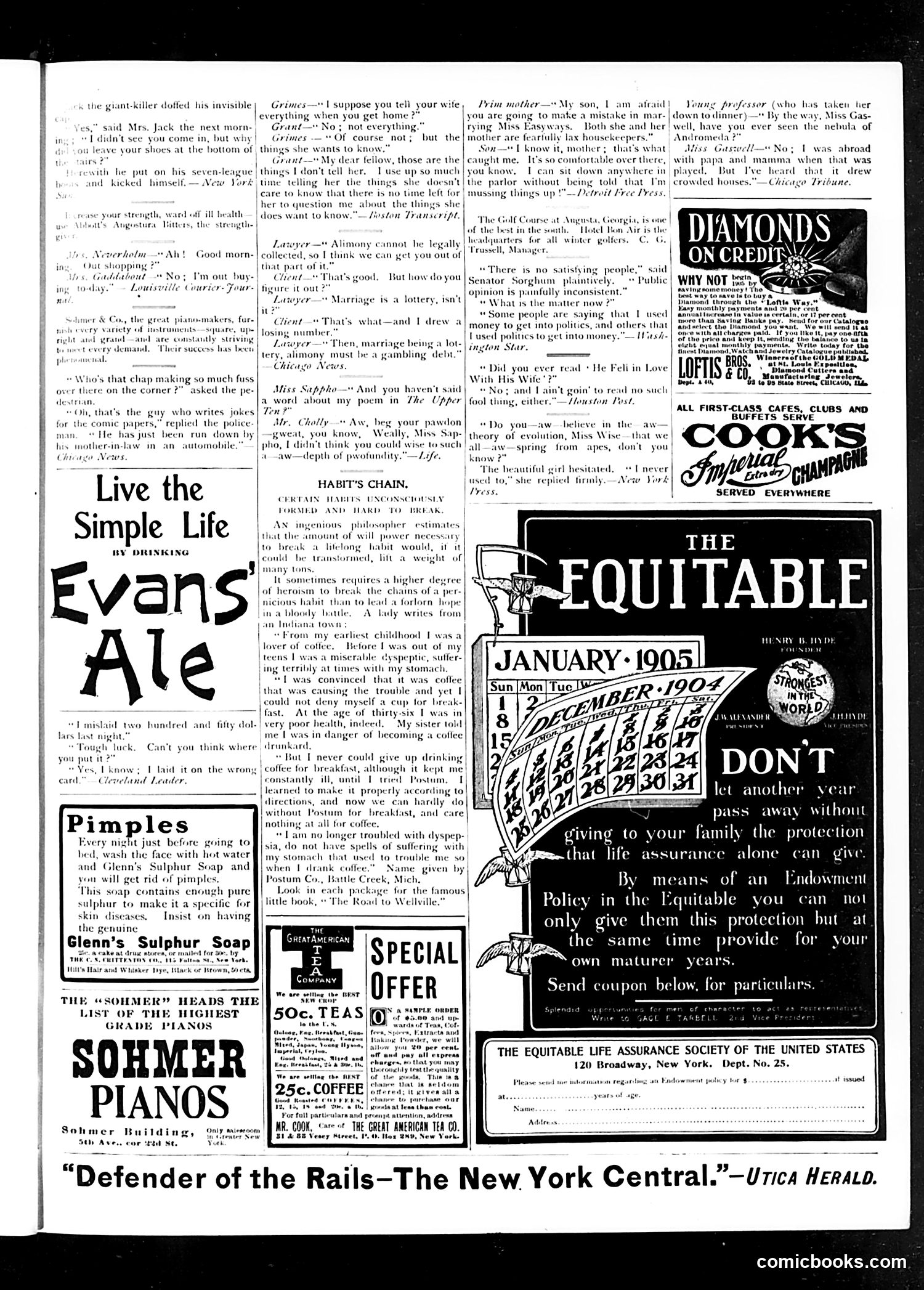
This page from Judge is primarily **advertising and miscellaneous content** rather than political cartoons. The bulk consists of: **Advertisements** for Evans Ale, Glens' Sulphur Soap (for pimples), Sohmer Pianos, Cooks Champagne, Diamonds on Credit, and life insurance (The Equitable Life Assurance Society). **Short humor pieces** featuring domestic comedy—wives questioning husbands about their activities, marriage as a "lottery," alimony jokes, and flirtation banter. These reflect early-1900s gender dynamics: wives as inquisitive/demanding, husbands evasive. **One philosophical piece** ("Habit's Chain") discusses breaking habitual behaviors using willpower. The humor is genteel, middle-class domestic satire typical of Judge's era—no specific political figures or events are clearly referenced. The overall tone reflects Edwardian social attitudes about marriage, class, and consumer goods rather than political commentary.
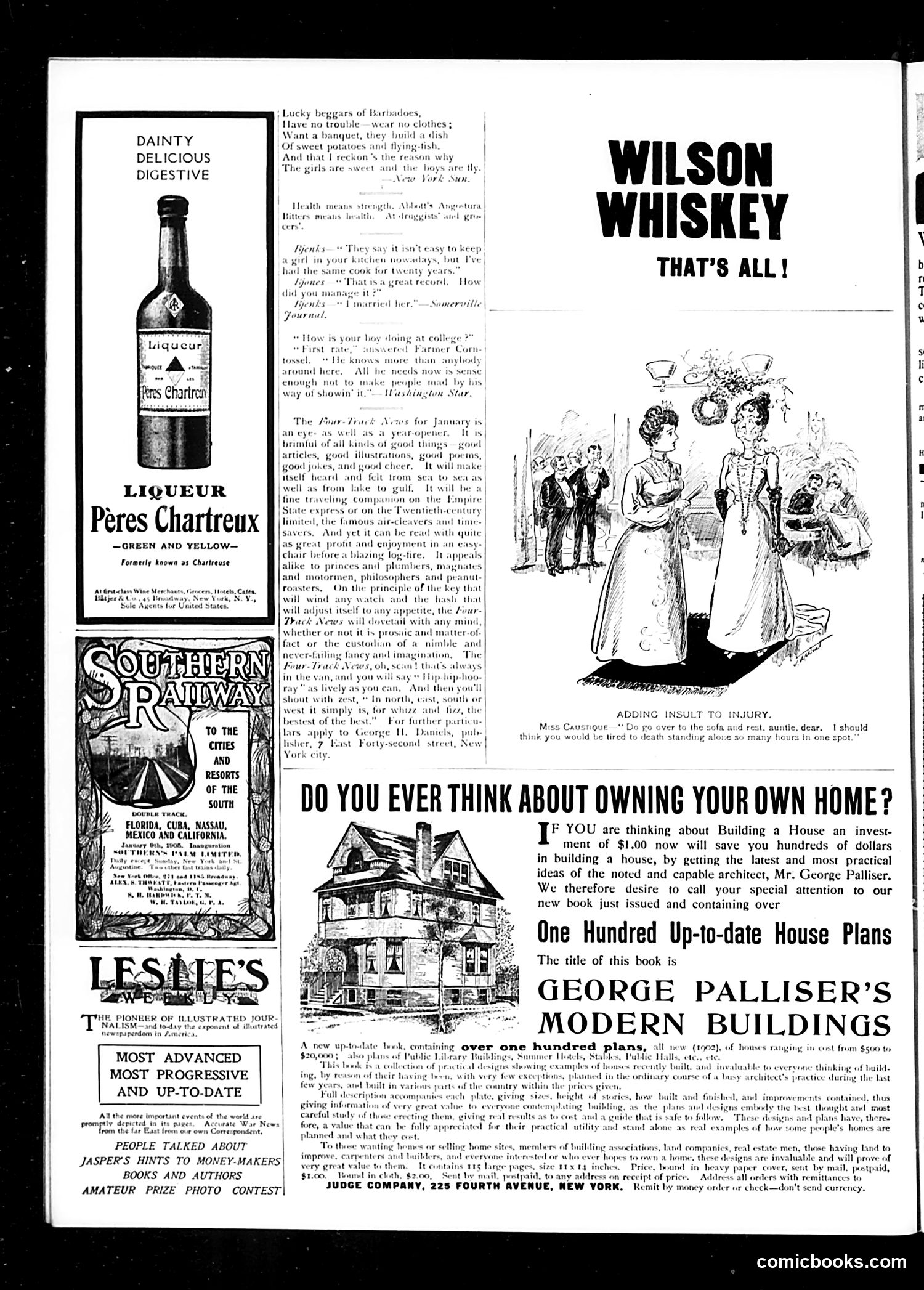
This page is primarily **advertising**, not political satire. The main content consists of: 1. **Product advertisements** for liqueur (Peres Chartreux), Wilson Whiskey, and Southern Railway travel packages 2. **A small illustrated cartoon** titled "Adding Insult to Injury" depicting a social scene where a woman tells a tired visitor to rest on the sofa, then insults her by suggesting she'd be tired from "many hours in one spot"—a mild joke about the visitor's sedentary nature or weight 3. **House plan promotion** advertising architect George Palliser's book of "One Hundred Up-to-date House Plans" for $1.00, targeting middle-class homebuyers 4. **Small gossip/humor columns** about domestic life (servants, college boys, train travel) The page reflects early 1900s consumer culture and advertising rather than sharp political commentary. The modest cartoon humor is social rather than political—typical of Judge magazine's lighter content mixed with advertisements.
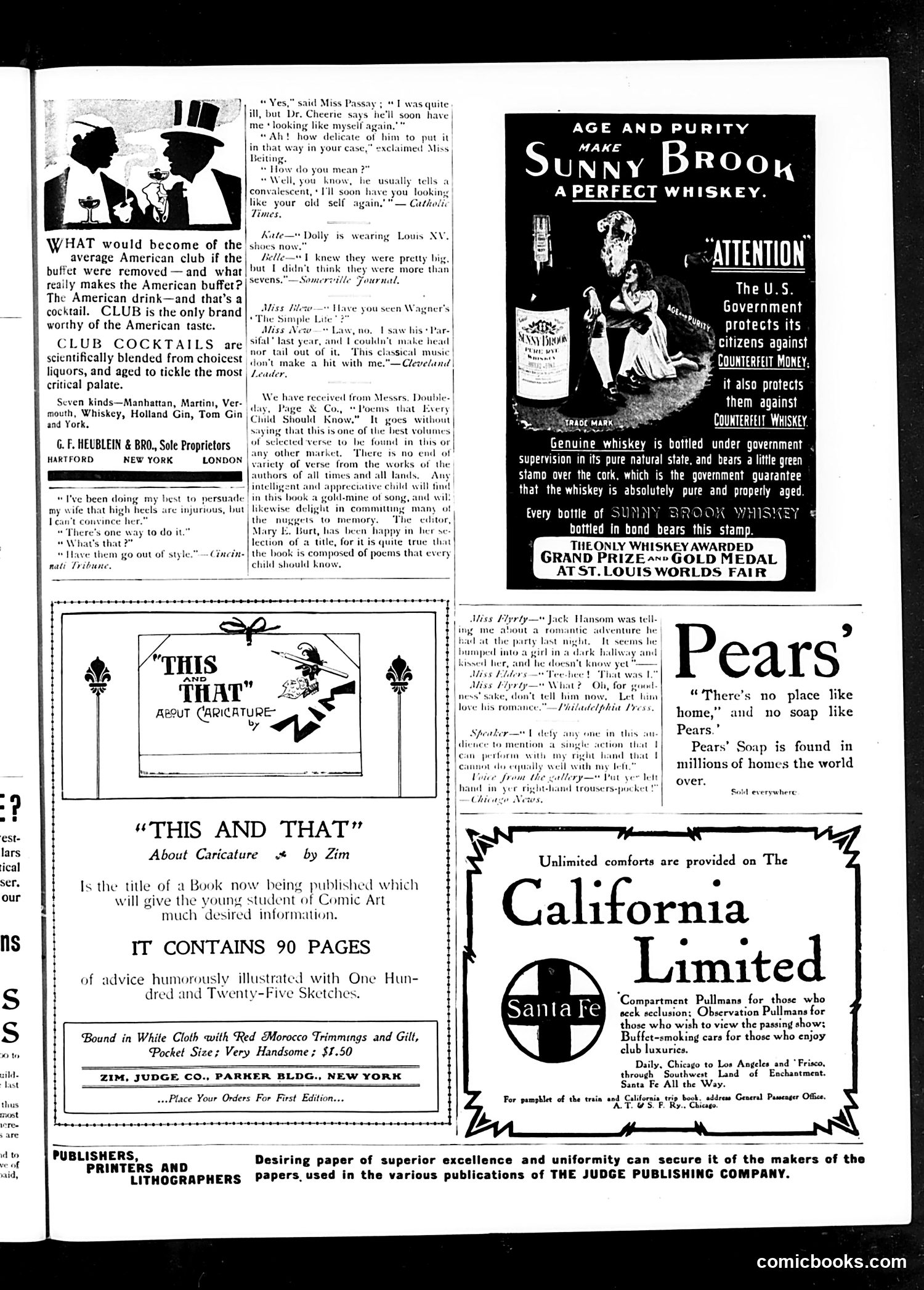
This page's main cartoon satirizes American social clubs by asking what would happen if the buffet—the food service—were removed. The joke is that the buffet itself, not any drink or atmosphere, is what actually makes American clubs distinctive and worthwhile. It's poking fun at club-goers' priorities: they value eating over sophistication or camaraderie. The page also contains various short humor pieces and advertisements typical of *Judge* magazine. Notable is a large advertisement for Sunny Brook Whiskey emphasizing government regulation to protect against counterfeit spirits—reflecting Progressive Era concerns about product safety and fraud. Period advertisements for Pears' Soap and the California Limited train also appear. The book promotion for "This and That: About Caricature" by Zim suggests *Judge's* focus on cartooning instruction and craft.
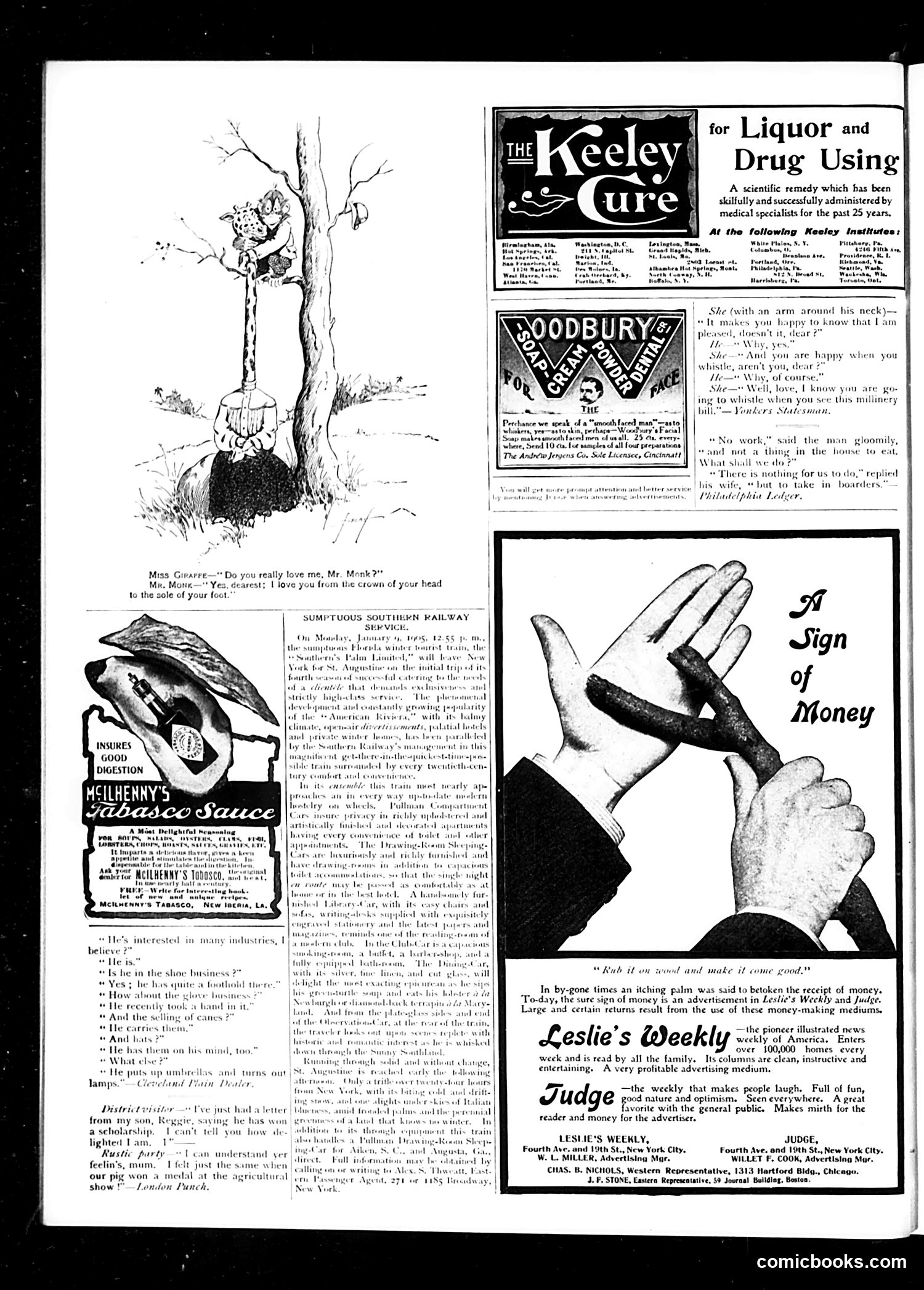
This page is primarily **advertising and filler content** rather than political satire. The main elements include: **Top section:** Advertisements for "The Keeley Cure" (a treatment for alcohol and drug addiction) and Woodbury's Tabasco Sauce. **Cartoon jokes:** Several brief, apolitical humor pieces: - A romantic exchange where a woman hints her husband should be happy about news (likely her pregnancy) - A couple facing financial hardship deciding to "take in boarders" - A man listing his diverse business interests (shoes, gloves, canes, umbrellas)—the joke being these connect metaphorically to hands/feet **Bottom section:** Advertisements for Leslie's Weekly and Judge magazines themselves, promoting their value to advertisers. **Context for modern readers:** This reflects the era's casual acceptance of addiction remedies and the magazine's heavy reliance on advertisements. The humor is domestic and mild—no political commentary is evident. The page demonstrates how 19th-century magazines subsidized content through extensive advertising.
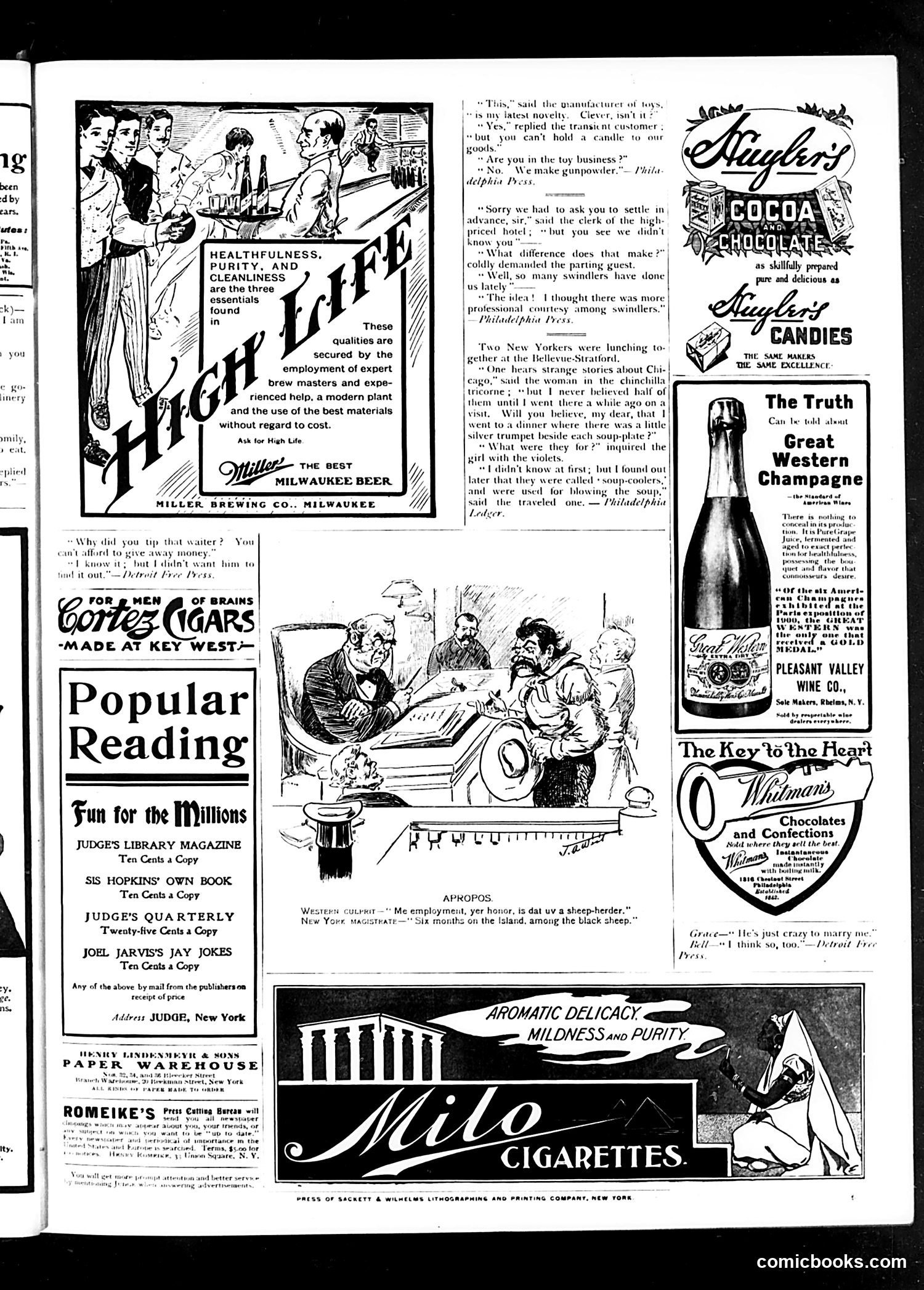
This page is primarily **advertising** for consumer products (beer, cigars, chocolates, champagne, wine) with several brief comic anecdotes interspersed. The cartoons and jokes satirize **social hypocrisy and pretense**: 1. **The waiter tip joke** mocks a cheapskate who tips to hide his poverty—the humor lies in maintaining appearances despite financial strain. 2. **The hotel anecdote** satirizes how establishments treat customers differently based on perceived wealth/trustworthiness, with the guest sardonically pointing out that swindlers deserve "professional courtesy" too. 3. **The Bellevue-Stratford dinner story** ridicules wealthy New Yorkers who spread exaggerated tales about fancy dining (silver trumpets for soup-blowing), implying the leisured class invents absurdities to impress. 4. **The "sheep-herder" joke** plays on the phrase "black sheep"—the judge sentences the defendant to six months "among the black sheep" (prison) as wordplay. The satire targets **class anxiety, social climbing, and pretentious behavior** among urban Americans of the era.
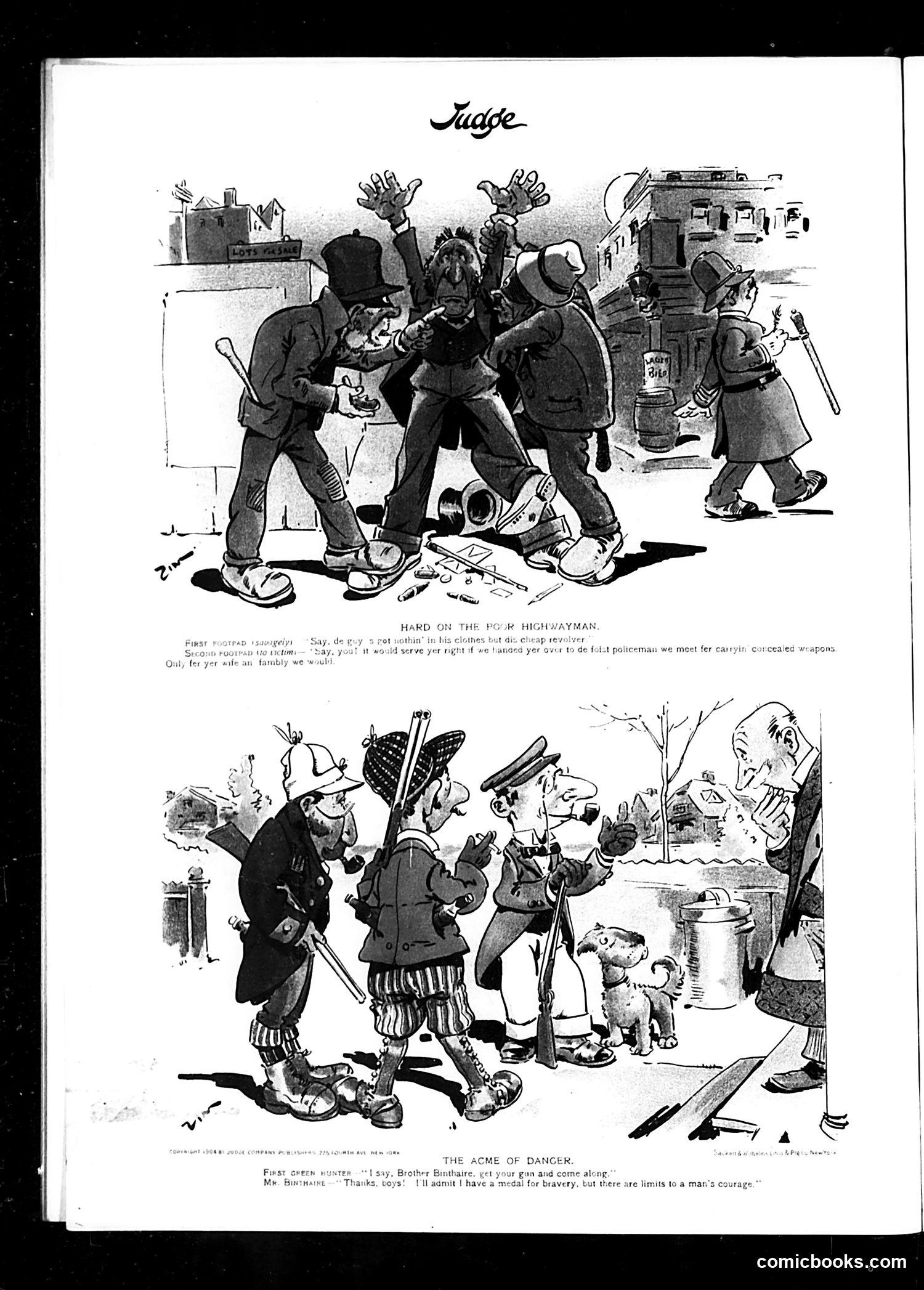
This page contains two political cartoons satirizing law enforcement and public safety issues. **Top cartoon ("Hard on the Poor Highwayman"):** Officers arrest a poorly-dressed criminal while ignoring wealthy wrongdoers in the background. The satire criticizes selective justice—authorities harass common street criminals while the rich escape consequence. **Bottom cartoon ("The Acme of Danger"):** Appears to mock excessive police aggression or brutality against minor offenders. The phrase "limits to a man's courage" suggests criticism of overzealous law enforcement tactics. Both cartoons target hypocrisy in the justice system: poor citizens face harsh treatment while wealthy criminals operate freely, and police apply disproportionate force against vulnerable populations. This reflects Progressive-era concerns about class-based inequality in American law enforcement.