
Pulp Fiction, 1920 · page 91 of 132
The Black Mask — page 91: what you’re looking at
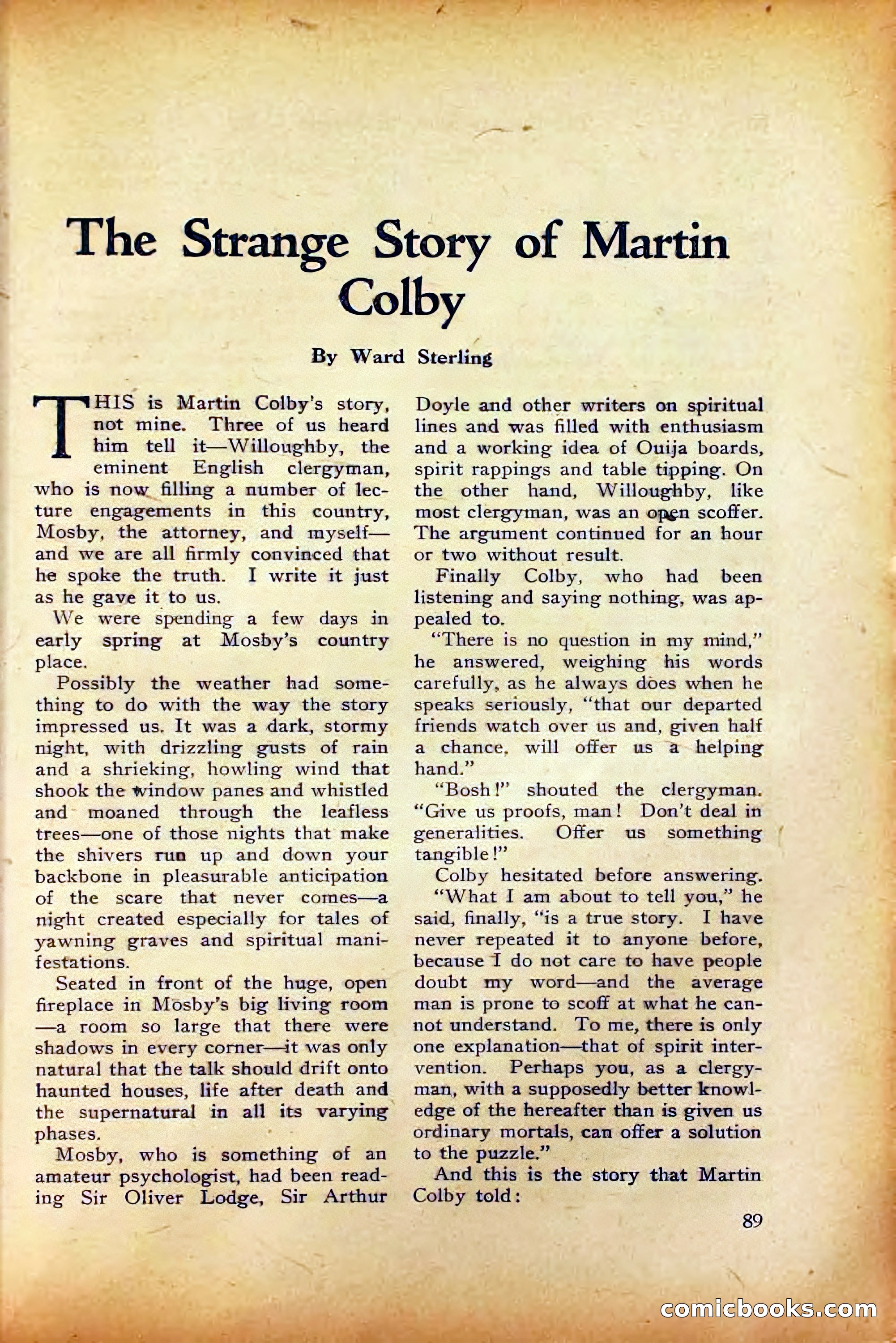
A restored page from Pulp Fiction, 1920. Page through the whole issue in the reader above.
📄 Transcribed text from this page (OCR, searchable)
Machine-transcribed from the original scan — historical spelling and the odd misread are preserved.
The Strange Story of Martin Colby By Ward Sterling HIS is Martin Colby's story, not mine. Three of us heard him tell it—Willoughby, the eminent English clergyman, who is now filling a number of lec- ture engagements in this country, Mosby, the attorney, and myself— and we are all firmly convinced that he spoke the truth. I write it just as he gave it to us. We were spending a few days in early spring at Mosby’s country place. Possibly the weather had some- thing to do with the way the story impressed us. It was a dark, stormy night, with drizzling gusts of rain and a shrieking, howling wind that shook the window panes and whistled and moaned through the leafless trees—one of those nights that make the shivers rum up and down your backbone in pleasurable anticipation of the scare that never comes—a might created especially for tales of yawning graves and spiritual mani- festations. Seated in front of the huge, open fireplace in Mosby’s big living room —a room so large that there were shadows in every corner—it was only natural that the talk should drift onto haunted houses, life after death and the supernatural in all its varying phases. Mosby, who is something of an amateur psychologist, had been read- ing Sir Oliver Lodge, Sir Arthur Doyle and other writers on spiritual lines and was filled with enthusiasm and a working idea of Ouija boards, spirit rappings and table tipping. On the other hand, Willoughby, like most clergyman, was an open scoffer. The argument continued for an hour or two without result. Finally Colby, who had _ been listening and saying nothing, was ap- pealed to. “There is no question in my mind,” he answered, weighing his words carefully, as he always does when he speaks seriously, “that our departed friends watch over us and, given half a chance, will offer us a helping hand.” “Bosh!” shouted the clergyman. “Give us proofs, man! Don’t deal in generalities. Offer us something tangible!” Colby hesitated before answering. “What I am about to tell you,” he said, finally, ‘is a true story. I have never repeated it to anyone before, because I do not care to have people doubt my word—and the average man is prone to scoff at what he can- not understand. To me, there is only one explanation—that of spirit inter- vention. Perhaps you, as a clergy- man, with a supposedly better know]- edge of the hereafter than is given us ordinary mortals, can offer a solution to the puzzle.” And this is the story that Martin Colby told: 89 1 . ‘ p - os Eg EEE Sa < ‘ i i