
Pulp Fiction, 1920 · page 19 of 132
The Black Mask — page 19: what you’re looking at
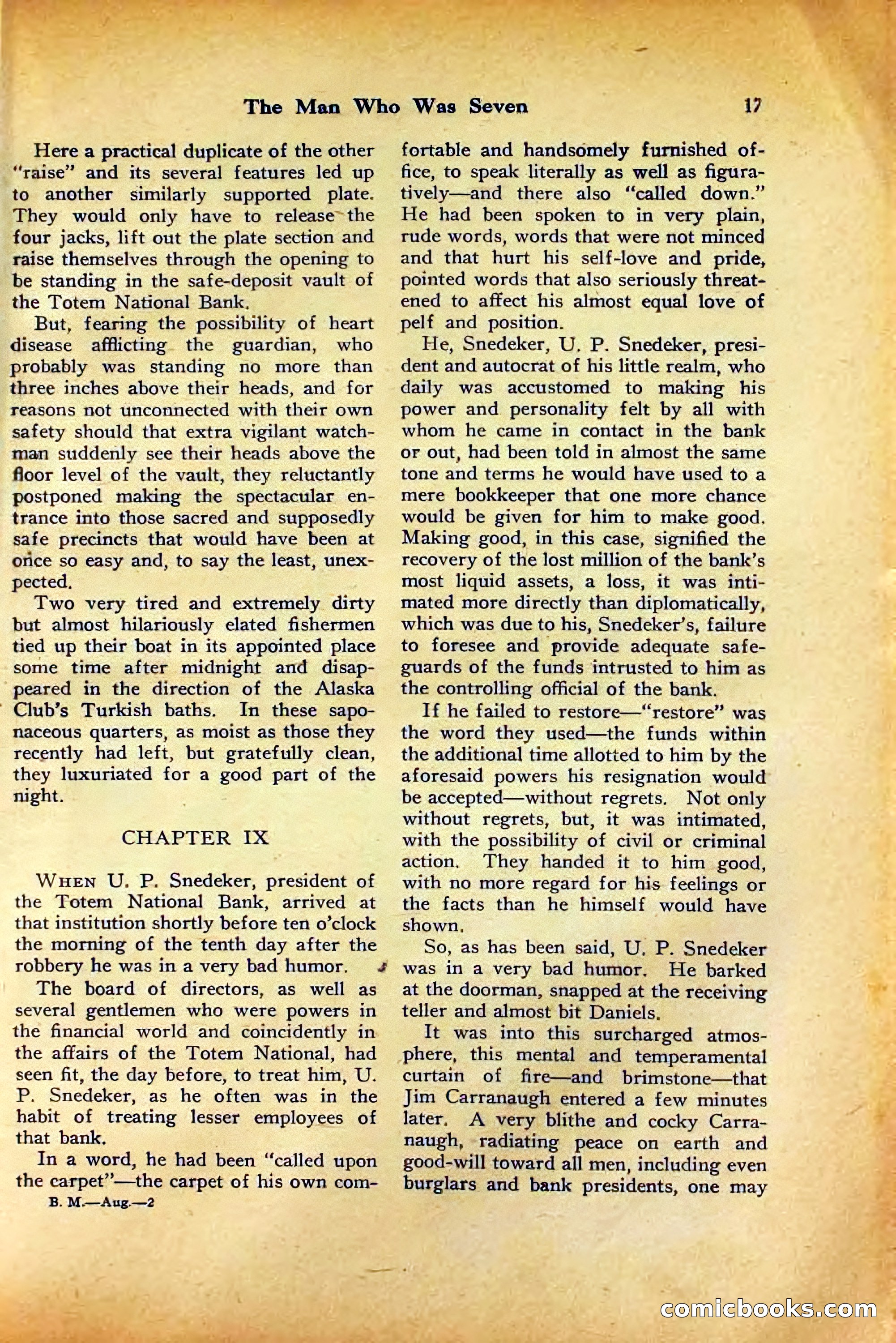
A restored page from Pulp Fiction, 1920. Page through the whole issue in the reader above.
📄 Transcribed text from this page (OCR, searchable)
Machine-transcribed from the original scan — historical spelling and the odd misread are preserved.
Here a practical duplicate of the other “raise” and its several features led up to another similarly supported plate. They would only have to release the four jacks, lift out the plate section and raise themselves through the opening to be standing in the safe-deposit vault of the Totem National Bank. But, fearing the possibility of heart disease afflicting the guardian, who probably was standing no more than three inches above their heads, and for reasons not unconnected with their own safety should that extra vigilant watch- man suddenly see their heads above the floor level of the vault, they reluctantly postponed making the spectacular en- trance into those sacred and supposedly safe precincts that would have been at orice so easy and, to say the least, unex- pected, Two very tired and extremely dirty but almost hilariously elated fishermen tied up their boat in its appointed place some time after midnight and disap- peared in the direction of the Alaska -Club’s Turkish baths. In these sapo- naceous quarters, as moist as those they recently had left, but gratefully clean, they luxuriated for a good part of the night. CHAPTER IX WHEN U. P. Snedeker, president of the Totem National Bank, arrived at that institution shortly before ten o’clock the morning of the tenth day after the robbery he was in a very bad humor. The board of directors, as well as several gentlemen who were powers in the financial world and coincidently in the affairs of the Totem National, had seen fit, the day before, to treat him, U. P. Snedeker, as he often was in the habit of treating lesser employees of that bank, : In a word, he had been “called upon the carpet”—the carpet of his own com- B. M.—Aug.—2 FI The Man Who Was Seven : Sipe fortable and handsomely furnished of- fice, to speak literally as well as figura- tively—and there also “called down.” He had been spoken to in very plain, rude words, words that were not minced and that hurt his self-love and pride, pointed words that also seriously threat- ened to affect his almost equal love of pelf and position. He, Snedeker, U. P. Snedeker, presi- dent and autocrat of his little realm, who daily was accustomed to making his power and personality felt by all with whom he came in contact in the bank or out, had been told in almost the same tone and terms he would have used to a mere bookkeeper that one more chance would be given for him to make good. Making good, in this case, signified the recovery of the lost million of the bank’s most liquid assets, a loss, it was inti- mated more directly than diplomatically, which was due to his, Snedeker’s, failure to foresee and provide adequate safe- guards of the funds intrusted to him as the controlling official of the bank. If he failed to restore—“restore” was the word they used—the funds within the additional time allotted to him by the aforesaid powers his resignation would be accepted—without regrets. Not only without regrets, but, it was intimated, with the possibility of civil or criminal action. They handed it to him good, with no more regard for his feelings or the facts than he himself would have shown, So, as has been said, U. P. Snedeker was in a very bad humor. He barked at the doorman, snapped at the receiving teller and almost bit Daniels. It was into this surcharged atmos- phere, this mental and temperamental curtain of fire—and brimstone—that Jim Carranaugh entered a few minutes later, A very blithe and cocky Carra- naugh, radiating peace on earth and good-will toward all men, including even hares and bank presidents, one may