
Pulp Fiction, 1920 · page 10 of 132
The Black Mask — page 10: what you’re looking at
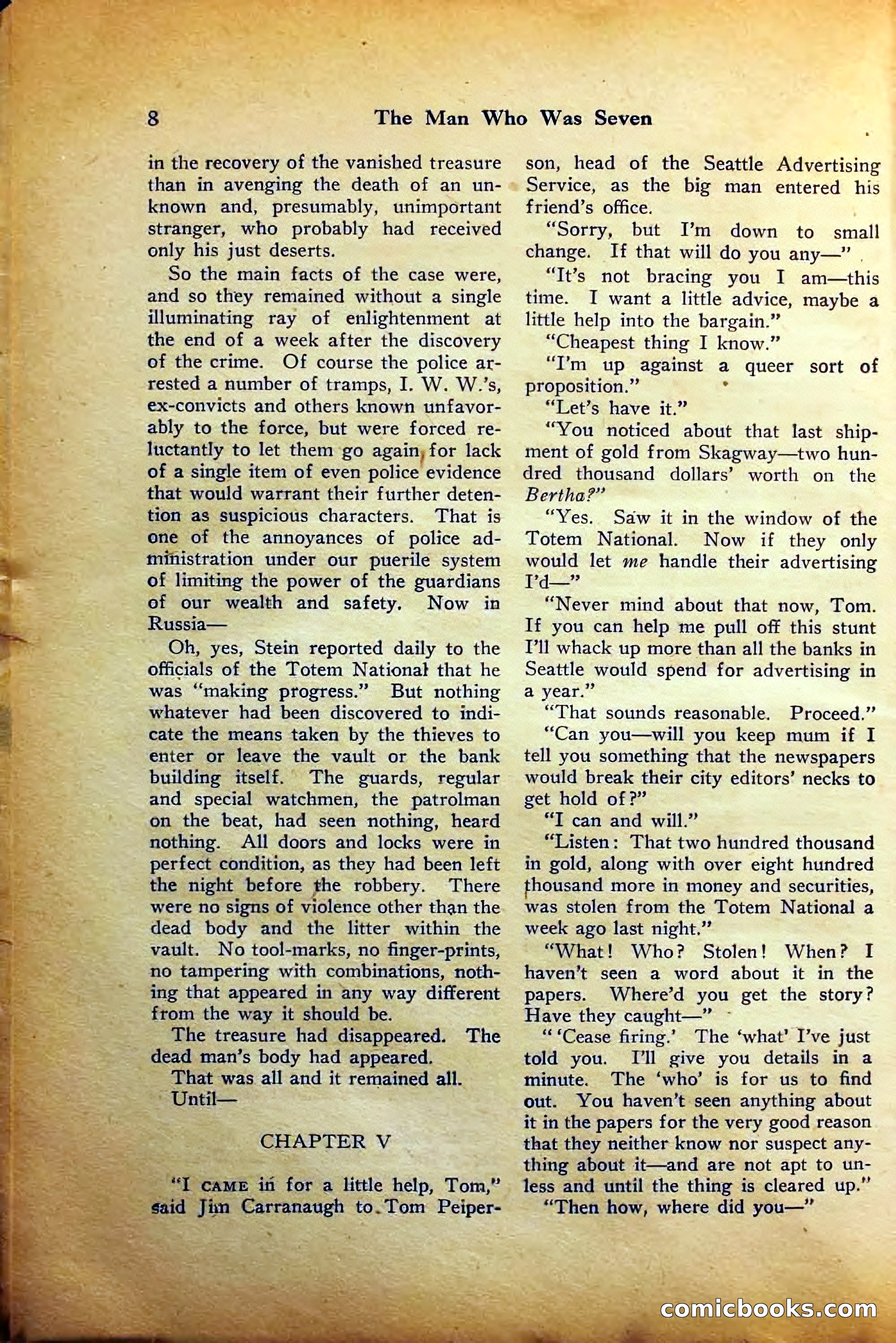
A restored page from Pulp Fiction, 1920. Page through the whole issue in the reader above.
📄 Transcribed text from this page (OCR, searchable)
Machine-transcribed from the original scan — historical spelling and the odd misread are preserved.
8 The Man Who Was Seven in the recovery of the vanished treasure than in avenging the death of an un- known and, presumably, unimportant stranger, who probably had received only his just deserts. So the main facts of the case were, and so they remained without a single illuminating ray of enlightenment at the end of a week after the discovery of the crime. Of course the police ar- rested a number of tramps, I. W. W.’s, ex-convicts and others known unfavor- ably to the force, but were forced re- Iuctantly to let them go againyfor lack of a single item of even police evidence that would warrant their further deten- tion as suspicious characters. That is one of the annoyances of police ad- ministration under our puerile system of limiting the power of the guardians of our wealth and safety. Now in Russia— Oh, yes, Stein reported daily to the officials of the Totem National that he was “making progress.” But nothing whatever had been discovered to indi- cate the means taken by the thieves to enter or leave the vault or the bank building itself. The guards, regular and special watchmen, the patrolman on the beat, had seen nothing, heard nothing. All doors and locks were in perfect condition, as they had been left the night before the robbery. There were no signs of violence other than the dead body and the litter within the vault. No tool-marks, no finger-prints, no tampering with combinations, noth- ing that appeared in any way different from the way it should be. The treasure had disappeared. The dead man’s body had appeared. That was all and it remained all. » Until— CHAPTER V *T came in for a little help, Tom,” said Jim Carranaugh to.Tom Peiper- son, head of the Seattle Advertising Service, as the big man entered his friend’s office. “Sorry, but I’m down to. small change. If that will do you any—” | “It’s not bracing you I am—this time. I want a little advice, maybe a little help into the bargain.” “Cheapest thing I know.” “Tm up against a queer sort of proposition.” “Let’s have it.” “You noticed about that last ship- ment of gold from Skagway—two hun- dred thousand dollars’ worth on the Bertha?” “Yes. Saw it in the window of the Totem National. Now if they only would let me handle their advertising Ed “Never mind about that now, Tom. If you can help me pull off this stunt Pll whack up more than all the banks in Seattle would spend for advertising in a year.” “That sounds reasonable. Proceed.” “Can you—will you keep mum if I tell you something that the newspapers would break their city editors’ necks to get hold of ?” “T can and will.” “Listen: That two hundred thousand in gold, along with over eight hundred housand more in money and securities, was stolen from the Totem National a week ago last night.” “What! Who? Stolen! When? I haven’t seen a word about it in the papers. Where’d you get the story? Have they caught—” “*Cease firing.’ The ‘what’ I’ve just told you. Tl give you details in a minute. The ‘who’ is for us to find out. You haven’t seen anything about it in the papers for the very good reason that they neither know nor suspect any- thing about it—and are not apt to un- less and until the thing is cleared up.” “Then how, where did you—”