
Pulp Fiction, 1884 · page 7 of 100
Beadle's New Dime Novels: The Specter Chief — page 7: what you’re looking at
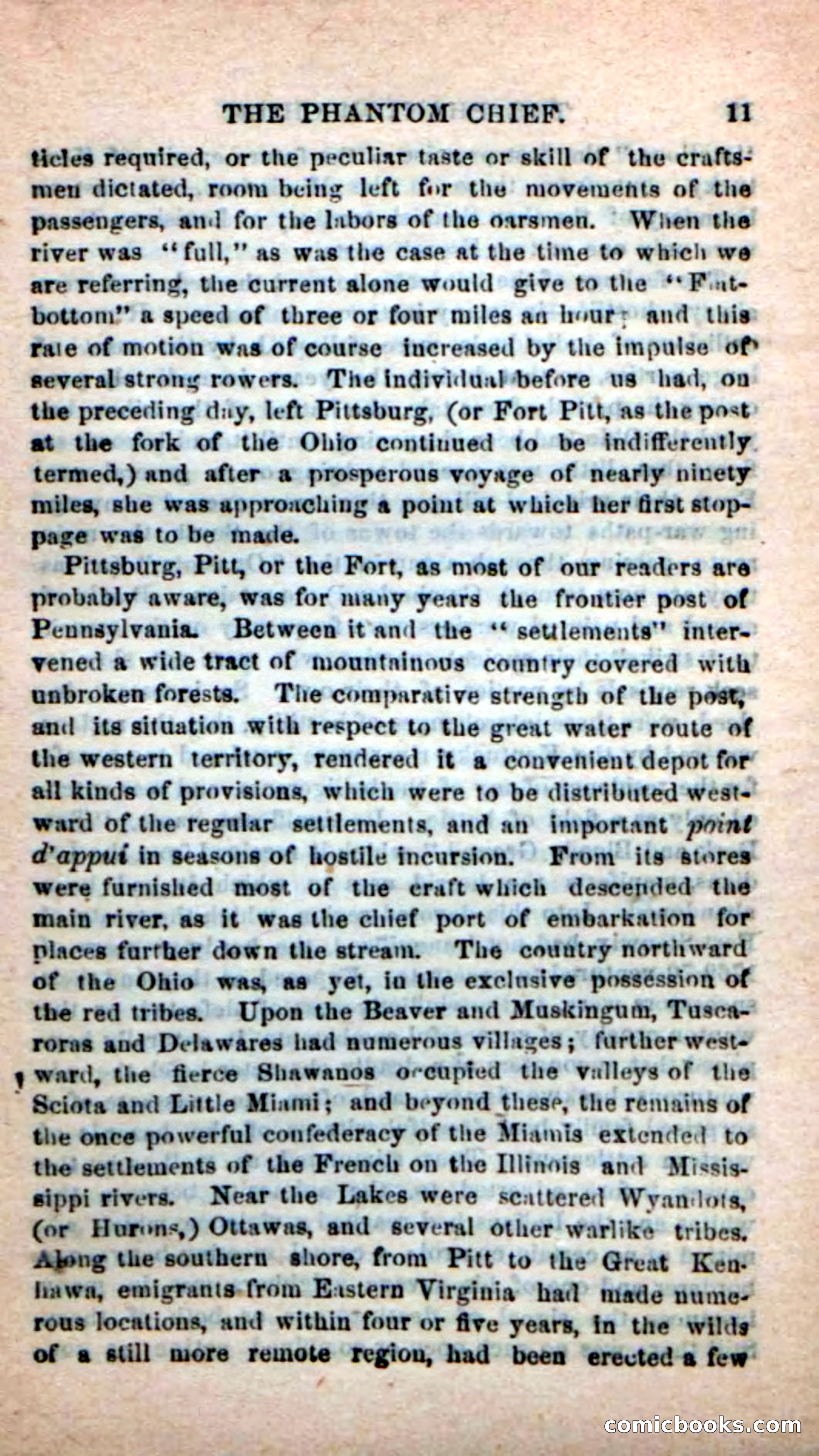
A restored page from Pulp Fiction, 1884. Page through the whole issue in the reader above.
📄 Transcribed text from this page (OCR, searchable)
Machine-transcribed from the original scan — historical spelling and the odd misread are preserved.
THE PHANTOM CHIEF. 11 ticles required, or the peculiar taste or skill of the crafts- men dictated, room being left fer the movements of the passengers, and for the labors of the oarsmen. When the river was ‘‘full,”’ as was the case at the time to which we are referring, the current alone would give to the ‘* Fiat- bottom” a speed of three or four miles an hourr and this raie of motion was of course increased by the impulse of» several strong rowers. The individualbefore us ‘had, on the preceding duy, left Pittsburg, (or Fort Pitt, as the post: at the fork of the Ohio continued to be indifferently. termed,) and after a prosperous voyage of nearly ninety miles, she was approaching a point at which — ret nop- page was to be made. ‘Pittsburg, Pitt, or the Fort, as most of our inated are probably aware, was for many years the frontier post of Pennsylvania. Between it and the ‘* setilements” inter- vened a wide tract of mountainous country covered with unbroken forests. Tlie comparative strength of the post an its situation with respect to the great water route of the western territory, rendered it a convenient depot for all kinds of provisions, which were to be distributed west- ward of the regular settlements, and an important point @’apput in seasons of hostile incursion. From its stores were furnished most of the eraft which descended the main river, as it was the chief port of embarkation for places farther down the stream. The country northward of the Ohio was, as yet, in the exclusive posséssion of the red tribes. Upon the Beaver and Muskingum, Tusca- roras and Delawares had numerous villages; further west- y ward, the fierce Shawanos occupied the viulleys of the Sciota and Little Miami; and beyond these, the remains of the once powerful confederacy of the Miamis extended to the settlements of the French on the Illinois and Missis- rivers. Near the Lakes were scattered Wyanilots, (or Horons,) Ottawas, and several other warlike tribes, Ajong the southern shore, from Pitt to the Great Ken fiawa, emigrants-from Eastern Virginia had made nume- rous locations, and within four or five years, in the wilds of a still more remote region, had been erected a few cComicbooks:com —— - t