
Pulp Fiction, 1862 · page 55 of 100
Beadle's Dime Novels No. 47: Tim Bumble's Charge — page 55: what you’re looking at
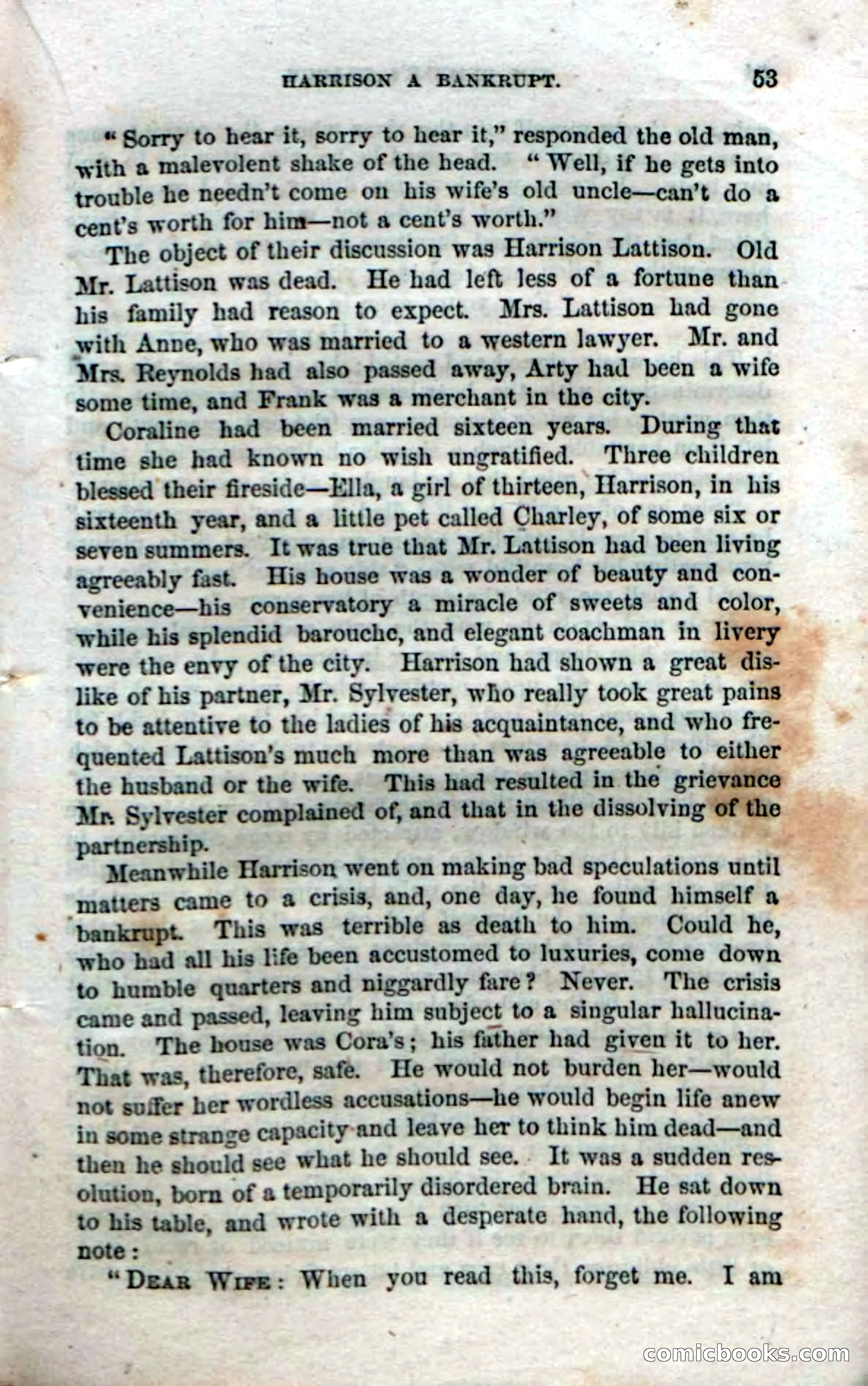
A restored page from Pulp Fiction, 1862. Page through the whole issue in the reader above.
📄 Transcribed text from this page (OCR, searchable)
Machine-transcribed from the original scan — historical spelling and the odd misread are preserved.
<*.2.3% HARRISON A BANKRUPT. 53 “Sorry to hear it, sorry to hear it,” responded the old man, with a malevolent shake of the head. “ Well, if he gets into trouble he needn’t come on his wife’s old uncle—can’t do a cent’s worth for him—not a cent’s worth.” ; The object of their discussion was Harrison Lattison. Old Mr. Lattison was dead. He had left Jess of a fortune than his family had reason to expect. Mrs. Lattison had gone with Anne, who was married to a western lawyer. Mr. and Mrs. Reynolds had also passed away, Arty had been a wife some time, and Frank was a merchant in the city. Coraline had been married sixteen years. During that | time she had known no wish ungratified. Three children ‘ blessed their fireside—Ella, a girl of thirteen, Harrison, in his sixteenth year, and a little pet called Charley, of some six or seven summers. It was true that Mr. Lattison had been living agreeably fast. His house was a wonder of beauty and con- venience—his conservatory a miracle of sweets and color, | while his splendid barouche, and elegant coachman in liver were the envy of the city. Harrison had shown a great like of his partner, Mr. Sylvester, who really took great pains to be attentive to the ladies of his acquaintance, and who fre- _ quented Lattison’s much more than was agreeable to eithe) Sy the husband or the wife. This had resulted in the grievance Mn Sylvester complained of, and that in the dissolving ¢ Meanwhile Harrison went on making bad speculations until __ matters came to a crisis, and, one day, he found himself a This was terrible as death to him. Could he, who bad all his life been accustomed to luxuries, come down to humble quarters and niggardly fare? Never. The crisis came and passed, leaving him subject to a singular hallucina- tion. The house was Cora’s; his father had given it to her. That was, therefore, safe. He would not burden her—would not suffer her wordless accusations—he would begin life anew in some strange capacity-and leave her to think him dead—and then he should see what he should see. It was a sudden res- olution, born of a temporarily disordered brain. He sat down to his table, and wrote with a desperate hand, the following note: “Dear Wiee: When you read this, forget me. I am commicloooks.conn