
Pulp Fiction, 1862 · page 32 of 134
The Land Claim — page 32: what you’re looking at
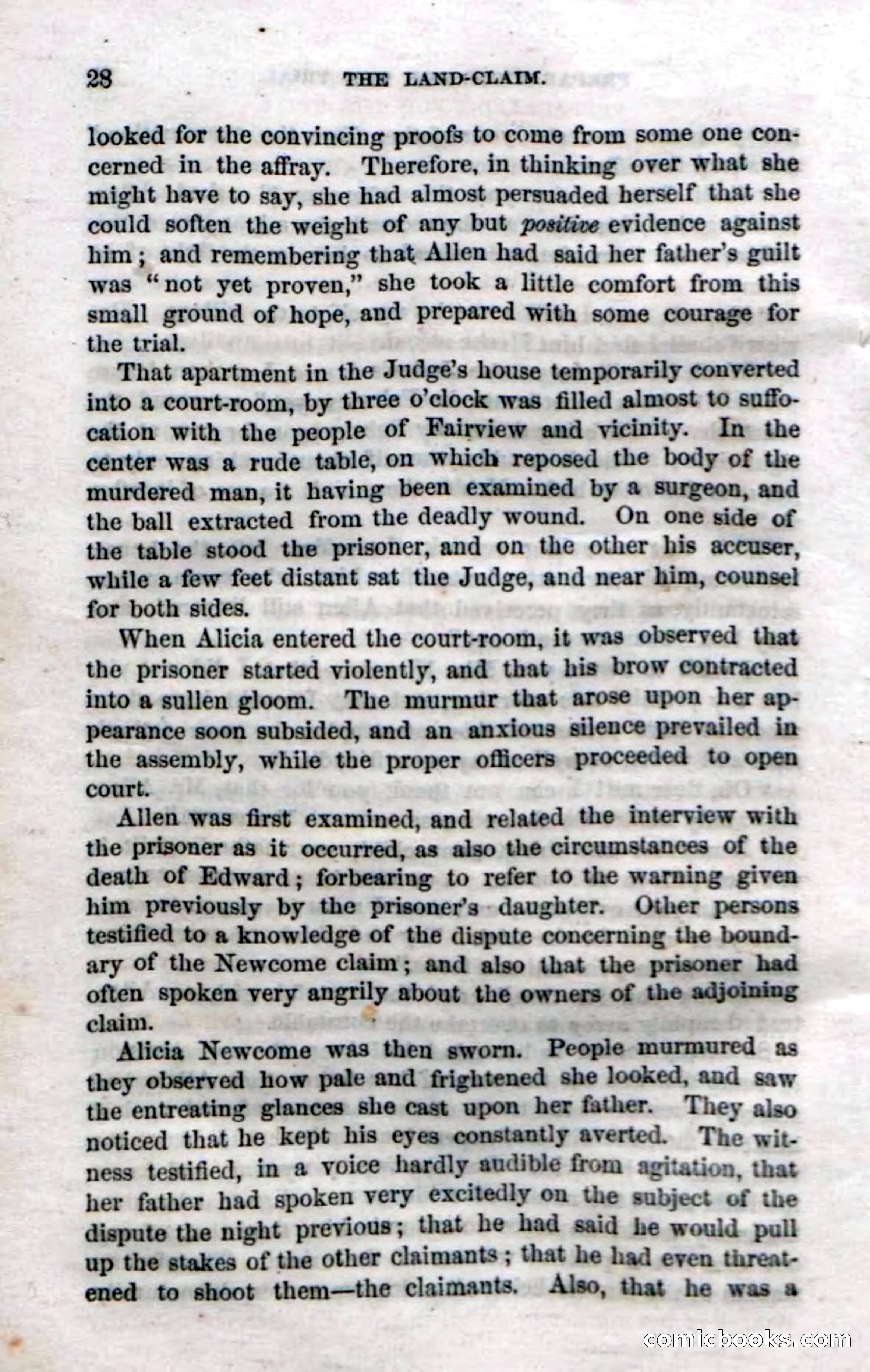
A restored page from Pulp Fiction, 1862. Page through the whole issue in the reader above.
📄 Transcribed text from this page (OCR, searchable)
Machine-transcribed from the original scan — historical spelling and the odd misread are preserved.
28 THE LAND-CLAIM. looked for the convincing proofs to come from some one Con- cerned in the affray. Therefore, in thinking over what she might have to say, she had almost persuaded herself that she could soften the weight of any but positive evidence against him ; and remembering that Allen had said her father’s guilt was “not yet proven,” she took a little comfort from this small ground of hope, and prepared with some courage for the trial. That apartment in the Judge’s house temporarily converted into a court-room, by three o'clock was filled almost to suffo- cation with the people of Fairview and vicinity. In the center was a rude table, on which reposed the body of the murdered man, it having been examined by a Surgeon, and the ball extracted from the deadly wound. On one side of the table stood the prisoner, and on the other his accuser, while a few feet distant sat the Judge, and near him, counsel for both sides. When Alicia entered the court-room, it was observed that the prisoner started violently, and that his brow contracted into a sullen gloom. The murmur that arose upon her ap- pearance soon subsided, and an anxious silence prevailed in the assembly, while the proper officers proceeded to open court. Allen was first examined, and related the interview with the prisoner as it occurred, as also the circumstances of the death of Edward; forbearing to refer to the warning given him previously by the prisoner's daughter. Other persons testified to a knowledge of the dispute concerning the bound- ary of the Newcome claim; and also that the prisoner had claim. ere Alicia Newcome was then sworn. People murmured as they observed how pale and frightened she looked, and saw the entreating glances she cast upon her father. They also noticed that he kept his eyes constantly averted. The wit- ness testified, in a voice hardly audible from agitation, that her father had spoken very excitedly on the subject of the dispute the night previous; that he had said he would pull up the stakes of the other claimants ; that he had even threat- ened to shoot them—the claimants. Also, that he was a commicloooks.corn