
Pulp Fiction, 1862 · page 31 of 134
The Land Claim — page 31: what you’re looking at
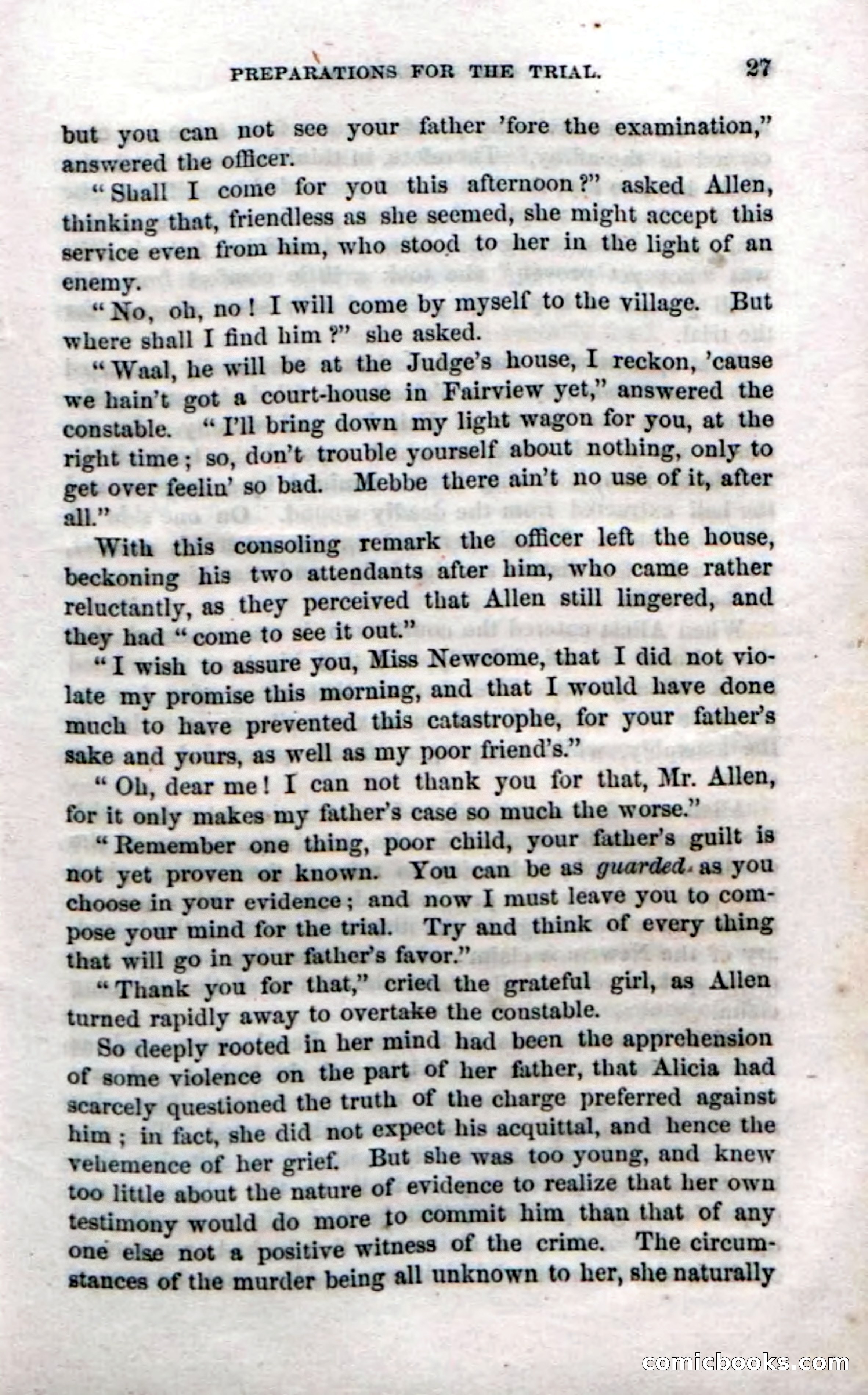
A restored page from Pulp Fiction, 1862. Page through the whole issue in the reader above.
📄 Transcribed text from this page (OCR, searchable)
Machine-transcribed from the original scan — historical spelling and the odd misread are preserved.
\ PREPARATIONS FOR THE TRIAL. 27 but you can not see your father ’fore the examination,” answered the officer. “Shall I come for you this afternoon?” asked Allen, thinking that, friendless as she seemed, she might accept this service even from him, who stood to her in the light of an enemy. ; “No, ob, no! I will come by myself to the village. But where shall I find him ?” she asked. “Waal, he will be at the Judge’s house, I reckon, ’cause we hain’t got a court-house in Fairview yet,” answered the constable. “Ill bring down my light wagon for you, at the right time; so, don’t trouble yourself about nothing, only to get over feelin’ so bad. Mebbe there ain’t no use of it, after all.” With this consoling remark the officer left the house, beckoning his two attendants after him, who came rather reluctantly, as they perceived that Allen still lingered, and they had “come to see it out.” “I wish to assure you, Miss Newcome, that I did not vio- late my promise this morning, and that I would have done much to have prevented this catastrophe, for your father’s sake and yours, as well as my poor friend’s.” “Oh, dear me! I can not thank you for that, Mr. Allen, for it only makes my father’s case so much the worse.” “ Remember one thing, poor child, your father’s guilt is not yet proven or known. You can be as guarded. as you choose in your evidence; and now I must leave you to com- pose your mind for the trial. Try and think of every thing that will go in your father’s favor.” “Thank you for that,” cried the grateful girl, as Allen turned rapidly away to overtake the constable. So deeply rooted in her mind had been the apprehension of some violence on the part of her father, that Alicia had scarcely questioned the truth of the charge preferred against him ; in fact, she did not expect his acquittal, and hence the vehemence of her grief. But she was too young, and knew too little about the nature of evidence to realize that her own testimony would do more to commit him than that of any oné else not a positive witness of the crime. The circum- stances of the murder being all unknown to her, she naturally CGonmmicloooks.aconn